


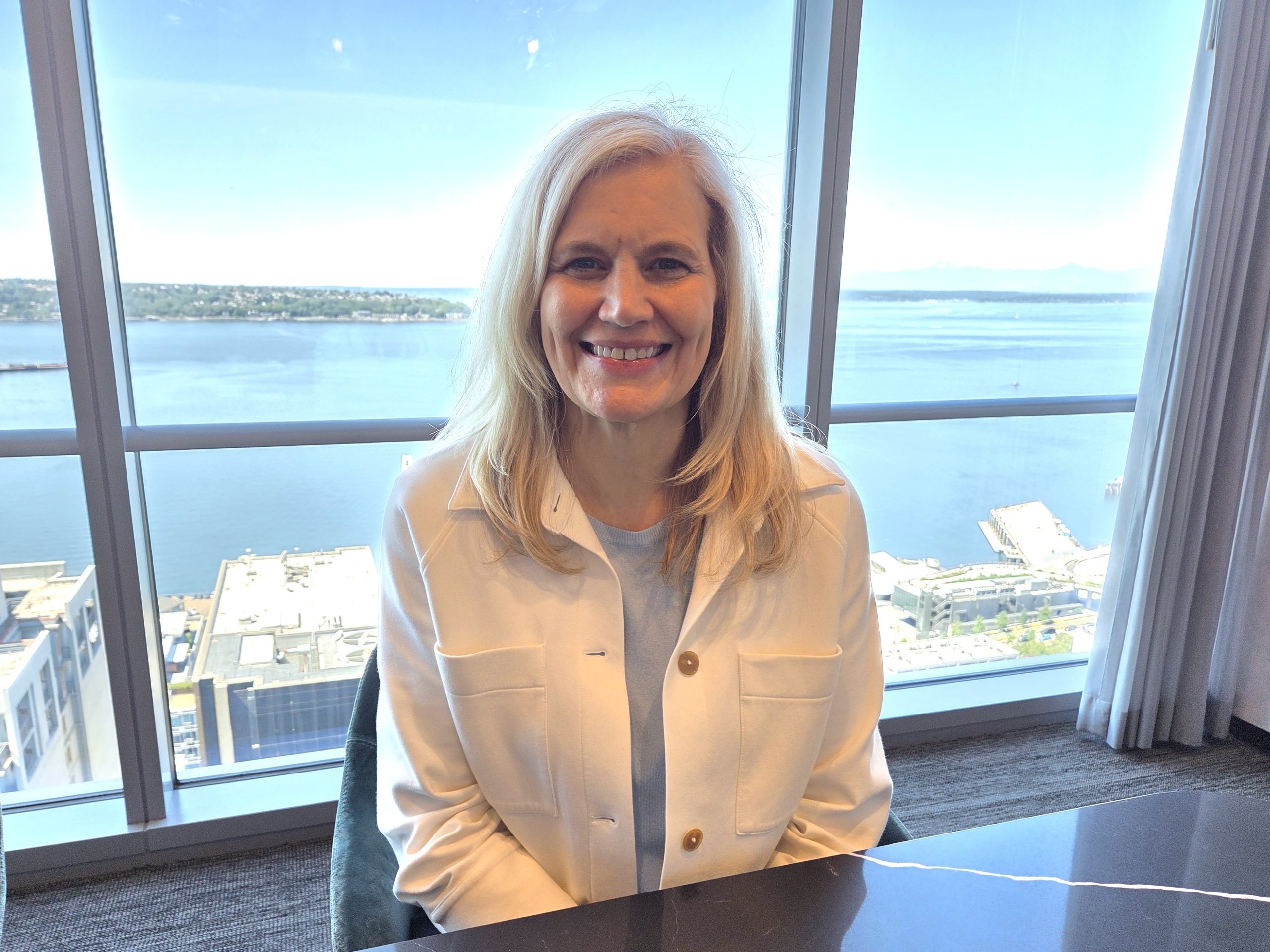
Bit.Bio’s Dr Emma Pepperell discusses her career in the biotechnology sector, the advancements occurring around her and the importance of bringing a touch of humanity to an often clinical industry.

Interested in veterinary medicine and science from a young age, the now Dr Emma Pepperell focused on the subjects in her early education, before committing to a BSc in Pharmacology at Newcastle University, where she graduated with first class honours.
It was during her undergraduate degree that she undertook a placement at pharmaceutical GlaxoSmithKline, where for a year she spent her time working with organ models of the brain and gut, to better understand how one might impact the other.
Pepperell said, “Even then, 20 odd years ago, there was the idea that what’s going on in the brain could affect things like Crohn’s disease and conditions like this that we know affect a lot of people.
“So that sort of sparked my interest in drug development and the whole sort of pharmaceutical industry and the application of science and research products for health.”
Inspired to continue her education in this field, Pepperell enrolled in the University of Oxford, where she soon graduated with a DPhil in Clinical Laboratory Sciences. As so often happens, her Doctorate focused on an area of learning that would eventually form the basis of her career, which in this case was the application of stem cells to therapies.
She said, “I was looking at cells from umbilical cord blood to see if they could repopulate the bone marrow for childhood leukemia, so it was very translational. And then I went into the commercial side of life sciences.
“The opportunity to join Bit.Bio came up a couple of years ago and it seemed like a natural, sort of complete circle to go back to the stem cell field and really think about how could I apply everything I’d learned about life science research tools and drug development and to think about how we can really bring these human cell products to have an impact, help develop drugs and understand disease better.”
For others looking to move into the STEM space or even careers outside of it, she finds it crucial that no matter what decisions you make, that you show a genuine interest in what you are doing. If you have a natural curiosity about something, she finds you will always be far more motivated and invested in developing yourself to fit the dream.
“I would say for young students starting their career, try and try lots of work experience and find what works for you. I went to a veterinary practice, I went to a patent attorneys and learned about patenting screwdrivers. I tried all sorts of different things to see, okay, what is it that’s actually going to really interest me, so I can find something that’s going to be highly motivating.”
Keeping healthcare humane
Having contributed to the work at Bit.Bio for two years, Pepperell was recently named the organisation’s CEO.
She said, “Fundamentally, what we do is we make human cells. So you can take an adult skin cell or blood cell and reprogramme it back to what’s called a pluripotent state and that means it can become any cell in the body.
“So we can then put in codes that essentially direct the cell to become a neuron, a brain cell, a liver cell, a heart cell, any kind of cell you like and then you can use these cells to really start to understand how disease works.
“You can use them to identify new drug targets. You can use them to study what happens if a new drug that’s being developed is applied to them to see if that drug is toxic or what the metabolic profile is like. We make cells that essentially replicate human biology in quite a controlled way to really enable the study of health and disease and drug interactions.”
An element of her industry that greatly appeals to her is largely in how it manages the challenges that arise. Pepperell explained how, in drug development, animal testing is an unfortunate, albeit often necessary and even crucial component of the drug development process.
As more organisations and institutions look to methodologies that limit the use of animal models in creating results for human biology, Pepperell said, “You know we use animal models because it represents a system, but nobody really wants to use them where they can avoid it.
“So, there is a big challenge in the industry at the moment for building non-animal models that people can trust will deliver safe drugs to the market, whilst acknowledging that all of the knowledge and evidence that has been built up for almost the entirety of the pharmaceutical industry’s history has been in animal models.”
She noted her pride at being part of an organisation that works to support scientists in the adoption and development of new approaches, required by the FDA and other bodies, that may ultimately phase out the use of animals wherever possible in drug development.
Keeping such a clinical industry humane, is for Pepperell, particularly important, as her mission and that of Bit.Bio’s is to leave society better off than they found it. Knowledge sharing is one such way she believes STEM professionals can contribute to a fairer and more thoughtful world.
She said, “You are only as successful as the teams who are around you because no one can achieve anything on their own.”
An ideal example, she finds, is Bit.Bio’s recently organised Human Cell Forum, where the company brought together 200 scientists all working on human models designed for better drug development. She found that the community feel it created, particularly amongst professionals that are often under immense pressure to secure funding and resources, in some ways alleviated silos and lead to a positive outcome in the research space.
She said, “What we start to see in these events that we’ve put together is that scientists are really coming together to share how they’re solving problems. One example is ALS, which is a neurodegenerative disease.
“There were three or four companies who are all trying to develop a similar model and they all brought their learnings to this event and we’re very openly sharing with each other how they’ve optimised the model and that’s quite rare to see.”
Ultimately, she finds it often boils down to who you have in your corner, having faith in your own skills and striving each day to do better than you did the day before, not just for yourself, but for the colleagues, patients and test animals impacted by your work.
Don’t miss out on the knowledge you need to succeed. Sign up for the Daily Brief, Silicon Republic’s digest of need-to-know sci-tech news.






















































You must be logged in to post a comment Login