

Crypto World
Formula 1 & Crypto: How Motorsport Became Web3’s Favorite Playground

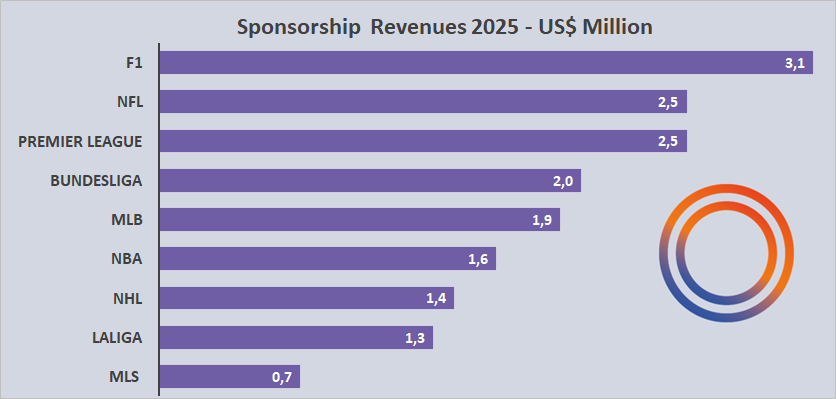
Formula 1 has quietly turned into the most crypto-friendly grid in global sport. Total sponsorship spend across the 2026 season is projected to clear $3 billion, and a growing share of that money is coming from exchanges and Web3-native brands chasing the same thing F1 itself sells, speed, precision, and split-second decision-making under pressure. No other global league has anywhere near the density of crypto branding currently parked on the side of a race car and few partnerships capture why that trend makes better sense than the one between Zoomex and the TGR Haas F1 Team.

Source: Sports & Entertainment Trends
The Season So Far: A Storyline Worth Backing
It helps that the team Zoomex chose to back is actually giving fans something to watch right now. Through the first half of the 2026 season, Haas sits seventh in the Constructors’ Championship with 21 points, solidly the leader of F1’s midfield pack, ahead of Williams and well clear of Audi and Aston Martin. Almost all of that points haul has come from one driver, Ollie Bearman, who’s outscored teammate Esteban Ocon 18 points to 3, and is currently winning the head-to-head battle across qualifying, races, and sprints by a wide margin.

The last few rounds have shown both sides of that story. At Monaco, Ocon clawed his way to ninth place in a chaotic, red-flagged Grand Prix that saw four other cars retire with reliability issues, a rare points finish for the Frenchman in a season where he’s mostly been fighting Bearman rather than the field. Then, at the Austrian Grand Prix on June 28, the form flipped: Bearman crossed the line 14th and Ocon 16th, both a lap down on race winner George Russell, in a Mercedes-dominated weekend that also saw Max Verstappen produce one of his strongest drives of the year following a Red Bull upgrade. It’s the kind of midfield grind, a points finish one week, an anonymous Sunday the next, that defines a long F1 season far more than any single highlight reel moment.
That grind is exactly the backdrop against which the Zoomex partnership makes sense. Ocon is racing this season under real pressure, with his Haas seat for 2027 reportedly tied to outperforming Bearman, Bearman, meanwhile, is doing to his more experienced teammate this year roughly what he did to the rest of the F2 grid before he ever got the call to Formula 1, quietly accumulating results until people stop calling him a rookie. A brand that’s been with him since before any of that started gets to tell a much better story than one that signed on after the points were already on the board.
Zoomex and Haas: A Partnership Built on More Than a Logo
Zoomex signed on as Haas’s crypto partner in March 2025, and ahead of the 2026 FIA Formula 1 World Championship, the two sides renewed the deal for a second season, with Zoomex returning as the team’s Official Crypto Exchange Partner. The branding isn’t a small sticker on the rear wing, ZOOMEX runs across the barge-boards and nose of the VF-26, the team’s 2026 challenger, as well as the race suits worn by Esteban Ocon and Ollie Bearman every Grand Prix weekend. The renewal was announced alongside the VF-26’s launch in Q2 2026, timing the partnership’s relaunch to the exact moment fans were paying the most attention to the new car.

What sets the partnership apart from a standard logo placement is the story behind it. Zoomex has backed Bearman since 2023, well before his move from Formula 2 into a full-time F1 seat, and well before anyone outside the paddock knew his name. A platform that builds its users from their very first trade, attached to a team that’s been developing a driver since his junior career: it’s the same patience-and-development philosophy applied to two different arenas, and it gives the sponsorship a continuity that’s hard to manufacture after the fact. It’s also a continuity that’s now paying off on the timing front, the same driver Zoomex backed as an unproven F2 graduate is, two years later, the highest-scoring driver on the team carrying its logo.
That continuity has been visible throughout the 2026 season. Zoomex framed the year as its “Road to the Championship” initiative, timing the campaign launch to coincide with Haas unveiling the VF-26, and pairing the team activation with the continuation of its global brand ambassador deal with World Cup-winning goalkeeper Emiliano Martínez.

The framing connects two very different fields, motorsport and football, around the same idea, outcomes get decided by stability and execution under pressure, not just raw speed. For the community, the initiative has translated into VIP race-day access, exclusive content tied to Grand Prix weekends, and trading rewards timed to coincide with the calendar’s biggest moments, turning the abstract idea of a “season-long campaign” into something fans can actually participate in race by race, not just watch from the sidelines.
In April, Zoomex took that idea directly to its community with a live AMA titled “Speed You Can Trust,” hosted by the platform’s own Marketing Director, Fernando Lillo, and featuring Bearman alongside crypto analyst CryptoRover and the WallStreetBets community.

Fans who tuned in, followed the official channels, and engaged in the live Q&A were eligible for a $1,000 USDT reward pool, split between an early-access reward for following and reposting the announcement and a live-interaction pool for fans active during the session itself, a fan-engagement format that turns a sponsorship into an actual two-way conversation rather than a one-way billboard.
Why “Speed You Can Trust” Is More Than a Tagline
That title isn’t just a clever name for one livestream, it’s the operating thesis of the whole partnership, and it’s backed by substance rather than slogans. While several rival exchanges have learned the hard way what happens when growth outpaces security, most notably the $1.4 billion hack that ended one competitor’s own F1 run in 2025, Zoomex has built its activation on the opposite foundation.
The platform has passed security audits from blockchain auditor Hacken, and holds regulatory registrations spanning Canada and U.S. MSB status, U.S. NFA membership, and Australia’s AUSTRAC. On the trading side, Zoomex operates with 600+ trading pairs, leverage up to 150x for traders who want it, and optional No-KYC access for those who’d rather get straight to trading, serving a user base of more than 3 million people across 35+ regions, scale that’s grown alongside, not despite, its compliance footprint.
That combination, global reach with a regulatory paper trail is precisely what makes the Haas alignment feel less like sponsorship-as-marketing and more like sponsorship-as-mirror. Haas has spent recent seasons quietly building one of the most-improved cars in the midfield through consistency rather than splashy spending; Zoomex has spent the same stretch building its user base through reliability rather than hype. Two organizations betting that doing the unglamorous things right, race after race, eventually shows up in the results.
What’s Next on the Road to the Championship
With sixteen rounds still left on the 2026 calendar, Ocon racing for his Haas future and Bearman racing to confirm he’s outgrown the “promising rookie” tag, the on-track half of this story has plenty of drama left to deliver. The off-track half should keep pace with it, expect more fan-facing activations in the Zoomex mold, AMAs, trading rewards tied to race weekends, and continued VIP access for the community, as the exchange keeps using the team’s progress through the rest of the season as the backdrop for its own “Road to the Championship” narrative.
Follow the journey race by race on zoomex.com, the official Zoomex × TGR Haas F1 Team hub, and @ZoomexOfficial on X. For more on the platform itself, security audits, licensing, and product updates, the Zoomex blog has the full picture.
The post Formula 1 & Crypto: How Motorsport Became Web3’s Favorite Playground appeared first on BeInCrypto.

Crypto World
U.S.’ OFAC adds four Iran central bank crypto wallets to sanctions, Tether freezes $131 million of USDT


The U.S. added four crypto wallets linked to the Central Bank of Iran to its sanctions list after a ceasefire agreement between the two countries broke down and air and drone strikes resumed.
The four Tron-blockchain wallets had received more than $165 million in stablecoins, according to Chainalysis. Tether blocked $131 million in USDT held by the accounts, though some of the funds had moved before the freeze.
Sanctioning the wallets gives exchanges, custodians and compliance firms a clear set of addresses to screen for. Iran’s central bank has accumulated at least $507 million in USDT, according to Elliptic, using the token to support the rial.
The U.S. Treasury Department’s Office of Foreign Assets Control (OFAC) has said its published wallet lists are not exhaustive, meaning other addresses controlled by the bank may still qualify as blocked property.
Tuesday’s OFAC update expands on an existing designation rather than imposing new sanctions. The Central Bank of Iran has been blocked under U.S. counterterrorism authorization since 2019 over its support for the Islamic Revolutionary Guard Corps-Qods Force and Hezbollah.

TL;DR
- XLM is trading higher on Thursday after defending key support levels earlier this week.
- Rising Open Interest (OI) and positive funding rates suggest fresh capital is flowing into both markets.
- XLM remains below major resistance levels despite showing signs that bearish momentum is fading.
Stellar’s XLM continues its recovery on Thursday, supported by improving derivatives metrics and stabilizing technical indicators after the cryptocurrency defended key support levels earlier in the week.
Open Interest climbs as traders return
Derivatives data points to renewed confidence among market participants. According to CoinGlass, XLM Open Interest climbed from $153 million on Monday to around $195 million, up 25% in the last 24 hours.
The simultaneous rise in prices and Open Interest suggests fresh capital is entering the market rather than traders simply closing positions. This typically signals strengthening conviction behind the current recovery.
Market sentiment has also improved across perpetual futures markets. XLM recorded positive funding rates after turning positive on Tuesday.
Positive funding rates indicate that traders holding long positions are paying a premium to maintain their exposure, reflecting growing bullish sentiment.
While derivatives indicators have strengthened, on-chain metrics paint a mixed picture. CryptoQuant indicates that XLM continues to experience selling-side dominance across both spot and derivatives markets, suggesting larger traders remain hesitant despite the recent rebound.
This imbalance could limit the pace of any sustained upside move.
XLM technical analysis: Recovery faces multiple technical barriers
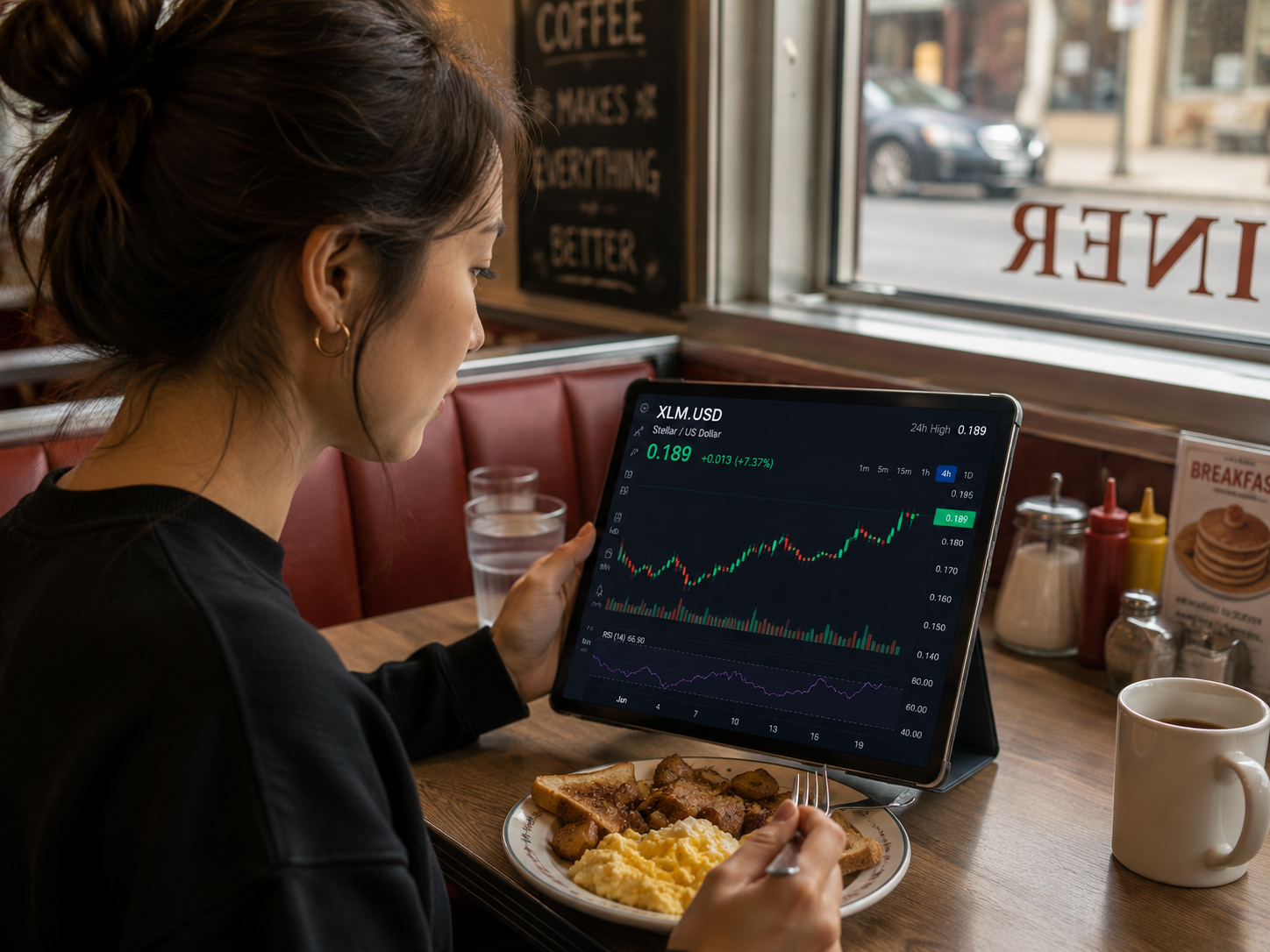
Stellar traded around $0.189 on Thursday after bouncing from support near $0.177.
However, XLM continues to trade below the 50-day EMA at $0.190 and the 200-day EMA at $0.196
The token is currently hovering just above its 100-day EMA at $0.187, providing immediate support.
Momentum indicators suggest buyers are gradually returning but remain cautious. The RSI is near 49, reflecting neutral momentum without a clear bullish bias.
Meanwhile, the MACD remains slightly below zero, indicating bearish pressure has weakened but has not fully disappeared.
If the rally persists, the first major resistance lies at the 50-day EMA of $0.190. A decisive break above this level will expose higher hurdles at $0.196 (200-day EMA) and $0.218.
A sustained move above $0.200 would strengthen the case for a broader recovery.
However, if the bearish trend resumes, the bulls would need to instantly defend the $0.187 support level.
Failure to defend this support could see XLM retest lower demand zones at $0.177 and $0.142 in the near term.

XLM is showing encouraging signs of recovery as derivatives activity strengthens and funding rates turn positive.
However, XLM continues to face heavier selling pressure from larger market participants.
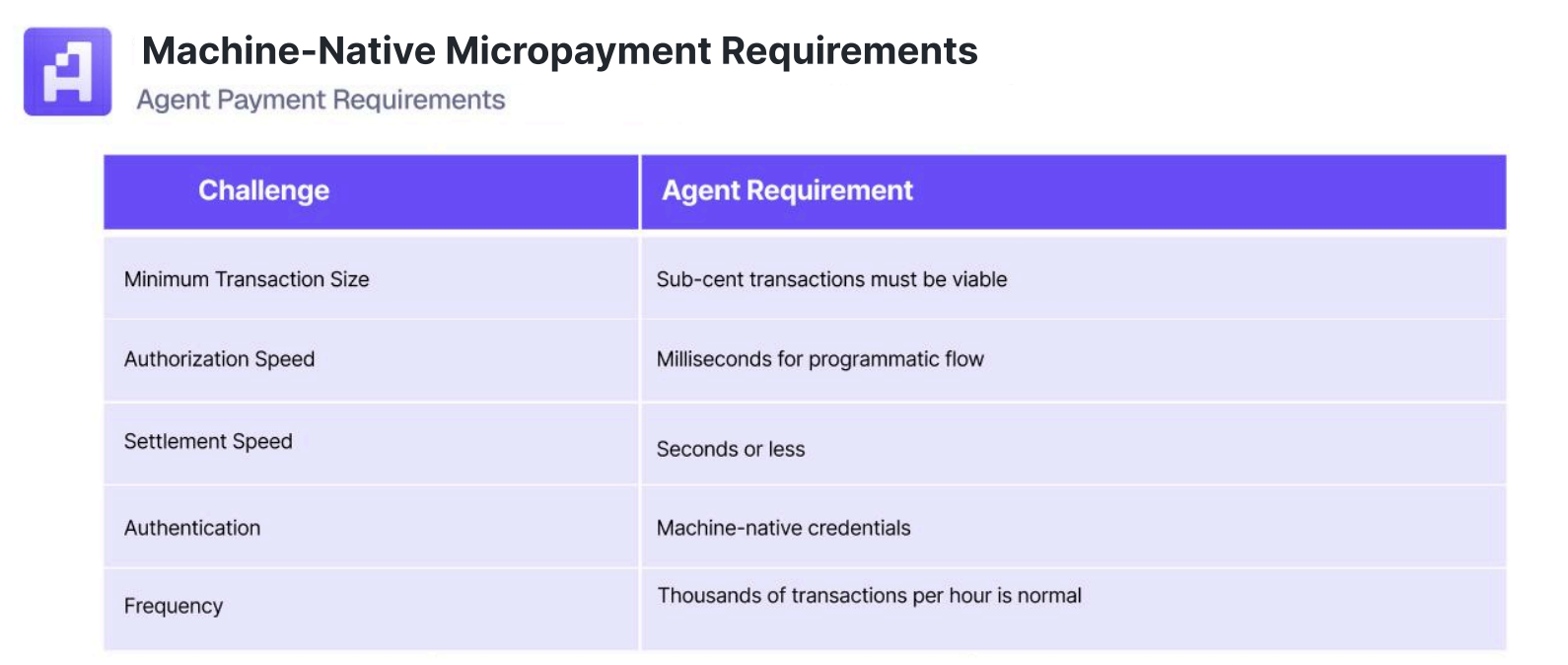
Artificial intelligence (AI) agents are posing a challenge to the incumbent global card payments infrastructure that is struggling to process high-frequency micropayments, according to a joint report released by payments giant Visa and investment thesis platform Artemis.
The joint report published Wednesday found that traditional cards were built for human commerce with low-frequency transactions, which is insufficient for AI agents, which need infrastructure with near-zero fees and faster settlement to make agentic micropayments commercially viable.
New infrastructure is increasingly necessary since AI agents crossed a key capability threshold in mid-2025, enabling them to discover unfamiliar APIs, evaluate prices and decide on autonomous payments.
The report found that AI agents are initiating a foundational change in commerce, but the current infrastructure gaps are limiting their mainstream adoption.
Australian crypto exchange Swyftx earlier this week said that AI-enabled microbusinesses could drive an additional $262 billion in stablecoin volume by 2033, via AI-native payments settled in stablecoins, based on an assumed adoption rate of about 33%.
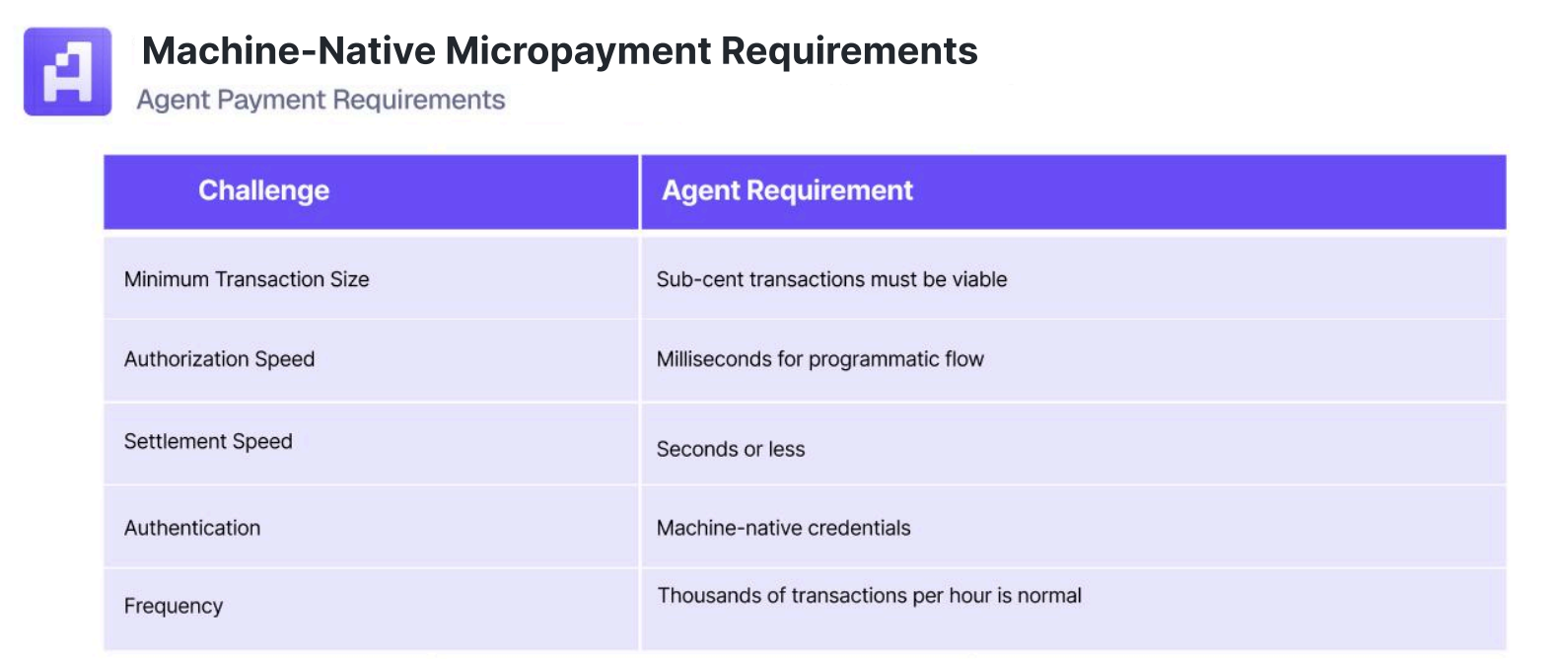
Machine-native micropayment requirements. Source: Artemis, Visa
Some agentic payment standards are already showing signs of user adoption, such as the x402 payment protocol developed by Coinbase.
The x402 prot processed $15 million in adjusted volume across over 109 million adjusted transactions since it was launched in May 2025. It saw a sharp acceleration in October 2025, when the monthly transaction count rose from 40,000 to 3.8 million, leading to 38 million transactions processed in October alone.
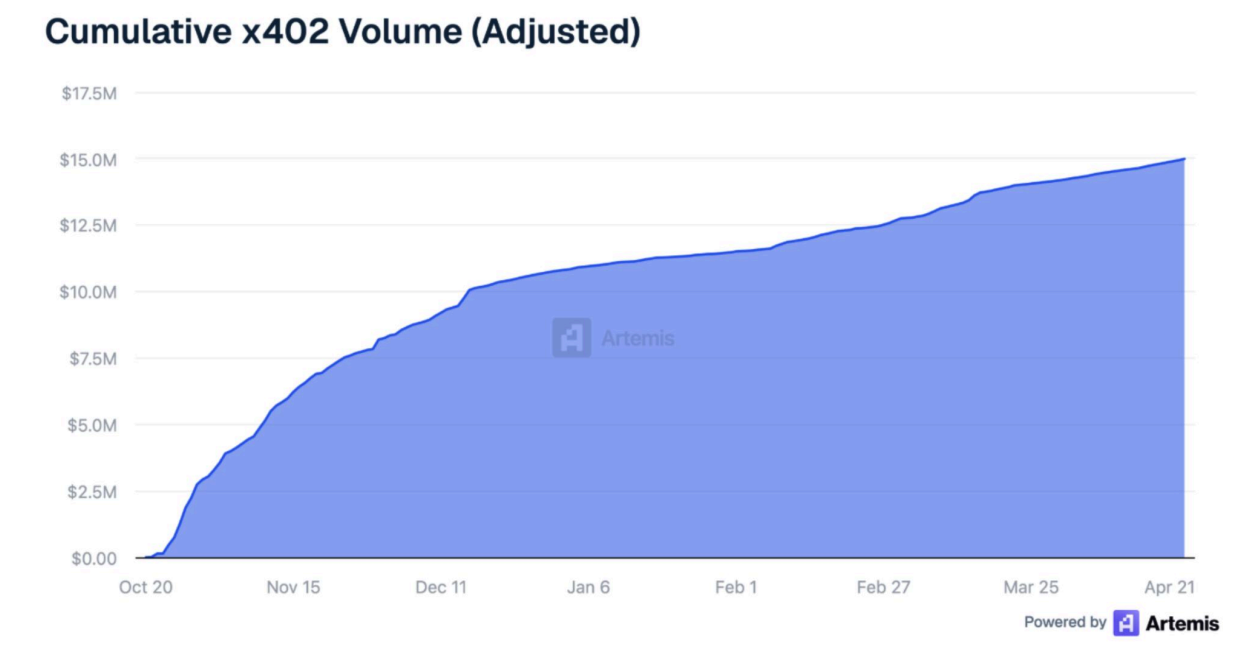
Cumulative adjusted volume on x402 payment protocol. Source: Artemis, Visa
Stablecoins could stoke machine-native micropayments growth
A single machine-payments framework could support both stablecoin and traditional card transactions, Visa and Artemis said, adding:
“The trajectory points toward convergence rather than competition: cards for proxy purchases inside existing merchant networks, stablecoins for machine-native micropayments, and hybrid flows where both are used within the same workflow.”
Related: Stripe, Advent offer $53B to acquire PayPal: Report
The report said that a single machine payment framework can support both stablecoin-based flows and card transactions, creating a path into agentic payment flows for card networks.
It added that Tempo’s Machine Payment Protocol (MPP) now spans both onchain crypto payments and fiat payments via shared payment tokens. Visa said its Card Specification SDK was designed to extend the protocol into card-based agent commerce.
Visa’s crypto division and Stripe-backed Tempo both launched AI tools in March. Visa’s allows AI agents to make same-day payments. That month, Tempo debuted its Machine Payments Protocol, designed to make it easier for AI actors to send and receive money.
Magazine: AI’s power crunch turns Bitcoin miners’ grid access into an asset
Crypto World
Bitcoin retreats from monthly high as Iran attacks U.S. bases and profit-taking sets in
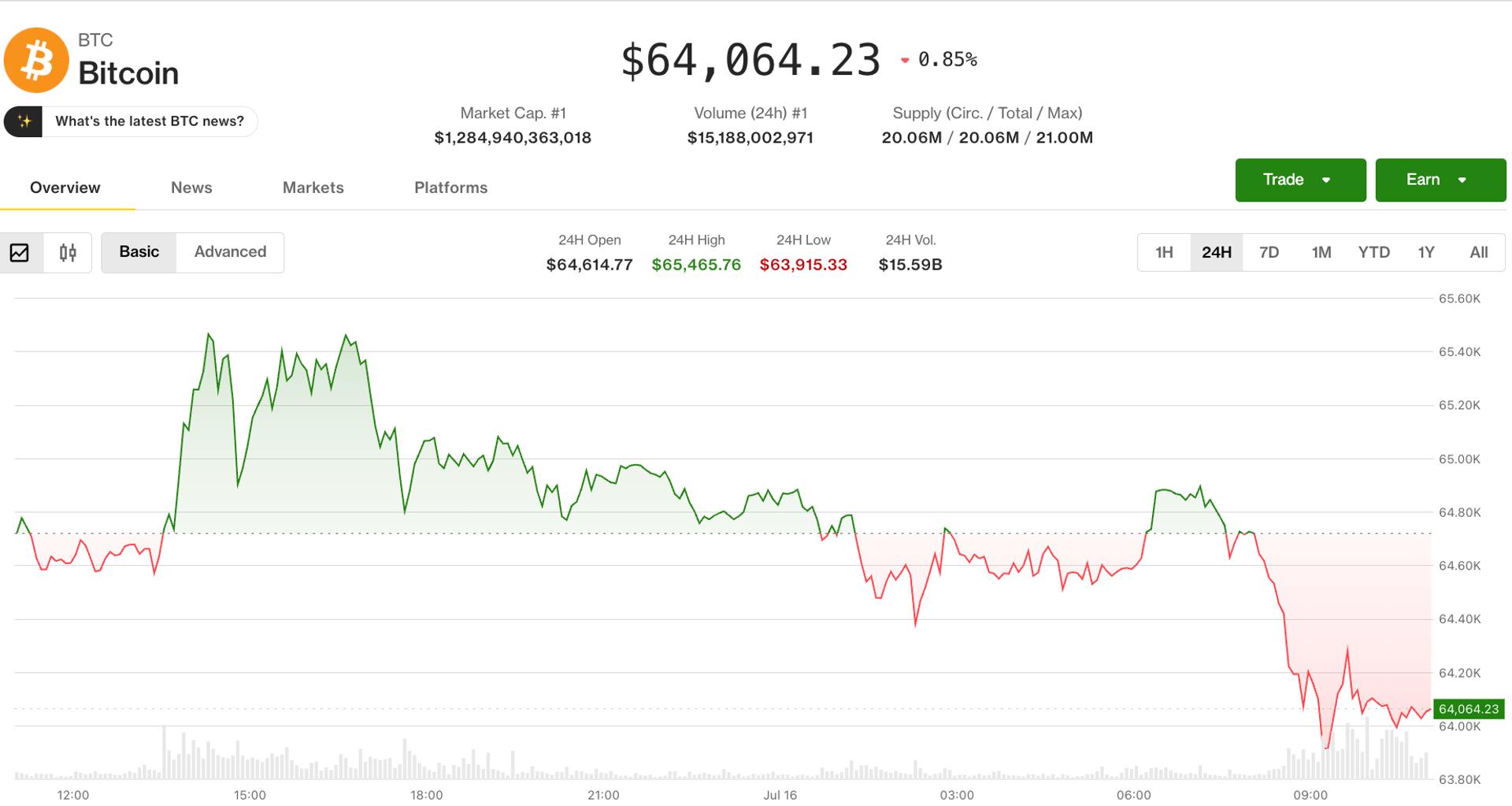
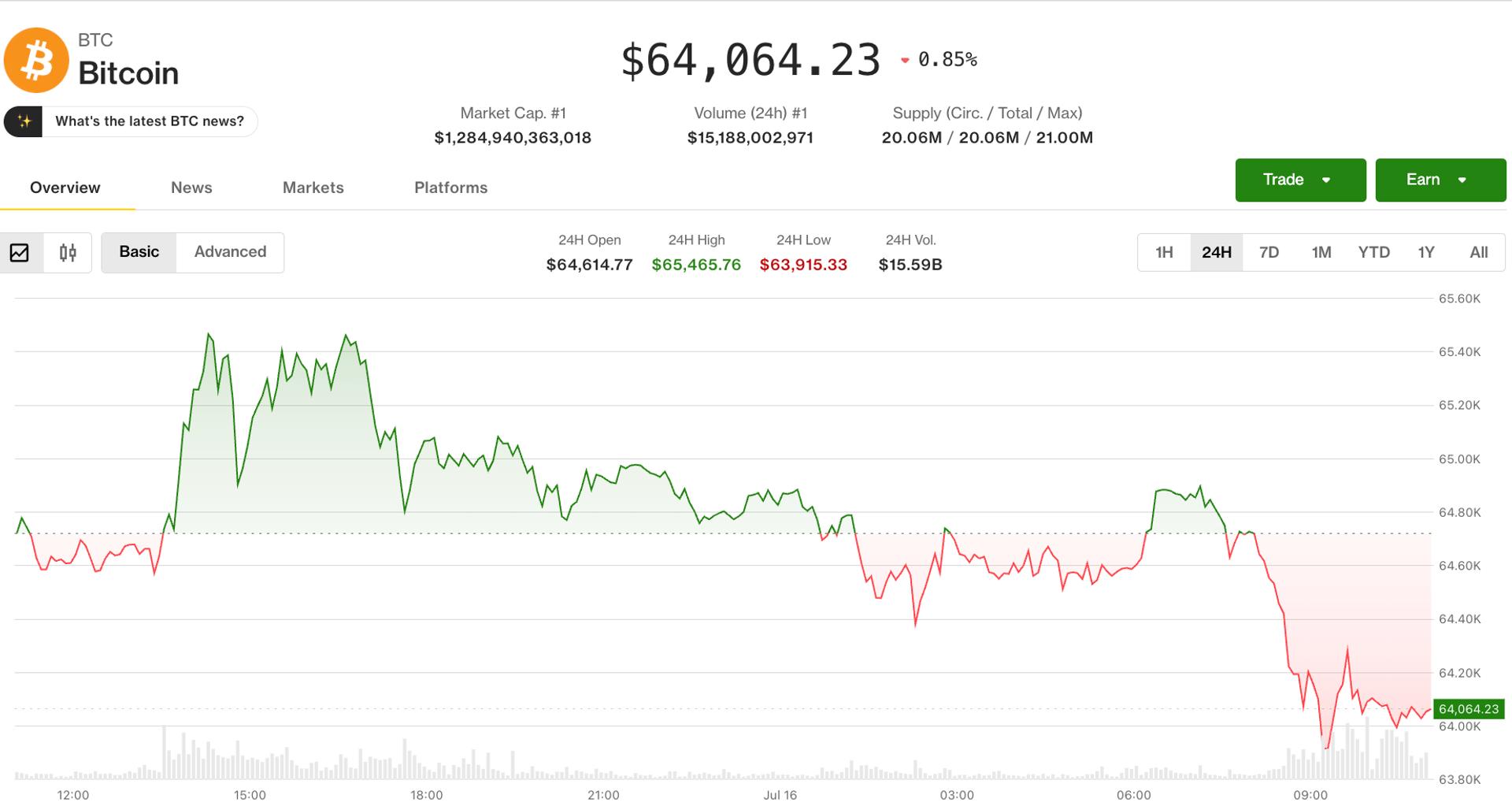
The crypto market is facing a wave of sell pressure with bitcoin and ether (ETH) losing 1.1% and 1.7%, respectively, since midnight UTC.
The shift to the downside comes after bitcoin rose to a monthly high of $65,500 on Wednesday, prompting some traders to take profits.
Altcoins PUMP and ZEC also declined, falling 4.4% each after Tuesday’s strong rallies faded, highlighting a lack of liquidity in both directions.
U.S. equities also lost ground. Futures on tech stock-dominant Nasdaq 100 index retreated by 0.25%, extending a downtrend that began 30 days ago.
One of the main catalysts for price action across all asset classes is the war in Middle East, with Iran launching attacks on U.S. military bases in neighboring Gulf states on Thursday and the U.S. continuing its wave of airstrikes.
Derivatives positioning
- Ether’s price has dropped by 1.7% since midnight UTC, slightly more than the decline in bitcoin. ETH’s underperformance seems driven by bullish plays unwinding rather than aggressive new short selling. That’s evident from the decline in open interest (OI) to 14.35 million ETH from the five-week high of 14.45 million ETH hit Wednesday. Futures tied to BTC show similar dynamics.
- Meanwhile, OI in XRP rose to a 10-day high of 2.21 billion XRP alongside a 0.6% drop in the spot price. This combination is taken to represent a growing bias for bearish exposure, although XRP’s positive funding rates contradict that interpretation. That said, the 24-hour cumulative volume delta (CVD) for XRP is negative, meaning short plays are being executed at market orders rather than passive limit orders.
- Another notable open interest gainer is SUI, the native token of the Sui blockchain. Positions have increased by 15%, although the total OI of 654 million tokens remains in line with levels seen earlier this week. The SUI token has dropped almost 2% over 24 hours.
- Broadly speaking, most coins, except BTC, ETH and XMR, have a negative 24 hour OI-adjusted cumulative volume delta (CVD), a sign of bears leading the price action.
- Bitcoin’s 30-day implied or expected volatility index is up 2% at 38%. Volatility tends to be mean-reverting, and, historically, sub-40% readings have consistently presaged renewed market turbulence.
- In Deribit-listed options, there has been a notable rise in both trading volume and open interest in BTC calls at $70,000 and $72,000 strikes. This likely reflects a large bull call spread that crossed the tape recently. The strategy bets that prices will rally to $72,000 by the end of July.
- In ETH’s case, the end-July expiry call at the $2,300 strike is the most traded bet of the past 24 hours. A call represents a bullish bet on the market.
Token talk
- Artificial intelligence token defied bearish crypto price action on Thursday, rising by 3.5% since midnight as it looks to test the $2.20 level of resistance, which caused a rejection and subsequent drop to $1.85 on July 2.
- The rest of the altcoin market tracked bitcoin and ether, with coins including HYPE, SOL and ENA losing 1.3%-1.8% since midnight while NEAR, JUP and DASH posted steeper losses.
- CoinMarketCap’s “Altcoin Season” indicator is still range-bound, currently at 48/100 after losing its perch at 58/100 on Monday as investors switched focus back to bitcoin.
- One recent area of interest in the altcoin sphere has been memecoins, notably tokens launched on Robinhood’s new blockchain. One, cashcat (CASHCAT), rose from relative obscurity to a $220 million market cap in its first week of Robinhood Chain going live. It has since fallen back to a $91 million market cap despite maintaining around $60 million in daily trading volume.
Crypto World
Ripple XRP ETF Inflows Near Zero as Institutional Demand and On-Chain Activity Fall Together

U.S. spot Ripple XRP ETFs pulled in just $107,000 on July 10, a number that reads less like a data point and more like a rounding error for a product complex that absorbed over $100 million in a single month two months prior.
Total XRP AUM across the seven funds has slipped below $1 billion to roughly $996 million, ending a run that once looked like one of the more durable institutional accumulation stories in the current crypto ETF cycle.
The question the data forces onto the table is not whether institutional appetite has cooled; it clearly has, but whether this is a pause in a structural allocation thesis or the beginning of a more sustained withdrawal.

The answer matters directly for XRP price, which has so far held above $1 despite both retail and institutional demand drying up simultaneously.
Discover: The Best Token Presales
From $100M Months to Near-Zero: The Flow Reversal in Detail
The deterioration in crypto ETF flows for Ripple XRP has been swift. May 2026 saw the product complex take in well over $100 million for the whole month with money still flowing into the funds week after week.
July has inverted that picture entirely. Several other days this month have recorded flat zero inflows, and July 8 logged $7.29 million in net outflows, one of the largest single-day losses since March 2026.

But the pace of accumulation has decelerated from a structural bid to a near-standstill in the span of six weeks, and the concentration of July’s outflows in a single issuer suggests this may reflect fund-specific redemption pressure rather than a coordinated institutional exit across the board. That distinction is worth tracking as July’s flow data completes.
Discover: The Best Crypto to Diversify Your Portfolio
What Reverses the Trend For Ripple, and What Doesn’t
Ripple’s RLUSD stablecoin is already settling around $2.5 billion in volume on the XRP Ledger, and roughly $4 billion in tokenized real-world assets now live on the network.
Native lending is coming in the ledger’s next major upgrade, and an Ethereum-compatible sidechain is already live. If any of those use cases generate sustained on-chain demand, measurable in active addresses and new wallet growth, not just volume figures, the network activity picture changes, and ETF demand could follow usage signals back into accumulation mode.
If none of those catalysts generate traction, the asset continues drifting sideways, propped up by its large-holder base while institutional allocators wait for clearer confirmation before adding.
The bearish scenario for XRP price is not a sudden collapse; it is a prolonged grind in which the cold-storage support gradually erodes if ETF outflows persist long enough to signal a real shift in institutional conviction rather than a temporary pause.
The broader crypto ETF flow environment matters here, too. If Bitcoin ETF inflows reaccelerate and macro risk appetite improves, XRP ETFs may see renewed inflows as institutional rotation returns.
The July data is a meaningful warning sign, but it is one data point within a product complex that absorbed nearly $1.5 billion in cumulative inflows since launch, and institutional patience has been demonstrated. Whether that patience survives another month of sub-$1.10 prices and dormant on-chain metrics is the question July’s remaining flow data will begin to answer.
Don’t Miss Out on Our $1,000 USDT Airdrop on ByBit
The post Ripple XRP ETF Inflows Near Zero as Institutional Demand and On-Chain Activity Fall Together appeared first on Cryptonews.


Visa has outlined how stablecoins and traditional card networks can work together in AI-driven commerce, arguing that low-cost blockchain payments will be critical as software agents begin handling machine-to-machine transactions.
Summary
- Visa and Artemis said stablecoins are better suited for low value AI driven machine payments, while cards remain effective for consumer purchases.
- The report said future agentic commerce will combine card networks and stablecoins instead of treating them as competing payment systems.
- Visa said legal responsibility and payment dispute rules remain unresolved as AI agents begin completing transactions independently.
According to a joint research report released on Wednesday by Visa and blockchain analytics firm Artemis, the rise of agentic commerce will create two distinct payment needs, with existing card networks continuing to support consumer purchases while stablecoins become more practical for frequent low-value payments between software systems.
The report, titled Agentic Payments from the Ground Up, examines how AI agents could independently initiate and complete transactions as they carry out tasks on behalf of users or other software.
Visa and Artemis divided the emerging market into macro-commerce and micro-commerce. Macro-commerce covers consumer-sized purchases, such as booking travel or managing subscriptions, where AI agents act on behalf of people. Micro-commerce involves repeated sub-dollar transactions between software services, including API requests and payments for computing resources.
Stablecoins fit machine-to-machine payments
The report said traditional payment rails remain well suited for larger consumer purchases, but fixed processing costs make very small payments uneconomical. It added that newer blockchain networks have reduced settlement costs to fractions of a cent, making stablecoins a more efficient option for machine-native micropayments.
Rather than replacing existing payment systems, Visa said both technologies are expected to operate together.
“In all likelihood, this won’t come down to a choice between cards and stablecoins. Both will have a place,” the company said. Visa added that cards are suited to purchases within today’s merchant networks, while stablecoins better match machine-native micropayments.
The report said future agentic commerce is likely to combine both payment methods within a single workflow. Under that model, AI agents could use card networks for consumer-facing purchases before relying on stablecoins to settle repeated low-value transactions between software services.
Visa also said the distinction between card-based and crypto-native payment systems is becoming less clear. The report noted that card-focused initiatives such as the Trusted Agent Protocol, Agent Payments Protocol and Visa Intelligent Commerce are adding stablecoin support, while crypto-native projects are incorporating trust and verification features commonly associated with traditional payment infrastructure.
The company said its long-term approach is to combine card-based authorization and security with blockchain-based settlement while allowing both systems to interoperate.
Legal and trust questions remain
Despite the payment advances, Visa said trust remains one of the biggest obstacles to agentic commerce because existing legal and payment systems assume that a human is making purchasing decisions.
The report said current laws do not clearly define responsibility when AI agents complete transactions independently, while chargeback rules and dispute processes were built for human-paced commerce rather than automated systems capable of completing thousands of transactions every hour.
The latest findings build on Visa’s recent work around AI-powered commerce and stablecoins. Earlier this year, the company introduced Visa Intelligent Commerce, an Agentic Directory and Agent Score tools designed to support trusted AI-driven payments. It also announced a partnership with OpenAI to enable secure Visa payments inside agentic commerce experiences.
Stablecoins have become another focus of the company’s payment strategy. In July, Visa joined Mastercard, Coinbase, and more than 140 businesses to launch the Open Standard consortium, which plans to issue the Open USD stablecoin for business payments and settlements. Visa has also continued expanding stablecoin settlement across its network, saying earlier this year that its annualized settlement run rate had reached about $7 billion and that more than 160 stablecoin-linked card programs were live or under development.
The company has also continued linking digital assets with traditional payments. Earlier this week, Visa partnered with HashKey Exchange and Shanghai Commercial Bank to launch a co-branded credit card in Hong Kong that lets eligible users convert card rewards into vouchers redeemable for cryptocurrency purchases or trading fees on the licensed exchange.
Bitcoin price has retreated after failing to hold above $65,000 despite softer U.S. inflation data, leaving traders split over whether the latest pullback is a pause before another breakout or the start of a deeper correction.
Summary
- Bitcoin price failed to hold above $65K as whale selling and profit-taking capped the CPI-driven rally.
- Long liquidations and dense leverage clusters have shifted focus toward the $63K-$63.8K support zone.
- Analysts say a daily close above $65K is needed to revive bullish momentum and target higher levels.
According to data from crypto.news, Bitcoin (BTC) price climbed to nearly $65,470 after lower-than-expected U.S. CPI and PPI reports strengthened expectations that the Federal Reserve could avoid further policy tightening in the short term.
The rally lost momentum almost immediately as sellers emerged around a major resistance zone, pushing Bitcoin back toward $64,000. Market sentiment has turned cautious as traders weigh improving inflation data against renewed macro and on-chain headwinds.
Glassnode data shows long-term holders used the rally to reduce exposure, with investors who accumulated near last year’s highs selling into strength instead of waiting for higher prices. At the same time, short-term traders and whales locked in profits near resistance, limiting follow-through buying after the inflation-driven move. Spot Bitcoin ETF demand also slowed after several sessions of strong inflows, leaving thinner liquidity during the rejection.
A rapid unwind in derivatives added to the decline. Funding rates had risen across major offshore exchanges as leveraged long positions accumulated before the CPI release. Once Bitcoin slipped below the $64,400 area, automated liquidations accelerated selling pressure and pushed the price toward an intraday low near $63,900.
CoinGlass liquidation data continues to show dense leverage clusters above the market around $65,000-$65,500 and another concentration below $63,000, raising the likelihood of sharp volatility in either direction.
Bitcoin price still holds an uptrend while $63K remains intact
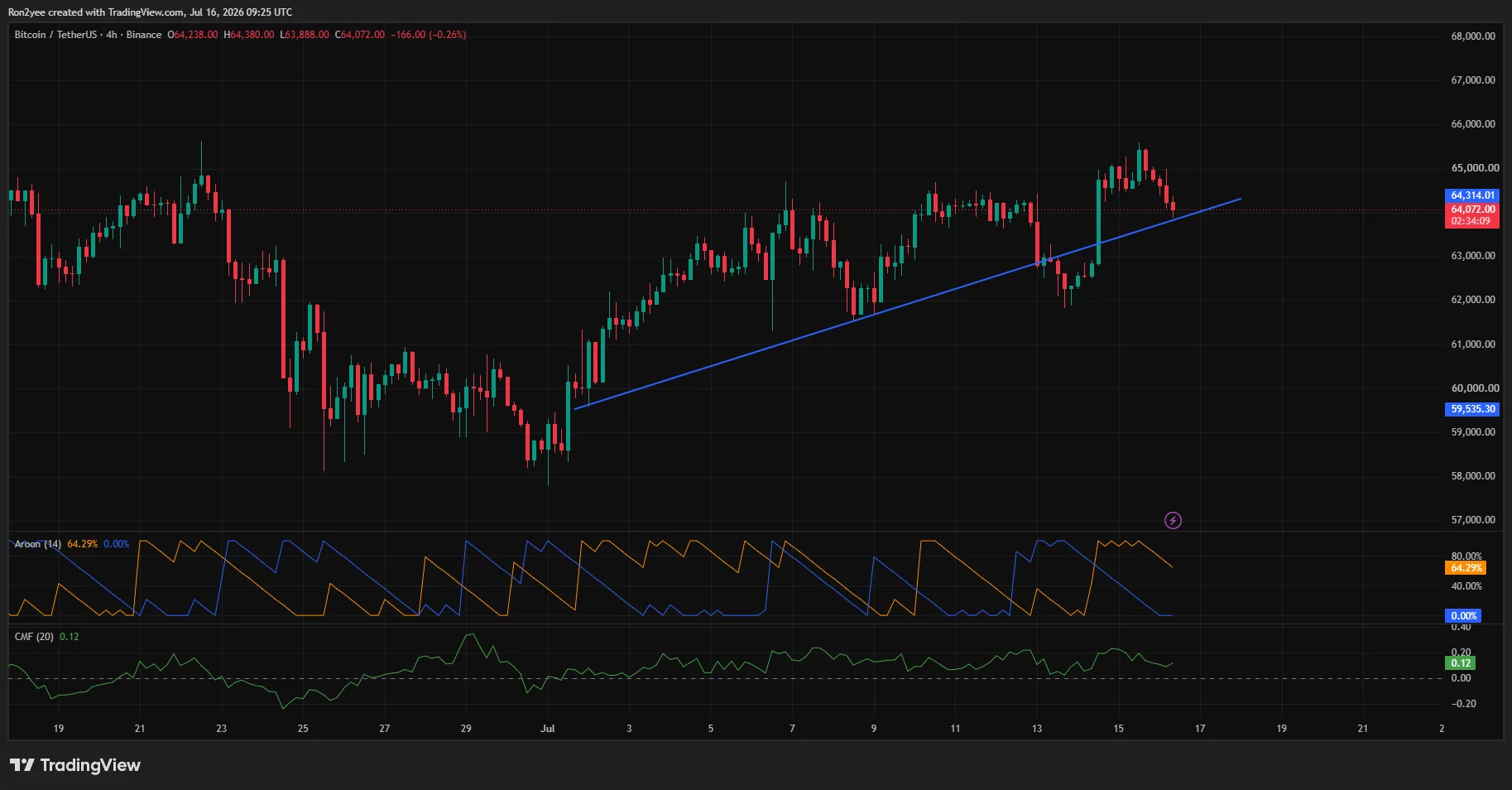
The 4-hour chart shows Bitcoin maintaining an ascending trendline that has supported every major pullback since early July. BTC price briefly broke below the trendline before reclaiming it, but the latest rejection has returned it to that support area around $63,800-$64,000.
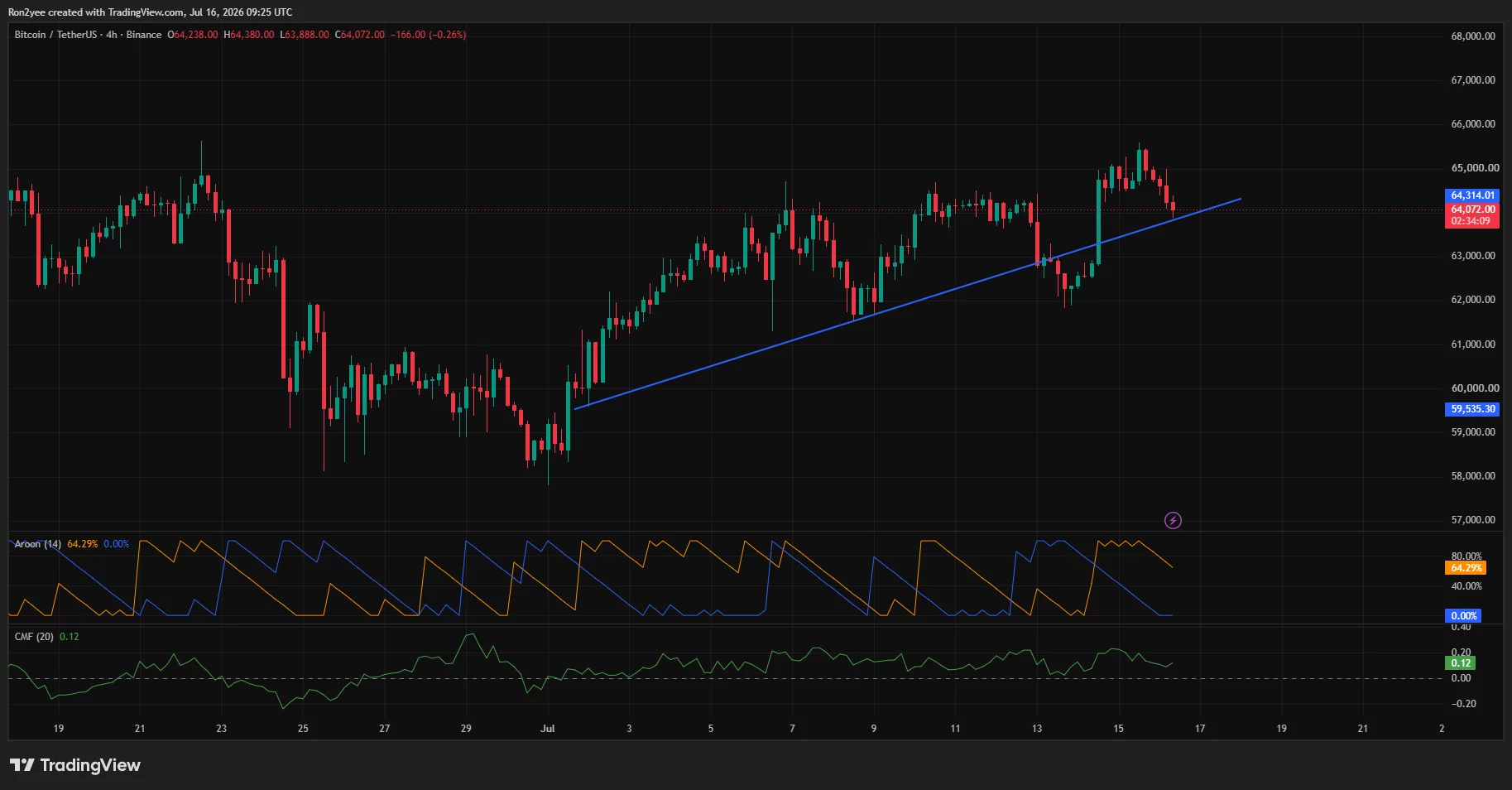
Aroon Up remains above 64 while Aroon Down sits near zero, suggesting buyers still control the intermediate trend despite the recent setback. Chaikin Money Flow also remains positive at 0.12, showing capital has not exited the market aggressively.
The daily chart presents a more balanced picture. Bitcoin has struggled to reclaim the 78.6% Fibonacci retracement level near $63,205 on a sustained basis while facing repeated rejection below $65,500.
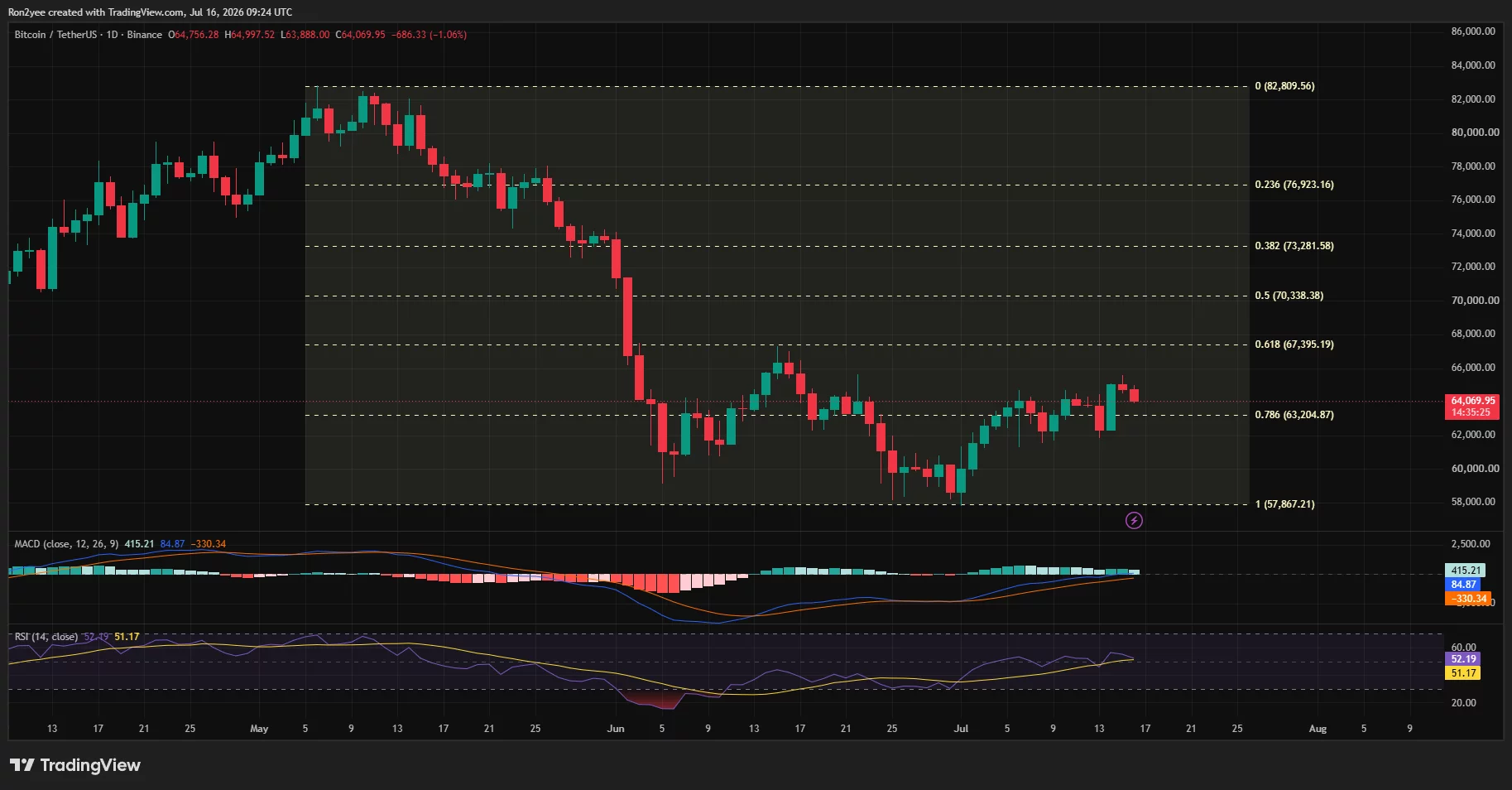
The MACD remains above its signal line, but the histogram has started to flatten, showing upside momentum has slowed. Meanwhile, the RSI hovers around 52, leaving room for another move in either direction without entering overbought or oversold territory.
Commenting on the latest move, analyst Ted Pillows argued that Bitcoin needs stronger confirmation before another leg higher.
“A daily close above $65,000 is needed for strong expansion. Or else, Bitcoin will erase all its short-term gains.”
Trader Lennaert Snyder also believes the rejection does not end the bullish case but requires patience. According to Snyder, the failed breakout near $65,600 leaves more liquidity above current prices, although he expects Bitcoin to first defend the $63,800 region before attempting another advance.
Macro risks and liquidation zones could decide the next move
Several macro risks continue to limit bullish conviction despite softer inflation data. Oil prices have recovered after recent geopolitical tensions involving Iran and the Middle East, raising concerns that inflation could remain elevated later this year. A stronger U.S. Dollar Index has also reduced demand for risk assets, while uncertainty surrounding the distribution of more than 140,000 BTC to Mt. Gox creditors remains a persistent supply overhang.
The technical outlook would weaken if Bitcoin loses the $63,800 support area and closes below the ascending trendline. CoinGlass heatmaps identify heavy liquidation near $63,000 and another cluster around $61,800, making those levels potential downside magnets during a deeper correction.
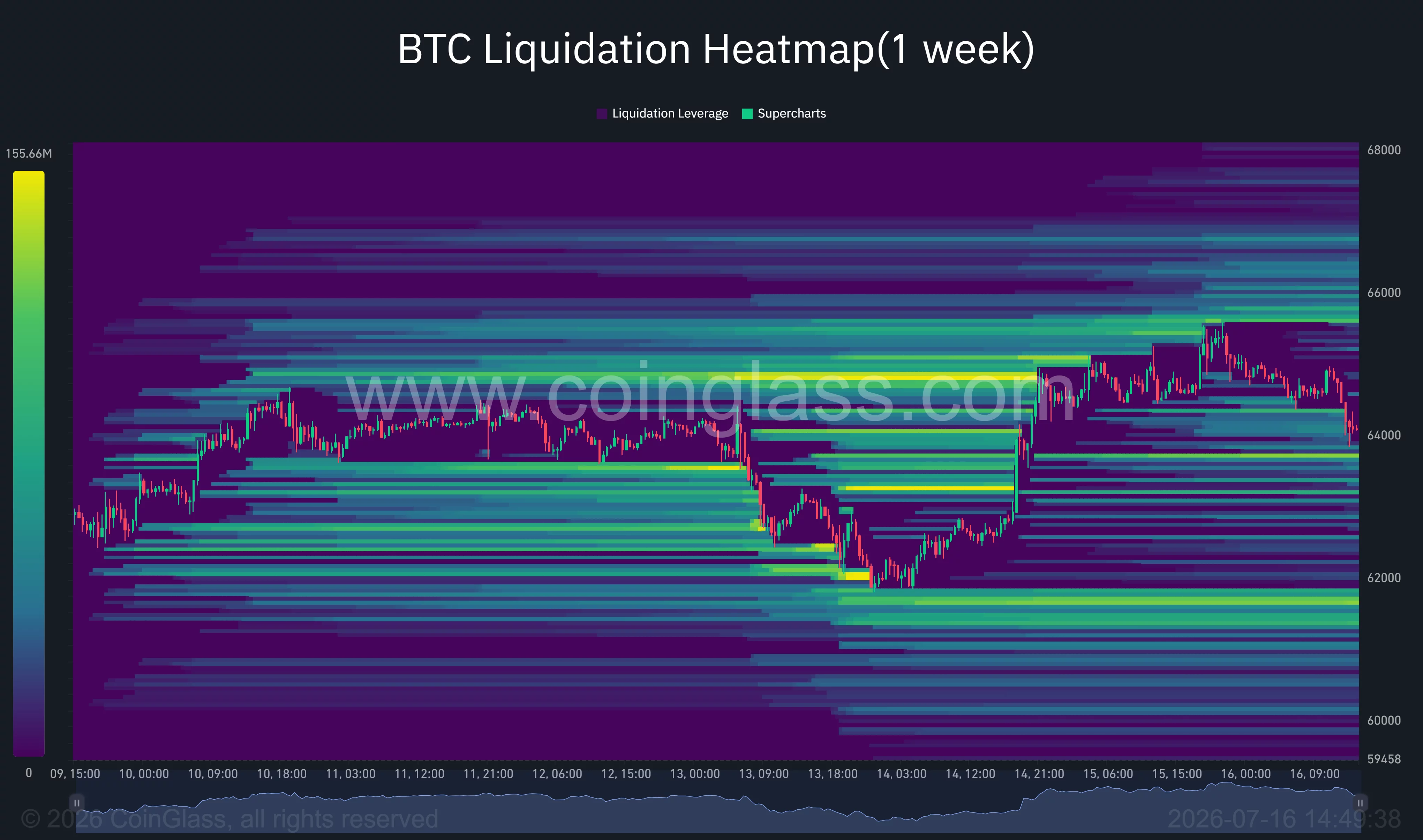
On the upside, reclaiming $65,000 on a daily closing basis would likely expose the $65,500 liquidity pocket before traders begin targeting the $67,000 region.
Disclosure: This article does not represent investment advice. The content and materials featured on this page are for educational purposes only.
Crypto World
WEEX OpenAPI 101: 5 Powerful Modules, AI Trading Tools, and Grab Up to 70% Revenue Opportunities

WEEX is proudly building an open ecosystem where traders, developers, AI agents, and trading platforms all connect through a single, unified infrastructure — the WEEX OpenAPI.
With Binance-compatible integration for a seamless migration path, automated trading workflows built for speed and scale, and real revenue-sharing opportunities for technical partners, WEEX OpenAPI is designed to power the next wave of trading innovation — from algorithmic strategies to AI-driven trading agents.
TL;DR:
- WEEX OpenAPI connects your WEEX account with trading bots, AI agents, quant tools, and custom platforms.
- 70% commissions rebate for brokers, top of the industry.
- Binance-compatible, helping developers migrate with lower learning costs.
- Five API modules cover market data, spot trading, futures trading, affiliate tools, broker integration, and copy trading.
- With AI integration and broader asset support, WEEX API is building an open trading ecosystem for the future.
What Is WEEX API? A Simple Guide to Smarter Trading
The way people trade today is changing. More traders are using bots, quantitative strategies, AI assistants, and custom tools to analyze markets and improve efficiency. But these tools need a way to communicate with exchanges.
That connection comes from API.
API stands for Application Programming Interface. Simply put, it is a set of rules that allows different software systems to communicate and work together.
For trading, WEEX API acts as a bridge between your WEEX account and external applications, allowing authorized tools to access market data and perform trading actions.
With WEEX OpenAPI, users can:
- Connect trading bots and AI tools
- Build automated trading workflows
- Access market data through external applications
- Use personalized trading interfaces
- Create custom strategies and trading solutions
WEEX API is not just a technical tool. It is a connection layer that links traders, developers, AI agents, and the broader trading ecosystem.
Why Choose WEEX API? 3 Key Advantages for Developers and Users
Binance-Compatible: Easier Migration for Developers
Switching API providers often requires developers to rebuild systems and learn new structures.
WEEX OpenAPI is designed to reduce this challenge.
Key advantages:
- Data structures follow Binance API standards
- Parameter naming is highly consistent
- JSON response formats are familiar
- Documentation structure is easy for experienced developers to understand
For developers already familiar with Binance API, WEEX OpenAPI helps reduce migration costs and learning time.
Secure Access: Flexible Permission Management
Security is a core part of API trading.
WEEX API provides:
- API Key management
- Permission controls
- Trading access settings
Users can select different permission levels:
- Read-only access
- Spot trading access
- Futures trading access
This gives users more control over how external applications interact with their accounts.
High-Performance: Built for Trading Automation
Reliable performance is important for automated trading workflows.
Speed and stability are essential for automated trading. WEEX API uses a structured rate limit system to provide reliable performance across different trading scenarios. Non-trading requests support up to 500 requests per 10 seconds through the REQUEST_WEIGHT system, while trading requests are managed through the ORDERS system, supporting up to 30 orders per 10 seconds and 100 orders per minute.
Whether you are running personal strategies or developing professional trading tools, WEEX API helps you execute ideas more efficiently.
Five API Modules for Market Data, Automated Trading, and Ecosystem Growth
WEEX OpenAPI provides five core API modules covering market data access, automated trading, partner solutions, and ecosystem applications. Whether you are a trader, developer, or platform partner, WEEX API helps you build more efficient and flexible trading experiences.
Public API: Access Real-Time Market Data
WEEX Public API provides essential market information, helping users and developers easily connect with WEEX market data. It supports access to exchange information, trading pairs, and market updates, making it easier to build dashboards, analysis tools, and quantitative strategies.
Spot API: Enable Automated Spot Trading
WEEX Spot API allows users to connect external tools and applications with spot trading functions. Through API integration, users can place orders, manage trades, and track order history automatically, creating a smoother and more efficient spot trading workflow.
Futures API: Power Advanced Trading Strategies
Designed for professional traders and developers, WEEX Futures API provides the core functions needed for automated futures trading. Users can manage futures orders, track positions, and connect quantitative strategies or trading bots to execute more advanced trading workflows.
Affiliate and Broker API: Build Connected Trading Ecosystems
WEEX Affiliate and Broker API helps partners manage users, trading data, and platform connections more efficiently. Affiliate API supports user information, trading activity, asset data, and commission management, while Broker OAuth enables faster API Key authorization and smoother user onboarding for brokers, trading platforms, and service providers.
WEEX Copy Trading API: Create Better Copy Trading Experiences
WEEX Copy Trading API provides the foundation for building copy trading products and services. Partners can access lead trader information and trading pair data to create smoother copy trading experiences and help users discover new trading strategies.
Who Can Use WEEX API? Explore Different Trading Possibilities
WEEX API is designed for different types of users, from everyday traders to professional developers and ecosystem partners.
AI-Powered Trading with WEEX API: Make Trading More Intelligent
AI is changing the way users interact with technology and trading tools. Through WEEX API integrations, AI-powered solutions can help users complete trading actions in a simpler and more natural way. For example, after API authorization, users can give instructions like “Buy 1 BTC,” and an AI assistant can understand the request and execute the corresponding action.
WEEX is exploring AI-powered trading experiences through solutions such as WEEX Trader Skill, OpenClaw integrations, and AI Agent tools, making advanced trading capabilities more accessible and easier to use for everyone.
Custom Trading Tools with WEEX API: Trade Your Way
Every trader has different preferences.
Some users prefer:
- Custom dashboards
- Quant platforms
- Trading bots
- Personal strategy systems
WEEX API allows users to connect these tools with their WEEX accounts and continue trading through familiar interfaces.
WEEX API for Developers: Build Tools and Grow With the Ecosystem
WEEX API opens new opportunities for:
- AI Agent developers
- Trading bot developers
- Quantitative teams
- KOLs and KOCs
Developers can build:
- Trading bots
- AI trading assistants
- Quant strategies
- Portfolio management tools
- Trading platforms
But WEEX API is not only about building products. It also creates opportunities for developers to benefit from the ecosystem they help build.
WEEX API Revenue Sharing: Create Tools and Earn From Trading Activity
WEEX provides competitive API commission opportunities for ecosystem partners.
Key benefits include:
- Spot and futures API trading share the same commission structure
- API trading commission rates can reach 50%-60% based on applicable programs
- Eligible Taker orders can participate in commission sharing
Commission comparisons with other leading exchanges:
Exchange
Commision
Broker
WEEX
50%-60%
70%
Binance
30%-50%
N/A
Bitget
25%-50%
N/A
BingX
40%-50%
N/A
Success Case Study: WEEX API Empowering CryptoMind’s Exponential Growth
The remarkable partnership between WEEX and CryptoMind serves as a compelling testament to the high performance and robust capabilities of the WEEX API.
CryptoMind, an AI-powered crypto trading tools platform, integrated with WEEX API through OAuth to enable instant, zero-manual-setup trading access for users. The integration delivered a 1,912.40% increase in API Futures Trading Volume and a 1,300% growth in Active API Traders, demonstrating WEEX API’s ability to power scalable solutions across trading signals, copy trading, bots, and quant platforms.

WEEX API Expands Beyond Crypto: More TradFi Assets Supported
WEEX API continues expanding asset accessibility.
Supported TradFi-related symbols include:
- SPCX
- SNDK
- MU
- NVDA
- TSLA
By supporting popular TradFi assets, WEEX API helps users move beyond crypto-only trading and explore more diversified investment strategies. This expansion enables multi-asset trading, automated strategies, and broader market access through a single API connection, bringing more possibilities to the future of digital asset trading.
How to Use WEEX API: Start in Three Simple Steps
Getting started with WEEX API is simple.
Step 1: Apply for WEEX API Access
Visit the WEEX API Management Center.
Choose your required permissions:
- Read-only
- Spot trading
- Futures trading
Step 2: Submit Your WEEX API Application
After submission:
- Your request enters the review process
- Approval usually takes only a few minutes
Step 3: Create Your WEEX API Key
Once approved, create your API Key and connect:
- Trading bots
- AI tools
- Quant systems
- Custom applications
WEEX API: Building the Future of Open Trading
WEEX API is more than a connection interface. It is an open gateway connecting:
- Traders looking for smarter experiences
- Developers creating innovative tools
- AI agents transforming trading interactions
- Partners building new financial products
As digital asset trading continues to evolve, APIs will become a key foundation for the next generation of trading experiences.
With WEEX API, smarter trading starts here.
About WEEX
Founded in 2018, WEEX has developed into a global crypto exchange with over 6.2 million users across more than 150 countries. The platform emphasizes security, liquidity, and usability, providing over 1,200 spot trading pairs and offering up to 400x leverage in crypto futures trading. In addition to the traditional spot and derivatives markets, WEEX is expanding rapidly in the AI era delivering real time AI news, empowering users with AI trading tools, and exploring innovative trade to earn models that make intelligent trading more accessible to everyone. Its 1,000 BTC Protection Fund further strengthens asset safety and transparency, while features such as copy trading and advanced trading tools allow users to follow professional traders and experience a more efficient, intelligent trading journey.
Follow WEEX on social media
Instagram: @WEEX Exchange
Tiktok: @weex_global
Youtube: @WEEX_Official
Discord: WEEX Community
Telegram: WeexGlobal Group
The post WEEX OpenAPI 101: 5 Powerful Modules, AI Trading Tools, and Grab Up to 70% Revenue Opportunities appeared first on BeInCrypto.
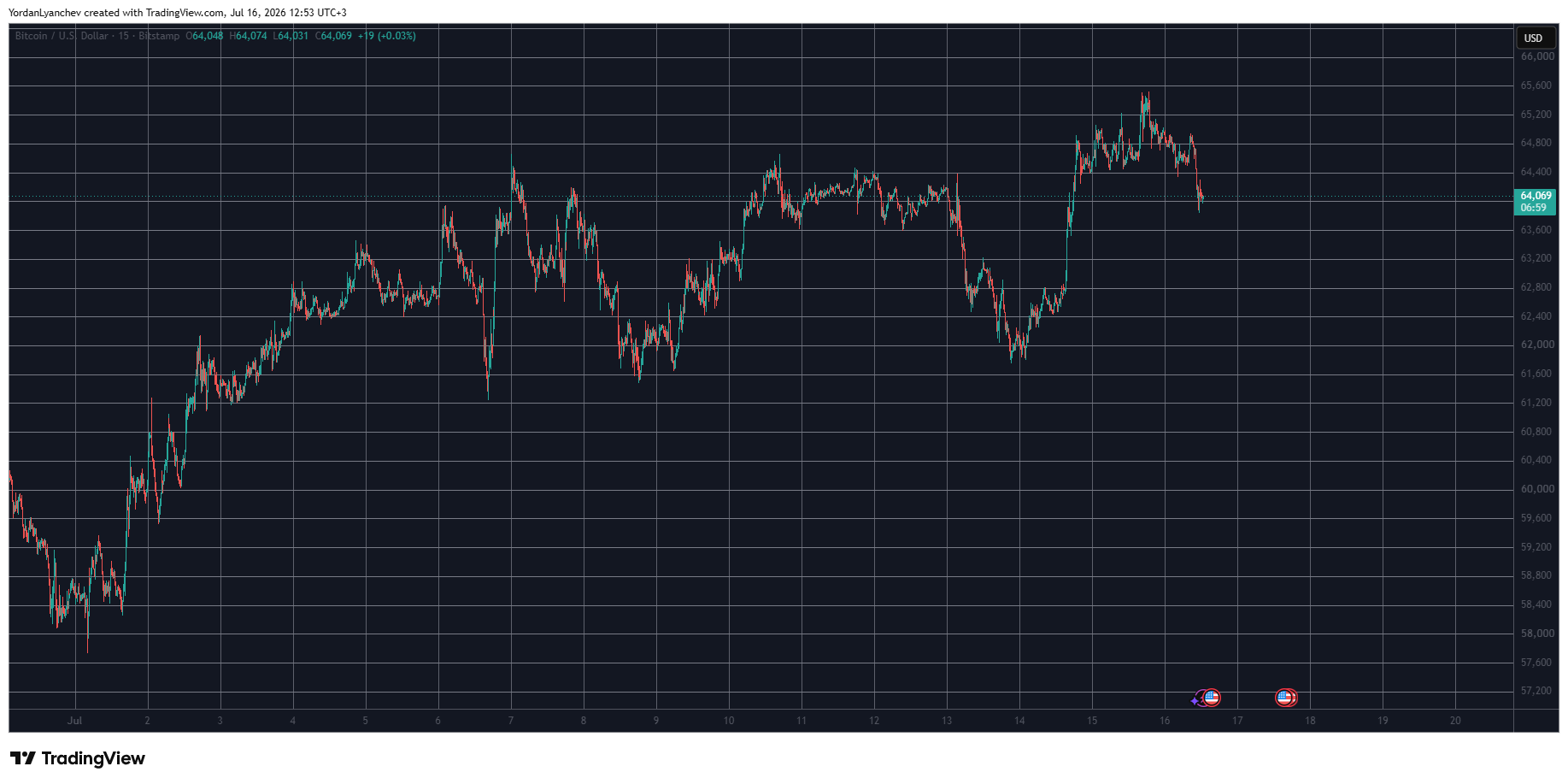
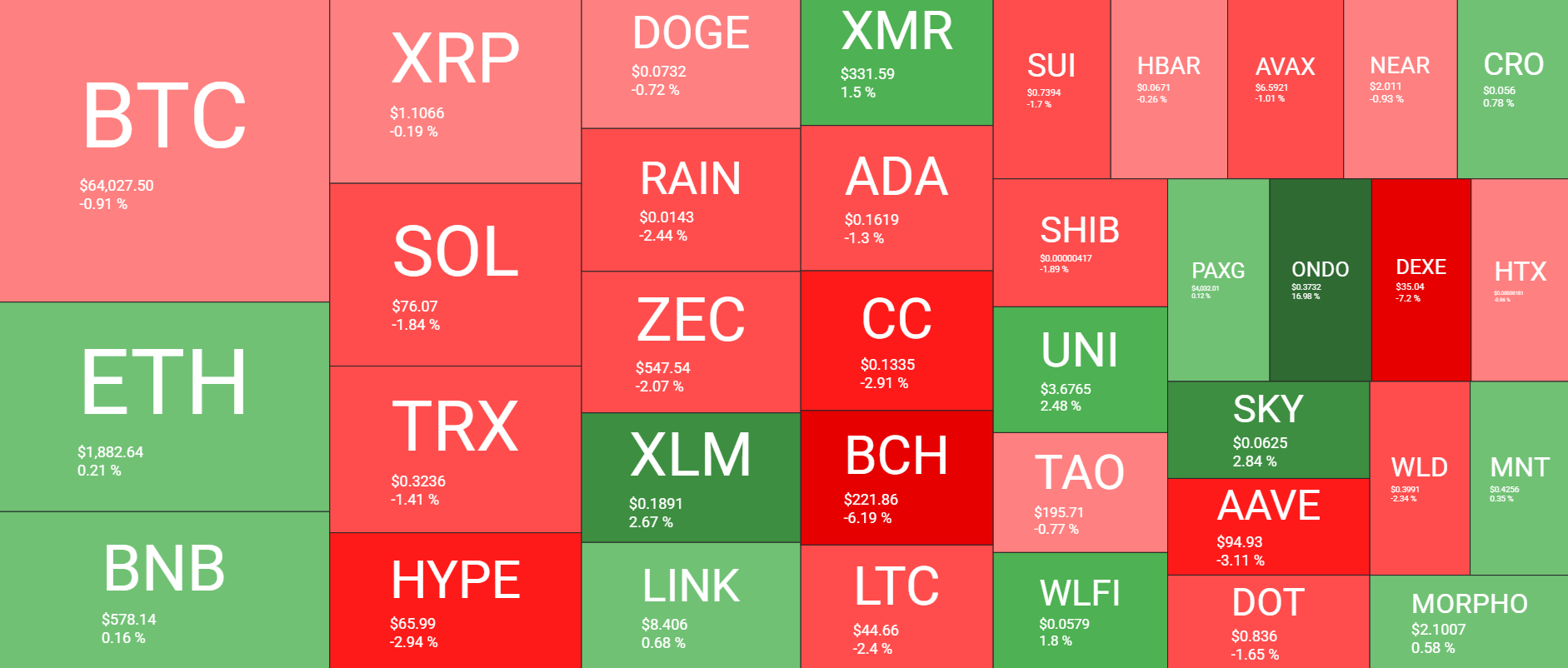
Bitcoin’s price rose to a multi-week high of its own yesterday when it briefly exceeded $65,500 on the heels of the lower-than-expected US CPI data. However, it was stopped there and now sits a grand and a half lower.
ETH rode the wave even harder, jumping to roughly $1,950 for the first time since early June before it was halted and pushed south to under $1,900.
BTC Back to $64K
The primary cryptocurrency had a relatively quiet and positive weekend in which it stood mostly at around $64,000. This came after a volatile business week in which it plunged a couple of times from that high to under $62,000 after Strategy announced its latest BTC sale and the tension in the Middle East escalated once again with new attacks.
On Monday, though, bitcoin slipped once again as the markets priced in the new strikes between the US and Iran initiated during the weekend. The cryptocurrency dipped below $62,000 by Tuesday morning but then rocketed by several grand in a day or so after the US CPI data for June was a lot lower than expected.
Bitcoin first reclaimed the $64,000 level before it did the same to $65,000 and peaked at $65,600. After tapping this three-week high, though, it retreated by $1,500 and now sits at around $64,000 again.
Its market cap is down to $1.285 trillion on CG, while its dominance over the alts remains at the same level at 56.7%.
ETH Pulls Back
Ethereum stole the show from the larger-cap alts today, jumping to almost $1,950 for the first time in six weeks. However, it was stopped there and now sits below $1,900. BNB is close to $580 after a minor increase, while XRP is fighting for $1.10 after a minor daily decline.
SOL, TRX, HYPE, RAIN, ZEC, CC, LTC, and ADA are all in the red today, while BCH and DEXE have dumped the most from the larger caps. ONDO, in contrast, has rocketed by 17% to $0.37.
The total crypto market cap has declined by $40 billion in a day from its peak and is down to $2.270 trillion on CG.
The post Bitcoin Slips Down to $64K, Ethereum Pulls Back From Six-Week Peak: Market Watch appeared first on CryptoPotato.

China’s top AI hedge funds have started booking profits, and the AI bubble question is back. Shanghai Everlead Capital, up 164% this year, leads the funds now trimming their biggest winners.
They are not calling a crash. However, BeInCrypto’s exclusive layer data shows money rotating out of the hottest AI trades. The debate now hangs on 2027 spending.
China’s Winning AI Funds Start Booking Profits
Everlead trimmed its optical and chip-packaging stocks, both part of the compute layer that runs AI data centers.
It sold because those names had gone vertical. Zhongji Innolight’s trillion-yuan market cap and Yangtze Optical Fibre’s twelvefold rally show how far the AI optical trade ran. Gains that size invite profit booking.
A second fund moved the same way. Hunjin Capital trimmed its most crowded AI holdings, including memory-chip names it expects to lose pricing power, and rotated into cheaper traditional stocks. By its own measure, the AI hardware cycle is now 60% complete, double its February reading.
That is two funds. The real question is whether the whole market is turning with them.
Layer Data Confirms a Market-Wide Rotation
It certainly is. Money is rotating between the layers of the AI trade, and the leaders have flipped.
Compute stocks, the chip and hardware names, gained about 62% over the window but fell roughly 13% last month. Power and infrastructure rose about 11%, then stalled. Both former leaders are fading.

Apps and software are the opposite. They lagged all year, down about 9%, then gained roughly 5% last month as fresh money moved in.
Want more insights like this? Sign up for Editor Harsh Notariya’s Daily Newsletter here.
This looks like a late-cycle rotation, not a collapse. One layer sits at the center of the fade, and that layer is power.
Power Stocks Now Trade as AI Stocks
Power stocks once traded on their own story of rates and regulation. AI’s bottleneck has moved from chips to electricity, with data-center power demand set to roughly double by 2030. So power now moves with the AI trade.
A proprietary gauge tracks the 30-day correlation between the power and compute baskets. It sits at 0.74, up from near neutral earlier in the cycle. The AI energy trade is on.

The link cuts both ways. When compute fades, power fades with it. That is why every fund watches the same thing, how much big tech keeps spending on AI.
The 2027 Capex Number That Decides the AI Bubble
That spending has a name, AI capex, the money big tech pours into chips, data centers and power. It is what keeps the compute and power layers earning.
So the whole story turns on one question. If that capex keeps flowing, the funds simply took profits early. If it dries up, they sold before a burst.
The big cloud firms will commit more than $600 billion to the buildout in 2026, up about 36%, and forecasts push it past $1 trillion in 2027. For now the money keeps flowing, so this still looks like profit-taking.
The threat is a 2027 plateau, and a price war could force one. Chinese models now match top US systems at a fraction of the cost, some about 55 times cheaper.
Cheap models erode the return on all that spending. Here is how it connects. If that return breaks, big tech cuts capex, the compute and power layers fade for good, and the funds’ early profit-taking becomes the first sign of a bubble burst.
The bulls still see real profits, not a 2000-style bubble. The bears see the price war breaking those returns first. So 2027 capex is the deciding number. If it holds, this was profit-taking. If it breaks, the AI bubble was real.
The post AI Bubble Burst or Profit-Taking? The China Fund Up 164% Just Started Selling appeared first on BeInCrypto.

10 Greatest Crime Caper Movies of All Time

The deeper question England must answer after latest World Cup failure

Meta now alerts parents if their teen discussed suicide or self-harm with its AI chatbot


-

 Fashion5 days ago
Weekend Open Thread: Nutriplenish Leave-In Conditioner
-
 Sports7 days ago
2026 Genesis Scottish Open Thursday TV coverage: Round 1
-

 Sports6 days ago
Super Eagles star Moses Simon opens up on Liverpool transfer regret
-

 Tech7 days ago
Character.AI enters the microdrama arena with its own productions, but there’s a twist
-

 Politics23 hours ago
Young campaigners urge incoming PM to act on outdoor junk food ads
-

 News Videos2 days ago
XRP BOMBSHELL… XRP OMBOARDED FOR TRANSACTIONS!!!
-

 Tech2 days ago
Get Your ESP32 Sunny Side Up With This Solar Dev Board
-

 Tech2 days ago
Dark Secrets Emerge When Jailbreaking LLMs
-
 Sports14 hours ago
New Cornerback Enters Vikings Trade Rumor Mill
-
 Entertainment18 hours ago
Disney’s Most Ambitious Failed Star Wars Attraction Is Coming to SDCC
-

 Tech7 days ago
Level Infinite Launches Gangstar Mirage City in India with Pre-Registrations
-
 NewsBeat7 days ago
Major update after Huntingdon train attack as man enters plea
-

 News Videos3 days ago
how to make coin bank box with cardboard #scienceproject #money #diy #shorts
-
 Tech3 days ago
Cloudflare Precursor Watches Your Mouse and Keyboard To Decide If You Are Human
-
 Entertainment17 hours ago
Vicki Gunvalson Defends Discussing Heather Dubrow’s Money
-
Crypto World2 days ago
Ripple, Coinbase, Circle Join Linux x402 Foundation to Help Shape AI Payments
-

 NewsBeat14 hours ago
Watch: Is Donald Trump facing a popular backlash on immigration?
-

 Sports11 hours ago
Michigan officials not expected to discuss AD Warde Manuel at Thursday meeting
-
 NewsBeat13 hours ago
Firefighters issue update on Dovestone moorland blaze as fire enters fourth day
-

 Business1 day ago
ACCC warns AI could lift insurance costs in risk-prone areas
You must be logged in to post a comment Login