

Business
Meta Faces Lawsuit Alleging AI Tools Discriminated Against Workers on Protected Leave in Mass Layoffs

SAN FRANCISCO — Dozens of Meta employees have filed a federal lawsuit accusing the social media giant of using artificial intelligence systems to select workers for layoffs in a way that disproportionately targeted those who took maternity, medical or disability leave.
The 71-page complaint, filed Monday in U.S. District Court in the Northern District of California, was brought by 26 current and former employees who claim the company’s AI-driven performance evaluations penalized them for exercising legally protected rights to time off. The workers are among approximately 8,000 employees, or about 10% of Meta’s global workforce, notified of layoffs beginning in May.
Meta, the parent company of Facebook, Instagram and WhatsApp, has disputed the allegations. “These claims lack merit and are not based on facts,” a Meta spokesperson said in a statement. “Workforce management and organizational decisions were and are made by people, not AI.”
The lawsuit alleges that Meta relied on a “constellation of internal artificial intelligence systems” — including AI performance ratings, keystroke and activity monitoring, productivity metrics and AI token-usage dashboards — to score, rank and select employees for termination. These tools, according to the complaint, failed to account for periods when employees were on approved leave, effectively punishing them for absences required by law.
“Meta did not assemble the termination list through the considered judgment of managers who knew the work,” the complaint states. “Instead, the company used AI systems to score, rank and select employees for inclusion on the list.”
Plaintiffs include a scientist notified of her layoff just days before giving birth while on approved pre-birth pregnancy leave, an engineer who received a lowered rating due to time off for an injury, and a manager let go 16 days into medical leave. All 26 plaintiffs, who are proceeding anonymously as Does 1-26, had taken protected leave in the 24 months prior to the layoffs, the suit says.
Eight of the plaintiffs are women who took maternity or pregnancy-related leave, four are men who took parental leave, and another took leave to care for a family member followed by bereavement leave, according to the filing. The suit claims the practices violate the Family and Medical Leave Act, the Americans with Disabilities Act, the Pregnancy Discrimination Act, the Pregnant Workers Fairness Act and various state laws.
The case highlights growing concerns about the use of AI in workplace decisions. Regulators and lawmakers in states including California, Colorado and Illinois have enacted rules in recent years to address potential bias in automated employment tools. The U.S. Equal Employment Opportunity Commission has also stated that existing anti-discrimination laws apply when employers use AI for such purposes.
Meta announced the latest round of job cuts in April as part of efforts to improve efficiency and redirect resources toward artificial intelligence development. Employees received notices starting around May 20, with departures scheduled through July 22. The company also reassigned thousands of other workers to AI-related initiatives during the restructuring.
The lawsuit points to Meta’s employee-monitoring program, introduced earlier this year, which captured keystrokes, mouse movements, browser history, messages, emails and location data on company devices. The program was intended to train the company’s AI systems on employee behaviors, according to internal statements attributed to CEO Mark Zuckerberg.
In an internal meeting reported by The Information, Zuckerberg said the AI models would “learn from watching really smart people do things,” noting that the average intelligence at the company was higher than what could be obtained externally for certain tasks.
Plaintiffs allege the monitoring program was rolled out with limited notice and little opportunity for opt-out, contributing to an environment where data collection fed into layoff decisions without proper safeguards for protected leave.
The suit seeks a preliminary injunction to halt the finalization of layoffs for the plaintiffs, along with reinstatement, back pay, lost equity, benefits and other damages. Because of Meta’s arbitration agreements, the plaintiffs are not seeking class-action status but are pursuing individual claims.
Legal experts following the case say it could test how courts view the intersection of AI tools and employment protections. If the metrics used in decision-making inherently disadvantage workers on leave, companies may need to implement more robust adjustments or human oversight to comply with federal and state laws.
The controversy unfolds amid broader tensions at Meta over its aggressive push into AI. Employees have expressed concerns about surveillance tools, reassignments to data-labeling roles described internally by some as “draftees” work, and the overall pace of change. Petitions and internal protests have highlighted worries that AI initiatives are coming at the expense of worker well-being.
Meta has defended its approach as necessary for remaining competitive in the rapidly evolving technology landscape. In communications to staff, executives have emphasized flattening organizational structures, increasing ownership on smaller teams and leveraging AI to boost productivity.
The company has paused aspects of its monitoring program at times due to internal data concerns and employee feedback, but continues to integrate AI deeply into operations.
This latest lawsuit adds to a series of legal challenges facing big tech companies over AI deployment. As tools become more sophisticated, questions about transparency, bias detection and accountability are likely to intensify.
For the plaintiffs, the stakes are personal. One researcher reportedly received her first “Meets Most” performance rating shortly after disclosing a disability and requesting accommodations, according to details in the complaint. Others describe lowered scores directly tied to leave periods.
The case is assigned to U.S. District Judge William Orrick in Oakland. Plaintiffs are seeking preservation of relevant data, models and logs, as well as an independent audit of the algorithmic selection process.
Meta’s spokesperson reiterated that decisions involved human judgment and that the company complies with all applicable employment laws.
As the tech industry grapples with balancing innovation and worker rights, the outcome of this suit could influence how other companies approach AI-assisted workforce management. With AI adoption accelerating, similar disputes may become more common.
The plaintiffs’ attorneys from firms specializing in employment law argue that failing to adjust for protected leave in automated systems amounts to built-in discrimination. They call for greater scrutiny of “black box” AI tools in high-stakes employment decisions.
Industry observers note that while AI can streamline processes, it requires careful calibration to avoid unintended biases, particularly around sensitive areas like health and family responsibilities.
Meta, with a workforce of around 78,000 at the end of the first quarter, has conducted multiple rounds of layoffs in recent years as it pivots toward AI. Previous cuts in 2022 and 2023 were larger in scale, but the 2026 reductions come as the company invests heavily in computing infrastructure and model development.
Zuckerberg has publicly stated that AI will transform many aspects of work, including at Meta itself. The company’s internal AI efforts include tools like Metamate, described as a large language model assistant, and “second brain” systems trained on employee data.
Critics within the company have raised alarms about the potential for these systems to create feedback loops that favor constant availability and high-volume output, metrics difficult to maintain during legitimate absences.
The lawsuit does not seek class certification due to arbitration clauses but requests the court issue a preliminary ruling preserving the status quo for the named plaintiffs while their claims proceed.
Broader implications could extend to other employers using similar technologies. Employment lawyers advise companies to audit AI tools for disparate impact on protected groups and to maintain clear documentation of human involvement in final decisions.
As of mid-2026, the debate over AI in human resources continues to evolve, with calls for federal guidelines gaining traction alongside state-level regulations.
The case underscores the challenges of integrating powerful new technologies into traditional employment frameworks. For Meta and its workforce, the resolution may help define the boundaries of acceptable AI use in one of the most consequential areas of business operations: deciding who stays and who goes.

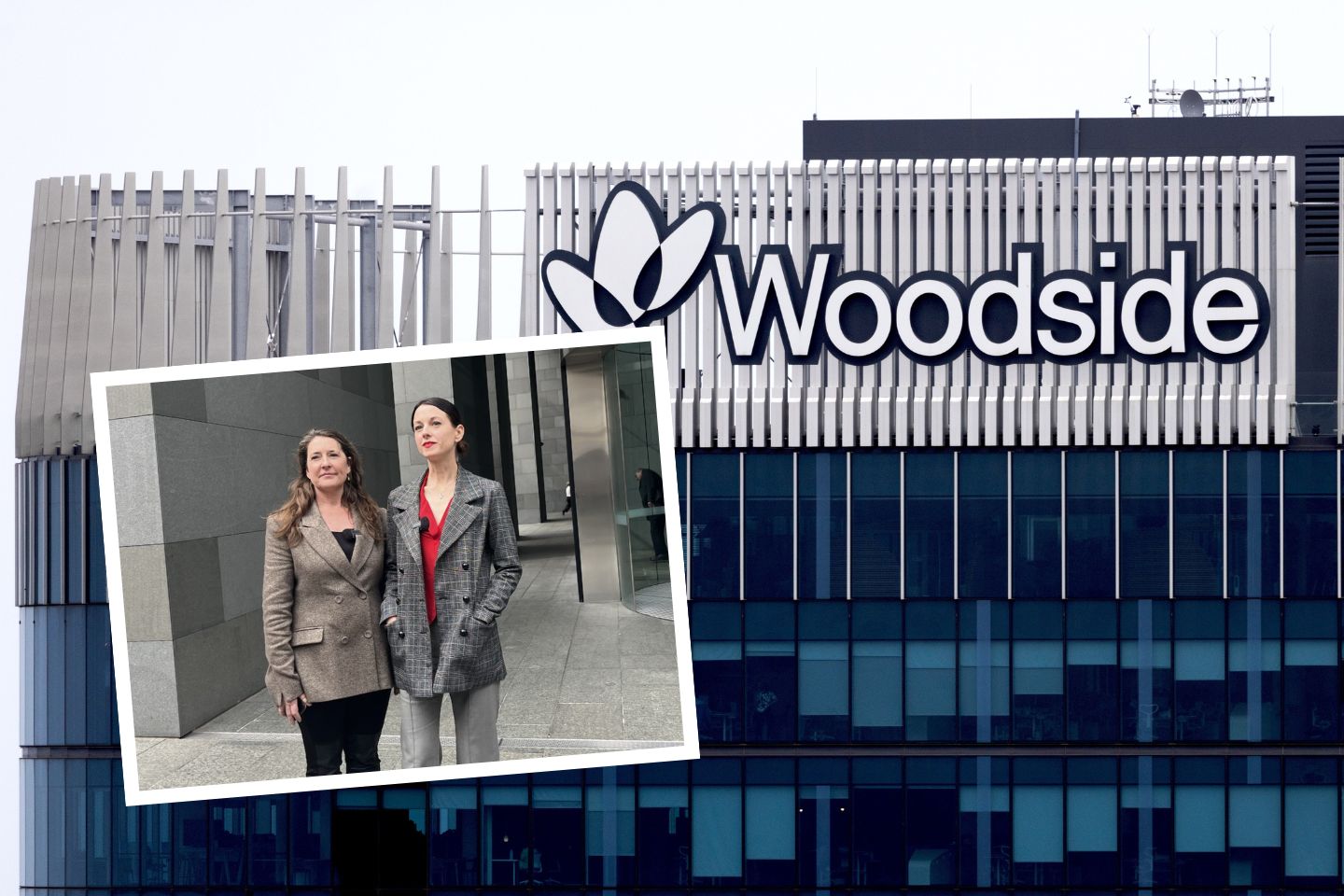
Woodside claimed more people could be involved in a stench gas protest at its Perth office, in its pursuit against activists in the state’s highest court.
Business
Market Wrap: Sensex ends flat, Nifty holds 24,050 as Iran-US conflict keeps optimism in check

Sensex gained a mere 1 point to end at around 77,187, and Nifty 50 dropped around 6 points to close at nearly 24,073 on Thursday. Broader markets slipped into the red, with Nifty Midcap 100 and Nifty Smallcap 100 indices closing up to 0.4% lower.
Eternal was the top loser on Sensex, falling more than 3%. Bajaj Finserv, Bharat Electronics (BEL) and HDFC Bank shares declined nearly 1% each. HCL Technologies, IndiGo and Bajaj Finance shares gained nearly 2% each.
The muted market sentiment came even as volatility measure India VIX dropped nearly 3% to close at 12.88. Sectorally, Nifty Realty and Nifty Financial Services dropped nearly 1% each to lead losses, with Nifty Consumer Durables surged 1.5%. The overall market breadth however turned bearish, with NSE seeing 1,776 declines and 1,543 advances, while 112 remained unchanged.
What lies ahead?

With many companies reporting their Q1 results in the coming days, the market is likely to respond to the results, said VK Vijayakumar, Chief Investment Strategist at Geojit Investments.
“Financials-both banks and NBFCs- are likely to report a good set of numbers aided by robust credit growth now running at 18%. Automobiles is a sector to watch closely since the growth numbers for Q1 would be impressive and the sector continues to exhibit momentum, aided by GST cuts and easy availability of finance. Most segments of the sector -cars, SUVs, two-wheelers, commercial vehicles, exports- are doing well. Digital platform companies, too, will be reporting good growth numbers. Announcement of bonus issue by Paytm in the July 20th board meeting is an important news,” according to the analyst.Technical view on Nifty
The Nifty index continues to trade within a narrow range, reflecting a consolidation phase with a neutral undertone, said Vatsal Bhuva, Technical Analyst at LKP Securities. The analyst noted that the index technically is expected to find strong support in the 23,950–24,000 zone, while the 24,250–24,300 region is likely to act as an immediate resistance, with a broader hurdle placed near 24,500.
“Option chain data also indicates the highest put writing at the 24,000 strike, reinforcing it as a key support level. Considering the current technical setup, a buy-on-dips near support and sell-on-rise near resistance strategy remains appropriate,” Bhuva further said.
(With inputs from agencies)
(Disclaimer: Recommendations, suggestions, views and opinions given by the experts are their own. These do not represent the views of The Economic Times)

Form DEF 14A Peloton Interactive Inc For: 16 July

One of the UK’s largest private parking providers is being investigated by the competition regulator over whether parking charges for drivers queuing at petrol forecourts are fair.
Euro Car Parks’ broader appeals process relating to petrol stations and car parks is also being looked into, to determine if it breaches consumer protection law.
The investigation forms part of a wider crackdown by the Competition and Markets Authority (CMA) into potentially unfair practices by private parking operators.
Research by the RAC has suggested the number of tickets issued in places like gyms, supermarkets, restaurants and retail parks more than doubled in six years, to 14.4 million.
Motorists have complained about these parking issues, the CMA said, highlighting problems including unclear signage, faulty apps and broken ticket machines.
The regulator said it wanted to make sure drivers are being treated fairly following complaints from motorists who feel they’ve been unjustly issued with parking tickets.
The CMA says it has its own concerns about the way some operators are handling appeals, or attempting to make motorists pay additional fees on top of parking charges.
It has written to the sector as a whole, and issued warnings to some individual operators about their practices.
The CMA’s executive director of consumer protection Emma Cochrane said receiving a parking ticket could be a stressful experience.
“Costs are high and often unexpected which is difficult when people are budgeting carefully,” she said.
“Parking companies must treat motorists fairly at all stages – and a clear and consistent appeals process must be at the heart of this.
“It’s time for all private parking operators to comply with consumer law or risk action from the CMA.”
The CMA’s investigation into Euro Car Parks is focusing on whether it is fair for drivers to receive parking charges while queuing for, or using, petrol pumps and other forecourt services such as car washes, plus its wider appeals process.
It is in the evidence gathering stage, and is set to run until Spring 2027.
Euro Car Parks has more than 3,000 facilities across the UK and Ireland, according to the company’s website, with more than two million cars parking in their spots every day.
The BBC has contacted Euro Car Parks for comment.

The final report into last year’s Qantas hack, which affected approximately 5 million Australians, has found that there was nothing more Qantas could have done to prevent the incident.
Business
RENK Group AG (RKGRY) Discusses Pre-Close Update and Strong Order Intake Driven by Defense Contracts Prepared Remarks Transcript

Operator
Welcome to the RENK Group AG pre-close call for H1 2026. Please note that this call will be recorded. I’d now like to turn the call over to Maximilian Konig, Senior Investor Relations Manager. Please go ahead.
Maximilian Konig
Thank you, operator. Good morning, everyone. Thank you for joining today’s pre-close call for the second quarter and first half of 2026. One organizational aspect upfront. In the next few minutes, I will walk you through a short set of key messages, giving a reminder of publicly disclosed information provided by us during the second quarter and potential implications on Q2 2026. After that, there will be no Q&A session. We will, of course, be happy to take all of your questions at our half year results call on August 6, where the full details will be published. Please bear in mind, our half year closing process is still ongoing. Everything I say today, therefore, reflects our current view. Final figures will be published on the mentioned H1 print on August 6.
Ladies and gentlemen, the key message is very clear. Our story is fully on track. H1 unfolds exactly as planned and always communicated and in full alignment with our full year 2026 guidance of more than EUR 1.5 billion revenues and an adjusted EBIT range of EUR 255 million to EUR 285 million. Rest assured that we continue to clearly target the upper half of that adjusted EBIT range.
Let me now start with order intake. Based on an unchanged strong market momentum with continued high demand for our products, order intake will again be one of the highlights of the quarter

Buffett’s Berkshire Hathaway last month unveiled a large new stake in Alphabet, instantly propelling the Google parent into Berkshire Hathaway’s top 10 holdings. The move is widely seen as an endorsement of Alphabet’s heavy AI investments and the market’s view of the company as a frontrunner in the AI race.
The investment comes at a moment of transition for Berkshire. Buffett announced in May that he will step down as CEO at the end of this year, though he will retain his stock, handing the reins to vice chairman Greg Abel after decades at the helm of a company that began as a Nebraska textile mill and grew into one of the most influential conglomerates in American finance.
Burry doubles down on his skepticism
Michael Burry, however, is moving in the opposite direction. The investor who famously profited from betting against the U.S. housing market in 2008 has taken new short positions in Palantir and Nvidia, two of the highest-profile beneficiaries of the AI boom.He has been particularly critical of accounting practices across Big Tech, arguing that companies “have been systematically increasing the useful lives of chips and servers, for depreciation purposes, as they invest hundreds of billions of dollars in graphics chips with accelerating planned obsolescence.”
Burry is also in a period of transition. Scion Asset Management, his hedge fund, will close by year-end. In a recent investor letter, he wrote that his “estimation of value in securities is not now, and has not been for some time, in sync with the markets.” He has since launched a financial newsletter, Cassandra Unchained, where he continues to express skepticism about the AI boom.
A market split as AI hype peaks
Their opposing moves come as even industry leaders begin to acknowledge stretched expectations. Sam Altman, CEO of OpenAI, has voiced concerns about the pace and scale of speculative fervor surrounding artificial intelligence.
Still, capital continues to flood the sector, and the disagreement between two investors of such high reputation underscores the uncertainty in the market. Buffett turned Berkshire Hathaway into one of the most recognizable names in American investing, while Burry inspired Michael Lewis’s The Big Short and the film adaptation starring Christian Bale.Now, with both navigating turning points in their own careers, the divergence in their AI positions is emerging as one of the most closely watched splits in the market—one that could signal whether the boom is built on solid ground or heading toward another historic correction.
(Disclaimer: Recommendations, suggestions, views and opinions given by the experts are their own. These do not represent the views of The Economic Times)
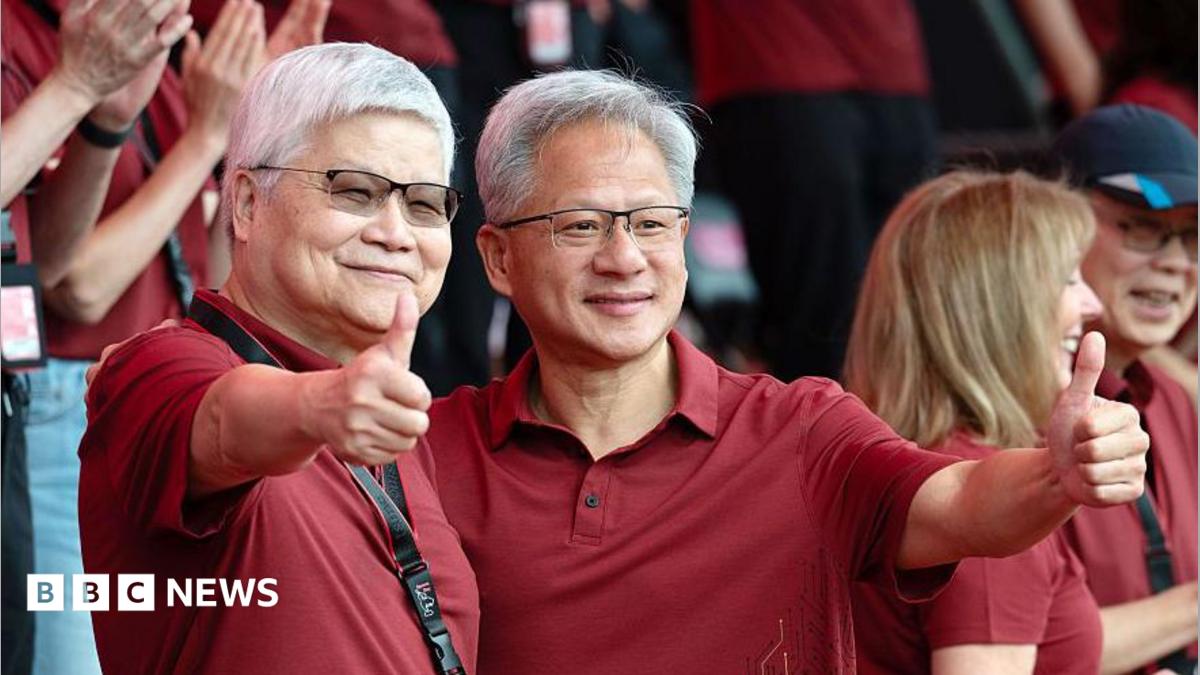
Wei did not give a timeline of when the new plants were likely to be built, saying only that it would depend on the “market situation”. The new plants would add to the eight already being built or planned.
“We believe this investment will help to further foster the development of the US semiconductor ecosystem, strengthen the supply chain, and support an increasing number of high-tech, high-paying jobs in the United States,” Wei said.
President Trump wants to boost US production of semiconductor chips, which are found in machines ranging from cars to smartphones, and has been a priority for the US since shortages during the Covid-19 pandemic exposed supply chain risks.
He has previously attributed a decision by TSMC last year to expand its investments in the US to his threats of tariffs on Taiwan and on the global semiconductor business.
In January this year, the US said it had agreed to cut tariffs on goods from Taiwan to 15% in exchange for hundreds of billions of dollars in investment aimed at boosting domestic production of semiconductors.
Welcoming the plans, Commerce Secretary Howard Lutnick said: “President Trump’s leadership is driving companies to invest in American manufacturing.
“TSMC’s announcement of an additional $100 billion investment following our historic deal on trade and investment with Taiwan will create tens of thousands of American jobs and bring advanced semiconductor manufacturing back to America.”
Additional reporting by Osmond Chia
FOX Business’ Edward Lawrence reports live from the Pennsylvania Defense & Innovation Summit, highlighting $10 billion in defense deals and 4,000 new jobs.
With the American merchant fleet down to fewer than 190 flagged vessels from a high of nearly 3,000 in the 1960s, a critical national security gap has left the U.S. heavily reliant on foreign shipbuilders.
To help reverse this decline, JPMorgan Chase announced Wednesday it is injecting $24 million into Philadelphia’s maritime sector to help secure the defense supply chain, building a new submarine assembly facility and training thousands of workers for critical defense roles.
“America can compete and lead in shipbuilding again—it starts with more skilled workers and secure supply chains. We need to train people for the jobs shipbuilders urgently need, connect them to good careers and strengthen the suppliers and partners that keep a shipyard running,” JPMorgan Chairman and CEO Jamie Dimon said in a press release.
“When we build the workforce and the supply chain together,” he added, “we create good careers for workers and a stronger, more resilient maritime industry that supports our national security and our economy.”
JAMIE DIMON SAYS HE UNDERSTANDS WHY PEOPLE HAVE GROWN ‘ANTI-RICH’
“America cannot restore its industrial strength or ensure peace through strength without investing in the workforce that powers it. Philadelphia has long been one of the great shipbuilding cities in the world, and today’s investment by JPMorgan Chase—the kind of investment we’re proud to feature at today’s Defense and Innovation Summit—recognizes that revitalizing this industry requires more than ships and shipyards,” Sen. Dave McCormick, R-Pa., also said.
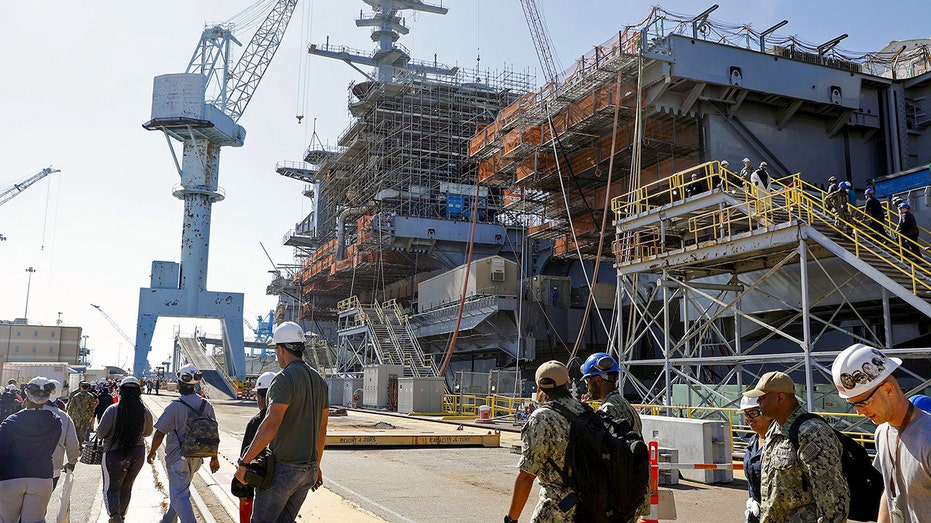
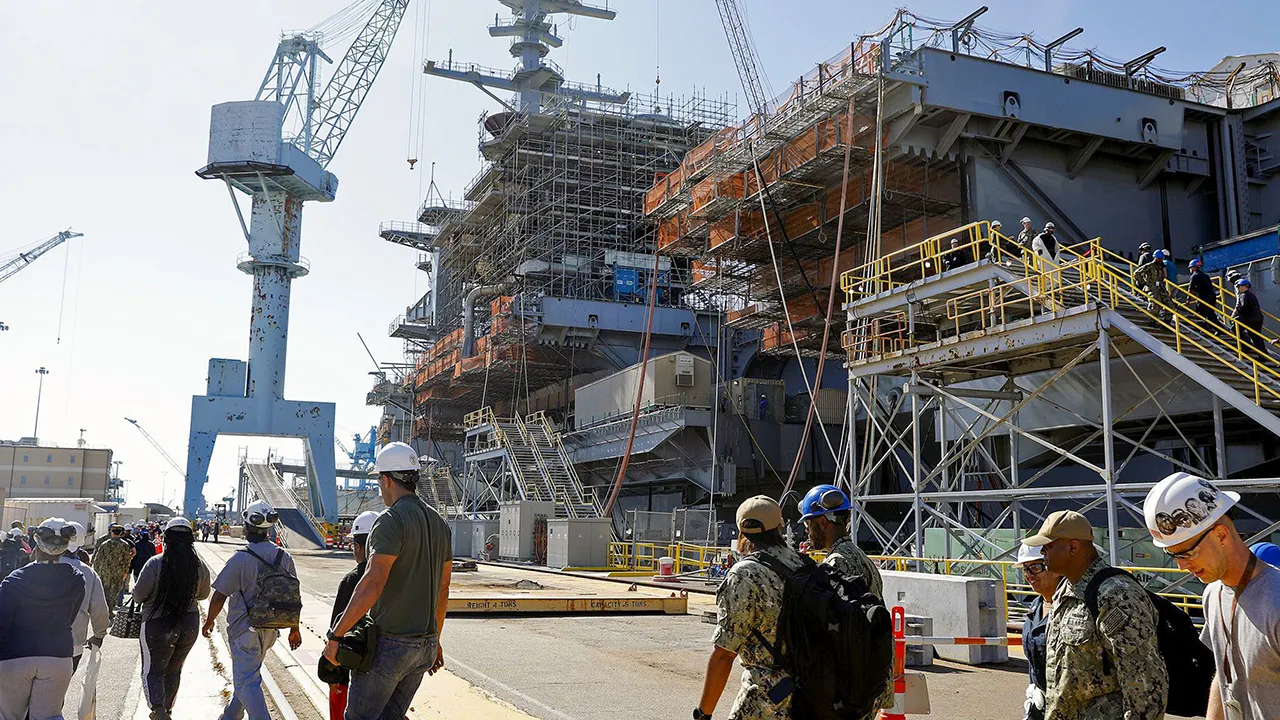
Shipbuilding workers and Navy sailors walk past the USS George Washington as it rests pier side. (Getty Images)
“It requires creating opportunity for people. By supporting workforce development and strengthening local communities, this commitment will help prepare the next generation of skilled workers who will build the ships that protect our country and reinforce Pennsylvania’s role as a cornerstone of America’s defense industrial base,” the senator continued.
The corporate commitment will use $18 million in commercial financing and capital investments, while the remaining $6 million will come from philanthropic contributions.
The project funds construction of a 95,000-square-foot submarine assembly plant, which will create 450 permanent jobs. Additionally, the program targets the Philadelphia Navy Yard — an industrial hub supporting 16,000 active positions across manufacturing and maritime sectors — to scale non-degree educational pathways.
JPMorgan Chase CEO Jamie Dimon joins ‘Mornings with Maria’ in a wide-ranging interview on AI risks, stablecoin regulation, housing affordability and his recent meeting with New York City Mayor Zohran Mamdani.
“Philadelphia is a place where targeted, coordinated investment can translate into real economic mobility,” JPMorgan’s Global Head of Corporate Responsibility and Chairman of the Mid-Atlantic Region Tim Berry said. “By strengthening workforce pathways, supplier readiness and access to capital, we can help more people connect to quality jobs and help local businesses participate in long-term growth.”
“When organizations like JPMorgan Chase invest in Philadelphia, they’re investing in our people,” Mayor Cherelle L. Parker said. “They’re helping create the kind of opportunities that let someone learn a new skill, earn a good paycheck and build a better life for themselves and their family. That’s exactly the future we’re creating in the Lower South and at the Navy Yard: more pathways to family-sustaining careers and more opportunities for Philadelphians to help build America’s future.”
GET FOX BUSINESS ON THE GO BY CLICKING HERE
Father Judge High School welding specialist Joe Williams discusses how his program helps students get jobs after they graduate and more on ‘Red, White & Blue Collar.’
The rest of the $24 million investment will go toward supporting local businesses and training workers for the shipyard. This includes a $5 million low-cost loan program to help small businesses create or retain 200 jobs and $1.5 million to help 100 local maritime suppliers upgrade their facilities.
Another $2 million will go toward training 300 Philadelphia residents for manufacturing jobs that do not require a college degree, alongside a $2.4 million grant to connect those workers with employers. The entire package is part of a 10-year, $1.5 trillion commitment by JPMorgan Chase to fund domestic industries that are vital to U.S. national security.
Business
(VIDEO) Warner Bros Delays ‘The Batman Part II’ to 2028 as J.J. Abrams’ ‘The Great Beyond’ Moves to Oct 2027

Warner Bros. reshuffled several major release dates on its 2027 and 2028 theatrical calendar this week, most notably pushing Matt Reeves’ “The Batman Part II” back to early 2028 to make room for J.J. Abrams‘ long-in-the-works sci-fi fantasy film “The Great Beyond.”
The studio confirmed that “The Great Beyond,” starring Glen Powell and Jenna Ortega, will no longer open on Nov. 13, 2027, as previously planned. Instead, the film is moving up to Oct. 1, 2027. That shift set off a chain reaction across the studio’s slate, sending “The Batman Part II,” which had occupied the Oct. 1 date, to Feb. 18, 2028.
The new date places the Robert Pattinson-led superhero sequel on the four-day Presidents Day holiday weekend, a slot that has previously hosted major comic book releases including “Black Panther,” “Ant-Man and the Wasp: Quantumania” and “Captain America: Brave New World.” Reeves announced the change on social media Wednesday morning. The film’s production start had already been delayed by five months earlier in its development, and the new release date gives the director additional time in post-production.
“The Batman Part II” will still receive Imax screenings on its new date. The film’s cast includes Pattinson returning as Batman, along with Andy Serkis as Alfred and Colin Farrell reprising his role as Penguin. New additions to the cast include Scarlett Johansson, Sebastian Stan, Jayme Lawson, Charles Dance, Gil Perez-Abraham and Sebastian Koch. The sequel will face competition on its new February 2028 weekend from an untitled Disney release and Sony’s original action sci-fi feature “Grandgear,” directed by Takashi Yamazaki, known for “Godzilla Minus One.”
Warner Bros. also moved two other titles on its calendar as part of the broader reshuffling. Sam Esmail’s thriller “Panic Carefully” and New Line’s horror sequel “Revenge of La Llorona” effectively swapped release dates. “Panic Carefully,” which had been scheduled for Feb. 26, 2027, will now open April 9, 2027, in Imax. “Revenge of La Llorona,” previously dated for April 9, 2027, moves up to Feb. 26, 2027.
“Panic Carefully” reunites Esmail, the creator of “Mr. Robot,” with “Homecoming” and “Leave the World Behind” star Julia Roberts. The cast also includes Eddie Redmayne, Brian Tyree Henry, Ben Chaplin, Aidan Gillen, Joe Alwyn, Naledi Murray and Elizabeth Olsen. On its new April date, the film will go up against Paramount Primal’s R-rated comedy “Boys for Life,” which was dated for the same weekend just a day before Warner Bros.’ announcement.
“Revenge of La Llorona,” meanwhile, will now compete against Paramount’s “K-Pop: The Debut” and Sony’s family drama “Live Like That” on its new February weekend. The film is directed by Santiago Menghini from a screenplay by Sean Tretta, and continues the story introduced in the 2019 horror film “The Curse of La Llorona.” Its cast includes Raymond Cruz, Monica Raymund, Martín Fajardo, Acston Luca Porto, Avie Porto, Edy Ganem and Jay Hernandez, with the sequel following a fractured family that must confront its past and enlist an estranged curandero grandfather to battle the vengeful spirit at the center of the franchise.
The reshuffling comes as “The Great Beyond” finalizes its production timeline. Early signs of the date change emerged when Amazon MGM Studios recently moved its action film “How to Rob a Bank” from Labor Day weekend to Nov. 13, effectively clearing the November date that “The Great Beyond” was vacating. The only wide release remaining on that November weekend is Paramount’s “Ebenezer: A Christmas Carol,” directed by Ti West and starring Johnny Depp.
According to reporting on the project, a recent test screening of “The Great Beyond” at a theater in Irvine, California, led Warner Bros. to commit to releasing the film in 70mm Imax prints, a format decision that factored into the scheduling shift. Abrams has been in the editing process on the film and was previously expected to complete post-production work in September. The new release date gives the director, best known for “Star Wars: The Force Awakens” and “Star Wars: The Rise of Skywalker,” additional time to finish the project, which he also wrote. The film was first teased publicly at CinemaCon in April.
“The Great Beyond” marks Abrams’ first original film in more than a decade and lands in a launch window that has historically been favorable for Warner Bros., having previously hosted hits including “Gravity,” “Joker,” “A Star Is Born,” “Dune,” “Argo” and “The Departed.” In addition to Powell and Ortega, the film also stars Emma Mackey, Sophie Okonedo, Merritt Wever and Samuel L. Jackson. As of this week, “The Great Beyond” remains the only major studio wide theatrical release scheduled for Oct. 1, 2027.
The scheduling changes arrive as Warner Bros.’ pending acquisition by Paramount remains tied up in ongoing antitrust litigation, including lawsuits brought by the attorneys general of California, New York and ten other states. The 103-year-old studio’s merger with Paramount had previously been expected to close by the fall of 2026, though that timeline remains uncertain given the continuing legal challenges. Notably, the date shuffle puts Warner Bros. in direct competition with Paramount, its potential parent company, on two of the newly adjusted dates, as Paramount already had films scheduled for both Feb. 26 and April 9, 2027.
The moves represent some of the more significant scheduling changes on Warner Bros.’ calendar this year, affecting four separate films across genres ranging from big-budget superhero filmmaking to original science fiction, prestige thriller and horror sequel territory. With “The Batman Part II” now more than a year and a half away from release, fans of the franchise will have an extended wait to see Pattinson’s return, while Abrams’ passion project moves into a release window the studio has historically used to launch some of its biggest awards-season and box office successes.

HTX H1 2026 Performance Report: Nearly $900 Billion in Trading Volume

World Cup final’s 20-minute half-time show: Will it disrupt match flow? | FIFA World Cup 2026

The Blood of Dawnwalker director isn’t worried about the impact of what a delayed next-gen could mean for Rebel Wolves, says ‘If we work on the consoles we have right now, it’s easier’


![TORINO & PASHATA - OLD MONEY [OFFICIAL 4K VIDEO]](https://wordupnews.com/wp-content/uploads/2026/05/1779687619_maxresdefault-80x80.jpg)


-

 Fashion5 days ago
Weekend Open Thread: Nutriplenish Leave-In Conditioner
-
 Sports7 days ago
2026 Genesis Scottish Open Thursday TV coverage: Round 1
-

 Sports6 days ago
Super Eagles star Moses Simon opens up on Liverpool transfer regret
-

 Tech7 days ago
Character.AI enters the microdrama arena with its own productions, but there’s a twist
-

 Politics23 hours ago
Young campaigners urge incoming PM to act on outdoor junk food ads
-

 News Videos2 days ago
XRP BOMBSHELL… XRP OMBOARDED FOR TRANSACTIONS!!!
-

 Tech2 days ago
Get Your ESP32 Sunny Side Up With This Solar Dev Board
-

 Tech2 days ago
Dark Secrets Emerge When Jailbreaking LLMs
-
 Sports14 hours ago
New Cornerback Enters Vikings Trade Rumor Mill
-
 Entertainment18 hours ago
Disney’s Most Ambitious Failed Star Wars Attraction Is Coming to SDCC
-

 News Videos3 days ago
how to make coin bank box with cardboard #scienceproject #money #diy #shorts
-
 Tech3 days ago
Cloudflare Precursor Watches Your Mouse and Keyboard To Decide If You Are Human
-
 Entertainment17 hours ago
Vicki Gunvalson Defends Discussing Heather Dubrow’s Money
-
Crypto World2 days ago
Ripple, Coinbase, Circle Join Linux x402 Foundation to Help Shape AI Payments
-

 NewsBeat14 hours ago
Watch: Is Donald Trump facing a popular backlash on immigration?
-

 Sports11 hours ago
Michigan officials not expected to discuss AD Warde Manuel at Thursday meeting
-
 NewsBeat13 hours ago
Firefighters issue update on Dovestone moorland blaze as fire enters fourth day
-

 Business1 day ago
ACCC warns AI could lift insurance costs in risk-prone areas
-

 Entertainment3 days ago
Hollywood’s Biggest Director Just Called Out AI, And It’s Glorious
-
 Tech7 days ago
Claude’s New Reflect Dashboard Wants To Help You Log Off Of Claude
You must be logged in to post a comment Login