

Business
Patanjali Foods shares crash 20%, stock nearly halves in value in one year. What’s ahead?


The stock fell to a 52-week low of Rs 328.20 on the NSE, prompting the company to issue a clarification. Patanjali Foods said there were no material events, information or developments requiring disclosure that could explain the sharp price movement.
“The company continues to remain focused on its growth path and is carrying on its business operations in the ordinary course, while pursuing its business objective,” the company said in its clarification to stock exchanges.
Patanjali Foods shares later made some recovery, trading around 16% lower at Rs 345 apiece, as seen at around 1 pm. The stock has fallen nearly 19% in one month and 37% in 2026 so far.
Technical view on Patanjali Foods
Patanjali Foods shares declined 20% today, confirming a major consolidation breakdown on the daily chart, said Sudeep Shah, Head of Technical and Derivatives Research at SBI Securities. He noted that the breakdown was accompanied by a sharp surge in volumes, lending credibility to the bearish move.
“The RSI, which had been moving sideways, has also broken down, indicating strengthening bearish momentum. The DI lines have widened, with DI- positioned well above DI+ on the ADX indicator, highlighting strong seller dominance. Additionally, the stock is trading significantly below the lower Bollinger Band, reflecting heightened selling pressure,” he added.

On the downside, Shah sees the Rs 330–325 zone as the next key support. A decisive breach below this level could accelerate the decline towards Rs 310 in the short term. On the upside, the Rs 380–385 zone is likely to act as the immediate resistance, according to the analyst.
Patanjali Foods earnings snapshot
Patanjali Foods in May reported a 46% year-on-year (YoY) jump in net profit for the January-March quarter of FY26, aided by strong growth across its edible oils and FMCG businesses. However, higher raw material and packaging costs weighed on profitability. The company’s profit after tax rose to Rs 524 crore in the quarter ended March 2026 from about Rs 359 crore a year earlier.
Also read | Patanjali Foods Q4 Results: Profit jumps 46% to Rs 524 crore despite margin pressureRevenue from operations increased 17% year-on-year (YoY) and 6% sequentially to Rs 11,217 crore during the quarter. Despite the strong top-line performance, margins remained under pressure due to rising input costs.
(Disclaimer: Recommendations, suggestions, views and opinions given by the experts are their own. These do not represent the views of The Economic Times)



New STAR program designed to create value for farmers.
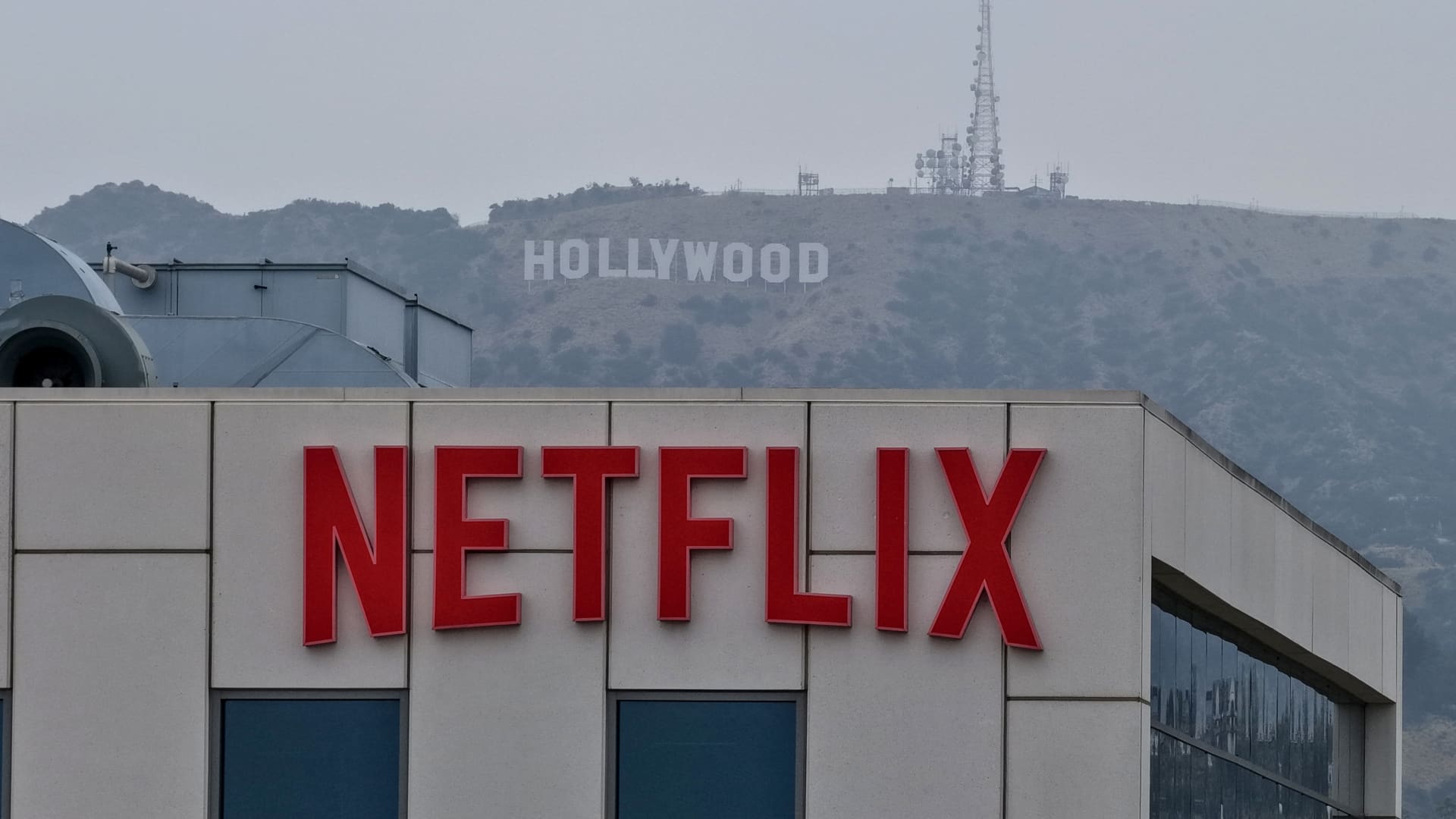
In an aerial view, the Netflix logo is displayed at a company office on May 12, 2026 in Los Angeles, California.
Justin Sullivan | Getty Images
Netflix is set to report quarterly earnings on Thursday as the media industry faces consolidation, spinouts and intensified competition.
Here’s how Netflix is expected to perform for the period ended June 30, according to estimates from analysts polled by LSEG:
- Earnings per share: 79 cents estimated
- Revenue: $12.59 billion estimated
Wall Street has been particularly interested in the progress Netflix has made with its cheaper, ad-supported tier — a theme that’s likely to carry into the second quarter. As streaming subscriber additions have slowed in recent years, advertising has once again become a major revenue driver for media companies.
Earlier this year, Netflix said it was on track to reach $3 billion in advertising revenue in 2026. This would double its ad revenue year over year.
The company has also been facing a slew of new questions in recent months.
Late last year, Netflix made a play for Warner Bros. Discovery‘s film and streaming business before ultimately walking away from the deal. The proposed deal set off a flurry of speculation about if Netflix is now interested in buying other assets.
In general, the media industry has been in a period of upheaval as streaming has changed the longstanding pay TV business and tech players like Google‘s YouTube and TikTok have continued to grab more screen time away from traditional forms of media.
Earlier this year when defending its move to acquire assets from WBD, Netflix management said it was facing intense competition in a broad landscape of viewing choices.
Netflix’s stock has fallen about 40% in the past year, which was further accelerated when it sought to acquire WBD.
Still, Netflix is considered far ahead of the streaming pack when it comes to its subscribers. In January the company said it had 325 million global paid members.
Investors have also been concerned about engagement on Netflix’s platform following recent reports that viewership for Netflix series drops following the first season.
A Keybanc report earlier this week said investor sentiment and concerns are a callback to 2022, when the company reported a loss of subscribers for the first time in more than 10 years. That prompted Netflix to ramp up various business initiatives, including its ad-supported tier and a crackdown on password sharing.
“This time around, we believe levers will likely center around content and product diversification that aid perceived content quality, and support better monetization per hour,” Keybanc analysts said in Sunday’s report.
In April, Netflix said it expects second-quarter revenue to rise 13%, but reiterated its earlier warning that higher content spending would be weighted in the first half of the year due to the timing of releases. The company said at the time that it expects the content amortization growth rate to lower in the second half of the year.


Shoppers seeking insight on new natural sources of color.
FOX Business host Charles Payne discusses the market shift driven by artificial intelligence on Making Money.
JPMorgan Chase CEO Jamie Dimon on Wednesday said there is still a lot of uncertainty over how AI will impact the workforce and people shouldn’t be “breathless” in their concerns as new technologies have historically created new jobs.
Dimon said in a conversation with Sen. Dave McCormick, R-Pa., at the Pennsylvania Defense and Innovation Summit that “we don’t really know” about the impact of AI on the workforce as the emerging technology advances.
“I think people should stop being breathless over it. You know, it’s created a lot of jobs in our company, and yeah, there are areas where it’s reduced jobs a little bit,” Dimon said.
“Technology always creates new jobs. The question is going to be if it happens too fast, somehow, people are adopting it too fast and jobs are being lost – middle-class jobs before they could be retrained to replace,” Dimon said.
JAMIE DIMON SAYS HE UNDERSTANDS WHY PEOPLE HAVE GROWN ‘ANTI-RICH’
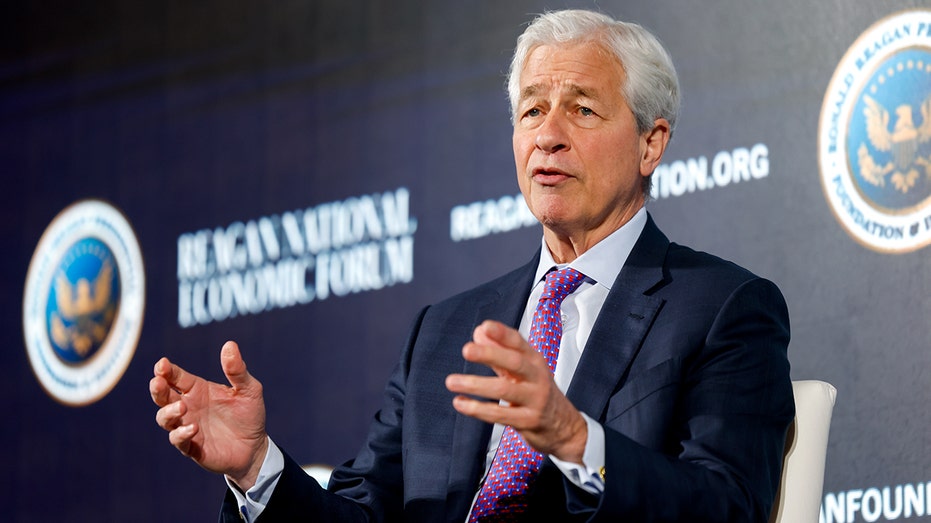
JPMorgan Chase CEO Jamie Dimon said it’s unclear how AI will impact the workforce and so people shouldn’t panic over it. (Caroline Brehman/Bloomberg via Getty Images)
“We’re talking about work skills, it’s the exact same thing we should be doing anyway. That is how to fix it,” he added.
“People know, at JPMorgan, we’re going to redeploy our own people. We reskill them, retrain them,” Dimon said. “I think there are fixes for that.”
“I think we’re kind of scaring the whole world much more rapidly than we should about it,” he said.
WORKERS WHO DON’T USE AI MORE LIKELY TO BE LAID OFF, SURVEY FINDS
Dimon noted that new technologies have historically led to the creation of new jobs. (Nathan Laine/Bloomberg via Getty Images)
The JPMorgan Chase CEO said that based on experience within his company, he thinks “we all have to be more rational in how we use some of this.”
“Here’s the choice: do you save money over here because you know that you can do less, or do you simply want to do faster? I’m kind of, of the mindset, do what I want to do faster, give you better stuff quicker,” Dimon said.
JPMORGAN NAMES 2 NEW CO-PRESIDENTS, SETTING UP RACE TO SUCCEED JAMIE DIMON
| Ticker | Security | Last | Change | Change % |
|---|---|---|---|---|
| JPM | JPMORGAN CHASE & CO. | 346.91 | +4.02 | +1.17% |
“So the headcount won’t go down because I want to make you happier, not less happy. So people should just take a deep breath, but the planning should be around jobs – I think that planning will protect us against too rapid job loss from AI if, in fact, it ever happened,” he added.

The UK economy returned to growth in May, expanding by 0.1 per cent after contracting the previous month, handing Andy Burnham the thinnest of economic cushions as he prepares to enter Downing Street next week.
The monthly figure, published by the Office for National Statistics, was in line with City forecasts. On the more reliable three-monthly measure, gross domestic product rose by 0.7 per cent, ahead of projections of 0.5 per cent but slowing from 0.8 per cent in the previous three-month period. The economy expanded by 0.3 per cent in March.
For small business owners, the detail matters more than the headline. The growth that does exist is being generated almost entirely by services, the sector in which most of Britain’s SMEs operate. Services output rose by 0.3 per cent in May, rebounding from a 0.1 per cent fall in April, with information and communications technology, science and research, and professional services among the best performers.
The picture elsewhere is bleaker. Output in production contracted by 0.5 per cent in May and construction fell by 0.8 per cent, Liz McKeown, the director of economic statistics at the ONS, said. For builders, manufacturers and the supply chains of smaller firms that depend on them, the second quarter has offered little comfort.
The timing is awkward for the incoming prime minister. The economy outperformed at the start of the year, registering quarterly growth of 0.6 per cent, but has slowed sharply since, hit by the rising energy prices that have already pushed up costs for firms across the country. As our coverage of March’s jump in inflation to 3.3 per cent set out, fuel and energy bills are squeezing SME margins in ways that are hard to hedge and harder to pass on.
Forecasters expect annual GDP to expand in the range of 0.9 to 1.1 per cent this year, down from 1.4 per cent last year. That is the backdrop against which Burnham, who has signalled “room for movement” on tax and pledged a business rates cut for pubs and high street firms, will have to make his sums add up.
Ben Caswell, the senior economist at the National Institute for Economic and Social Research, said the “weakness in growth [will] continue into the third quarter”.
He added: “With volatile energy prices, higher inflation on the horizon, and fragile public finances, the new PM inherits a stagflationary economy and will have just under three years to turn around a tough economic situation.”
That word, stagflationary, will land uncomfortably with the eight in ten SME owners who have already told researchers they fear what a Burnham premiership means for their business. A slow-growing economy with inflation on the way up leaves little room for the tax rises his critics expect, or the spending his supporters demand.
For now, the message for business owners is one of watchful pragmatism. Growth has returned, but only just, and it is services firms doing the heavy lifting. Whether the new government lightens their load or adds to it will become clear soon enough. The autumn Budget suddenly looks a long way off, and very close indeed.

Amy Ingham
Amy is a newly qualified journalist specialising in business journalism at Business Matters with responsibility for news content for what is now the UK’s largest print and online source of current business news.
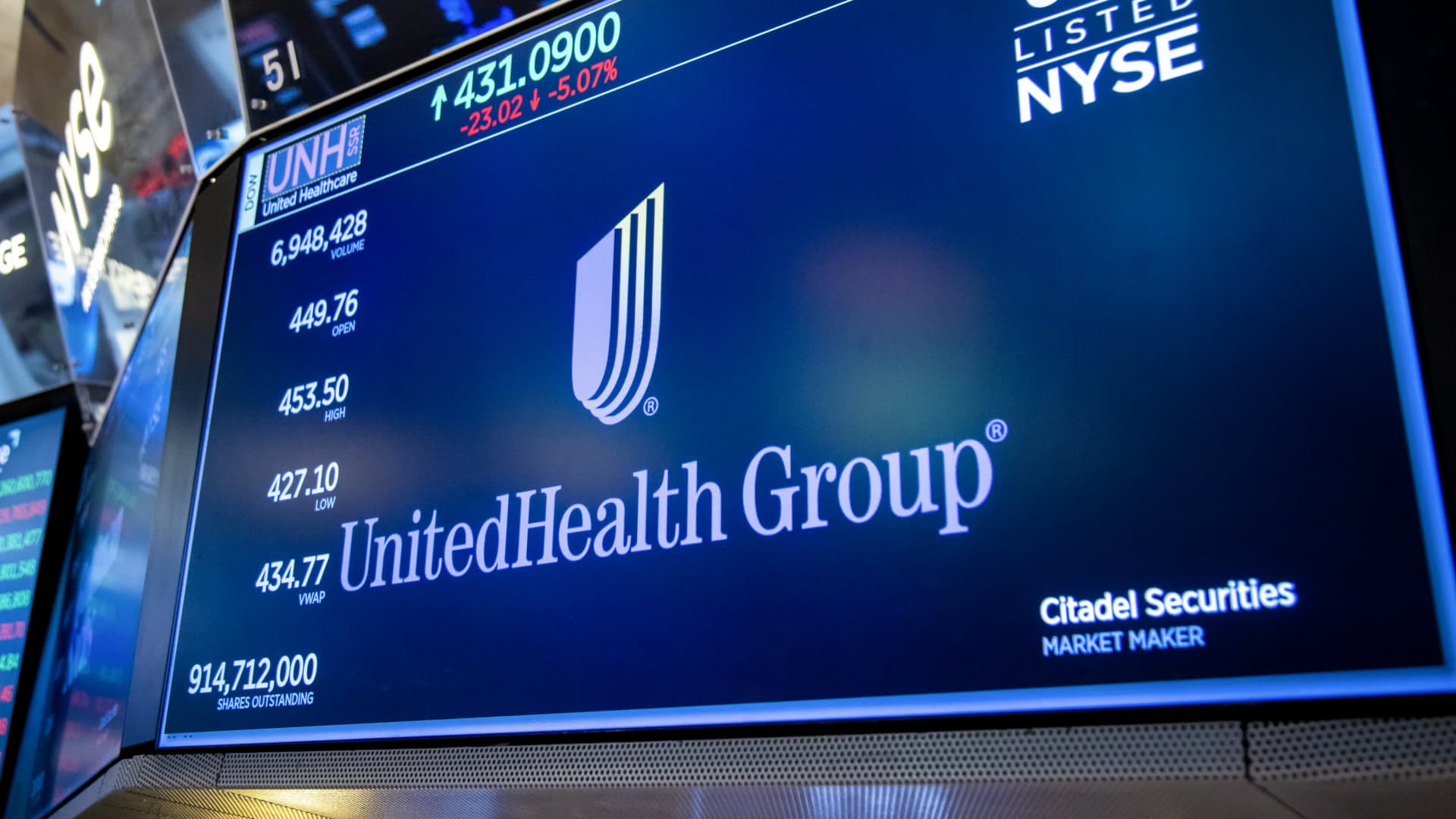
UnitedHealth Group on Thursday posted second-quarter earnings that blew past estimates and raised its full-year profit outlook, as the company better manages high medical costs and uses AI to help streamline operations.
The largest private insurer in the U.S. said it expects 2026 adjusted earnings of $19.50 to $20 per share, up from a previous outlook of more than $18.25 per share. UnitedHealth is maintaining its full-year revenue guidance of greater than $439 billion. But CFO Wayne DeVeydt said in an interview that he expects the company to “do better than that” given the second-quarter beat.
Still, he said medical costs in the quarter remained “elevated over historical levels” – an issue that has dogged the broader insurance industry for more than two years.
“These results are not a reflection of trend bending or coming under control, but rather our efforts to start pushing down what is already an elevated number,” DeVeydt said.
Here’s what the company reported for the second quarter compared with what Wall Street was expecting, based on a survey of analysts by LSEG:
- Earnings per share: $6.38 adjusted vs. $4.90 expected
- Revenue: $112.03 billion vs. $110.85 billion expected
The company’s stock jumped more than 7% in morning trading.
UnitedHealth’s turnaround plan is gaining momentum following restructuring and an executive shuffle designed to counter challenges in the industry. The healthcare giant is working to stabilize margins by shrinking membership, exiting unprofitable contracts and pouring $1.5 billion into artificial intelligence to streamline operations.
DeVeydt said the company is using AI to improve both efficiency and patient care. For example, AI is helping speed up processes like prior authorizations and improve payment accuracy by detecting potential fraud, waste and abuse. That can help lower costs while improving patient care. AI tools are not determining whether care is approved or denied, he said.
“I would say the turnaround, and I would emphasize that on our culture, it’s really happening … that turnaround is translating to strong, strong earnings,” DeVeydt told reporters. “So it shows that when we can do things the way we think they should be done, that we can be both a solution and be profitable.”
But he emphasized that the turnaround is a “multiyear journey.”
The company posted second-quarter net income of $5.48 billion, or $6.04 per share, compared with $3.41 billion, or $3.74 per share, in the same period a year ago. Excluding items like business divestitures, restructuring and the expected reduction of reserves for unprofitable contracts, UnitedHealth earned $6.38 per share.
Revenue climbed to $112.03 billion from $111.62 billion in the prior-year quarter. The company’s insurer, UnitedHealthcare, and its Optum healthcare unit both topped analysts’ sales estimates for the quarter, according to StreetAccount.
UnitedHealth said rising healthcare costs are forcing insurers to raise premiums and adjust benefits, which is contributing to membership losses in both Affordable Care Act exchange plans and privately run Medicare Advantage plans. The company said revenue has remained stable because higher pricing is offsetting the decline in enrollment.
But DeVeydt said that dynamic “is not a good thing for the system long term.”
UnitedHealthcare served 48.5 million people in the second quarter, down 525,000 from the previous quarter. DeVeydt attributed membership declines largely to affordability pressures driven by higher healthcare costs, forecasting a loss of roughly 500,000 ACA exchange members and 1.1 million Medicare Advantage members in 2026.
Insurers, particularly those that run Medicare Advantage plans, have been pinched by an influx of people seeking care they delayed post-pandemic and high-cost specialty drugs like GLP-1s, among other factors.
But UnitedHealth’s medical benefit ratio — a measure of total medical expenses paid relative to premiums collected — came in at 86.7% for the second quarter. That’s an improvement from the 89.4% reported in the year-earlier period. A lower ratio typically indicates that the company collected more in premiums than it paid out in benefits, resulting in higher profitability.
Analysts were expecting a ratio of 88.5% for the quarter, according to StreetAccount.
The results come about a year after UnitedHealth revealed it is facing Department of Justice investigations over its Medicare billing practices.
DeVeydt said the company has no updates but continues to be “supportive” of the probe.

Britain’s biggest pub landlord is under formal investigation over suspicions it mistreated the thousands of small business owners who run its tied pubs, an inquiry that could end in a fine of up to £16 million.
The Pubs Code Adjudicator (PCA) has launched a statutory investigation into Stonegate, which has more than 4,500 sites across the UK, only the second such inquiry since the regulator was created a decade ago.
Fiona Dickie, the adjudicator, said she has reasonable grounds to suspect the company failed to comply with its duties “to provide accurate and transparent information to both its existing and prospective tied pub tenants” in a number of respects. The investigation covers a five-year period from July 2021 to July this year.
For the tenants at the sharp end, the stakes could hardly be higher. Tied publicans are small business owners in their own right, and the inquiry will examine concerns that some feel they were misled into taking on pubs that may never have been viable.
Dickie is looking at four core issues: the condition of pubs taken on by tenants, the accuracy of financial projections given to prospective tenants, whether Stonegate’s business development managers treated tenants within the rules, and whether the group reported actual or alleged breaches of the code to the regulator as required.
Her annual research has shown Stonegate’s tenants have been the least satisfied of any regulated pub group for at least three years running. Fewer than two in five report being satisfied with their relationship with the company, against an industry average of two in three.
“In order to launch a statutory investigation, I have to have evidence of the basis on which I can suspect a breach of the code,” Dickie told The Times. “I can’t launch an investigation based on hearsay or a hunch. I’m launching this investigation now because I do have such evidence on which I suspect breaches of the code.”
If found in breach, Stonegate faces a fine of up to 1 per cent of its total UK turnover, which stood at £1.6 billion in its last financial year.
The timing is awkward for a company already under strain. Stonegate, controlled by the private equity firm TDR Capital, which also owns Asda, carries a debt burden of more than £3 billion and sank to a pre-tax loss of £174 million in the year to September 2025. It is also preparing a £1 billion sell-off of more than 1,000 venues as it looks to steady its finances.
The investigation could complicate chief executive David McDowall’s plan to convert more managed pubs into tenanted and leased sites, a strategy central to the turnaround of a business that has long struggled under the weight of its borrowings. Three quarters of its pubs are now leased and tenanted.
The Pubs Code came into force in 2016 to give tied tenants a fairer deal, requiring that publicans should be no worse off than if they were free of the tie. It arrives at a bruising moment for the trade, with pubs closing at a rate of nearly two a day as costs climb.
Chris Wright, of the Pubs Advisory Service, welcomed the inquiry but questioned why it had taken so long. “These issues are nothing new, and they predate 2021, and have been raised with the regulator numerous times since 2016. Sadly, for many people the damage has already been done,” he said, adding that “lots of people have lost their livelihoods”.
A Stonegate spokesman said: “We acknowledge the launch of a statutory investigation. Stonegate is fully committed to complying with the code and ensuring all publicans are treated fairly. Stonegate has communicated at length with the adjudicator over the two specific cases that form the basis of this investigation, and we will co-operate fully throughout.”
Dickie said she wants to hear from current and former Stonegate tenants, as well as staff, former staff and advisers who may have evidence relevant to the investigation.

Jamie Young
Jamie Young is Senior Reporter at Business Matters, covering SME finance, employment law and Westminster policy since 2016. He has reported on every Budget and Autumn Statement since 2018, helped make sense of the ‘covid era’ and the bounce-back loan scheme from launch through the fraud investigations, and broke the magazine’s coverage of the 2024 late-payment reforms. He joined Business Matters straight from completing his BA in Administration from Exeter University and is NCTJ-qualified. Reach him at jyoung@cbmeg.co.uk

H.B. Fuller declares quarterly dividend of $0.245 per share
AMD: The CPU King


Florida issues civil subpoena for more information on use.

MoonPay Acquires Glide to Expand Crypto Deposit Infrastructure

Prime Video’s Forgotten Jean-Claude Van Damme Series From Ridley Scott Deserves Another Chance

MI5 lied to three courts in neo-Nazi agent case, inquiry finds


-

 Fashion6 days ago
Weekend Open Thread: Nutriplenish Leave-In Conditioner
-
 Sports7 days ago
2026 Genesis Scottish Open Thursday TV coverage: Round 1
-

 Sports6 days ago
Super Eagles star Moses Simon opens up on Liverpool transfer regret
-

 Politics1 day ago
Young campaigners urge incoming PM to act on outdoor junk food ads
-

 News Videos2 days ago
XRP BOMBSHELL… XRP OMBOARDED FOR TRANSACTIONS!!!
-

 Tech2 days ago
Get Your ESP32 Sunny Side Up With This Solar Dev Board
-

 Tech2 days ago
Dark Secrets Emerge When Jailbreaking LLMs
-
 Entertainment23 hours ago
Disney’s Most Ambitious Failed Star Wars Attraction Is Coming to SDCC
-
 Sports19 hours ago
New Cornerback Enters Vikings Trade Rumor Mill
-

 Crypto World16 hours ago
CFTC blocks Kalshi from unwinding Michigan trades after court order
-

 News Videos3 days ago
how to make coin bank box with cardboard #scienceproject #money #diy #shorts
-
 Tech3 days ago
Cloudflare Precursor Watches Your Mouse and Keyboard To Decide If You Are Human
-
 Entertainment22 hours ago
Vicki Gunvalson Defends Discussing Heather Dubrow’s Money
-
Crypto World2 days ago
Ripple, Coinbase, Circle Join Linux x402 Foundation to Help Shape AI Payments
-

 NewsBeat19 hours ago
Watch: Is Donald Trump facing a popular backlash on immigration?
-

 Sports17 hours ago
Michigan officials not expected to discuss AD Warde Manuel at Thursday meeting
-

 Business2 days ago
ACCC warns AI could lift insurance costs in risk-prone areas
-
 NewsBeat18 hours ago
Firefighters issue update on Dovestone moorland blaze as fire enters fourth day
-
 Business2 days ago
AI blueprint looms as PM examines 'lessons from abroad'
-

 Business14 hours ago
Nvidia Stock Slips After Big Tuesday Rally as Huang Confirms Vera Rubin Chip Is Now in Production Today
You must be logged in to post a comment Login