Enterprises looking to move more of their agentic AI workloads to open weights models they can customize, control and run on-premises or in virtual private clouds have a strong new contender to consider.
Today, Thinking Machines—the highly capitalized American AI startup founded by former OpenAI CTO Mira Murati—released Inkling, its first major language model under an enterprise-friendly Apache 2.0 open source license, and it boasts high, if sub state-of-the-art, performance for open weights models on third-party benchmarks, specifically software engineering (77.6% on SWE-bench Verified, where it beats fellow U.S. open rival Nvidia Nemotron 3’s 71.9%) and voice understanding (91.4% on VoiceBench compared to 94.4% for Gemini 3.1 Pro on high reasoning effort).
Another differentiator: Thinking Machines notes that Inkling was designed “to answer directly on topics that may be subject to censorship,” offering enterprises concerned about factual outputs, irrespective of controversy or sensitivity, a more trustworthy option.
Coming in at 975 billion total parameters, Inkling is a natively multimodal, open-weights Mixture-of-Experts (MoE) system capable of reasoning across text, images, and audio. The weights are already available on Hugging Face and the company’s own model training application programming interface (API), Tinker.
Advertisement
Designed to balance cost against performance through a novel “controllable thinking effort” mechanism, the model represents a significant departure from the black-box scaling strategies of frontier competitors.
Alongside the flagship model, Thinking Machines also announced a preview of Inkling-Small, a lighter 276-billion-parameter alternative optimized for workloads where low latency and cost are paramount.
Benchmarks Show a Powerful, High-End, Sub State-of-the-Art Model
While Inkling is a formidable multimodal engine, it lands in a fiercely competitive 2026 open-weight landscape characterized by highly specialized MoE architectures. Rather than attempting to dominate every leaderboard, Thinking Machines explicitly designed Inkling—with 975 billion total and 41 billion active parameters—as a broad, balanced generalist.
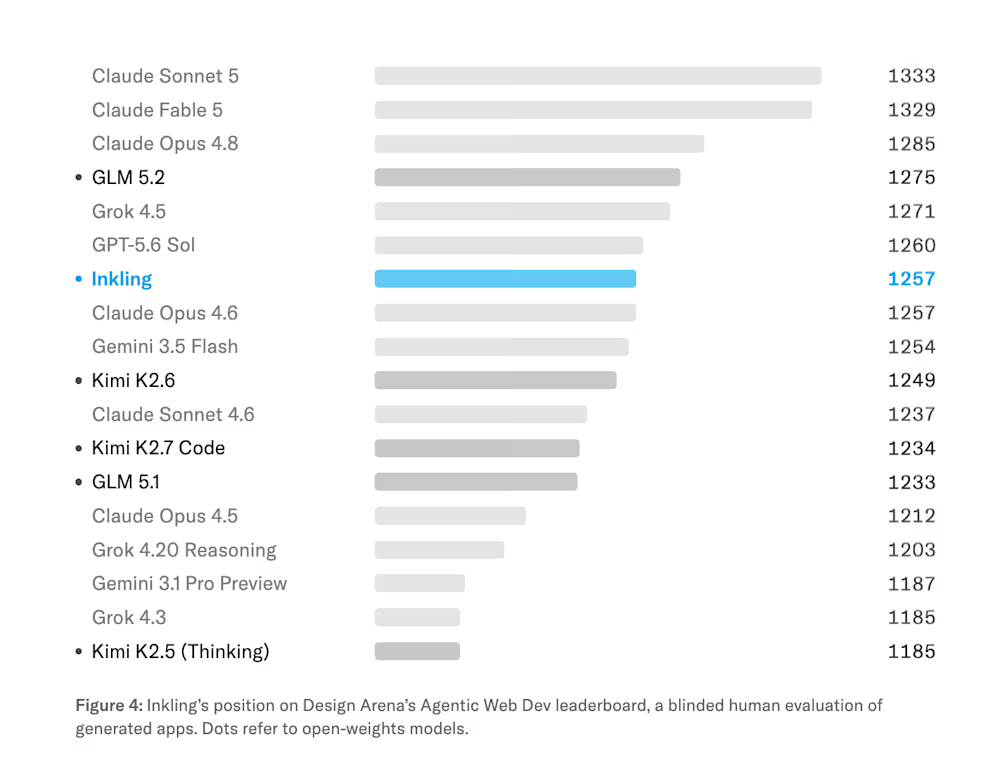
For example, it comes in near the middle high-end of benchmark performance 1257 on Design Arena’s Agentic Web Dev leaderboard measuring human scores of frontend web design.
Advertisement
Credit: Thinking Machines
But China’s leading AI labs have produced models with elite reasoning and coding capabilities, posing a stiff challenge to Inkling’s generalist approach and ultimately outperforming it on general and coding benchmarks.
GLM 5.2: Widely considered the top open-weight reasoning model available in the benchmark set, GLM 5.2 outperforms Inkling on pure coding, agentic, and complex reasoning tasks. It scores 62.1% on SWEBench Pro (Public) compared to Inkling’s 54.3%, and a massive 82.7 on Terminal Bench 2.1 against Inkling’s 63.8. GLM 5.2 also holds the edge in text-only reasoning, scoring 40.1% on HLE (text only) versus Inkling’s 30.0%.
DeepSeek V4 Pro: DeepSeek maintains an edge in several strict coding and factuality domains, beating Inkling on SWEBench Verified (80.6% vs. 77.6%) and SimpleQA Verified (57.0% vs. 43.9%). However, Inkling successfully overtakes DeepSeek V4 Pro in mathematical problem-solving, achieving 97.1% on AIME 2026 compared to DeepSeek’s 96.7%.
Kimi K2.6: This model outpaces Inkling across multiple technical benchmarks, delivering higher scores on GPQA Diamond (91.1% vs. 87.9%), BrowseComp (83.2% vs. 77.1%), and HLE with tools (54.0% vs. 46.0%). Yet Inkling proves more resilient on general chat instruction following, scoring 79.8% on IFBench compared to Kimi K2.6’s 76.0%.
Against its primary U.S.-based open-weight competition, Inkling demonstrates strong parity and frequent superiority.
Nemotron 3 Ultra: Inkling consistently outperforms this U.S. rival across reasoning and coding. Inkling posts 97.1% on AIME 2026 and 77.6% on SWEBench Verified, beating Nemotron’s 94.2% and 70.7%, respectively. Furthermore, Inkling significantly leads in agentic workflows, scoring 74.1% on MCP Atlas against Nemotron’s 44.7%.
When compared to closed-source juggernauts like Claude Fable 5, GPT 5.6 Sol, and Gemini 3.1 Pro, Inkling trails in peak reasoning and software engineering autonomy, but remains highly competitive in multimodality.
Advertisement
Coding and Reasoning: Closed models maintain a commanding lead. Claude Fable 5 (max) hits 95.0% on SWEBench Verified and 53.3% on HLE (text only), far outpacing Inkling’s 77.6% and 30.0%. GPT 5.6 Sol dominates Terminal Bench 2.1 with an 89.5, easily clearing Inkling’s 63.8.
Native Multimodality: Inkling’s native visual and audio capabilities hold their own. On the MMMU Pro (Standard 10) vision benchmark, Inkling’s 73.3% is competitive, though trailing Claude Fable 5’s 84.2% and GPT 5.6 Sol’s 83.0%. In audio processing, Inkling scores a highly respectable 77.2% on MMAU, keeping it within striking distance of Gemini 3.1 Pro’s 82.5%.
If an enterprise workflow demands elite software engineering autonomy or the highest bounds of text-only reasoning, models like GLM 5.2 or proprietary systems like Claude Fable 5 maintain the edge.
However, Inkling carves out a unique and highly defensible position: it is the most capable open-weight foundation model that natively fuses text, vision, and audio, while simultaneously offering developers direct programmatic control over the cost-to-performance ratio.
The Shift from Static Reasoning to Controllable Thinking
Rather than attempting to build a singular “god model” optimized strictly for state-of-the-art benchmark domination, Thinking Machines engineered Inkling for adaptability and efficiency in real-world workflows.
The standout feature of this release is Inkling’s “controllable thinking effort.” Developers can programmatically adjust the model’s reasoning budget—scaling from 0.2 to 0.99—to dictate how hard the AI should “think” before generating an output.
Advertisement
As the company noted, “Inkling’s continuous thinking effort lets you pick your point on the cost/performance curve—reaching the same score with a fraction of the tokens”.
In practical terms, this allows enterprises to deploy Inkling with lower token expenditure for simpler tasks, while cranking up the compute overhead for complex, multi-step reasoning challenges. However, by keeping the thinking effort lower and generating fewer tokens, the cost-conscious enterprise can achieve high quality results and performance on simple tasks while spending less money, or, in the case of those running models locally, less costs on energy and compute resources.
During the model’s large-scale reinforcement learning (RL) training over 30 million rollouts, researchers observed an emergent phenomenon they called “chain of thought condensation”. Over time, Inkling naturally learned to compress its internal reasoning steps—dropping grammatical overhead and connectives—while reaching the same accurate conclusions, resulting in drastically reduced latency.
Advertisement
Epistemics and Censorship Resistance
A notable element of Thinking Machines’ release is its explicit focus on the model’s epistemics—specifically its calibration, instruction following, and resistance to censorship.
In an ecosystem where open-weight models adopt either overly restrictive safety guardrails or echo state-aligned ideological talking points, Inkling was intentionally trained to answer directly on politically sensitive or heavily censored topics.
To validate this approach, Thinking Machines submitted Inkling to the Propaganda and Censorship Eval developed by AI startup Cognition. According to the published findings, Inkling demonstrated “strong patterns of censorship non-compliance,” effectively resisting ideological capture or boilerplate refusals when presented with sensitive subjects.
Despite its resistance to censorship, the model maintains a robust defense against genuinely malicious, dangerous, or illegal queries. On the StrongREJECT benchmark—which tests responses to unambiguous harmful requests—Inkling scored 98.6%, placing it in line with strict frontier safety standards. Furthermore, on the FORTRESS benchmark, Inkling successfully navigated the line between safety and over-refusal: it achieved a 78.0% refusal rate on adversarial queries (such as those involving weapons, cyberattacks, or violence) while maintaining a 95.9% compliance rate on benign, look-alike queries.
Advertisement
Thinking Machines noted that typical open-weight vulnerabilities remain within the architecture. Internal safety evaluations revealed an “occasional tendency to comply with role-play and indirectly framed prompts concerning harmful topics”. The company advised enterprise developers to treat the model’s built-in refusals as just one layer of security, recommending the downstream deployment of external moderation tools—such as Llama Guard—to filter adversarial jailbreaks and enforce use-case-specific safety policies at the application level.
Under the Hood: Architecture and Multimodality
Inkling’s scale is staggering, yet sparse. The MoE architecture features 975 billion total parameters, but only 41 billion parameters are active during any given token generation. It supports a massive context window of 1 million tokens and diverges from typical transformer models by using relative positional embeddings instead of the industry-standard Rotary Positional Embedding (RoPE).
True to the company’s foundational vision, Inkling was trained from scratch to be natively multimodal. Unlike models that rely on bolted-on external encoders, Inkling uses an encoder-free early fusion approach. It directly ingests audio as discrete dMel spectrograms and visual data as 40×40 pixel patches via a hierarchical multi-layer perceptron (hMLP), projecting all modalities into a shared hidden space.
Licensing: True Open-Source for the Enterprise
For enterprise IT teams and developers, the most disruptive aspect of Inkling may be its licensing. Inkling is released under the permissive Apache 2.0 license.
Advertisement
In an ecosystem where many so-called “open” models from Western labs are tethered to dual-use commercial licenses, acceptable use restrictions, or revenue caps, an Apache 2.0 designation makes Inkling a true open-source foundation. This gives developers the legal freedom to download, modify, integrate, and commercialize the model weights entirely royalty-free.
The model is readily deployable across major open-source inference libraries—including SGLang, vLLM, TokenSpeed, and llama.cpp—and comes with a native NVFP4 quantized checkpoint optimized for NVIDIA Blackwell systems.
Community Reactions: The Engineering Feat
The AI community’s response has been swift, praising both the model’s openness and the underlying engineering execution.
In a post on X, Thinking Machines co-founder John Schulman reflected on the rapid development cycle: “Inkling is out today, with open weights and in Tinker. It’s been fun to watch this one come together: pretraining began last winter, and starting in mid-January a small team built up the coding, reasoning, and agentic training from there. We learned a lot building it, and I hope people find good uses for it.”
Advertisement
Horace He, a researcher at Thinking Machines (previously from PyTorch), underscored the difficulty of the task in another post on X: “It truly takes a village to release a model, perhaps especially an open weights model. Actually doing the entire process from scratch, from data to pretraining to posttraining to actual release, gives a lot of appreciation for anyone who does it!”
The broader open-source ecosystem has also embraced the technical integrations. Lysandre Debut, the Chief Open-Source Officer at Hugging Face, shared his enthusiasm regarding the model’s optimization in his own X post: “One thing I find quite striking is how much easier accelerating models has become… We replaced the model’s causal Conv1D with the `causal-conv1d` kernel. One line changed, +4% tokens per second. We then replaced its attention implementation with FlashAttention-4. Another single change, another +11%. That’s a total throughput improvement of about 15%, without changing the model architecture or retraining anything.”
Tiezhen Wang, an ecosystem growth expert and ex-Googler, celebrated the release as a massive win for the open-source community, listing the model’s impressive specifications on X, highlighting its “975B total, 41B active” size, “Native MTP support,” and the highly coveted “Apache 2.0 license.”
Background: The Road to Inkling
To understand the significance of Inkling, one has to look back at the rapid trajectory of Thinking Machines over the past 18 months.
Advertisement
When Mira Murati departed OpenAI in late 2024 to found Thinking Machines alongside industry veterans like John Schulman and Barret Zoph, the stated goal was to pivot away from building isolated autonomous agents. Instead, the company aimed to build flexible, multimodal systems designed for genuine human-AI collaboration and open science.
The company’s philosophy began coming into sharper focus in October 2025 with the launch of Tinker, a Python-based API for large language model fine-tuning that gave researchers granular control over training pipelines without the friction of distributed compute management.
That same month, Thinking Machines researcher Rafael Rafailov delivered a provocative critique of the AI industry at TED AI. He argued that the current trajectory of simply throwing more compute at models was fundamentally flawed, noting that today’s systems take shortcuts—like wrapping code in try/except blocks—because they are trained strictly for task completion rather than genuine learning.
Advertisement
Rafailov posited that the first artificial superintelligence would not be a “god model,” but rather a “superhuman learner” capable of meta-learning and internalizing abstractions. Inkling’s architecture—specifically its controllable thinking effort and its ability to organically compress its chain of thought during RL—feels like the first tangible realization of Rafailov’s thesis.
In May 2026, the lab teased its technical prowess with the research preview of TML-Interaction-Small, a system that eliminated “turn-based” chat by processing inputs and outputs simultaneously in 200ms chunks. This “full-duplex” breakthrough proved the company could build highly responsive, natively multimodal models from scratch.
Now, with Inkling out in the wild, Thinking Machines has delivered on its foundational promises. By offering a massive, natively multimodal model under a true open-source license, they aren’t just giving developers a new tool—they are attempting to fundamentally rewrite the economics and accessibility of frontier AI development.
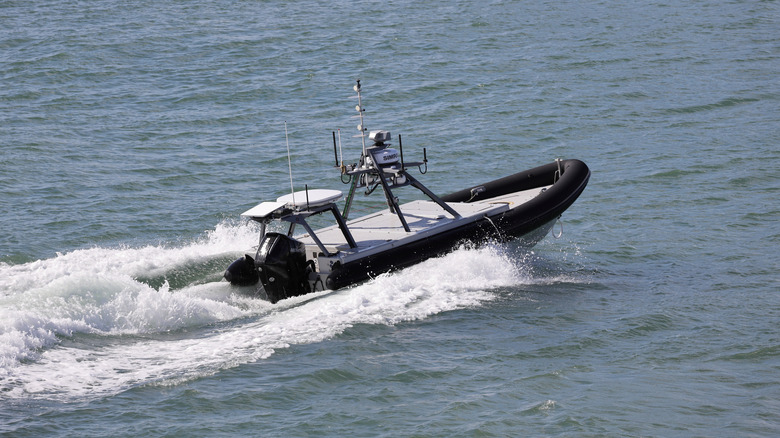
As wartime technology becomes more advanced, the U.S. Navy is launching the Next Generation Undersea Security Initiative (NG-USI), focused on autonomous high-tech systems designed to defend the United States’ seas against enemy AI and robotics. The key focus is detecting, tracking, and then defeating systems across land, sea, and sky, including swarms of autonomous drones and AI-driven cyberattacks on security networks.
One focus area of the NG-USI is autonomous surveillance. Leveraging commercial robotics, the Navy hopes to achieve autonomous patrolling, inspection, and response. The prototype technology is looking for solutions around the shore as well as open ocean environments. These technologies will scatter signals, jam electronic warfare, and shield infrastructure.
The Navy hasn’t specified which exact systems will be tested and implemented, but these could include sensors on land and underwater, smart cameras that can detect threats, patrolling drones, and unmanned ground vehicles. It has already implemented a solar-powered drone that can patrol the ocean for days, as an example. Companies are encouraged to submit technologies that meet these criteria and can perform autonomous tasks.
Advertisement
Autonomous technology is a huge focus for the U.S. Navy
DC Studio/Shutterstock
The NG-USI’s autonomous technology focus is nothing new for the U.S. Navy. Autonomous vessels are the next big step in maritime warfare, according to Chief of Naval Operations Adm. Daryl Caudle. While speaking with Bloomberg, Caudle admitted the Navy is not advanced enough in the autonomous and drone fields, but is currently investing heavily in unmanned systems for air, sea, and underwater operations.
The biggest development is the deployment of a fully autonomous vessel that would locate and neutralize mines without putting sailors’ lives at risk. This is just the beginning of the Navy’s vision of having unmanned ships, unmanned underwater vehicles, and unmanned drones all working together. “We’re not just in our respective domains,” Caudle said. “We package this like we do in the joint force to solve a real mission problem.” The Navy is also looking into an autonomous submarine that can travel long distances underwater and then release autonomous drones. Other countries have been revealing autonomous military technology for a while, including China’s landing vehicle and underwater drone.
The UK looked set to crack down on VPNs as it tightens the rules for children online. Instead it has backed off, and its own research is the reason why.
Online Safety Minister Kanishka Narayan put it plainly on the BBC. “We decided not to limit VPNs,” he said. A VPN hides a user’s real location, which is one way to slip past an age check.
The decision landed alongside the UK’s new midnight social-media curfew for 16 and 17-year-olds. Technology Secretary Liz Kendall confirmed it in a written statement, saying VPNs have “legitimate privacy and security uses.”
What the research found
The government had commissioned a study of more than 2,000 children, and the numbers undercut the case for a ban. About a quarter of 11 to 17-year-olds have used a VPN. Most do so for privacy, not to break the rules, the report found.
Only around 7% of children use a VPN to reach age-restricted content. Far more simply lie. Nearly half who dodge an age check just enter a false date of birth. The VPN, in other words, is not the main loophole.
Advertisement
The burden shifts to platforms
Rather than police the tools, the government is pushing the job onto the platforms. They must now take “robust steps” to spot and stop under-age users getting around age checks.
Ofcom must report by October on what a robust over-16 age check looks like. The government has separately asked it, with the data regulator, to study how platforms can better detect VPN use. Ministers will also talk to VPN providers about voluntary action, and say they will “keep this area under close review.”
A win for privacy campaigners
The retreat is a clear win for digital-rights groups. A coalition of more than 20 tech firms and campaigners, including Proton and Mozilla, had urged ministers to leave VPNs alone. Mozilla warned that age-gating them would create a cybersecurity mess while failing to protect children.
Not everyone thinks the wider plan works. The curfew and the feature limits can be switched off, and critics say that leaves an obvious gap. The government is “leaving the side door open,” as one analyst put it.
Advertisement
The move stands out against the global mood. It sits alongside the UK’s coming under-16 social-media ban, while Australia’s teen ban has been dogged by VPN workarounds and New Zealand recently ruled out its own limits. Even the US courts are wrestling with who runs the internet’s age gate. For now, Britain has chosen evidence over a blanket ban.
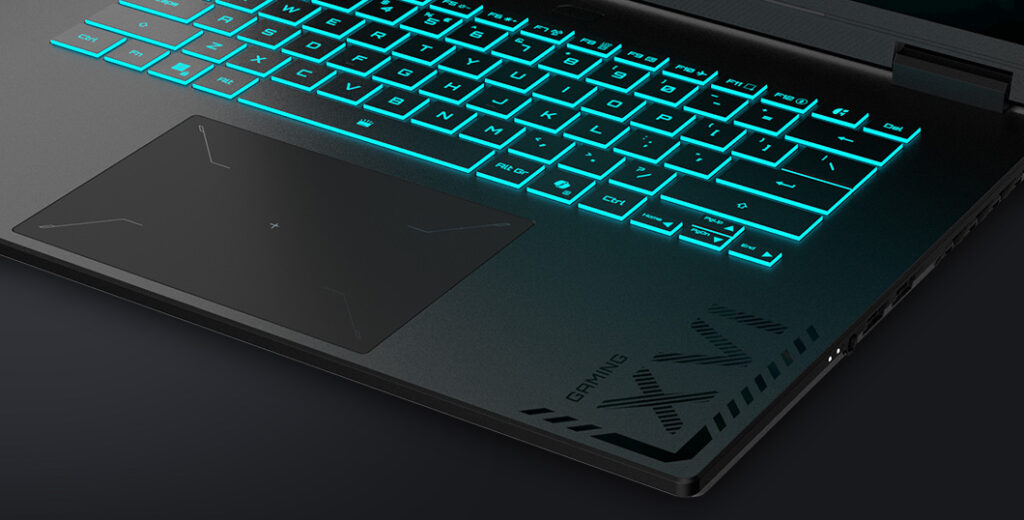
GIGABYTE has officially entered India’s local manufacturing ecosystem with the launch of the GAMING A16, the company’s first Made-in-India gaming laptop. The new laptop is powered by AMD Ryzen processors and is designed for gamers, creators, students, and professionals seeking AI-ready performance. The launch also marks GIGABYTE’s first gaming laptop to be manufactured in India, with production handled in partnership with Dixon Technologies, one of the country’s largest electronics manufacturers.
According to the company, the move is part of its long-term strategy to strengthen its presence in India while supporting the country’s push toward becoming a global electronics manufacturing hub. GIGABYTE says local production will also help improve supply chain efficiency and allow it to respond more quickly to market demand.
To oversee the project, senior executives from GIGABYTE’s global headquarters—including teams from product management, procurement, materials planning, and quality assurance—visited India to work alongside Dixon during production. The company says every unit has been built to meet the same quality standards as its globally manufactured products.
Designed for Gaming and AI Workloads
While GIGABYTE hasn’t shared the complete hardware specifications in today’s announcement, it confirmed that the GAMING A16 is powered by AMD Ryzen processors and is designed to handle both modern gaming and AI-assisted workloads.
The company says the laptop targets a wide audience, including gamers, content creators, college students, and professionals who need a balance of performance and portability. The launch also reflects the growing importance of AI-ready PCs, with GIGABYTE positioning the A16 as a machine capable of handling both next-generation AI experiences and traditional gaming workloads.
Advertisement
Speaking on the matter, Sinclair Hsiao, Vice President of Global Sales at GIGABYTE, said,
India has become one of the most exciting technology and gaming markets in the world, and we believe Indian consumers deserve products built to the same uncompromising global standards that gamers everywhere expect from GIGABYTE
The GIGABYTE GAMING A16 is now available in India. While the company has confirmed local availability, it has yet to announce pricing or detailed hardware configurations
Back in the early 1980s, Toyota linked up with Winnebago to give its Hilux a bit more passenger capacity to tackle the likes of the Ford Bronco and Chevrolet K5 Blazer. That machine was the Trekker, of which around 1,200 to 1,500 units were built for the 1981 through 1983 model years. After that, Toyota opted to build its own Trekker off of the Hilux to sell to the U.S. market for the 1984 model year. With help from ad agency Saatchi & Saatchi, this new SUV gained a suitable name: 4Runner.
Over 40 years later, the once-kit-bashed 4Runner is one of the most-popular off-roading machines around. After some 15 years on the trail, the fifth-generation 4Runner — the longest-running generation to date — was finally given its gold watch, as an all-new model arrived for the 2025 model year.
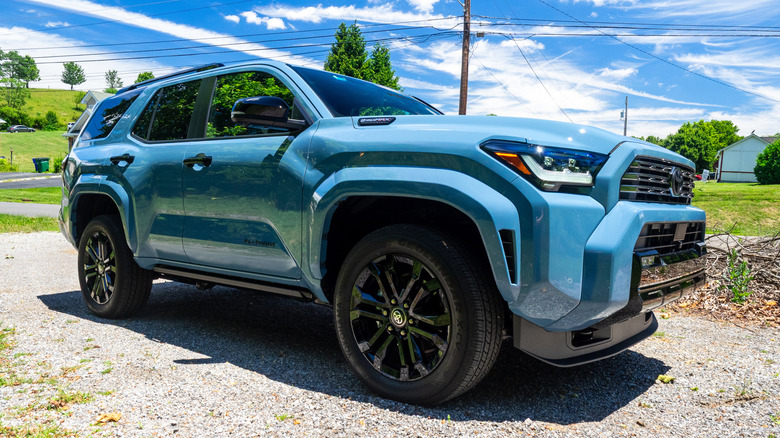
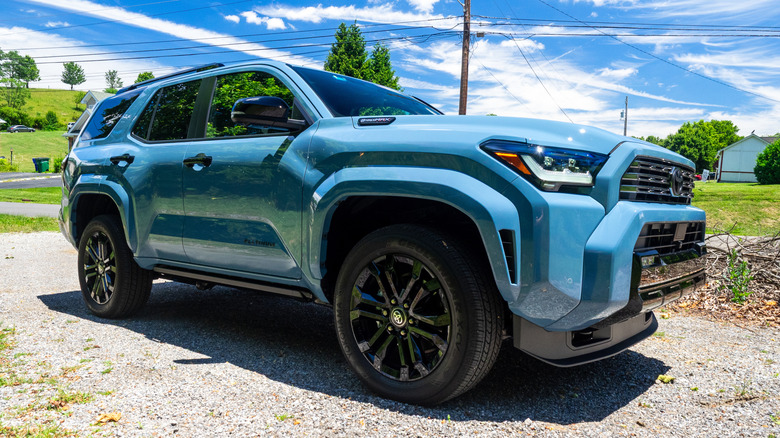
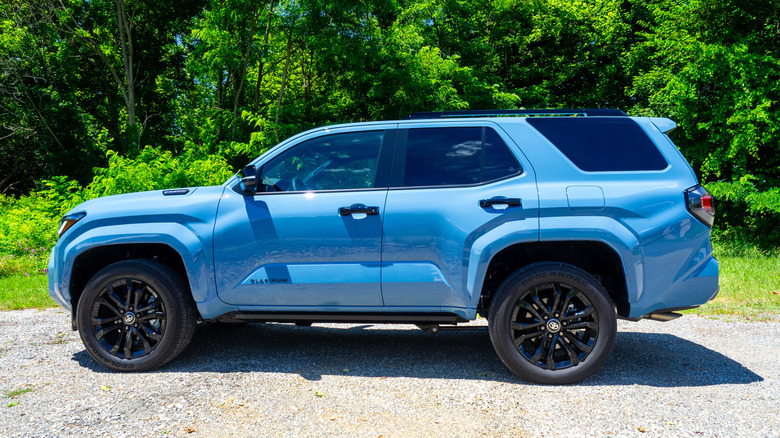
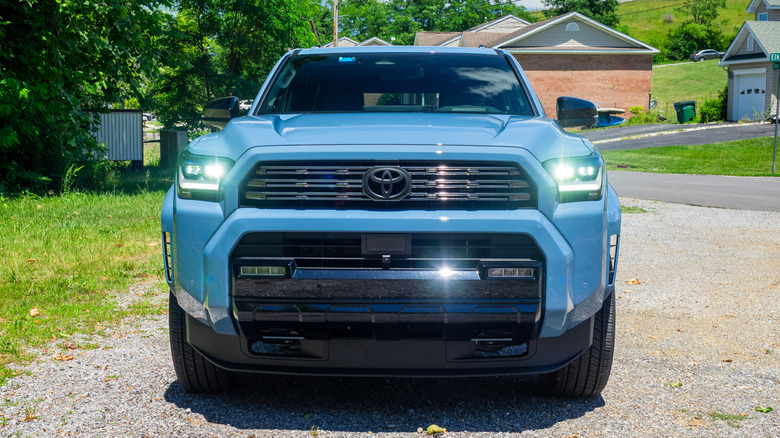
Does this new Toyota prove that age ain’t nothing but a number, though? And will a bit of luxury take away from the overall experience that is the 4Runner? To help me answer this question, the automaker sent over an example in its most luxurious guise, a 2026 Toyota 4Runner Platinum all dressed in Heritage Blue, to spend a week with me within the Blue Ridge Mountains of Southwestern Virginia.
Advertisement
So many choices… perhaps too many
Cameron Aubernon/SlashGear
The 1984 4Runner offered only two trims: the base model (which didn’t have a rear bench seat) and the SR5 (which did). Pricing started at above $10,000 to nearly $12,000 (above $32,000 to nearly $39,000 in 2026) before options. In 2026, you can have your 4Runner in one of 12 trim levels, all well above what the 1984 duo sold for when new (even after adjusting for inflation). Here’s what it’ll set you back before the $1,495 destination charge:
SR5: $42,070
TRD Sport: $48,550
TRD Off-Road: $50,490
TRD Off-Road i-FORCE MAX: $53,290
TRD Sport Premium: $53,910
TRD Off-Road Premium: $56,270
Limited: $56,700
TRD Off-Road Premium i-FORCE MAX: $59,070
Limited i-FORCE MAX: $61,500
Platinum: $64,160, $66,860 total sticker as-tested
Trailhunter: $68,200
TRD Pro: $68,400
You’re certainly spoiled for choice when it comes to the 2026 4Runner, though there are a few other competitors capable of matching up to the Toyota when it comes to off-road performance. The Honda Passport TrailSport and TrailSport Elite ($48,450 and $52,450, respectively) can go nearly anywhere the 4Runner can, even if it’s a unibody machine.
On the body-on-frame category, the Ford Bronco ($40,495 – $79,995 starting MSRP) and Jeep Grand Cherokee/Grand Cherokee L ($38,415 – $60,195/$40,415 – $62,195) will be waiting on the rocks for the iconic off-roader.
Advertisement
No Prius, but it might be the best at MAX-imizing its fuel tank
Cameron Aubernon/SlashGear
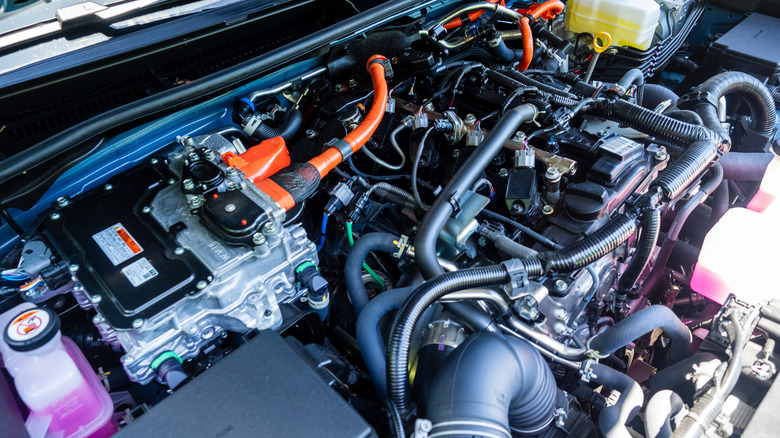
Depending on trim, the 2026 4Runner comes with one of two powertrain options. Non-i-FORCE MAX models — basically all aside from the Platinum, Trailhunter, and TRD Pro trims — use a 2.4-liter turbocharged four-cylinder with an eight-speed automatic. Output comes to 278 horsepower and 317 lb-ft of torque, which hits the trail either through the rear or all corners, the latter courtesy of optional part-time four-wheel drive.
The i-FORCE MAX models add an electric motor into the mix, with part-time or full-time four-wheel drive (depending on trim level). The same eight-speed automatic is in play here, though now it has a combined 326 horsepower and 465 lb-ft of torque to manage.
Advertisement
Cameron Aubernon/SlashGear
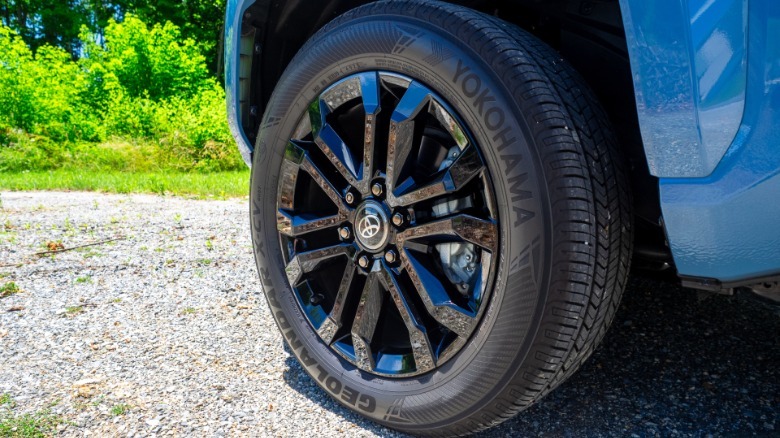
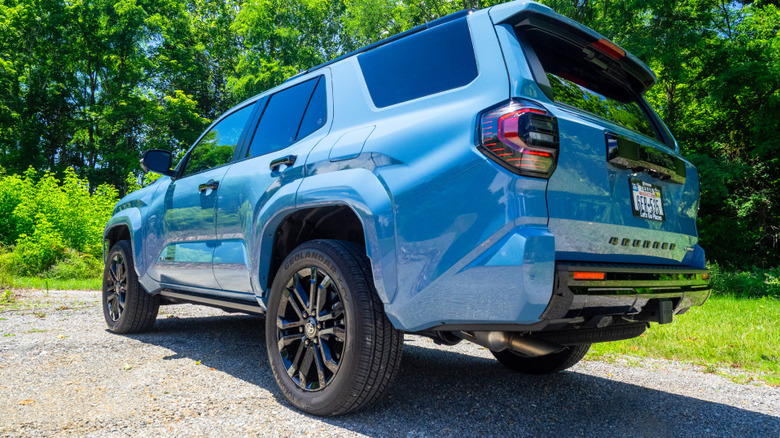
A set of 17-inch wheels come on the base SR5, while the rest work with either 18- or — as seen above with the Platinum trim — 20-inch units. Trim level also determines what sort of tires you’ll get, too. The Trailhunter, for example, has special 18-inch bronze alloys mounted in 33-inch Toyo all-terrain tires. On the other hand, my Platinum, preferring a more pastoral life, received a set of Yokohama Geolandar X-CVs for a quieter ride.
As far as fuel economy, your mileage may vary on (once again) trim level, from 20 mpg city/26 mpg highway for the SR5, to 23 city/24 highway for the i-FORCE MAX-equipped trims like my Platinum. These hybrid engines, as I’ve experienced a few times before, emphasize power more than fuel savings. With my combined in-town driving plus a few excursions elsewhere, I managed a final combined 19.2 mpg, which isn’t all that great in real life compared to what’s on paper. The i-FORCE MAX engine prefers premium gas, too, while the standard turbo-fours can use regular fuel.
Advertisement
Lots of chunk to go with the hunk o’ burnin’ tech
Cameron Aubernon/SlashGear
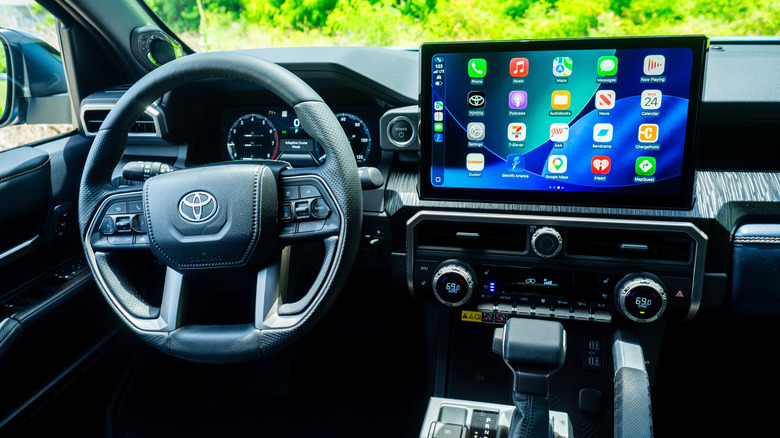
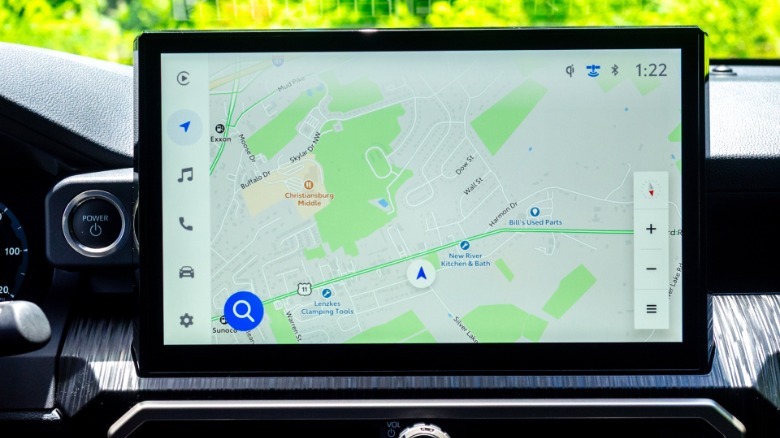
Compared to the previous generation, the sixth-generation 4Runner gets a big tech boost. In 2026, the base SR5 comes with a 7-inch instrument display cluster and an 8-inch center console touchscreen, while the other trims gain a 12.3-inch digital instrument cluster; the TRD Sport Premium through TRD Pro trims get a big 14-inch touchscreen. That touchscreen handles wireless Apple CarPlay and Android Auto, plus Toyota’s own Google-based navigation system, satellite radio, Bluetooth, Wi-Fi hot spot, and — for off-road oriented trims — a multi-terrain monitoring system (aka surround cameras) so you can see how to best navigate the roughest of trails.
Cameron Aubernon/SlashGear
Thankfully, not everything is locked away behind the touchscreen (or Toyota’s collection of subscription services, like the aforementioned OEM navigation, for that matter). Audio volume can be tuned via the big, chunky knob above the HVAC system, itself controlled via actual knobs and switches. Sound comes from either the standard eight-speaker unit or — on higher trims like my Platinum — a 14-speaker JBL system with a removable dash-top speaker that pops out for campsite entertainment.
Amid the chonkyness of everything, the 2026 4Runner has a good list of standard safety features that starts with Toyota Safety Sense 3.0. The list also includes blind-spot monitoring, lane-centering assist, lane-keeping assist, automatic high beams, and adaptive cruise control. Available safety features include a rear-camera mirror (in case you stack the rear cargo space full of gear), a head-up display, surround-view cameras for guiding the off-roader into and out of trouble (and parking spaces), and front and rear parking sensors.
Advertisement
This interior contains multitudes
Cameron Aubernon/SlashGear
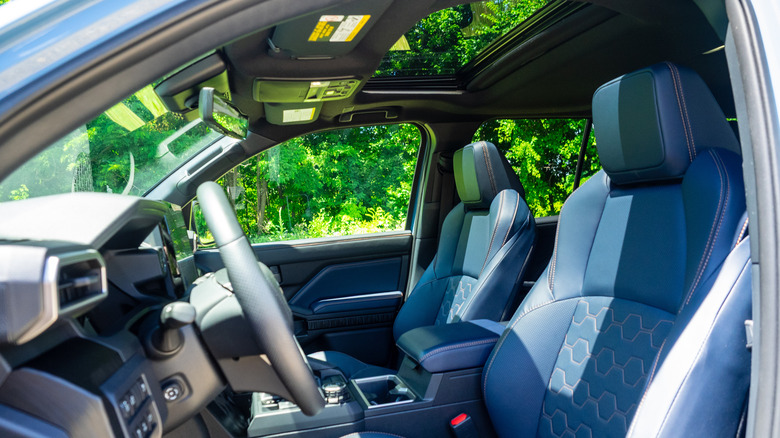
In the original 4Runner, the second row was optional; the 2026 4Runner can be had with a third row, now, though only on the SR5 (a $770 option) or Limited ($1,330) trims. That option adds a 50/50-split third row to increase seating from five to seven. Seating surfaces range from the SR5’s cloth and the TRD Sport Premium’s synthetic leather, to the Limited’s genuine leather and my Platinum’s premium hide. The TRD Sport adds heated front seats; the TRD Sport Premium gives the front seats eight ways of power adjustments and a heated steering wheel; and the Limited contributes ventilation to the front seats and dual-zone climate controls. Finally, the Platinum heats up the rear seats for the three second row occupants.
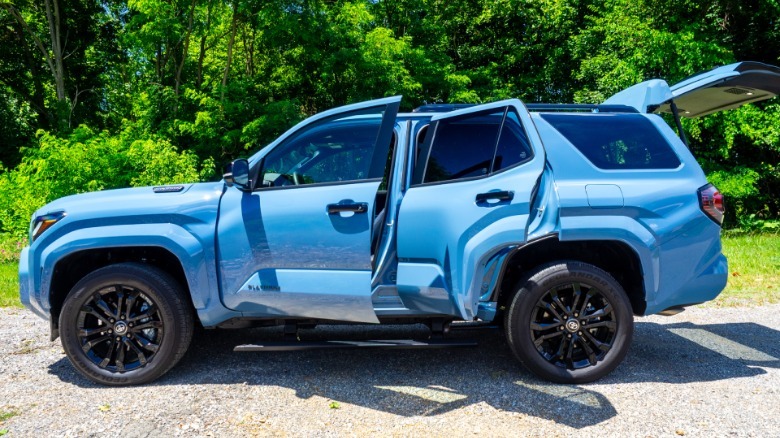
Speaking of the rear, I found accessing the back about as challenging as doing the same with my 1997 Toyota RAV4 five-door, as the rear door openings are a bit small. Legroom is about as small at 34.8 inches (the third row, by the by, offers 31.8 inches of space) while front occupants enjoy 41.8 inches. At least the power running boards on the Platinum (also available on the Limited; the Limited and TRD Off-Road also offer fixed boards) made it easier to get in and out.
Cameron Aubernon/SlashGear
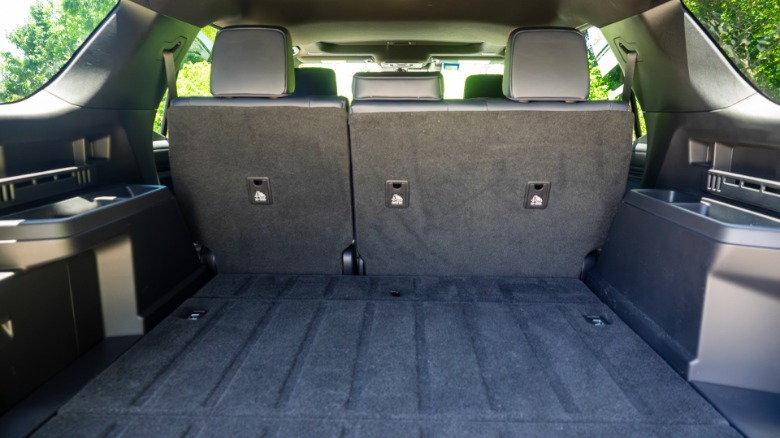
Behind the 60/40-split second row, the 2026 4Runner may have less cargo space than you expected, depending on whether or not you opted for the i-FORCE MAX trims or a third row. Non-hybrid models without that third row offer 48.4 cubic feet with the second row seat backs upright, 90.2 cubic feet when folded. Hybrid models have 42.6 and 82.6 cubes respectively due to the higher loading floor, since the battery pack is mounted above the rear axle. The third row reduces space to 12.1 cubic feet with all seat backs up, increasing to 44.8 cubic feet with the third row down, and 84.1 cubes with the second row down, too.
The 4Runner still has the classic power rear glass for loading things like canoes and surfboards without opening the entire hatch. It can also tow up to 6,000 pounds when properly equipped, while the roof can support up to 165 pounds of gear during the drive to the campsite, and up to 770 pounds for overnight camping in the rooftop tent of your choice.
Advertisement
Life with an icon, over four decades later
Cameron Aubernon/SlashGear
Toyota’s wide array of 4Runner trims leave some more off-road appropriate than others. Despite being capable of tackling rough trails like the rest of its siblings, this Platinum trim’s Yokohamas were made for quiet drives around town and over the interstates, not scaling ditches by their sidewalls. So, I instead did what I normally would: a mixture of short trips that eat away at the fuel economy, and highway drives to let that turbocharged four-cylinder whistle quietly.
I wasn’t thrilled that the rear cargo area had a hump to make loading heavy boxes more challenging, but at least they did clear the space; bigger boxes may have to be loaded differently if you choose the hybrid models.
Cameron Aubernon/SlashGear
As far as driving, I could really feel the 4Runner’s heft while turning through corners or even just in the parking lot; it’s still a body-on-frame truck experience, after all. The high ground clearance did come in handy when I needed to do some unscheduled curb climbing in order to get out of a very tight spot, though. On the interstate the bruiser was quite the cruiser, and pretty comfortable while doing it, too, no matter the drive mode I chose.
I opted to keep it in Sport mode through the road winding down from the overlook to the town of Pulaski below to see how well it could come down the mountain on pavement, which it did so with no trouble. There are more agile rides out there, but the 4Runner isn’t too bad around the bends; just don’t think it can chase the Tail of the Dragon, though.
Advertisement
2026 Toyota 4Runner verdict
Cameron Aubernon/SlashGear
Toyota saw a good thing in its partnership with Winnebago forty years ago, and kept it going on its own with the first 4Runners. Through the decades since, the midsize off-road SUV staked its claim on the trail next to its legendary brother, the Land Cruiser. Throw in a very healthy aftermarket to take the icon to the next level (or all of them), plus Toyota’s famed emphasis on durability and reliability, and it’s no wonder why the 4Runner enjoys a popularity among drivers to this day.
Popularity doesn’t mean perfection, however. The i-FORCE MAX powertrain definitely has the power, but the selling point of any mainstream hybrid is economy. With fuel prices bouncing off the walls, not to mention the fact that what’s on paper didn’t match up to what I found in reality, the 4Runner’s engine upgrade option doesn’t live up to the hybrid promise.
Speaking of promises, an unspoken one appears to have been broken with this generation of the 4Runner: that of an affordable, off-road capable SUV. Should such a machine have aspirations of luxury if it means not being able to really take it to the limit on the trail? Yes, you could swap out the Platinum trim’s rims and tires, and add a few things here and there to fix some of the other road-centric issues, but that’s only adding more money to an already expensive proposition.
Advertisement
Toyota wisely left the luxury angle in the hands of the Lexus LX; the 4Runner should be allowed to return to its roots in the same manner. There are off-roadable SUVs with more room for people and cargo in the back, and there are off-roadable SUVs harkening back to the past, but none have quite the character and breadth of capability of the 4Runner.
Google might launch an AI product with one name during its experimental phase, but it will eventually tie it all to Gemini. In the latest example of this trend, the company is renaming its AI-powered research product NotebookLM to Gemini Notebook. The company is also adding features to make the tool more interactive by infusing coding execution for data analysis.
Along with renaming, Google is rolling out a new update that makes each notebook its own secure container, in which users can generate code to make outputs interactive. It noted that with code execution ability, users can tap into multiple sources and create complex data analysis directly within the tool.
Advertisement
The company said the update is available to Google AI Ultra paid plan users, along with Workspace business customers with AI Ultra Access and AI Expanded Access. Pro users will get access to this feature in the coming weeks.
Google said that users can already look at their notebooks within the Gemini app, and soon, they will be able to access them through AI Mode in search.
When you purchase through links in our articles, we may earn a small commission. This doesn’t affect our editorial independence.
Not long after twelve states sued Paramount claiming its $111 billion merger with Warner Brothers would harm market competition, the Writers Guild of America (WGA) filed their own lawsuit, warning that the massive debt load from the media industry’s latest megamerger will result in an ocean of layoffs for an already reeling U.S. entertainment industry.
The lawsuit notes that the current film industry is dominated by just five players: Disney (ABC), NBCUniversal (Comcast), Sony, Paramount (CBS), and Warner Brothers. Comcast recently restructured to make it easier to sell off its NBC and Universal properties, opening the door to a lot of very quick consolidation in addition to the speedy Skydance/Paramount/Warners merger.
“With fewer competitors, the merged Paramount-Warner Bros. entity would have both the incentive and the ability to lower costs by suppressing writers’ wages and reducing output. Writers will be paid less and have fewer employment opportunities,” the WGA complaint said.
Supreme Court precedent (for whatever that’s worth anymore) has long indicated that any merger yielding a post-merger market share exceeding 30% (which this deal does) is presumptively anticompetitive. The WGA notes that muted competition will result not just in fewer jobs, but lower wages and fewer opportunities for creatives overall across both film and television.
Advertisement
“With fewer competitors, the merged Paramount-Warner Bros. entity would have both the incentive and the ability to lower costs by suppressing writers’ wages and reducing output. Writers will be paid less and have fewer employment opportunities,” the lawsuit states.
While Paramount would like to pretend this is a debate, and most U.S. press outlets bury the lede, U.S. history is vividly clear on the harms created by media consolidation. That was most recently personified by AT&T’s disastrous acquisitions of DirecTV and Time Warner, which resulted in upward of 50,000 layoffs, higher prices, worse service, and no shortage of shuttered creative projects.
The rushed acquisitions of both CBS/Paramount and Warner Brothers — all so Larry Ellison’s son can play media mogul — have created a particularly heavy debt load of $79 billion. Such debt is always paid for by consumers and labor, often in more ways than one.
Paramount has promised to release 30 theatrical releases per year and to keep them in exclusively for theaters for 45 days, but as I’ve long made clear, pre-merger promises are utterly worthless. Especially in a country dead set on steadily lobotomizing its public interest regulators. As we’ve seen with consolidation in sectors like wireless, America’s favorite pastime is pretending to ignore the harms of pointless mergers.
Advertisement
This is a pretty clear example of the kind of consolidation that should be blocked for the benefit of labor, markets, and consumers, but despite a lot of rambling pretense about a love of free market competition and entrepreneurial spirit, America consistently fails to walk the talk on antitrust, the impact of which is abundant and getting exponentially worse under pay-to-play Trumpism.
Blue Origin and SpaceX get their turn to prove they can dock, loiter, and not blow up the launch pad
NASA has given an update on the Artemis III mission and, while sticking with an optimistic 2028 landing target for Artemis IV, offered a glimpse into just how much development work remains to be done at Blue Origin and SpaceX.
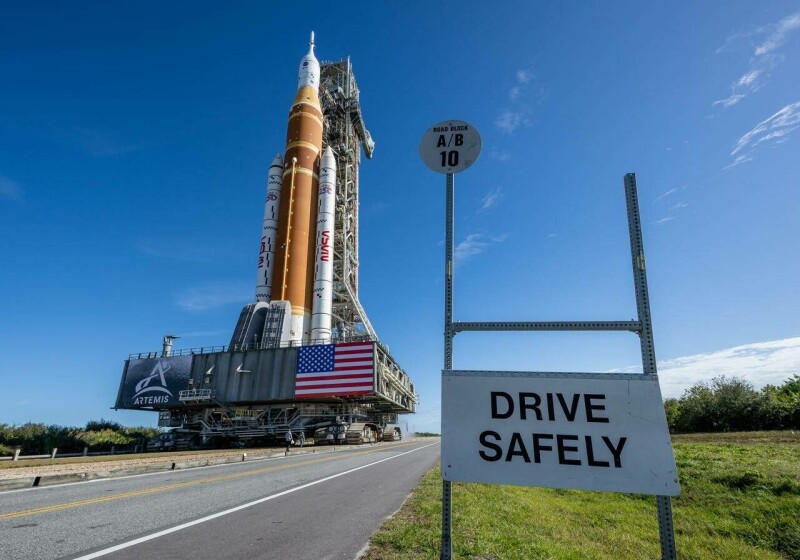
Artemis III has been compared to Apollo 9, which tested the Apollo Lunar Module in Earth orbit, yet neither SpaceX nor Blue Origin is flying anything as close to the lunar landers.
Advertisement
Blue Origin’s test lander will be based on the company’s current Mark 2 crew lander architecture, incorporating the major avionics, flight software, life support, and crew cabin. Orion, launched atop NASA’s SLS, will dock to the side of the Blue Origin spacecraft for crew transfer; two crew members in orange Orion survival suits can baord the test lander, with Orion’s software controlling the stack.
An instrumented lunar surface spacesuit mass simulator, similar to the “Moonikin” manikin that flew aboard Orion for Artemis I, will also ride along on the Blue Origin lander.
SpaceX’s test is considerably simpler – just a docking system mounted on the nose of a Starship. That requires Starship testing to have reached the orbital stage first, which is why NASA will be closely watching the upcoming Flight Test 13. Starship V3 is still flying suborbital until SpaceX proves it can reliably relight an engine for controlled re-entry.
Under the current plan, Blue Origin launches its lander into orbit first, where it can loiter for up to 30 days. Once it’s checked out, a crew launches aboard Orion to rendezvous and dock with it. After that’s complete, SpaceX launches its Starship test article to rendezvous and dock Orion in turn, though the crew won’t board Starship, just verify communications and interoperability. SpaceX’s vehicle will control that docked stack.
Advertisement
Notably, SpaceX’s docking capability was qualified in 2023, while Blue Origin only tested its pressurized docking system earlier this year.
Jeremy Parsons, Artemis program manager, stated, “Artemis III will be a highly choreographed dance with a demanding launch sequence across multiple launch pads and equally demanding mission operations for our ground and flight crews, making it one of the most complex and ambitious missions NASA has ever undertaken.”
He is not exaggerating. Apollo 9 needed a single Saturn V launch; Artemis III needs three – an SLS, whatever Blue Origin ultimately uses to launch its lander (the company is still rebuilding its launch pad after May’s explosion), and a Starship. The SLS has flown twice, including one lunar flyby. Starship has yet to reach orbit despite Elon Musk once claiming that uncrewed versions would be landing on Mars around now.
It’ll be an impressive feat if NASA can pull it off, even if SpaceX’s piece of the puzzle looks a lot simpler than Blue Origin’s. ®
Soon the internet will be full of AI agents acting on our behalf. Right now, there is no reliable way to tell who stands behind any of them. Vint Cerf, one of the people who built the internet, wants to fix that.
Cerf co-designed TCP/IP, the protocol that lets the internet’s independent systems talk to each other. He left Google last week after 20 years. Now he is joining the advisory council of Innovation Labs, a group building an open identity layer for AI agents, the company announced.
The missing layer
The problem is simple to state. Most AI agents today live inside one company’s systems. But firms want them roaming the open web, dealing directly with other agents. There is no shared way to prove who owns an agent, or who answers for what it does.
Innovation Labs is a division of Identity Digital, a firm that runs domain-name registries. Its idea, called DNSid, would give each agent a lasting identity tied to an existing domain name, backed by cryptographic proof. It has already submitted the design to the internet’s main standards body.
Advertisement
Why Cerf signed up
The 💜 of EU tech
The latest rumblings from the EU tech scene, a story from our wise ol’ founder Boris, and some questionable AI art. It’s free, every week, in your inbox. Sign up now!
Cerf frames it as the internet’s next big architectural problem. The trigger, he told TechCrunch, is “the question of what authorities they have, where they have derived those authorities, who is accountable.”
He expects it to be messy. “It’s going to be a fascinating, and at the same time maybe even exasperating, period,” he said. Rival standards are already appearing. Cerf thinks none will win on politics, only on what works, as happened with TCP/IP.
Advertisement
Keeping it open
The pitch is that no single tech giant should own the standard. Innovation Labs says it will not hold the registration data itself. “There’s a lot of organ rejection to a hyperscaler releasing a standard and having that proprietary data,” interim boss Allie Kline told TechCrunch. The group says it is already trialling the system with several unnamed cloud giants.
Cerf is not sure the agent-run internet is inevitable. But he thinks people will try to build it anyway. “We are fundamentally lazy creatures,” he said. If an agent can do a job for us, we will let it.
For the past few years, our nation has been flooded with headlines declaring the demise of the college degree. This trend was exacerbated by COVID-19, which accelerated a decline in college interest.
I understand, really, I do. Tuition costs are rising. Student debt is real.
Rita Finkel is co-president of the Armory Foundation and Director of The Armory College Prep program.
Artificial intelligence (AI) is also reshaping white-collar work by automating routine cognitive tasks, changing hiring patterns and increasing the use of AI tools in professional occupations. A 2025 Gallup survey found that AI use at work among U.S. employees nearly doubled from 21% in 2023 to 40% in 2025.
This is drawing many to a simple conclusion: a four-year college degree is no longer worth the time or money.
Advertisement
But the data, and the broader reality of how careers and life actually unfold, tell a different story.
Yes, the labor market for recent graduates has become more competitive. Yet college graduates still consistently outperform non-graduates in employment, earnings and long-term career resilience, according to new national data from the College Board Education Pays 2026 report.
But more importantly, a degree from a competitive college with a high graduation rate cultivates the ultimate asset in a rapidly changing economy: the ability to think critically. This includes being able to understand AI, as those who do will be better positioned to shape how it’s used ethically and responsibly.
That matters now more than ever.
Advertisement
Recent analysis from the Federal Reserve and labor economists shows that while the wage gap between graduates and non-graduates has narrowed, college graduates still maintain lower unemployment rates overall and stronger long-term job stability. A 2025 analysis from the St. Louis Fed found that from 2000 to 2025, workers with only a high school diploma consistently faced unemployment rates at least 2.3 percentage points higher than workers with bachelor’s degrees.
Even amid a softer hiring market, the advantage remains clear. Data cited by Goldman Sachs and other labor researchers showed unemployment for young non-college workers hovering around 7% in 2025, compared with roughly 4.6% for recent college graduates.
That is not a meaningless difference. In a large economy, a few percentage points represent millions of jobs.
Critics often focus narrowly on whether college guarantees a job immediately after graduation. That framing misrepresents the real purpose of higher education. College is not merely vocational training. It is preparation for a lifetime of economic and intellectual change.
Advertisement
The modern workforce is evolving too quickly for any technical skill to remain permanent. Entire industries now transform within a decade. Many students entering college today will eventually work in jobs that do not yet exist. In this environment, being able to think critically becomes the ultimate career skill.
A strong college education teaches students how to analyze information, communicate clearly, solve unfamiliar problems, conduct research, collaborate with different kinds of people, and learn independently. Those capacities transfer across different industries and technologies.
Ironically, the rise of AI may make these human skills even more important. Employers increasingly value workers who can think critically, interpret nuance and make judgments machines cannot easily replicate, according to Western Governors University, which surveyed more than 3,000 employers. Technical skills may evolve every few years; the ability to learn and think critically endures. According to McKinsey, “Human skills will matter more in the age of AI.”
The ability to think and process information is also why college graduates tend to weather recessions better over the course of their careers. Historically, workers with higher educational attainment have experienced lower unemployment during recessions and often recover faster in labor market recoveries, though this advantage varies by industry, age, and economic cycle. In 2024, unemployment for bachelor’s degree holders was 2.5%, compared with 4.3% for high school graduates and 6.1% for people without a diploma, according to the U.S. Bureau of Labor Statistics.
Advertisement
Of course, higher education must confront legitimate concerns about affordability and workforce alignment. There’s nothing wrong with questioning college directly after high school if a student is interested in pursuing a low-demand degree with high debt or if the student has yet to define a clear career goal.
But seeing college as only a trade school, in my opinion, is the wrong way to look at it. There are tremendous educations available where financial aid is available to help those who need it to meet the demands of higher education costs. There are wonderful State Schools and City Schools that are great choices for students.
This is an endorsement of a 4-year college degree, at a competitive school, to learn how to think critically, for a lifelong ability to learn new things. One thing we do know about the future is that we will need a population that has the ability to synthesize information quickly and accurately.
The real question is not whether college guarantees success. Nothing does.
Advertisement
The question is whether developing analytical ability, communication skills, flexibility, and intellectual independence still matters in an uncertain economy.
I am here to say they do. Perhaps more than ever.
The future will belong not simply to people who know things, but to people who can keep learning new things. College, at its best, remains one of the strongest environments for building that habit.
A college degree and a stable career can benefit generations. Earning a college degree is linked to longer, healthier lives, higher incomes, greater civic participation and better career alignment. While economic benefits are substantial, the lifestyle advantages extend to health, social engagement and personal fulfillment.
Advertisement
And that is why it is still worth it.
Rita Finkel is co-president of the Armory Foundation and Director of The Armory College Prep program.
Zoom patches critical improper input validation flaw in multiple Windows clients and SDKs that allowed remote account takeover
Additional high‑severity bugs fixed include CVE‑2026‑53410 (TOCTOU race condition), CVE‑2026‑53409 (privilege management flaw), and CVE‑2026‑53411 (input validation issue)
All vulnerabilities were found internally, with no evidence of exploitation; users are urged to update Zoom Workplace and related products to the latest versions
Zoom has patched a critical-level vulnerability in multiple products that allowed threat actors to take over people’s accounts remotely.
In a security advisory, Zoom said it fixed an Improper Input Validation bug plaguing Zoom Desktop Client for Windows (before version 7.0.0), Zoom VDI Client for Windows (before versions 7.0.10, 6.6.15, and 6.5.18), and Zoom Meeting SDK for Windows (before version 7.0.0). It did not go into more details on how the flaw works.
The bug is now tracked as CVE-2026-53412, and was given a severity score of 9.8/10 (critical). To fix it, users are advised to update their software to the newest version.
Latest Videos From
More vulnerabilities
While certainly the most dangerous one, this is not the only bug Zoom recently addressed. The company also fixed a handful of less severe vulnerabilities, including a time-of-check to time-of-use (TOCTOU) race condition bug affecting Zoom Workplace for Windows before 7.0.5, Zoom Workplace VDI Client and VDI Plugin before 6.5.17/6.6.14, Zoom Rooms for Windows before 7.0.5, and Remote Control for Zoom Contact Center before 7.0.0. This bug is tracked as CVE-2026-53410 and was given a “high” severity score of 7/10.
Advertisement
Other notable mentions include CVE-2026-53409 (a high-severity improper privilege management flaw in Zoom Rooms for Windows before version 7.1.0), and
CVE-2026-53411 (a high-severity improper input validation flaw affecting the Zoom Workplace VDI Plugin for Windows before version 6.6.14).
Zoom found all of these vulnerabilities in-house and says there is no evidence that any of these were abused in real-life attacks in the past.
Advertisement
Sign up to the TechRadar Pro newsletter to get all the top news, opinion, features and guidance your business needs to succeed!
Zoom Workplace (the company’s all-in-one collaboration platform) offers video meetings, team chat, phone, email, calendar, scheduling, whiteboards, and other productivity tools. It is an evolution of the original Zoom Meetings app which now competes with platforms such as Microsoft 365 and Google Workspace.






















































You must be logged in to post a comment Login