Singaporeans are now chasing experiences, not swipes
In May 2025, several Singaporean singles boarded a group trip to Japan together—but it wasn’t their usual holiday.
Not knowing each other’s age, occupation, or relationship history, participants were paired on daily “dates,” wrote anonymous letters to those who caught their eye, and completed mini couple missions designed to spark connection.
Like contestants on dating show Single’s Inferno, they shared rooms with others of the same gender, navigating growing crushes, shifting dynamics, and the occasional emotional revelation.
This is Until 11:11, a Singapore-based dating and social experience platform that runs curated overseas trips and singles mixers. And it’s part of a movement of experience-driven matchmaking that’s gaining traction as more Singaporeans grow fatigued with traditional dating apps.
Advertisement
Not your usual matchmaking experiences
At Until 11:11’s overseas singles trips, participants get to know each other over the course of four to six days. There is a focus on numerology (a practice that offers insights into personality, compatibility, and life tendencies based on an individual’s birthdate and name), apart from a mix of structured activities and free-form socialising.
After all, the platform—whose name nods to the angel number 1111, often associated with major life changes—was built around the idea of transformation and connection, explained Ching Ling Leo, the co-founder of the business.
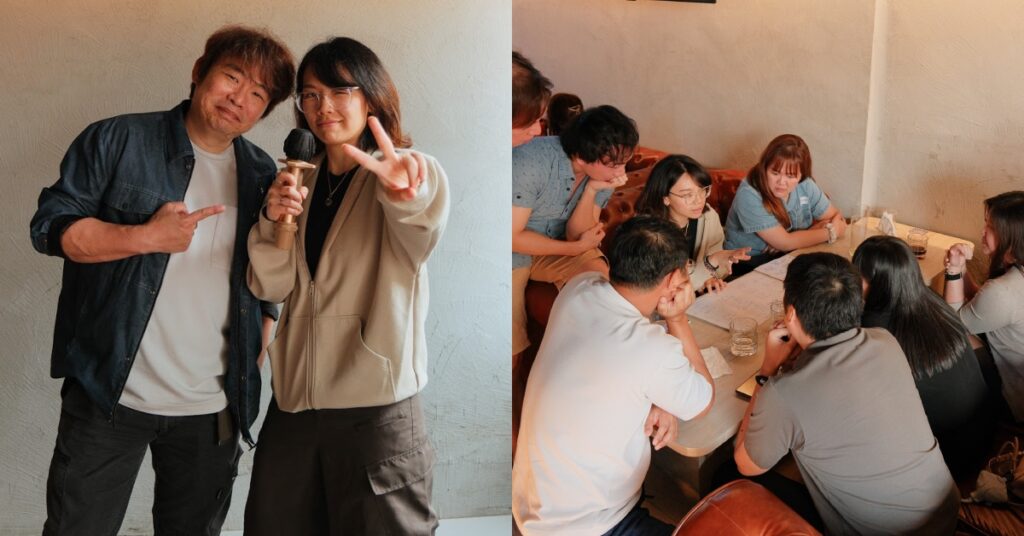
Ching Ling, a 25-year-old student at the Nanyang Academy of Fine Arts, runs Until 11:11 together with business owner Ric Ang, 50. The pair met when Ching Ling interned at a company where Ric was working, and began hosting numerology-themed singles events in Singapore in 2024.
(Left): Until 11:11 founders Ric Ang and Ching Ling Leo; (Right): Ching Ling at a singles mixer hosted by Until 11:11 for participants in their 30s and 40s./ Image Credit: Until 11:11
Until 11:11’s local parties, held once every two to three months with about 30 participants, offer compatibility readings, tarot sessions, and even crystal-making workshops, giving attendees a unique lens into themselves and others.
The platform takes it a step further with its curated overseas trips. Launched last year, these experiences are amplified beyond the confines of a typical singles mixer, and demand appears strong, too.
Advertisement
To date, Until 11:11 has organised seven groups of singles trips, typically in groups of less than 20, to destinations including Vietnam and East Malaysia, despite prices reaching up to S$1,800 per participant.
Participants at a Fishbowl singles pitch night./ Image Credit: Fishbowl
Overseas singles trips are not the only experiential dating concept on the rise in Singapore. Across the city-state, Fishbowl offers a different take: a “Shark Tank–style” singles pitch night.
Here, participants spend an evening putting themselves—or their friends—on stage in three-minute pitches. “The idea is simple—put together your best three-minute PowerPoint presentation (or a pitch in any other format), show up and present it, and mingle afterwards to get to know new people,” shared Joell Tee, the 28-year-old behind the initiative.
Joell started Fishbowl together with a friend after coming across a similar event held in Vietnam via TikTok. Initially, the duo hosted a small gathering for friends and friends of friends, but the concept quickly caught on, eventually drawing the attention of brands and larger audiences.
Since the first in Aug 2024, Joell has held four Fishbowl sessions, collaborating with brands such as Oatly and Coffee Meets Bagel to bring together singles and friends in a lively, interactive setting that can host up to 100 participants per event.
Advertisement
The work behind curated matchmaking
A singles retreat organised by Until 11:11./ Image Credit: Until 11:11
However, events such as these are far from easy to organise. Overseas trips, in particular, come with a host of logistical complexities.
To handle the details, Until 11:11 partners with I Quadrant Travel Agency, which takes care of travel arrangements and on-the-ground logistics. Each trip is also planned at least six months in advance to ensure they run as smoothly as possible.
There’s also the matter of safety and vetting participants. To sign up for an Until 11:11 trip, potential attendees fill out a Google form, which allows the organisers to handpick participants. Applicants are asked to include a social media handle with a visible photo, along with a brief explanation of why they would be a good fit for the trip.
Invitations are then sent to participants deemed suitable. “The selection process and invitation sending are manual and time-consuming,” said Ching Ling, adding that overseas trips are often scheduled back-to-back with local singles events, leaving little time for rest.
Nam Soeun, founder of Teddy Lounge./ Image Credit: Teddy Lounge
Until 11:11 isn’t the only platform taking a curated approach to modern dating. Teddy Lounge, a private, invite-only dating app, operates more like a members’ club than a typical matchmaking platform—and that means more work for founder Nam Soeun.
Every applicant is screened before being admitted. Profiles are reviewed manually, background details are assessed, and shortlisted candidates may even go through interviews to determine suitability. Soeun enlists a handful of “managers” to help with this process—they not only review applications, but also personally deliver physical invitation cards to suitable applicants and explain how Teddy Lounge works.
Advertisement
Memberships hinge on a “medal” system. These medals certify certain traits or achievements, and can include high income (minimum S$100K annually, verified via payslips or tax documents), ownership of prime properties, academic excellence, or social influence.
Teddy Lounge’s medals./ Image Credit: Teddy Lounge
Prospective members need at least one medal to gain access. According to Soeun, the medals aren’t meant to rank or judge members—they simply set expectations up front, reducing awkward early-stage questions and making connections more transparent from the start.
Currently, Teddy Lounge is in pre-launch, with around 500 early users already onboarded, according to its website. Soeun shared that members appreciate the platform as a space for “more natural, meaningful connections, romantic or otherwise.” The app is scheduled for an official launch in early 2026, pending final testing and refinements.
Finding meaningful connections isn’t a sure shot
Though more are turning to these platforms, finding meaningful connections isn’t a sure shot—however, the intentional approach may improve the odds.
On Teddy Lounge, users can unlock just three profiles per day—a deliberate limit to encourage “slower, more thoughtful” engagement. For those who don’t find a match right away, the app offers other ways to connect.
Advertisement
Its “Party” page, for instance, lets members share or join interest-based social activities. “Some users have met through activities like poker nights on the Party page and became friends rather than romantic matches,” shared Soeun.
Until 11:11’s local singles mixers./ Image Credit: Until 11:11
As for Until 11:11, most participants become good friends and remain in contact long after, shared Ching Ling. Some form couples, others may not fully connect with the group, but still “leave with a stronger understanding of themselves.”
Initially, Ching Ling and Ric measured success by how many couples formed at their events. But it was soon clear that this metric couldn’t capture the full impact of the experiences.
Even if people are together now, they might part ways in the future. There’s no real way to gauge whether it’s “good” that two people got together, only that their meeting was fated.
Ching Ling Leo, co-founder of Until 11:11
On a more tangible level, she shared that success could be seen as customer satisfaction, like “seeing participants having fun or hanging out,” but those moments are “fleeting.”
Advertisement
“Now, we see success as when participants are able to fully open themselves to the experience, embracing all their emotions and walking away feeling that they’ve learned something about themselves or life.”
Could this mark the end of traditional dating apps?
When asked about dating trends in Singapore, Ching Ling observed that there has been “a lot of singles mixers” popping up over the last few months. To her, it signals a “growing desire for real connections beyond screens.”
While the surge inevitably brings more competition for Until 11:11, she believes it’s ultimately positive for Singapore’s dating scene. Different platforms can cater to different audiences and intentions—a contrast to traditional dating apps, where users are often part of a wide, generic pool.
For many of these app users, the experience is tiring and frustrating: mismatched intentions, undefined relationships, and endless dead-end texting. Curated experiences can cut through that noise.
Advertisement
Joell Tee (left) with her friend and Fishbowl co-founder./ Image Credit: Fishbowl
But not everyone sees the rise of curated experiences as a rejection of traditional dating apps.
Joell, the founder of Fishbowl, views them instead as a complement to the online dating experience. “I still believe that apps are an incredibly helpful tool to help you connect with people,” she said.
In a recent collaboration with Coffee Meets Bagel, Fishbowl tapped into the app’s user base to drive attendance at its pitch-style singles event, showing how digital and offline dating experiences can reinforce each other.
The goals of apps and in-person events are the same: put yourself out there, be open-minded and make connections.
Joell Tee, co-founder of Fishbowl
Ultimately, it’s about creating opportunities for people to engage in ways that feel authentic to them—whether that’s through a screen, in a curated group setting, or both.
Advertisement
Read other articles we’ve written on Singaporean businesses here.
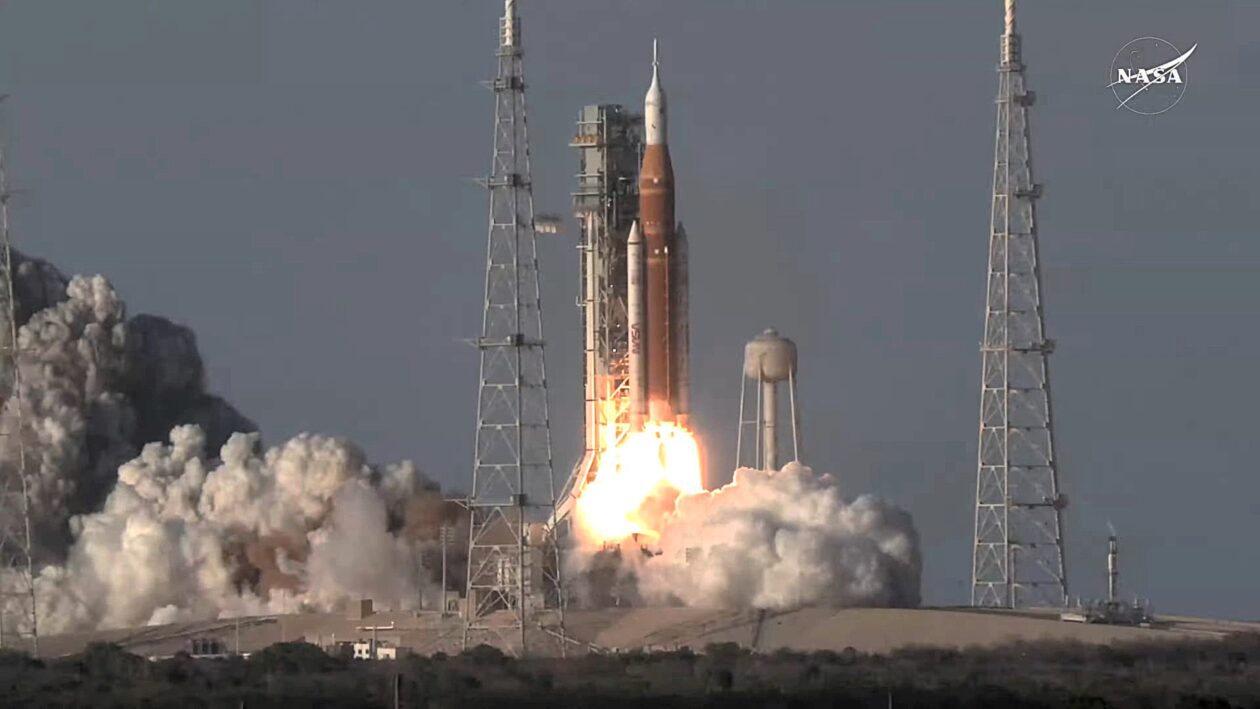
NASA’s Space Launch System rises from its Florida launch pad, sending the Artemis 2 crew into orbit. (NASA via YouTube)
After years of postponements and close to $100 billion in spending, NASA has launched the first mission to send astronauts around the moon since Apollo 17 in 1972.
The 10-day Artemis 2 mission began today with the liftoff of NASA’s 322-foot-tall Space Launch System rocket from Launch Complex 39B at Kennedy Space Center in Florida at 6:35 p.m. ET (3:35 p.m. PT). NASA is streaming coverage of the flight via YouTube and Amazon Prime.
During the last two hours of the countdown, engineers addressed concerns about the rocket’s flight termination system and instrumentation for a battery on the launch abort system. “Godspeed, Artemis 2,” launch director Charlie Blackwell-Thompson told the crew just before liftoff. “Let’s go!”
Artemis 2 is the first crewed test flight in a series leading up to a moon landing that’s currently scheduled for 2028. It follows Artemis 1, which sent a crewless Orion around the moon in 2022. This time, four astronauts are riding inside Orion: NASA mission commander Reid Wiseman, NASA astronauts Christina Koch and Victor Glover, and Canadian astronaut Jeremy Hansen.
“Great view,” Wiseman told Mission Control during the rocket’s ascent. “We have a beautiful moonrise, we’re headed right at it.”
Advertisement
Koch will be the first woman to go beyond Earth orbit. Similar firsts apply to Glover as a Black astronaut, and Hansen as a non-American astronaut.
Although Artemis 2’s astronauts won’t be landing on the lunar surface, they’ll follow a figure-8 trajectory that will send them 4,700 miles beyond the far side of the moon and make them the farthest-flung travelers in human history.
Last week, NASA Administrator Jared Isaacman laid out a plan for establishing a permanent base on the moon and preparing for even farther trips into the solar system. Today, Isaacman said Artemis 2 is “the opening act” of that golden age of science and discovery.
Senior test director Jeff Spaulding, a veteran of the space shuttle program, said he was looking forward to the mission. “I’m excited about going to the moon,” he told reporters on the eve of the launch. “I’m excited about establishing a presence there. It’s something that I have had a desire for, for a great many years — and then to get humans out to Mars as well.”
Advertisement
The mission timeline calls for Orion to adjust its orbit around Earth today and go through system checkouts. An hour after launch, Mission Control had to troubleshoot a dropout in communications with the crew. After a gap of several minutes, Wiseman reported that he could hear capsule communicator Stan Love “loud and clear.” The crew also worked with Mission Control to fix a balky space toilet.
On Thursday, Orion is due to fire its main engine for about six minutes to leave orbit and head for the moon. The engine burn is designed to put the space capsule on a free-return trajectory, which takes advantage of orbital mechanics to slingshot around the moon for the return trip.
The climactic lunar flyby is due to take place on April 6. “They’re going to be able to see the whole moon as a lunar disk on the lunar far side,” Marie Henderson, lunar science deputy lead for the Artemis 2 mission, said in a NASA video. “So, that’s a brand-new, unique perspective that humans haven’t been able to look at before.”
Advertisement
The astronauts will also get an opportunity to capture a 21st-century “Earthrise” photo, and they may be able to glimpse a solar eclipse made possible by the lunar flyby. “They will be able to see the sun’s corona, which is kinda cool,” said Lori Glaze, acting associate administrator for NASA’s Exploration Systems Development Mission Directorate.
At the end of the trip, the crew and their Orion capsule are due to splash down in the Pacific Ocean off the California coast. They’ll be brought to a recovery ship for medical checkouts and their return to shore, following a routine that became familiar during the Apollo era.
Artemis 2 is about the history of America’s space program as well as its future. The round-the-moon mission profile matches that of Apollo 8, which served as a unifying event for a nation riven by the social tumult of the time. That mission’s commander, Frank Borman, reported receiving a telegram reading, “Congratulations to the crew of Apollo 8. You saved 1968.” Notably, less than a third of Americans living today were around when Apollo 8 flew.
The main motivation for the Apollo program was America’s superpower competition with the Soviet Union, and today, the geopolitical stakes are similarly high. NASA and the White House are seeking to jump-start progress on Artemis in part because China is targeting a crewed moon landing by 2030.
Advertisement
Sen. Maria Cantwell, D-Wash., said this week during a visit to Seattle-area suppliers for the Artemis program that it’s important for America to get to the moon first. “We’re trying to get the best real estate on the moon,” she said. “So, to do that, you’ve got to get up there to claim it.”
The course of the Artemis program, which is named after the goddess of the moon and the twin sister of Apollo in Greek mythology, hasn’t always run smooth. When the program was given its name in 2019, the Artemis 2 mission was planned for 2022 or 2023, with the moon landing scheduled for 2024. The cost of the program has been estimated at $93 billion through 2025, with each Artemis launch costing $4.1 billion.
Several companies with a presence in the Seattle area are banking on Artemis’ success. For example, a facility in Redmond operated by L3Harris (previously known as Aerojet Rocketdyne) builds thrusters for the Orion spacecraft and is already working ahead on the Artemis 8 mission.
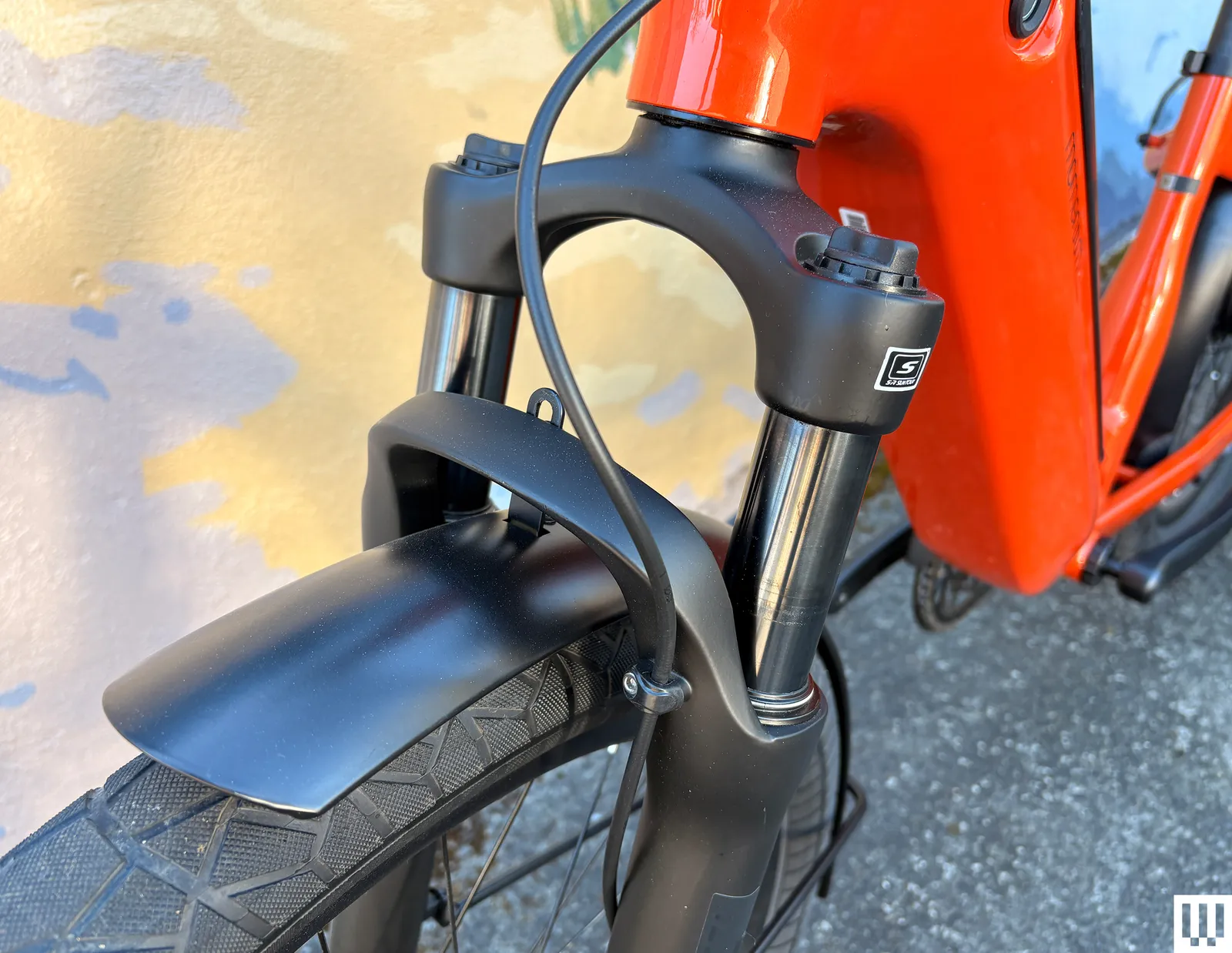
The bike also has a front fork with 80 millimeters of suspension, so accidentally piloting all 60 pounds of it into a pothole won’t pitch you head over heels. It’s fully loaded, with integrated lights, fenders, and a kickstand. And finally, the Vida E+ is UL-certified, so it won’t catch on fire while charging in your garage. The RideControl app lets you check your bike’s electronic systems for problems, lock your bike, and, if you have a bike mount, use it for rudimentary navigation.
Quality Components
Riding the Vida E+ feels like riding a couch, but in a good way. This is a bike that will do everything for you, without your having to think about it very much (unless you’re trying to maneuver it between two cars in your driveway). The step-through frame makes it easy to get on or off. The sit-up geometry and ergonomic handlebars are incredibly comfortable; I can ride with one hand, slowly pedaling at 9 mph while biking my kids home from school, and they blabber on about whatever.
Photograph: Adrienne So
Because this is a bike made by Giant, the components are very nice, for a reasonable price. I can easily read the display in high-glare natural sunlight. The fork is made by Suntour; while I would definitely not take this bike on trails, I hit many potholes, both on purpose and not, without dumping myself. The brakes are high-performance Tektro four-piston hydraulic disc brakes, which is also a little unusual at the price point. You don’t have to worry about being able to make quick stops on hills or with a heavy load.
The Shimano shifters work well with the SyncDrive motor to climb steep hills. I did find that the buttons are not terribly easy to push, and I also tended to mix up the headlight and power buttons at the top, which my kids find annoying when they’ve taken off and I’m still struggling to get a 60-pound bike moving without assistance.
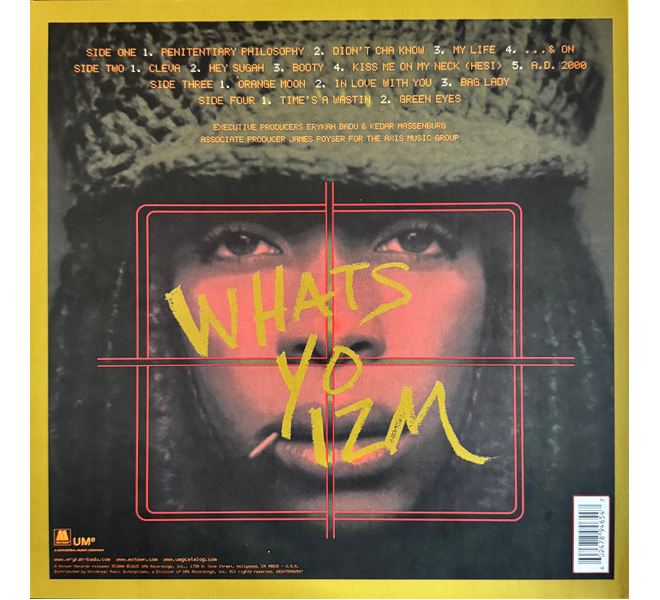
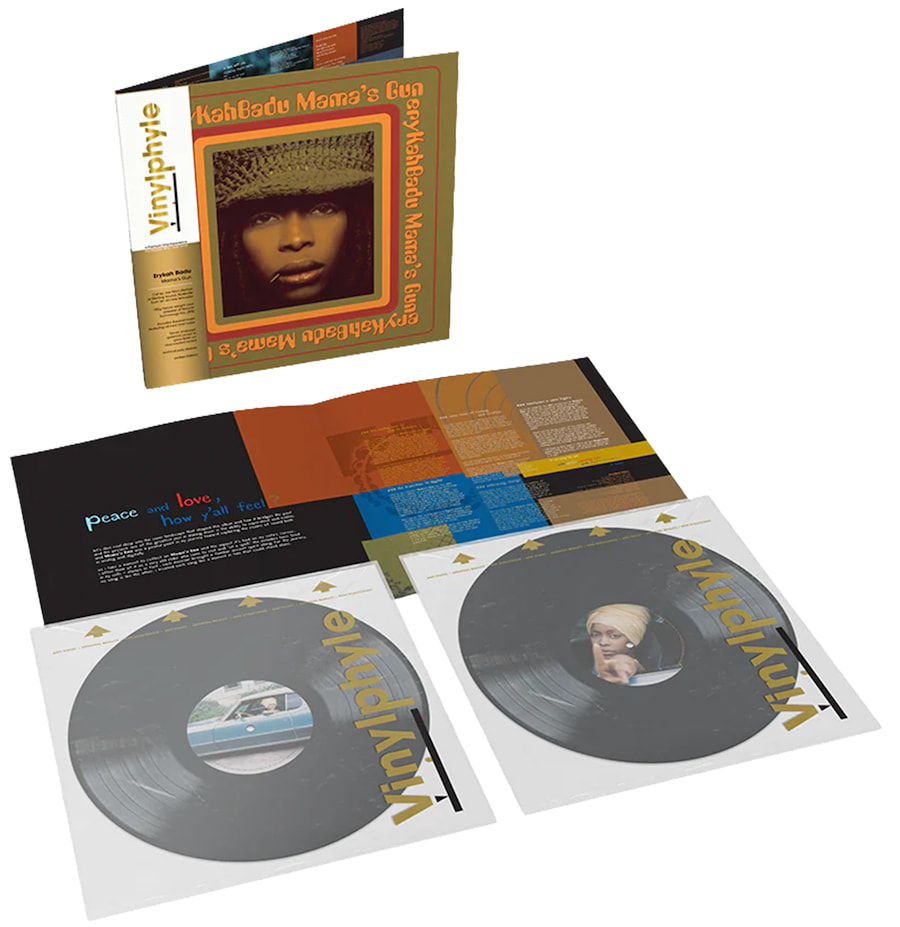
The new 25th Anniversary Vinylphyle restoration of Erykah Badu’s chart-toping 2000 album Mama’s Gun is an excellent reissue which should be of interest to fans of vocal jazz and modern soul sounds as well as analog loving audiophiles.
A platinum seller with three hit singles including her first top 10, this is a super chill, fluid grooving and melodic song cycle often categorized as “neo-soul” and bridging pop, soul, funk, jazz, hip hop and even singer-songwriter pop. While I’ve read numerous references to Billie Holiday in discussing Ms. Badu’s vocal style, I also hear strong Dinah Washington flavors by way of Minnie Ripperton and Chaka Kahn (which are some pretty great touchstones as well).
As with other Vinylphyle releases in this top-notch new series from Universal Music, Mama’s Gun was pressed at RTI — renown as one of the best vinyl manufacturing facilities in the world. The 180-gram vinyl is dark and well centered. The production quality elements throughout are also outstanding, the album cover is made of heavy cardboard stock akin to a vintage jazz album from 1960s on Verve or Blue Note. Each disc comes housed in an audiophile-grade plastic lined inner-sleeve.
From Universal’s udiscovermusic website we’ve also gleaned some additional information which reveals that this release is more than “just” a reissue but a genuine restoration of note for fans seeking the best quality version of a favorite album.
There we learn:
Advertisement
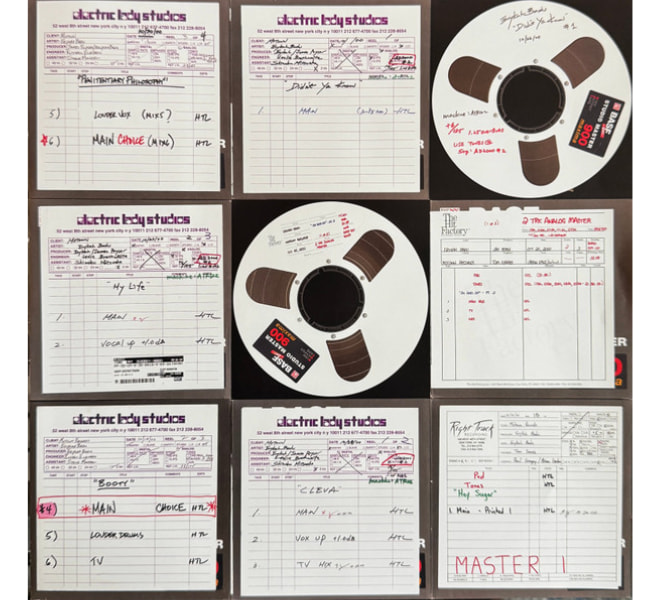
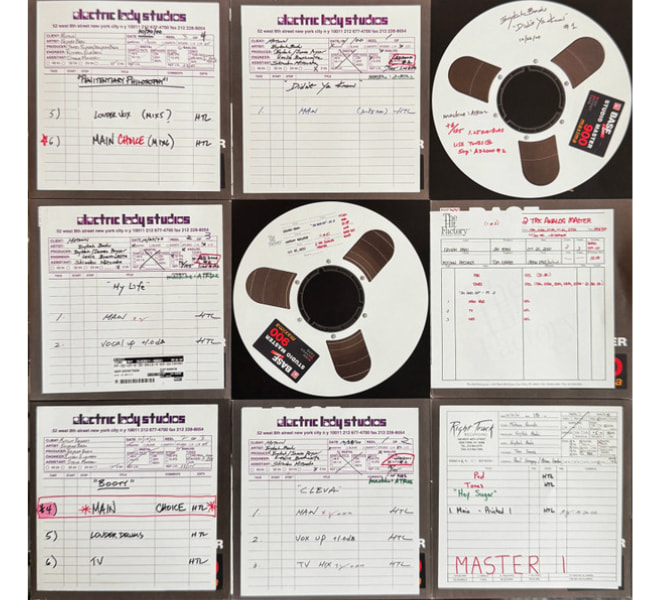
“There are no sequenced analog masters for Mama’s Gun. The original 44.1kHz/16-bit files, with the original CD mastering and limiting, have been the only source for all digital and vinyl reissues—until now. The record was reassembled and rebuilt digitally from 14 individual track tapes, newly transferred in 96kHz/24-bit, in order to create the first true remaster of this record since it came out 25 years ago.”
In the new liner notes for the album Ms. Badu adds insights into her passion for analog at the crossroads of digital: “With this remastering, we’ve carefully blended analog warmth with digital precision. It’s breathtaking to hear the subtleties of each layer come alive in a new way, making the project resonate even more powerfully.”
Indeed, what a lush round sound Mama’s Gun delivers! Largely played by live musicians in top studios including New York’s iconic Electric Lady (which was created by Jimi Hendrix), no less than The Roots’ Questlove is featured on drums on many of the tracks.
It is haunting hearing “In Love with You” which features vocal contributions from Stephen Marley — Bob Marley’s second son — supported mostly by lovely softly strummed nylon string acoustic guitar. Ms. Badu’s hit “Bag Lady” (#6 Billboard Top 100) was co-written with soul legend Issac Hayes and received two Grammy nominations that year. “Cleva” — which features Roy Ayers on Vibraphone, feels almost like a lost Stevie Wonder tune.
if you ever liked early Meshell Ndegeocello albums like her 1999 masterwork Bitter or even newer artists like New Orleans’ Tank & The Bangas, you might well enjoy Mama’s Gun. Highly recommended.
Universal’s Vinylphyle series 2LP release of Erykah Badu’s Mama’s Gun is currently exclusively available via udiscovermusic for $54.98.
Advertisement
Mark Smotroff is a deep music enthusiast / collector who has also worked in entertainment oriented marketing communications for decades supporting the likes of DTS, Sega and many others. He reviews vinyl for Analog Planet and has written for Audiophile Review, Sound+Vision, Mix, EQ, etc. You can learn more about him at LinkedIn.
Are pickup truck engines the same as those used in normal passenger or sports cars? The answer is both yes and no. Physically, at least, there’s usually little that separates an engine in a truck’s engine bay from one in a car’s. After all, there have been plenty of times in the industry’s history when automakers have sold cars and trucks with nearly identical engines. Case in point, the legendary Chrysler slant-six engine, which came in everything from compact cars to pickup trucks and vans.
But in the modern era, especially, there can be notable differences between car and truck engines, even if their displacement and general engine architecture are the same. The modern HEMI V8 used in Dodge muscle cars and Ram pickups is a good example of this, with different versions of the same engines used in performance cars and pickups. Most of the differences between truck and car engines involve how and when the engines deliver their horsepower and torque.
A car engine may produce more peak horsepower than an equivalent truck engine, but the truck engine will often provide more torque or deliver the same amount of torque at lower revs. Just how much difference there is between the two will vary by automaker, and some brands, like Ford, offer V8 engines designed from the ground up for trucks that share nothing with their car counterparts.
Advertisement
The different flavors of V8s
Jetcityimage/Getty Images
Ultimately, the main difference between car and truck engines is rooted in the difference between horsepower and torque. While horsepower matters in a truck, when it comes to pulling a trailer or carrying a heavy load, it’s the torque that’s important — and the lower in an engine’s powerband that torque comes, the better it is. Thus, the popularity of ultra-torquey, but relatively low-horsepower turbodiesel engines for large pickups. Peak horsepower, meanwhile, takes prominence in a sports car where engine speeds are higher.
Even within the same V8 family, there can be notable differences in car and truck engines. In GM’s V8 lineup, the 401-hp 6.6-liter L8T truck engine is designed for low-speed torque, with 464 lb-ft of torque at 4,000 RPM. The Chevrolet Corvette’s smaller, 495-hp 6.2-liter LT2 V8 is part of the same family and easily bests the L8T in peak horsepower, yet it barely edges the L8T in torque. It also needs to rev much higher to generate its torque, with its 470 lb-ft coming at 5,150 rpm.
Advertisement
Ford’s Super Duty 7.3-liter Godzilla V8 takes this concept even further. Not only is the Godzilla much larger than the 5.0 Coyote V8 in the Mustang GT, but it also uses an entirely different design with an overhead-valve, single-camshaft design compared to the 5.0’s dual overhead cams and 32 valves. At 480 hp, the 5.0 beats out the 430-horsepower Godzilla, but the 7.3 takes the torque crown, with 475 pound-feet to the Mustang’s 415 lb-ft.
Advertisement
The curious case of the Nissan 240SX
betto rodrigues/Shutterstock
So what happens, then, if you put a pickup truck engine into a sports car? Look no further than the North American-market Nissan 240SX from the 1990s. When the S13 Nissan Silvia and 180SX debuted in the Japanese home market, the cars were available with high-horsepower turbocharged four-cylinder engines — first the 1.8-liter CA18DET and later the legendary SR20DET. This, combined with a great chassis and tons of aftermarket support, helped the S13 become a smash hit among enthusiasts.
However, when it came time to export the car to America, Nissan decided to forgo the turbo engines in favor of the naturally aspirated 2.4-liter KA24 engine used in Nissan pickup trucks. Though the USDM engine was larger than its JDM counterpart and produced a decent amount of torque for its size, the KA24 only made 140 hp and, more importantly, lacked the high-revving sports car feel many expected from the 240SX.
Fortunately, the SR20DET was an easy swap, and Nissan’s decision to go with a truck engine didn’t entirely detract from the many features that helped the 240SX become a legendary drift car in the years and decades that followed. Even then, though, one can’t help but wonder what would’ve happened had Nissan given the U.S. market 240SX the turbocharged performance engine it deserved.
ZipNada writes: Two software researchers recently demonstrated how modern AI tools can reproduce entire open-source projects, creating proprietary versions that appear both functional and legally distinct. The partly-satirical demonstration shows how quickly artificial intelligence can blur long-standing boundaries between coding innovation, copyright law, and the open-source principles that underpin much of the modern internet.
In their presentation, Dylan Ayrey, founder of Truffle Security, and Mike Nolan, a software architect with the UN Development Program, introduced a tool they call malus.sh. For a small fee, the service can “recreate any open-source project,” generating what its website describes as “legally distinct code with corporate-friendly licensing. No attribution. No copyleft. No problems.” It’s a test case in how intellectual property law — still rooted in 19th-century precedent — collides with 21st-century automation. Since the US Supreme Court’s Baker v. Selden ruling, copyright has been understood to guard expression, not ideas.
That boundary gave rise to clean-room design, a method by which engineers reverse-engineer systems without accessing the original source code. Phoenix Technologies famously used the technique to build its version of the PC BIOS during the 1980s. Ayrey and Nolan’s experiment shows how AI can perform a clean-room process in minutes rather than months. But faster doesn’t necessarily mean fair. Traditional clean-room efforts required human teams to document and replicate functionality — a process that demanded both legal oversight and significant labor. By contrast, an AI-mediated “clean room” can be invoked through a few prompts, raising questions about whether such replication still counts as fair use or independent creation.
Intel said the agreement is reflective of a strong partnership with Apollo, as well as the organisation’s role in the age of AI.
US technology company Intel has plans to repurchase a 49pc stake of the Leixlip, Kildare Fab 34 manufacturing facility, via a partnership with asset manager Apollo Global Management. The deal which will be valued at $14.2bn is expected to be funded through cash on hand and proceeds from the issuance of new debt of approximately $6.5 bn.
With work beginning in 2019, Fab 34 was designed to be an advanced semiconductor manufacturing facility.
There has been significant investment in the plant over the years with the organisation hitting several important milestones and currently it is a fabrication facility for products utilising the Intel 4 and Intel 3 process technologies, for example Intel Core Ultra and Intel Xeon 6 processors.
Advertisement
In 2024, it was decided that Intel would sell a 49pc stake in Fab 34 to Apollo Global Management.
At the time, David Zinsner, the chief financial officer at Intel, said that the $11bn deal would give the chip maker the “additional flexibility to execute our strategy as we invest to create the world’s most resilient and sustainable semiconductor supply chain”. Intel also said it would be retaining full ownership and control of Fab 34 and its assets.
Commenting on the recent announcement Zinsner said, “Our 2024 agreement was the right structure at the right time and provided Intel with meaningful flexibility, enabling us to accelerate critical initiatives. Today, we have a stronger balance sheet, improved financial discipline and an evolved business strategy.”
Apollo Partner Jamshid Ehsani added, “Our partnership with Intel began at an important stage in the execution of its advanced manufacturing roadmap, where our long-term strategic capital played a meaningful role in accelerating the production of next-generation chip technology.
Advertisement
“Flexibility and alignment are core to how we approach relationships as a long-term, solutions-oriented capital partner, and we are pleased to facilitate this transaction in support of Intel’s evolving strategic and operational priorities.”
Don’t miss out on the knowledge you need to succeed. Sign up for the Daily Brief, Silicon Republic’s digest of need-to-know sci-tech news.
Samsung already has its own slim magnetic case for the Galaxy S26 Ultra, so most people won’t think twice about alternatives.
But choosing the right Samsung Galaxy S26 Ultra case isn’t always as straightforward as it seems. Some cases look great on day one but end up feeling too smooth, slightly bulky, or just awkward to use after a few days. Thinborne is still a thin magnetic case, but it takes a slightly different approach.
This review focuses on how it feels in real use, and how it compares to Samsung’s own option.
Thinborne Overview of Features
It helps to look at what Thinborne actually offers and how those features translate in real use.
Advertisement
Material and Build
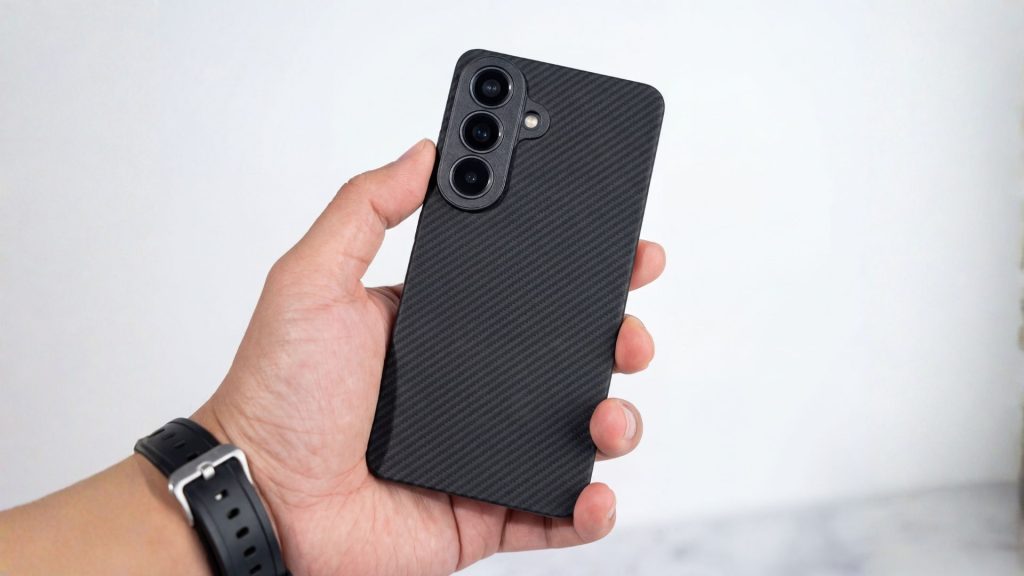
Thinborne uses 600D aramid fiber, which you’ll usually see in lightweight, high-strength materials. You’ll notice how it feels:
It’s very light
It feels firm rather than flexible
The surface has a subtle texture
At 0.90 mm thin, it doesn’t add much bulk. The phone still feels close to how it does without a case.
What makes it different from typical cases is the structure. It doesn’t have that soft, slightly rubbery feel you get from silicone. It’s more rigid, almost like a thin shell that snaps into place. Over time, silicone can start to feel sticky or collect dust – this doesn’t.
MagSafe Compatibility
Like most Galaxy S26 Ultra cases, Thinborne includes built-in magnets since the phone itself doesn’t have them. In everyday use, that means:
Chargers snap into place quickly
Car mounts hold steady
Wallets and stands attach cleanly
The experience is straightforward, and everything lines up as expected (and it stays in place).
One thing that helps with the setup is the case’s rigidity. Since it doesn’t flex much, the alignment stays consistent. You don’t get that slight shift you sometimes notice with softer cases.
Available Colors
Thinborne keeps the color options simple:
Black
Royal Crimson
Wild Navy
All three use the same woven finish, so the feel doesn’t change – only the color does. The tones are muted and don’t draw too much attention.
Thinborne Thin Phone Case vs Samsung Galaxy S26 Ultra Slim Magnet Case
Samsung’s Slim Magnet Case is the most direct comparison. Both cases fall into the same general category: thin, lightweight, and magnetic.
Advertisement
Samsung doesn’t list an exact thickness, but it’s positioned as a slim case. What we do know is that it weighs 24 grams, making it a bit heavier than Thinborne, which weighs around 20 grams.
Here’s how they compare:
Feature
Thinborne Galaxy S26 Ultra Case
Samsung Slim Magnet Case
Weight
20 g
24 g
Thickness
0.90 mm
slim profile (not officially listed)
Material
600D aramid fiber
Synthetic/plastic
Grip
Textured (woven)
Smooth
Magnets
Built-in magnetic array
Built-in magnets
As you can see, Thinborne and Samsung look similar. In use, however, the differences can be noticed:
Grip – Thinborne has a bit more texture, so it feels more secure in your hand. Samsung’s case is smoother, which can feel slightly slippery.
Weight – The difference isn’t huge, but the lighter feel can be noticeable over time – especially on a large phone like the S26 Ultra.
Material feel – Thinborne feels more solid and structured. Samsung’s case feels more like a standard slim case.
Pricing and Availability
Thinborne and Samsung are priced almost the same, so cost isn’t really the deciding factor here.
Thinborne comes in at $69.69, while Samsung’s Slim Magnet Case is slightly higher at $69.99. The difference is minimal, and in practice, both sit in the same premium range for thin magnetic cases.
Advertisement
Where they differ is availability. Thinborne is sold through its official website and is also available on Amazon, which gives you a bit more flexibility when buying. It typically includes extras like a tempered glass screen protector as well.
Samsung’s case is easier to find overall. It’s available through Samsung’s store and most major retailers, making it a more convenient option if you prefer to buy locally or through familiar channels.
At this price point, it really comes down to which case fits your preferences better, not which one is cheaper.
Wrap Up
Thinborne keeps things simple, and that’s really the point. It’s built as a thin phone case that doesn’t change how the Galaxy S26 Ultra feels in your hand. The lighter weight, subtle texture, and rigid build all come together in a way that feels easy to live with day to day.
Advertisement
Samsung’s Slim Magnet Case still does what it’s supposed to. It’s reliable, widely available, and works well with magnetic accessories. But if you care about how your phone actually feels in use, Thinborne has a clear edge. The lighter weight and textured finish make it easier to hold, especially during one-handed use – something you start to notice after a few days of use.
Microsoft is investigating a known issue that prevents some Classic Outlook users from sending emails via Outlook.com.
Affected users are being warned that their message hasn’t reached some intended recipients, and they will encounter this problem more often when the Outlook.com account they use to send email is an Outlook profile linked to another Exchange account.
“This message could not be sent. Try sending the message again later or contact your network administrator,” the non-delivery report (NDR) error displayed when sending or replying to emails reads.
“You do not have the permission to send the message on behalf of the specified user. Error is [0x80070005-0x0004dc-0x000524].”
Advertisement
Microsoft added that another condition that may trigger these errors is that the sender’s account has an Exchange Online mail contact with the same SMTP address.
Classic Outlook non-delivery report (NDR) error (Microsoft)
While investigating this issue and still looking for a fix, the Outlook team shared several workarounds that may help affected customers temporarily mitigate the issue.
Microsoft recommends removing the M365 account Address Book so that the Outlook client does not check it when sending emails, hiding the Outlook.com contact from the Microsoft 365 account Global Address List (GAL).
Other alternatives include creating a new classic Outlook profile that includes only the account receiving NDR errors, and using the New Outlook client or Outlook.com on the web to send email from the affected account.
Automated pentesting proves the path exists. BAS proves whether your controls stop it. Most teams run one without the other.
This whitepaper maps six validation surfaces, shows where coverage ends, and provides practitioners with three diagnostic questions for any tool evaluation.
Scientists say extreme March heat caused an unusually rapid collapse of snowpack across the American West that’s leaving major basins at record or near-record lows. “This year is on a whole other level,” said Dr Russ Schumacher, a Colorado State University climatologist. “Seeing this year so far below any of the other years we have data for is very concerning.” The Guardian reports: […] The issue is extremely widespread. Data from a branch of the US Department of Agriculture (USDA), which logs averages based on levels between 1991 and 2020, shows states across the south-west and intermountain west with eye-popping lows. The Great Basin had only 16% of average on Monday and the lower Colorado region, which includes most of Arizona and parts of Nevada, was at 10%. The Rio Grande, which covers parts of New Mexico, Texas and Colorado, was at 8%. “This year has the potential of being way worse than any of the years we have analogues for in the past,” Schumacher said.
Even with near-normal precipitation across most of the west, every major river basin across the region was grappling with snow drought when March began, according to federal analysts. Roughly 91% of stations reported below-median snow water equivalent, according to the last federal snow drought update compiled on March 8. Water managers and climate experts had been hopeful for a March miracle — a strong cold storm that could set the region on the right track. Instead, a blistering heatwave unlike any recorded for this time of year baked the region and spurred a rapid melt-off. “March is often a big month for snowstorms,” Schumacher said. “Instead of getting snow we would normally expect we got this unprecedented, way-off-the-scale warmth.”
More than 1,500 monthly high temperature records were broken in March and hundreds more tied. The event was “likely among the most statistically anomalous extreme heat events ever observed in the American south-west,” climate scientist Daniel Swain said in an analysis posted this week. “Beyond the conspicuous ‘weirdness’ of it all,” Swain added, “the most consequential impact of our record-shattering March heat will likely be the decimation of the water year 2025-26 snowpack across nearly all of the American west.” Calling the toll left by the heat “nothing short of shocking,” Swain noted that California was tied for its worst mountain snowpack value on record. While the highest elevations are still coated in white, “lower slopes are now completely bare nearly statewide.”
Studio 64 Bits worked tirelessly for four months to hand-draw every single frame, allowing them to introduce Elden Ring to the wild world of Saturday morning television in the 90s. The end effect feels like a bizarre parallel universe in which the game appears alongside Thundercats and He-Man.
Ranni is right there at the start, cradling a double-necked electric guitar slung lazily across her shoulders, and as she begins noodling on the opening chords, the camera sweeps across these blasted landscapes, full of familiar faces from both the base game and the Shadow of the Erdtree expansion. We see Malenia charging ahead with blades flashing, Blaidd standing tall and loyal by her side, and Messmer looming large as the true new threat. Meanwhile, Miquella and Radahn share a dramatic moment, and Melina, Rykard, Mohg, Varre, Midra, Placidusax, Astel, Maliketh, and the Elden Beast all flash across the screen in quick, splashy bursts. Each character receives the usual cartoon makeover, complete with bold outlines, vivid colors, and exaggerated posturing that transforms their conflicts into heroic showdowns rather than gloomy, terrible struggles.
The animation sticks to the technical limits of 90’s TV production, which means that the colors don’t deviate much from a fairly limited palette, the lines have just a hint of that creaky hand-drawn cel look to them, and the transitions snap along with the same crisp timing you’d see on shows from that era. The music builds to a precise pitch, culminating in a driving rock song that sounds like it might have come directly from the opening titles of Jayce and the Wheeled Warriors or Captain Planet. Every second creates the impression that an entire series could follow, with the Tarnished rushing across the continent to repair the Elden Ring and face off against these legendary monsters in one thrilling episode after the next.
After the main intro concludes, the film transitions to a brief commercial in which Elden Ring appears to have recently been released for the old SNES. A happy narration promises additional dungeons, secrets, and a fate that is entirely in the player’s control. The tagline reverses a humorous old Nintendo slogan into ‘Now you’re playing with power, rune power’, and the spot concludes with a quick little bumper that parodies the DIC logo from coutnless old 90’s cartoons. It connects neatly to their last full-length SNES remake, making the entire package feel like one continuous block of faux Saturday morning programming.

















%20error.jpg)












































You must be logged in to post a comment Login