

Business
Form 4 D Wave Quantum Inc For: 15 July



California Post opinion editor Joel Pollak joins ‘Varney & Co.’ to discuss Gov. Gavin Newsom’s wealth tax proposal and a major California SNAP fraud investigation.
California lawmakers are warning that a tax credit cap in Gov. Gavin Newsom’s final state budget could derail the state’s push to keep Hollywood jobs in the state.
In a July 10 letter obtained by FOX Business, 39 California legislators urged Newsom and other lawmakers to exempt the state’s Film & Television Jobs Program — aimed at keeping productions in the Golden State — from the cap. They warned the change could “significantly kneecap” the program, which was expanded just last year.
“We understand the budget agreement is in place, but this problem must be fixed before the end of this session,” lawmakers wrote.
The warning came shortly after Newsom approved his final state budget as California governor, a $351.7 billion spending plan that tightens limits on business tax credits.

The letter came shortly after Gavin Newsom approved his final state budget as California governor. (Tayfun Coskun/Anadolu via Getty Images)
The budget extends California’s current temporary $5 million business tax credit cap for three years, through 2029. Starting in 2030, companies will be limited to claiming $5 million or 70% of their state tax liability in a given year — whichever is greater.
Critics say the cap could hit California’s film and TV incentives, leaving studios unable to fully use credits they earned for shooting in the state. Lawmakers said the move would amount to “retroactively changing the rules.”
“As a result, many production companies will lose the full value of tax credits they earned in exchange for creating middle-class entertainment industry jobs with health care and retirement with dignity as well as the other economic benefits the industry brings to the state,” the letter states.
The lawmakers also noted that California’s updated film program has kept 133 productions in the state from August 2025 through April 2026, generating $5.5 billion in economic activity, 38,050 cast and crew jobs and 247,934 days of work for background actors.
NEWSOM’S POLITICAL DEFENSE FACES SKEPTICISM AS DOJ INVESTIGATION CONTINUES

The budget extends California’s current temporary $5 million business tax credit cap for three years, through 2029. (David Swanson/AFP via Getty Images)
“For 100 years, California was the home of film and television production. That is the past. What the Legislature does to address the problem created in SB 122 determines if that remains true into the future,” the letter states.
Southern California’s film and TV industry has struggled to recover from the pandemic, 2023 Hollywood strikes and productions leaving for other states and overseas, the Los Angeles Times reported.
Assemblyman Rick Chavez Zbur, D-Los Angeles, told the Los Angeles Times that lawmakers believed the film program had been carved out of the cap.
“I don’t think that anyone understood what this cap was, what it did and that it effectively kneecapped and reverses the progress that we made last year,” Zbur told the outlet. “We need to have people understand that these changes, which I think people believed were minor, are really significant and will result in significant job loss if we don’t fix them.”
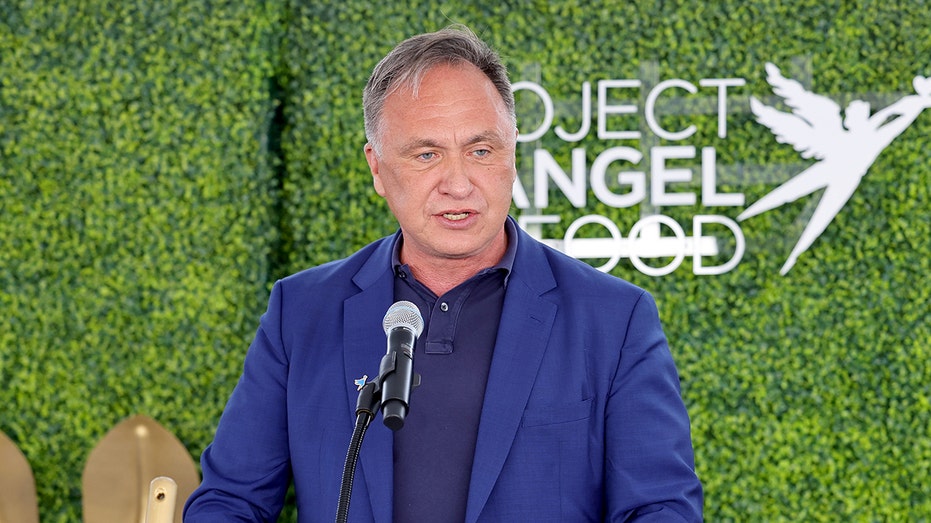
State Assemblyman Rick Chavez Zbur told the Los Angeles Times that lawmakers believed the film program had been carved out of the cap. (Matt Winkelmeyer/Getty Images)
GET FOX BUSINESS ON THE GO BY CLICKING HERE
Newsom spokesperson Marissa Saldivar told the Los Angeles Times the tax credit limit is part of a “broader fiscal proposal” to keep the state making “strategic investments” while maintaining long-term stability.
“We remain confident in the strength of the recently expanded Film and Television Tax Credit Program and will continue to work with industry and legislative partners to ensure the program is competitive,” Saldivar said.
Newsom and Zbur could not immediately be reached by FOX Business for comment.

Low auction clearance rates are just part of the housing downturn story, as more vendors give up on auctions altogether in favour of private sales.
The share of homes listed via auction has dropped from a peak of 45 per cent in November 2025 to just over 30 per cent in June, according to data from property analytics firm Cotality.
Cooling buyer demand has reshaped the market and driven more sellers towards listing their homes via private treaty, said Cotality head of research Gerard Burg.
“During times of strong demand, vendors clearly favour auctions as competition between multiple bidders can result in a higher price,” Mr Burg said.
“However, they have been shying away more recently in this weaker demand environment.
“This has been seen in an increasing tendency to sell ahead of the auction date as well as a rise in withdrawals, pointing to vendors who are increasingly unwilling to test the market at an auction and have the property fail to sell.”
Like auction clearance rates, home prices have been cooling for months as Reserve Bank rate hikes, rising inflation and global economic uncertainty hit buyer sentiment.
Changes to negative gearing and capital gains tax concessions in the May budget further sapped demand from property investors.
Sydney home prices fell 1.2 per cent in June and are 3.7 now below their peak in January, while Melbourne values are four per cent below their March 2022 high.
But David McMahon, Ray White head of auctions for NSW, said it was a stretch to call it a buyers’ market.
“I think it’s a pretty fair market,” he told AAP.
Sellers tended to move away from auctions whenever the market weakened, but there was still value in going through the auction process, Mr McMahon said.
When comparing an auction campaign, including the two weeks following auction day, to a private treaty process over the same period, auctions still offered a higher clearance rate, he said.
But many agents discouraged vendors from going to auction, Mr McMahon said.
“No one likes standing on auction day with no bidders and not selling.”
Although the auction market tended to slow down during the winter months, the current downturn had gone beyond regular seasonal factors, Mr Burg said.
“What we have observed over the past few months has been a steady decline in sales volumes as demand-side pressures have built, meaning that there have been fewer buyers in the market,” he said.
Despite the fall in listings, the auction share is still above the long-term average of around 28 per cent, suggesting private sales will continue to take a bigger slice of the market.


Peter Arendas is an associate professor at the University of Economics in Bratislava. He has over 15 years of investing experience. Peter specializes in covering small and mid-cap companies in the resource sector with an in-depth insight into the precious and industrial metals royalty & streaming industry.Peter is the leader of the investing group Royalty & Streaming Corner where he offers in-depth analysis of long-only investment ideas, actionable research, model portfolios, discussions of the latest news, and direct access for questions in chat. Learn More.
Analyst’s Disclosure: I/we have a beneficial long position in the shares of ELE, RGLD either through stock ownership, options, or other derivatives. I wrote this article myself, and it expresses my own opinions. I am not receiving compensation for it (other than from Seeking Alpha). I have no business relationship with any company whose stock is mentioned in this article.
Seeking Alpha’s Disclosure: Past performance is no guarantee of future results. No recommendation or advice is being given as to whether any investment is suitable for a particular investor. Any views or opinions expressed above may not reflect those of Seeking Alpha as a whole. Seeking Alpha is not a licensed securities dealer, broker or US investment adviser or investment bank. Our analysts are third party authors that include both professional investors and individual investors who may not be licensed or certified by any institute or regulatory body.

Nisian Hughes/DigitalVision via Getty Images

By Jennifer Nash
Manufacturing activity grew significantly in New York State, according to the Empire State Manufacturing July survey. The diffusion index for general business conditions remained in positive territory for a fourth straight month, jumping 9.9
Business
Lucid Stock Jumps 20% as Company Fiercely Denies Bankruptcy Rumors Following Stunning Prior-Day Crash

Shares of Lucid Group surged 20.45% on Wednesday, trading at $5.57 as of 12:06 p.m. EDT, up 95 cents on the day, as the electric vehicle maker continued rebounding from a stunning collapse a day earlier, when bankruptcy rumors briefly sent the stock crashing more than 50%.
Wednesday’s rally builds on a sharp reversal that began late Tuesday, after Lucid’s stock had plunged intraday from $5.51 to as low as $2.37, a decline of more than 50%, before closing at $4.62 on record trading volume exceeding 155 million shares. The stock’s dramatic swings triggered multiple trading halts on the Nasdaq due to extreme volatility.
A Report That Triggered the Selloff
Tuesday’s crash began after a publication covering the electric vehicle industry reported that Lucid had hired restructuring advisers and was reportedly considering either going private or filing for Chapter 11 bankruptcy protection. Bloomberg separately reported that Lucid had hired AlixPartners, a well-known restructuring specialist, adding to the intensity of the selloff.
Lucid Pushes Back Forcefully
Lucid moved quickly to dispute the reports, issuing a statement disputing the central claims and emphasizing its current financial position.
“The company has sufficient liquidity to carry its operations well into next year, as recently published in its last quarterly filings, and it has not formed any special Board committee to explore the scenarios reported today,” Lucid said in its statement.
The company went further on Wednesday, releasing a formal letter to the editor of the publication electric-vehicles.com, which had originally reported the restructuring story. The letter, signed by Lucid’s chief legal officer, offered an unambiguous rebuttal of the report’s core claims.
“Lucid unequivocally denies the central factual assertions” that were reported, the letter stated. Lucid also reiterated that the company was not considering Chapter 11 bankruptcy protection and was not exploring taking the company private, while indicating it was reviewing “the circumstances surrounding publication” and “all available legal remedies” in response to the report.
Confirmed Restructuring Advisers, but No Bankruptcy Plans
Despite its forceful denials of the bankruptcy and going-private claims, Lucid did confirm that it was working with AlixPartners in some capacity, telling Bloomberg that the restructuring firm had not recommended bankruptcy and that the company had not formed any board committee to explore such scenarios. That distinction, between engaging a restructuring consultant for general business purposes and actively pursuing bankruptcy protection, has become a central point of clarification as Lucid works to rebuild investor confidence following Tuesday’s chaotic session.
A Company Already Facing Financial Strain
Even setting aside Tuesday’s dramatic rumor-driven selloff, Lucid has faced significant underlying financial challenges. The company’s net loss soared to more than $1.02 billion during a recent quarter, up sharply from $366 million during the same period a year earlier, driven by rising research and development costs alongside increased selling, general and administrative expenses.
Lucid has never achieved profitability since its founding, and analysts widely expect that path to remain elusive for the foreseeable future. The company posted a total loss exceeding $2.7 billion last year and has been burning through approximately $1 billion in cash per quarter. According to recent estimates, Lucid is projected to post a loss of $7.97 per share this year, an improvement from a $10.00 per share loss reported the previous year, with losses expected to narrow further to $4.75 per share next year.
Cash Position and Recent Capital Moves
Lucid ended its most recent quarter with $700 million in cash and cash equivalents, along with $1.46 billion in inventories. The company also disclosed drawing $800 million from an existing delayed-draw term loan facility on July 6, according to a regulatory filing, providing additional liquidity ahead of the volatility that unfolded this week.
A Leadership Overhaul Already Underway
Lucid’s turmoil this week follows a significant leadership shakeup the company had announced earlier this month, aimed at simplifying its organizational structure and tightening accountability under Chief Executive Silvio Napoli. That restructuring included the appointment of Alexander De Bock as the company’s new finance chief, along with other executive changes designed to halve the number of direct reports to the CEO.
The leadership changes came alongside Lucid’s disclosure that it produced 4,774 vehicles and delivered 3,953 vehicles during the quarter ended June 30, figures that fell short of analyst expectations and contributed to broader concerns about the company’s operational execution heading into this week’s turmoil.
Legal Scrutiny Continues
Lucid also continues to face ongoing legal challenges tied to its stock performance earlier this year. Multiple law firms have filed securities class action lawsuits on behalf of investors who purchased Lucid shares between February 25 and April 13, 2026, with one deadline for investors to join related proceedings set for July 28.
Analyst Sentiment Remains Cautious
Wall Street’s overall view of Lucid remains largely skeptical despite Wednesday’s sharp rebound. According to recent analyst tracking, the average rating on Lucid stock stands at “Hold,” with a 12-month price target of approximately $8.30. RBC Capital recently lowered its price target on the stock to $7 from $8 while maintaining a Sector Perform rating, while Cantor Fitzgerald has maintained a Hold rating with an $8 price target.
What Comes Next
With Lucid’s second-quarter earnings report scheduled for August 4, investors are likely to closely scrutinize the company’s updated liquidity position and management commentary for any further clarity on its financial trajectory following this week’s volatility. Given the severity of Tuesday’s crash and the scale of Wednesday’s rebound, market analysts suggest Lucid’s stock is likely to remain highly volatile in the near term, with the company’s upcoming earnings report standing as the next major catalyst capable of either reinforcing its denials of financial distress or reigniting the concerns that briefly sent the stock into freefall this week.

The company’s renewable business has been showing momentum, with year-on-year 60% growth in revenue at ₹251 crore and 55% growth in operating profit before depreciation and amortisation (Ebitda) at ₹199 crore.
 Agencies
Building materials remains Grasim’s largest business. With ₹1 lakh crore in revenue, the division contributed 58% to FY26 revenue. Financial services, the second largest segment, contributed 26% while cellulosic fibres accounted for 10% of revenue. The remaining 6% share was of chemicals segment.
The implied acquisition cost of ₹17,200 crore for a five giga watt (GW) capacity is below the current investment required to develop a comparable greenfield solar project. This translates into an implied valuation of about ₹3.4 crore per mega watt (MW). The portfolio comprises of around 3.3 GW of operational assets and 1.7 GW capacity under construction. According to the industry estimates, a greenfield solar power project in India currently costs around ₹4 crore to ₹5.5 crore per MW, implying that Grasim has acquired Sprng’s portfolio at a discount.
However, the acquisition is expected to increase the financing burden. Since the deal will be funded through a mix of debt and equity, interest costs are likely to rise, which may weigh on near-term profitability. However, Grasim’s leverage remains moderate, with a debt-to-equity ratio of 0.3 (excluding borrowings related to its financial services business) and net debt of ₹36,915 crore at the end of FY26. This indicates the company has sufficient balance sheet capacity to absorb the additional debt.

According to Motilal Oswal Financial Services, the acquisition is likely to be largely debt funded, with Grasim’s equity contribution estimated at around ₹2,430 crore. The higher borrowing costs may reduce the company’s standalone FY28 earnings per share (EPS) estimates by about 8%.

Multi-million-dollar plans to build 52 townhouses on a 1.9-hectare site in the riverside suburb of Rossmoyne have hit a hurdle, after the City of Canning delayed making a decision on rezoning.
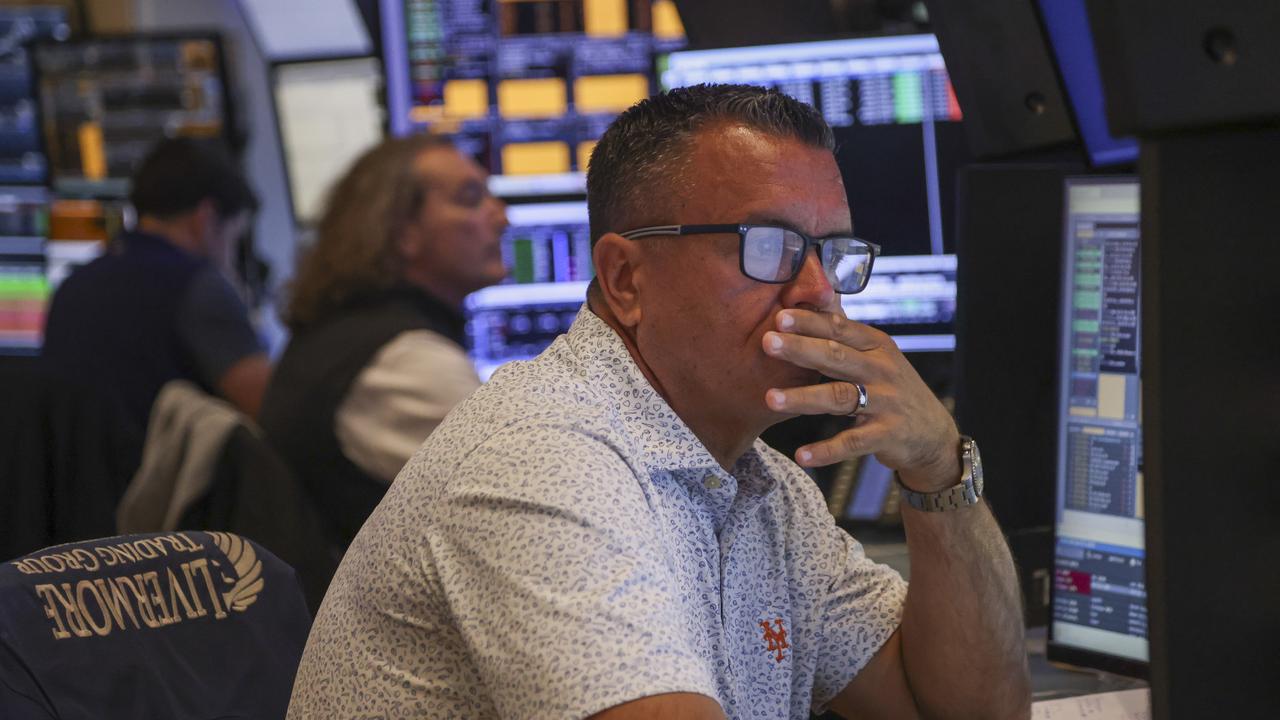
Wall Street stocks have gained ground as softening inflation data and a robust beginning of second-quarter earnings season put investors in a buying mood.

Form 4 CrowdStrike Holdings Inc For: 15 July
Business
SpaceX Stock Hovers Near Its June IPO Price as Starship Flight 13 Nears After FAA Clears Mishap Probe

Shares of Space Exploration Technologies fell 1.65% on Wednesday, trading at $133.84, down $2.24 on the day, continuing a slide that has pushed the stock below its June initial public offering price of $135 per share and near its all-time low of $136.78, reached just two days earlier.
Wednesday’s decline extends a difficult stretch for SpaceX shares since the company’s landmark Nasdaq debut, which ranked as the most valuable initial public offering in history. The stock reached an all-time high of $225.64 on June 16, meaning shares have now fallen more than 40% from that peak in the roughly one month since SpaceX began trading publicly.
FAA Clears Path Toward Next Starship Test Flight
Despite the stock’s recent weakness, SpaceX received positive operational news this week when the Federal Aviation Administration completed its review of a booster issue that occurred during the company’s Starship test flight in May. The FAA’s completed review clears the path for SpaceX to proceed toward Starship’s 13th test flight, pending remaining safety and licensing requirements.
That development has drawn renewed analyst attention to the stock, with several firms reiterating bullish price targets ahead of the anticipated launch. Raymond James has maintained a price target implying more than 470% upside from current trading levels, according to recent analyst commentary, while Evercore has turned more bullish on the stock specifically ahead of the upcoming Starship test flight.
A Volatile Post-IPO Trading Pattern
SpaceX’s stock has exhibited significant volatility since its public debut, reflecting both the scale of investor interest in the company and genuine uncertainty about how to value a business spanning launch services, satellite broadband and artificial intelligence operations. The stock’s beta coefficient of 5.79 reflects an extraordinary level of volatility relative to the broader market, among the highest of any major publicly traded company.
The stock had briefly traded as high as $148 following its addition to the Nasdaq 100 index in early July, before beginning a sustained slide that brought shares down toward, and eventually below, their original IPO price within a matter of days.
Analysts Debate How to Value the Company
SpaceX’s unusual combination of businesses has made the company particularly difficult for analysts to value using traditional frameworks. MoffettNathanson analyst Zhu recently characterized SpaceX as an especially challenging company to value given the diversity of its operations, spanning traditional rocket launch services, the Starlink satellite broadband network, and an artificial intelligence segment that includes the Grok large language model and the X social media platform.
Despite that valuation complexity, Wall Street sentiment toward the stock remains predominantly positive. According to recent tracking data, 26 analysts currently recommend buying SpaceX shares, compared with just one sell recommendation, resulting in an overall Buy rating consensus. The average 12-month price target sits at approximately $242.22, with individual estimates ranging as high as $800 and as low as $62, reflecting the unusually wide range of opinion on the company’s appropriate valuation.
High-Profile Investor Activity
SpaceX’s stock volatility has continued to attract attention from prominent institutional investors. Cathie Wood’s investment firm recently swapped $23 million worth of Advanced Micro Devices shares for SpaceX stock, according to recent trading disclosures, reflecting continued institutional interest in the stock despite its recent pullback from all-time highs.
Separately, investor Chamath Palihapitiya has publicly suggested that a potential merger between SpaceX and Tesla could offer strategic and financial benefits for both companies, despite acknowledging potential hurdles to such a combination. JPMorgan has separately characterized the possibility of a Tesla-SpaceX tie-up as “strategically coherent,” while flagging potential operational bottleneck concerns tied to such a merger.
Continued Operational Milestones
Beyond the upcoming Starship test flight, SpaceX has continued announcing new commercial partnerships and operational developments in recent weeks. Frontier Airlines announced plans to launch in-flight Wi-Fi using SpaceX’s Starlink satellite network beginning in early 2027, extending Starlink’s growing footprint within the commercial aviation sector.
SpaceX has also maintained an extraordinarily high launch cadence, having logged approximately 165 total launches over the past year and accumulating nearly a decade of experience with Falcon 9 first-stage rocket reuse, underscoring the operational maturity of its core launch business even as investors continue debating the company’s overall valuation.
Financial Performance Remains a Question Mark
SpaceX’s most recent quarterly net income figures showed a loss of approximately $4.28 billion, a significant deterioration from a loss of $528 million during the prior quarter, according to recent financial data. The company does not currently pay dividends to shareholders, and its next earnings report is scheduled for August 6, which will provide investors with updated visibility into the company’s financial trajectory following its public listing.
A Company Still Finding Its Public Market Footing
Market analysts have generally characterized SpaceX’s recent stock weakness as part of a broader post-IPO adjustment period, in which speculative early trading gives way to more grounded valuation debates as investors work to reconcile the company’s ambitious long-term growth narrative with near-term financial realities, including substantial ongoing losses tied to its capital-intensive space and AI infrastructure investments.
With SpaceX’s next Starship test flight now cleared to proceed following the FAA’s completed safety review, investors are likely to treat the upcoming launch as a key near-term catalyst for the stock, given Starship’s central role in the company’s long-term ambitions for deep-space missions and its broader space transportation business. Should the test flight proceed successfully, some analysts believe it could help stabilize sentiment toward the stock following its sharp post-IPO decline, while any further setbacks could add to the uncertainty that has already characterized SpaceX’s first month as a publicly traded company.

Heartbreak in Manchester as England’s World Cup hopes come to an end against Argentina

California lawmakers warn Newsom that budget could derail Hollywood jobs push

TeraWulf stock falls after New York pauses new data center permits


-

 Fashion7 days ago
Loro Piana Fall 2026 Enters Houston’s Art Scene
-

 Fashion5 days ago
Weekend Open Thread: Nutriplenish Leave-In Conditioner
-
 Sports6 days ago
2026 Genesis Scottish Open Thursday TV coverage: Round 1
-

 Sports6 days ago
Super Eagles star Moses Simon opens up on Liverpool transfer regret
-

 Tech6 days ago
Character.AI enters the microdrama arena with its own productions, but there’s a twist
-

 Politics14 hours ago
Young campaigners urge incoming PM to act on outdoor junk food ads
-

 News Videos1 day ago
XRP BOMBSHELL… XRP OMBOARDED FOR TRANSACTIONS!!!
-

 Tech2 days ago
Get Your ESP32 Sunny Side Up With This Solar Dev Board
-

 Tech1 day ago
Dark Secrets Emerge When Jailbreaking LLMs
-
 Sports4 hours ago
New Cornerback Enters Vikings Trade Rumor Mill
-

 Tech7 days ago
Level Infinite Launches Gangstar Mirage City in India with Pre-Registrations
-
 NewsBeat7 days ago
Major update after Huntingdon train attack as man enters plea
-
 Entertainment9 hours ago
Disney’s Most Ambitious Failed Star Wars Attraction Is Coming to SDCC
-

 News Videos2 days ago
how to make coin bank box with cardboard #scienceproject #money #diy #shorts
-

 Tech7 days ago
Entra passkey enrollment vishing targets Microsoft 365 users
-
 Tech2 days ago
Cloudflare Precursor Watches Your Mouse and Keyboard To Decide If You Are Human
-
 Entertainment7 hours ago
Vicki Gunvalson Defends Discussing Heather Dubrow’s Money
-

 Crypto World7 days ago
DeFi Dashboard Zapper to Shut Down After 7 Years
-

 NewsBeat4 hours ago
Watch: Is Donald Trump facing a popular backlash on immigration?
-
Crypto World1 day ago
Ripple, Coinbase, Circle Join Linux x402 Foundation to Help Shape AI Payments
You must be logged in to post a comment Login