

Sports
World Cup 2026: Which team are supporters from eliminated nations rooting for?




Sports
Messi scripts late miracle as Argentina shatter England’s World Cup dream | FIFA World Cup 2026
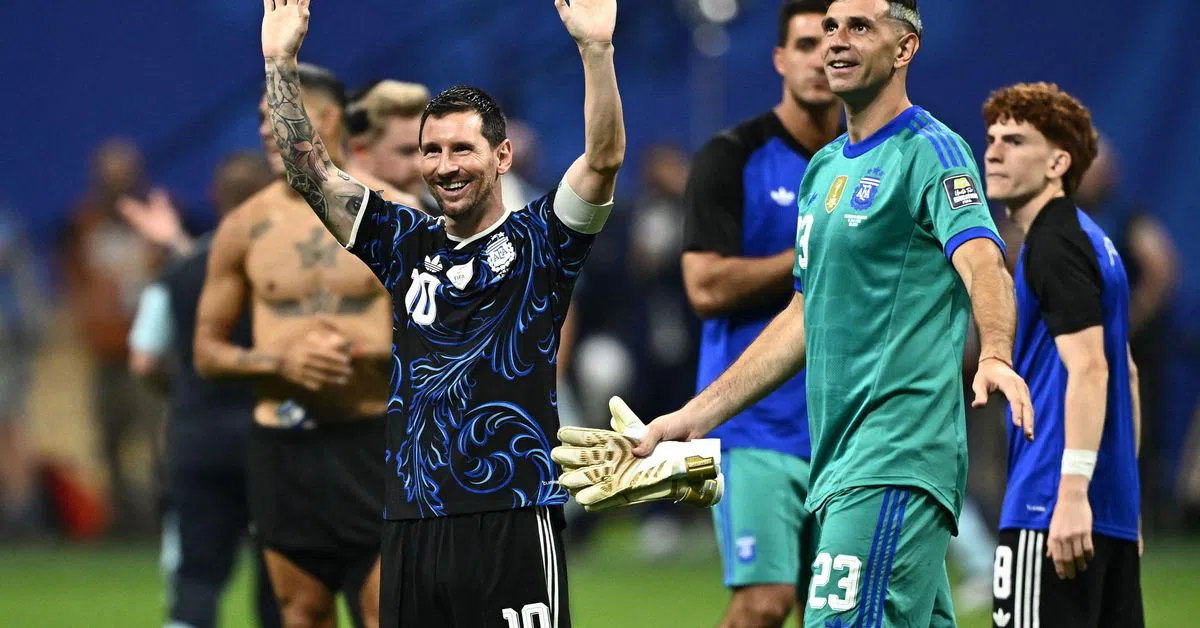
England spent much of the Fifa World Cup 2026 semifinal proving that Lionel Messi could be contained. They spent the closing minutes discovering that he did not need much time to decide the contest.
Argentina scored twice in six minutes and 24 seconds to overturn Anthony Gordon’s second-half goal and beat England 2-1 at Mercedes-Benz Stadium in Atlanta, sending the defending champions into Sunday’s final against Spain.
Enzo Fernandez equalised in the 85th minute after Messi drew England’s defenders towards him and released the midfielder outside the penalty area. Lautaro Martinez, introduced four minutes earlier, then headed in Messi’s right-footed cross in the second minute of stoppage time.
The result preserved Argentina’s chance of becoming the first team since Brazil in 1962 to successfully defend the World Cup. It also ended England’s hopes of reaching the final for the first time since winning the tournament in 1966.
England will now face France in the third-place match in Miami on Saturday (2:30 AM IST on Sunday), while Argentina will meet Spain at MetLife Stadium in New Jersey on Sunday (12:30 AM IST on Monday).
England matched Argentina physically and defended effectively for long periods, but the match data showed how heavily the second half tilted towards the defending champions.
Argentina finished with 64 per cent possession, completed almost twice as many accurate passes and generated an expected-goals figure more than three times England’s total.
|
England vs Argentina match statistics |
||
|
Statistic |
England |
Argentina |
|
Expected goals |
0.53 |
1.84 |
|
Possession |
36.00% |
64.00% |
|
Shots on target |
2 |
5 |
|
Shot accuracy |
40.00% |
33.00% |
|
Big chances created |
1 |
3 |
|
Big chances missed |
0 |
2 |
|
Accurate passes |
273 |
537 |
|
Pass accuracy |
84.00% |
91.00% |
|
Duels won |
48 |
51 |
|
Saves |
3 |
1 |
|
Fouls committed |
11 |
15 |
Argentina’s 537 accurate passes, compared with England’s 273, illustrated the territorial pressure that intensified after Gordon’s goal.
Their 1.84 expected goals also suggested that the late comeback was not simply the product of two isolated moments. Argentina created three big chances, missed two and forced Jordan Pickford into three saves.
Old hostility returns from the opening whistle
England and Argentina had not played each other for 21 years, but the rivalry’s historic tension resurfaced before the match had properly begun.
The national anthems were met with jeers from sections of the opposing support, while the first exchanges featured more confrontation than football.
Jude Bellingham was knocked down by Leandro Paredes within seconds of kick-off. Soon afterwards, Fernandez caught Elliot Anderson from behind, prompting England’s players to appeal to referee Ismail Elfath.
Anderson later responded with a late challenge of his own.
England’s Jude Bellingham reacts after a challenge as Argentina’s Enzo Fernandez, Giuliano Simeone and Nahuel Molina look on. Photo: Reuters
The pattern suited England initially. Declan Rice and Anderson tracked Messi aggressively, Bellingham embraced the physical exchanges and Argentina struggled to establish their passing rhythm.
Messi was crowded whenever he moved between England’s midfield and defence. Argentina’s attempts to launch quick attacks were repeatedly interrupted before they could gather momentum.
Elfath kept his cards in his pocket during the most heated opening exchanges before booking Anderson for bringing down Messi and Lisandro Martinez for stopping Morgan Rogers.
The American official largely maintained control without allowing the match to become dominated by disciplinary decisions.
Gordon puts England within sight of history
After an attritional first half, England broke the deadlock in the 55th minute through one of their best attacking sequences of the tournament.
Harry Kane dropped towards midfield to provide an outlet and pull Argentina’s defenders out of position. Nicolas Tagliafico’s attempted clearance then fell to Rice, who quickly moved the ball towards Rogers on the right.
Rogers looked up and delivered a cross towards the back post, where Gordon arrived behind the defence and adjusted his body to guide the bouncing ball beyond Emiliano Martinez.
Argentina’s defensive errors contributed to the goal. Tagliafico failed to clear decisively, while the back line did not respond quickly enough to Gordon’s run.
For England, however, the move demonstrated what had made them dangerous throughout the tournament: Kane’s ability to link play, Rice’s forward movement, Rogers’ composure and Gordon’s pace from the flank.
Spence produces a defining intervention
Argentina responded almost immediately.
Fernandez and Messi combined in midfield before releasing Giuliano Simeone behind England’s defence. The forward appeared to have a clear route towards goal as Pickford prepared for the shot.
Djed Spence recovered from several metres behind and launched into a perfectly timed sliding challenge, taking the ball away from Simeone and conceding only a corner.
The England defender celebrated with a roar towards the crowd before being surrounded by his team-mates.
Given the quality of the recovery, the position of the attacker and the stakes involved, it was one of the outstanding defensive moments of the tournament.
Pickford then made important saves as Argentina increased their pressure. England appeared to be defending with discipline while retaining the possibility of counter-attacking through Gordon and Rogers.
That balance did not last.
Tuchel’s substitutions change the character of the match
Thomas Tuchel responded to England’s lead by progressively replacing attacking players with defenders.
Gordon was withdrawn despite remaining England’s most effective outlet. Ezri Konsa, Dan Burn and Nico O’Reilly were introduced during the final 20 minutes as England retreated into a deep 5-4-1 formation.
The changes were designed to protect the penalty area and preserve the lead. Instead, they removed England’s ability to carry the ball away from danger.
Argentina no longer had to account for runners behind their defence. Their full-backs pushed higher, their midfielders occupied positions around England’s penalty area and Messi began receiving possession closer to goal.
England’s 36 per cent possession and 273 accurate passes reflected the overall imbalance, but their retreat after taking the lead made the gap more damaging.
Each clearance returned the ball to Argentina. Kane became isolated, England’s midfield moved closer to its own defensive line and the pressure became continuous.
|
How England’s approach shifted |
||
|
Match phase |
England’s approach |
Effect |
|
Before the goal |
Contested midfield and attacked through Gordon and Rogers |
Restricted Messi and threatened on transitions |
|
Immediately after scoring |
Defended deeper but retained counter-attacking options |
Argentina increased pressure but remained exposed |
|
Final 20 minutes |
Added defenders and moved into a 5-4-1 |
England struggled to retain possession |
|
Closing stages |
Protected the box without pressing the ball |
Messi found space to create both goals |
Former England captain Wayne Rooney argued that the substitutions would have weakened the players’ belief.
“If you’re an attacking player on that pitch and you go 1-0 up and you see the changes which the manager’s making, you’re losing belief,” Rooney said during the BBC’s coverage.
Former goalkeeper Joe Hart compared the retreat with England’s approach under Gareth Southgate in previous major finals, while Alan Shearer said Tuchel had “played his hand” too early by placing six defenders on the pitch.
Their criticism centred not only on the substitutions but on the message they conveyed: England appeared to stop trying to win the match and began trying only to survive it.
Messi emerges when England stop attacking
For more than 80 minutes, England’s defensive plan against Messi had largely worked.
He was followed through midfield, denied time near the penalty area and pushed towards areas where his influence was less dangerous.
With seven minutes remaining, Messi even appeared exhausted after racing O’Reilly towards the halfway line for a loose ball.
Yet England’s deeper shape changed the space available to him.
Messi no longer needed to drop into midfield to find possession. Argentina recovered the ball quickly and returned it to him around the edge of England’s penalty area.
In the 85th minute, several defenders moved towards Messi as he received possession. He recognised that Fernandez had been left unmarked outside the box and released the midfielder.
Fernandez curled a powerful 20-metre shot beyond Pickford and into the corner.
The equaliser was the product of Argentina’s sustained pressure and England’s inability to close down the ball. It also altered the psychological balance immediately.
Lautaro completes the turnaround
Argentina continued attacking after Fernandez’s equaliser rather than preparing for extra time.
Alexis Mac Allister struck the post, providing another warning that England’s defensive structure was beginning to break.
Messi recovered the loose ball and moved towards the right channel. Using his weaker right foot, he delivered a precise cross into the penalty area.
Lautaro Martinez attacked the space between England’s defenders and directed his header beyond Pickford in the 92nd minute.
The substitute had been on the field for only 11 minutes.
Argentina had transformed the match from probable elimination to a place in the final in little more than six minutes.
Argentina punish surrender of possession
Argentina’s victory was not built on a dramatic tactical reinvention. It came from maintaining their structure while England abandoned theirs.
Lionel Scaloni’s side continued circulating the ball patiently after falling behind. Fernandez and Mac Allister moved higher, the full-backs widened the pitch and Messi searched for spaces between England’s increasingly narrow lines.
The statistical contrast became more pronounced as the game progressed.
Argentina completed 91 per cent of their passes, compared with England’s 84 per cent, and held a narrow 51-48 advantage in duels won. Despite the physical nature of the match, they retained enough technical control to sustain attacks around England’s box.
Their five shots on target were produced from a lower shot-accuracy rate than England’s, but the greater volume eventually proved decisive.
Scaloni’s substitution also had a direct attacking effect. Lautaro entered and scored the winner.
Tuchel’s substitutions had the opposite consequence. They helped England defend in numbers but removed the players capable of relieving pressure.
A familiar form of English heartbreak
England have suffered painful World Cup semifinal defeats before.
They lost to West Germany on penalties in 1990 after recovering to force extra time. In 2018, they led Croatia before being beaten in extra time.
This defeat carried a different weight because England appeared to have control of both the score and the contest until the final stages.
They had absorbed Argentina’s physical approach, limited Messi and taken the lead through a well-constructed attack. Their defenders had also produced significant individual moments, most notably Spence’s recovery challenge and Pickford’s saves.
England fans reacting during their team’s match against Argentina in Fifa World Cup 2026 semifinal. Photo: Reuters
The tactical retreat revived memories of the Euro 2020 final against Italy, when England scored early and gradually withdrew, and the Euro 2024 final against Spain, when another cautious approach attracted criticism.
Rooney described the decision to stop pursuing a second goal as a surrender of the team’s strengths.
“You can’t go a goal up and then surrender the strength of the ball and surrender any opportunity to try to get the second goal,” he said.
“If you let players of that quality have the ball around your penalty box, sooner or later they’re going to score.”
Referee avoids becoming part of the rivalry’s history
World Cup matches between England and Argentina have often been defined partly by refereeing controversy.
Antonio Rattin’s dismissal in 1966, Diego Maradona’s “Hand of God” goal in 1986 and David Beckham’s red card in 1998 became permanent chapters in the rivalry.
The Atlanta semifinal was physical and confrontational but did not produce a comparable dispute.
England vs Argentina: Referee Ismail Elfath and assistant referees Corey Parker and Kyle Atkins. Photo: Reuters
Neither side could credibly argue that a major refereeing decision determined the result.
The semifinal was decided by England’s retreat, Argentina’s pressure and Messi’s ability to exploit the spaces that emerged.
Argentina’s late goals reflect deeper superiority
The timing of Argentina’s goals made the comeback feel sudden, but the numbers indicate that pressure had been building.
Their expected-goals figure of 1.84 was significantly higher than England’s 0.53. Argentina created three big chances to England’s one and forced Pickford into three saves.
They also missed two big chances before eventually scoring.
England were more efficient with their limited opportunities, placing 40 per cent of their attempts on target compared with Argentina’s 33 per cent. But efficiency could not compensate for the lack of attacking volume once Tuchel’s side withdrew.
Argentina’s 64 per cent possession was not sterile. It pushed England deeper, created repeated entries into the final third and eventually placed Messi close enough to goal to decide the match.
Messi earns another chance to defend the crown
Messi did not dominate the semifinal from the beginning. For much of it, England’s midfield and defence reduced his influence.
His decisive contribution came through timing and awareness rather than constant involvement.
For the equaliser, he attracted defenders and recognised Fernandez’s space. For the winner, he moved wide and delivered a precise cross with his weaker foot.
At 39, the physical demands of the tournament were visible. His ability to determine the outcome nevertheless remained undiminished.
Argentina will now attempt to retain the World Cup against a Spain side that controlled France comprehensively in the first semifinal.
The final will present a clash between Spain’s collective possession game and Argentina’s experience, adaptability and late-match resilience.
It will also place Messi opposite Lamine Yamal, bringing together one of football’s defining figures and the leading talent of its emerging generation.
England left to confront tactical questions
England must now prepare for a third-place match neither they nor France wanted to play.
The more important contest for Tuchel will be the debate surrounding his decisions.
England reached the semifinal unbeaten and showed for long periods that they possessed the quality to compete with the defending champions. Gordon troubled Argentina, Rice and Anderson restricted Messi, and the back line held firm under pressure.
The defeat was therefore not simply evidence of Argentina’s superior talent.
It also raised the question of whether England abandoned the approach that had put them ahead.
Argentina finished with more possession, more passes, more chances and a substantially higher expected-goals figure. But the decisive shift came only after England chose to defend increasingly close to their own goal.
For 80 minutes, Messi was controlled.
|
Argentina vs England semifinal at a glance |
|
|
Match detail |
Information |
|
Result |
Argentina beat England 2-1 |
|
Venue |
Mercedes-Benz Stadium, Atlanta |
|
Competition |
Fifa World Cup 2026 semifinal |
|
England scorer |
Anthony Gordon, 55th minute |
|
Argentina scorers |
Enzo Fernandez, 85th; Lautaro Martinez, 90+2 |
|
Messi’s contribution |
Assisted both Argentina goals |
|
Time between Argentina goals |
Six minutes and 24 seconds |
|
Argentina’s next match |
World Cup final against Spain |
|
England’s next match |
Third-place match against France |
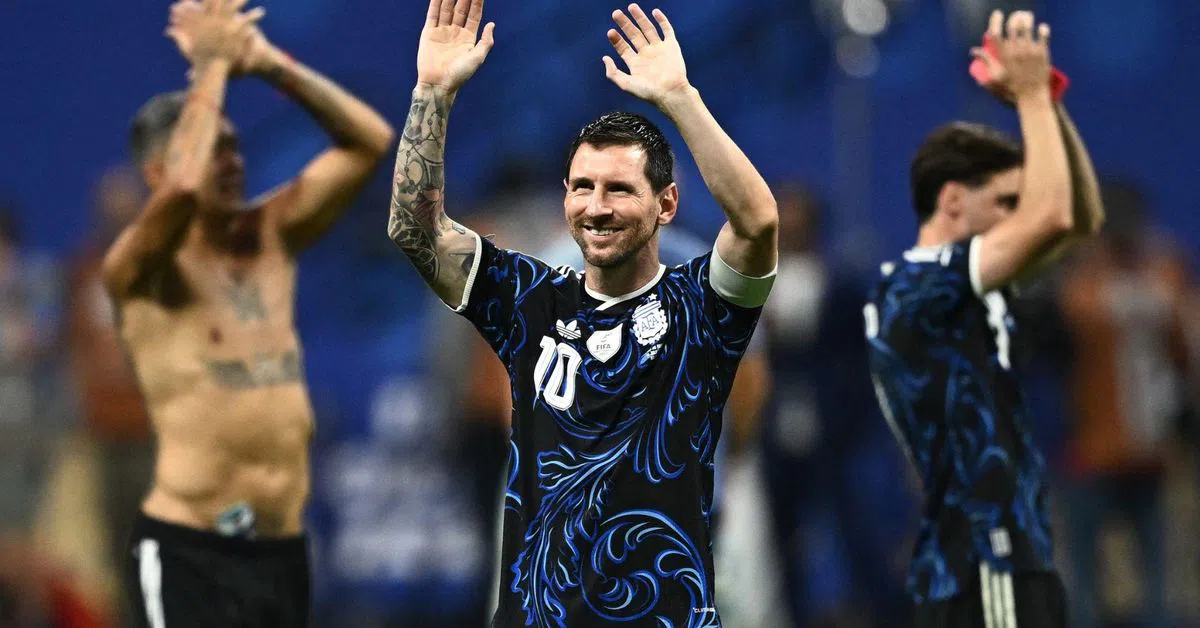
Lionel Messi not only guided Argentina into a second consecutive FIFA World Cup final, but also climbed to the top of the Golden Boot standings after producing two decisive assists in the dramatic 2-1 semifinal victory over England.
The 39-year-old, who had gone scoreless for the first time in this year’s tournament, once again proved why he remains Argentina’s driving force. Instead of finding the net himself, Messi turned creator when it mattered most, setting up both goals as the defending champions overturned a one-goal deficit in the closing minutes.
Two moments of magic change everything
Argentina looked destined for elimination after Anthony Gordon’s second-half opener had England on course for the final.
But Messi sparked another remarkable comeback.
In the 85th minute, he slipped the ball to Enzo Fernández, whose long-range strike brought Argentina level. Then, deep into stoppage time, the Argentine captain produced a pinpoint delivery into the box for Lautaro Martínez, who powered home the winning header to send the holders into Sunday’s final against Spain.
Those two assists not only completed Argentina’s turnaround but also pushed Messi ahead in the race to finish as the tournament’s leading attacker.
|
Golden Boot race after FIFA WC 2026 semis |
|||
|
Player |
Country |
Goals |
Assists |
|
Lionel Messi |
Argentina |
8 |
4 |
|
Kylian Mbappé |
France |
8 |
3 |
|
Harry Kane |
England |
6 |
1 |
|
Jude Bellingham |
England |
6 |
1 |
The Golden Boot is awarded to the tournament’s top scorer, with assists serving as the first tiebreaker when players finish level on goals.
Both Messi and Mbappé have scored eight times in the 2026 World Cup, but the Argentine’s semifinal display moved him to four assists, one more than the French star.
Another comeback, another Messi masterclass
The semifinal heroics continued a familiar trend for Argentina.
In the quarterfinal against Egypt, Messi had also played a decisive role in an astonishing comeback. He assisted Argentina’s first goal before scoring the equaliser just minutes later as Lionel Scaloni’s side recovered from two goals down to stay alive.
Against England, he once again delivered when his team needed inspiration, this time sacrificing personal glory to create both goals.
Although his streak of scoring in nine consecutive World Cup matches came to an end, Messi arguably produced one of his most influential performances of the tournament.
England duo Harry Kane and Jude Bellingham remain mathematically in contention, with both players on six goals and one assist. However, after England’s semifinal defeat, their only opportunity to close the gap will come in the third-place playoff against France.
One final prize left to win
Messi now heads into Sunday’s final against Spain chasing two of football’s biggest honours simultaneously.
Victory would secure Argentina back-to-back World Cup titles, while a goal, or even another decisive assist, could also seal the first World Cup Golden Boot of his illustrious career.
At 39, the Argentine icon is once again on the brink of adding another remarkable chapter to a legacy that continues to redefine greatness.
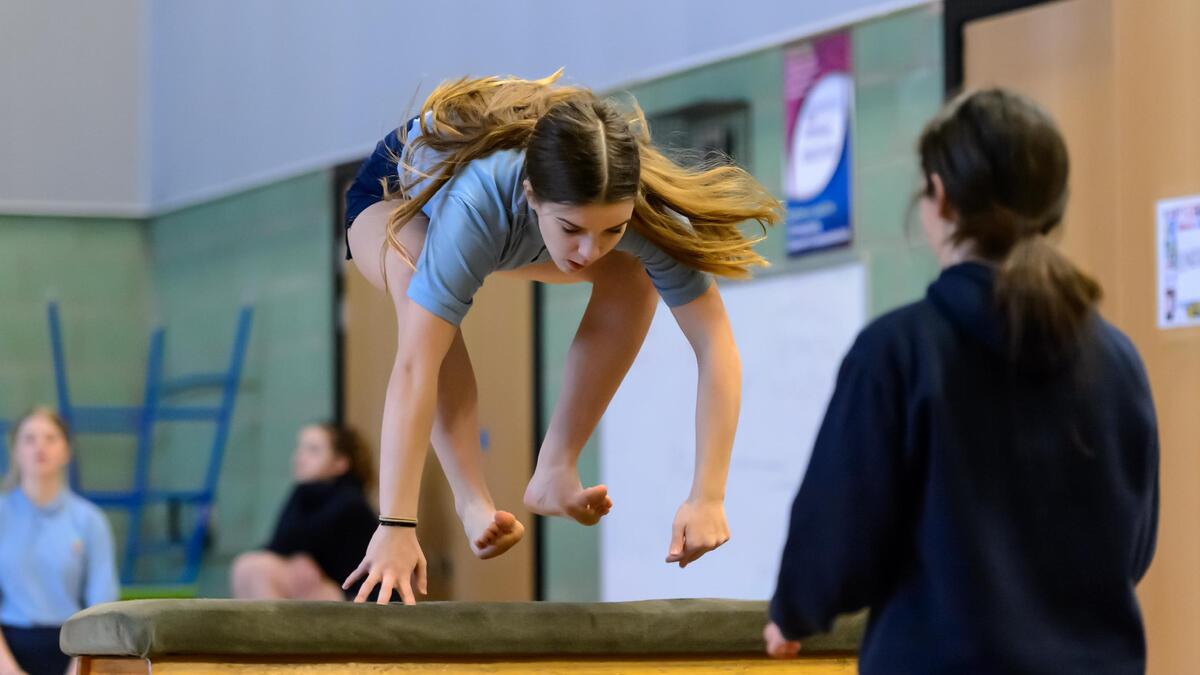
Closing the participation gap could have a £6.5 billion impact by 2035 / Sport England
Girls aged 11–18 take part in 84 fewer minutes of sport each week than boys, equivalent to 280 million lost hours of activity across the UK each year
The participation gap varies widely by location, with the West Midlands and north-east recording the largest disparities, while the south-east, north-west and Scotland perform best
Researchers found the gap is driven by belonging, safety, unequal access to facilities and teams, sexism and a lack of female role models rather than a lack of interest in sport
Public First estimates that closing the gender gap could generate £570 million in annual productivity gains, save the NHS £73 million a year and deliver £6.5 billion in cumulative economic and health benefits by 2035
Girls in the UK are missing out on 280 million hours of sport every year compared with boys, according to research commissioned by Sky.
The broadcaster is calling for national action to tackle what it describes as a postcode lottery in sports participation.
The report, Game Changing: How Sport Gives Every Girl a Better Chance, was produced by research consultancy Public First and is the first to map the gender participation gap across all 650 UK parliamentary constituencies.
It found that girls aged 11 to 18 spend an average of 84 fewer minutes taking part in sport each week than boys – equivalent to 280 million fewer hours of activity nationally each year.
However, the analysis shows the gap varies dramatically depending on where girls live. While some constituencies report little difference between boys’ and girls’ participation, others see girls missing out on more than two-and-a-half hours of sport each week.
The widest gaps are concentrated in the West Midlands and north-east while constituencies in the south-west, north-west and Scotland generally perform better. Birmingham Perry Barr records the largest disparity, while Westmorland and Lonsdale has one of the smallest.
The report says the issue isn’t a simple north-south divide, but is heavily influenced by local conditions. Urban areas perform significantly worse than rural communities, with girls in towns and cities participating in almost 100 fewer minutes of sport each week than boys, compared with around 75 minutes in rural areas. Researchers suggest this reflects differences in safety, access to facilities and reliance on organised sport.
Access to facilities also has a major impact. In areas with the poorest sports provision, the participation gap is 46 per cent wider than in the best-served communities. Girls from ethnic minority backgrounds also experience larger disparities than the national average.
Rather than a lack of interest in sport, the research argues that a combination of cultural and structural barriers discourages participation, with lack of belonging a key issue. Many girls feeling that sports clubs and facilities are designed primarily for boys and men.
It also highlights unequal access to pitches, facilities and school teams, concerns about personal safety and harassment, limited visibility of female role models and persistent sexism.
According to the research, more than one in three girls has experienced sexist comments while taking part in sport, rising to more than four in 10 among older teenage girls, while almost one in four has experienced sexual comments. More than half say watching elite female athletes inspires them to take part in sport, underlining the importance of media visibility and representation.
Public First estimates that closing the participation gap could generate around £570 million a year in productivity gains and save the NHS £73 million annually through improved health. By 2035, the cumulative economic and health benefits could reach £6.5 billion.
The findings are being published as part of Sky’s Game Changing campaign, which is calling for government, schools, sports organisations and local communities to work together to improve girls’ access to sport. The initiative includes partnerships with England footballer Alessia Russo and the charity Goals 4 Girls to encourage greater participation among young women.
For the health and fitness sector, the report reinforces growing evidence that participation is influenced as much by environment as opportunity. It suggests that creating safe, welcoming spaces, increasing the visibility of female coaches and role models, offering beginner-friendly programmes and building supportive communities may be as important as providing facilities in encouraging more women and girls to become active.
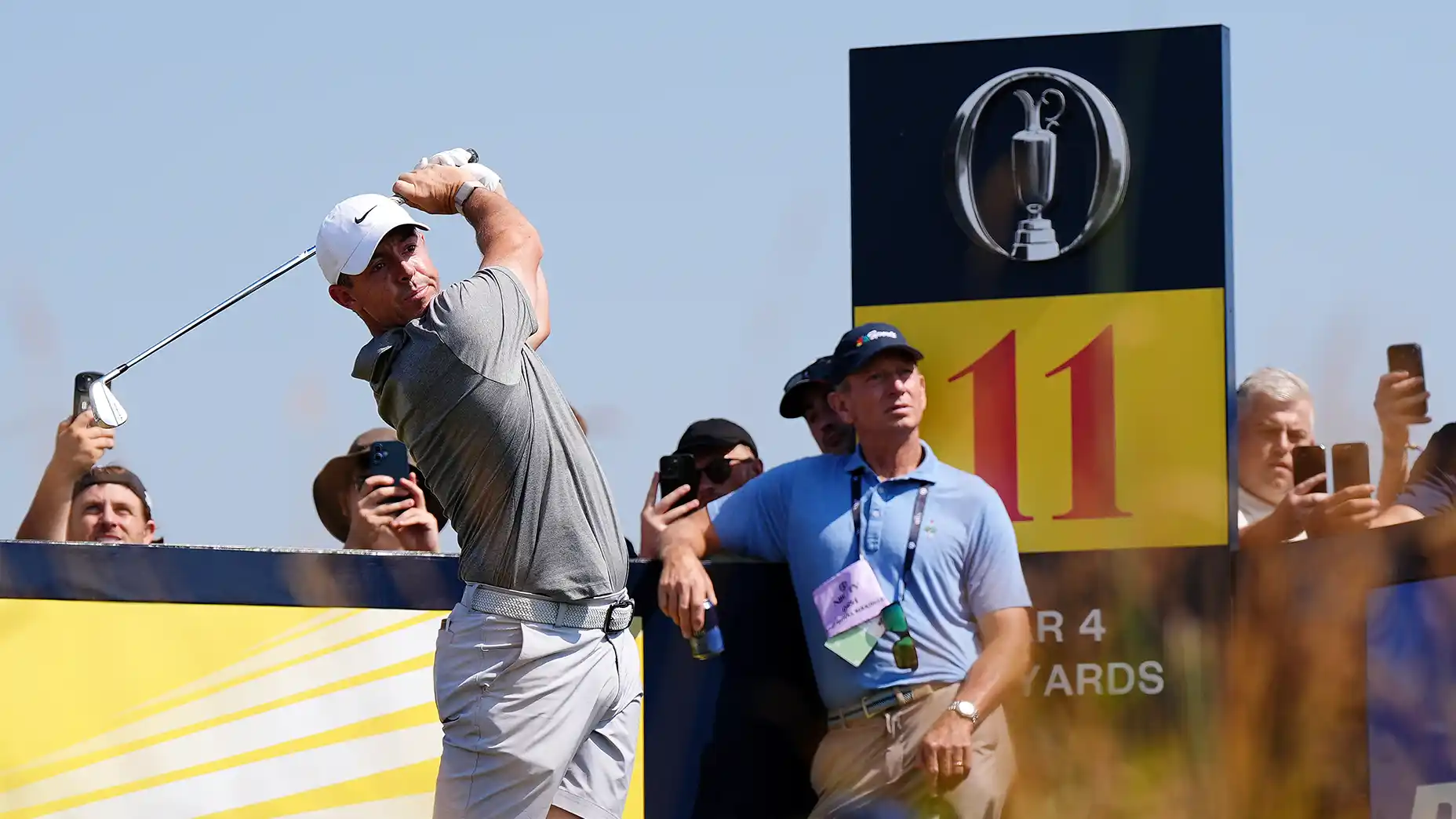

The 2026 Open Championship gets underway early Thursday morning with the first round at Royal Birkdale in England. Here’s everything you need to know to watch the tournament on Thursday, including full Open Championship TV coverage, streaming details and complete Round 1 tee times.
How to watch Open on Thursday
It’s been a long time since Rory McIlroy hoisted the Claret Jug as Open champion back in 2014. But in recent years, McIlroy has broken his major drought with back-to-back wins at the Masters.
This week, McIlroy embarks on a different mission: winning his second Open and seventh major championship title. He’s come close in recent years, finishing T7 last season behind winner Scottie Scheffler, T6 in 2023 and solo third in 2022 at St. Andrews.
But Scheffler and a host of other challengers, not to mention Royal Birkdale’s baked-out fairways, should give Rory a run for his money this week. And all the action gets started on Thursday.
If you’re a golf fan watching from the U.S., you’re going to want to wake up early to catch the Open on Thursday.
You can watch the first round of the Open Championship on TV via USA, which will open the TV coverage at 4 a.m. ET on Thursday morning. Before that, Peacock will kick off the streaming coverage at 1:30 a.m. ET. Peacock will also provide featured group coverage all day Thursday.
Below you will find everything you need to know to watch the first round of the 2026 Open Championship.
How to watch on TV Thursday
USA will provide first-round TV coverage of the 2026 Open Championship on Thursday from 4 a.m.-3:30 p.m. ET.
How to stream online Thursday
You can stream the first round of the 2026 Open Championship via Peacock, which will provide early streaming coverage and featured group coverage. USA’s telecast can be streamed via Golf Channel Mobile.
Here’s the full Open Championship streaming schedule for Thursday:
Open Round 1 Coverage: 1:30 a.m.-4 a.m. (Peacock)
Featured Groups: All Day (Peacock)
Open Round 1 USA Coverage: 4 a.m.-3:30 p.m. (Golf Channel Mobile)
SIGN UP FOR PEACOCK PREMIUM TO WATCH EXCLUSIVE COVERAGE OF THE 2026 OPEN CHAMPIONSHIP
2026 Open Championship Round 1 tee times (ET)
Tee No. 1
1:35 a.m. – Matthew Baldwin, Thomas Detry, James Nicholas
1:46 a.m. – Michael Kim, Daniel Hillier, Andy Sullivan
1:57 a.m. – Ryan Fox, Andrew Novak, Matthew Jordan
2:08 a.m. – Henrik Stenson, Max Homa, Joe Dean
2:19 a.m. – Robert MacIntyre, Rickie Fowler, Alex Fitzpatrick
2:30 a.m. – David Duval, Martin Couvra, Matthew Southgate
2:41 a.m. – Sungjae Im, Daniel Brown, Fifa Laopakdee (a)
2:52 a.m. – Gary Woodland, Jake Knapp, Jordan Smith
3:03 a.m. – Francesco Molinari, Tom McKibbin, Lev Grinberg (a)
3:14 a.m. – Hennie Du Plessis, Jose Luis Ballester, Dan Bradbury
3:25 a.m. – Angel Ayora, Victor Perez, Mateo Pulcini (a)
3:36 a.m. – Stewart Cink, Scott Vincent, Joakim Lagergren
3:47 a.m. – Michael Thorbjornsen, Kota Kaneko, Travis Smyth
4:03 a.m. – Alex Smalley, Sam Stevens, Ryo Hisatsune
4:14 a.m. – Akshay Bhatia, Harris English, Rasmus Højgaard
4:25 a.m. – Ben Griffin, Hideki Matsuyama, Min Woo Lee
4:36 a.m. – Russell Henley, Justin Rose, Viktor Hovland
4:47 a.m. – Justin Thomas, Alex Noren, Jason Day
4:58 a.m. – Scottie Scheffler, Tyrrell Hatton, Bryson DeChambeau
5:09 a.m. – Jordan Spieth, Tommy Fleetwood, Jon Rahm
5:20 a.m. – Brian Harman, Si Woo Kim, Nick Taylor
5:31 a.m. – Ryan Gerard, Maverick McNealy, David Puig
5:42 a.m. – Kazuma Kobori, Tom Sloman, David Howard (a)
5:53 a.m. – Antoine Rozner, Ren Yonezawa, Caleb Surratt
6:04 a.m. – M.J. Daffue, Frederic Lacroix, Jack McDonald
6:15 a.m. – Jeongwoo Ham, Ryutaro Nagano, Alejandro De Castro Piera (a)
6:41 a.m. – John Parry, Eric Cole, Tiger Christensen
6:52 a.m. – Eugenio Chacarra, Matt Wallace, Max Greyserman
7:03 a.m. – Michael Brennan, Sahith Theegala, Laurie Canter
7:14 a.m. – Cameron Smith, Keith Mitchell, Stuart Grehan (a)
7:25 a.m. – Sepp Straka, Joaquin Niemann, Kurt Kitayama
7:36 a.m. – Sami Valimaki, Shaun Norris, Jackson Suber
7:47 a.m. – Darren Clarke, Adrien Saddier, Bernd Wiesberger
7:58 a.m. – Keegan Bradley, Corey Conners, Casey Jarvis
8:09 a.m. – Matt McCarty, Harry Hall, Haotong Li
8:20 a.m. – Padraig Harrington, Marco Penge, Michael Hollick
8:31 a.m. – Tom Kim, Billy Horschel, Mason Howell (a)
8:42 a.m. – Johnny Keefer, Pierceson Coody, Keita Nakajima
8:53 a.m. – Aldrich Potgieter, Jesper Svensson, Jack Buchanan (a)
9:09 a.m. – Bud Cauley, Jayden Schaper, Lucas Herbert
9:20 a.m. – Kristoffer Reitan, Patrick Reed, J.T. Poston
9:31 a.m. – Chris Gotterup, Sam Burns, Adam Scott
9:42 a.m. – Collin Morikawa, J.J. Spaun, Nicolai Højgaard
9:53 a.m. – Shane Lowry, Aaron Rai, Brooks Koepka
10:04 a.m. – Cameron Young, Wyndham Clark, Ludvig Åberg
10:15 a.m. – Rory McIlroy, Xander Schauffele, Matt Fitzpatrick
10:26 a.m. – Jacob Bridgeman, Rasmus Neergaard-Petersen, Tim Wiedemeyer (a)
10:37 a.m. – Patrick Cantlay, Daniel Berger, Nico Echavarria
10:48 a.m. – Peter Uihlein, Alistair Docherty, Francesco Laporta
10:59 a.m. – Cameron John, Austen Truslow, Sam Bairstow
11:10 a.m. – Naoyuki Kataoka, Marcus Plunkett, Baard Skogen
11:21 a.m. – Kazuki Higa, Jiho Yang, Nevill Ruiter (a)

Argentinian players celebrated beating England in the World Cup semi-final with a banner reading “The Malvinas are Argentine” in a reference to the Falkland Islands.
Former Tottenham midfielder Giovani Lo Celso was among those holding the sign as his teammates danced on the pitch after their 2-1 win over the Three Lions in Atlanta on Wednesday.
Political slogans are banned from being displayed on the pitch or on players’ equipment according to Fifa rules.
Tensions linger between Argentina and Britain over the Falkland Islands. Argentina has repeatedly claimed sovereignty over the Islands, which are about 8,000 miles from Britain and 300 miles from mainland Argentina.
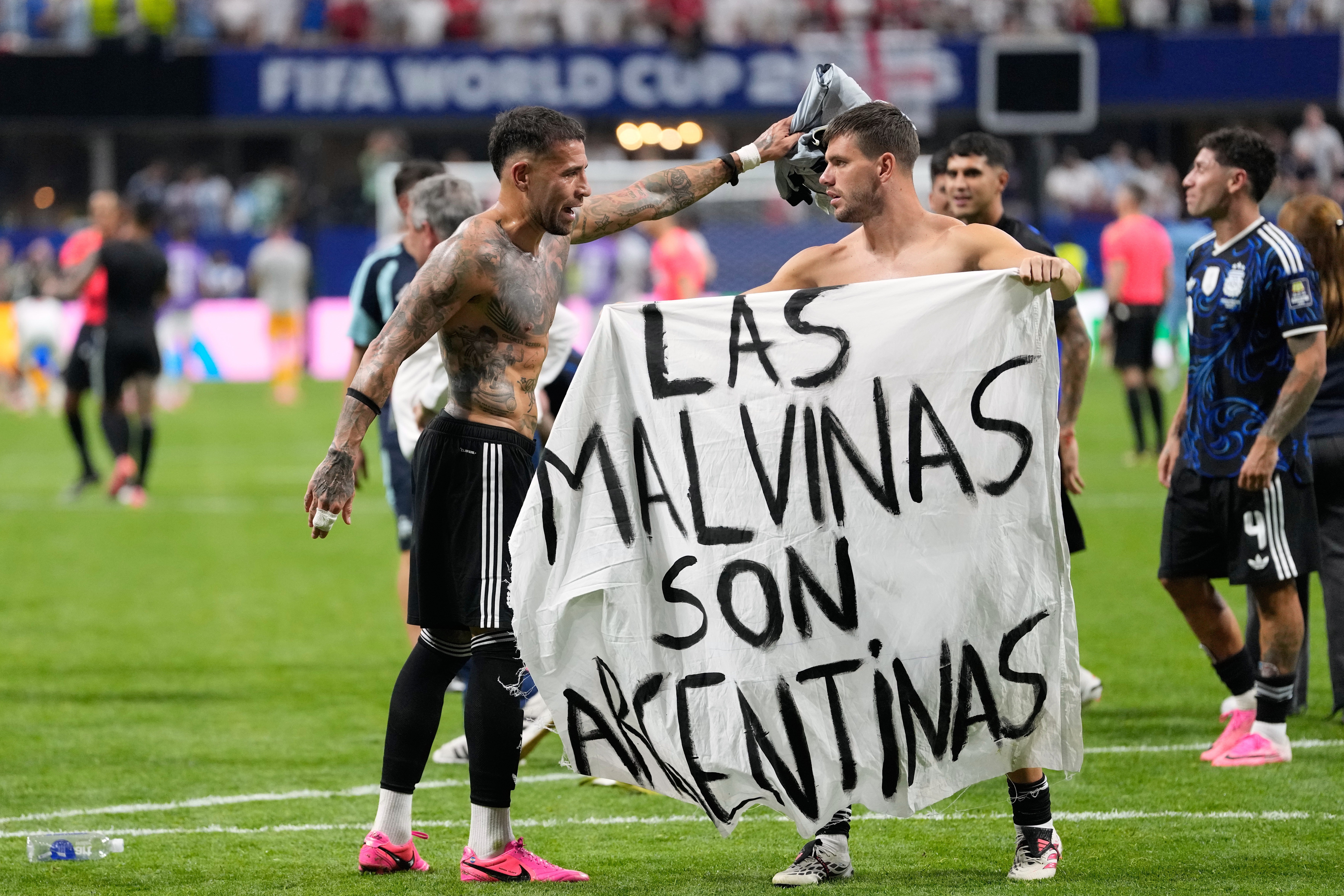
In 1982, the Falklands War broke out, claiming the lives of 907 people – 649 Argentine military personnel, 255 from Britain and three Falkland Islanders – after the then-incumbent far-right Argentinian military dictatorship invaded the islands.
Today, the islands remain a major issue in Argentina, and are frequently subject to numerous chants and flags at football games. After their last-16 win over Egypt, their players celebrated by singing: “For the Malvinas, for Diego [Maradona], for Leo [Messi]’s last one.”
The flames were further stoked prior to the semi-final when Argentina’s vice-president Victoria Villarruel called England “invaders” and “usurping pirates”.“Tomorrow we play against the usurping pirates,” he wrote on X.
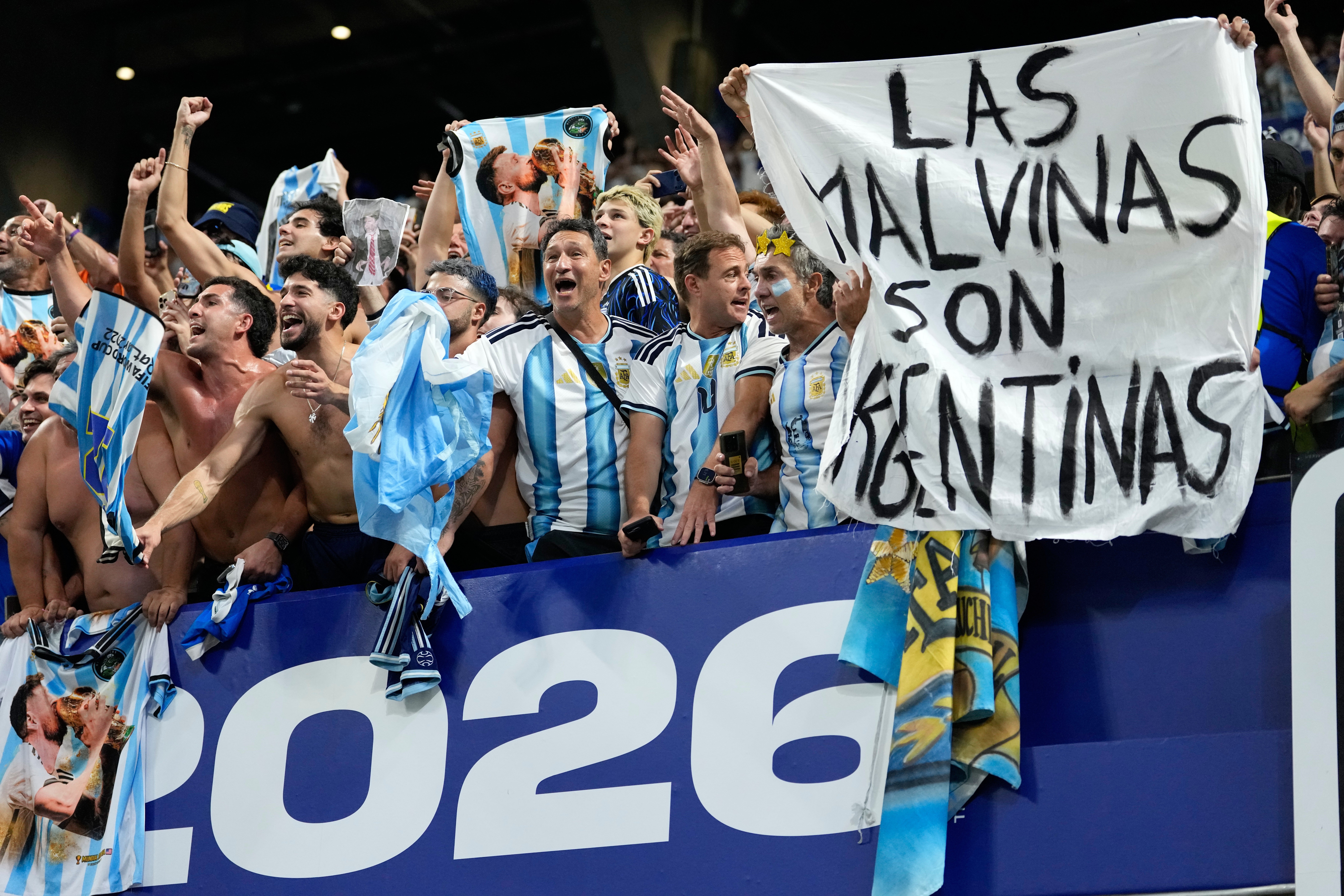
“This isn’t just another match. I’m not going to be politically correct or cold-hearted; against the English, it’s always something more. It’s the Malvinas, it’s Diego, it’s Leo’s last one, and it’s putting the brakes on the invaders. Go Argentina! Because until our last breath, we’re going to claim what’s ours!”
Argentina’s foreign minister Pablo Quirno also claimed Falklands Islanders were an “artificially implanted” population. He wrote in La Nacion: “For this reason, no referendum organised unilaterally by the United Kingdom can have legal effect on a controversy whose resolution belongs exclusively to Argentina and the United Kingdom through negotiations.”
Downing Street flatly rejected his claims, saying the Falkland islanders are “British with a right to determine their own future”.
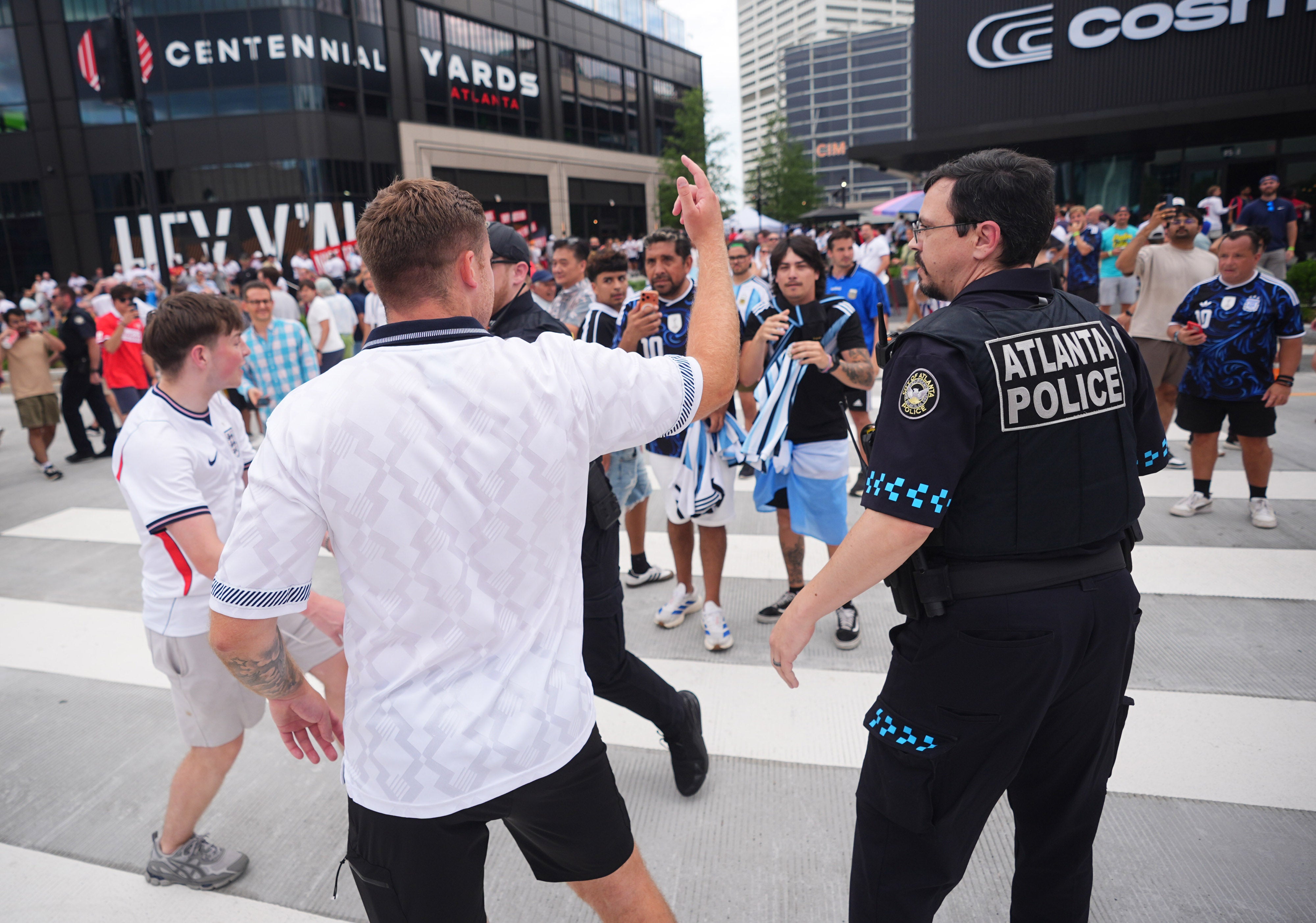
Asked about Mr Quirno’s comments, the prime minister’s official spokesman said: “The UK’s position is clear. The islanders have repeatedly expressed their wish to remain a British overseas territory, and their right to self-determination is paramount.”
The tension inside the game appeared to also spill outside the Mercedes-Benz Stadium in Atlanta with pictures showing a scuffle among supporters following the match, with police reportedly seen taking at least three people away.
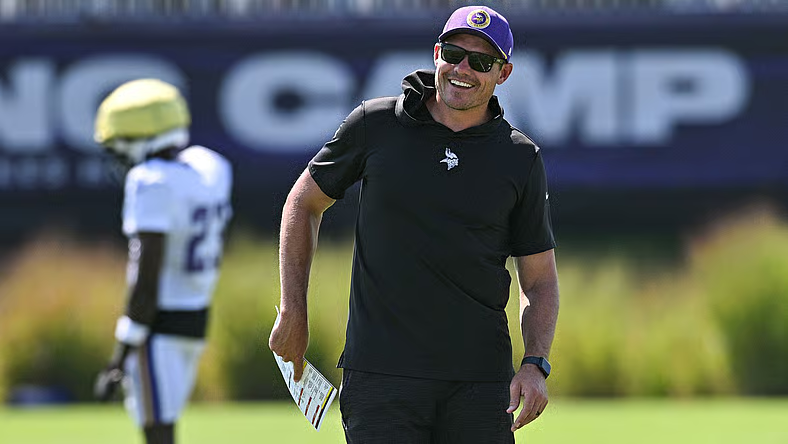

Don’t look now, but the Minnesota Vikings will have one of the NFL’s most improved offenses heading into 2026, says Bleacher Report, as training camp turns white-hot in about two weeks.
BR’s Moe Moton listed all offenses by their improvement level during the offseason, and Minnesota was not ignored.
Kyler Murray and Jauan Jennings Change the Projection
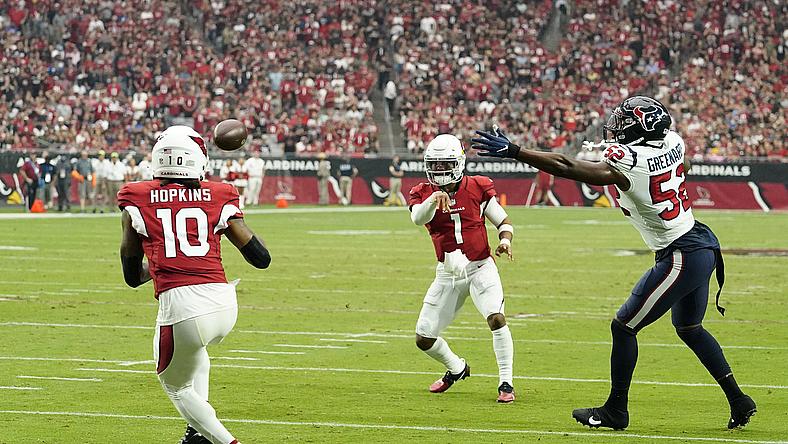
Vikings’ Offense Gets Kudos from BR
Moton revealed five NFL offenses that will improve this season, and he wrote about Minnesota, “Last season, J.J. McCarthy threw for 1,632 yards, 11 touchdowns and 12 interceptions with a 57.6 percent completion rate. The Athletic’s Alec Lewis reported that head coach Kevin O’Connell removed over-the-middle passing concepts to simplify the signal-caller’s progression reads.”
“Yet the Vikings still didn’t get much production out of the aerial attack. Although Kyler Murray underperformed in Arizona over the last few years, he could see a career resurgence under O’Connell, who has called plays for a top-six passing offense in three of his four years with the Vikings.”
McCarthy and Murray will face off in a quarterback battle in Eagan — about two weeks from now.
“The 28-year-old signal-caller needs to stay healthy, though. Murray joined a team with a solid wide receiver duo in two-time All-Pro Justin Jefferson and Jordan Addison. Minnesota signed Jennings, who caught 55 passes for 643 yards and a career-high nine touchdowns last season with the San Francisco 49ers,” Moton continued.
“The Vikings will have a new dynamic starting quarterback and one of the league’s best receiver trios this year. Expect this offense to rack up points as one of the top 10 scoring units.”
The Murray Upgrade
Vikings fans — and sites like Bleacher Report — can dream big about the team’s offense because of two words: Kyler Murray.
Murray averages 4,500 combined passing and rushing yards over 17 starts, along with 30 total touchdowns. The world isn’t thinking too highly of him in 2026 after the Arizona Cardinals dumped him — rather unceremoniously — which enabled Minnesota to snag him for the veteran minimum.
In Arizona, Murray didn’t suffer from a lack of weapons, but the Vikings’ arsenal is an upgrade, and Minnesota’s defense over the last few years has ranked second in the NFL per EPA/Play. The Cardinals rank 30th in defense per the same metric since 2023.
More weapons and better defense will make Murray look a whole lot better.
The Jennings Addition
For years, the Vikings have deprioritized the WR3 spot, often content with decent-but-not-great playmakers like K.J. Osborn and Jalen Nailor. Before those two, Minnesota would find WR5 types and shove them into the WR3 job, like Bisi Johnson and Chad Beebe.
Jennings is different.
In San Francisco, Jennings posted legitimate WR3 numbers, frequently crossing over as the WR2. The Vikings haven’t showcased a fancy WR trio quite like this (Jefferson, Addison, and Jennings) since Randy Moss, Cris Carter, and Jake Reed. And that was 25 years ago.
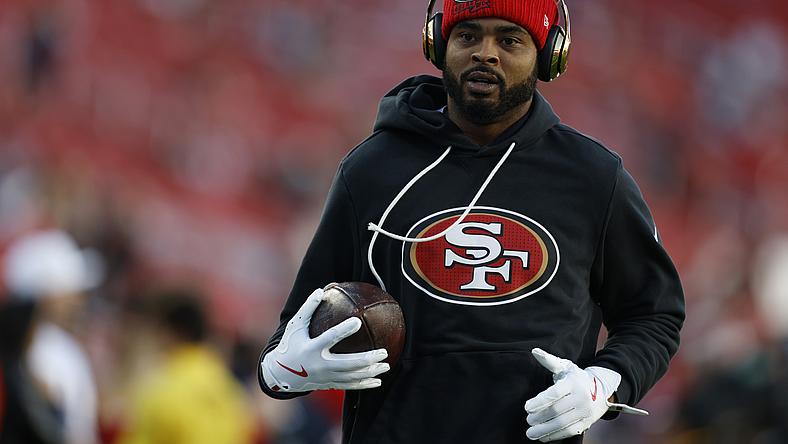
Jennings can take Kevin O’Connell’s passing offense to a new dimension. Now, if O’Connell can figure out how to run the football at a balanced clip, the enterprise will be cooking with gas.
The Viking Age‘s Anthony Miller noted this week, “As for Jennings, while his addition wasn’t 100 percent necessary for the Vikings to be successful, he certainly helps the room out. He was one of the top receivers on the San Francisco 49ers over the years, giving the Vikings what could be one of the best receiver trios in the NFL.”
“Justin Jefferson is the star of the group, of course, and Jordan Addison can do a bit of everything needed. Jennings is a good insurance policy if anything goes wrong with Addison, but he is also a reliable receiver to turn to when defenses focus heavily on Jefferson and Addison.”
Don’t Forget about Clean Slate of OL Health
But wait, there’s more.
Last year, the Vikings envisioned an offensive line, from left to right, with Christian Darrisaw, Donovan Jackson, Ryan Kelly, Will Fries, and Brian O’Neill. The fivesome hardly played together. Injuries ruined everything.
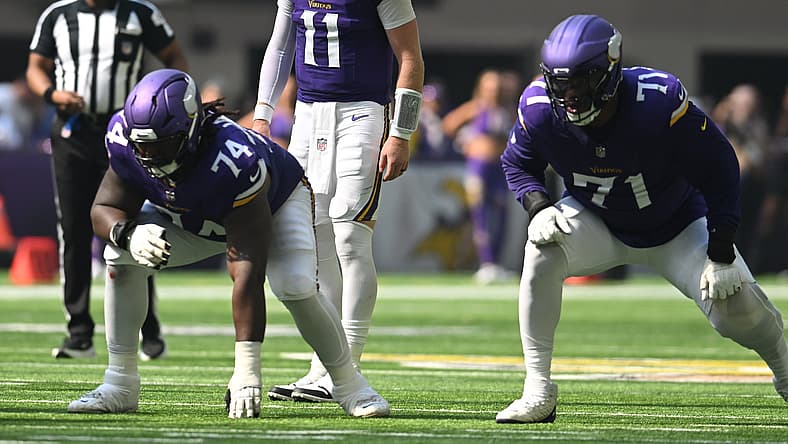
While injuries — yet again — are always possible, Minnesota is due for a season with limited offensive line injuries. Kelly is gone — he retired because of concussions — and Blake Brandel is in, but the outlook remains the same: the Vikings should have a Top 10 or Top 15 offensive line.
Plop that on top of Murray and Jennings in the house, and it’s no wonder BR is dreaming big about the purple team’s 2026 offense.

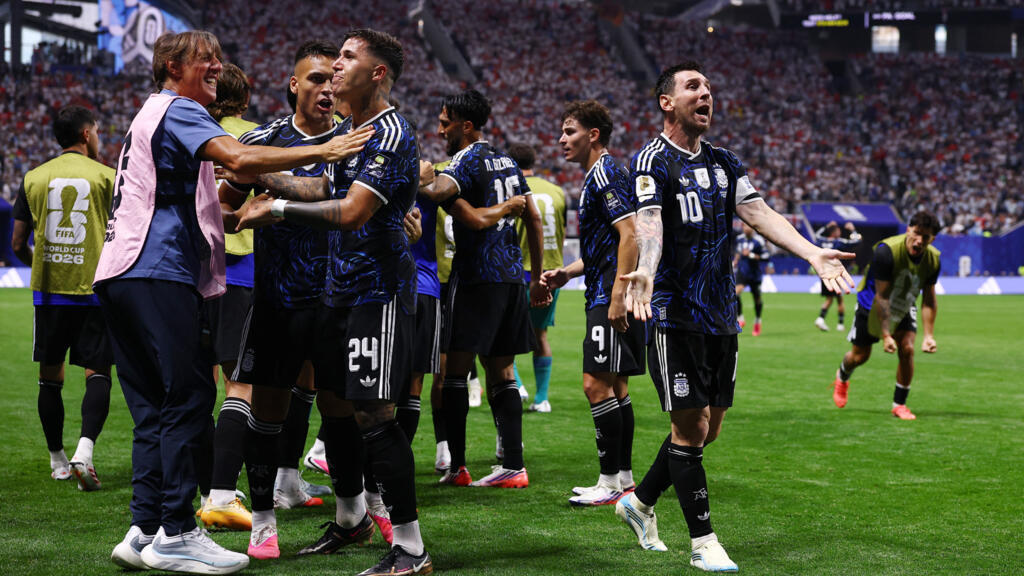

Argentina edged past England 2-1 on Wednesday in a dramatic World Cup semi-final in Atlanta to reach the final for the second time in a row, where they will face Spain.
Lautaro Martinez scored a 92nd minute winner as Lionel Messi inspired World Cup holders Argentina to a stunning comeback.
England had been on course to reach their first World Cup final since 1966 after Anthony Gordon fired them into the lead 10 minutes after half-time in the semi-final in front of 68,239 fans in Atlanta.
But the great rivalry between these nations has produced several memorable contests on the World Cup stage down the years and this will be remembered as the stuff of legends in Argentina as the South Americans denied England with two late sucker punches.
Messi set up Enzo Fernandez to fire in an 85th-minute equaliser and then, with extra time looming, crossed for substitute Lautaro Martinez to head in the winner in the second minute of stoppage time.
It was maybe not quite up there with Diego Maradona‘s legendary display in putting England to the sword in 1986, but the goals this time brought Argentina back from the dead and kept alive their hopes of winning back-to-back World Cups.
No team has retained the trophy since Brazil in 1962, and now Messi will become just the second player after Brazilian great Cafu to appear in three World Cup finals.
The game will take place at the MetLife Stadium on Sunday in New Jersey, as the first 48-team World Cup boils down to a controntation between the reigning champions of Europe and South America.
Read moreGolden era ends for Deschamps’ France as Midas touch deserts Les Bleus
Messi had waited until the age of 39 to get the chance to play against England, and now he will face Spain for the first time in a competitive game.
His career appeared to be complete when he dragged Argentina to glory in 2022 in Qatar, but he is clearly not done yet.
England, though, will have huge regrets as they head to Miami to play France in Saturday’s third-place play-off, a game neither team will want to contest.
The prospect of a first World Cup final appearance since their sole triumph 60 years ago was a momentous one, and they were so close, but will live to regret sitting back after Gordon’s opener.
The key men for Thomas Tuchel’s side during this campaign have been Jude Bellingham and captain Harry Kane, yet they failed to deliver on this occasion, and England’s players slumped to the turf at full time.
Tuchel’s risky defensive bet
Given the deep-rooted rivalry between these nations, this was always likely to be a game with an edge and there was a tangible feeling of tension in the Mercedes-Benz Stadium.
Argentina’s players were clearly fired up, partly by a determination to hold onto their World Cup crown but also by a sense of what this fixture means.
That translated into a niggly contest pockmarked by fouls in the first half, including Elliot Anderson being booked for scything down Messi.
There were no real chances to speak of in the first half, but England struck in the 55th minute.
Kane was involved in the build-up as the ball eventually came to Morgan Rogers on the right, and he whipped in a low cross towards the back post where Gordon stole in front of Nahuel Molina to score.
Watch moreSpain dominate France and advance to World Cup final
But this was the stadium where Argentina produced a stunning comeback from 2-0 down to beat Egypt in the last 16, and they were not done.
They threw everything at their opponents, as Jordan Pickford made a great save from a Nico Gonzalez header, and Alexis Mac Allister was then denied by the post in the 76th minute.
Fernandez was denied from range by Pickford, but moments later he equalised, controlling a Messi pass on the edge of the area and letting fly past the goalkeeper.
Argentina smelled blood, and Mac Allister again hit the post before England failed to clear and Lautaro Martinez headed in the winner from an exquisite Messi cross to spark chaotic scenes of celebration and leave England completely deflated.
(FRANCE 24 with AFP)


Accor Stadium will play host to Saturday’s
Round 20 NRL game between Canterbury Bulldogs and
Wests Tigers. The game kicks off at 7:35 pm with Canterbury Bulldogs heading into the game as favourites with the bookmakers. Continue reading for our in-depth preview of the Canterbury Bulldogs vs.
Wests Tigers
game and give you our free tips and bets.
When: Saturday July 18, 2026 at 7:35 pm
Where: Accor Stadium
Bet 💰: Bet On This Match HERE
Canterbury Bulldogs vs Wests Tigers Odds
Canterbury Bulldogs vs Wests Tigers Preview
The Tigers produced an encouraging opening half against the Warriors before defensive lapses proved costly, conceding 11 linebreaks in a result that highlighted the work still required. Benji Marshall’s side has shown enough with the ball to trouble opponents but must improve its defensive resilience.
Canterbury enters as favourite after another consistent campaign built around discipline and field position rather than attacking flair. The Bulldogs may not dominate through the middle as comprehensively as New Zealand did, giving the Tigers opportunities to stay in the contest. If Wests can tighten its defence, this could be closer than the betting suggests.
Canterbury Bulldogs vs Wests Tigers Teams
Bulldogs team: 1. Connor Tracey 2. Jacob Kiraz 3. Matt Burton 4. Enari Tuala 5. Jethro Rinakama 6. Sean O’Sullivan 7. Lachlan Galvin 8. Max King 9. Bailey Hayward 10. Leo Thompson 11. Jaeman Salmon 12. Jacob Preston 13. Harry Hayes 14. Kurt Mann 15. Josh Curran 16. Jack Underhill 17. Lipoi Hopoi 19. Marcelo Montoya 20. Gordon Chan Kum Tong 21. Viliame Kikau 22. Jed Reardon 23. Stephen Crichton
Tigers team: 1. Jahream Bula 2. Sunia Turuva 3. Heamasi Makasini 4. Starford To’a 5. Jeral Skelton 6. Jarome Luai 7. Adam Doueihi 8. Terrell May 9. Jared Haywood 10. Fonua Pole 11. Samuela Fainu 12. Sione Fainu 13. Alex Twal 14. Latu Fainu 15. Ethan Roberts 16. Alex Seyfarth 17. Josese Lanyon 18. Faaletino Tavana 19. Kit Laulilii 20. Junior Tupou 21. Javon Andrews 22. Apisai Koroisau

The 2026 World Cup is hurtling towards a blockbuster final between Argentina and Spain, who will be praying not to suffer any untimely injury setbacks in their quest for global glory.
Some of the big injury sagas heading into the tournament have come to happy endings, with Lamine Yamal now a regular fixture for Spain after returning to full fitness, while injury-ridden Neymar was able to get some minutes in what will be his final World Cup, before Brazil’s elimination at the hands of Norway.
However, there are still some notable worries heading into the World Cup final, while France and England will also be sweating some issues ahead of the third-place play-off.
See below for a full list of key injuries at this year’s World Cup.
Who is injured for the World Cup final?
Yeremy Pino (Spain)
The Crystal Palace winger suffered a collarbone injury against Uruguay and there were fears he could miss the rest of the tournament.
Those were allayed when Spain said X-rays showed Pino had not sustained a fractured collar bone but an acromioclavicular sprain.
However, he is yet to play any minutes for Spain since the group-stage injury. It is unlikely he will return for the final.
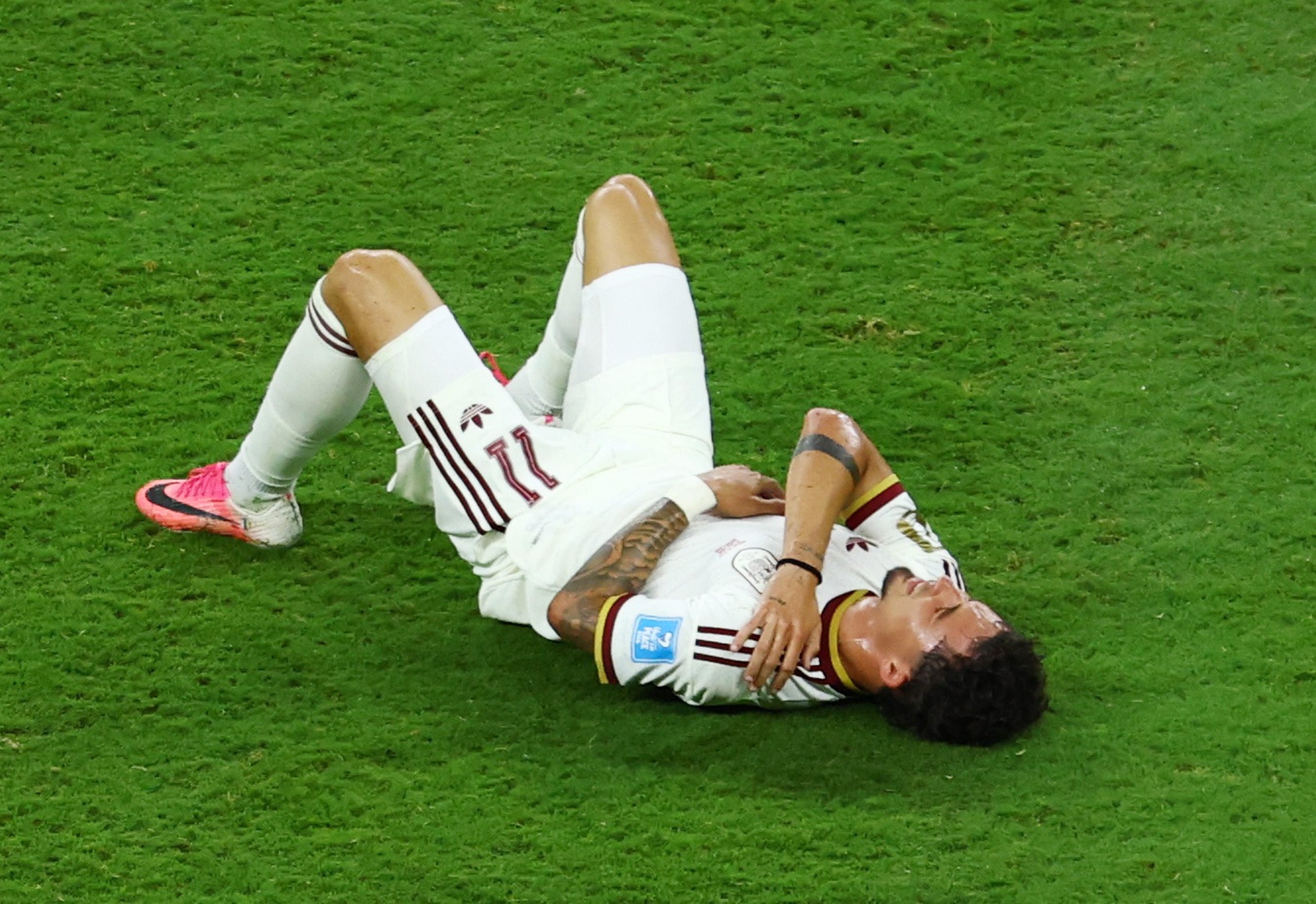
Victor Munoz (Spain)
New Liverpool signing Munoz has been absent for the entirety of the World Cup so far after sustaining a calf injury in the build-up to the tournament. He then suffered a further setback when he was diagnosed with another muscular injury. He will be absent for the final.
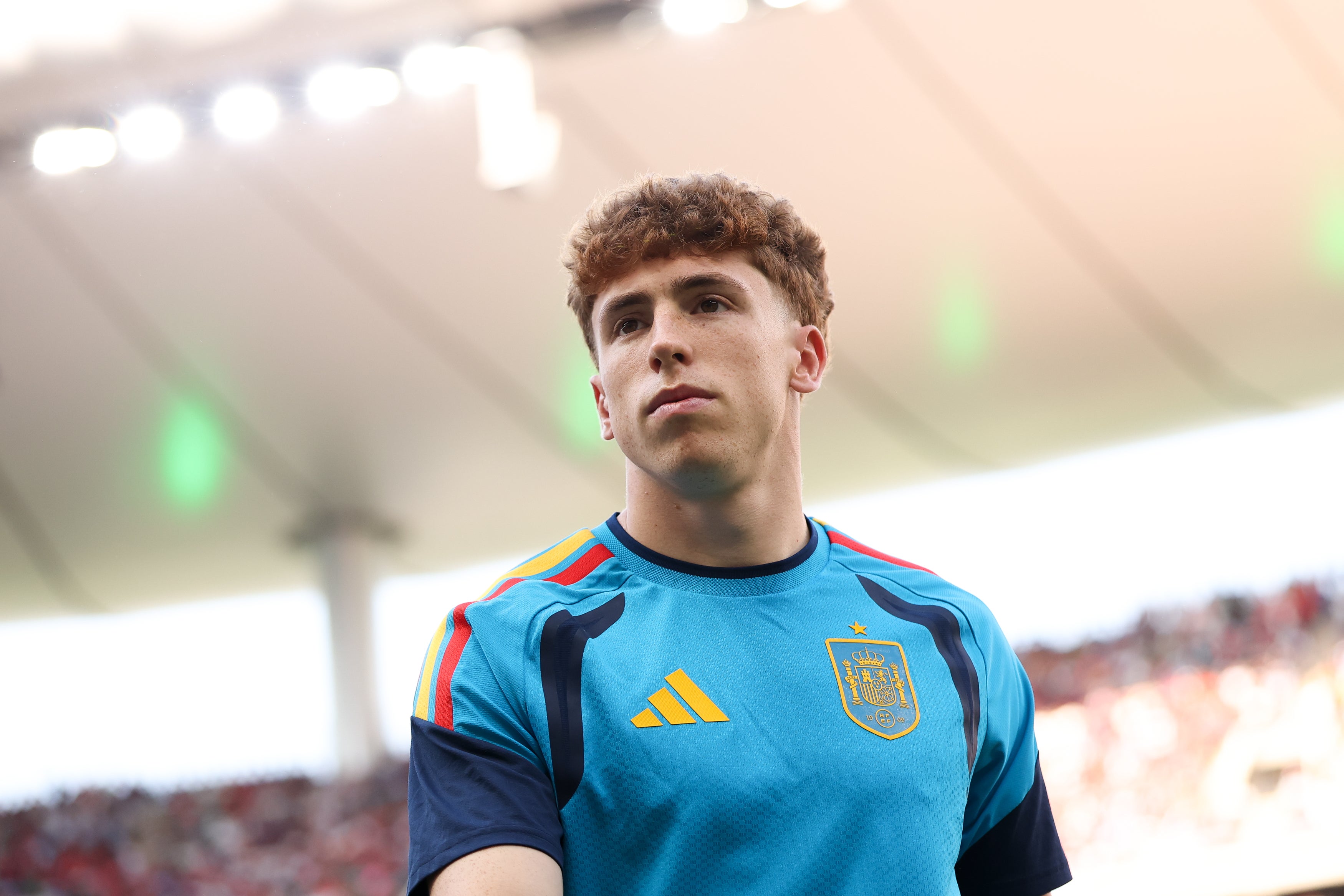
Facundo Medina (Argentina)
Argentina have been dealing with a significant defensive injury absence after Medina hobbled off with a calf problem in their last-32 clash win over Cape Verde.
Medina, who started three of Argentina’s first four World Cup outings, has not featured since that extra-time win and faces a race against time to be fit for the final.
Nicolas Tagliafico will hope to keep his place at left-back after helping Argentina navigate their way through the knockouts.
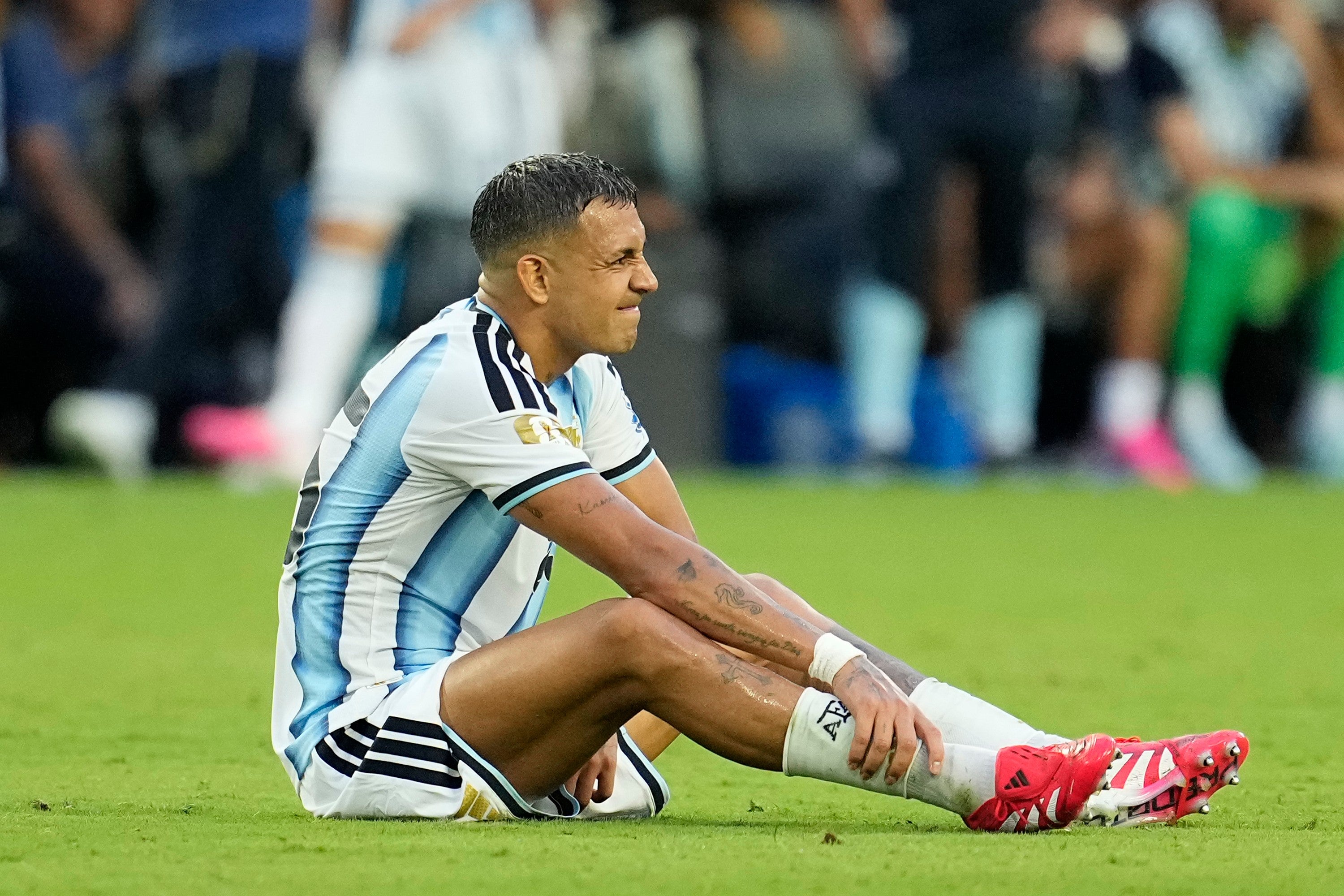
Who is injured for the World Cup third-place play-off?
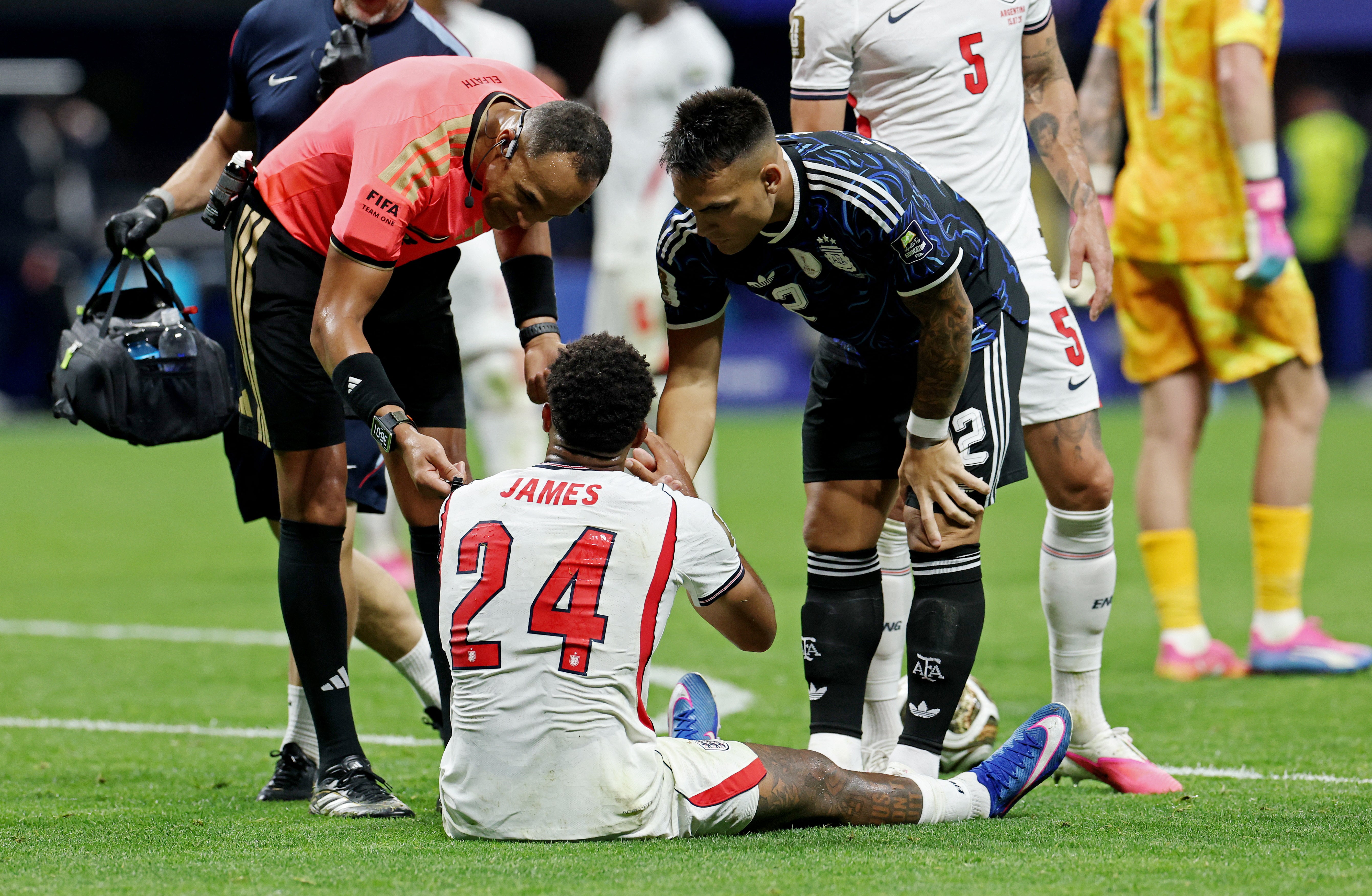
Reece James (England)
England will be left to sweat over potentially another injury setback for Reece James after the defender was brought off against Argentina in their World Cup semi-final.
James, who has missed much of the tournament with a hamstring problem, went down in the 80th minute and required treatment from the England team doctor.
It was not clear whether he was cramping up or had sustained a fresh setback, but as he made his way towards the byline to receive treatment, Thomas Tuchel was quick to make sure no risks were taken.
James may now be a doubt to face France on Saturday.
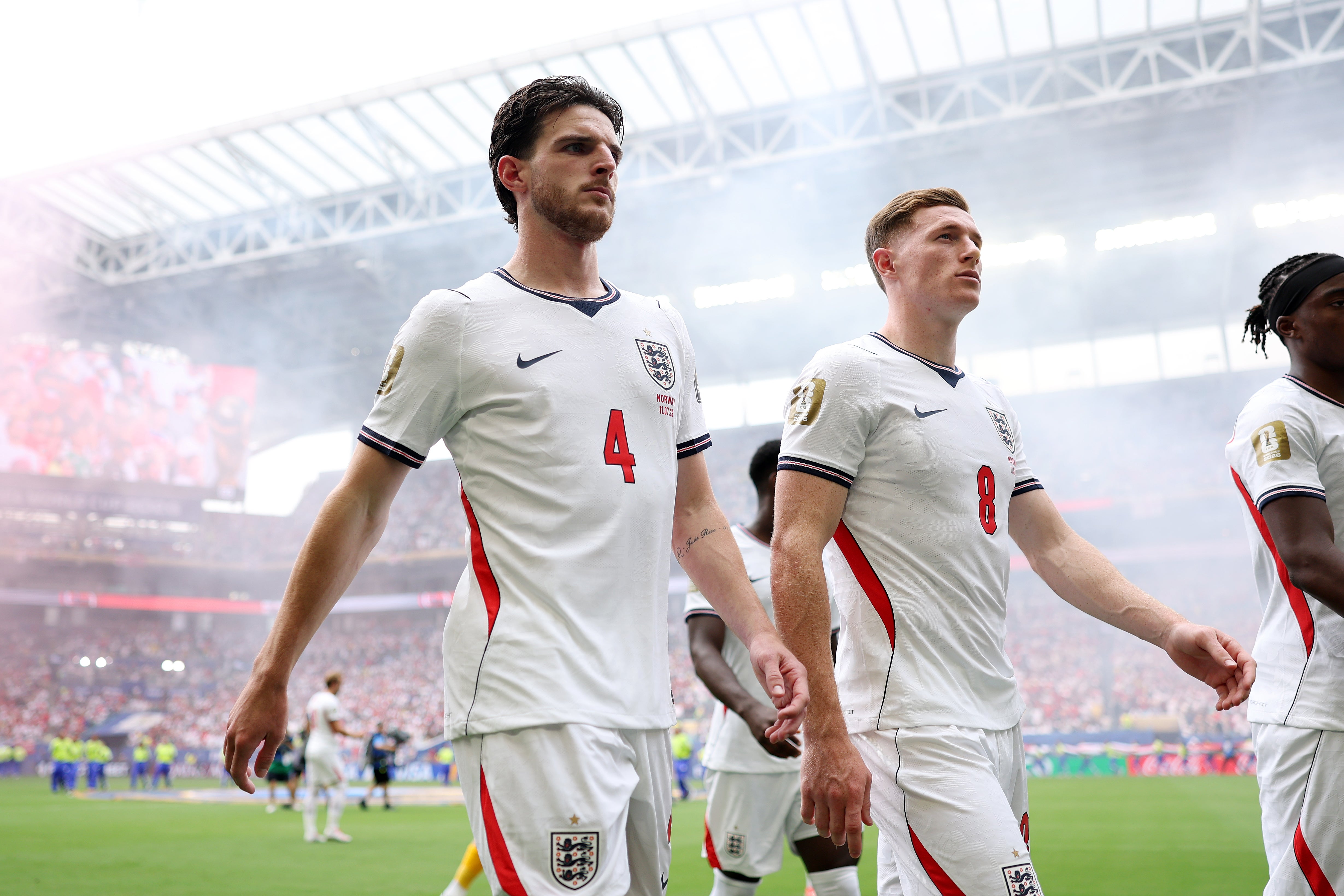
Declan Rice (England)
Rice’s tournament has been hampered by injuries with neural back pain forcing England to manage his workload. This saw him miss England’s group-stage finale against Panama, but he has started both knockout games since.
He was then struck down by illness ahead of the quarter-final with Norway, and despite recovering enough to make the starting line-up after missing two days of training, he looked out of sorts and was replaced at half-time.
But in a huge boost for England going into their semi-final with Argentina, Rice was declared fit to start and has confirmed he is “back to normal” and “100 percent now”. He should be fit to face France in the third-place play-off.
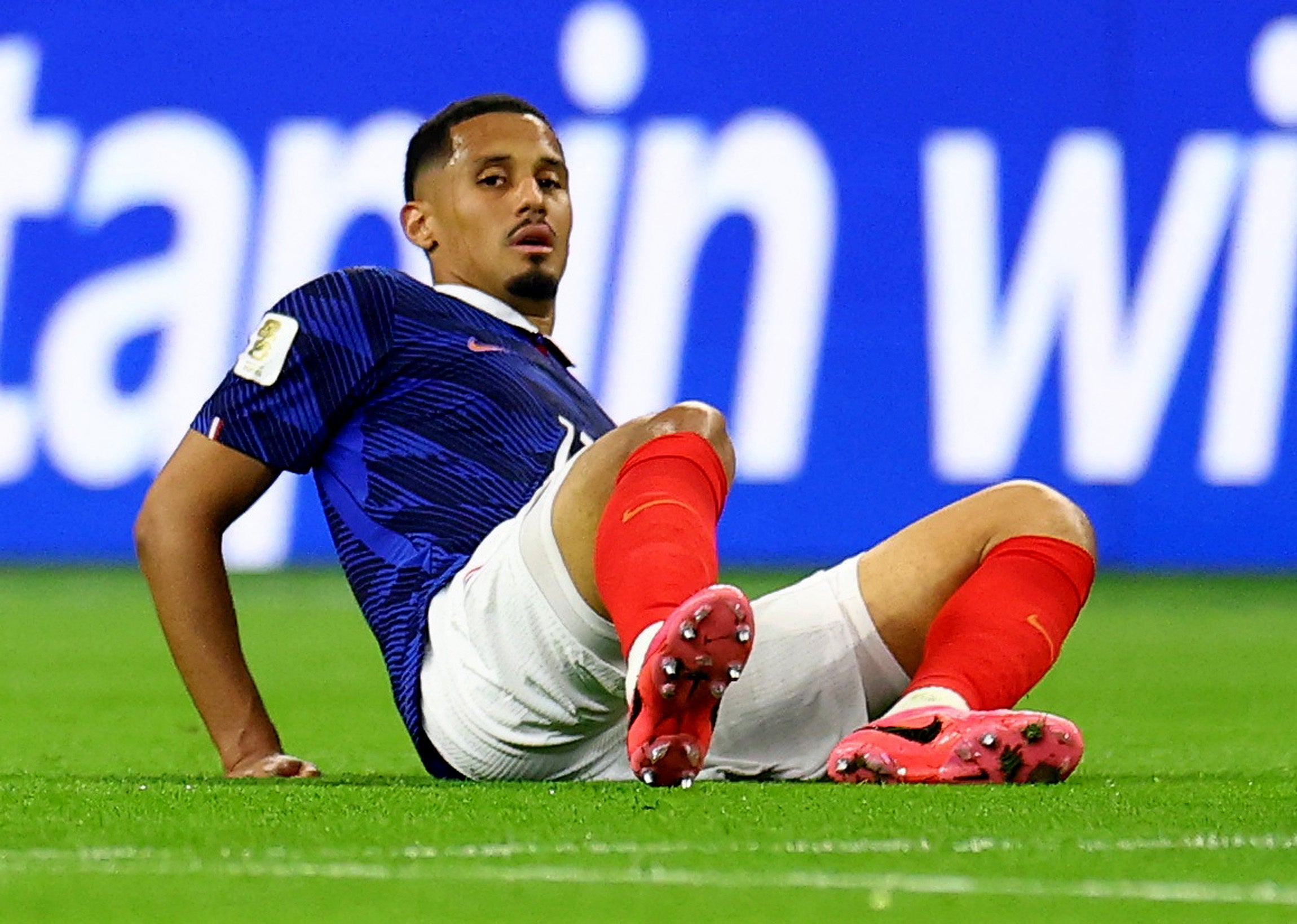
William Saliba (France)
Everything went wrong for France in their semi-final defeat to Spain, not least the loss of influential defender William Saliba to injury.
Saliba went down untouched on the ball and immediately looked dejected, with it quickly becoming apparent the Arsenal man would not be able to continue.
He faces a race against time to be fit for France’s third-place play-off on Saturday but Arsenal will fear their star centre-back has suffered a longer-term injury, whose 2025/26 season was maligned by numerous fitness setbacks which saw him miss a combined 12 matches for club and country.
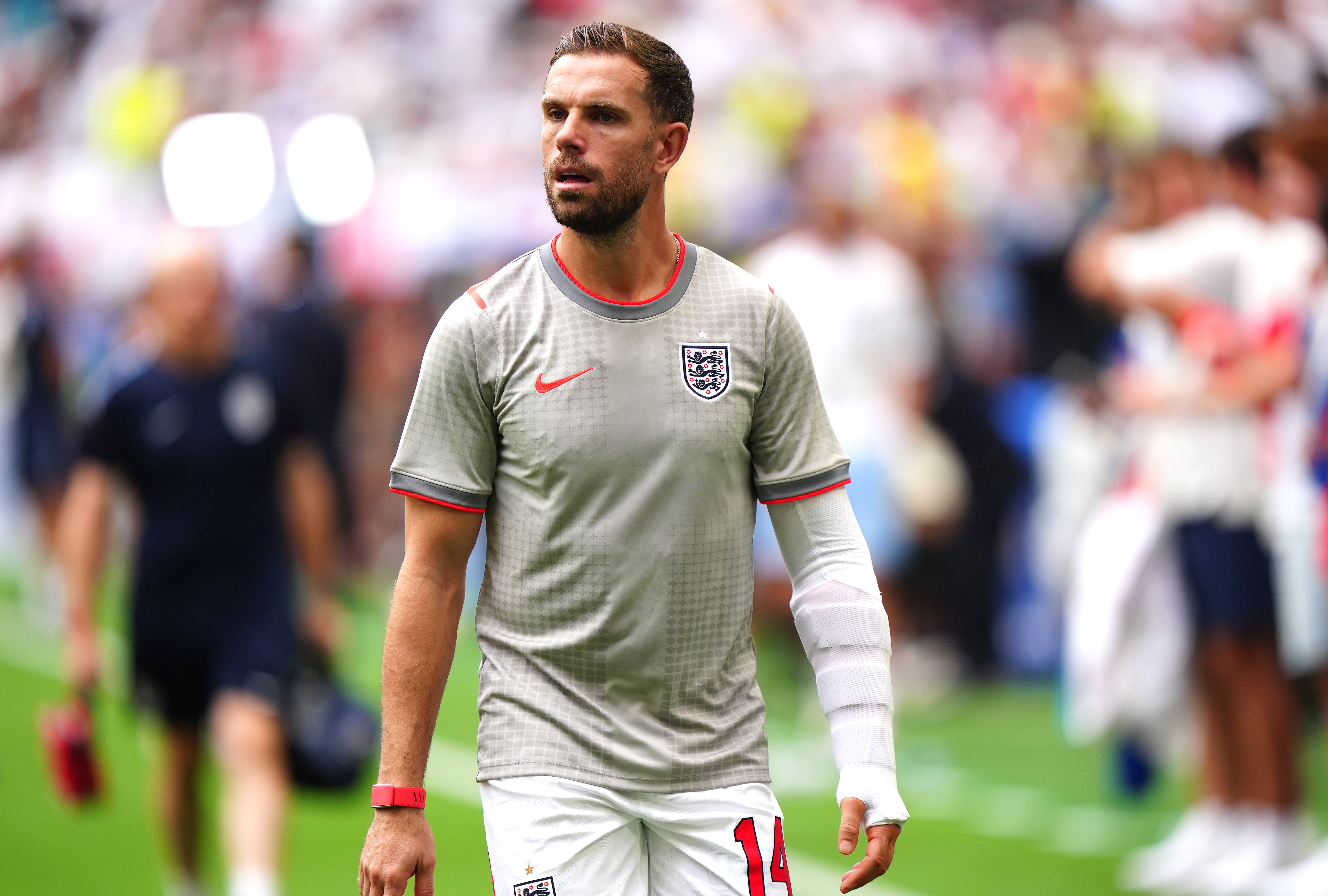
Jordan Henderson (England)
Brentford midfielder Henderson was thought to be ruled out for the World Cup after sustaining a freak injury in the aftermath of England’s win over Mexico – but that may not be the case.
Henderson leaped over the advertising hoarding but fell awkwardly and snapped his arm. He underwent surgery before returning to England’s Kansas City base, opting to remain with the squad until the end of the campaign rather than go home.
However, in a stunning development, Henderson was included among the substitutes to face Norway in the last-eight and says he will “cross the bridge” of potentially featuring in the semi-finals “when we come to it”.
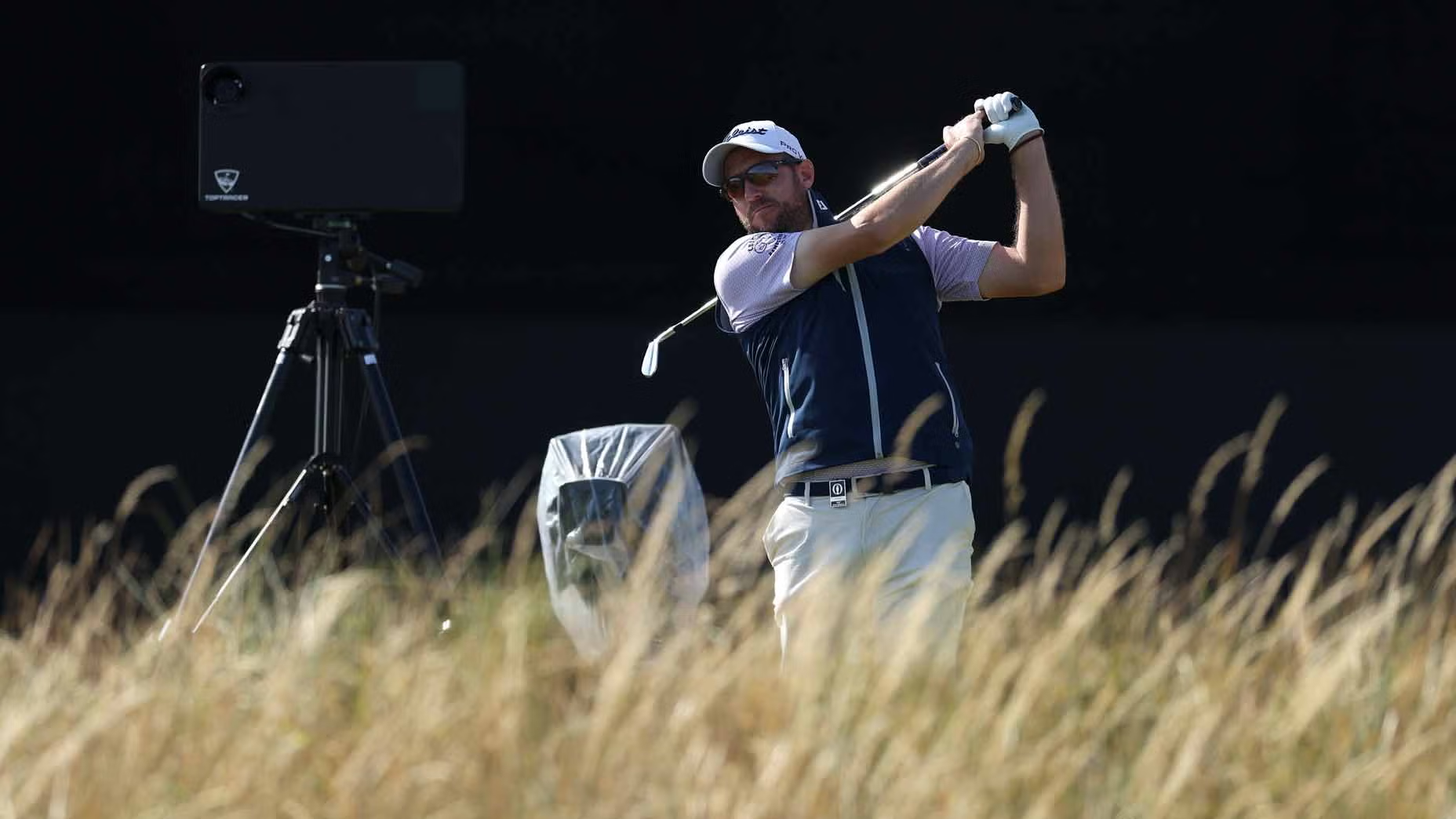

The more I’ve been staring at this week’s Open Championship tee times, the more one name sticks out:
Matthew.
In part that is because the trendiest pick at Royal Birkdale this week is the red-hot World No. 3 Matthew Fitzpatrick, who will tee it up in his home country playing arguably the best golf of his career.
But honestly it’s because there are a bunch of other English Matthews hanging around, too — and each has his own compelling reason to sneak up on the field.
Let’s kick things off with Matthew Baldwin, because that’s exactly what this Open has chosen to do. Plenty has been written about hometown hero Tommy Fleetwood returning to Southport, but he’s not the only one: Baldwin grew up in Southport too, a few years Fleetwood’s senior, and is a member at Royal Birkdale. He qualified into the event at Dundonald Links last month and will hit the opening tee shot on Thursday just after 6:30 a.m. — half six, if you ask the locals.
Baldwin told the DP World Tour that this week will be a dream come true in many ways; while he’s played three other Opens, including two in England’s northwest, the last two times the event came to Birkdale he attended as a fan.
“I thought realistically it would be my last chance to [qualify] he told the DPWT. “I wouldn’t say I put more pressure on myself than I normally would, but I knew the incentive was there, shall we say.”
Then there’s Matthew Jordan, who knows the feeling of playing an Open at his home course: the Hoylake native was the local legend at Royal Liverpool in 2023, where he hit the opening tee shot and finished the week a marvelous T10. Jordan followed that up with another T10 at Troon the following year, establishing himself as something of an Open specialist.
He told bunkered just how familiar Birkdale is — “it just feels like home” — and recounted how well he knew the area from playing golf as a junior. Let’s see how he fares this week, just a short train ride from home.
Matthew Southgate is from slightly further away; he grew up in Southend-on-Sea just east of London. But he has good memories from Birkdale; his T6 finish in 2017 is the high water mark for his major-championship career to this point. He made it into the Open field via Final Qualifying for a remarkable sixth time and told the Open the competition “seems to bring the best out of me.”
The bad news for Southgate backers is that he’s missed four of his last five cuts entering this week. The good news is that fifth tournament was an eight-shot win at the Swiss Challenge on the HotelPlanner Tour. His “best” is evidently quite a high level. (More good news: Southgate has enlisted ex-Fitzpatrick caddie Billy Foster for the week.)
Finally there’s Matthew Wallace, the most well-known and highest ranked of our four English mates. Wallace lives outside of London, near the Wentworth abodes of Justin Rose and Rory McIlroy, and while I’m not sure of any Birkdale good-vibe connection, Wallace has logged podium finishes on both the PGA and DP World Tours each of the last two years, suggesting the 36-year-old still has game that’ll travel.
If he can beat all the other Matthews, he might just win the whole damn thing.
*Let’s also send well wishes to Matthew McCarty, the American lefthander, and Mateo Pulcini, the Argentinian amateur. Though given Wednesday evening’s World Cup result, perhaps he and the Matthews should give each other a wide berth.
“>

Inflation at 3.2% Pushes Bank of Korea Into First Hike Since 2023

Dad’s desperate plea for ex-wife ‘to do the right thing’ after she abducts children

Microsoft Stock Rises Over 3% as Investors Rotate Into AI Software Names Ahead of July 29 Earnings Day


-

 Fashion7 days ago
Loro Piana Fall 2026 Enters Houston’s Art Scene
-

 Fashion5 days ago
Weekend Open Thread: Nutriplenish Leave-In Conditioner
-
 Sports6 days ago
2026 Genesis Scottish Open Thursday TV coverage: Round 1
-

 Sports6 days ago
Super Eagles star Moses Simon opens up on Liverpool transfer regret
-

 Tech7 days ago
Character.AI enters the microdrama arena with its own productions, but there’s a twist
-

 Politics15 hours ago
Young campaigners urge incoming PM to act on outdoor junk food ads
-

 News Videos1 day ago
XRP BOMBSHELL… XRP OMBOARDED FOR TRANSACTIONS!!!
-

 Tech2 days ago
Get Your ESP32 Sunny Side Up With This Solar Dev Board
-

 Tech1 day ago
Dark Secrets Emerge When Jailbreaking LLMs
-
 Sports6 hours ago
New Cornerback Enters Vikings Trade Rumor Mill
-
 Entertainment10 hours ago
Disney’s Most Ambitious Failed Star Wars Attraction Is Coming to SDCC
-

 Tech7 days ago
Level Infinite Launches Gangstar Mirage City in India with Pre-Registrations
-
 NewsBeat7 days ago
Major update after Huntingdon train attack as man enters plea
-

 News Videos2 days ago
how to make coin bank box with cardboard #scienceproject #money #diy #shorts
-
 Tech2 days ago
Cloudflare Precursor Watches Your Mouse and Keyboard To Decide If You Are Human
-
 Entertainment8 hours ago
Vicki Gunvalson Defends Discussing Heather Dubrow’s Money
-

 NewsBeat5 hours ago
Watch: Is Donald Trump facing a popular backlash on immigration?
-
Crypto World2 days ago
Ripple, Coinbase, Circle Join Linux x402 Foundation to Help Shape AI Payments
-
 Sports3 hours ago
Michigan officials not expected to discuss AD Warde Manuel at Thursday meeting
-
 NewsBeat5 hours ago
Firefighters issue update on Dovestone moorland blaze as fire enters fourth day
You must be logged in to post a comment Login