

Business
why the biggest wins are still to come


The UK-India trade deal came into force this week carrying a £4.8bn-a-year prize. But for Sukhpal Ahluwalia, the entrepreneur who built Euro Car Parts from a single Wembley shop into a business he sold for £280m, the agreement itself is not the achievement. The achievement is what British businesses now build on top of it.
The Comprehensive Economic and Trade Agreement, signed last July, entered into force on 15 July after years of stop-start negotiation. It is one of the most significant trade agreements India has ever signed and the UK’s largest since Brexit, projected by the government to add £4.8bn a year to UK GDP and £25.5bn to annual bilateral trade in the long run.
Ahluwalia, who now chairs GSF Car Parts and property group Dominus, has spent decades building businesses across both markets. His conclusion is blunt: it is businesses, not agreements, that create long-term growth. Yet the capital flows, joint ventures and institutional links that two economies of this size should have still do not exist at anything like the scale they could.
Too often, he argues, the UK-India relationship has been viewed primarily through the lens of trade. The greater opportunity lies in creating a genuine two-way exchange of investment, talent and innovation.
For smaller firms, the gap between opportunity and uptake is stark. Just 17 per cent of UK small businesses currently export at all, and of those only 12 per cent sell into India, a shortfall that initiatives such as Great British Pitch India, which put more than 40 export-ready firms in front of Indian buyers last month, are designed to close.
Nor is the hard work over in Westminster. MPs on the Business and Trade Committee have already warned that billions in tariff savings could be put at risk by plans to cut almost 40 per cent of the trade staff tasked with helping businesses expand into India. Initial tariff savings for UK exporters are estimated at around £400m a year, rising to as much as £3.2bn annually within a decade, but only if firms are supported to navigate India’s administrative complexity.
The timing, Ahluwalia believes, could hardly be better. With the UK gearing up for a new Prime Minister, the incoming government arrives on a wave of momentum and has the chance to put UK-India relations at the centre of its growth agenda from day one, rather than letting the relationship drift down the list of priorities.
There is precedent for treating the agreement as a beginning rather than an end. Advisers noted during negotiations that external pressures helped focus minds on completing long-stalled post-Brexit deals, and the same urgency now needs to carry through into implementation.
Ahluwalia’s core lesson from decades straddling the two markets is a simple one. People, not policy, make growth happen. Governments can create the framework, but it is businesses, trust and long-term partnerships that turn trade agreements into lasting economic growth.
The deal is done. The biggest win is yet to come, and it will not be signed in a ceremony. It will be built, deal by deal and partnership by partnership, by the businesses willing to do the work.

Amy Ingham
Amy is a newly qualified journalist specialising in business journalism at Business Matters with responsibility for news content for what is now the UK’s largest print and online source of current business news.


UK businesses importing steel, aluminium, cement, fertiliser or hydrogen products face a new compliance burden from 1 January 2027, when record-keeping requirements for the UK’s Carbon Border Adjustment Mechanism (CBAM) take effect. And in a detail that will catch many smaller firms off guard, using a customs broker or freight forwarder does not pass the responsibility on.
CBAM is a new tax designed to tackle so-called carbon leakage, ensuring that certain highly traded, carbon-intensive goods imported into the UK face a comparable carbon price to equivalent goods produced here. The mechanism, already a sticking point in the UK’s trade negotiations with India, is part of the government’s push towards net zero by 2050.
For the thousands of SMEs that import components, materials or finished goods in the five affected sectors, the practical impact starts well before any tax is due.
Records first, tax later
From 1 January 2027, any business importing CBAM goods must keep records relating to those imports, and keep them for six years. Businesses that fail to keep adequate records may be liable for penalties, so HMRC’s message is clear: find out what you need to do beforehand and get it right.
Crucially, outsourcing your imports offers no escape. If a customs broker, freight forwarder, haulier or tax agent completes the import declaration on your behalf, you may still be classed as the importer and therefore responsible for meeting CBAM obligations.
The record-keeping duty applies regardless of whether a business will ultimately need to register for the tax. Full details of who needs to register and what records to keep are on GOV.UK.
Registration opens in 2028
Registration for CBAM opens on 1 January 2028. Businesses must register with HMRC if the value of CBAM goods imported over the previous 12 months exceeds the £50,000 threshold, or if they expect to import above it within the next 30 days.
That threshold is low enough to capture plenty of small manufacturers, builders’ merchants, fabricators and construction firms, not just large industrial importers.
Registered businesses must submit a return, even if there is no tax to pay, and settle any liability for the 1 January to 31 December 2027 accounting period by 31 May 2028.
HMRC says further guidance on CBAM rates, default emissions values and the monitoring, reporting and verification of emissions will be published in the coming months.
Another layer for stretched small firms
The timing will test smaller importers. Research shows SMEs are already falling behind on sustainability reporting, with just one in eight classed as net zero ready and two-thirds unfamiliar with basic emissions categories.
CBAM also lands amid a wider debate about carbon pricing, with plans to align UK carbon rules with the EU’s scheme drawing both criticism over costs and support from industries hoping to sidestep the EU’s own border levy.
For now, the advice for any business importing goods in the five sectors is simple. Check on GOV.UK whether your goods are in scope, work out whether you or your agent counts as the importer, and get your record-keeping in order before January 2027. Six years is a long time to keep paperwork, but a penalty from HMRC will feel longer.

Jamie Young
Jamie Young is Senior Reporter at Business Matters, covering SME finance, employment law and Westminster policy since 2016. He has reported on every Budget and Autumn Statement since 2018, helped make sense of the ‘covid era’ and the bounce-back loan scheme from launch through the fraud investigations, and broke the magazine’s coverage of the 2024 late-payment reforms. He joined Business Matters straight from completing his BA in Administration from Exeter University and is NCTJ-qualified. Reach him at jyoung@cbmeg.co.uk
Business
Exxon Mobil Shares Slip 0.40% as Oil Market Volatility and Middle East Tensions Weigh on Energy Stocks
Exxon Mobil shares closed lower Thursday, falling 0.40%, or 58 cents, to $144.51, as the energy giant continued to trade in a volatile range shaped by swings in crude oil prices and renewed geopolitical tensions in the Middle East. The stock slipped further in premarket trading, down 0.25% to $144.15, signaling continued caution among investors heading into the next session.
The modest pullback comes as Exxon and the broader energy sector navigate one of the more turbulent stretches of the year for crude markets, with prices whipsawing in response to developments in the Strait of Hormuz, a critical corridor for global oil shipments. Brent crude, which had averaged more than $100 a barrel in April and May during the height of U.S.-Iran tensions, fell to roughly $85 in June after the strait reopened following a ceasefire agreement. That retreat in oil prices had pulled Exxon shares down from the mid-$150s into the $136 to $141 range by late June and early July.
The collapse of that ceasefire in early July, marked by renewed U.S. airstrikes on Iranian targets and attacks on commercial vessels in the region, sent Brent crude back toward $79 a barrel and West Texas Intermediate above $74, providing a sharp tailwind for energy stocks broadly. Oil prices climbed further this week to a one-month high as the U.S. and Iran continued to trade attacks in the strait, a dynamic that has kept energy investors on alert given the direct relationship between crude prices and Exxon’s earnings potential.
Exxon shares have traded within a wide 52-week range of $105.53 to $176.41, reflecting the scale of the swings the stock has experienced amid the shifting geopolitical backdrop. The stock reached its 52-week high earlier this year before pulling back alongside crude benchmarks, then rebounding in recent sessions as tensions flared anew in the Middle East.
Wall Street analysts have offered a mixed but generally constructive outlook on the stock in recent weeks. JPMorgan lowered its price target on Exxon to $158 from $173 following the company’s second-quarter earnings release, while maintaining an Overweight rating on the shares. TD Cowen similarly cut its target to $155 from $172 earlier this month. Other firms have taken a more neutral stance, with Goldman Sachs reaffirming a Hold rating and maintaining its price target at $157, citing Exxon’s second-quarter outlook as broadly in line with consensus expectations. Mizuho Securities also stuck with a Hold rating on the stock, while UBS and Bernstein both issued Buy ratings earlier this month, and Barclays and Wells Fargo have maintained their own bullish positions on the shares.
Exxon’s full second-quarter earnings report is scheduled for July 31, a date analysts and investors are watching closely as the next major catalyst for the stock. Projections call for earnings per share of approximately $3.56 on revenue near $98.7 billion, though estimates vary depending on how analysts account for timing effects and one-time items tied to the company’s ongoing corporate restructuring. Some estimates have pointed to a sharp year-over-year increase in earnings expectations for the upcoming quarter, driven in large part by the recent run-up in oil prices tied to the Middle East conflict. One recent analysis estimated that higher oil prices alone could add roughly $3.7 billion to Exxon’s second-quarter earnings.
The trajectory of crude prices remains the dominant external variable shaping Exxon’s near-term performance. The U.S. Energy Information Administration’s most recent Short-Term Energy Outlook, released July 7, forecasts Brent crude averaging $82 a barrel for the full year in 2026 before declining to $65 in 2027, a projection that would suggest today’s elevated prices may not hold over the longer term. OPEC, meanwhile, cut its 2026 oil demand growth forecast again this month while raising its outlook for 2027, adding another layer of uncertainty to the demand side of the equation even as OPEC+ continues its gradual unwinding of prior production cuts, a move that could add further supply pressure to the market.
Beyond the near-term swings in crude prices, Exxon has continued to advance several longer-term strategic initiatives. The company completed its redomiciliation from New Jersey to Texas on July 1, with ExxonMobil Holdings Corporation now serving as the publicly traded parent company in place of the New Jersey-incorporated Exxon Mobil Corporation. Shares continue to trade under the same ticker symbol, XOM, on the New York Stock Exchange, and shareholders were not required to take any action as a result of the change, which was approved at the company’s 2026 annual meeting.
Exxon also recently reported hitting a 40-year production record, driven in part by a $1 billion investment commitment to the Usan Infill Project in Nigeria, underscoring the company’s continued push to grow output even as it navigates a challenging pricing environment. The company’s Permian Basin and Guyana operations remain central to its longer-term growth strategy, with executives pointing to both regions as sources of capital-efficient volume and earnings growth in the years ahead. Investors are also monitoring progress on Exxon’s $20 billion share buyback program and the tax implications of the Texas relocation as additional factors likely to influence the company’s financial results going forward.
Exxon’s stock performance this week places it roughly in line with peers in the integrated oil and gas sector. Chevron shares were trading around $179.81, down 1.08%, while Shell was among the few majors trading higher, up 0.81% to $85.09. BP shares slipped 0.21% to $41.31, and Suncor Energy fell 1.15% to $60.34.
With crude prices remaining highly sensitive to developments in the Strait of Hormuz and the broader U.S.-Iran standoff, analysts said Exxon’s stock is likely to continue trading with elevated volatility in the weeks ahead, particularly as the company approaches its end-of-month earnings report. For now, Thursday’s modest decline reflects a market still working to price in the competing forces of geopolitical risk, shifting supply forecasts and the company’s own long-term production growth plans.
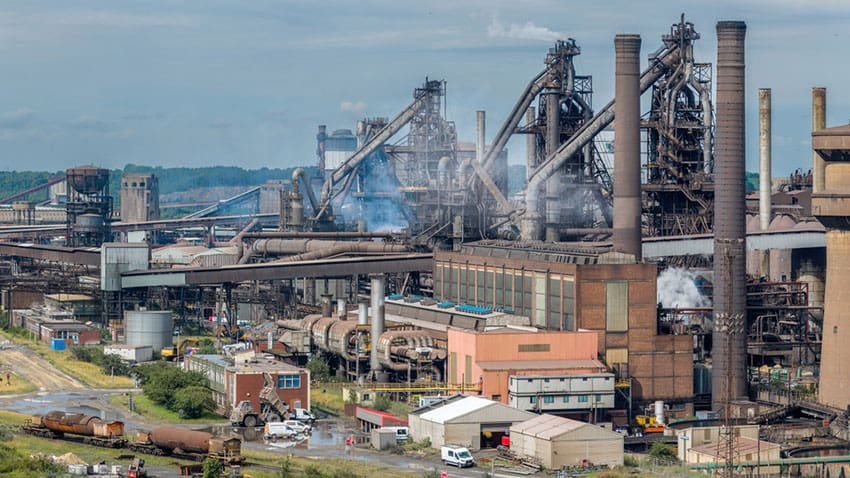
British Steel has been taken into public ownership, with ministers arguing the only alternative was to let the country’s last producer of virgin steel go bust. For the thousands of smaller firms that rely on Scunthorpe’s output, the move ends years of uncertainty, but leaves taxpayers footing a running bill of about £1.3 million a day.
The government said nationalisation would protect jobs and safeguard “a vital national capability”. The Scunthorpe works employs roughly 2,700 people and supports many more businesses across north Lincolnshire and the wider supply chain.
It follows Wednesday’s vote in Parliament to pass legislation allowing the steel industry to be brought into public ownership where a public interest test is met, completing the public ownership plan Sir Keir Starmer confirmed in May.
The government had already taken control of day-to-day operations last year. But with China’s Jingye Group still the legal owner, ministers had limited freedom to decide the plant’s future. Full ownership removes that constraint while keeping the blast furnaces lit.
Business Secretary Peter Kyle told the BBC the government would need to cover running costs “for the immediate future”, with an independent assessor to determine whether Jingye, which is seeking compensation, should be paid based on the value of the company.
“But let me be really clear, there is an alternative here – that we let this business go bust,” he said. “If that business disappears, we will lose the ability for primary steel production in our country, we will become entirely dependent on global supply.”
The economics are stark. Jingye previously said the business was losing £700,000 a day, while a March report from the National Audit Office found the site was costing the government about £1.3 million a day, with no set budget, repayment schedule or end date.
Why pay it? Scunthorpe’s furnaces are the UK’s last source of virgin steel, made directly from iron ore. Lose them and Britain becomes the only G7 economy unable to produce it. Blast furnaces are designed to run continuously, and the remaining pair are elderly: Queen Anne opened in 1954, Queen Bess has been in blast since 1938. Once cooled, restarting them would have been financially prohibitive.
That matters well beyond north Lincolnshire. The plant makes grades of steel produced nowhere else in the country, much of it destined for Network Rail and the construction industry. An abrupt shutdown would have forced fabricators, builders and engineering firms onto imports, and jeopardised the redundancy reversal that followed plans to cut up to 2,700 jobs when the furnaces faced closure.
Customers seem relieved. Simon Boyd, managing director of Reid Steel, a Dorset structural steel manufacturer that buys thousands of tonnes from British Steel each year, said nationalisation “had to be done”. He told the BBC’s Today programme that Jingye had been “sabotaging the infrastructure” and the government “had to step in”.
Boyd said ministers would need to invest heavily and would not see a return for 10 to 20 years, but the company “now belongs to the British people”. A sale to private investors would have needed government support anyway, he added, and past deals have been seen to “benefit the private companies and not the British people”.
Unions agree: MPs were told last month that the cost of not saving Scunthorpe would have been “unfathomable”.
For SME steel buyers, the immediate message is continuity of supply. The longer game is less settled. Ministers still want all domestic steel made in cheaper, cleaner electric arc furnaces, and are unlikely to remain owners of a business costing more than a million pounds a day any longer than they must. Scunthorpe stays open until alternatives exist, not indefinitely.
Amy Ingham
Amy is a newly qualified journalist specialising in business journalism at Business Matters with responsibility for news content for what is now the UK’s largest print and online source of current business news.
Business
(VIDEO) Code Red Air Quality Alert Hits South-Central Pennsylvania as Canadian Wildfire Smoke Blankets Region

A Code Red air quality alert took effect across south-central Pennsylvania on Thursday as thick smoke from wildfires burning in Canada drifted into the region, prompting warnings from state environmental officials and creating conditions expected to disrupt normal outdoor activity for residents throughout the Susquehanna Valley.
The Pennsylvania Department of Environmental Protection issued the alert as smoke from fires burning in southern Ontario and northern Minnesota spread across the Great Lakes and into the Northeast. Meteorologists tracking the smoke said it was settling close to the surface, which is producing especially poor air quality across central and southeastern Pennsylvania compared with smoke events where haze remains higher in the atmosphere.
A Code Red designation means air pollution levels have reached a point considered unhealthy for the general public, not just for individuals in sensitive groups such as children, older adults or people with existing respiratory conditions. The alert covers the entire Susquehanna Valley for the duration of Thursday.
Local meteorologists declared Thursday an “Impact Day,” a designation used when weather conditions are expected to significantly disrupt residents’ typical daily routines. Officials cautioned that the smoky air could produce a range of symptoms even in otherwise healthy individuals, including itchy or burning eyes, coughing and difficulty breathing. Those with asthma or other chronic respiratory conditions were warned they could experience a worsening of their symptoms while the smoke lingers over the region.
Health officials urged residents to limit outdoor exercise and avoid strenuous physical activity outdoors for as long as the Code Red alert remains active. The advisory carries particular significance for the Susquehanna Valley, given that the last time the region saw a Code Red air quality alert was in June 2023, when a similar wave of Canadian wildfire smoke triggered widespread hazy skies and health warnings across the eastern United States.
Despite the heavy smoke reducing sunshine and keeping temperatures slightly lower than they would otherwise be, Thursday’s conditions are still expected to be hot and humid. Forecasters said the high temperature was expected to reach about 92 degrees, with humidity pushing the heat index into the mid- to upper 90s. No separate heat-specific alerts were in effect as of Thursday morning, with the primary public health concern tied specifically to the smoke rather than temperature extremes.
The poor air quality is not expected to clear quickly. Forecasters said conditions will likely persist into Friday, when the alert level is expected to shift to Code Orange, indicating air quality that remains unhealthy specifically for sensitive groups rather than the general public. Officials cautioned, however, that conditions could still worsen depending on how smoke concentrations shift, and that Friday’s alert could be upgraded back to Code Red if pollution levels climb again. Friday’s high temperature is expected to reach near 90 degrees.
Some relief may be on the way by the weekend. Forecasters said scattered showers and thunderstorms are possible Saturday, a pattern that could help clear out lingering smoke and improve air quality heading into the start of the weekend, though the exact timing and intensity of any rainfall remained uncertain as of Thursday morning.
Health officials outlined a series of recommended precautions for residents during the smoky stretch, particularly for children, older adults and those with existing heart or lung disease, groups considered most vulnerable to the effects of poor air quality. Recommended steps include limiting time spent outdoors, avoiding strenuous outdoor activity, keeping windows closed where possible, and running air conditioning systems on a recirculate setting to limit the amount of outside air, and by extension smoke, entering homes. Officials also encouraged residents to monitor themselves for symptoms such as coughing or shortness of breath and to check local air quality sensors and forecasts before heading outside.
The smoke event adds another layer of disruption to a region already contending with a stretch of hot, humid summer weather. Local coverage of the smoky conditions noted that the alert arrived the same week runners competed in the Harrisburg Mile despite high temperatures, with race organizers taking precautions given the heat even before the wildfire smoke moved into the region. Weather trackers in the area also flagged the arrival of a wetter pattern building into the forecast for later in the week, which could bring the added benefit of clearing smoke alongside its potential to increase storm chances Thursday and beyond.
Wildfire smoke drifting into the northeastern United States from Canadian fires has become a recurring seasonal concern in recent years, with south-central Pennsylvania previously experiencing significant smoke-driven air quality alerts during comparable stretches of summer weather. Thursday’s Code Red designation represents the most severe classification the state uses for air quality alerts, reserved for conditions serious enough to affect the general population rather than only individuals with preexisting health vulnerabilities.
Meteorologists said they will continue monitoring the smoke’s movement and updating air quality forecasts as conditions evolve throughout the week. For now, officials are asking residents across the Susquehanna Valley to treat Thursday’s hazy, smoke-filled skies as a signal to adjust their daily plans, whether that means moving exercise routines indoors, delaying outdoor errands, or simply keeping a closer eye on family members with respiratory sensitivities until the air clears.
The situation remains fluid, with forecasters cautioning that both the intensity of the smoke and the timing of improved conditions could shift depending on how the wildfires in Ontario and Minnesota continue to burn and how wind patterns carry that smoke across the Great Lakes region in the coming days. Residents were encouraged to check updated local forecasts regularly rather than relying solely on Thursday’s outlook, given how quickly smoke-related air quality conditions have shifted in past events affecting the region.
Business
Shortsellers take aim at manufacturing in June amid supply chain stress, Hazeltree data shows

Shortsellers take aim at manufacturing in June amid supply chain stress, Hazeltree data shows
Business
Trump Administration Fires Newly Appointed U.S. Attorney in Seattle Minutes After His Judicial Appointment
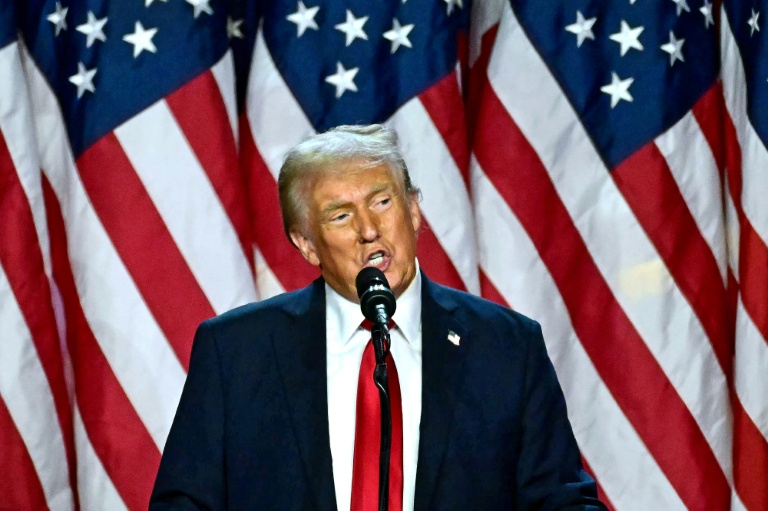
SEATTLE — The Trump administration fired a federal prosecutor Wednesday less than an hour after he had been appointed to lead the United States attorney’s office in Seattle, a move that sets up a potential legal battle over the president’s authority to remove prosecutors chosen by the judiciary.
Federal judges in the Western District of Washington had unanimously selected Roger Rogoff to serve as the Justice Department’s top official in the district, filling a vacancy the administration had left unaddressed. But the Trump administration has repeatedly resisted efforts by federal judges to fill such vacancies on their own, and Rogoff was dismissed by email roughly 54 minutes after his appointment.
Rogoff, 57, has retained an employment law firm and is now weighing whether to challenge his removal in court, a step that would mark a departure from how other prosecutors dismissed under similar circumstances have responded. Legal experts say such a challenge would likely lead to a lengthy and difficult court fight and could raise the unusual possibility of a U.S. attorney operating independently of the administration that removed him. It could also complicate the position of Charles Neil Floyd, the Trump administration’s preferred pick to lead the office, whose appointment as first assistant United States attorney has never been formally submitted to the Senate for confirmation.
Rogoff told The New York Times he had envisioned the role as one focused on implementing the administration’s stated law enforcement priorities, describing goals such as prosecuting illegal immigration, human trafficking and drug gang activity as fairly conventional. But he was sharply critical of the administration’s broader approach to filling top prosecutor positions without Senate involvement. He said that when officials are placed into such roles through what he described as an improvised process, it undermines the functioning of individual offices, and he argued the practice also raises constitutional concerns.
In response, the Justice Department said in a statement that the district court had not coordinated with the department on Rogoff’s selection. The agency also pointed to a letter that acting Attorney General Todd Blanche sent to The Times earlier this year, in which he wrote that when judges act unilaterally in selecting prosecutors, the outcome tends to be straightforward: a prosecutor chosen solely by the judiciary will not remain in the position.
The standoff has been building since January, when federal judges in Washington state launched a public search process to fill the vacancy, going so far as to ask applicants how they would respond if the administration moved to fire them. Rogoff recalled telling the judges he would consider pursuing a legal challenge if that happened.
The dispute has become a source of ongoing frustration for state officials. Washington Attorney General Nick Brown, a Democrat who previously served as U.S. attorney in Seattle himself, described the administration’s approach to the vacancy as unlawful in an interview last fall, comparing the shifting arrangement of acting officials and first assistants to a plot device from the film “Casino,” in which a character’s title was repeatedly changed to make it harder for regulators to track what was happening.
Rogoff brings a varied background to the dispute. In addition to his legal career, he has worked for Microsoft, and he was most recently appointed by former Washington Gov. Jay Inslee, a Democrat, to lead a state office responsible for investigating the use of deadly force by police. His appointment to the U.S. attorney post came from the full panel of federal district judges in Seattle and Tacoma, a group of 17 judges that included ten appointed by Democratic presidents and seven appointed by Republican presidents.
Any lawsuit stemming from Rogoff’s firing would likely involve prolonged legal proceedings, and it remains unclear whether the administration would ultimately seek to bring such a dispute before the Supreme Court. A similar standoff arose last year in New Jersey, when a federal judge ruled that Alina Habba, a former personal lawyer for President Trump, was not lawfully serving as U.S. attorney there. The administration at the time threatened to escalate that fight to the Supreme Court but ultimately did not follow through.
Not every such dispute has ended in conflict. After three of Habba’s successors in New Jersey were also found to be leading that office unlawfully, judges in the district worked directly with the Justice Department to appoint Robert Frazer as the district’s top prosecutor, an outcome reached through cooperation rather than confrontation.
Under federal law, permanent U.S. attorney appointments typically require approval either from the Senate or from federal judges in the relevant district when a vacancy persists. Interim appointments made without formal approval are limited to 120 days, but the Trump administration has repeatedly extended its preferred officials’ tenures by designating them acting U.S. attorneys or leaving them in place as first assistants, a practice that has drawn criticism from judges and state officials in multiple districts.
Legal scholars say any court challenge to Rogoff’s dismissal would face significant hurdles. Elizabeth G. Porter, a law professor at the University of Washington, noted in an email earlier this year that federal statute empowers district courts to appoint a temporary U.S. attorney to serve until a traditional appointee is in place, language that could theoretically be read to protect such an appointee from removal without cause. But she cautioned that this would be a difficult legal argument to sustain in court.
The dispute in Seattle adds to a growing list of standoffs between the Trump administration and federal courts over control of vacant U.S. attorney positions across the country, with judges in several districts pushing back against the administration’s reliance on acting officials and first assistants to sidestep the Senate confirmation process. Whether Rogoff pursues a formal legal challenge could determine if the Seattle case becomes the next flashpoint in that broader fight, potentially testing, in court, the extent of a president’s authority to remove a prosecutor chosen entirely by the judicial branch.

Woodside claimed more people could be involved in a stench gas protest at its Perth office, in its pursuit against activists in the state’s highest court.
Business
Market Wrap: Sensex ends flat, Nifty holds 24,050 as Iran-US conflict keeps optimism in check

Sensex gained a mere 1 point to end at around 77,187, and Nifty 50 dropped around 6 points to close at nearly 24,073 on Thursday. Broader markets slipped into the red, with Nifty Midcap 100 and Nifty Smallcap 100 indices closing up to 0.4% lower.
Eternal was the top loser on Sensex, falling more than 3%. Bajaj Finserv, Bharat Electronics (BEL) and HDFC Bank shares declined nearly 1% each. HCL Technologies, IndiGo and Bajaj Finance shares gained nearly 2% each.
The muted market sentiment came even as volatility measure India VIX dropped nearly 3% to close at 12.88. Sectorally, Nifty Realty and Nifty Financial Services dropped nearly 1% each to lead losses, with Nifty Consumer Durables surged 1.5%. The overall market breadth however turned bearish, with NSE seeing 1,776 declines and 1,543 advances, while 112 remained unchanged.
What lies ahead?

With many companies reporting their Q1 results in the coming days, the market is likely to respond to the results, said VK Vijayakumar, Chief Investment Strategist at Geojit Investments.
“Financials-both banks and NBFCs- are likely to report a good set of numbers aided by robust credit growth now running at 18%. Automobiles is a sector to watch closely since the growth numbers for Q1 would be impressive and the sector continues to exhibit momentum, aided by GST cuts and easy availability of finance. Most segments of the sector -cars, SUVs, two-wheelers, commercial vehicles, exports- are doing well. Digital platform companies, too, will be reporting good growth numbers. Announcement of bonus issue by Paytm in the July 20th board meeting is an important news,” according to the analyst.Technical view on Nifty
The Nifty index continues to trade within a narrow range, reflecting a consolidation phase with a neutral undertone, said Vatsal Bhuva, Technical Analyst at LKP Securities. The analyst noted that the index technically is expected to find strong support in the 23,950–24,000 zone, while the 24,250–24,300 region is likely to act as an immediate resistance, with a broader hurdle placed near 24,500.
“Option chain data also indicates the highest put writing at the 24,000 strike, reinforcing it as a key support level. Considering the current technical setup, a buy-on-dips near support and sell-on-rise near resistance strategy remains appropriate,” Bhuva further said.
(With inputs from agencies)
(Disclaimer: Recommendations, suggestions, views and opinions given by the experts are their own. These do not represent the views of The Economic Times)

Form DEF 14A Peloton Interactive Inc For: 16 July

One of the UK’s largest private parking providers is being investigated by the competition regulator over whether parking charges for drivers queuing at petrol forecourts are fair.
Euro Car Parks’ broader appeals process relating to petrol stations and car parks is also being looked into, to determine if it breaches consumer protection law.
The investigation forms part of a wider crackdown by the Competition and Markets Authority (CMA) into potentially unfair practices by private parking operators.
Research by the RAC has suggested the number of tickets issued in places like gyms, supermarkets, restaurants and retail parks more than doubled in six years, to 14.4 million.
Motorists have complained about these parking issues, the CMA said, highlighting problems including unclear signage, faulty apps and broken ticket machines.
The regulator said it wanted to make sure drivers are being treated fairly following complaints from motorists who feel they’ve been unjustly issued with parking tickets.
The CMA says it has its own concerns about the way some operators are handling appeals, or attempting to make motorists pay additional fees on top of parking charges.
It has written to the sector as a whole, and issued warnings to some individual operators about their practices.
The CMA’s executive director of consumer protection Emma Cochrane said receiving a parking ticket could be a stressful experience.
“Costs are high and often unexpected which is difficult when people are budgeting carefully,” she said.
“Parking companies must treat motorists fairly at all stages – and a clear and consistent appeals process must be at the heart of this.
“It’s time for all private parking operators to comply with consumer law or risk action from the CMA.”
The CMA’s investigation into Euro Car Parks is focusing on whether it is fair for drivers to receive parking charges while queuing for, or using, petrol pumps and other forecourt services such as car washes, plus its wider appeals process.
It is in the evidence gathering stage, and is set to run until Spring 2027.
Euro Car Parks has more than 3,000 facilities across the UK and Ireland, according to the company’s website, with more than two million cars parking in their spots every day.
The BBC has contacted Euro Car Parks for comment.

2026 Open tee times, pairings: Schedule and groups for Round 1 on Thursday

Trump hits back at New York’s data center ban, says rule should change ‘immediately’

Making trophies with money. #Shorts #shortvideo


-

 Fashion6 days ago
Weekend Open Thread: Nutriplenish Leave-In Conditioner
-
 Sports7 days ago
2026 Genesis Scottish Open Thursday TV coverage: Round 1
-

 Sports6 days ago
Super Eagles star Moses Simon opens up on Liverpool transfer regret
-

 Tech7 days ago
Character.AI enters the microdrama arena with its own productions, but there’s a twist
-

 Politics1 day ago
Young campaigners urge incoming PM to act on outdoor junk food ads
-

 News Videos2 days ago
XRP BOMBSHELL… XRP OMBOARDED FOR TRANSACTIONS!!!
-

 Tech2 days ago
Get Your ESP32 Sunny Side Up With This Solar Dev Board
-

 Tech2 days ago
Dark Secrets Emerge When Jailbreaking LLMs
-
 Entertainment19 hours ago
Disney’s Most Ambitious Failed Star Wars Attraction Is Coming to SDCC
-
 Sports15 hours ago
New Cornerback Enters Vikings Trade Rumor Mill
-

 News Videos3 days ago
how to make coin bank box with cardboard #scienceproject #money #diy #shorts
-
 Tech3 days ago
Cloudflare Precursor Watches Your Mouse and Keyboard To Decide If You Are Human
-
 Entertainment18 hours ago
Vicki Gunvalson Defends Discussing Heather Dubrow’s Money
-
Crypto World2 days ago
Ripple, Coinbase, Circle Join Linux x402 Foundation to Help Shape AI Payments
-

 NewsBeat15 hours ago
Watch: Is Donald Trump facing a popular backlash on immigration?
-

 Sports12 hours ago
Michigan officials not expected to discuss AD Warde Manuel at Thursday meeting
-
 NewsBeat14 hours ago
Firefighters issue update on Dovestone moorland blaze as fire enters fourth day
-

 Business1 day ago
ACCC warns AI could lift insurance costs in risk-prone areas
-

 Entertainment3 days ago
Hollywood’s Biggest Director Just Called Out AI, And It’s Glorious
-

 Crypto World11 hours ago
CFTC blocks Kalshi from unwinding Michigan trades after court order
You must be logged in to post a comment Login