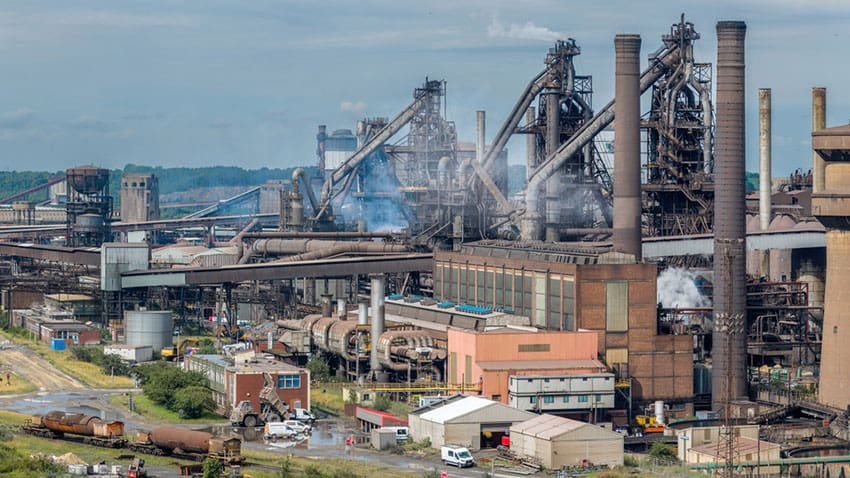
British Steel has been taken into public ownership, with ministers arguing the only alternative was to let the country’s last producer of virgin steel go bust. For the thousands of smaller firms that rely on Scunthorpe’s output, the move ends years of uncertainty, but leaves taxpayers footing a running bill of about £1.3 million a day.
The government said nationalisation would protect jobs and safeguard “a vital national capability”. The Scunthorpe works employs roughly 2,700 people and supports many more businesses across north Lincolnshire and the wider supply chain.
The government had already taken control of day-to-day operations last year. But with China’s Jingye Group still the legal owner, ministers had limited freedom to decide the plant’s future. Full ownership removes that constraint while keeping the blast furnaces lit.
Business Secretary Peter Kyle told the BBC the government would need to cover running costs “for the immediate future”, with an independent assessor to determine whether Jingye, which is seeking compensation, should be paid based on the value of the company.
Advertisement
“But let me be really clear, there is an alternative here – that we let this business go bust,” he said. “If that business disappears, we will lose the ability for primary steel production in our country, we will become entirely dependent on global supply.”
The economics are stark. Jingye previously said the business was losing £700,000 a day, while a March report from the National Audit Office found the site was costing the government about £1.3 million a day, with no set budget, repayment schedule or end date.
Why pay it? Scunthorpe’s furnaces are the UK’s last source of virgin steel, made directly from iron ore. Lose them and Britain becomes the only G7 economy unable to produce it. Blast furnaces are designed to run continuously, and the remaining pair are elderly: Queen Anne opened in 1954, Queen Bess has been in blast since 1938. Once cooled, restarting them would have been financially prohibitive.
That matters well beyond north Lincolnshire. The plant makes grades of steel produced nowhere else in the country, much of it destined for Network Rail and the construction industry. An abrupt shutdown would have forced fabricators, builders and engineering firms onto imports, and jeopardised the redundancy reversal that followed plans to cut up to 2,700 jobs when the furnaces faced closure.
Advertisement
Customers seem relieved. Simon Boyd, managing director of Reid Steel, a Dorset structural steel manufacturer that buys thousands of tonnes from British Steel each year, said nationalisation “had to be done”. He told the BBC’s Today programme that Jingye had been “sabotaging the infrastructure” and the government “had to step in”.
Boyd said ministers would need to invest heavily and would not see a return for 10 to 20 years, but the company “now belongs to the British people”. A sale to private investors would have needed government support anyway, he added, and past deals have been seen to “benefit the private companies and not the British people”.
Unions agree: MPs were told last month that the cost of not saving Scunthorpe would have been “unfathomable”.
For SME steel buyers, the immediate message is continuity of supply. The longer game is less settled. Ministers still want all domestic steel made in cheaper, cleaner electric arc furnaces, and are unlikely to remain owners of a business costing more than a million pounds a day any longer than they must. Scunthorpe stays open until alternatives exist, not indefinitely.
Advertisement
Amy Ingham
Amy is a newly qualified journalist specialising in business journalism at Business Matters with responsibility for news content for what is now the UK’s largest print and online source of current business news.
The 2026 Open Championship at Royal Birkdale is set to double local business spending, according to Mastercard data based on economic impact from previous tournaments
Frank Dalleres www.cityam.com
12:04, 16 Jul 2026
Early morning crowds at Royal Birkdale today for the 154th Open
This week’s Open Championship at Royal Birkdale is forecast to double spending at businesses in the surrounding area, according to figures from Mastercard.
Advertisement
Last year’s tournament at Royal Portrush in Northern Ireland generated a 119 per cent surge in spending within 5km of golf’s oldest major, while the 2024 Open delivered an 82 per cent uplift within 3km of Royal Troon.
The hospitality sector stands among the greatest beneficiaries. Spending in bars and restaurants around Portrush last year soared 234 per cent and 95 per cent respectively, while at Troon expenditure across both categories more than doubled.
“As fans travel to Royal Birkdale to enjoy one of golf’s greatest Championships, the local hospitality sector is in for a bumper weekend,” said Mastercard UK and Ireland president Simon Forbes, as reported by City AM.
“From Australian tourists to B&B owners in Merseyside, live events bring people together. We’re proud to help businesses at these busy times, connecting them to tourists from all over the world with the tap of a card.”
Advertisement
Play got under way this morning at Royal Birkdale, where local favourite Tommy Fleetwood is considered one of the frontrunners to lift the Claret Jug.
The Open draws in excess of 250,000 spectators, with a significant proportion travelling from abroad — particularly from the United States, home of defending champion Scottie Scheffler, and Australia. Accommodation spending at the 2024 Open rose 44 per cent, according to Mastercard’s findings.
This comes as Britons are continuing to devote more of their budgets to experiences. The proportion of UK consumer spending on experiences, excluding travel, rose to 23.3 per cent, up from 22.3 per cent the previous year, according to the payments giant.
This rise in spending also provides a welcome boost to the broader economy, with the 2025 Open credited with delivering £89.2m in economic impact for Northern Ireland. The 2024 Open generated a comparable figure, £87.3m, for Scotland.
Any customers that will be impacted by network changes will be “contacted directly and provided with re-accommodation or refund options,” the airline said in a statement.
Aer Lingus said changes will begin to take effect from late September 2026, continuing into summer 2027.
The proposed changes to routes are:
Dublin to Denver will be discontinued after 28/09/26
Dublin to Minneapolis will be discontinued after 24/10/26
Dublin to Las Vegas will be discontinued after 03/12/26
Dublin to Seattle will be a summer-only operation after 24/10/26
Dublin to Split will be discontinued after 29/09/26
Dublin to Frankfurt will be a summer-only operation after 02/11/26
Dublin to Hamburg will be a summer-only operation after 02/11/26
Dublin to Malta will be a summer-only operation after 03/11/26
Linked to these network changes, there will be a reduction in the use of two A330 aircraft and four A320 aircraft for peak summer 2027.
Advertisement
It added the “changes are essential to support required improvement in its operating margin, which is needed to underpin future investment.
“The more cost efficient and productive the airline is, the more it will be able to fulfil its network and growth ambition,” a spokesperson said in a statement.
“The consultation and engagement process will focus on reducing redundancies and potential future redundancies and on what needs to be done to secure future investment in the business.”
The 2026 NBA offseason has already produced some of the most significant roster upheaval in recent league history, but with free agency winding down and several major storylines still unresolved, the rumor mill remains active heading into the second half of July. Here are the eight biggest trade and roster storylines currently shaping the league.
1. LeBron James’s free agency decision remains the league’s biggest holdup. James informed the Los Angeles Lakers last month that he intends to play his 24th NBA season elsewhere, and while his agent, Rich Paul, has confirmed conversations with 27 teams, no decision has been finalized. Multiple franchises — including the Cleveland Cavaliers, Golden State Warriors, Miami Heat, Minnesota Timberwolves, Denver Nuggets and Philadelphia 76ers — have at least two roster spots still open as they wait to see whether James chooses to join their rosters before finalizing their own offseason plans.
2. The Kawhi Leonard trade to Toronto remains in limbo amid an ongoing NBA investigation. Leonard was initially traded from the LA Clippers to the Raptors on June 30 in exchange for Brandon Ingram, Gradey Dick, two unprotected first-round picks, a first-round pick swap and two second-round picks. But the deal cannot be finalized while the league continues investigating whether Leonard’s endorsement agreement with the startup Aspiration constituted a circumvention of the salary cap. NBA commissioner Adam Silver addressed the situation before Game 1 of the NBA Finals, signaling a desire to bring the matter to a close. “I think we’re close to the point now where I think we need to wrap this up because you also need finality,” Silver said. “Their team has to understand what the situation is they’re going to be operating under, and so do the other 29 teams.” Both the Clippers and Raptors issued statements confirming the trade can only be completed once Toronto’s ownership group agrees to assume the risk associated with any penalties tied to the investigation’s findings.
3. Giannis Antetokounmpo’s move to Miami has reshaped the league’s power balance. After more than a year of speculation, the Milwaukee Bucks finalized a trade sending the two-time MVP to the Heat in exchange for Tyler Herro, Kel’el Ware, Jaime Jaquez Jr., Kasparas Jakučionis and a package of first-round picks and pick swaps. The move gives Miami its first true superstar addition since the Jimmy Butler era began, while Milwaukee pivots toward a rebuild built around draft capital and younger talent.
Advertisement
4. Jaylen Brown’s trade to Philadelphia was one of the offseason’s most surprising moves. Boston sent the 2024 Finals MVP to the 76ers in exchange for Paul George, two first-round picks and two second-round picks, a deal that stunned much of the league given Brown’s recent playoff pedigree. The trade followed what had appeared to be a public campaign by Brown for a change of scenery, and it leaves Boston relying on a core built around Jayson Tatum and Mitchell Robinson heading into next season.
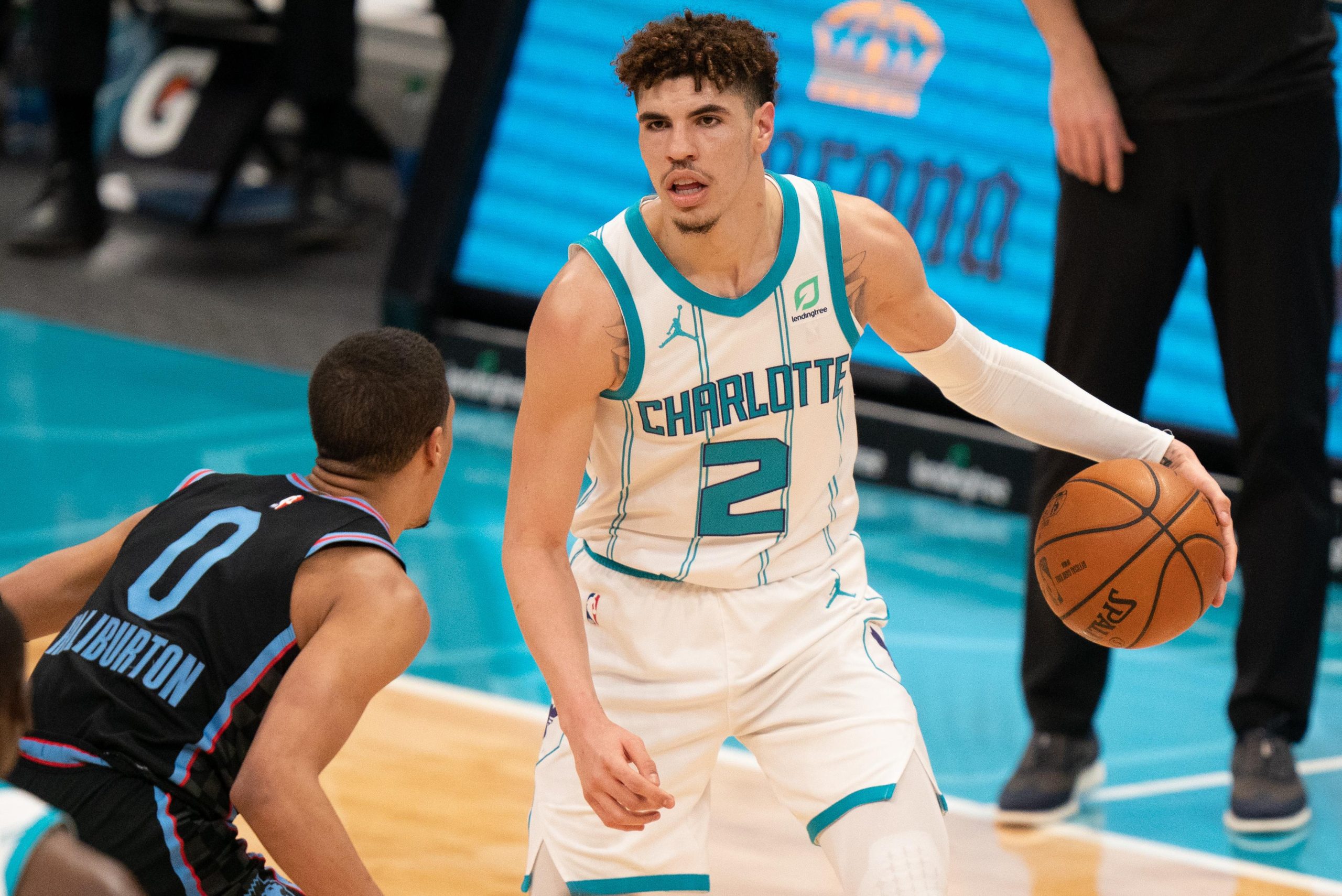
5. LaMelo Ball is now a member of the Minnesota Timberwolves. The move, finalized shortly after this year’s draft, sent Ball from the Charlotte Hornets to Minnesota as part of a broader reshuffling of the Timberwolves’ roster, which also saw the team part ways with Julius Randle earlier in the offseason as part of a trade with the Brooklyn Nets that also sent Nic Claxton to the Chicago Bulls.
6. Ja Morant’s tenure in Memphis has come to an end. The star guard was traded to the Portland Trail Blazers this offseason, closing the book on his time with the Grizzlies after years of speculation about his long-term future with the franchise. ESPN’s Brian Windhorst noted during the draft that the league appeared to have already witnessed the final moments of Morant’s time in Memphis before the move was made official.
7. Domantas Sabonis could be the next veteran on the move. With the Sacramento Kings continuing to reassess their direction, ESPN’s Brian Windhorst raised the possibility that the team could explore trading the two-time All-Star center as part of a broader pivot. “There’s a possibility that the Kings may look to see what his trade market might be as they look to pivot their franchise,” Windhorst said during the draft broadcast, adding Sabonis to the list of established veterans whose situations remain worth monitoring as the offseason progresses.
Advertisement
8. Nikola Jokic’s extension decision looms over Denver’s long-term planning. Though the three-time MVP has been extension-eligible since mid-June for a four-year, $278 million deal, indications point to Jokic waiting until next offseason to sign, when he would become eligible for a five-year deal worth $359.5 million — a contract that would set a new record for the largest in NBA history. Speaking to reporters in Serbian following a FIBA World Cup qualifying game, Jokic reaffirmed his desire to remain with the Nuggets long-term. “My idea and desire is to stay in Denver. I’ll probably sign next year,” Jokic said, adding, “My desire is to play the rest of my life in Denver.”
Beyond these eight headline storylines, the offseason has already produced a series of smaller but notable moves, including the Detroit Pistons sending big man Isaiah Stewart to the Memphis Grizzlies for future second-round picks, and veteran center Nikola Vučević agreeing to a minimum contract with the Orlando Magic after previously starring for the Chicago Bulls. Free agency has also seen a wave of contract decisions play out across the league, with players like James Harden, Fred VanVleet and Zach LaVine all making decisions on their player options in recent weeks.
With James still weighing his options and the Leonard trade hanging in the balance pending the league’s investigation, NBA insiders expect the coming days to bring further clarity on two of the offseason’s most closely watched storylines. Both situations carry ripple effects across the rest of the league, with several contending teams effectively frozen in place until James makes his decision and the Raptors and Clippers await word from the league office on how the Leonard matter will ultimately be resolved.
TikTok is under formal investigation by Ofcom over whether its age checks actually keep children off the platform, in the clearest signal yet that the regulator’s online safety clampdown is moving beyond pornography sites and on to mainstream social media.
The probe will examine how the video-sharing app works out whether a user is a child, and whether its systems are adequate to stop children encountering harmful content. It lands a month after ministers confirmed under-16s will be banned entirely from a range of platforms, and follows a review in May in which Ofcom concluded TikTok was not “safe enough” for children.
“We’re confident that we meet our Online Safety Act obligations and will work with Ofcom to demonstrate it,” a TikTok spokesperson said.
At the heart of the investigation is “age inference”, technology that estimates how old a user is from how they behave on the platform, such as the videos they watch and the accounts they interact with. Instagram deploys similar tools.
Kate Davies, Ofcom’s group director for strategy and research, told BBC’s Today programme: “This is where TikTok comes in. We found that some method of age checks being used by social media are not working well enough”.
Advertisement
The regulator requires platforms to use “highly effective” age checks to keep children away from harmful material. Davies said Ofcom had “serious doubts” that inference tools clear that bar. “We have very serious questions about whether age inference can be highly effective,” she said.
TikTok disputes the charge. “We strictly enforce age-appropriate experiences through expert-informed platform rules and advanced age inference technologies, in line with major industry peers,” a spokesperson said, adding that the company had invested “billions” in online safety since launching in the UK eight years ago.
Enforcement moves up a gear
For any business running a platform that hosts user-generated content, the direction of travel should be unmistakable. Since the Online Safety Act’s protection of children codes took effect on 25 July last year, Ofcom has issued large fines against dozens of adult sites, enforcement ministers have publicly backed. The TikTok investigation shows social media is next in the queue, and the regime’s penalties are severe enough that Meta is already challenging Ofcom’s fines methodology in the high court.
Andy Burrows, chief executive of the Molly Rose Foundation, the charity set up by the family of Molly Russell, welcomed the investigation, criticising TikTok for “egregious failures” to prevent children from “being exposed to a tsunami of harmful content”. But he said any investigation must also deal with the site’s “blatant failure to clean up its toxic algorithms and comply with child safety duties”.
Advertisement
Business Matters has approached TikTok for a response.
Rebecca Smart, criminal lawyer and online safety expert at law firm Payne Hicks Beach, said the Act had clearly “made some headway” in protecting children, but warned that “the current enforcement regime may not provide a strong enough deterrent to drive full compliance”.
“There should be severe penalties for services that do not have appropriate age checks in place to protect these children,” she said. “Without stronger accountability and enforcement, children will remain vulnerable to online harms that the OSA was designed to prevent.”
For SME leaders, the story is also a reminder that children are customers earlier than ever. Rupert Lee-Browne, chairman of youth banking app nimbl, said: “The Online Safety Act is a vital step towards protecting our children from the downsides and dangers of social media – from scam ads to worse. Kids today need to learn how to stay safe online where they spend a lot of their time and that includes how to manage and protect their money. Whether they’re buying in-game or using their first payment card, children are making real financial decisions online much earlier than previous generations, and parents shouldn’t have to choose between giving their children independence and keeping them safe. Ofcom is the best agency to be regulating the platforms right now but it needs the UK government to provide the right legislation and support to enable it to succeed in protecting our kids.”
Advertisement
Jamie Young
Jamie Young is Senior Reporter at Business Matters, covering SME finance, employment law and Westminster policy since 2016. He has reported on every Budget and Autumn Statement since 2018, helped make sense of the ‘covid era’ and the bounce-back loan scheme from launch through the fraud investigations, and broke the magazine’s coverage of the 2024 late-payment reforms. He joined Business Matters straight from completing his BA in Administration from Exeter University and is NCTJ-qualified. Reach him at jyoung@cbmeg.co.uk
UK businesses importing steel, aluminium, cement, fertiliser or hydrogen products face a new compliance burden from 1 January 2027, when record-keeping requirements for the UK’s Carbon Border Adjustment Mechanism (CBAM) take effect. And in a detail that will catch many smaller firms off guard, using a customs broker or freight forwarder does not pass the responsibility on.
CBAM is a new tax designed to tackle so-called carbon leakage, ensuring that certain highly traded, carbon-intensive goods imported into the UK face a comparable carbon price to equivalent goods produced here. The mechanism, already a sticking point in the UK’s trade negotiations with India, is part of the government’s push towards net zero by 2050.
For the thousands of SMEs that import components, materials or finished goods in the five affected sectors, the practical impact starts well before any tax is due.
Records first, tax later
From 1 January 2027, any business importing CBAM goods must keep records relating to those imports, and keep them for six years. Businesses that fail to keep adequate records may be liable for penalties, so HMRC’s message is clear: find out what you need to do beforehand and get it right.
Crucially, outsourcing your imports offers no escape. If a customs broker, freight forwarder, haulier or tax agent completes the import declaration on your behalf, you may still be classed as the importer and therefore responsible for meeting CBAM obligations.
Registration for CBAM opens on 1 January 2028. Businesses must register with HMRC if the value of CBAM goods imported over the previous 12 months exceeds the £50,000 threshold, or if they expect to import above it within the next 30 days.
That threshold is low enough to capture plenty of small manufacturers, builders’ merchants, fabricators and construction firms, not just large industrial importers.
Registered businesses must submit a return, even if there is no tax to pay, and settle any liability for the 1 January to 31 December 2027 accounting period by 31 May 2028.
Advertisement
HMRC says further guidance on CBAM rates, default emissions values and the monitoring, reporting and verification of emissions will be published in the coming months.
CBAM also lands amid a wider debate about carbon pricing, with plans to align UK carbon rules with the EU’s scheme drawing both criticism over costs and support from industries hoping to sidestep the EU’s own border levy.
For now, the advice for any business importing goods in the five sectors is simple. Check on GOV.UK whether your goods are in scope, work out whether you or your agent counts as the importer, and get your record-keeping in order before January 2027. Six years is a long time to keep paperwork, but a penalty from HMRC will feel longer.
Advertisement
Jamie Young
Jamie Young is Senior Reporter at Business Matters, covering SME finance, employment law and Westminster policy since 2016. He has reported on every Budget and Autumn Statement since 2018, helped make sense of the ‘covid era’ and the bounce-back loan scheme from launch through the fraud investigations, and broke the magazine’s coverage of the 2024 late-payment reforms. He joined Business Matters straight from completing his BA in Administration from Exeter University and is NCTJ-qualified. Reach him at jyoung@cbmeg.co.uk
Exxon Mobil shares closed lower Thursday, falling 0.40%, or 58 cents, to $144.51, as the energy giant continued to trade in a volatile range shaped by swings in crude oil prices and renewed geopolitical tensions in the Middle East. The stock slipped further in premarket trading, down 0.25% to $144.15, signaling continued caution among investors heading into the next session.
The modest pullback comes as Exxon and the broader energy sector navigate one of the more turbulent stretches of the year for crude markets, with prices whipsawing in response to developments in the Strait of Hormuz, a critical corridor for global oil shipments. Brent crude, which had averaged more than $100 a barrel in April and May during the height of U.S.-Iran tensions, fell to roughly $85 in June after the strait reopened following a ceasefire agreement. That retreat in oil prices had pulled Exxon shares down from the mid-$150s into the $136 to $141 range by late June and early July.
The collapse of that ceasefire in early July, marked by renewed U.S. airstrikes on Iranian targets and attacks on commercial vessels in the region, sent Brent crude back toward $79 a barrel and West Texas Intermediate above $74, providing a sharp tailwind for energy stocks broadly. Oil prices climbed further this week to a one-month high as the U.S. and Iran continued to trade attacks in the strait, a dynamic that has kept energy investors on alert given the direct relationship between crude prices and Exxon’s earnings potential.
Exxon shares have traded within a wide 52-week range of $105.53 to $176.41, reflecting the scale of the swings the stock has experienced amid the shifting geopolitical backdrop. The stock reached its 52-week high earlier this year before pulling back alongside crude benchmarks, then rebounding in recent sessions as tensions flared anew in the Middle East.
Advertisement
Wall Street analysts have offered a mixed but generally constructive outlook on the stock in recent weeks. JPMorgan lowered its price target on Exxon to $158 from $173 following the company’s second-quarter earnings release, while maintaining an Overweight rating on the shares. TD Cowen similarly cut its target to $155 from $172 earlier this month. Other firms have taken a more neutral stance, with Goldman Sachs reaffirming a Hold rating and maintaining its price target at $157, citing Exxon’s second-quarter outlook as broadly in line with consensus expectations. Mizuho Securities also stuck with a Hold rating on the stock, while UBS and Bernstein both issued Buy ratings earlier this month, and Barclays and Wells Fargo have maintained their own bullish positions on the shares.
Exxon’s full second-quarter earnings report is scheduled for July 31, a date analysts and investors are watching closely as the next major catalyst for the stock. Projections call for earnings per share of approximately $3.56 on revenue near $98.7 billion, though estimates vary depending on how analysts account for timing effects and one-time items tied to the company’s ongoing corporate restructuring. Some estimates have pointed to a sharp year-over-year increase in earnings expectations for the upcoming quarter, driven in large part by the recent run-up in oil prices tied to the Middle East conflict. One recent analysis estimated that higher oil prices alone could add roughly $3.7 billion to Exxon’s second-quarter earnings.
The trajectory of crude prices remains the dominant external variable shaping Exxon’s near-term performance. The U.S. Energy Information Administration’s most recent Short-Term Energy Outlook, released July 7, forecasts Brent crude averaging $82 a barrel for the full year in 2026 before declining to $65 in 2027, a projection that would suggest today’s elevated prices may not hold over the longer term. OPEC, meanwhile, cut its 2026 oil demand growth forecast again this month while raising its outlook for 2027, adding another layer of uncertainty to the demand side of the equation even as OPEC+ continues its gradual unwinding of prior production cuts, a move that could add further supply pressure to the market.
Beyond the near-term swings in crude prices, Exxon has continued to advance several longer-term strategic initiatives. The company completed its redomiciliation from New Jersey to Texas on July 1, with ExxonMobil Holdings Corporation now serving as the publicly traded parent company in place of the New Jersey-incorporated Exxon Mobil Corporation. Shares continue to trade under the same ticker symbol, XOM, on the New York Stock Exchange, and shareholders were not required to take any action as a result of the change, which was approved at the company’s 2026 annual meeting.
Advertisement
Exxon also recently reported hitting a 40-year production record, driven in part by a $1 billion investment commitment to the Usan Infill Project in Nigeria, underscoring the company’s continued push to grow output even as it navigates a challenging pricing environment. The company’s Permian Basin and Guyana operations remain central to its longer-term growth strategy, with executives pointing to both regions as sources of capital-efficient volume and earnings growth in the years ahead. Investors are also monitoring progress on Exxon’s $20 billion share buyback program and the tax implications of the Texas relocation as additional factors likely to influence the company’s financial results going forward.
Exxon’s stock performance this week places it roughly in line with peers in the integrated oil and gas sector. Chevron shares were trading around $179.81, down 1.08%, while Shell was among the few majors trading higher, up 0.81% to $85.09. BP shares slipped 0.21% to $41.31, and Suncor Energy fell 1.15% to $60.34.
With crude prices remaining highly sensitive to developments in the Strait of Hormuz and the broader U.S.-Iran standoff, analysts said Exxon’s stock is likely to continue trading with elevated volatility in the weeks ahead, particularly as the company approaches its end-of-month earnings report. For now, Thursday’s modest decline reflects a market still working to price in the competing forces of geopolitical risk, shifting supply forecasts and the company’s own long-term production growth plans.
A Code Red air quality alert took effect across south-central Pennsylvania on Thursday as thick smoke from wildfires burning in Canada drifted into the region, prompting warnings from state environmental officials and creating conditions expected to disrupt normal outdoor activity for residents throughout the Susquehanna Valley.
The Pennsylvania Department of Environmental Protection issued the alert as smoke from fires burning in southern Ontario and northern Minnesota spread across the Great Lakes and into the Northeast. Meteorologists tracking the smoke said it was settling close to the surface, which is producing especially poor air quality across central and southeastern Pennsylvania compared with smoke events where haze remains higher in the atmosphere.
A Code Red designation means air pollution levels have reached a point considered unhealthy for the general public, not just for individuals in sensitive groups such as children, older adults or people with existing respiratory conditions. The alert covers the entire Susquehanna Valley for the duration of Thursday.
Advertisement
Local meteorologists declared Thursday an “Impact Day,” a designation used when weather conditions are expected to significantly disrupt residents’ typical daily routines. Officials cautioned that the smoky air could produce a range of symptoms even in otherwise healthy individuals, including itchy or burning eyes, coughing and difficulty breathing. Those with asthma or other chronic respiratory conditions were warned they could experience a worsening of their symptoms while the smoke lingers over the region.
Health officials urged residents to limit outdoor exercise and avoid strenuous physical activity outdoors for as long as the Code Red alert remains active. The advisory carries particular significance for the Susquehanna Valley, given that the last time the region saw a Code Red air quality alert was in June 2023, when a similar wave of Canadian wildfire smoke triggered widespread hazy skies and health warnings across the eastern United States.
Despite the heavy smoke reducing sunshine and keeping temperatures slightly lower than they would otherwise be, Thursday’s conditions are still expected to be hot and humid. Forecasters said the high temperature was expected to reach about 92 degrees, with humidity pushing the heat index into the mid- to upper 90s. No separate heat-specific alerts were in effect as of Thursday morning, with the primary public health concern tied specifically to the smoke rather than temperature extremes.
The poor air quality is not expected to clear quickly. Forecasters said conditions will likely persist into Friday, when the alert level is expected to shift to Code Orange, indicating air quality that remains unhealthy specifically for sensitive groups rather than the general public. Officials cautioned, however, that conditions could still worsen depending on how smoke concentrations shift, and that Friday’s alert could be upgraded back to Code Red if pollution levels climb again. Friday’s high temperature is expected to reach near 90 degrees.
Advertisement
Some relief may be on the way by the weekend. Forecasters said scattered showers and thunderstorms are possible Saturday, a pattern that could help clear out lingering smoke and improve air quality heading into the start of the weekend, though the exact timing and intensity of any rainfall remained uncertain as of Thursday morning.
Health officials outlined a series of recommended precautions for residents during the smoky stretch, particularly for children, older adults and those with existing heart or lung disease, groups considered most vulnerable to the effects of poor air quality. Recommended steps include limiting time spent outdoors, avoiding strenuous outdoor activity, keeping windows closed where possible, and running air conditioning systems on a recirculate setting to limit the amount of outside air, and by extension smoke, entering homes. Officials also encouraged residents to monitor themselves for symptoms such as coughing or shortness of breath and to check local air quality sensors and forecasts before heading outside.
The smoke event adds another layer of disruption to a region already contending with a stretch of hot, humid summer weather. Local coverage of the smoky conditions noted that the alert arrived the same week runners competed in the Harrisburg Mile despite high temperatures, with race organizers taking precautions given the heat even before the wildfire smoke moved into the region. Weather trackers in the area also flagged the arrival of a wetter pattern building into the forecast for later in the week, which could bring the added benefit of clearing smoke alongside its potential to increase storm chances Thursday and beyond.
Wildfire smoke drifting into the northeastern United States from Canadian fires has become a recurring seasonal concern in recent years, with south-central Pennsylvania previously experiencing significant smoke-driven air quality alerts during comparable stretches of summer weather. Thursday’s Code Red designation represents the most severe classification the state uses for air quality alerts, reserved for conditions serious enough to affect the general population rather than only individuals with preexisting health vulnerabilities.
Advertisement
Meteorologists said they will continue monitoring the smoke’s movement and updating air quality forecasts as conditions evolve throughout the week. For now, officials are asking residents across the Susquehanna Valley to treat Thursday’s hazy, smoke-filled skies as a signal to adjust their daily plans, whether that means moving exercise routines indoors, delaying outdoor errands, or simply keeping a closer eye on family members with respiratory sensitivities until the air clears.
The situation remains fluid, with forecasters cautioning that both the intensity of the smoke and the timing of improved conditions could shift depending on how the wildfires in Ontario and Minnesota continue to burn and how wind patterns carry that smoke across the Great Lakes region in the coming days. Residents were encouraged to check updated local forecasts regularly rather than relying solely on Thursday’s outlook, given how quickly smoke-related air quality conditions have shifted in past events affecting the region.




















































You must be logged in to post a comment Login