

Business
Walmart: The Sell-Off Isn't Over Yet (Rating Upgrade)


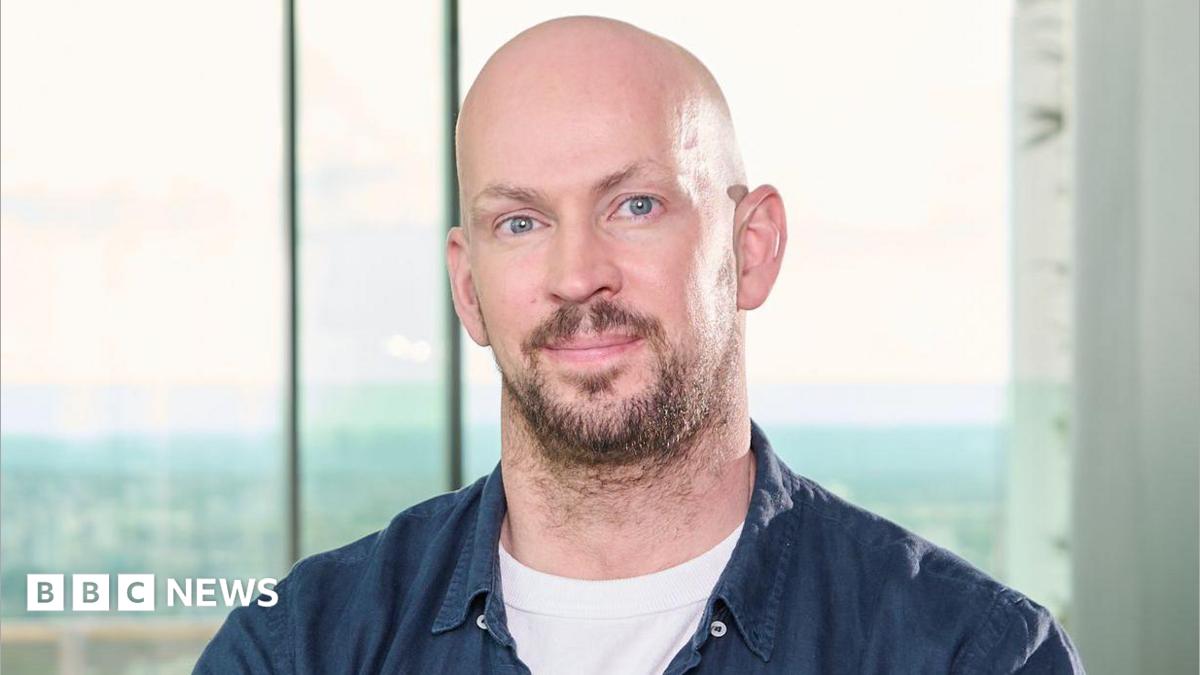
Earlier this week, bosses at Tilray stressed that the brand was not for sale and planned to reject Watt’s takeover efforts.
A spokesman added: “Tilray Brands did not acquire Equity for Punk shareholder data as part of its acquisition of the BrewDog brand and assets; that records system remains under the control of BrewDog plc (in administration).
“Tilray acquired only a customer CRM database comprising individuals who explicitly opted in to BrewDog communications.
“For the avoidance of doubt, Tilray Brands (trading as BrewDog) and its current management team have no involvement in, affiliation with, or responsibility for James Watt’s business activities, including Second Best.”
The spokesman added that Tilray Brands did not “authorise, facilitate, or participate in the communications reportedly sent to former Equity for Punks investors and did not authorise the use of any acquired data for such purposes”.
“We take data privacy with the utmost seriousness and can categorically confirm that no data held by Tilray Brands has been shared with external entities or former directors,” he said.
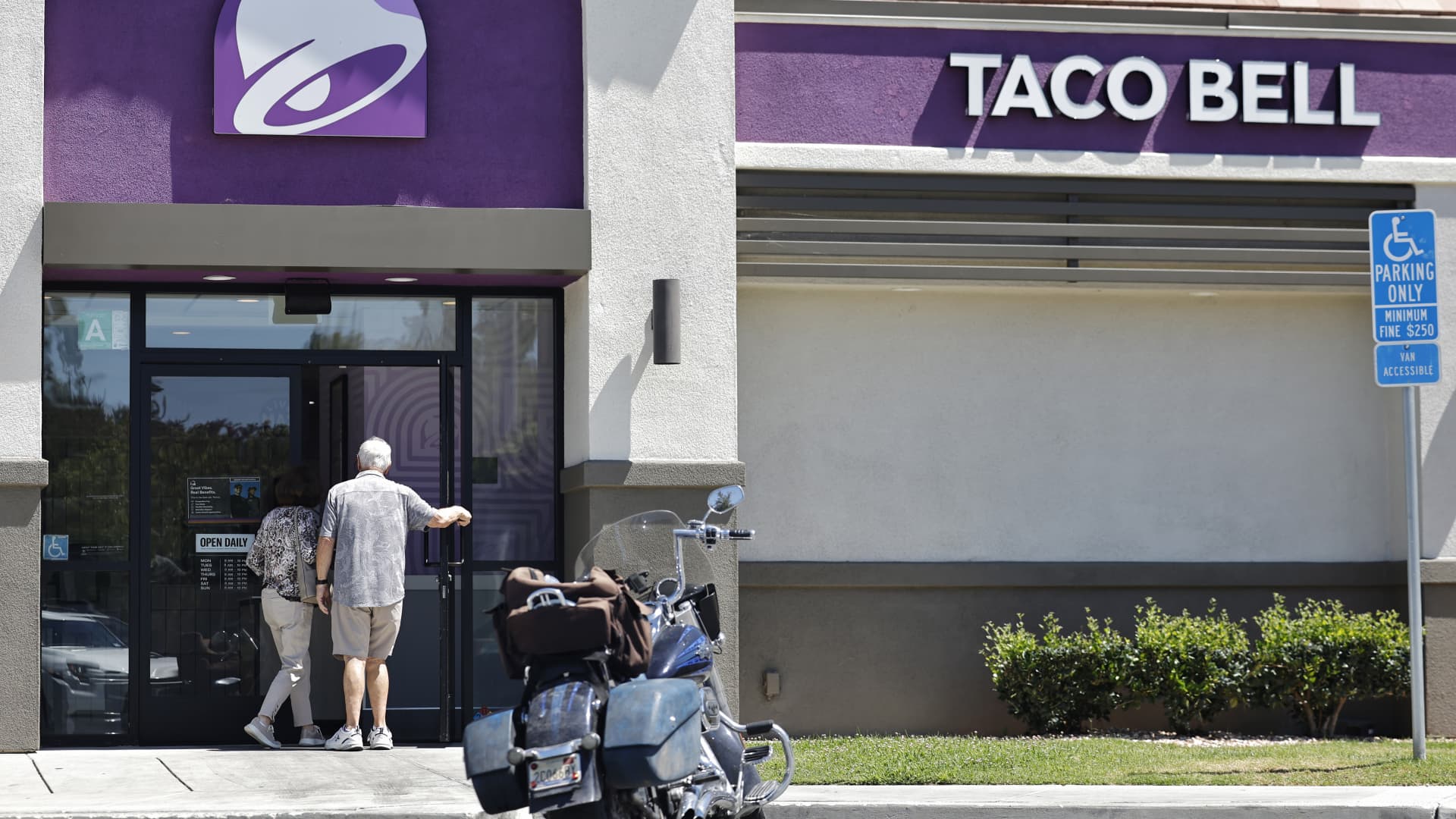
Customers enter a Taco Bell restaurant on July 14, 2026 in La Cañada Flintridge, California.
Mario Tama | Getty Images
The cyclosporiasis outbreak linked to lettuce at some Taco Bell locations may not have a significant long-term impact on the chain and other restaurant companies, according to analysts.
The outbreak has currently affected more than 1,600 people across five states, according to the Centers for Disease Control and Prevention. The infection resembles a serious stomach bug and often begins showing up two to three weeks after people become infected by the parasite, according to the CDC. No deaths have been reported.
On Thursday, the agency said its investigation into the source linked the outbreak to shredded iceberg lettuce served at Taco Bell locations in Indiana, Kentucky, Michigan, Ohio and West Virginia. The U.S. Food and Drug Administration is working with the supplier to determine if the lettuce was sent elsewhere, as well.
Taco Bell’s parent company, Yum Brands, saw its stock sink nearly 7% over the past five days as the company grappled with the health scare. Other food companies that sell fresh lettuce also saw their shares drop, like salad chain Sweetgreen, which plunged nearly 13% this week, and fast casual chain Cava, which sank more than 3%. Shares of Sweetgreen and Cava rose more than 17% and about 2% on Friday, respectively, due to apparent relief that the CDC did not identify their ingredients as potential sources of cyclosporiasis.
While Taco Bell or other restaurant chains may take a temporary sales hit as headlines about the outbreak swirl, particularly in the states most affected by it, analysts said any dips in revenue or stock prices likely will not be prolonged. Even so, it remains to be seen whether the CDC identifies any other restaurant chains as possible sources of the outbreak.
According to reports, the affected lettuce at Taco Bell may be traced back to supplier Taylor Farms, which distributes the product to many restaurant chains and sells directly in most grocery stores. Other media reports noted the company was preparing to issue a recall of ingredients on Friday.
Taylor Farms, the same company linked to the McDonald’s E. Coli outbreak in 2024, said in a Friday statement that it has removed all iceberg lettuce sourced from central Mexico. The company added that none of its branded salads or kits are associated with the outbreak.
“While the FDA traceback is indicating a specific independent farm, which represents less than 1% of the U.S.’s iceberg lettuce supply, as the potential source of the outbreak, we have removed all iceberg lettuce from the region indefinitely,” the company said.
Taco Bell said in a Thursday statement that the fast food chain is actively working to “voluntarily remove potentially impacted lettuce from a supplier in select states.”
“The affected ingredient from our supplier is being indefinitely removed from our supply chain nationwide and will be replaced within 24 hours in select states,” the company said.
Sweetgreen and other restaurant companies issued statements this week saying that they did not believe their ingredients were affected. The salad chain said it does not use iceberg lettuce on its menu.
“From the outset of the investigation, we have been in close contact with our suppliers to determine whether any ingredients in our supply chain have been identified as part of the investigation. To date, none have been,” the company said.
Chipotle, which did not see as much stock movement this week, said in a Friday statement that shredded iceberg lettuce is not served at its locations, and it does not believe its ingredients are associated with the outbreak.
The sales and stock effects

Yum Brands stock
Analysts say the outbreak likely won’t have a major effect on Yum Brands’ stock, especially based on how restaurants have fared during past health scares.
That’s not to say it won’t have a temporary effect. Recent data from Placer.ai found that chains serving fresh lettuce saw declining foot traffic over the past week, with Taco Bell’s down nearly 6% and Panera Bread down more than 7%.
TD Cowen analyst Andrew Charles told CNBC he believes the impact of the cyclosporiasis outbreak will be contained to a one-quarter risk for the company and culminate in a quick recovery. He said he expects that arc to look similar to how quickly both McDonald’s and Wendy’s recovered from separate E. Coli outbreaks in 2024 and 2022, respectively.
“Social media just leads to a lot more short-term memory loss,” Charles said. “We saw both times a quarter or less of an impact. Here, it’s a similar setup too.”
He added that the outbreak is also limited to toppings at Taco Bell rather than the meat itself, which is a core offering and would likely have a larger impact on consumer behavior. The Covid-19 pandemic has also lessened the impact of food safety concerns on the broader industry over the past few years, he added.
“We’ll have to wait and see from here,” Charles said.
Analysts at Evercore ISI wrote in a Friday note that they believe the outbreak will transform from a vendor issue to a supplier issue as the spotlight moves away from Taco Bell to Taylor Farms instead.
“Our guess is that over the coming weeks this food safety issue fades from the headlines and, to the extent it lingers, attaches more to the supplier than to Taco Bell specifically,” the analysts wrote.
While lower demand in the impacted Midwest states will likely last longer than in other areas of the U.S., the Evercore analysts said Taco Bell could return to positive same-store sales growth in a matter of weeks, just as McDonald’s did within roughly six weeks in 2024. That’s especially as the company has recently been “firing on all cylinders” with strong sales numbers, they added.
“The historical playbook for food-safety scares that carry no confirmed brand-level link and no fatalities, points to a one-to-two-quarter demand air-pocket and a stock that tends to recover within two quarters,” the analysts wrote.
It’s a lesson in marketing and brand loyalty for Taco Bell and other restaurants, too, according to Gerry Chiaro, an associate professor of marketing at Northwestern University. The company will need to regain customers’ trust, just as other restaurants like McDonald’s, Wendy’s and Chipotle have had to in the past after health scares.
“They have to be accountable for it. They can’t blame anybody, even though in a way, they’re the victim of the policies and processes and the food safety measures of their supplier,” Chiaro told CNBC. “But you can’t put the blame on it because the customer sees Taco Bell as the brand, and Taco Bell’s the one they engage with.”
Because health scares like the cyclosporiasis outbreak happen often and are par for the course for any restaurant serving fresh food, Chiaro said the playbook is becoming more common. And because Taco Bell has already issued a statement and pulled its infected ingredients, Chiaro said it’s likely to follow the recovery trend of other companies
“A very clear, accountable, transparent communication, a recommitment to our health safety and our food safety processes – it can make them better,” he said.

A new law aims to make Wall Street investors feel unwelcome in the market for existing homes, while at the same time urging them to build more supply. It is a tricky balancing act, and failure would push up rents.
Under the 21st Century ROAD to Housing Act, which passed into law last week despite President Trump’s refusal to sign it, investors who already own more than 350 family homes can’t buy any more from the existing housing stock. There are a couple of exceptions, however. One is to buy homes that need so much renovation that regular buyers don’t want them. Another is when the tenant is offered a right to eventually own the house.
Copyright ©2026 Dow Jones & Company, Inc. All Rights Reserved. 87990cbe856818d5eddac44c7b1cdeb8
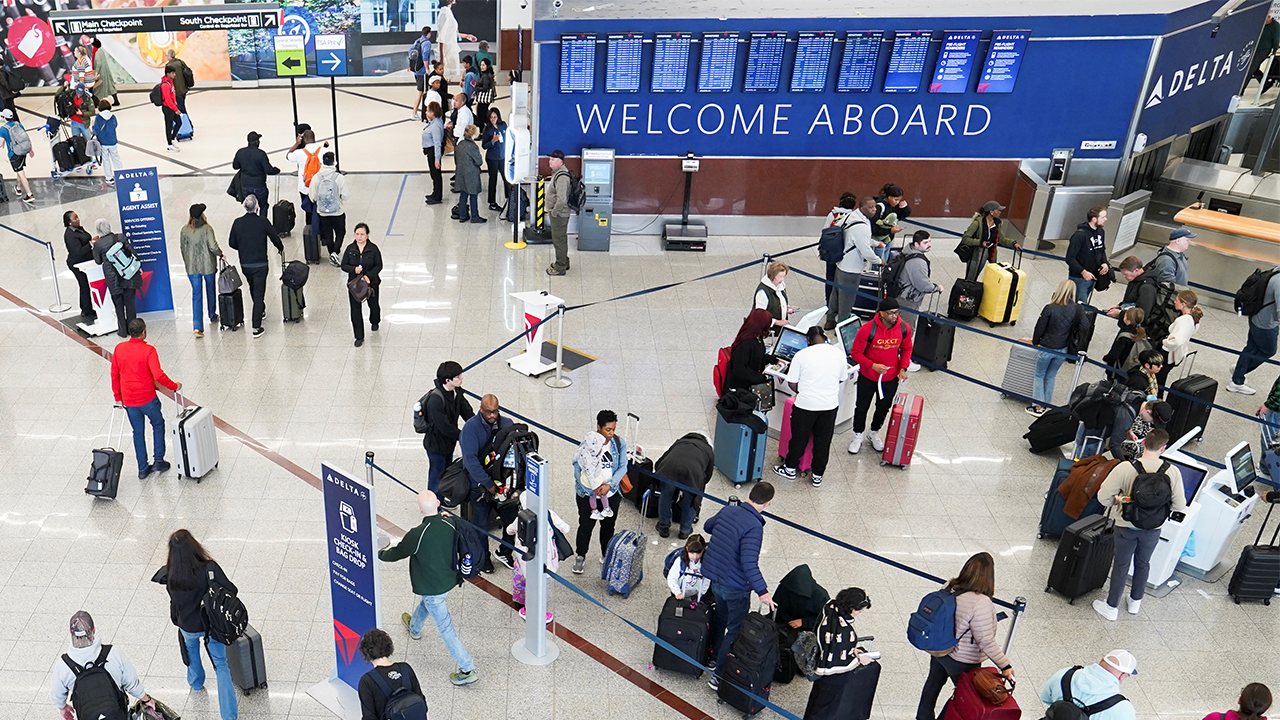
The U.S. House passed the Sunshine Protection Act to make Daylight Saving Time permanent. Fox Businesss Grady Trimble reports on the bill, which now heads to the Senate.
Airlines are warning that changes to existing practices around Daylight Saving Time (DST) would have a major impact on the industry and that changes would need to be implemented over time to account for challenges it would create for scheduling.
Airlines for America (A4A), a trade group that represents leading air carriers in the U.S., released a statement this week which warned that changes to DST “would have considerable implications for aviation, including passenger disruption, crew and aircraft positioning, and domestic and international connectivity issues.”
“Airlines operate expansive interconnected domestic and global networks that are reliant on stability and predictability. Any changes would need an implementation timeline that reflects these global complications,” the group said.
The warning came as the House on Tuesday advanced the Sunshine Protection Act, which would allow states to voluntarily observe DST throughout the year and end the twice-annual clock changes, on a bipartisan 308-117 vote that sent the legislation to the Senate.
HOUSE PASSES DAYLIGHT SAVING TIME REFORM AS TRUMP SIGNALS SUPPORT FOR ENDING CLOCK CHANGE
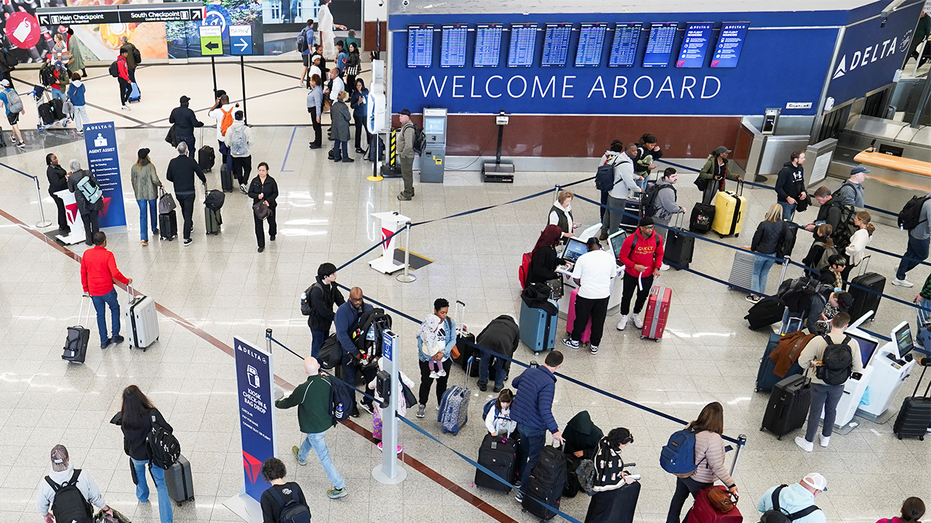
Airlines warned that reforming current practices around daylight saving time would create challenges that need an implementation timeline for the industry to address. (Reuters)
The bill faces uncertainty in the Senate, though President Donald Trump is expected to sign the bill into law if it reaches his desk, as the White House has urged lawmakers to support the legislation.
Most states currently follow the practice of “springing forward” in March by moving the clock forward an hour into Daylight Time, and then “falling back” by an hour in November into Standard Time.
Arizona and Hawaii are the only two states who don’t participate in that practice, while 20 states have approved legislation that would see them remain on DST permanently if authorized to do so by Congress.
DAYLIGHT SAVINGS: IT’S ABOUT THE SUNLIGHT

President Donald Trump has backed the bill to give states the option of permanent daylight saving time. (Anna Moneymaker / Getty Images)
Proponents of permanent daylight saving time argue it would eliminate the disruptions caused by switching clocks twice per year and boost tourism and outdoor activities with more sunlight in winter evenings.
Critics have argued that the earlier sunrises and sunsets of permanent standard time would better align with circadian rhythms, and would prevent situations when the sun may rise after 9 a.m. in the winter.
TRUMP CHAMPIONS BID TO NIX CLOCK CHANGES BY ADOPTING PERMANENT DAYLIGHT SAVING TIME

A House-passed bill to give states the option of permanent daylight savings time is under consideration in the Senate. (J. David Ake/Getty Images)
The American public remains broadly opposed to the current practice of changing the clock twice a year, as an AP-NORC survey released in December found just 12% of respondents were in favor of the current system, while nearly half were opposed. The remaining 40% had no opinion.
The survey also asked about possible reforms and found that 56% of Americans would prefer to make daylight saving time permanent with more light in the evenings and less in the morning, while about 4 in 10 would rather make standard time permanent to have more light in the morning and less in the evening.
GET FOX BUSINESS ON THE GO BY CLICKING HERE
Fox News Digital’s Adam Pack contributed to this report.
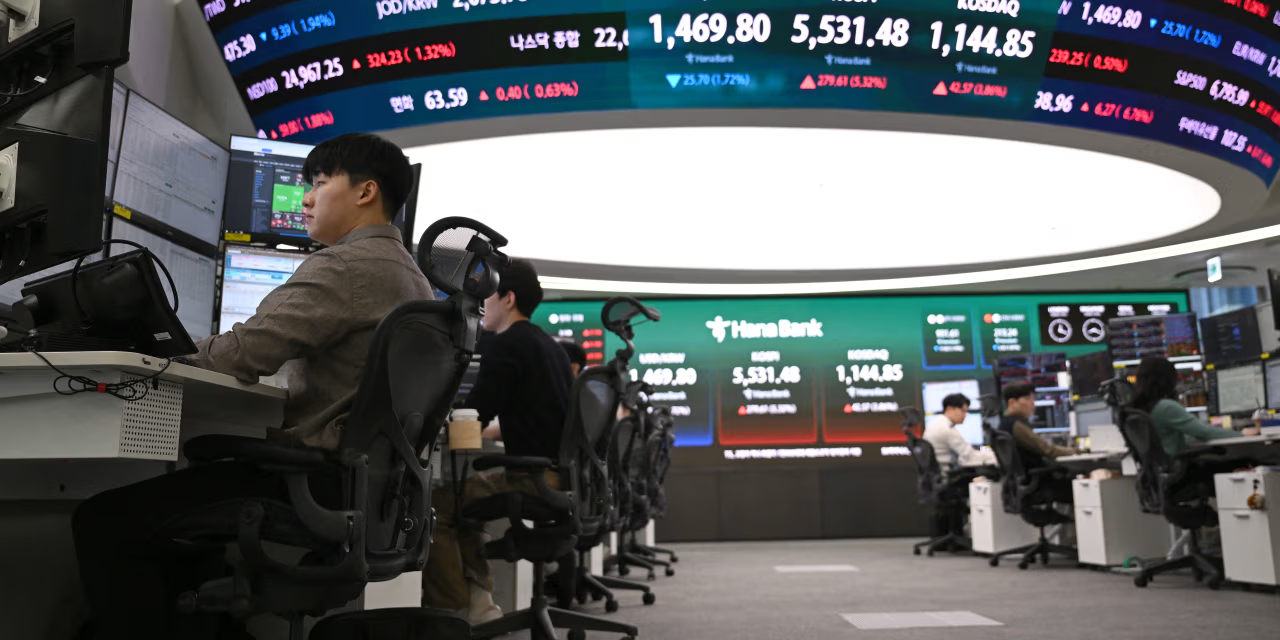
South Korea’s top financial regulator unveiled measures to curb risks from single-stock leveraged exchange-traded funds, seeking to stabilize a local stock market that has seen wild swings, as individual investors use debt to chase profits amid artificial-intelligence-related jitters.
The Financial Services Commission said Thursday that it would suspend new listings of single-stock leveraged ETFs, ban securities firms and asset managers from advertising or marketing such products, and triple the minimum cash deposit for new investments to 30 million won, equivalent to around $20,000.
Copyright ©2026 Dow Jones & Company, Inc. All Rights Reserved. 87990cbe856818d5eddac44c7b1cdeb8
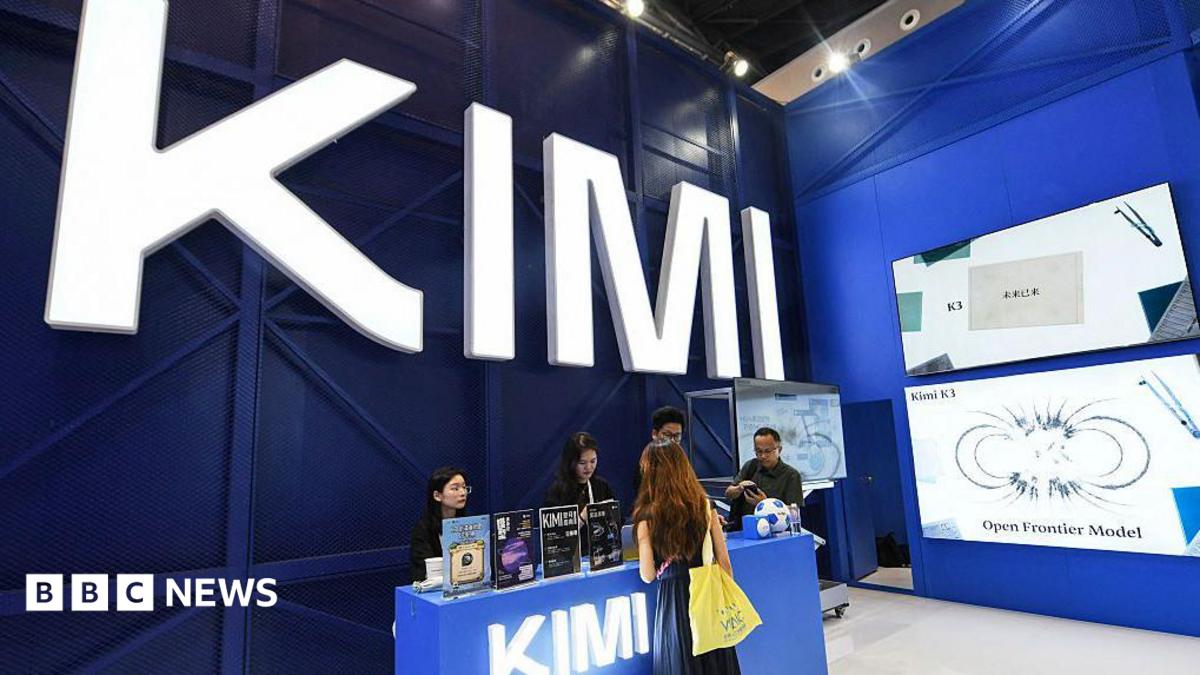
Chinese AI start-up Moonshot has unveiled a massive new artificial intelligence model it says can rival top American firms.
The company launched Kimi K3, containing 2.8 trillion parameters, which serves as a measure of an AI’s scale and processing power.
Kimi K3’s full capabilities – coding, knowledge work, and reasoning – will be known when it is released as an open-source model on 27 July.
The sudden breakthrough suggests that China’s tech prowess is rapidly narrowing the capabilities gap, upending long-held assumptions in the West that Chinese developers trail their American peers.
Its arrival later this month will make it the world’s first open-source model in the three-trillion-parameter class that can be freely downloaded, run and customised by outside developers.
The release comes at a highly sensitive moment for the global technology sector, just weeks after the US government abruptly forced American developer Anthropic to temporarily withdraw its flagship Fable and Mythos models due to severe cybersecurity concerns.
While Washington has since lifted those restrictions, the initial move highlights how the US government now views advanced AI software as critical national infrastructure, labelling frontier models as vital national security assets subject to strict export controls.
However, the rapid arrival of Kimi K3 suggests Chinese firms are successfully bypassing these regulatory barriers and advancing independently despite US restrictions on hardware sales.
Heavily backed by domestic tech giants Alibaba and Tencent, Moonshot has quickly risen to the forefront of China’s generative AI ecosystem.
In a statement the company said that K3 stands as Moonshot AI’s “most capable flagship model to date”.
Unlike closed, proprietary American systems from OpenAI or Anthropic, Kimi K3’s open nature allows global users to modify the system for advanced reasoning and complex software development.
Moonshot AI noted that the system is uniquely built to operate with “minimal human supervision” to sustain tasks such as engineering and coding.
Third-party evaluations from Artificial Analysis and Arena.ai show the model performing on a par with leading models in the US, such as OpenAI’s GPT and Anthropic’s Claude.
In these independent benchmarks, external, Kimi K3 ranked first in web interface engineering, outperforming Anthropic’s Fable system, external in blind human-preference tests.
While the system’s massive size means running it locally requires significant computing equipment, making it open-source could heavily disrupt Silicon Valley’s commercial models.
The announcement had an immediate impact on shares in Moonshot’s domestic competitors Zhipu and MiniMax, which tumbled sharply in Hong Kong by about 27% and 16% respectively.

For all Londoners gripe about the city’s rainy weather, we learnt last week that the alternative is far worse. In a city famously averse to air conditioning, sustained temperatures above 35°C are tough to endure.
And so, speculation that Thames Water is considering a hosepipe ban is particularly unwelcome. Faced with “exceptionally high demand”, the supplier is already cautioning the capital’s residents to use water “wisely”.
The summer’s heatwave raises a thorny question that has been left unaddressed for far too long: what to do with Thames Water, London’s ageing water infrastructure, and the nearly £20 billion debt burden the company finds itself under?
The deceptively easy answer is nationalisation, and it’s one that’s attracted support from figures across the political spectrum. But advocates have not accounted for the astronomical cost nationalisation would impose on the British taxpayer.
For starters, even temporary nationalisation under a Special Administrative Regime, in which the government appoints an administrator to take control, will cost at least £4 billion, a figure likely to balloon significantly higher.
And that’s not to mention the enormous investment the company needs, amounting to at least £20 billion over the next five years just for critical infrastructure upgrades.
Add to this the multibillion-pound cost of compensating Thames Water’s creditors should full nationalisation go ahead, and the government is looking at an 11-figure black hole that will pull funds away from other vital public services, such as healthcare and defence.
These funds also need to be found quickly. Between treatment works, pumping stations and trunk mains, London’s water infrastructure is reliant on single points of failure. Without immediate investment, it is only a matter of time until large parts of the capital are faced with severe disruption to water supplies. In this heat, the government could find itself with a severe public health crisis on its hands.
Anyone questioning whether the government can find the sums needed to invest in Thames Water should look to the seven-year Hammersmith Bridge saga for the answer. Just last week, Hammersmith and Fulham Council confirmed that plans to reopen the bridge to motor traffic have been indefinitely stalled since there is “no financial option available that would allow its full restoration“.
Hammersmith Bridge’s restoration is estimated to cost £300 million – small fry compared to the £20 billion-plus Thames Water needs. The idea the government can source the funds required to fix London’s water system is, quite simply, fantastical.
And then there’s the question of the environment. For a city of London’s stature, it’s an outrage that raw sewage continues to be dumped into our waterways. The Oxford and Cambridge boat race two years ago, nearly derailed due to E. coli exposure which left several crew members vomiting, was a visceral reminder of the appalling state Britain’s waterways have been left in.
But a nationalised Thames Water would fare no better. The same ageing infrastructure, the same overflows; the only difference, the government would now be liable for the hefty environmental fines. It would, of course, be political suicide to levy these funds from the customer or the taxpayer, and so the result would likely be even laxer standards under government control.
The answer is abundantly clear: Thames Water needs investment the government cannot afford. The only feasible solution currently is London & Valley Water’s proposal, tabled by a group of creditors that has spent more than a year in discussions with regulators and the government.
The consortium has offered a substantial restructuring package that would write off approximately £9.4 billion of Thames Water’s debt, inject £3.35 billion in new equity, and provide a further £6.55 billion in financing. It has committed not to pay dividends until 2035, allowing investment to be prioritised over shareholder returns.
L&VW has also pledged to pay all Ofwat and Environmental Agency fines for non-compliance in full, protecting the public from any costs associated with fines or poor performance.
Nationalisation offers the promise of a quick fix which is impossible to deliver. It’s easy, therefore, to see why the issue is so seductive to politicians across the political spectrum.
But London doesn’t need more ideologically driven decision-making, and it most certainly does not want its water bills raised even higher – a likely result of the government shouldering Thames Water’s significant debt obligations and investment requirements.
The government must stop entertaining the nationalisation fantasy and start being honest with Londoners. A private sector solution is the only way to secure the urgent investment London needs to fix our water infrastructure.

York Water VP Mark Snyder acquires $324 in company stock

Southeast Asia’s consumer landscape is evolving with rising incomes, a growing middle class, and digital shopping trends. Companies must adapt to seize long-term growth opportunities across diverse markets.
Abstract
- Southeast Asia’s consumer market is undergoing long-term structural shifts driven by rising incomes, a growing middle class, rapid urbanisation, and increasing digital adoption. Private consumption across the six largest ASEAN economies is projected to reach US$5 trillion by 2035, with e-commerce, premiumisation, and young demographics shaping demand.
- The investment landscape spans six distinct markets, each at a different stage of development, with listed companies across Singapore, Malaysia, Indonesia, Thailand, the Philippines, and Vietnam offering exposure to these trends. Key risks include macroeconomic sensitivity, regulatory changes, and currency fluctuations across the region.
Consumers are spending more, and how they spend is also changing.
As income rises and the middle class expands across the region, consumers are prioritising convenience, trading up to better quality, and increasingly living and shopping online.
These shifts are shaping companies across ASEAN markets that are best positioned to gain from the trend.
Yet despite the momentum, many investors remain underexposed to the ASEAN consumer theme.
Part of the reason is simple: there is no single ASEAN story, but six distinct markets with different levels of income, spending and digital adoption.
Here are the key drivers behind the changing consumer landscape in ASEAN and where the opportunities may lie.
Why invest in the ASEAN consumer theme?
The ASEAN consumer story isn’t short-term spending growth.
It reflects a set of long-term structural shifts that continue to reshape demand across Southeast Asia.
Private consumption across the six largest ASEAN economies is projected to grow by around 8% annually, potentially reaching US$5 trillion by 2035 (Bain & Company, 2025).
At the same time, changing consumer behaviours, from trading up to shopping online, are influencing which companies are best positioned to capture this growth.
1. A rapidly expanding middle class
Income growth has been a key driver of ASEAN’s consumer story.
As households move up the income ladder, spending increases and evolves.
Consumers tend to spend more on higher-quality products, trusted brands, and lifestyle upgrades.
This is reflected in the growth of ASEAN’s middle and mass-affluent population.
Boston Consulting Group estimates that this segment could expand from 57 million people in 2017 to 137 million by 2030, with the largest increases in Indonesia, the Philippines, Vietnam, and Thailand.
Source: Boston Consulting Group, Beyond the ‘Crazy Rich’: The Mass Affluent of Southeast Asia, November 2018
Source: Boston Consulting Group, Beyond the ‘Crazy Rich’: The Mass Affluent of Southeast Asia, November 2018
In Vietnam, the middle class is expected to expand rapidly according to Vietnam’s Ministry of Labour, Invalids and Social Affairs.
Meanwhile, Indonesia’s middle class is projected to make up more than half of the population by 2030.
With this rise in income levels, the opportunity set for investors expands across a wide range of sectors from everyday staples to discretionary spending and premium consumer brands.
2. Young demographics and rapid urbanisation
Southeast Asia has one of the youngest populations globally, and younger consumers tend to adopt new products, brands, and platforms more quickly.
By 2030, Gen Z and Millennials are expected to make up about half of consumers in Asia Pacific (Roland Berger, 2024).
Urbanisation is reinforcing this shift.
As more people move into cities, spending patterns change from traditional retail formats to modern trade, convenience-led consumption, and lifestyle services.
Indonesia, for example, is projected to be 60 percent urbanised by 2045 (UN, 2024), while Vietnam’s urban population continues to grow steadily.
This shift from rural to urban living is one of the strongest long-term tailwinds for ASEAN consumer companies.
3. The rise of e-commerce and social commerce
ASEAN’s consumer journey is also becoming increasingly digital.
This trend is evident in Southeast Asia’s e-commerce market, where platform gross merchandise value reached US$128.4 billion in 2024, up 12% year on year.
Source: Momentum Works, Ecommerce in Southeast Asia 3.0, June 2025
*GMV estimation covers only transactions on Shopee, Lazada, Tokopedia, TikTok Shop, Bukalapak, Tiki, Blibli, and Amazon SG. GMV estimated here includes all paid orders, including cancelled, returned and refunded orders.
According to Momentum Works’ Ecommerce in Southeast Asia 3.0 report, Shopee, TikTok Shop and Lazada accounted for more than 84 percent of platform e-commerce GMV in the region in 2024, with Shopee alone holding a 52 percent market share.
When we include non-platform channels such as brand websites, social media storefronts and messaging apps, Southeast Asia’s total e-commerce GMV reached US$145.2 billion in 2024, making up 12.8 percent of total retail. (Momentum Works, Ecommerce in Southeast Asia 3.0, June 2025).
Source: Momentum Works, Ecommerce in Southeast Asia 3.0, June 2025
*Non-platform GMV includes transactions that happen on open-loop social platforms (e.g. Facebook), brand.com, multi-brand retailer sites/apps, cross border channels, as well as orders placed via chat platforms such as Whatsapp.
Thailand and Malaysia were the fastest-growing markets, with e-commerce GMV rising 21.7 percent and 19.5 percent, respectively.
Despite this growth, most retail spending still occurs offline, suggesting there is still significant room for further digital penetration.
4. Premiumisation
As incomes rise, ASEAN consumers are increasingly trading up across many categories, from premium instant noodles and artisan coffee to health supplements, imported skincare, and branded fashion.
Source: Bain & Company and NielsenIQ, Southeast Asia: What’s Happening with Consumers and Consumer Products, November 2025
Bain and Company found that the luxury goods market in Southeast Asia grew at 6 percent annually between 2015 and 2021, and the trend has accelerated since (Bain and Company).
This matters for investors because companies that build strong premium brands often enjoy better margins, more loyal customers, and stronger pricing power over time.
5. Resilient domestic demand
One of the most attractive parts of the ASEAN consumer story is its resilience.
Even when external conditions weaken, domestic consumption has often helped support growth and recovery across the region.
UOB’s ASEAN Consumer Sentiment Study 2024 found that 52 percent of consumers said they were spending less on non-essential items. That may be a near term headwind, but it sits against a much larger long-term trend driven by demographics, rising wages, and the aspirations of a growing middle class.
Source: UOB, ASEAN Consumer Sentiment Study 2024 (Regional): Positive outlook amidst inflation and rising expenses, August 2024
For long term investors, periods of weaker consumer sentiment can sometimes create more attractive entry points into strong consumer franchises.
What are the investment opportunities in ASEAN consumer stocks?
The ASEAN consumer theme is not a single, uniform investment idea.
It plays out across different sectors and at different stages of development in each market.
Rather than focusing on identifying one “perfect” stock, it can be more useful to map the theme across a range of listed companies that offer exposure to key shifts such as convenience-led spending, digital commerce, and premiumisation.
Below are two to three listed companies from each of the six major ASEAN markets that provide exposure to these trends.
These are shared for educational purposes only and do not constitute investment recommendations.
Singapore
Singapore is the most developed consumer market in ASEAN.
With high income levels and steady tourist inflows, consumer spending here is supported not just by local demand, but also by visitors’ spending on shopping, dining, and personal care.
DFI Retail Group Holdings (SGX: DFIR)
DFI Retail gives investors broad exposure to everyday consumer spending across Asia through a single SGX-listed stock. Its brands span supermarkets, health and beauty, convenience stores, and food services, including Cold Storage, Giant, Guardian, 7-Eleven, and Maxim’s.
Sheng Siong Group (SGX: OV8)
Sheng Siong is one of Singapore’s best-known supermarket operators, with a strong presence in heartland neighbourhoods. Its focus on affordable fresh and dry groceries makes it a direct way to gain exposure to resilient household spending.
CapitaLand Integrated Commercial Trust (SGX: C38U)
For investors looking for exposure to Singapore retail spending through property, CapitaLand Integrated Commercial Trust, or CICT, stands out as the clearest listed proxy.
Its retail portfolio includes some of Singapore’s best-known malls, such as IMM, Bugis Junction, Tampines Mall, Funan, and ION Orchard. This gives investors exposure to both suburban and tourist-linked retail traffic.
Malaysia
Malaysia’s consumer backdrop has been relatively supportive.
The economy grew 5.2 percent in 2025, while household incomes continued to rise.
A stronger ringgit has also helped improve purchasing power and made Malaysian consumer stocks more attractive to foreign investors.
Padini Holdings Berhad (Bursa Malaysia: PADINI)
Padini is one of Malaysia’s best-known homegrown fashion retailers, with brands spanning footwear, apparel and children’s wear. Its different formats allow it to serve both mainstream and more value-focused shoppers.
Oriental Kopi Holdings Berhad (Bursa Malaysia: KOPI)
Oriental Kopi is one of Malaysia’s newer consumer listings and offers exposure to the growing appeal of lifestyle dining brands. Its kopitiam style cafés are located in high-traffic malls and popular urban destinations, giving it exposure to both local consumer spending and tourism.
CCK Consolidated Holdings Berhad (Bursa Malaysia: CCK)
CCK is an integrated food group with core strengths in poultry, seafood and food retailing, supported by a fully integrated supply chain from farming and processing to distribution. Its CCK Fresh Mart and CCK Local outlets provide a strong retail footprint, particularly in East Malaysia, allowing the group to capture recurring consumer spending on fresh and affordable protein. Beyond Malaysia, CCK has built a meaningful regional presence, with roughly 20% of sales coming from Indonesia and around 5% from Japan, providing geographic diversification.
The company is a constituent of the Bursa Malaysia Quality 50 Index.
Indonesia
Indonesia is ASEAN’s largest consumer market, with a population of about 280 million and household spending contributing more than half of GDP.
That makes it one of the clearest ways to gain exposure to rising incomes, urbanisation, and a growing middle class in the region.
PT Mayora Indah Tbk (IDX: MYOR)
Mayora is one of Indonesia’s best known consumer companies, with brands such as Kopiko, Roma, Torabika, and Energen sold both at home and overseas. Its products sit in everyday categories, which gives investors exposure to resilient household spending, while its export reach adds another layer of growth.
PT Mitra Adiperkasa Tbk (IDX: MAPI)
Mitra Adiperkasa, or MAP, is Indonesia’s leading lifestyle retailer. It operates a large network of stores across the country and carries a broad mix of international brands spanning fashion, sports, department stores, food and beverage, and lifestyle. Its brand roster includes Starbucks, Zara, Marks & Spencer, SOGO, SEIBU, Mango, and Converse.
PT MAP Aktif Adiperkasa Tbk (IDX: MAPA)
MAP Active is the sporting goods and active lifestyle arm of the broader MAP group. It gives investors more focused exposure to categories such as sportswear, footwear, and active lifestyle brands including Sports Station, Planet Sports, The Athlete’s Foot, Golf House, Kidz Station, and Payless across Indonesia, the Philippines, Thailand, Malaysia, Vietnam, and Cambodia.
Thailand
Thailand’s consumer story is supported by both tourism and domestic spending, although the backdrop has become more mixed.
In 2024, the market enjoyed a strong recovery as international tourist arrivals rose to 35.5 million and tourism revenue climbed sharply. But 2025 has been softer, with foreign arrivals declining and GDP growth expected to slow. Even so, retail consumption has remained relatively supported by government measures and a still resilient domestic spending base.
CP All Public Company Limited (SET: CPALL)
CP All is Thailand’s dominant convenience retailer, operating the 7-Eleven network across the country. With nearly 16,000 stores, it is deeply embedded in the daily habits of Thai consumers.
Singapore-based investors can access CP All through its Singapore Depository Receipt (SGX: TCPD).
Central Retail Corporation (SET: CRC)
Central Retail is Thailand’s leading multi-format retailer, with exposure across department stores, supermarkets, wholesale, DIY, electronics, sports retail, and Vietnam’s GO! hypermarket network. Across Thailand, it operates Central and Robinson department stores, Tops supermarkets, GO Wholesale, Thaiwatsadu DIY, Power Buy electronics, and Supersports.
Singapore investors can access CRC via its Singapore Depository Receipt (SGX: CRCD).
Thai Beverage Public Company Limited (SGX: Y92 / SET: TBEV)
ThaiBev is one of Southeast Asia’s largest beverage companies, with exposure across spirits, beer, non-alcoholic drinks, and food. Its portfolio spans spirits (Chang, Ruang Khao, Hong Thong), beer (Chang, Sabeco brands in Vietnam), non-alcoholic beverages (Oishi, est cola), and food (KFC and Starbucks franchises in Thailand).
ThaiBev is primarily listed on SGX (SGX: Y92) and also on SET (SET: TBEV), making it one of the most accessible Thai consumer names for Singapore-based investors.
Through its 53.6% indirect ownership of Sabeco, ThaiBev also provides exposure to Vietnam’s beer market.
Philippines
The Philippines is one of ASEAN’s more dynamic consumer markets, supported by a young population, steady remittance inflows, and strong brand loyalty.
Jollibee Foods Corporation (PSE: JFC)
Jollibee is the Philippines’ most recognisable consumer brand and one of Asia’s largest restaurant groups. Beyond its core Jollibee brand, it also owns a broad portfolio that includes Chowking, Mang Inasal, Greenwich, Coffee Bean & Tea Leaf, Highlands Coffee, Smashburger and Tim Ho Wan.
Puregold Price Club (PSE: PGOLD)
Puregold is one of the Philippines’ leading grocery retail groups, best known for its Puregold supermarkets and hypermarkets that serve both household consumers and small business owners such as sari-sari stores. The group also owns S&R Membership Shopping, a warehouse club format targeting middle- to higher-income consumers, giving it exposure across both value-oriented grocery retail and bulk membership-based retail.
Universal Robina Corporation (PSE: URC)
URC is one of the Philippines’ largest branded food and beverage companies, with products spanning snacks (Jack ‘n Jill), biscuits, chocolates, beverages (C2), coffee (Great Taste) and noodles. Its brands are sold not only in the Philippines, but also across Southeast Asia.
Vietnam
Vietnam remains one of Asia’s most compelling consumer growth stories. As incomes rise and urbanisation continues, spending is shifting steadily from basic necessities towards modern retail, branded products, and lifestyle consumption.
Mobile World Investment Corporation (HOSE: MWG)
Mobile World is one of Vietnam’s leading retail groups, with exposure across electronics, home appliances, grocery, pharmacies, and baby products through brands such as The Gioi Di Dong, Dien May Xanh, Bach Hoa Xanh, An Khang, and AvaKids.
Vietnam Dairy Products Joint Stock Company, Vinamilk (HOSE: VNM)
Vinamilk is Vietnam’s leading dairy company and one of the country’s strongest consumer brands. Its products are sold widely across Vietnam and exported to dozens of overseas markets. According to Kantar Worldpanel, Vinamilk has been the most purchased dairy brand in Vietnam for 12 consecutive years.
Saigon Beer–Alcohol–Beverage Corporation, Sabeco (HOSE: SAB)
Sabeco is Vietnam’s largest brewer and the maker of its most consumed beer brands — Bia Saigon, 333, and Bia Lac Viet. The company operates 26 plants with a total designed capacity of approximately 3 billion litres per year.
Key risks to watch out for
Even with a strong long term case, ASEAN consumer stocks can still be volatile because the region is exposed to several risks at once.
1) Macroeconomic and demand risks
ASEAN economies remain sensitive to slower growth in major markets such as China and the US, swings in commodity prices, and the impact of higher global interest rates on borrowing costs and consumer confidence. When conditions weaken, discretionary spending is usually hit first.
2) Regulatory and policy risks
Rules differ widely across ASEAN, and policy changes can be sudden. Shifts in import tariffs, wages, foreign investment rules, or sector regulations can quickly affect industry profitability. Vietnam’s tighter enforcement of drink driving laws, for example, created a near term headwind for beverage companies.
3) Currency and repatriation risks
For investors buying across the region, returns are also affected by moves in currencies such as the Thai baht, Indonesian rupiah, Philippine peso, Vietnamese dong, and Malaysian ringgit. A stronger US dollar can reduce USD-based returns when profits are converted back.
Putting the ASEAN consumer theme into perspective
The ASEAN consumer theme offers a broad and evolving set of opportunities, shaped by long-term structural shifts across income growth, demographics, and digital adoption.
Rather than treating it as a single investment idea, it can be helpful to build exposure across different markets and sectors, recognising that each country is at a different stage of development.
One approach is to invest directly in listed consumer companies on the respective ASEAN exchanges. The companies highlighted in this article, from DFI Retail and Sheng Siong in Singapore to MWG and Vinamilk in Vietnam, provide exposure to different parts of the region’s consumer growth story.
For Singapore-based investors, Singapore Depository Receipts listed on SGX can offer access to selected regional consumer stocks without needing to trade in multiple local markets.
For those seeking broader diversification, ETFs focused on ASEAN or individual country markets can also provide exposure to consumer growth alongside other sectors.
Regardless of the approach, it remains important to start with the fundamentals, including reviewing company announcements, financial results, and market data from official exchange websites such as SGX, Bursa Malaysia, IDX, SET, PSE and HOSE, before making any investment decision.
This article was written by Beansprout, a MAS-licensed investment advisory platform, in collaboration with ASEAN Exchanges.
Source : ASEAN’s Consumer Boom: A $5 Trillion Growth Story in the Making
Other People are Reading

Emma joins Nuala McGovern to discuss her book Start With Yourself: A New Vision for Work and Life.

The Cost Of Summer Holiday Childcare In 2026

Swiss rider Schmid wins Tour de France’s longest stage as Pidcock climbs into fourth

This Week In Security: Another Record Patch Tuesday, LAME Is More Secure, Secure Boot Is Less Secure, And Milk Malware


-

 Fashion7 days ago
Weekend Open Thread: Nutriplenish Leave-In Conditioner
-
 NewsBeat1 day ago
London Mayor Sadiq Khan handed a peerage by Keir Starmer alongside 15 other Labour figures… just days before the PM leaves No10
-

 Crypto World2 days ago
CFTC blocks Kalshi from unwinding Michigan trades after court order
-

 Politics2 days ago
Young campaigners urge incoming PM to act on outdoor junk food ads
-

 Business2 days ago
Nvidia Stock Slips After Big Tuesday Rally as Huang Confirms Vera Rubin Chip Is Now in Production Today
-
 Entertainment2 days ago
Disney’s Most Ambitious Failed Star Wars Attraction Is Coming to SDCC
-

 Fashion2 hours ago
Weekend Open Thread – Corporette.com
-

 News Videos3 days ago
XRP BOMBSHELL… XRP OMBOARDED FOR TRANSACTIONS!!!
-

 Tech4 days ago
Get Your ESP32 Sunny Side Up With This Solar Dev Board
-

 Crypto World23 hours ago
Injective Submits SEC Transfer-Agent Registration to Onchain Ownership Records
-

 NewsBeat8 hours ago
Registration is now open for March for Men with Kev 2026
-

 Tech3 days ago
Dark Secrets Emerge When Jailbreaking LLMs
-

 Business2 days ago
Palantir Shares Rise After Expanded Nvidia Partnership and Fresh Analyst Upgrades Ahead of Earnings Day
-

 News Videos13 hours ago
Money | Class 12 Economics | CBSE Board Exam 2026-27
-
 Sports2 days ago
New Cornerback Enters Vikings Trade Rumor Mill
-

 Business18 hours ago
Banco Bilbao Vizcaya Argentaria, S.A. (BBVA) Discusses Global Macro Environment and Economic Outlook for Core Markets Transcript
-
 Tech4 days ago
Cloudflare Precursor Watches Your Mouse and Keyboard To Decide If You Are Human
-

 News Videos4 days ago
how to make coin bank box with cardboard #scienceproject #money #diy #shorts
-
 Entertainment2 days ago
Vicki Gunvalson Defends Discussing Heather Dubrow’s Money
-
Crypto World3 days ago
Ripple, Coinbase, Circle Join Linux x402 Foundation to Help Shape AI Payments
You must be logged in to post a comment Login