

Politics
Survivors of Spycops abuses fear Home Office ‘consultation’ is an attempt to shut down inquiry

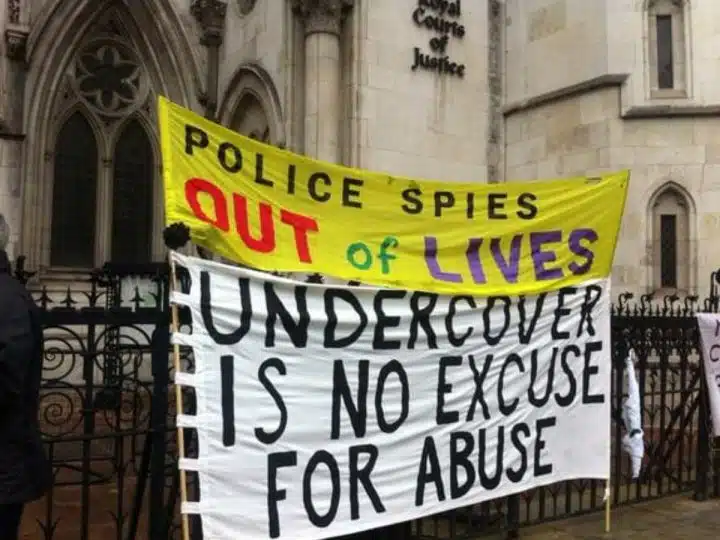

This is a statement from Campaign Opposing Police Surveillance regarding the Undercover Policing Inquiry
Following elation at the progress of the Hillsborough law, victims of spycops were confronted on 16 July with a Home Office ‘consultation’ into the future of the Undercover Policing Inquiry.
We are shocked and surprised by the announcement and deeply concerned that this is an attempt to shut this Inquiry down. We have been requesting a meeting with the Sponsor Department of the Home Office for more than a year and have been stonewalled.
Now, we are presented with this multiple choice survey which clearly demonstrates that they have already considered the options without listening to us. We wish to stress that the delays and costs incurred by the Inquiry to date are entirely the result of applications for secrecy and lack of candour by the state agents taking part.
The timing of this consultation (in the middle of Inquiry hearings and at the start of the Summer break) will exclude many of those affected from being able to properly engage. The options on offer have real implications for how, and whether, the truth gets established, and we are considering the survey carefully.
We are calling on supporters not to fill it in until we have had a chance to respond.
The UCPI has been running since 2015, investigating abuses by undercover officers spanning five decades. One of the most expensive and longest running in British history, it has been hampered by the death of its first Chair and the imminent retirement of its second, with no replacement in sight.
So far it has only considered a single police unit, and is yet to consider some of the most important evidence, relating to abuses that took place under the existing regulatory framework that is supposed to protect us today.
Police actions to disrupt and stall proceedings (using tactics such as ‘Neither Confirm Nor Deny’, making numerous anonymity applications, and demanding extensive redactions of documents) prevented the Inquiry from even starting to hear evidence for the first six years, and continue to cause delays.
We believe that had there been a Hillsborough Law in place when the Inquiry started it would have saved much time and expense.
Since hearings started in 2020, the Inquiry has uncovered evidence of sustained misconduct and corruption. Some of the most important revelations of our time about secret state (and Home Office) interference in our political freedoms.
The constant stream of revelations has caused considerable embarrassment and led to multiple public apologies from the Metropolitan Police. We have no doubt that there are powerful interests who would want it shut down.
However, the Inquiry has yet to consider units such as the National Public Order Intelligence Unit (NPOIU), who employed one of the most notorious officers, Mark Kennedy. Many victims are still waiting for answers, and the Inquiry must properly consider all the evidence before key recommendations can be made.
We call on the Home Office not to hamper the search for truth and justice, and to allow the spycops Inquiry to do the job it was called on to do. We will continue to hold the police and public officials to account.
Campaign Opposing Police Surveillance
Campaigning in partnership with Police Spies Out of Lives, The Monitoring Group, the Blacklist Support Group and the Undercover Research Group.
Featured image via the Canary
By The Canary

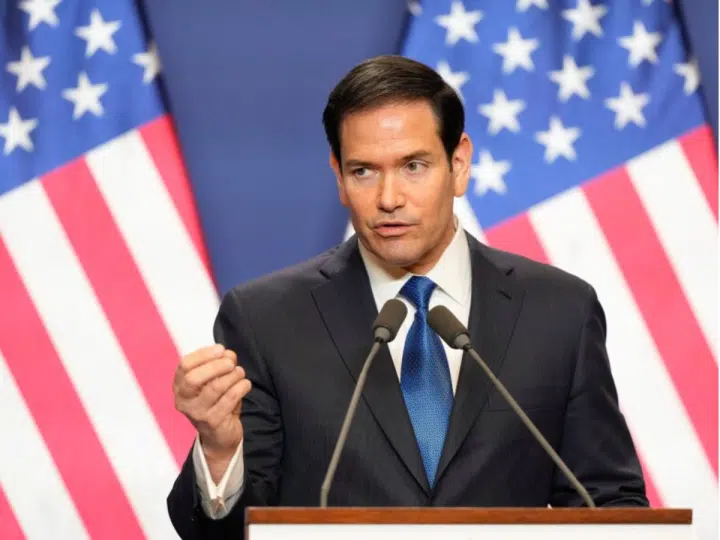
Sixty-six countries attended US Secretary of State Marco Rubio’s summit on left-wing terrorism this week. The farcical event was meant to highlight what Rubio says is a rising leftist threat, largely ignored on ideological grounds.
In reality, it can be read as an attempt to found and codify a US-led fascist international — a new Axis steered by the Trump regime.
Al Jazeera reported:
The “Ministerial on the Resurgence of Political Terrorism”, taking place on Thursday, brings together government representatives from around the world to coordinate on what the US Department of State calls a “renewed threat” that has “remained a blind spot in the international community’s counterterrorism focus”.
For Rubio, a hardline war hawk obsessed with overthrowing the Cuban government, ‘left-wing’ terror and a vaguely defined ‘antifa’ are the primary threats of the day. Like most of the Trump regime he believes in a long-discredited and racist ‘civilisational’ narrative.
At the conference, he said:
This is a distinctive and unique evil. It has always been driven by a hatred above all else, a hatred for civilisation itself. It is a revolt of the worst against the best, a revolt of the weak and the cowardly against the strong and the good.
Time magazine listed those in attendance. Mark them well.
The countries with officials present were: Albania, Argentina, Australia, Austria, Belgium, Belize, Bolivia, Bosnia and Herzegovina, Bulgaria, Canada, Chile, Costa Rica, Croatia, Cyprus, Czechia, Denmark, Dominican Republic, Ecuador, Estonia, Finland, France, Georgia, Germany, Greece, Guatemala, Honduras, Hungary, Iceland, India, Indonesia, Ireland, Israel, Italy, Jamaica, Japan, Korea, Kosovo, Latvia, Lithuania, Luxembourg, Malaysia, Malta, Moldova, Montenegro, Netherlands, New Zealand, North Macedonia, Norway, Panama, Paraguay, Peru, Philippines, Poland, Portugal, Romania, Serbia, Slovakia, Slovenia, Spain, Sweden, Switzerland, Trinidad and Tobago, Türkiye, Ukraine, United Kingdom, and Uruguay.
Some of these — Israel, Argentina, Hungary and Italy, for example — make perfect sense as attendees. These are states led by far-right thugs, genocidaires and fascists who slot into what some call the ‘Reactionary International’.
New Zealand, Canada and others which claim to be particularly liberal nations should know better. The (purely theoretically) centre-left UK government was also in attendance. The sense is that this is less ‘scratch a liberal, find a fascist’, and more groveling obedience to the US empire. Though it may well be a touch of both.
Rubio wars with the oppressed and an imagined left
Rubio singled out exactly the kind of targets you would expect.
He claimed that this has led to “acts of violence and even terrorism” tied to “left-wing causes” being treated as legitimate forms of political outcry by U.S. officials, pointing in particular to the Black Lives Matter protests that broke out in the wake of George Floyd’s killing by a Minneapolis police officer in 2020.
Predictably (and as the Canary and others have warned) the US is merging the practices and norms of War on Terror with Trump’s new war on the left, the exploited and the oppressed.
This was something worse than a double standard. Left-wing violence was not just excused, it was treated as sacrosanct, a protected class unto itself. That era has to end.
Time quoted Rubio as arguing that “the international community must come together and rebuild its counterterrorism infrastructure to combat such violence like it did to counter ‘radical Islamist extremism’ earlier in the 21st century”.
All of this fits into Trump’s vision for a ‘homeland empire’. Through his ICE attacks on migrants at home and anti-US governments in the Americas under the guise of a ‘war on drugs’, Trump wants uncontested US rule — or, failing that — fuller domestication of the American continent.
Deputy State Secretary, Christopher Landau, opened with reference to long-dead left terrorist movements as if they were current threats.
He said:
From the Red Brigades and the Baader-Meinhof Group in Europe, to the Weather Underground here in the United States, to the Tupamaros and the Montoneros in South America, many of our countries have familiarity in the past with political terrorism, and unfortunately, we’re seeing a resurgence of that again today.
Economic war on the left
And US Treasury Secretary, Scott Bessant, promised to starve this almost entirely imaginary enemy of funding.
He stated:
Ours begins where every campaign of terror does: its financial lifeblood. And at President Trump’s direction, the United States Treasury is bringing the full weight of our authorities to defend the integrity of the U.S. and global financial systems.
Naturally, actual terrorism experts argued the whole basis of the conference was a sham. Director of the International Centre for Counter-Terrorism, Thomas Renard, said:
What we are seeing now in the United States is that counterterrorism has been completely politicised, instrumentalised.
For instance, the threat from far-right terrorism, which was for decades considered as the primary domestic threat, has now completely disappeared from the US counter-terrorism strategy.
Renard also said the European states had sent only junior ministers.
They are not particularly convinced that this is a topic that justifies this type of gathering, but at the same time, they don’t want to antagonise the United States either. And therefore, this is the compromise they found.
In truth, of course, they should have sent no ministers at all rather than dignify the event.
Civilisational obsessives with guns
White House Deputy Chief of Staff, Stephen Miller — a less well-known but particularly vicious figure obsessed with fascistic civilisational narratives — said:
We must stay the course and be completely unflinching in the pursuit of justice against these enemies of civilisation. If the left is allowed to use the real or actual threat of violence to destabilise our institutions, then those institutions cannot and will not succeed.
Some of this is pure right-wing fantasia. Twentieth century fascism was in part a response to an actual organised left: mass democratic parties, strong trade unions, a sense of capitalist grievance over advances in rights for the maligned, oppressed and exploited. Fascism was, and is, an effort to put people back in what fascists believe is their rightful place and to reset capitalism.
The fact is that no left movement as broad or as powerful exists today. But the truth is fascistic hysteria, as we have seen with Trumpism and other examples, can and does move people — albeit via pure emotion, not fact.
And fascism is rising. Precisely where it is rising is significant as journalist Matt Kennard recently told the Canary.
We need to locate the United States as a centre of global fascism, as the centre of global war, and we need to work out how we can dismantle the US empire.
"We need to locate the United States as a centre of global fascism, as the centre of global war, and we need to work out how we can dismantle the US empire."
We met up with Matt Kennard outside the US Embassy in London to discuss his book, Irregular Army.
During the 'war on… pic.twitter.com/5grfQCVxQf
— Canary (@TheCanaryUK) July 17, 2026
Rubio’s summit is laughable in some ways, as is the rhetoric of the speakers and the cowardice of the nations who attended. But it is dangerous too.
The world is increasingly fractured by active and potential wars, atrocities and economic decline. In that environment, Trumpism has established a foothold, built an armoury with truly global reach, and is seeking to unite disparate forces into a new, disciplined axis of hate.
Featured image via Alex Brandon/ Assosciated Press
By Joe Glenton

With six weeks to go until Manchester Village Pride, performing arts union Equity is calling on Manchester City Council to ensure that performers out of pocket from last year’s Manchester Pride collapse get the pay due for their work.
Pride takes place from 28-31 August this year under a new Community Interest Company rooted in Manchester’s Gay Village. This follows the collapse of Manchester Pride in 2025.
The new Manchester Village Pride event will be one of the first Pride events to operate on a union agreement, after Equity and Manchester Village Pride signed a house agreement for minimum terms and conditions for performers, including stronger safeguards around payments.
But Equity is still working to secure funds for unpaid performers from last year. The union is working with more than 50 performers who were impacted by non-payment for their work at last year’s event, with individuals owed between £150 to £5,000 each, totalling over £70,000.
Despite some encouraging initial conversations with Manchester City Council, communication has ground to a halt and there has been no material progress in securing funds for the performers, many of them local Mancunians, who went without pay for their work.
According to Manchester Pride, the annual event generated over £104m for the city between 2021 and 2025. This means the City Council benefits and has a financial interest, as well as being a supporter of the event.
Equity’s North West Official, Karen Lockney, said:
In the run up to this year’s Manchester Pride, we renew our call to Bev Craig – current leader of Manchester City Council and Labour’s candidate for Mayor of Greater Manchester – to ensure performers who are owed money for last year’s Manchester Pride are paid for their work.
Despite passing a motion in November last year to ‘work constructively’ with Equity, Manchester City Council are yet to update us on how to recoup money owed to performers.
We also met with Bev Craig in November and pushed for a follow up meeting with deputy leader Garry Bridges in February, but have not received any response to subsequent requests for information. There has also not been any update on our applications to suggested funds.
While it is positive that Manchester City Council champions Pride – especially when such events are under threat from Reform councils elsewhere in the country – this means little unless there is meaningful action to support the event’s workers, without whom Pride could not take place.
Featured image via the Canary
By The Canary

During the Makerfield by-election, Andy Burnham backed Shabana Mahmood’s immigration reforms, aligning Labour’s prevailing strategy to the anti-immigration mood.
Mahmood’s position, in short, follows the Danish Social Democrats’ model: harden rhetoric and reduce numbers to take the ground from the far right.
Burnham had previously criticised the home secretary’s plans, warning they leave people “in a sense of limbo and unable to integrate”. But he seems to have dropped this concern to appeal to the political context of the Leave-voting, Reform-susceptible constituency of Makerfield.
The broader public mood on immigration is, however, more nuanced. Having won the by-election, Burnham now has an opportunity to revisit the assumptions behind Labour modelling itself after the Social Democrats to consider a potentially more successful model: Pedro Sanchez’ Spain.
Immigration figures don’t lie…
The headline figures on immigration anxiety are striking. Immigration ranks among the top three public concerns, with two-thirds of Brits saying immigration levels are too high.
However, if you look beneath the surface, a more complicated picture emerges.
When pollsters separate regular from irregular migration, only 22% of Britons say migration has been bad for the country. Those travelling via established visa routes make up the majority of arrivals.
Almost two-thirds of people support keeping NHS staffing levels, even if it means higher migration. Moreover, six in 10 people would prioritise having enough workers for industries with skill shortages over reducing immigration. It is not as straightforward, then, to say Britons want less immigration across the board.
…but liars figure
The picture is even more complicated by polling that looks at the perception gap between what the government is doing and what is happening with immigration.
Two-thirds of Brits wrongly believe that the immigration rate is rising while net migration has fallen to 171,000 in 2025 under Labour, which represents an 82% drop from Tories’ 944,000 in 2023. Despite that sharp fall, three-quarters of voters say they have little or no confidence in the government on immigration.
That gap between the reality of net migration and the public’s perception suggests that the public is wrongly informed. Political parties like Reform and Restore Britain, of course, benefit from the public being misinformed because their electoral success depends on voters’ anxieties around immigration.
If voters cared to understand the true figures, they would likely not trust Reform’s Robert Jenrick to lower immigration, as he was immigration minister during the 2023 peak.
The perception gap also suggests that, whatever you do to immigration numbers, it will not change the electoral picture as voters’ fears are based on what they are being told, rather than the reality. Labour’s strategy is to talk up immigration as a problem to be tackled when no one trusts them to tackle it. Working hard to lower the numbers, when no one thinks they are, might not be a winning strategy.
Play with fire, get burned
Mahmood’s strategy is coherent on paper. If Labour concedes a bit on immigration — by enacting strict asylum rules, enforced returns and caps on settlement — Reform might no longer have a distinct offer to voters.
The approach is akin to setting off a Labour-managed controlled burn to remove the fuel for a Reform-led wildfire.
For example, by making targeted concessions to the anti-immigration mood, Labour wants to prevent a Reform or Restore government that would do far worse, like ICE-style interventions into communities or stripping citizenship from British citizens. The problem is the people you are trying to satisfy with a controlled burn want the wildfire, so all you end up doing is normalising fire.
Reform, Restore Britain and Tommy Robinson’s base want the UK to withdraw from the European Convention on Human Rights, abandon the Refugee Convention, and breach international prohibitions on torture. Labour would hopefully never go that far, so Mahmood’s strategy does not approach a satisfactory destination.
The concessions, then, take enough of Reform’s programme to legitimise the nativist framework, while being unable to deliver its logical conclusions. Therefore, raising the threshold of what counts as tough enough and making the subsequent demands easier to voice.
Concessions help the far right
Across Europe, the evidence is clear. When centre-left parties adopt far-right positions on immigration, it does more good for the far right than for the centre-left.
Studies in journals like Political Research Exchange and Political Science Research and Methods found that mainstream parties moving toward radical-right positions on immigration consistently failed to win over right-wing voters. They also found that centre-left strategy legitimised right-wing positions, pushing voters toward the radical-right and losing support among their own base.
Centre-left parties end up squeezed from both sides, which is precisely what happened to Starmer’s Labour.
Even on its own terms, the Danish model does not work. In Denmark, the Social Democrat Party just had its worst election result since 1903. Labour politicians took inspiration from a strategy that did not even work for the people who created it.
Hasta la visa, Shabana
While Labour has been looking to Copenhagen, Pedro Sánchez’s Spain offers an alternative model, particularly for a Labour government that once made economic growth its central mission.
Sánchez’s government, for instance, launched an extraordinary regularisation process in January, expected to allow about 500,000 migrants without legal status who are already in Spain to apply for temporary legal status, moving them from the ‘shadow economy‘ into legal employment.
Under Sanchez’s pro-immigrant policies, Spain’s economy grew by 2.8% in 2025 — roughly twice the EU average and the UK’s rate. Sánchez has argued that migration represents 25% of Spain’s per capita GDP, 10% of social security revenues and just 1% of public expenditure.
This approach has historical precedent: Spain’s 2005 regularisation under former Prime Minister, José Luis Rodríguez Zapatero, gave legal status to more than 600,000 migrants who had become undocumented. Research found tax revenues increased by around €4,000 per regularised immigrant each year.
Critics would imagine such an approach only encourages illegal immigration, but studies found no evidence of a significant “magnet” effect.
Don’t chase the right on immigration
Spain has by no means solved immigration as a political issue or defeated the far right, as Vox remains the third largest party in parliament.
Spain has, however, demonstrated that a centre-left government does not need to chase the far right, and can instead, through immigration, produce economic growth that outpaces sluggish EU peers like France and Germany.
Spain’s approach also offers a remedy to the UK’s ageing population, chronic labour shortages and a Treasury that consistently misses its growth targets. The British public broadly supports migration that produces growth.
Public hostility is concentrated on immigrants who have arrived by irregular means. But the Spanish model shows that regularising people’s stay is vastly more productive than undermining fundamental rights to posture as tough.
Burnham changed his mind on Mahmood’s approach once. The evidence should give him good reason to change it again.
The Danish model is not working. Spain has shown another way is possible.
Featured image via Euronews
By Hugo Harvey

School’s out for summer in Scotland and Northern Ireland, with kids in England and Wales soon to follow suit.
Alas, this means many working parents have six long weeks to fill with fun activities, day trips, perhaps the odd break away (if you’re lucky) and, most likely, a few expensive summer camps to bulk out the rest.
But how much is summer holiday childcare totting up at these days? A pretty wince-inducing sum, by the looks of it.
The cost of summer holiday childcare in 2026
Children’s charity Coram’s 21st annual Holiday Childcare Survey revealed holiday childcare costs have risen by 5% over the past year in Britain.
This means many working parents now face a bill of up to £1,145 per child for six weeks of holiday childcare. That’s £191 per week.
To put that into perspective, compared to how much people are earning, Forbes reported the median monthly pay for UK workers in May this year was £2,626.
In comparison, when the Holiday Childcare Survey first began in 2005, the average cost was £76 per week – or £456 per child for the six-week break. So, the cost has more than doubled in just over 20 years.
Wales has seen the biggest rise, with summer holiday childcare costs increasing by 10% over the past year.
The price of childcare can also vary between regions, with a 16% increase in costs in London and a 12% increase in the North East.
For disabled children, this figure can soar even more.
One parent of twin boys revealed how holiday childcare would cost £50 a day for their son Otis, and more than triple that (£178 per day) for their son Frankie, who has cerebral palsy and uses a wheelchair full-time.

Maria Korneeva via Getty Images
Holiday support for families
UK school children take about 65 working days off each year, while most full-time workers get about 28 days annual leave.
If parents don’t have the luxury of local grandparents or family members to fall back on, this means they need to rely on paid childcare during the holidays.
Some working families may be eligible for Tax-Free Childcare, which can help pay for summer holiday childcare. For every £8 you pay into your Tax-Free Childcare account, the government automatically adds an extra £2 towards approved childcare costs. You could receive up to £2,000 per child each year, or £4,000 per disabled child.
Every local authority in England also delivers the Holiday Activities and Food (HAF) Programme, which provides free holiday club places, meals and activities to children from low-income families. However, provision varies considerably.
Free holiday club provision is patchy
According to UK government guidance, local authorities should endeavour to offer all eligible children the equivalent of at least four hours a day, four days a week, in free holiday childcare.
But Coram’s survey found most councils do not know whether they have enough holiday childcare available.
Again, children with special educational needs and disabilities (SEND) were impacted most – Coram’s report found the lowest sufficiency level in England is for children with SEND, with only 9% of councils in England able to say they have enough holiday childcare for at least three-quarters of young people with SEND in their area.
In Wales, just 5% of local authorities report sufficient holiday childcare for children with additional learning needs (ALN).
This echoes research from the national disability charity Sense, which found more than 60,000 disabled children are living in areas of England with no summer holiday club options available to them.
Freedom of Information (FOI) requests submitted to every local authority in England found that, among the 114 local authorities that responded, 6% of disabled children across the country can access holiday clubs.
Coram wants to see reinforcement of the statutory duty to secure sufficient holiday childcare across Britain, as well as improved access for children with SEND.
Childminders offer ‘best chance’ of securing full day of childcare
Coram’s report found childminders offer parents the best chance of securing a full day of childcare during the holidays, with 79% of childminders open from 8am until6pm, compared to only 57% of holiday clubs.
But the report highlighted the cost of holiday clubs, at £191 per week, was still cheaper than the cost of childminders, which averaged £251 per week.
Lydia Hodges, Head of Coram Family and Childcare, said: “Holiday childcare is essential for parents to take and stay in work but, for too many families, the six-week break brings a sharp increase in childcare costs.”
Acknowledging the government’s commitment to keep children away from social media, she added: “If we want children away from social media, off their phones, they need something positive to do.
“The problem is not going to go away. Most parents need to work during the school holidays at some point, and not all will have support from other family members.
“If we are to ease the annual summer stress for families, there must be an acknowledgement that childcare is a year-round requirement,” she added.
In response to the report’s findings, a Department for Education spokesperson told HuffPost UK: “The school holidays can be a tricky time for many parents – a balancing act between work, family life and finding childcare that is affordable and accessible.
“To help families cut costs this summer we are investing over £600 million in our Holiday Activities and Food programme so children from disadvantaged backgrounds can enjoy healthy meals and take part in activities including everything from archery to coding and sports to creative arts.
“This comes alongside discounted attractions and meals out so families can enjoy days out and almost £13 million this year to help local councils offer more childcare places, including during the holidays.”
They added the forthcoming Childcare Review “will go even further to create a system that is easier and fairer for every family, all year round”.
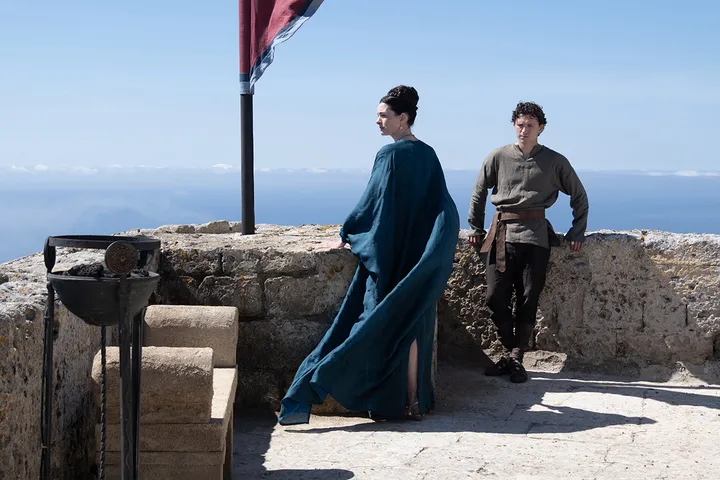
Considering how well Oppenheimer performed among critics, at the box office and, eventually, during awards season, the stakes were high for Christopher Nolan’s follow-up, The Odyssey.
An adaptation of Homer’s Ancient Greek epic, much has already been made of the film’s star-studded cast, massive scale and the gruelling shoot that its actors and crew were put through to bring the story to life.
Fortunately, if reviews are anything to go by, it was all worth it.
Critics have almost unanimously given The Odyssey a glowing reception, with words like “monumental”, “spectacular” and, of course, “epic” being thrown around already.
Meanwhile some are hailing it not just as the best film of the year, but of Nolan’s whole career (indeed, it currently boasts his highest score on the reviews site Rotten Tomatoes).
Here’s a taste of what critics have said so far…
“A worthy new translation of an ancient text, and yet another monumental piece of work from one of our boldest filmmakers.”
“[A] breathtaking epic of men, monsters and moral metamorphosis […] This is a film with thrilling ambition, boldness, seriousness, generosity and flair. There are some broad-brush moments in the dialogue, yes, but even these are applied with a muscular flourish.”

“Christopher Nolan’s massive, fearless adaptation is his best film to date […] It deserves to be the film that defines him.”
“The film is a masterpiece in every way […] there is a palpable yearning for primal storytelling and a need for art that can inform and instruct as well as entertain. Nolan has done it. This is the artwork.”
“Make no bones about it: The Odyssey is a remarkable film, and quite a monumental achievement […] It feels like there will be a ‘before The Odyssey’ and ‘after The Odyssey’ line drawn in cinema now.”
“Nolan and his collaborators have constructed a strange, fearsome and trailblazing machine of a movie – by some distance, the best of the year so far.”
“When the floor of the BFI IMAX quakes and the sound thunders up through the seats and into people’s bodies, it’s no false omen. It’s a pant-shaking signal that for the next three, humdinging hours you’re in for a colossal piece of cinema.”

“There are delights in every aspect of The Odyssey, from production design to costumes […] that sort of all-around excellence is a staple in Nolan’s filmography, be it in The Dark Knight, Interstellar or Oppenheimer. The Odyssey is truly special even among those, though, making a 3,000-year-old story feel fresh and original again.”
“There’s so much to feel here at a sensory level that the film gets away with its slightly aloof, soul-skirting chill; we leave it feeling that we’ve been to hell and back, and exhilaratingly so.”
“Extraordinarily staged and brimming with profundity, The Odyssey is a thunderous, anti-war screed on the persistent damage of patriarchal arrogance.”
“‘Epic’ does not begin to describe how massive the whole enterprise becomes. And when the time arrives to take it all out on those real Mediterranean waters, the wind could never be higher at the movie’s back.”
“There were moments when the transitions felt too abrupt, and the modern dialogue clunked heavily in places. There are some weird bits, too, not least the way Nolan dresses Agamemnon like a Bronze Age Batman – an in-joke, surely – and the fact that Odysseus sails not in a Greek galley, but a Viking longboat. But as journeys go, The Odyssey is spectacular.”
“Once you endure its opening stretch – an expositional barrage with the pace of an obnoxious cop show – The Odyssey ascends as a monument to movie craft with shuddering ships, rough-hewn landscapes and practical monsters who snatch and grab men at random from above like giant skill cranes.”
“Those seeking the impressive colours that Ancient Greece was known for may be put out by this muted palette, but it’s hard to think of a contemporary filmmaker who mounts a spectacle with as much finesse as Nolan.”
“A meditative action movie both immense and intimate, albeit one whose flow is impeded by the inherently episodic nature of the nonlinear source material and some questionable casting choices […] It’s ironic, given the foundational influence of the text on modern Western storytelling, that there has never been an indisputably great screen version of Homer’s Odyssey, though Nolan, who also penned the adaptation, gets closer than some.”
“There’s little in The Odyssey that breathes. It churns so dutifully toward its predictable conclusions […] that you begin to wonder if it wouldn’t be a better use of your time to just stay home and read The Odyssey.
“We want and need more movie artistry – and more dedication to the craft, which Nolan, no matter what you think of him, surely espouses. But a movie still needs to add up to something you actually want to watch, not just a testament to a filmmaker’s solemn dedication to the hallowed tradition of filmmaking.”
The Odyssey is in cinemas from Friday 17 July.

The post What is Keir Starmer’s legacy? appeared first on spiked.

If there was anything good to come from England’s World Cup defeat on Wednesday night, it was the gift of a new meme.
During the football match against Argentina, Mick Jagger was among the celebrity guests spotted showing their support for the Three Lions at Atlanta Stadium.
He was even seen ahead of the game getting into the spirit by mouthing along to a rendition of Sweet Caroline, which has become England’s unofficial anthem in the last few years.
However, by the time it became apparent that football was, in fact, not coming home for England, the Rolling Stones frontman’s demeanour had changed somewhat.
Towards the end of the game, footage was shown of Mick looking crestfallen and shaking his head in despair at the result.
Naturally, social media users quickly grabbed the clip of this reaction for their own use…
Of course, the veteran rocker isn’t the only A-lister to have had a viral moment during this year’s World Cup.
Throughout the tournament, Sir David Beckham has been attending England’s games with his wife Victoria and (most of) their children.
Last week, Victoria inadvertently sparked her own viral moment thanks to her stoic reaction while the rest of her family celebrated England’s victory – to the point that even the former England striker himself felt compelled to say something.
“She was celebrating inside I promise,” Sir David wrote under one Instagram post about Victoria’s muted response. “Her reactions were slightly slower than mine.”
Many spotted that during Wednesday’s match, the former Spice Girls star had been decidedly more animated when England’s Anthony Gordon scored for the team.
While England, sadly, will not be making it through to Sunday night’s World Cup final, they do have one match left, against France, to determine which of them will be awarded third place in the tournament.

World Cup viewers couldn’t help but notice that Victoria Beckham seemed a lot more engrossed during Wednesday’s England match than she had at previous games.
Throughout the tournament, Victoria and her husband, football legend Sir David Beckham, have been pictured watching England’s games with (most of) their children.
However, last week, the former Spice Girls star inadvertently caused a viral moment when she was seen looking typically stoic, while the rest of the Beckham family celebrated England’s victory against Norway.
It even reached a point where Sir David himself felt compelled to say something, joking on Instagram: “She was celebrating inside I promise. Her reactions were slightly slower than mine.”
As a result, it definitely didn’t go unnoticed when Victoria was seen jumping to her feet and joining in with Sir David and their son, Romeo, when Anthony Gordon scored for England during Wednesday’s match against Argentina.
Of course, while England got off to a strong start, things didn’t end up going in their favour – and by the end of the match, Mick Jagger’s crestfallen reaction pretty much summed up the mood of the nation.
Back in 2019, Victoria claimed that “not smiling publicly” was a type of “armour” that she was prone to hiding behind, which she elaborated on even more in her self-titled Netflix documentary last year.
“I’ve looked miserable for all these years because when we stand on the red carpet, [David] has always gone on the left,” she explained to viewers.
She added: “Now I didn’t realise that when I smile – which I do! – I smile from the left, because if I smile from the right, I look unwell. So, consequently I’m smiling on the inside – but no one ever sees it. So, that’s why I look so moody.”
While England’s squad is now out of the World Cup, they do have one more game left, going head-to-head with France later this week to determine who has finished in third place.

Lower back pain affects about 80% of us at one point or another, according to the NHS.
Thankfully, fewer than 1% of those cases require urgent medical attention. But the pain can still affect your quality of life, and might mean you’re less tempted to exercise.
That can be a shame, as the NHS explained, “keeping as active as possible can help you to recover and do the things that are important to you”.
Avoiding movement for more than a day or two in mild back pain cases might actually worsen your condition, the health service added.
According to a 2019 analysis published in the British Journal of Sports Medicine, four activities in particular seemed the most effective at treating “non-specific chronic low back pain (NSCLBP)”.
NSCLBP means doctors can’t find one specific cause for back pain. This applies to the “vast majority of chronic low back pain cases,” the study’s lead author, associate professor Daniel Belavy, said.
What are the best exercises for lower back pain?
This paper analysed 89 studies involving back pain and exercise.
Researchers found that staying active seemed to be more effective than rest for NSCLBP.
Belavy said: “There is a common misconception that if someone is in pain, they should be resting, but our research shows that when the pain has been there for a long time, exercise is an important part of treatment.”
They found four training styles were the “most effective” at treating NSCLBP. These were:
1) Pilates
This seemed to be the joint “best” exercise for dealing with the condition.
Speaking to Healthline, Dr Courtney Gilbert, a physical medicine and rehabilitation expert, said: “Pilates teaches you how to articulate your spine and engage your deep core. Research has shown that Pilates can decrease low back pain compared to no exercise and non-specific exercise.”
This can include exercising with a pilates machine (Joseph Pilates, who invented the exercise, called this a Universal Reformer machine: now they’re used in Reformer classes), or doing pilates on a mat.
2) Stabilisation or motor control exercise training
“There was evidence that Pilates and stabilisation or motor control exercise training were the best of these exercises for reducing pain,” Belavy said.
Stabilisation exercises can include strengthening your core and might involve crunches, bridges, and planks.
Motor control exercise training, meanwhile, typically aims to retrain the muscles near your spine to become more co-ordinated and stronger.
This can include balance training and other moves like hip bridges, sitting knee extensions, and even squats.
3) Resistance exercise
You might know this as strength training. It means using weights and resistance training at increasingly high loads to build your muscles up.
We’ve written before at HuffPost UK about how “tight” hips that you might think need stretching can actually be weak hips that would benefit from strengthening. A similar principle can apply here.
Some strengthening exercises include weighted squats, push-ups, deadlifts, bench presses, and more.
4) Aerobic exercise
Basically, activities like walking and running.
You might want to build up your pace and distance if you haven’t exercised in a while – “our study provides evidence that active therapies where the patient is guided, actively encouraged to move and exercise in a progressive fashion are the most effective,” Belavy shared.
What doesn’t work for back pain?
Interestingly, this paper found that “stretching and McKenzie exercises, which is a treatment approach that uses a classification system to prescribe exercise”, were found to be the “least effective” kinds of exercises.
The NHS advises you should always stop exercising if it makes your back pain worse. Speak to your GP if you’re worried about your back pain and/or aren’t sure about beginning new activity.

The post Why Ann Widdecombe’s murder has shaken Britain appeared first on spiked.

EU Orders Google to Open Android to AI Rivals and to Share Search Data
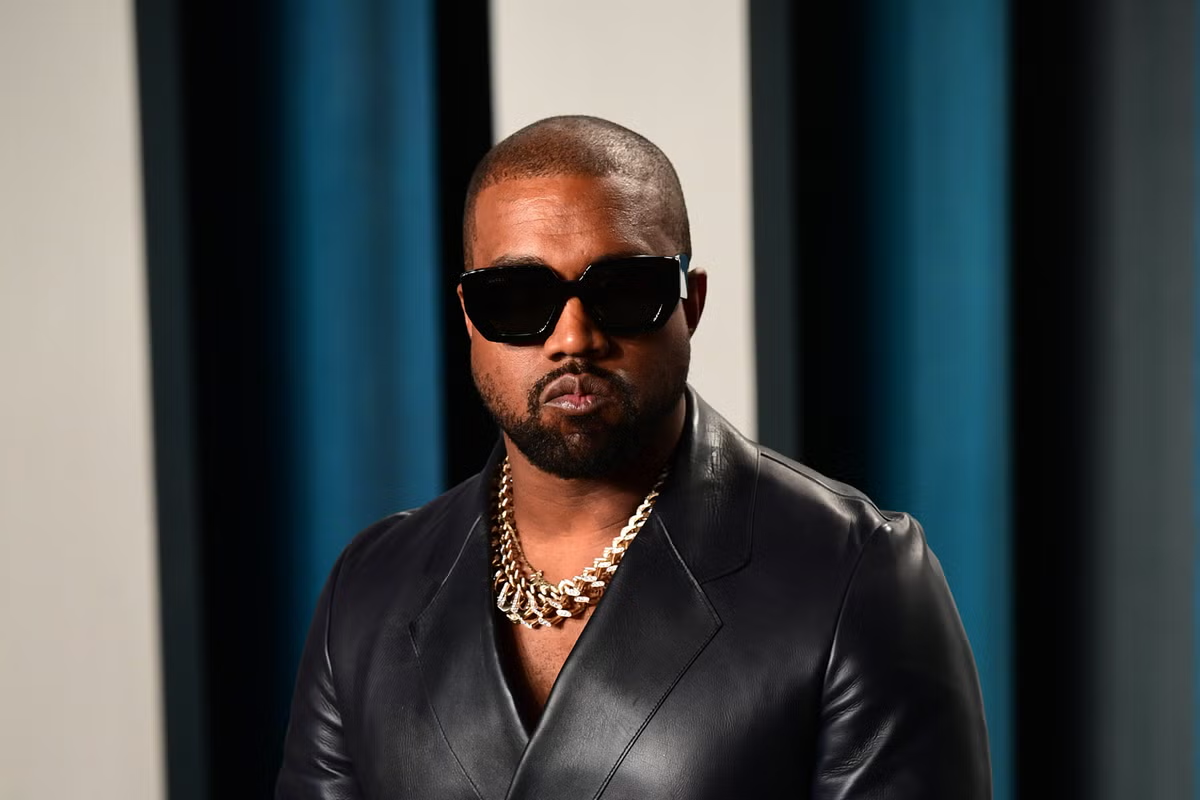
Kanye West appeals $140K award to handyman in Malibu mansion renovation case

Judge delays ruling on Paramount Warner Bros. merger until July 22


-

 Fashion7 days ago
Weekend Open Thread: Nutriplenish Leave-In Conditioner
-
 NewsBeat1 day ago
London Mayor Sadiq Khan handed a peerage by Keir Starmer alongside 15 other Labour figures… just days before the PM leaves No10
-

 Crypto World2 days ago
CFTC blocks Kalshi from unwinding Michigan trades after court order
-

 Politics2 days ago
Young campaigners urge incoming PM to act on outdoor junk food ads
-

 Business2 days ago
Nvidia Stock Slips After Big Tuesday Rally as Huang Confirms Vera Rubin Chip Is Now in Production Today
-

 Fashion2 hours ago
Weekend Open Thread – Corporette.com
-
 Entertainment2 days ago
Disney’s Most Ambitious Failed Star Wars Attraction Is Coming to SDCC
-

 News Videos3 days ago
XRP BOMBSHELL… XRP OMBOARDED FOR TRANSACTIONS!!!
-

 Tech4 days ago
Get Your ESP32 Sunny Side Up With This Solar Dev Board
-

 Crypto World23 hours ago
Injective Submits SEC Transfer-Agent Registration to Onchain Ownership Records
-

 NewsBeat8 hours ago
Registration is now open for March for Men with Kev 2026
-

 Tech3 days ago
Dark Secrets Emerge When Jailbreaking LLMs
-

 Business2 days ago
Palantir Shares Rise After Expanded Nvidia Partnership and Fresh Analyst Upgrades Ahead of Earnings Day
-

 News Videos13 hours ago
Money | Class 12 Economics | CBSE Board Exam 2026-27
-
 Sports2 days ago
New Cornerback Enters Vikings Trade Rumor Mill
-

 Business18 hours ago
Banco Bilbao Vizcaya Argentaria, S.A. (BBVA) Discusses Global Macro Environment and Economic Outlook for Core Markets Transcript
-
 Tech4 days ago
Cloudflare Precursor Watches Your Mouse and Keyboard To Decide If You Are Human
-

 News Videos4 days ago
how to make coin bank box with cardboard #scienceproject #money #diy #shorts
-
 Entertainment2 days ago
Vicki Gunvalson Defends Discussing Heather Dubrow’s Money
-

 Business1 hour ago
Airlines warn Sunshine Protection Act could disrupt flight scheduling
You must be logged in to post a comment Login