Connect with us
DAPA Banner
DAPA Coin
DAPA
COIN PAYMENT ASSET
PRIVACY · BLOCKDAG · HOMOMORPHIC ENCRYPTION · RUST
ElGamal Encrypted MINE DAPA
🚫 GENESIS SOLD OUT
DAPAPAY COMING

NewsBeat

Japanese Manicures Are 2026’s Best Low-Effort Trend

Published

on

Japanese Manicures Are 2026's Best Low-Effort Trend

If you ask The New York Times, bare nails became a “status symbol” this year. Influencers like Alix Earle have rocked the style, as have the Olsen Twins and Zoë Kravitz.

But anyone who’s spent hours perfecting a “no-makeup” makeup routine will know that that chic, effortless look often relies on a series of artful touches.

It’s pehaps unsurprising then that the Japanese manicure is now trending. This subtle nail style offers a ‘barely there’ look – similar to the manicure Kate Middleton sported at the Wimbledon final this year.

Britain’s Kate, Princess of Wales, waves from the Royal Box, during the men’s singles on day 14 of the Wimbledon Tennis Championships in London, Sunday, July 12, 2026. (Photo by Dave Shopland/Invision/AP)

What is a Japanese manicure?

Advertisement

Though it’s currently trending, the technique is actually ancient (likely hundreds of years old). It involves no polish, no varnish, and no gels.

Popularised across the world by Japanese company P.Shine, the method instead relies on a two-step buffing process with a vitamin-rich paste and powder.

Firstly, the paste, which often contains algae, is carefully massaged into the nail using buffers (usually made of leather). This step is meant to nourish your nails.

Then, the powder (usually containing beeswax) is buffed on top. This step will make your nails seem glossy and shiny, almost as if you’re wearing clear polish.

Advertisement

Results can reportedly last for up to a month.

Japanese manicure.

Alex_Doubovitsky via Getty Images

Japanese manicure.

Is a “Japanese manicure” good for your nails?

Well, it won’t create the damage that gel nails can sometimes cause if they’re left on too long or removed incorrectly. Your nails will be able to “breathe”, and you won’t have to use any polishes, varnishes, and your skin won’t be exposed to UV lamp rays either.

Speaking to Marie Claire, celebrity manicurist Sophia Stylianou said Japanese manicures are perfect for “anyone needing a nail reset, especially if you have weak, peeling, or brittle nails, or are just taking a break from gels or acrylics”.

Advertisement

The expert said the natural ingredients “help restore strength and shine without using polish or harsh chemicals”.

Still, some experts recommend waiting for a while to have a Japanese manicure if your nails have been left worse for wear by gels or false nails. That’s because the process involves buffing the nail plate, which may be weaker while damaged.

And Darya Kholodova, a nail technician and co-founder of Darlings Beauty Lab, told British Vogue that the technique’s greatest appeal is aesthetic.

“The main benefits are a healthy, natural shine, a clean and polished nail, and a relatively quick treatment time,” she said.

Advertisement

Source link

Continue Reading
Click to comment

You must be logged in to post a comment Login

Leave a Reply

NewsBeat

Trump alleges ‘shocking vulnerabilities’ in US election security ahead of midterms

Published

on

Donald Trump at the podium on 16 July

US President Donald Trump has delivered a primetime address in which he accused China of interfering in the 2020 election and alleged “shocking vulnerabilities” in American voting systems.

Trump, who spoke from the White House on Thursday, has repeatedly made unsubstantiated claims about voter fraud and foreign meddling in the 2020 election which he lost to Joe Biden.

In the half-hour speech, delivered three months before the midterm elections, he said he had declassified hundreds of intelligence files which supported his claims that Beijing had tried to sway the election in Biden’s favour.

The US intelligence community has previously concluded China did not interfere in the 2020 election.

Advertisement

Trump spoke in front of several members of his top team as he gave his address, but journalists were unable to put questions to the president.

In his remarks, he accused China of the “illicit acquisition” of 220 million voter files including personal information.

Trump said voter data in 18 states was “bought, stolen or hacked by China” and accused “those responsible for sounding the alarm” of not disclosing the discovery to government officials or Congress.

Trump did not present evidence that China had used the information it allegedly gathered to alter voting systems or to influence election outcomes.

Advertisement

In response to his speech, the Chinese Embassy in Washington told Reuters that Beijing “has never and will never interfere in the presidential elections”. The BBC has approached the Chinese foreign ministry for comment.

Democrats, meanwhile, accused Trump of attempting to sow doubts about the security of the upcoming November midterms which will decide control of Congress for the remainder of his presidency.

“Let’s be clear – in America, voters choose their leaders, not the other way around,” top Senate Democrat Chuck Schumer posted on social media after the speech.

“Democrats will fight like hell to make sure every American voter can cast their ballot freely, without obstruction or interference from Donald Trump,” he added.

Advertisement

The president’s comments contradict previous US intelligence assessments. A 2021 report by the US National Intelligence Council said it had “high confidence” that China did not interfere in the 2020 presidential election.

“We assess that China did not deploy interference efforts and considered but did not deploy influence efforts intended to change the outcome of the US presidential election,” the report stated.

It said this was probably because China “did not view either election outcome as being advantageous enough for China to risk blowback if caught”.

Trump delivered the White House address after the release of a new poll from Washington Post-Ipsos, which indicated his approval rating had dropped to 37% with many voters pessimistic about the cost of living and the ongoing war with Iran.

Advertisement

Elsewhere in the speech, the president alleged that US voting machines are “extremely exposed” to interference by foreign adversaries, including Russia, China and Iran.

Shortcomings of US election infrastructure have been well-documented. Some were addressed after the 2016 election which Trump won, after the US intelligence community found that Russia had engaged in a concerted election meddling campaign that included hacking, social media influencing and funding of on-the-ground electioneering activities.

During the address, Trump also alleged that a state investigation by Michigan law enforcement discovered a voter registration fraud scheme by a Democratic-affiliated group, but was constrained by the FBI from taking action before the statute of limitations expired.

“It was pay, play and cheat,” he said, although he provided no evidence of votes or tabulations being changed or voting machines hacked.

Advertisement

Separately, Trump said that the Department of Homeland Security had identified 278,000 non-citizens were registered to vote. He did not say whether any of those people had voted or had an impact on any election outcome.

At the end of his speech, Trump again called for the passing the of the SAVE America Act, which bans most mail voting, requires proof of citizenship for voter registration and photo ID to cast a ballot.

That legislation has been stalled in the Senate for months.

Source link

Advertisement
Continue Reading

NewsBeat

Government accused of using local councils as ‘scapegoat’ in plea to new PM

Published

on

Cambridgeshire Live

The council leader argued that “the people of Fenland should have as much of a voice in change as the people of Makerfield”

Fenland District Council has accused the government of using local councils as a “scapegoat” for failing to deliver on their housing target. Council leader Chris Boden brought forward a motion asking the government to change course on three “particularly egregious” decisions.

Advertisement

He said: “We are all told that we’re about to have a significant change in leadership in the country and we’re about to have a new prime minister. A person who is all things to all men and all women it appears and who is going to solve many of the problems which we have in this country.

“We all look forward to that being successful but when that actually conflicts against the need to make hard decisions I fear that some people may be disappointed.” Cllr Boden said the leadership of Andy Burnham, widely expected to become prime minister on Monday (July 20), could be a “new start” for the government.

He asked the former Manchester mayor to stop local government reorganisation in its current form, reverse the decision to take some planning decisions away from local councils, and reconsider abolishing care partnerships between the NHS and local authorities.

The Conservative councillor said 80 per cent of local government finances go to county council responsibilities such as social services and SEND provision. He said Cambridgeshire County Council is able to achieve “a lot of efficiencies” through “economies of scale” and abolishing the higher-level council makes “no economic sense” and “no democratic sense”.

Advertisement

Cllr Boden said delegating planning decisions to council officers “removes the democratic accountability that is required as part of the planning process”.

He said: “I believe the government is looking to local government as a scapegoat for its own failure to build the 1.5 million houses they said they would in this Parliament. The problem doesn’t lie with local authorities – the problem overwhelmingly lies with developers and the way in which they do business.”

Cllr Dr Haq Nawaz said: “The government appears to have a severe linguistic or conceptual difficulty with the word devolution. Devolution to most people is the transfer of power, of funding, of decision making and of governance from central government to local communities.

“And that the communities are best placed to make decisions tailor-made to their needs in health, education or social services because they know what they need.”

Advertisement

The Conservative councillor said Local Government Reorganisation (LGR) proposals would reduce the number of councillors and wards in Fenland making communication “more difficult”.

He said: “This, chairman, I believe is a missed golden opportunity – an opportunity to address the issues of Fenland, an opportunity to level up Fenland. Fenland is currently 80th most deprived of the 317 local authority districts – the bottom 25%.

“Fenland as it exists should be given more powers to address their particular issues than be drowned into a much bigger authority.”

Cllr Matthew Summers said: “It won’t surprise Cllr Boden that I don’t think this is the right thing to do.” The independent councillor continued: “Mr Burnham, let’s assume he does become Prime Minister – I don’t think this is going to be high on his agenda if I’m honest.

Advertisement

“I think we should spend our time focusing on what we can do to make the best of the situation. The tone just feels a little bit, almost desperate, to try and stop the freight train if you like.”

Cllr Steve Tierney said: “I’d rather try and stop it than just ignore it – if a freight train is coming for your constituents you should try to stop it.”

The Conservative councillor continued: “What we are about to face is the most destructive thing that’s happened to local government in 50 years. It’s going to lead to a much worse, much more expensive, much slower and much less responsive council in every place it’s done. That’s because bigger councils are more remote and less responsive, and that’s just fact.”

Cllr Boden said: “We’re promised there’s going to be change and it is entirely appropriate that the people of Fenland have as much of a voice in that change as the people of Makerfield.”

Advertisement

The council voted to support the motion with 28 votes in favour, five against, and two abstentions.

Source link

Continue Reading

NewsBeat

New characters, same story: How England’s World Cup heartache resurfaced – and what comes next

Published

on

New characters, same story: How England's World Cup heartache resurfaced - and what comes next

World Cups are too precious, too rare, not to learn from past mistakes. Tuchel’s England was always just a rebrand, a software update on Gareth Southgate’s England. They were more inexperienced and naïve at his first tournament at Russia 2018, yet eight years on, as though no progress had been made, here was a rerun of that semi-final defeat to Croatia: a collective panic, a fear of the ball, a fear of leading because eyes were now clockwatching and minds on the final. Play the game in front of you — Argentina did.

Source link

Continue Reading

NewsBeat

York Italian restaurant La Piazza Antica set for changes

Published

on

York Italian restaurant La Piazza Antica set for changes

An application lodged with York Council would see a pergola installed in the courtyard of La Piazza Antica, in Goodramgate.

The Italian restaurant’s plans stated it would enhance the restaurant’s operations by providing weather protection to its outdoor dining space.

Plans lodged with the council would see the aluminium pergola installed to cover its courtyard, allowing it to be used throughout the year.


RECOMMENDED READING:

Advertisement

It would be equipped with an LED lighting system.

The restaurant’s home, 45 Goodramgate, is a Grade I-listed timber-framed Tudor building dating from the late 15th Century.

Plans stated the changes would respect the character of the building and the surrounding area.

The application stated: “In our view, the impact of the proposed interventions to the existing building are not affecting any of the valuable features of this beautiful, listed site and will not have a detrimental impact to the character of the area considering the location is not visible from the external road.

Advertisement

An impression showing how the pergola at La Piazza Antica, in Goodramgate, York, could look (Image: La Piazza Antica)

“They will only increase the functionality, without harming the aesthetics.

“We feel that this intervention will be a positive addition to the building as it will enhance the functionality of the restaurant.”

La Piazza Antica opened in Goodramgate in 2023.

Its menu features a range of Italian dishes including various raviolis, pastas, spaghettis and pizzas such as Formaggio di Capri, Porchetta e Funghi and Calzone Diavola.

Advertisement

Seating is in its front room looking out onto Goodramgate, a timbered hall in the heart of the restaurant’s Tudor townhouse and a function room, along with its courtyard.

Source link

Advertisement
Continue Reading

NewsBeat

Coronation Street star joins the cast of Channel 5 drama

Published

on

Coronation Street star joins the cast of Channel 5 drama

Lucy-Jo Hudson, who played Katy Harris in Coronation Street from 2002 to 2005, has been added to the cast of The Good Ship Murder for its fourth series.

The programme first aired in 2023 and follows a retired detective who has become a cabaret singer on a luxury Mediterranean cruise ship.

Shayne Ward plays Jack Grayling, the cruise ship singer, as he goes around solving murders on board.

Advertisement

Who is in the cast of The Good Ship Murder?

Ross Adams, who used to play Scott Drinkwell in Hollyoaks, will be returning to the show as cruise director Colin Smallwood.

Ross shared a photo on Instagram of him next to Lucy-Jo in Malta, where the show is filmed.

Tillie Amartey, who played Stace Neville in Waterloo Road, has also hinted at joining the cast in a vlog she posted to her social media.

Her caption said: “Cruise ship chronicles day 1.

“When I started acting at 7 years old as a hobby I never thought it would make my adult life so unpredictably amazing.

Advertisement

“Feeling lucky, blessed and claustrophobic Darren all at once but how fab I can say my job has required me to set sail.”

Catherine Tyldesley is another Coronation Street star who appeared in the first three series as Kate Woods, the ship’s first officer.

However, she has stepped down from the role to return to the soap as Eva Price but is set to make a guest appearance in series four to finish her storyline.

On the fourth series, Greg Barnett, commissioning editor, 5, said: “We are thrilled to be bringing The Good Ship Murder back for a fourth series.

“Audiences have truly embraced the show’s unique combination of mystery, music and escapism, and we are excited to continue Jack’s journey with even more surprises and new faces in store.”

Advertisement

Are you excited for the fourth series of The Good Ship Murder? Let us know in the comments.

Source link

Advertisement
Continue Reading

NewsBeat

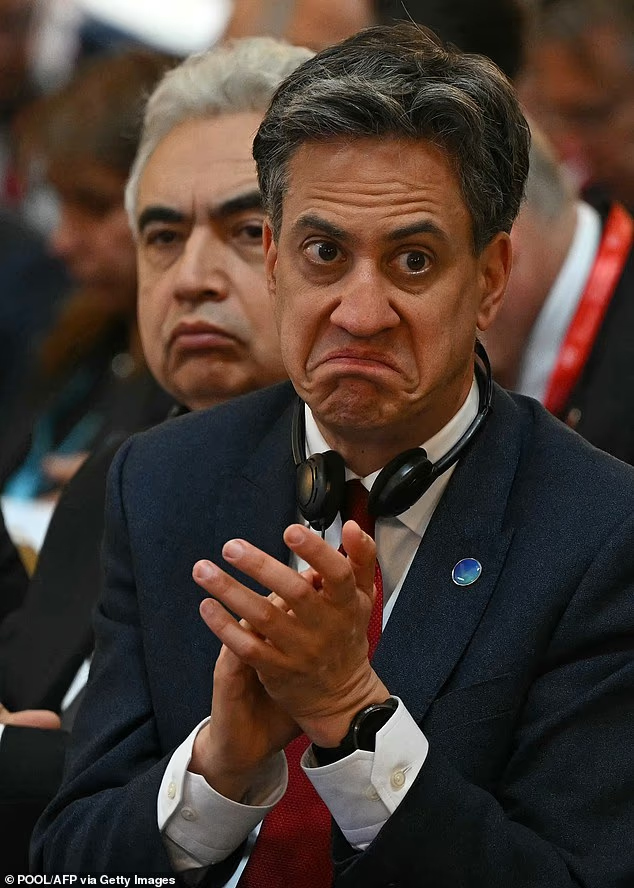
The little-known government body – whose only shareholder is Net Zero fanatic Ed Miliband – that now stands accused of covering up how close Britain came to a catastrophic heatwave blackout: ROSS CLARK

Published

on

The National Energy System Operator (Neso) is a company with a single shareholder: the Secretary of State for Energy Security and Net Zero, currently Ed Miliband

On the afternoon of June 23, many were enjoying the start of a heatwave that would take temperatures up to 37C, surpassing the June record set in the scorching summer of 1976.

As we sweated, most of the country was blissfully unaware that a potentially catastrophic energy crisis was unfolding.

It emerged this week that on that baking Tuesday, we came close to suffering an event as dramatic as the blackout that occurred in Spain and Portugal in 2025 when trains stopped, industry and commerce were suspended, and hospitals were forced to switch to emergency backup supplies to prevent patients from dying.

Control room engineers at the National Energy System Operator (Neso) the little-known government body responsible for balancing Britain’s electricity supply and demand, were panicking. The grid’s frequency had destabilised and dropped below Neso’s strict operating limit, threatening widespread blackouts.

Advertisement

Yet it was alleged this week that bosses were less concerned by the system failures and more by the reputational impact of the public discovering that the grid was not being run securely. This allegedly involved ordering staff not to keep records of operational decisions to ensure there was no paper trail, in case they might have to be revealed in a Freedom of Information request.

Meanwhile, members of Neso’s corporate affairs team, who manage media and government relations, are said to have interfered in the control room, telling operators what to do to protect the body’s reputation.

This unbelievable tale was revealed by Shadow Energy Secretary Claire Coutinho, after she was approached by several whistleblowers. ‘They are coming to me because they are worried that the grid is becoming unmanageable and they do not have faith that their concerns are being taken seriously’, she said.

Coutinho further revealed that at a meeting on Monday, the Chief Executive, Fintan Slye, told staff that allegations that grid security standards were breached were false. What’s worse, the whistleblowers were openly criticised by senior management for letting the company down. The Government now confirms there is an independent inquiry into what happened on June 23.

Advertisement

The National Energy System Operator (Neso) is a company with a single shareholder: the Secretary of State for Energy Security and Net Zero, currently Ed Miliband

The UK came close to suffering an event as dramatic as the blackout that occurred in Spain and Portugal in 2025 when trains stopped and hospitals were forced to switch to backup supplies

The UK came close to suffering an event as dramatic as the blackout that occurred in Spain and Portugal in 2025 when trains stopped and hospitals were forced to switch to backup supplies

Before this week’s events, few had heard of Neso. Fewer still appreciated how finely balanced Britain’s electricity system is, or how difficult it has become to keep supply and demand in equilibrium as Ed Miliband pushes towards his target of a carbon-free electricity grid by 2030.

Advertisement

Neso was created under the previous Conservative government’s Energy Act 2023, taking over many of the functions previously carried out by the private company, National Grid ESO, with two principal objectives: to ensure the lights stay on and to prepare the national grid for the transition to Net Zero.

Based in an unassuming office block in Warwick, Neso employs around 2,200 people. According to its own calculations, it costs the average household £6.46 a year through energy bills. Yet its 2024/25 annual report also recorded a loss of £409 million, which will have had to be covered by taxpayers. While Neso manages our energy system, it owns little of it. The pylons, substations and infrastructure remain in private hands. Nor does it own the country’s power stations, wind farms or solar farms, all of which are also owned and operated privately. Instead, Neso acts as a glue holding together this patchwork of private assets, coordinating them into what is supposed to function as a single, seamless network.

Although often described as ‘independent’ of government, Neso is a company with a single shareholder: the Secretary of State for Energy Security and Net Zero, currently Ed Miliband.

In other words, it is a public sector body, although the pay packages of its senior staff might not suggest it. In 2024/25, chief executive Slye received a basic salary of £288,167 – more than £100,000 higher than the Prime Minister’s. Once pension contributions and performance-related payments were included, his total remuneration reached £773,650. Chief operating officer Kayte O’Neill received £564,311, while chief financial officer Charlie Pate was paid £317,451.

Advertisement

If you’re wondering what Neso’s 2,200 staff do all day, look no further than the interactive game on its website, which invites visitors to ‘run the national grid yourself’. Even this simplified version conveys the extraordinary complexity of the task. At every moment, electricity supply has to be matched almost perfectly with demand. In front of you is a dial showing the frequency at which the grid is operating. Britain’s mains electricity uses alternating current, meaning the flow of electrons through the wires continually reverses direction. The number of times this happens each second is measured in hertz (Hz).

The grid must be kept as close as possible to 50Hz. In real life, the acceptable operating range is even tighter: within a range of 0.4 per cent either side.

If too much electricity is generated relative to demand, the frequency rises above 50Hz. If too little, it falls below. Either scenario risks damaging equipment and, in the worst case, triggering widespread power outages.

Neso’s game gives players a range of tools to keep the system in balance. You can buy more electricity from gas-fired, nuclear or biomass power stations (the latter controversially fuelled by imported wood pellets). You can import or export electricity through subsea cables or charge and discharge batteries and hydroelectric plants.

Advertisement

What you cannot do – and this illustrates why running the grid is becoming harder – is simply manipulate renewable generation at will. ‘You can’t control renewables’, the game explains (in real life you can turn them off but not up if there’s no sun or wind). ‘But keep an eye on the weather forecast so you can adjust the other energy sources accordingly.’

Therein lies the problem. As Britain moves towards a carbon-free electricity system, around 80 per cent of generation is expected to come from wind and solar. The greater the share supplied by weather-dependent sources, the smaller the proportion of the system that grid operators can directly control when balancing supply and demand.

Britain's grid was designed around coal power stations in the Midlands and South Yorkshire ¿ and even Ed Miliband has downgraded his ambition for a carbon-free grid by 2030

Britain’s grid was designed around coal power stations in the Midlands and South Yorkshire – and even Ed Miliband has downgraded his ambition for a carbon-free grid by 2030

With a heatwave anticipated, Neso had expected a surge in demand for electricity-guzzling air con units while the excessive heat would also cause problems for solar farms

With a heatwave anticipated, Neso had expected a surge in demand for electricity-guzzling air con units while the excessive heat would also cause problems for solar farms

Advertisement

The first time I played Neso’s game, I crashed the grid within a couple of minutes. On the second, I managed to keep the lights on until the end of my shift, but only just. The biggest hiccup came when I was suddenly informed that a heatwave had led to all solar farms having to be switched off to prevent the heat from damaging them. This, coincidentally, is close to what seems to have happened on June 23.

According to Kathryn Porter, who runs independent energy consultancy Watt-Logic, on several occasions that day, the frequency of the grid dropped dangerously below 50Hz, suggesting that not enough power was being supplied. This was despite Neso issuing a ‘margin call’ in advance: a request for help put out to electricity generators when there is a predicted imbalance between supply and demand.

With a heatwave anticipated, Neso expected a surge in demand for electricity-guzzling air con units. At the same time, the excessive heat was expected to cause problems for solar farms.

To absorb sudden changes in frequency and voltage, our energy grid relies on buffers in the form of heavy spinning turbines. But these turbines mostly operate in traditional power plants (such as coal, gas, or nuclear).

Advertisement

So when solar generation dominates, as it did on the day the Spanish grid failed, there are too few of these ‘buffering’ turbines working to cushion the system against sudden disturbances.

At the time of Spain’s blackout, solar was supplying around 58 per cent of its electricity. We’ll have to wait to see what Neso’s independent inquiry turns up about last month’s events. But if it really is struggling to balance the grid now, what happens when the system is even more heavily dependent on wind and solar?

The trouble is we have a grid which was designed around a clutch of coal-fired power stations in the Midlands and South Yorkshire. It is far less suited to a system powered by dispersed, weather-dependent renewables.

Ed Miliband has already quietly downgraded his ambition for a carbon-free grid by 2030 to one which is 95 per cent carbon-free. In 2024, Neso declared that this slightly watered-down target was possible to reach, estimating the required grid upgrades would cost £58 billion. Yet, by June this year, that estimate had risen to £89 billion – more than £1,000 for every man, woman and child in Britain. And that is only the cost of upgrading the grid, not building large-scale wind and solar farms, nor the cost imposed on housebuilders, whom Miliband has ordered to install solar panels on new homes, even where roofs may be heavily shaded. A lot of the cost is down to Miliband’s rush to transition to renewables. The previous Conservative government had already set a target of decarbonising the electricity system by 2035, but Miliband judged that too slow.

Advertisement

‘If a target is set to do the practically impossible in around 60 months, then the logical consequence is that it will cost whatever it costs,’ according to Sir Dieter Helm, Professor of Economic Policy at the University of Oxford. Others argue that a Net Zero electricity system by 2030 is unattainable at any price. According to Gary Smith, general secretary of the GMB union – not usually a critic of the Labour government – there simply isn’t enough specialist equipment in the world to build the offshore wind farms needed to meet the target.

There is another nasty contained within Neso’s plans.

To achieve a 95 per cent carbon-free electricity system by 2030, it says Britain will require between 10 and 12 gigawatts of ‘consumer-led flexibility‘.

That means encouraging – or forcing – people to reduce their energy use at peak times, perhaps through surges in the electricity price when the supply is struggling to keep up with demand.

Advertisement

One way or another – through blackouts or price gouging – Neso will make sure it is customers paying the price of the transition to a carbon-free grid.

Source link

Continue Reading

NewsBeat

Derry City vs CSKA Sofia European tie suspended amid crowd disorder

Published

on

Belfast Live

Derry City were leading 1-0 in their tie against CSKA Sofia when the match was suspended due to crowd disturbances, with home supporters forced onto the pitch for safety

Derry City pushed Bulgarian heavyweights CSKA Sofia to the brink in a dramatic Europa League encounter on Thursday evening, before crowd disorder brought proceedings to a halt at the Ryan McBride Brandywell.

Play was suspended for a number of minutes after CSKA supporters attempted to force their way into the home end, with Derry fans compelled to spill onto the pitch to escape the charging away supporters.

Both sets of players were taken off the field as stewards and officials worked to regain control, with the trouble breaking out shortly after Ellis Chapman’s 47th-minute equaliser levelled the tie at 3-3 on aggregate.

Advertisement

Following the resumption, CSKA retook the aggregate advantage through Ioannis Pittas, before Derry defender Barry Cotter’s unfortunate own goal in the 108th minute sealed the Bulgarian side’s progression deep into additional time.

Tiernan Lynch’s side will now enter the Conference League, where they face Croatian outfit Rijeka in the second qualifying round.

Fans clashed before the game also, with police struggling to keep both sets of supporters apart.

Supporters took to social media in their droves to share their experiences as events unfolded, reports the Irish Mirror.

Advertisement

“Game stopped as CSKA fans tried to enter home end, players taken of pitch, derry lead 1-0 3-3 in agg,” wrote one.

Another posted: Just had to evacuate stand in brandywell cska fans broke thru security ton of kids in our stand”.

One remarked: “CSKA Sofia/Litex Lovech Ultras kicking off on Derry, I wouldnt like to be them tonight, Derry is a f**k around and find out type of city”.

Advertisement

And another wrote: “Cska fans tried storming the stand all the derry fans there gone on the pitch for safety”.

One fan claimed that “CSKA fans giving their team a much needed break… disgraceful scenes there. “.

Sign up to our free sports newsletter to get the latest headlines to your inbox

Source link

Advertisement
Continue Reading

NewsBeat

Netflix confirm future of ‘sensational’ true crime series four years after it first aired

Published

on

Manchester Evening News

The series boasts stars from Twin Peaks, Ant Man, Bojack Horseman and Happy Gilmore

Netflix has finally confirmed the future of a ‘sensational’ true crime series four years after it first aired.

Advertisement

It’s been a busy period in terms of true crime content for the streaming giant, with them recently releasing the first season of Worst Neighbor Ever. Consisting of four episodes, the series is from the creators of Worst Roommate Ever and Worst Ex Ever.

The series takes a deep dive into four different cases, each set in a seemingly close-knit neighborhood. Featuring eyewitness accounts from community members, sit-downs with law enforcement, and startling body-cam footage, Worst Neighbor Ever shines a light on tales of harassment, intimidation, and sometimes deadly violence.

Click here to get the biggest stories straight to your inbox in our Daily Newsletter

Released two weeks ago, it still sits in first place on Netflix’s top ten most watched programmes. It brought an end to Harlan Coben’s I Will Find You, with the author’s latest adaption once again bringing in high viewership.

Advertisement

Part of what’s made Netflix dominate the true crime genre is that they’re not afraid to hire actors to play victims and criminals. Series such as Monster: The Jeffrey Dahmer Story proved to be colossal success stories for them.

Another hit for Netflix was The Watcher, which was a true-crime thriller from the minds of Ryan Murphy and Ian Brennan, who went on to create the Monster anthology series. Despite being initially penned as a limited series, The Watcher had a second series greenlit.

The series followed a married couple who moved into their dream home in a fictionalized version of Westfield, New Jersey. However it wasn’t long until they were harassed by creepy letters signed by a stalker who goes by the pseudonym ‘The Watcher’.

The Watcher was based on a true story of a n unidentified person who stalked the owners of a house from 2014 to 2017. Despite being tormented they never moved out at the time due to fearing for their family’s safety.

Police, private investigators and former FBI agents were not able to locate who was sending the letters. Eventually, the couple sold their house in 2019, but the person who bought it has not been contacted by the Watcher.

Appearing in the series was Mulholland Drive’s Naomi Watts, Ant Man’s Bobby Cannavale, Your Friends & Neighbors’ Isabel Gravitt, The White Lotus’ Jennifer Coolidge, Bojack Horseman’s Margo Martindale, A Serious Man’s Richard Kind, Rosemary’s Baby’s Mia Farrow, Oz’s Terry Kinney and Happy Gilmore’s Christopher McDonald.

It’s now being reported by multiple production sources that the second series is preparing to start production sometime this year. ProductionWeekly are teasing that the cameras are set to begin rolling in October.

Advertisement

Bela Bajaria, the then-head of global TV at Netflix, said in a statement upon the renewal four years ago: “Audiences can’t take their eyes off Monster and The Watcher. The creative team of Ryan Murphy and Ian Brennan, on Monster, along with Eric Newman, on The Watcher, are masterful storytellers [who’ve] captivated audiences all over the world.”

Providing an update in 2024, Executive Producer Eric Newman told Radio Times: “I can say nothing other than we’re very excited about the prospect of another season of The Watcher. That’s all I can say.”

Source link

Advertisement
Continue Reading

NewsBeat

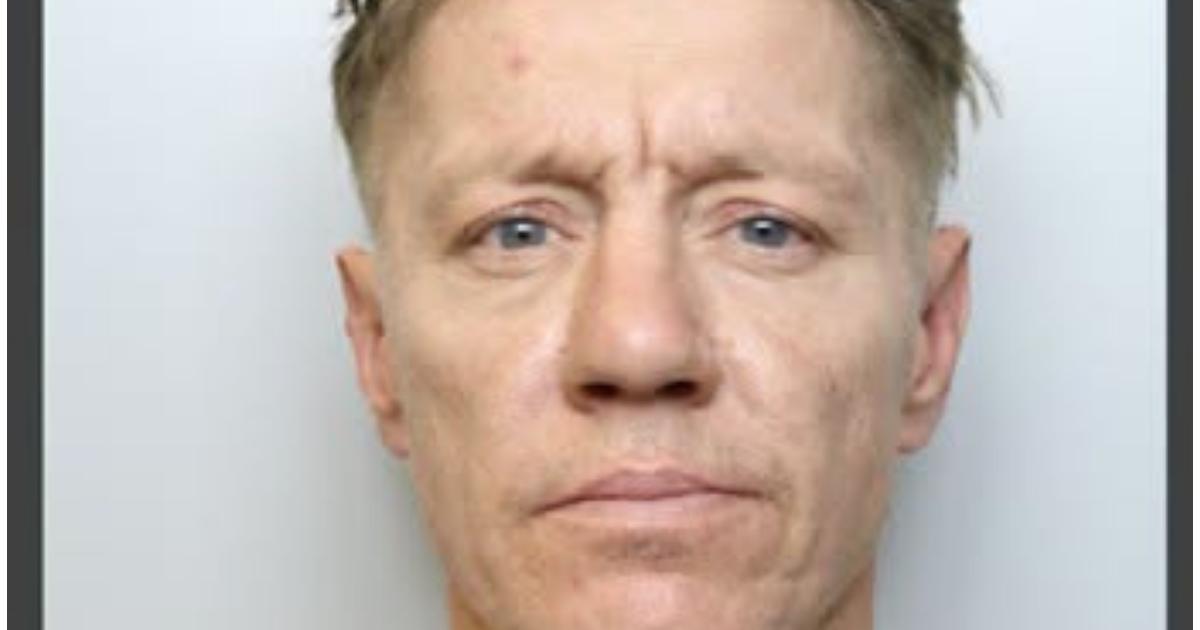
Police launch hunt for stalker wanted for prison recall

Published

on

Police launch hunt for stalker wanted for prison recall

As a subscriber, you are shown 80% less display advertising when reading our
articles.

Those ads you do see are predominantly from local businesses promoting local
services
.

These adverts enable local businesses to get in front of their target audience – the local
community
.

It is important that we continue to promote these adverts as our local businesses need
as much support as possible during these challenging times.

Advertisement

Source link

Advertisement
Continue Reading

NewsBeat

Andy Burnham to pledge to be ‘unashamedly Labour’ when he becomes party leader

Published

on

Andy Burnham to pledge to be ‘unashamedly Labour’ when he becomes party leader

He will pledge to make the party more united under his leadership and pay tribute to Sir Keir for returning Labour to government, while praising the achievements his party has made so far since 2024, including on workers’ rights, the NHS and the passing of the Hillsborough Law.

Source link

Continue Reading

Trending

Copyright © 2025