

Politics
Christopher Nolan Admits Hardest Part Of Living Without A Smartphone

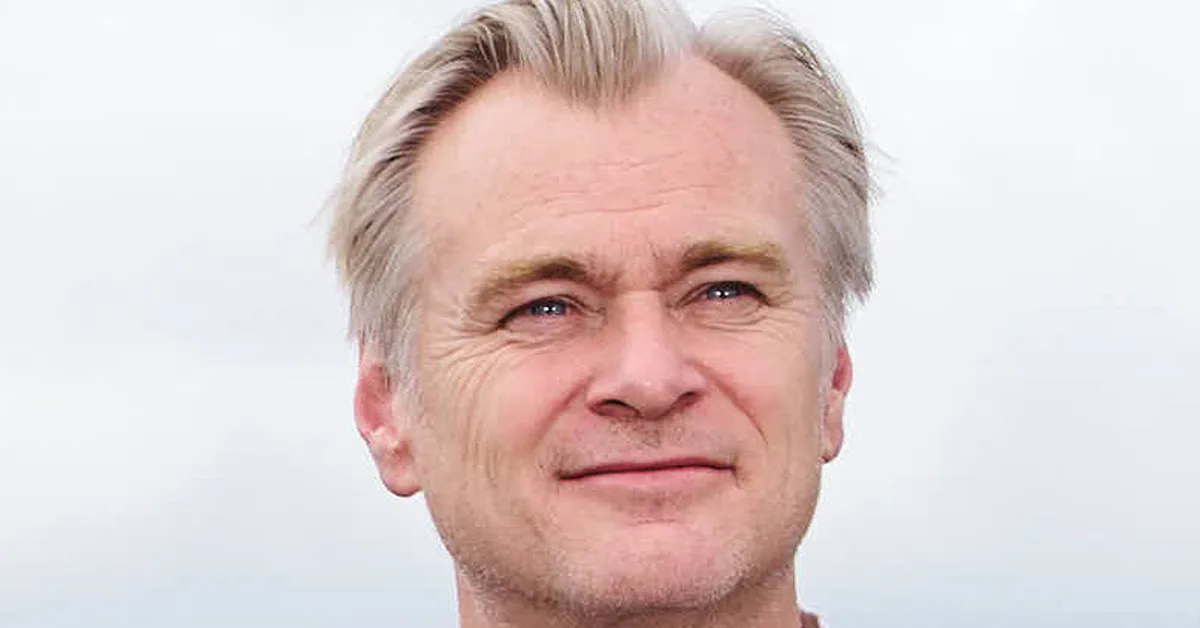
Christopher Nolan has claimed that he’s closer to reconsidering his stance on smartphones than ever before.
The Oscar-winning filmmaker has previously declared that he’s never owned a smartphone or been a user of email, which he spoke about in a recent interview with The Telegraph.
“I know I’d become horribly addicted to them if I had one,” the director of The Odyssey said. “I’d spend all my time looking things up.
“And I find I’m only able to advance my thinking on projects in those pockets of time where everybody usually jumps on their phone – waiting for a train, or in an airport, or sitting in a restaurant waiting for somebody to turn up for dinner. Those are the moments I work out whatever it is I need to do next.”
However, Nolan confessed: “I worry the world is eventually going to wear me down.”
“The return of the QR code since Covid has been particularly tricky for me,” he then admitted.
Nolan made a similar admission during a recent appearance on the US interview series 60 Minutes.
“The QR code had sort of gone away, but Covid brought it back,” he explained. “Now it’s kind of everywhere, and if you don’t have a smartphone, you can’t do much with a QR code. “
Pointing out that he carries “a flip phone” to stay in touch when he’s travelling, he claimed: “I’m just living the same way that we all used to. To me, it’s just life as normal.
“Most people do [envy me] which says something about where this has all gone, which is not good. I feel very fortunate to not be wearing the digital shackles.”
Nolan is now celebrating the release of his new movie, an adaptation of the epic Ancient Greek poem The Odyssey, which is in cinemas now.

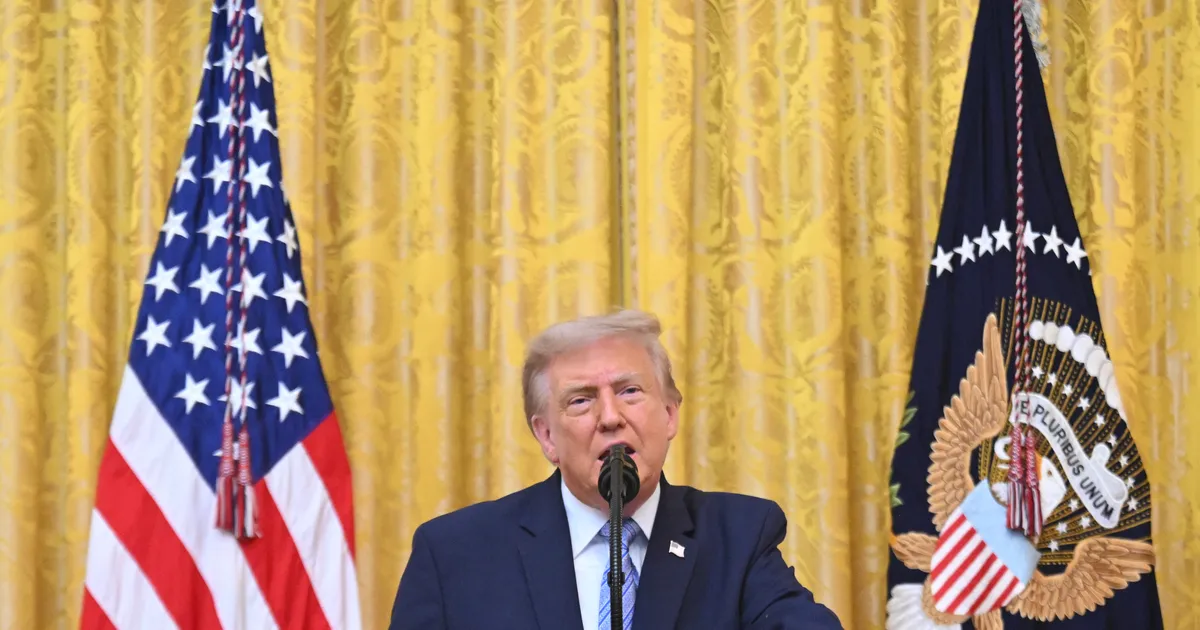
WASHINGTON – President Donald Trump, who lies that the 2020 election was stolen from him on a near-daily basis, claimed in a much-hyped White House speech on Thursday that US elections are vulnerable to hacking and worse than those in third-world countries as he renewed assertions that a “deep state” withheld information from him.
“Members of the deep state, very, very famous group of people, many cases, in our intelligence agency, worked to actively suppress and downplay information about the extent of China’s sinister election meddling, covering it up from both the president and the American people like nobody thought was possible,” Trump said during 25 minutes of disjointed, often difficult-to-follow remarks from the East Room.
Trump’s many claims, though, are rebutted by a declassified intelligence report released in March 2021, after the classified version was given to him on Jan. 7, 2021 — the day after his failed coup attempt to remain in power despite having lost his 2020 reelection bid. That report was written or approved by Trump’s own first-term political appointees.
That report found that while China obtained publicly available voter registration information, it did not attempt to interfere in the actual election process. A minority view in that report states that China preferred that Trump lose the election to Democrat Joe Biden. The report also said Russia again worked to help Trump win, although not to the extent that it had four years earlier.
If the speech had a stated purpose, it was to encourage Republicans to pass the SAVE Act, legislation endlessly hyped by conservatives as necessary to crack down on mostly non-existent voter fraud. But Senate Republicans have repeatedly made clear to Trump the legislation has no chance of passage.
“Congress must pass the SAVE America Act,” Trump said. “How easy is that to do, unless you want to cheat? The only reason you wouldn’t do it is you want to cheat.”
That left many Democrats warning the speech had a different, darker purpose: To create a justification for Trump to dispute the results of the midterm elections.
“Trump and Republicans continue to lay the groundwork for interfering with the midterm elections in an attempt to cling to power,” Democratic National Committee Chair Ken Martin said in a statement after the speech. “There’s one simple reason for this brazen power grab: Republicans know they’re going to lose the midterms. Americans are outraged over Trump and Republicans’ agenda of chaos, corruption, and skyrocketing costs and are going to reject it at the ballot box in November.”
Indeed, the speech united Democrats in opposition ― all 24 of the party’s governors signed on to a joint statement condemning the address ― while generating comparatively little excitement among congressional Republicans, many of whom want Trump to focus more on voters’ economic concerns, which he briefly touched on at the start of the speech.
Trump said he ordered the release of previously classified material that he claims backs up his contentions, though at least some of the documents appear to contradict or complicate his claims.
In his speech, Trump also attacked vote tabulating machines as vulnerable to hacking — while neglecting to mention that most US jurisdictions use paper ballots that can be hand-counted in election disputes. Georgia’s 2020 election — which Trump tried to steal by coercing state officials into “finding” him sufficient votes – was hand-counted, and Biden remained the winner.
Trump nevertheless disparaged US elections and focused on the SAVE Act, which would mandate voter ID and sharply limit mail voting, which Trump called “inherently corrupt.” Democrats oppose the legislation, arguing it would amount to voter suppression.
“This is worse than any third-world country. There’s no third-world country that has elections like we have,” Trump claimed. “We have very important elections coming up. We want those elections to be honest.”
Trump solicited and then knowingly and willingly accepted Russian help to win the 2016 election — but has ever since then loudly claimed that investigations into that collusion were a “hoax.” He has also tried to claim that other candidates took foreign assistance. Indeed, his obsession with the conspiracy theory that Ukraine helped Democrat Hillary Clinton that year ultimately led to his impeachment for trying in 2019 to extort that country’s president into publicly launching an investigation into Trump’s 2020 opponent, Biden.
Trump did not in his Thursday night speech explicitly claim the 2020 election was stolen from him, although he did hint at it: “We can never watch a stolen election again.”
That false claim has been central to his political identity since the night of his Nov. 3, 2020 defeat.
As states continued counting votes into the morning — as his own staff had told him would happen — Trump went to the media in the pre-dawn hours of Nov. 4 and declared that he had won the election and demanded that election officials stop counting ballots. Later that afternoon, Trump posted a tweet “claiming” the electoral votes in four states, as if he were in a schoolyard calling dibs on playground equipment.
“We hereby claim the State of Michigan,” he wrote.
Even after enough states had posted sufficient results for news outlets to declare Biden the winner, Trump continued his lying, as he did even after the Electoral College had voted, although he soon after began demanding that Congress overturn that result when it met for the ceremonial ratification of the election on Jan. 6.
It was that effort, combined with inflammatory language that Americans “wouldn’t have a country anymore” if they did not “fight like hell” to prevent the election certification, that led thousands of his followers to attack the Capitol that afternoon, where they injured 140 police officers and led to the deaths of five people.
Trump managed to remain silent about the election for some weeks, but by the summer of 2021 was back to publicly lying about it again.
Even after returning to office in January 2025, Trump has made his 2020 election lie a feature of the vast majority of his public remarks and question-and-answer sessions with reporters.
He has also ordered investigations into the 2020 elections by his various intelligence and law enforcement agencies, but so far nothing has come of those efforts.
Listen to Commons People, the podcast that makes politics easy. Every week, Kevin Schofield and Kate Nicholson unpack the week’s biggest stories to keep you informed. Join us for straightforward analysis of what’s going on at Westminster.
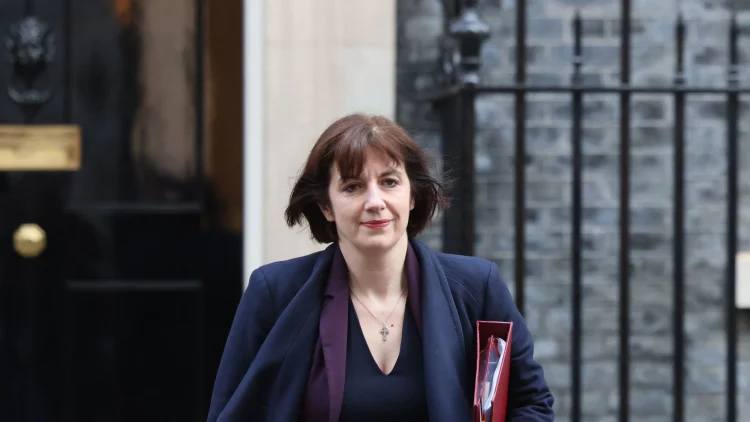

Education Secretary Bridget Phillipson was criticised for collaborating with reality star Gemma Collins in a social media video in May (Alamy)

3 min read
The government is training more officials to film social media content themselves on iPhones as part of a wider Whitehall push to strengthen the government’s online messaging and reach audiences beyond traditional media.
The Department for Education is upskilling existing staff in social media and video skills, including rolling out training to private office staff so that they can make social media content themselves when accompanying ministers on visits, rather than having to hire more people onto dedicated social media teams.
The short training includes how to shoot pieces to camera and film using iPhones. Officials in a minister’s private office do not usually directly oversee social media communications; instead, they typically manage the minister’s time, diary, official paperwork, and departmental policy flow.
A Department for Education source said that training more officials with these skills would mean the department could “reach more of the public where they are”.
“More people are getting their news from social media than ever before,” they said.
“We’re unapologetic about reaching them in an innovative and accessible way with reliable and accurate information, whether it’s about schemes like free breakfast clubs that could ease their childcare costs, or recruitment campaigns to hire the next generation of excellent teachers.
“We’re often criticised in the media as a government for supposedly not having effective communications. This often misses the fragmentation of audiences and the need to flood the zone on many different platforms – and often different ones to where Westminster gets its news.”
This training is part of a wider communications shake-up across government, taking place across different Whitehall departments with support from No.10 and the Cabinet Office.
The Department for Education was the most active government Instagram account behind Downing Street last month, and also posts regular updates its YouTube channel.
Education Secretary Bridget Phillipson faced backlash in May when she took part in a video collaboration with TV reality personality Gemma Collins.
The Only Way Is Essex star, who has 2.3m Instagram followers, featured in a video where she walked into the DfE offices with the background music from film The Devil Wears Prada. The video also included a conversation between Collins and Phillipson about post-16 education and vocational courses, and was criticised by campaigners advocating for changes to the special educational needs and disabilities (SEND) system who argued it trivialised education during a time of “systemic failure”.
However, Phillipson dismissed the criticism as “outright snobbery and just downright unpleasant”, and the department has continued to defend the collaboration.
The department’s Instagram views are growing, and are up by 29 per cent on the previous month. Over 80 per cent of those who viewed the Collins video in the first few days were non-followers of the DfE account, with government sources believing this shows it was effective in reaching new audiences who do not usually engage with the government’s content.
Collins was not paid for the appearance, but the department has overall shifted some of its spending towards influencer marketing, having spent over £700,000 on social media influencers since 2024. According to a government source, £1 on social media reaches many more people than £1 spent on a physical billboard or magazine advert.
PoliticsHome previously reported that the Cabinet Office’s New Media Unit was being restructured to redeploy staff and resources in order to strengthen digital capabilities and expand online messaging across departments.
The reforms also reflect rising concern within the government about the spread of false or inflammatory far-right content on social media and the need to better combat it.
The New Media Unit’s work has included setting up new channels on social media networks such as Reddit, and inviting influencers to receptions in Downing Street and to participate in press conferences alongside traditional journalists.

Sleep can be a useful indicator of a person’s overall health. The quality of our shut-eye might say a lot about our dementia risk and even heart health.
Some research suggests it might reflect our intelligence, too.
Spikes in our brain activity as we nap, called “spindles”, and our “chronotype” – or our natural sleep-wake cycle – have been linked to different cognitive abilities in studies.
Here’s what the science says:
1) “Sleep spindle” patterns seem linked to intelligence
According to a 2026 meta-analysis published in the journal Frontiers in Sleep, faster “sleep spindles” were linked to greater cognitive abilities.
Sleep spindles are very brief (we’re talking 0.5-second to 3-second) bursts in brain activity that happen during the non-rapid eye movement (NREM) stage of sleep. NREM sleep usually accounts for 70-80% of our total sleep time.
They get their name from how they look on a brain scan – the waves “spike” as these “burstlike signals” arise.
Researchers think they might help with memory consolidation. And in the 2026 Frontiers paper, scientists linked the strength of people’s higher-frequency “sleep spindles” to higher intelligence.
How long these bursts last didn’t seem to matter when it came to intelligence.
We also get lower-frequency sleep spindles, which are slower and appear closer to the front of the brain.
The more densely-packed the frequency of these are during sleep, the likelier we are to score better during cognitive tests. This seems to be truer fo adults than children, and held even more true still for older adults.
2) “Night owls” might be more intelligent than “early birds”
Using data from more than 26,000 people involved in the UK Biobank, scientists found “night owls” tended to do 7.5%-13.5% better on cognitive tests than “early birds”.
Intermediate sleepers, or those who were a mix of both waking types, also did 10.6%-6.3% better than those who only rose early.
The study’s lead author, Dr Raha West, said: “Our study found that adults who are naturally more active in the evening (what we called ‘eveningness’) tended to perform better on cognitive tests than those who are ‘morning people’. Rather than just being personal preferences, these chronotypes could impact our cognitive function.”
However, experts stressed that this doesn’t mean every night owl is smarter than every early bird. Their results reflected an overall trend, not an absolute rule.
And regardless of sleep type, getting too much or too little sleep – less than seven or more than nine hours a night – was linked to lower cognitive scores.


US defence secretary and far-right tattooed plonker Pete Hegseth has pledged to test the testosterone levels of US military personnel. another normal one for Pete, then. In one of his irredeemably weird X posts, the former soldier and alleged danger announced that the US military would be “a High T department”:
The High-T Department of War. pic.twitter.com/hlAUq3j2cD
— Secretary of War Pete Hegseth (@SecWar) July 15, 2026
The defence secretary wants to test soldiers over 30 to ensure:
you have the right testosterone levels to operate at your absolute best.
Public health scientist and epidemiologist Eric Feigl-Ding said:
I used to do testosterone research—testing for T levels in troops doesn’t make sense without a medical reason—T levels is not associated with higher cognitive function. T can drop because of stress or exhaustion—but TRT doesn’t always improve physical performance—mixed at best. https://t.co/ZXnA0SC0ju
— Eric Feigl-Ding (@DrEricDing) July 15, 2026
Testosterone replacement therapy (TRT) has become a faddish grift for the far-right manosphere. There are some occasions where doctors prescribe, but as one report on Hegseth’s comments pointed out:
Testosterone replacement therapy can help some patients with genuine deficiency, but it is not a simple fitness shortcut.
Another study pointed out:
Despite screening for low testosterone being medically unwarranted in most young men, this group is being aggressively targeted online by influencers and wellness companies promoting hormone tests and treatments as essential to being a “real man”.
Hegseth’s fake manosphere bullshit as policy
University of Copenhagen public health researcher Emma Grundtvig Gram told the Guardian in January 2026:
Men may come to perceive themselves as inherently deficient or in need of medical intervention.
Gram also said that:
This creates a sense of urgency for solutions, which in turn fuels lucrative markets for pharmaceuticals, supplements and medical devices, even in the absence of clear clinical benefit. More broadly, this contributes to the medicalisation of masculinity itself. It reinforces a narrow, idealised model of masculinity, while marginalising non-traditional or diverse expressions of gender.
Hegseth, who is a buffoon, is effectively making bro-dude pseudoscience a part of government policy. In his X video, Hegseth said:
We owe our warriors the absolute best medical care in the world, and this programme delivers on that obligation.
Taking care of your long-term health means ensuring you remain strong, resilient and capable – not just for your next deployment, but for the rest of your life, so you can thrive long after you take off the uniform.
US representative Chrissy Houlahan said the ‘T’ industry “would be thrilled” by Hegseth’s “latest culture-war obsession”:
Secretary of Defense Hegseth wants Congress to send him another $60 billion. Now he's announcing a new government-funded testosterone screening program for every service member over 30.
I'm sure the testosterone industry is thrilled. Taxpayers should ask who benefits from this… https://t.co/p3sxMvUsOH
— Chrissy Houlahan (@RepHoulahan) July 15, 2026
In a shock to nobody, the defence secretary was once a Fox News host. Hegseth thinks the US military has been turned ‘woke’. He has made it his personal mission to fix this entirely made-up issue. He once posted a video mixing scenes from the movies Gladiator, Deadpool, Mission Impossible and John Wick, himself and combat footage from the failed US war in Iran:
JUSTICE THE AMERICAN WAY. — The White House (@WhiteHouse) March 6, 2026

 pic.twitter.com/0502N6a3rL
Hegseth may be the biggest crayon of a human being ever produced by a country that produces fools at a rate which can barely be comprehended. God bless America and her nuclear codes. Which are in the hands of this weirdo. Great stuff.
Featured image via the Canary
By Joe Glenton

You probably already know that exercise can help with healthier ageing, and that hanging out with your friends has even been linked to greater longevity.
But sometimes, the realities of adult life – be they injuries, sore joints, or just a busy schedule – can feel like a major hurdle to hitting those goals (no pun intended).
Enter: walking football, a modified exercise researchers think could be a “promising candidate for inclusion in public health initiatives targeting healthy ageing”.
What is walking football?
Play is quite different from that of “normal” football. It’s a no-contact sport, there’s an above-head-height restriction on the ball, and you can’t do “headers”, among other rules.
Games are usually six-a-side. And, of course, teams walk instead of running.
This is all designed to make the sport as low-impact as possible for players. Speaking to Arthritis UK, 85-year-old walking footballer John, who has knee osteoarthritis, said: “The rules really limit injuries.
“The chances of being injured are really quite low. There is no running or physical contact, and we play three-touch football which gives a more level playing field for players of varying abilities.”
Though it’s often associated with over-50s, the Walking Football Association (WFA) points out that players of all ages can take part.
It might be especially useful for “players in their late 40s with health issues, younger players returning from injury, or [who have] referrals from [their] Health Care Provider,” they explained.
Why might walking football help with ageing?
A narrative review of the benefits and risks of walking football, published in the journal BMJ Open Sport & Exercise Medicine, said that the sport’s “slower pace and reduced physical contact make it accessible and safe for individuals with various chronic conditions”.
Additionally, some research showed it led to “modest improvements” in players’ heart health and body composition.
The game was also associated with a range of mental health benefits, including better social connections and a greater sense of purpose (both of which have been linked to better ageing and even a lower risk of dementia).
Then, there’s the player-friendliness of the game to consider: “Walking football appeals to middle-aged and older adults, including those with chronic health conditions, due to its rule modifications that promote accessibility and inclusivity”.
Walking football can help to beat loneliness among an “often-isolated” older group, and may carry the usual benefits of exercise and walking, including lower type 2 diabetes risk, decreased blood pressure, and stronger bones, the WFA added.
Researchers think that more data is needed on how walking football might affect injury risk. But overall, the review reads, it “shows promise as a safe strategy to promote physical and mental health among diverse populations,” older people very much included.
You can find your nearest walking football club through the WFA’s site.
Politics
The House | Another genocidal massacre is about to happen in Sudan. Andy Burnham can’t say he wasn’t warned



5 min read
Our incoming prime minister says the global picture is darkening. He’s right. But nowhere is that picture as dark as the humanitarian crisis that is Sudan.
Right now, the UN and other agencies are warning that the besieged city of El Obeid could be the next crime scene.
Britain is not a bystander. As penholder on Sudan at the UN Security Council, we are supposed to lead the international response. What Britain does next on Sudan will tell us fast whether Andy Burnham’s promise of a principled, resilient Britain means anything at all.
Like Gaza, Sudan is experiencing innocent suffering on an enormous scale, yet too much of the media and public look away. When the RSF captured the city of El Fasher last October after an 18-month siege, at least 60,000 civilians are estimated to have been killed, in a massacre a UN investigation has now concluded amounted to genocide. Repeating that failure now, in El Obeid, would be a choice, not an accident.
So, it’s worth being clear about who is funding and fuelling this conflict. Sudan’s army has been fighting a paramilitary force called the Rapid Support Forces, and the RSF’s chief backer is the United Arab Emirates, a close British ally and trading partner.
The UAE denies arming the RSF. But last month Nathaniel Raymond of Yale’s Humanitarian Research Lab, the group whose satellite imagery documented the massacre, told Parliament that his team had traced the weapons pipeline, tracking phones moving between Addis Ababa, RSF territory and addresses in the Emirates linked to the RSF’s leadership. Human Rights Watch, the New York Times and UN experts have gathered evidence pointing the same way.
Raymond testified that Foreign Office officials told him “significant private pressure” from the UAE meant Britain would not publish what it knew about who was arming the RSF. Instead, officials suggested that his lab, a university research team, release the evidence itself, because doing so “could help neutralise” the Emirati pressure the British government would not confront directly.
Our Foreign Office was seemingly so under the thumb that it asked American academics to do what British diplomacy could not, while prioritising its economic and diplomatic relationship with the UAE over preventing the slaughter of tens of thousands of people.
Burnham has stated that his first priority will be national security, because ordinary lives are impacted by global events. No one could disagree. But national security does not just mean preparing for war. It means preventing conflict, tackling the instability that reaches British citizens, and defending the international rules that keep us all safe. Burnham was right to say our foreign policy must be guided by our values. You cannot say that and then retreat into a protectionist agenda.
Keir Starmer cut the aid budget to fund defence, taking it to its lowest level in cash terms since 2012. Sudan’s aid was ring-fenced. The government has protected £146 million in humanitarian funding for this year and doubled support to local Sudanese responders. That matters, and I welcome it. But ring-fencing a budget does not make it enough. Bilateral aid to Sudan actually fell last year, to £120 million, and the government’s own aid watchdog concluded that Sudan remains one of the world’s most under-resourced crises. £146 million for 30 million people facing starvation and genocide is a drop in the ocean.
Sufficient aid would allow Sudanese communities to get healthy again and create some ingenuity of their own. When a prime minister signals that aid is expendable, the average person on the street won’t stop to give a charitable donation, and charities begin to feel Sudan is too difficult a cause to take on.
I live in Manchester, and I’ve watched Andy Burnham up close. He’s decent, and Manchester is a city with a historic solidarity with people in the global south. His whole brand is about looking past the hazy world of politics to lead our country with a principled programme.
He has found his voice on Gaza, apologising for Labour’s failures and promising pressure on Israel. Sudan needs the same treatment: calling out the UAE’s role and putting genuine pressure on Abu Dhabi to stop, whatever the diplomatic cost.
Britain should impose network sanctions on those profiting from the illicit gold and finance fuelling this war, targeting the Emirati refiners and traders who handle Sudanese gold, as the European Parliament has just demanded. Raymond put it in terms every Mancunian understands: “If people in Manchester were burning Emirates jerseys we would be having a very different conversation,” he told MPs, referring to Manchester City’s Abu Dhabi ownership. The forthcoming illicit finance summit is the ideal opportunity to crack down.
We should also energise the atrocity prevention coalition on Sudan that the UK itself created: monitoring, early warning, accountability, and serious discussion of a civilian protection force.
Burnham has publicly lauded the Hillsborough law and the families who fought for it. The idea that when the state fails people, it owes them the truth, accountability and proof that lessons will be learnt to prevent it from happening again.
So apply that standard here, and stand alongside the thousands of Mancunians with families in Sudan.
After the revelations about the government’s response to El Fasher, the question Burnham should be asking is the one his own politics demands: how many warnings, and how many deaths, before there’s a proper inquiry into why the Foreign Office failed so badly? If he looks away, he proves his critics right that these principles are just branding. If he engages, he proves them wrong.
Mohannad Taha is an activist and chair of Manchester for Sudan
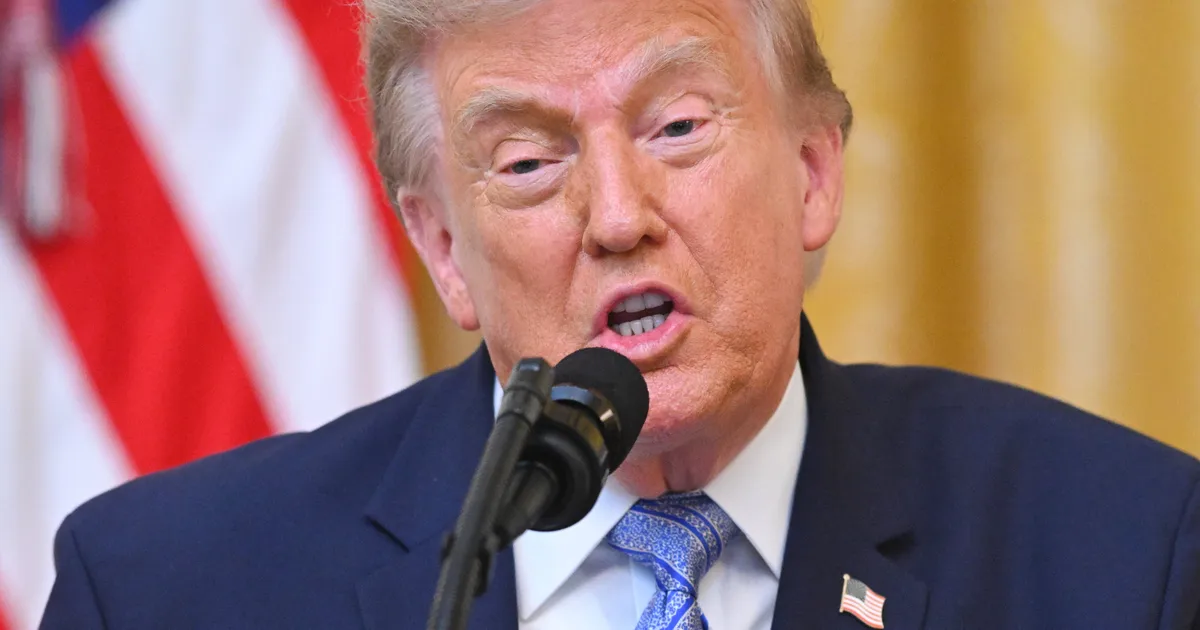
Donald Trump’s latest attempts to sow doubt into US voters’ minds about the American electoral system will be “quickly forgotten”, according to a BBC expert.
The US president claimed there are “shocking vulnerabilities” in the US election security in a dramatic speech on Thursday, three months before he faces the midterms.
In a primetime address, Trump accused China of interfering in the 2020 election – which he lost to Joe Biden – and made a series of unsubstantiated claims about voter fraud and foreign meddling.
He claimed he had declassified intelligence files which showed Beijing was trying to stop him from winning – but did not present clear evidence.
Previous US intelligence assessments also reported that it had “high confidence” China did not interfere with the 2020 result.
According to the BBC’s North America editor Sarah Smith, this “very dramatic” moment ended up “falling rather flat”.
“He was trying to lay out a picture of China attempting to influence the 2020 election,” she told BBC Radio 4’s Today programme. “But he didn’t really have any evidence that they had done.
“For instance, he was claiming China had obtained details of millions of voters, the kind of information that you would need to register to vote.
“The implication being that somehow that might be used in a fraudulent way. That’s information which is easily available online.”
She said Trump was “hoping people would draw the conclusion that fraud had been committed”.
However, Smith added: “[China] is probably not surprised that Donald Trump is talking about this now, especially since we are now only weeks away from crucial mid-term elections.
“He wants Congress to pass legislation changing the way people vote, insisting for instance that they prove they’re US citizens before they have the right to vote.”
Trump also claimed the “deep state is conspiring to keep this information [about China] from the American people”.
But Smith noted there is a “gap between what [the White House is] producing and claiming as evidence and the allegations the president was making in his speech”.
Trump also alleged the media wanted to continue “this plot” after several networks refused to air his speech amid concerns over his unsubstantiated claims.
Smith said: “Along with American enemies, the CIA and establishment figures, the media were also being pegged as people who were complicit in the cover-up of electoral fraud in America.”
Pointing to a new Washington Post-Ipsos survey which put his approval rating on 37%, Smith said Trump’s “poll ratings are not great” right now, either.
She continued: “This isn’t going to move the dial very much because I don’t think it’s going to be huge news, to be perfectly honest.
“More unsubstantiated claims about electoral fraud from Donald Trump are not anything new.
“If voters are not paying much attention to that, that’s probably to Donald Trump’s benefit. They would much rather hear him talk about affordability, the cost of living, what he’s trying to do to bring down prices, what he’s trying to do to end the war in Iran.
“It was billed as a very, very dramatic moment, but it’s one that fell rather flat – and I think will probably be quickly forgotten.”
Listen to Commons People, the podcast that makes politics easy. Every week, Kevin Schofield and Kate Nicholson unpack the week’s biggest stories to keep you informed. Join us for straightforward analysis of what’s going on at Westminster.
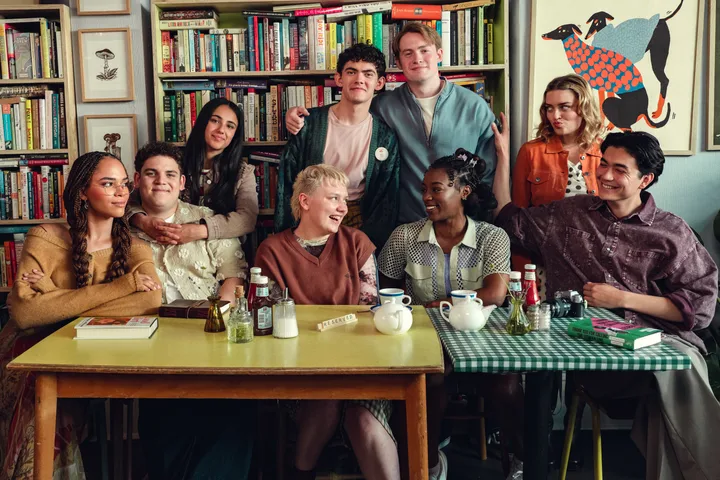
Critics are a little split over the final chapter in the Heartstopper story, which debuted on Friday morning.
Rather than a fourth season of the popular teen drama, Heartstopper Forever takes the form of a feature-length film, marking one last outing for Kit Connor and Joe Locke as boyfriends Nick and Charlie.
While critics are pretty much in agreement that those who’ve been loyal followers of Heartstopper’s first three seasons will find the movie to be a satisfying end, most have lamented that its focus on Nick and Charlie’s relationship means the wider cast has been sidelined.
Meanwhile, there’s some contention over whether or not the film allows its characters to mature convincingly, with some suggesting that the “wholesome” nature of the central couple’s relationship holds Heartstopper Forever back.
Here’s a selection of what critics have had to say about Heartstopper Forever so far…
“Heartstopper’s 90-minute finale of nice kids being (mostly) nice to each other could have had me reaching for my phone. Instead, I settled back like a proud parent to enjoy the cast navigate their final year of school and their evolving relationships […] LGBTQ+ children and their families need a little hope and happiness right now. Heartstopper delivers that with pretty, pastel bows on.”
“From the off, [author Alice Oseman] signposts that Charlie and Nick are in a different stage of life to when we last saw them […] Up until now, the show has rarely interrogated the stability of their romance, but these confrontations are also a showcase of how Locke and Connor have matured as performers […] Alas, the shorter length versus a full eight-episode season means that there are fewer scenes to share out among Heartstopper’s swelling ensemble.”

“Heartstopper Forever is a profoundly romantic, emotionally enlightened and essential viewing experience for anyone who has wept over the sweet simplicity of Nick and Charlie’s story before.”
“This last chapter is very much the story of Charlie and Nick […] There are a few joyous moments, of course, but it isn’t focused on falling in love or trying to navigate sex and intimacy for the first time. It’s about the work required to maintain a connection across different chapters of life.”
“As a stand-alone film, yes, Hearstopper Forever is far from perfect. But for those who’ve followed Nick and Charlie’s journey these past few years, the movie feels like a fitting farewell to the characters we’ve grown to know and love.”
“Part of Nick and Charlie’s glow comes from the extended cast that Heartstopper Forever mainly ignores. The film isn’t without its aww-inspiring moments, but the odd pacing, relentless Easter eggs and montages often leave it feeling like its own fan cam edit as it attempts to put the neatest possible bow on the couple’s puppy love. Nick and Charlie are supposed to be all grown up, but Heartstopper Forever treats them with kid gloves.”

“Fans were relieved that this beloved show would at least be getting a proper farewell. Sadly, it’s a pretty patchy one […] For long stretches, Heartstopper’s supporting characters barely get a look-in. […] Thankfully, Heartstopper‘s prevailing sweetness carries it to the finish.”
“All the focus on them does mean that Heartstopper Forever is a little too busy to focus on Charlie and Nick’s pals. It’s a drawback from season three, because those eight episodes meaningfully crafted their lovely queer community, emphasising the value of having people to lean on at a young age, especially if the rest of the world doesn’t understand who they are just yet […] Yet none of this detracts from Heartstopper Forever being a satisfying conclusion to this story, of two boys whose illuminating journey of self-discovery feels rare and valuable on screen, even if there’s a certain cringe factor to it.”
“If CBeebies made queer teen drama, it might be something like this. Heartstopper Forever arrives with the gentle air of an especially placid episode of Hey Duggee, but mixed with a break-up, a handful of sex scenes and a vigorous plea for trans rights.”
Heartstopper Forever is now streaming on Netflix. Read HuffPost UK’s review of the film in full here.
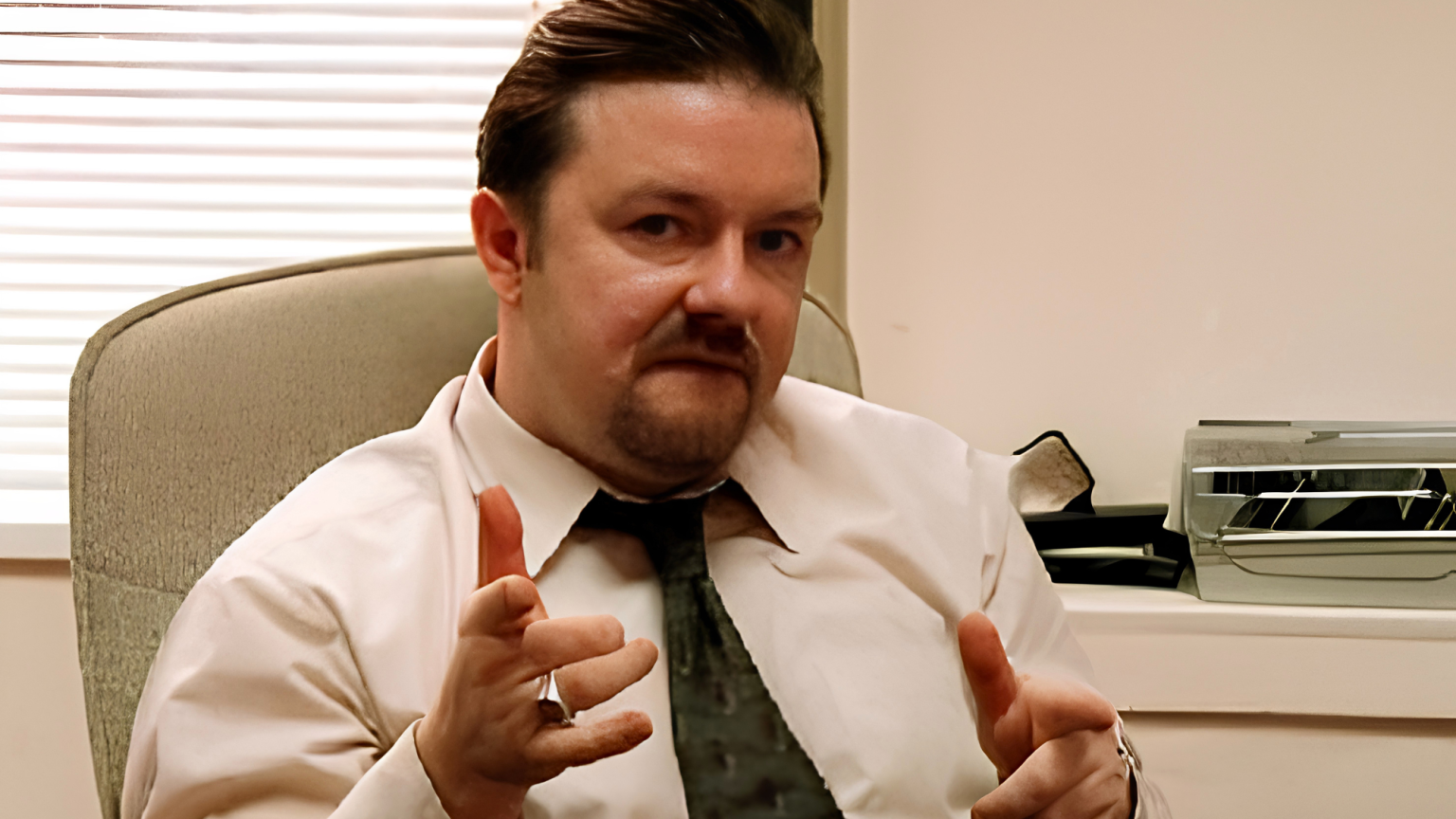
The occasion this month of the mockumentary The Office celebrating the 25th anniversary of its first appearance on television, an anniversary marked by a couple of actual documentaries, will have prompted some to revisit the comedy, or watch it for the first time.
Many who have done so will have inevitably asked themselves the same question: why did television comedy used to be so funny, and why is that not the case anymore? It’s not a conclusion that will be confined to us old timers: it’s said that there is vogue for all things turn-of-the-millennium among generations Y and Z.
They might be drawn to that era for the same reason my generation looks upon it wistfully. The Office was symbolic of a freer age, when we were mostly allowed to say what we thought and laugh at what we liked. This was before the censorious, safety-first, puritanical cult of hyperliberalism ruined everything, with television comedy being one of its greatest casualties.
The Office worked precisely because it was unsafe and made us feel uneasy. It wasn’t just the pervasive themes of disappointment and failed ambition, but the social transgressions made by the maladroit but redeemable David Brent, the creepy Gareth Keenen and the genuinely horrible Finchey.
Their jokes and observations regarding race, sex, homosexuality and the disabled would be impossible to broadcast today on two counts. First, because it’s unacceptable to even laugh at fictional characters who say awful things in public. Woke fundamentalism dictates that some words are inherently evil, unsayable in any context.
Secondly, society now doesn’t do forgiveness or understand redemption. David Brent’s transgressions would forever be held against him in our cancel culture. In real life, no scriptwriter would dare submit a comedy with such content. No commissioner would go near it – the industry has seen what happened to Graham Linehan.
This is why people of all ages return to or discover not only The Office, but Brass Eye, I’m Alan Partridge, Da Ali G Show, Peep Show, Little Britain, The League of Gentlemen, The Inbetweeners and even Top Gear with Jeremy Clarkson and co – all offensive in their own way, and all still being or repeated or watched on demand.
Television comedy has been a wasteland since the end of the noughties. In America, the glory days of Frasier, Friends and Seinfeld are a distant memory. And what have we in Britain produced since The IT Crowd? Mrs Brown’s Boys, Derry Girls, This Country, Peter Kay’s Car Share and Fleabag. A few of these tepid shows may have raised a smile, but none will be celebrated in 25 years. Or even remembered at all.
The public have bigger concerns than Farage’s mates
If much of the broadcast media and many of the newspapers are to be believed, Nigel Farage made a terrible misjudgement in standing down as MP for Clacton to prompt a by-election there. It was an ‘own goal’, we are constantly reminded.
I’m not so sure. Farage has behaved with impropriety, and the whole episode is sordid, but this is not a game changer. Most Reform UK voters or sympathisers are unmoved by the accusations and care even less about parliamentary procedure.
That Farage’s main opponent is now Count Binface, a comedian who has written scripts for Have I Got News for You (a show which epitomises everything smug and superior about the liberal-left clerisy), has only given more weight to the narrative that the ruling classes (neither Labour nor the Conservatives are standing at Clacton next month) are determined to suppress him and dismiss the people he stands for.
Reform is only the latest manifestation of a tide of discontent, a multifaceted swell comprising classic conservatives, working-class types of a conservative disposition, and old-school liberals, which made its voice known in 2016, and which remains unbowed today. Many have supported Reform because of Farage, many in spite of him.
This wave will prevail unless whoever is in power address the issues the governing parties have consistently failed to address for years: unsustainable levels of immigration that are destroying the fabric of this nation; excessive government spending, especially on those who don’t deserve it, which will bankrupt it soon; and the breakdown of the social contract manifest in the epidemic of shoplifting, anti-social behaviour and the disintegration of our once much-vaunted multicultural society.
For good or bad, most people don’t care what Nigel Farage has done. He is likely to win because many believe that this country is on the precipice. They fear that any scandal today is, from the longer view of this country’s very survival, a trivial distraction.
VAR sucks the life out of football
This year’s World Cup has once more reminded us of the inherent drawbacks with VAR.
The debate over the use of the video assistant referee in football may strike outsiders as a niche, esoteric matter, but whether we defer to this technology is a matter of significance. It reminds us that there are two types of people in the world.
On the one hand we have the idealists and perfectionists. They believe it is always possible to make objective and definitive judgements about human behaviour, that we should and can eliminate error and attain pure truthfulness. On the other hand we have realists, those who accept that we must live in an imperfect world, and that idealism can have unintended negative outcomes.
Introduced by perfectionists, VAR only introduces more doubt, more uncertainty and less respect for authority. Now more fouls must be re-considered, more decisions made by the referee called into question. The flow of play is interrupted with more appeals to the camera and interminable deliberation. Football as a fluid spectator sport has been much diminished since its introduction.
Yet human relations only function if we proceed with the understanding that justice is imperfect, perspectival and contingent. We have accepted this principle in common law for centuries, where judgements are dependent on multiple witnesses and many perspectives. We accept verdicts ‘being beyond reasonable doubt’. We have double jeopardy because we know that we can’t go on indefinitely raking over previous decisions. We acknowledge human subjectivity, in that some judges will be harsher and others more lenient. In football, we similarly know that some referees will be draconian, others indulgent.
Idealism can beget procrastination, inertia and paralysis. Or as Voltaire once counselled: the perfect is the enemy of the good.
Patrick West is a columnist for spiked and author of Get Over Yourself: Nietzsche For Our Times (Societas, 2017). Follow him on X: @patrickxwest.
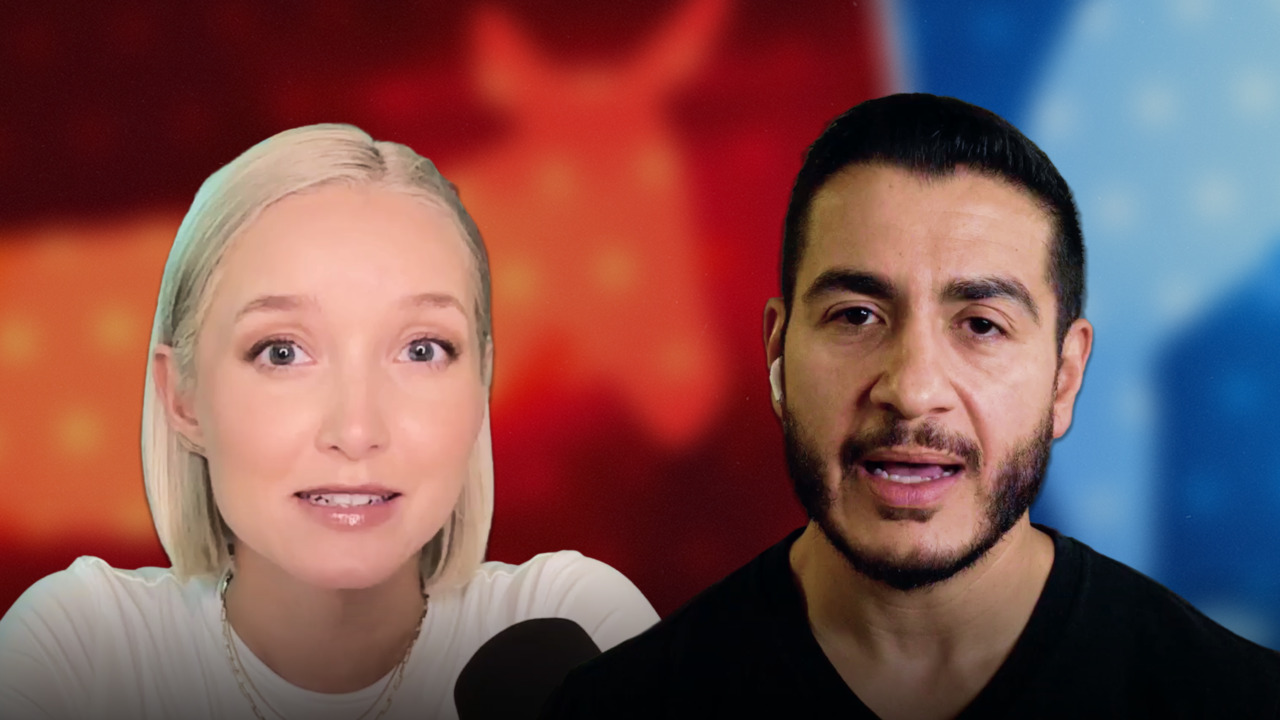
Abdul El-Sayed on AIPAC spending, ‘Defund the Police’ and why he’s not a socialist
 lead image

Texas A&M among 16 teams who could ‘actually win’ a title in 2026

Google Vids now lets you star in your own AI videos

Bonnie Tyler funeral plans announced as people invited to line the streets


-

 Fashion6 days ago
Weekend Open Thread: Nutriplenish Leave-In Conditioner
-
 NewsBeat19 hours ago
London Mayor Sadiq Khan handed a peerage by Keir Starmer alongside 15 other Labour figures… just days before the PM leaves No10
-

 Crypto World1 day ago
CFTC blocks Kalshi from unwinding Michigan trades after court order
-

 Business1 day ago
Nvidia Stock Slips After Big Tuesday Rally as Huang Confirms Vera Rubin Chip Is Now in Production Today
-

 Politics2 days ago
Young campaigners urge incoming PM to act on outdoor junk food ads
-
 Entertainment2 days ago
Disney’s Most Ambitious Failed Star Wars Attraction Is Coming to SDCC
-

 News Videos3 days ago
XRP BOMBSHELL… XRP OMBOARDED FOR TRANSACTIONS!!!
-

 Tech3 days ago
Get Your ESP32 Sunny Side Up With This Solar Dev Board
-

 Crypto World14 hours ago
Injective Submits SEC Transfer-Agent Registration to Onchain Ownership Records
-

 Tech3 days ago
Dark Secrets Emerge When Jailbreaking LLMs
-
 Sports2 days ago
New Cornerback Enters Vikings Trade Rumor Mill
-

 News Videos4 hours ago
Money | Class 12 Economics | CBSE Board Exam 2026-27
-

 Business1 day ago
Palantir Shares Rise After Expanded Nvidia Partnership and Fresh Analyst Upgrades Ahead of Earnings Day
-

 Business9 hours ago
Banco Bilbao Vizcaya Argentaria, S.A. (BBVA) Discusses Global Macro Environment and Economic Outlook for Core Markets Transcript
-
 Tech4 days ago
Cloudflare Precursor Watches Your Mouse and Keyboard To Decide If You Are Human
-

 News Videos4 days ago
how to make coin bank box with cardboard #scienceproject #money #diy #shorts
-
 Entertainment2 days ago
Vicki Gunvalson Defends Discussing Heather Dubrow’s Money
-
Crypto World3 days ago
Ripple, Coinbase, Circle Join Linux x402 Foundation to Help Shape AI Payments
-

 Crypto World12 hours ago
Claude Fable 5 Slips to Second in AI Coding Leaderboard
-
Business10 hours ago
Nephros, Inc. (NEPH) Discusses Evolving Water Safety Strategies and Expansion Beyond Filtration Transcript
You must be logged in to post a comment Login