





Barr was accused of attending two meetings of the IRA Executive/Army Council where “very serious matters of great concern” were discussed.
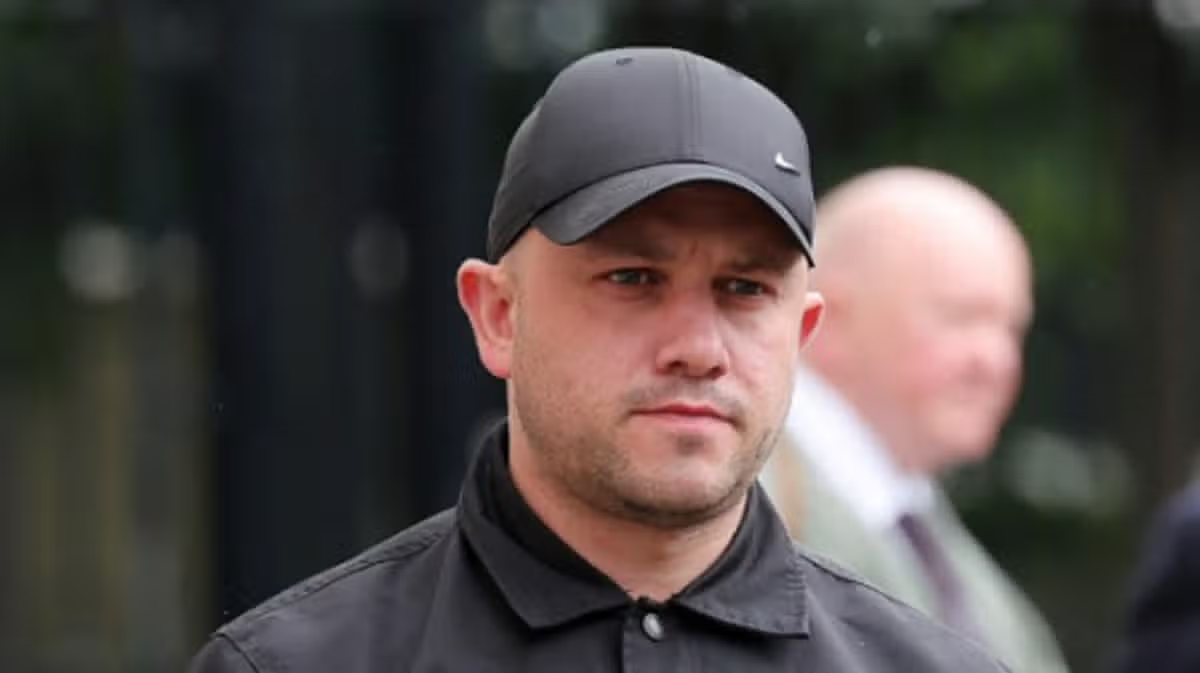
A Derry man facing terrorist charges arising from an undercover surveillance operation had his bail conditions varied today (Friday) to allow him to attend a family holiday in Donegal.
Whilst Joseph Patrick Barr was not granted permission to stay overnight in Donegal, his bail was varied to allow him to travel from Derry to Donegal every day then return home.
From Cecilias Walk, the 38-year old is one of a number of defendants facing trial following a covert surveillance operation conducted by the PSNI and MI5.
The investigation centred on two meetings allegedly held by the New IRA in two properties Co Tyrone in February and July 2020 which were bugged as part of ‘Operation Arbacia.’
Barr has been charged with seven offences, including directing a terrorist organisation and conspiring to direct terrorism, which he denies.
Last month, he was acquitted of two charges arising from the riot in the Creggan area of Derry in April 2019, which claimed the life of Lyra McKee.
The application to vary Barr’s bail was made at Belfast Crown Court by his solicitor Gavin Booth and was objected to by the Crown due to concerns of risk of flight and further re-offending.
Telling Judge Laura Ievers KC the variation was to allow Barr to stay overnight in Donegal from July 19 to 22, Mr Booth addressed the concerns of flight and pointed out that both Barr’s passport and driving licence have been surrendered to the PSNI.
Mr Booth said that at all times Barr would be in the company of his family who are “people of good character” and there was “no way” Barr would risk breaching his bail.
The solicitor also told Judge Ievers that a total of £85,000 cash sureties have been lodged on Barr’s behalf
Mr Booth said Barr has been on bail since July 2022 and in those four years there have been no breaches.
Regarding the long-running trial centring on Ms McKee’s murder, Mr Booth said Barr attended the hearing “every single day” and has demonstrated “time and time again that he will abide by conditions and turn up to court.”
Objecting to the variation, Crown barrister Michael McAleer KC said that in 2000 Barr was alleged to have been “an active member of a Republican terrorist organisation, otherwise self-styled as the New IRA.”
Mr McAleer said Barr was accused of attending two meetings of the IRA Executive/Army Council where “very serious matters of great concern” were discussed.
The prosecutor added that the ‘Operation Arbacia’ case was “complex” and that as an “alternative” to remanding Barr and his co-accused “very strict bail conditions were imposed.”
Saying there were no police objections to Barr travelling to Donegal, Mr McAleer said “they do wish him to attend back at his home in the evening where his bail conditions required that he should reside.”
Mr McAleer said that if convicted, Barr faced a “lengthy prison sentence” meaning police would be “concerned about flight” and also expressed concerns about re-offending given Barr was viewed as a “senior member of the IRA” in 2000.
Mr McAleer also pointed out some similar applications made by Barr’s co-accused to leave the jurisdiction overnight have been refused in the Crown Court.
Reacting to the Crown’s objections, Mr Booth rejected suggestions that the case against Barr was strong and said it was the defence’s view that the meetings were a “set up” by a state agent.
A detective constable was then called to the witness box and was asked by Judge Ievers if there was any issue with flexibility which would allow Barr to spend time with his family in Donegal then return home to Derry each night.
Confirming opposition to Barr being allowed overnight stays, the officer said the curfew could be varied and police would be “agreeable to daily travel.”
Following this, Mr Booth again asked for Barr to be granted overnight stays as he said his client having to travel over four hours every day of the holiday would “take away from family time.”
After listening to all oral submissions, Judge Ievers said she was not allowing Barr to stay overnight in Donegal.
She did, however, amend his bail to allow him to cross the border each day.
In addition, Barr’s current curfew of 9pm to 6am was varied and will be from 6am to midnight between July 19 to 22 to allow him to travel to Donegal and return home each evening.
This, Judge Ievers said, would allow for “extensive family contact”.
















































You must be logged in to post a comment Login