

Business
What I Wish Someone Had Told Me Before I Filed Anything

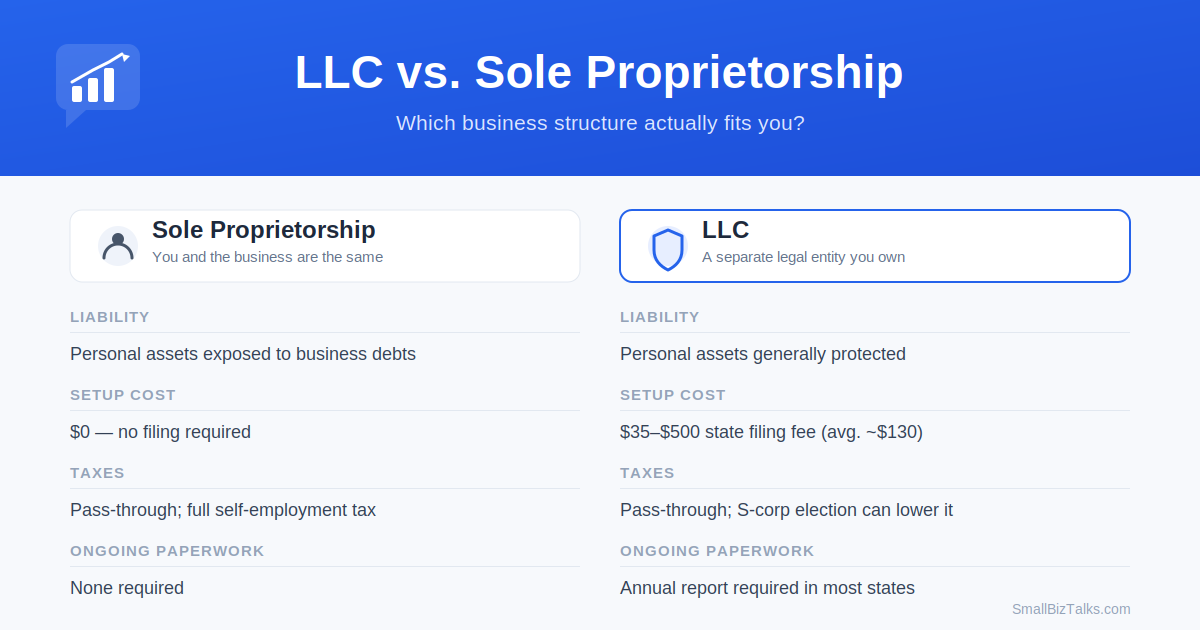
There’s a special kind of panic that hits at 11 p.m. on a Tuesday when you Google “can someone sue me personally for my freelance business” and the answer is, technically, yes. I know this because I lived it. For fourteen months, I ran a growing consulting side hustle- invoices, contracts, the whole act- under exactly zero legal structure. I didn’t choose to be a sole proprietor. I just never chose to be anything else, which, it turns out, is the same thing.
The wake-up call came from a client’s offhand comment about “your LLC,” followed by my very convincing silence. That night I fell into a research hole so deep I emerged the next morning having read seventeen tabs on liability shields, self-employment tax, and something called “piercing the corporate veil” that sounded like a phrase from a divorce lawyer’s memoir. So: is a sole proprietorship secretly a ticking time bomb? Is an LLC the adult, responsible choice, or just expensive paperwork with better branding? Let’s actually work through it.
What Is a Sole Proprietorship, Really?
Here’s the part nobody tells you clearly: if you’re earning money from your own business activity and haven’t filed anything with your state, you’re already a sole proprietor. There’s no form to submit, no fee to pay, no ceremony. You and the business are, legally, the same person. That’s the whole structure.
The upside is real. It’s the fastest, cheapest way to start working for yourself — no filing fee, no separate tax return, no annual report to remember. You just start invoicing. The downside is baked into that same simplicity: there’s no legal wall between your business and your personal life. If the business owes money or gets sued, the business is you, so your savings account, your car, and potentially your house are all fair game.
What Does an LLC Actually Protect You From?
A Limited Liability Company creates a separate legal entity- one that can own things, owe things, and get sued, largely independent of you personally. That separation is the entire point of forming one.
It’s worth being honest about the limits, too. An LLC won’t protect you if you personally guarantee a business loan, if you commingle business and personal funds, or if you’re personally negligent — say, you’re a contractor and you cause an injury through your own carelessness. Courts can “pierce the corporate veil” and go after your personal assets anyway if you treat the LLC as a legal fiction rather than a real, separately run entity. The protection is genuine, but it’s not a force field; it’s a structure you have to maintain.
Which One Actually Costs More to Start?
This is where a lot of the fear around LLCs turns out to be overblown, and a lot of the assumed simplicity of sole proprietorships turns out to be incomplete.
Sole Proprietorship
LLC
Setup paperwork
None required (unless operating under a different name)
Articles of Organization filed with your state
State filing fee
$0
$35–$500 depending on state (national average is roughly $130)
Ongoing state fees
Typically none
Many states require an annual report; fees range from $0 to $800+ (California’s franchise tax is the notable outlier)
Separate business bank account
Optional
Strongly recommended to preserve liability protection
EIN required
Only if hiring employees
Recommended even for single-member LLCs, to avoid using your SSN
A sole proprietorship is still the cheaper entry point in dollar terms. But “cheaper to start” and “cheaper overall” aren’t the same question — it depends what a lawsuit, a bad debt, or a messy tax season would actually cost you.
How Do Taxes Actually Differ?
This is the part I got wrong for months, assuming an LLC meant a whole new tax regime. It doesn’t, automatically. By default, both a sole proprietorship and a single-member LLC are taxed identically: profits and losses pass through to your personal tax return, and you pay self-employment tax (15.3%, covering Social Security and Medicare) on your net earnings.
The actual tax advantage of an LLC isn’t automatic — it’s optional. A single-member LLC can elect to be taxed as an S-corporation once profits reach a meaningful level, which can reduce self-employment tax by letting you pay yourself a “reasonable salary” and take remaining profit as a distribution not subject to that 15.3%.
That election involves added complexity — payroll processing, additional filings — so it’s rarely worth it for a business bringing in a few thousand dollars a year. It becomes worth asking about once net profit is consistently well into five figures.
Does an LLC Actually Make You Look More Credible?
Here’s a question I didn’t expect to matter as much as it did: does “LLC” after your business name change how people treat you? Anecdotally, yes. Some clients, vendors, and lenders treat an LLC as a signal of seriousness — rightly or not — the way a business bank account or a proper invoice template does. It’s not a guarantee of better contracts, but it removes a small, avoidable hesitation from a prospective client’s mind.
It also matters for banking and financing. Business lenders and some payment processors are more comfortable extending credit to a registered entity with its own EIN and bank account than to an individual operating under their own name.
Do You Still Have to Report “Beneficial Ownership” in 2026?
If you researched this a year or two ago, you may still be carrying around outdated fear about the Corporate Transparency Act’s beneficial ownership information (BOI) reporting rule — the one that threatened steep penalties for LLC owners who didn’t file. Here’s the current state of play: in March 2025, FinCEN issued an interim final rule that removed the BOI reporting requirement for domestic U.S. companies and U.S. persons entirely. As of today, that requirement applies only to foreign entities registered to do business in the U.S. — not to a typical American-owned single-member LLC.
That said, the underlying law hasn’t been repealed, courts have upheld its constitutionality, and FinCEN’s final rule is still pending in 2026, meaning the rule could tighten again with limited notice. A small number of states have also introduced their own versions; New York’s LLC Transparency Act took effect January 1, 2026, but after a late amendment, it applies only to foreign LLCs doing business in New York, not typical in-state LLCs. The short version for most small business owners forming a domestic LLC in their home state: this isn’t currently a filing you need to worry about, but it’s worth a five-minute check-in with a professional if your situation involves foreign ownership or multiple states.
So, Which One Should You Actually Choose?
There isn’t a universally correct answer, but there is a useful set of questions. How much personal risk does your work actually carry — a freelance copywriter has a different exposure profile than someone renovating properties or handling clients’ money. How much profit are you actually generating, since that determines whether the tax flexibility of an LLC is relevant yet. And how much administrative overhead are you willing to take on, since an LLC does require you to actually treat it like a separate entity — separate bank account, its own paperwork, its own discipline.
If you’re testing an idea with minimal financial exposure and low risk of being sued, operating as a sole proprietor while you validate the business is a completely reasonable starting point- you can always convert to an LLC later, and most people do exactly that. If you’re already generating consistent revenue, working with clients under contracts, or doing anything with meaningful liability exposure, the cost of forming an LLC is generally small next to what it protects.
I eventually filed mine on a Wednesday afternoon, paid my state’s filing fee, and felt almost anticlimactic about how undramatic the process actually was compared to the spiral that preceded it. If you’re standing where I was, at least you can skip the 11 p.m. panic-Googling, you already know what the seventeen tabs would have told you.


Anna Price, the community lead at St Mary Magdalene, says its work to build community resilience and break down isolation is hugely important.
“Many people get into a crisis partly because they’re on their own and they’ve got no-one around them to help them make sense of things and help them move forward in life,” she says.
“The cycles that I see of families, the kind of generational dependence on benefits, has meant that for some, they no longer have the skills or the upbringing to know how to hold down a job.”
St Mary Magdalene sits within an estate with high levels of unemployment and “economically inactive” people who are neither in work nor looking for it.
Mental health issues, neurodivergent conditions, physical ill health and disabilities are also prevalent.
“You realise when you hear their stories and what their lives are like, that the idea of employment is very, very, very challenging,” says Price.
“It is really heartbreaking, because it’s a cycle that you feel like we’re trapped in and can’t easily see a way out of that.”
But there is hope. Introducing a person in crisis to Tennant is “like picking somebody off the floor,” she says.
“I’ve always found it very emotional; that they see there is a possibility to get out of debt and get on the right benefits.
“It’s incredible.”
A spokesperson for the Department for Work and Pensions said its Connect to Work programme was expected to support 4,000 people in Norfolk by 2029.
“We’re committed to moving from a welfare state to a working state, giving people in Norfolk and beyond the support they need to move out of poverty and into work,” they added.
“We will always work with anyone with an outstanding debt to find an affordable way to repay, which could include pointing individuals towards free debt advice and support services.”
Do you have a story suggestion for Norfolk? Contact us below.
Business
Agentic AI, alternative data and SIFs take centre stage at Indian Institutional Quant Conference 2026

The day-long conference, held on July 17 at the Taj City Centre in Gurugram, brought together global academics, institutional practitioners, regulators and technologists to discuss emerging trends in quantitative and systematic investing. This marked the second time the conference was held in the National Capital Region.
The conference featured panel discussions, fireside chats and technical presentations, with participation from asset management companies, family offices, policymakers, global research firms and academia.
The event began with a welcome address by LAQSA co-founders Rishi Kohli of JioBlackRock AMC, Pankaj Mani of RealWorldRisk and Arvind Mathur of Private Equity Pro.
Among the other speakers were Prof. Chetan Ghate, Member of the Prime Minister’s Economic Advisory Council; Sunil Ramrakhiani, Chief Business Officer at BSE; Prof. Sandeep Juneja, Founding Director of the Safexpress Centre for Data, Learning and Decision Sciences at Ashoka University; Lalit Taneja, Director of the GARP Delhi (India) Chapter; and Prof. Miquel Noguer I Alonso.
Agentic AI and alternative data in focus
One of the key sessions focused on “Agentic AI in Quant: Practical Applications”, led by Prof. Miquel Noguer I Alonso. The discussion examined how autonomous AI agents and multi-agent systems could reshape areas such as portfolio management and systematic trading.

Another session, titled “Practical Uses of AI/ML and Alternative Data for India vs. Global Experience”, featured Balakrishnan Ilango of LSEG and Aditya Sharma of S&P Global Market Intelligence.
The discussion highlighted differences between the adoption of AI globally and in India, particularly in the context of data availability and regulatory constraints in domestic markets.
SIFs gain prominence among wealthy investors
The growing relevance of Specialised Investment Funds was another major theme at the conference. A dedicated panel featuring Rishi Kohli of JioBlackRock AMC, Amit Goel of PACE 360, Vinayak Magotra of Centricity WealthTech and Puneet Jain of Karan Thapar Family Office discussed the rising appetite among ultra-high-net-worth individuals and family offices for systematic allocations through SIFs.The conference also examined the regulatory outlook for quantitative strategies from a global comparative perspective, while Prof. Chetan Ghate provided a macroeconomic perspective on the structural challenges involved in economic policymaking at scale.
Commenting on the event, Pankaj Mani, Co-Founder of LAQSA, said the conference reflected how India’s institutional quant ecosystem was progressing from strategy design towards implementation and greater technical rigour.
“The sessions on Regulating the Quant Ecosystem, Agentic AI in Quant, and Forex Strategies sparked exactly the kind of candid, practitioner-led dialogue we want to build across the ecosystem,” Mani said.
Rishi Kohli, Co-Founder of LAQSA, said the sixth edition reinforced that India’s quant community is expanding in both depth and maturity — linking global experience with India-specific market realities and strengthening the network of professionals building systematic capabilities.
As quantitative tools become more deeply embedded in investment processes, the boundaries between traditional and systematic investing are also becoming less distinct. Discussions at the conference indicated that developments ranging from Agentic AI and alternative data to the emergence of SIFs could play an increasingly important role in shaping India’s institutional investment ecosystem.
(Note: The journalist was invited to the conference)

The NSE’s Nifty 50 rose 261.55 points, or 1.1%, to close at 24,334.3, while the BSE Sensex gained 964.58 points, or 1.25%, to end at 78,151.45.
“Our markets were insulated from the Asian selling due to the lack of AI play,” said Sham Chandak, head of institutional equities at Elios Financial Services.
The Nifty IT index rose 1.75%, while Bank Nifty gained 1.6% and the Auto index climbed 1.2%.
“With the shaky AI trend trading globally, Indian IT services stocks have taken a breather and are partially aided by better-than-expected earnings,” said Chandak. “Major banking stocks like HDFC, ICICI, Kotak and Axis are set to announce their earnings on Saturday, and the market is going in with an expectation of good numbers.”
Elsewhere in Asia, Japan fell 4.03%, Hong Kong declined 1.8%, China lost 3.05%, and Taiwan dropped 6.5%. South Korean markets were closed on Friday but had fallen 6.4% at Thursday’s close.
The Nifty advanced 0.5%, and the Sensex gained nearly 0.8% during the rollercoaster trading week, with fresh tensions in West Asia triggering a rebound in oil prices.Brent crude futures traded at $86 a barrel on Friday evening, up from $76 last week amid renewed tensions involving the Strait of Hormuz, a key oil transit route, between the US and Iran.
Technical and derivative indicators are pointing to continued gains next week.
Ashish Katwa, technical analyst at Stoxbox, said the Nifty had resumed its uptrend after three sessions of consolidation, forming its strongest bullish candle since June 12.
“Options data continues to support the bullish outlook, with fresh put writing at the 24,200 and 24,000 strikes establishing a strong support base,” he said. “Meanwhile, call unwinding at the 24,500 strike signals scope for further upside, while fresh call writing at the 24,600 and 24,700 strikes is expected to act as the immediate resistance zone.”
He said the bias remains positive for next week, with any dip towards 24,200-24,250 presenting a buying opportunity as long as the Nifty holds above 23,970. Immediate upside targets are seen at 24,500 and 24,700.
The India VIX, the market’s fear gauge, rose 2.1% to 13.15.
Broader markets underperformed the benchmarks. The Nifty Midcap 150 fell 0.4%, and the Nifty Smallcap 250 declined 0.6% on Friday. For the week, the indices lost 0.9% and 0.6%, respectively. Of the 4,412 stocks traded on the BSE, 1,635 advanced while 2,588 declined.
Foreign portfolio investors were net sellers of shares worth 376 crore, while domestic institutional investors were net buyers of shares worth 1,018 crore.

Cited by Barron’s as one of the top financial websites to visit on the weekend, Financial Sense (www.financialsense.com) provides educational resources to the broad public audience through a daily podcast, editorials, current news and resource links on salient financial market issues. Begun in 1985 as a local talk radio program, Financial Sense Newshour (www.financialsense.com/financial-sense-newshour) is a weekly webcast with host Jim Puplava and top financial thinkers. Writing staff of Financial Sense includes: Jim Puplava, Chris Puplava, Ryan Puplava, and Cris Sheridan.

The country’s largest producer of steel reported its earnings during market hours on Friday, and its shares climbed 1.4% on the BSE at 1,238.35. While higher compared to the previous year, the bottomline was 75% lower sequentially as the March quarter benefited from one-time gains of 17,888 crore.
Consolidated revenue from operations for the June quarter rose around 10% on year to 47,364 crore; the year-on-year revenue growth stood at 19% on a proforma basis after adjusting the sales of Bhushan Power in the comparable quarter. The entity was de-consolidated from JSW Steel from March earlier this year.
Revenue growth for the steelmaker was boosted by a combination of higher steel prices and a 4% growth in consolidated sales volumes to 6.25 million tonne for the quarter.
Total expenses for the quarter rose less than 4% on year to 41,830 crore—relatively lower than the revenue growth for the period—helped by a near 23% drop in finance costs to 1,712 crore. JSW Steel’s consolidated net debt is down to 46,157 crore at the end of June from 53,870 crore a quarter ago.
Net debt to equity ratio at the end of the quarter stood at 0.42 times, down from 0.51 times at the end of the March quarter, while the net debt to Ebitda ratio stood at 1.46 times, down from 1.81 times.
The revenue growth and relatively lower growth in expenses boosted the consolidated earnings before interest, tax, depreciation and amortisation for the company, which rose 38% on year to 9,383 crore. The Ebitda made on each tonne of steel rose 23% on year to 14,990 during the quarter.

Soccer-Trump back in World Cup spotlight after starring role in tournament’s controversies
Business
IPO calendar: 5 IPOs opening for subscription to keep investors busy; SBI Funds among 4 listings scheduled

The week comes after strong demand in the IPO market in the week gone by, led by SBI Funds Management. The Rs 9,813 crore IPO of India’s largest mutual fund house was subscribed over 40 times and drew demand of nearly Rs 2.98 lakh crore. Its grey market premium hovered around 16%, suggesting a positive listing expectation.
Xtranet Technologies IPO
Xtranet Technologies will open its Rs 166.8 crore mainboard IPO for subscription on July 23. The issue will close on July 27. The company has fixed a price band of Rs 120-127 per share. The IPO is entirely a fresh issue of 1.31 crore shares. There is no offer for sale. The shares are proposed to be listed on BSE and NSE, with a tentative listing date of July 30.
The lot size is 110 shares. At the upper price band, retail investors will need to invest Rs 13,970 for one lot.
Share India Capital Services is the book-running lead manager, while KFin Technologies is the registrar.
Incorporated in 2002, Xtranet Technologies is an integrated IT solutions provider. The company offers enterprise applications, digital transformation, managed services, proprietary platforms and strategic technology partnerships.
RIL Q1 Takeaways: What Mukesh Ambani said on Jio IPO and how Reliance Consumer doubled revenue
The company plans to use IPO proceeds for debt repayment, purchase and installation of systems and hardware, working capital requirements and general corporate purposes. It has earmarked Rs 21.99 crore for repayment or prepayment of borrowings, Rs 7.30 crore for capital expenditure and Rs 102 crore for working capital.
Cube Highways Trust InvIT IPO
Cube Highways Trust InvIT will also open next week. The mainboard issue will open on July 22 and close on July 24. The IPO size is Rs 5,000 crore. The issue is a book-building offer and will list on BSE and NSE. Kotak Mahindra Capital is the lead manager to the issue.
The Cube Highways Trust InvIT issue will be watched closely because infrastructure investment trusts give investors exposure to operating infrastructure assets. InvITs are generally tracked by long-term investors looking for cash-flow visibility, yield and exposure to roads and infrastructure.
SME IPOs next week
Apart from the two mainboard issues, the SME market will also see activity. Shree Balaji Mala Textiles will open its BSE SME IPO on July 22 and close on July 24. The price band is Rs 66-70 per share and the issue size is Rs 18.90 crore.
Metalic Technoforge will open its NSE SME issue on July 21 and close on July 23. The price band is Rs 72-77 and the issue size is Rs 49.96 crore.
Gulf Lloyds India will open its BSE SME fixed-price issue on July 20 and close on July 22. The issue price is Rs 100 per share and the issue size is Rs 18.19 crore.
Four listings to watch
The listing calendar will also be busy next week. SBI Funds Management will be the biggest listing to track after its public issue saw strong institutional and retail demand. The IPO was subscribed over 40 times, with QIB demand crossing 140 times. Its GMP is around 16%.
Millworks Technologies will also be watched closely because of its grey market premium of more than 100%, which signals strong listing expectations. However, grey market trends are unofficial and can change before listing.
Alpine Texworld is another scheduled listing, but its GMP is at 0%, suggesting muted listing expectations for now. The fourth listing of Sotefin Bharat will also be tracked by investors as the market tests appetite across mainboard and SME names after a strong run in recent offerings.
(Disclaimer: Recommendations, suggestions, views and opinions given by the experts are their own. These do not represent the views of Economic Times)

Lemon_tm/iStock via Getty Images

Originally published on July 16, 2026
By Jennifer Nash
The Philadelphia Fed manufacturing index showed activity expanded significantly in July, with the index jumping 31.1 points to 41.4. This marks the highest level for the index since

Renaissance Capital provides pre-IPO research to institutional investors and investment banks. The Firm manages two IPO-focused funds: The Renaissance IPO ETF (NYSE: IPO) and the Renaissance International IPO ETF (NYSE: IPOS). Individual investors can get a free overview of the IPO market on www.renaissancecapital.com, and try a free trial of our premium platform, IPO Pro (ipopro.renaissancecapital.com). Through Renaissance Capital’s pre-IPO research service, institutional investors get an independent opinion, in-depth fundamental analysis, and customizable financial models on all IPOs.

AI Adoption Without The Hype – Beyond The Infrastructure Boom

Fifa expects World Cup final to proceed despite wildfire smoke from Canada | FIFA World Cup 2026

How to watch New Zealand vs Ireland: Free Streams & TV Channels

Agatha Christie’s Darkest Adaptation Is a 3-Part Murder Mystery Done Right


-
 NewsBeat2 days ago
London Mayor Sadiq Khan handed a peerage by Keir Starmer alongside 15 other Labour figures… just days before the PM leaves No10
-

 Fashion12 hours ago
Weekend Open Thread – Corporette.com
-

 Politics3 days ago
Young campaigners urge incoming PM to act on outdoor junk food ads
-

 Crypto World2 days ago
CFTC blocks Kalshi from unwinding Michigan trades after court order
-

 Business2 days ago
Nvidia Stock Slips After Big Tuesday Rally as Huang Confirms Vera Rubin Chip Is Now in Production Today
-
 Entertainment3 days ago
Disney’s Most Ambitious Failed Star Wars Attraction Is Coming to SDCC
-

 Crypto World8 hours ago
Ripple wins EU-wide access as ESMA adds it to MiCA register
-

 News Videos3 days ago
XRP BOMBSHELL… XRP OMBOARDED FOR TRANSACTIONS!!!
-

 Tech4 days ago
Get Your ESP32 Sunny Side Up With This Solar Dev Board
-

 Crypto World1 day ago
Injective Submits SEC Transfer-Agent Registration to Onchain Ownership Records
-

 Business2 days ago
Palantir Shares Rise After Expanded Nvidia Partnership and Fresh Analyst Upgrades Ahead of Earnings Day
-

 NewsBeat18 hours ago
Registration is now open for March for Men with Kev 2026
-

 Tech3 days ago
Dark Secrets Emerge When Jailbreaking LLMs
-

 News Videos23 hours ago
Money | Class 12 Economics | CBSE Board Exam 2026-27
-
 Sports2 days ago
New Cornerback Enters Vikings Trade Rumor Mill
-

 Business1 day ago
Banco Bilbao Vizcaya Argentaria, S.A. (BBVA) Discusses Global Macro Environment and Economic Outlook for Core Markets Transcript
-
 Tech4 days ago
Cloudflare Precursor Watches Your Mouse and Keyboard To Decide If You Are Human
-

 Business11 hours ago
Airlines warn Sunshine Protection Act could disrupt flight scheduling
-

 News Videos5 days ago
how to make coin bank box with cardboard #scienceproject #money #diy #shorts
-
 Entertainment2 days ago
Vicki Gunvalson Defends Discussing Heather Dubrow’s Money
You must be logged in to post a comment Login