The government’s ability to deal with drones that pose a threat on American soil has been questioned this week after the use of a laser designed to shoot down drones near the border in Texas led to the abrupt closure of the airspace over El Paso, sources familiar with the situation told The Associated Press.
The details of exactly what happened before the Federal Aviation Administration shut down the busy airport in the Mexican border city on Wednesday aren’t entirely clear, but a source familiar with the situation told AP that the laser was deployed by U.S. Customs and Border Protection without coordinating with the FAA.
Two months ago, Congress agreed to give more law enforcement agencies the authority to take down rogue drones as long as they are properly trained. That could make situations like the one in El Paso more likely. Previously, only a select few federal agencies had that power.
Here’s a look at what happened and the issues that raised:
Advertisement
Communication issues acknowledged
The government would say only that the airspace was shut down when an incursion by Mexican drug cartel drones was neutralized.
But the two people who discussed sensitive details on condition of anonymity said the FAA grounded every aircraft in the El Paso area over concerns about the safety of the laser system being used near commercial planes. The restrictions were initially expected to last 10 days, but then they were lifted a few hours later.
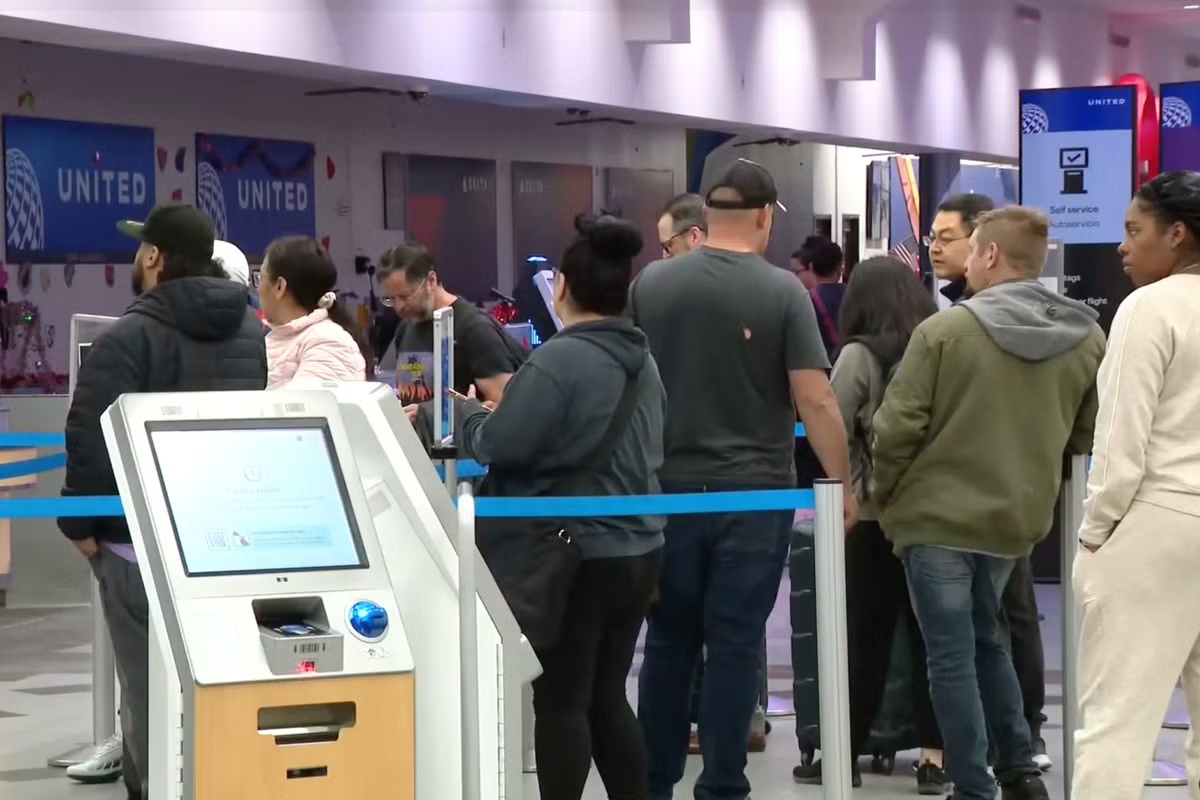
Homeland Security Secretary Kristi Noem said Friday that the government agencies involved in El Paso are working to address the concerns that led to the cancellation of more than a dozen flights and sent travelers scrambling.
Advertisement
“This was a joint agency task force mission that was undertaken and we’re continuing to work on the communication through that,” Noem said in Arizona.
But drone warfare expert Brett Velicovich said the dysfunction in Texas raises questions about whether the U.S. will be prepared to deal with a significant drone threat.
“We need to simplify the authorities for who is really in charge and get these egos out of the way from these different agencies before an American gets hurt,” said Velicovich, who founded drone maker Power.us and consults on ways to mitigate their threats.
Drones can be a threat
Advertisement
Armed drones carry out devastating attacks daily in Ukraine. The unmanned vehicles have also allowed Ukraine to strike deep within Russia.
Velicovich, who used to use Predator drones in the military to bomb targets, said it wouldn’t be hard for someone with malicious intent to buy a drone for a few hundred bucks and do great harm at a major public event like a World Cup match or the celebrations of America’s 250th birthday that are planned this summer.
Cartels routinely use drones to deliver drugs across the Mexican border and surveil Border Patrol officers. Officials told Congress last summer that more than 27,000 drones were detected within 1,600 feet (500 meters) of the southern border in the last six months of 2024.
The government recently handed out $250 million in grants to the 11 states that are set to host World Cup matches this summer to help them prepare for the threat of drones. Another $250 million in grants will be awarded later this year to strengthen the nation’s drone defenses.
Advertisement
More near misses involving drones
The threat to planes from drones continues to increase along with the number of near misses around airports. Homeland Security estimates there are more than 1.7 million registered drones flying in the United States, and that number has been growing.
Larger drones are required to carry a radio transponder that identifies the drone’s owner and broadcasts its position to help avert collisions. Cities can also invest in additional sensors around stadiums to help quickly detect drones.
Airspace Link, a Detroit company, created a low altitude air traffic control system to track drones and can alert authorities who might soon be able to take action. Cities can buy additional sensors to upgrade that system around stadiums or other high-profile locations.
Advertisement
“We don’t want something to happen,” said CEO Michael Healander. “But we also want to be prepared to have the tools in place to take action, because these are such big global events.”
Acting against rogue drones
Common anti-drone systems use radio signals to jam or force drones to land. But the government has also developed high-powered microwaves or laser beams like the one sources say was used in Texas this week that are capable of disabling the machines.
Some other systems station small drones to take flight quickly and ram into drones that are considered a threat. And there are systems that use bullets to shoot down drones.
Advertisement
Michael Robbins, president and CEO of the Association for Uncrewed Vehicle Systems International trade group, said these counter drone systems are more common in warzones than across the United States. But the government is working to get them into the hands of more officers nationwide.
“It’s our belief that this is important technology that when responsibly used with proper oversight and intensive training will help to mitigate unsafe or malicious drones in the very rare instances where that needs to occur,” Robbins said.
Pilots worry about drones
Allied Pilots Association union spokesman Capt. Dennis Tajer said he’s not sure how big of a threat the counter drone technology is to the American Airlines jets he flies because so few details have been released about what happened in Texas. And officials with Homeland Security and the FAA didn’t respond to questions about it again on Friday.
Advertisement
Tajer said he’s more concerned about the possibility of a passenger jet running into a drone because that could bring the plane down. A year ago, 67 people were killed when an American Airlines jet collided with an Army helicopter near Washington, D.C.
“You don’t have to be a pilot, an engineer or a defense expert to understand that two pieces of metal in the sky that one doesn’t know the other is there and is uncontrolled is dangerous,” Tajer said. “We’ve got to keep those two pieces of metal away from each other.”
____
Associated Press writer Josh Kelety contributed from Scottsdale, Arizona.
A personal trainer has revealed a simple hack to reduce blood pressure that can be done anytime and anywhere.
High blood pressure is often called the silent killer, quietly affecting millions until serious health problems emerge. If left unchecked, it can significantly increase the risk of heart attacks and strokes. Yet, its impact is not always obvious.
Advertisement
Day-to-day health can suffer in less noticeable ways, from circulation issues to erectile problems and reduced overall wellbeing. While medications and professional treatments remain the primary approach, experts are highlighting a simple item that costs just 77p.
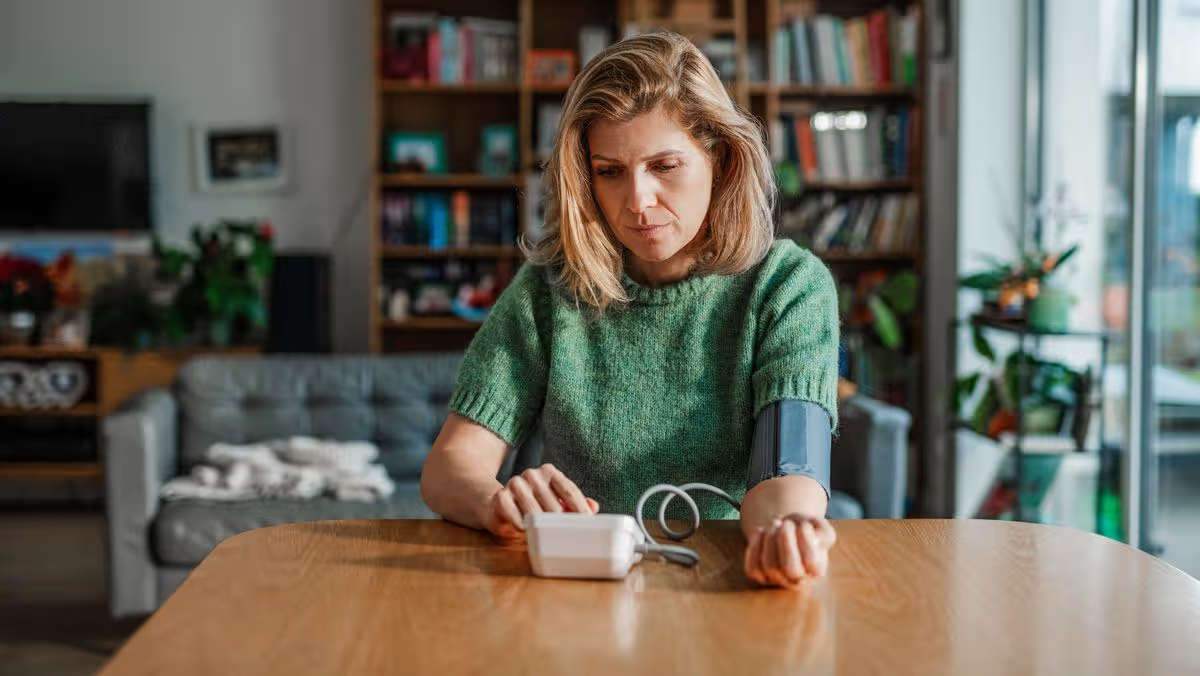
Personal trainer Toby King, speaking to adult website SoloFun, explains that regularly squeezing a tennis ball over a few weeks may contribute to lowering blood pressure. “When you get diagnosed with high blood pressure, you are often told to exercise, and while exercising will help, it can be confusing to know what to do,” Toby says.
“Squeezing a tennis ball or a stress ball if you have one is known as an isometric handgrip exercise that anyone can do, whether they are commuting on the train or sitting at their desk in the office.”
The exercise works through isometric handgrip training, which involves contracting muscles without movement. This contraction increases blood flow and encourages the expansion of blood vessels, which can help reduce blood pressure.
Advertisement
Research has shown that performing these exercises several times a week can lower readings by more than five millimetres of mercury.
Toby adds: “When you squeeze and hold the tennis ball, your muscles will stay under tension without performing a whole exercise. This control puts pressure through your muscles and blood vessels for a short period and helps the blood vessels to become more efficient.”
The method is straightforward.
Advertisement
Grab a tennis ball in one hand and squeeze it at roughly 50 percent of your maximum grip strength.
Hold this grip for two minutes, rest briefly, then repeat the process three times in total.
Toby emphasises: “The best way to think about this is to take a firm grip rather than trying to crush the ball. If you use too much force, then you won’t be able to grip for the full two minutes.”
While the exercise is not a substitute for medical treatment, it offers a practical, natural way to support cardiovascular health.
Advertisement
Studies suggest that consistent use of handgrip exercises can reduce blood pressure by between five and twenty millimetres of mercury, depending on the individual.
Advertisement
“You won’t see overnight results with this, but this small habit that takes a few minutes to perform will make a difference over time,” Toby says.
Lowering blood pressure can have a number of health benefits, but it can also improve sexual health, which is often overlooked.
In men, high blood pressure can contribute to erectile dysfunction. In women, it may reduce arousal, cause vaginal dryness, and make orgasms more difficult to achieve.
Toby highlights the broader benefits: “When you improve your blood pressure, you improve your overall health, which can affect your energy, confidence and your overall quality of life.”
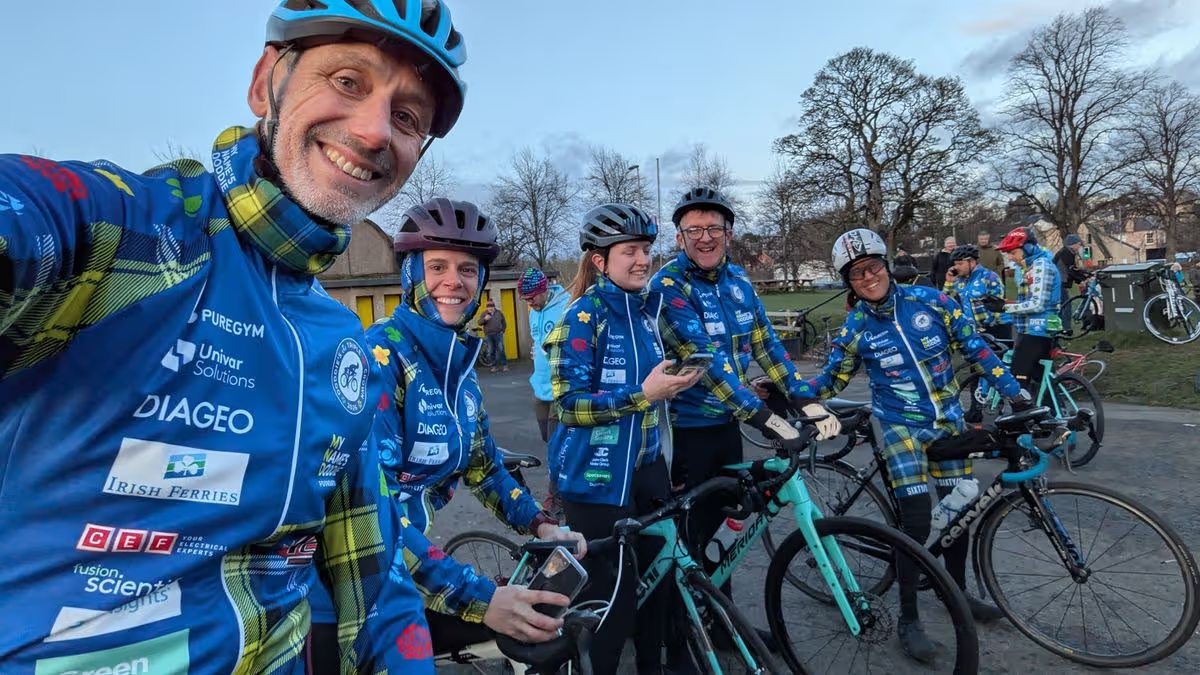
Neil Mackinnon spent almost 24 hours in the saddle for the cycle challenge over four days to raise money for the charity set up in the name of former Scotland rugby international Doddie Weir.
A Stagecoach worker has completed an extraordinary endurance cycling challenge across the UK and Ireland to raise funds for the My Name’5 Doddie Foundation, supporting research into Motor Neurone Disease (MND).
Advertisement
Neil Mackinnon, insight lead based at Stagecoach’s Perth head office in Dunkeld Road, spent almost 24 hours in the saddle over four days, covering more than 500km and climbing 4911 metres as part of Doddie’s Triple Crown 2026.
The challenge, led by former Scotland rugby captain Rob Wainwright, saw teams travel approximately 800 miles from Melrose to Dublin between March 10 and 13, passing through Scotland, England, Wales and Ireland.
And the event builds on the success of previous fundraising rides, which have collectively raised over £1 million for MND research.
Neil, who lives in Guildtown, cycled alongside record-breaking long-distance cyclist Mark Beaumont during his epic voyage.
Advertisement
Despite facing severe weather conditions, including high winds and torrential rain, participants continued their journey, stopping at rugby clubs along the route to raise awareness and support for the cause.
Neil’s personal contribution saw him complete nine demanding cycling segments, demonstrating significant endurance and commitment to the charity’s mission.
Neil said: “It was certainly a challenge; we were a small team of five cyclists so everyone was going to be pedalling over 100 miles a day.
“Within an hour-and-a-half the sunshine was replaced by rain and strong headwinds, so resilience, teamwork and adjusting plans to suit conditions came to the fore.
Advertisement
“For a small team I’m proud of how we pulled together; days of discomfort for us will hopefully contribute to hope for those with Motor Neurone Disease.”
The group’s efforts have raised over £8,500 for charity.
The My Name’5 Doddie Foundation was established by former Scotland international Doddie Weir and is committed to funding research to find effective treatments and ultimately a cure for MND.
Reaching net zero is no longer a distant ambition for the UK, it’s an urgent national priority that is reshaping how cities operate, build, and grow. But while the conversation often focuses on cutting emissions, the reality on the ground is far more complex. From electric vehicle infrastructure to energy consumption and renewable uptake, some areas are clearly better equipped than others to make the transition.
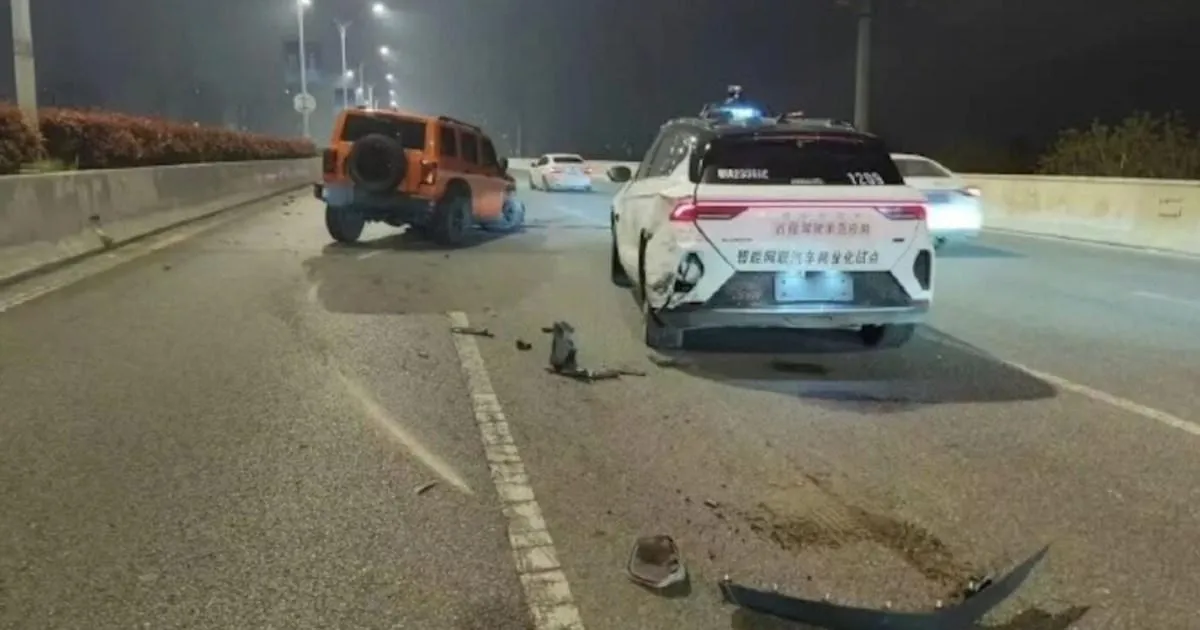
The exact number of impacted vehicles is unclear, but one officer said it was between 100 and 200 (Picture: JamPress)
Motorists said they saw several of the lone robocabs while driving through Wuhan (Picture: JamPress)
‘I called their customer service number nearly 20 times from my own phone and still couldn’t get through,’ the user, Luka, said, with a video showing the button not working.
‘Is there any way to file a complaint? I’m speechless.’
She added in a second video that customer service representatives offered her a 50% coupon as compensation.
Advertisement
One dashcam recording posted to Rednote shows a car passing 16 autonomous vehicles parked on the road in only 90 minutes.
One police officer told local media that between 100 and 200 robotaxis stalled, which is a ‘common problem’ with Apollo Go cars.
The fleet of robotaxi autonomous vehicles was developed for Baidu’s Apollo Go self-driving project in Wuhan (Picture: AFP)
The officer added: ‘Passengers can press a button and the door can open, but they can’t get off or get off the ring road. We saved many people today.’
Police have not revealed what caused the malfunctions along the Second and Third Ring Roads and the Baishazhou Bridge at 8.57pm.
Advertisement
No one was injured and all passengers have exited the vehicles.
The police added: ‘Following established contingency plans, the public security traffic control and transportation departments quickly mobilised forces to the scene to dispose of the situation in coordination with Apollo Go company staff.’
But these trials haven’t been without speed bumps. Passengers of self-driving Waymo cars in San Francisco say that their trips have been cut short because of vandals or those opposed to robot cars.
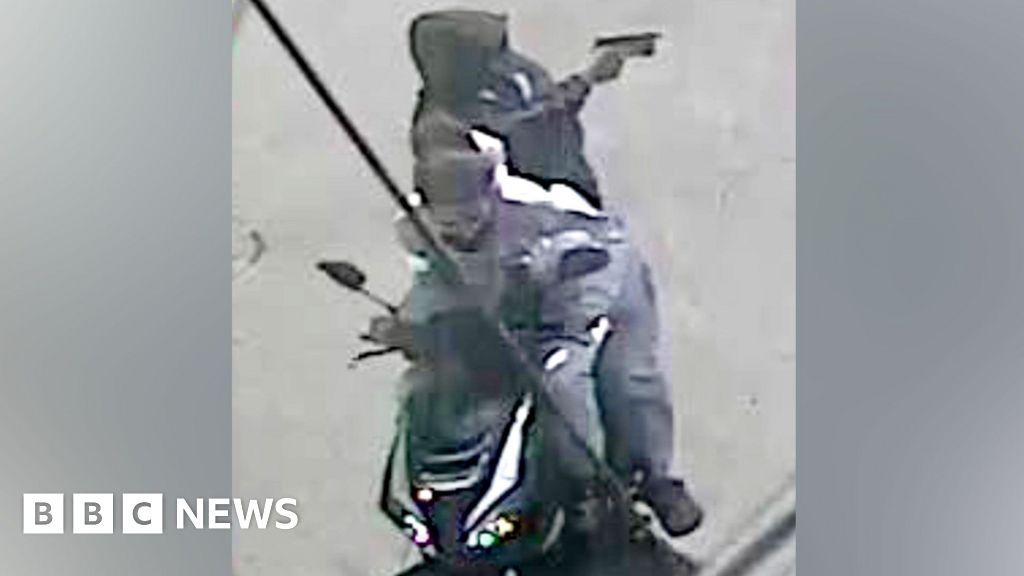
Footage from the scene shows two men driving against the flow of traffic through the Williamsburg neighbourhood when a man sitting on the back of the motorbike takes out a gun and fires “at least two rounds”, New York City Police Commissioner Jessica Tisch told a news conference.
The King and Queen visited Wales for the annual Royal Maundy service and gave out presents after the service
Taite Johnson Audience and Trending Writer and Eleanor Barlow Press Association
15:45, 02 Apr 2026
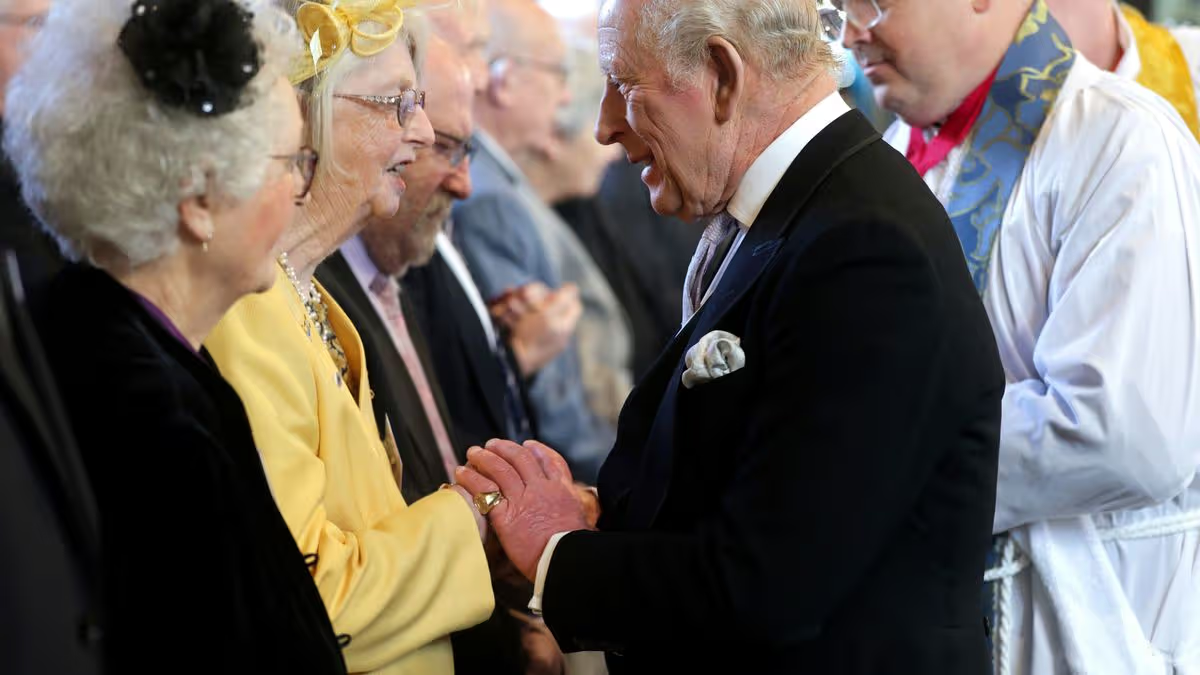
During his visit to Wales, King Charles gifted presents at the annual Maundy service. The traditional Easter service was held in north Wales for the first time, and only the second time ever in Wales.
Charles, accompanied by the Queen, arrived at St Asaph Cathedral on Thursday, April 2 for the ceremony, which was last held in Wales in 1982. During the visit gifts were given as part of a tradition, and the people who received them are recommended to hold on to them.
The King presented Royal Maundy gifts to 77 men and 77 women as part of the tradition, which happens on the Thursday before Easter every year and recognises people who have showed outstanding Christian service and made a difference to the lives of people in their communities.
Advertisement
Recipients chosen from dioceses in Wales or close to the English border, were presented with two leather purses. From superstar gigs to cosy pubs, find out What’s On in Wales by signing up to our newsletter here
In a white purse was a set of specially minted silver Maundy coins totalling 77 pennies, to match the King’s age, and in the red purse was a £5 coin commemorating 100 years since Queen Elizabeth II’s birth, and a 50p coin that celebrates the 50th anniversary of The King’s Trust.
Together this gift is valued at hundreds of pounds as the coins are rarely made. The Royal Mint currently stocks Maundy Money with coins priced at as much as £785 and the least expensive being £120.
Advertisement
Jean Carthy, 81, from Towyn, told the Press Association she had thought it was a scam when she received a letter telling her she had been nominated to receive the gift. She said: “Even this morning I was wondering why I was there. It was just so, so special and especially because it was the first time it has been in north Wales.
“He gave me the purses and said ‘thank you for the work you do’ and that was really something.”
Colin Pengelly, 77, from Castle Caereinion, near Welshpool, said: “It has been an amazing, humbling experience.The King put the purses in my hand and said ‘thank you for all you have done over the years’. I said to him ‘thank you too, keep doing it’.”
Supporters with Union flags and Welsh flags lined the street outside the cathedral to greet the royal couple.
Further up the road, behind barriers separating them from the rest of the crowd, were a group of protesters with yellow flags from Republic, an anti-monarchy campaign group.
They held a banner which had photos of Charles, his brother Andrew Mountbatten-Windsor and the Prince of Wales, and the slogan “What are you hiding? Royal Epstein inquiry now”.
Advertisement
Hours before Charles and Camilla’s arrival, graffiti saying “Not our King” was cleaned off a wall in the grounds of the building, which is the UK’s smallest ancient cathedral.
The first recorded Royal Maundy service was held in 1210 by King John commemorating the Last Supper of Jesus Christ, and the distribution of alms has become a tradition.
Speaking to recipients before the King ‘s arrival, Bishop of Norwich the Right Rev Graham Usher said: “It’s an act of humility on the part of the monarch in which a small representative group of people who have lived an exemplary life of service to their church and community is honoured. Enjoy this moment. It’s your moment.”
The bilingual service, in English and Welsh, included specially composed anthem A Sacred Benediction which was sung by soprano Rebecca Evans.
As they left the cathedral, Charles and Camilla were greeted by schoolchildren, many of whom had bunches of flowers to present to them, and then spoke to people on the High Street outside who had been waiting while the service took place.
Camilla wore a hat by Philip Treacy, a navy blue silk crepe pleated dress and navy blue wool crepe embroidered coat, both by Christian Dior, and accessorised with a sapphire and diamond brooch which belonged to the late Queen.
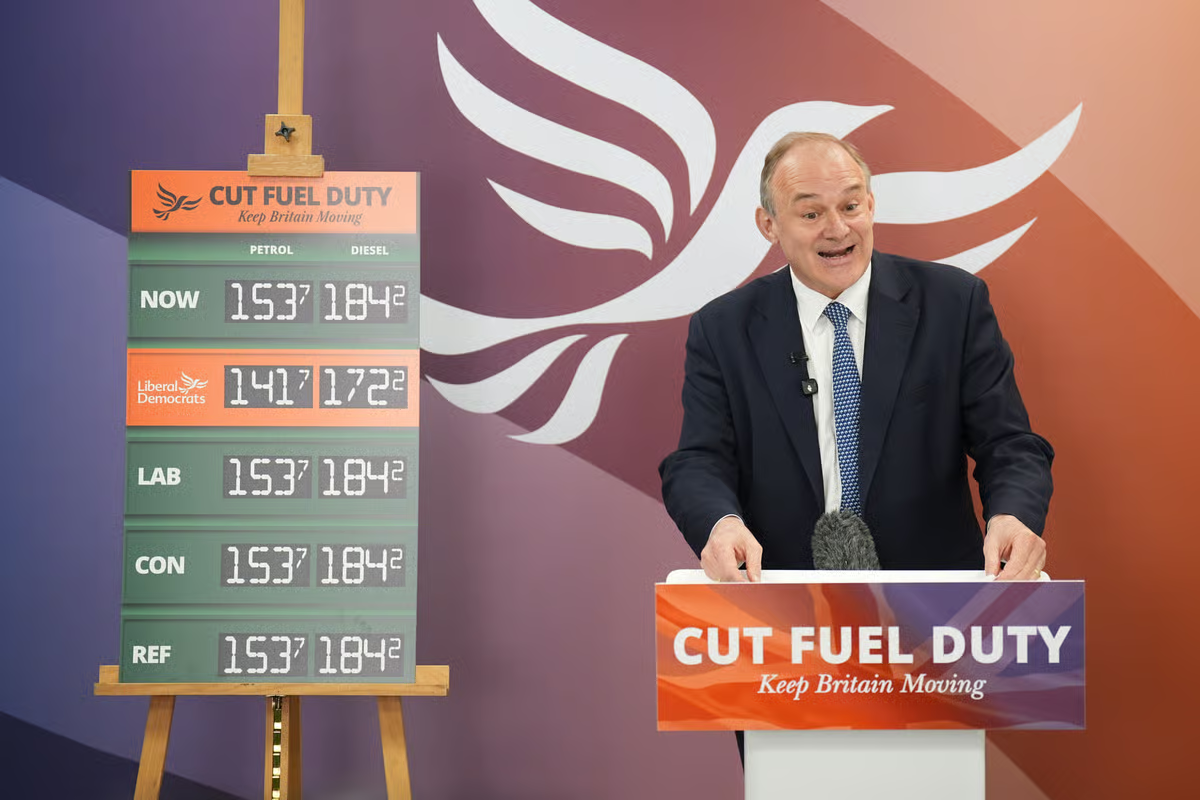
He said taking action on petrol and diesel prices, cutting fuel duty “now, not by 1p, not by 5p, by 10p a litre”, was “especially important today as people set off to join families and friends for the Easter weekend – 21 million trips – the busiest weekend on British roads in years”.
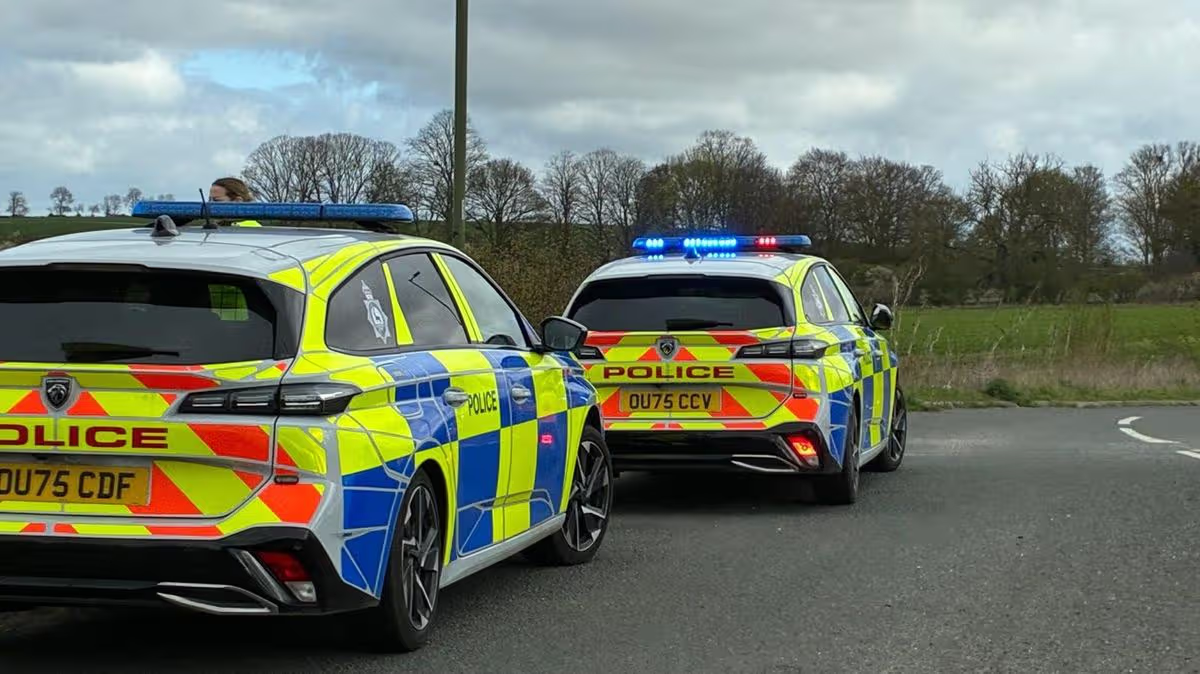
“Shortly afterwards, a 19-year-old man was detained and arrested nearby on suspicion of common assault, grievous bodily harm, threats to kill, theft of a bike, theft of a motor vehicle, possession of an offensive weapon, driving while disqualified and possession of drugs.
Officers and paramedics attended the scene. The person was pronounced dead at the scene.
Trains between Cambridge and Hitchin were disrupted while emergency services responded. However, lines have reopened and disruption is expected until around 4pm.
A National Rail spokesperson said: “The emergency services have completed their work following an earlier incident between Hitchin and Cambridge allowing all lines to reopen. Whilst service recovers, trains may still be revised or cancelled.”
A+E After Dark series 7 captures unprecedented access to Belfast’s Royal Victoria Hospital A&E department, showing the night shift reality for NHS staff
Olivia Wheeler Content Editor Screen Time
15:10, 02 Apr 2026
The gripping documentary series A+E After Dark makes its return for a seventh series on Thursday evening on 5 Star.
This new season has been filmed within the A&E departments of Norfolk and Norwich University Hospital, Newham Hospital in East London, and Royal Victoria Hospital in Belfast.
Advertisement
The programme provides extraordinary access to the night shifts where staff come under immense pressure, face violent incidents and make critical life-or-death decisions.
The opening episode features disturbing racist abuse directed at an A&E nurse in Newham, desperate efforts to save both a stabbing victim and their attacker in Norwich, and four injured young men involved in a 70mph collision during adverse weather conditions in Belfast.
A synopsis for episode one states: “At Norfolk and Norwich University Hospital, doctors race to save both victim and attacker after a shocking stabbing brings two critically injured men into A+E at the same time.”, reports the Mirror.
“In Belfast, a high-speed crash during extreme weather leaves multiple patients at risk of spinal injuries, while an elderly woman undergoes a painful procedure for a broken femur.
“Meanwhile in Newham, security intervene when a patient refuses to stop live streaming inside the department, and in Norwich, a team fights to restart a patient’s heart during a sudden cardiac arrest.”
In a chilling preview clip of the Belfast collision, four young men are seen being rushed into the department following a high-impact car crash at 70mph.
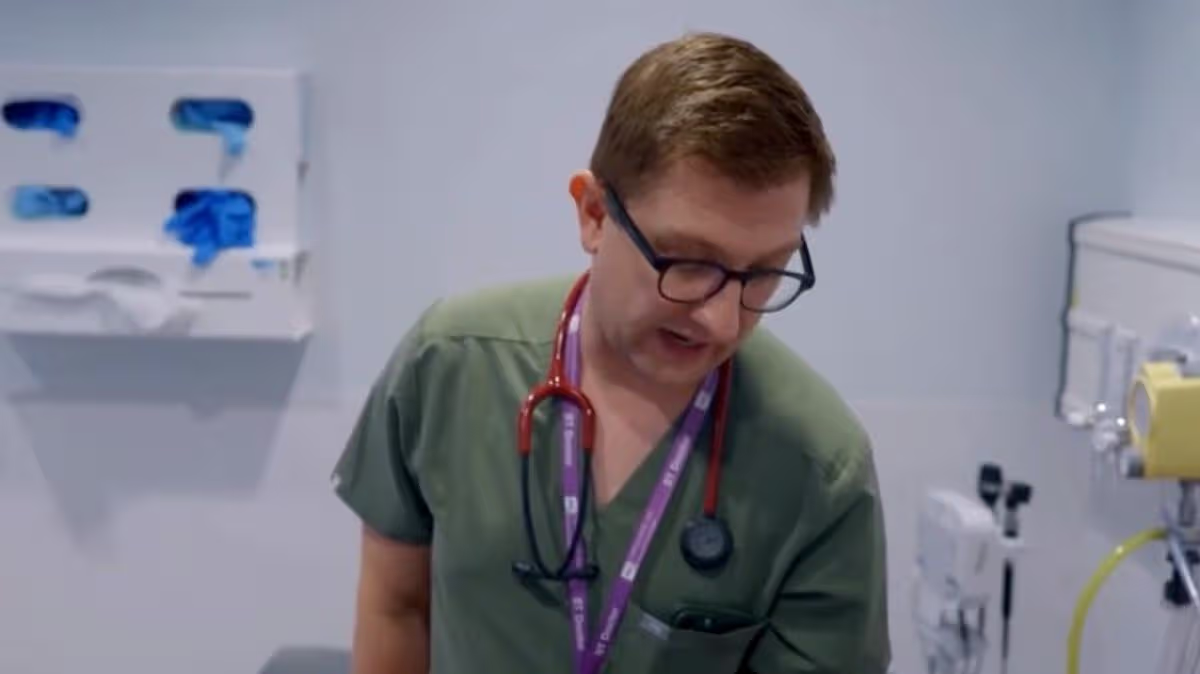
The programme then shows Doctor Michael assessing one of the front-seat passengers, David, who is experiencing considerable discomfort. In a recorded segment, Doctor Michael elaborates: “Obviously, the faster the car is going, the more severe injuries you will get.”
Advertisement
While examining David, Doctor Michael indicates the patient will require X-rays of his face, neck, lower back and knees to ensure there are no fractures or breaks.
This comes as NHS England sadly reports a three-year peak in violence directed towards staff. Nearly 1 in 7 NHS employees (14.47%) suffered physical assaults from patients or members of the public last year, with a record figure of staff experiencing unwanted sexual behaviour, climbing steeply to almost 1 in 3 ambulance personnel (31%), while 9% reported encountering discrimination – the highest proportion ever documented, according to fresh statistics from NHS England.
A+E After Dark documents the unrelenting nature of nocturnal emergency care throughout the UK. The latest series tracks committed teams in Belfast, Newham and Norwich as they contend with fatigue, overcrowding and mounting violence while striving to preserve lives.
Advertisement
**A+E After Dark airs on 5 Star at 9pm on Thursday 2 April and is available to stream on My5. You can follow the series on **Facebook** and **Instagram** and **TikTok.










































You must be logged in to post a comment Login