

Business
Agentic AI, alternative data and SIFs take centre stage at Indian Institutional Quant Conference 2026

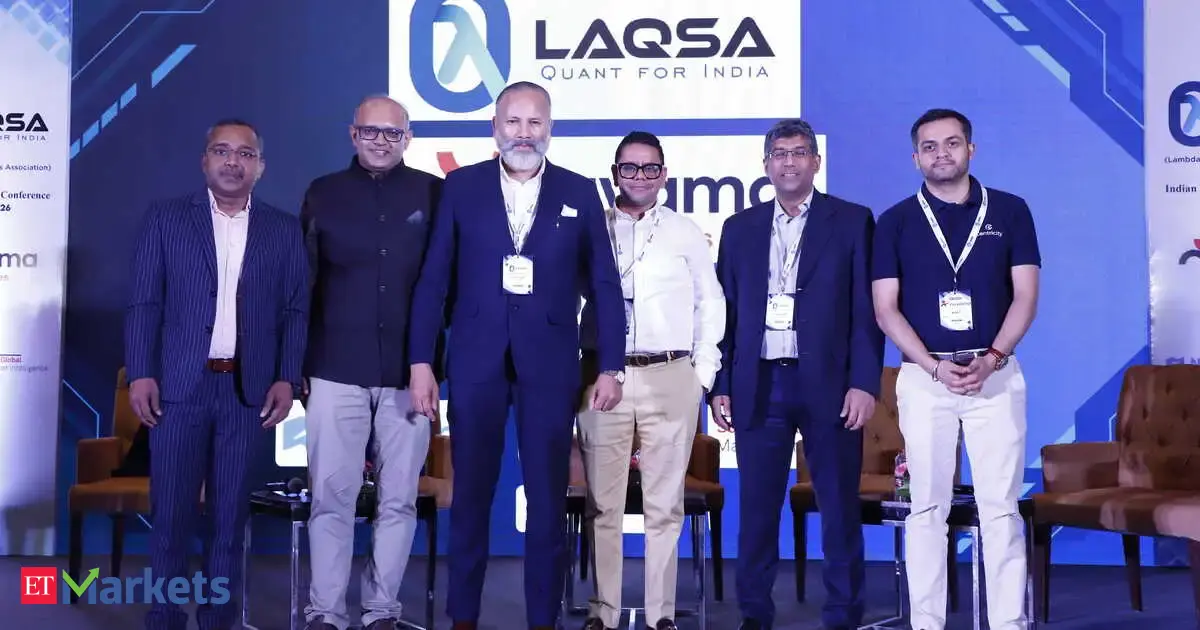
The day-long conference, held on July 17 at the Taj City Centre in Gurugram, brought together global academics, institutional practitioners, regulators and technologists to discuss emerging trends in quantitative and systematic investing. This marked the second time the conference was held in the National Capital Region.
The conference featured panel discussions, fireside chats and technical presentations, with participation from asset management companies, family offices, policymakers, global research firms and academia.
The event began with a welcome address by LAQSA co-founders Rishi Kohli of JioBlackRock AMC, Pankaj Mani of RealWorldRisk and Arvind Mathur of Private Equity Pro.
Among the other speakers were Prof. Chetan Ghate, Member of the Prime Minister’s Economic Advisory Council; Sunil Ramrakhiani, Chief Business Officer at BSE; Prof. Sandeep Juneja, Founding Director of the Safexpress Centre for Data, Learning and Decision Sciences at Ashoka University; Lalit Taneja, Director of the GARP Delhi (India) Chapter; and Prof. Miquel Noguer I Alonso.
Agentic AI and alternative data in focus
One of the key sessions focused on “Agentic AI in Quant: Practical Applications”, led by Prof. Miquel Noguer I Alonso. The discussion examined how autonomous AI agents and multi-agent systems could reshape areas such as portfolio management and systematic trading.

Another session, titled “Practical Uses of AI/ML and Alternative Data for India vs. Global Experience”, featured Balakrishnan Ilango of LSEG and Aditya Sharma of S&P Global Market Intelligence.
The discussion highlighted differences between the adoption of AI globally and in India, particularly in the context of data availability and regulatory constraints in domestic markets.
SIFs gain prominence among wealthy investors
The growing relevance of Specialised Investment Funds was another major theme at the conference. A dedicated panel featuring Rishi Kohli of JioBlackRock AMC, Amit Goel of PACE 360, Vinayak Magotra of Centricity WealthTech and Puneet Jain of Karan Thapar Family Office discussed the rising appetite among ultra-high-net-worth individuals and family offices for systematic allocations through SIFs.The conference also examined the regulatory outlook for quantitative strategies from a global comparative perspective, while Prof. Chetan Ghate provided a macroeconomic perspective on the structural challenges involved in economic policymaking at scale.
Commenting on the event, Pankaj Mani, Co-Founder of LAQSA, said the conference reflected how India’s institutional quant ecosystem was progressing from strategy design towards implementation and greater technical rigour.
“The sessions on Regulating the Quant Ecosystem, Agentic AI in Quant, and Forex Strategies sparked exactly the kind of candid, practitioner-led dialogue we want to build across the ecosystem,” Mani said.
Rishi Kohli, Co-Founder of LAQSA, said the sixth edition reinforced that India’s quant community is expanding in both depth and maturity — linking global experience with India-specific market realities and strengthening the network of professionals building systematic capabilities.
As quantitative tools become more deeply embedded in investment processes, the boundaries between traditional and systematic investing are also becoming less distinct. Discussions at the conference indicated that developments ranging from Agentic AI and alternative data to the emergence of SIFs could play an increasingly important role in shaping India’s institutional investment ecosystem.
(Note: The journalist was invited to the conference)


Bitcoin trapped in $62.5K-$65.5K range: Live levels


Welcome to my author’s site. As an avid follower of SeekingAlpha, I take great interest in articles posted as the subject matter is often something that appeals to me. However, I will sometimes encounter an article that I might not agree with. My purpose is to present an alternative view to readers that they may want to take into account. I hope you find my articles interesting and informative.
Analyst’s Disclosure: I/we have a beneficial long position in the shares of ACCO either through stock ownership, options, or other derivatives. I wrote this article myself, and it expresses my own opinions. I am not receiving compensation for it (other than from Seeking Alpha). I have no business relationship with any company whose stock is mentioned in this article.
Seeking Alpha’s Disclosure: Past performance is no guarantee of future results. No recommendation or advice is being given as to whether any investment is suitable for a particular investor. Any views or opinions expressed above may not reflect those of Seeking Alpha as a whole. Seeking Alpha is not a licensed securities dealer, broker or US investment adviser or investment bank. Our analysts are third party authors that include both professional investors and individual investors who may not be licensed or certified by any institute or regulatory body.
FOX Business anchors discuss products they believe are widely overpriced. Answers include bottled water, Dyson hair dryers, luxury handbags, and McDonald’s value meals, sparking a lively debate about quality versus cost among the panel.
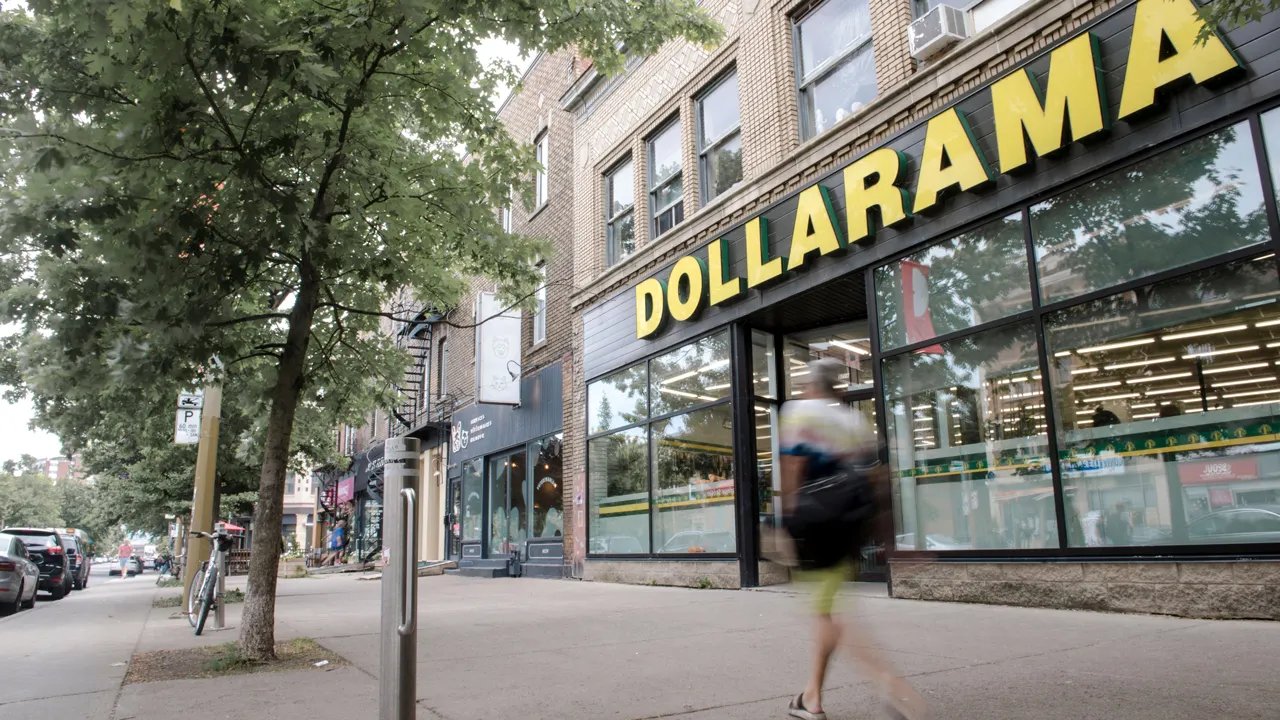
A popular garlic powder sold at Dollarama stores across Canada is being recalled due to potential microbial contamination, health officials announced this week.
The Canadian Food Inspection Agency (CFIA) issued the recall Wednesday for Heavenly Spices garlic powder sold at Dollarama stores nationwide.
The product is being recalled because it may be contaminated with Bacillus cereus, a bacterium that can cause nausea, vomiting, abdominal cramps and watery diarrhea, according to the U.S. Food and Drug Administration.
“Do not use, sell, serve or distribute the affected product,” the CFIA said in its recall notice.
TAYLOR FARMS PREPARING RECALL, DENIES BRANDED SALADS TIED TO OUTBREAK
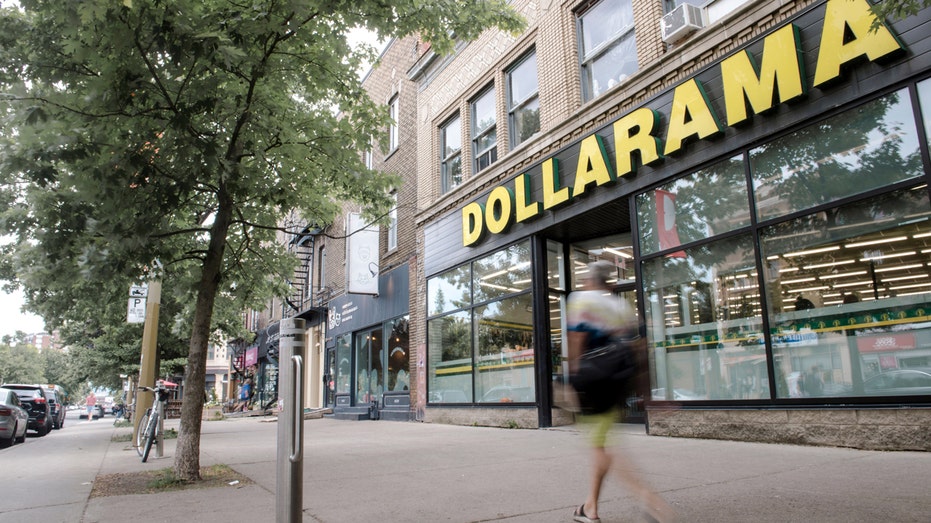
The Canadian Food Inspection Agency recalled Heavenly Spices garlic powder sold at Dollarama stores nationwide due to potential bacterial contamination. (Andrej Ivanov/Bloomberg via Getty Images / Getty Images)
The agency classified the recall as a Class 2 event, meaning there is a moderate risk that consuming the product could cause short-term or non-life-threatening health effects.
A Dollarama spokesperson told CTVNews.ca on Friday that customers who purchased the product should throw it away.
“Customers can also contact Dollarama Customer Service directly for a $2.00 e-gift card as a replacement,” the spokesperson said.
The recalled garlic powder was sold in 70-gram containers in stores and online.
GENERAL MILLS PULLS MORE THAN 735,000 PILLSBURY ROLLS FROM SHELVES OVER POSSIBLE GLASS CONTAMINATION
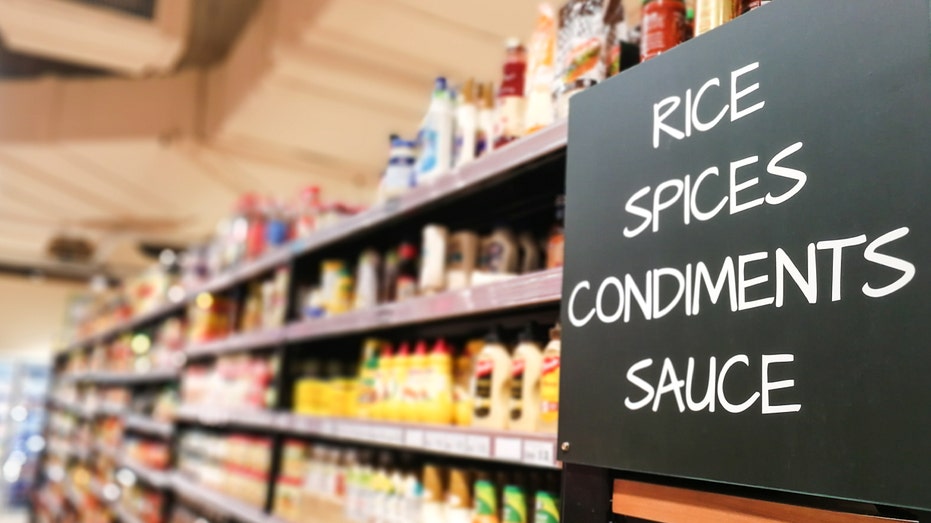
The Canadian Food Inspection Agency recalled Heavenly Spices garlic powder sold at Dollarama stores over concerns it may be contaminated with Bacillus cereus. (iStock)
According to the FDA, symptoms of Bacillus cereus infection typically last between 24 and 48 hours. The bacterium is commonly found in meat, stews, gravies, vanilla sauce, and cooked rice that has been improperly refrigerated or left at room temperature.
The garlic powder is the latest food product to be pulled from store shelves.
Earlier this week, the FDA announced that General Mills was recalling more than 735,000 packages of Pillsbury bread products over concerns they may contain glass.
CLICK HERE TO GET FOX BUSINESS ON THE GO

Heavenly Spices garlic powder is being recalled after Canadian health officials warned the product may be contaminated with Bacillus cereus, a bacterium that can cause foodborne illness.
Bloomberg News also reported that fresh produce supplier Taylor Farms is preparing a recall tied to ingredients linked to a multistate Cyclospora outbreak, though the company has said its branded salad products are not associated with the illnesses.


Investing wisely does not have to be rocket science. It is about discipline and running the numbers. You don’t have to be like a grandmaster chess player playing the game twenty moves ahead of your opponent, you just need to understand how the pieces work.
Analyst’s Disclosure: I/we have no stock, option or similar derivative position in any of the companies mentioned, and no plans to initiate any such positions within the next 72 hours. I wrote this article myself, and it expresses my own opinions. I am not receiving compensation for it (other than from Seeking Alpha). I have no business relationship with any company whose stock is mentioned in this article.
Seeking Alpha’s Disclosure: Past performance is no guarantee of future results. No recommendation or advice is being given as to whether any investment is suitable for a particular investor. Any views or opinions expressed above may not reflect those of Seeking Alpha as a whole. Seeking Alpha is not a licensed securities dealer, broker or US investment adviser or investment bank. Our analysts are third party authors that include both professional investors and individual investors who may not be licensed or certified by any institute or regulatory body.

Sphere Entertainment: Too Many Unanswered Questions

The pan-European STOXX 600 index fell 0.34% to 641.53 points. It was largely unchanged for the week.
A rise in oil prices stemming from the escalating Middle East conflict, and lacklustre reaction even to strong earnings this week, have complicated the market backdrop.
Investors had hoped that solid results would direct attention away from geopolitics and towards corporate fundamentals, potentially providing momentum for equities.
However, tech stocks slipped 3.27% this week even after ASML, the dominant supplier of equipment needed to make high-tech computer chips, raised its 2026 sales forecasts.
The subdued reaction underscores the high bar companies have to clear to lure investors into equities, at a time when sentiment towards major AI winners has soured and uncertainty over inflation persists.
The tech-heavy Nasdaq dropped 0.98%. Taiwanese equities, a major AI beneficiary in the emerging market universe, dropped 6.47%.
WAR RAGES ON IN MIDDLE EAST
Meanwhile, the U.S. struck bridges and an airport in Iran on Friday, while Tehran responded by hitting a power and desalination plant in Kuwait, one of the Gulf countries that host U.S. airbases. “There is clearly a real disconnect between what Iran believes it can achieve and what the U.S. wants. That is causing some dissonance in markets,” said Steven Schoenfeld, CEO of MarketVector Indexes.
FOCUS TURNS TO ECB NEXT WEEK
Rising energy prices have also sharpened the focus on the European Central Bank, which is widely expected to keep interest rates unchanged on July 23. Investors still expect a second rate hike later this year.
Utilities stocks rose 1.55% and were the biggest gainers on the European benchmark on Friday, while luxury were the best-performing sector for the week.
Britain’s Burberry slipped 6.38% after the luxury group said the Middle East conflict had weighed on tourist spending in Europe.
Saab rose 9.73% after the Swedish defence and aerospace group reported a bigger-than-expected increase in second-quarter operating profit.
Among other top movers, Norwegian recycling technology company Tomra Systems jumped 11.87% after upbeat quarterly results, while Swedish tech company Lagercrantz slid 7.09% on downbeat quarterly core earnings.
Volvo Group dipped 0.64% even after theSwedish truckmaker reported a 35% jump in second-quarter profit.
Private equity firm EQT gained 11.02%. Australia’s Perpetual rejected a sweetened A$2.5 billion ($1.75 billion) takeover proposal from the Swedish company.

HPI: Fiscal Dominance Could Challenge Ability To Deliver Attractive Real Returns

The U.S. dollar rose for a second straight session, making bullion more expensive for overseas buyers. “The main drivers of the selloff in gold have been a stronger U.S. dollar and higher global inflation fears, which have sent global interest rates higher,” said Chris Gaffney, president of world markets at EverBank. The U.S.escalated its renewed bombing campaign on Iran, hitting bridges and an airport. Tehran responded with strikes on U.S. bases across the Middle East. Brent crude oil prices were up around 16% for the week following the attacks.
Bullion has fallen about 25% since the U.S.-backed war with Iran began in late February, pressured by expectations that war-driven inflation could keep interest rates higher for longer.
While gold is seen as a hedge against inflation, higher rates typically weigh on the non-yielding metal. “Recent data have decreased the probability of a rate hike at the next FOMC meeting, but global interest rates continue to climb and the recent increase in oil prices could drive the Federal Reserve to take a more hawkish stance on U.S. interest rate policy,” Gaffney said. Traders see about a 58% chance of a U.S. interest rate hike in September, according to the CME FedWatch Tool. On Thursday, Fed Vice Chair Philip Jefferson suggested he would be open to raising rates if there was no near-term improvement in inflation.
However, “gold’s share in private portfolios remains low, and recent geopolitical developments, including Iran and broader tensions, may accelerate diversification beyond central banks to private investors,” Goldman Sachs said in a note. Spot silver rose 1% to $56.06, platinum dropped 1.4% to $1,595.64, and palladium was steady at $1,249.63. All three metals were headed for weekly losses.

Brent crude futures settled $3.87, or 4.59%, higher to $88.10 a barrel, while U.S. West Texas Intermediate futures rose $3.54, or 4.48%, at $82.49. Both were at their highest since mid-June.
For the week, both benchmarks gained about 16%, with Brent on track for a third consecutive weekly gain and WTI set for its second.
The two foes expanded fighting on Friday, with the U.S. striking bridges and an airport in Iran and Tehran hitting a power and desalination plant in Kuwait. Iran said it launched more strikes on U.S. facilities in the Middle East, including the first direct attack in Syria, after a sixth straight night of U.S. strikes on Iranian military facilities.
“The market is reacting to the increasing hostilities between Iran and the United States that have culminated this week with nightly attacks on Iranian infrastructure and retaliation by Iran on its neighbors’ infrastructure,” said Andrew Lipow, president of Lipow Oil Associates. “If more tankers come under fire and become damaged, we’re going to see oil prices continue to move up as shipowners simply refuse to enter the Persian Gulf.”
The collapsed truce between the U.S. and Iran has resulted in a sharp decline in oil flows in the strait as Iran targets vessels transiting through it. Before the Iran war, about 20% of global oil supplies flowed through the waterway. Iran has pressed the Houthis to close the Red Sea route if the U.S. attacks Iran’s power infrastructure.
“Given that so much of Saudi Arabia’s exports have been redirected to the port of Yanbu via the East-West Pipeline to avoid Hormuz, any such development is a threat indeed,” Tamas Varga, analyst at PVM Oil Associates, wrote in a note. Saudi Arabia has diverted more than 70% of its normal daily crude exports to the Red Sea port of Yanbu since the beginning of the war. Shipments from Yanbu averaged 4 million barrels per day in recent weeks, up from around 973,000 bpd in the same period last year.
Qatar’s defence ministry said its armed forces thwarted an Iranian missile attack early on Friday and the interior ministry said a child was wounded by shrapnel resulting from interception operations.
In a different conflict zone, Ukraine’s military said it struck a Russian oil refinery in the Yaroslavl region on Thursday.
Business
Vista Energy, S.A.B. de C.V. 2026 Q2 – Results – Earnings Call Presentation (NYSE:VIST) 2026-07-18


Seeking Alpha’s transcripts team is responsible for the development of all of our transcript-related projects. We currently publish thousands of quarterly earnings calls per quarter on our site and are continuing to grow and expand our coverage. The purpose of this profile is to allow us to share with our readers new transcript-related developments. Thanks, SA Transcripts Team

Jelly Roll and Bunnie Xo Finalize Divorce 1 Month After Filing

Free urban farm and petting zoo with cafe only a 25 minute drive from Belfast
Bitcoin trapped in $62.5K-$65.5K range: Live levels


-
 NewsBeat2 days ago
London Mayor Sadiq Khan handed a peerage by Keir Starmer alongside 15 other Labour figures… just days before the PM leaves No10
-

 Fashion14 hours ago
Weekend Open Thread – Corporette.com
-

 Politics3 days ago
Young campaigners urge incoming PM to act on outdoor junk food ads
-

 Crypto World2 days ago
CFTC blocks Kalshi from unwinding Michigan trades after court order
-

 Business2 days ago
Nvidia Stock Slips After Big Tuesday Rally as Huang Confirms Vera Rubin Chip Is Now in Production Today
-
 Entertainment3 days ago
Disney’s Most Ambitious Failed Star Wars Attraction Is Coming to SDCC
-

 Crypto World10 hours ago
Ripple wins EU-wide access as ESMA adds it to MiCA register
-

 News Videos3 days ago
XRP BOMBSHELL… XRP OMBOARDED FOR TRANSACTIONS!!!
-

 Crypto World1 day ago
Injective Submits SEC Transfer-Agent Registration to Onchain Ownership Records
-

 Tech4 days ago
Get Your ESP32 Sunny Side Up With This Solar Dev Board
-

 Business2 days ago
Palantir Shares Rise After Expanded Nvidia Partnership and Fresh Analyst Upgrades Ahead of Earnings Day
-

 NewsBeat19 hours ago
Registration is now open for March for Men with Kev 2026
-

 Tech3 days ago
Dark Secrets Emerge When Jailbreaking LLMs
-
 Sports2 days ago
New Cornerback Enters Vikings Trade Rumor Mill
-

 News Videos1 day ago
Money | Class 12 Economics | CBSE Board Exam 2026-27
-

 Business1 day ago
Banco Bilbao Vizcaya Argentaria, S.A. (BBVA) Discusses Global Macro Environment and Economic Outlook for Core Markets Transcript
-
 Tech5 days ago
Cloudflare Precursor Watches Your Mouse and Keyboard To Decide If You Are Human
-
 Crypto World1 day ago
Claude Fable 5 Slips to Second in AI Coding Leaderboard
-

 Business12 hours ago
Airlines warn Sunshine Protection Act could disrupt flight scheduling
-

 News Videos5 days ago
how to make coin bank box with cardboard #scienceproject #money #diy #shorts
You must be logged in to post a comment Login