

Crypto World
Consensys halts releases after North Korea-linked developer gains access

Consensys has temporarily halted product releases after a North Korea-linked consultant gained access to its systems for about one month.
Summary
- Consensys halted product releases after a North Korea-linked consultant accessed its systems for one month.
- An internal investigation found no stolen assets, exposed data, malicious code, or user harm.
- Consensys will review contractor screening as North Korean operatives increasingly target crypto firms.
Drop Site News reported that the developer joined the Ethereum software company under the alias “Tyler Knapp” and used the GitHub handle “imyugioh.” Public GitHub records reviewed by the outlet showed that the consultant began contributing code on March 9 before his access ended in April.
Internal messages obtained by Drop Site showed that Knapp worked on core MetaMask platform code, including sections used to connect crypto users with third-party fiat payment providers. Consensys suspended product releases during its investigation and instructed staff to avoid contact with the consultant, according to the report.
Consensys general counsel Matt Corva told Drop Site that an established third-party service provider introduced Knapp to the company. Corva stressed that Consensys treated him as a consultant rather than a direct employee.
“Very quickly after being introduced, we discovered the threat, followed our security protocols, immediately terminated any access and launched a comprehensive investigation that confirmed there was no misappropriation of assets or data, no malicious code deployed, and no impact to user safety and security.”
Although Consensys disclosed no financial losses, Corva said in a statement that the company would reassess how it outsources engineering and development work. The firm also notified law enforcement and provided information about the incident, according to internal communications reviewed by Drop Site.
Consensys found no loss of user assets
Consensys’ investigation found no evidence that the consultant stole company data or digital assets, inserted harmful code, or compromised users, according to Corva. The company did not publicly explain how it established the developer’s alleged ties to the Democratic People’s Republic of Korea.
Even without a confirmed loss, developer access can expose sensitive infrastructure. According to TRM Labs, developer environments have become one of the quickest paths for attackers seeking access to systems that hold private keys or approve crypto withdrawals.
A six-month investigation supported by the Ethereum Foundation’s ETH Rangers Program shows that the hiring threat extends beyond Consensys. The Ketman Project identified about 100 suspected North Korean IT workers using false identities across 53 crypto and Web3 projects, according to an ETH Rangers recap published in April.
Ketman investigators also traced at least three suspected groups across 11 code repositories, where projects had merged 62 pull requests before detecting the activity. The project reported that some applicants used generated profile pictures, forged identity documents and false Japanese identities to pass screening checks.
North Korea remains crypto’s largest hacking threat
North Korea-linked groups have repeatedly used fake identities and remote engineering jobs to gain entry to technology companies. As crypto.news reported in November, Opsek founder and Security Alliance member Pablo Sabbatella warned at Devconnect Buenos Aires that North Korean workers could be embedded in as many as one-fifth of crypto companies.
Sabbatella also estimated that North Korean applicants account for roughly 30% to 40% of job applications received by crypto firms, suggesting that employment fraud is not limited to isolated cases.
Crypto companies face added risk because employees and contractors can receive access to code, wallets and transaction systems. TRM Labs estimated that North Korea was responsible for 64% of the value stolen in crypto hacks during 2025, when total losses exceeded $2.7 billion. TRM Labs
One attack accounted for much of the damage. The FBI attributed the February 2025 theft of about $1.5 billion from Bybit to North Korea’s TraderTraitor group, which dispersed the assets across thousands of blockchain addresses. FBI
TRM Labs reported that more than 30 exchanges and decentralized finance protocols now share rapid alerts through its Beacon Network when North Korea-linked funds reach participating platforms. For Consensys, the consultant’s removal prevented any known user loss, but the incident has prompted a review of the company’s third-party hiring controls.


Aside from a few more substantial moves of several thousand dollars in 24 hours or so, bitcoin’s price actions have been largely muted for months. The cryptocurrency remains sideways between $58,000 and $65,000 with little to no indication of a potential breakout.
Now, though, Ali Martinez outlined a historical pattern that has led to significant volatility. The question is: will history repeat?
More Volatility Coming Soon?
Let’s be honest – a lot of us got addicted to BTC’s infamous price volatility. While some critics viewed it as a major negative selling point, others entered the cryptocurrency ecosystem because of it, as it just tends to make life more interesting. Without it, bitcoin and the entire market just feel unnatural. In fact, CryptoQuant’s CEO recently argued that boredom is BTC’s biggest risk, not another price crash.
Martinez told his over 165,000 followers on X that this apparent ongoing stagnation could finally change soon. He based this prediction on historical bitcoin performance after the movement of dormant BTC.
“A significant amount of dormant Bitcoin (BTC) has moved on-chain over the past 24 hours. Historically, spikes in old coins changing hands often precede major market moves,” he added in the post titled “high volatility alert!”
BTC experienced some volatility in the middle of the week, when it surged from under $62,000 to $65,500 within a day after the lower-than-expected US CPI data for June. However, this is just a drop in a big bucket, as its more macro performance has been quite sluggish.
Meanwhile, another popular analyst, Kaleo, suggested that this expected volatility could take place as early as today or tomorrow:
“Think we see a nice little weekend pump from Bitcoin and ETH this weekend.”
$65K Breakout Next as BTC Is Doing Fine?
Michaël van de Poppe also weighed in on bitcoin’s recent performance, noting that the asset “looks fine, still” as long as it remains above $60,000-$61,000. However, the definitive confirmation of a more positive trend would be a decisive break above $65,000.
In a follow-up post, the analyst outlined a “great chart of bitcoin” that looks “primed for a breakout upwards.” He doubled down on the importance of the $65,000 resistance, which he believes will be taken down next week.
This is a great chart of #Bitcoin and it looks primed for a breakout upwards.
Sure, markets tested whether there was enough pressure to push prices down today.
Clearly, there’s more demand.
$65,000 breakout to happen next week. pic.twitter.com/zIfXbnKx8L
— Michaël van de Poppe (@CryptoMichNL) July 17, 2026
The post Bitcoin Volatility Alert: Is BTC in for a Rollercoaster Ride Soon? appeared first on CryptoPotato.
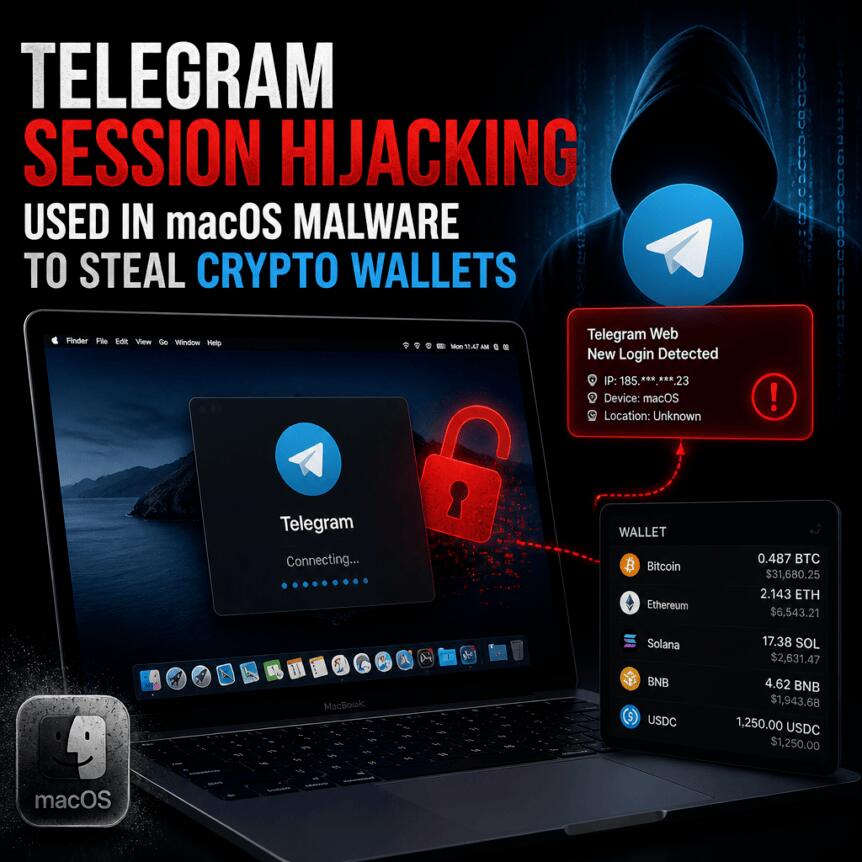
A macOS information-stealing malware can compromise cryptocurrency holdings by hijacking Telegram Desktop sessions and extracting wallet data, according to blockchain security firm SlowMist. The attack is notable because it focuses on taking over already-authenticated local sessions and stealing sensitive credentials, rather than relying solely on intercepting new logins.
SlowMist says the malware harvests data from multiple sources on an affected Mac, including Apple’s Keychain, Safari cookies, Apple Notes, Telegram Desktop and wallet databases tied to more than a dozen crypto wallets. After collecting credentials and authenticated session material, attackers can use the stolen information to access wallets and potentially execute account takeovers.
Key takeaways
- SlowMist reports a macOS malware chain that combines credential theft, browser/session harvesting, and wallet database extraction.
- Telegram two-step verification may not stop the attack because the malware reuses an existing authenticated Telegram Desktop session on the device.
- The malware targets both software wallets (such as Exodus, Atomic, Electrum, Wasabi, and Monero) and hardware wallet companion apps (Ledger Live and Trezor Suite).
- Defenders’ best near-term steps include terminating Telegram sessions, re-authenticating on a trusted device, and rotating wallet recovery phrases and assets to new addresses.
How the Telegram session hijack works
SlowMist’s assessment centers on the malware’s ability to work through already-established authentication. Rather than forcing a new Telegram login flow—which would typically require re-entering a phone number, verification code, and two-step verification password—the malware appears to leverage the authenticated session stored locally by Telegram Desktop.
In its reproduced testing, SlowMist says researchers restored stolen Telegram Desktop session data on another Mac without needing to repeat the normal verification steps, including entering a phone number or two-step verification password. That means even users who believe their Telegram protections are strong may still face risk if their device has already been compromised.
For crypto users who rely on Telegram to manage accounts, coordinate transfers, or receive wallet-related approvals, this matters: a session takeover can enable attackers to impersonate the user, obtain access to conversations and any linked operational details, and facilitate subsequent wallet-focused actions.
What data the malware harvests on macOS
SlowMist reports that the malware gathers a range of sensitive information from the compromised system. The company specifically points to macOS Keychain data, Safari cookies, Apple Notes, and Telegram Desktop. It also looks for cryptocurrency wallet data stored on the device.
Beyond user credentials and browser artifacts, the malware also targets stored wallet databases and related wallet extension data. SlowMist says that after collection, attackers copy authenticated session data, wallet databases, and browser wallet extension information—creating multiple paths for wallet access depending on the wallet type and local storage structure.
The combined approach is important because it increases the odds of success. Instead of betting on a single weakness, the malware can pursue credential-based decryption and offline wallet database recovery, or it can aim at social engineering and application replacement—two methods that can operate even if one fails.
Wallet targets: from desktop software to hardware app companions
According to SlowMist, the malware targets both common software wallets and applications associated with hardware wallets. On the software side, it names Exodus, Atomic, Electrum, Wasabi and Monero. On the hardware side, it includes Ledger Live and Trezor Suite—suggesting the malware aims to compromise not only keys stored by desktop apps, but also the companion software environments used to interact with hardware wallets.
SlowMist also says the malware searches for wallet data stored by full-node clients. It lists Bitcoin Core, Litecoin Core, Dash Core, and Dogecoin Core as examples, implying that systems running these services may contain wallet-related data that the attacker can harvest.
This breadth means affected users may not realize they are at risk simply because they don’t use one of the “headline” wallets. Anyone who stores wallet data locally, uses wallet-related companion apps, or keeps backups and recovery material on the same device could be exposed depending on what the malware detects and copies.
Two ways attackers can turn stolen data into theft
SlowMist describes two primary endgame strategies after the data theft phase.
First, attackers can attempt to decrypt stolen wallet databases offline using passwords taken from the infected device. If the malware successfully extracts the credentials needed to unlock local wallet storage, offline decryption reduces the attacker’s dependence on live access or additional compromise steps.
Second, SlowMist says attackers may replace legitimate Ledger and Trezor applications with fake versions designed to trick users into entering recovery phrases. This shifts the attack from purely technical compromise to user deception, leveraging the fact that many users will naturally follow prompts in trusted-looking wallet software.
SlowMist states that it reproduced the full attack chain in an isolated environment, supporting the firm’s characterization of how the different components can work together—from data collection through to potential wallet manipulation.
What users should do if they suspect compromise
SlowMist urged users who suspect their devices have been compromised to take immediate containment steps. The firm recommends terminating existing Telegram Desktop sessions, establishing a new trusted login, and then changing both the Telegram two-step verification password and the Telegram Desktop Passcode.
For wallet security, SlowMist advises users to generate a new recovery phrase on a clean device and move all assets to new addresses. The underlying logic is straightforward: if a recovery phrase or wallet database may be recoverable by an attacker, treating existing addresses as potentially compromised helps reduce the chance of future unauthorized access.
Given the malware’s emphasis on authenticated sessions and local credential harvesting, the safest remediation tends to focus on “breaking the chain” on the infected device—re-authenticating critical services and rebuilding wallet access from a clean environment rather than attempting to patch individual components.
Going forward, investors and everyday users alike should watch for signs of Telegram session abnormality (unexpected activity, sudden device prompts, or account behavior) and treat any macOS security incident as potentially wallet-relevant. The key uncertainty remains how widely such malware campaigns are deployed in the wild—but SlowMist’s findings offer a clear blueprint for why device compromise, not just exchange security, can determine the outcome of a crypto theft attempt.

The former cryptocurrency exchange giant announced yesterday that it will begin its fifth creditor distribution at the end of the month, pushing the total announced repayments beyond $10 billion almost four years after it went bust.
The next batch of repayments will be for $900 million, which works in alignment with the company’s Chapter 11 reorganization plan.
FTX to Begin New Repayments
The firm’s press release outlined July 31 as the start date, after which eligible creditors are expected to receive their funds via BitGo, Kraken, or Payoneer within 3 business days. It’s worth noting that this repayment applies to creditors holding allowed claims in FTX’s Convenience and Non-Convenience Classes who had completed the required procedures by June 16.
The size of the actual payment will depend on the creditor class. Users of the global and the US exchanges (ftx.com and FTX US) will receive an additional 9% under Class 5a, taking their cumulative recovery to 105% of the value of their approved claims.
General unsecured creditors and holders of crypto loan claims will each receive an incremental 3%, and their total is expected to reach 103%. Convenience-class creditors, generally representing smaller customer claims, will get a cumulative 120% of their approved claims after the latest repayment.
The failed exchange also plans to distribute $18 million to eligible preferred shareholders on July 31, bringing the total payments from the separate Preferred Shareholder Remission Fund Trust to $95 million.
These repayment figures do not necessarily mean that customers have been made whole in crypto terms. Claims were considered in US dollar terms on crypto prices around FTX’s bankruptcy in November 2022, before the major price rallies for almost all involved assets.
Consequently, receiving 105% or 120% of its initial claims in USD may still be significantly less than the present-day value of the crypto assets held on the platform at the time. For instance, recall that BTC traded around $20,000 when FTX collapsed, and despite its correction since the October 2025 ATH, it’s still over 200% higher.
SBF Pardon Rejected
FTX’s former CEO and the person considered the main culprit of its rapid decline, Sam Bankman-Fried, was convicted in 2023 on seven counts of fraud and conspiracy following the misallocation of over $8 billion worth of customer funds.
He remains in prison to this day but tried to lobby for clemency, especially since US President Donald Trump issued pardons to Changpeng Zhao and Arthur Hayes. However, in a unanimous vote earlier this week, the Senate ruled that “under no circumstances should Samuel Bankman-Fried receive executive clemency, including a pardon, or commutation.”
The post FTX to Pay Creditors Another $900 Million: Here’s Who Gets the Money appeared first on CryptoPotato.
Crypto World
Numerai Completes Third Strategic NMR Buyback, Bringing Total Repurchases to $3.2 Million

[PRESS RELEASE – San Francisco, CA, July 17th, 2026]
Crowdsourced Hedge Fund Completes Third Open-Market Purchase as Contributor Network and Assets Continue to Grow
Numerai, the decentralized hedge fund powered by crowdsourced machine learning, today announced the completion of a third strategic purchase of Numeraire (NMR), acquiring an additional $1.2 million of the token from the open market. The purchase brings Numerai’s total NMR buybacks to $3.2 million within one year.
The buyback reflects Numerai’s continued investment in the staking system that aligns thousands of independent data scientists toward improving the firm’s Stake-Weighted Meta Model, the machine learning model that powers Numerai’s hedge fund. Contributors stake NMR on their models, earning additional NMR when their predictions perform well on future market data and losing it when they do not. The resulting Stake-Weighted Meta Model continues to outperform Numerai’s internal benchmark models, demonstrating the value of aligning incentives with predictive performance.
Since announcing its first strategic buyback in July 2025, Numerai’s network has expanded significantly. Active accounts have more than doubled over the past year, submissions continue to increase, and the platform has introduced new infrastructure including Numerai Skills, Numerai Model Context Protocol (MCP), and Atomic Blockchain Staking, enabling increasingly autonomous participation by AI systems.
The underlying hedge fund has also continued to grow. According to the company, Numerai now manages approximately $700 million in assets, up from approximately $560 million at the end of 2025.
Numeraire is a fixed-supply Ethereum token capped at 11 million NMR. Because tournament rewards and staking incentives are distributed from Numerai’s treasury, the company is replenishing its holdings through open-market purchases. Before this buyback, approximately 3.1 million NMR remained in Numerai’s treasury.
Unlike the previous two announcements, this buyback had already been completed before today’s announcement. As with prior purchases, the transaction was executed on the open market through Coinbase Institutional at or near the bid price over several weeks to minimize market impact.
Past performance is not indicative of future results. This content does not represent an offer to purchase or sell any security or the interests of any account managed by Numerai GP, LLC or its affiliates. Such an offer may only be made to persons who qualify to invest and in jurisdictions in which such an offer is legal.
About Numerai
Numerai is a San Francisco-based hedge fund and data science platform founded in 2015. Through a global competition and open API, thousands of data scientists submit stock market signals that are aggregated into a single Meta Model used to trade global equities. Numeraire (NMR) is used to stake and reward models that improve the fund. Numerai’s mission is to build the world’s last hedge fund through open, competitive machine intelligence.
The post Numerai Completes Third Strategic NMR Buyback, Bringing Total Repurchases to $3.2 Million appeared first on CryptoPotato.

European regulators have added 14 more crypto-asset service providers (CASPs) to the Markets in Crypto-Assets (MiCA) framework register, according to an ESMA update released on Thursday. The latest expansion lifts the total number of licensed CASPs to 294 and suggests that the post-deadline licensing pace is easing after a sharp early surge.
The European Securities and Markets Authority (ESMA) updated its interim MiCA register as part of its ongoing rollout of the bloc’s crypto-licensing regime. Earlier, ESMA had made a major jump on July 3, adding 37 CASPs in its first large post-deadline update after the transitional period ended.
Key takeaways
- ESMA’s Thursday update adds 14 CASPs, bringing the total licensed providers in its interim MiCA register to 294.
- Ripple Payments Europe, Bison Bank (Portugal), and Croatia’s state-owned Hrvatska poštanska banka (HPB) are among the new entries.
- Banks and other established financial institutions continue to expand into MiCA-regulated crypto services in Europe.
- ESMA reported no changes to its registers for electronic money tokens (EMTs) and asset-referenced tokens (ARTs) in this round.
- Two additional entities were added to ESMA’s non-compliant list following actions by Italy’s CONSOB.
More traditional finance firms enter the MiCA register
The new CASPs underline how traditional financial institutions are steadily formalizing their crypto exposure under Europe’s MiCA rules. Among the most notable additions is Ripple Payments Europe, the payments unit of blockchain company Ripple, which now appears in ESMA’s register as a MiCA-licensed service provider.
ESMA also listed Bison Bank, based in Portugal, and Hrvatska poštanska banka (HPB), a state-owned bank in Croatia. In addition, the update included two German cooperative banks: Volksbank Schwarzwald-Donau-Neckar and Raiffeisenbank Auerbach-Freihung.
Outside the banking sector, Liechtenstein-based Kaiser Partner Privatbank was also added, expanding the presence of private banking groups offering regulated crypto services under MiCA.
Beyond these new entries, ESMA’s register already includes a range of well-known institutions. The list reportedly features firms such as Spain’s BBVA and CaixaBank, Germany’s Commerzbank, France’s CACEIS Bank, and Standard Chartered Luxembourg—an indication that MiCA licensing is increasingly overlapping with mainstream financial infrastructure in the region.
A visible slowdown after the initial post-deadline jump
Comparing Thursday’s additions with ESMA’s previous large update highlights a shift in momentum. On July 3, ESMA added 37 CASPs in the first major post-deadline register expansion after MiCA’s transitional phase ended. Thursday’s 14-company increase is smaller, implying a slower licensing cadence as the market absorbs regulatory requirements at scale.
For investors and industry participants, the practical takeaway is that the number of MiCA-approved providers is still climbing, but the fastest phase of onboarding may be giving way to a more incremental process. That can matter for counterparties evaluating regulated access across Europe, as well as for projects planning compliance timelines and partnership strategies.
EMT and ART approvals remain stalled
While CASP licensing continues to move forward, ESMA’s registers for EMTs and ARTs showed no changes in this update. ESMA did not report any new entries for electronic money tokens—crypto-assets intended to maintain a stable value against a single official currency—or for asset-referenced tokens, which are designed to reference multiple assets such as currencies or commodities.
In the latest figures, the EMT register continues to count 21 unique issuers. The ART register, by contrast, remained unchanged with no approved issuers listed.
That contrast is significant: MiCA’s structure distinguishes between licensing providers (CASPs) and approvals for token categories (EMTs and ARTs). Even as more firms gain authorization to offer services, the pipeline for token issuance—particularly ARTs—appears to be moving more slowly.
New entities on ESMA’s non-compliant list
ESMA also reported additions to its non-compliant register. Following actions by Italy’s securities regulator, the Commissione Nazionale per le Società e la Borsa (CONSOB), two entities were added: Reversal Investment Group and Kortex.
With these updates, the non-compliant list now totals 164 entries, including crypto exchange MEXC. For readers tracking MiCA enforcement, this matters because the register is not limited to approvals—it also signals which market participants regulators view as falling short of compliance expectations.
Going forward, the main issue to watch is whether ESMA’s next post-deadline licensing rounds return to higher volumes or continue to taper off, and whether progress for EMTs and especially ARTs accelerates beyond the current static position. Those developments will shape how quickly regulated token products can emerge alongside the growing network of MiCA-authorized service providers.
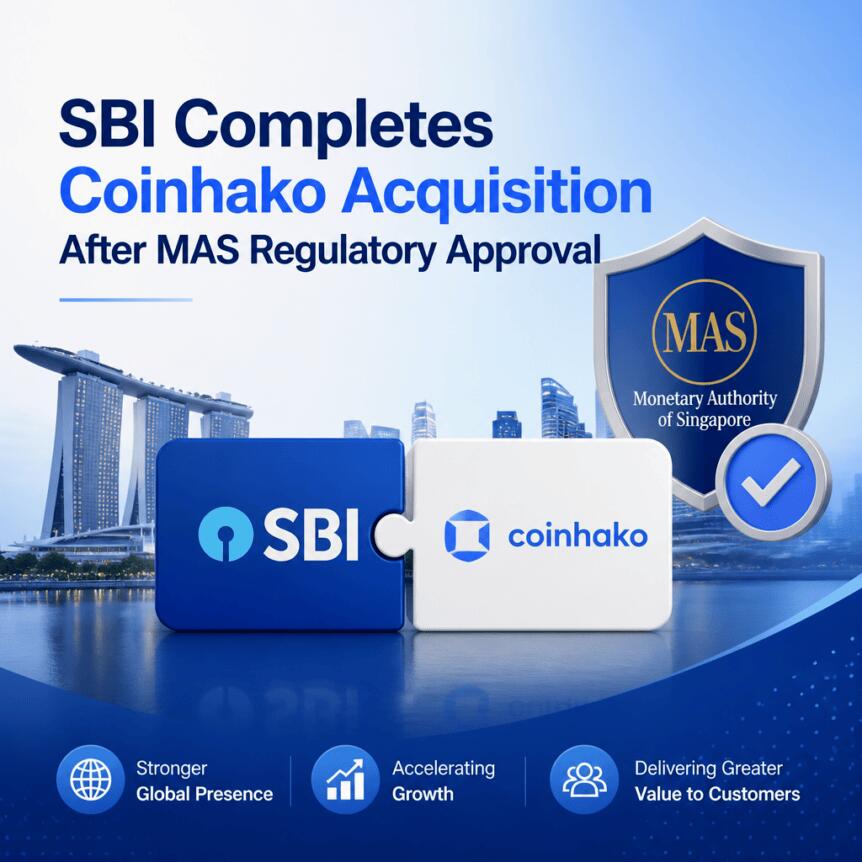
SBI Holdings has secured regulatory approval from Singapore’s central bank to take control of Holdbuild, the parent company behind crypto exchange Coinhako, completing a deal that strengthens the Japanese financial group’s footprint in Southeast Asia.
In a statement released Thursday, SBI said it received authorization from the Monetary Authority of Singapore (MAS), allowing the company to acquire shares from existing shareholders via a capital injection. Following the transaction, Coinhako will become a consolidated subsidiary of SBI.
Key takeaways
- SBI’s majority stake in Coinhako was enabled by MAS regulatory approval, making the acquisition effective through a capital injection.
- Coinhako operates under a Major Payment Institution license in Singapore via its subsidiary, Hako Technology Pte. Ltd.
- SBI plans to combine Coinhako’s customer base and regional network with its own financial services and digital asset initiatives.
- SBI’s strategy in Asia is advancing through a mix of acquisitions and infrastructure-building, including tokenization and stablecoin-related efforts.
Regulatory green light in Singapore
The move hinges on MAS authorization, which SBI said was a prerequisite to completing its majority acquisition of Holdbuild. Once the capital injection was carried out, SBI positioned Coinhako for consolidation within its group structure.
For Coinhako, the Singapore compliance framework matters. The exchange holds a Major Payment Institution license under MAS through Hako Technology Pte. Ltd., the operating subsidiary referenced in coverage of the transaction. That regulated footing is one reason the approval process is closely watched by market participants evaluating how smoothly crypto businesses can scale in highly supervised jurisdictions.
From February intent to majority control
SBI first disclosed its intention to buy a majority stake in Coinhako in February, signaling an expansion beyond Japan into a market it described as strategically important for digital assets. The latest announcement confirms that the deal cleared Singapore’s regulatory gatekeeping, turning a planned move into an operational corporate change.
While SBI did not provide financial details, its structure of acquisition—purchasing shares from existing holders through additional funding—suggests a direct ownership consolidation rather than a partnership model. For investors and industry watchers, that difference typically affects how future growth initiatives can be managed, financed, and integrated across the parent and subsidiary.
How SBI says it will use Coinhako
According to SBI, the acquisition is designed to merge Coinhako’s customer base and regional distribution capabilities with SBI’s broader financial services and digital asset businesses. The company specifically pointed to its JPYSC stablecoin initiative as part of its longer-term integration plans.
Such linkages are meaningful because stablecoin infrastructure and regulated exchange distribution can reinforce each other: exchange users often serve as on-ramps for stablecoin settlement and collateral use cases, while stablecoin rails can improve how value moves across services. SBI’s stated intent indicates it is aiming to align its Singapore presence with its payments and tokenization direction.
Financial terms of the transaction were not disclosed, and SBI did not immediately respond to a request for additional deal details. That leaves several practical questions open for the market, including the pace of operational integration and whether Coinhako’s product suite will be expanded with SBI-linked services.
SBI’s wider push across digital assets and tokenization
This acquisition fits within a broader pattern of SBI expanding in digital assets through investments, acquisitions, and infrastructure. Earlier this month, SBI led a $76 million Series C funding round for institutional crypto exchange EDX Markets, positioning the group in markets aimed at professional trading. SBI also previously shared plans to acquire Bitbank for $289 million, a move intended to build one of Japan’s largest crypto exchange platforms.
Beyond exchange ownership, SBI has been investing in the infrastructure layer. The company partnered with Ondo Finance to bring tokenized Japanese stocks and to integrate its JPYSC stablecoin for settlement and collateral, according to reporting that circulated this week. Earlier, SBI and Startale Group unveiled Strium, a layer-1 blockchain focused on tokenized securities and real-world assets, with designs intended to support continuous trading and tokenized equity settlement for institutional applications.
Taken together, SBI’s approach appears to be converging three areas: regulated distribution (via exchanges), tokenized asset issuance and settlement (via blockchain and tokenization efforts), and stablecoin utility (via JPYSC). Coinhako’s regulated status in Singapore and its regional network could give SBI a clearer pathway to deploy those capabilities outside Japan.
What to watch next
Readers should watch for how SBI operationally integrates Coinhako—particularly around stablecoin-related settlement and collateral use cases—and whether Coinhako’s product offerings expand in step with SBI’s tokenization and blockchain infrastructure. With MAS approval already in hand, the next milestones are likely to be execution details: integration timelines, governance changes, and any new regional initiatives announced after consolidation.
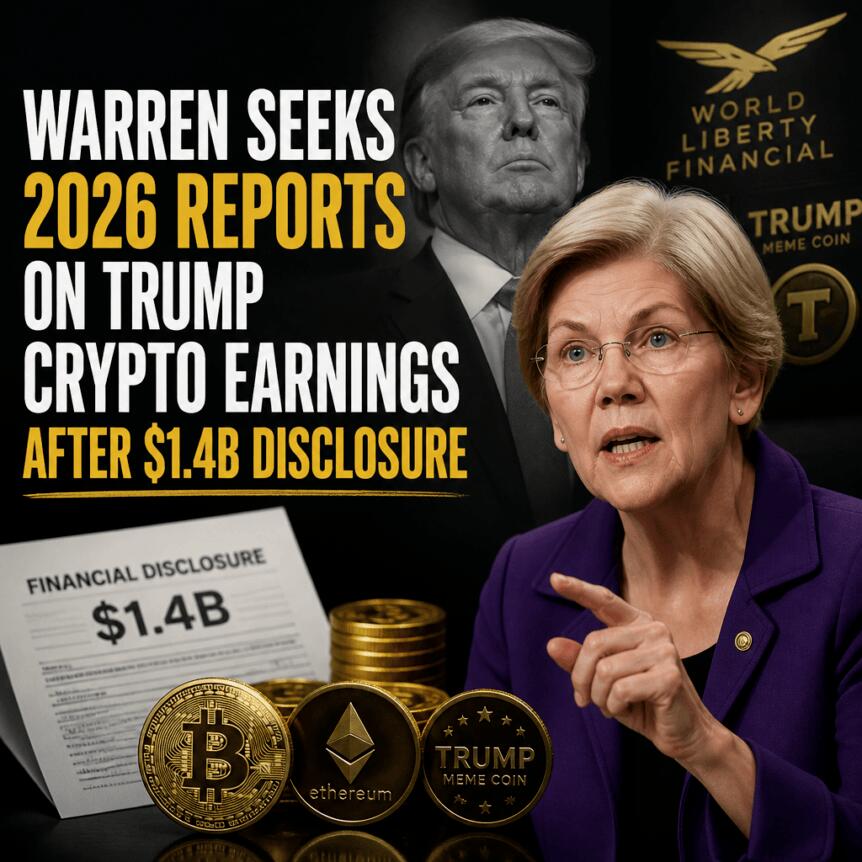
Senator Elizabeth Warren has urged President Donald Trump to provide updated information about his cryptocurrency earnings, arguing that the timing matters as the US Senate weighs a major crypto market structure bill.
In a letter sent to the White House, Warren asked Trump to voluntarily release a financial disclosure covering crypto-related income from Jan. 1 through July 15. The request is tied to pending consideration of the Digital Asset Market Clarity (CLARITY) Act, legislation Warren warns could worsen perceived conflicts of interest if stronger ethics guardrails are not in place.
Key takeaways
- Warren wants Trump to disclose crypto earnings for Jan. 1–July 15 ahead of a Senate vote on the CLARITY Act.
- The senator’s pressure follows disclosures filed in 2025 that showed significant crypto-related earnings.
- Warren argues the bill could “turbocharge” conflicts without adequate ethics protections.
- White House officials have previously said the president’s assets are held in discretionary accounts managed by independent third parties.
- House and Senate activity suggests CLARITY’s path depends not only on market rules but also on ethics provisions.
Warren presses for earlier crypto earnings disclosures
Warren’s Thursday letter requested that Trump provide an updated financial disclosure report covering his cryptocurrency earnings between Jan. 1 and July 15. The senator made the appeal ahead of a mandated reporting timeline: Warren noted Trump is not required to file his 2026 annual report until May 2027, but asked him to release the information voluntarily by July 23.
The deadline aligns with a period when the Senate is considering the CLARITY Act, a bill aimed at establishing a regulatory framework for digital assets. Warren’s central claim is that ethics questions surrounding the president’s and his family’s crypto holdings remain unresolved, particularly while lawmakers debate market structure provisions.
“Without adequate guardrails, [CLARITY] would turbocharge the President’s significant conflicts of interest and almost certainly boost the value of his and his family’s crypto holdings.”
Why the request follows the president’s 2025 disclosures
Warren’s call comes after Trump’s 2025 financial disclosures drew attention for large crypto-related earnings. According to reporting on the filings, Trump earned $1.4 billion from crypto-related ventures in 2025, including through his memecoin, Official Trump (TRUMP), and via his family’s company World Liberty Financial. (Those details were highlighted in earlier coverage on Cointelegraph, referencing the disclosures.)
The new request focuses on a shorter, more current window—Jan. 1 to July 15—suggesting Warren wants lawmakers and the public to understand how crypto-related interests may be evolving while Congress evaluates CLARITY.
Warren also questioned the broader appropriateness of senior officials and their families profiting from the crypto industry during active legislative consideration of a bill she says could affect the value of crypto holdings.
White House response and the ethics debate around CLARITY
Cointelegraph reported that Warren’s office was contacted for comment but did not provide an immediate response. The same reporting noted that during a July 2 interview, Trump said there was “nothing illegal” and “nothing wrong” with profiting from his crypto investments as president. Separately, White House spokesperson Anna Kelly said that “all of the president’s assets are in held in fully discretionary accounts managed by independent third-party financial institutions” and that “there are no conflicts of interest.”
That exchange highlights a key tension in the current debate: while the White House emphasizes third-party management and the absence of conflicts, Warren argues that the existence of significant holdings—combined with a potentially market-moving legislative package—creates conflicts that require more explicit guardrails.
Senate Majority Leader John Thune has indicated the chamber plans to hold a vote on the crypto bill before the Senate breaks for August state work periods. Cointelegraph previously noted that many Democrats have signaled they will not support legislation without clearer ethics provisions, with some pointing specifically to potential conflicts connected to Trump’s holdings.
CLARITY gathers momentum in the House while Senate scrutiny grows
Activity around CLARITY has not been limited to the Senate. On Friday, the House Financial Services Committee’s Subcommittee on Digital Assets, Financial Technology, and Artificial Intelligence held a field hearing in New York City focused on the bill.
According to Cointelegraph’s account of the hearing, CLARITY had already passed the House of Representatives in July 2025, but would return to the chamber if approved in the Senate with 60 votes. Representative French Hill—who chairs the full committee and attended the hearing—described CLARITY as a “bipartisan priority.”
Still, the hearing also reflected partisan and procedural friction. Cointelegraph reported that no Democratic representatives appeared to attend the session. The outlet also said it reached out to Democratic lawmakers on the committee for comment but did not receive an immediate response. A related Cointelegraph piece previously framed the CLARITY process as facing a partisan struggle centered on ethics on the Senate floor.
Taken together, the events suggest CLARITY’s prospects depend on more than simply whether the legislation can win enough votes in each chamber. The debate now appears to be increasingly about whether lawmakers believe current disclosures and account structures are sufficient—or whether additional ethics and conflict-of-interest protections must be embedded directly into the bill itself.
As the July 23 disclosure request and the Senate vote timetable approach, investors and builders should watch for any added ethics language that could shift the bill’s support in the upper chamber. The uncertainty remains whether lawmakers will treat third-party managed discretionary accounts as resolving concerns—or whether stronger statutory guardrails will be required before CLARITY can move forward.
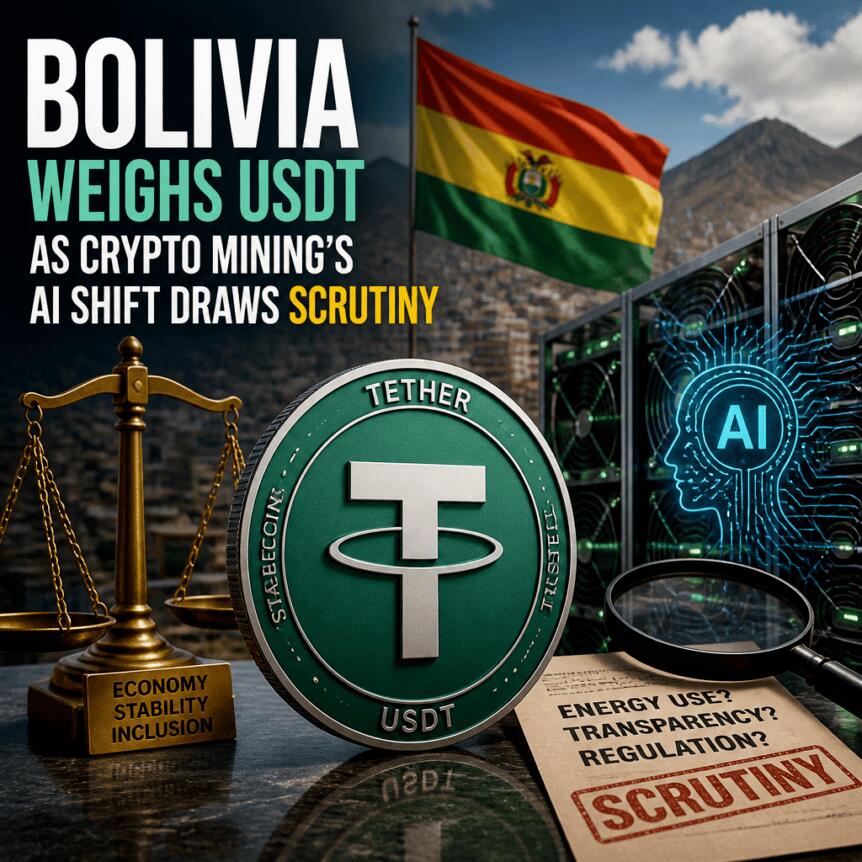
Stablecoins are increasingly moving beyond the “faster transfer” narrative and into more basic functions: helping people and businesses access dollars when local currency conditions are unstable. In Bolivia, a new proposal would formally recognize Tether’s USDT for payments—an attempt to widen access to dollar-denominated value as the country grapples with persistent foreign-exchange pressure.
Meanwhile, the market’s attention is also shifting to how crypto-native infrastructure companies translate new strategies into shareholder value. Bitcoin miners pitching AI and high-performance computing plans are drawing renewed scrutiny as investors focus on governance and insider activity, even as selected deals attract major attention.
Key takeaways
- Bolivia is reviewing a framework that would allow USDT to circulate alongside the boliviano and the U.S. dollar for payments and savings, with anti-money laundering controls planned.
- The push is tied to a prolonged shortage of dollars and widening pressure on official versus parallel exchange rates, increasing demand for dollar-denominated alternatives.
- Bitcoin miners’ AI infrastructure pivots are facing closer investor scrutiny, including questions around insider stock sales and whether AI-driven upside reaches public shareholders.
- CleanSpark’s Georgia data center lease highlights the sector’s effort to replace or supplement mining revenue with longer-term infrastructure contracts.
- Bitmine reported $45.7 million in revenue from Ethereum staking and validation last quarter, underscoring that staking businesses can remain cash-generative even when token prices are choppy.
Bolivia moves to recognize USDT as a payment option
Bolivia is considering a regulatory approach that would recognize Tether’s USDT as a payment currency, according to earlier coverage from Cointelegraph (Bolivia weighs USDT payment currency amid dollar shortage). If adopted, the rules would reportedly enable USDT to circulate in parallel with the boliviano and the U.S. dollar for both payments and savings.
Economy and Public Finance Minister Jose Gabriel Espinoza said the proposal would also include anti-money laundering safeguards. That matters in Bolivia’s case because the country is still on the Financial Action Task Force’s “gray list,” a status that tends to raise compliance expectations for any financial product that could touch broader cross-border flows.
The initiative follows two related developments. First, Bolivia lifted its crypto ban in 2024. Second, Cointelegraph previously reported that the new administration has pledged to broaden access to digital asset services (Bolivia integrate crypto stablecoins financial system).
While stablecoins have often been marketed as a tool to move value quickly across borders, Bolivia’s case highlights a different driver: domestic dollar scarcity. The proposal comes as Bolivia has faced a prolonged shortage of U.S. dollars after pressures on foreign-exchange reserves forced the government to abandon a long-standing currency peg earlier this year. That shift has increased demand for dollar-denominated alternatives, with USDT becoming a practical payment channel for those seeking steadier value than the boliviano.
For investors and builders, the significance is not only policy-level. It’s a signal that stablecoins are being pulled into mainstream economic coping mechanisms—especially in markets where official access to dollars is constrained and parallel market spreads are widening. What remains uncertain is how quickly the framework could move from proposal to implementation, and how regulators will operationalize AML requirements in practice.
Miners’ AI strategy meets governance and insider-trading questions
In a separate thread of crypto industry news, investor attention is increasingly turning from miners’ AI aspirations to the question of execution and accountability. Earlier coverage from Cointelegraph noted that investors are scrutinizing insider stock sales at Bitcoin miners pursuing AI infrastructure strategies as enthusiasm for the theme cools and governance concerns come into focus (Bitcoin miners’ AI pivot faces investor scrutiny over insider sales).
According to Blocksbridge Consulting, executives at TeraWulf, Cipher Digital, Riot Platforms, and Core Scientific have disclosed stock sales in recent months. Many of these sales were reportedly made under prearranged Rule 10b5-1 trading plans. In addition, Blocksbridge said that some strategic investors also reduced their holdings, including Tether—reported to have cut its stake in Bitdeer after Bitdeer’s AI-related rally.
The scrutiny is landing at a time when the AI narrative may not be performing as strongly as investors expected. Cointelegraph cited that the TEM AI Infrastructure Growth Index has fallen 16% over the past month, suggesting the “AI tailwind” for infrastructure-adjacent equities has cooled.
Blocksbridge’s framing for why this matters is straightforward: investors are looking beyond the AI growth story to evaluate whether the benefits of miners’ strategic pivots are translating into value for public shareholders. In other words, it’s not enough to adopt AI infrastructure as a theme—markets want clarity on timing, cash flows, and whether management’s incentives align with long-term shareholder outcomes.
CleanSpark’s lease deal signals a shift toward contracted infrastructure revenue
Even with investor scrutiny in the background, not all AI infrastructure developments are treated equally. CleanSpark’s stock surge—reported as up as much as 22%—followed its signing of a 20-year data center lease in Georgia, according to Cointelegraph coverage (CleanSpark shares jump after Georgia data center lease).
The agreement covers a 175-megawatt data center at the company’s Sandersville, Georgia campus. Cointelegraph reported the lease was signed with an undisclosed investment-grade global technology company, with the tenant expected to install computing equipment at the site. Phased deliveries are expected to begin in the fourth quarter of 2027.
CleanSpark could see substantial contracted revenue: Cointelegraph said the deal could generate up to $6.6 billion in contracted revenue. If the customer exercises two five-year extension options, the total value could reportedly reach $11.6 billion. Deals like this can be especially important for miners because they may provide more predictable income streams beyond operating-margin swings tied to mining economics.
The context also matters. Cointelegraph noted that the agreement reflects a broader trend among publicly traded miners seeking new revenue sources as post-halving mining conditions remain under pressure. While many peers have reduced Bitcoin holdings to bolster liquidity, CleanSpark has largely remained a net accumulator, though it reportedly sold some BTC earlier this year to fund operations. The company’s stance is closely watched because it influences how aggressively it can invest while still maintaining exposure to Bitcoin’s upside.
For readers following the sector, the key is to watch whether more miners can structure similar long-term contracts with clear timeline milestones—and whether these assets produce measurable diversification benefits in financial results, not just in announcements.
Bitmine adds $45.7 million from Ethereum staking and validation
On the business side of crypto infrastructure, Bitmine Immersion Technologies reported financial performance driven heavily by staking. According to Cointelegraph, the company generated $45.7 million in revenue from Ethereum staking and validation last quarter (Bitmine generated $46m from Ethereum staking last quarter).
For the three months ended May 31, Ethereum staking represented 98% of Bitmine’s revenue. By comparison, Cointelegraph reported $624,000 from self-mining Bitcoin and $168,000 from consulting services.
The results build on Bitmine’s staking platform roadmap. Cointelegraph noted that Bitmine launched MAVAN in March, an institutional Ethereum staking platform built on the acquisition of validator operator Pier Two Holdings. The company said it has staked roughly 85% of its Ether holdings—about 4.9 million ETH.
Chairman Tom Lee said Bitmine now stakes more Ether than any other entity and projects annualized staking rewards of $284 million once its holdings are fully staked through MAVAN and its partners. Even without the narrative excitement that often surrounds mining-related headlines, staking operations can offer a different kind of resilience: fees and staking participation can remain a core revenue engine when price volatility affects trading activity.
What to monitor next is how quickly Bitmine can reach full staked exposure through MAVAN and partner channels, and whether the company’s reward outlook holds as network conditions and competitive staking dynamics evolve.
Across these stories, the common thread is how crypto infrastructure is adapting to real constraints—whether that’s dollar shortages driving stablecoin payments, or miners searching for steadier cash flows through contracted computing capacity, or staking providers scaling revenue through platform distribution. The near-term question for market participants is which of these approaches translate into durable compliance, predictable income, and shareholder-aligned governance rather than just short-lived momentum.


Robert Kiyosaki said he bought more gold and silver during the latest pullback, echoing Jim Rogers with a blunt forecast on July 17 that both metals are headed higher.
The author of “Rich Dad Poor Dad” frames the retracement as an opportunity, though critics see familiar risks.
The Brutal Pullback Behind Kiyosaki’s Latest Call
A retracement is a temporary price decline inside a broader uptrend, distinct from a full reversal. Traders watch these pullbacks closely because they often shake out recent buyers before the trend resumes.
The recent numbers show why the topic matters. Gold reached a high near $5,405 before sliding back toward $4,006, a drop of roughly 26%.
Follow us on X to get the latest news as it happens.
Silver moved even more violently. The precious metal climbed to $118, then retraced to $56, cutting its peak by more than half.
Kiyosaki quoted JimRogers directly on X, writing that gold and silver are going to the moon. He added an important caveat from the veteran commodities investor.
According to that view, the eventual surge will not arrive in a straight line. Severe retracements and heavy volatility should be expected along the way, testing investor resolve.
“Interesting, many ‘speculators’ buy at the TOP then selling at the BOTTOM. I am in agreement with my friend Jim Rogers. During this last ‘retracement’ or ‘crash’ I bought more gold and silver,” Kiyosaki said on X.
The behavioral point sits at the center of his argument. Kiyosaki claims many speculators buy at peaks driven by fear of missing out, then panic-sell at lows.
Why are Kiyosaki and Rogers Bullish on Gold and Silver
Kiyosaki also revealed that he had bought more metals during the drop. Asked by a friend for his reasoning, he pointed to a troubled global economy and his distrust of central banks and political leaders.
His overall position is neither new nor subtle. For years, he has warned about government debt, fiat currency devaluation, and the steady erosion of purchasing power through inflation.
The context helps explain the audience. Elevated national debts, geopolitical tensions, and doubts about monetary policy keep pushing capital toward perceived safe havens.
For Jim Rogers, Gold and silver form his standard duo of recommended hedges. The thesis holds that tangible assets with intrinsic value protect wealth when institutional trust deteriorates.
“Gold and silver have been going straight up. I am not buying now, but I am not selling either. If they go down, I hope I am smart enough to buy more,” Rogers previously noted.
The counterargument deserves equal space. Precious metals yield nothing, and their volatility can punish investors who mistime entries or lack patience.
Kiyosaki himself repeats that he is not a financial advisor. He encourages readers to research independently and consult professionals before acting on anything he publishes.
Whether the lunar trajectory materializes remains unproven. The debate, meanwhile, keeps drawing attention from investors worried about preserving wealth.
Subscribe to our YouTube channel to watch leaders and journalists provide expert insights.
The post Robert Kiyosaki and Jim Rogers Give Moonshot Prediction for Gold and Silver appeared first on BeInCrypto.

Galaxy Digital has secured a 15-year naming rights deal with Texas Tech, renaming the university’s football stadium “Galaxy Stadium” starting with the 2026 season. The announcement also positions Galaxy as Texas Tech Athletics’ official data center and digital assets partner, with both sides pointing to collaboration on student-athlete NFT and broader AI initiatives.
Under the partnership, the venue’s new name will debut on Sept. 5, when Texas Tech opens its season against Abilene Christian. Financial terms were not disclosed.
Key takeaways
- Galaxy Digital signed a 15-year naming rights agreement that renames Texas Tech’s stadium “Galaxy Stadium” beginning in 2026.
- Galaxy will serve as Texas Tech Athletics’ official data center and digital assets partner.
- The parties plan to explore student-athlete name, image and likeness (NIL) opportunities alongside AI initiatives and workforce development.
- Galaxy’s move extends its presence in West Texas, where it operates the Helios data center campus with approved capacity aimed at AI and high-performance computing.
Why this deal goes beyond branding
Naming-rights arrangements are nothing new in collegiate sports, but Galaxy’s agreement is structured to tie its infrastructure and digital assets capabilities directly to athletics operations. Alongside the stadium name change, Texas Tech Athletics will adopt Galaxy as its “official data center and digital assets partner,” creating a platform for technical collaboration that can affect everything from data handling to AI-focused projects.
The partnership framework also highlights business development goals beyond entertainment value. Texas Tech and Galaxy said they plan to collaborate on student-athlete NIL opportunities, artificial intelligence initiatives, and workforce development programs. For investors and builders, that matters because it suggests Galaxy is not just pursuing consumer-facing visibility; it is seeking real-world integration with institutional workflows and talent pipelines.
The 2026 kickoff date gives both sides a runway to align on technical and program requirements ahead of the Sept. 5 season opener against Abilene Christian.
Galaxy’s West Texas footprint meets Texas Tech
The new agreement expands Galaxy’s reach in West Texas, where it already operates the Helios data center campus in nearby Dickens County, about 60 miles east of Lubbock.
According to Galaxy’s announcement, the Helios site has 1.6 gigawatts of approved capacity for artificial intelligence and high-performance computing (HPC). That approved power is a key detail for anyone tracking the race among infrastructure providers: data centers increasingly need both power availability and AI-ready capacity, and partnerships like this can help anchor long-term demand for compute capacity and related services.
While naming rights primarily function as marketing, attaching the agreement to data center and digital assets partnership suggests the collaboration could leverage that approved compute posture toward athletics-related research, analytics, and AI initiatives—especially as universities look for scalable technology partners.
Texas continues to court crypto infrastructure and policy
This stadium deal lands amid a broader push by Texas to become a central destination for crypto-adjacent activity, pairing large-scale mining and digital infrastructure growth with political momentum and pro-crypto policy moves.
Texas already hosts several prominent mining and infrastructure operators, including Riot Platforms, Cipher Mining, Core Scientific, CleanSpark, IREN and Hut 8.
Recent investment activity cited in earlier coverage underscores the state’s pull. In February, Canaan acquired a 49% stake in three operating Texas mining facilities from Cipher Mining for nearly $40 million, as reported by Cointelegraph (see original report). Earlier in the same month, MARA Holdings announced plans to acquire a 2-gigawatt powered site in Texas to develop a digital infrastructure campus supporting both HPC and Bitcoin mining, according to Cointelegraph’s coverage (see original report).
Beyond industry investment, political spending has also been a notable component of the Texas story. In May, industry-affiliated political action committees spent more than $10 million supporting candidates in Texas congressional primary runoffs, and Cointelegraph reported that all six backed candidates won (see original report).
Policy developments have reinforced the same direction. Last year, Gov. Greg Abbott signed legislation creating the Texas Strategic Bitcoin Reserve, following the enactment of Texas Senate Bill 21. Cointelegraph previously reported that state officials began transitioning reserve holdings from a spot Bitcoin ETF to directly custodied bitcoin in May (see original report). The bill history is maintained by the Texas Legislature (Texas Legislature).
What to watch next
The Galaxy–Texas Tech partnership raises practical questions that will matter once the agreement moves from announcement to execution: how the NIL and AI programs are designed, what role digital assets will play in athletics-specific workflows, and whether Helios’s approved AI/HPC capacity translates into measurable university and sports-related deployments. With the stadium renaming scheduled for the Sept. 5 opener, the next signposts to track are program milestones and the rollout timeline for the planned NIL, AI, and workforce initiatives.

Badminton: India’s PV Sindhu Enters Japan Open Final

Google’s AI just recreated the best goal ever by Pele that was never actually filmed

Crypto Technical Analysis Bitcoin Ethereum Solana


-
 NewsBeat2 days ago
London Mayor Sadiq Khan handed a peerage by Keir Starmer alongside 15 other Labour figures… just days before the PM leaves No10
-

 Fashion13 hours ago
Weekend Open Thread – Corporette.com
-

 Politics3 days ago
Young campaigners urge incoming PM to act on outdoor junk food ads
-

 Crypto World2 days ago
CFTC blocks Kalshi from unwinding Michigan trades after court order
-

 Business2 days ago
Nvidia Stock Slips After Big Tuesday Rally as Huang Confirms Vera Rubin Chip Is Now in Production Today
-
 Entertainment3 days ago
Disney’s Most Ambitious Failed Star Wars Attraction Is Coming to SDCC
-

 Crypto World9 hours ago
Ripple wins EU-wide access as ESMA adds it to MiCA register
-

 News Videos3 days ago
XRP BOMBSHELL… XRP OMBOARDED FOR TRANSACTIONS!!!
-

 Crypto World1 day ago
Injective Submits SEC Transfer-Agent Registration to Onchain Ownership Records
-

 Tech4 days ago
Get Your ESP32 Sunny Side Up With This Solar Dev Board
-

 Business2 days ago
Palantir Shares Rise After Expanded Nvidia Partnership and Fresh Analyst Upgrades Ahead of Earnings Day
-

 NewsBeat19 hours ago
Registration is now open for March for Men with Kev 2026
-

 Tech3 days ago
Dark Secrets Emerge When Jailbreaking LLMs
-
 Sports2 days ago
New Cornerback Enters Vikings Trade Rumor Mill
-

 News Videos1 day ago
Money | Class 12 Economics | CBSE Board Exam 2026-27
-

 Business1 day ago
Banco Bilbao Vizcaya Argentaria, S.A. (BBVA) Discusses Global Macro Environment and Economic Outlook for Core Markets Transcript
-
 Tech5 days ago
Cloudflare Precursor Watches Your Mouse and Keyboard To Decide If You Are Human
-

 Crypto World1 day ago
Claude Fable 5 Slips to Second in AI Coding Leaderboard
-

 Business12 hours ago
Airlines warn Sunshine Protection Act could disrupt flight scheduling
-

 News Videos5 days ago
how to make coin bank box with cardboard #scienceproject #money #diy #shorts
You must be logged in to post a comment Login