

Crypto World
Elizabeth Warren corners Trump over $1.4B crypto fortune

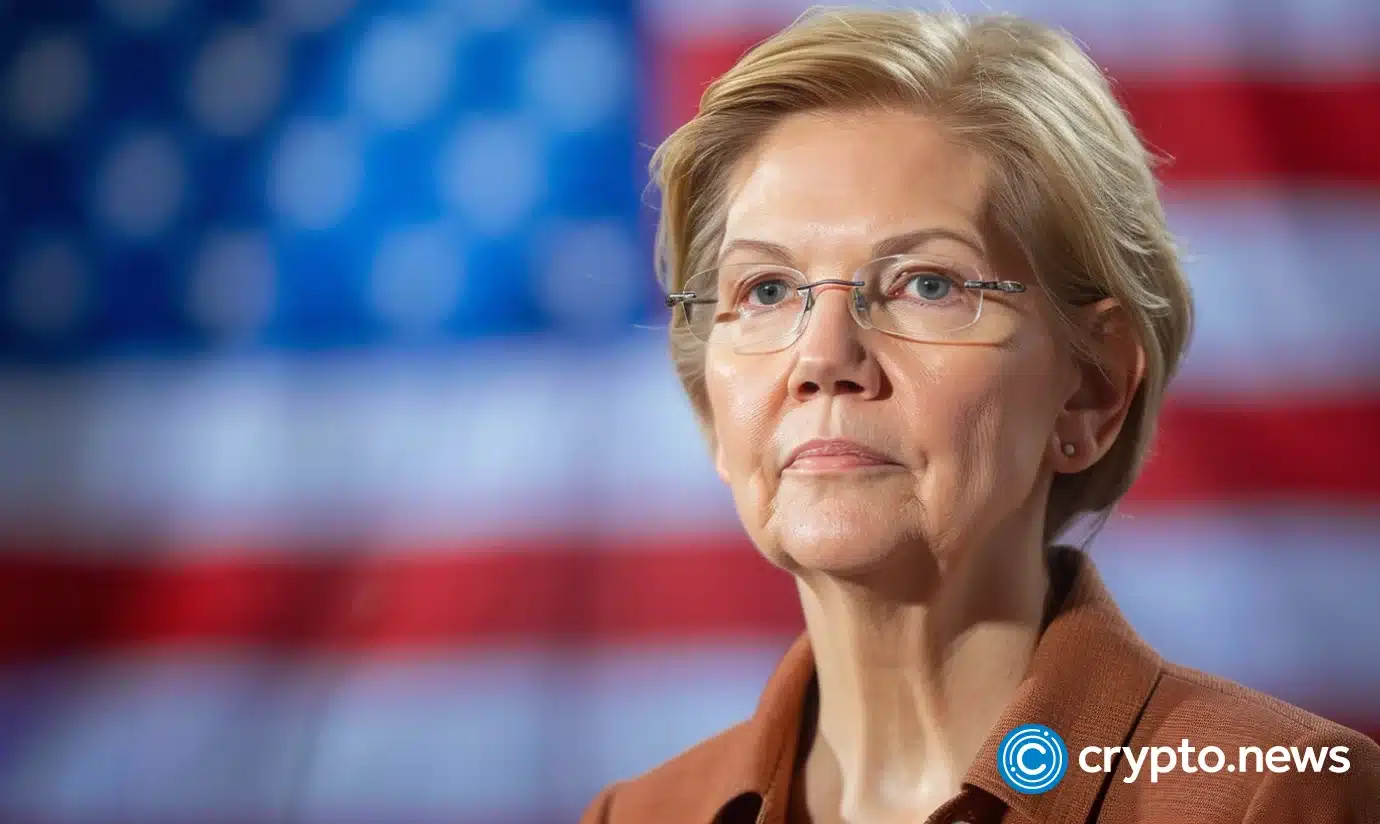
Senator Elizabeth Warren has demanded that President Donald Trump disclose his 2026 crypto earnings after a federal filing showed $1.4 billion in income from digital asset ventures during 2025.
Summary
- Elizabeth Warren wants Trump to disclose his 2026 crypto earnings by July 23.
- Trump reported $1.4 billion in crypto-related income from ventures including World Liberty Financial.
- Democratic demands for ethics rules could complicate the CLARITY Act’s Senate vote.
Warren, in a Thursday letter, asked Trump to release details covering his cryptocurrency earnings between Jan. 1 and July 15. She gave the president until July 23 to provide the information voluntarily as the Senate considers the Digital Asset Market Clarity Act.
Trump’s 2025 financial disclosure, filed on June 30 under rules set by the U.S. Office of Government Ethics, listed income linked to Official Trump (TRUMP) and World Liberty Financial, his family’s crypto company.
According to Warren, the filing raises concerns about elected officials shaping legislation that could affect the value of their holdings.
“[Trump’s] financial disclosure raises key questions about the appropriateness of Presidents, Vice Presidents, senior administration officials, members of Congress, and their families profiting off the crypto industry, just as the US Senate debates crypto market structure legislation that has the potential to increase the value of your crypto holdings.”
Warren ties disclosure demand to CLARITY vote
Under current disclosure rules, Trump does not need to submit his 2026 annual report until May 2027. Warren wants the information released early because senators are working on legislation that would establish federal rules for the crypto market.
In her letter, the Massachusetts Democrat argued that approving CLARITY without firm ethics rules could benefit Trump and his family financially.
“[W]ithout adequate guardrails, [CLARITY] would turbocharge the President’s significant conflicts of interest and almost certainly boost the value of his and his family’s crypto holdings,” Warren wrote.
Responding to similar concerns during a July 2 interview, Trump maintained that there was nothing illegal and nothing wrong with earning money from his crypto investments while serving as president.
White House spokesperson Anna Kelly also rejected claims of a conflict. According to Kelly, Trump’s assets are held in discretionary accounts managed by independent third-party financial institutions, leaving the president without direct control over them.
Senate ethics fight threatens the bill’s path
Senate Majority Leader John Thune has said the chamber will vote on the crypto market structure bill before senators leave for their August state work period. Passage requires 60 votes, meaning Republicans will need support from several Democrats.
Several Democratic senators have publicly refused to support a market structure bill without clear ethics provisions. Some lawmakers have specifically cited Trump’s crypto interests when explaining their opposition, making the dispute a potential obstacle to the legislation.
While the Senate negotiates its version, the House Financial Services Committee’s digital assets subcommittee held a field hearing on CLARITY in New York City on Friday. The House passed the bill in July 2025, but any version amended and approved by the Senate would need to return to the lower chamber.
House Financial Services Committee Chair French Hill described crypto market structure legislation as “a bipartisan priority” for Congress. However, no Democratic lawmakers appeared to attend Friday’s hearing.
The Senate debate now places Trump’s crypto income alongside unresolved questions about federal oversight and political ethics. Warren’s July 23 deadline does not legally require the president to respond, but compliance would reveal his latest crypto earnings months before the next mandatory filing.



Hyperliquid co-founder Jeff Yan has warned that crypto’s failure to attract enough top entrepreneurs has become one of the industry’s biggest obstacles as young talent moves toward artificial intelligence.
Summary
- Jeff Yan says crypto is struggling to attract top young entrepreneurs.
- AI’s prestige and rapid growth are pulling talented founders away from on-chain finance.
- George Noble warns heavy AI spending could create serious financial risks.
The VALR podcast featured Yan’s comments on how the AI boom and the social status attached to the technology have influenced career choices among young founders. According to Yan, many talented people remain unsure which field would allow them to create the most value, leaving relatively few to pursue work in cryptocurrency and fintech.
Yan argued that rebuilding the financial system from first principles offers young entrepreneurs a chance to solve difficult real-world problems. In his view, the work involves turning academic ideas into market designs that can operate reliably at scale.
Rather than judging industries by their surface appeal, Yan urged prospective founders to study the problems each sector is trying to solve. He identified on-chain finance as an area where entrepreneurs can help develop new financial systems and market structures.
AI is drawing young founders away from crypto
Yan’s concern comes as Chinese AI developers gain attention for their progress in global model rankings. China’s Kimi K3 recently reached first place on the Frontend Code Arena, a result that prompted former White House crypto czar David Sacks to raise concerns about America’s position in the AI race.
Sacks described Kimi K3’s performance as troubling because the model also ranked close to leading systems across several other evaluations. He argued that rules covering data centers, state-level requirements and proposed federal reviews could slow US developers while Chinese companies continue improving their models.
“This is how you lose the AI race,” Sacks wrote.
Drawing a comparison with the early internet, Sacks argued that the United States became a technology leader by allowing companies to build products without first seeking government permission. He called for Washington to take a similar approach to AI while using focused regulations to address specific safety concerns.
The competition described by Sacks helps explain why AI has become attractive to ambitious young developers and founders. Yan, however, believes crypto still offers meaningful technical work because building on-chain financial markets requires both entrepreneurial judgment and knowledge of economic design.
Heavy AI spending carries a separate market risk
While AI companies compete for talent and capital, former Fidelity fund manager George Noble has warned that the investment boom could create severe financial risks. Noble estimated that an AI bubble collapse could cause 17 times more damage than the dot-com crash, which erased about $5 trillion from the Nasdaq.
Noble linked that forecast to the large amount of money being directed toward AI infrastructure. If those investments fail to produce the returns expected by investors, he argued, the losses could spread beyond technology companies and affect other parts of the financial system.
“The fallout from this could really be much more significant,” Noble said while discussing the rise in AI capital spending.
Yan did not frame AI’s expansion only as a financial threat to crypto. His warning focused on the people entering the sector, with the Hyperliquid co-founder arguing that on-chain finance will need more capable entrepreneurs if it is to turn complex theories into financial markets that can serve users at scale.
Three altcoins enter the weekend trading near record highs (ATH), led by LEO Token, which sits closest to a fresh peak. WhiteBIT Coin and Rain complete a list picked on one rule, proximity to all-time highs.
The selection follows the same criterion as last weekend’s edition. These are the big and mid-cap coins nearest their previous peaks, with Fibonacci levels marking the path higher and the support that would invalidate each setup.
LEO Token Sits Closest to a New Record
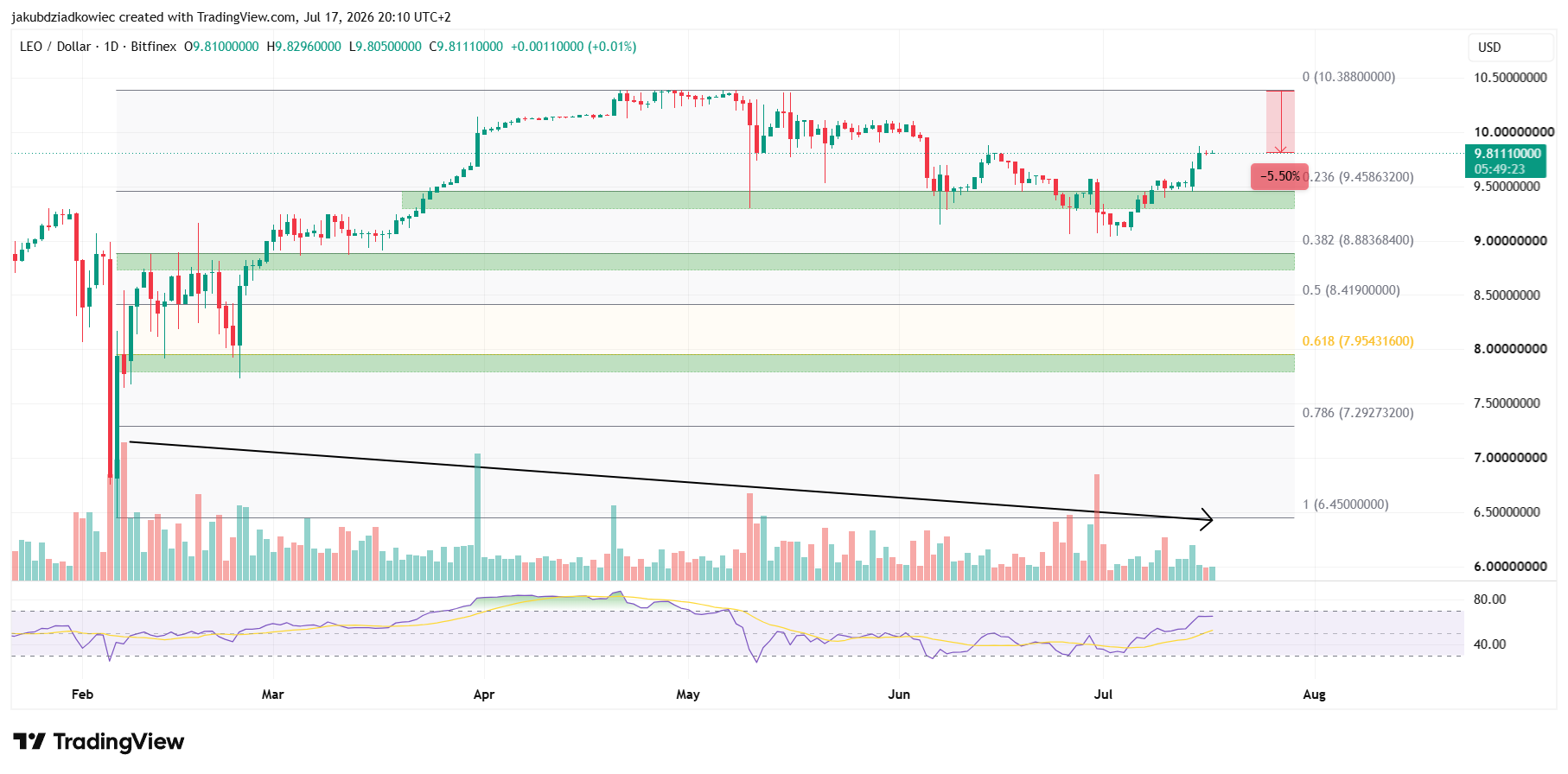
LEO Token (LEO) trades near $9.80, down about 0.2% on the day. That price sits roughly 7% below its record of $10.57, the smallest gap on this list.
On the daily chart, price bounced from the 0.236 Fibonacci retracement near $9.46. It now tests the swing high from June 15, the last hurdle before the record.

A clean break above that level would open the path toward a new peak. The BeInCrypto price forecast also points to bullishness for the token.
If the move stalls, the 0.382 Fibonacci level near $8.88 marks a healthy correction target. Declining volume points to accumulation, while the RSI reads about 65 and continues to rise.
WhiteBIT Coin Targets $64 After Channel Reclaim
WhiteBIT Coin (WBT) tells a more volatile story. The coin trades near $55.66, down about 0.8%, and is roughly 13% below its December record of $64.11.
Price broke down from an ascending channel on May 27, then bottomed on June 5. Since then, buyers have driven two separate bounces off the lows.

The coin now rests at the 0.618 Fibonacci level near $55.93 and faces firm resistance at $58. That level lines up with the lower band of the broken channel.
The RSI sits near a neutral 55, and volume keeps fading. Reclaiming $58 would clear the way toward the December peak, though that record now dates back seven months.
Rain Needs $0.0147 to Rejoin the Race
Rain (RAIN) qualifies on proximity, yet its chart looks the weakest of the three. The token trades near $0.0141, down about 0.5%, and sits roughly 13% below its June 22 record of $0.01614.
Price has just been rejected from resistance near $0.0147. It now drifts toward support at the 0.382 Fibonacci level near $0.01259.

The same token featured previously and still trades below its peak a week later. Momentum has cooled, with the RSI at a neutral 42 and turning south.
Volume has also declined since the early-June impulse, a sign of lower volatility. A firm reclaim of $0.0147 would revive the push toward the record.
What to Watch This Weekend
Each setup now hinges on one level. LEO needs to clear the June 15 swing high, WBT must reclaim $58, and RAIN has to flip $0.0147 back into support.
A break of those levels would confirm each thesis and point toward record territory. Failure would hand the initiative back to sellers heading into next week.
Broader conditions still matter, as Bitcoin works through its own late-cycle phase. A weekend risk-on move would give all three altcoins the tailwind they need.
The post 3 Altcoins That Could Reach New All-Time High This Weekend appeared first on BeInCrypto.
In the latest Solana news, the SOL real-world asset ecosystem just crossed 300,000 unique holders, a milestone no competing chain has matched at this scale or speed.
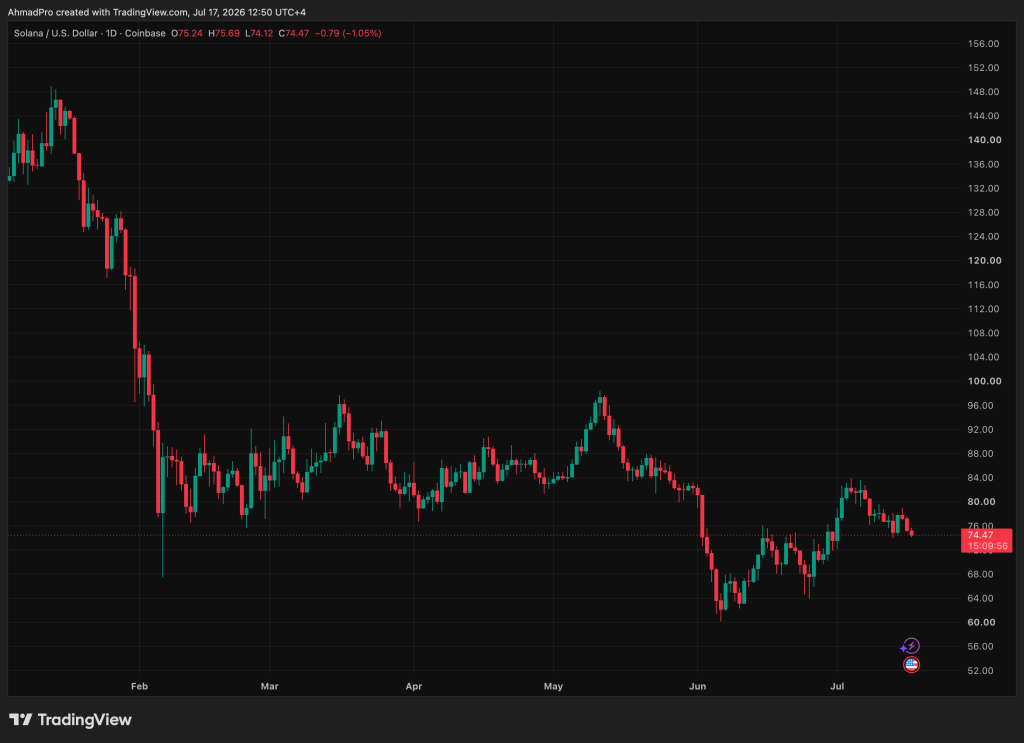
SOL is trading at $74.30, down 2.30% over the last 24 hours, yet the on-chain fundamentals paint a picture that the spot price alone doesn’t fully capture. The gap between short-term price weakness and long-term network traction is where the real story sits.
The catalyst driving this week’s narrative: Circle injected $250 million of fresh liquidity into Solana on July 15, directly reinforcing its position as the dominant stablecoin and DeFi settlement layer. That capital doesn’t just sit idle; it deepens order books, tightens spreads on RWA protocols, and makes Solana more attractive to institutional allocators scanning for tokenization infrastructure.
The broader setup is a classic tension between strong fundamentals and compressed technicals. Whether that tension resolves to the upside depends on one specific price level, and the window may be narrower than it looks.
Discover: The Best Token Presales
Solana News: Can Solana Price Break $85 Before Macro Resistance Resets the Chart?
SOL is trading at $74.30, up 1.46% on the day. Price is chopping around the $74 to $78 band with genuine intraday indecision on both sides.
The technical structure is tight. Support at $77 was reclaimed on strong DEX volume but the $79 to $85 supply wall remains unbroken, a zone where sellers have historically overwhelmed buyers.
A potential triple-top formation is being flagged by technical analysts. If trendline support fails, a flush toward $50 becomes a credible scenario, not a tail risk.
SOL clearing $78 cleanly on volume triggers a short squeeze toward roughly $90, with Circle’s liquidity injection and continued DEX activity providing the fuel.
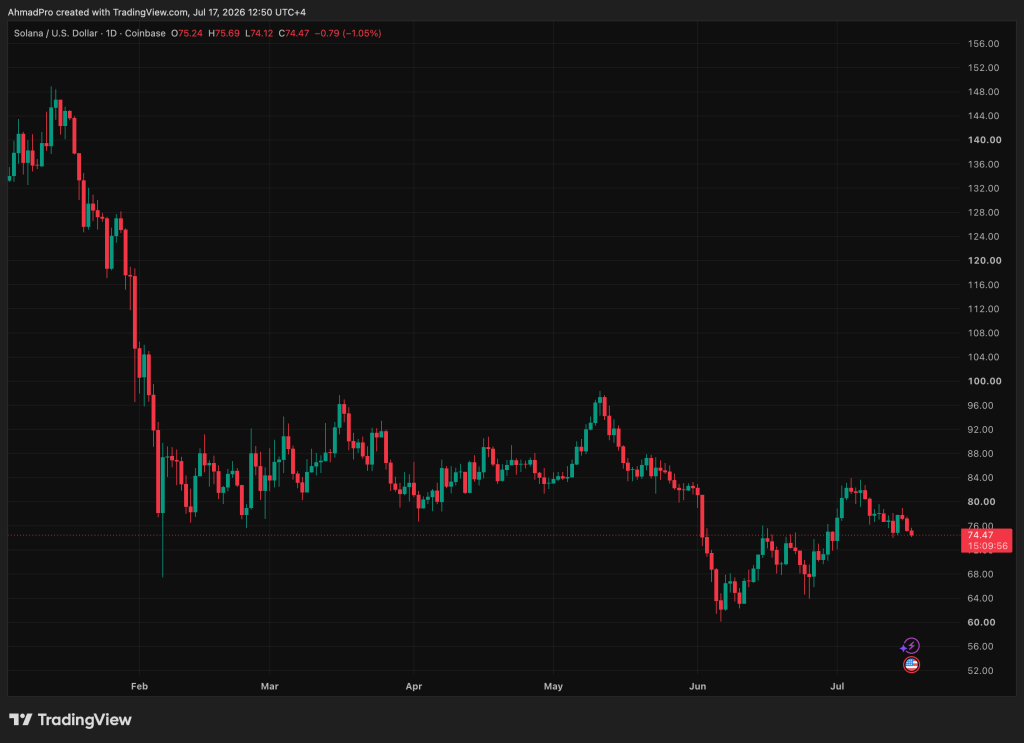
Consolidation between $74 and $79, persisting for another week while traders wait for macro clarity and the supply wall gets tested, but not broken, is the base case.
A close below $74 on meaningful volume reopens the path to $65 and potentially $50, with bot-inflated transaction counts masking softer organic demand, accelerating the move.
News and sentiment are cautiously optimistic, which in practice means nobody is fully committed to Solana either way. The next 72 hours around the $74 level will carry outsized signal value for trend direction.
Discover: The Best Crypto to Diversify Your Portfolio
LiquidChain Targets Early-Mover Upside as Solana Tests Key Levels
SOL’s RWA dominance and Circle’s $250M liquidity injection confirm the multi-chain institutional thesis is real. The complication: at a $43 billion market cap, SOL’s upside in a base-case scenario is measured in percentages, not multiples.
Traders chasing leverage-adjusted returns are increasingly looking at infrastructure plays positioned across the chains generating that growth, not just one of them.
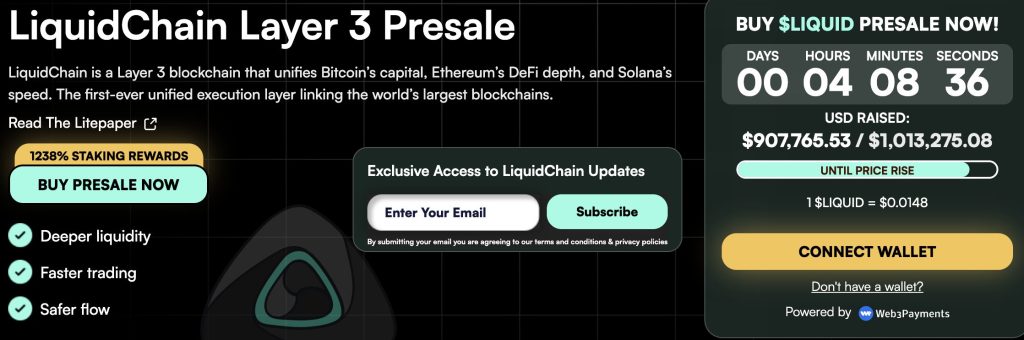
LiquidChain ($LIQUID) is building exactly that layer. The project operates as a Layer 3 infrastructure protocol that fuses Bitcoin, Ethereum, and Solana liquidity into a single execution environment, enabling developers to deploy once and access all three ecosystems simultaneously (a meaningful reduction in fragmentation costs for any protocol building cross-chain RWA products).
Key architecture features include a Unified Liquidity Layer, Single-Step Execution, Verifiable Settlement, and a Deploy-Once Architecture that removes the need to maintain separate codebases per chain.
The presale has raised $907,706.46 at a current token price of $0.0148. As with any early-stage presale, liquidity risk and execution risk are real. This is pre-launch infrastructure, not a finished product.
For those tracking the cross-chain RWA race that Solana is currently winning, researching LiquidChain’s presale mechanics is worth the time.
Don’t Miss Out on Our $1,000 USDT Airdrop on ByBit
The post Solana News: SOL Hits 300,000 RWA Holders, Leaving Other Chains in the Dust appeared first on Cryptonews.
Take-Two Interactive confirmed GTA VI’s release date in a formal SEC filing. The preliminary proxy statement set November 19, 2026, and framed fiscal 2027 as a turning point.
CEO Strauss Zelnick called the coming year a major inflection point. He cited record bookings and the long-awaited launch as the core drivers.
Record Bookings Cap a Strong Fiscal 2026
Take-Two closed fiscal 2026 with Net Bookings of $6.72 billion. Net Bookings is a non-GAAP measure of signed contracts and orders, distinct from GAAP revenue. The figure landed $750 million above initial guidance.
Meanwhile, net revenue reached $6.66 billion. Console and PC sales brought in $3.32 billion. Mobile revenue was nearly identical at $3.33 billion.
Recurrent consumer spending, meaning purchases made after a game’s initial sale, climbed to $5.20 billion. That made up 78% of total revenue.
Grand Theft Auto V has sold nearly 230 million units to date. Red Dead Redemption 2 has passed 80 million. The filing echoed an earlier GTA VI preorder reaction, when the stock dipped despite strong demand.
GTA VI Release Date Sets Up Fiscal 2027 Catalyst
Zelnick’s letter framed GTA VI as the centerpiece of fiscal 2027. He pointed to expected operating cash flow above $1 billion.
GTA+, Rockstar’s subscription tier bundled into GTA Online, also grew significantly. Seasonal updates and perks like adding NBA 2K26 to its library drove that growth.
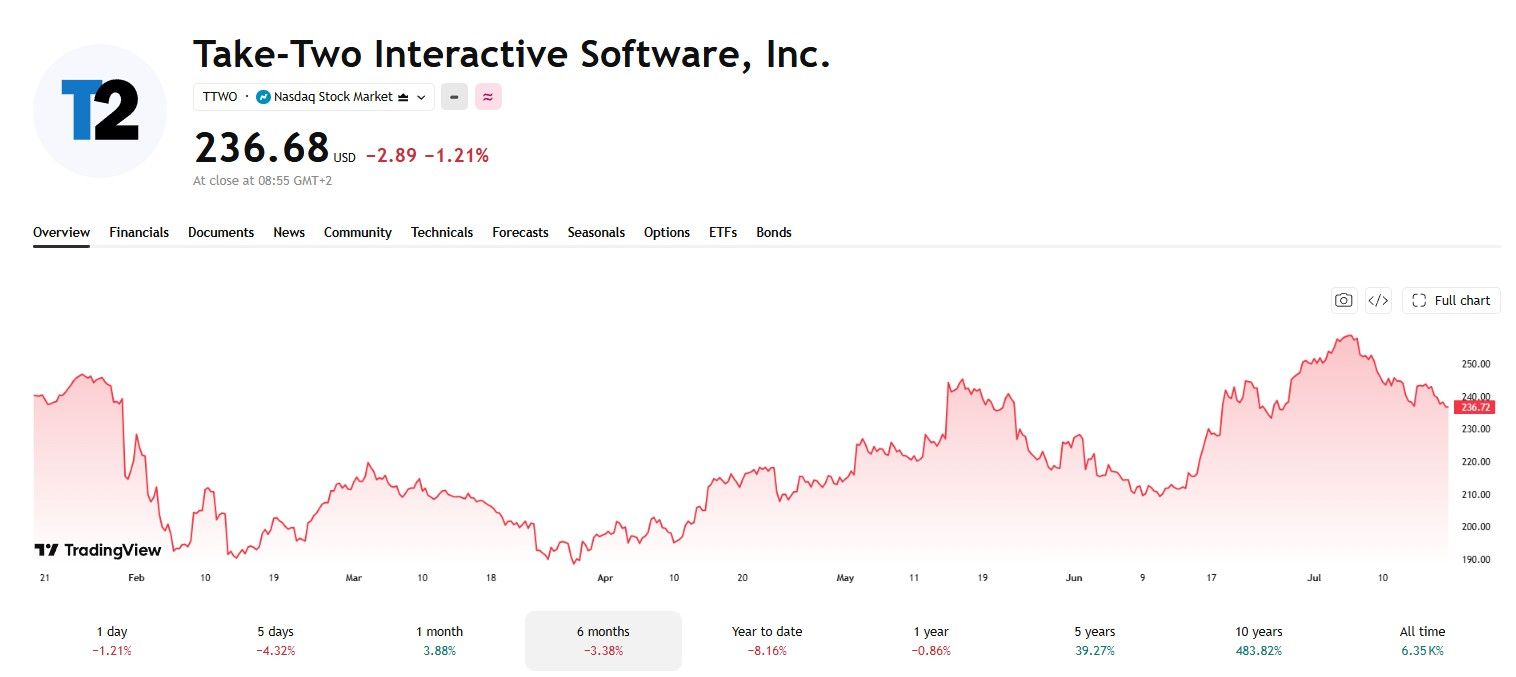
Take-Two shares closed at $239.57 on July 16, 2026, up nearly 13% over the past month. The stock still sits below its 52-week high of $265.94. That peak came before GTA VI’s pricing and disc-free format drew mixed reactions.

However, the letter set no specific booking targets for next year. That leaves investors weighing execution risk against demand. Sony faces a similar test. Shares there jumped after its digital-only pivot, though the PlayStation disc backlash shows fans pushing back hard.
The GTA 6 pricing debate has already tested how much goodwill the $79.99 price tag buys with players.
Shareholders to Weigh Governance Changes in September
Take-Two also disclosed a virtual annual meeting for September 17, 2026. Shareholders will vote on the election of 10 directors. They will also weigh a non-binding say-on-pay resolution.
Additionally, a separate proposal would amend the charter to limit certain officer liability under Delaware law. Shareholders will further ratify Ernst & Young as auditor.
Fiscal 2026 adjusted EBITDA, a profitability measure that excludes interest, taxes, depreciation, and amortization, hit $1.4 billion. That figure blew past a $919.5 million target and triggered maximum executive bonuses.
The vote follows a pattern seen at a gaming company’s proxy fight elsewhere in the industry. There, governance scrutiny intensified alongside a major franchise milestone. Investors tracking other stocks to watch this quarter have flagged Take-Two as one of 2027’s clearest catalysts.
Whether the cash flow forecast holds depends on November’s launch. Nearly a decade of pent-up demand is riding on it.
The post GTA VI Release Date Confirmed? Take-Two SEC Filing Forecasts $1 Billion Cash Flow appeared first on BeInCrypto.


A TrustedVolumes attacker has returned 1,122 ETH worth about $2 million while keeping another $2 million as a self-declared bounty.
Summary
- The TrustedVolumes attacker returned 1,122 ETH worth about $2 million.
- The exploiter retained another $2 million as a self-declared bounty.
- Blockaid traced the May attack to TrustedVolumes’ custom RFQ swap proxy.
According to Com Feed monitoring, the Ethereum transfer represents a partial recovery from the May exploit, which initially drained about $5.87 million from a contract controlled by the liquidity provider. The attacker has retained roughly the same dollar amount as the returned funds, labeling it a bounty.
At the time of writing, TrustedVolumes had not formally confirmed that it had accepted the attacker’s bounty terms.
Partial repayment recovers only part of the stolen funds
TrustedVolumes disclosed in May that the total loss had reached roughly $6.7 million, exceeding the initial estimate reported by security researchers. The company said at that time the stolen assets were held across three addresses containing approximately $3 million, $3 million, and $700,000.
Seeking to recover the assets, TrustedVolumes offered to discuss a vulnerability bounty and what it called a mutually acceptable solution. The liquidity provider also invited the attacker to begin constructive communication, though its statement did not specify a proposed bounty rate.
Before the stolen tokens were consolidated, Blockaid identified 1,291.16 WETH, 206,282 USDT, 16.939 WBTC, and 1.27 million USDC among the drained assets. PeckShield later reported that the attacker exchanged the tokens and gathered the proceeds into about 2,513 ETH.
The returned 1,122 ETH was worth about $2 million at the time of writing, while Com Feed valued the attacker’s retained bounty at a similar amount. The combined dollar value is lower than the original loss because ETH has fallen since the May exploit, when the stolen assets were converted into the cryptocurrency.
Custom TrustedVolumes proxy caused the security breach
As previously reported by crypto.news, Blockaid traced the May 7 attack to a custom request-for-quote swap proxy operated by TrustedVolumes. According to the security firm, the attacker targeted the company’s Ethereum resolver setup rather than a regular 1inch swap route.
TrustedVolumes used the RFQ system to quote token prices and complete signed trades from its inventory. Verichains found that a public function lacked access controls, allowing the attacker to register an address as an approved order signer and create transactions that appeared valid to the proxy.
During the same transaction, the attacker directed the proxy to pull WETH, WBTC, USDT, and USDC from the TrustedVolumes inventory vault. Verichains also identified a mismatch between the address checked for authorization and the address supplying the tokens, while faulty replay protection failed to record orders correctly.
Although the affected market maker supplied liquidity through 1inch, the attack did not compromise 1inch’s core aggregation contracts or standard user routes, according to 1inch’s account of the incident. Blockaid linked the wallet to the March 2025 Fusion V1 exploit but reported that the May attack used a different flaw tied to TrustedVolumes’ custom proxy.
Crypto World
Pi Network’s PI Shows Resilience After Recent Crash as Bitcoin Eyes $64K: Weekend Watch
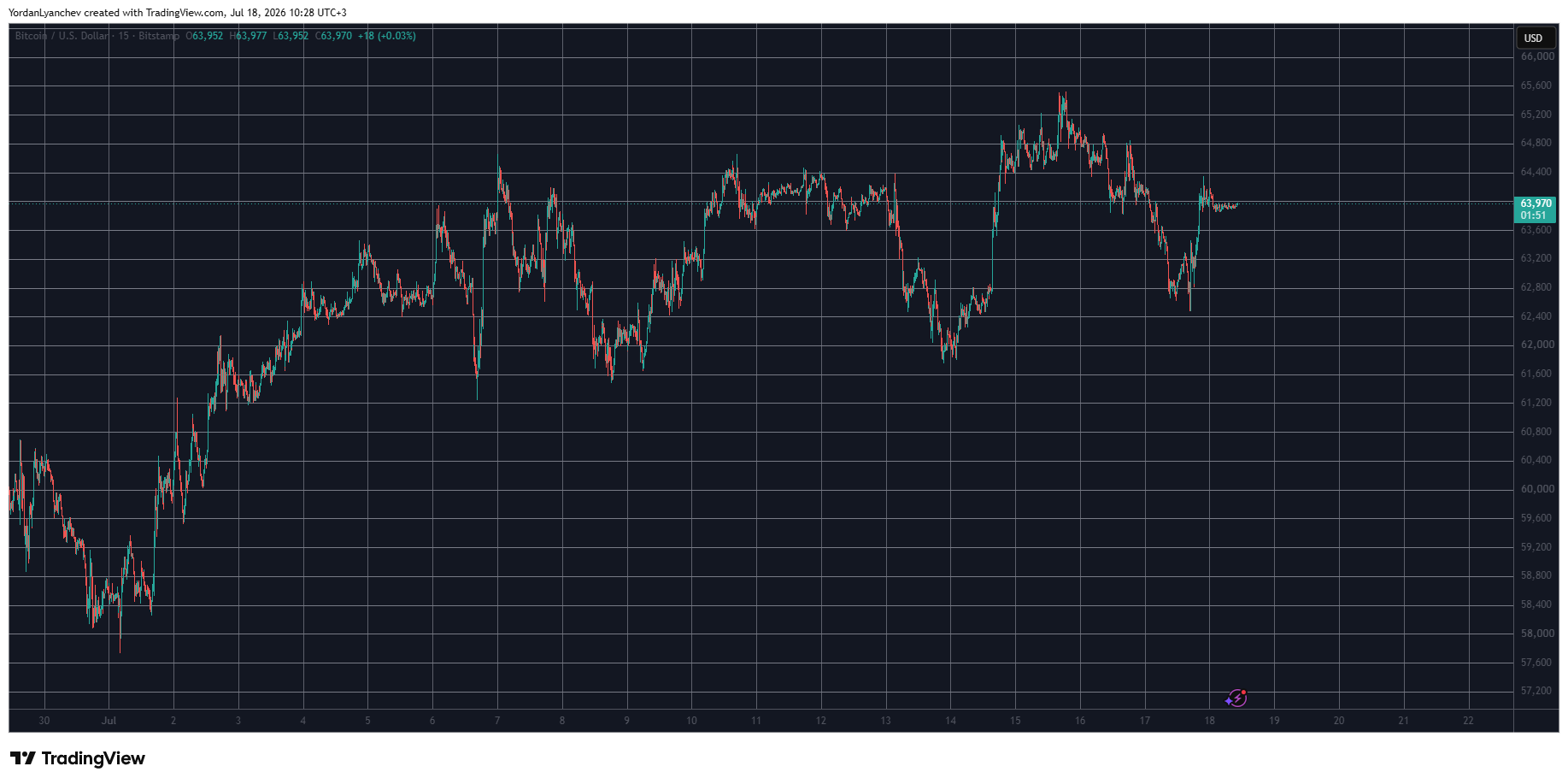
Bitcoin’s price dipped once again on Friday on schedule but managed to rebound almost immediately, and it’s now challenging $64,000 once again.
Most larger-cap alts have remained sideways on a daily scale, with minor gains from ETH, XRP, and SOL. ADA has risen the most from this cohort of crypto assets.
BTC Bounces Toward $64K
The business week began with an expected nosedive for the largest cryptocurrency, which went from roughly $64,000, where it spent most of the previous weekend, to under $62,000 as the market priced in the latest attacks in the Middle East. Strategy then made a no-buy and no-sale announcement, which left BTC unfazed, and all eyes turned on the US CPI on Tuesday.
Although many expected inflation had cooled to around 3.8%-3.9%, the reality was even more promising: a decline to 3.5%. Bitcoin’s price reacted immediately as the asset soared from the aforementioned low to a three-week peak of $65,500 by Wednesday. However, it was rejected there and, as it happened on many previous Fridays, it dropped by a few grand on that day.
The bulls finally intervened after bitcoin had dipped to $62,400 and didn’t allow another leg down. Instead, the cryptocurrency bounced to $64,400 earlier this morning, where it was stopped, and now fights for $64,000 as analysts expect major volatility soon.
Its market capitalization remains above $1.280 trillion on CG, while its dominance over the alts stands still at 56.5%.
PI, VVV, CRO on the Run
As mentioned above, most larger-cap alts stand relatively still today. ETH, XRP, SOL, HYPE, DOGE, ZEC, and XLM are slightly in the green, while BNB, TRX, and RAIN have marked insignificant losses.
Cardano’s native token is up by over 4.5% and now trades above $0.165. CRO continues its rise after the recent $400 million investment in the exchange behind it, rising by over 5%.
Pi Network’s volatile rollercoaster continues today. After charting fresh all-time lows in the past week, PI has rebounded swiftly from the $0.07 support and now trades above $0.08 after an 8% daily increase.
The total crypto market cap has added around $30 billion in a day and stands above $2.270 trillion on CG now.

The post Pi Network’s PI Shows Resilience After Recent Crash as Bitcoin Eyes $64K: Weekend Watch appeared first on CryptoPotato.
OKX Europe has opened a one-way conversion route across 30 EU and EEA countries, allowing customers to deposit USDT and exchange it for MiCA-compliant USDC.
Summary
- OKX Europe now lets users deposit USDT and convert it into MiCA-compliant USDC.
- Tether continues to reject MiCA approval over concerns about the framework’s reserve requirements.
- Binance’s European retreat has left licensed exchanges competing for users affected by MiCA restrictions.
According to an OKX announcement, eligible customers can send Tether’s USDT to their OKX Europe accounts before converting the tokens into Circle-issued USDC. OKX also promoted an 8% deposit bonus for customers moving funds to the platform.
Unlike automatic conversion programs introduced by some platforms, OKX said its service allows users to decide when to exchange their holdings. The company positioned the feature as an option for customers whose current platforms have stopped accepting USDT or plan to convert remaining balances after a deadline.
Operating under a Markets in Crypto-Assets license, OKX Europe currently serves customers across 30 countries in the European Union and European Economic Area. The authorization allows the exchange to offer regulated crypto services throughout those markets under the EU framework.
MiCA restrictions push USDT holders toward USDC
European platforms have reduced support for USDT because Tether has not secured authorization to issue the stablecoin under MiCA. Since the regulation’s final transition period ended on July 1, exchanges have restricted deposits, removed trading pairs and directed customers toward approved alternatives.
Circle’s USDC has become one of the main options available to those users because it operates under the EU framework. OKX’s new tool supports deposits only in USDT and conversions only into USDC, meaning customers cannot use the feature to exchange USDC back into USDT.
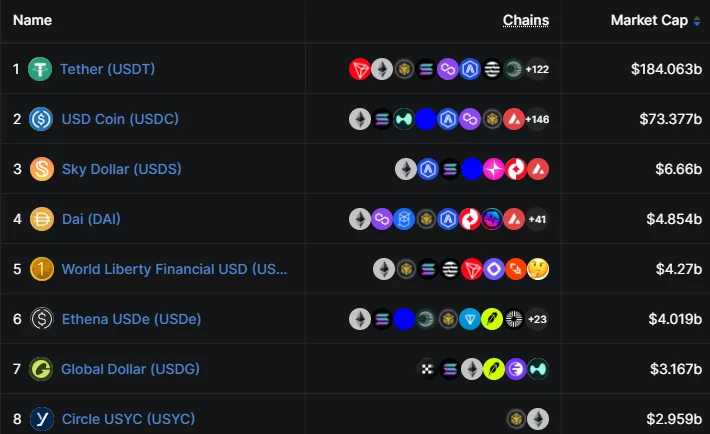
Despite the European restrictions, DefiLlama data shows that USDT remains the world’s largest stablecoin. Tether controls about 59% of the nearly $310 billion stablecoin market, with USDT holding roughly $184 billion in market value, compared with around $73 billion for USDC.
Revolut has also announced plans to stop supporting USDT for customers in the EEA and Switzerland. According to the digital banking platform, users have until Aug. 31 to sell or withdraw their holdings before Revolut converts any remaining tokens into each customer’s base currency.
Tether holds its ground as Binance retreats
Tether CEO Paolo Ardoino has repeatedly defended the company’s decision not to seek MiCA approval, arguing that the framework’s reserve rules could expose stablecoin issuers to additional risks. MiCA requires issuers to hold part of their reserves with European credit institutions.
During an earlier interview, Ardoino described the rules as “very dangerous when it comes to stablecoins,” while acknowledging that refusing authorization could reduce USDT’s availability on European exchanges.
Tether maintained the same position in July 2025, when Ardoino wrote on X that the company would reconsider an application only “when MiCA becomes safer for consumers and stablecoin issuers.”
Tether was not the only major crypto company affected by the EU framework. Binance, the world’s largest crypto exchange by trading volume, withdrew its MiCA license application in Greece after failing to secure approval and began suspending services in several EU countries when the 18-month transition period ended.
Binance’s retreat has left Coinbase, OKX and other MiCA-licensed exchanges competing for European customers as regulated platforms take a larger role in the region. For OKX, the USDT-to-USDC route gives affected holders a voluntary conversion option while European support for Tether’s stablecoin continues to decline.

Aside from a few more substantial moves of several thousand dollars in 24 hours or so, bitcoin’s price actions have been largely muted for months. The cryptocurrency remains sideways between $58,000 and $65,000 with little to no indication of a potential breakout.
Now, though, Ali Martinez outlined a historical pattern that has led to significant volatility. The question is: will history repeat?
More Volatility Coming Soon?
Let’s be honest – a lot of us got addicted to BTC’s infamous price volatility. While some critics viewed it as a major negative selling point, others entered the cryptocurrency ecosystem because of it, as it just tends to make life more interesting. Without it, bitcoin and the entire market just feel unnatural. In fact, CryptoQuant’s CEO recently argued that boredom is BTC’s biggest risk, not another price crash.
Martinez told his over 165,000 followers on X that this apparent ongoing stagnation could finally change soon. He based this prediction on historical bitcoin performance after the movement of dormant BTC.
“A significant amount of dormant Bitcoin (BTC) has moved on-chain over the past 24 hours. Historically, spikes in old coins changing hands often precede major market moves,” he added in the post titled “high volatility alert!”
BTC experienced some volatility in the middle of the week, when it surged from under $62,000 to $65,500 within a day after the lower-than-expected US CPI data for June. However, this is just a drop in a big bucket, as its more macro performance has been quite sluggish.
Meanwhile, another popular analyst, Kaleo, suggested that this expected volatility could take place as early as today or tomorrow:
“Think we see a nice little weekend pump from Bitcoin and ETH this weekend.”
$65K Breakout Next as BTC Is Doing Fine?
Michaël van de Poppe also weighed in on bitcoin’s recent performance, noting that the asset “looks fine, still” as long as it remains above $60,000-$61,000. However, the definitive confirmation of a more positive trend would be a decisive break above $65,000.
In a follow-up post, the analyst outlined a “great chart of bitcoin” that looks “primed for a breakout upwards.” He doubled down on the importance of the $65,000 resistance, which he believes will be taken down next week.
This is a great chart of #Bitcoin and it looks primed for a breakout upwards.
Sure, markets tested whether there was enough pressure to push prices down today.
Clearly, there’s more demand.
$65,000 breakout to happen next week. pic.twitter.com/zIfXbnKx8L
— Michaël van de Poppe (@CryptoMichNL) July 17, 2026
The post Bitcoin Volatility Alert: Is BTC in for a Rollercoaster Ride Soon? appeared first on CryptoPotato.
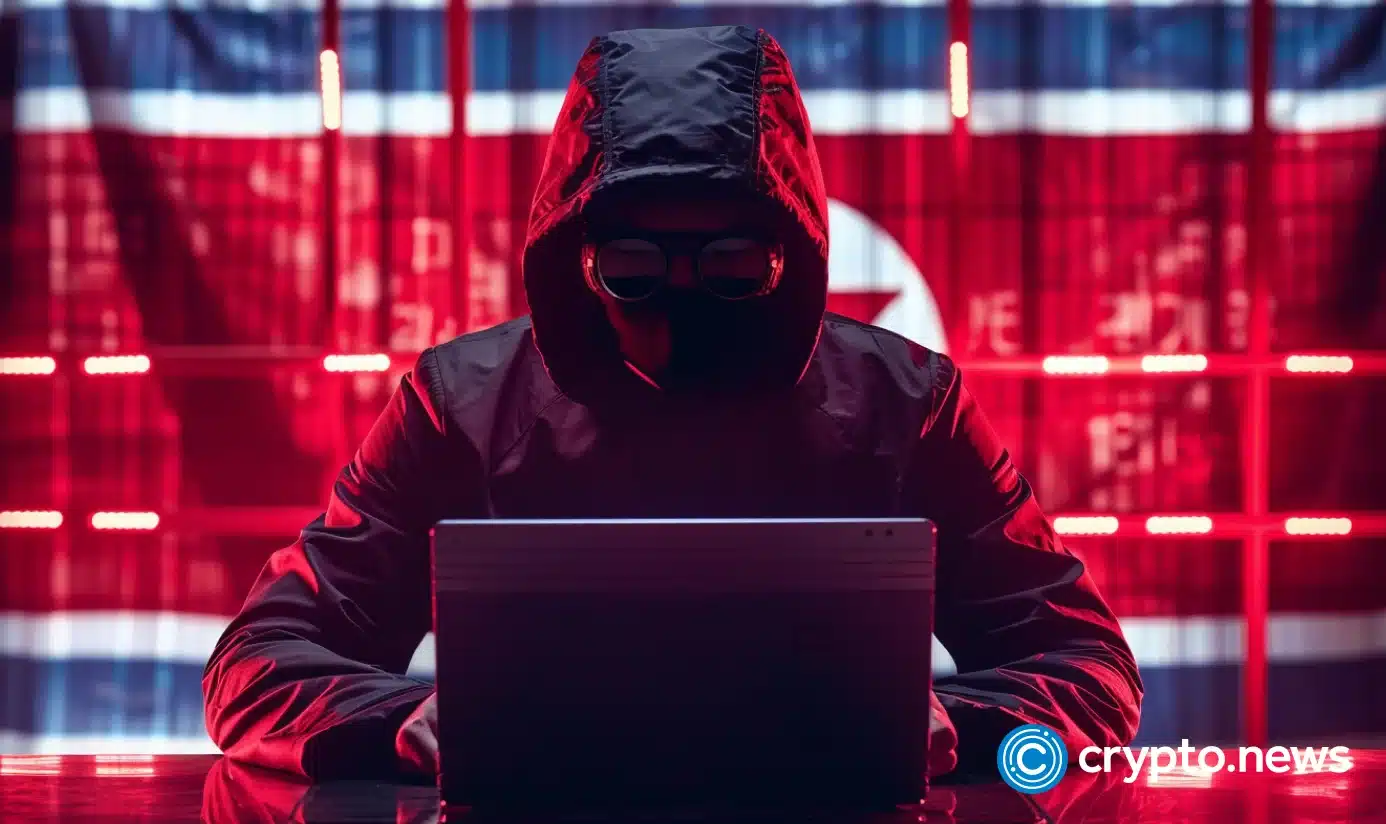
Consensys has temporarily halted product releases after a North Korea-linked consultant gained access to its systems for about one month.
Summary
- Consensys halted product releases after a North Korea-linked consultant accessed its systems for one month.
- An internal investigation found no stolen assets, exposed data, malicious code, or user harm.
- Consensys will review contractor screening as North Korean operatives increasingly target crypto firms.
Drop Site News reported that the developer joined the Ethereum software company under the alias “Tyler Knapp” and used the GitHub handle “imyugioh.” Public GitHub records reviewed by the outlet showed that the consultant began contributing code on March 9 before his access ended in April.
Internal messages obtained by Drop Site showed that Knapp worked on core MetaMask platform code, including sections used to connect crypto users with third-party fiat payment providers. Consensys suspended product releases during its investigation and instructed staff to avoid contact with the consultant, according to the report.
Consensys general counsel Matt Corva told Drop Site that an established third-party service provider introduced Knapp to the company. Corva stressed that Consensys treated him as a consultant rather than a direct employee.
“Very quickly after being introduced, we discovered the threat, followed our security protocols, immediately terminated any access and launched a comprehensive investigation that confirmed there was no misappropriation of assets or data, no malicious code deployed, and no impact to user safety and security.”
Although Consensys disclosed no financial losses, Corva said in a statement that the company would reassess how it outsources engineering and development work. The firm also notified law enforcement and provided information about the incident, according to internal communications reviewed by Drop Site.
Consensys found no loss of user assets
Consensys’ investigation found no evidence that the consultant stole company data or digital assets, inserted harmful code, or compromised users, according to Corva. The company did not publicly explain how it established the developer’s alleged ties to the Democratic People’s Republic of Korea.
Even without a confirmed loss, developer access can expose sensitive infrastructure. According to TRM Labs, developer environments have become one of the quickest paths for attackers seeking access to systems that hold private keys or approve crypto withdrawals.
A six-month investigation supported by the Ethereum Foundation’s ETH Rangers Program shows that the hiring threat extends beyond Consensys. The Ketman Project identified about 100 suspected North Korean IT workers using false identities across 53 crypto and Web3 projects, according to an ETH Rangers recap published in April.
Ketman investigators also traced at least three suspected groups across 11 code repositories, where projects had merged 62 pull requests before detecting the activity. The project reported that some applicants used generated profile pictures, forged identity documents and false Japanese identities to pass screening checks.
North Korea remains crypto’s largest hacking threat
North Korea-linked groups have repeatedly used fake identities and remote engineering jobs to gain entry to technology companies. As crypto.news reported in November, Opsek founder and Security Alliance member Pablo Sabbatella warned at Devconnect Buenos Aires that North Korean workers could be embedded in as many as one-fifth of crypto companies.
Sabbatella also estimated that North Korean applicants account for roughly 30% to 40% of job applications received by crypto firms, suggesting that employment fraud is not limited to isolated cases.
Crypto companies face added risk because employees and contractors can receive access to code, wallets and transaction systems. TRM Labs estimated that North Korea was responsible for 64% of the value stolen in crypto hacks during 2025, when total losses exceeded $2.7 billion. TRM Labs
One attack accounted for much of the damage. The FBI attributed the February 2025 theft of about $1.5 billion from Bybit to North Korea’s TraderTraitor group, which dispersed the assets across thousands of blockchain addresses. FBI
TRM Labs reported that more than 30 exchanges and decentralized finance protocols now share rapid alerts through its Beacon Network when North Korea-linked funds reach participating platforms. For Consensys, the consultant’s removal prevented any known user loss, but the incident has prompted a review of the company’s third-party hiring controls.
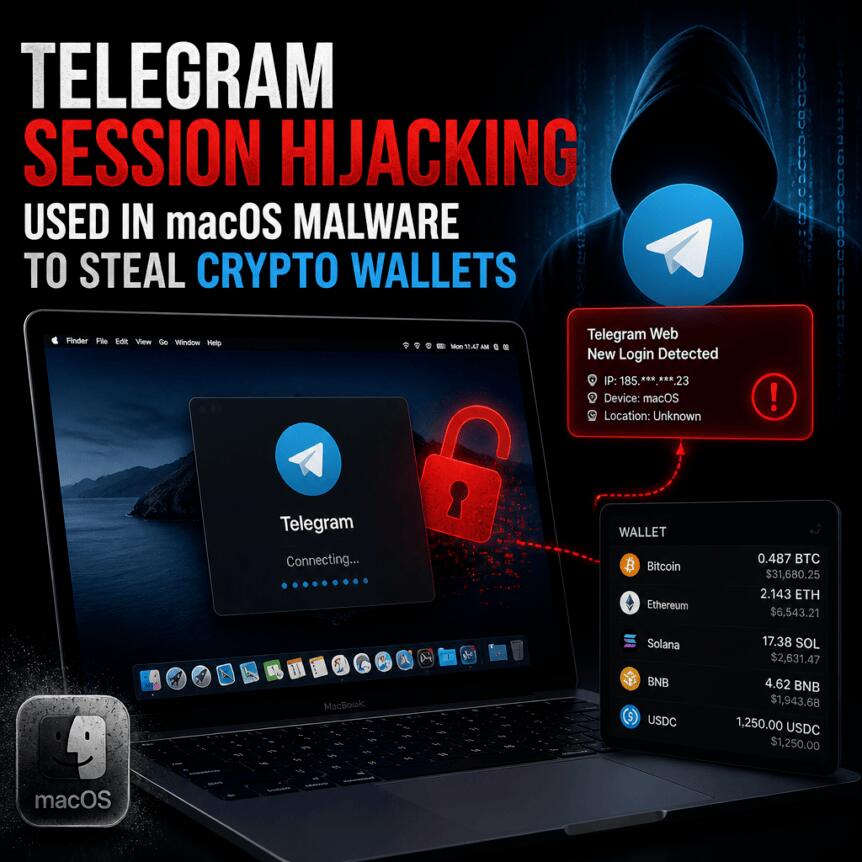
A macOS information-stealing malware can compromise cryptocurrency holdings by hijacking Telegram Desktop sessions and extracting wallet data, according to blockchain security firm SlowMist. The attack is notable because it focuses on taking over already-authenticated local sessions and stealing sensitive credentials, rather than relying solely on intercepting new logins.
SlowMist says the malware harvests data from multiple sources on an affected Mac, including Apple’s Keychain, Safari cookies, Apple Notes, Telegram Desktop and wallet databases tied to more than a dozen crypto wallets. After collecting credentials and authenticated session material, attackers can use the stolen information to access wallets and potentially execute account takeovers.
Key takeaways
- SlowMist reports a macOS malware chain that combines credential theft, browser/session harvesting, and wallet database extraction.
- Telegram two-step verification may not stop the attack because the malware reuses an existing authenticated Telegram Desktop session on the device.
- The malware targets both software wallets (such as Exodus, Atomic, Electrum, Wasabi, and Monero) and hardware wallet companion apps (Ledger Live and Trezor Suite).
- Defenders’ best near-term steps include terminating Telegram sessions, re-authenticating on a trusted device, and rotating wallet recovery phrases and assets to new addresses.
How the Telegram session hijack works
SlowMist’s assessment centers on the malware’s ability to work through already-established authentication. Rather than forcing a new Telegram login flow—which would typically require re-entering a phone number, verification code, and two-step verification password—the malware appears to leverage the authenticated session stored locally by Telegram Desktop.
In its reproduced testing, SlowMist says researchers restored stolen Telegram Desktop session data on another Mac without needing to repeat the normal verification steps, including entering a phone number or two-step verification password. That means even users who believe their Telegram protections are strong may still face risk if their device has already been compromised.
For crypto users who rely on Telegram to manage accounts, coordinate transfers, or receive wallet-related approvals, this matters: a session takeover can enable attackers to impersonate the user, obtain access to conversations and any linked operational details, and facilitate subsequent wallet-focused actions.
What data the malware harvests on macOS
SlowMist reports that the malware gathers a range of sensitive information from the compromised system. The company specifically points to macOS Keychain data, Safari cookies, Apple Notes, and Telegram Desktop. It also looks for cryptocurrency wallet data stored on the device.
Beyond user credentials and browser artifacts, the malware also targets stored wallet databases and related wallet extension data. SlowMist says that after collection, attackers copy authenticated session data, wallet databases, and browser wallet extension information—creating multiple paths for wallet access depending on the wallet type and local storage structure.
The combined approach is important because it increases the odds of success. Instead of betting on a single weakness, the malware can pursue credential-based decryption and offline wallet database recovery, or it can aim at social engineering and application replacement—two methods that can operate even if one fails.
Wallet targets: from desktop software to hardware app companions
According to SlowMist, the malware targets both common software wallets and applications associated with hardware wallets. On the software side, it names Exodus, Atomic, Electrum, Wasabi and Monero. On the hardware side, it includes Ledger Live and Trezor Suite—suggesting the malware aims to compromise not only keys stored by desktop apps, but also the companion software environments used to interact with hardware wallets.
SlowMist also says the malware searches for wallet data stored by full-node clients. It lists Bitcoin Core, Litecoin Core, Dash Core, and Dogecoin Core as examples, implying that systems running these services may contain wallet-related data that the attacker can harvest.
This breadth means affected users may not realize they are at risk simply because they don’t use one of the “headline” wallets. Anyone who stores wallet data locally, uses wallet-related companion apps, or keeps backups and recovery material on the same device could be exposed depending on what the malware detects and copies.
Two ways attackers can turn stolen data into theft
SlowMist describes two primary endgame strategies after the data theft phase.
First, attackers can attempt to decrypt stolen wallet databases offline using passwords taken from the infected device. If the malware successfully extracts the credentials needed to unlock local wallet storage, offline decryption reduces the attacker’s dependence on live access or additional compromise steps.
Second, SlowMist says attackers may replace legitimate Ledger and Trezor applications with fake versions designed to trick users into entering recovery phrases. This shifts the attack from purely technical compromise to user deception, leveraging the fact that many users will naturally follow prompts in trusted-looking wallet software.
SlowMist states that it reproduced the full attack chain in an isolated environment, supporting the firm’s characterization of how the different components can work together—from data collection through to potential wallet manipulation.
What users should do if they suspect compromise
SlowMist urged users who suspect their devices have been compromised to take immediate containment steps. The firm recommends terminating existing Telegram Desktop sessions, establishing a new trusted login, and then changing both the Telegram two-step verification password and the Telegram Desktop Passcode.
For wallet security, SlowMist advises users to generate a new recovery phrase on a clean device and move all assets to new addresses. The underlying logic is straightforward: if a recovery phrase or wallet database may be recoverable by an attacker, treating existing addresses as potentially compromised helps reduce the chance of future unauthorized access.
Given the malware’s emphasis on authenticated sessions and local credential harvesting, the safest remediation tends to focus on “breaking the chain” on the infected device—re-authenticating critical services and rebuilding wallet access from a clean environment rather than attempting to patch individual components.
Going forward, investors and everyday users alike should watch for signs of Telegram session abnormality (unexpected activity, sudden device prompts, or account behavior) and treat any macOS security incident as potentially wallet-relevant. The key uncertainty remains how widely such malware campaigns are deployed in the wild—but SlowMist’s findings offer a clear blueprint for why device compromise, not just exchange security, can determine the outcome of a crypto theft attempt.

New dodgy Fire Stick warning issued as more arrests made

Whale's Insight: Bitcoin's CPI Rally Is Fake, Built On Borrowed Money

‘Messi a source of pride for La Masia’: Barcelona president Joan Laporta makes big statement ahead of Argentina vs Spain final | Football News


-
 NewsBeat2 days ago
London Mayor Sadiq Khan handed a peerage by Keir Starmer alongside 15 other Labour figures… just days before the PM leaves No10
-

 Fashion16 hours ago
Weekend Open Thread – Corporette.com
-

 Crypto World2 days ago
CFTC blocks Kalshi from unwinding Michigan trades after court order
-

 Politics3 days ago
Young campaigners urge incoming PM to act on outdoor junk food ads
-

 Business2 days ago
Nvidia Stock Slips After Big Tuesday Rally as Huang Confirms Vera Rubin Chip Is Now in Production Today
-
 Entertainment3 days ago
Disney’s Most Ambitious Failed Star Wars Attraction Is Coming to SDCC
-

 Crypto World12 hours ago
Ripple wins EU-wide access as ESMA adds it to MiCA register
-

 Crypto World2 days ago
Injective Submits SEC Transfer-Agent Registration to Onchain Ownership Records
-

 News Videos4 days ago
XRP BOMBSHELL… XRP OMBOARDED FOR TRANSACTIONS!!!
-

 Tech4 days ago
Get Your ESP32 Sunny Side Up With This Solar Dev Board
-

 Business2 days ago
Palantir Shares Rise After Expanded Nvidia Partnership and Fresh Analyst Upgrades Ahead of Earnings Day
-

 NewsBeat22 hours ago
Registration is now open for March for Men with Kev 2026
-

 Tech4 days ago
Dark Secrets Emerge When Jailbreaking LLMs
-
 Sports3 days ago
New Cornerback Enters Vikings Trade Rumor Mill
-

 News Videos1 day ago
Money | Class 12 Economics | CBSE Board Exam 2026-27
-

 Business1 day ago
Banco Bilbao Vizcaya Argentaria, S.A. (BBVA) Discusses Global Macro Environment and Economic Outlook for Core Markets Transcript
-

 NewsBeat5 hours ago
Durham County Council to send out electoral registration emails
-
 Tech5 days ago
Cloudflare Precursor Watches Your Mouse and Keyboard To Decide If You Are Human
-

 Crypto World1 day ago
Claude Fable 5 Slips to Second in AI Coding Leaderboard
-

 Business15 hours ago
Airlines warn Sunshine Protection Act could disrupt flight scheduling
You must be logged in to post a comment Login