

Politics
What Mediums Want People To Know About Death


There are many perspectives the general public holds about death that mediums personally feel are untrue.
A medium’s main job is to help people connect with loved ones who have died; they see themselves as middlemen who communicate messages and bridge the gap between the physical and non-physical world, according to medium Alexis Williams. What’s more, some serve as a guiding light to navigate death, which is something so many people struggle to understand.
“The medium essentially becomes the antenna between worlds. What mediums train themselves to do to effectively receive messages is move or shift their own thoughts and awareness to the side and be completely open and receptive to the impressions that come to them from the consciousness they are connecting with,” Williams told HuffPost.
Mediums believe they have a unique and personal connection to death that many people do not – from what happens to our souls after we die to what the transition to the afterlife looks like. They navigate various religions, beliefs and fears people have about dying.
Here’s what they want you to know about their experiences with death.
1. Death is not a “door closing,” but a chance for a continued relationship
While we may no longer be able to talk to those who have died the way we did when they were alive, Williams said the biggest misconception she feels people have about death is that it’s a complete ending.
“Most people think of death as a door closing, when what I experience over and over is that it’s a frequency shift,” she said.
The communication may look different, but you don’t need a medium to tell your loved ones what you want to say. “They are always around and hear you,” medium Emilee Koch told HuffPost. This continues your relationship in a new way, one that allows you to remain connected with them until you’re reunited again.
“I wish people understood that dying does not mean you are no longer existing,” medium Naomi Attar said. “There are pieces of you that continue, just not in physical form. Our loved ones visit us frequently and try to speak to us. Everyone can listen to their loved ones in spirit; the issue is that most don’t listen.”
“Our consciousness lives on, our memories live on, the love we have for others lives on, and we’re not finished learning even on the other side,” Attar added.
Also, mediums believe our loved ones send us signs when they die. “We just have to pay attention. They would never abandon you, and they send signs so you know how much you still mean to them,” Attar said.
This could look like them appearing in dreams, songs that come on in the right moment, conversations with other people and other physical signs. It’s a new, unique way to stay connected with you.
2. A fear of death is normal, but limiting
Death can be scary for so many people, and that fear may impact how you view what happens after someone dies. It may also affect your belief in what happens to us after dying.
“When the body is in fear, it narrows what we’re able to take in, physically and energetically, and the possibilities we believe are available,” Williams said.
The perception of death can vary from person to person. Some believe in heaven and hell, others believe there is no afterlife, and so many of us simply aren’t sure what happens after you die. But no matter what you believe in, dying can be a scary thing to think about, and it’s normal to fear it.
“We fear what we don’t understand. It can be difficult to understand something we have not experienced. Some need to be proven differently but will still find ways to excuse it,” Attar said.
“I also find people can be fearful of the opposite – what if there is no afterlife? They want to believe it so badly that the thought of it not being true is fearful itself. But what is fascinating to me is that no matter the cause or reason for fear, they are hyper-focused on the dying itself rather than living their life to the fullest knowing the dying is inevitable.”
3. Death is an opportunity to let go of pain
The dying process differs for everyone, but mediums believe that death presents an opportunity to let go of pain. “Once our soul finally lets go, we are no longer filled with pain, whether emotion or physical,” Koch says.
Others believe that experiences from past lives carry into the next.
“I don’t believe there is one set of rules for [dying or an afterlife], and it is something that no one truly knows with full certainty. Maybe that’s part of the mystery and something we aren’t meant to know until the time comes for each of us,” Attar said.
“What I do know, though, is that we have many lifetimes and carry experiences from other lives into our current one. Some repeat relationships and people across multiple lifetimes. It’s this never-ending journey, and I think that’s beautiful.”
She continues: “Everyone has their own views of what death is like, but what I will say is that when spirit is speaking about their process, they often speak of who was there with them, how they felt, and how much love they had around them. They have told me many times that they are going ‘home,’ but no one really knows what ‘home’ means.”
4. The dead aren’t alone and haven’t left you
Losing a loved one and worrying about them in the afterlife – or wherever – is completely normal. But mediums want you to know that they aren’t alone when their souls let go and cross over. And you aren’t alone either.
“We are greeted with more love than you can imagine while here on earth. A lot of times, people are worried that the person who passed is by themselves, sad or disappointed about something that happened here. They never, ever are,” Koch said.
When someone dies, whether it be a parent, grandparent, friend or spouse, your daily life may completely shift. You aren’t doing the things you used to do with them because they are no longer in this world with us in the way they once were. But our relationship with the deceased still exists – just in a new form.
“I wish more people understood that death isn’t the end of the road for us, or the end of our relationship with our loved ones,” Koch said. “It never makes the grieving process easier, but it does give us hope and comfort knowing our loved ones are still with us.”



The Democratic National Committee is betting the world’s biggest sporting event can help build its voter base.
The DNC is launching a nationwide voter registration effort for Sunday’s World Cup final, dispatching organizers, volunteers and campaign staff to FIFA Fan Zones, sports bars and community watch parties with the goal of registering more than 3,000 new Democratic voters.
The effort underscores how both political parties are increasingly viewing major sporting events as opportunities to reach voters — particularly young Americans who may be less likely to attend traditional political events but are gathering in large numbers around the monthlong tournament. In the case of the World Cup final, more than 80,000 people are expected to attend in person.
“From outside FIFA Fan Zones and at World Cup watch parties to bars, restaurants and parks, we’ll spend the weekend registering thousands of new Democrats and having conversations about how we win races up and down the ballot,” DNC Chair Ken Martin said in a statement.
The weekend push spans nearly two dozen states, with Democratic organizers attending events in battlegrounds including Arizona, Pennsylvania and Florida. In Arizona, Democrats plan registration efforts in Phoenix, Chandler, Tempe, Tucson and Yuma.
The campaign builds on the DNC’s broader “When We Count” initiative focused on young voters ahead of the 2026 midterms.
Unlike traditional registration drives centered on college campuses, the program deliberately targets young Americans who are already in the workforce.
About one-third of the program’s fellows are native Spanish speakers.
The party is pairing the registration effort with a four-part national training series that it says will equip more than 1,500 organizers, campaign staff and volunteers with best practices for partisan voter registration.
Professional sports leagues have increasingly embraced civic engagement around elections, and the NBA and WNBA are some of the most visible examples, using arenas as polling locations and partnering on nonpartisan voter registration drives. And conservatives have previously registered voters at NASCAR events.
“The power in sport is that people gather. It creates a sense of belonging,” said Lee Igel, a professor of global sport at New York University. “If you want to get 3,000 people registered to vote at a watch party for a sports mega-event, you’d be hard-pressed not to get closer to 30,000 people” registered.
Igel said the DNC’s initiative takes that relationship between sports and civic participation a step further.
“There’s some precedent when it comes to voting and sports,” he said. “But this picks up on a more recent trend of politicians, elected officials and the organizations they’re connected to tapping into the power of sport.”
He pointed to leaders across the political spectrum, including President Donald Trump and New York City Mayor Zohran Mamdani, as examples of politicians increasingly recognizing sports’ cultural reach.
“Sport is fun and games,” Igel said, “but the attention it attracts in communities — from eyeballs to people in person — is enormous.”
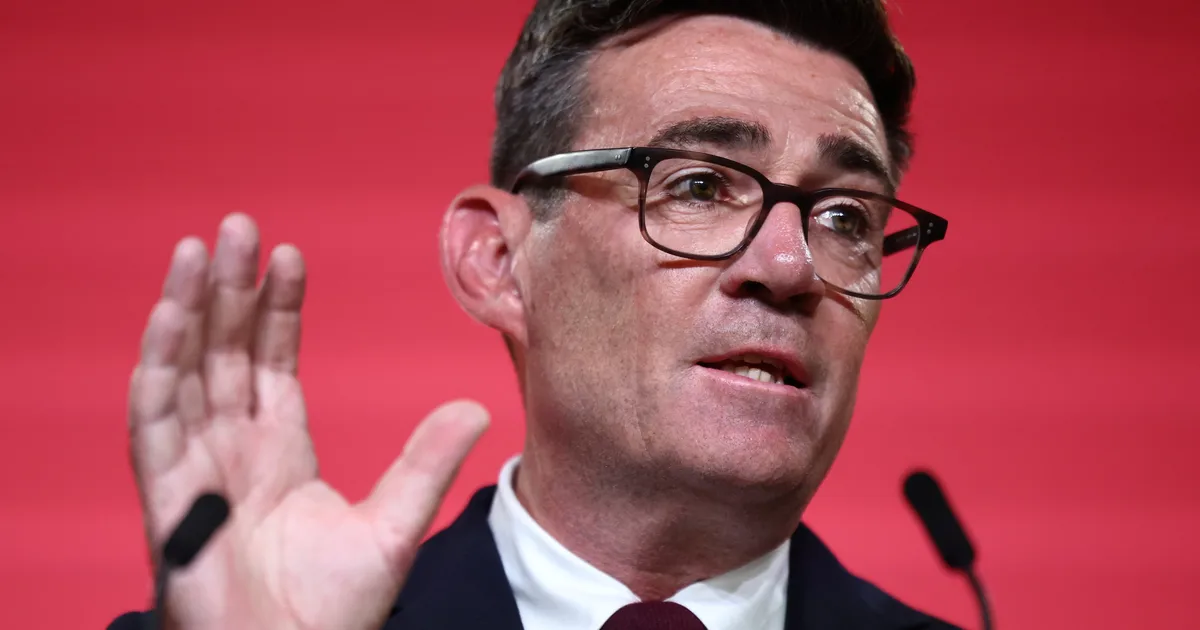
Andy Burnham’s government intends to scrap Keir Starmer’s plan to implement digital ID, a close ally to the incoming prime minister has confirmed.
Dropping the controversial scheme is part of Burnham’s bid to put his own stamp on government and distance himself from his predecessor’s most divisive policies.
Starmer announced plans for a digital ID scheme last September to crack down on illegal working, but it sparked fears about whether personal data might then be at risk.
Speaking to Laura Kuenssberg on the BBC, deputy Labour leader Lucy Powell said scrapping the programme move would allow ministers to be “laser focused on the cost of living, laser focused on rewiring the economy, rewiring the political system in this country, and clearing the decks, if you like, from of all of the other things that might distract and take away from that in terms of the focus of the government”.
Asked how much money would now be freed up for other means, Powell said: “The OBR said it would cost, I think, £1.8 billion over the over the coming years.
“That’s not an insignificant amount of money. That will obviously be re-prioritised and redistributed in different ways.
“But as I say, it’s not just about the money.
“It’s actually about the attention and the focus, so that the the whole of government machinery can work in service of the agenda and the vision that the Labour government is setting out under under Andy Burnham, and I think that is important.”
She also claimed Burnham will deliver on the Labour manifesto by being “bolder” and “clearer” about what the party stands for.
Powell confirmed there would be a “change of emphasis” on North Sea oil and gas drilling under Burnham as well.
There has been widespread speculation that the new prime minister might issue new drilling licences to boost the UK’s energy security, even though the 2024 Labour manifesto pledged not to.
Though she did not confirm what Burnham intends to do on the divisive topic, Powell said the new PM would take a “more pragmatic approach” towards North Sea drilling.
Powell said: “We’ve been really clear that the way to achieve, in the long term, energy security and lower bills is by ensuring that we do have our our own homegrown, clean, much cheaper energy.
“But we’ve been absolutely clear that North Sea gas and oil is an important part of that transition.
“It’s an important part of the mix, and I think what Andy’s talking about is taking a more pragmatic approach and working with the industry to make sure that it can contribute to that transition and to the the mix that is needed over the long term.
“So let’s see what he’s got to say about that. But I don’t think it’s a change of policy. It’s more a change of emphasis.”
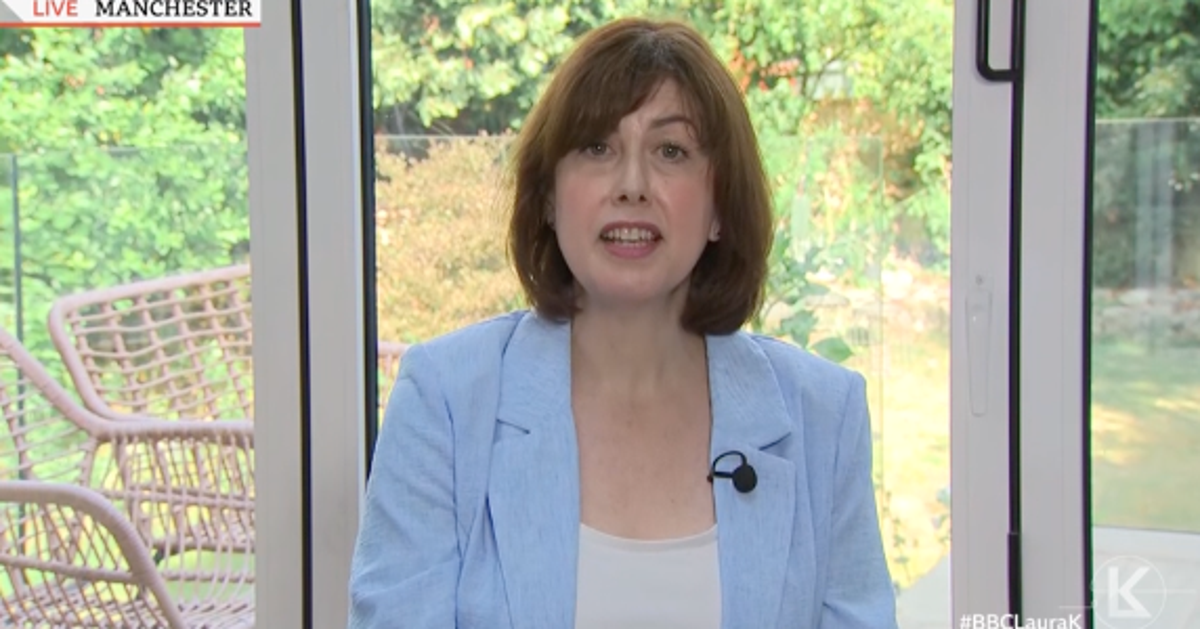
Lucy Powell has claimed speculation about Andy Burnham’s cabinet has been “horrible” in an attack on the media.
The deputy Labour leader blamed the press for reporting on the briefings coming from within the party about who might be in the incoming prime minister’s top team.
Burnham was confirmed as the leader of the Labour Party on Friday after running uncontested to replace Keir Starmer, and will be announced as prime minister on Monday.
He said last week he has not yet decided on his ministers because he thinks it would “cause complete chaos if you start half a reshuffle before you’re in position”.
His refusal to confirm who might be in his cabinet and at the heart of his government operation has led to widespread confusion – even though Burnham has pledged to make Labour more united and to stop in-fighting.
BBC presenter Laura Kuenssberg asked Powell, a close ally to Burnham, about the particularly mixed reports about whether energy secretary Ed Miliband might get a senior position.
The presenter said: “Burnham has promised to end factionalism in the Labour Party but there has been quite a lot of briefing already, a lot of briefing against Ed Miliband.
“It doesn’t bode, very well, does it, for Andy Burnham’s promise of ending all that unhappiness and in-fighting within the party?”
Powell replied: “There’s been a lot of speculation in the media about various individuals which has been really quite horrible, to be honest, and unedifying.
“I know that as political journalists, maybe you’ve not had the story of the Labour leadership crisis to write about for the last few weeks, because actually I’m really proud of the way in which the Labour Party has come together in a consensus around Andy Burnham being the next leader.”
She claimed the media is “looking for other personalities and other disagreements” to write about.
Kuenssberg hit back: “Journalists write about things they are told about.”
Jacob Rees-Mogg, former Tory minister, then criticised Powell’s response while sitting on Kuenssberg’s panel.
“Lucy Powell, an admirable person in many ways, was saying something she knows isn’t true at the end, when she said these stories are coming from disgruntled journalists because they didn’t have a big enough story to write,” he said.
Rees-Mogg added that reporters “do not make things up” and only write “what they are given by politicians”.
Listen to Commons People, the podcast that makes politics easy. Every week, Kevin Schofield and Kate Nicholson unpack the week’s biggest stories to keep you informed. Join us for straightforward analysis of what’s going on at Westminster.

Did you know there are at least three different types of vaginal orgasm?
These include a “wave”, a “volcano,” and an “avalanche” (wave seems to be the most common).
But before we get to classifying the big Os, it’s probably a good idea to work out how to get them in the first place.
Though sex experts stress that fixating on climax can make sex less enjoyable overall, the “gender orgasm gap” remains undeniable. Some research found that within heterosexual couples, men report orgasm in 95% of sexual encounters, while heterosexual women say they only “finish” about 65% of the time.
There’s even a gendered masturbation gap.
A 2024 study, conducted by the University of Essex’s psychology lecturer Dr Megan Klabunde and psychology undergraduate student Emily Dixon, may have found why some women orgasm more than others, however.
Their study suggested it could be down to “interoception”.
What’s “interoception”?
Interoception is a way of understanding your own body’s internal senses. These include being attuned to your heartbeat, hunger levels, bladder fullness, and more.
The Cleveland Clinic says that rather than being a predetermined ability, interoception is “a learned skill that you develop as you grow” – though it can be impaired by certain conditions.
The 2024 study, published in the journal Brain Sciences, asked 360 women to fill in questionnaires about their sexual satisfaction and interoception levels.
Participants were 20% more likely to orgasm through masturbation than partnered sex, and these climaxes were deemed more satisfying, too.
Women who self-reported more frequent and satisfying orgasms were also consistently likelier to describe higher levels of attunement with their body.
“Our study empirically demonstrates that women need to get out of their heads and into their bodies in order to have more frequent and satisfying orgasms,” Dr Klabunde said.
“Orgasms are more frequent and satisfying when a woman is able to focus on how her body is feeling… This study is important because most research looking at orgasms in women have focused on their dysfunction,” rather than focusing on what does work.
How can I improve my interoception?
Dr Klabunde added, “The ability for women to focus their attention on their internal bodily sensations, and trust these sensations, was… associated with increased orgasm satisfaction. Therefore, it is important for women and their partners to trust the woman’s internal bodily experiences during sexual encounters.
“This is critical for fostering orgasmic satisfaction for both solo but also especially for partnered sexual contexts.”
The Cleveland Clinic added that specialised therapy and practicing mindfulness can help, too.
They ended, “Have patience with yourself as you learn new techniques. This learned skill takes time to develop and doesn’t come naturally to everyone”.
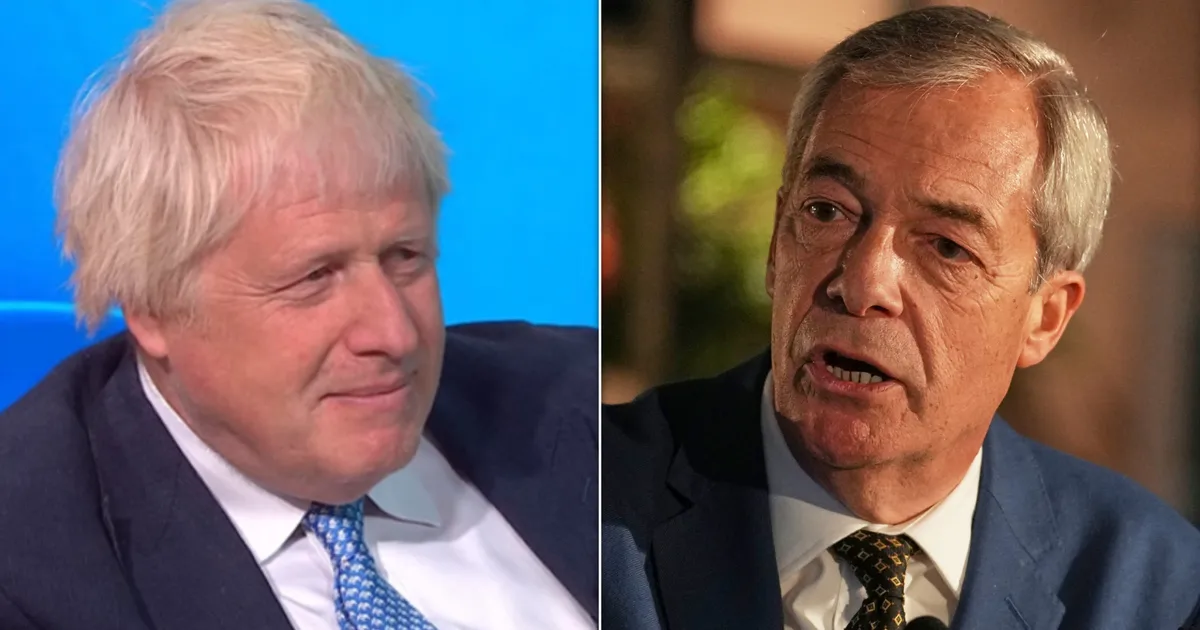
Boris Johnson has hit out at Reform UK for consistently taking credit for getting Brexit over the line.
The former Conservative prime minister, who campaigned in the 2019 general election on the promise to “get Brexit done”, claimed Nigel Farage’s party did not do a “bean” towards actually securing our EU exit.
Both Johnson and Farage were part of the Leave movement in the run-up to and shortly after EU referendum in 2016, though on different campaigns – the then-Tory MP Johnson was in Vote Leave while Farage led Leave.EU.
Farage and his party Reform UK – formerly the Brexit Party – have consistently attacked Johnson’s legacy after migration soared once the UK left the EU.
Sky News presenter Trevor Phillips asked Johnson on Sunday: “Are you at all embarrassed by the way that Reform and others are using the term ‘Boriswave’?
“Because it is true that net migration, for better or worse, has been higher as a consequence of decisions you took than any time in our history.”
Johnson said Brexit gave the UK power to “control immigration”.
He continued: “We have the power under Brexit, and under Brexit, which I secured and which those people didn’t – they didn’t even exist!”
“They did not have a single MP,” he said, referring to Reform UK. “They did not do a bean to get Brexit through the House of Commons. Not a bean.
“ And they swank around claiming to have been responsible for it.
“They did, they did nothing to deliver Brexit.
“The hard Brexit I went through the House of Commons I want to move, enables us, enables this country not only to have as few people because we want overall, but also under our laws, to decide who comes from where.”
Reform UK spokesman hit back at that criticism, telling HuffPost UK: “Boris only had his majority because we put country before party in 2019.
“Boris then broke Britain so badly that the Conservatives haven’t led a single opinion poll since.”
Listen to Commons People, the podcast that makes politics easy. Every week, Kevin Schofield and Kate Nicholson unpack the week’s biggest stories to keep you informed. Join us for straightforward analysis of what’s going on at Westminster.
spiked is funded by readers like you. Only 0.1% of regular readers currently support us. If just 1% did, we could grow our team and step up the fight for free speech and democracy.
Become a spiked supporter and enjoy unlimited, ad-free access, bonus content and exclusive events – while helping to keep independent journalism alive.

We hope you love the products we recommend! All of them were independently selected by our editors. Just so you know, HuffPost UK may collect a share of sales or other compensation from the links on this page if you decide to shop from them. Oh, and FYI — prices are accurate and items in stock as of time of publication.
From our sense of fashion, to our interiors, injecting playfulness and child-like imagination into your style is in – and it’s perhaps no wonder the trend has taken off given the impending doom of war, or the imminent threat of beyond-return climate change, that overshadows our lives.
So, if your home still feels decidedly like the third floor flat it is rather than an enchanted fairy cottage, I’ve made it my job to find 27 pieces of furniture and decor that will transform your space faster than you can say ‘bibbidi-bobbidi-boo’.
This way to floating through life.
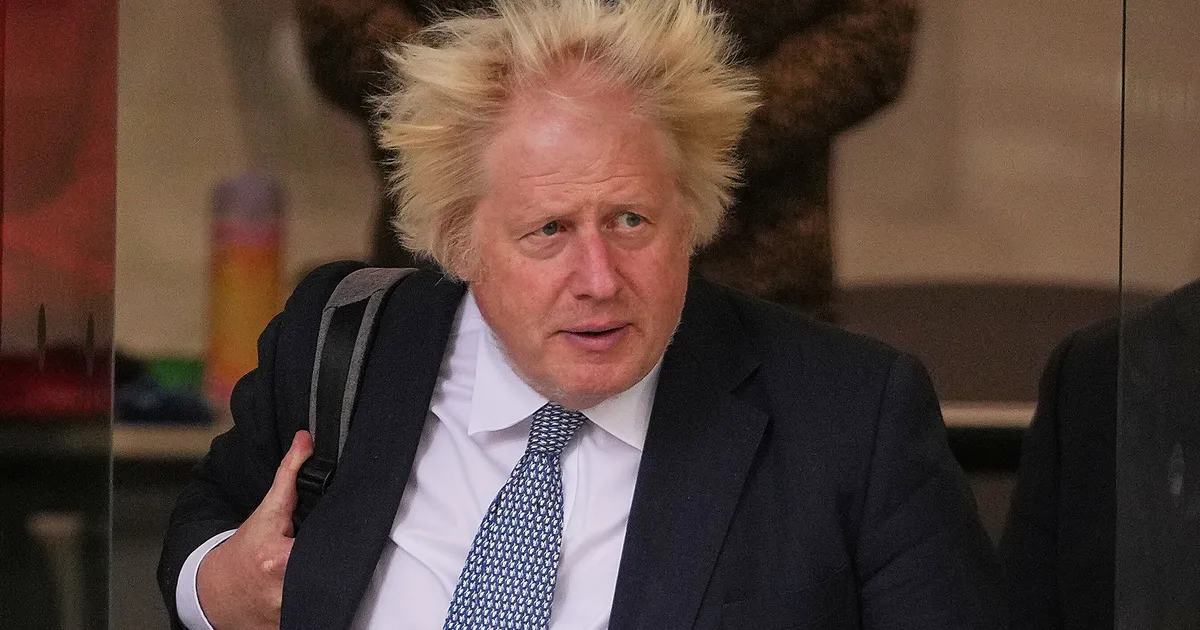
Boris Johnson has claimed Donald Trump could “be the guy” to force Vladimir Putin to end his illegal war in Ukraine.
The ex-prime minister made the bizarre claim more than a year after the US president pledged to bring the conflict to a close in just 24 hours.
The war entered its fifth year back in February.
Trump also famously kicked Ukrainian president Volodymyr Zelenskyy out of the White House last year after his team attacked his outfit and said Kyiv did not “hold any cards” in the war.
Since then, the US has oscillated between pushing Kyiv to give up more land to Moscow in the name of peace, and supporting Ukraine’s ongoing fight against Putin’s land grab.
But, speaking on Sky News, Johnson – who is an ardent supporter of Ukraine – said: “I think that, paradoxically, you know, Trump could be the guy really, to put the hard word on Putin and get this thing done, and there’s no doubt that when it comes to foreign policy initiatives, this is a guy who’s willing to do some, some pretty tough things, right?
“Nobody thought he’s the first American president to use violence against Iran, right?”
Trump chose to join Israel in launching strikes on Iran earlier this year, triggering a significant international conflict and sending the global economy into turmoil.
Johnson continued: “You know, whatever you think about about his logic and how that’s worked out, you know, he is I think he is the guy and I’ve said this to him and I said this repeat.
“I think, paradoxically, although I think that his instincts on on Ukraine haven’t always was language about Ukraine hasn’t always been, you know, put it mildly on, you know, totally on all fours with what I think I think he could he really could fix it. And that’s what I’ve always told him.”
Johnson also acknowledged that Trump has not actually been promoting a push for Ukraine’s sovereignty.
He said: “It would be a very powerful thing if the United States declared that it was, a strategic objective of the United States for Ukraine to be free, sovereign and independent country.”
“No, but you don’t hear that much from Washington, right? And number two, that Ukraine should be part of Nato.”
Asked by presenter Trevor Phillips how Trump responds when Johnson advocates for Ukraine, he said: “I mean, he’s, very good at listening. He’s very good listening.”
Listen to Commons People, the podcast that makes politics easy. Every week, Kevin Schofield and Kate Nicholson unpack the week’s biggest stories to keep you informed. Join us for straightforward analysis of what’s going on at Westminster.
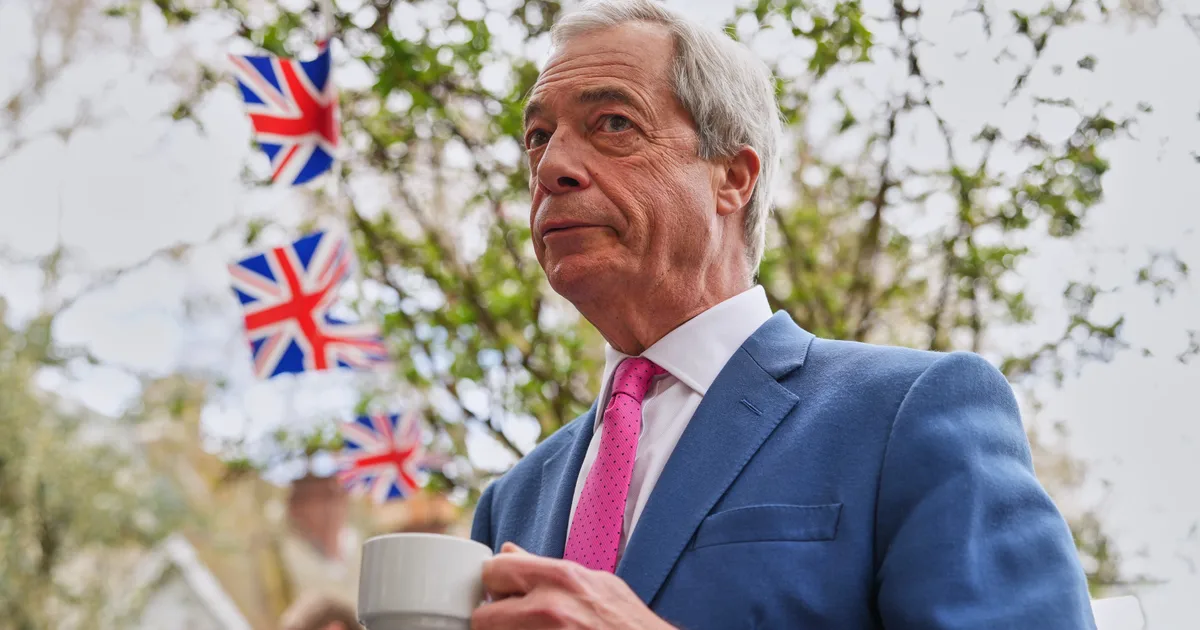
Voters continue to punish Nigel Farage amid the row over his finances as Reform UK slips back in the polls.
According to strategic insight company Opinium, the right-wing party has fallen back to its lowest rate since 2024, having held a comfortable lead with voters for more than a year.
In a survey for the Observer, the pollsters found Reform are currently on 23%.
That’s just one percentage point away from Labour, who on 22%, are at their highest level since April 2026.
It comes as party leader Farage is fighting a by-election he triggered in his constituency of Clacton.
He chose to step down as an MP earlier this month amid heightened scrutiny over his finances.
A parliamentary probe into a £5 million donation he received shortly before he ran in the 2024 general election – but failed to declare – is currently on pause while he is outside of the Commons.
Farage claims he is fighting in a “people versus the establishment” contest, but all major parties have refused to put up a candidate.
The Reform UK leader is now mainly in a race against comedy candidate Count Binface.
Opinium also found the Conservatives are enjoying their highest poll rating since April 2025 on 20%.
Meanwhile, the Green Party lags behind on 14% and the Liberal Democrats are on 11%.
The survey comes after researchers at Survation put both at Labour and Reform UK at 24%.
Polling by More in Common from last week also undermined Farage’s claim not to be part of the establishment.
It showed that 45% of the public believe privately-educated Farage, who is a former MEP and stockbroker, is himself part of the establishment.
That is slightly below Keir Starmer (52%) and Kemi Badenoch (54%), but more than the 41% who think incoming prime minister Andy Burnham is in the establishment.
Listen to Commons People, the podcast that makes politics easy. Every week, Kevin Schofield and Kate Nicholson unpack the week’s biggest stories to keep you informed. Join us for straightforward analysis of what’s going on at Westminster.
Zack Polanski’s Green Party is at risk of losing voters back to the Labour Party with Andy Burnham as PM (Alamy)

10 min read
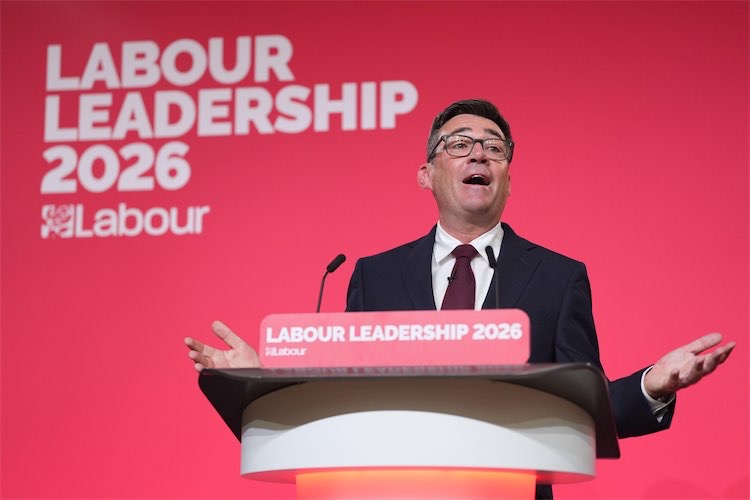
As the Green Party embarks on a media blitz to challenge Andy Burnham ahead of his arrival in Downing Street, an internal strategic debate is intensifying over what his premiership means for the party’s future.
After months of benefiting from disillusionment with Keir Starmer’s Labour Party, Green figures are now grappling with a new political landscape. Burnham is viewed as a more formidable communicator who is potentially more capable of winning back progressive voters while also occupying some of the political territory the Greens have started to claim since Zack Polanski became leader last year.
That has prompted a wider discussion inside the party about everything from electoral strategy to political messaging, and even how the Greens define themselves in an increasingly fragmented five-party system.
According to research by Thinks Insight & Strategy for PoliticsHome earlier this month, Burnham will put Labour in a stronger position to win back voters it risks losing to Polanski’s Greens.
Professor Rob Ford, Professor of Political Science at the University of Manchester, agreed that Green voters are some of the “lowest hanging fruit” available to Labour under Burnham.
“They’re the lost Labour voters who are most likely to say they’re still open to voting Labour,” he said.
“They’re most likely to say that the reasons that they shifted away from Labour are that the party’s got too right-wing and they don’t like Keir Starmer, and they also give Andy Burnham very positive approval ratings. If you’re Zack Polanski or a Green activist, that’s bad news for you.”
A senior Green Party source agreed that Burnham presents a new challenge.
“We need to review our political strategy in light of Burnham, and part of the reason for that is we don’t yet know which version of Burnham is going to turn up,” they said.
“If it will be a Blairite prime minister… He’s also had a very different approach as Manchester mayor, and what he will look like in practice is a big question.”
The source added that the Greens could not assume the political conditions that fuelled their recent rise would continue.
“The path and the space the party has been in in the last few months is not necessarily going to be the same as it’s going to be in the next couple of years,” they continued.
One of the biggest questions now facing the party is whether its electoral strategy should evolve.
The Greens’ existing ‘target to win’ approach focuses activists and resources on constituencies where the party believes it has a realistic chance of victory under first-past-the-post, rather than spreading campaign efforts evenly across the country.
The success of that strategy has largely been built around Labour-facing urban seats, but some figures inside the party are questioning whether Reform’s rise means those priorities should change.
The senior Green source said there was an “ongoing discussion” about where the party should focus under Burnham.
“Any party will be recalibrating where it’s at, and there are big decisions for the party to make around where it focuses the next general election,” they said.
“So there’s a debate over whether the party focuses largely on urban seats that would otherwise be Labour, or does it also have a focus on seats that would otherwise be Reform.
“There’s a lot of concern in the party that we have got to play our role in stopping Reform, rather than the target seats that would otherwise be Labour. Otherwise, we’re not part of the solution of avoiding the huge risks of a Farage-led government.”
However, an official Green Party source insisted the debate should not be seen as an either-or choice.
“The Greens are performing well in elections in urban areas and also smaller towns,” they said.
“We are performing well in Reform-facing seats like Hastings and Kettering. Reform and Green voters both want change; both are fed up with the status quo. We are and will be making our case in both Labour and Reform-facing areas on why the Greens’ version of change is the one most likely to deliver real change. Policies such as rent controls, wealth taxes and public ownership are popular with Labour and Reform voters.”
They added that Green and Reform voters had both had enough of the “status quo” and “the super-rich getting ever richer”.
“On the substance of these issues, Burnham looks like he’s more likely to keep things broadly the same, with better comms,” they said.
The challenge is not simply deciding which constituencies to target, but whether the party can sustain a national message while fighting very different opponents. Several figures described a tension between emphasising pro-migrant and multicultural politics in Labour-facing cities while leaning more heavily into anti-establishment arguments in seats where Reform is the principal challenger.
Although the national headquarters decides where campaign resources are allocated, local parties retain considerable freedom over campaigning tactics, cross-party deals and power-sharing.
Ford believes prioritising Reform-facing seats alongside Labour-facing target seats would be a “borderline delusional strategy” and an “act of electoral self-harm”.
“The Greens have actually been gifted in 2024, much like the Lib Dems were after the 2019 result, a really obvious electoral map,” he said.
“There are 40 seats where the Greens start in second place, which means there are 40 constituencies where they can start campaigning on day one of a general election campaign, saying if you don’t like the incumbent MP, we’re the most viable local alternative.
“Every single seat is currently held by a Labour MP, and most of them look quite similar to each other. They’re mostly city-centre urban seats. They’re mostly young. They’re mostly ethnically diverse.”
The Greens plan to use Burnham’s first weeks in office to draw political dividing lines with Labour and challenge him over issues including rent controls, wealth taxation, public ownership and arms exports to Israel.
According to an internal Green Party memo seen by The New Statesman, the party plans to specifically target Shabana Mahmood if she is appointed as Burnham’s chancellor next week, accusing her of “fiscal constraint and economic orthodoxy” while also taking aim at her controversial immigration reforms.
Sources close to former Green Party leader Caroline Lucas reject any suggestion that the party has shifted away from its environmentalist roots and more towards the left under Polanski. Instead, they argue that the party has always had a left-wing policy agenda, and its evolution in tone over the years has been strategic.
During Lucas’s most recent stint as party co-leader alongside Jonathan Bartley between 2016 and 2018, the emphasis was on gradually building credibility while Labour under Jeremy Corbyn occupied much of the radical left-wing political space. Under the leadership of Siân Berry, and later Carla Denyer and Ramsay, the focus increasingly shifted towards identifying winnable parliamentary seats and maximising representation at Westminster.
The arrival of former Labour members, campaigners and staff to the Green camp during Starmer’s premiership has accelerated that process. Party sources credit those arrivals with bringing valuable campaign experience that the Greens previously lacked. However, some also worry that Labour’s political culture does not always translate easily to a party that has traditionally built itself from local government upwards.
One senior source warned against narrowing the party’s appeal with more former Corbynites joining the Green Party each month.
“The traditional Green style is one that can have wide appeal, and it’s really important that the party does not create a narrow box for itself that’s just the ex-Corbynites, but that can have an appeal to a wide electorate,” they said.
Another senior Green figure said the debate was not about left versus right, but that the “genuine tension” in the party was about political strategy and to what extent the Greens should be thinking strategically about tactical voting and preparing for a progressive alliance with other left-leaning parties, including Labour.
They said there was a “degree of naivety” in the Green Party when it comes to electoral politics.
“There are a lot of people not understanding that we’re in new territory with a five-party system under first past the post,” they continued.
“People are voting tactically more than ever. People don’t go out and vote simply on the basis of politics and policies; they vote for who they believe can win, or who will keep out the people they really don’t want to see win.”
Party figures distinguish between formal electoral pacts (where parties agree not to run against each other in certain seats), which remain deeply unpopular inside the party, and a broader progressive alliance which could include parties working together after elections in councils, agreeing on common policy goals, or parties signalling they are open to governing together if the numbers allow.
The Greens began exploring electoral pacts with Labour during the Corbyn years, but were refused. They later struck an electoral agreement with the Liberal Democrats in 2019.
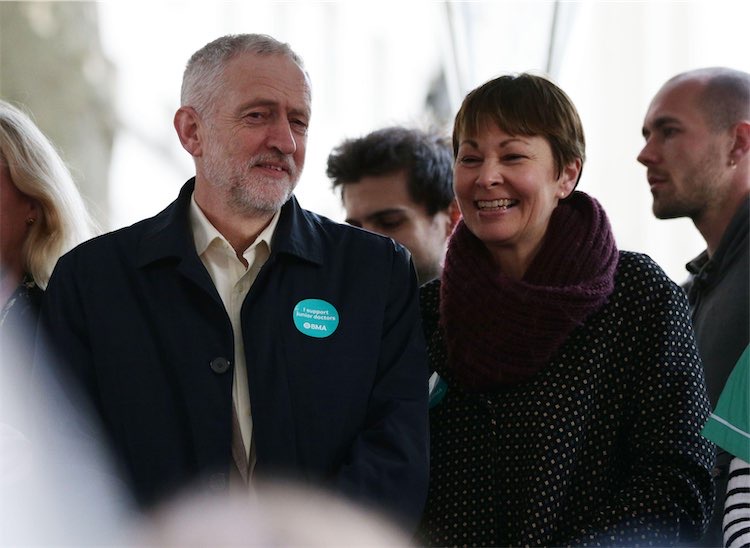
Another Green figure reflected on earlier attempts to work with Labour, saying that if Corbyn had agreed to do a deal with the Greens in 2017, “we might well have seen a Labour-led progressive government” and “wouldn’t have had the 10 years of disaster that we had”.
“But Jeremy just didn’t want to do it, and [then-Lib Dem leader] Tim Farron, at the time, who we met with, didn’t want to do it either, which was heartbreaking.”
There was considerable appetite among Green councillors for cross-party deals following the local elections in May this year.
Green Party councillor James McAsh has become the leader of Southwark Council, with the Greens forming a joint administration with the Lib Dems in the London borough. McAsh, who defected from the Labour Party earlier this year, told PoliticsHome that he and many other Labour-Green defectors were open to the idea of working with Labour going forward.
“Early indications are suggesting [Burnham] would favour a more collaborative approach,” he said.
“We could be in a place where Labour and the Greens are working together more closely in various places across the country.
“Working with the Labour Party is very much still an option in the future, because I think that the progressive bloc is out there, which includes people who are in the Labour Party, and rebuilding the coalition – that 50 years ago existed exclusively within the Labour Party – as a multi-party bloc is in my view the best way to defeat Reform.”
Enthusiasm from the Green leadership for formal national pacts has cooled in recent years, though Polanski has said he would potentially be open to working with Burnham in some capacity.
Former leader Lucas recently told The House she remained sceptical of reviving the idea of a progressive alliance, arguing the Greens’ “fingers have been really burnt by it” in the past.
An official party source said: “The Greens will always have a clear, distinct identity. Zack has made clear that he couldn’t work with Starmer and is open to seeing if there are areas where the Greens can work with Andy Burnham.
“But it is also becoming clearer through his early policy indications and appointments of many people associated with the Blair era that Labour doesn’t look like it’s serious in any way about shifting wealth and power towards working-class people.
“In terms of electoral priorities, it is to challenge everywhere, as a national political party, our message is a broad change message, with appeal across the board, to protect the planet, challenge the power and wealth of the super-rich and give it back to the people.”
Green figures broadly agree that Burnham represents a more serious political challenge than Starmer did. While there is widespread acceptance that the party will need to adapt its strategy, there is far less agreement over what that strategy should look like.

Chelsea Agree Club-Record £117m Deal to Sign Morgan Rogers

Coca-Cola says Fairlife ransomware attack halts US dairy production

LAST CHANCE TO BUY XRP BELOW $1


-
 NewsBeat3 days ago
London Mayor Sadiq Khan handed a peerage by Keir Starmer alongside 15 other Labour figures… just days before the PM leaves No10
-

 Fashion2 days ago
Weekend Open Thread – Corporette.com
-

 Politics1 day ago
The House | The City of London can help the new chancellor deliver growth in every postcode
-

 Politics4 days ago
Young campaigners urge incoming PM to act on outdoor junk food ads
-

 Crypto World4 days ago
CFTC blocks Kalshi from unwinding Michigan trades after court order
-

 Business3 days ago
Nvidia Stock Slips After Big Tuesday Rally as Huang Confirms Vera Rubin Chip Is Now in Production Today
-

 Crypto World1 day ago
Ripple Payments Joins MiCA With 14 Firms, Does It Mean Anything For XRP?
-
 Entertainment4 days ago
Disney’s Most Ambitious Failed Star Wars Attraction Is Coming to SDCC
-

 Crypto World2 days ago
Ripple wins EU-wide access as ESMA adds it to MiCA register
-

 Business3 days ago
Palantir Shares Rise After Expanded Nvidia Partnership and Fresh Analyst Upgrades Ahead of Earnings Day
-

 Crypto World3 days ago
Injective Submits SEC Transfer-Agent Registration to Onchain Ownership Records
-

 Tech5 days ago
Get Your ESP32 Sunny Side Up With This Solar Dev Board
-
 Crypto World2 days ago
Two July Windows Left: The CLARITY Act’s Senate Fight and What Failure Means
-

 NewsBeat2 days ago
Registration is now open for March for Men with Kev 2026
-

 News Videos5 days ago
XRP BOMBSHELL… XRP OMBOARDED FOR TRANSACTIONS!!!
-

 Tech5 days ago
Dark Secrets Emerge When Jailbreaking LLMs
-
 Sports4 days ago
New Cornerback Enters Vikings Trade Rumor Mill
-

 News Videos2 days ago
Money | Class 12 Economics | CBSE Board Exam 2026-27
-

 Business3 days ago
Banco Bilbao Vizcaya Argentaria, S.A. (BBVA) Discusses Global Macro Environment and Economic Outlook for Core Markets Transcript
-

 Crypto World3 days ago
Claude Fable 5 Slips to Second in AI Coding Leaderboard
You must be logged in to post a comment Login