Security teams log 54% of successful attacks and alert on just 14%. The rest move through your environment unseen.
The Picus whitepaper shows how breach and attack simulation tests your SIEM and EDR rules so threats stop slipping by detection.



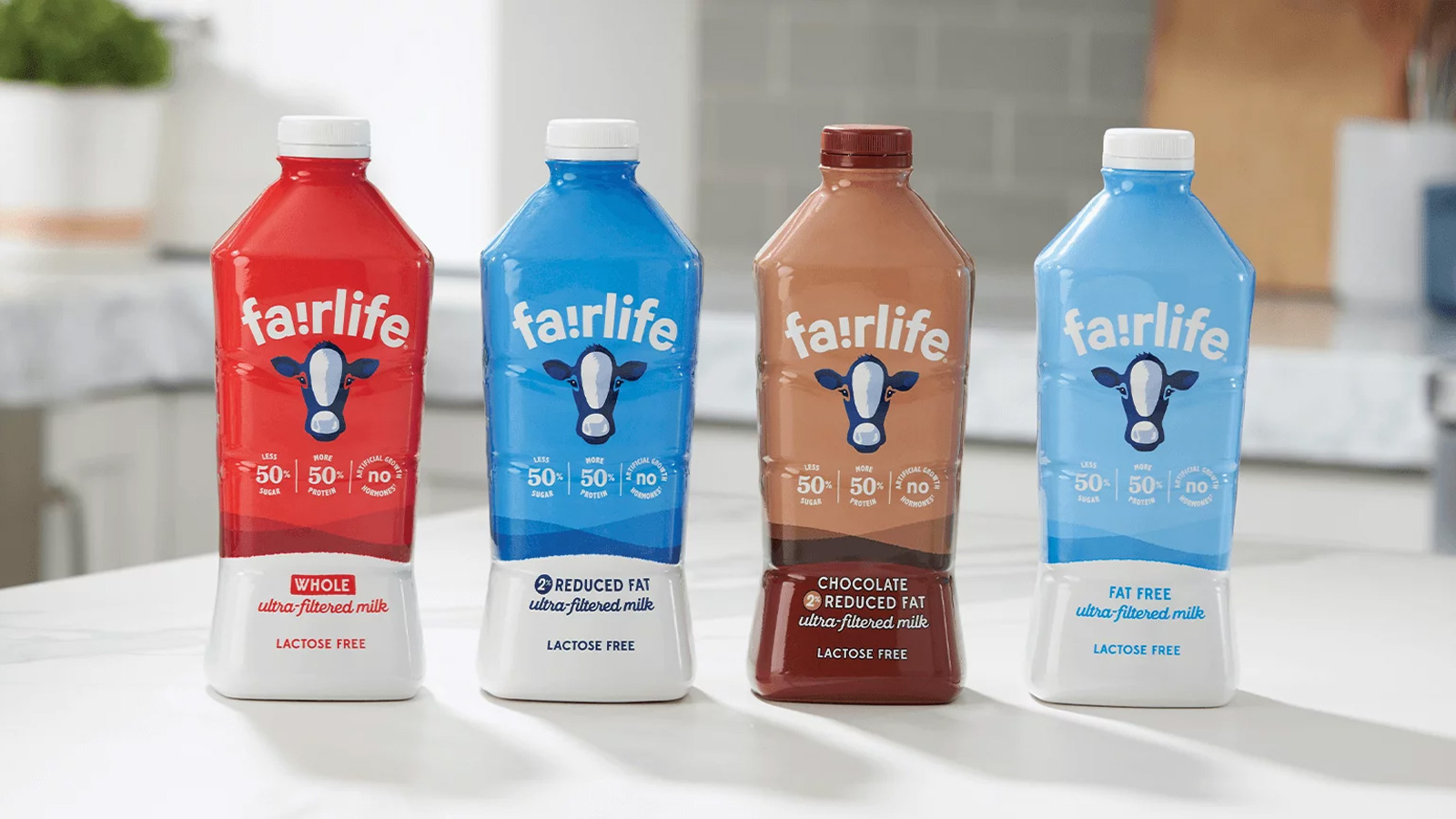
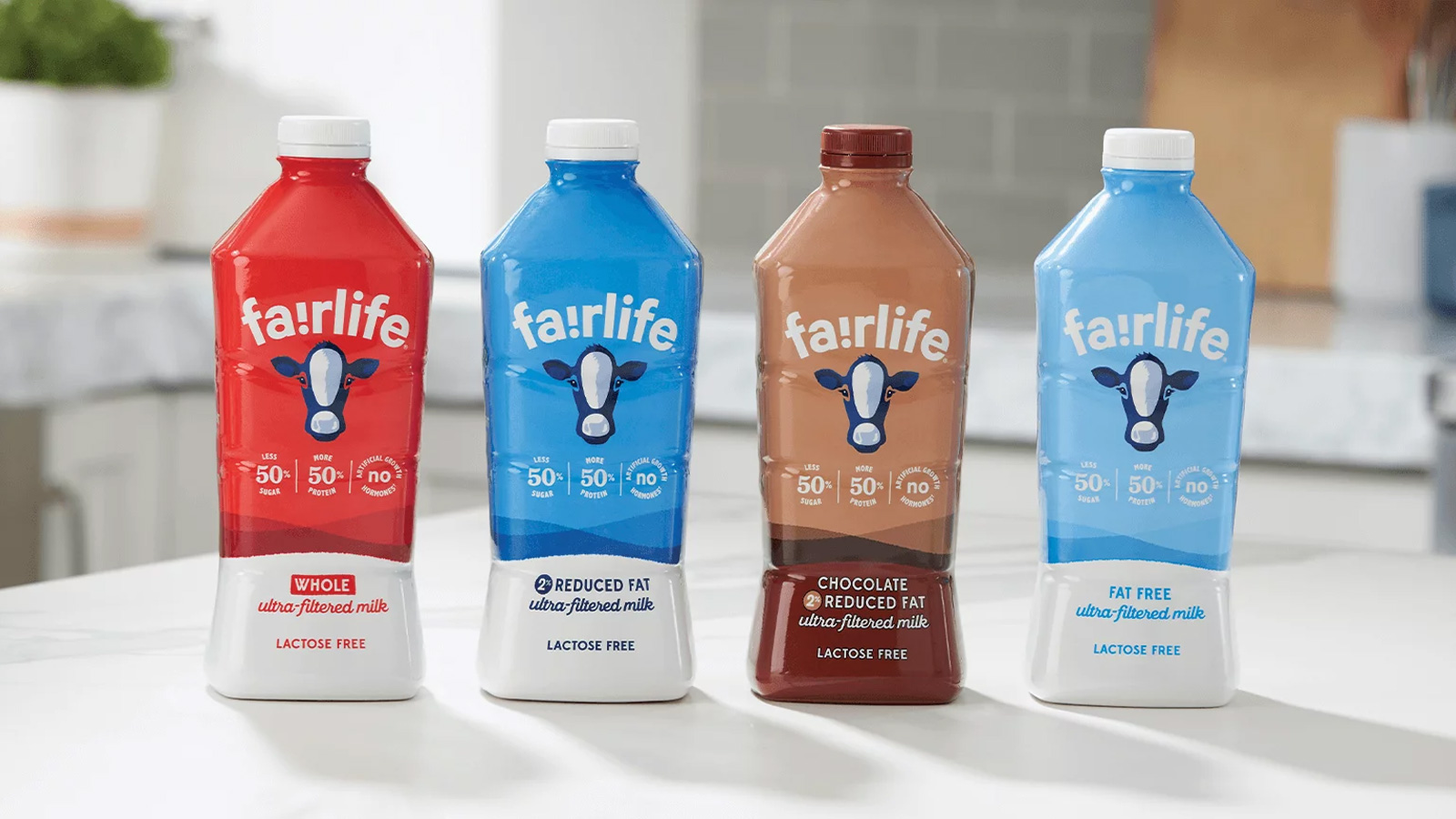
The Coca-Cola Company disclosed today that a ransomware attack impacting its Fairlife dairy subsidiary has disrupted operations, temporarily suspending production of Fairlife products across the United States.
In a Form 8-K filing with the U.S. Securities and Exchange Commission (SEC), Coca-Cola said Fairlife detected unauthorized access to some of its systems, including its production-related systems, in connection with a ransomware attack.
“After detecting the issue, the Company promptly activated its incident response and business continuity protocols,” Coca-Cola said in the filing.

“The Company’s investigation and assessment of the impact of the incident is ongoing, with the assistance of outside advisors and cybersecurity experts. The Company has also notified law enforcement.”
The company said product quality and safety have not been affected by the ransomware attack.
However, it confirmed that production at Fairlife’s U.S. facilities has been temporarily suspended while the company responds to the incident and restores impacted systems.
Canadian production operations are not currently affected.
Coca-Cola says it is working to restore affected systems and resume operations, but the full impact of the incident is being investigated.
Due to this, it has not yet been determined whether the cyberattack is reasonably likely to materially affect the Company
If you have any information regarding this incident or other undisclosed attacks, you can contact us confidentially via Signal at 646-961-3731 or at tips@bleepingcomputer.com.
Fairlife is one of Coca-Cola’s dairy brands and produces ultra-filtered milk products, protein shakes, and nutrition drinks sold in the United States.
The company’s products include Ultra-Filtered Milk, Core Power Protein Shakes, and Nutrition Plan.
At this time, Coca-Cola has not disclosed whether any data was stolen during the attack, whether the company is being extorted, or which ransomware operation is responsible.
No ransomware gang has claimed responsibility for the attack at this time. If data was stolen during the intrusion, the attackers will likely attempt to extort the company later by threatening to publish it unless a ransom is paid.
When BleepingComputer contacted Coca-Cola to ask whether the attackers stole data, whether the company had received an extortion demand, and which ransomware gang was behind the attack, a spokesperson said the company had nothing additional to share beyond its public statement.

Security teams log 54% of successful attacks and alert on just 14%. The rest move through your environment unseen.
The Picus whitepaper shows how breach and attack simulation tests your SIEM and EDR rules so threats stop slipping by detection.

Looking for a different day?
A new Quordle puzzle appears at midnight each day for your time zone – which means that some people are always playing ‘today’s game’ while others are playing ‘yesterday’s’. If you’re looking for Sunday’s puzzle instead then click here: Quordle hints and answers for Sunday, July 19 (game #1637).
Quordle was one of the original Wordle alternatives and is still going strong now more than 1,500 games later. It offers a genuine challenge, though, so read on if you need some Quordle hints today — or scroll down further for the answers.
Enjoy playing word games? You can also check out my NYT Connections today and NYT Strands today pages for hints and answers for those puzzles, while Marc’s Wordle today column covers the original viral word game.
SPOILER WARNING: Information about Quordle today is below, so don’t read on if you don’t want to know the answers.
• The number of different vowels in Quordle today is 3*.
* Note that by vowel we mean the five standard vowels (A, E, I, O, U), not Y (which is sometimes counted as a vowel too).
• The number of Quordle answers containing a repeated letter today is 1.
• No. None of Q, Z, X or J appear among today’s Quordle answers.
• The number of today’s Quordle answers starting with the same letter is 0.
If you just want to know the answers at this stage, simply scroll down. If you’re not ready yet then here’s one more clue to make things a lot easier:
• I
• S
• G
• R
Right, the answers are below, so DO NOT SCROLL ANY FURTHER IF YOU DON’T WANT TO SEE THEM.

The answers to today’s Quordle, game #1638, are…
Today was all about the letter I, which featured five times including a double appearance in ICING.
This was also the second day featuring an I-N-G combination — thankfully, I could only think of two words that also included a C, with the other — “cling” — being already ruled out thanks to my starter word “slate”.

The answers to today’s Quordle Daily Sequence, game #1638, are…

An anonymous reader shared this report from Tom’s Hardware:
The Zilog Z80 has just turned 50 years old. This iconic 8-bit processor first went on sale in July 1976 and stayed in production for 48 years until Zilog, now a Littelfuse subsidiary, stopped accepting orders in June 2024. However, there’s an open-source replacement closer than ever to shipping in the chip’s original 40-pin DIP package thanks to community-funded fabrication…
The chip powered the ZX Spectrum, TRS-80, MSX machines, Nintendo’s Game Boy, Sega’s Master System, the Pac-Man arcade cabinet, and Texas Instruments’ graphing calculators, then shipped in industrial controllers for decades after home computing moved on to more powerful successors. Zilog’s end-of-life notice, dated April 15, 2024, told customers its wafer foundry was discontinuing support for the Z84C00 family, and last-time-buy orders closed that June.
However, Renaldas Zioma’s FOSS Z80 project, launched shortly after the end-of-life notice, now has working silicon. The first version, fabbed on SkyWater’s 130nm node through Tiny Tapeout 7 on a die of just 0.064mm(2), has been confirmed as functional via the project’s GitHub repository. A QFN64 version with all 40 pins exposed followed on the Efabless CI2406 shuttle, two further runs then went through IHP’s 130nm process, and the current run targets the classic DIP40 form factor using chip-on-board assembly on GlobalFoundries’ 180nm GF180MCU node via Wafer.Space. The end goal here is to fab a drop-in replacement for machines like the ZX Spectrum and RC2014 kits…
Zilog is trimming the Z80’s official successor line as well. A product change notification from last October put the eZ80L92, along with several Z8F-series microcontrollers, on end-of-life, citing “little to no demand…” [T]he pipelined eZ80 architecture, introduced in 2001 and still inside TI’s current TI-84 Plus CE calculators, otherwise remains in Zilog’s catalog.
In 1999 Slashdot was calling Zilog’s updated eZ80 “one of the fastest 8-bit CPUs available today, executing code 4 times faster than a standard Z80 operating at the same clock speed.”
Slashdot headline from 2001: Zilog To File For Chapter 11.


It may seem intimidating at first to think of hanging anything on a concrete wall. Drywall is the most common type of wall in apartments and single-family homes alike and it’s very easy to hang a TV on drywall as long as you can find the studs. However, you can easily hang a TV on a concrete wall — it will just take more time. The effort is worth it, since hanging a TV frees up space, looks more modern and cleaner, and can even allow for more movement if you get a tilt or full-motion mount.
You’ll first need the right tools for the job. Along with the right size TV mount kit (which usually comes with a wall plate, screws, bolts, washers, spacers, and sometimes heavy-duty hardware like wall anchors and lag bolts) you’ll need a marker, electric hammer drill, masonry drill bit, hammer, level, and concrete screws. We also recommend safety gear, like goggles and gloves.
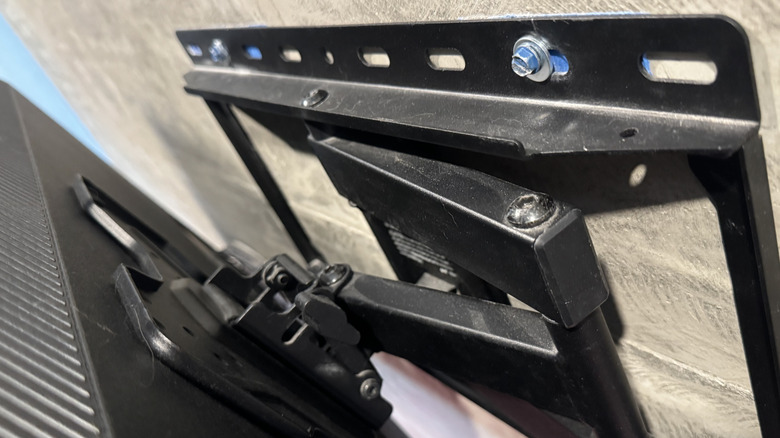
Once you have the tools, it’s time to start planning. Before you even start drilling, you’ll want to find the right spot on the cement. Measure the wall to find the center (or just find the most visually appealing spot to you). Then, hold the wall plate to the wall, remembering that the TV will be above and below the wall plate. Once you find a spot, use the level to make sure it’s straight and then start marking the center points of the mounting holes directly onto the concrete.
Put the masonry drill bit into your hammer drill and start drilling the marked center points. The holes should be deep enough to fit anchors. While you don’t have to worry about studs with a concrete wall, you may run into rebar, a steel bar that strengthens concrete. You will have to stop drilling and use a cutter to get through the metal — or find a new spot.
When the holes are complete, insert the wall anchors. Line up the mounting plate with the holes, then use an electric drill to secure the plate to the anchors. If everything looks centered and aligned, you can attach your TV to the mount. If you want, you can conceal the wires at that point. Finally, try wiggling the TV to see if it’s mounted securely.
A farmer in rural India takes a photo of a dying plant. She wants to research it on the internet but she doesn’t speak English. She shouldn’t have to.
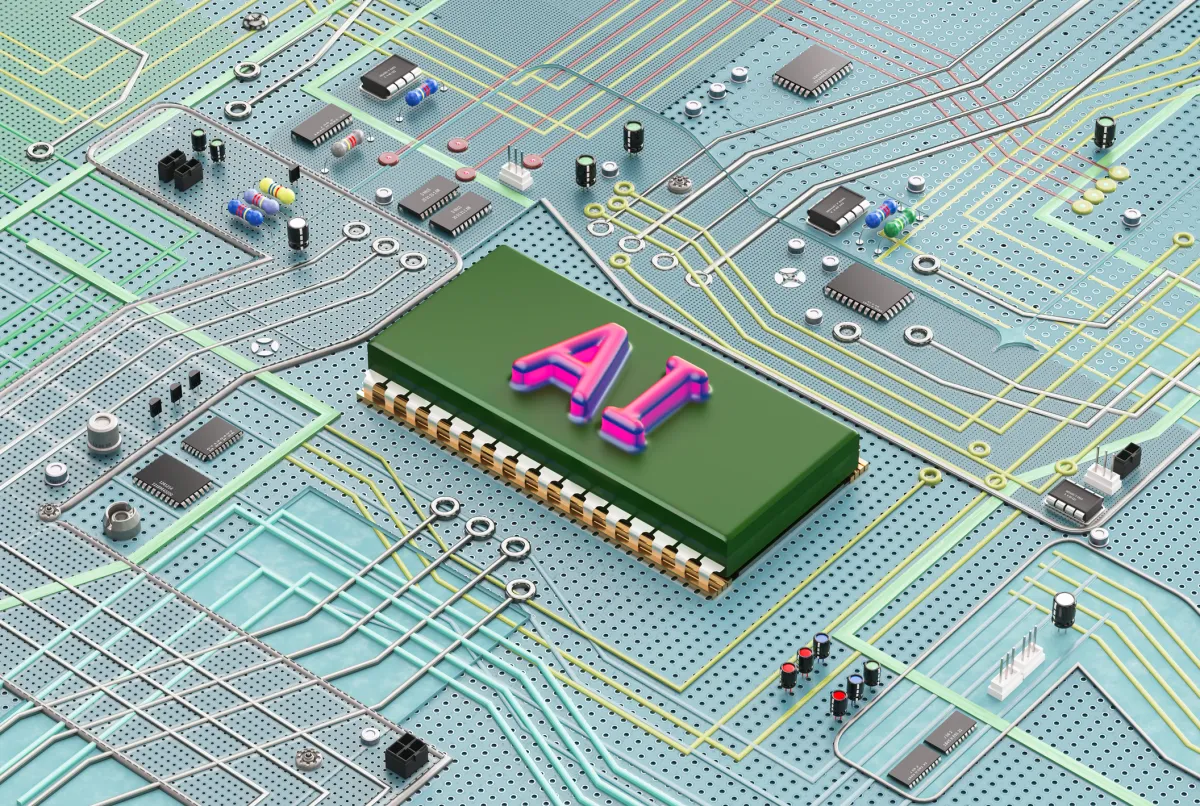
That’s the type of problem a nonprofit called Current AI is trying to solve by building open, public AI infrastructure. In February at the India AI Summit, it teamed up with Bhashini, the Indian government’s AI language division. The result became Suno Sutra, Hindi for “listening chronicles,” a pocket-sized, offline device that runs AI in 22 Indian languages, no internet required. “In India, there are hundreds of different languages and dialects, and right now AI is not representing them,” Current AI CEO Ayah Bdeir said in an interview with TechCrunch. The device is open-sourced, available for developer communities to build on.
The nonprofit, founded in February 2025 by Martin Tisne, is moving fast. Last month, it allocated $3.2 million in grants to projects across four organizations; most recently (last week) it launched an open-source AI chatbot at the AI for Good Summit in Geneva.
Bdeir, joined in January after leading Mozilla’s AI strategy. She previously founded littleBits, the STEM education company that reached millions of kids before selling to Sphero in 2019.
Current AI operates as a “public-private partnership” bringing together governments, companies, and philanthropies to fund public interest tech, she told TechCrunch. The French government seeded Current AI with $100 million, joined by the Ford Foundation, MacArthur Foundation, DeepMind, and Salesforce — bringing total committed funding to $400 million. “They’re not investors; they’re funders,” Bdeir said.
The problem it aims to solve is straightforward: every major AI system today, from OpenAI to Google to Anthropic, belongs to a private company. “If AI is truly a transformative technology, if it’s going to change every aspect of everyone’s life, there has to be a public alternative,” Bdeir said. “Like the World Wide Web, available to anyone, for free.”
Half the world’s spoken languages face extinction. “And with English driving the largest language models and AI systems, a bulk of the world’s languages and, consequently, cultures and communities are left behind,” Bdeir said.
When asked about Big Tech’s multilingual push, Bdeir drew a sharp distinction. “Big tech builds multilingual models to expand their market,” she said, “regardless of consent or context.” The consequences are concrete. “For Indigenous languages, missionary Bible translations become training data before communities have set any rules,” she said.
An AI’s ability to speak a language is only part of what it needs to learn. “Language is how knowledge, tradition, memory and identity get carried from one generation to the next. So when a technology can’t speak your language, it can’t hold your culture either,” she said.
Her vision for Current AI is an open system modeled on the early web, where improvements benefit everyone, no one gets locked out, and communities keep control of their own data.
Current’s first cohort grant round, announced last month, involved deploying $3.2 million to four organizations across Kenya, Lebanon, and the Brazilian Amazon.
The project in Masakhane, Kenya, involves building AI datasets across more than 50 African languages for health, farming, and education; Lebanon’s Institute for Worldmaking is digitizing Arab cultural history and contemporary practice into machine-readable databases that communities (not tech companies) control. Brazil’s Portal sem Porteiras is building offline AI tools with Indigenous Amazon communities, keeping data within the territory. And Kenya’s African Internet Rights Alliance is developing audit tools to hold AI systems accountable across the continent.
On the question of data ownership, Bdeir didn’t mince words. “There are different models and proposals for who owns data in various communities, but one thing is sure: it shouldn’t be a company in Silicon Valley trying to make a select few thousand people wealthier,” she told TechCrunch.
The nonprofit’s approach is to store models and data locally, bringing in community experts before anything is built, or writing consent protocols into the pipeline so communities can halt the process at any point.
None of Current AI’s grantees have fully solved it yet. But Bdeir sees that as the point. “Every one of them has built the question into their work,” she said, “rather than accepting the usual default, where complexity becomes the excuse to let a government or a tech company decide for everyone.”
As for how much progress can be made with a $3.2 million budget split across four organizations, Bdeir says, “Scale is not always the measure. That is the Big Tech paradigm,” she said. “This could look like an Indigenous elder in the Brazilian Amazon using a tool built in Kenya to be able to pass down ecological knowledge in their own language.”
Earlier this month in Geneva, Current launched Alpha Chat, an open-source chatbot assembled in seven weeks by a coalition of ten organizations, including Hugging Face, Mozilla, and MIT Media Lab. Each contributor brought a piece of the stack, including a language model, safety tooling, and computing power.
Current AI also struck a deal with Sakana AI, a Tokyo-based startup known for its work on what it calls Sovereign AI. The two organizations plan to build a shared open-source AI stack, one designed to support the Japanese language and culture, but also communities across the Global South that dominant AI systems have largely ignored.
When you purchase through links in our articles, we may earn a small commission. This doesn’t affect our editorial independence.

Apple and the US Justice Department are reportedly in early discussions over the potential for an early settlement of a 2024 iPhone antitrust suit brought about by the Biden administration.
While discussions are reportedly underway, it’s unclear whether an agreement will be reached. However, the Trump administration has been working to settle lawsuits brought by the previous administration for some time. It’s clear there is a willingness to do a deal from their side.
Apple is also keen. Bloomberg reports that Apple has already made multiple offers to the Justice Department in 2026 alone. The company previously lost a bid to dismiss the antitrust lawsuit in 2025.
The original lawsuit sought to force Apple to open the iPhone up to new apps and services in a similar way to the European Union’s Digital Markets Act, or DMA. Since its filing, Apple has opened the iPhone up in ways that may appease lawmakers.
Apple was accused of preventing so-called “super apps” from being used on iPhones. These apps have smaller apps or services within them.
Similarly, the DOJ argued that Apple degraded the instant messaging experience of iPhone owners by forcing them to use iMessage. Another point the DOJ raised revolved around the way Apple doesn’t allow the Apple Watch to work with non-Apple devices.
Apple has already addressed some of the points raised by the filing, but not all. There are super apps in the App Store today, for example, and RCS support is now available in the Messages app.
These points may help Apple and the DOJ strike a deal while potentially allowing the DOJ to save face at the same time.
But that’s just part of the story. As ever, there’s a lot more going on here, including some points Apple has refused to address. The iPhone remains much more closed off in the United States than it is in other parts of the world as a result.
After years of speculation and rumors, an official announcement from the Department of Justice on March 21, 2024 confirmed that it was suing Apple on antitrust grounds. The United States versus Apple lawsuit addresses multiple issues, spanning nearly every aspect of how Apple runs its business.
The Department of Justice says that Apple has violated Section Two of the Sherman Antitrust Act, in five ways.
In a press conference about the event, then-US Attorney General Merrick Garland complained about 30% fees on the App Store, degraded experience for third-party accessories, and leaned heavily on Messages as part of the suit. At the time, it wasn’t clear that the DOJ understood that RCS was coming to Messages, comprehended the limitations of the SMS standard that Messages utilizes to connect with devices that are not iPhones, or knew that the fee structure on the App Store was not a full 30% across the board — and is free for small developers.
According to Apple, the DOJ has brought an antitrust case as a Section 2 Sherman Act claim, and that this can only “move past the pleadings” if it is shown that three specific allegations are valid. The DOJ, says Apple, has to show that the company has:
A year later, Apple responded to the suit, addressing every paragraph. Many of the paragraphs are what Apple calls legal conclusions that don’t need a response. All allegations made against Apple were denied.
The point Apple repeatedly made is that its platform and ecosystem of apps and hardware are designed to ensure the perfect balance between consumer needs, privacy, and security. Apple says the lawsuit “seeks to attack a random collection of Apple’s design choices, degrade the privacy and security benefits of iPhone that customers value, and eliminate the competitive differentiation and consumer choice that currently exist in the marketplace.”
Apple’s nine main defenses also take a strong stance. The filing on July 29. 2025 argues that Apple has legitimate business justifications, protected intellectual property rights, the courts have a lack of standing, no proof of injury, find the arguments moot, that the plaintiffs have no entitlement to relief, that there’s no harm to competition or consumers, and cites the doctrine of laches (the claim was made with unreasonable delay).
The original filing by the DOJ suggested Apple prevented “super apps” from forming, didn’t allow game streaming services, didn’t allow cross-platform messaging apps, purposefully reduced competing smartwatch functionality, and limited digital wallets.

Game streaming is already possible on iPhone and iPad
The “super app” argument has been heard a few times before. It essentially boils down to Apple not allowing apps to become their own kind of operating system with internal app stores, banking, chat features, and more baked into one app.
A separate antitrust lawsuit was filed by a company named Proton over super apps. It suggests that Apple allowing WeChat to exist in China should mean they can exist elsewhere too.
There have been complaints from third-party smartwatch makers about integrations. Pebble returned and is compatible with iPhone, but the maker has complained about how it can’t compete with the options offered by Apple Watch.
The DOJ could seek to force Apple to offer more options and APIs. There’s no clear way to do this without Apple having to invent new systems from scratch since it won’t be offering its apps on third-party stores.
Apple’s NFC reader has new functionality that lets third-party apps take advantage. For example, Square can now accept tap-to-pay from cards and phones when interfacing directly with the iPhone.
However, this likely won’t be enough for the DOJ antitrust lawsuit. It will likely seek to have Apple allow users to select default payment apps instead of locking it to Apple Pay, like in the EU.
It’s going to be a long and brutal case that may take years to shake out, assuming the negotiations don’t go anywhere. Apple continues to push back hard against opening up its platforms to third parties and potential privacy and security violations, so expect things to go as roughly as they have with the EU Digital Markets Act.

The Washington Post describes a mid-tier executive at Meta as one of Silicon Valley’s “winners” whose financial security suddenly “evaporated” as their workforce “pushed headlong into AI and heavy job cuts,” creating a transformed job market. “Her ex-husband, a designer at Meta who was laid off in 2020, eventually gave up looking for jobs in his profession. He now lifts boxes at a warehouse.”
Layoffs.fyi, which tracks announced job cuts, counts more than 800,000 tech workers laid off since 2022, including large staff reductions in recent months at Meta, Microsoft, Oracle and Amazon… “There’s this whole tranche of people who’ve been quite used to being among the most upwardly mobile in society who are all of a sudden saying, ‘Now I’m the guy on the streetâs’” said Oliver Raskin, who founded Silicon Valley market research consultancy Signalcraft Insights and has surveyed attitudes in the tech labor force… “The rise of AI, especially, is bound to change the workplace radically,” [said Georgetown University historian Joseph McCartin]. “But the way it’s going to happen is similar to how technology transformed the auto industry.” Ruth Milkman, a labor sociologist at the City University of New York, said that technology workers are getting a dose of what workers in other industries have long complained about: jobs that feel unsteady or rob them of autonomy. “Low-wage workers are used to it,” she said…
Many layoffs at technology companies are probably a hangover effect from over-hiring in prior years, experts say. And they don’t account for a spotty recent increase in hiring in the information industry, which includes employment of software developers and jobs in media and entertainment. Digging deeper, though, some economists say there are signs that Silicon Valley and other technology-reliant parts of the American economy have reached a turning point where they are growing without needing as many people. The notion was encapsulated in a recent talk that ricocheted through group chats across the tech industry: In it, a partner at the start-up incubator Y Combinator heralded a new generation of AI-first companies that will only need human labor for “novel situations,” “ethical considerations” and “high-stakes moments.”
Gad Levanon, chief economist at the labor research nonprofit Burning Glass Institute, said that the number of hours worked in the information sector has dipped since 2022, while the sector’s economic output has increased by about 8 percent a year — more than three times the overall growth rate of the U.S. economy. He says the data reveals a sea change in industries, including technology and finance, toward doing more work with the same or fewer people — one that is spreading to other professional classes. “That’s the new reality for white-collar and tech-exposed work: output up, headcount flat or down,” Levanon said…
Raskin, who has worked in the tech world since the late ’90s, said that even though the current moment feels unsettling to many, he’s hopeful that it’s an early chapter in an evolving story. “It’s happened many times before,” he said, “that something implodes and all these people lose jobs, but then that talent gets cycled into whatever the next thing is — into a new wave of prosperity.”
In the article tech entrepreneur Anil Dash quips that Silicon Valley techies are “are guinea pigs for what tech dudes want to do to everyone.”

It was all Chris Martin’s idea.
During the 2022 World Cup in Qatar, the Coldplay frontman called Hugh Evans, the CEO of Global Citizen, for whom he curates the Global Citizen Festival, with something new to pitch. “Wouldn’t it be incredible,” Evans recalls Martin saying, “if we could do the first-ever halftime show for the World Cup?” Evans agreed, and connected with FIFA president Gianni Infantino at the organization’s headquarters in Switzerland to sell him on Martin’s plan. He didn’t need to.
Infantino had already had a similar idea—and was a Coldplay fan. “So he actually had already independently decided that he wanted to work with Coldplay and that he wanted to achieve this dream,” Evans says.
The result of those conversations, set to take the pitch during Sunday’s World Cup final between Spain and Argentina at New York New Jersey Stadium, is a massive but just 11-minute-long show featuring Justin Bieber, Madonna, BTS, and Shakira. They’ll be joined by Coldplay and a chorus from Staten Island’s PS22 school, and watched by millions of people in homes, bars, and street corners around the world.
The show is also part of an effort to raise $100 million for Global Citizen’s youth education efforts worldwide. FIFA is donating one dollar from each ticket sold during the tournament to the fund, and Shakira is donating royalties from her World Cup anthem with Burna Boy—”Dai Dai”—to the effort as well.
Not that all World Cup fans are necessarily excited to see the show. Soccer fans have been skeptical of the final having a halftime show for months. The World Cup has never done such a thing, the argument goes, and doesn’t need one now. Given that halftime shows are practically synonymous with the Super Bowl, some fans think having a halftime show is part of an effort to “Americanize” the World Cup, or make it more appealing to viewers in countries where soccer is less popular. Others have, for example, chafed at things like “hydration breaks” which are seen as just another way to get eyeballs on ads.
“The World Cup has traditionally centered its musical identity on a single iconic anthem and an opening ceremony rooted in the host nation,” says Tiffany Naiman, director of the Berry Gordy Music Industry Center at UCLA. “So when FIFA unveils an 11-minute halftime spectacle, featuring Madonna and Justin Bieber, and Tom Cruise attached to the closing ceremony, it reads to some as importing an American made-for-TV sensibility.”
Oh yeah, Tom Cruise. Much like he did with the closing ceremony for the 2024 Olympics in Paris, Cruise is scheduled to appear during the World Cup’s closing ceremony ahead of the final match.
Naiman stresses that while some may fear the inclusion of a halftime ceremony Americanizes the event, it’s being done with a global roster of artists. Bieber is Canadian, after all, and his home country is a host to the Cup. The majority of the acts aren’t from the US. “Ultimately, what’s being globalized isn’t American culture so much as the production model,” she says. “FIFA is borrowing the language of the Super Bowl while filling it with artists who reflect the geography of its audience.”
This focus on worldwide appeal was important for Evans, and it has already attracted at least one hugely influential international fan base: the BTS Army. Members of the Army have been in his mentions in recent weeks, dropping their signature purple hearts. They’ve also helped Global Citizen get closer to its fundraising goal: They raised some $40,000 for the Global Citizen fund in the first week “without even being asked,” Evans says.
Interest in the halftime show is also showing up on Kalshi and Polymarket, which have both seen tens of billions of dollars in World Cup prediction market trading, according to a CNBC report. One Kalshi market had Shakira’s “Hips Don’t Lie” marked as a potential highlight of the show. A Polymarket market opted for “Dai Dai.” The latter seems more likely as it is the official song of the World Cup, and features Burna Boy, who is also slated to perform.


The enterprise technology ecosystem is caught in a costly cycle. Over the past two years, millions of dollars have been funneled into generative AI pilots, yet many of these initiatives stall out before ever reaching a live production environment.
When a project fails, the immediate instinct of technical leadership is often to blame the model: The context window was too restrictive, the latency was too high, or the reasoning capabilities simply were not there.
But as data engineers building the scaffolding for these systems, we often see a different reality: The model receives the blame, but the pipeline usually contains the root cause. Production gen AI rarely fails because of model limitations alone. More often, it fails because the enterprise data foundation underneath it is fundamentally unready.
This is what I call the ‘Cleanup Trap’: The false belief that an organization can pipe fragmented, inconsistent, and ungoverned legacy data into a large language model (LLM) orchestrator and simply “clean it up” or patch it at the retrieval layer.
In a standard retrieval-augmented generation (RAG) architecture, the retrieval layer is tasked with pulling relevant business context to ground the model’s responses. Because modern frameworks make it simple to stand up a vector database and a basic embedding pipeline, leadership often assumes that the data engineering problem is solved.
It is not.
When an embedding model receives raw, unvalidated data directly from operational silos, the resulting vector space inherits the structural noise, duplicate records, and conflicting states present in the source systems.
If the core data pipeline suffers from silent degradation — schema drift, missing fields, delayed change-data-capture (CDC) synchronization — that degradation cascades directly into the vector store. An AI model cannot accurately synthesize customer intelligence if the data pipeline behind it is serving stale, contradictory profiles across disparate storage layers.
No amount of prompt engineering, semantic reranking, or vector hyperparameter tuning can compensate for a broken ingestion pipeline. If the foundation is compromised, the downstream application will hallucinate, expose unauthorized context, or fail to deliver deterministic value.
To break out of the ‘Cleanup Trap,’ enterprise data teams must stop treating data quality as a post-processing step. They need to treat data readiness for AI with the same rigor they bring to traditional transaction processing.
This requires a deliberate architectural shift toward zero-trust data ingestion, structured validation frameworks, and automated anomaly detection before data ever reaches an AI orchestration layer.
Data quality checks cannot exist as a nightly batch afterthought. If an enterprise AI application relies on real-time data to assist users, validation must happen inline.
Teams should implement explicit schema validation checks at the earliest ingestion point, such as the streaming ingress layer or the bronze landing layer of a medallion architecture. If an upstream operational database mutates a schema without warning, the pipeline should quarantine anomalous payloads rather than allowing corrupted metadata to pollute downstream AI contexts.
Static row-count validation rules are insufficient for AI readiness. True data health requires a multi-tiered approach.
This means pairing structural verification — null checks, type conformance, and schema validation — with statistical profiling to monitor for data drift. Tracking metric deviations across feature distributions helps ensure that historical context remains stable over time.
If a pipeline suddenly processes an unexpected spike in empty string variables or structurally deviant fields, automated alerts should trigger an immediate pause before vector database updates continue.
An LLM should never be the arbiter of data access control. Trying to enforce row-level security or personal data filtering through system prompts is a compliance risk.
Security must be managed within the data infrastructure tier. Enterprise data foundations should enforce strict access controls, tokenization of sensitive identifiers, and rigorous lineage tracing before information is indexed into vector stores or passed into an agent’s context window.
For technology leaders mapping their infrastructure roadmaps, AI readiness requires evaluating data pipelines against a strict operational checklist.
Can you trace a flawed AI response back to the exact pipeline execution, source record, and transformation step that produced it?
Does your data lake architecture have a programmatic mechanism to segment and quarantine corrupted or non-compliant data before it reaches production feature stores?
Are your operational systems and AI-facing vector databases tightly synchronized, or are your agents making automated decisions based on outdated snapshots?
These questions matter because production AI is not just a model deployment problem. It is a data reliability problem.
The honeymoon phase of gen AI experimentation is ending. Enterprise leaders are demanding measurable, predictable, and secure business outcomes from their AI investments.
If an organization wants to transition from isolated, impressive-looking demos to resilient, production-grade AI systems, it must redirect its focus. Stop looking exclusively at the model tier.
The real competitive differentiator is not only the LLM an organization chooses. It is the engineering discipline, data governance, and pipeline resilience of the infrastructure built to feed it.
In the production era of AI, data engineering is no longer a backend function. It is the control plane for enterprise intelligence.
Naveen Ayalla is a senior data engineer.
Welcome to the VentureBeat community!
Our guest posting program is where technical experts share insights and provide neutral, non-vested deep dives on AI, data infrastructure, cybersecurity and other cutting-edge technologies shaping the future of enterprise.
Read more from our guest post program — and check out our guidelines if you’re interested in contributing an article of your own!

Apple recently filed a trade secrets lawsuit against OpenAI, accusing the AI company of a pattern of misconduct aimed at getting current and former Apple employees to share confidential information. (In response, OpenAI said it is “not aware of any evidence that this complaint has merit.”)
On the latest episode of TechCrunch’s Equity podcast, Kirsten Korosec, Sean O’Kane, and I debated whether this lawsuit will cast a shadow over OpenAI’s much-discussed plans to get into the hardware business (starting with a mobile smart speaker) and go public.
“Even setting aside whether or not the court grants any kind of injunctive relief or any kind of restraining order over what OpenAI is doing, it just naturally can lead to that sort of situation where it’s going to cause some delays in what OpenAI is working on,” Sean suggested. “Which I’m sure was probably part of the reasoning behind Apple doing this. They don’t do this stuff willy nilly.”
With all those plans on the line, will OpenAI try to settle this as quickly as possible, or did it learn from its recent courtroom victory against Elon Musk that it can endure the cost and embarrassment of a trial? Kirsten, at least, predicts the latter.
Keep reading for a preview of our conversation, edited for length and clarity.
Kirsten Korosec: Sean, how do you feel about Sam Altman listening to you with a little device maybe in your pocket?
Sean O’Kane: I’m good. Maybe that’s predictable, but I’m good. No thanks.
We’ll get into it, I’m sure, but this is allegedly the first product that OpenAI has been working on in its hardware division with Jony Ive and company. They’ve been really coy ever since that weird video they put out last year of them sitting at that coffee shop or bar in San Francisco and sort of talking very vaguely about hardware and legacy devices, meaning laptops and phones. And so if this is the direction they’re headed in, all power to people who want to have somebody like that always listening to them. This is not going to be for me.
Anthony Ha: Part of what we have to remember about those kinds of devices is also that, depending on how mobile it is, it’s not just listening to you, it’s listening to the people around you. I might be fine with it — I’m not fine with it, but let’s say I was — but then if we met up in-person at Disrupt, then suddenly it might be listening to all of us.
There’s all kinds of social norms that are going to have to be renegotiated if these things become widespread. I think we should make fun of and criticize people who record other people without consent.
Kirsten: Well, I bring up the device that has been speculated about for a really long time, and we’ll see what it really ends up being once it’s officially introduced, but it’s important in the context of this lawsuit that Apple filed last Friday.
It was the biggest news of the week, certainly, and this is a trade secret lawsuit. It has some pretty wild allegations and we should very much emphasize these are allegations that have been filed in a complaint by Apple. But what it is accusing OpenAI of is a pattern of misconduct at the highest levels, specifically directed towards OpenAI employees who used to work at Apple. And in fact they’ve named the chief hardware officer Tang Tan in this lawsuit.
This is all important because Apple is accusing OpenAI of essentially stealing their trade secrets, but in the context of that, this could be then used for a competing hardware product. I’m wondering if maybe we don’t get into whether this lawsuit has merits, because we haven’t gone through full discovery, but what are your initial impressions of the lawsuit aside from the fact that wow, this is going to be entertaining?
Sean: Two things. One, this is a pretty big risk potentially to whatever it is OpenAI is working on. Even setting aside whether or not the court grants any kind of injunctive relief or any kind of restraining order over what OpenAI is doing, it just naturally can lead to that sort of situation where it’s going to cause some delays in what OpenAI is working on, which I’m sure was probably part of the reasoning behind Apple doing this. They don’t do this stuff willy nilly.
The other is that we think that OpenAI is — we know that they’ve filed confidentially for an IPO. We think it might happen as early as the end of this year, or early next year, if you believe Sam Altman’s cautious language around the IPO. And this just raises a whole bunch of questions around that because, on the one hand, we think their business right now is probably overwhelmingly the software; they’re not really factoring in any hardware business into that picture at the moment.
They’re about to go to the markets and they’re going to be pitching bankers and investors on where they think their addressable market should be, and if they have a big amount of that pegged to a potential hardware division and hardware products, this could be a huge risk to that and changes a lot of the calculus of sort of how the IPO gets priced. So that’s where my head’s at.
Anthony: One [allegation] that I assume that Apple must have pretty solid like numbers on is, they said more than 400 Apple employees now work at OpenAI. Granted, both of them are very large companies with many thousands or tens of thousands of employees. So as a percentage, it’s not necessarily huge. But that seems like a lot of people and a pretty serious talent drain.
And the other thing I’m wondering is related to Sean’s point. With the context of the potential IPO, how much damage did OpenAI ultimately take from a marketing and brand perspective from the trial it already went through? That it seemed to basically win, but there was a lot of not-terrible-but-kind-of-embarrassing dirty laundry that came out in the testimony. To what extent are they just like, “We do not want to go through that again”? Or did they take the lesson of, “Hey, we went through it and we survived and we’ll be okay if we have to do another trial with Apple”?
Kirsten: I fully predict the latter, by the way.
When you purchase through links in our articles, we may earn a small commission. This doesn’t affect our editorial independence.
Looking for a different day?
A new NYT Connections puzzle appears at midnight each day for your time zone – which means that some people are always playing ‘today’s game’ while others are playing ‘yesterday’s’. If you’re looking for Sunday’s puzzle instead then click here: NYT Connections hints and answers for Sunday, July 19 (game #1134).
Good morning! Let’s play Connections, the NYT’s clever word game that challenges you to group answers in various categories. It can be tough, so read on if you need Connections hints.
What should you do once you’ve finished? Why, play some more word games of course. I’ve also got daily Strands hints and answers and Quordle hints and answers articles if you need help for those too, while Marc’s Wordle today page covers the original viral word game.
SPOILER WARNING: Information about NYT Connections today is below, so don’t read on if you don’t want to know the answers.

Today’s NYT Connections words are…
What are some clues for today’s NYT Connections groups?
Need more clues?
We’re firmly in spoiler territory now, but read on if you want to know what the four theme answers are for today’s NYT Connections puzzles…
What are the answers for today’s NYT Connections groups?
Right, the answers are below, so DO NOT SCROLL ANY FURTHER IF YOU DON’T WANT TO SEE THEM.

The answers to today’s Connections, game #1135, are…
I hope I wasn’t the only person to struggle over this game. I had a stinker.
My first mistake was to connect the four mushroom varieties of OYSTER, BUTTON, PORTOBELLO, and TRUMPET. It is annoying when you find a genuine foursome but it is not part of the game.
However, my next mistake was of my own doing: I connected BUBBLE TEA, SAKES, ALEXA and OYSTER, thinking there was some vague Asian connection.
After two very wrong attempts I studied the tiles more closely and got the ANNOUNCE foursome and even the old-fashioned drinks that made up the purple group.
NYT Connections is one of several increasingly popular word games made by the New York Times. It challenges you to find groups of four items that share something in common, and each group has a different difficulty level: green is easy, yellow a little harder, blue often quite tough and purple usually very difficult.
On the plus side, you don’t technically need to solve the final one, as you’ll be able to answer that one by a process of elimination. What’s more, you can make up to four mistakes, which gives you a little bit of breathing room.
It’s a little more involved than something like Wordle, however, and there are plenty of opportunities for the game to trip you up with tricks. For instance, watch out for homophones and other word games that could disguise the answers.
It’s playable for free via the NYT Games site on desktop or mobile.



London Mayor Sadiq Khan handed a peerage by Keir Starmer alongside 15 other Labour figures… just days before the PM leaves No10


Weekend Open Thread – Corporette.com


The House | The City of London can help the new chancellor deliver growth in every postcode


Young campaigners urge incoming PM to act on outdoor junk food ads


CFTC blocks Kalshi from unwinding Michigan trades after court order


Nvidia Stock Slips After Big Tuesday Rally as Huang Confirms Vera Rubin Chip Is Now in Production Today

Two July Windows Left: The CLARITY Act’s Senate Fight and What Failure Means


Ripple Payments Joins MiCA With 14 Firms, Does It Mean Anything For XRP?


Democrats look to World Cup watch parties to register thousands of voters


Ripple wins EU-wide access as ESMA adds it to MiCA register

Disney’s Most Ambitious Failed Star Wars Attraction Is Coming to SDCC


Palantir Shares Rise After Expanded Nvidia Partnership and Fresh Analyst Upgrades Ahead of Earnings Day


Injective Submits SEC Transfer-Agent Registration to Onchain Ownership Records


Get Your ESP32 Sunny Side Up With This Solar Dev Board


XRP BOMBSHELL… XRP OMBOARDED FOR TRANSACTIONS!!!


Registration is now open for March for Men with Kev 2026


Dark Secrets Emerge When Jailbreaking LLMs

New Cornerback Enters Vikings Trade Rumor Mill


Money | Class 12 Economics | CBSE Board Exam 2026-27

Banco Bilbao Vizcaya Argentaria, S.A. (BBVA) Discusses Global Macro Environment and Economic Outlook for Core Markets Transcript




You must be logged in to post a comment Login