

Crypto World
This Week’s Biggest Gainers and Losers Revealed as Bitcoin (BTC) Aims at $65K: Weekend Watch

Bitcoin continues with its gradual weekend climb and has neared $65,000 after bouncing from $63,700 yesterday.
Most larger-cap alts have remained still over the past 24 hours, which is why we will focus on their weekly moves, where ZEC, CRO, LTC, and ONDO stand out.
Can BTC Reclaim $65K?
The previous weekend was also quite sluggish but slightly positive for BTC, as it stood at around $64,000 for 48 hours straight despite the new attacks between the US and Iran. However, the market finally priced in the skyrocketing tension on Monday morning with a painful dip to $61,800.
The softer-than-expected CPI numbers for June announced on Tuesday, though, were well received by BTC as the asset flew by several grand to $65,600 on Wednesday. This became its highest price tag in about three weeks.
However, it couldn’t keep the momentum going and crashed toward $62,000 once again on Thursday and Friday. Nevertheless, the bulls intercepted the move and didn’t allow another leg down. Instead, BTC recovered some ground to $64,000 yesterday and climbed to almost $65,000 earlier today. It still remains below that level, which has been categorized as key for its short-term price performance.
Bitcoin’s market capitalization has risen to almost $1.3 trillion on CG, while its dominance over the altcoins has rocketed to over 57%.

Weekly Gainers and Losers
Ethereum jumped to almost $1,950 earlier this week, and even though it has dropped by nearly $100 since then, it’s still 4.2% up since last Sunday. ZEC is the biggest gainer from the larger caps, gaining 9% to $560. LTC, ONDO, and CRO have posted impressive increases as well, up to 8% in the case of Crypto.com’s native token.
In contrast, HYPE has plunged by more than 9%. Nevertheless, it has defended the $60 support and now sits inches above it. BCH, CC, TAO, and AAVE have marked significant losses since last Sunday as well.
The total crypto market cap, though, has increased by approximately $60 billion since this time a week ago and now sits above $2.270 trillion on CG.

The post This Week’s Biggest Gainers and Losers Revealed as Bitcoin (BTC) Aims at $65K: Weekend Watch appeared first on CryptoPotato.



South Korea has unveiled a roadmap to make the Korean won a freely convertible currency, pairing foreign exchange reforms with a legal framework for won-backed stablecoins and new digital payment infrastructure.
Summary
- South Korea has unveiled a roadmap supporting won backed stablecoins alongside foreign exchange reforms.
- The plan includes legal rules for stablecoins, CBDC pilots, and tokenized government bond projects.
- Authorities also plan to ease cross border capital rules and expand offshore won settlement infrastructure.
According to a July 19 report from local mediahouse Etnews, the roadmap was jointly announced by the Financial Services Commission, the Bank of Korea, the Financial Supervisory Service, and the Korea Securities Depository. The plan seeks to remove time and location barriers to trading the Korean won while improving the country’s cross-border capital flow system.
As part of the proposal, the government plans to establish legal rules for issuing and circulating won-denominated stablecoins under the upcoming Digital Asset Basic Act. The report said the legislation would provide the legal basis for bringing won-backed stablecoins into the domestic financial system while also supporting cross-border movement of funds.
The Digital Asset Basic Act is expected to introduce a unified legal framework covering cryptocurrencies and stablecoins. Under the proposal, won-backed stablecoins would become an officially recognized issuance category once the law takes effect.
Stablecoins, CBDCs and tokenized bonds move forward
Alongside the stablecoin framework, the Bank of Korea plans to expand pilot projects linking an institutional central bank digital currency (CBDC) with tokenized government bonds. The central bank will also participate in the Bank for International Settlements’ Project Agora, which is developing digital infrastructure for cross-border payments.
The latest roadmap builds on earlier positions taken by the Bank of Korea. Earlier this month, the central bank told lawmakers that bank-led consortiums should receive priority when issuing won-backed stablecoins, arguing that existing banking supervision offers stronger safeguards for financial stability and consumer protection. It also proposed creating a statutory policy body bringing together financial regulators and other government agencies to oversee the sector.
At the same time, the Bank of Korea continues expanding its deposit token program, which operates separately from stablecoins. Deposit tokens are blockchain-based representations of commercial bank deposits issued on top of the central bank’s wholesale CBDC infrastructure. The central bank has said future use cases will include government subsidies, public vouchers, electric vehicle charging payments, and other everyday payment services.
Foreign exchange rules to be eased
Beyond digital assets, the roadmap includes measures to modernize South Korea’s foreign exchange system. Following the launch of 24-hour foreign exchange trading earlier this month, the government plans to establish an offshore won settlement network within the Bank of Korea.
According to Etnews, overseas financial institutions that register as offshore won settlement entities would allow foreign users to hold, transfer, and settle won through offshore accounts without opening bank accounts in South Korea.
The government also plans to more than double reporting thresholds for foreign currency lending and capital transactions. Over the long term, authorities intend to replace the current system centered on prior approvals with a post-reporting framework, reducing administrative requirements for cross-border won transactions while aligning the financial system with the international use of digital assets, including won-backed stablecoins.
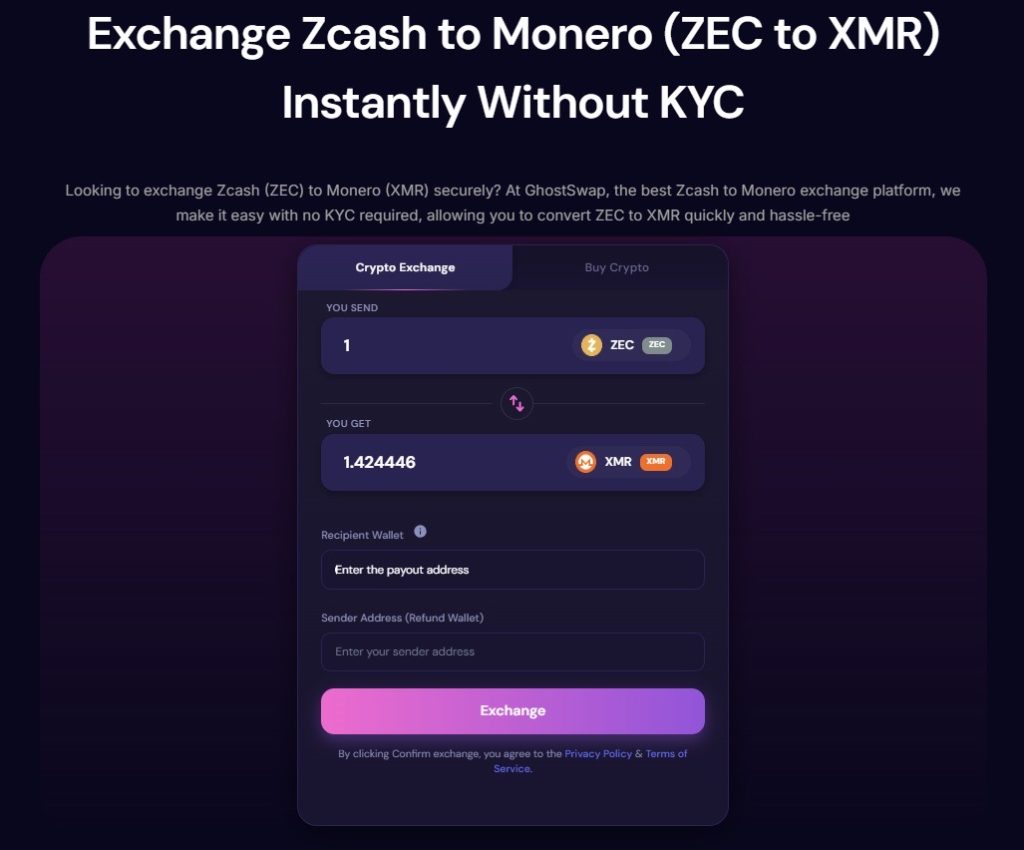
Zcash’s Orchard implementation has increased interest in how users move between different privacy-focused assets, including swaps between Zcash and Monero. For those not familiar with Orchard, this is Zcash’s third-generation shielded pool, which is built to replace older privacy systems with stronger efficiency and more modern cryptography.
It uses the Halo 2 proving system, Pallas-based keys, and unified addresses. All of these make private transactions and address handling simpler and more flexible than Sapling.
Orchard is created to hide sender, recipient, and amount for shielded ZEC transfers while keeping the protocol auditable at the network level.
Privacy coins are facing increased regulatory scrutiny and exchange delistings, so many crypto traders are rotating between assets like BTC to XMR, ETH to XMR, ZEC to XMR, or XMR to ZEC depending on exchange listings, wallet support, regulatory developments, privacy preferences, and ecosystem changes.
The ZEC to XMR pair is at the intersection of two very different privacy philosophies. And it can be done in just one step using GhostSwap.
Zcash vs. Monero: What’s the Difference?
Both Zcash and Monero are privacy-focused cryptos, yet they use fundamentally different approaches to protecting user privacy.
Zcash: Optional Privacy
Zcash offers privacy through zk-SNARKs, shielded addresses, and zero-knowledge proofs. The key characteristic is that privacy is optional; Zcash supports both transparent transactions and shielded transactions, and users choose which they use.
This flexibility has trade-offs. Researchers have repeatedly noted that anonymity depends partly on adoption of shielded transactions. Users can accidentally transact transparently, and privacy depends on usage patterns. Historical research has found shielded adoption lower than ideal for maximum anonymity.
However, Zcash also offers advantages: very advanced cryptography, relatively small transaction sizes, selective disclosure capabilities, and regulatory flexibility due to the transparent option.
Monero: Privacy by Default
Monero takes the opposite strategy. Privacy is not optional. Every transaction uses ring signatures, stealth addresses, and RingCT by default. There’s no “transparent mode”; every transaction is private automatically.
This mandatory privacy provides benefits: strong fungibility, no need to think about address types, shielding funds, or privacy settings. Monero supporters often argue that every XMR is effectively identical, whereas coins on transparent chains may carry transaction history.
However, Monero’s mandatory privacy comes with trade-offs: larger transaction sizes, more limited exchange support, and more regulatory scrutiny globally.
How to Swap ZEC to XMR Using GhostSwap
GhostSwap makes sure you can swap Zcash to Monero extremely easily. The platform supports both Zcash (ZEC) and Monero (XMR) as primary assets, and the ZEC to XMR page follows the same workflow as GhostSwap’s other pair pages.
Core user flow:
- Select ZEC as the asset being sent
- Select XMR as the asset being received
- Enter a Monero wallet address (the destination for your XMR)
- Optionally enter a refund address (recommended)
- Send ZEC to a temporary deposit address
- Receive XMR after confirmations
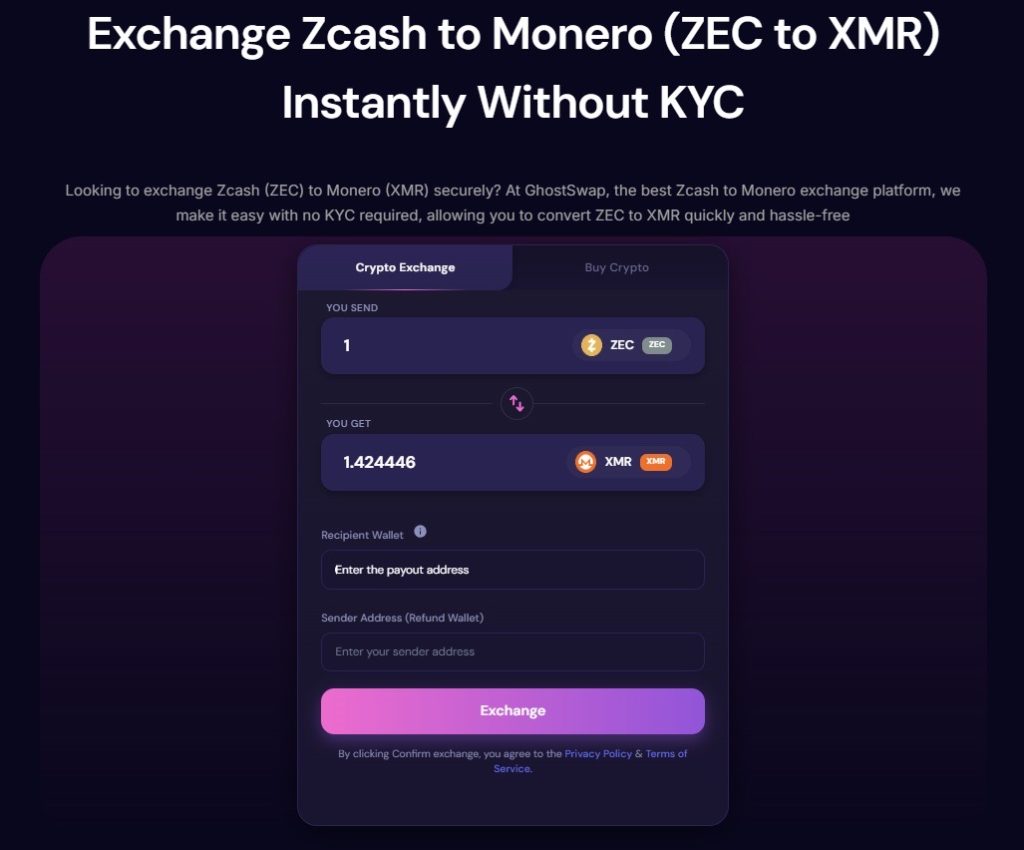
The platform markets this as:
- No account creation
- No email
- No KYC for standard swaps
- Non-custodial swap process
- Cross-chain conversion
- Typically completed in minutes depending on network conditions
The swap requires only an XMR destination address and a recommended refund address. No name, email, phone number, or identity documents are requested during the normal flow.
GhostSwap states most privacy-coin swaps finish within roughly 5–30 minutes overall as this depends on source-chain confirmations and congestion.
The user sends funds from their wallet, funds go to a temporary swap address, conversion occurs, and the output asset is sent to the user’s destination wallet.
GhostSwap’s Fees, Timing, and What to Expect
GhostSwap charges a flat 2% fee built into the quoted exchange rate. Users see this fee upfront as part of the exchange rate and the final receive amount. Standard blockchain network fees (Zcash and Monero transaction fees) are extra and come from the user’s wallet.
It’s important to understand that a ZEC to XMR swap is not instant. Completion depends on:
- Zcash confirmations (network conditions)
- Swap processing by GhostSwap’s engine
- Monero confirmations (the XMR network)
Once the Zcash network confirms the deposit, GhostSwap’s backend automatically executes the swap across its liquidity sources and sends the Monero directly to the provided destination address.
Is GhostSwap Legit
GhostSwap is a non-custodial swap platform that has processed over $750 million in swaps for approximately 1.5 million users. The company is registered as a Delaware LLC and operates as an anonymous crypto exchange prioritizing user privacy and simplicity.
Signs of legitimacy:
- Public website and extensive documentation
- Transparent swap process with upfront fees
- Published API with clear documentation
- Functional Telegram bot
- Operational history spanning years
- User-facing support channels
GhostSwap never takes long-term custody of user funds. Each swap uses a temporary deposit address, and funds are routed directly to the user’s destination wallet. No pooled account is ever held on GhostSwap, avoiding many hacking risks associated with centralized exchanges.
Even though GhostSwap advertises no account and no KYC for standard swaps, users should still read the terms because compliance screening may occur through underlying partners. The platform explicitly works with licensed crypto processing partners to handle AML/sanctions screening. If a swap is flagged (e.g., for high value or hitting a blacklist), GhostSwap reserves the right to block, reject, or refund it.
Important points:
- No-KYC ≠ No Compliance: GhostSwap advertises no account and no KYC for standard swaps. However, users should still read the terms because compliance screening may occur through underlying partners.
- Monero Doesn’t Erase History: A common misconception: swapping ZEC into XMR does not magically erase the history of the ZEC transaction. The ZEC side still exists on the Zcash blockchain. The Monero side simply enters a different privacy model after conversion.
- Network Confirmation Times Matter: A ZEC to XMR swap is not instant. Completion depends on Zcash confirmations, swap processing, and Monero confirmations.
The final conclusion
Swapping Zcash to Monero has become pretty relevant as the privacy-coin landscape evolves. Whether you prefer Zcash’s optional privacy model with its advanced cryptography and regulatory flexibility, or Monero’s mandatory privacy with strong fungibility and simplicity, GhostSwap provides a non-custodial, no-KYC bridge between the two ecosystems.
The platform’s support for both ZEC and XMR, combined with its public API, Telegram bot, and transparent 2% fee structure, makes it a practical option for users looking to rotate between privacy assets without creating exchange accounts or submitting to KYC processes.
Frequently Asked Question
Does GhostSwap require KYC to swap ZEC to XMR?
No. GhostSwap does not require identity documents, name, address, or phone number for standard swaps. Compliance checks are handled behind the scenes by partners and may occasionally flag transactions.
How long does a ZEC to XMR swap take on GhostSwap?
Most privacy-coin swaps complete within 5–30 minutes, depending on Zcash confirmation times, network congestion, and Monero confirmations.
What is the fee for swapping ZEC to XMR?
GhostSwap charges a flat 2% fee built into the quoted exchange rate. Users also pay standard blockchain network fees (Zcash and Monero transaction fees).
Is GhostSwap custodial or non-custodial?
Non-custodial. GhostSwap never takes long-term custody of user funds. Each swap uses a temporary deposit address, and funds are routed directly to the user’s destination wallet.
Does GhostSwap support Zcash and Monero?
Yes. GhostSwap supports both Zcash (ZEC) and Monero (XMR) as primary assets, with pairs like ZEC to XMR and XMR to ZEC available.
The post How to Swap Zcash to Monero With No KYC, in One Step appeared first on Cryptonews.


K3 forms the bedrock of why the listing looks different than it would have a month ago. The open-weight model outscored every rival – except Anthropic’s Claude Fable 5 and OpenAI’s GPT-5.6 – on certain parameters, and topped a widely watched coding benchmark outright, triggering a semiconductor selloff on Friday that dragged crypto down with it.
Moonshot is not moving alone, however. China’s Alibaba said Sunday its Qwen3.8 model is going open-weight, a 2.4 trillion-parameter system the company claims trails only Fable 5 among frontier models. A preview version, Qwen3.8-Max, is already live across Alibaba’s developer tools.
Open weights let anyone run a model without paying its maker, which pressures the pricing power of American providers that charge by the token.
A parameter is one of the internal dials a model adjusts during training to get better at predicting text. Modern models have billions or trillions of them, and the count is the rough, imperfect shorthand the industry uses for raw size.
Bitcoin has traded as a proxy for the AI capital cycle all month, and its miners have rebuilt themselves into AI data-center landlords whose leases depend on demand for compute holding up.
The next read comes this week, when Alphabet, Tesla and Intel report earnings that will show whether AI capital spending is still climbing, and whether the miners betting on it keep their footing.


The Bank of Korea’s CBDC pilot will add two regional banks, new payment features and tests of government subsidy payments using tokenized bank deposits
Bitcoin slipped to about $63,900 on Monday, down 1.3% on the day though still up 2% on the week, as crypto stayed caught between a war driving oil higher and the Chinese AI shock that hit chip stocks on Friday.
The board is red across the day. Ether eased 1.1% to $1,850, BNB fell 0.8% to $564, XRP slipped to $1.09 and dogecoin lost 1.4%. Hyperliquid’s HYPE remained the weakest of the majors, down 8% on the week to $60.
Brent crude climbed to a one-month high above $91 a barrel as U.S.-Iran strikes widened, reviving the inflation worry that this month’s soft U.S. price data had eased. Meanwhile, Asian chip stocks stayed under pressure from Friday’s selloff, with South Korea’s Kospi down 3.5%, though U.S. futures pointed higher.

Introduction
In the early days of decentralized finance (DeFi), success was largely determined by technical innovation. A protocol with lower fees, faster transactions, or a new yield mechanism could quickly capture attention. Today, the landscape has changed. Hundreds of protocols offer similar features, making technology alone insufficient to stand out.
The next competitive advantage isn’t just better code—it’s better branding.
A strong brand helps protocols build trust, inspire communities, attract developers, and create lasting value beyond token prices. In an industry where products can be forked overnight, a memorable identity is one of the few assets that cannot be easily copied.
Beyond Technology
Open-source development is one of blockchain’s greatest strengths, but it also creates an interesting challenge.
Innovative features can often be replicated within days or weeks. Competing protocols frequently launch similar products with only minor improvements.
This means users are no longer choosing solely based on:
- Lowest fees
- Highest APY
- Fastest transactions
- Most liquidity
Instead, they increasingly ask:
- Can I trust this protocol?
- Does this team consistently deliver?
- Is the community active?
- Will this protocol still exist years from now?
These questions are answered by brand reputation as much as technical performance.
Trust Is the Ultimate Currency
Unlike traditional financial institutions, DeFi protocols usually operate without physical offices or customer service branches.
Users trust code—but they also trust people.
A strong brand communicates:
- Security
- Transparency
- Reliability
- Professionalism
- Long-term commitment
When markets become volatile, users tend to remain loyal to protocols they believe will continue to build rather than disappear in difficult conditions.
Brand trust becomes especially valuable during bear markets, when speculation fades, and only the most resilient projects retain active communities.
Community Is Built Around Identity
People rarely become emotionally attached to software.
They become attached to missions.
Successful crypto ecosystems create identities that users proudly support.
Strong branding transforms users into:
- Community advocates
- Content creators
- Governance participants
- Long-term token holders
- Ecosystem builders
Instead of simply using a protocol, they become part of something larger.
This emotional connection is difficult for competitors to replicate.
Developers Follow Strong Ecosystems
Developers often choose ecosystems based on more than technical documentation.
They look for:
- Active communities
- Clear vision
- Strong leadership
- Good reputation
- Growth opportunities
A recognizable brand signals stability and attracts builders who want their applications to thrive alongside a respected ecosystem.
Every new application strengthens the network, creating positive feedback that benefits everyone involved.
Branding Creates Competitive Moats
Most blockchain features can eventually be copied.
Brands cannot.
Think about traditional technology companies.
Many competitors can produce similar hardware or software, yet the strongest brands continue leading because consumers recognize their identity and trust their products.
The same principle applies in crypto.
A protocol’s logo, voice, educational content, design language, governance culture, and community experience collectively form a competitive moat that is far harder to duplicate than code.
Strong Brands Reduce User Friction
Crypto remains complex for many newcomers.
Wallets, gas fees, bridges, staking, and governance can feel intimidating.
A polished brand simplifies this experience by creating consistency across:
- Website
- Documentation
- Wallet integrations
- Social media
- Community channels
- Educational materials
Consistency reduces confusion and makes users more comfortable engaging with the protocol.
The easier users understand a project, the more likely they are to stay.
Partnerships Begin with Reputation
Institutional investors, infrastructure providers, exchanges, and enterprise partners all evaluate reputation before collaborating.
A professional brand demonstrates:
- Clear communication
- Reliable execution
- Consistent messaging
- Community engagement
- Strategic vision
Strong branding often opens doors before technical discussions even begin.
Reputation accelerates partnerships.
Branding Extends Beyond Marketing
Many people mistake branding for logos or color palettes.
True branding encompasses every interaction users have with a protocol.
It includes:
- Product quality
- Customer support
- Governance transparency
- Security practices
- Educational resources
- Community culture
- Communication style
- Response during crises
Every touchpoint either strengthens or weakens the brand.
Marketing may attract attention, but branding determines whether users remain.
The Best Protocols Tell a Story
Humans remember stories better than technical specifications.
Instead of simply promoting features, successful protocols communicate:
- Why they exist
- What problem do they solve
- Who they serve
- What future do they envision
A compelling narrative gives people something meaningful to support.
When users understand a protocol’s mission, they become advocates rather than just customers.
Looking Ahead
As the blockchain industry matures, technical innovation will remain essential—but it will increasingly become the minimum requirement rather than the deciding factor.
Protocols that combine robust infrastructure with trusted brands, vibrant communities, and clear narratives are more likely to attract users, developers, and long-term partners.
The future of Web3 belongs not only to the protocols with the best technology but also to those that earn lasting trust and recognition. In an increasingly competitive ecosystem, code may launch a protocol, but a strong brand helps sustain it.
REQUEST AN ARTICLE


Standard Chartered-backed Anchorpoint has prepared to launch its Hong Kong dollar stablecoin HKDAP, with a joint announcement expected before the end of July, according to local media.
Summary
- Standard Chartered and Anchorpoint are expected to announce the launch of the Hong Kong dollar stablecoin HKDAP within the next two weeks, according to local media.
- HKDAP received one of Hong Kong’s first stablecoin issuer licenses in April and will be backed one to one by Hong Kong dollar reserves.
- The stablecoin completed a successful Ethereum mainnet transfer test in May ahead of its planned public rollout.
According to local media citing market sources, Standard Chartered Bank (Hong Kong) and Anchorpoint Financial Technology are expected to announce the rollout of HKDAP, a Hong Kong dollar-pegged stablecoin, within the next two weeks.
The report said the launch will come through Anchorpoint, one of the first two companies to receive a stablecoin issuer license from the Hong Kong Monetary Authority (HKMA) in April.
If confirmed, the announcement would move the project from regulatory approval into public issuance after months of technical preparation under Hong Kong’s stablecoin framework.
HKDAP moves toward issuance
Anchorpoint is a joint venture backed by Standard Chartered Bank (Hong Kong), HKT and Animoca Brands. When the HKMA granted its first batch of stablecoin issuer licenses in April, Anchorpoint said it planned to begin issuing HKDAP in phases during the second quarter of 2026 under Hong Kong’s Stablecoins Ordinance.
According to Anchorpoint’s earlier announcement, every HKDAP token will be backed one-to-one by high-quality Hong Kong dollar reserves held in segregated accounts, following the reserve and disclosure requirements laid out by the HKMA for fiat-referenced stablecoins.
Earlier company statements also said HKDAP would follow a business-to-business-to-consumer (B2B2C) rollout model before expanding to wider use.
Ethereum testing completed before launch
The expected launch follows a successful Ethereum mainnet transfer test completed in May involving Anchorpoint, licensed digital asset platform OSL Group, and PantherTrade, a trading platform backed by Futu Holdings.
According to participants in the test, the transaction demonstrated that HKDAP could be issued, transferred, and settled on Ethereum’s public blockchain using production-ready infrastructure rather than a sandbox environment. A spokesperson involved in the trial said the transfer validated both the technical architecture and the compliance framework ahead of commercial issuance.
Anchorpoint has previously said deploying HKDAP on Ethereum will allow interoperability with existing wallets, exchanges, and decentralized finance applications while maintaining regulatory oversight under Hong Kong’s licensing regime.
The stablecoin project forms part of Hong Kong’s effort to establish a regulated digital payment asset tied to the Hong Kong dollar as jurisdictions across Asia continue developing licensed stablecoin frameworks. The HKMA issued its first stablecoin issuer licenses to Anchorpoint and HSBC in April under rules requiring full reserve backing, segregated customer assets and ongoing regulatory supervision.
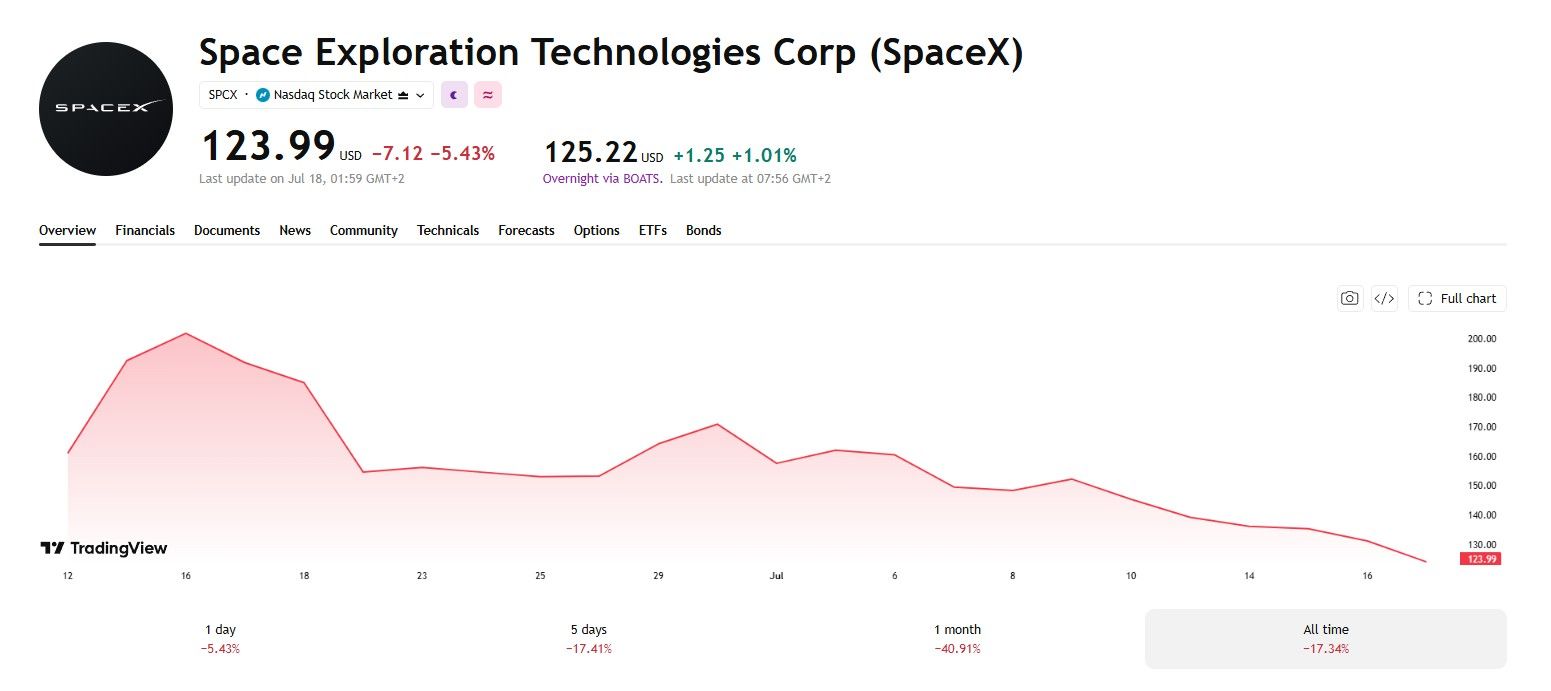
SpaceX has rescheduled the 13th test flight of its Starship rocket to Thursday, July 23. A Raptor 3 engine ignition failure forced an automatic abort of the earlier attempt.
The setback triggered a fresh slide in SpaceX (SPCX) stock. The rocket will carry 20 V3 Starlink satellites for the first time.
SpaceX Delays Starship Flight 13 to Thursday
SpaceX confirmed the new launch window in a post on X on Monday.
SpaceX had aimed to fly earlier in the week, but several Raptor 3 engines failed to ignite during the countdown. The company has not detailed a root cause. The flight marks the second outing for the newer Starship V3 design. It will lift off from Starbase, Texas.
Starship will also deploy 20 functional V3 Starlink satellites for the first time. SpaceX needs a clean satellite deployment before the rocket can carry heavier commercial payloads.
SPCX Stock Slides Toward Its All-Time Low
SpaceX shares changed hands near $124 on Monday. That marked a drop of more than 5% in a day. The stock now sits close to its 52-week low of $122.12. It sits roughly 23% below its $135 IPO price.

The setback compounds a rough stretch for SpaceX investors. Shares fell below IPO price earlier this month. Short interest climbed sharply during an earlier stock crash, reportedly reaching 185 million shares, or 29% of the tradable float.
Crypto traders can react to the news outside normal market hours. Platforms built on the xStocks framework offer tokenized SpaceX shares backed one to one by SPCX. Other venues list leveraged tokens that amplify each move in either direction.
What’s Next for SpaceX Investors
A clean flight Thursday could help SPCX claw back some losses. Evercore ISI still rates the stock Outperform with a $230 target. The firm argues the drop reflects profit-taking rather than weaker fundamentals.
However, another abort would deepen pressure ahead of August share unlocks. Q2 earnings, due in early August, will also trigger SpaceX’s first major share unlock since the IPO. The Nasdaq-100 inclusion drop already showed how sensitive shares are to news flow, even on a day with otherwise positive headlines.
Thursday’s launch window now carries outsized weight for SPCX holders. Meanwhile, a successful flight could steady sentiment ahead of earnings. A second abort would leave the stock searching for a floor near its all-time low.
The post SpaceX Delays Starship Flight 13 After Raptor 3 Engine Abort, SPCX Stock Slides appeared first on BeInCrypto.


Hyperliquid has announced plans to introduce permissionless deployment for HIP-4 outcome markets, with the feature set to roll out on testnet before a later mainnet release.
Summary
- Hyperliquid plans to introduce permissionless deployment for HIP 4 outcome markets, starting on testnet before a mainnet rollout.
- Market deployers will need to stake 500,000 HYPE and can face slashing for incorrect or delayed market settlements.
- The proposal follows HIP 4’s launch in May, with prediction markets generating about $100 million in trading volume during the first month.
Hyperliquid said in a Sunday Telegram announcement that the upgrade is intended to support the expansion of outcome markets, where the number of possible tradeable events is too large for validators alone to manage.
Under the proposed system, validators will vote on standardized outcome templates that define how markets should be structured. Those templates will be stored and enforced onchain, allowing anyone to deploy new markets using approved formats instead of requiring validator approval for every listing.
Once a template is approved, deployers will create individual markets and will be responsible for defining and settling them according to the template’s rules. Hyperliquid said validator-created “canonical markets” will continue to exist but are expected to remain rare, with fewer than 10 such outcomes or questions deployed each year through validator votes.
Deployers face staking and settlement requirements
To participate, HIP-4 deployers will need to stake 500,000 HYPE. Hyperliquid said validators can partially or fully slash that stake if markets are poorly defined, are settled incorrectly, or remain unresolved for more than one week.
Similar to the network’s HIP-3 framework, the stake will remain locked for six months, and deployers must settle every outstanding market before they can withdraw it.
Each deployer will initially receive capacity for 100 outcomes, equivalent to 200 outcome tokens. Multi-outcome markets will use more of that allocation, while settled markets will release capacity for future deployments. Hyperliquid also said it plans to introduce an auction system that will allow deployers to increase their allocation.
Market creators will be allowed to charge fees of up to 50% on their own markets. Hyperliquid noted that the proposal remains preliminary and could change after community feedback.
The latest proposal builds on Hyperliquid’s rollout of HIP-4 in May, when the network introduced prediction markets to its high-performance blockchain. According to Hyperliquid, the feature generated roughly $100 million in trading volume during its first month.
The update comes as Hyperliquid continues to gain attention across both decentralized and traditional finance. Earlier this month, Bitwise added HYPE to its Bitwise 10 Crypto Index ETF (BITW) with an allocation of about 0.95%, placing the token alongside the largest crypto assets in a diversified index fund.
The inclusion followed Hyperliquid’s reported $1.34 trillion in trading volume and $320 million in revenue during the first half of 2026, according to Bitwise’s latest index update and previous reporting.


Japanese logistics firm AZ-COM Maruwa Holdings has announced plans to adopt the JPYC stablecoin for payments to about 2,300 business partners, in what is expected to become Japan’s first large-scale corporate use of a yen-denominated stablecoin.
Summary
- AZ COM Maruwa plans to use JPYC to pay about 2,300 business partners, including truck drivers.
- Faster and more frequent payments are expected as JPYC transactions do not carry transfer fees.
- The move comes as Japan advances crypto reforms and stablecoin adoption for regulated financial services.
Japanese business daily Nikkei reported that the logistics company will use JPYC to pay transportation-related fees and compensation to individual contractors, including truck drivers. Because the stablecoin does not charge transfer fees, the company expects to process payments more quickly and more frequently than through conventional bank transfers.
Alongside the payment rollout, AZ-COM Maruwa is considering a partnership with JPYC Inc. and an investment of more than 1 billion Japanese yen, or about $6.2 million, according to the report. The companies have not disclosed a timeline for either proposal.
AZ-COM Maruwa, a mid-sized logistics provider whose major customers include Amazon Japan, would become one of the first large corporations in the country to integrate a yen-backed stablecoin into routine business payments if the plan moves forward.
The proposed deployment comes as Japan continues reshaping its digital asset framework to accommodate institutional blockchain applications.
Earlier this month, Japan enacted amendments to the Financial Instruments and Exchange Act that classify cryptocurrencies as financial products instead of payment instruments. As previously reported by crypto.news, the legislation also lays the legal groundwork for domestic crypto exchange-traded funds, introduces insider trading rules for digital assets and sets the stage for a separate crypto tax regime expected to take effect in 2028.
Corporate interest in regulated blockchain payments has also been increasing. Japan’s SBI Holdings and the Solana Foundation recently partnered to establish SBI Solana Global, a venture focused on building onchain financial infrastructure in Japan. Their plans include supporting yen-denominated stablecoins, tokenized securities and institutional settlement services.
Within that regulatory environment, businesses have started exploring stablecoins as a payment tool rather than limiting their use to crypto trading.
“We will continue to advance the integration of logistics and commercial payment flows with JPYC,” Noritaka Okabe, founder and chief executive officer of JPYC Inc., said in a statement.

What Is Rated Wind Speed For A Wind Turbine And Why Is It So Important?

Long-time broadcaster Edward Stourton who presented BBC Radio 4 dies aged 68

Ryanair profit plunges as jet fuel prices soar amid Iran war


-
 NewsBeat4 days ago
London Mayor Sadiq Khan handed a peerage by Keir Starmer alongside 15 other Labour figures… just days before the PM leaves No10
-

 Fashion3 days ago
Weekend Open Thread – Corporette.com
-

 Politics2 days ago
The House | The City of London can help the new chancellor deliver growth in every postcode
-

 Politics5 days ago
Young campaigners urge incoming PM to act on outdoor junk food ads
-

 Crypto World4 days ago
CFTC blocks Kalshi from unwinding Michigan trades after court order
-

 Business4 days ago
Nvidia Stock Slips After Big Tuesday Rally as Huang Confirms Vera Rubin Chip Is Now in Production Today
-
 Crypto World3 days ago
Two July Windows Left: The CLARITY Act’s Senate Fight and What Failure Means
-

 Crypto World2 days ago
Ripple Payments Joins MiCA With 14 Firms, Does It Mean Anything For XRP?
-

 Politics18 hours ago
Democrats look to World Cup watch parties to register thousands of voters
-

 Crypto World2 days ago
Ripple wins EU-wide access as ESMA adds it to MiCA register
-
 Entertainment5 days ago
Disney’s Most Ambitious Failed Star Wars Attraction Is Coming to SDCC
-

 Business4 days ago
Palantir Shares Rise After Expanded Nvidia Partnership and Fresh Analyst Upgrades Ahead of Earnings Day
-

 Crypto World3 days ago
Injective Submits SEC Transfer-Agent Registration to Onchain Ownership Records
-

 Tech6 days ago
Get Your ESP32 Sunny Side Up With This Solar Dev Board
-

 NewsBeat3 days ago
Registration is now open for March for Men with Kev 2026
-

 News Videos5 days ago
XRP BOMBSHELL… XRP OMBOARDED FOR TRANSACTIONS!!!
-

 Tech5 days ago
Dark Secrets Emerge When Jailbreaking LLMs
-
 Sports4 days ago
New Cornerback Enters Vikings Trade Rumor Mill
-

 News Videos3 days ago
Money | Class 12 Economics | CBSE Board Exam 2026-27
-

 Business3 days ago
Banco Bilbao Vizcaya Argentaria, S.A. (BBVA) Discusses Global Macro Environment and Economic Outlook for Core Markets Transcript
You must be logged in to post a comment Login