


Connect with us
DAPA Banner
DAPA Coin
DAPA
COIN PAYMENT ASSET
PRIVACY · BLOCKDAG · HOMOMORPHIC ENCRYPTION · RUST
ElGamal Encrypted MINE DAPA
🚫 GENESIS SOLD OUT
DAPAPAY COMING

Business

AI Could Touch 80 Million ASEAN Jobs, But the ILO Says Disruption Isn’t Here Yet

Published

on

Driving Change Through Technology for Nonprofits in Asia-Pacific
  • A 2025 ILO policy brief estimates that nearly 80 million workers across ASEAN — roughly 23 percent of total employment — hold jobs with meaningful exposure to generative AI. Only about 11.7 million fall into the highest-exposure category, and two-thirds of the regional workforce shows no identified exposure. Employment in exposed occupations has continued to grow despite increasing AI contact.
  • Thailand ranks at 20.6 percent exposure, near the regional middle, while Singapore leads at 42.2 percent. The ILO highlights a preparedness gap between how exposed workforces are and how ready institutions are to respond. Women face disproportionately high exposure due to concentration in clerical and professional roles, and informal workers remain largely outside the data.

A new policy brief from the International Labour Organization puts a hard number on a question that has hovered over Southeast Asian boardrooms and finance ministries for the past two years: how many jobs in the region actually sit in the path of generative AI. The answer, released this week, is nearly 80 million.

What the ILO found

According to the ILO’s 2025 estimates, 22.9 percent of total employment across ASEAN — close to 80 million workers — sits in occupations with more than a minimal degree of potential exposure to generative AI. The brief, titled “Generative AI and labour markets in ASEAN: Significant exposure, limited disruption, uneven preparedness,” is careful to separate exposure from displacement. Only 3.3 percent of the regional workforce, around 11.7 million people, falls into the “highest exposure” category, and roughly 67 percent of ASEAN employment shows no identified GenAI exposure at all.

The report’s own framing captures the tension: significant exposure, but limited disruption so far. Employment in the most exposed occupations has kept growing even as GenAI touches more of the workforce, and actual adoption remains concentrated in technology-heavy roles, with much slower uptake in office and administrative jobs despite their higher exposure scores.

Where Thailand sits in the regional picture

Singapore tops the exposure ranking at 42.2 percent of total employment, a reflection of its finance- and tech-heavy economy. The Philippines follows at 28.1 percent, driven by its large IT and business process outsourcing sector, then Indonesia at 21.7 percent and Vietnam at 20.8 percent. Thailand comes in at 20.6 percent, near the middle of the pack and meaningfully below Singapore’s exposure level.

That positioning is worth reading alongside Thailand’s own AI trajectory. Microsoft recently reported that Thailand ranks second worldwide for AI adoption growth, with workplace AI adoption up 36.4 percent year-on-year. The two data points aren’t contradictory — fast-growing adoption from a low base is consistent with occupational exposure that hasn’t yet caught up to Singapore’s. The Thai government’s own 25 billion baht AI development programme allocates 6 billion baht specifically to building a skilled AI workforce, which suggests policymakers are already positioning for exposure to rise.

Advertisement

A gender gap inside the numbers

One of the more striking findings concerns who bears the exposure. Women are more than twice as likely as men to work in occupations with high GenAI exposure, a pattern the ILO links to their concentration in clerical, administrative, and professional roles. Young workers aged 15 to 24 show broadly similar exposure levels to older adults, suggesting this isn’t primarily a generational story.

The preparedness gap

Perhaps the most useful concept in the brief is what the ILO calls the preparedness gap — the distance between how exposed a country’s workforce is and how ready its institutions are to manage that exposure. Singapore is held up as the clearest example of high exposure matched with high preparedness, combining advanced digital infrastructure, strong talent availability, and a coordinated government strategy. The implicit question for the rest of ASEAN, Thailand included, is whether exposure will keep climbing faster than the institutional response.

That question sits close to ground Thailand has already been covering on other fronts. The country’s data centre and AI infrastructure buildout is running into its own talent shortage, with demand for skilled data-centre professionals outpacing supply. And in the informal economy, the ILO has separately noted that more than 16 percent of ASEAN youth were not in education, employment, or training in 2024 — a workforce segment the GenAI exposure figures don’t fully capture, since informal work accounts for a large share of employment in Thailand, Cambodia, and Indonesia.

The investment read

For now, the ILO’s message to policymakers and investors is one of urgency without alarm: the potential for labour market transformation is real, but the disruption itself hasn’t materialised yet. That gives ASEAN governments, Thailand’s among them, a window to build the reskilling and social protection systems the report calls for before adoption catches up to exposure. Whether that window stays open depends largely on how quickly GenAI moves from technology-sector adoption into the office and administrative roles where exposure is highest but uptake has so far lagged.

Advertisement

Continue Reading
Click to comment

You must be logged in to post a comment Login

Leave a Reply

Business

China’s AI Boom: The Market Got It Wrong (SPX)

Published

on

China's AI Boom: The Market Got It Wrong (SPX)

This article was written by

James Foord is an economist by trade and has been analyzing global markets for the past decade. He leads the investing group The Pragmatic Investor where the focus is on building robust and truly diversified portfolios that will continually preserve and increase wealth.
The Pragmatic Investor covers global macro, international equities, commodities, tech and cryptocurrencies and is designed to guide investors of all levels in their journey. Features include a The Pragmatic Investor Portfolio, weekly market update newsletter, actionable trades, technical analysis, and a chat room. Learn more.

Analyst’s Disclosure: I/we have no stock, option or similar derivative position in any of the companies mentioned, and no plans to initiate any such positions within the next 72 hours. I wrote this article myself, and it expresses my own opinions. I am not receiving compensation for it (other than from Seeking Alpha). I have no business relationship with any company whose stock is mentioned in this article.

Seeking Alpha’s Disclosure: Past performance is no guarantee of future results. No recommendation or advice is being given as to whether any investment is suitable for a particular investor. Any views or opinions expressed above may not reflect those of Seeking Alpha as a whole. Seeking Alpha is not a licensed securities dealer, broker or US investment adviser or investment bank. Our analysts are third party authors that include both professional investors and individual investors who may not be licensed or certified by any institute or regulatory body.

Advertisement
Continue Reading

Business

Andy Burnham promises to ‘build a new economy’ in first speech as Prime Minister

Published

on

Business Live

The new Labour leader has pledged to revive the country’s industrial heartlands

Britain's new Prime Minister Andy Burnham delivers his first speech outside 10 Downing Street

Britain’s new Prime Minister Andy Burnham delivers his first speech outside 10 Downing Street(Image: Zeynep Demir/Anadolu via Getty Images)

Andy Burnham has pledged to “build a new economy” during his time as Prime Minister, vowing a suite of cost-of-living support measures for households will be unveiled as early as tomorrow.

Speaking on the steps of Downing Street, the new Labour leader said his government would put “life’s essentials back under stronger public control” and breathe new life into the nation’s industrial heartlands. He also restated his backing for the Starmer government’s defence commitments and vowed to bring “the welfare bill down”.

Advertisement

“We will make this moment a circuit breaker for Britain, bringing forward the biggest changes in the last 40 years, a new political model and a new economic model,” Burnham said, adding: “We will take power out of here and carry it into every postcode in the land, so that they can do more, and in doing more, build a new economy where we put life’s essentials back under stronger public control.”

The comments marked the former Manchester mayor’s maiden address as Prime Minister, having been sworn into the nation’s highest office by the King mere moments before delivering his speech.

Sir Keir Starmer formally submitted his resignation earlier on Monday, informing voters that “his work was done” and that it had been the “privilege of [his] life” to serve in Downing Street.

In a break from previous speeches, Burnham chose to forgo a lectern, reiterating his previously declared commitment to redistribute political authority away from Westminster towards local councils and devolved institutions.

Advertisement

The initiative will serve as the cornerstone of a “10-year plan” to introduce a fresh political and economic framework aimed at improving Britain, as reported by City AM.

“Later this year, I will bring forward a new plan for Britain, a 10-year plan,” he said, “laying out a path from where we are now to where I believe we all want Britain to be, wherever we’re coming from, whatever party we support.”

Burnham pledged to give voters “breathing space” with several costed measures to ease the cost of living expected to be unveiled as early as Tuesday.

“We will… build a new economy where we put life’s essentials back under stronger public control to make them affordable to you again, reindustrialising Britain using public procurement to back British industry,” he said.

Advertisement

The renewed outbreak of conflict in the Middle East has left Burnham confronting a challenging economic legacy. The UK’s borrowing costs remained stubbornly high throughout his first morning in Downing Street, after Washington announced two further nights of strikes over the weekend and shipping traffic through the Strait of Hormuz came to a standstill.

The 10-year gilt yield was hovering at just under five per cent by the close of the former Manchester mayor’s address, remaining elevated amid concerns that escalating tensions will further fuel inflationary pressures within the British economy.

The head of Britain’s largest industry body welcomed Burnham’s pledge to unveil a 10-year plan, stating that businesses “thrive on long-term certainty”.

“Our surveys show energy and taxation are squeezing businesses, hitting confidence and investment. Easing the cost of doing business will deliver the growth we all want to see,” Shevaun Haviland, British Chambers of Commerce director general, said.

Advertisement

“Getting growth in ‘every postcode’ of the UK is only possible if business is placed at the heart of the economic strategy,” she added. “Any structural changes to the economy must deliver growth – and that happens when firms invest and expand.”

CBI chief Rain Newton-Smith lent her voice to calls for businesses to play a central role in Burnham’s time in office.

She said: “Ambitious plans to improve the livelihoods of people across the country must be matched by action to get businesses thriving once again.

“Addressing the cost-of-living challenge needs to go hand in hand with tackling the cost of doing business, so we can deliver sustainable growth in jobs, wages and living standards.”

Advertisement
Continue Reading

Business

Nigeria-Morocco Atlantic Gas Pipeline: African nations sign off $25bn mega plan

Published

on

The image shows Donaghadee harbour with a white lighthouse in the background. In the foreground are a number of colourful boats.

One of Africa’s most ambitious energy infrastructure projects has finally been signed off at the highest level, with West African leaders formally endorsing the long-awaited Nigeria-Morocco Atlantic Gas Pipeline.

“Don’t be surprised when the gas comes your way,” quipped Julius Maada Bio, Sierra Leone’s president and the current head of West Africa regional bloc Ecowas, following Sunday evening’s ceremony in Freetown.

The vast 6,000km (3,700 miles) pipeline will run along the Atlantic coast of 14 African nations, carrying Nigerian gas to Morocco before linking into Europe’s existing gas network via Spain.

Construction is expected to begin in 2028 with a total estimated cost of $25bn (£19bn).

Advertisement

It signals a change from current models where gas is typically extracted from African nations, refined and processed abroad then shipped back to African nations at three or four times the price, says energy expert and former Nigerian government advisor Charles Majomi.

That practice must end, because it is a “complete devaluation of the resource that is so fortunately endowed in places like Nigeria and other countries,” he told BBC Focus on Africa.

By contrast, if leveraged correctly, the new pipeline has the potential not just to stimulate regional industrial growth but also boost Africa’s power on the international stage.

“In terms of Africa’s regional security and its ability to negotiate and have a seat at the global table, if you will, it does need this measure of usefulness to countries [in] Europe and Asia potentially,” argued Majomi.

Advertisement

“Beyond energy security, it will open up Africa as a corridor to international markets,” Prof Ganiyat Adejoke Adesina-Uthman, of the National Open University of Nigeria, said.

It is a symbol of what Africa can achieve when countries collaborate and work together, she added.

Continue Reading

Business

Abercrombie & Fitch: Cash Cow Machine With Swing Trade Potential – Reiterate Buy

Published

on

Abercrombie & Fitch: Cash Cow Machine With Swing Trade Potential - Reiterate Buy

This article was written by

I am a full-time analyst interested in a wide range of stocks. With my unique insights and knowledge, I hope to provide other investors with a contrasting view of my portfolio, given my particular background.If you have any questions, feel free to reach out to me via a direct message on Seeking Alpha or leave a comment on one of my articles.

Analyst’s Disclosure: I/we have no stock, option or similar derivative position in any of the companies mentioned, and no plans to initiate any such positions within the next 72 hours. I wrote this article myself, and it expresses my own opinions. I am not receiving compensation for it (other than from Seeking Alpha). I have no business relationship with any company whose stock is mentioned in this article.

The analysis is provided exclusively for informational purposes and should not be considered professional investment advice. Before investing, please conduct personal in-depth research and utmost due diligence, as there are many risks associated with the trade, including capital loss.

Advertisement

Seeking Alpha’s Disclosure: Past performance is no guarantee of future results. No recommendation or advice is being given as to whether any investment is suitable for a particular investor. Any views or opinions expressed above may not reflect those of Seeking Alpha as a whole. Seeking Alpha is not a licensed securities dealer, broker or US investment adviser or investment bank. Our analysts are third party authors that include both professional investors and individual investors who may not be licensed or certified by any institute or regulatory body.

Continue Reading

Business

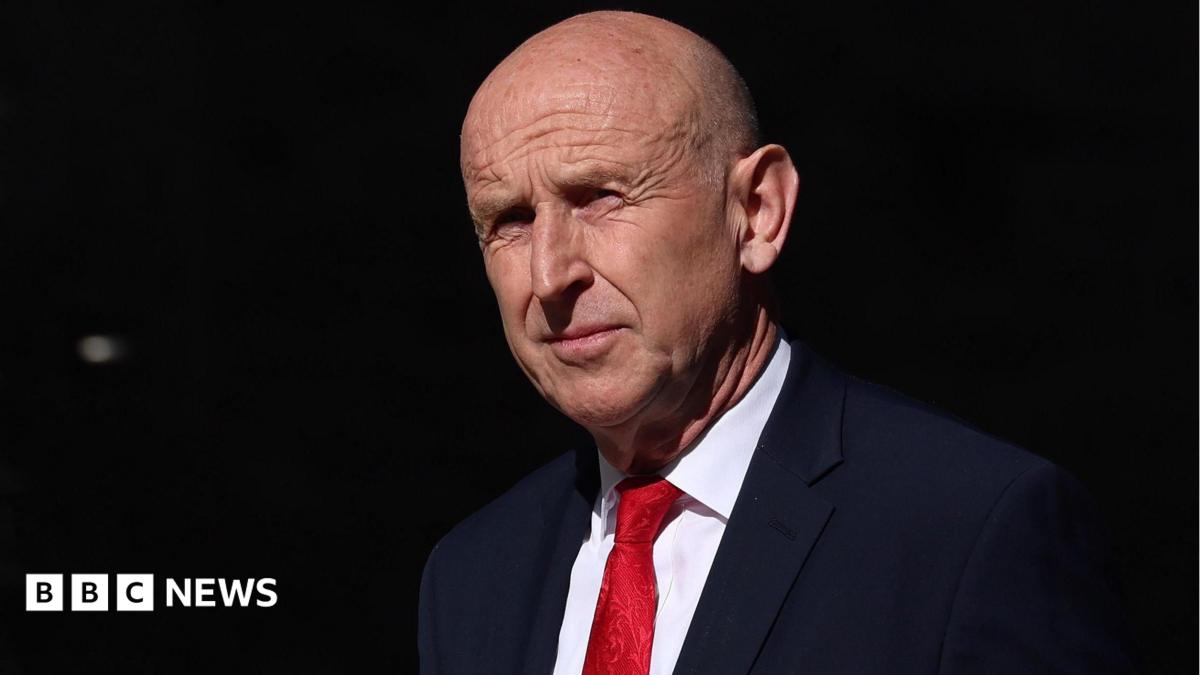
John Healey becomes chancellor weeks after shock resignation from defence job

Published

on

A woman in a blue puffy jacket looks at the camera. She has brown shoulder length hair and is wearing glasses. Behind her is a pile of red brick rubble and a partly demolished house.

His resignation came days before Andy Burnham’s pivotal by-election in Makerfield, adding to the sense that Sir Keir’s premiership was falling apart.

Healey earned plaudits from across the political spectrum for resigning on a matter of principle.

He had clashed with Reeves, the woman he is now replacing, pointedly saying in is resignation letter that the Treasury had been “unwilling” to “commit the resources that the nation needs to defend the country at this time of rising threats”.

His return to government in the most vital job of all in cabinet after the prime minister is an even bigger surprise than his resignation, given that his name had not been mentioned as a frontrunner in the increasingly feverish speculation about who Burnham would choose.

Advertisement

Sources told the BBC that Burnham and Healey “have the same outlook” on many of the prime minister’s priorities, including reindustrialisation, the cost-of-living, and driving growth across the country.

The softly-spoken Yorkshireman has a remarkable record as someone who has been on the Labour frontbench almost continuously since 2001.

Born in Wakefield in 1960 and educated at Lady Lumley’s Comprehensive School, Pickering, and Peter’s School in York, he studied social and political science at Christ’s College, Cambridge.

Before entering politics, he worked as a journalist, briefly editing Parliament’s in-house magazine The House, before becoming a disability rights campaigner and trade union official.

Advertisement

He is married and has one son.

He first came into Parliament in Tony Blair’s landslide general election in 1997 as MP for Wentworth, a former mining area north of Sheffield, which following boundary changes is now Rawmarsh and Conisbrough.

He retained the seat with a majority of 6,908 in the 2024 general election, with a Reform UK candidate in second place.

In the early 2000s, he held a string of ministerial posts, including housing, local government, and at the Treasury in the Blair and Gordon Brown governments.

Advertisement

He also assisted Brown as his parliamentary private secretary.

But his main interest was housing policy. He served as shadow housing secretary when Jeremy Corbyn was Labour leader, despite supporting a failed attempt to oust Corbyn in 2016.

Continue Reading

Business

Paramount-WBD merger on hold after judge grants temporary restraining order

Published

on

Los Angeles County orders economic study on Paramount, Warner Bros. merger

Paramount Skydance’s planned takeover of Warner Bros. Discovery hit a snag on Monday when a judge granted a temporary restraining order on the merger. 

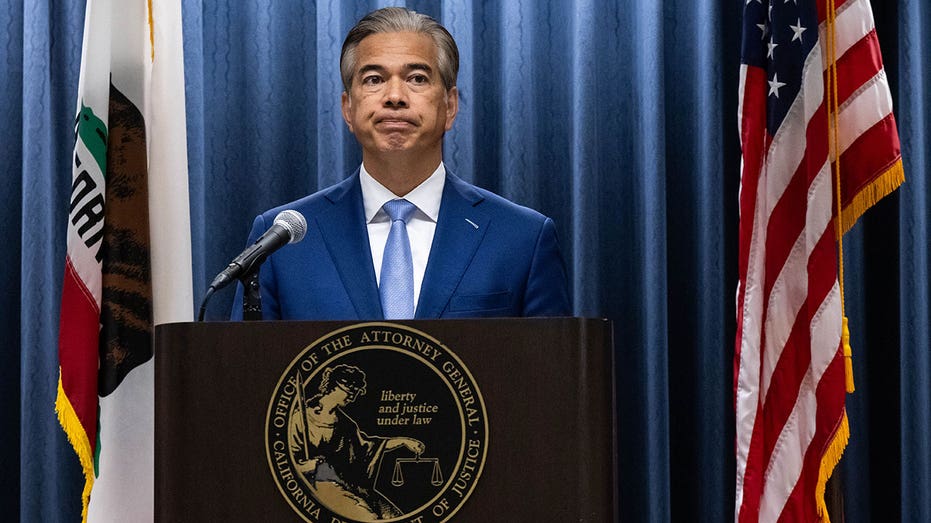
Paramount CEO David Ellison is seeking to acquire WBD in a $111 billion deal that was expected to close during the third quarter of this year, but California Attorney General Rob Bonta is leading a group of 12 state attorneys general who filed a lawsuit challenging the merger. The lawsuit claims the megadeal would “lead to higher prices, lower quality, and less content for film and television, harming movie theaters, basic cable distributors, and ultimately, audiences on every sofa and movie theater seat in the U.S.” 

Advertisement

After a Friday hearing, California District Judge Araceli Martínez-Olguín approved the temporary restraining order, putting a 14-day pause on the merger and blocking closure of the transaction.  

PARAMOUNT ADVISERS PUSH FOR CALIFORNIA EXIT AS STATE SUES TO BLOCK WARNER BROS DISCOVERY MERGER: REPORT

Paramount Warner Bros.

California Attorney General Rob Bonta believes Paramount’s planned takeover of Warner Bros. Discovery is simply “an illegal merger.”  (AaronP/Bauer-Griffin/GC Images)

“Having read the papers filed by the parties and carefully considered their arguments therein and those made at the hearing, as well as the relevant legal authority, and good cause appearing, the Court GRANTS the motion for TRO,” the judge wrote. 

The lawsuit, filed in the U.S. District for the Northern District of California, claims that the merger violates Section 7 of the Clayton Act, which holds that mergers that may substantially lessen competition or tend to create a monopoly are illegal. Both sides argued their case on Friday but Martínez-Olguín initially declined to make a ruling from the bench, instead taking the weekend to think it over. 

Advertisement
Ticker Security Last Change Change %
PSKY PARAMOUNT SKYDANCE CORP. 8.75 -0.39 -4.27%
WBD DISCOVERY INC. 25.93 -0.94 -3.48%

“Because the Plaintiff States raise serious questions on the merits of their Clayton Act claim and because the balance of equities and public interest tip sharply in favor of the Plaintiff States, the Court ultimately finds the public interest favors their requested TRO to stay the merger in the interim,” the judge wrote. 

“Defendants are temporarily enjoined and restrained from closing or consummating the Transaction or taking any steps, directly or indirectly, to integrate or consolidate their operations pursuant to the Transaction,” Martínez-Olguín continued. “This Order extends to Defendants’ agents, officers, servants, employees, attorneys, and other persons who are in active concert or participation with Defendants.”

Plaintiffs’ motion for preliminary injunction is due by July 23, the Defendants’ opposition brief is due by July 27, and the Plaintiffs’ reply is due by July 30. A hearing on Plaintiffs’ preliminary injunction motion at 3:00 p.m. on Monday, August 3. 

WARNER BROS DISCOVERY SHAREHOLDERS APPROVE PARAMOUNT SKYDANCE DEAL

Advertisement
California Attorney General Rob Bonta

California Attorney General Rob Bonta. (Sarah Reingewirtz/MediaNews Group/Los Angeles Daily News via Getty Images / Getty Images)

“My office and attorneys general nationwide have secured an emergency order blocking the unlawful merger of Warner Bros. and Paramount. This is a critical first win in our case to ensure this megamerger never sees the light of day,” Attorney General Bonta said in a statement. 

“History tells the tale of what happens when a few people have great power over markets that are central to Americans’ lives: fewer opportunities for more people, worse products and services for all people,” Bonta continued. “With our lawsuit, we’re fighting for a free and fair market and a thriving film and television industry that serves creatives and audiences alike. We have a full tank of gas, the law on our side, and look forward to continuing to make our case.”

Paramount said it is grateful for the court’s swift order on the motion. 

“Like the timing agreement to which we were willing to stipulate, this TRO preserves the status quo while the Court considers the antitrust issues presented,” a Paramount spokesperson told Fox News Digital. 

Advertisement

“We are confident the evidence will demonstrate that the State AGs’ antitrust arguments are without merit as their alleged markets and claims of anticompetitive effects are without any basis in modern market realities,” the spokesperson continued. “This merger is lawful, pro-competitive, and will benefit consumers, creators, workers, and the entertainment industry. We will continue to vigorously defend the transaction and will look forward to the hearings on the substance of the State AGs’ action.” 

The Justice Department (DOJ) announced last week it has closed its antitrust investigation into Paramount Skydance’s proposed acquisition of WBD, concluding the transaction is not likely to harm competition or American consumers.

CALIFORNIA AG BLASTS PARAMOUNT-WBD MERGER AS ‘ILLEGAL,’ SAYS THREAT TO LEAVE STATE IS ‘BLACKMAIL’ EFFORT

The Antitrust Division said its eight-month review examined more than two million documents and found the deal could strengthen competition across the media and entertainment industry, including in streaming video, traditional television and theatrical film distribution. However, state attorneys general retain independent authority under antitrust laws. 

Ellison, the son of billionaire Oracle co-founder Larry Ellison, took control of Paramount last year when Skydance Media and Paramount Global completed an $8 billion merger. Adding WBD to his portfolio would make the younger Ellison one of Hollywood’s most powerful people.

CLICK HERE TO GET THE FOX NEWS APP 

This is a developing story. Please check back for updates.

Advertisement
Continue Reading

Business

Mars Wrigley cuts 307 New Jersey jobs to move US headquarters to Chicago

Published

on

Mars Wrigley cuts 307 New Jersey jobs to move US headquarters to Chicago

Mars Wrigley signaled it will lay off hundreds of workers as it relocates its headquarters from Newark, New Jersey, to an expanded facility in Chicago.

The company on Friday submitted a WARN filing with the state of New Jersey that indicated it will eliminate 307 jobs at its Newark headquarters by mid-October, which will end the company’s presence in the city.

Advertisement

The candymaker, which is a division of Mars Incorporated, has a brand portfolio including M&M’s, Snickers, Milky Way, Twix and Skittles.

The move comes after the company spent $100 million to expand its footprint in Chicago, where its global headquarters is now located.

CALIFORNIA LAWMAKERS WARN NEWSOM BUDGET TAX CREDIT CAP THREATENS HOLLYWOOD JOBS

A bag of Peanut M&M's.

Mars Wrigley’s layoffs will impact its Newark headquarters as it relocates corporate operations to Chicago. (Joe Raedle/Getty Images)

The New Jersey Business & Industry Association (NJBIA) said the news of another departure of a high-profile company comes as another warning sign that the state needs to improve its business climate.

Advertisement

“On a summer Friday when people should be getting excited about the weekend ahead, we are instead hit with the news of another unfortunate exodus of a job creator in New Jersey,” said NJBIA CEO Michele Siekerka.

“We need to wrap our arms around this and do something now that sends a message to our largest employers that things are going to change so we can stop this disturbing trend,” Siekerka added.

FOX Business reached out to Mars Wrigley for comment.

BELOVED CANDY COMPANY SHUTTERS AFTER 141 YEARS AS COSTS SOAR

Advertisement
m&ms

Mars Wrigley is the company that created M&M’s. (Jeff Greenberg/Education Images/Universal Images Group via Getty Images)

Mars Wrigley has indicated it will continue to operate its manufacturing facility in Hackettstown, New Jersey, despite shifting corporate operations to Chicago.

Mars Inc. acquired Chicago-based gum-maker Wrigley in 2008 and has grown its presence in the area recently following the acquisition last year of Kellanova, a Chicago-headquartered maker of snack foods like Pringles and Cheez-It that was spun off from Kellogg.

NJBIA noted that New Jersey has lost over 9,700 jobs disclosed through WARN notices this year alone, and it comes against the backdrop of other high-profile corporate departures.

AI REMAINS TOP REASON FOR US JOB CUTS FOR THIRD STRAIGHT MONTH AS EMPLOYERS AXED 97,000 WORKERS IN MAY

Advertisement
Skittles At Costco Wholesale

Skittles is one of Mars Wrigley’s candy brands. (Kevin Carter/Getty Images)

In June, Samsung announced it would relocate its corporate headquarters from Englewood Cliffs, New Jersey, to Texas this year.

Additionally, ExxonMobil shareholders voted to switch the energy giant’s state of incorporation from the Garden State, where it has been domiciled for 144 years when it began as Standard Oil of New Jersey, to Texas.

GET FOX BUSINESS ON THE GO BY CLICKING HERE

Advertisement
Continue Reading

Business

Healey seen as 'safe pair of hands' as he is appointed chancellor

Published

on

John Healey and Andy Burnham shake hands

The BBC’s Economics Editor Faisal Islam outlines the challenges facing the new chancellor.

Continue Reading

Business

Coca-Cola appoints JPMorgan, Citi for India bottler IPO, sources say

Published

on

Coca-Cola appoints JPMorgan, Citi for India bottler IPO, sources say
Coca-Cola has appointed JPMorgan and Citi as bankers for a planned 2027 initial public offering of one of its majority-owned bottling partners in India, a critical growth market, two sources with direct knowledge of the matter told Reuters.

The beverage giant said in ‌June it ⁠was preparing ⁠a 2027 listing of its Indian bottling unit, Hindustan Coca-Cola Holdings, and exploring the sale of part of its stake, joining a broader push by global companies such as Pernod Ricard and Carlsberg to tap India’s equity markets.

Bankers pitched to Coca-Cola for the mandate earlier this month in London, the two sources said, following which ⁠JPMorgan and ‌Citi were appointed. One of the sources said Kotak and Morgan Stanley were also appointed as bankers on ⁠the IPO.

The banks and Coca-Cola did not immediately respond to Reuters’ requests for comment. The sources declined to be named as the matter is confidential.

Advertisement

The IPO adds to a string of multinational companies turning to Indian equity markets to monetise their investments, rather than raise fresh capital. South Korea’s Hyundai Motor and LG Electronics have both pursued stake sales via ‌Indian IPOs, attracted by relatively richer market valuations than in their domestic market.


Coca-Cola holds a 60% stake in Hindustan Coca-Cola Holdings, one of ⁠many Coca-Cola bottlers in India. Established in 1997, Hindustan Coca-Cola Holdings operates 14 bottling plants across 10 states in India, and recorded revenue of 127.35 billion Indian rupees ($1.32 billion) and a $36 million net profit in 2023, according to latest available data from company information platform Toefler.
The IPO valuation and what percentage stake will be sold is not yet clear.

Continue Reading

Business

SK Hynix ADR Edges Higher as Stock Steadies After Its Record $26.5 Billion Nasdaq Debut and Selloff

Published

on

South Korea is home to the world's largest memory chip maker Samsung, and largest memory chip supplier SK Hynix

Shares of SK Hynix’s American depositary receipts rose 1.38%, or $2.13, to $156.16 Monday morning, as the South Korean memory chipmaker’s newly listed U.S. shares showed signs of stabilizing following a volatile stretch that included a record-breaking Nasdaq debut and a sharp subsequent selloff.

SK Hynix, the world’s second-largest memory chipmaker, completed its Nasdaq listing on July 10, raising approximately $26.5 billion through the sale of 177.9 million ADRs priced at $149 each. The offering ranks as the largest U.S. share sale ever completed by a foreign company, surpassing the $25 billion Alibaba raised during its 2014 entry into American markets.

A blockbuster debut followed by a sharp reversal

SK Hynix’s ADRs delivered an immediate 13% gain on their first day of trading, closing that initial session at $168.01, below the $170 opening price but well above the $149 level at which the securities had been priced the previous day. Investor demand for the offering had been extraordinarily strong heading into the listing, with orders reportedly covering seven times the number of available shares before final pricing was set, according to Bloomberg.

Advertisement

That early enthusiasm gave way to significant turbulence just days later. On July 14, SK Hynix’s Korean-listed shares plunged 15.4% in Seoul, marking the stock’s worst single-day performance in nearly two decades and dragging South Korea’s broader market down roughly 9%, a decline severe enough to trigger a trading halt. The company’s U.S. ADRs fell approximately 8% from their first-day closing price during that same period of turmoil, reflecting how closely the newly listed American shares tracked volatility in the underlying Korean stock.

The AI memory boom driving investor interest

SK Hynix’s Nasdaq listing and the intense investor demand surrounding it reflect the company’s central role in supplying high-bandwidth memory, or HBM, chips that have become essential components in artificial intelligence data center infrastructure. The global scramble for AI computing capacity has created a significant memory chip shortage, as high-performance AI systems consume large quantities of general-purpose DRAM to produce HBM chips.

SK Hynix holds an estimated 60% share of the global HBM market, according to Counterpoint Research director MS Hwang, who described the company’s position within the sector in blunt terms during a CNBC interview conducted ahead of the listing. “What is clear is that SK is definitely the top notch player in HBM,” Hwang said. “And it is better in cost of manufacturing. So its operating margin is the best. So it has the best product, lowest cost. What do you need else?”

Advertisement

That dominant market position helped fuel an extraordinary run in SK Hynix’s Korean shares even before the Nasdaq listing, with the stock climbing more than 250% to 280% over the course of 2026, propelling the company’s overall market capitalization above $1 trillion as investors sought exposure to firms positioned as key beneficiaries of the ongoing AI infrastructure buildout.

Why SK Hynix pursued a US listing

According to the company’s own regulatory filings, SK Hynix pursued the Nasdaq listing specifically to expand its investor base beyond South Korea, with the company stating it anticipated the move would ultimately allow its true corporate value to be properly evaluated by a broader pool of global market participants. SK Hynix said proceeds from the offering would be used to expand its manufacturing facilities within South Korea and to purchase additional equipment, including extreme ultraviolet lithography scanners critical to advanced semiconductor production.

The listing itself was marked by a formal Opening Bell ceremony held July 10 at the Nasdaq MarketSite in New York’s Times Square, attended by senior leadership from both SK Hynix and its parent conglomerate, SK Group. SK Group Chairman Chey Tae-won and SK Hynix CEO Kwak Noh-jung were among the executives present for the milestone event, which the company described as elevating its global status at the center of both the artificial intelligence industry and international capital markets.

Advertisement

Trading structure and continued listing on Korean exchanges

Under the terms of the offering, each SK Hynix ADR represents one-tenth of an ordinary Korean common share, meaning the 177.9 million ADRs sold correspond to roughly 17.79 million newly issued underlying shares. Those newly issued common shares were additionally listed on the KOSPI market of the Korea Exchange on July 29, Korea time, ensuring SK Hynix maintains its listing in its home market alongside the new Nasdaq presence.

Trading in the ADRs began under the temporary ticker symbol SKHYV during the initial conditional trading session on July 10, before transitioning to the permanent ticker symbol SKHY when regular trading resumed the following Monday.

A volatile few weeks for the broader memory sector

Advertisement

SK Hynix’s turbulent trading pattern since its Nasdaq debut has occurred alongside broader volatility across the memory chip sector more generally, with competitors including Micron Technology experiencing similarly sharp swings tied to ongoing debates about the durability of AI-driven memory demand and questions about whether current valuations across the sector have run ahead of near-term fundamentals.

With SK Hynix’s ADRs showing modest gains Monday following weeks of significant volatility, investors are likely to continue closely monitoring the stock as a key barometer for broader sentiment around the AI memory trade. Given the central role HBM chips play in supporting continued artificial intelligence infrastructure investment, SK Hynix’s newly accessible U.S. shares are expected to remain a closely watched proxy for the broader health and sustainability of the AI-driven memory chip boom in the weeks and months ahead.

Continue Reading

Trending

Copyright © 2025