

Business
AI Could Touch 80 Million ASEAN Jobs, But the ILO Says Disruption Isn’t Here Yet


- A 2025 ILO policy brief estimates that nearly 80 million workers across ASEAN — roughly 23 percent of total employment — hold jobs with meaningful exposure to generative AI. Only about 11.7 million fall into the highest-exposure category, and two-thirds of the regional workforce shows no identified exposure. Employment in exposed occupations has continued to grow despite increasing AI contact.
- Thailand ranks at 20.6 percent exposure, near the regional middle, while Singapore leads at 42.2 percent. The ILO highlights a preparedness gap between how exposed workforces are and how ready institutions are to respond. Women face disproportionately high exposure due to concentration in clerical and professional roles, and informal workers remain largely outside the data.
A new policy brief from the International Labour Organization puts a hard number on a question that has hovered over Southeast Asian boardrooms and finance ministries for the past two years: how many jobs in the region actually sit in the path of generative AI. The answer, released this week, is nearly 80 million.
What the ILO found
According to the ILO’s 2025 estimates, 22.9 percent of total employment across ASEAN — close to 80 million workers — sits in occupations with more than a minimal degree of potential exposure to generative AI. The brief, titled “Generative AI and labour markets in ASEAN: Significant exposure, limited disruption, uneven preparedness,” is careful to separate exposure from displacement. Only 3.3 percent of the regional workforce, around 11.7 million people, falls into the “highest exposure” category, and roughly 67 percent of ASEAN employment shows no identified GenAI exposure at all.
The report’s own framing captures the tension: significant exposure, but limited disruption so far. Employment in the most exposed occupations has kept growing even as GenAI touches more of the workforce, and actual adoption remains concentrated in technology-heavy roles, with much slower uptake in office and administrative jobs despite their higher exposure scores.
Where Thailand sits in the regional picture
Singapore tops the exposure ranking at 42.2 percent of total employment, a reflection of its finance- and tech-heavy economy. The Philippines follows at 28.1 percent, driven by its large IT and business process outsourcing sector, then Indonesia at 21.7 percent and Vietnam at 20.8 percent. Thailand comes in at 20.6 percent, near the middle of the pack and meaningfully below Singapore’s exposure level.
That positioning is worth reading alongside Thailand’s own AI trajectory. Microsoft recently reported that Thailand ranks second worldwide for AI adoption growth, with workplace AI adoption up 36.4 percent year-on-year. The two data points aren’t contradictory — fast-growing adoption from a low base is consistent with occupational exposure that hasn’t yet caught up to Singapore’s. The Thai government’s own 25 billion baht AI development programme allocates 6 billion baht specifically to building a skilled AI workforce, which suggests policymakers are already positioning for exposure to rise.
A gender gap inside the numbers
One of the more striking findings concerns who bears the exposure. Women are more than twice as likely as men to work in occupations with high GenAI exposure, a pattern the ILO links to their concentration in clerical, administrative, and professional roles. Young workers aged 15 to 24 show broadly similar exposure levels to older adults, suggesting this isn’t primarily a generational story.
The preparedness gap
Perhaps the most useful concept in the brief is what the ILO calls the preparedness gap — the distance between how exposed a country’s workforce is and how ready its institutions are to manage that exposure. Singapore is held up as the clearest example of high exposure matched with high preparedness, combining advanced digital infrastructure, strong talent availability, and a coordinated government strategy. The implicit question for the rest of ASEAN, Thailand included, is whether exposure will keep climbing faster than the institutional response.
That question sits close to ground Thailand has already been covering on other fronts. The country’s data centre and AI infrastructure buildout is running into its own talent shortage, with demand for skilled data-centre professionals outpacing supply. And in the informal economy, the ILO has separately noted that more than 16 percent of ASEAN youth were not in education, employment, or training in 2024 — a workforce segment the GenAI exposure figures don’t fully capture, since informal work accounts for a large share of employment in Thailand, Cambodia, and Indonesia.
The investment read
For now, the ILO’s message to policymakers and investors is one of urgency without alarm: the potential for labour market transformation is real, but the disruption itself hasn’t materialised yet. That gives ASEAN governments, Thailand’s among them, a window to build the reskilling and social protection systems the report calls for before adoption catches up to exposure. Whether that window stays open depends largely on how quickly GenAI moves from technology-sector adoption into the office and administrative roles where exposure is highest but uptake has so far lagged.
Other People are Reading


Titan International: Industry Weakness Offsets A Cheap Valuation

Dr Stuart Lavery, consultant of reproductive medicine at University College Hospital in London, said: “People are understandably using this technology to try to get a greater understanding, and to try and pick up things as early as possible because it has such a profound impact on your life if you’re planning a pregnancy.”
However, “we might be running before we can walk,” he cautioned.
“We probably need a lot more data on the reliability, we need a lot more research… otherwise what happens is your levels of anxiety will just skyrocket,” he said.
“I have no doubt that more people will be using technology, an app-based approach or a wearable-based approach, to try and pick up these things. But I think it should come with quite a big health warning about how much we can rely on them for accuracy.”
When asked about the anxiety women reported feeling early in their pregnancy as a result of checking their ring data, Dr Chris Curry, Oura’s clinical director of women’s health, told BBC News: “With or without biometric tracking, pregnancy can be an uncertain time where many women, particularly those pregnant for the first time, are in the dark about the range of what’s normal.”
She added that if women feel overwhelmed, the company “encourages members to take a break from the app experience, whilst Oura Ring continues to collect data and gather insights”, adding: “The ring is a support tool, not a replacement for your care team.”
Ravika sadly did miscarry. She’s hoping to start trying to conceive again soon – and when she does, her experience has made her rethink wearing her tracker again.
“I didn’t really see myself as being an anxious person, but… I think going forward if it came to a point where I had an inkling that I was pregnant and my stats were low, as soon as that positive pregnancy test was there, I do think it would be the best thing for me to take the ring off.”

The owners of private contracting firms have more exit opportunities as their listed counterparts chase acquisitions.

Truelink Capital is nearing a deal to acquire Lyons Magnus that values the fruit-based ingredients and beverage maker at around $1 billion, including debt, according to people familiar with the matter.
The details
An announcement could come as soon as Monday, barring any last-minute snags, the people said.
Copyright ©2026 Dow Jones & Company, Inc. All Rights Reserved. 87990cbe856818d5eddac44c7b1cdeb8
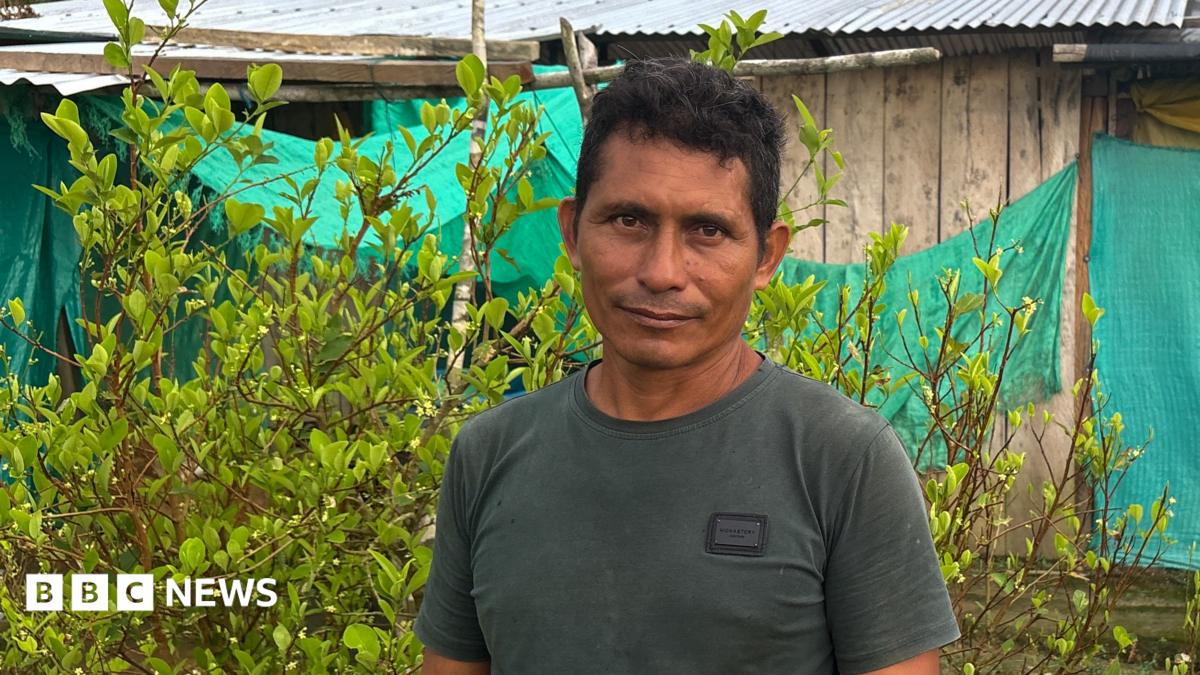
Elena Hernández moved to the coca-growing region of Guaviare during the boom of the 1990s, lured by better pay.
“There was more money back then – you could see it everywhere,” she says. “I managed to save and buy a small house.”
But the coca industry also brought violence and insecurity. Armed groups fought for control, while the government tried to curb production through manual eradication, aerial fumigation and arrests.
These efforts cut off families’ incomes but failed to stem cultivation.
So when a nationwide substitution programme was introduced by the then government in 2017, Hernández was eager to sign up, joining around 100,000 families who were promised financial support in return for moving away from coca.
Each household was due to get 36m Colombian pesos ($11,000; £8,000), spread over a two-year period.
“The way it was presented to us, it seemed very promising for the development of our territory,” says Hernández.
The programme, known as the National Comprehensive Programme for the Substitution of Illicit Crops (PNIS), was born out of the 2016 peace deal between the government and Colombia’s largest guerrilla group, Farc.
In exchange for uprooting their coca plants, farmers would also get technical support, including from agronomists, and advice on soil management.
While substitution programmes had existed before, they remained limited in scale. PNIS was the most ambitious attempt to date – and at first appeared to be working.
In parts of southern Meta and Guaviare, coca fields were replaced by lemon trees, banana crops and small livestock farms. Many farmers, like Hernández, stayed away from coca.
Yet that does not mean they consider it a success.
“The government wasn’t very committed to us farmers. We were treated badly,” explains Hernández, pointing to problems that emerged early on.
Payments were delayed, and technical support frequently failed to materialise. Weak state presence in rural areas and poor coordination between agencies meant support often did not reach communities.
Momentum behind the programme weakened as political priorities shifted. Iván Duque, who became Colombia’s president in 2018, refocused the government’s approach on eradication and security strategies.
By the time current President Gustavo Petro took office in 2022, PNIS was behind schedule and struggling to reach communities.
But some farmers did report improvements. For Doralba Bejarano, from Puerto Rico in southern Meta, her situation improved as stalled support began to arrive.
“Before the programme we were terrified,” she says. “We had to hide the coca paste because the police, the military, would put us in jail.” Coca paste is a more concentrated form of coca used to produce cocaine, allowing growers to earn more than selling raw leaves.
Now, she says, she has peace of mind: “I go wherever I want. I have no reason to hide.”
She says many in her community are now receiving government support to promote and sell their non-coca crops and other foodstuffs.
Former Deputy National Security Advisor Victoria Coates says the world will ‘have to decide’ which superpowers to align with on A.I. on ‘The Bottom Line.’
China is reportedly tightening restrictions on AI companion chatbots as the country grapples with a shrinking population and record-low birthrate.
New rules that went into effect Wednesday prohibit chatbots from encouraging emotional dependence or forming virtual romantic or familial relationships with minors. Companies must also contact a guardian or emergency contact if a user faces a life-threatening crisis, according to the Cyberspace Administration of China.
The regulations have already prompted Alibaba and TikTok parent ByteDance to disable certain chatbot features, The Wall Street Journal reported.
NEW YORK’S AI DATA CENTER PAUSE SPARKS WARNINGS US COULD LOSE GROUND TO CHINA

Chinese AI companies must also contact a guardian or emergency contact if a user faces a life-threatening crisis. (iStock / iStock)
Beijing is reportedly concerned that AI companions could discourage people from pursuing real-world relationships.
“They don’t like the idea of a large portion of their population being in deep emotional relationships with chatbots that could take them out of the marriage market,” Matt Sheehan, a senior fellow at the Carnegie Endowment for International Peace, told The Wall Street Journal.
Officials also fear addiction, dependency and other social problems, according to Sheehan.
“They want to encourage people to be in actual, real-world relationships,” Sheehan added. “Could we imagine a future where, three or four years from now, 15 million Chinese women say that their partner is a chatbot, and therefore they’re not having kids?”
AI COULD UNLEASH ‘SINGLE GREATEST PRODUCTIVITY REVOLUTION’ IF WASHINGTON AVOIDS OVERREACH: REPORT
Beijing is reportedly concerned that AI companions could discourage people from pursuing real-world relationships. (iStock)
The new rules require AI companion chatbots to pass a government review before being released to the public. The government will also have more authority to shut down services they consider unsafe, the outlet reported.
China’s restrictions go further than similar laws in California and New York.
Those two states require chatbots to remind users that they are not human and direct people that are experiencing a crisis to support services.
The crackdown comes as China faces a worsening demographic crisis. The country’s population declined in 2025 for the fourth consecutive year, while its birthrate fell to a record low, according to The Wall Street Journal.
DIMON URGES CALM OVER FEAR ABOUT AI’S IMPACT ON JOBS: ‘STOP BEING BREATHLESS OVER IT’

China’s restrictions go further than similar laws in California and New York. (izusek/Getty Images)
GET FOX BUSINESS ON THE GO BY CLICKING HERE
At the same time, Beijing is also seeking to expand its influence over the future of artificial intelligence worldwide.
At a major technology conference in Shanghai on Friday, Chinese President Xi Jinping promoted open-source AI and pledged to help developing countries build their capabilities. Xi also warned that unequal access to AI could create “new historical injustices,” according to Reuters.
Reuters contributed to this report.

UK chief financial officers turn more hopeful about AI

TSMC expects ’strong, multi-year’ demand for AI chips as it ramps up Arizona investment

Wall Street has extended its decline as a pullback on stocks associated with the AI boom, which has driven many of the gains so far this year, morphed into a larger risk-off sentiment.
Business
Soccer-Torres grabs extra-time winner as Spain beat toothless Argentina to win their second World Cup

Soccer-Torres grabs extra-time winner as Spain beat toothless Argentina to win their second World Cup

BITCOIN PRICE WARNING!! BITCOIN $43K LIQUIDITY GRAB! BITCOIN GOLDEN CROSS

Moment fans in Madrid celebrate World Cup win against Argentina

Titan International: Industry Weakness Offsets A Cheap Valuation


-
 NewsBeat3 days ago
London Mayor Sadiq Khan handed a peerage by Keir Starmer alongside 15 other Labour figures… just days before the PM leaves No10
-

 Fashion2 days ago
Weekend Open Thread – Corporette.com
-

 Politics2 days ago
The House | The City of London can help the new chancellor deliver growth in every postcode
-

 Politics5 days ago
Young campaigners urge incoming PM to act on outdoor junk food ads
-

 Crypto World4 days ago
CFTC blocks Kalshi from unwinding Michigan trades after court order
-

 Business4 days ago
Nvidia Stock Slips After Big Tuesday Rally as Huang Confirms Vera Rubin Chip Is Now in Production Today
-
 Crypto World3 days ago
Two July Windows Left: The CLARITY Act’s Senate Fight and What Failure Means
-

 Crypto World2 days ago
Ripple Payments Joins MiCA With 14 Firms, Does It Mean Anything For XRP?
-

 Politics11 hours ago
Democrats look to World Cup watch parties to register thousands of voters
-
 Entertainment4 days ago
Disney’s Most Ambitious Failed Star Wars Attraction Is Coming to SDCC
-

 Crypto World2 days ago
Ripple wins EU-wide access as ESMA adds it to MiCA register
-

 Business4 days ago
Palantir Shares Rise After Expanded Nvidia Partnership and Fresh Analyst Upgrades Ahead of Earnings Day
-

 Crypto World3 days ago
Injective Submits SEC Transfer-Agent Registration to Onchain Ownership Records
-

 Tech6 days ago
Get Your ESP32 Sunny Side Up With This Solar Dev Board
-

 News Videos5 days ago
XRP BOMBSHELL… XRP OMBOARDED FOR TRANSACTIONS!!!
-

 NewsBeat3 days ago
Registration is now open for March for Men with Kev 2026
-

 Tech5 days ago
Dark Secrets Emerge When Jailbreaking LLMs
-
 Sports4 days ago
New Cornerback Enters Vikings Trade Rumor Mill
-

 News Videos3 days ago
Money | Class 12 Economics | CBSE Board Exam 2026-27
-

 Business3 days ago
Banco Bilbao Vizcaya Argentaria, S.A. (BBVA) Discusses Global Macro Environment and Economic Outlook for Core Markets Transcript
You must be logged in to post a comment Login