

Business
John Healey becomes chancellor weeks after shock resignation from defence job

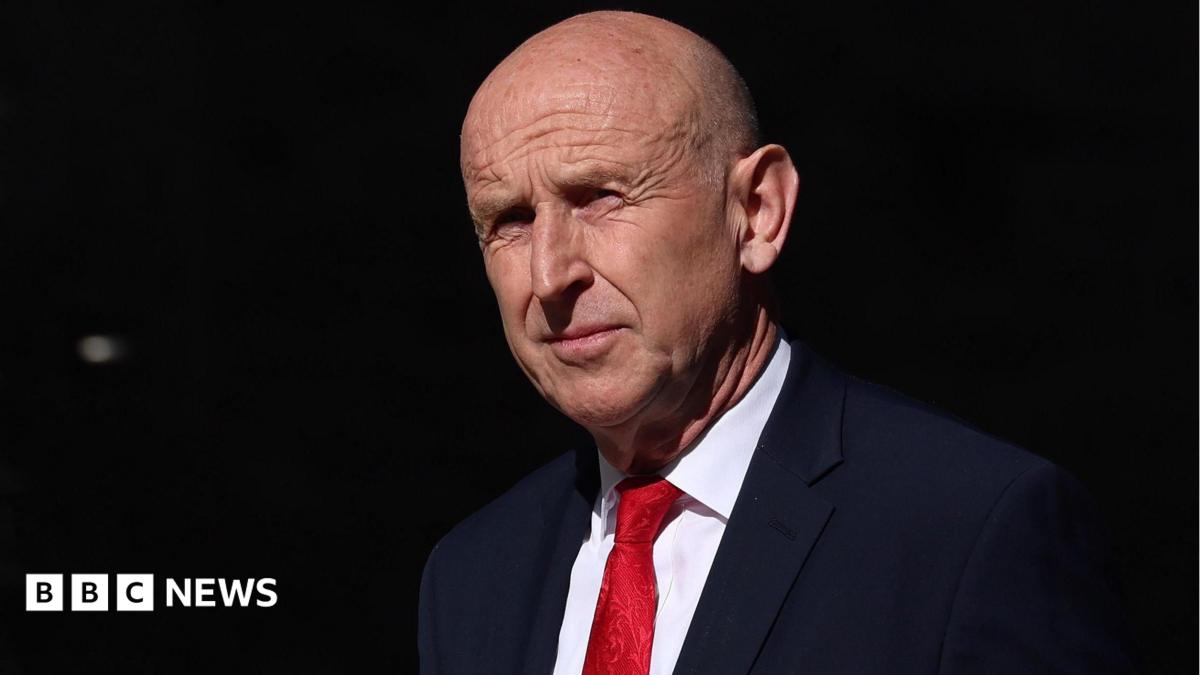
His resignation came days before Andy Burnham’s pivotal by-election in Makerfield, adding to the sense that Sir Keir’s premiership was falling apart.
Healey earned plaudits from across the political spectrum for resigning on a matter of principle.
He had clashed with Reeves, the woman he is now replacing, pointedly saying in is resignation letter that the Treasury had been “unwilling” to “commit the resources that the nation needs to defend the country at this time of rising threats”.
His return to government in the most vital job of all in cabinet after the prime minister is an even bigger surprise than his resignation, given that his name had not been mentioned as a frontrunner in the increasingly feverish speculation about who Burnham would choose.
Sources told the BBC that Burnham and Healey “have the same outlook” on many of the prime minister’s priorities, including reindustrialisation, the cost-of-living, and driving growth across the country.
The softly-spoken Yorkshireman has a remarkable record as someone who has been on the Labour frontbench almost continuously since 2001.
Born in Wakefield in 1960 and educated at Lady Lumley’s Comprehensive School, Pickering, and Peter’s School in York, he studied social and political science at Christ’s College, Cambridge.
Before entering politics, he worked as a journalist, briefly editing Parliament’s in-house magazine The House, before becoming a disability rights campaigner and trade union official.
He is married and has one son.
He first came into Parliament in Tony Blair’s landslide general election in 1997 as MP for Wentworth, a former mining area north of Sheffield, which following boundary changes is now Rawmarsh and Conisbrough.
He retained the seat with a majority of 6,908 in the 2024 general election, with a Reform UK candidate in second place.
In the early 2000s, he held a string of ministerial posts, including housing, local government, and at the Treasury in the Blair and Gordon Brown governments.
He also assisted Brown as his parliamentary private secretary.
But his main interest was housing policy. He served as shadow housing secretary when Jeremy Corbyn was Labour leader, despite supporting a failed attempt to oust Corbyn in 2016.


AMD: Get Out While You Still Can

Getty Images

By James Picerno
The outlook for the Federal Reserve’s mandate to control inflation isn’t getting any easier.
The Middle East conflict is escalating again, creating new shipping bottlenecks for energy exports from the region, which could delay – and possibly reverse – the

The businessman brought in to fix Britain’s cost of living crisis has quit, declaring it “damn hard to get anything done” in Whitehall, the day before Andy Burnham sets out measures to give families more “breathing space” on rising bills.
Lord Walker of Broxton, the executive chairman of Iceland Foods, was appointed by Sir Keir Starmer in February to “work across government” as cost of living champion. Announcing on LinkedIn that his role had “expired” with Starmer’s departure, he warned the new prime minister that he “doesn’t have time for rests and delays”.
His parting verdict on government will ring true for any business owner who has waited months for a policy decision. “Plans are all very good but daily political machinations consume everything,” he wrote, adding that restricted communication flows mean “anyone from the outside with fresh ideas” can be frozen out.
Walker saved his sharpest criticism for the building itself, saying No 10 “as a building is not fit for purpose”. “The 17th Century rabbit-warren design makes collaborative co-working impossible,” he wrote.
His advice to Burnham was to make plans for a No 10 North “more than just a PR exercise”. “I would move the cost of living remit into there and away from the Westminster bubble to make policy work better for every part of the country.”
Walker is not the only business figure heading for the exit. Lord Timpson, former chief executive of the shoe repair and key-cutting chain, is also leaving his role as prisons minister, pointing to “green shoots” in the system and saying he looked forward to returning to lead the family business. For SMEs hoping commercial experience would carry weight inside government, the departure of two of its most prominent business voices within days of a new premiership is not an encouraging signal.
The resignations landed as business groups gave a cautious welcome to Burnham’s first speech as prime minister, in which he spoke of the need to “regain our stability” and a “new economic model”, including a “ten-year plan”, devolution, “stronger public control” of “life’s essentials”, more council homes and “re-industrialising Britain, using public procurement to back British industry”. It follows weeks of business leaders demanding an end to drift and delay during the handover of power.
Their message now is that firms must not be an afterthought. Shevaun Haviland, director general of the British Chambers of Commerce, said: “The cost of living and the cost of doing business are two sides of the same coin. Our surveys show energy and taxation are squeezing businesses, hitting confidence and investment. Easing the cost of doing business will deliver the growth we all want to see.”
Burnham has already pledged a 20 per cent business rates cut for pubs and high street firms, but recruiters want him to go further. Neil Carberry, chief executive of the REC, said “firms across the country need to see action. Over the past few years, businesses have seen a swathe of well-intentioned policies raise costs and dampen hiring, contributing to the rising cost of living people face.”
He urged Burnham to insert “pragmatism into the unworkable elements of the government’s employment law changes, reducing the tax wedge on hiring people, and re-invigorating the industrial strategy with the kind of skills, planning and infrastructure reforms that will get private capital working”. Small firms have long warned the employment law overhaul would hit hiring.
The Institute for Fiscal Studies offered a colder dose of realism. Helen Miller, its director, said: “Seeking to rewire the British state, against a backdrop of constrained public finances and with an in-tray full of domestic and international challenges, will require much more than ambition.”
She added that the government “will need to quickly flesh out the vision of what it wants to achieve and be ruthless in its prioritisation”, warning that generous NHS settlements would mean cuts elsewhere, and that on council housing “the subsidies required won’t come cheap”.
With consumer price inflation still running at 2.8 per cent, Burnham’s breathing space cannot come soon enough, for households or the firms that serve them. Walker’s parting message suggests delivering it from inside the rabbit warren will be the hard part.

Jamie Young
Jamie Young is Senior Reporter at Business Matters, covering SME finance, employment law and Westminster policy since 2016. He has reported on every Budget and Autumn Statement since 2018, helped make sense of the ‘covid era’ and the bounce-back loan scheme from launch through the fraud investigations, and broke the magazine’s coverage of the 2024 late-payment reforms. He joined Business Matters straight from completing his BA in Administration from Exeter University and is NCTJ-qualified. Reach him at jyoung@cbmeg.co.uk
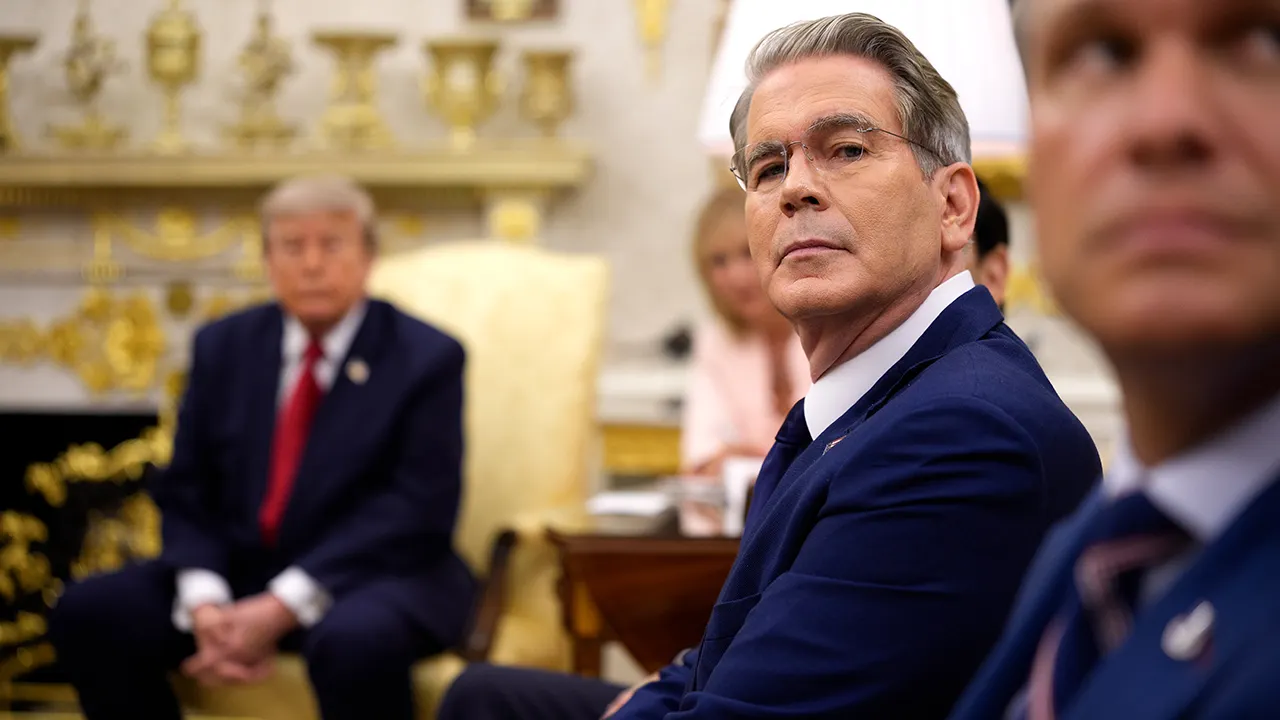
Treasury Secretary Scott Bessent joins ‘Mornings with Maria’ to discuss the Trump administration’s payment verification system that blocked ‘about $100 million’ in payments to deceased people and could stop $350 million this year.
The U.S. Department of the Treasury has prevented nearly $99 million in federal payments from being disbursed to deceased individuals using a new verification system deployed under President Donald Trump’s executive order targeting government fraud, waste and abuse.
Following Executive Order 14249, “Protecting America’s Bank Account Against Fraud, Waste, and Abuse,” the Department of the Treasury and the Bureau of the Fiscal Service implemented a verification process that reviewed more than 885 million payments totaling approximately $2.77 trillion.
That screening flagged more than 4,900 payments totaling nearly $99 million that were associated with deceased individuals, returning the payments to the originating federal agencies for review before any funds were disbursed.
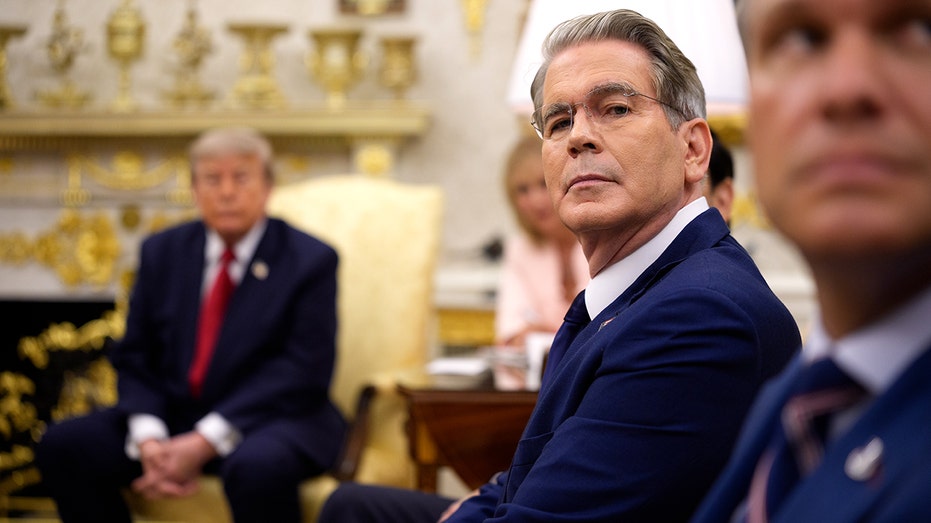
Treasury Secretary Scott Bessent attends a meeting with President Donald Trump and other Cabinet members. (Getty Images)
“So far, we’ve saved about $100 million, payments that didn’t go to deceased people… We think that there’s up to $350 million that we can stop before the end of this year,” Treasury Secretary Scott Bessent said on “Mornings with Maria” Tuesday. “The [Government Accountability Office] estimates that… this number might be up to $500 billion, which is about 1.66% of GDP. So that could go a long way towards paying down the debt, providing more services, and this is just the start.”
“In the Biden administration, HHS got rid of about 50 or 60 of the people who were charged with monitoring fraud. And, Maria, what’s important here is that we are stopping the money from going out. So once the money gets out, trying to retrieve it, it’s very, very difficult. So stopping it at the source here is our goal,” he continued.
Treasury Secretary Scott Bessent joins ‘Mornings with Maria’ to discuss the Trump administration’s crackdown on government fraud, mounting economic pressure on Iran, the AI race with China and the outlook for the U.S. economy.
The initiative relies on permanent access to the Social Security Administration’s Full Death Master File, access that was initially granted on a temporary three-year basis in 2021 through the Consolidated Appropriations Act, according to a Treasury press release.
GET FOX BUSINESS ON THE GO BY CLICKING HERE
Following initial projections estimating $330 million in net benefits between 2024 and 2026, Congress made the verification authority permanent through the “Ending Improper Payments to Deceased People Act,” which President Trump signed into law in February.
“This new safeguard addresses a longstanding vulnerability and helps ensure every dollar the federal government spends reaches its intended recipient,” Bessent also said in the press release. “Treasury will continue efforts to modernize the federal payment system, strengthen safeguards against fraud and improper payments, and protect taxpayer dollars.”

The maker of Wegovy and Ozempic, Novo Nordisk, has launched legal action accusing its arch rival Eli Lilly of false advertising in suggesting its weight-loss drugs perform better.
The Danish company filed a lawsuit in the US on Tuesday claiming Eli Lilly, which makes Mounjaro and Zepbound, deployed ad campaigns to “create the misleading impression that Eli Lilly’s medicines are superior”.
Novo said its rival compared the highest approved doses of its medicines for obesity and type-2 diabetes with lower doses of Novo Nordisk’s, while omitting newer, higher-dose options.
The BBC has contacted Eli Lilly for comment.
The lawsuit comes as Novo and Eli Lilly are locked in battle to dominate the fast–growing weight-loss drug industry, especially in the US, which analysts have estimated could be worth more than $100bn by 2030.
Novo Nordisk claimed its main competitor in the weight-loss drug business had committed “multiple violations” of federal and state false advertising and unfair competition laws, through its nationwide ad campaigns.
The company said Eli Lilly’s current campaigns “intentionally” selected outdated studies comparing Lilly’s highest doses against lower doses of Novo Nordisk’s medicines.
It said the ads had “deceptively” presented that Eli Lilly’s products were superior, but buried or omitted “critical clinical context”.
The products being compared incorrectly, according to Novo, were Mounjaro vs. Ozempic and Zepbound vs Wegovy.
“As new and more effective treatment options become available, people deserve accurate information that reflects the latest scientific evidence and helps them make informed care decisions,” said John F. Kuckelman, senior vice president and group general counsel for Novo Nordisk.
“Healthcare companies have a responsibility to keep their public claims accurate and current – ineffective, fine-print disclaimers do not fix the misleading impression created by major national campaigns,” he said.
Novo said it was seeking a court order requiring Eli Lilly to pull its ads and instead run what it called a “corrective advertising campaign”.
It added if Eli Lilly did not voluntarily remove the commercials, it would file a motion in the coming days to seek a preliminary injunction to block them.

Why is Hasbro stock surging today?

Buying AI's Upside And Shorting Its Implosion Risk: Long Microsoft, Short Oracle

Australia is already engaged in a conflict with China, former defence minister Linda Reynolds told the Aukus Public Inquiry in Fremantle recently.
Business
Dow Rebounds as Chip Stocks Rally and Iran Signals a Diplomatic Opening Ahead of Earnings This Week

The Dow Jones Industrial Average climbed Tuesday morning, trading at 52,010.37, up 0.33%, or 171.11 points, as semiconductor stocks staged a fresh rebound and easing rhetoric from Iranian officials helped lift broader investor sentiment ahead of a heavy week of corporate earnings reports from major technology companies.
The gains extended into the broader market as well, with the S&P 500 rising roughly 0.6% and the tech-heavy Nasdaq Composite climbing about 0.9%, as chip names took center stage ahead of results due later this week from Alphabet, Intel, IBM and Tesla, among others.
Chip stocks lead the rebound
Semiconductor shares were the standout performers of Tuesday’s session, continuing to recover after a difficult stretch of losses last week. Asian equities had already risen for the first time in four days overnight, with the MSCI Asia Pacific Index climbing 1.7% and chip giants Samsung Electronics and Taiwan Semiconductor Manufacturing Co. among the biggest contributors to that regional rally. South Korea’s Kospi and Taiwan’s benchmark index each gained more than 2.5% overnight, while Japan’s Nikkei 225 rose 2.2% as trading resumed following Monday’s holiday.
That momentum carried directly into U.S. trading, with a broad gauge of American chip stocks rebounding from last week’s sharp selloff and continuing to build on early gains through Tuesday’s session.
A reversal from Monday’s decline
Tuesday’s advance follows a weaker session Monday, when the Dow fell 307.16 points, or 0.59%, to close at 51,839.26, dragged lower in part by a more than 2% decline in Apple shares. The S&P 500 dropped 0.19% to 7,443.28 on Monday, while the Nasdaq Composite slipped 0.05% to 25,508.07, as oil prices advanced following the latest round of military exchanges between the United States and Iran.
Signs of a possible diplomatic opening
Much of Tuesday’s improved sentiment traced back to comments from Iranian officials suggesting a possible path toward renewed negotiations, even as the underlying military conflict continued. The United States completed its ninth consecutive night of strikes on Iranian targets overnight into Monday, but investor sentiment began improving by midmorning London time after Iranian Foreign Ministry spokesman Esmail Baghaei signaled openness to a diplomatic resolution.
Baghaei told reporters that intermediaries had continued exchanging messages with Iran even amid the latest round of U.S. strikes, and said negotiations between the two countries could still be pursued based on each side’s national interests. That comment, while not a formal breakthrough, was enough to ease some of the geopolitical risk premium that had been weighing on markets in recent sessions, contributing to lower oil prices Tuesday after crude had briefly touched $90 a barrel over the weekend.
A pivotal week for earnings season
With markets now entering what TheStreet Pro contributor James “Rev Shark” DePorre described as the heart of earnings season, investor attention is increasingly shifting toward how companies’ quarterly results are received rather than simply whether they beat expectations. “The big question is whether the recent carnage has changed expectations enough to change the response to the numbers,” DePorre said. “Will in-line reports be good enough, or does the sell-the-news dynamic that has been punishing some strong results remain in charge?”
DePorre noted that more than 86% of S&P 500 companies that have reported results so far this season have beaten analyst expectations, “and the market has sold plenty of them anyway,” underscoring how closely investors are scrutinizing forward guidance and capital spending plans rather than headline earnings beats alone.
Intel layoffs add to sector-specific news
Beyond the broader market moves, individual company developments continued to shape sentiment within the technology sector. Intel confirmed plans for a new round of layoffs as part of what the company described as a broader strategic realignment, with more than 5,000 U.S. employees affected so far, concentrated primarily in California and Oregon, alongside additional cuts in Arizona and Texas.
An Intel spokesperson explained the rationale behind the restructuring. “As part of our broader strategy to become a more focused and efficient company, our data center group is aligning its organization to ensure it has the right roles and skills in place to position the business for long-term success,” the spokesperson said, adding that the company remains committed to treating all affected employees with respect throughout the transition.
Markets bracing for a wave of Big Tech results
With Alphabet, Intel, IBM and Tesla all scheduled to report earnings later this week, market participants are looking for the next meaningful catalyst for the broader artificial intelligence trade following a series of sharp sector rotations in recent weeks. Analysts said Wall Street has raised its expectations heading into those reports, given the extent to which capital expenditure guidance from major technology companies has increasingly driven stock reactions this earnings season, often more so than the headline profit and revenue figures themselves.
With chip stocks attempting to build on Tuesday’s rebound and cautious optimism building around potential U.S.-Iran diplomatic engagement, investors are likely to remain focused on this week’s earnings reports as the next major test of whether the broader technology rally can regain its footing following weeks of volatility. At the same time, any further developments in the U.S.-Iran conflict, whether toward continued escalation or renewed negotiation, are expected to remain a significant factor shaping both oil prices and broader market sentiment in the sessions ahead.
Business
Florida Confirms New Burmese Python Breeding Hotspot Outside the Everglades, Alarming Wildlife Experts

Florida wildlife officials have confirmed that Burmese pythons are now breeding in a new area outside the species’ long-recognized stronghold in the Everglades, a discovery that has renewed concerns among conservationists about the invasive predator’s potential for further spread across the state.
The Florida Fish and Wildlife Conservation Commission confirmed that Burmese pythons are now established in part of western Charlotte County, an area located north of Naples and Fort Myers that lies well outside the species’ traditional core range. For decades, established python populations had been largely confined to areas associated with Everglades National Park before spreading across much of South Florida, stretching between Lake Okeechobee, Key Largo and western portions of Broward and Collier counties.
A distinct population beyond the known range
Unlike a simple isolated sighting, the Charlotte County colony represents a separate breeding population situated beyond the snake’s familiar distribution area, according to wildlife officials. Reports from local communities began steadily increasing several years ago, with sightings clustering around Rotonda West, Placida, Englewood East and South Gulf Cove. Those reports prompted closer monitoring efforts, ultimately leading biologists to conclude that breeding animals were indeed present in the area.
Ian Bartoszek, a wildlife biologist and science coordinator at the Conservancy of Southwest Florida in Naples, explained why officials view removing the snakes as such a priority. “This is a generalist apex predator, and this is the why we’re so interested in removing them from the ecosystem,” Bartoszek said, according to ABC News.
How the snakes likely got there
Wildlife specialists do not believe the Charlotte County population developed through a gradual northward expansion from existing Everglades populations. Instead, available evidence points toward escaped or deliberately released captive snakes as the more likely explanation. Burmese pythons were widely imported into the United States for decades through the exotic pet trade, and both accidental escapes and intentional releases have previously been linked to the species’ broader establishment across Florida. Biologists studying the new Charlotte County colony say its characteristics more closely match what would be expected from a satellite population created through human introduction, rather than one resulting from natural expansion across the landscape over time.
A diet that helps the species thrive almost anywhere
Part of what makes Burmese pythons especially difficult to control is their unusually broad diet. Large individuals are capable of feeding on a wide range of animals, including raccoons, opossums, birds, bobcats and alligators, and have even been documented consuming prey considerably larger than many people might expect a snake to handle.
That dietary flexibility gives the species a significant survival advantage, allowing individual snakes to shift between different available prey sources depending on local conditions, rather than depending on a single food source that could limit their ability to establish themselves in new habitats. Conservation workers involved in python removal efforts describe the snakes as true apex predators, capable of substantially reshaping local ecosystems once a population becomes firmly established in a given area.
The broader ecological toll
The impact of established python populations extends well beyond the loss of individual prey animals. Ecologists studying areas of South Florida where pythons have been present for years have documented steep declines across many native mammal populations in those regions. As larger native mammals disappear from an ecosystem, scientists say the overall diversity of that environment can gradually decline as well, with researchers describing the resulting altered landscapes as simplified systems in which rodents and other invasive species tend to become comparatively more common, even as many native animal populations grow increasingly scarce.
Researchers say this pattern has already repeated itself across multiple areas of South Florida affected by established python populations, and preventing similar ecological changes from taking hold in newly identified areas like Charlotte County remains an ongoing and significant challenge for wildlife managers.
Why most pythons remain undetected
Estimating the true number of Burmese pythons currently living in Florida remains an extraordinarily difficult task for wildlife researchers. The snakes spend much of their time concealed within dense vegetation, wetlands and waterways, making them exceptionally hard to locate even during organized, systematic surveys. Research suggests survey teams may detect only around one to three snakes for every hundred believed to actually be present within a given search area.
Even within Everglades National Park, where specialized removal teams regularly search for pythons as part of ongoing management efforts, locating even a single snake often requires many hours of dedicated fieldwork. That persistently low detection rate suggests that confirmed sightings likely represent only a small fraction of the total number of pythons actually living across the broader Florida landscape.
Decades in the making
The broader Burmese python invasion in Florida has developed gradually over several decades. Federal wildlife records indicate that roughly 180,000 Burmese pythons were imported into the United States between 1975 and 2018, largely through the exotic pet trade. By approximately the year 2000, breeding populations had already become firmly established across South Florida. Since that time, wildlife agencies have relied on a combination of public reports, organized removal programs and ongoing scientific surveys in an effort to slow the species’ continued spread across the state.
Those broader containment efforts now extend to the newly confirmed population in Charlotte County, with officials continuing to monitor both that area and neighboring Lee County for additional python activity. Wildlife biologists say detecting breeding groups early offers the best available chance of limiting further expansion before a new population becomes as deeply entrenched as those already established in South Florida. Even so, officials acknowledge that managing an invasive predator of this size and adaptability remains one of the most demanding ongoing wildlife challenges facing the state of Florida, with the Charlotte County discovery underscoring just how difficult full containment of the species may ultimately prove to be.

CWG 2026: The new faces who could shape India’s future in Glasgow | Commonwealth Games

The Language Barrier Is the Real Barrier in Edtech

Ann Widdecombe was hit on head repeatedly with hammer, court hears


-
 NewsBeat5 days ago
London Mayor Sadiq Khan handed a peerage by Keir Starmer alongside 15 other Labour figures… just days before the PM leaves No10
-

 Fashion4 days ago
Weekend Open Thread – Corporette.com
-

 Politics3 days ago
The House | The City of London can help the new chancellor deliver growth in every postcode
-

 Politics6 days ago
Young campaigners urge incoming PM to act on outdoor junk food ads
-

 Crypto World6 days ago
CFTC blocks Kalshi from unwinding Michigan trades after court order
-
 Crypto World4 days ago
Two July Windows Left: The CLARITY Act’s Senate Fight and What Failure Means
-

 Crypto World3 days ago
Ripple Payments Joins MiCA With 14 Firms, Does It Mean Anything For XRP?
-

 Business6 days ago
Nvidia Stock Slips After Big Tuesday Rally as Huang Confirms Vera Rubin Chip Is Now in Production Today
-

 Politics2 days ago
Democrats look to World Cup watch parties to register thousands of voters
-
 Entertainment6 days ago
Disney’s Most Ambitious Failed Star Wars Attraction Is Coming to SDCC
-

 Crypto World4 days ago
Ripple wins EU-wide access as ESMA adds it to MiCA register
-

 Crypto World5 days ago
Injective Submits SEC Transfer-Agent Registration to Onchain Ownership Records
-

 Crypto World6 hours ago
Grayscale Files For Worldcoin ETF, WLD Registers Sharp Rise
-

 Business5 days ago
Palantir Shares Rise After Expanded Nvidia Partnership and Fresh Analyst Upgrades Ahead of Earnings Day
-

 Tech14 hours ago
Sail Virtually Aboard The “Itanic” With IA-64 Emulator
-
 Tech12 hours ago
Turtle Beach Command Series KB7 review: a nifty screen-equipped gaming keyboard
-

 Tech7 days ago
Dark Secrets Emerge When Jailbreaking LLMs
-

 NewsBeat4 days ago
Registration is now open for March for Men with Kev 2026
-

 News Videos7 days ago
XRP BOMBSHELL… XRP OMBOARDED FOR TRANSACTIONS!!!
-

 NewsBeat1 day ago
Unregistered fitter used Gas Safe logo on business flyers
You must be logged in to post a comment Login