Given that he’s so willing to discuss his northern heritage when it suits, it’s likely that even someone as detached as Sir Jim Ratcliffe is aware of the acclaimed Jimmy McGovern TV drama, ‘Cracker’. He could do with a watch, if not.
In the first episode of the series most famous storyline, the ‘To Be A Somebody’ arc primarily about the social and psychological effects of Hillsborough, there’s a scene when the premises of a white nationalist group in Manchester are raided.
Amid the chaos, the character played by Christopher Eccleston, DCI David Billborough, spots a squad photo of the 1993-94 Manchester United squad on the wall. The detective accosts a bare-chested skinhead and starts gesturing to the players in the picture.
“Ince is black, Parker is black, Dublin is black, Schmeichel’s a Dane, Kanchelskis is a bloody Ukrainian and Cantona is French.”
Point made.
Advertisement
While this obviously isn’t to equate Ratcliffe’s clumsily ill-advised comments on immigration with fictional white nationalists, or imply he holds anything like such views, what does it say that the billionaire’s “disgusting” comments – to use the description of Chancellor Rachel Reeves – make it feel like he could do with a similar lecture about the team he co-owns?
Many of United’s own supporters have already made it clear, with multiple banners and memes about loving immigrants and hating billionaires. In one, Roy Keane and Eric Cantona happily stride above an image of Ratcliffe and the Glazers.
A football column like this obviously doesn’t need to re-state the basic errors that Ratcliffe made, or relay political arguments demonstrating the positives of immigration.
And if such a column is about the game itself, it is important to acknowledge that Ratcliffe’s views will be shared by many on the Old Trafford stands, despite much of the support’s inclusive leanings. His comments lamentably reflect the political era we’re in, where many of the very themes explored by ‘Cracker’ have only become more relevant.
Advertisement
The fact that many football fans will share Ratcliffe’s views only reflects the mass popularity of the sport, and how it cuts across more sectors of the population than any other pursuit.
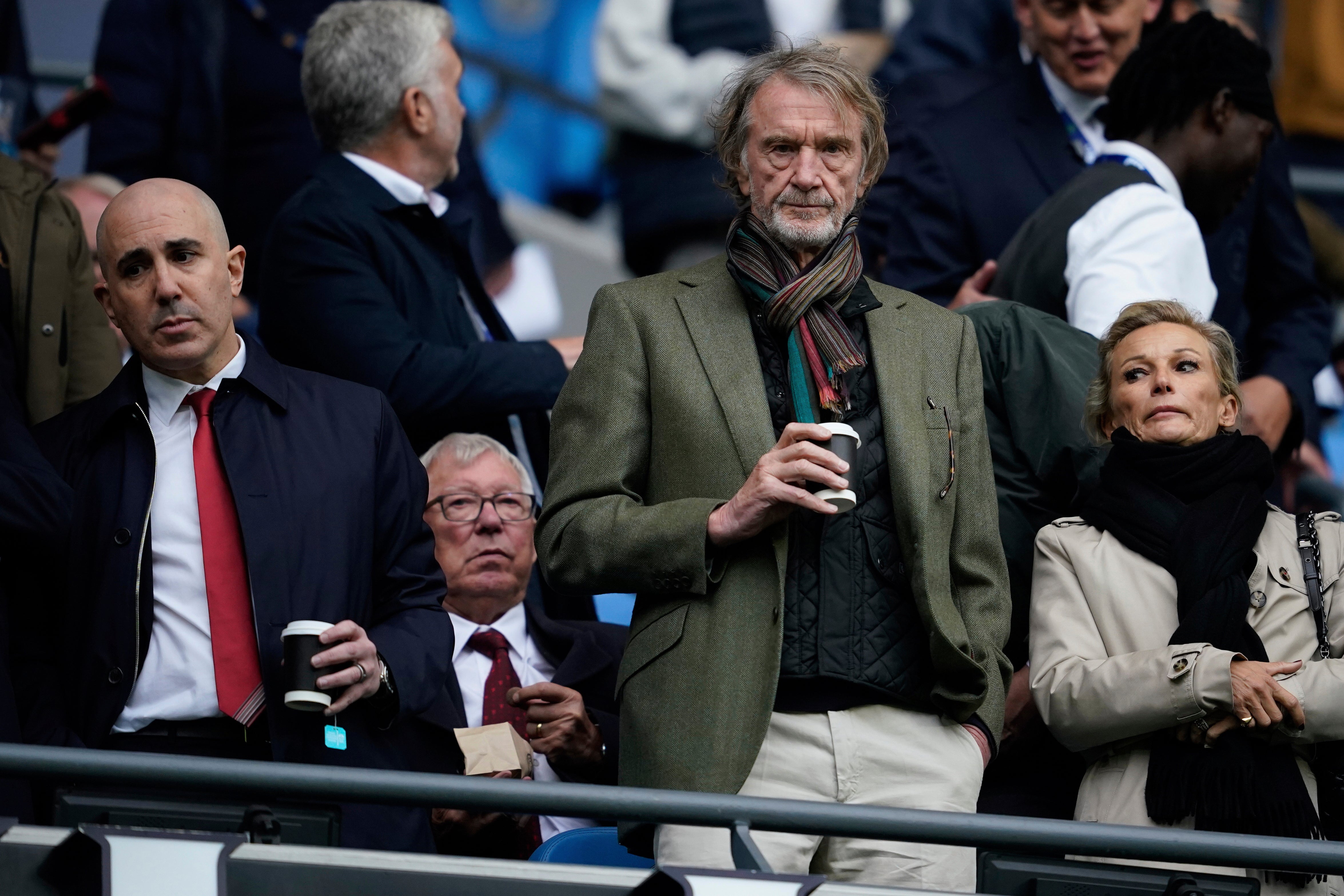
Jim Ratcliffe’s comments lamentably reflect the political era we’re in (AP)
That fact doesn’t, however, reflect football’s true power here and what is actually relevant about this.
Ratcliffe’s sentiments are actually the complete antithesis of what the game is really about: happiness, inclusivity, coming together.
Advertisement
A simplistic view, sure, but also an easily demonstrable truth.
This is what that episode of Cracker so archly illustrated.
It’s not just that there’s no sector of society as popular as football. It’s that there’s no sector as powerful in breaking down the same barriers.
This is a wider point that should be made as regards the billionaire’s comments in his profile as a notional football figure.
Advertisement
Leave aside the politics for a moment, and even the suspicions the United co-owner was possibly just seeking to cozy up to Reform sentiments.
What Ratcliffe said was actually anti-football.
There are countless examples you could use to illustrate why, starting with United’s own team and history. A migrant, Billy Whelan, died in the Munich air disaster commemorated last week.
Advertisement
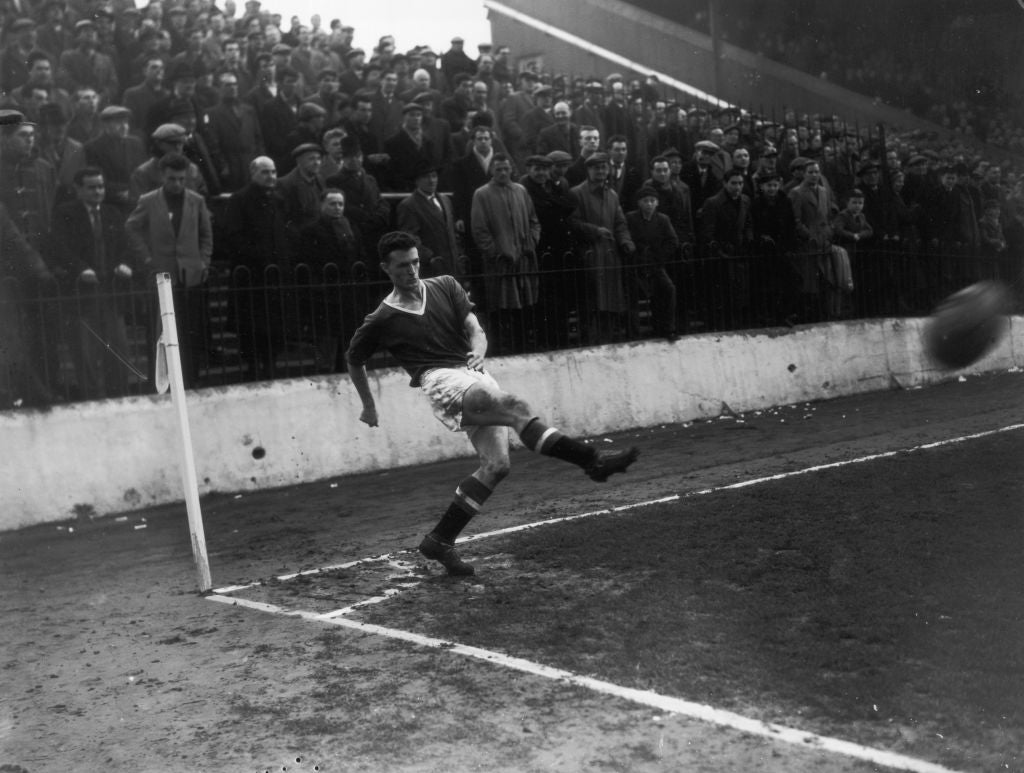
Billy Whelan, a migrant, died in the Munich air disaster commemorated last week (Getty Images)
Across town, Manchester City celebrated Germany’s Bert Trautmann as a club legend, just 11 years after the Second World War.
Come to now, and around 70 percent of the Premier League’s players are migrants and 79 percent of its managers.
The writer of this very column is a migrant, even if comments like Ratcliffe’s are no longer usually intended to mean the Irish given the common travel area.
And while none of this is to deny that serious racism or exclusionary views are challenges within the game and around it, the crucial point is that football itself serves to change minds.
Advertisement
Think about it in the most basic terms.
Many of us will have been in the company of supporters who hold even stronger views than Ratcliffe, only to express adoration for migrants in the same breath.
This gradually has a tangible positive effect, too.
In 2019, a Stanford University study showed that Mohammed Salah’s performances had reduced both Islamophobia and hate crime rates in Liverpool.
Advertisement
Islamophobia and hate crime rates in Liverpool reduced as a result of Mohamed Salah’s performances (Peter Byrne/PA Wire)
And they obviously did. That is how this works.
There are few sectors that encourage understanding and integration as much as football. The game has many problems, but this is one it actively works against in the most direct and persuasive way.
The one true global game serves to bring people together, even amid its many issues and the way it is often politically misused.
Advertisement
In the latter sense, the Ratcliffe controversy raises another crucial theme.
It is striking that United themselves felt the need to release a statement re-asserting the club’s inclusive ethos, and yet they find themselves co-owned and consequently represented by a man whose comments go against that. It has long been the same with the Glazers’ capitalist outlook, not least the manner their conference calls have discussed benefitting from dramatic Trumpian tax reforms, and how that so goes against the idea of a club founded by railway workers.
This is the world football has willingly moved into, without its fans having any say whatsoever.
It’s not hard to imagine some of football’s other billionaire owners privately expressing sympathy with Ratcliffe’s views, rolling their eyes with how the public just won’t get it. They move in a completely different world.
Advertisement
In another extreme, two other ownerships – those of Manchester City and Newcastle United – are key figures or funds from autocratic states who have migrant labour laws described as “modern slavery” and based on racial hierarchies.
All of this just forms another simple argument as to why such social institutions should be owned by supporters, not private or state interests. That is who they really represent, after all.
And yet this dismal situation perhaps has one positive when it comes to the ownership problem.
One of the main reasons that some billionaires get into football is fame, and social capital. They enjoy the increased profile, in ways that their other businesses just can’t afford. It also allows them to indulge what some industry figures describe as “billionaire idiot syndrome”, where individuals who are financially successful in one specific area become convinced they can easily translate this to anything else. As one example, when Ratcliffe made a pitch to buy Chelsea in 2022, those involved had the perception that he thought it would be easy because he’d run Ineos.
Advertisement
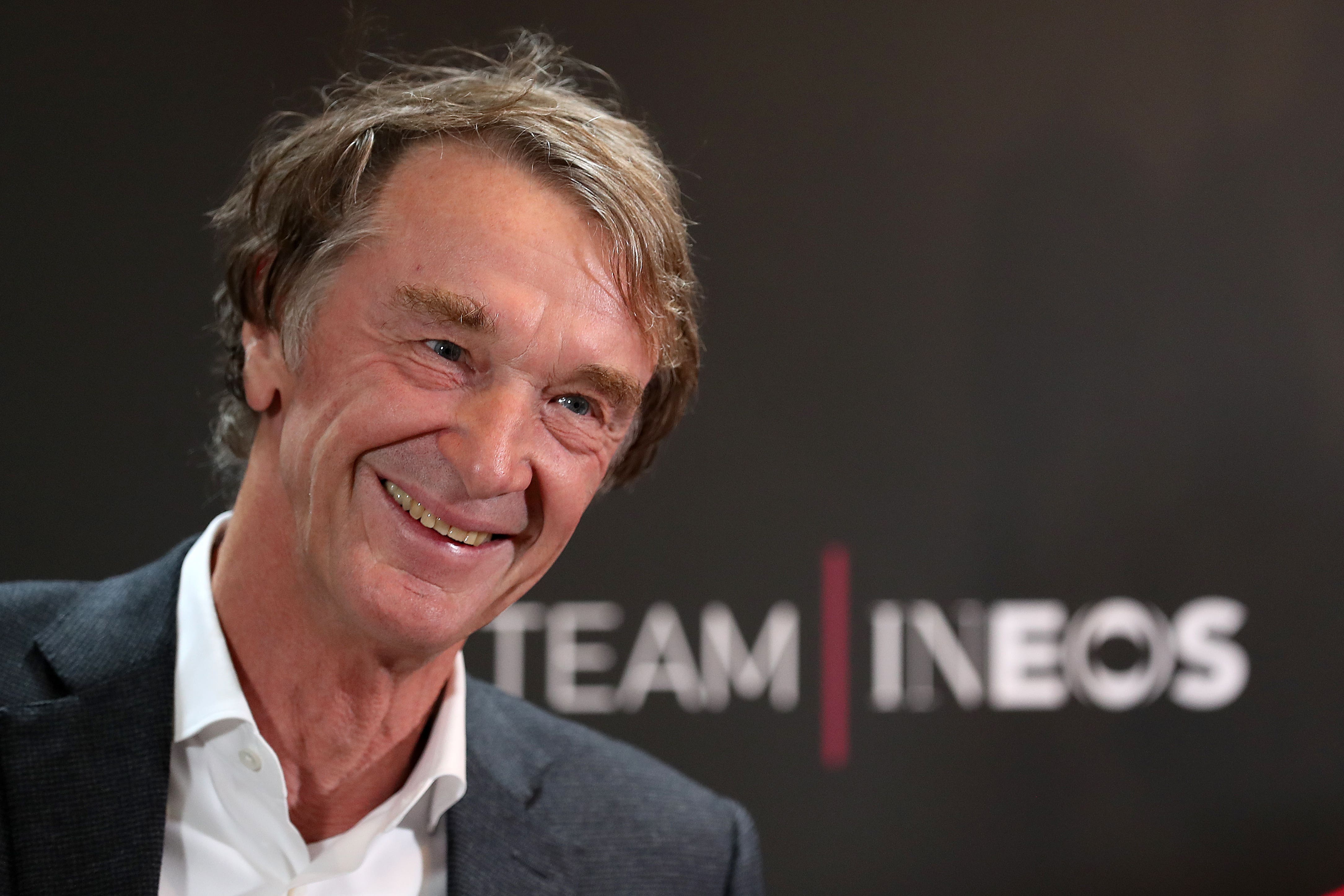
When Ratcliffe made a pitch to buy Chelsea in 2022, those involved had the perception that he thought it would be easy because he’d run Ineos (PA Archive)
And duly, if Ratcliffe said this still just a petrochemicals owner, it likely wouldn’t have made anything like the same headlines.
Saying it as the co-owner of Manchester United, however, has just publicly exposed the poverty of thinking. A man frequently described as arrogant has been forced into a partial apology.
The game has that power, as well as so much more.
Advertisement
Ratcliffe could do a bit more to understand the sport he’s actually in, not least its inclusive nature.
He could start by trying to understand his own club.
There have been some big feelings in recent days, feelings of consternation, even outrage, at England’s two Wembley performances. Change the players. Sack the manager. Delete England as a sporting entity. If Harry Kane isn’t fit, do they even bother going through the motions of drawing 1-1 with Croatia and muddling past Ghana, only to be knocked out in the last-16 by the first good team they run into?
At which point, perhaps it is worth taking stock for a moment. It is unlikely any of Thomas Tuchel’s starters against Uruguay will play a significant role at the World Cup. The line-up to face Japan was stronger but only a handful of those will start in North America. Six key players were missing. The football was drab and uninspiring, but none of this was entirely representative of who England will be in the summer.
The stark reality is that for several of England’s leading lights, this international break was just that, a break, from the rigours of club football which are more gruelling than ever. Tuchel called up 35 players, and almost an entire XI pulled out with injury.
“I see fatigue, clearly,” the England manager said after Tuesday’s 1-0 defeat by Japan, referring to the players on the pitch and the wider squad. “This is not an excuse but just an explanation.”
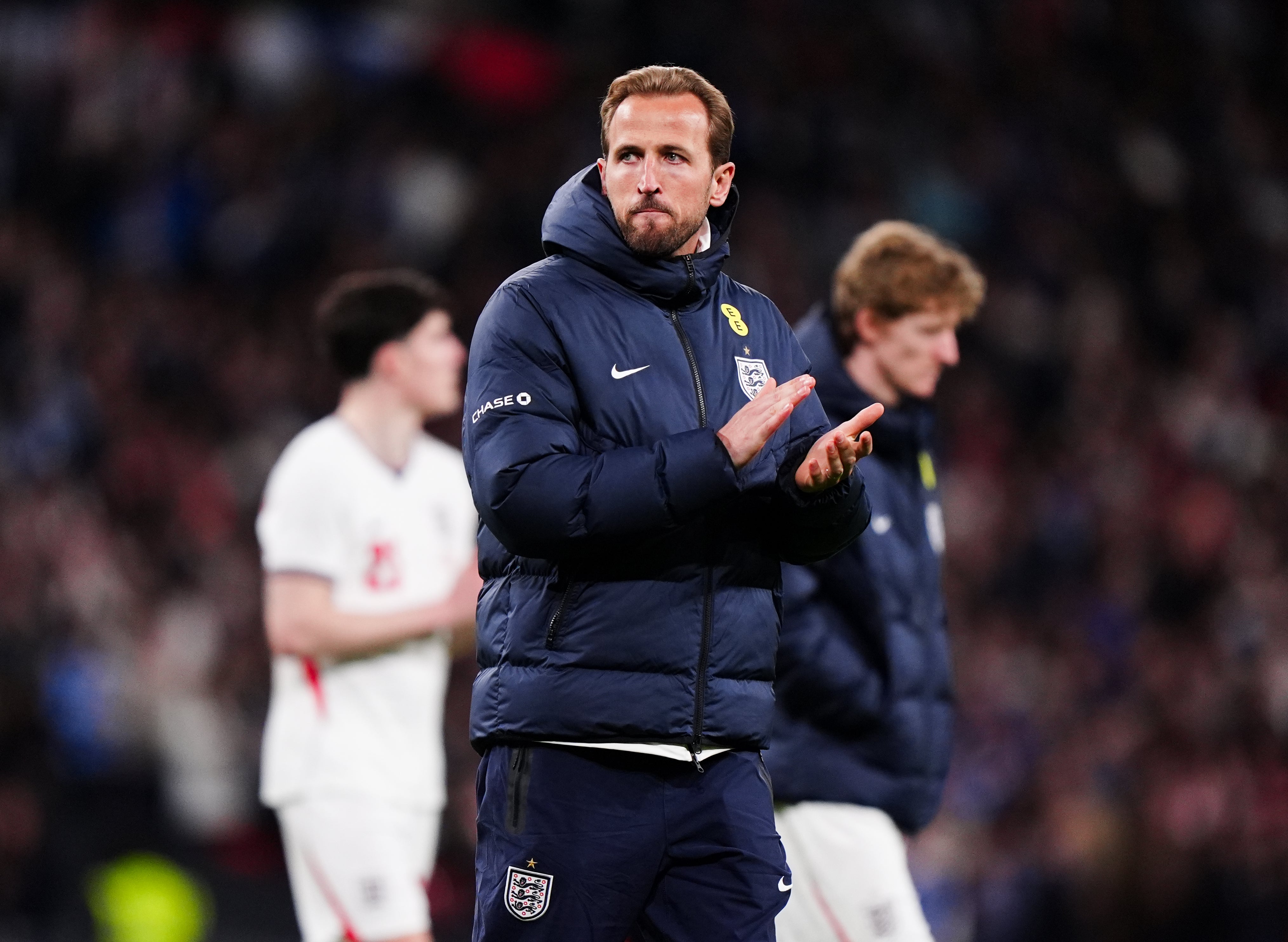
Harry Kane was reduced to a watching brief after sustaining an issue in training (Bradley Collyer/PA) (PA Wire)
In that sense, perhaps this international window did serve a purpose. About a dozen players went on holiday. Another batch took their first two-week break all season in order to give niggling injuries a chance. This was a rare and much-needed window to heal.
Declan Rice could have played, Tuchel suggested, but it wasn’t worth the risk. Jude Bellingham was the same. “[Rice] feels a discomfort since quite a while,” the manager explained. “He’s been playing through it [for Arsenal] and he’s just now on the edge where he thinks, ‘Does this make sense, what I’m doing here, to push through with 70 per cent and push myself and push myself?’”
Advertisement
Perhaps the dropouts did a disservice to representing England, to wearing the shirt, to putting on a show for 80,000 ticket holders at Wembley. But it points to the truth about where international friendlies are, in March, among the priorities for overworked players in title races and with Champions League quarter-finals afoot.
These results won’t dictate the future. England have disappointed in March before, only to come good in the summer. They lost to Brazil and drew with Belgium in 2024 before reaching the European Championship final. Even last year under Tuchel, England bounced back from a dispiriting defeat by Senegal in June with a perfect set of wins through September, October and November.
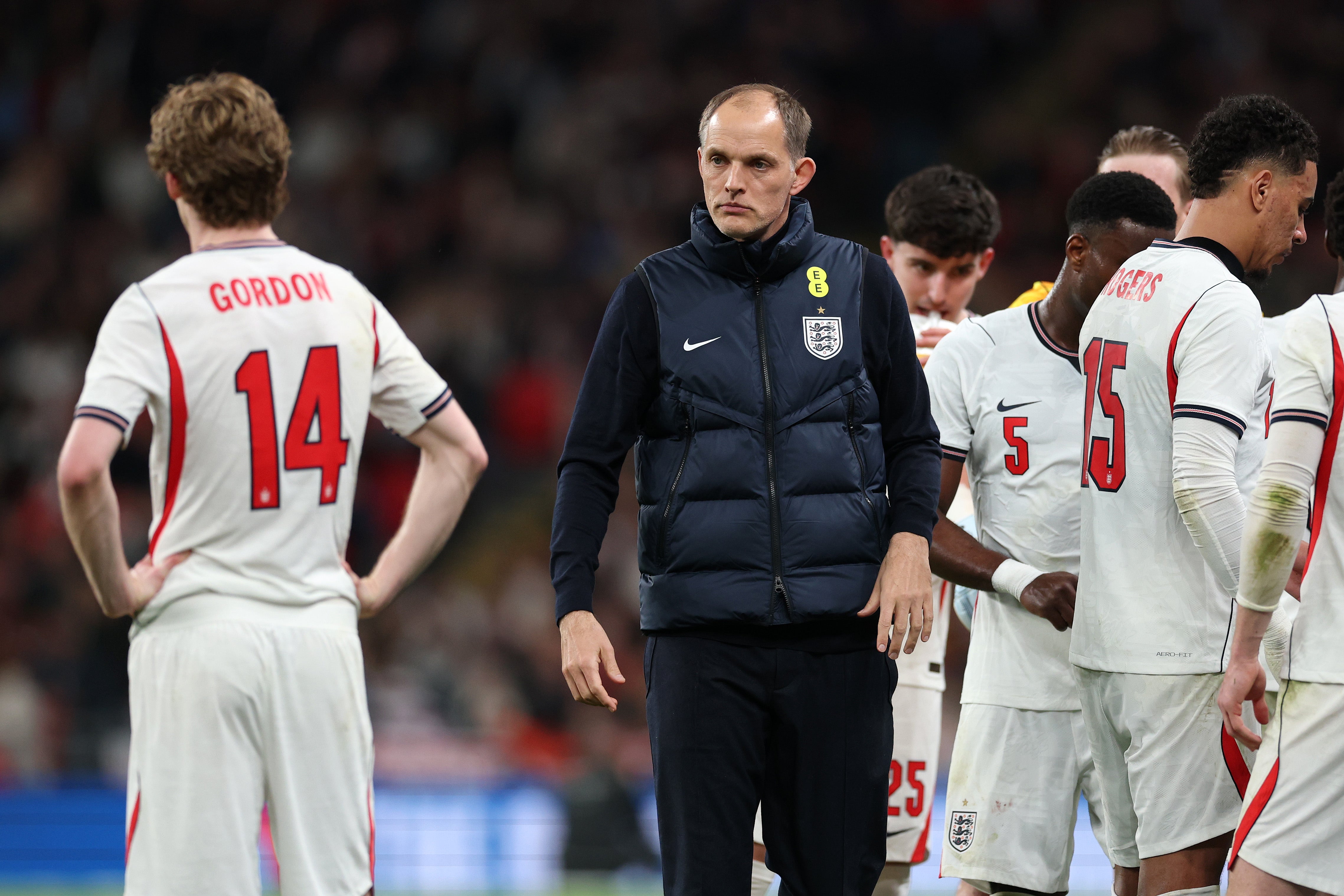
Thomas Tuchel consoles his players after a 1-0 defeat by Japan (The FA via Getty Images)
Tuchel defended his players and took responsibility for the poor displays. But he insisted his belief in achieving the bold goal he set for himself when he took the England job – “to put a second star on the shirt” – remains intact.
“We will not start doubting now. I knew before how complicated this camp can be because I know the level of fatigue that the players are in and the level of minutes that they’ve played.
“We tried to build a football team in three days against Uruguay,” Tuchel laughed. “And it did not look so bad even if it was for you guys and for the fans not the nicest watch. But I’m not so sure that you can play spectacular football against Uruguay or spectacular football against Japan, non-stop. Because it’s difficult. They are just good football teams.
Advertisement
“We also gave [key] players a break so that they come fresh [for Japan] and we can play, maybe, with actually the strongest squad. But it was absolutely not possible because we lost so many players throughout the camp.
“We will not let go of our dream, not let go of the question ‘Why not?’. Now the most important thing is that the players reintegrate with their clubs, have a good end to the season, and then we have them in pre-camp [for the World Cup] and prepare them properly.”
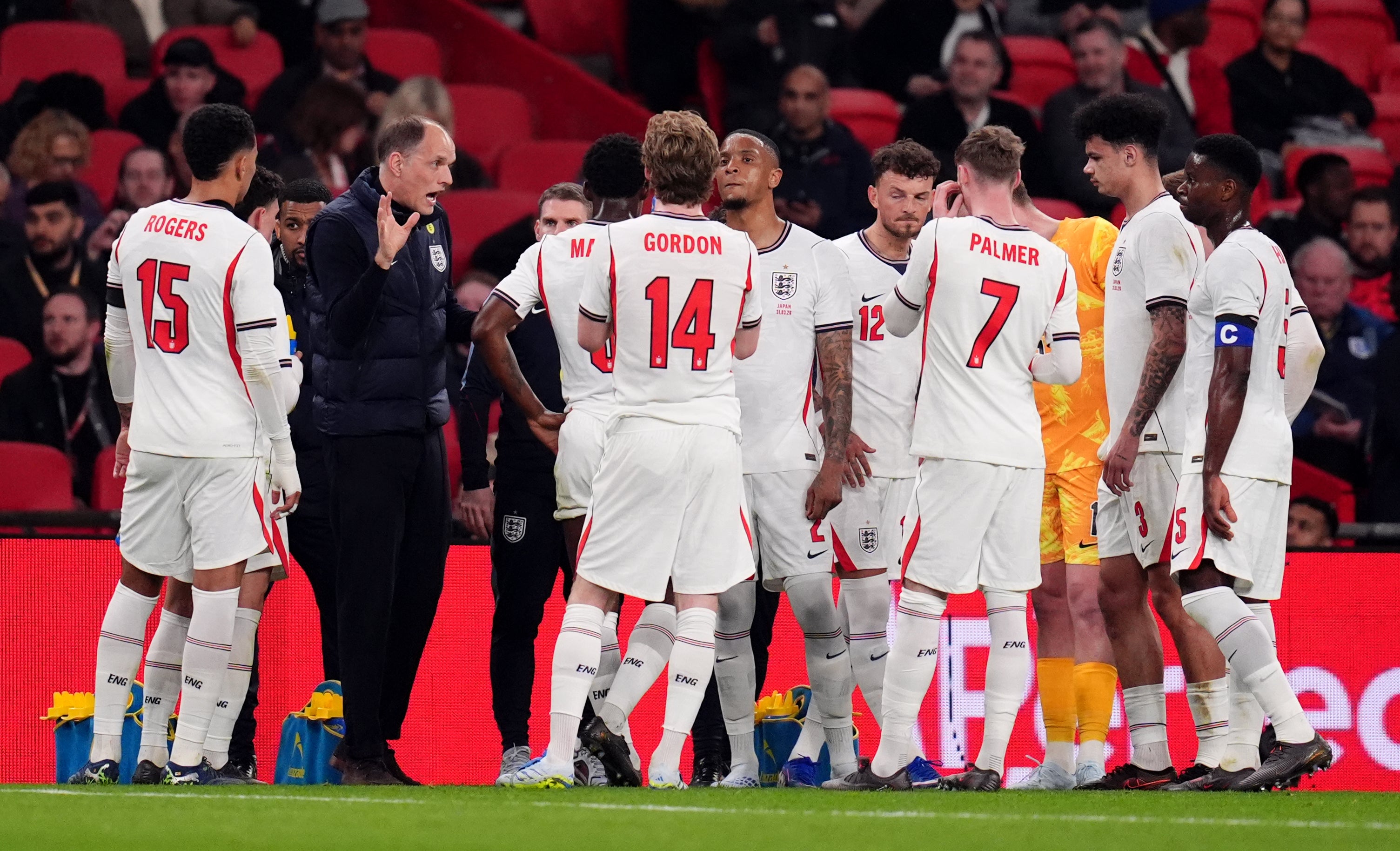
Thomas Tuchel’s makeshift side were disjointed at Wembley (John Walton/PA) (PA Wire)
England will convene earlier than most teams in North America when they get together for the camp in Florida, which will feature warm-up games against New Zealand and Costa Rica.
“They will get a week off, the guys who are not involved in the Champions League final, and then we will go very early to the US to prepare us for the heat and the humidity,” Tuchel explained. “We will have an early camp that allows us a good mix between free time and also family-friends time, and football, to arrive with excitement when the tournament starts.
“The season is a long, long season this year for the players, because some of them come from the Club World Cup, and it will not end in May. It will end, hopefully, in the middle of July.”
Advertisement
A perfect qualifying campaign has already been largely forgotten and these friendlies will soon be too. Perhaps Tuchel’s job this past week was simply to help his players survive until June, about recovery more than results. The task of building a coherent football team can wait. Shape and balance and relationships can be perfected in what will be a long summer. Fine-tuning a winning team can take a couple of games, as Argentina showed in 2022 when they lost their opening game to Saudi Arabia.
Fifteen months into the Tuchel project, his real task is only just beginning.
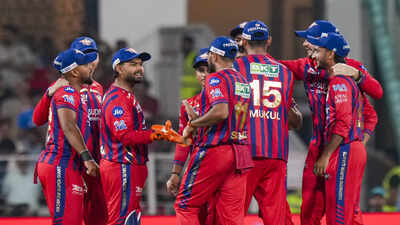
Lucknow Super Giants’ captain Rishabh Pant with teammates (PTI Photo/Shahbaz Khan)
Ex-India batter Abhinav Mukund has questioned the direction and team structure of Lucknow Super Giants after their defeat to Delhi Capitals, pointing to a lack of clarity in how the side is shaping up in IPL 2026. The criticism followed a convincing six-wicket win for Delhi, powered by Sameer Rizvi’s unbeaten 70 and his decisive 119-run partnership with Tristan Stubbs, which took the game away from LSG at the Ekana Stadium. Mukund admitted he remains unconvinced about Lucknow’s identity as a team, especially when compared to other relatively new franchises. “I’m very unsure about LSG. They are a very young side in the IPL. So are Gujarat Titans, who are slowly building an identity towards who they are. They might have lost their first game (in 2026) but you know what Gujarat Titans will come up with on a certain day. “They are top-heavy. They rely on their bowlers. They rely on their experience in the middle in terms of their spinners. With Lucknow, you always feel like there is no identity within the team,” he told ESPNCricinfo. He went on to highlight what he sees as a key difference between the two sides. While Gujarat Titans have established a clear approach built around their bowling strength and spin resources, Mukund believes Lucknow continue to lack a defined style of play. According to him, LSG’s performances often hinge on moments of individual brilliance rather than a structured system. “You expect performances from the top, you expect a sudden performance, like a Mark Wood sometimes comes up and picks up five wickets. You want those individual brilliant performances to drive your team. It’s always been the case for Lucknow.” Mukund also raised concerns over team balance and selection decisions in the match. “Even today, I felt the balance of the team was pretty off, seven batters and four bowlers. And then you had to sacrifice your find of last season. I know he may not have followed that up with an excellent domestic season. He’s not been amongst the wickets. “He’s not had a great domestic season but that doesn’t mean – you’ve released Ravi Bishnoi, which means you’ve had your faith in Digvesh Rathi and said ‘okay, you are my number one spinner and you don’t play him the first match,” he noted. With LSG already facing questions after their opening defeat, Mukund’s remarks underline growing concerns around the team’s balance, selection clarity, and overall identity as the season begins.
Tiger Woods, following a two-car crash last Friday that led to his DUI arrest, said Tuesday night that he is “stepping away” to seek treatment and “focus on my health.”
The 15-time major winner’s announcement came over X, in a two-paragraph release. It read as follows:
“I know and understand the seriousness of the situation I find myself in today. I am stepping away for a period of time to seek treatment and focus on my health. This is necessary in order for me to prioritize my well-being and work toward lasting recovery.
“I’m committed to taking the time needed to return in a healthier, stronger and more focused place, both personally and professionally. I appreciate your understanding and support, and ask for privacy for my family, loved ones and myself at this time.”
Advertisement
Nine minutes later, the PGA Tour released statements both from the league and its CEO, Brian Rolapp. Along with being a member of the tour, Woods had been working as the head of the organization’s newly formed Future Competition Committee.
Below is the statement from Rolapp:
“Tiger Woods is one of the most influential figures the sports world has ever known.
“Over the last year, I have come to deeply appreciate Tiger not only for his impact on the game, but for his friendship and the perspective he has shared with me as I joined the golf industry.
Advertisement
“My thoughts are with him and his family as he takes this step, for which he has my full respect and support.”
Below is the statement from the PGA Tour:
“Tiger Woods is a legend of our sport whose impact extends far beyond his achievements on the course. But above all else, Tiger is a person, and our focus is on his health and well‑being. Tiger continues to have our full support as he takes this important step.”
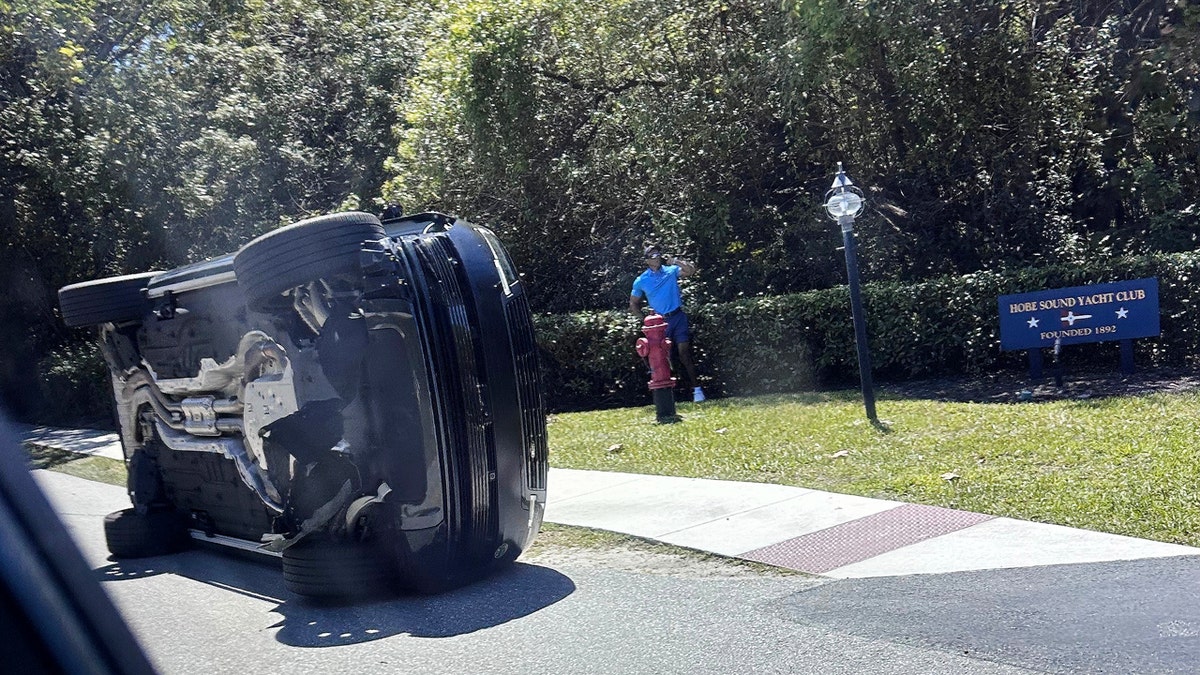
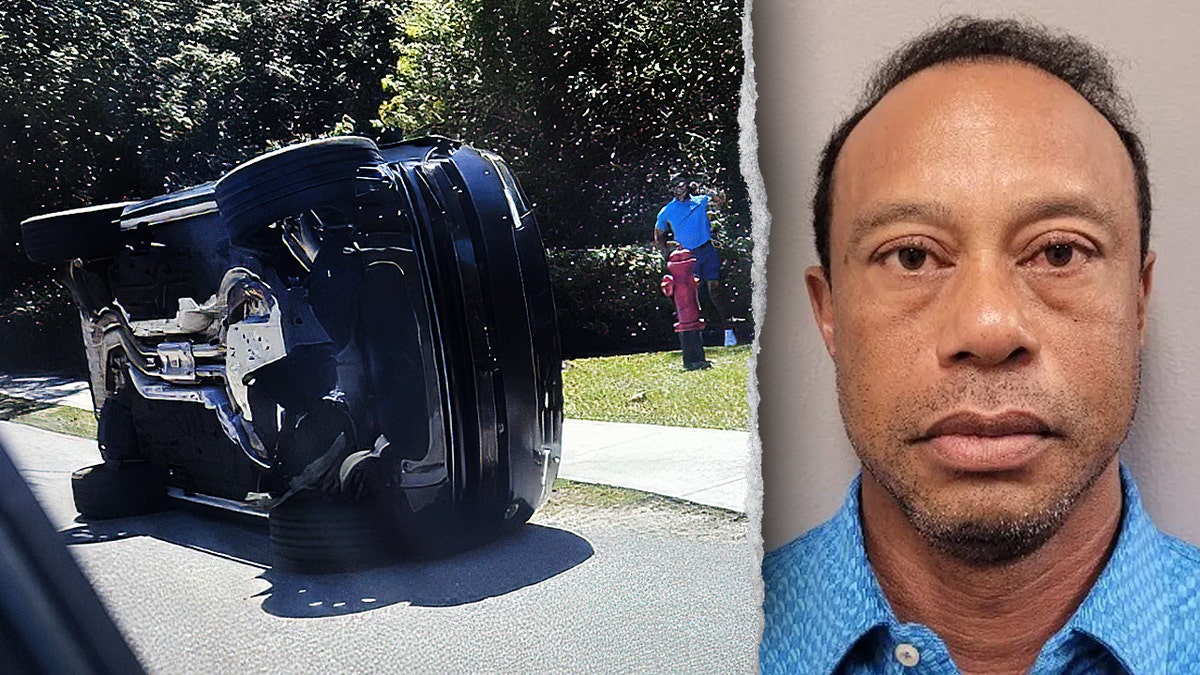
The three statements come four days after Woods was involved in the crash, which happened near his home on Jupiter Island, Fla. According to the Martin County sheriff on Friday, Woods had tried to pass a truck, clipped it, and his SUV flipped onto its driver side. After officers arrived, DUI investigators conducted tests, Woods showed “signs of impairment,” and he was arrested. At the Martin County Jail, Woods took a breathalyzer test and showed no trace of alcohol, but he refused a urinalysis test, leading to misdemeanor DUI charges. Neither Woods nor the other driver involved was injured.
Advertisement
Late Friday night, Woods posted bond and was released from the prison. On Tuesday afternoon, Woods pleaded not guilty to the charges, according to court documents obtained by GOLF.com, and a court hearing is scheduled for April 23. Woods has also retained the services of Douglas Duncan, an attorney who served on his 2017 DUI case after Woods was found asleep at the wheel of his car and tested positive for five substances in a toxicology report. Ultimately, two of the three misdemeanor charges against Woods were dropped in that case, and he pleaded guilty only to reckless driving.
Earlier Tuesday, the Martin County Sheriff’s Office released additional details on the arrest and crash. According to the report obtained by GOLF.com, two white pills were found in Woods’ left pant pocket, which were marked as Hydrocodone, an opioid commonly used for pain treatment. Woods said that he takes “a few” types of medication and had taken prescribed medicine that morning. Multiple medicines were redacted from the report.
The report also said that Woods said he was looking down at his phone and changing the radio station at the time of the accident. After investigating the crash, Martin County Sheriff Deputy Tatiana Levenar noted that Woods was “sweating profusely,” and though he was “lethargic and slow,” he was alert throughout the investigation. Levenar also said that Woods walked with a limp but also stumbled.
Advertisement
Friday’s crash and the 2017 incident are two of four incidents involving Woods inside a car. In 2021, Woods was involved in a one-car crash outside of Los Angeles, sustained multiple injuries, and was hospitalized for three weeks following surgery. In a statement at the time, a doctor said Woods “suffered significant orthopedic injuries to his right lower extremity that were treated during emergency surgery.” The injuries included “comminuted open fractures” in the tibia and fibula, requiring a rod to be inserted into the leg. In November of 2009, Woods crashed his SUV into a fire hydrant and tree outside of his home and was cited for careless driving.
According to Woods’ statement, it was unclear what treatment he would seek, and how long he would be away from golf. Next week, an event Woods has won five times, the Masters, is set to start, and Woods has said he would be on the grounds at Augusta National, though it was unknown whether he would have played after he had undergone a back procedure last October. Woods was also supposed to be in attendance at Augusta Municipal Golf Course after helping with the course’s recent redesign.
Woods has not played tournament golf since the 2024 Open Championship. Three days before Friday’s crash, he played with his team in TGL, the simulator-based league he co-founded.
We now know who, where and when England and Scotland will play this summer in the men’s football World Cup. The tournament runs from 11 June to 19 July 2026 and is being hosted by the US, Canada and Mexico, but both home teams will play their initial three group games at American venues.
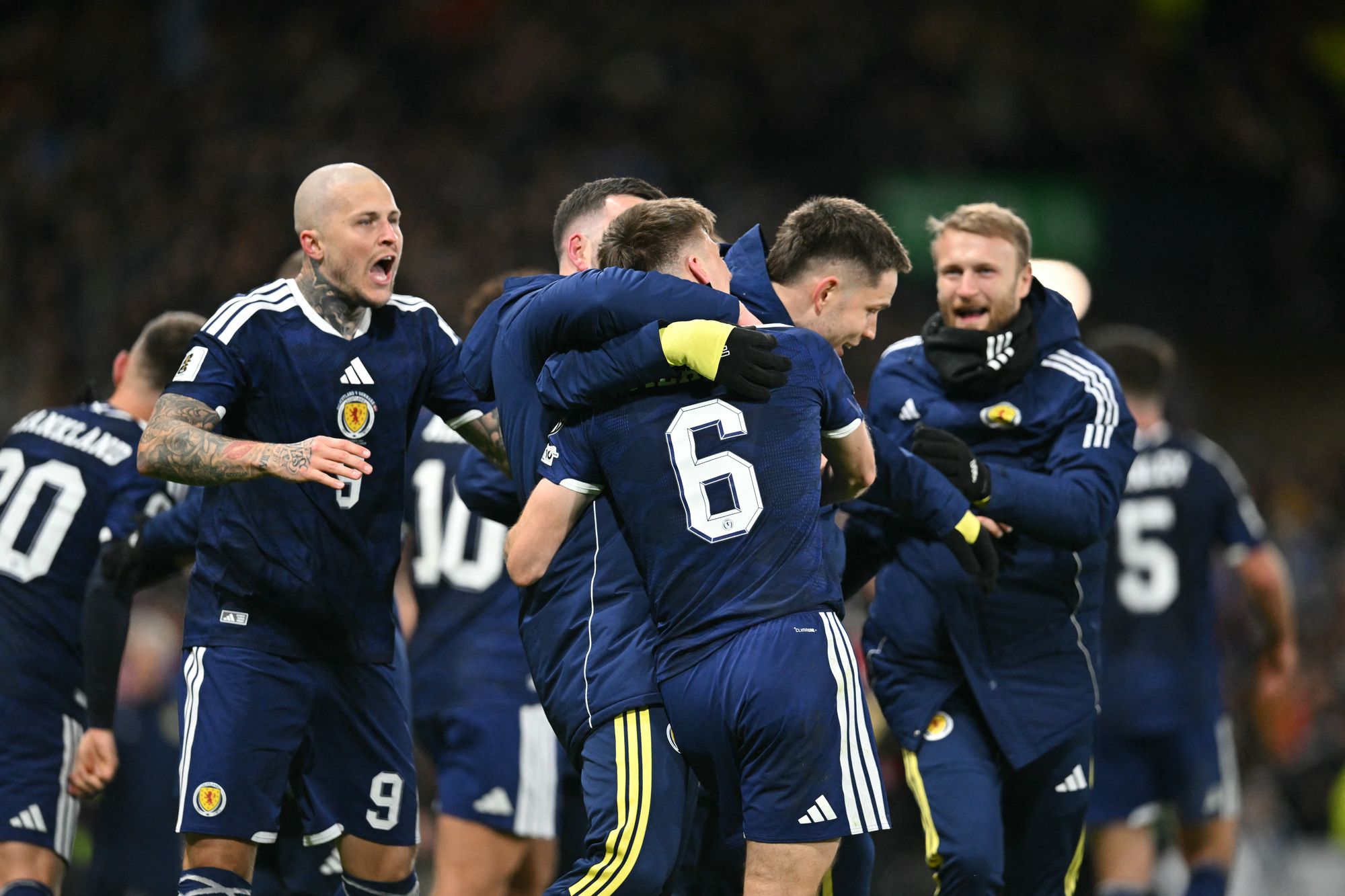
For Scotland’s first men’s World Cup appearance in 28 years, the first two matches are both in Boston: against Haiti on 14 June and Morocco on 19 June. Boston is the closest venue to Scotland. Their final match of the group, against Brazil, is in Miami on 24 June.
With days to fill between games, it’s a big geographical puzzle. The answers to the key questions are here.
Scotland players celebrate on the pitch after the World Cup 2026 qualification match against Denmark on 18 November (AFP via Getty Images)
What do fans need to know before travelling to the World Cup?
It’s going to be hot – particularly for England’s first match against Croatia in Dallas, where the average daily high is 33C. For Scotland’s final group game against Brazil in Miami, expect 31C and high humidity.
Advertisement
It could be expensive: although there is evidence that international air fares are actually falling compared with summer 2025, domestic flight prices are soaring. Accommodation is also looking pricey: the cheapest hotel in downtown Dallas on the night of England’s first match is nearly £400.
And before you do any planning, sort out the red tape. Apply for an Esta permit, which costs $40 (£31) ahead of any financial commitment to travel arrangements.
While most are granted within a couple of days, Estas can be refused for all kinds of reasons – such as having a similar name to someone on a watchlist. If your application is turned down and you have to apply for a visa, the process will be slow and expensive. You will need to attend the US Embassy in London or Consulate in Belfast, and there is no guarantee of success. The wait time for an interview at either of the UK locations is six weeks.
How do transatlantic airfares look?
Advertisement
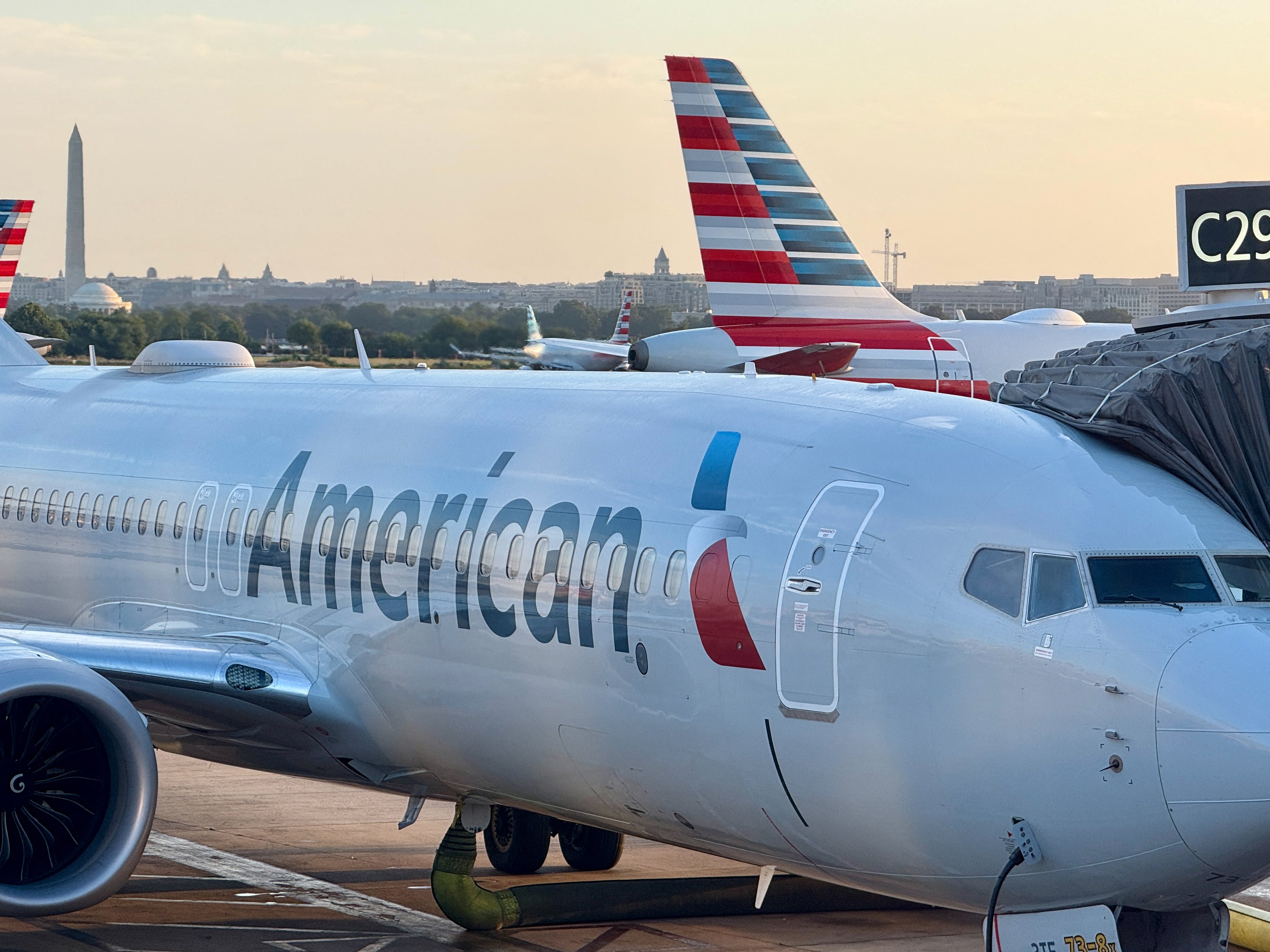
I am tracking the price of flights from the point of view of an England fan who takes the first non-stop departure from London Heathrow to Dallas-Fort Worth on 16 June, the eve of the opening game, and returns from New York JFK during the day after the last group match on 27 June. Before the locations were confirmed, the fare on American Airlines was £837. Within three hours, it had gone up by one-sixth to £993. While normally such fares would be expected to increase steadily, the price has remained unchanged in three months – indicating sales are sluggish.
London has by far the highest concentration of transatlantic flights, with Manchester and Edinburgh a long way behind.
Travelling via Continental Europe allows connections from many English and Scottish airports. From Newcastle to Dallas on 16 June, returning from New York on 27 June, costs £1,005 on KLM via Amsterdam (with an added transfer outbound at JFK to a Delta flight).
You can keep the cost down by connecting in Dublin; Ireland sadly failed to qualify for the World Cup. On those same dates, United has a flight from Dublin via Newark or Washington DC to Dallas-Fort Worth, returning nonstop from Newark, for £787. Ryanair has return flights from Birmingham to Dublin for £43, though these are not guaranteed connections.
The fare on American Airlines from London to Dallas before the first England group match, returning from New York on the day after the last group game has remained stable since the draw was made (AFP via Getty Images)
What about travel within the US?
Loads of US domestic flights serve Boston, Dallas, New York and Miami – England’s and Scotland’s match venues. But there will also be huge demand from fans, the media and the organisers – and it seems clear that fares are already rising.
OAG, a global provider of digital flight information, has analysed fares currently being charged for June and July 2026 and compared them with the same months last summer. Miami, which Scotland fans will need to reach from Boston, is at present 65 per cent more expensive for domestic flights than in 2025.
Boston and New York, where England and Scotland will play their other matches, are seeing rises of 36 per cent and 28 per cent respectively.
Advertisement
The cheapest flight from Boston to Miami the day after Scotland’s second game, against Morocco, is £164 – and involves a 6am departure. Some flights latter than day are priced at over £1,000.
Delaying the trip a few days and flying south the day before the last match against Brazil, you can pay just £85.
Can I take the train instead?
Yes, and there are some reasonable fares on Amtrak intercity trains. Between Boston and New York, venues for England’s second and third matches respectively, Amtrak “Northeast Regional” trains take about four hours 15 minutes. Fares are as low as $25 (£19). “Acela” branded trains are about 40 minutes faster but are business and first class only – with the cheapest ticket, for a journey of barely 200 miles, costing $226 (£171).
Advertisement
From Boston to Miami on the day after Scotland’s second game, the fare on Amtrak via Washington DC is $258 (£195).
Greyhound and FlixBus fares are surprisingly high – typically $75 (£57) for the four- to five-hour trip from Boston to New York.
How do I get match tickets?
At this stage, by throwing money at the problem. For the Scotland-Haiti match in Boston on 13 June, for example, Fifa is selling a match hospitality package including a good ticket plus access to the Pitchside Lounge for $3,900 (£2,954).
Advertisement
For more normal prices, the “Last Minute Sales Phase” began on 1 April through Fifa.com/tickets. This is the fourth and final official tranche of tickets, and will remain open until the end of the tournament. It is strictly first-come, first-served.
Fifa says: “Fans will be able to immediately see the matches and categories for which tickets are available, select specific seats, proceed with the purchase and receive confirmation once payment is completed.”
After you have waded through the security system, you can select “Display only available matches”. As of early April, these are entirely group matches, range from the Canada-Bosnia game in Toronto on 12 June (minimum US$1,645/£1,243) to the Democratic Congo-Uzbekistan fixture in Atlanta on 27 June ($380/£290).
Other routes to the stadium?
Advertisement
The secondary market is extremely active. Fifa has a resale portal, which could offer some decent value for less in-demand matches, involving teams with few travelling supporters and without large local communities with links to the nations. These include:
Curacao v Ivory Coast in Philadelphia
Qatar v Switzerland in San Francisco
Iran v New Zealand in Los Angeles
Cape Verde v Saudi Arabia in Houston.
But most of the action is focused on the commercial resellers. Intermediaries are selling the cheapest tickets for England’s first match against Croatia for £840 – over four times face value.
“To enter the stadium, you will need an official ticket on the FIFA World Cup app. Printed copies or screenshots may not be accepted at stadium gates. Each ticket is linked to the purchaser’s details, and ID checks may be required upon entry.
“Tickets sold on unofficial resale websites, social media, or through third-party vendors may not be genuine. Fraudulent tickets can look legitimate but may be rejected at the stadium gate, leaving you without entry on match day.
Advertisement
“Some scammers sell the same ticket to multiple buyers or resell tickets that have already been voided by Fifa Ticketing.”
What about accommodation?
Unless you are lucky to have friends or family with spare beds near the venues, be prepared for some credit card shock – especially for the England match in New York.
On the night of 27 June, when England play Panama, hotel rates are already absurd. A typical budget hotel, the Holiday Inn Express in midtown Manhattan, is $591 (£448) for that night. And while it’s fun to stay at the YMCA in Manhattan, the price for a very basic single room with a shared bathroom is $337 (£255) on 27 June.
Advertisement
I would not book at those prices. You could head for one of the other New York City boroughs – my standby is the Best Western out at Coney Island, with good Subway connections. Last summer I paid £120. On the “England night” it’s £212.
Are there any alternatives for a cheaper bed?
Yes: be patient. I have seen the standard pattern for big sporting events and it goes like this: hotels and other accommodation providers think this is the best get-rich-quick scheme in history. They set their rates high, especially for games involving teams with many travelling fans, such as Brazil, Germany and England.
Yet because many “normal” business and leisure guests will be avoiding in World Cup host cities, there is likely to be plenty to go around – with prices falling in the weeks before the tournament.
Advertisement
Also, with rates high, increasingly more people will be tempted to put their place on platforms like Airbnb and escape on vacation for the duration. That should put downward pressure on prices.
Fans should treat the trip as a holiday with some football attached, says travel correspondent Simon Calder (AFP via Getty Images)
There’s a lot of time to fill between the games…
Fans should treat the trip as a holiday with some football attached. Boston is a fine city that is well worth 48 hours of exploration, with much to see elsewhere in Massachusetts – from billionaires’ row on Cape Cod to the city of Lowell, a mill town regarded as the cradle of America’s industrial revolution. It’s also where Jack Kerouac, author of On The Road, grew up.
Talking of road trips, England fans travelling from Dallas to Boston, as well as Scotland fans going from Boston to Miami, have excellent opportunities for adventurous journeys between the matches. Check out these two custom-built itineraries.
From Dallas, you can meander through the music state of Tennessee, stopping in Memphis and Nashville, then following the line of the Appalachian mountains. Hertz has a five-day rental for a Chevrolet Malibu (or similar), picking up at Dallas-Fort Worth airport on 18 June and dropping off in downtown Boston, for £758.
Advertisement
For Scotland fans: south from Boston, the I-95 runs all the way to Miami via New York and Washington DC, with Savannah and the Kennedy Space Center top tourist spots right next to the freeway – but you can take your pick of diversions, including a day at the theme parks of Orlando.
Former India batter Abhinav Mukund questioned Lucknow Super Giants’ (LSG) decision to leave out spinner Digvesh Rathi from the playing XI for their opening IPL 2026 match against Delhi Capitals (DC). Admitting that the leg-spinner has not been in good form lately, Mukund opined that LSG ought to have shown better faith in the bowler who made a big impact last season.
Rathi (26) was LSG’s leading wicket-taker in their debut season last year. In 13 matches, he claimed 14 wickets at an average of 30.64 and an economy rate of 8.25. He also grabbed eyeballs with his ‘signature’ celebration after claiming a wicket. LSG, however, took a big call and left out Rathi for Wednesday’s match. They went in with four pacers and brought in Shahbaz Ahmed as the Impact Sub.
During a discussion on ESPNcricinfo, Mukund was extremely critical of LSG‘s selection choices. Sharing his thoughts on the same, he added:
Advertisement
“I felt the balance of the team was pretty off – seven batters and four bowlers. And then you had to sacrifice your find of last season. I know he may not have followed that up with an excellent domestic season. He’s not been amongst the wickets. He’s not had a great domestic season but that doesn’t mean – you’ve released Bishnoi which means you’ve had your faith in Digvesh Rathi and said ‘okay, you are my number one spinner and you don’t play him the first match.”
Defending a total of 141, LSG’s pacers impressed as Prince Yadav claimed two wickets, while Mohammad Shami and Mohsin Khan chipped in with one each. Sameer Rizvi’s unbeaten 70 off 47 balls, however, guided DC to victory after a shaky start, which saw them slip to 26-4.
“There is no identity within the team” – Abhinav Mukund on LSG’s woes
During the same discussion, Mukund claimed that LSG are yet to establish their identity as a team. Comparing the franchise with Gujarat Titans (GT), who made their IPL debut along with the Lucknow franchise in 2022, the 36-year-old stated that while GT have developed a style of their own, the same cannot be said of LSG. He elaborated:
“I’m very unsure about LSG. They are a very young side in the IPL. So are Gujarat Titans, who are slowly building an identity towards who they are. They might have lost their first game [in 2026] but you know what Gujarat Titans will come up with on a certain day. They are top heavy and rely on their bowlers. They rely on their experience in the middle in terms of their spinners. With Lucknow, you always feel like there is no identity within the team.”
LSG’s second match in IPL 2026 will be against Sunrisers Hyderabad (SRH) at the Rajiv Gandhi International Stadium on Sunday, April 5. This will be a day game and will start at 3:30pm IST.
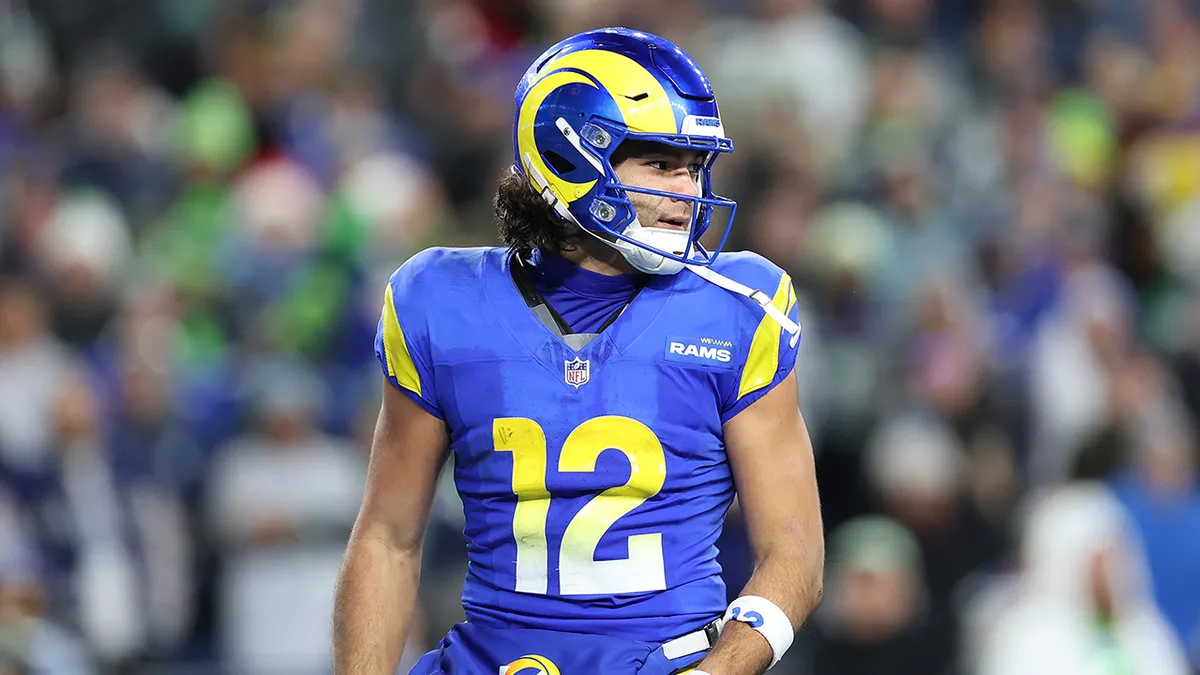
Los Angeles Rams all-pro wide receiver Puka Nacua has entered a rehab center after some recent off-field issues.
Nacua was recently accused of assault and battery by a woman who alleges he bit her on the shoulder on New Year’s Eve and made an antisemitic remark.
Neither Nacua’s attorney, Levi McCathern, nor the Rams, immediately responded to an email for confirmation.
Advertisement
However, the New York Post quoted McCathern as saying, “He was in there a substantial period of time before any of these allegations broke with Madison, and he’s scheduled to be there for a while longer.”
Puka Nacua of the Los Angeles Rams reacts after a catch during the third quarter against the Seattle Seahawks at Lumen Field Dec. 18, 2025, in Seattle. (Steph Chambers/Getty Images)
“The combination of stories ya’ll have run is certainly a contributing factor,” the attorney said, adding that Nacua wants to “improve his overall behavior in every aspect of his life that he can do it.”
Plaintiff Madison Atiabi says Nacua bit her and left teeth marks on her shoulder when they were in a van together later in the night, and she claims Nacua also bit her friend’s thumb.
Advertisement
McCathern strongly denied Nacua made any antisemitic statements but described the bites as “horseplay.”
Atiabi and her attorney, Joseph Kar, claim Nacua made an antisemitic exclamation that emotionally distressed her when they were together in Century City.
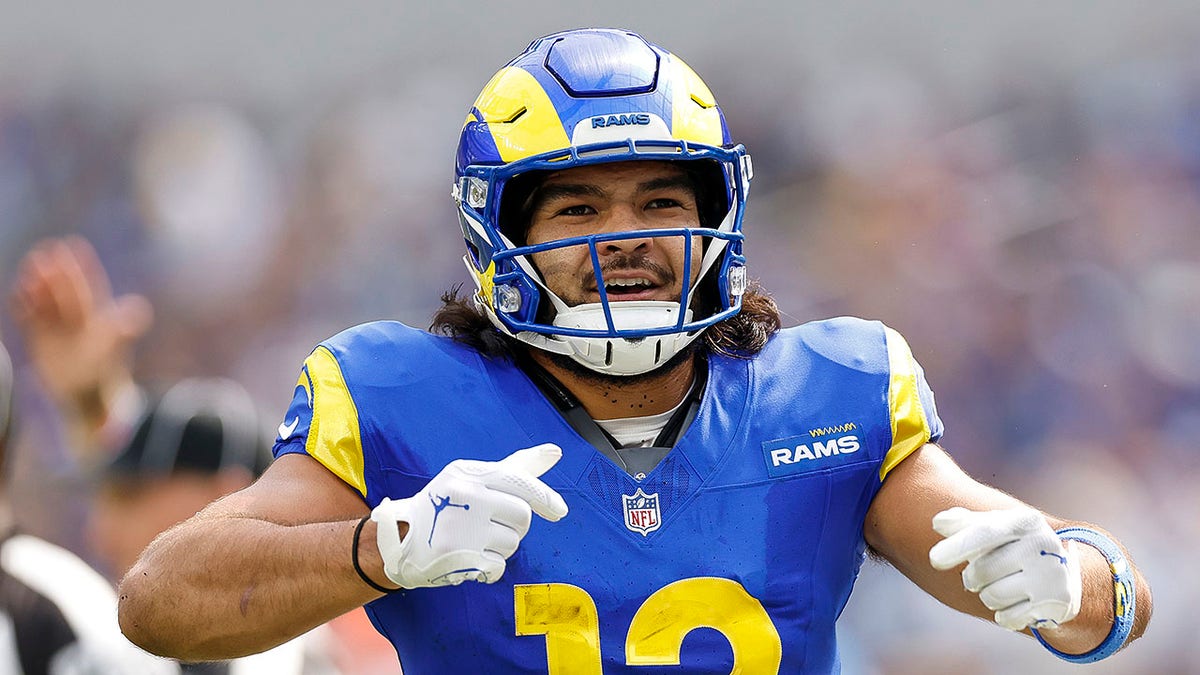
Puka Nacua of the Los Angeles Rams reacts during the second quarter against the Indianapolis Colts at SoFi Stadium on Sept. 28, 2025, in Inglewood, Calif.(Ronald Martinez/Getty Images)
McCathern said “the whole claim is nothing more than a shakedown attempt” and that the bite “left nothing more than a temporary mark,” according to TMZ.
Advertisement
Nacua apologized for performing an “antisemitic” act on a YouTube stream last last year. Nakua discussed touchdown celebrations on YouTuber Adin Ross’ stream, and, in the video, Ross instructed Nakua to spike the ball, flex and then rub his hands together. Ross, who is Jewish, has referred to the movement as his own “dance” or “emote.”
Many, however, believed the celebration perpetuated a harmful anti-Jewish stereotype. Nacua received overwhelming pushback and issued an apology.
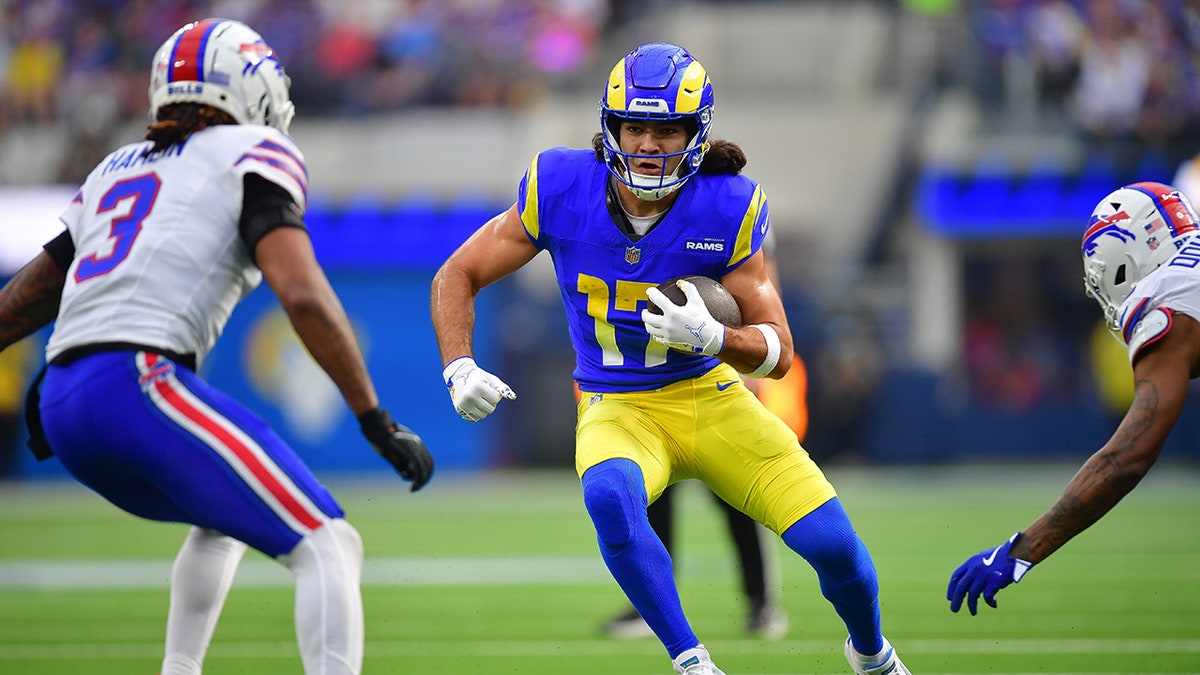
Los Angeles Rams wide receiver Puka Nacua (17) runs the ball against Buffalo Bills safety Damar Hamlin (3) during the first half at SoFi Stadium. (Gary A. Vasquez/Imagn Images)
Tiger Woods was granted permission to travel outside the United States to begin treatment he said he would seek after his DUI arrest Friday in Jupiter Island, Fla.
Woods’ attorney, Douglas N. Duncan, filed a motion requesting permission to leave the country, which was granted by Judge Darren Steele.
“Based upon the Defendant’s treating physician, the out of country treatment facility recommendation is based upon the Defendant’s complex clinical presentation and the urgent need for a level of care that cannot safely or effectively be done within the United States as his privacy has been repeatedly compromised,” court documents obtained by Fox News Digital said.
Advertisement
“Ongoing medical scrutiny and public exposure create significant barriers to his care and would result in setbacks and an inability to fully engage in treatment.”
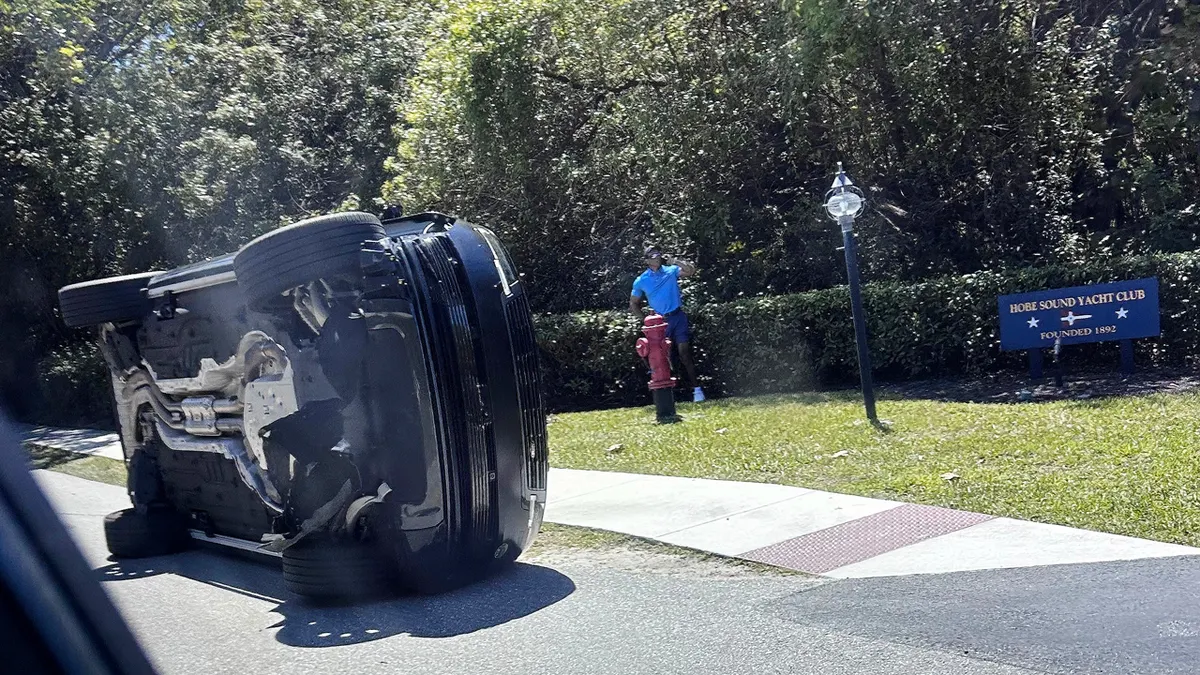
Golfer Tiger Woods stands by his overturned vehicle in Jupiter Island, Fla., Friday, March 27, 2026. (Jason Oteri/AP)
It’s unknown where exactly Woods would travel for treatment, though the court documents included the “treatment facility will provide continuous monitoring and the ability to rapidly adjust treatment interventions in a highly controlled environment.”
Woods announced he would be stepping away from golf to seek treatment “and focus on my health” after his DUI arrest after a rollover crash.
Advertisement
“I know and understand the seriousness of the situation I find myself in today,” Woods said in a statement posted on social media.
“I am stepping away for a period of time to seek treatment and focus on my health. This is necessary in order for me to prioritize my well-being and work toward lasting recovery.
“I’m committed to taking the time needed to return in a healthier, stronger, and more focused place, both personally and professionally. I appreciate your understanding and support, and ask for privacy for my family, loved ones and myself at this time.”
Advertisement
Woods released the statement Tuesday after entering a plea of not guilty, waiving his right to an arraignment and demanding a trial with a jury. He was arrested on charges of driving under the influence with property damage and refusal to submit to a blood alcohol level (BAL) test after law enforcement said his vehicle collided with another while he drove impaired.
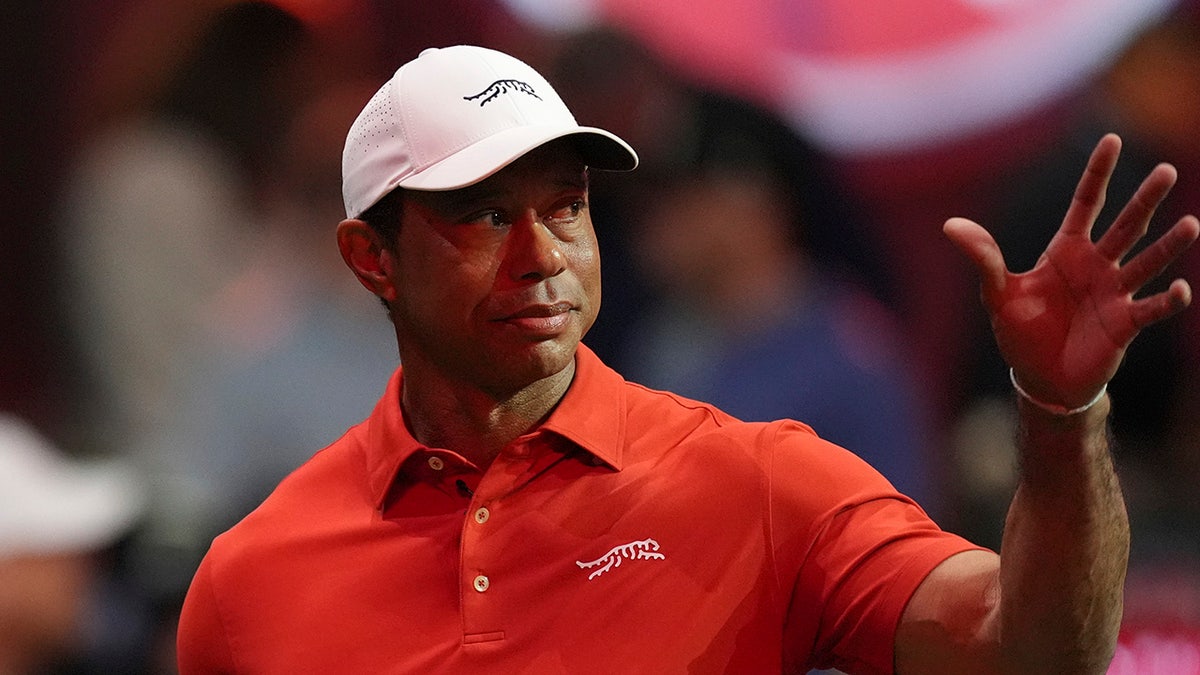
Tiger Woods of Jupiter Links Golf Club waves to fans as he is introduced at the start of a match of the TMRW Golf League against Boston Common Golf Jan. 27, 2025, in Palm Beach Gardens, Fla.(AP Photo/Rebecca Blackwell)
After Woods was placed under arrest at the crash site, where law enforcement noted he was “sweating profusely” in an arrest affidavit obtained by Fox News Digital, he was found to have “two white pills” inside a pants pocket. They were later identified as hydrocodone, a prescription pain relief opioid.
Woods submitted to a Breathalyzer test after being booked in Martin County Jail, clearing a 0.00 result on both samples. However, he declined to submit a urine test, which resulted in another charge.
It’s the second DUI arrest for Woods in the last decade. He was also taken into custody on Jupiter Island in 2017 after being asleep behind the wheel of a running vehicle at 3 a.m. after taking prescription drugs.
Advertisement
Woods had just returned to The Golf League earlier this month for his first round of competition since undergoing more surgeries on his back while also needing to repair a torn Achilles.
Tiger Woods was arrested on a DUI charge after a crash in Florida March 27, 2006.(AP/Martin County Sheriff’s Office)
There was a chance Woods would make an appearance at the Masters Tournament next week, but Augusta National Chairman Fred Ridley confirmed that Woods would not be in the field for the first major of 2026.
Woods’ TGL teammate, Kevin Kisner, also noted recently that Woods signed up for the U.S. Senior Open, which tees off in early July.
Advertisement
Fox News’ Andre Tinoco contributed to this report.
TORONTO — The downside of playing meaningful basketball in the late stage of the NBA season is that you can fail.
They hosted the Sacramento Kings, a team that is last place in the Western Conference, were losers of six of their past seven games and came into the game ranked 26th on offence and 28th on defence.
They are only a couple of years removed from winning 48 and 46 wins in the West, but have crumbled like stale chips since. Their new plan hinges on drafting a star this summer and starting over.
That might work. Their plan for this season — accumulating a collection of past-their-best-years veterans and hoping to extract some asset value at the trade deadline — decidedly didn’t work because no one else in the league wanted the players or the contracts.
Advertisement
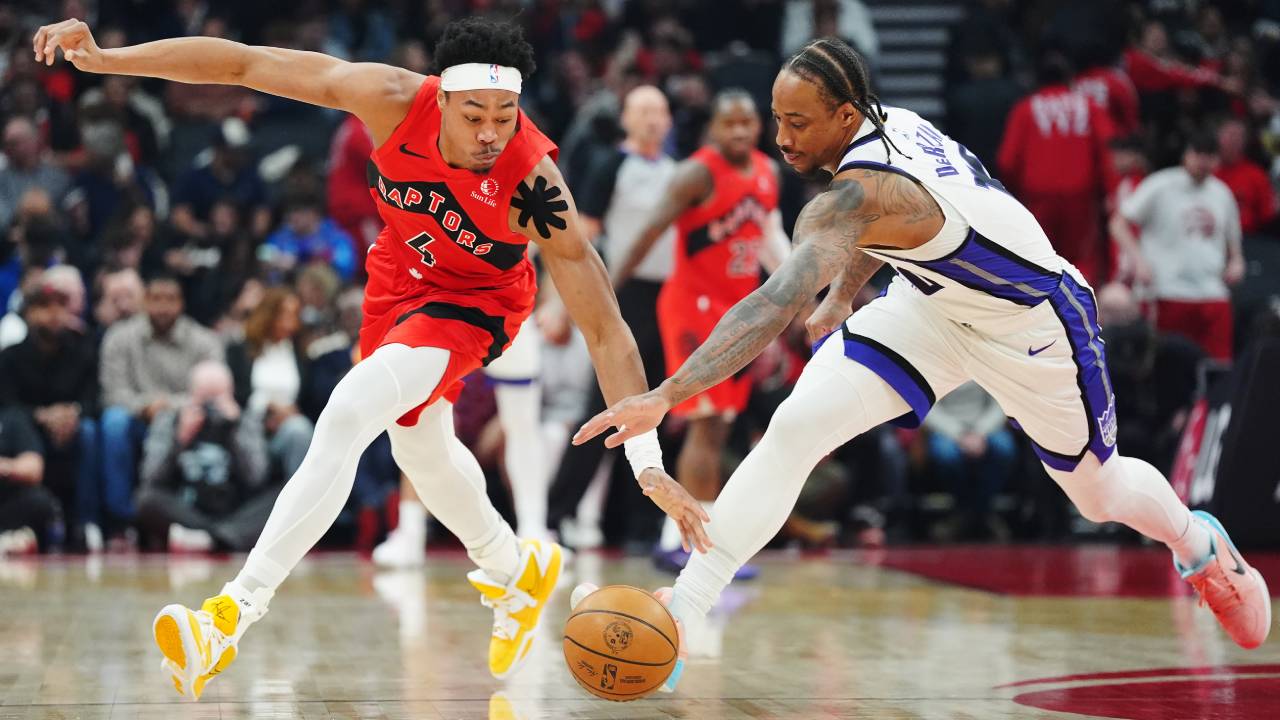
Which is how former Raptors DeMar DeRozan and Precious Achiuwa were on hand for the Kings to torture their former team in a game that Sacramento would have been fine with losing and the Raptors very much needed to win.
Achiuwa is a useful player, and DeRozan will have a chance to be in the Hall of Fame when his career winds up. But in each case — at this stage of their careers — the ways they can hurt you are fairly straightforward. Achiuwa is strong, agile and quick and hard to handle when he wants to use all of those gifts. But if he’s kept off the glass, his ability to hurt you is limited.
Well, the sixth-year pro bounced around for 11 offensive rebounds — 19 overall — and pummelled the Raptors with 28 points, a big night for him considering he was averaging 9.6 points and 6.5 rebounds on the season.
And DeRozan? He’s not the athlete he was when he was posterizing people as a Raptor, but at 36 years old, he’s still a dangerous scorer if you’re not mindful defensively, and in particular about reacting to his feints and fakes designed to draw fouls. The Raptors put him on the free throw line 12 times – he made all 12 – as he scored 26 of his 28 points in the second half.
Advertisement
The result was a 123-115 Kings win that improved them to 20-57 while the Raptors fell to 42-34. The Raptors’ loss, coupled with wins from Atlanta and Philadelphia, dropped Toronto to seventh place as the 76ers — in the sixth and final playoff spot — hold the tiebreaker over Toronto.
Before the tip, Raptors head coach Darko Rajakovic was saying the team’s first run for a playoff spot together will depend on a daily focus on the small things they can hope to control, rather than spending too much energy thinking about the desired outcome.
“Really, every game comes down to are we going to play to our standard or not,” said Rajakovic. “… That’s a daily fight, that’s a daily commitment to those things, so we’re really focussing on that and enjoying the process. We’re not looking forward to the post-season and like, hey, that’s the end goal.”
All fair and reasonable. But if you’re dropping games to the Sacramento Kings at home, maybe the process needs work?
Advertisement
“This is a game we’re supposed to win no matter what,” said Raptors wing RJ Barrett, who had 20 points, five rebounds and six assists – but also five turnovers. “Process or no process, we can’t lose this game.”
But they did. They did it by coming out tentatively in the first quarter and falling behind early. They did by giving up an 18-3 run late in the second quarter, immediately after the Raptors themselves had put a 21-3 run on the Kings to take control of the game in the first place. Instead, it was the Kings that led at halftime.
It was like the Raptors didn’t really believe that the Kings were in it to win the game. But they miscalculated. The Kings were rested, having been in Toronto since Sunday night. And the Raptors could reasonably cite fatigue, given then had lost in Detroit the night before.
But that’s the point: the teams that reach their goals — whatever their process — are the ones that fight through the fatigue or the injuries or the inconvenience. The Pistons had beaten the Raptors the night before, having lost in overtime in Oklahoma City on Monday night. They found a way.
Advertisement
The Raptors found a way to lose. They missed 10 free throws, for example, this after missing 11 the night before in Detroit. The Kings were 27-of-29 at the stripe. The Raptors played from behind most of the game, and when the end of the game came, they had no margin for error and got burned.
“There were times when you felt like there was no sense of urgency, until, like, we made it close,” said Raptors big man Sandro Mamukelashvili, who had 17 points and six rebounds off the bench on 7-of-10 shooting. “And then we’d be like, ah, OK, we’re in the game. But we can’t have those slip-ups.”
There were other good performers. Jamal Shead had 16 points and seven assists in 37 minutes, and Collin Murray-Boyles had the first 20-point game of his career in 18 minutes off the bench. But Scottie Barnes took too long to assert himself offensively while playing point guard in place of the injured Immanuel Quickley. His 10 assists extended his streak of games with double-digit assists to six, but Toronto needed more than his 14 points on 5-of-14 shooting. He was also 4-of-8 from the line. Jakob Poeltl couldn’t match Achiuwa’s physicality.
The Raptors let the Kings hang around, maybe hoping they’d just hand the game to them in the end. But instead, Sacramento figured, hey, why not win one for a change?
Advertisement
Toronto gave up 34 points to the Kings in the fourth quarter. They hit four threes and were 11-of-11 from the free throw line.
Fittingly, it was DeRozan’s triple from the corner in front of the Raptors bench that pushed the Kings’ lead to six with 1:05 to play after Toronto had pulled the game within a single possession, and then it was Achiuwa who sealed it with a driving lay-up.
If playing meaningful basketball in March and April, the Raptors’ season to this point has been a success. But how they cope with something on the line will determine their final grade.
A home game against the Kings was supposed to be an open-book test. The Raptors flunked it.
Advertisement
“This one’s frustrating,” said Barrett. “We’ve been fighting hard all year, so you want the reward of making it to the playoffs and fighting for the championship, so nights like tonight, they hurt, especially when we know how much work we put in.
“Especially now after tonight, if we don’t come out and fight with everything we have got for these next couple of games… we have to play like our lives depend on it.”
He’s still a Raptor: Wednesday night’s visit with the Sacramento Kings was DeRozan’s 587th as a non-Raptor. An entire career for a lot of players. But he played nine seasons and 675 games for Toronto. He’s played 63 playoff games in his career — a total that won’t change after a lost season with the lottery-bound Kings. But 51 of them were as a Raptor, helping the team scale its highest heights until they won the 2019 championship thanks in large part to the return — Kawhi Leonard and Danny Green — the Raptors got in the trade that sent DeRozan to the San Antonio Spurs.
But playoff success has eluded him since. Failure too. He hasn’t been in the post-season at all since the Chicago Bulls lost in five games in 2021-22. He lost in the first game when he was with the Spurs in 2018-19. When I spoke with him briefly before the game, he said that his old pal Kyle Lowry is trying to get him to play 20 years, and while DeRozan is durable enough — he’s averaged 76 games his last four seasons and has only missed two so far this season — he’s not sure he’s got three more years in him. Diar — a longtime fixture on the sidelines at Raptors games (and famously cheering against the Raptors) and the oldest of four daughters with his wife, Kiara — is 13 and starting high school next year.
Advertisement
But at the same time, DeRozan is interested in finishing his career off with one more crack on a competitive team. He said he’d be open to a different role – DeRozan has started every game he’s played since the 2009-10 season – if necessary. “If it makes sense,” he said.
In the meantime? He’s made the most of his time with the Kings. He’s averaging 18.5 points a game on 49.5 per cent shooting and still gets to the free-throw line. Kings head coach (and former Raptor) Doug Christie gushed about his reliability and the example he provides to a young team. He passed Dominique Wilkins for 17th place on the NBA all-time scoring list Wednesday. “I mean, it’s always an honour passing the greats that came before me,” DeRozan said. “Especially people I know, you know, I’ve always had a great deal of respect for Dominique, so passing him is definitely cool.” With 26,688 points, DeRozan now trails only LeBron James, Kevin Durant, James Harden and fellow King Russel Westbrook among active scorers.
15th man watch: Wednesday night marked the end of Markelle Fultz’s 10-day contract. It’s expected that the Raptors will sign someone else on a 10-day deal on Thursday. Fultz got into five games for Toronto but didn’t really play any meaningful minutes, which was not encouraging given Quickley was out with plantar fasciitis for all of the six games the Raptors played when Fultz was with them. One name that was circulating as a possibility for a new 10-day was Tyreke Key, who played with Raptors 905 the past two seasons, was on their Summer League team last year and signed an Exhibit 10 deal with the Raptors before training camp. The six-foot-two guard out of Tennessee has shot 40.1 per cent from three over 90 G-League starts the past two seasons. If the Raptors do add someone on a 10-day Thursday, they would still be able to sign one of their two-way players to a standard NBA deal on the last day of the regular season (April 12th) and have them eligible for the post-season. For the second game in a row, AJ Lawson was the first Raptors wing off the bench for Darko Rajakovic against the Kings. “He just needs to continue putting the work in. He already does a lot of great stuff that can help the team. I definitely see him as a player that belongs in the league with a full contract.”
So Precious: The former Raptors is often the forgotten man in the ‘OG Anunoby trade’ that brought Quickley and RJ Barrett to Toronto midway through the 2023-24 season. Not as forgotten as Malachi Flynn, who is now playing in Turkey, but it can be hard to stay in the spotlight playing on a Kings team that is in tank mode. But Achiuwa has put together a decent season, and he’s finishing strong. Even before his big night at Scotiabank Arena, he averaged 15.4 points and 9.5 assists on 57 per cent shooting over 14 games in March. He’s an unrestricted free agent this summer and could be an intriguing depth big for a lot of teams. His market might be comparable to that of Raptors big Sandro Mamukelashvili, another depth big, albeit with a different skill set. Per league sources, Achiuwa could slot in for something in the six-to-eight-million-dollar range on a short-term deal.
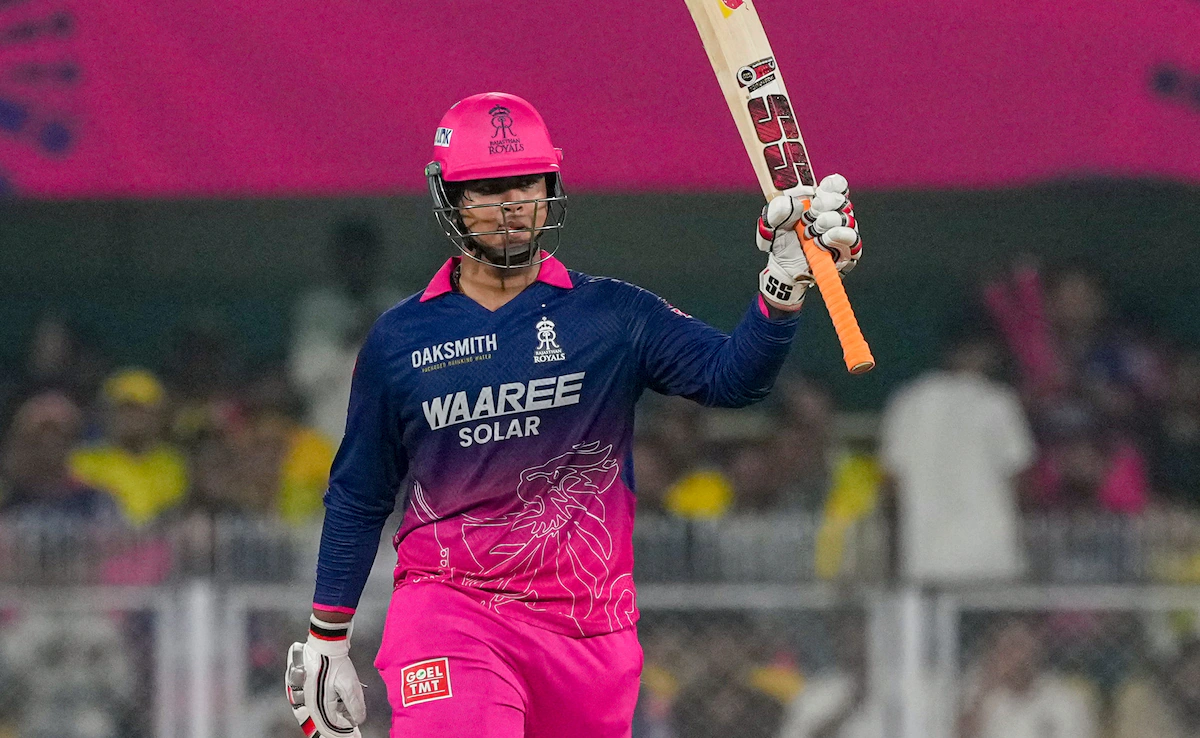
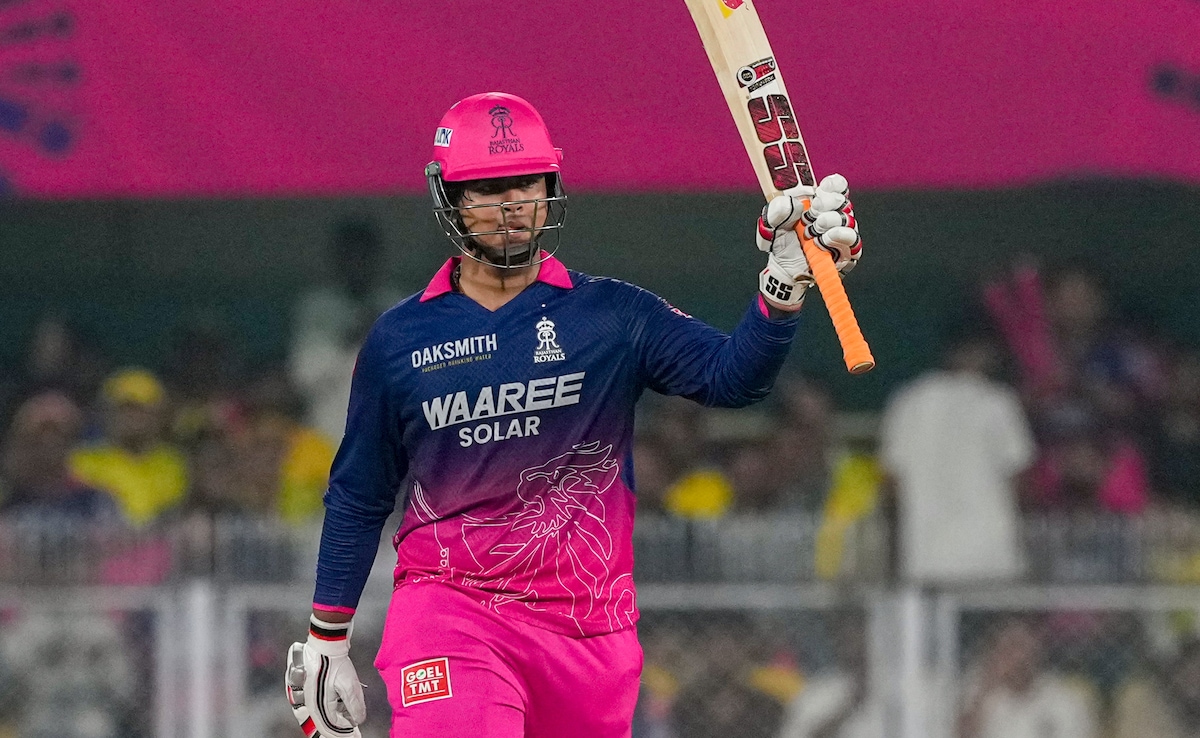
Former Pakistan cricketers Kamran Akmal and Basit Ali have backed young sensation Vaibhav Sooryavanshi for a fast-tracked India debut following his blistering start to IPL 2026. The 15-year-old left-hander grabbed headlines on Monday by smashing 52 off 17 balls-including a record-equaling 15-ball fifty during Rajasthan Royals’ (RR) dominant eight-wicket win over Chennai Super Kings (CSK). Sooryavanshi’s explosive opening stand effectively killed the contest after RR’s bowlers had earlier restricted the five-time champions to a meager 127.
Former Pakistan wicketkeeper-batter Akmal suggested that Sooryavanshi will soon make his debut for India in T20I cricket.
“In just 8 IPL games, he has been piling records – he already has a hundred. I think in the coming international games for India, he will get a chance after IPL. He will become a young player of the T20 international team. He has proved himself in every place. If he continues to perform, he will definitely get the chance,” Akmal said on ‘The Game Plan‘ YouTube channel.
Akmal also praised Sooryavanshi’s remarkable game awareness, suggesting that bowlers may be “clueless” in a decade’s time if the 15-year-old continues his current trajectory.
Advertisement
“His presence of mind, game awareness, the way he plays – he has a counter to everything at such a young age. This is remarkable … We are discussing his performance more because it was a match of 128. But his performance is visible because he scored 50 runs on 15 balls. His family and his father should be proud – the way he has worked with him, the way the others, too, like coaches who have taught him in school cricket, in club cricket…I am afraid – when he is 25, the bowlers will not know what to do with him,” he added.
In a lighthearted take, Basit labelled Sooryavanshi as “ek bablu sabpe bhari” (one kid domination everyone), highlighting how easily he dismantled the CSK bowlers.
“They (Rajasthan Royals) chased down 128 comfortably. Suryavanshi smashed 50 off just 15 balls-what an innings, he clearly showed his form. Jaiswal remained not out on 37, as Bablu (Suryavanshi) was doing all the damage from the other end. One Bablu dominated everyone – that’s exactly how it felt in yesterday’s (RR vs CSK) match,” said Basit.
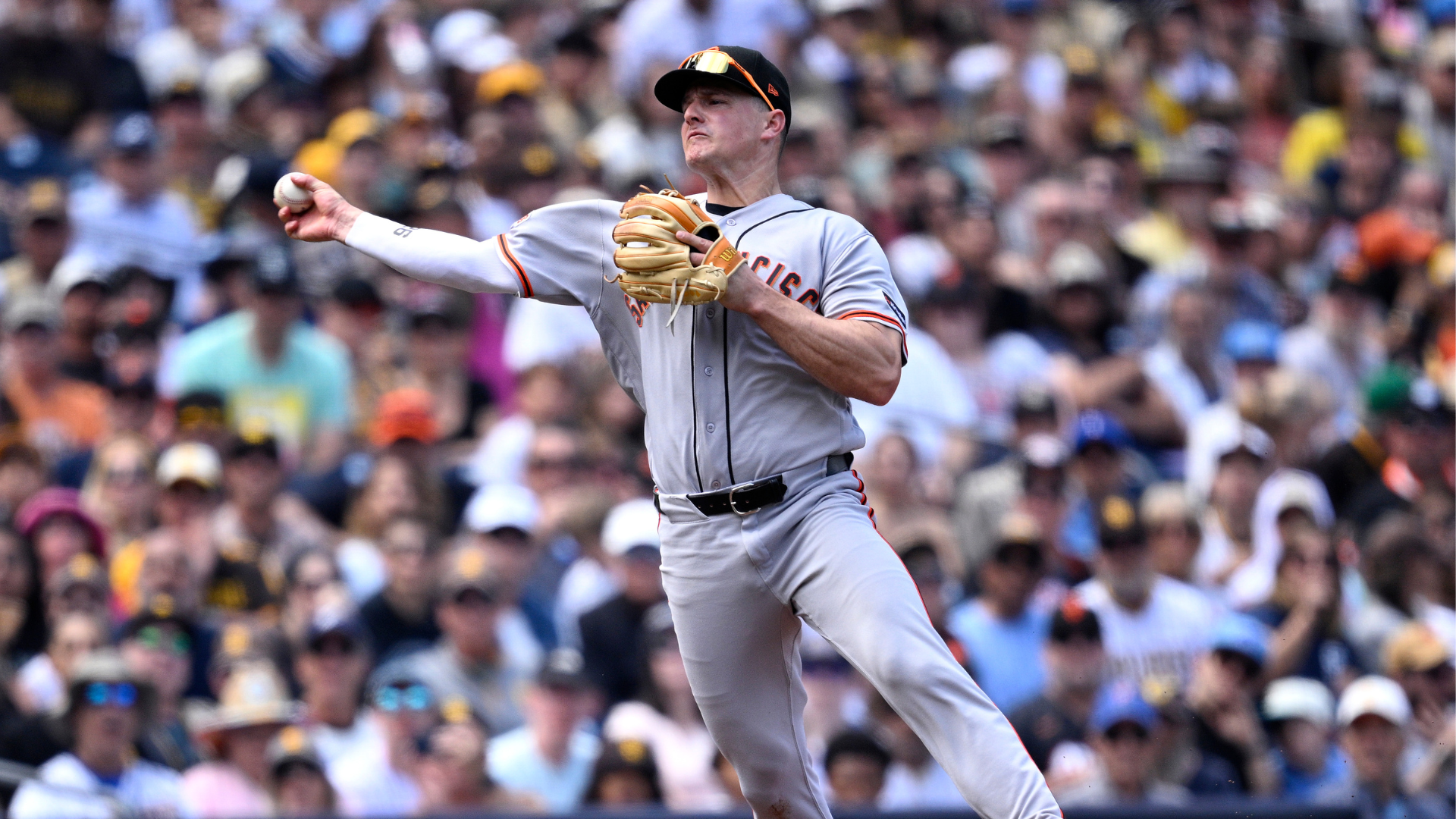
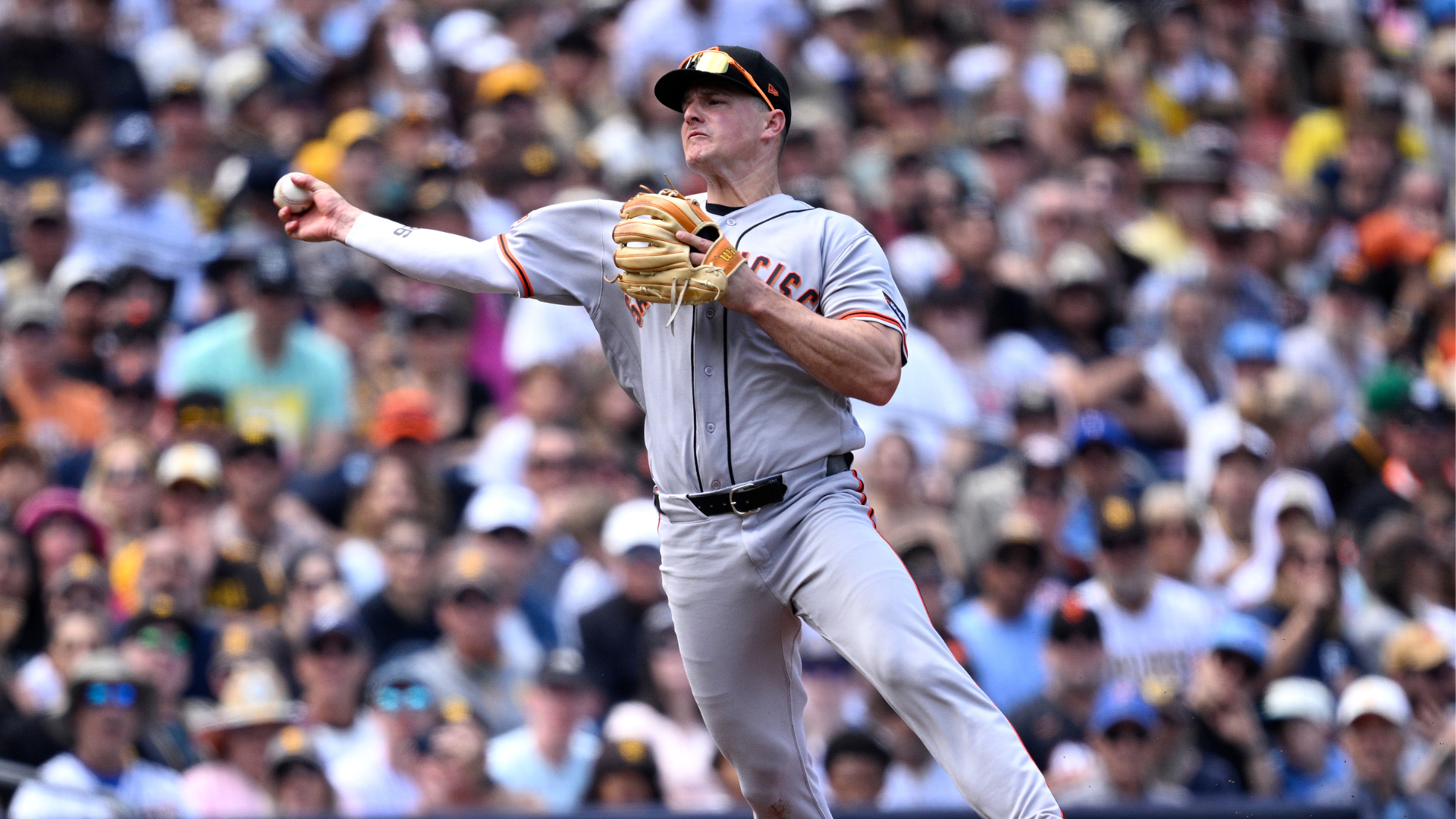
The San Francisco Giantshave had a challenging 2026 season thus far, and Wednesday’s game against the San Diego Padres suggested that frustration may already be creeping in. To start the season, the Giants endured a home sweep at the hands of the New York Yankees and were out-scored 13-1 across those three games. Wednesday presented an opportunity to erase those recent memories, as they had taken the first two games of the set against their National League West rivals. That turned out not to happen, as the Padres prevailed 7-1 behind a strong start from Nick Pivetta.
As for those aforementioned frustrations, they most visibly belonged to veteran third baseman Matt Chapman. With two out and two on in the bottom of the fifth, Xander Bogaerts chopped one to Chapman, who had to make a hurried and somewhat off-balance throw to Casey Schmitt at first base. It didn’t go as planned:
That’s a high throw and an error on Chapman, but it appeared to be catchable on the part of Schmitt. Chapman apparently agreed, as during the ensuing mound visit, he appeared to tell Schmitt to “catch the f—ing ball.”
No doubt, Chapman was also thinking of a similar play in the first inning when Schmitt was charged with an error:
Advertisement
Those plays accounted for both Padre runs, at least until they pulled away in the later innings. After the game, Chapman addressed the mound visit incident with reporters. Via NBC Sports Bay Area:
“We’re all brothers here. It’s the heat of the moment. I already talked to Casey. It’s all good.”
“We’re trying to win games. I mean, obviously I’m not mad about it or anything. That’s baseball. I mean, those are things I should have done and didn’t.”
In Schmitt’s defense, he’s far more familiar with the other infield positions, and Wednesday marked just his 18th career start at first base. However, the utility infielder was pressed into regular duty at first base because of Rafael Devers‘ balky hamstring, which has limited him to DH thus far. As well, the organization determined that young first baseman Bryce Eldridge, the Giants’ top prospect, needed further seasoning at Triple-A to start the year. If it’s any consolation to Chapman, Schmitt shouldn’t be at first base much longer.
All of this, of course, isn’t a big deal or even anything all that unusual. It just happened to be caught by the lens and lip readers, which is why we’re talking about it.




;)







































You must be logged in to post a comment Login