

Business
A Comprehensive Guide to Corporate Restructuring and Local Tax Compliance


Most discussions about restructuring focus on the federal tax code. This is where buzzwords like IRC Section 368 and tax-free reorganization come into play.
What is often overlooked are the state and local tax bills that wouldn’t care if they were a Type A merger or Type C reorganization and send you a bill anyway.
How reorganization type shapes your local tax exposure
Under Internal Revenue Code (IRC) Section 368, the major reorganization structures are defined, and each one of them has different local tax implications which are entirely untouched by federal deferral.
A Type A reorganization is a statutory merger or consolidation. While the federal requirements to obtain tax-free treatment are the most permissive of any structure – you can have boot with the shareholders and still qualify – a consolidation or merger of two legal entities will trigger real property transfer taxes. This may be based on the fair market value of the real estate or on the mortgage that encumbers it, but either way, it’s a potentially large hit. Most of the taxes of this type are based on equitable ownership of the property changing. That would trigger the tax and I don’t know of any way to get out of it, even if the transfer is tax-free for federal income tax purposes.
Type B reorganizations – stock-for-stock purchases – leave the target entity in place as a subsidiary, so there is no immediate transfer of assets. As a result, they cause the fewest local tax surprises, although one must always be careful of successor liability and nexus.
Type C reorganizations occur when the acquiring corporation obtains substantially all of the target’s assets. Here, thinking through local tax consequences is especially important because most asset transfers trigger sales tax on the tangible personal property involved. In many instances, intangibles that are transferred in connection with a sales transaction are also subject to sales tax, although the states may not advertise in advance that they will be looking for these.
Nexus follows people and property – even after a restructure
An unexpected restructuring surprise that is both relatively common and often underestimated is unwelcome nexus expansion.
Like with a competitor acquisition, the realization of new payroll tax filing obligations in multiple states and municipalities with no prior presence can easily cause panic. A remote team in three new states means three potential new nexus positions, plus the new city payroll and property taxes we’ll touch on shortly. A hotel room of a W-2 employee from the acquired company working in a new city will require local registration. Opening payroll tax accounts is a given. Had the target company established payroll/withholding nexus in multiple jurisdictions the acquirer did not know about? That doesn’t go away.
An unsung hero of state and local tax liabilities is property taxes or the gross receipts taxes often paid by businesses that lease property. Special care is needed to ensure potential exposures from the target’s operations are fully evaluated and considered. For example, filing dominion and control forms to report particular kinds of business personal property tax liabilities can be a particularly revealing methodology. Dozens of states still impose these taxes, many jurisdictions have ‘silent’ filings that expose operations you might have otherwise flown under the radar, and questions from tax authorities could generate queries that open audit pathways for years to come.
Entity conversions carry their own local tax penalties
Converting a business entity – an LLC to a C-Corporation, an S-Corporation to a C-Corporation – is often viewed as a non-event. From a local tax perspective, it’s anything but.
When a pass-through entity converts to a C-Corporation, deferred tax liabilities can accelerate immediately. Net operating loss carryforwards built up under the prior entity structure may not survive the conversion, depending on state rules. At the federal level, IRC Section 382 limits how NOLs can be used after an ownership change; a number of states apply comparable restrictions disqualifying local NOL carryforwards in their entirety.
The transition from pass-through to double taxation is also one deserving of special attention. Under a C-Corporation structure, income is first taxed at the entity level and again upon distribution to shareholders. For businesses operating in high-tax jurisdictions, this secondary tax multiplies fast.
The Pass-Through Entity Tax election available in most states does provide a partial solution – it lets eligible entities pay state income tax at the entity level, indirectly preserving the deduction at the federal level and bypassing the SALT cap. However, entities converting mid-year need to decide if they can still make this election and determine the timing implications.
How restructuring reshapes the apportionment formula
For companies operating in multiple jurisdictions, local corporate income taxes are determined by an apportionment formula – a mix of sales, property, and payroll. All three of these components can be impacted by a merger or acquisition. Post-deal, the acquiring company’s business may have more employees in a high-tax city, thus resulting in more income being apportioned to that jurisdiction. If the acquisition added real estate in another municipality, local taxable income is likely to increase there, too. A change in the sales factor – including all-important single-sales-factor jurisdictions – can have a major impact on the state in which the greatest part of taxable income is apportioned.
A higher overall local corporate tax bill may be in order, just because the apportionment factors have tilted a bit more in the taxing authority’s favor. A flat revenue company post purchase may still have millions of new tax exposure. The only way to effectively manage this risk is to complete accurate apportionment factor projections prior to completing the transaction.
The capitalization trap: what you can and cannot deduct
Legal fees, accounting fees, and advisory costs are often treated as current deductions in a corporate restructuring, but in many cases that’s incorrect. Under the more general Section 263(a) of the Internal Revenue Code, costs that facilitate a capital transaction have to be capitalized. The regulations say that the deductibility of costs that facilitate a capital transaction is governed by a facts-and-circumstances test and that the treatment of these fees is based on the nature of the underlying transaction.
For example, the regulations distinguish between costs incurred in investigating or otherwise pursuing the acquisition, creation, or organization of an entity and costs incurred while facilitating the acquisition. Investigative costs are sometimes currently deductible rather than capitalized, but costs facilitating a capital transaction are generally capitalizable once a transaction has been identified as a specific entity and negotiation and or decision to acquire that entity begin.
At the local level, the treatment gets more complicated. Some jurisdictions follow the federal rules on capitalization; others have their own standards. Deductions that are allowable federally may not flow through to the local return without adjustment. Businesses navigating this kind of cross-jurisdictional complexity are often best served by consulting the best CPA in Queens, NY, since the capitalization question has to be answered separately for each return.
Successor liability: the hidden debt that comes with the deal
When you acquire a company you also acquire exposure to the mistakes the target made in the past. For the most part, a buyer that purchases business assets without obtaining a proper series of clearance certificates becomes legally responsible for the seller’s unpaid taxes – sales taxes, payroll taxes, franchise taxes, local business taxes.
This is known as successor liability and it’s not just a concept. Acquiring entities for predecessor tax debts are aggressively pursued by tax officials. The series of clearance certificates where the state or municipality certifies that there are no unpaid taxes is the protection, but it takes time and must be requested and received prior to closing the transaction. If the timeline doesn’t permit this request or response, then there is an escrow holdback covering the estimated tax exposure.
The majority of acquiring companies first request tax returns and then request the backup documentation to the return to support the filed numbers. In some cases, acquisitions happen before the first tax returns are filed. For those acquisitions, a charge or return for informative research with the major tax jurisdictions for the preceding five years is part of due diligence. The clearance certificate is specific that all applicable returns have been filed, which is why there are frequently late-stage filings post-transaction close.
NYC’s dual tax system requires parallel planning tracks
Businesses operating in New York City face a tax environment that runs on two tracks simultaneously. The New York City General Corporation Tax applies to corporations doing business, owning property, or employing capital within the five boroughs. The Unincorporated Business Tax applies to partnerships and sole proprietors. These are separate tax systems with separate rates, separate filing requirements, and separate administrative rules.
During a corporate restructuring, both can be implicated at once. If the transaction involves entities taxed under the GCT and others subject to the UBT, the combined entity may have obligations under both regimes in the transition year. Local tax auditors are particularly focused on the final returns of dissolved or merged entities – those returns attract scrutiny for constructive dividends, improper expense allocations, and deductions that don’t hold up under local rules.
Localized compliance burdens in environments like New York City can create effective tax rate differences of 5% to 8% compared to neighboring jurisdictions in the same metropolitan area. That kind of variance means that where exactly a business is registered and operating matters as much as how it’s structured. Working with advisors who know the GCT and UBT mechanics is essential during a complex corporate transition, because generalists will miss things that show up later as penalties and back taxes.
Post-restructure audits are more targeted than most people expect
Local tax collectors don’t tend to go easier on restructured entities than they go on operating concerns. When a business terminates, joins itself to another, or changes its legal form, those final tax filings are apt to be subjected to more audit rather than less.
Auditors review transfer pricing to see if deductions or income were inappropriately pushed into the returning entity’s final return. Deductions of costs or losses taken in the liquidation year that should have been capital or spread over a longer period into ongoing businesses. Income deferred beyond the point when the entity’s founders lost the power to declare it. Particularly in closely held firms associated with retirement of the owners, constructive dividends.
The best protection is documentation. Keep meticulous records for costs, categories of business expenses, and the like. During a restructuring event, add solid evidence of what each expense item brought to the company – whether it was an ordinary and necessary business expense for the year in question, or had a direct effect on income, whether for laying foundations for future profit and loss, and so on. Build that paper trail sooner than later.
Corporate restructuring creates real value when it’s executed well. The federal mechanics get the most planning attention, but the local and municipal layer is where the unexpected costs live – and where thorough, jurisdiction-specific advice pays for itself several times over.

Business
Earnings call transcript: TF1 H1 2026 profit beats expectations as digital growth accelerates

Earnings call transcript: TF1 H1 2026 profit beats expectations as digital growth accelerates


I have been managing investments for over eight years in capital markets. By qualification I am a CFA Charter holder. I primarily look for discrepancies between the price and value of a security. With a focus on first-principal mindset, I try breaking down ideas into their core- most tangible parts, affecting the theses while deliberately avoiding the non-significant matter into crowding the analysis. If you like my ideas or frameworks, reach out via email/message for more granular and concentrated- portfolio level specific investment researches and ideas. I am at prakhar@shrihittruealphacapital.com.
Analyst’s Disclosure: I/we have no stock, option or similar derivative position in any of the companies mentioned, and no plans to initiate any such positions within the next 72 hours. I wrote this article myself, and it expresses my own opinions. I am not receiving compensation for it (other than from Seeking Alpha). I have no business relationship with any company whose stock is mentioned in this article.
Readers are advised to fact-check thoroughly before committing any capital to this idea; this reflects the personal views of the author and should not be pursued as formal financial or investment advice in any manner. While every effort has been made to ensure accuracy, errors may exist in the data and financial projections presented. The author is not responsible for any financial gains or losses incurred from investments made based on this content.
Seeking Alpha’s Disclosure: Past performance is no guarantee of future results. No recommendation or advice is being given as to whether any investment is suitable for a particular investor. Any views or opinions expressed above may not reflect those of Seeking Alpha as a whole. Seeking Alpha is not a licensed securities dealer, broker or US investment adviser or investment bank. Our analysts are third party authors that include both professional investors and individual investors who may not be licensed or certified by any institute or regulatory body.
Meta AI adds task management and calendar integration features

A customer shops for cilantro at a Walmart Supercenter on July 23, 2026 in Austin, Texas.
Brandon Bell | Getty Images
The nation’s largest multistate outbreak of cyclosporiasis linked to shredded iceberg lettuce has expanded to nine states, the Centers for Disease Control and Prevention said Friday.
The four newly linked states – Illinois, Kansas, Oklahoma and Pennsylvania – join Indiana, Kentucky, Ohio, West Virginia and hard-hit Michigan. Cyclospora is a microscopic parasite that typically infects people through contaminated food or water and causes cyclosporiasis, a gastrointestinal illness that can result in symptoms including severe diarrhea. Patients can require hospitalization, but no deaths have been recorded related to the parasite this year.
The outbreak is already the largest of cyclosporiasis reported in the U.S. this year, with thousands of illnesses recorded nationwide. That is well above the roughly 200 to 1,000 cases typically reported annually.
Meanwhile, the Food and Drug Administration is investigating a separate cyclosporiasis outbreak linked to an unidentified food product or products. The U.S. is trying to investigate the sources of the parasite and contain its spread amid confusion over its response to the outbreak and staffing cuts that some experts say made it harder to curb it.
U.S. health and food regulators have zeroed in on shredded iceberg lettuce supplied by Taylor Farms.
Mexican health authorities on Thursday said that samples of lettuce and water from Taylor Farms’ plant in central Mexico tested negative for cyclospora. However, that result does not disprove the Food and Drug Administration’s earlier identification as Taylor Farms de Mexico as the likely source of the outbreak.
The earliest cases began showing symptoms in mid-May. Moreover, the long incubation period for infection means that the crop responsible would have been distributed weeks ago.
Last week, the FDA said that the produce giant supplied the shredded iceberg lettuce to the Taco Bell restaurants where people ate before becoming ill. Taylor Farms also issued a voluntary recall for all iceberg lettuce sourced from its Guanajuato, Mexico facility, and Taco Bell pulled the affected lettuce from its restaurants.
The CDC has so far tallied 1,947 people infected with cyclospora who also reported eating at Taco Bell in the nine states. Illnesses in the outbreak tied to iceberg lettuce began on June 22 and have continued through July 20, the CDC said. The federal count has lagged behind state tallies, so some of the states hit by the outbreak have reported much higher numbers of infections.
But Taylor Farms has drawn criticism for its response to the outbreak. Some health experts blasted its recall notice, which included abbreviations and did not allow consumers to understand easily if they had bought or eaten any product that was at risk.
After the FDA reported a false positive of lettuce samples from Taylor Farms on Sunday, the company issued a statement saying that the health agency had apologized. The FDA later clarified that it had not apologized to Taylor Farms, and the company deleted the statement on X, although it is still available on its website. The agency also said it still considered the company’s iceberg lettuce the likely source of the outbreak.
Taylor Farms supplies lettuce and other produce to major retailers such as Walmart, Target and Whole Foods, as well as restaurant chains including Taco Bell.
Check out what’s clicking on FoxBusiness.com.
A mainstay in the Carolinas will keep its sense of familiarity while also getting a modern-day makeover.
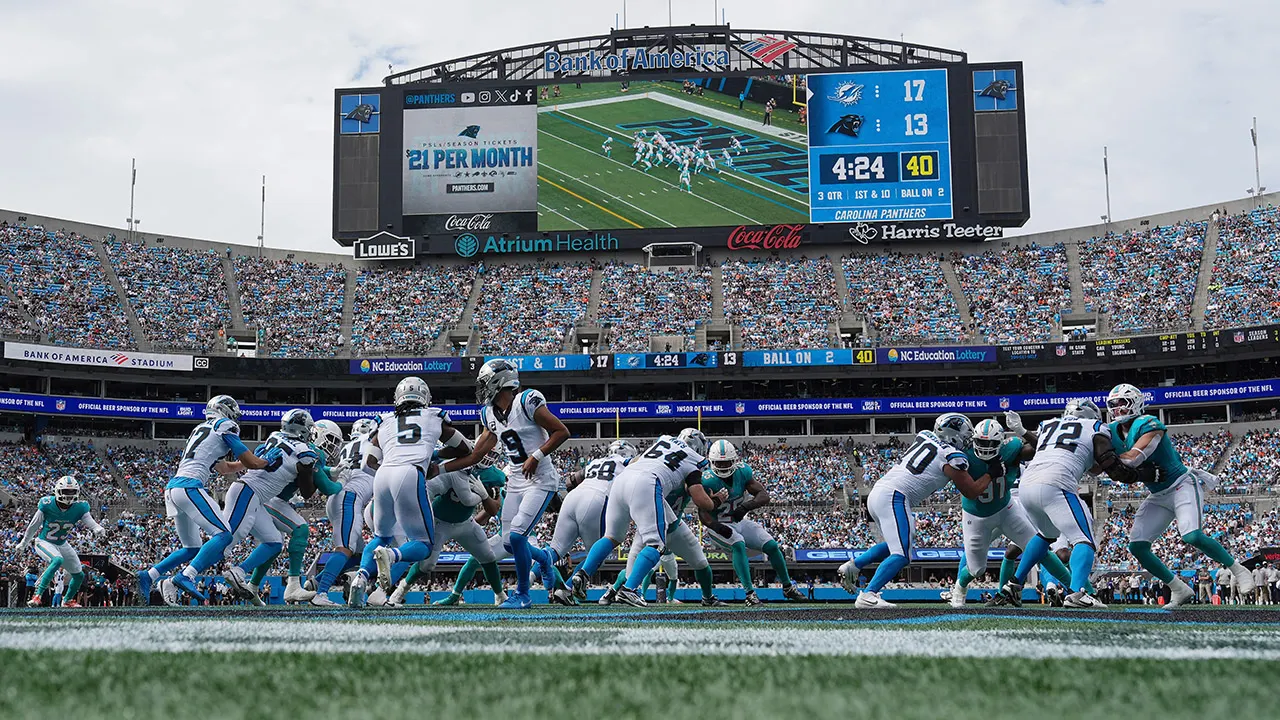
The NFL’s Carolina Panthers have reached a long-term agreement with Bank of America to extend one of the NFL’s longest stadium naming rights deals.
Along with fan-focused enhancements and an increase in private investments, the long-term plan is worth more than $1.3 billion.
CLICK HERE FOR MORE SPORTS COVERAGE ON FOXBUSINESS.COM
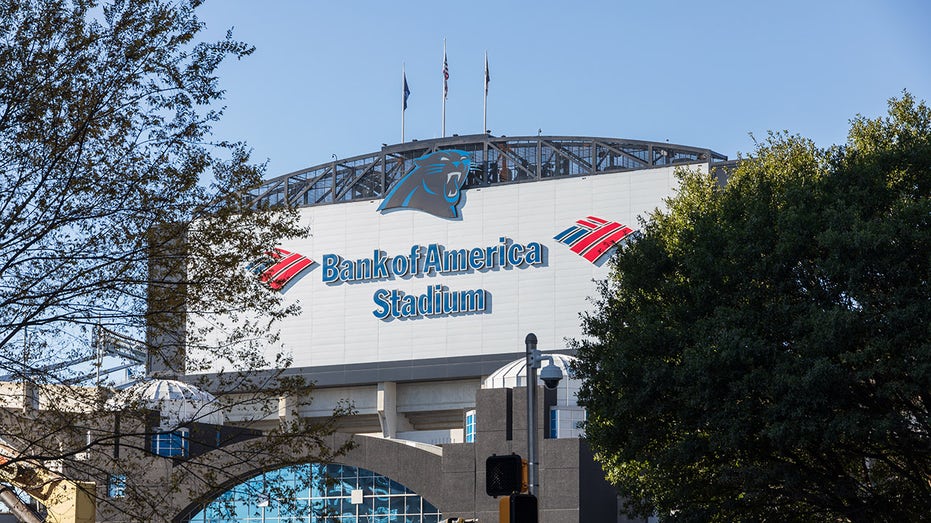
A front sign and archway for the Carolina Panthers stadium, with ongoing construction. (Getty Images / Getty Images)
The agreement will keep the stadium known as “The Bank” for the foreseeable future, and renovations will be underway at the 30-year-old venue.
“The long-term extension with Bank of America reflects the strength of our partnership and our shared commitment to the Carolinas,” said David Tepper, owner and chairman of Tepper Sports & Entertainment, which owns the Panthers. “For over three decades, Bank of America Stadium has helped create lasting memories for our fans, and we’re excited for them to see what’s ahead. Our goal is to create experiences that enhance the passion and energy of the region while transforming this corridor into a weekend destination for world-class sports, entertainment and community events.”
Bank of America Chair and CEO Brian Moynihan added, “Over the years, Bank of America’s partnership with the Carolina Panthers has become one of the most enduring in professional sports. With nearly 20,000 teammates and a local history dating back to 1874, our ties to Charlotte run deep, and so does our commitment to its continued growth. The extension recognizes Bank of America Stadium’s important role of attracting millions of visitors, driving economic opportunity and showcasing Charlotte and the Carolinas.”
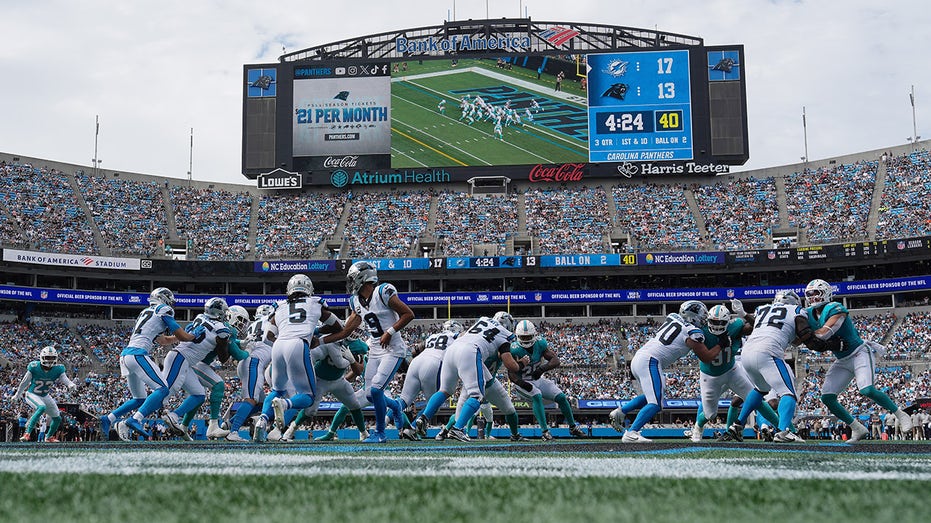
A general view as Bryce Young #9 of the Carolina Panthers hands the ball off to teammate Rico Dowdle #5 during the third quarter against the Miami Dolphins in the game at Bank of America Stadium on Oct. 5, 2025 in Charlotte, North Carolina. (Josh Lavallee/Getty Images / Getty Images)
SAQUON BARKLEY TACKLING STREAMING MAZE AS NFL KEEPS GROWING WORLDWIDE: ‘I’M ALL ABOUT EYES’
After initially opening in 1996 as Ericsson Stadium for the Swedish telecom company LM Ericsson, Bank of America purchased the naming rights in 2004 under a 20-plus-year deal.
The relationship between Bank of America and the Panthers dates back to the team’s founding in the early 1990s, when former Bank of America CEO Hugh McColl played a key role in helping the Carolinas secure an NFL expansion franchise. That shared history laid the foundation for a partnership that has helped shape countless moments for fans while maintaining a longstanding commitment to community impact.
Renovations to the stadium will include expanded indoor-outdoor gathering spaces across all levels, a 500-level social patio with sweeping views of Uptown Charlotte, larger and more dynamic scoreboards and displays, upgraded seating options, premium offerings, and technology designed to create a more connected and personalized experience.
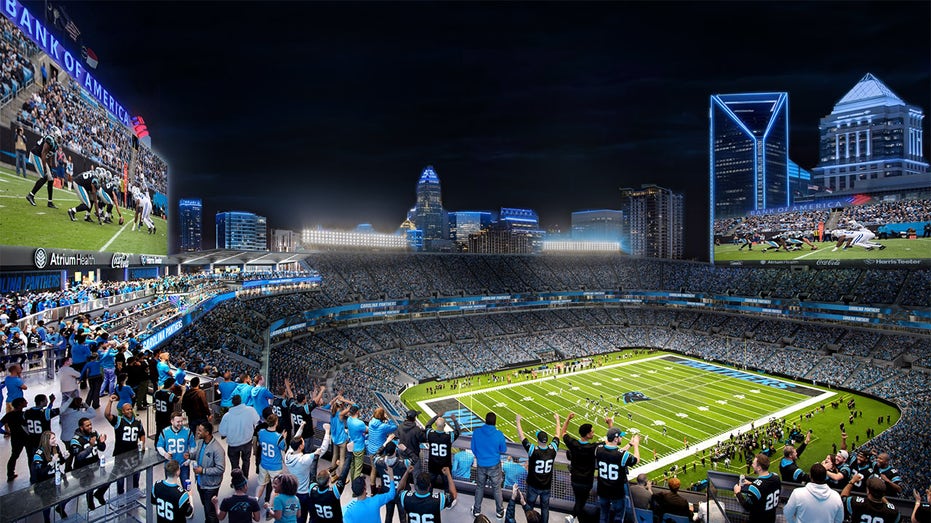
Bank of America Stadium is set to undergo renovations along with its extended naming-rights deal. (Bank of America Stadium rendering / Fox News)
GET FOX BUSINESS ON THE GO BY CLICKING HERE
Renderings also reveal an elevated vision for the stadium exterior, with upgraded materials and a signature illuminated crown that will become part of the Queen City skyline. Design details will draw inspiration from the people, places and landscapes of the Carolinas, creating spaces that feel authentic to the region.
The Panthers won the NFC South this past season before narrowly missing out on a huge upset against the Los Angeles Rams on their own home field. Quarterback Bryce Young is entering his fourth season, and the Panthers will look to make the playoffs in back-to-back seasons for the first time since making it each season from 2013 to 2015.
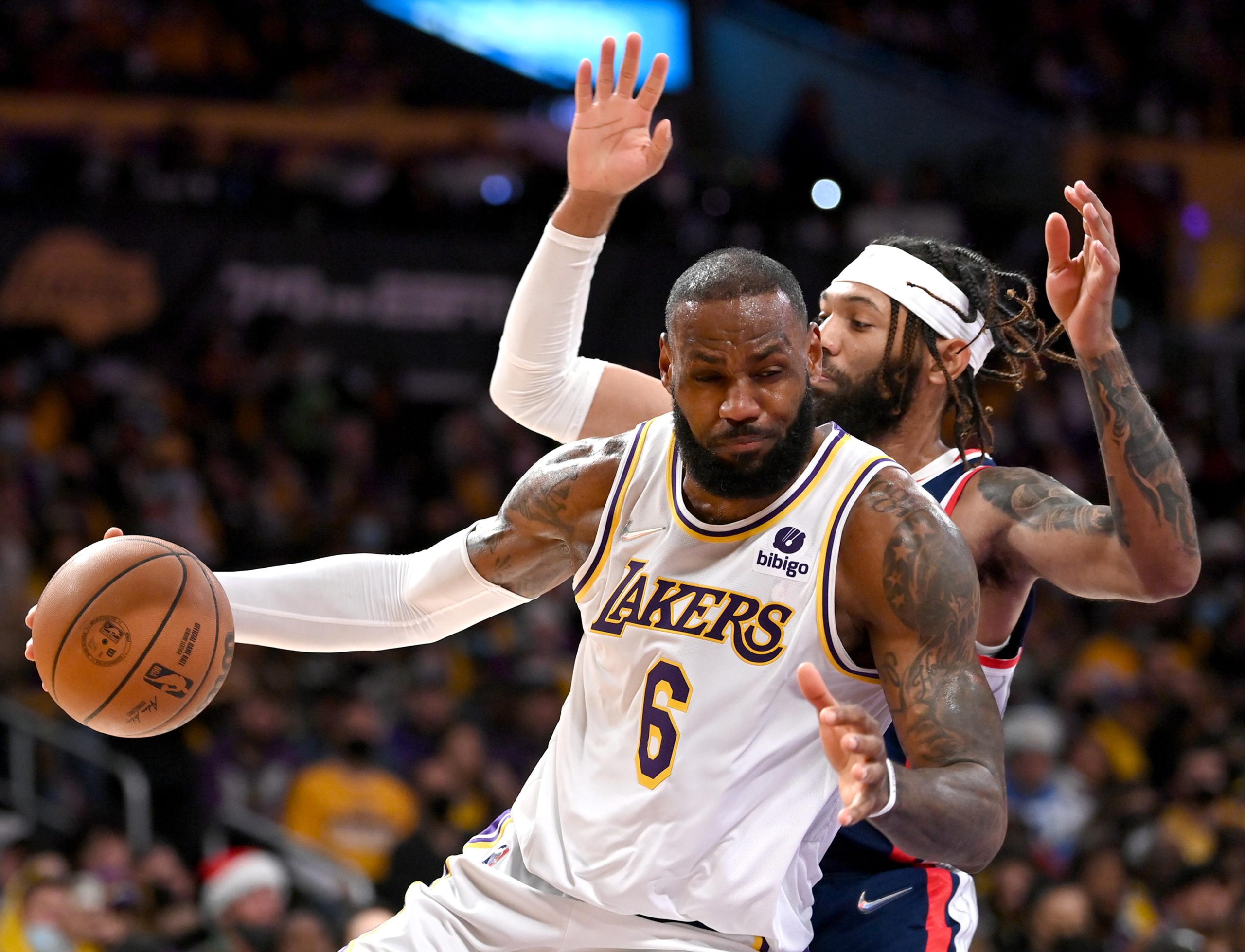
LeBron James ended weeks of speculation Friday, agreeing to a two-year, $8 million contract with the Philadelphia 76ers, a franchise he had never previously played for and one few insiders had seriously considered a frontrunner until the final stretch of his free agency. Here’s a breakdown of the factors that appear to have driven the decision, based on James’ own statements and reporting from those closest to the process.
1. A blockbuster trade reshaped the roster
According to ESPN’s Shams Charania, the Sixers weren’t even seriously in the conversation until Philadelphia’s front office traded Paul George and four draft picks to acquire All-NBA forward Jaylen Brown from the Boston Celtics earlier this month. “The Sixers were not even on the map until Bob Myers and Mike Gansey went out there and traded for Jaylen Brown,” Charania said. That trade instantly transformed Philadelphia’s championship outlook and put the team on James’ radar for the first time.
2. A roster James found genuinely compelling
Once the Brown trade went through, James reportedly compared Philadelphia’s roster directly against his other options. “LeBron James looked at that roster, he looked at the Cavaliers roster, he looked at the Heat roster. He is choosing the Philadelphia 76ers,” Charania said. The Sixers can now field a starting lineup featuring Tyrese Maxey, VJ Edgecombe, Jaylen Brown, James and Joel Embiid, a grouping NBC Sports described as making Philadelphia a “legit threat to make the NBA Finals.”
3. An aggressive recruiting push from the team’s stars
Philadelphia’s core didn’t wait for James to come to them. According to multiple reports, Embiid, Maxey and Brown personally reached out to James to try to persuade him to join the franchise, with ESPN’s Brian Windhorst reporting that James remained in continuous contact with the trio throughout the process.
4. James already respected Brown’s game
James’ admiration for Brown predates the trade itself. Speaking earlier this season, James praised Brown’s play directly. “He’s playing great basketball, man,” James said. “This whole MVP thing, I don’t understand why his name is not getting talked about some, as well. Like, nobody gave them a shot to start the season.”
5. One more shot at a championship
James was direct about his primary motivation in the message he posted to X announcing the decision. “I still want to sacrifice. I still want to work. I still want to grind. I still want to compete, to win and to have a chance at the feeling of winning another championship,” James wrote. “I believe I can help make the Philadelphia 76ers a championship team.”
6. He explicitly said it wasn’t about money or family ties
James used his announcement to rule out the two factors many assumed would guide his decision. “This is my last decision. I’m not going for money. I’m not going for family. What am I really playing for at this point?” he wrote, a statement that helps explain why he ultimately passed on a return to Cleveland, where he began his career, or Miami, where he won two championships.
7. A dramatic pay cut that signals his true priority
James had been earning roughly $50 million per year with the Lakers. His new deal with Philadelphia pays just $8 million over two years, a reduction that multiple outlets described as one of the most surprising aspects of the entire decision. That financial sacrifice reinforces James’ own framing that competing for a title, not maximizing earnings, drove his choice.
8. He needed real time away from the game to decide
James revealed that he had quietly considered retirement before ultimately choosing to keep playing. “I thought I was done when the season ended. I wasn’t ready to announce it, and I knew I needed some time to really decide, but I was pretty sure I played my last game,” James wrote. “I was honest at that last press conference when I said I needed to look at myself and decide if I still love this game. I still truly love this game, and I have more to give.”
9. A new challenge with an unfamiliar franchise
NBC Sports noted that James chose to “finish his career with a team he had not been on before,” a decision that came with what the outlet described as “a sense of unfamiliarity” compared with a more sentimental return to Cleveland or Miami. That willingness to embrace the unknown, rather than lean on nostalgia, appears to reflect James’ stated desire to be pushed competitively in what he has called his final chapter.
10. A front office he trusted to build a winner
James’ decision also reflects confidence in Philadelphia’s front office, led by president of basketball operations Mike Gansey, who was brought in to replace Daryl Morey. NBC Sports credited Gansey’s aggressive summer, from acquiring Brown to ultimately landing James, as a potential Executive of the Year-caliber performance, suggesting James was betting not just on the current roster but on the organization’s broader direction.
A decision that reshapes the rest of free agency
James’ announcement is expected to trigger a wave of subsequent moves across the league, with Cleveland, Philadelphia and Golden State all reportedly holding roster decisions in place while awaiting his choice. Players including DeMar DeRozan and Jonathan Kuminga were also said to be waiting on James’ decision before finalizing their own free agency plans.
A farewell to his previous teams
Even in committing to Philadelphia, James took time to acknowledge the franchises that shaped his career. “Thank you LA. Miami I’ll forever love and Northeast Ohio will always home!” he wrote, closing the book on eight seasons with the Lakers, four championship-contending years with the Heat, and his original run with the Cavaliers, as he now begins a new chapter with a fourth NBA franchise at age 41.
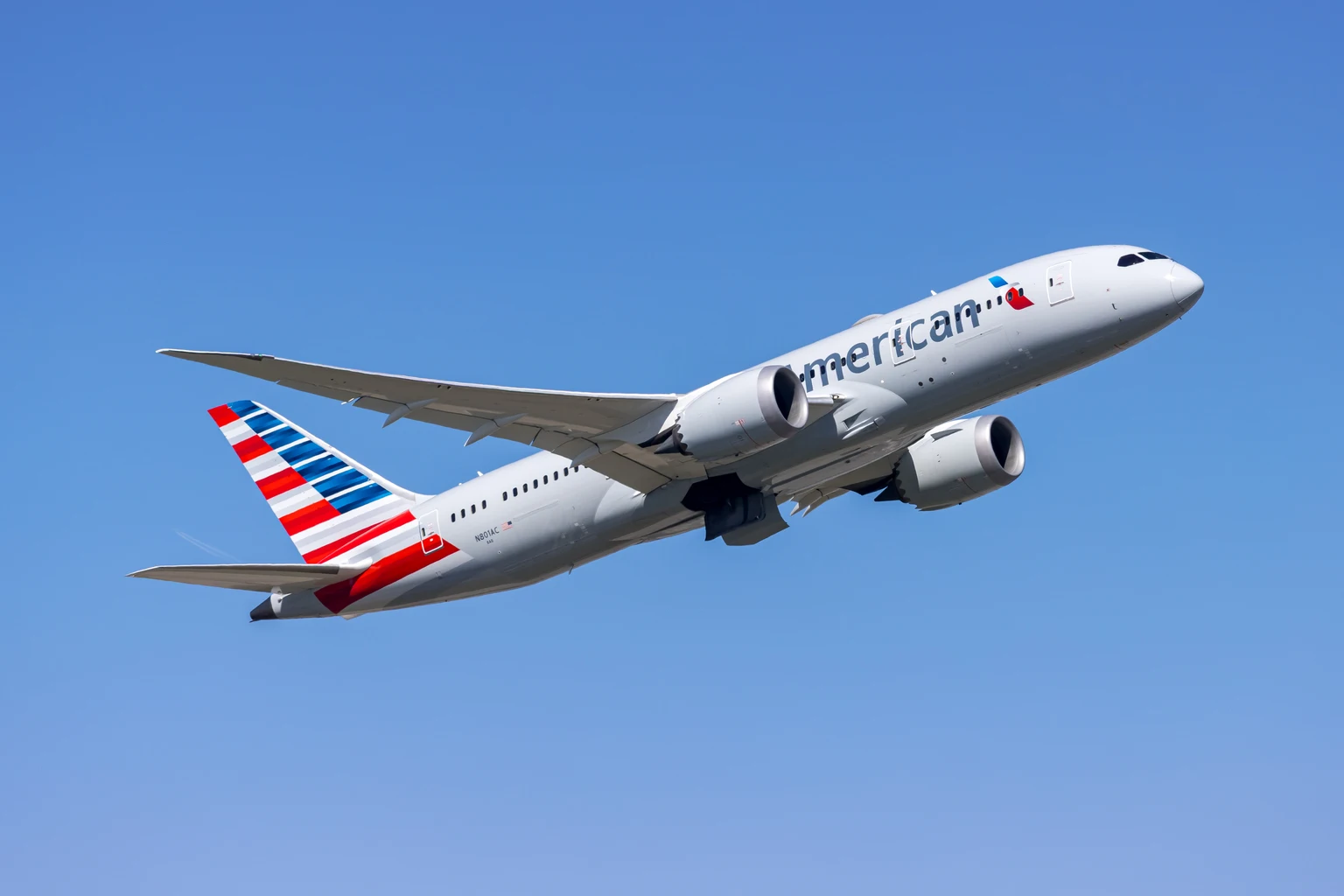
American Airlines: Buy Any Fuel Panic
Earnings call transcript: Ovintiv tops revenue in Q2 2026, shares rise
Business
Ford Recalls More Than 565,000 Bronco and Bronco Raptor SUVs in US Over Engine Compartment Fire Risk
Ford Motor Co. is recalling more than half a million Bronco and Bronco Raptor SUVs in the United States after determining that a wiring harness in the engine compartment can become damaged and short circuit, potentially increasing the risk of an engine fire, according to the National Highway Traffic Safety Administration.
The recall covers 565,691 vehicles, spanning Bronco and Bronco Raptor models from the 2021 through 2026 model years, according to NHTSA. Ford first reported the issue to the agency on July 20.
What’s wrong with the vehicles
According to safety documents filed with NHTSA, the primary wiring harness located inside the engine compartment of the affected vehicles is prone to premature wear and physical damage over time. That wear can eventually cause the electrical wiring to experience a short circuit. Because the engine bay is a tightly packaged space, a short circuit occurring there can generate excessive heat or produce sparks almost instantly. Under certain conditions, those sparks or heat sources can ignite nearby grease, plastic components or fuel vapors, significantly increasing the risk of a fire in the engine compartment.
Which vehicles are affected
The recall spans the entire production run of the current, sixth-generation Ford Bronco, covering specific production configurations of the standard Bronco across the 2021 through 2026 model years, as well as the high-performance, wide-body Bronco Raptor variant across the same production window. Ford has estimated that approximately 1% of the recalled vehicles actually contain the wiring harness defect, though the company is recalling the full population of eligible vehicles out of caution given the difficulty of identifying which specific units are affected without individual inspection.
How Ford is fixing the issue
As part of the recall remedy, Ford is directing dealers to inspect the factory wiring loom in each affected vehicle and install a new, heavy-duty protective sheathing layer over the vulnerable sections of the harness. According to Yahoo Autos, this specialized protective sleeve is designed to act as a barrier, isolating the live electrical wires and shielding them from the kind of friction or heat-related grounding faults that can lead to a short circuit. NHTSA confirmed that dealers will perform this repair free of charge to vehicle owners.
When owners will be notified
Official recall notification letters are scheduled to begin arriving in customer mailboxes starting Aug. 24, 2026, according to Yahoo Autos. In the meantime, owners concerned about whether their specific vehicle is included in the recall can check immediately by looking up their 17-digit Vehicle Identification Number through the online recall portal at NHTSA.gov.
Recall identification numbers
For reference, Ford’s internal recall number for this campaign is 26S55, while NHTSA’s official recall campaign number is 26V468. Vehicle identification numbers tied to the recall are searchable directly through NHTSA’s website using either of those reference numbers.
What owners should do
Owners of eligible Bronco and Bronco Raptor models are encouraged to contact their local Ford dealership to schedule the wiring harness inspection and, if necessary, the sheathing installation, even before receiving their official notification letter in the mail. Because the repair is being performed at no cost to owners, there is no financial barrier to having the inspection completed proactively, particularly given the safety concern involved.
Owners who notice unusual smells, visible smoke, or other warning signs potentially associated with an engine compartment electrical issue are advised to contact their dealer promptly and avoid operating the vehicle until it has been inspected, given the specific fire risk outlined in the recall notice.
Part of a broader pattern of recalls in the auto industry
The Bronco recall adds to a steady stream of vehicle safety recalls issued across the auto industry so far this year, reflecting the ongoing scrutiny automakers face over wiring, electrical and mechanical defects that can pose fire or safety risks to consumers. NHTSA continues to monitor and investigate a wide range of potential vehicle defects across manufacturers, with wiring harness issues in particular representing a recurring category of concern given the complexity of modern vehicle electrical systems and their proximity to heat-generating engine components.
Ford’s broader Bronco lineup
The Bronco, relaunched by Ford in 2021 after a lengthy hiatus from the model name, has become one of the automaker’s more prominent SUV offerings in recent years, drawing comparisons to rivals like the Jeep Wrangler in the off-road-focused SUV segment. The high-performance Bronco Raptor variant, aimed at a more extreme off-road audience, commands a significant price premium over the standard Bronco and has developed its own dedicated following among off-road enthusiasts since its introduction.
Given the recall’s scope, covering the entire production run of the current-generation Bronco since its 2021 relaunch, the issue touches a substantial share of the vehicles Ford has sold under the Bronco nameplate to date.
With notification letters set to begin going out next month, Ford and its dealer network are expected to spend the coming weeks and months working through the population of more than 565,000 affected vehicles, prioritizing inspections and repairs for owners who reach out proactively or who report symptoms consistent with the wiring defect. NHTSA will continue monitoring the rollout of the recall remedy and tracking any additional complaints or incidents tied to the issue as Ford works to complete repairs across the affected fleet.
Capital One Financial: Q2 Earnings Confirms The Trajectory
Sean Combs placed in solitary confinement after prison fight: Reports

Weekend Open Thread: Brooks Brothers

Foreign Office issues new Bahrain and Kuwait travel warning


-

 Fashion7 days ago
Weekend Open Thread – Corporette.com
-

 Politics6 days ago
The House | The City of London can help the new chancellor deliver growth in every postcode
-

 Crypto World6 days ago
Ripple Payments Joins MiCA With 14 Firms, Does It Mean Anything For XRP?
-

 Politics5 days ago
Democrats look to World Cup watch parties to register thousands of voters
-

 Crypto World7 days ago
Ripple wins EU-wide access as ESMA adds it to MiCA register
-

 Crypto World3 days ago
Grayscale Files For Worldcoin ETF, WLD Registers Sharp Rise
-

 Tech4 days ago
Sail Virtually Aboard The “Itanic” With IA-64 Emulator
-

 NewsBeat4 days ago
Unregistered fitter used Gas Safe logo on business flyers
-
 Tech4 days ago
Turtle Beach Command Series KB7 review: a nifty screen-equipped gaming keyboard
-

 News Videos5 days ago
Big Money Is Entering XRP
-
 Business3 days ago
New Jersey voter registration controversy explained: How 6,600 noncitizens got on the rolls, and what happens next
-

 Crypto World6 days ago
Kaspersky exposes OkoBot’s 20-module crypto wallet attack
-
 Business7 days ago
Airlines warn Sunshine Protection Act could disrupt flight scheduling
-
 Entertainment3 days ago
Johnny Depp’s R-Rated Gothic Cult Classic Gets New Release Ahead of Sydney Sweeney Remake
-
 NewsBeat7 days ago
Durham County Council to send out electoral registration emails
-

 Crypto World7 days ago
MiCA Licensing Faces Delays as ESMA Adds 14 CASPs to Register
-

 Crypto World2 days ago
Ethics, other provisions in crypto Clarity Act to be further discussed
-
 NewsBeat4 days ago
Shanghai science forum photos show China’s AI and robotics advances in rivalry with US
-

 Crypto World6 days ago
Chip Stocks Enter Bear Market After Moonshot Ai Unveils Kimi K3 Model
-

 Tech4 days ago
Watch Flock Safety CEO Garrett Langley discuss the future of surveillance at TechCrunch Disrupt 2026
You must be logged in to post a comment Login