

Crypto World
The banks hired lawyers to stop Ripple’s bank



The lobby representing JPMorgan, Goldman Sachs, and Citigroup has retained counsel to challenge the regulator that approved crypto’s bank charters. No suit has been filed. The threat is doing the work, and the fight underneath it decides who gets to be a bank in America.
Summary
- The Bank Policy Institute, whose board includes the CEOs of JPMorgan, Goldman Sachs, and Citigroup, has retained outside counsel and is weighing a lawsuit against the OCC over national trust bank charters granted to crypto firms.
- The trigger was December’s batch of conditional approvals, Ripple, Circle, Paxos, BitGo, and Fidelity Digital Assets in a single wave, followed by February conditionals for Crypto.com, Bridge, and Stripe: eleven applicants in roughly 83 days.
- The banks’ argument is that a limited-purpose trust charter now delivers bank-like national powers under a lighter rulebook, after the OCC reinterpreted what a trust company may do, a change finalized in an April 1 rule.
- The subtext is competitive: the same charters let stablecoin issuers and custodians operate nationwide without deposit insurance obligations, state-by-state licensing, or the capital regime full-service banks carry.
- No lawsuit exists yet, and that is the strategy. The threat hangs over every pending application, over Ripple’s unfinished conditions, and over the one firm, Anchorage, that has ever completed the journey.
The most consequential legal document in crypto right now has not been filed, may never be filed, and is shaping behavior anyway. Since March, the Bank Policy Institute, the Washington lobby whose membership rolls read as a list of everyone crypto was built to route around, JPMorgan, Goldman Sachs, Citigroup, roughly forty of America’s largest lenders, has had outside counsel engaged and litigation options under active review against the Office of the Comptroller of the Currency.
The offense being contemplated is not against any crypto company. It is against the regulator that has spent eight months converting crypto companies into federally chartered trust banks, the charter at the center of the fight, Ripple and Circle and Paxos among them, through what the banks describe as a quiet reinterpretation of what the word bank means. The industry celebrated those charters as its arrival inside the perimeter. The incumbents read them as the perimeter being moved, and their response, a retained-counsel threat that never quite becomes a case, is a more sophisticated weapon than a lawsuit. It is worth understanding precisely, because whichever way it resolves determines whether the charter wave that Ripple is riding reaches shore.
What the OCC actually did
The fight is about a specific licensing artifact, and the details are where both sides’ arguments live.
A national trust bank charter is a federal license from the OCC that lets a company operate as a trust bank: fiduciary services, custody, asset safekeeping, without taking deposits or making loans. It is a limited-purpose vehicle, historically used by trust companies doing exactly what the name says, and it comes with a decisive feature: national preemption. A firm holding one operates in all fifty states under a single federal supervisor, escaping the state-by-state money-transmitter licensing maze that costs crypto firms years and tens of millions to assemble.
For most of crypto’s history, this path was nearly shut; Anchorage Digital, chartered in 2021, remains to this day the only crypto-native firm to have completed the full journey from conditional approval to an operating national trust bank. Then came the current OCC, under Comptroller Jonathan Gould, and the door swung open on a schedule that startled everyone. On December 12, the agency issued conditional approvals in a batch, Ripple, Circle, Paxos, BitGo, and Fidelity Digital Assets at once, the first mass grant of federal charters to crypto firms in history. February brought conditionals for Crypto.com, Bridge, and Stripe. By early March, eleven companies had either received conditional approval or filed applications within roughly 83 days, and more, including Zerohash, were queuing.
Alongside the approvals came the reinterpretation the banks consider the real offense. In February the OCC finalized a rule, effective April 1, revising the description of what a chartered trust bank may do, from language centered on fiduciary activities to trust company operations and related activities, wording critics argue blesses substantial non-fiduciary business, custody of stablecoin reserves, payments-adjacent services, inside a limited-purpose charter. The agency insists the rule neither expands nor contracts its authority. The banks’ lawyers read it as the load-bearing sentence of the entire crypto-charter project, and there is a biographical detail they will not need to invent for a complaint: the interpretive groundwork was laid in OCC letters authored when Gould was the agency’s chief counsel, and it is now administered by the same man as Comptroller. The author of the theory runs the agency enforcing it.
The banks’ case, on its merits
Strip away the self-interest for a moment, because the BPI’s legal argument is not frivolous, and pretending it is would misread the risk.
The core claim is statutory: a national trust bank charter exists for companies in the business of exercising fiduciary powers, and the new wave of applicants, the argument runs, are not meaningfully trust companies at all. A stablecoin issuer chartering its reserve-custody function, a payments firm housing its settlement stack, an exchange federalizing its custody arm, each is using the trust wrapper to obtain the valuable parts of bankhood, federal preemption, the word bank, proximity to the payment system, without the burdens that define it: deposit insurance and its assessments, the Bank Holding Company Act’s supervision of affiliates, community reinvestment obligations, and the capital and liquidity regime built for institutions whose failure hurts depositors. In the BPI’s October letters urging rejection of the Ripple and Circle applications, and in parallel objections from the Conference of State Bank Supervisors and community banking groups, the through-line is charter arbitrage: if the cheapest federal charter confers national banking powers, the expensive ones become optional, and the two-tier structure of American banking law collapses from the bottom.
There is also a safety argument the banks deploy with practiced solemnity: trust banks sit outside deposit insurance, their customers may not grasp the difference, and a failure inside a federally chartered, bank-labeled crypto custodian would land on public confidence in the charter itself. Skeptics note the sincerity gradient here, the same institutions rarely worried about consumer confusion when the confused were crypto customers, but the doctrinal point stands independent of motive. And procedurally, the banks hold a genuine card: administrative law. An agency that changes the effective meaning of a charter category through interpretive letters and a lightly noticed rule, without what challengers would call adequate statutory grounding, is exposed to exactly the kind of Administrative Procedure Act challenge that has felled ambitious regulators of every ideological stripe in the past decade. The BPI has sued a banking regulator before, joining the litigation against the Federal Reserve’s stress-testing framework in late 2024, and won concessions. This is not a lobby that bluffs from weakness.
Why there is still no lawsuit
Which raises the question the crypto industry should sit with: if the case is strong, why has it spent four months as a threat?
Because the threat may be worth more than the verdict. Consider what the retained-counsel posture accomplishes without a single filing. Every pending application is now processed by an agency that knows its next approval could be Exhibit A. Every conditionally approved firm, and conditional is the operative word, Ripple’s charter still carries unmet pre-opening conditions, faces the possibility that the ground rules will be relitigated mid-construction. Banks that might partner with newly chartered crypto firms price in headline and legal risk. And the OCC itself is invited to slow down, attach heavier conditions, and narrow the April rule in application, all of which the BPI would count as victory, none of which requires persuading a judge. The banking lobby’s earlier letters asked the OCC to pause charters until the GENIUS Act’s rules were finalized; with the unwritten rules the war is fought over now late past their statutory deadline, the pause argument renews itself monthly for free.
Litigation, by contrast, carries risks the lobby’s members feel acutely. A loss would ratify the charter pathway with precedent, converting today’s reversible policy into settled law. Discovery cuts both ways in a fight where JPMorgan operates its own digital-asset platform and half the plaintiffs’ members are building what the incumbents are building instead on the same technological ground they would be calling dangerous. And suing the Trump administration’s OCC, run by a Comptroller aligned with the White House’s explicit crypto agenda, is a political expenditure the banks may prefer to save for a fight they cannot win by leaning. The likeliest reading of the last four months is that the lawsuit is being held, not drafted toward a deadline: a live round chambered where the agency can see it.
What it means for Ripple and the charter class
For the chartered firms, the standoff defines the next year more than any product roadmap.
Ripple’s position is emblematic. Its conditional approval, December’s headline, remains exactly that, conditional, with pre-opening requirements to satisfy before its trust bank operates, while the April rule that defines what the bank could do is precisely the rule under legal threat. Circle crossed to final approval on July 10, the second crypto firm ever to finish, which sharpens rather than settles the question: a BPI suit filed tomorrow would seek to unwind the pathway under firms already standing on it, and administrative litigation has unwound completed approvals before. The strategic consequence is a quiet race, chartered firms hurrying to convert conditional status into operating reality and operating reality into reliance interests a court would hesitate to disturb, while the lobby decides whether hurrying itself is the provocation that finally files the complaint.
The deeper stakes belong to the whole industry, and they connect to every regulatory story this year. The trust charter is the load-bearing structure of crypto’s institutional strategy: it is how stablecoin issuers will hold GENIUS-regime reserves, how custodians serve ETFs, how firms like Ripple bolt a federal entity onto global operations. The banks understand this, which is why the fight is here and not somewhere symbolic. It is also the other government bet Ripple holders carry. And both sides are arguing in the shadow of the same missed deadline: the GENIUS rules that would define what reserve custodians actually are remain unfinished, meaning the charter war is being fought over territory whose map the agencies have not drawn. A court asked to decide what a trust bank may custody, before the rules defining custodial obligations exist, would be legislating twice over, which is one more reason everyone involved may prefer the current arrangement: the banks holding their fire, the OCC holding its pace, and eleven applications holding their breath.
The Anchorage precedent
One firm has walked the entire road the December cohort is now on, and its five years as the only finisher are the most underused evidence in the debate.
Anchorage Digital received its conditional national trust charter in January 2021, under a different administration and before the current controversy had a name, and converted it into a fully operational national trust bank, a journey no other crypto-native firm completed until Circle this month. What the intervening years looked like is the part both sides of the current fight selectively quote. Anchorage operated under close, sometimes bruising supervision: it absorbed a public consent order over Bank Secrecy Act compliance shortfalls, spent years and substantial sums remediating, and built the examination relationship, reporting cadence, and compliance headcount that full federal supervision actually demands. The charter delivered exactly what the applicants now queuing want, federal legitimacy, national operation, custody mandates from institutions that require a chartered counterparty, and it extracted exactly the price the OCC’s defenders say the framework imposes: continuous supervision with teeth.
Both litigating narratives have to contend with that record. The banks’ claim that trust charters confer bank-like powers under a lighter rulebook must explain why the one operating example spent years under enforcement-grade scrutiny for compliance failures a state money-transmitter regime might never have surfaced; light-touch is not how Anchorage would describe its decade. The industry’s claim that the charter wave is routine must explain the inverse: if converting conditional approval into an operating bank took the best-resourced early mover four-plus years and a consent order, then the December cohort’s eleven applicants are not weeks from operation, they are at the start of a supervisory gauntlet the OCC can lengthen or shorten at will, which is precisely the discretion the BPI’s pressure campaign is designed to influence.
The precedent also frames the fight’s genuine open question: whether the OCC of 2026 intends Anchorage-grade supervision at eleven-firm scale, or something faster. The agency’s staffing, examination capacity, and the conditions attached to each approval are the observable variables, and the answer determines which caricature is true. A slow, conditions-heavy pipeline vindicates the framework and starves the lawsuit of its best facts. A rapid wave of final approvals with thin supervision behind them hands the banks their complaint’s opening paragraph, and puts the first crypto trust bank failure, whenever it comes, at the center of a charter-legitimacy crisis the whole industry would share.
Anchorage proved the road exists. What nobody has proved is that it can carry this much traffic at this speed, and that, beneath the doctrine, is what the retained counsel are actually waiting to see.
What to watch
The first filing, or the first final approval wave. Either breaks the equilibrium. A BPI complaint converts the threat into years of litigation with the whole charter class as hostages; a rapid OCC push moving Ripple, Paxos, and the December cohort to final approval builds the reliance wall higher and dares the lobby to sue over facts on the ground. Watch which side blinks at the other’s calendar.
The GENIUS rulemaking’s custody provisions. Final rules defining reserve custody would either legitimize the trust-charter model, custodians regulated as the OCC envisions, or hand the banks statutory language to litigate with. The late rulebook is the war’s missing map, and whoever it favors when it lands inherits the high ground.
Whether Congress notices. Charter-arbitrage fights historically end legislatively, and both CLARITY’s drafts and the bank lobby’s Senate letters already gesture at the question of who may hold what charter. A single provision in a moving bill could moot the entire threatened lawsuit in either direction, which is why the same institutions threatening the OCC in March were writing to Senate leadership in June.
The banks did not hire lawyers because Ripple got a charter. They hired lawyers because the definition of a bank, the regulatory moat their entire industry sits behind, was rewritten in an interpretive letter, and the companies walking through the gap are the ones built to replace them. No complaint has been filed, and none may ever be, and the fight is fully underway regardless, conducted in comment letters, conditions, and calendars. Crypto spent fifteen years asking to be let inside the banking system. The incumbents’ answer, delivered through retained counsel, is that the doorway itself is now in dispute. It is also a reminder of the backstop the chartered firms will not get: a federal charter changes supervision, not the politics of rescue.
Frequently asked questions
Who is threatening to sue whom?
The Bank Policy Institute, a trade group representing roughly 40 major US lenders including JPMorgan, Goldman Sachs, Citigroup, and American Express, has retained outside counsel and is weighing a lawsuit against the Office of the Comptroller of the Currency. The target is the OCC’s practice of granting national trust bank charters to crypto and fintech firms, not any crypto company directly. As of late July 2026, no suit has been filed.
What charters triggered the fight?
A December 12 batch of conditional approvals for Ripple, Circle, Paxos, BitGo, and Fidelity Digital Assets, the first mass grant of federal trust charters to crypto firms, followed by February conditionals for Crypto.com, Bridge, and Stripe. Roughly eleven firms received approvals or filed applications within about 83 days. Anchorage Digital remains the only crypto-native firm to have fully completed the journey to an operating national trust bank, with Circle reaching final approval on July 10.
What is the banks’ legal argument?
That the OCC exceeded its authority by reinterpreting the limited-purpose trust charter, historically for genuine fiduciary businesses, to accommodate firms whose real activities are custody, payments, and stablecoin reserves. An April 1 rule change describing permissible activities as trust company operations and related activities is central. The banks argue this creates charter arbitrage: national bank-like powers without deposit insurance, holding-company supervision, or full-service capital requirements.
Why does a trust charter matter so much to crypto firms?
Federal preemption. One OCC charter replaces the state-by-state money-transmitter licensing maze, provides a single federal supervisor, and confers institutional legitimacy that ETF custody mandates and banking partnerships increasingly require. For stablecoin issuers, it is also the expected vehicle for holding reserves under the GENIUS Act regime, making the charter the structural foundation of the industry’s institutional strategy.
Why has no lawsuit been filed yet?
Plausibly because the threat outperforms the case. The retained-counsel posture pressures the OCC to slow approvals and heighten conditions, clouds every pending application, and costs nothing, while actual litigation risks creating pro-charter precedent, invites uncomfortable discovery given that BPI members run their own digital-asset businesses, and spends political capital against an administration-aligned regulator. The BPI has litigated against regulators before, joining the 2024 stress-test suit against the Federal Reserve.
Where does this leave Ripple specifically?
Exposed but moving. Ripple’s charter remains conditional, with pre-opening requirements outstanding, and the April rule defining its future bank’s powers is exactly what the banks contest. Its incentive is to reach final, operating status quickly, building reliance interests courts hesitate to unwind, while the pending Fed master account application adds a second, separate regulatory bet. A filed lawsuit would cloud the pathway even without immediately stopping it.
Could the GENIUS Act rules resolve the fight?
They are the missing map. Final rules defining stablecoin reserve custody would clarify whether trust-chartered firms are the intended custodians, legitimizing the OCC’s approach, or give challengers statutory text to litigate against. All the relevant agencies missed the law’s July 18 rulemaking deadline, so the charter war is currently being fought over territory whose governing rules remain unwritten.
What are the possible endgames?
Four broad paths: the BPI sues and courts decide the charter’s scope over years, with the December cohort in limbo; the OCC completes final approvals quickly and the threat fades against facts on the ground; the agency quietly narrows conditions and slows the pipeline, a negotiated de-escalation; or Congress settles the definition legislatively inside a market-structure bill. Each path assigns different values to the charters crypto firms are counting on. This is not legal or investment advice.
Disclaimer: This article is for information and educational purposes only and does not constitute financial, investment, or legal advice. It describes a contemplated legal challenge and regulatory processes that can change quickly, and no outcome discussed is guaranteed. Always do your own research. Information is accurate as of July 21, 2026.



Goldman Sachs CEO David Solomon has backed the CLARITY Act even as seven Senate Democrats oppose its latest draft and banking groups fight its stablecoin reward rules.
Summary
- David Solomon supports advancing the CLARITY Act despite banking groups’ stablecoin reward concerns.
- Seven Senate Democrats oppose the latest draft over ethics and consumer protection provisions.
- Republicans still need Democratic votes to clear the Senate’s 60-vote threshold.
Politico reported that Solomon was “very supportive” of moving the bill forward so the United States could establish a crypto market structure and advance digital asset development. Although he acknowledged that the proposal was imperfect and open to debate, the Goldman chief argued that passing a framework remained more important than resolving every disagreement first.
Solomon told the publication that the legislation could create a level playing field, strengthen market stability and let digital asset markets develop under clearer rules. His endorsement places the head of one of Wall Street’s largest banks alongside crypto executives who have urged Congress to complete the bill, even as banking trade groups seek tighter limits on stablecoin rewards.
The comments separate Goldman’s public position from the campaign led by banking associations against the current draft. Solomon did not directly endorse its reward provisions, but his support for advancing the full legislation contrasts with groups warning that the text could pull deposits from traditional lenders.
Stablecoin rewards keep banks opposed
Under the latest Republican draft, crypto companies could offer rewards tied to customer activity, while payments on stablecoins held in idle balances would remain prohibited. Banking associations argue that this distinction lets crypto platforms compete for deposits through incentives, creating a risk that money moves away from community banks.
In a May letter to Senate Banking Committee leaders, several banking trade groups called for stronger safeguards against deposit flight. The groups argued that funds leaving banks for stablecoin products could reduce credit available to households and businesses, particularly in communities that depend on smaller lenders.
JPMorgan CEO Jamie Dimon has also criticized the legislation, adding a prominent Wall Street voice to the industry’s objections. Solomon’s support therefore does not suggest that banks have reached an agreement; it shows that major executives differ over whether the reward dispute should stop the bill.
Earlier this week, the United States Hispanic Chamber of Commerce sent Senate leaders a letter supporting the banks’ concerns. The USHCC warned that deposit losses could hurt small-business lending, community development and economic opportunities in Hispanic communities. It also cited analyses that, according to the chamber, showed net outflows connected to crypto activity at community banks.
Republican concerns have resurfaced despite a compromise negotiated earlier in 2026. Punchbowl News reported that Senators John Curtis and John Cornyn shared the banks’ concerns about deposit flight, while Senator Thom Tillis opposed the current ethics provision. Their objections add internal Republican pressure as party leaders seek enough votes to pass the measure.
Democratic resistance blocks an easy vote
Seven Democratic senators, Catherine Cortez Masto, Angela Alsobrooks, Cory Booker, Ruben Gallego, John Hickenlooper, Mark Warner and Raphael Warnock, have rejected the latest text while keeping negotiations open. In a joint statement, they said provisions covering ethics, consumer protection, illicit finance, conflicts of interest and market integrity required more work.
Senate Banking Committee Ranking Member Elizabeth Warren also criticized the draft, arguing that its ethics language did not adequately address President Donald Trump’s crypto business interests. Warren further maintained that the bill lacked sufficient investor and national security protections.
Republicans added restrictions on crypto activity by senior elected officials after Democrats made an ethics clause a condition for continuing talks. Trump accepted the provision earlier this week, but the agreement left enforcement to the Department of Justice and failed to settle Democratic concerns.
Alsobrooks objected to making the DOJ the sole enforcer and described the arrangement as “unserious,” according to reports cited by crypto.news. She said she would oppose the legislation if the language reached the Senate floor unchanged. Her position carries added weight because she was one of two Democrats who helped advance the bill through the Senate Banking Committee in May.
Democratic resistance has cut the bill’s estimated 2026 passage odds by 15 percentage points from their July 21 peak, according to crypto.news. Republicans need Democratic support to reach the Senate’s 60-vote threshold, leaving Solomon, Ripple CEO Brad Garlinghouse and Coinbase CEO Brian Armstrong pressing lawmakers to act before the August recess.
Garlinghouse endorsed a similar argument from Ripple Chief Legal Officer Stuart Alderoty on July 22. Alderoty described the CLARITY Act as a consumer protection measure that would strengthen anti-money laundering and customer-verification rules while giving law enforcement and state authorities clearer tools against misconduct.
With the vote count still short, Goldman’s endorsement gives the legislation another powerful supporter but does not resolve either dispute holding back a Senate agreement.


Kazakhstan has approved a strategic crypto mining framework that grants large-scale miners regulated electricity access in exchange for contributing part of their mined digital assets to a state-backed reserve.
Summary
- Kazakhstan has approved a strategic mining framework that links regulated electricity access with contributions to a state backed crypto reserve.
- Eligible miners must meet strict infrastructure and operational standards before receiving strategic status under the new rules.
- The framework builds on Kazakhstan’s push to expand regulated digital asset infrastructure while strengthening oversight of the crypto industry.
According to Kazakhstan-based news outlet Zakon.kz, the government approved the new rules on July 18 through Government Resolution No. 638, published in the PRG.kz legal database.
The framework introduces a new category known as strategic digital mining, allowing qualifying companies to receive electricity quotas at regulated tariffs after agreeing to transfer a portion of their mined cryptocurrency to Astana Hub, a government-backed technology cluster.
The measure adds another layer to Kazakhstan’s effort to tie its digital asset industry more closely to state-backed infrastructure rather than treating mining as a standalone commercial activity. The rules will take effect on Aug. 1, 2026.
Large mining operators face strict eligibility requirements
Only miners meeting extensive infrastructure standards will qualify for strategic status under the new framework.
As reported by Zakon.kz, applicants must own a digital mining data center with at least 150 megawatts (MW) of installed capacity. Mining equipment deployed at those facilities must also provide a minimum computing power of 150 terahashes per second (TH/s) per unit.
Beyond hardware requirements, companies must employ qualified technical personnel, maintain repair facilities within their mining sites, secure contracts with multiple internet service providers and remain current on taxes and other mandatory payments before receiving approval.
Once approved, operators will be required to sign agreements with Astana Hub’s autonomous cluster fund and purchase electricity from eligible power generation companies designated under the framework.
The resolution also requires participating miners to contribute part of their mined cryptocurrency to a reserve mechanism administered through Astana Hub. Although the government document does not specify the percentage, several local media outlets have reported that the contribution could be set at 10%. Cointelegraph, however, said it could not independently verify that figure.
The arrangement links electricity access directly to participation in Kazakhstan’s state-backed digital asset reserve, creating an incentive for miners willing to commit part of their production under government-approved terms.
Policy builds on Kazakhstan’s digital asset strategy
The latest mining rules arrive after several initiatives that have expanded Kazakhstan’s involvement in regulated cryptocurrency markets.
As crypto.news previously reported, the country launched the state-backed Alem Crypto Fund in September 2025 to build long-term digital asset reserves. Its first investment involved BNB through a partnership with Binance Kazakhstan, giving the fund an initial exposure to digital assets.
Earlier this year, Reuters also reported that Kazakhstan’s central bank planned to allocate up to $350 million from its roughly $69 billion in gold and foreign exchange reserves into crypto-linked investment products.
Instead of directly purchasing Bitcoin or Ethereum, the National Bank said it would invest through funds, index products and digital asset infrastructure companies, making Kazakhstan one of the few countries to dedicate part of its sovereign reserves to the sector.
Regulated crypto payments have also moved forward. Earlier in July, Alatau City Bank partnered with Binance Kazakhstan to launch Crypto Pay, allowing users to make purchases with cryptocurrency through QR codes and point-of-sale terminals connected to the bank’s acquiring network. The rollout formed part of the government’s effort to expand regulated financial services tied to digital assets.
At the same time, Kazakhstan has continued tightening oversight of the industry.
In January, authorities blocked access to more than 1,100 unlicensed cryptocurrency exchange platforms, according to government reports cited by crypto.news. The enforcement campaign directed users toward licensed exchanges while reinforcing the country’s regulated digital asset market.
Kazakhstan strengthens its position as a mining destination
Kazakhstan remains one of the world’s largest Bitcoin mining jurisdictions following the migration of miners after China’s crackdown on the industry in 2021.
The Cambridge Digital Mining Industry Report published in April 2025 ranked Kazakhstan fifth globally by Bitcoin mining activity, underscoring the country’s continued importance within the mining sector.
Rather than simply expanding mining capacity, the newly approved framework links access to electricity with participation in government-backed digital asset initiatives, placing state reserve development alongside industrial mining policy.
The direction is consistent with other technology projects announced over the past year. Earlier this month, Balaji Srinivasan’s Network School signed a memorandum of understanding with Kazakhstan to establish a new campus focused on education, artificial intelligence, startups and technology research.
The agreement came as the organization encountered regulatory challenges in Malaysia and added another international technology initiative to Kazakhstan’s digital economy plans.


Crypto exchange Bitget said it was registered as a financial service provider with New Zealand’s financial regulator, enabling it to expand its services in the country.


BitMEX has announced it will shut down on September 23, following “a strategic review of the business and the broader crypto industry.”
The Arthur Hayes-founded exchange revealed earlier today that it was closing down, but didn’t expand on what exactly caused the closure. Users were encouraged to withdraw their funds and close any positions they may hold.
BitMEX stressed that assets are safe and remain in users’ control, and explained that it’s simply giving a timely warning to “ensure a smooth withdrawal process for everyone.”
At time of writing, the exchange holds over $739 million worth of customer assets, along with an insurance fund with $239 million worth of BTC and $31 million worth of USDT.
The exchange is the 35th most active crypto derivatives exchange and 65th largest crypto exchange overall.
The exchange’s BMEX token was also unstaked for every user, and has collapsed 97% across the last four hours. BMEX was already down 99.87% from its 2022 all-time high.
BitMEX’s shuttering coincides with a crypto bear market that’s seen multiple crypto firms lay off staff. Since January 2026, the company’s trading volume has only crossed $1 million 14 times.
Read more: Crypto firms cut jobs as bear market and AI shift bite
Going forward, no new BitMEX accounts can be created, with all services due to be closed in September (except withdrawals). Accounts with funds remaining will be charged monthly at “USD50 equivalent or 1% per annum (whichever is greater).”
BitMEX hasn’t commented on plans for its $270 million insurance fund after September 23. Protos reached out to BitMEX regarding its plans for its insurance fund but did not receive a response prior to publication time.
The insurance fund has grown over time, mostly due to BitMEX profits from trading fees and liquidations. Although some people have called it ‘one of the best performing funds of all time,’ its outperformance partially came at the expense of exchange-affiliated marketmakers trading against BitMEX customers.
BitMEX warned that winding down a company can allow criminals to take advantage of uncertainty. “Be vigilant for phishing attempts using this news, or promising priority or accelerated withdrawals – no such expedited service is available,” it told users.
It added, “While this news is difficult to share, we are proud of everything that has been built at the company since its launch as a pioneer of crypto derivatives.”
BitMEX was bad at stopping money laundering
BitMEX was founded in 2014 by Arthur Hayes, Ben Delo, and Samuel Reed. Together they created the 100x leverage perpetual swap, which BitMEX claimed at one point to have been “the most traded product in the crypto industry.” The holding company of BitMEX has been 100x Group, named after that product.
In February 2022, Hayes and Delo pled guilty to breaking the Bank Secrecy Act and violating anti-money laundering (AML) laws. Reed pled guilty one month later to similar charges.
For a time under their stewardship, the exchange had limited KYC or AML checks. This resulted in a Department of Justice enforcement action for compliance failures.
Read more: BitMEX moon mission to end with bitcoin burning up on re-entry
All three were fined $10 million each, and the exchange was later fined $100 million. However, months after that fine, President Donald Trump pardoned the founders.
Delo has since gone on to fund right-wing political hubs used by some of the UK’s most influential right-wing figures, and backs Reform UK, Nigel Farage’s party that is currently embroiled in a growing crypto “gifts” scandal.
Got a tip? Send us an email securely via Protos Leaks. For more informed news and investigations, follow us on X, Bluesky, and Google News, or subscribe to our YouTube channel.


Q. Not all tokenized equity products are the same. What is the most important distinction to understand?
The central question is what the token actually represents. In the strongest model, the token is the share itself, meaning ownership, voting rights and dividends travel with it. In a synthetic wrapper, the investor owns a contractual claim against another entity, not the underlying share, introducing counterparty risk, tracking risk and the possibility that corporate actions do not pass through correctly.
Two tokens with the same ticker can represent very different instruments. The SEC’s January 2026 staff statement drew this distinction explicitly. For advisors evaluating these products, the structure is not a technical detail. It determines what rights the holder actually has.
Q. How developed is the regulatory framework at this point?
More developed than most people realize, but with gaps remaining. In the past eight months, the SEC issued a no-action letter for DTC tokenization services, published a staff statement establishing ownership taxonomy and approved Nasdaq’s proposal to trade tokenized securities alongside conventional shares. DTCC completed its first live production transactions this month.
Despite the progress, uncertainty still exists. Tokenized equities remain largely restricted to non-U.S. or accredited investors, the CLARITY Act has not been enacted, and third-party synthetic models carry more legal uncertainty than issuer-sponsored structures. The framework is building in a clear direction, but there is still much to accomplish to drive confidence and adoption.
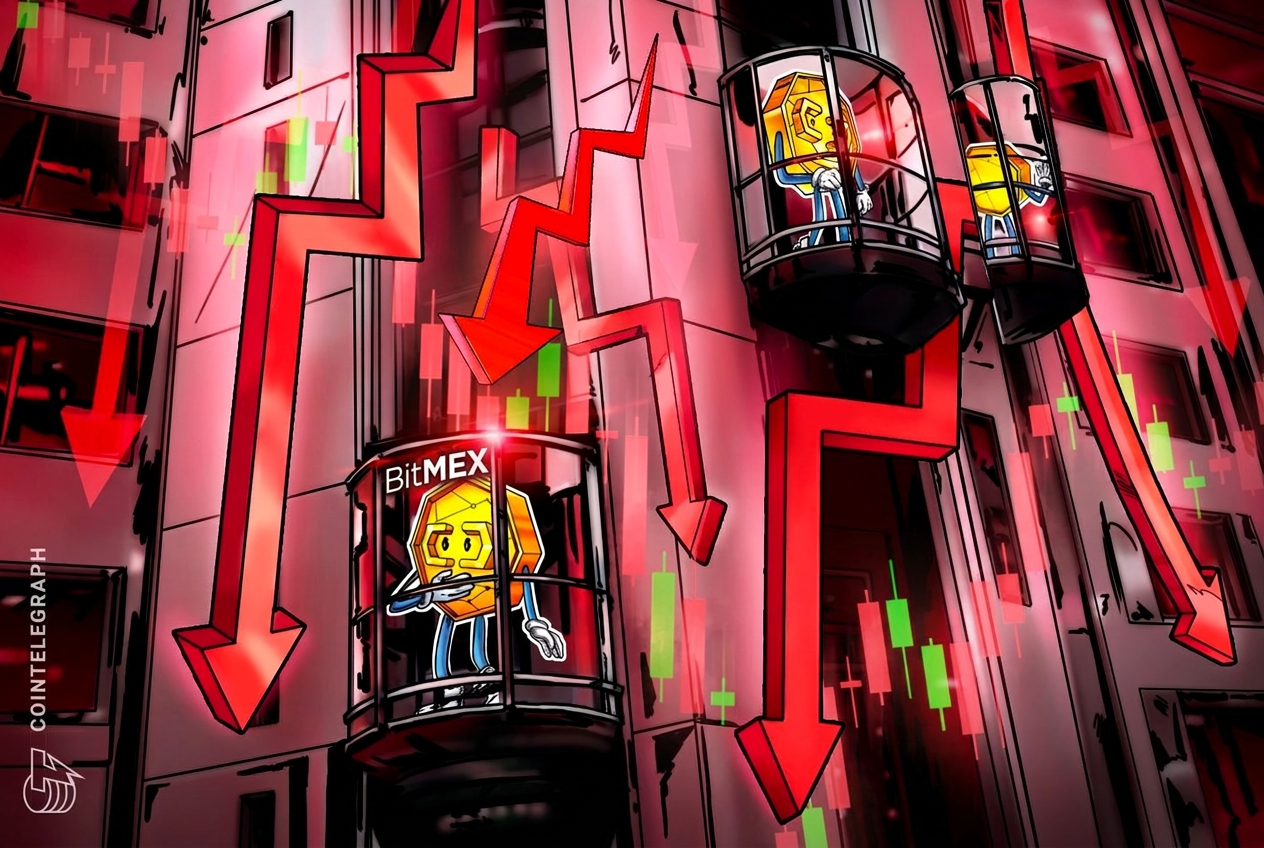
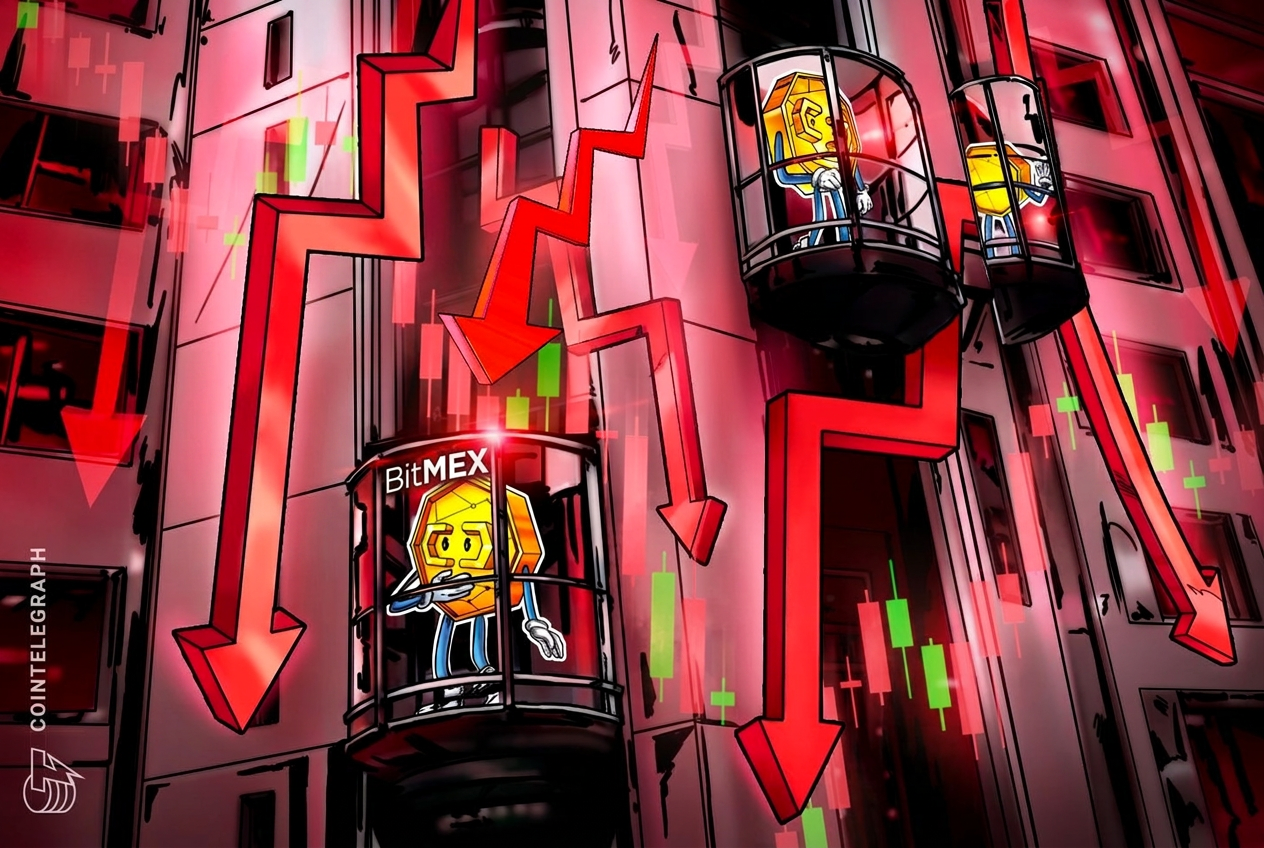
BitMEX’s BMEX token plunged about 90% after the exchange announced plans to shut down, ending nearly 12 years in business as its Bitcoin futures market share shrank.


Michael Saylor’s Strategy has joined eight financial firms in pledging $15 million over three years to protect Bitcoin, starting with preparations for potential quantum-computing threats.
Summary
- Strategy and eight financial firms pledged $15 million to strengthen Bitcoin’s long-term security.
- BlackRock, Coinbase, ARK Invest and others will independently fund developers and researchers.
- Quantum readiness will be the consortium’s first focus despite uncertain threat timelines.
Strategy announced the Bitcoin Security Consortium in a press release, naming Anchorage Digital, ARK Invest, BlackRock, Block, Blockstream, Coinbase, Fidelity Digital Assets and Galaxy Digital as its other founding members.
Drawn from several parts of the institutional Bitcoin market, the coalition includes exchange-traded fund issuers, custodians and infrastructure companies. BlackRock, Fidelity and ARK Invest issue spot Bitcoin ETFs, while Anchorage Digital and Coinbase provide custody services. Block, Blockstream and Galaxy Digital operate businesses tied to Bitcoin infrastructure and financial products.
Rather than combining the $15 million under a central fund, each founding member will choose which developers, researchers and organizations receive its share, according to Strategy. The model allows the companies to finance different projects while coordinating their security work through the consortium.
Brink Executive Director Mike Schmidt will coordinate the consortium’s daily operations in a volunteer capacity, Strategy stated. Addressing concerns about his independence, Schmidt wrote on X that he will receive no compensation and will continue running Brink separately from the founding firms.
“I continue to run Brink, independent of any Consortium member. I’ve committed to a year in this role, maybe I’d do two, but ultimately I see it as a seat that should rotate to other participants over time. My commitment is to Bitcoin, and that doesn’t change.”
Wall Street funding targets Bitcoin security research
Under its initial plan, the consortium will support developers and researchers already working on Bitcoin security, with quantum readiness serving as its first focus, according to Strategy. Schmidt added that the group could finance other security projects if the initial program proves effective.
Protocol decisions will remain outside the consortium’s control. In his X post, Schmidt stated that the group will not adopt collective positions on Bitcoin upgrades, leaving members to direct their funding independently while developers use the network’s existing review process.
Galaxy Digital had committed separate funds to the field before joining the consortium. As crypto.news reported earlier this week, the company opened applications for a $5 million Bitcoin Quantum Readiness Initiative supporting quantum-resistant signatures, wallet migration tools and independent security audits.
According to Galaxy, introducing post-quantum protections would require years of cooperation among Bitcoin Core developers, exchanges, wallet providers, infrastructure companies and users. Its grant program also invites other institutions to contribute money and research to the effort.
Galaxy’s initiative and the consortium pledge have placed $20 million behind the two disclosed programs. The commitments remain separate, however, as Strategy’s consortium allows every member to control its own grants.
Bitcoin’s quantum exposure carries a market cost
Future quantum computers could threaten Bitcoin if they become capable of breaking the elliptic curve cryptography that protects its wallets, according to the companies and researchers behind the programs. Galaxy noted that current machines cannot perform such an attack and most experts do not expect an immediate danger.
Despite the uncertain timeline, Galaxy argued that preparations must start early because deploying new protections across Bitcoin could take years. The company has prioritized alternative signature algorithms, tools that help users transfer funds into safer wallets and audits that test proposed defenses.
CryptoQuant research cited by Galaxy estimated that around 6.9 million BTC could become exposed if a sufficiently powerful quantum computer broke Bitcoin’s existing cryptography. Using market prices from its announcement, Galaxy valued those potentially vulnerable holdings at about $461 billion.
Citi has reached a similar estimate, according to an earlier crypto.news report. The bank calculated that between 6.5 million and 6.9 million BTC may already have public keys visible on-chain, creating a pool of coins that researchers consider more vulnerable to a future quantum attack.
Lost wallets pose another problem because their owners cannot transfer the coins to addresses protected by updated cryptography. Quantus warned in a previously reported assessment that quantum development may be advancing faster than earlier estimates, which could leave dormant and inaccessible holdings without a practical migration route.
Concern over the issue has also entered Bitcoin valuation models. As crypto.news reported in early June, Capriole Investments founder Charles Edwards estimated that Bitcoin was trading at a 28% “quantum discount” compared with his projected valuation path toward $120,000.
Bitcoin traded near $62,099 following a sharp selloff when Edwards presented the model. He attributed the discount to investor concern over what he described as slow progress among Bitcoin Core developers on post-quantum signature planning.
Prediction-market traders remain less worried about the immediate timeline. Polymarket data placed the probability of quantum computing breaking Bitcoin by December 2027 at 14%.
With Strategy coordinating institutional participation and Galaxy already accepting grant applications, the funding gives researchers additional resources before quantum computers pose a proven threat. The consortium’s first test will be whether independently directed grants produce usable security tools without influencing Bitcoin’s protocol governance.
Ripple’s XRP remains trapped beneath a major technical barrier despite recovering from its late June lows. The recent rebound has improved short-term sentiment, but the price is now approaching an area where buyers must absorb significant overhead supply before a broader trend reversal can be considered.
Ripple Price Analysis: The Daily Chart
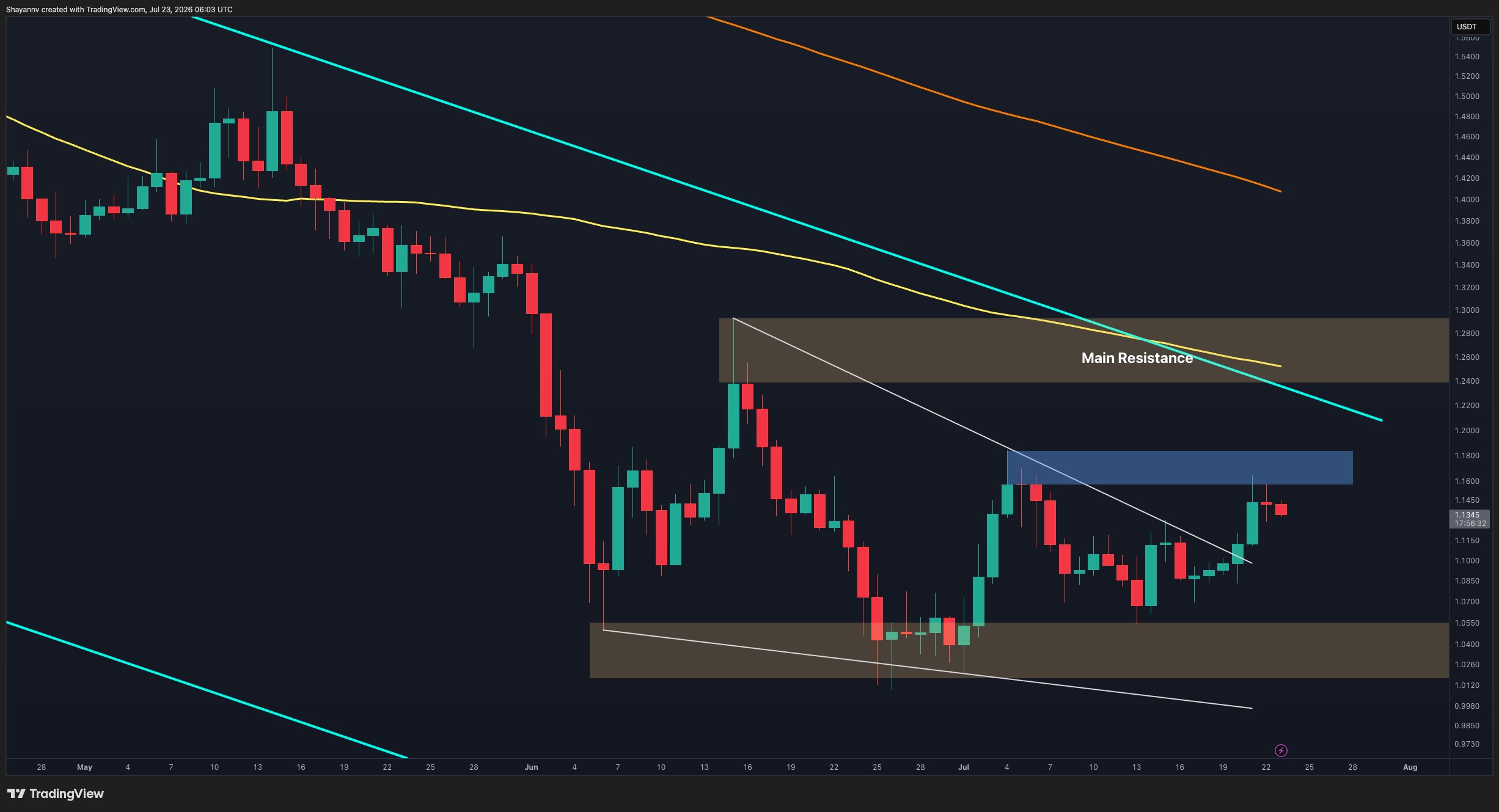
The daily chart shows XRP continuing to trade within a well-defined long-term descending channel. Although the recent rebound has lifted the asset away from the $1.02 to $1.05 demand zone, the broader structure still favors sellers while the asset remains below the channel’s upper boundary and the major moving averages.
The immediate hurdle sits inside the $1.24 to $1.29 resistance zone, where the upper channel boundary converges with the 100-day moving average. This confluence makes the area particularly important, as a rejection here would reinforce the prevailing downtrend.
A successful breakout above this region would expose the 200-day moving average next, but buyers first need to reclaim the current resistance cluster before a more constructive outlook can develop.
On the downside, the $1.02 to $1.05 demand zone remains the primary support. Losing this area would likely shift momentum back toward the broader bearish trend.
XRP/USDT 4-Hour Chart
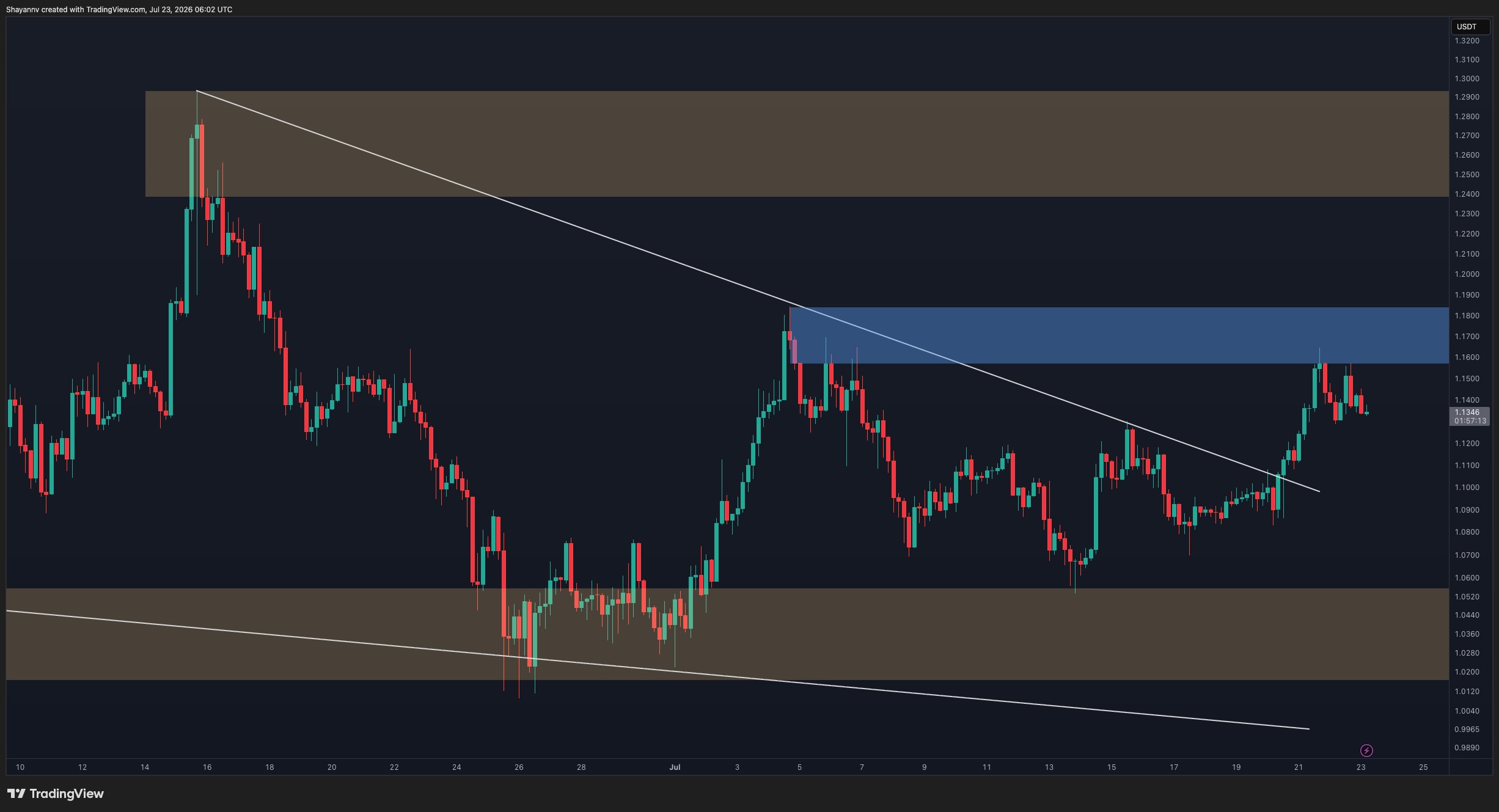
The 4-hour chart paints a more constructive short-term picture. XRP has managed to reclaim the descending trendline that capped the price action throughout July and is now consolidating directly beneath the $1.16 to $1.18 supply zone.
This resistance has repeatedly rejected bullish attempts in recent weeks, making it the key level to monitor. A decisive breakout above $1.18 could trigger a move toward the daily resistance around $1.24 to $1.29, while another rejection would likely send the price back to retest the broken trendline as initial support.
As long as the asset continues to hold above the reclaimed trendline, buyers retain a modest short-term advantage. However, the broader trend will remain neutral to bearish until the price establishes acceptance above the overhead resistance cluster.
The post Ripple Price Analysis: XRP’s Recovery Is a Trap Until This Happens appeared first on CryptoPotato.

Bernstein reiterated that it is still overweight on Bitcoin mining, arguing that the sector’s expanding partnerships are increasingly tied to the power needs of AI data centers. In a Thursday research note shared with Cointelegraph, the firm pointed to a steady stream of AI-related deals throughout July—evidence, it said, that access to electricity is becoming the decisive constraint for AI infrastructure buildouts.
According to Bernstein’s Bitcoin mining industry deal tracker, the number of AI-related transactions recorded in July averaged at least one per week. Combined, those deals total more than 7.5 gigawatts of capacity, or the contracted equivalent of $150 billion across multi-year agreements.
Key takeaways
- Bernstein says Bitcoin miners’ third-party computing capacity remains valuable as AI growth is constrained more by power availability than by software or hardware supply.
- In July, Bernstein’s tracker recorded AI-related deal flow at roughly a weekly pace, totaling over 7.5 GW and the equivalent of $150 billion in multi-year contracted value.
- Recent announcements from Hut 8 and IREN linked mining firms to large-scale AI infrastructure and cloud revenue models.
- Bernstein also highlighted political pushback in the US that could slow new data center construction—making contracted capacity sourced from miners and other providers harder to replicate.
Why Bernstein still favors miners
The core of Bernstein’s argument is that AI data center development is increasingly bottlenecked by electricity access. As power becomes harder to secure, miners and other third-party computing providers—already operating energy-intensive facilities—may be better positioned to supply the incremental capacity AI companies need.
Bernstein’s note framed this as a structural opportunity rather than a short-term market trade. The firm linked the attractiveness of the mining sector to the growing number of partnerships that allow AI-focused operators to secure power and compute capacity through contracted arrangements.
July deal momentum and what it signals
Public market interest in the “AI-miner” theme accelerated after Bitcoin mining companies announced major infrastructure and cloud deals. On Monday, shares tied to AI infrastructure moves posted double-digit gains, following announcements from Hut 8 and IREN.
Hut 8 disclosed a 15-year, $9.8 billion lease for its AI data center campus. IREN, meanwhile, announced $2.8 billion in cloud services contracts with AI developers. Bernstein’s upbeat framing aligns with a broader investor focus on miners converting their physical capacity into more predictable, contract-based revenue streams.
As Seeking Alpha contributor The Curious Analyst wrote in a Thursday commentary, IREN appears to be turning an infrastructure advantage into “contracted and more predictable revenue,” while noting execution risk as the key potential downside.
Beyond those two names, other publicly traded miners also expanded their AI ambitions. Earlier in July, MARA Holdings said it planned to acquire a Texas site with up to 2 gigawatts of capacity to support its AI and digital infrastructure business. TeraWulf signed a 20-year data center lease with AI startup Anthropic, which the company said could generate roughly $19 billion in contract revenue. Bitdeer has also moved into AI cloud services and high-performance computing.
Bernstein’s ratings, as reported in the research note shared with Cointelegraph, include an outperform stance on all of the stocks it discussed except MARA, which it rates as market perform. Sector performance reflected the same narrative: CoinShares Bitcoin Mining ETF (WGMI) was up ahead of the Nasdaq open, with several miner stocks also higher in premarket activity.
US political friction could raise the value of contracted capacity
Bernstein’s analysis also tied the AI-miner alignment to a policy environment that could complicate new data center construction. The firm said bipartisan political pushback is increasingly shaping the timeline and feasibility of building additional facilities, especially amid concerns about local impacts such as water use and electricity costs.
In Texas, a report by the Houston Chronicle said a proposal backed by Democratic Senate candidate James Talarico would strengthen local approval processes and repeal certain tax breaks for AI data centers. In Oregon, US Senator Ron Wyden has publicly raised concerns about water scarcity during drought conditions, arguing that large data centers can consume up to 5 million gallons of water per day and asking operators to explain how they would reduce groundwater withdrawals to protect local supplies.
At the federal level, the Trump administration published a “Ratepayer Protection Pledge” aimed at expanding AI infrastructure without increasing electricity bills for households and small businesses. Separately, state governors released plans to expand the grid to meet rapidly growing AI data center demand, while emphasizing that new facilities should bear the costs they create instead of shifting them to existing residential and small business customers.
For investors, the implication is straightforward: if political and infrastructure constraints delay new capacity coming online, the market may increasingly reward entities that already have power access and can lock in compute demand through multi-year contracts.
What to watch next
With Bernstein pointing to both deal volume and policy headwinds, the next signal for the sector is whether miners can sustain the rate of AI-linked contracting and translate that into longer-term revenue visibility—especially as regulators and local communities continue to scrutinize data center construction.
Bitcoin’s latest rally has carried the asset back into an area where sellers have previously regained control. The coming sessions should reveal whether this recovery has enough strength to continue or if another rejection is waiting around the corner.
Bitcoin Price Analysis: The Daily Chart
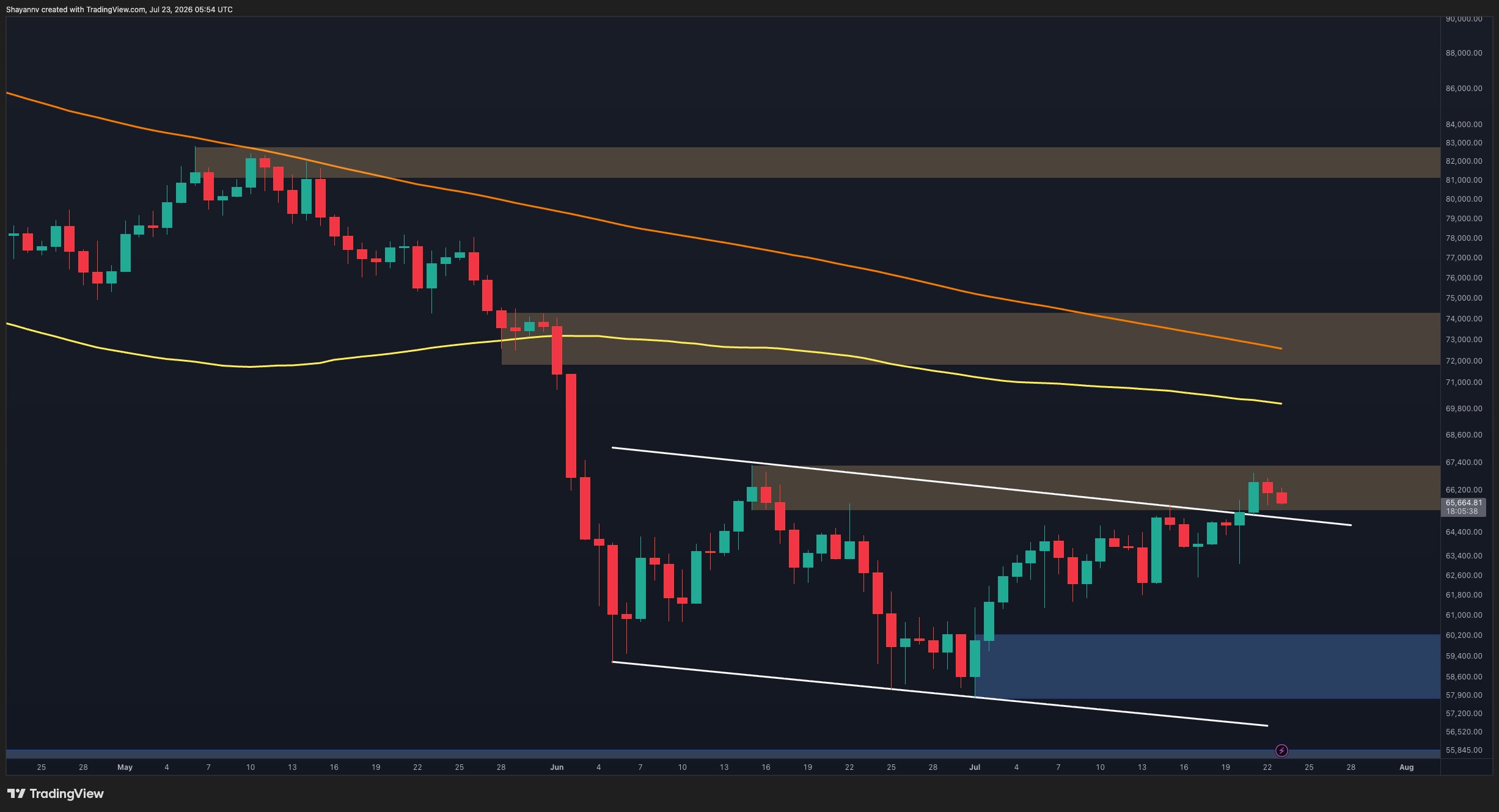
On the daily timeframe, BTC has extended its recovery into the $65.5K-$66.7K supply zone after successfully reclaiming the descending trendline that had capped the price action for weeks. While this breakout represents a notable improvement in market structure, the broader trend remains constrained beneath the declining 100-day moving average, with the 200-day moving average positioned even higher.
The current resistance zone also coincides with a previous distribution area, increasing the likelihood of seller activity around current levels. A decisive daily close above $66.7K would strengthen the bullish case and expose the next resistance around $72K-$74K.
On the downside, the former breakout area near $63K-$64K now serves as the first demand zone. As long as BTC holds above this region, buyers remain in short-term control. Losing this support would shift attention back toward the broader demand zone around $58K-$59.5K, where the latest impulsive rally originated.
BTC/USDT 4-Hour Chart
The 4-hour chart highlights a clear shift in momentum after Bitcoin broke above the descending trendline and rallied directly into the overhead supply zone around $65.5K-$66.7K. The market is now consolidating beneath resistance after rejecting the upper boundary of the range.
This pause appears consistent with profit-taking rather than a confirmed trend reversal, especially since the previous resistance trendline has already been reclaimed. If buyers manage to absorb the current supply, a breakout above $66.7K could trigger another impulsive leg higher.
However, failure to sustain current levels would likely result in a pullback toward the $63K-$64K demand zone, which aligns with the recently broken trendline and could serve as the next area for buyers to defend before another attempt higher.

Sentiment Analysis
The one-year Binance liquidation heatmap shows a notable concentration of short-side liquidity around the $88K region, standing out as one of the largest untouched liquidity pools above the current market price.
From a market structure perspective, this aligns with the broader idea that Bitcoin may eventually be drawn toward that liquidity. However, until price sweeps the $90K cluster and successfully establishes acceptance above it, it is difficult to argue that the higher-timeframe trend has fully transitioned into a bullish market.
As a result, the current recovery should still be viewed with caution. Although the technical structure has improved over the short term, every bullish leg can still be interpreted as corrective within the broader bearish context until the major overhead liquidity is cleared and price stabilizes above that region.

The post Bitcoin Price Analysis: BTC Rally Loses Steam as Historical Resistance Comes Into Play appeared first on CryptoPotato.

Ryanair passengers say ‘I love it’ as method shared to avoid the ‘awful’ seats

The Odyssey boosts IMAX ticket sales and revenue

Goldman Sachs splits from banking lobby over the CLARITY Act


-

 Fashion6 days ago
Weekend Open Thread – Corporette.com
-
 NewsBeat7 days ago
London Mayor Sadiq Khan handed a peerage by Keir Starmer alongside 15 other Labour figures… just days before the PM leaves No10
-

 Politics5 days ago
The House | The City of London can help the new chancellor deliver growth in every postcode
-

 Crypto World5 days ago
Ripple Payments Joins MiCA With 14 Firms, Does It Mean Anything For XRP?
-
 Crypto World6 days ago
Two July Windows Left: The CLARITY Act’s Senate Fight and What Failure Means
-

 Politics4 days ago
Democrats look to World Cup watch parties to register thousands of voters
-

 Crypto World6 days ago
Ripple wins EU-wide access as ESMA adds it to MiCA register
-

 Crypto World2 days ago
Grayscale Files For Worldcoin ETF, WLD Registers Sharp Rise
-

 NewsBeat3 days ago
Unregistered fitter used Gas Safe logo on business flyers
-

 Tech3 days ago
Sail Virtually Aboard The “Itanic” With IA-64 Emulator
-

 Crypto World7 days ago
Injective Submits SEC Transfer-Agent Registration to Onchain Ownership Records
-
 Tech3 days ago
Turtle Beach Command Series KB7 review: a nifty screen-equipped gaming keyboard
-

 NewsBeat6 days ago
Registration is now open for March for Men with Kev 2026
-
 Business1 day ago
New Jersey voter registration controversy explained: How 6,600 noncitizens got on the rolls, and what happens next
-
 Crypto World7 days ago
Claude Fable 5 Slips to Second in AI Coding Leaderboard
-

 News Videos6 days ago
Money | Class 12 Economics | CBSE Board Exam 2026-27
-

 Business7 days ago
Banco Bilbao Vizcaya Argentaria, S.A. (BBVA) Discusses Global Macro Environment and Economic Outlook for Core Markets Transcript
-

 Crypto World5 days ago
Kaspersky exposes OkoBot’s 20-module crypto wallet attack
-

 News Videos4 days ago
Big Money Is Entering XRP
-

 Business6 days ago
Airlines warn Sunshine Protection Act could disrupt flight scheduling
You must be logged in to post a comment Login