

Business
The Odyssey boosts IMAX ticket sales and revenue


The Odyssey
Source: Universal Pictures
Christopher Nolan’s “The Odyssey” is racking up box office dollars for IMAX and fueling investor confidence that the company will reach record ticket sales in 2026.
Shares of IMAX jumped more than 8% on Thursday after the company reported it was still on track to deliver a record $1.4 billion in global box office this year. Wall Street had worried that when Netflix and Greta Gerwig’s “Narnia: The Magician’s Nephew” was pushed from its November release date to February 2027, that IMAX would not be able to reach that guidance.
Universal’s “The Odyssey” is easing those fears. Over its opening weekend, the film generated $52 million in global box office for IMAX. The company’s locations represented less than 1% of total screens but a whopping 20% of the film’s worldwide debut.
“The Odyssey” opening was 47% higher than Nolan’s previous film “Oppenheimer.” The biopic hauled in more than $190 million via IMAX throughout its run in 2023.
And momentum for “The Odyssey” has showed few signs of slowing. The film secured another $11 million on Monday and $10.6 million on Tuesday — the best Tuesday performance of all time for the company, according to IMAX CEO Rich Gelfond, who spoke to investors on an earnings call Thursday.
“Our presales for the second weekend would qualify on its own as one of our biggest opening weekends ever,” he said. “These numbers help prove that we’re just getting warmed up.”
Still to come to global IMAX screens this year is Sony and Marvel’s “Spider-Man: Brand New Day;” Zach Cregger’s take on “Resident Evil;” Tom Cruise’s newest feature “Digger;” “Godzilla Minus One;” David Fincher’s “The Adventures of Cliff Booth,” which stars Brad Pitt and is based on Quentin Tarantino’s “Once Upon a Time in Hollywood;” and Paramount’s “Street Fighter.”
Then Warner Bros. and Denis Villeneuve’s “Dune: Part Three” will cap off the year. The first Dune film generated $61 million in IMAX theaters during the tail end of the pandemic and “Dune: Part Two” secured $147 million globally.
“Our momentum continues to translate into demand from our exhibition partners,” Gelfond said.
The company installed 38 IMAX systems globally during the second quarter, up from 36 during the same period a year prior. This is the highest number of installations in the second quarter in a decade, Natasha Fernandes, IMAX’s chief financial officer, told investors during Thursday’s earnings call. Nineteen systems were installed in the first quarter and the company is on pace to have 160 to 175 installations by the end of 2026.
IMAX currently has a backlog of 421 contracts to build screens.
“We continue to see tremendous runway for our global expansion, and we continue to innovate in ways that make IMAX even more valuable to creators, studios, exhibitors and audiences alike,” Gelfond said. “This is an incredibly exciting time for our business.”

Business
Cleveland-Cliffs Stock Jumps 20% as Steel Maker Beats Estimates and Lands New $400 Million Defense Deal

Shares of Cleveland-Cliffs surged more than 20% Thursday after the steel producer posted a smaller-than-expected second-quarter loss and announced a new multiyear Defense Department contract, giving investors a double dose of good news following weeks of sharp declines in the stock.
Cleveland-Cliffs traded at $11.35, up $1.90, as of 12:42 p.m. Eastern time. The rally builds on a stretch of intraday buying that began at the market open, with shares climbing from roughly $10.67 to as high as $11.25 before settling near session highs.
Second-quarter results beat expectations
Cleveland-Cliffs reported second-quarter 2026 revenues of $5.2 billion, a $300 million increase from the previous quarter and roughly in line with Wall Street’s consensus estimate of $5.18 billion. The company posted a GAAP net loss of $134 million, or $0.25 per diluted share, with an adjusted net loss of $0.20 per diluted share, an improvement over the $0.21 per share loss analysts had been expecting on average heading into the report.
The quarter marked a significant improvement from the company’s first-quarter performance. Cleveland-Cliffs posted a GAAP net loss of $229 million, or $0.42 per diluted share, in the first quarter of 2026, meaning the company roughly halved its per-share loss quarter over quarter. Adjusted EBITDA came in at $286 million for the second quarter, a $191 million improvement compared with the $95 million recorded in the first quarter. Operating cash flow for the quarter was $230 million, and the company reported liquidity of $3.1 billion as of June 30.
A new defense contract adds to the momentum
Beyond the earnings beat, Cleveland-Cliffs also benefited Thursday from news of a new sole-source, five-year contract with the Defense Logistics Agency worth up to $400 million. Under the agreement, Cleveland-Cliffs will supply grain-oriented electrical steel to multiple branches of the U.S. military through 2030, adding a defense-sector revenue stream to a company whose business has historically centered heavily on automotive-grade steel products.
CEO points to a stronger second half ahead
Cleveland-Cliffs Chairman, President and Chief Executive Officer Lourenco Goncalves struck an optimistic tone about the company’s trajectory heading into the back half of the year. “Looking ahead, we have clear visibility into the continuous earnings improvement that began during the first half of the year,” Goncalves said. “With average selling prices, volumes, and costs all moving in the right direction, our second-half earnings performance should be our strongest since 2021 as Q4 EBITDA is currently expected to even further exceed our Q3 guidance. We expect to finish the year on a positive note and enter 2027 with significant momentum and additional opportunities for upside, including the higher reset of fixed price contracts and much improved profits in Canada.”
A stock that had fallen sharply heading into earnings
Thursday’s rally comes after a difficult stretch for Cleveland-Cliffs shares. The stock had declined roughly 24% over the 30 days leading up to the earnings report and was down nearly 32% year-to-date as of earlier this week, reflecting broader investor caution around the domestic steel industry tied to pricing power, capacity utilization and competition from imported steel. Shares had traded as low as $8.84 just three days before Thursday’s report, before climbing to close near $11.21 following the earnings release and defense contract announcement.
Options markets had anticipated significant volatility heading into the report. According to data compiled by Bloomberg, options pricing implied an 11% potential move in Cleveland-Cliffs shares on earnings day, a figure the stock has exceeded in five of its last eight quarterly reports. The company’s largest historical earnings-day swing came in October 2025, when shares jumped 22.8% against a implied move of just 6.9%.
Mixed underlying fundamentals
Despite Thursday’s rally, Cleveland-Cliffs’ broader financial picture remains complicated. The company generated approximately $18.61 billion in revenue over the trailing 12 months, but continues to operate with thin to negative margins, posting a profit margin of roughly negative 6% and negative free cash flow of around $477 million over that period. The company’s most recent quarterly net loss, prior to the improvement reflected in Thursday’s report, had been roughly $237 million.
Ahead of the earnings release, analyst sentiment on the stock had been notably split. Some market observers viewed Cleveland-Cliffs as a beaten-down steel producer trading below its intrinsic value, pointing to a fair value estimate of $10.86 per share compared with a pre-earnings trading price of around $9.28, a valuation gap bulls attributed to the company’s ongoing cost-reduction efforts, including strategic footprint optimization and internal coke and feedstock integration. Bears, meanwhile, pointed to the company’s recent losses and uncertainty heading into the earnings report as reasons for caution.
A company built around North American steel
Cleveland-Cliffs is a leading North America-based steel producer with a particular focus on value-added sheet products for the automotive industry, operating manufacturing facilities across the United States and Canada. The company’s business has historically been closely tied to automotive demand, making the newly announced defense contract a notable diversification move into a different end market with long-term, government-backed demand visibility through 2030.
With Cleveland-Cliffs management projecting its strongest second-half earnings performance since 2021, investors will be watching closely to see whether the improving trends in average selling prices, sales volumes and cost management highlighted by Goncalves continue to materialize over the coming quarters. The company’s next scheduled updates, including any further detail on its fixed-price contract resets and progress on profitability in its Canadian operations, are likely to serve as key checkpoints for determining whether Thursday’s sharp rally reflects the start of a sustained recovery or a shorter-term reaction to a single strong quarter following weeks of investor pessimism.

Sam Lamiroy said Burnham’s announcement is a step in the right direction and shows the government is trying to help, but agrees with Nick Smith that “VAT is the real problem”.
He said the turnover of a typical pub or restaurant can easily be between £500,000 and £1m, meaning a £1,000 saving “won’t make much difference”.
“The 20% drop in business rates is really just lip service, it won’t affect whether we survive or not, the real lever to pull is help with VAT, dropping the rate from 20% to 10% as it is in the rest of Europe,” he told the BBC.
Lamiroy also said he fears his Penzance-based bar and restaurant, 45 Queen Street, will not be considered a “pub” and so be ineligible under the terms of the support package.
And, urging the government to do more to support hospitality businesses, he said: “These are the first jobs for a lot of young people, it is a springboard into work.
“When these places shut, it’s not just my business and income that disappears, it is the entire team.”

Inflation has fallen both in the UK – down to 2.6% in the year to June helped by slowing diesel and petrol prices – and in the US to 3.5%.
But questions remain whether the slow down will prove short-lived due to the renewed conflict in the Middle East.
New data released on Thursday showed that UK petrol prices have risen by 5p a litre since the beginning of July, hitting reaching almost £1.56.
Diesel is at £1.72 a litre, on average, according to the RAC.
Average gasoline prices in the US have surpassed $4 a gallon once more, up from $3.92 a month ago, according to motorist advocacy group AAA.
“More expensive fuel and energy can ripple through the wider economy, increasing costs for businesses and ultimately feeding through into the price of food and other goods,” said Jonathan Raymond, investment manager at Quilter Cheviot.
“This creates another headache for central banks as they continue their battle against inflation.
“If energy prices remain elevated, policymakers may come under pressure to keep interest rates higher for longer or even raise them. This would come as a blow to mortgage holders and borrowers already feeling the strain.”
The Bank of England, which sets UK interest rates, has held them at 3.75% in its last four meetings.
Paul Dales, chief UK economist at Capital Economics, said he believed the Bank will “almost certainly” hold them again. But he said analysts still expected that interest rates could be cut next year if energy price rises ease.
Kevin Warsh, the newly-appointed chair of the US Federal Reserve, last week told Congress that the central bank had “no tolerance to persistently elevated inflation”.
US President Donald Trump had pushed Warsh’s predecessor, Jerome Powell, to cut interest rates.
Trump has made it clear he expects Warsh to fulfil his demand for reductions in borrowing costs for Americans.
But the Fed held US interest rates between 3.5% and 3.75% at Warsh’s first meeting last month. He also told Congress that he was committed to “restoring price stability” in the wake of the Middle East conflict impacting prices.
Business
Microsoft 365 Down? Outage Hits Teams, SharePoint, Store and More as Thousands Report Access Problems Today
A widespread outage affecting Microsoft 365 disrupted access to Teams, SharePoint, Outlook, the Microsoft Store and several other services Thursday morning, with thousands of users across the country reporting problems logging in or completing basic tasks.
According to outage-tracking service Downdetector, complaints began surging just after 10:30 a.m. Eastern time. By 11:11 a.m., Downdetector had recorded 2,403 reports specifically tied to Microsoft 365, sharply above the service’s normal baseline of roughly 29 reports. That number climbed further as the morning progressed, with more than 6,000 users reporting problems with Microsoft 365 shortly after, and total reports eventually surpassing 8,000 across Microsoft’s broader suite of services.
Which services were affected
The outage spread across a wide range of Microsoft products. Downdetector showed elevated reports for Microsoft Teams, SharePoint, Excel, the Microsoft 365 Admin Center, Outlook, OneDrive, Copilot, Azure, Xbox Live and the Microsoft Store. Among the specific complaints tracked around 11:11 a.m., SharePoint accounted for 78% of reported issues, followed by Excel at 11% and the Admin Center at 6%.
Some users also reported difficulty downloading Windows updates or installing Microsoft Office applications, according to posts shared on Reddit. Separately, users of Microsoft Teams described being unable to save new meetings to their calendars, even though existing meetings could still be edited and impromptu meetings could still be started, a specific glitch that outage-tracking service StatusGator noted had actually been affecting some users for roughly 12 hours prior to Thursday’s broader disruption.
Microsoft’s response
Microsoft acknowledged the disruption Thursday morning. “We’re investigating reports of issues with Microsoft 365 services,” the company posted on social media platform X at 11:24 a.m. Eastern time. The company directed system administrators to a specific incident listing, MO1437424, within the Microsoft 365 admin center for additional information and ongoing updates. Microsoft’s own Service Health Status page reflected the acknowledgment, showing a status of “service degradation” for Microsoft 365 as of Thursday morning.
As of early afternoon, Microsoft had not provided a specific timeline for resolving the outage or disclosed a root cause, with several outlets covering the disruption noting that both the cause and expected duration of the interruption remained unknown.
A pattern of recurring disruptions
Thursday’s outage adds to a string of Microsoft 365 disruptions over the past year. A Microsoft 365 outage in January affected thousands of users for several hours before being resolved, and a separate outage specifically affecting Microsoft Outlook lasted for hours in April. Microsoft Teams also experienced a significant standalone outage in recent days, going down for several hours due to what the company described as a broken connection to an internal storage service introduced during a recent software deployment.
That earlier Teams-specific outage, which primarily affected users overnight when much of Europe and Asia were offline, illustrated how the timing of a disruption can significantly shape its real-world impact even when the underlying technical problem is serious. Thursday’s outage, by contrast, struck squarely during U.S. business hours, meaning far more users were actively relying on the affected services at the moment problems began.
Broader context around Microsoft
The outage comes at a notable moment for Microsoft more broadly. Earlier this month, the company filed a formal WARN notice disclosing 605 permanent layoffs at its Redmond, Washington headquarters, effective Sept. 4, part of a broader wave of workforce reductions the company has carried out this year. While there is no indication the layoffs are connected to Thursday’s technical issues, the timing has drawn additional attention to the company’s operations during a period of significant organizational change.
Downdetector also recorded elevated outage reports Thursday for several other major online services around the same general timeframe, including Amazon Web Services, Cloudflare, OpenAI, Fortnite and Dropbox, though those separate reports were limited to a few thousand complaints each and appeared unrelated to Microsoft’s specific outage.
Why these outages happen
Large-scale cloud service disruptions like Thursday’s typically stem from issues within a provider’s own backend infrastructure, ranging from faulty software deployments to configuration errors affecting how different services communicate with one another. Because so many Microsoft 365 products, including Teams, SharePoint, Outlook and OneDrive, share common underlying infrastructure, a single technical fault can often cascade across multiple, seemingly unrelated services simultaneously, which appears consistent with the broad range of products affected Thursday.
What affected users can do
For users experiencing ongoing issues, Microsoft’s guidance directs system administrators to check the Microsoft 365 admin center for the specific incident number associated with Thursday’s outage, where the company is expected to post updates as its investigation continues. Individual users without administrator access are generally advised to monitor Microsoft’s official status channels and outage-tracking platforms like Downdetector for updates, since there is typically little an individual user can do to resolve a server-side outage on their own.
What we don’t know yet
As of Thursday afternoon, Microsoft had not disclosed what caused the disruption, how many total users were affected globally, or when full service would be restored. Given the company’s history of resolving similar large-scale outages within a matter of hours, a resolution may come relatively quickly, though the exact timeline remains uncertain pending further updates from Microsoft.
What to watch for
Users looking for real-time updates on the status of their Microsoft 365 services are encouraged to check Microsoft’s official Service Health Status page directly or continue monitoring outage-tracking platforms for changes in reported issue volume. Based on the pattern of previous disruptions this year, a formal statement confirming full restoration of services is likely to follow once Microsoft’s engineering teams have identified and resolved the underlying technical issue behind Thursday’s outage.

Woodside has failed in its bid to pursue more people in its action against activists involved in a stench gas incident at its Perth headquarters.

Earnings call transcript: PG&E tops EPS view in Q2 2026, shares slip

While pubs, clubs and live music venues are set to benefit from the business rates relief, restaurants, cafés, hotels and cinemas have not been included in the government’s announcement.
For Claridge, that omission reflects a wider problem. He believes a reduction in VAT for hospitality businesses would have a far greater impact than changes to business rates.
He argues it would give businesses the breathing space they need to invest, employ staff and remain financially viable.
“It’s the only lever that will reliably make a difference to a material number of businesses.
“Whilst I understand that there is significant nervousness in government about such a bold radical move, [but] the time really is now for a bold, radical move.
“For me, it’s always been not can we afford it, but can we afford not to.”
The chef said the challenges facing hospitality cannot be solved by short-term measures alone and warned that without wider reform, more independent venues could disappear.
“Those of us who run and operate these businesses, it is not a get rich quick scheme,” he says.
“It is often a get poor quick scheme as it happens, but it’s getting to that point where you go, this doesn’t make sense.
“Make the maths math, as the kids might say.”

Renewed hostilities in the Middle East are driving a prolonged selloff in U.S. government bonds, sending yields to new 18-month highs and lifting borrowing costs for businesses and consumers.
The yield on the benchmark 10-year U.S. Treasury note—which helps set rates on mortgages and student loans alike—reached 4.711% in early trading Thursday, according to Tradeweb, its highest intraday level since January 2025.
Copyright ©2026 Dow Jones & Company, Inc. All Rights Reserved. 87990cbe856818d5eddac44c7b1cdeb8
People walk by the Comcast building which houses NBC Studios in Manhattan on June 29, 2026 in New York City.
Spencer Platt | Getty Images
Comcast’s second-quarter results on Thursday showcased strength at NBCUniversal — particularly in its TV and film units — as the company prepares to split its media and broadband businesses apart.
NBCUniversal’s streaming service, Peacock, hit profitability during the quarter for the first time, Comcast said, giving the media business a lift. The streaming service also benefited from live sports including the FIFA World Cup and NBA postseason that brought in new subscribers.
Revenue in the company’s content and experiences division, which includes media unit NBCUniversal, rose almost 23% year over year.
Meanwhile, it was a different story with the traditional cable and connectivity business. The company said that its shifted strategy for the broadband business is “gaining traction” following years of significant competition and pressure due to the rise of alternatives like 5G providers.
But Comcast once again reported broadband customer losses for the period, and revenue for the connectivity and platforms segment notched down as its lower pricing plans and promotions took hold.
The diverging storylines for broadband and media come weeks after Comcast said it would divide the two businesses into separate publicly traded companies. In Thursday’s release co-CEOs Brian Roberts and Mike Cavanagh called the split “an important step toward creating two focused companies with the financial strength and flexibility to pursue their respective growth strategies.”
During Thursday’s call with investors, Roberts addressed the separation immediately. He said that, following weeks of discussions with various employees and people inside and outside of the company, “I feel more positive and energized today than I was on the day we announced.”
“This structure gives both companies the freedom to pursue the priorities that matter most to their futures,” said Roberts. “There’s a lot of work ahead, and we’re moving with real urgency.”
Cavanagh said on Thursday that work on the separation began immediately after the announcement was made, with the goal of it being completed in about one year.
Tale of two companies
Guests ride Stardust Racers, a new dueling roller coaster ride in Celestial Park during a preview day for Universal Epic Universe on April 5, 2025. Orlando, Florida’s first new theme park in a generation is set to open to the public on May 22. (Patrick Connolly/Orlando Sentinel/Tribune News Service via Getty Images)
Patrick Connolly | Orlando Sentinel | Getty Images
Revenue for the connectivity and platforms segment, which includes the Xfinity-branded broadband, mobile and cable TV offerings, was down 3% to $19.8 billion during the second quarter. Earnings before interest, taxes, depreciation and amortization for the unit dropped nearly 6% to $7.96 billion.
Comcast lost 167,000 total broadband residential customers and 280,000 cable TV subscribers during the quarter. Mobile remained a bright spot with additions that once again marked a record quarter and brought its total to 10.2 million lines. Mobile has become a major driver and key part of Comcast’s strategy to boost the broadband business.
“While the environment remains highly competitive, we like the progress we are making on the things we can control,” Cavanagh said on Thursday’s call, adding that the mobile business is scaling quickly.
The content and experiences segment that houses NBCUniversal’s TV, film and theme parks, however, saw revenue surge to $10.73 billion, boosted by the impact of the FIFA World Cup that began in mid-June and was aired in Spanish in the U.S. on the company’s Telemundo network.
The World Cup and reality TV series “Love Island USA” helped Peacock record its biggest viewership month ever in June, Cavanagh said Thursday. The streaming service added 2 million subscribers, bringing its total to 48 million as of June 30.
On Thursday, Cavanagh said the company expects Peacock to be profitable in the future, but on something of an inconsistent basis.
“Profitability is going to vary quarter by quarter, just based on the timing of sports schedules and other content hitting one quarter versus another,” said Cavanagh. “I think of it on an annual basis rather than the lumpiness quarter by quarter, and it’s been improving steadily and we see that continuing to be the case.”
Cavanagh will lead the NBCUniversal business after it’s spun out from Comcast.
Revenue for the TV media unit in particular benefited from Peacock and an increase in advertising, and film studio revenue rose 25%.
Elsewhere in the entertainment unit, theme parks revenue was up nearly 3% as softness at international parks offset higher revenue in Orlando, Florida.
The Orlando theme parks saw lower attendance during the quarter, which the company believes was caused by “weakness in consumer sentiment and higher travel costs affecting demand,” Cavanagh said.
He added the company doesn’t think this will be a permanent dip and expects that when “economic conditions and consumer demand stabilizes for us we’ll be getting that attendance back.”
Overall revenue for Comcast was down 1.2% during the second quarter to $29.94 billion, though it beat estimates from LSEG analysts of $29.3 billion. On a pro-forma basis, accounting for the impact of Comcast’s Versant spinoff that was completed at the start of the year, the company said quarterly revenue was 4.7% higher.
Comcast reported adjusted earnings per share of $1.04, topping Wall Street estimates of 97 cents, according to LSEG. Comcast reported net income attributable to the company of $3.53 billion.
Disclosure: Versant Media Group is the parent company of CNBC.
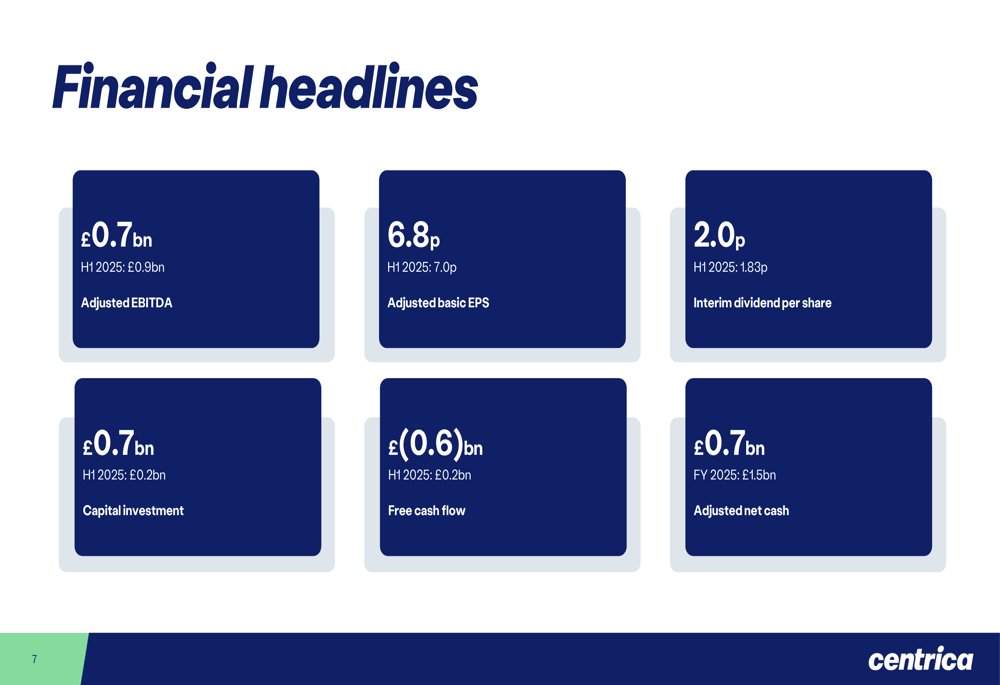
Centrica H1 2026 slides: transformation costs weigh on earnings

New EU Sanctions Make Crypto Harder for Russian Users

YouTuber Reacts To Backlash Over Videos W/ Nolan Wells’ Friend

First operator at ‘giant cruise ship warehouse’ in Tyldesley starts round-the-clock operations

Renter of Home in Anne Heche Crash Denies Settlement With Son

No Jackpot Winner as $257 Million Prize Rolls Over to $269 Million Monday Draw

Weekend Open Thread: Staud – Corporette.com

MONEY HEIST vs POLICE in REAL LIFE ESCAPE from Police | ACTION FULL STORY POV |2026 POV Movie

XRP JUST MADE TIER 1 BANKING ASSET!!?? (IT’S OFFICIAL?!)

GUESS PAPER | FA-2| FINANCIAL ACCOUNTING | FULL EXPLANATION | SEMESTER-2 OU | @shivanipallela
-

 Fashion6 days ago
Weekend Open Thread – Corporette.com
-

 Politics5 days ago
The House | The City of London can help the new chancellor deliver growth in every postcode
-

 Crypto World5 days ago
Ripple Payments Joins MiCA With 14 Firms, Does It Mean Anything For XRP?
-
 Crypto World6 days ago
Two July Windows Left: The CLARITY Act’s Senate Fight and What Failure Means
-

 Politics4 days ago
Democrats look to World Cup watch parties to register thousands of voters
-

 Crypto World6 days ago
Ripple wins EU-wide access as ESMA adds it to MiCA register
-

 Crypto World2 days ago
Grayscale Files For Worldcoin ETF, WLD Registers Sharp Rise
-

 NewsBeat3 days ago
Unregistered fitter used Gas Safe logo on business flyers
-

 Tech3 days ago
Sail Virtually Aboard The “Itanic” With IA-64 Emulator
-

 Crypto World7 days ago
Injective Submits SEC Transfer-Agent Registration to Onchain Ownership Records
-
 Tech3 days ago
Turtle Beach Command Series KB7 review: a nifty screen-equipped gaming keyboard
-

 NewsBeat6 days ago
Registration is now open for March for Men with Kev 2026
-
 Business2 days ago
New Jersey voter registration controversy explained: How 6,600 noncitizens got on the rolls, and what happens next
-

 Crypto World7 days ago
Claude Fable 5 Slips to Second in AI Coding Leaderboard
-

 News Videos6 days ago
Money | Class 12 Economics | CBSE Board Exam 2026-27
-

 Business7 days ago
Banco Bilbao Vizcaya Argentaria, S.A. (BBVA) Discusses Global Macro Environment and Economic Outlook for Core Markets Transcript
-

 Crypto World5 days ago
Kaspersky exposes OkoBot’s 20-module crypto wallet attack
-

 News Videos4 days ago
Big Money Is Entering XRP
-

 Business6 days ago
Airlines warn Sunshine Protection Act could disrupt flight scheduling
-

 NewsBeat5 days ago
Durham County Council to send out electoral registration emails
You must be logged in to post a comment Login