





Connect with us
DAPA Banner
DAPA Coin
DAPA
COIN PAYMENT ASSET
PRIVACY · BLOCKDAG · HOMOMORPHIC ENCRYPTION · RUST
ElGamal Encrypted MINE DAPA
🚫 GENESIS SOLD OUT
DAPAPAY COMING

Business

Southeast Asian Nations Facing Trump’s Section 301 Trade Penalties

Published

on

How businesses should adjust their supply chains in an uncertain world

The U.S. Section 301 investigation uses forced labor as pretext but actually enforces trade compliance. ASEAN nations negotiated individually, missing integration opportunities. By collectively harmonizing customs, reducing non-tariff barriers, and managing Chinese investment circumvention, ASEAN could transform U.S. pressure into regional economic integration.

Key Points

• The U.S. USTR’s Section 301 Investigation, framed around forced labor concerns, is actually an extension of trade negotiations—evaluating countries based on whether they’ve accepted Washington’s trade commitments, as evidenced by differing tariff rates reflecting bilateral agreements rather than human rights standards.

• ASEAN nations negotiated individually during reciprocal tariff talks, missing an opportunity for collective action; they should now align U.S.-demanded reforms with shared integration goals, extend market-opening concessions to all WTO partners, and collectively address export circumvention.

• U.S. pressure could catalyze deeper ASEAN integration by harmonizing customs procedures, dismantling non-tariff barriers, and unifying rules of origin—potentially transforming Section 301 from a coercive trade tool into a turning point toward a unified ASEAN single market.

Advertisement

The True Agenda Behind the Section 301 Investigation

The U.S. Section 301 Investigation, launched in March 2026, is officially framed as a response to forced labor, but a closer examination reveals a different purpose. Rather than assessing forced labor practices in specific countries, the investigation evaluates whether nations have implemented import prohibition systems that meet U.S. standards. Tariff rates further expose this agenda: Malaysia and Cambodia, despite lacking compliant systems, received lower tariffs after committing to U.S. trade conditions. This pattern confirms that the investigation functions as an extension of trade negotiations, not a genuine human rights inquiry.


ASEAN’s Strategic Response to U.S. Trade Pressure

Thailand and Vietnam, still at the framework agreement stage, retain room for negotiation. Both should study agreements reached by Indonesia and Malaysia to understand Washington’s core demands and align their responses with broader ASEAN integration goals. Rather than viewing U.S. pressure as purely coercive, ASEAN nations should recognize an opportunity to convert external demands into regional momentum. Institutional reforms sought by the U.S.—including customs modernization, regulatory transparency, and certification harmonization—closely mirror priorities already embedded in the ASEAN Economic Community agenda.


Transforming Bilateral Concessions into Regional Integration

A critical lesson from the reciprocal tariff negotiations is that ASEAN members negotiated individually, missing the chance to leverage collective bargaining power. Three corrective actions are essential: first, treat U.S.-demanded institutional reforms as shared ASEAN objectives; second, extend any elimination of non-tariff barriers to all trading partners in accordance with WTO Most-Favored-Nation principles; and third, collectively address export circumvention by harmonizing Rules of Origin and channeling Chinese investment toward upgrading regional industries. If ASEAN successfully coordinates these efforts, Section 301 could ultimately serve as a catalyst for deeper regional integration rather than a tool of trade coercion.

Source : ASEAN and Trump’s Section 301 Tariffs

Advertisement

Continue Reading
Click to comment

You must be logged in to post a comment Login

Leave a Reply

Business

Universal Music Group: Strong Rights Economics, With Multiple Ways To Monetize

Published

on

Universal Music Group: Strong Rights Economics, With Multiple Ways To Monetize

This article was written by

I’m a fundamental, valuation-driven investor with a strong focus on identifying businesses that have the potential to scale over time and unlock massive terminal value. My investment approach centers around understanding the core economics of a business—its competitive moat, unit economics, reinvestment runway, and management quality—and how those factors translate into long-term free cash flow generation and shareholder value creation. I focus on fundamental research, and I tend to focus on sectors with strong secular tailwinds. Professionally, I am a self-educated investor that started this journey 10 years ago. Currently, I am managing my own funds, seeded from friends and family. My motivation for writing on Seeking Alpha is to share investment insights, and also at the same garner feedback from fellow investors in this site. My aim is to help readers focus on what truly drives long-term equity value. I believe good analysis should be both analytical and accessible, and I hope my work adds value to readers looking for high-quality, long-term investment opportunities.

Analyst’s Disclosure: I/we have no stock, option or similar derivative position in any of the companies mentioned, and no plans to initiate any such positions within the next 72 hours. I wrote this article myself, and it expresses my own opinions. I am not receiving compensation for it (other than from Seeking Alpha). I have no business relationship with any company whose stock is mentioned in this article.

Seeking Alpha’s Disclosure: Past performance is no guarantee of future results. No recommendation or advice is being given as to whether any investment is suitable for a particular investor. Any views or opinions expressed above may not reflect those of Seeking Alpha as a whole. Seeking Alpha is not a licensed securities dealer, broker or US investment adviser or investment bank. Our analysts are third party authors that include both professional investors and individual investors who may not be licensed or certified by any institute or regulatory body.

Advertisement
Continue Reading

Business

Cracker Barrel unloads Maple Street chain as it works to cut debt

Published

on

Cracker Barrel clarifies employee dining policy for travel after viral reports

Cracker Barrel is selling restaurant properties and exiting its Maple Street Biscuit Company business as it works to cut debt and improve profits.

The Southern country-themed chain said Monday it sold the Maple Street brand and assets tied to 35 locations to Biscuit Belly LLC. Cracker Barrel will close the remaining 16 Maple Street restaurants.

Advertisement

In a separate move, Cracker Barrel also completed a sale-leaseback deal involving 26 company-owned locations, generating roughly $77 million in net proceeds.

The company plans to use the money to pay down debt while continuing to operate the restaurants by leasing the properties from the new owner.

CRACKER BARREL RESPONDS TO REPORTS ABOUT EMPLOYEE DINING REQUIREMENTS DURING WORK TRAVEL

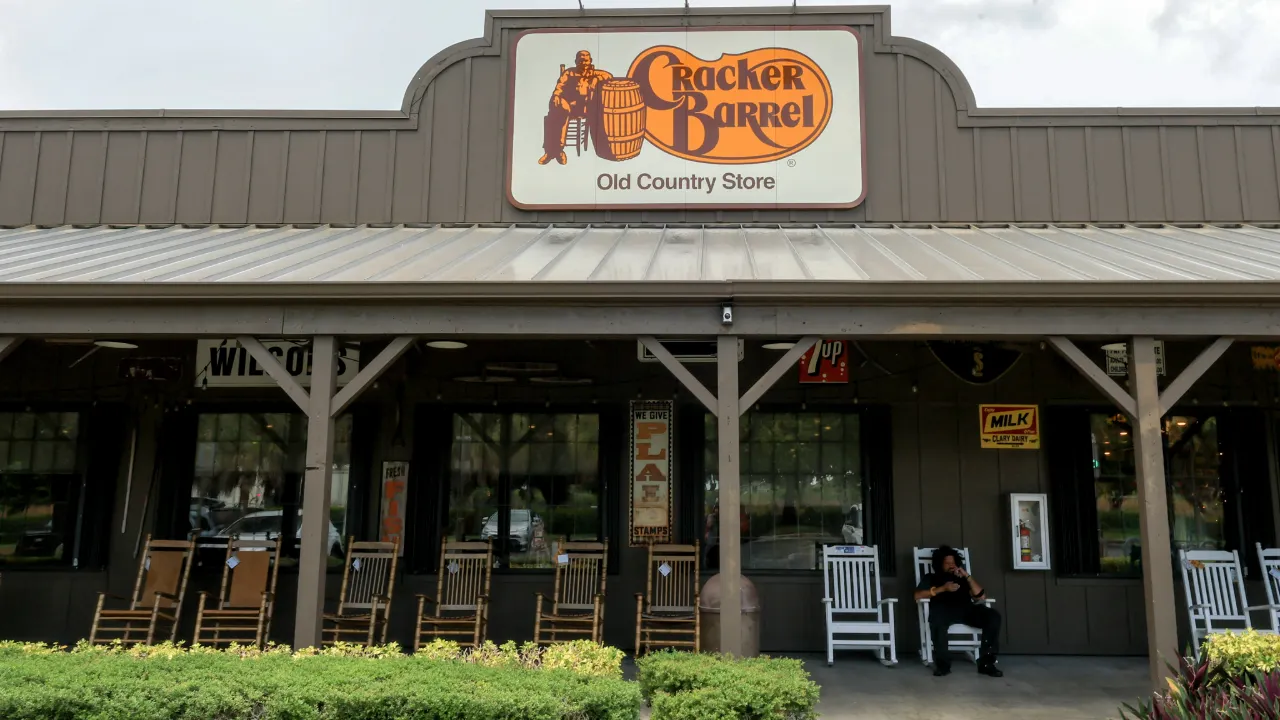
A Cracker Barrel store with the old logo.

Cracker Barrel is selling restaurant properties and exiting its Maple Street Biscuit Company business as it works to cut debt and improve profits. (Joe Raedle/Getty Images)

“These efforts reflect the discipline we bring to managing our business and balance sheet as we position Cracker Barrel for long-term success and shareholder value creation,” Julie Masino, president and CEO of Cracker Barrel, said in a statement. 

Advertisement

“Our sale-leaseback transaction will allow us to opportunistically reduce debt while monetizing a portion of our owned real estate at an attractive valuation.”

Masino added, “Divesting Maple Street sharpens our focus on the core Cracker Barrel brand and is expected to improve profitability.”

Biscuit Belly, which currently has 15 locations, said the deal will allow it to expand more quickly. It plans to convert the acquired Maple Street restaurants into Biscuit Belly locations over the next 18 to 24 months. 

CRACKER BARREL SALES, TRAFFIC CONTINUE TO SLUMP MONTHS AFTER FAILED REBRAND

Advertisement
Waffles and glazed biscuits are served at Maple Street Biscuit Co.

Waffles and glazed biscuits served at Maple Street Biscuit Co.  (Jeffrey Greenberg/Universal Images Group via Getty Images)

The first conversions will begin in the greater Cincinnati area and Richmond, Virginia. The deal will more than triple Biscuit Belly’s footprint and is expected to help the chain grow to more than 60 locations by the end of 2028.

“When we looked at Maple Street’s geography, footprints, and established teams, a light bulb went off,” Chad Coulter, co-founder and CEO of Biscuit Belly, said in a statement.

Maple Street accounted for less than 2% of Cracker Barrel’s annual revenue. Cracker Barrel said the sale is expected to improve adjusted EBITDA beginning in fiscal 2027.

Cracker Barrel expects to record between $37 million and $39 million in non-cash charges tied to the Maple Street exit during its fiscal fourth quarter. It also anticipates between $6 million and $8 million in additional cash costs.

Advertisement

Stocks In This Article:

CRACKER BARREL’S TURNAROUND HITS EARLY SNAGS; CEO WARNS RECOVERY WILL ‘TAKE TIME’ AFTER REBRAND FIASCO

Cracker Barrel CEO Julie Felss Masino leaves the office

Cracker Barrel CEO Julie Felss Masino walks out of an office building in Brentwood, Tennessee, on Aug. 28, 2025.  (Zak Bennett for Fox News Digital)

The moves come as Cracker Barrel, which operates roughly 660 company-owned locations across 43 states, works to move past backlash over proposed changes to its logo and restaurant interiors last summer, including the removal of the “Old Timer” from its logo.

GET FOX BUSINESS ON THE GO BY CLICKING HERE

The company reversed course less than a week later following customer complaints.

Advertisement

Cracker Barrel told FOX Business it had no additional comment beyond its press release.

Continue Reading

Business

Senate passes China auto bill that could bar Mercedes-Benz from U.S.

Published

on

PayPal's new CEO makes Venmo a standalone business unit as potential buyers circle

A Mercedes-Benz logo is displayed on a used vehicle for sale at a dealership on November 11, 2025 in San Diego, CA.

Kevin Carter | Getty Images News | Getty Images

The Senate Commerce Committee advanced bipartisan legislation Wednesday aimed at toughing a ban on Chinese automakers from the U.S. market, even as Chairman Ted Cruz, R-Texas, warned that it could unintentionally bar Mercedes-Benz from selling vehicles in the country.

Advertisement

Cruz said during the committee’s markup of the Motor Vehicle Modernization Act of 2026 that the bill’s 15% Chinese ownership threshold would cover Mercedes-Benz because two Chinese investors collectively own nearly 20% of its shares.

“We would never consider” banning Mercedes-Benz, Cruz said, adding that the bill would need to be changed before becoming law.

Mercedes-Benz’s two largest individual shareholders are Chinese state-owned automaker BAIC, formerly the Beijing Automotive Industrial Corp., with a 9.98% stake, and Geely founder Li Shufu, with 9.69%.

The bill would codify federal restrictions intended to keep Chinese-linked vehicle technology out of the U.S. over national security concerns that connected cars could collect sensitive data.

Advertisement

“We’re preventing an absolute, total, and complete destruction of our industrial base,” said Sen. Bernie Moreno, R-Ohio, who introduced the bill with Sen. Elissa Slotkin, D-Mich.

Mercedes-Benz previously declined to comment on the legislation but said it employs more than 10,000 people in the U.S. and operates assembly plants in Alabama and South Carolina.

Moreno said during the markup that Mercedes-Benz would have until 2030 to comply with the ownership limit and could seek a waiver.

During the markup, Cruz also accused General Motors of supporting the provision in an effort to weaken Mercedes-Benz and make Cadillac more competitive.

Advertisement

“GM is pushing for this provision to get Mercedes-Benz out of the market,” Cruz said.

GM and Mercedes-Benz did not immediately respond to requests for comment. GM is the top-selling automaker in the U.S.

Choose CNBC as your preferred source on Google and never miss a moment from the most trusted name in business news.
Continue Reading

Business

Babcock and Rolls-Royce shares surge after John Healey becomes Chancellor

Published

on

Business Live

The appointment has fuelled investor optimism over increased defence spending

John Healey, Britain's Defence Secretary

John Healey is the UK’s new chancellor(Image: Carl Court/Getty Images)

Shares in defence firms including Rolls-Royce have surged to record highs as investors increased their wagers that incoming Chancellor John Healey would direct further funding towards London-listed arms manufacturers.

Advertisement

Defence supply heavyweights Babcock and BAE Systems were amongst the strongest performers yesterday after former defence secretary Healey was appointed to lead the Treasury under Andy Burnham.

Babcock shares jumped by more than 6.5 per cent within the first half hour of trading on Tuesday, while BAE Systems climbed by 2.8 per cent. Rolls-Royce stock, meanwhile, edged higher by 0.7 per cent to reach 1,369p.

Serco, which operates several facilities and delivers services to the Ministry of Defence, gained 1.7 per cent.

The surge in defence stocks reflects investor confidence in a swifter acceleration of defence expenditure under Chancellor Healey, with British firms also set to be given priority in procurement as part of a drive to “re-industrialise” the nation, as reported by City AM.

Advertisement

Last month, Healey resigned from Sir Keir Starmer’s government citing insufficient funding for defence spending. He accused the Treasury of being “unable” to provide enough cash for the military as it refused to set a date on when the government would raise defence spending to three per cent of GDP.

Under the existing Defence Investment Plan (Dip), expenditure is set to reach approximately 2.7 per cent of GDP by 2030. Healey has made the case for spending to climb to three per cent, and for the UK to establish a roadmap towards achieving 3.5 per cent by 2035 in line with a Nato agreement.

Healey and Burnham have also expressed a desire to favour British companies in government procurement, drawing on a pledge enshrined in Starmer’s Dip.

This could position domestically-listed firms for more prosperous times ahead, as contract pipelines appear poised to strengthen.

Advertisement

Following Healey’s appointment, one industry insider told City AM that senior executives were celebrating the prospect of an increase in defence spending.

They further noted that Burnham had made an “incredibly sensible” choice, and suggested Healey could look to explore procurement arrangements under Canada’s Defence, Security and Resilience Bank — a mechanism that had not been backed by Starmer and former Chancellor Rachel Reeves.

Rolls-Royce has established itself as a key supplier of engines for aircraft, submarines and other power systems, with its technology earmarked for the forthcoming Dreadnought submarine fleet as part of the government’s nuclear deterrence strategy. On Thursday it announced plans for a new £100 factory and defence research facility in Bristol.

Its Lift System engines are also deployed in F-35 jets, while the company additionally provides support for the Typhoon fleet. Rolls-Royce also holds contracts to develop autonomous drones, which are expected to be given priority by the government.

Advertisement

Chris Beauchamp, chief market analyst at the investment platform IG, cautioned that Healey’s appointment might not produce the benefits that defence companies anticipate.

“As Chancellor, he will have many competing demands, and won’t just be the MoD’s man in No 11.

“His experience made him an obvious candidate for the role, and he represents a middle way between [Ed] Miliband and [Shabana] Mahmood, but it will not be easy to find lots more cash for defence, especially when the new Prime Minister is so busy making broad spending commitments in other areas.”


Advertisement
Continue Reading

Business

Factbox-Boeing versus Airbus as aircraft orders top 300 at Farnborough airshow

Published

on


Factbox-Boeing versus Airbus as aircraft orders top 300 at Farnborough airshow

Continue Reading

Business

US judge sets June 2027 trial date for Venezuela’s Maduro

Published

on


US judge sets June 2027 trial date for Venezuela’s Maduro

Continue Reading

Business

Asustek Computer Shares Jump Nearly 3% as AI Server and AI PC Demand Fuels Ongoing Taiwan Tech Rally

Published

on

Samsung Unveils Three New Foldable Phones and Smart Glasses Ahead

TAIPEI — Shares of Asustek Computer climbed further Wednesday, extending a sharp rally that has pushed the Taiwanese electronics maker’s stock up dramatically this year on the strength of surging demand for artificial intelligence servers and AI-enabled personal computers.

Asustek shares, traded on the Taiwan Stock Exchange under ticker 2357, stood at 757.00 Taiwan dollars as of 1:30 p.m. local time Wednesday, up 21.00 Taiwan dollars, or 2.85%, on the day. The gain builds on a stretch of strong performance for the stock over the past several months, part of a broader rally across Taiwan’s technology sector tied to booming global investment in AI infrastructure.

A year of record growth

Asustek’s rally has been underpinned by genuinely strong underlying business results. The company reported record first-quarter 2026 brand revenue of roughly 194.05 billion Taiwan dollars, or about $6.19 billion, marking a 44% increase year-over-year, driven by surging AI server demand alongside stable notebook computer shipments. That performance has helped fuel a stock price that has climbed sharply over the trailing 12 months, with shares up around 69% over just the past month alone during one recent stretch of gains, according to market data.

Advertisement

The company’s 52-week trading range spans from 490.00 to 964.00 Taiwan dollars, illustrating just how volatile, and ultimately how strong, the stock’s performance has been over the past year as investor enthusiasm around AI infrastructure spending has intensified.

Betting big on AI servers

Asustek has positioned itself aggressively in the AI server market over the past year, forming partnerships with major chipmakers including Nvidia, Intel and AMD to build out a broad portfolio of AI infrastructure products. At the Computex trade show in Taipei this June, the company unveiled a range of new AI server systems built around Nvidia’s latest chip platforms, including servers powered by Nvidia’s HGX B300 platform designed for large-scale AI model training and inference, aimed at enterprises, cloud service providers, research institutions and universities running demanding computational workloads.

The company has also showcased liquid-cooled AI infrastructure built around Nvidia’s newer Rubin chip platform at Nvidia’s GTC conference this year, part of a broader strategy the company has described as delivering end-to-end AI factory capabilities spanning everything from data center infrastructure design to large-scale AI deployment.

Advertisement

Asustek co-CEO S.Y. Hsu has been explicit about the scale of the company’s ambitions in this space, saying earlier this year that the company is targeting a 100% growth rate for its AI server business in 2026. Hsu said it was “highly possible” that enterprise and commercial products, which include AI servers, would become the company’s highest revenue-generating segment, and said Asustek was aiming to begin mass production of Nvidia’s Vera Rubin servers within the year.

Expanding beyond servers into AI PCs and robotics

Asustek’s AI strategy has extended well beyond data center hardware. At Computex 2026, the company also unveiled its latest generation of AI-enabled consumer laptops and desktop computers, including new ProArt creator laptops built around Nvidia’s RTX Spark platform and featuring AI-powered software tools designed to optimize system performance for demanding creative workflows.

Company chairman Jonney Shih has described Asustek’s broader ambitions as extending beyond both servers and PCs into what he has called agentic AI, edge AI and physical AI, with the company treating humanoid robotics as a significant future market opportunity. Shih has said the company’s AI server shipments have continued to surge even amid broader industry memory chip shortages that have complicated component sourcing across the electronics sector.

Advertisement

A dividend-paying, analyst-favored stock

Beyond its AI-driven growth story, Asustek has maintained a reputation among investors as a steady dividend payer, with a trailing dividend yield of roughly 6% based on the past 12 months of payouts. The stock currently carries a consensus analyst recommendation of Buy, with average 12-month price targets ranging as high as 1,200 Taiwan dollars, well above current trading levels, reflecting continued analyst optimism about the company’s AI-driven growth trajectory.

Founded in 1989 and headquartered in Taipei, Asustek researches, designs, manufactures and sells a broad range of computing and electronics products globally, including laptops, desktop computers, motherboards, graphics cards, networking equipment, servers and mobile accessories, distributed under the ASUS brand across markets including the United States, Canada, Asia, Europe and Africa.

Part of a broader Taiwan tech rally

Advertisement

Wednesday’s gains for Asustek come amid a broader rally across Taiwan’s technology sector, which has benefited significantly from global enthusiasm around AI infrastructure spending this year. Semiconductor and hardware companies across the island have seen substantial stock price appreciation as major technology companies worldwide continue to pour capital into AI data center buildouts, a trend that has lifted shares of chipmakers, server manufacturers and component suppliers across the region.

Asustek is scheduled to release its next quarterly earnings report on Aug. 12, which will offer investors a more detailed look at whether the company’s AI server and AI PC businesses have continued to deliver the kind of growth reflected in its record first-quarter results. Given how closely the stock’s recent performance has tracked broader sentiment around AI infrastructure spending, any signals from that report about order backlogs, margins or production capacity, particularly around the company’s push into Nvidia’s newest Rubin chip platform, are likely to remain a key focus for investors watching whether Asustek’s rally can continue in the months ahead.

Continue Reading

Business

Atmos Energy: Visible Growth Instills Confidence

Published

on

Mid-Year 2026 Market Outlook: Oil, Gold, And Copper

Atmos Energy: Visible Growth Instills Confidence

Continue Reading

Business

US FDA continues investigating Taylor Farms as cyclosporiasis cases mount (July 20)

Published

on


US FDA continues investigating Taylor Farms as cyclosporiasis cases mount (July 20)

Continue Reading

Business

CVS Pharmacy begins filling pet prescriptions at 9,000 stores nationwide

Published

on

CVS Pharmacy begins filling pet prescriptions at 9,000 stores nationwide

CVS Pharmacy is expanding into pet health care by allowing customers to fill common prescriptions for dogs and cats at roughly 9,000 locations nationwide.

The pharmacy chain said pet owners can obtain select medications, including antibiotics, allergy treatments, flea and tick control products, insulin and pain relievers.

Advertisement

Customers can bring a written prescription to a CVS Pharmacy location or ask their veterinarian to contact the pharmacy directly. Eligible prescriptions may also be available for delivery.

The expansion gives pet owners another option beyond veterinary offices, online pet pharmacies and specialty retailers, particularly when filling recurring prescriptions for animals undergoing ongoing treatment.

PETSMART’S ONLY SAN FRANCISCO STORE SET TO CLOSE AS ONLINE SHOPPING AND SAME-DAY DELIVERY RESHAPE PET RETAIL

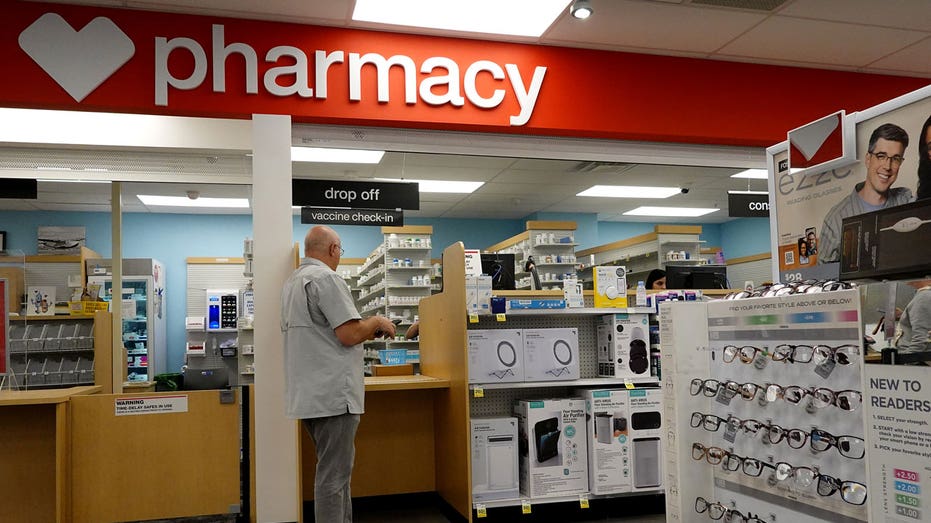
A man stands at the pharmacy counter at CVS Pharmacy

The expansion gives pet owners another option beyond veterinary offices, online pet pharmacies and specialty retailers. (Joe Raedle/Getty Images)

CVS said eligible pet prescriptions will qualify for some of the same services available for human medications, including automatic refills and prescription synchronization.

Advertisement

Pet owners can also add their animals to CVS.com profiles and manage eligible prescriptions through the CVS Health app. The company said electronic prescribing capabilities for veterinarians are expected to become available in the coming months.

Ticker Security Last Change Change %
CVS CVS HEALTH CORP. 108.94 -1.61 -1.46%

“With the addition of pet medication dispensing, CVS Pharmacy can now serve every member of the family,” Sid Tenneti, CVS Health’s senior vice president and interim president of pharmacy and consumer wellness, said in a statement.

POPULAR PET FOOD RECALLED OVER POSSIBLE SHARP METAL AND PLASTIC CONTAMINATION

CVS has also expanded the selection of pet food, grooming and wellness products available in its stores and online. Its offerings include flea and tick products, dental treats, toys, grooming tools, cat litter and training pads.

Advertisement
exterior of a CVS pharmacy

CVS has also expanded the selection of pet food, grooming and wellness products available in its stores and online. (Brandon Bell/Getty Images)

The company did not disclose how much it expects the prescription service to contribute to sales.

CLICK HERE TO GET FOX BUSINESS ON THE GO

CVS Health operates approximately 9,000 retail pharmacy locations and more than 1,000 walk-in and primary care clinics.

Advertisement
Continue Reading

Trending

Copyright © 2025