

Business
Factbox-Boeing versus Airbus as aircraft orders top 300 at Farnborough airshow




Prime Minister, congratulations. You arrive in Downing Street with more than a million young people in the UK not in education, employment or training.
The latest ONS figures put the number at 1,012,000, up 89,000 in a year, with 13.5 per cent of all 16 to 24 year olds now NEET.
As Mayor of Greater Manchester you showed you understand this agenda, championing technical education and real pathways into work for young people. Reviews are already under way, including Marc Bolland’s work on youth unemployment. So here is my wish list for your first months in office.
First, shift funding towards prevention. Every young person who becomes NEET costs the state far more in benefits, lost tax revenue and pressure on health and justice services than early intervention ever would. Yet most public money still flows to services that pick up the pieces after problems escalate. Commit to long-term investment in the programmes that stop young people falling behind in the first place.
Second, give charities multi-year funding. Most survive on short-term, annual grant cycles and contracts, which makes it almost impossible to retain skilled staff, innovate or demonstrate long-term impact. Three to five year funding, where appropriate, would transform what the sector delivers for the same money.
Third, reform commissioning. Public procurement remains slow, bureaucratic and tilted towards the largest providers. Value social impact alongside cost, cut the paperwork, and let charities of all sizes compete fairly. Taxpayers get better outcomes and communities get providers who actually know them.
A National Youth Opportunity Fund
Fourth, create a dedicated National Youth Opportunity Fund, backing evidence-based programmes that improve school attendance, attainment, employability and social mobility, with charities as key delivery partners. With the British Chambers of Commerce warning youth unemployment could reach 17.8 per cent by 2027, the case for acting in this Parliament, not the next one, makes itself.
Fifth, treat the voluntary sector as a strategic partner. Charities are not a nice-to-have. They are part of the UK’s social infrastructure and should be involved in policy design, not just contracted to deliver it. The Civil Society Covenant was a promising start from your predecessor. Make it mean something in how money actually moves.
At City Year UK we see every day what happens when young people get consistent, early support: attendance improves, attainment rises and pathways into work open up. We also see what happens when they do not, and NEET numbers at record levels tell that story at national scale.
If we’re serious about improving life chances and economic growth, we need to stop funding failure and start funding prevention. Charities deliver extraordinary value for money, but they need long-term partnerships, not short-term contracts. Investing in young people before they fall behind is one of the smartest economic and social investments any government can make.

Victoria Head
Victoria Head is joining City Year Uk the beginning of August as Chief Executive Officer, bringing more than 25 years of leadership experience across education, employability, skills development, youth services, and social impact.
Throughout her career, Victoria has focused on creating opportunities that enable young people and communities to thrive. She has a strong track record of leading large-scale transformation programmes, securing and managing multi-million-pound contracts, and building strategic partnerships across government, education, and the voluntary sector. Her expertise spans workforce development, social mobility, and systems change, with a consistent focus on improving outcomes for young people.
Prior to joining City Year UK, Victoria was Strategic Director for Learning, Skills and Employability at Catch22, where she led a broad portfolio of programmes spanning education, employability, and social inclusion. She has also held senior leadership roles in national employability and skills organisations, driving innovation, sustainable growth, and high-quality frontline delivery.
Alongside her executive career, Victoria is a Trustee of Changing Lives and a Council Member of UK Year of Service, reflecting her long-standing commitment to strengthening the social impact sector.
As CEO of City Year UK, she is focused on expanding the organisation’s reach and deepening its impact, ensuring more young people are supported to succeed in education, employment, and life.
For more information on how to be involved, please contact Victoria on
vhead@cityyear.org.uk

porcorex/iStock via Getty Images

Dear Fellow Shareholders,
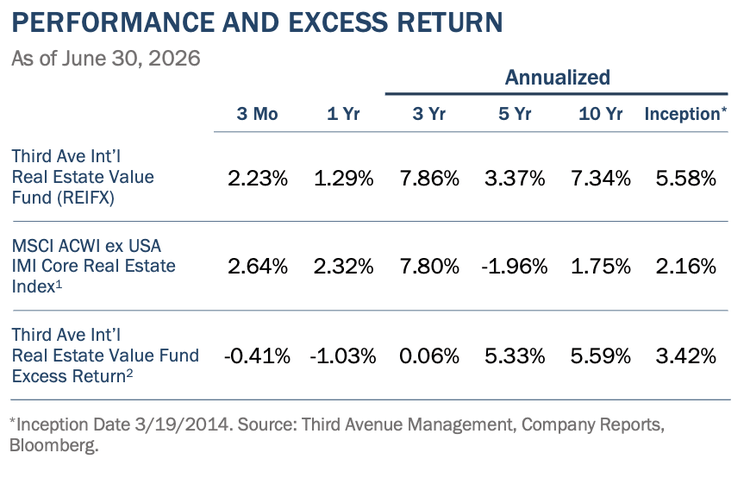
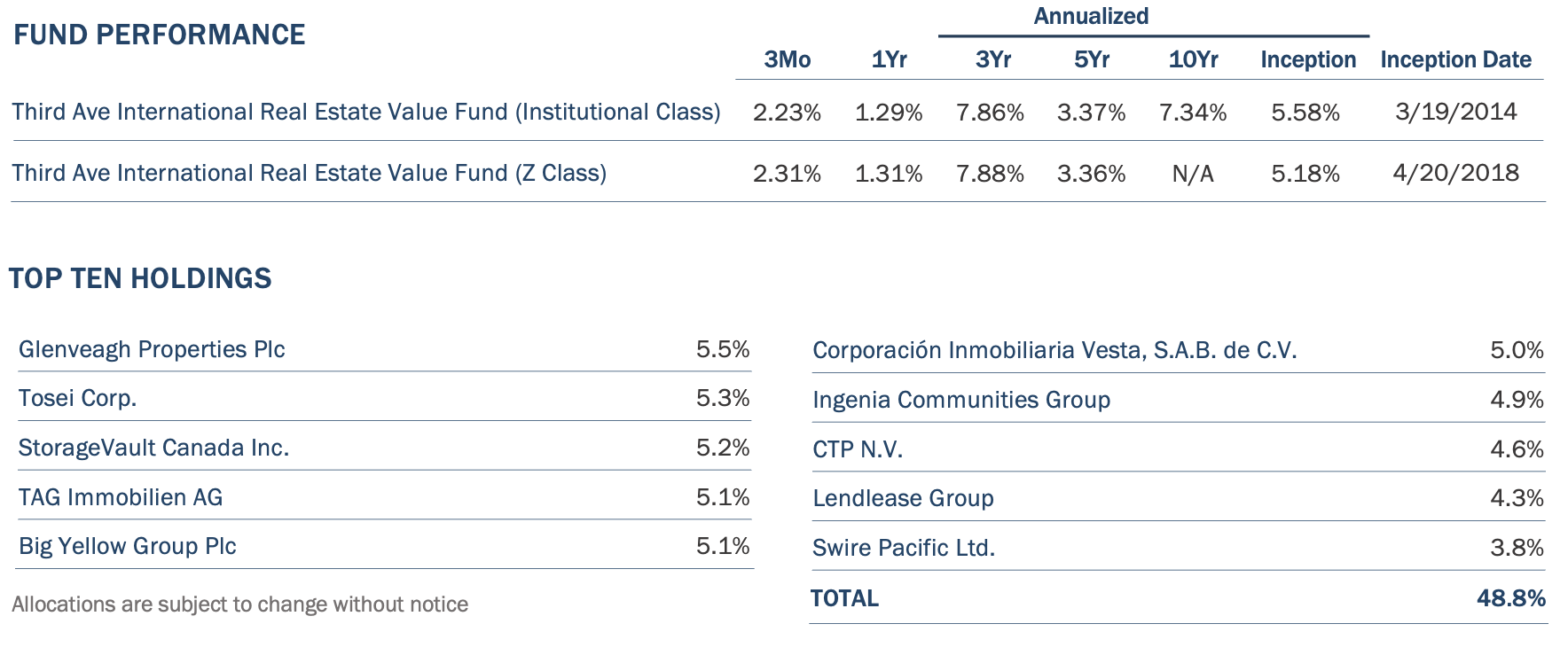
We are pleased to provide you with the Third Avenue International Real Estate Value Fund (the “Fund”) report for the quarter ended June 30, 2026. The Fund delivered a return of +2.23% (after fees) for the quarter, compared with the MSCI ACWI ex USA IMI Core Real Estate Index1 (the “Index”), which returned +2.64% over the same period. Fund Management believes long-term returns are more indicative of relative performance. Over the last 10 years, the Fund has outperformed the Index by 5.59% per year (after fees).
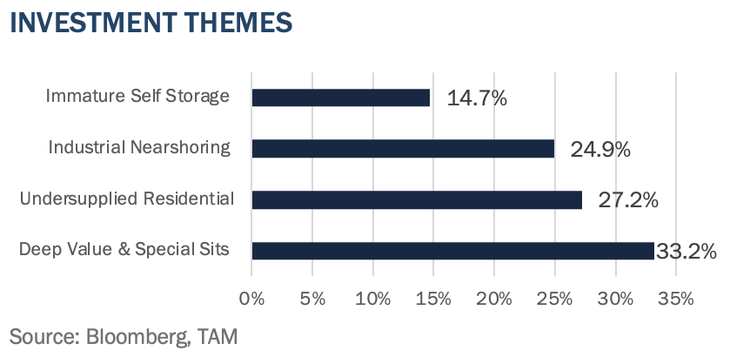
So far this year, dispersion across geographies and asset classes has increased amid ongoing tensions related to the Iran conflict. Fund Management capitalized on this dispersion by establishing two new positions, thereby enhancing the Fund’s exposure to its top two structural themes: persistently undersupplied residential real estate and high-demand industrial real estate. Both investments were made at attractive discounts to intrinsic value. These discounts reflect a broader opportunity shaped by the current market environment. The Fund trades at about 10 times earnings, roughly half the valuation multiple of U.S. REITs, despite similar or better earnings growth. Fund Management believes this valuation gap is unprecedented and unsustainable, and the Fund is positioned to benefit as it closes.
Activity
A new investment in leading Spanish homebuilder Neinor Homes S.A. (NNRHF) (“Neinor”) deepens the Fund’s exposure to a high conviction structural theme: residential real estate markets that are chronically and structurally undersupplied. In Europe, this theme already includes two existing Fund positions — Glenveagh Properties PLC (GLVHF) (“Glenveagh”), an Irish homebuilder focused primarily on Dublin and its commuter belt, and TAG Immobilien AG (TAGOF) (“TAG”), a German and Polish residential owner and developer with a large, stable German rental portfolio and a rapidly growing Polish platform.
Spain, Ireland, and Poland face a long-standing housing deficit that has been growing for over ten years and is now at a critical point. In each market, demand significantly exceeds supply, driven by common factors: (i) economies growing faster than the European average, (ii) structural deficits resulting from years of underbuilding that cannot be quickly fixed, (iii) favorable affordability ratios and low or decreasing mortgage rates, and (iv) government policies broadly supportive of new supply.
Following Neinor’s acquisition of AEDAS Homes last year, which was previously owned by the Fund, the company has become Spain’s largest homebuilder, mainly focused on major cities like Madrid. The combined entity plans to build 5,000–7,000 homes annually, supported by a land bank capable of sustaining production for over six years. The Fund’s investment thesis is based on several factors: (i) strong fundamentals in the Spanish housing market, where new construction is estimated to meet only half of annual new household formations despite rising house prices; (ii) attractive affordability, with the average Neinor homebuyer able to obtain a 30-year mortgage at rates in the low 2% range and home prices less than five times gross income; (iii) an acquisition price for AEDAS below intrinsic value, supported by conservative earnings guidance and multiple resource conversion options to enhance shareholder returns; and (iv) a shareholder return plan, with Neinor aiming for annual dividends exceeding 15% based on the current share price.
The Fund’s exposure to Poland is through its investment in TAG, a German-listed multifamily property operator. TAG owns over 83,000 rental units across Germany, generating consistent cash flow that has helped its expansion into Poland at a low cost of capital. Its Polish business—comprising ROBYG’s build-to-sell projects and Vantage Development’s growing rental portfolio—now makes up nearly half of TAG’s earnings, according to Fund Management. Despite this, Polish revenue remains undervalued at TAG Immo’s current share price. To prove this point, TAG launched an IPO for its Polish homebuilding unit ROBYG after the quarter ended, with shares pricing 25% above TAG’s book value for ROBYG. TAG still owns about two-thirds of ROBYG, with IPO proceeds used to further expand its Polish rental portfolio. This IPO validates some of the value hidden in many of the Fund’s investments. If the market valued TAG based on ROBYG’s current share price, TAG would need to trade approximately 20% higher to align with peer multiples.
Similar to targeted undersupplied residential markets, Fund Management views industrial real estate as one of the most compelling structural growth stories in global listed real estate. This is driven by two major demand factors that have been developing over the past 5-10 years. First, the continued rise of online retail and the need for proximity to urban centers for faster delivery. Second, nearshoring and ‘China plus one’ manufacturing strategies aimed at diversifying supply chains, especially in markets like Central and Eastern Europe, Mexico, and Southeast Asia. Recently, another demand driver has appeared, as the conflict in Iran has reinforced existing structural demand trends initiated by the Ukraine war—specifically, increased defense spending and focus on domestic energy independence. These are expected to be long-lasting trends, supported by political commitments that are expected to benefit Fund investments, particularly those located in Europe.
In light of these demand drivers, the Fund initiated an investment in Australia’s Dexus Industria REIT (DXSIF) (“Dexus Industria”), adding a high-quality, e-commerce- and logistics-driven industrial platform to an existing industrial exposure that already includes nearshoring-oriented plays in Central and Eastern Europe (CTP NV and Warehouses De Pauw), Southeast Asia (Amata Corporation), and Mexico (Corp. Inmobiliaria Vesta S.A.B. de CV.), as well as logistics and e-commerce exposure in Brazil (LOG Commercial Properties).
Dexus Industria is an Australian industrial REIT with 88 high-quality warehouse and logistics assets, about 75% of which are located in urban ‘infill’ markets — Australia’s most sought-after industrial areas. The fully occupied portfolio recently recorded high single-digit net rental growth. It is managed by Dexus (ASX: DXS), a leading Australian real estate asset manager with roughly A$10 billion in industrial real estate assets. Our investment thesis is based on several factors: (i) an attractive valuation, including an 8% cap rate, a mid-teens AFFO multiple, a 7% dividend yield, and a 30% discount to NAV; (ii) the scarcity of infill industrial land in major urban centers, supporting premium occupancy and leasing spreads; (iii) a development pipeline of 12 projects offering attractive returns; (iv) a conservative, low-leverage balance sheet; (v) access to institutional deal flow, asset management, and operational expertise through Dexus; (vi) rental income growth outpacing construction cost inflation; and (vii) active share buybacks at a discount to NAV, highlighting shareholder alignment despite a less-than-perfect external management structure.
Positioning
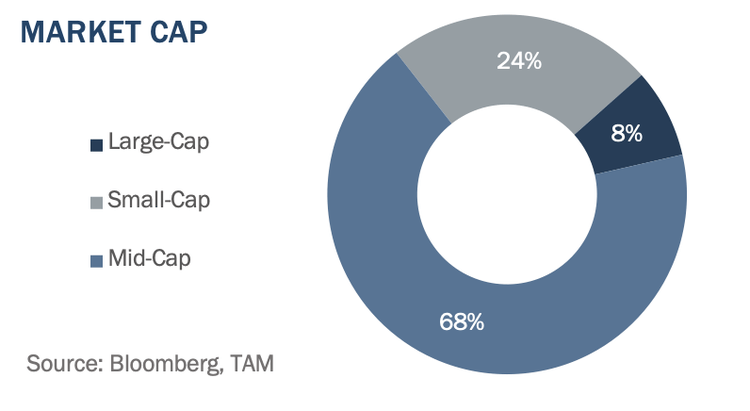
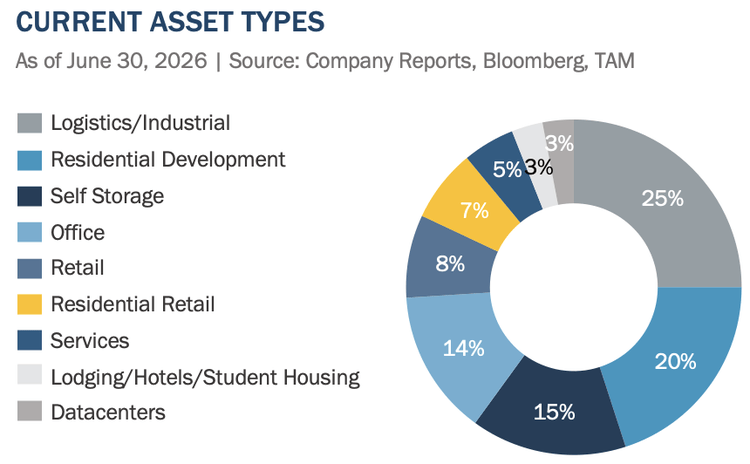
Including the above-referenced activity, the Fund’s allocations remain broadly consistent with recent quarters. New investments in Neinor Homes and Dexus Industria modestly increase the Fund’s residential development and industrial/logistics exposures, respectively, reflecting the Fund’s elevated conviction in those two thematics.

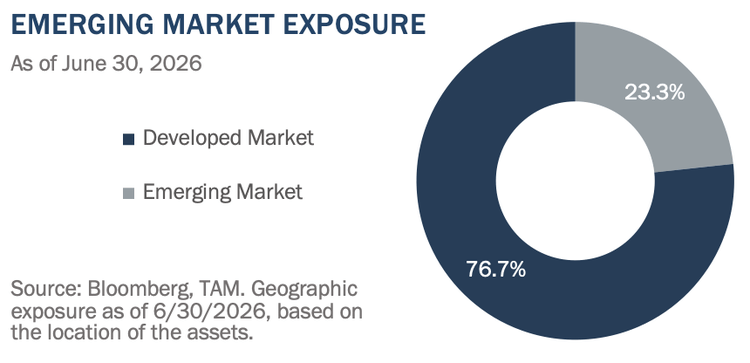
Outlook Commentary – An Unprecedented Value Opportunity
An underappreciated feature of the current market environment is the remarkable valuation divergence between international-listed real estate and its U.S. counterpart. International real estate delivered exceptional performance in calendar year 2025, with the Fund returning almost 27%. Yet this momentum has not carried into 2026. While U.S. REITs have rallied approximately 11% year-to-date on the back of domestic capital rotation, international listed real estate has largely traded sideways. The result is a growing valuation differential that is historically unprecedented in magnitude.
As illustrated in the accompanying chart, the Fund’s price-to-earnings multiple has compressed to approximately 10 times, while U.S. REITs trade at about 20 times. This is not a story of slowing earnings, as the Fund’s underlying holdings continue to grow earnings at attractive rates, driven by the structural and cyclical tailwinds inherent in underlying investments. Rather, it is a story of stagnant share prices amid compounding earnings. Mathematically, that should not persist indefinitely without either prices recovering or the fundamental investment case deteriorating. Fund Management is firmly of the view that the former is far more likely.
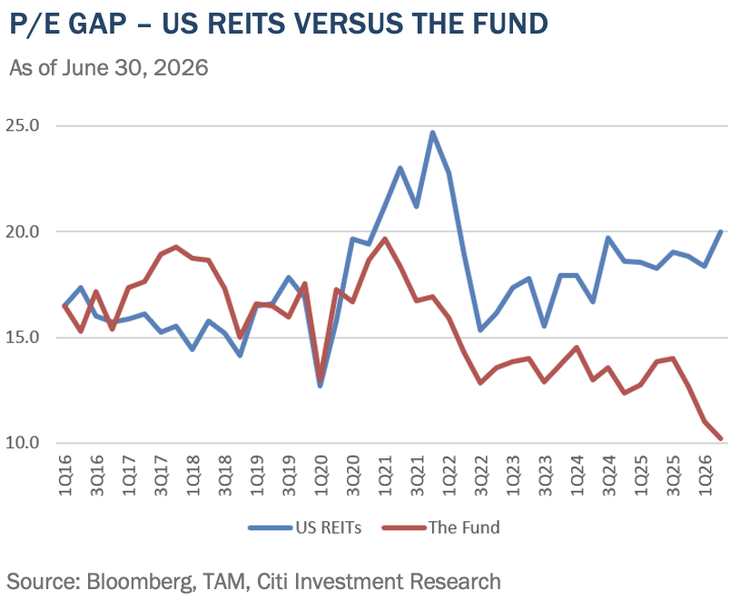
What makes the current discount particularly striking is the context in which it is occurring. For instance, U.S. REIT earnings growth for 2026 is broadly expected to be modest, with much of the re-rating driven by multiple expansion on domestic capital rotation. The Fund’s international real estate earnings, by contrast, are growing at what Fund Management estimates to be high-single-digit to low-double-digit rates across the Fund, similar to 2025 when the Fund’s investments achieved an average earnings growth of 12%. An investor buying the Fund today is acquiring earnings growth that is meaningfully faster at approximately half the valuation multiple. That is a risk-adjusted proposition rarely available in any asset class, let alone one backed by high-quality real assets.
Some U.S. REIT boards and management teams seem to agree — benefiting from relatively low-cost equity capital and elevated domestic valuations — are beginning to leverage this currency advantage to pursue international real estate acquisitions. The acquisition of Public Storage Canada by affiliated U.S. REIT Public Storage, and the approach by U.S. REIT Prologis to acquire UK-listed SEGRO, are early indicators of a trend that Fund Management expects could continue. Among the Fund’s own holdings, self-storage owners such as Big Yellow in the U.K., and Shurgard in Europe appear well-positioned as potential targets, given what we believe to be their high-quality portfolios, conservative balance sheets, and the significant gap between their listed valuations and what institutional and strategic buyers have been willing to pay for comparable self-storage platforms in the private market.
The resolution of the current valuation anomaly, in Fund Management’s view, is a question of when rather than if, and is likely to be driven by a combination of dynamics. This might include the above examples of public market M&A, as U.S. and other strategically positioned buyers use low-cost equity capital to acquire international platforms, seizing on the disconnect between listed and private market values, or market participants independently recognizing the valuation and earnings disconnect as the current cycle matures.
However, perhaps the most likely catalyst for the Fund is a broader rotation of capital toward real assets once the current concentration of market gains in artificial intelligence, memory, and semiconductor-related equities runs its course and ultimately reverses, as occurred following the technology, media, and telecom bubble in March 2000. In that earlier episode, the unwinding of an extraordinarily narrow, momentum-driven rally was followed by a multi-year period in which capital broadly rotated into real assets and value-oriented equities, including real estate, as investors re-priced risk and sought durable, tangible sources of cash flow. Fund Management does not attempt to predict the timing of such a rotation, but notes that the combination of historically elevated concentration risk in a small number of technology-related themes and historically wide valuation discounts in international real estate has, at a minimum, useful precedent.
In the interim, the Fund’s underlying earnings yield of approximately 10%, combined with high-single-digit earnings growth, provides a compelling stand-alone return case that does not depend on valuation re-rating at all. As such, Fund Management is highly confident that the current pricing of international listed real estate, relative to both intrinsic value and U.S. peers, represents one of the most attractive entry points in the Fund’s history.
We thank you for your continued support and look forward to writing to you again next quarter. In the interim, please do not hesitate to contact us with any questions, comments, or ideas at realestate@thirdave.com.
Sincerely, The Third Avenue Real Estate Value Team
Quentin Velleley, CFA Portfolio Manager
Editor’s Note: The summary bullets for this article were chosen by Seeking Alpha editors.
Editor’s Note: This article covers one or more microcap stocks. Please be aware of the risks associated with these stocks.
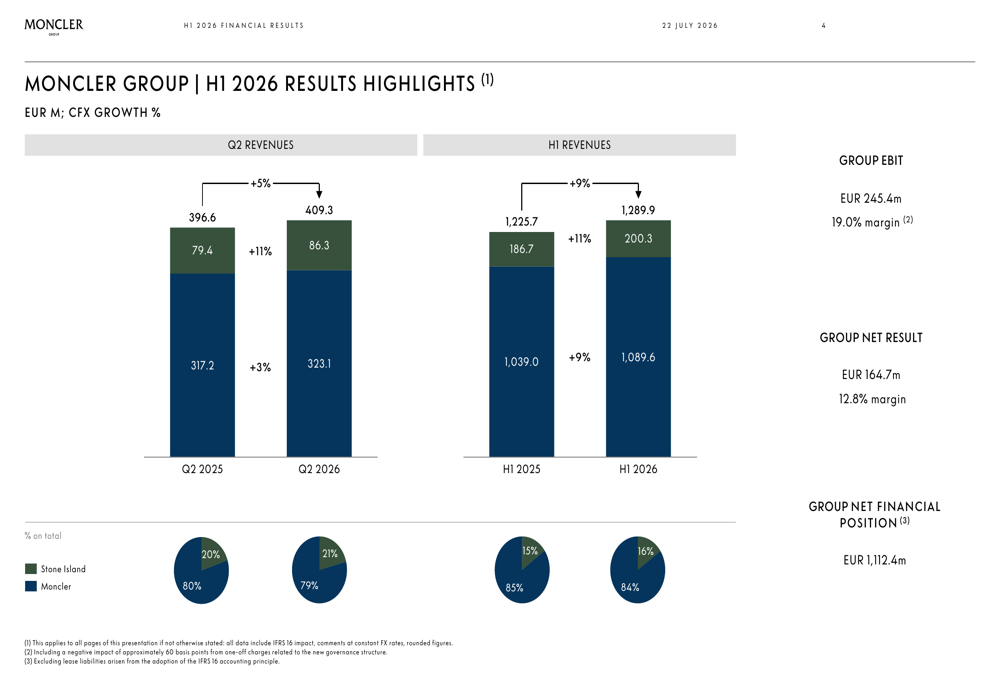
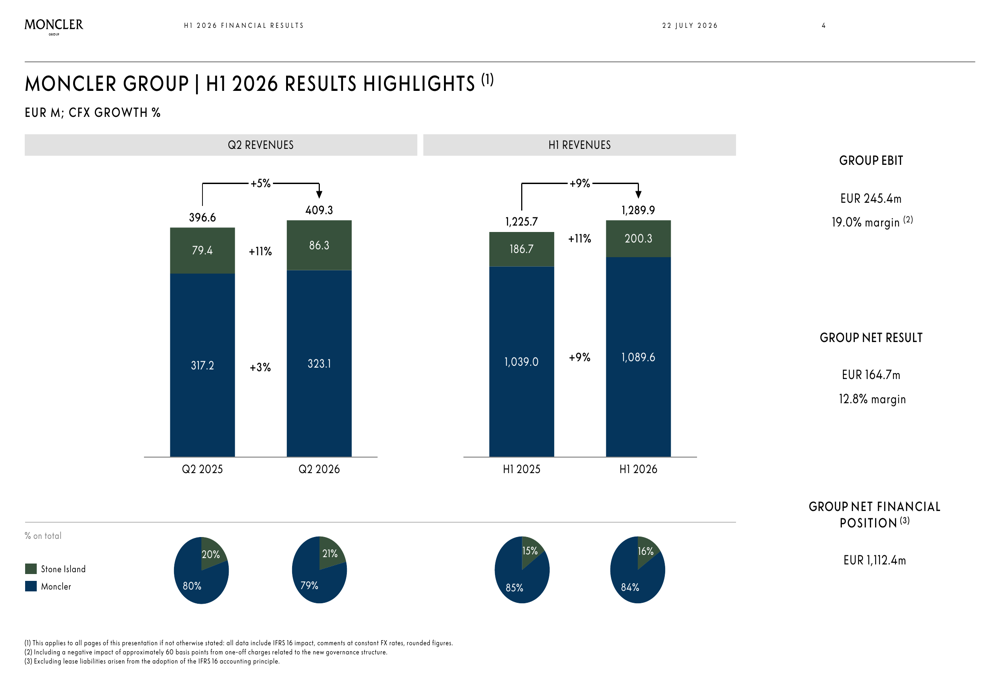
Moncler H1 2026 slides: growth slows to 5% in Q2 amid Europe weakness


Passage Research focuses on identifying variant perception through a blend of fundamental analysis and alternative data. The research process combines detailed financial modeling with real-time datasets to underwrite earnings power, margin durability, and forward expectations.The author has spent over a decade on Wall Street, most recently spending the last five years working in the hedge fund industry as an analyst. Typical coverage spans consumer, TMT, industrials and special situations, with an emphasis on asymmetric risk/reward and catalyst-driven opportunities.
Analyst’s Disclosure: I/we have no stock, option or similar derivative position in any of the companies mentioned, but may initiate a beneficial Short position through short-selling of the stock, or purchase of put options or similar derivatives in MU, ZMIC:CA, MU:CA over the next 72 hours. I wrote this article myself, and it expresses my own opinions. I am not receiving compensation for it (other than from Seeking Alpha). I have no business relationship with any company whose stock is mentioned in this article.
Seeking Alpha’s Disclosure: Past performance is no guarantee of future results. No recommendation or advice is being given as to whether any investment is suitable for a particular investor. Any views or opinions expressed above may not reflect those of Seeking Alpha as a whole. Seeking Alpha is not a licensed securities dealer, broker or US investment adviser or investment bank. Our analysts are third party authors that include both professional investors and individual investors who may not be licensed or certified by any institute or regulatory body.


European Union antitrust regulators said on Wednesday they had signed off on Paramount Skydance’s proposed acquisition of Warner Bros. Discovery.
The approval, which included concessions made by Paramount, comes as the deal has been delayed in the U.S. due to concerns raised by state attorneys general.
A Paramount spokesperson didn’t immediately respond to comment.
In order to garner the approval, the European Commission, the executive body of the EU, said Paramount agreed to divest its stake in a film distribution joint venture with United International Pictures in Europe, and said it would not enter into any film distribution deal with Universal for the next 10 years in Europe.
“These commitments fully address the competition concerns identified by the Commission by ensuring that the films of the merged entity will not be distributed jointly with those Universal or Disney,” according to the EU’s release.
Paramount’s stock rose nearly 3% in afternoon trading.
The EU’s approval marks a major regulatory milestone for the $110 billion proposed merger.
The deal earlier won approval from the Antitrust Division of the U.S. Department of Justice. Various other global jurisdictions have also signed off on the deal.
However, in the U.S., a lawsuit brought forward by a group of state attorneys general last week has become a potential holdup in this deal moving forward.
The coalition led by California’s Rob Bonta filed a lawsuit seeking to block the merger due to antitrust concerns. The tie-up is set to combine two major film studios, Paramount and Warner Bros., a massive portfolio of pay TV networks, and streaming services HBO Max and Paramount+.
Earlier this week a California district judge granted a temporary restraining order that puts a 14-day pause on anything moving forward with the merger.
Paramount previously said it is on track to close the merger by the end of September.
Business
(VIDEO) San Antonio’s Victor Wembanyama, Caitlin Clark and Legend Derrick Rose Named NBA 2K27 Cover Stars

San Antonio Spurs center Victor Wembanyama, Indiana Fever guard Caitlin Clark and Chicago Bulls legend Derrick Rose were unveiled Wednesday as the cover athletes for “NBA 2K27,” the latest edition of the long-running basketball video game franchise developed by Visual Concepts and published by 2K.
The three players will each headline a different version of the game: Wembanyama on the Standard Edition, Clark on the Deluxe Edition and Rose on the limited-availability Ultra Edition. “NBA 2K27” is set to launch worldwide Sept. 4 on PlayStation 5, Xbox Series X|S, PC via Steam and Nintendo Switch 2, with early access beginning Aug. 28 for players who purchase the Deluxe or Ultra editions.
A trio of history-makers
Each of the three athletes brings a notable first or milestone to this year’s cover. Wembanyama becomes the first San Antonio Spurs player ever featured on an NBA 2K cover. Clark becomes the first WNBA player to headline her own global premium cover for the franchise, following past WNBA stars such as Angel Reese, A’ja Wilson, Sabrina Ionescu, Sue Bird, Diana Taurasi and Candace Parker, who have appeared on special edition or alternate covers in previous years. Rose, meanwhile, becomes a two-time “2K” cover athlete, having previously appeared on the cover of “NBA 2K13.”
Zak Armitage, senior vice president and general manager of NBA 2K, framed the selection around a shared competitive drive among the three players. “Victor Wembanyama, Caitlin Clark, and Derrick Rose each come from different worlds, but they share the same obsession that has altered the trajectory of the game,” Armitage said in a news release. “Wembanyama has broken the mold for what a big man can be and keeps breaking it. Clark is pulling up from the logo, not just redefining what range looks like, but the women’s game entirely. And Rose changed what it meant to be a point guard — explosive, physical, unstoppable — and when faced with setbacks, his hunger for the game is what brought him back.”
What each player brings to the cover
Wembanyama, 22, enters his fourth NBA season coming off a year in which he became the first unanimous winner of the league’s Defensive Player of the Year award. He averaged 23.8 points, 10.9 rebounds and 3.5 assists per game across the 2026 playoffs as San Antonio advanced to the NBA Finals. In a statement, Wembanyama connected the honor to his relationship with the game itself. “When you’re truly obsessed with basketball, the game doesn’t stop when you leave the arena,” Wembanyama said. “NBA 2K is the court that never locks up, it’s always open whether you’re in Paris or San Antonio. It’s how you study the game, sharpen your IQ, and live basketball 24/7. To be the face of a game that fuels that hunger for hoops and whose covers immortalize the all-time greats, that’s a dream come true for me.”
Clark, in her third WNBA season, is currently averaging 20.7 points and 7.8 assists per game for the Fever, who are tied for first place in the Eastern Conference heading into WNBA All-Star Weekend. She holds the all-time NCAA Division I scoring record for both men’s and women’s basketball. “Being on the cover of NBA 2K27 is special because this game reaches fans all over the world,” Clark said. “To be the first WNBA player on her own global cover means women’s basketball gets to show up on that stage too, and I am proud to be part of that.”
Rose, a former No. 1 overall pick whose number was retired by the Bulls this past January, remains the youngest MVP in NBA history. Reflecting on his return to the cover more than a decade after his first appearance, Rose said, “It’s crazy looking back at being on the NBA 2K13 cover to now having my own edition for NBA 2K27. During my journey there have been coaches who believed in me, teammates who made me better, and fans who showed up louder than I ever expected. So, this is a chance to inspire young athletes to stay obsessed with the game. To show them that when you put in the countless hours of hard work, it rewards you.”
A shared thread among the three
Beyond their individual accomplishments, the three cover athletes share a specific distinction: each was selected with the No. 1 overall pick in his or her respective draft, and each went on to win their league’s Rookie of the Year award.
Pricing and pre-order details
The Standard Edition of “NBA 2K27” is priced at $69.99, the Deluxe Edition at $99.99, and the Ultra Edition at $149.99, with the Ultra Edition available for a limited window through Sept. 6. Pre-orders are live now on the official NBA 2K website, with early pre-order incentives available for Deluxe and Ultra Edition buyers through Aug. 17, including bonus virtual currency and in-game content. A first look at “NBA 2K27” gameplay is scheduled to be revealed in an official trailer next Tuesday, July 28.
Continuing a long-running tradition
The reveal continues a yearly tradition for the NBA 2K franchise, which has featured a rotating lineup of NBA and WNBA stars and legends on its covers in recent years, including Jayson Tatum, A’ja Wilson and Vince Carter on “NBA 2K25,” and Luka Doncic, Kevin Durant and Kareem Abdul-Jabbar on a past anniversary edition of the series. With Wembanyama, Clark and Rose now set to headline this year’s release, “NBA 2K27” arrives with a cover lineup spanning three different eras and levels of the sport, from an active generational NBA talent and a rising WNBA superstar to a franchise legend making his second appearance on the game’s cover more than a decade after his first.

An eight-minute hop from Heathrow to central London and a quarter of an hour from Manchester Airport to Leeds.
That is the pitch Virgin Atlantic and Joby Aviation put to the business travel market on Wednesday, as the two companies signed a binding, multi-year agreement at the Farnborough International Airshow to bring electric air taxis to the UK.
The deal converts a partnership first announced in 2025 into a commercial framework, making Virgin Atlantic the exclusive airline partner for Joby’s UK air taxi service. It builds on Joby’s existing tie-up with Delta Air Lines, which holds a 49 per cent stake in Virgin Atlantic.
Under the agreement, Virgin will sell the service through its own app and website, allowing travellers to book an air taxi connection alongside a long-haul ticket. London and Manchester are the launch hubs, with Manchester anchoring connections across the North of England.
“This agreement marks an exciting next chapter in our partnership with Joby and a significant step towards bringing electric air taxi services to the UK,” said Corneel Koster, chief executive of Virgin Atlantic. “Together, we’ll create more seamless journeys for our customers, making it easier than ever to travel between towns, cities and our airports.”
For business owners, three things are worth noting.
The first is competitive. The signing lands two days after Vertical Aerospace confirmed it will build its flying taxis in Britain following a further £10 million of government money. Britain’s domestic champion has the factory and the jobs. The American entrant has the airline, the booking channel and the customer list. Distribution, as any founder knows, is rarely the easy half.
The second is regulatory, and it sets the timetable. Joby retains sole responsibility for aircraft operations, route management and securing UK Civil Aviation Authority approvals. The CAA’s stated ambition is to have the regulatory frameworks for commercial passenger eVTOL flights in place by the end of 2028, with rules on airworthiness, pilot licensing and vertiport design still working through consultation. Joby’s certification is progressing under the bilateral safety agreement between the FAA and the CAA. Nothing carries a paying passenger before that paperwork clears.
The third is the supply chain. Vertiports need construction, power, ground handling, security and maintenance, none of which Joby or Virgin will build alone. The Government has already committed £46.5 million to fast-track drones and flying taxis, of which £26.5 million runs through the CAA, and values the wider sector at up to £103 billion to the economy by 2050. Smaller engineering and infrastructure firms with aviation credentials have a window to position themselves now, while procurement is being designed rather than awarded.
JoeBen Bevirt, Joby’s founder and chief executive, was careful with his language. “The UK is one of the most exciting markets for this technology, and this partnership could drive significant opportunities for Joby as we bring air taxi service to some of the country’s busiest cities,” he said.
The aircraft itself uses six tilting propellers, takes off vertically with a fraction of the noise of a helicopter and is designed for routes of up to 100 miles. Joby has flown thousands of test flights, including point-to-point demonstrations between JFK and Manhattan. A full-scale model drew crowds at Potters Fields Park in London earlier this month.
Coming in a week when Farnborough opened with $48.8 billion of orders, the announcement is a reminder that the advanced air mobility race is now being fought over customers as much as airframes. For the average SME, the eight-minute Heathrow transfer will not be a line item any time soon. For those building, servicing or financing the infrastructure beneath it, the clock started this week.

Amy Ingham
Amy Ingham is a reporter at Business Matters, covering UK business news with a focus on breaking news, business policy, late payments and insolvency. She joined the magazine in 2026 after completing the NCTJ Diploma in Journalism at Harlow College’s journalism school. Her recent reporting includes British Steel’s nationalisation and its impact on SME suppliers, the decline in late payments by large firms, and Insolvency Service director disqualifications. Reach her at aingham@cbmeg.co.uk.

There will be no rest for the wicked. The London Stock Exchange said it will introduce all-day trading, five days a week, from 2027.
The exchange will create a new trading venue named LSE 24 that will give international investors “greater flexibility to respond to market events, access liquidity across time zones and manage risk.”
Rivals in the U.S. have already sought to extend trading hours to keep up with always-on crypto and betting markets. In January, the New York Stock Exchange said it was working on a platform for tokenized securities that would offer 24/7 trading.

Home Depot bull and bear case: rate sensitivity, pro-segment growth, and valuation

Britain’s private employers have all but stopped bidding for staff. Pay growth outside the public sector slowed to 2.9 per cent, the first time it has dropped below 3 per cent since the pandemic in 2020, while payrolls shrank by 4,000 and vacancies fell for another month.
The Office for National Statistics said the small contraction in June defied City projections of a rise of 20,000 jobs. The unemployment rate was unchanged at 4.9 per cent in the three months to May, having been expected to rise to 5 per cent.
For business owners, the significant number is not the headline unemployment rate but the 712,000 vacancies still open across the economy, down another 7,000 on the quarter. The ONS attributed that decline to smaller firms choosing not to hire in order to manage their wage bills and costs.
That is a familiar calculation in any SME finance meeting. When employment costs are fixed and demand is uncertain, the vacancy is the first thing to go. The result is a labour market that looks stable in aggregate while the hiring freeze among smaller employers deepens beneath the surface.
Total average earnings growth, including bonuses, slowed to 4.3 per cent from 4.4 per cent in the previous three-month period, and was unchanged at 3.9 per cent excluding bonuses. The gap between sectors is now stark: public sector pay ran at 5.5 per cent, flattered by the timing of NHS pay awards, against 2.9 per cent in the private sector.
Peter Dixon, senior economist at the National Institute for Economic and Social Research, said slowing pay growth would “complicate Andy Burnham’s pledge to give people breathing space to help with the cost of living, particularly with inflation poised to rise further in the second half of the year”.
There is a paradox in the numbers for anyone recruiting. Employment in the three months to May actually jumped by 64,000 to just below 34.5 million, and the economic inactivity rate edged down to 20.9 per cent from 21 per cent. More people are looking for work at precisely the moment employers are cutting hiring plans. Firms that can afford to recruit will find the candidate market friendlier than it has been in years.
Pay across the economy still rose faster than inflation for the 36th month in a row. Data due on Wednesday is expected to show inflation edged to 2.7 per cent in the year to June, which would be the lowest level since March 2025. The economy also returned to growth in May, with GDP up 0.1 per cent in the month.
A caveat is warranted. The ONS, whose labour market data has been plagued by inaccuracy problems for the past two years, said it carried out fewer interviews in the latest period “because of an operational issue, but our analysis suggests the impact on our headline estimates is minimal”. Payroll and employment estimates draw on different data sets, and the former is frequently revised.
Liz McKeown, ONS director of economic statistics, said: “The latest data show a relatively steady labour market picture overall, though some measures continue to suggest softening.” She added: “The number of employees on payroll was broadly flat in the latest month, while survey estimates suggest employment, unemployment and inactivity rates were little changed in the latest quarter.”
The read-across to borrowing costs matters more than the jobs numbers themselves for most owner-managers. Economists believe the health of the labour market will partly determine whether the Bank of England raises interest rates this year to counteract price pressures caused by the Middle East war energy shock.
The monetary policy committee meets on 30 July and is expected to leave borrowing costs unchanged at 3.75 per cent. UK government bond yields have risen sharply over the past month in response to an escalation in fighting between the US and Iran, which is why rate cuts remain off the table for now.
Cooling wage growth is the one variable pushing the other way. Firms holding off on recruitment to protect margins are, collectively, doing the Bank’s work for it.

Jamie Young
Jamie Young is Senior Reporter at Business Matters, covering SME finance, employment law and Westminster policy since 2016. He has reported on every Budget and Autumn Statement since 2018, helped make sense of the ‘covid era’ and the bounce-back loan scheme from launch through the fraud investigations, and broke the magazine’s coverage of the 2024 late-payment reforms. He joined Business Matters straight from completing his BA in Administration from Exeter University and is NCTJ-qualified. Reach him at jyoung@cbmeg.co.uk

DOJ Now Citing Fake AI-Generated Cases To Keep ICE Detainees Locked Up

Coinbase Adds Sui Staking as Hashi Testnet Expands Bitcoin Finance

Matthew McConaughey Is Serving Tequila By The Scoop


-
 NewsBeat6 days ago
London Mayor Sadiq Khan handed a peerage by Keir Starmer alongside 15 other Labour figures… just days before the PM leaves No10
-

 Fashion5 days ago
Weekend Open Thread – Corporette.com
-

 Politics4 days ago
The House | The City of London can help the new chancellor deliver growth in every postcode
-
 Crypto World5 days ago
Two July Windows Left: The CLARITY Act’s Senate Fight and What Failure Means
-

 Crypto World7 days ago
CFTC blocks Kalshi from unwinding Michigan trades after court order
-

 Crypto World4 days ago
Ripple Payments Joins MiCA With 14 Firms, Does It Mean Anything For XRP?
-

 Business7 days ago
Nvidia Stock Slips After Big Tuesday Rally as Huang Confirms Vera Rubin Chip Is Now in Production Today
-

 Politics3 days ago
Democrats look to World Cup watch parties to register thousands of voters
-

 Crypto World5 days ago
Ripple wins EU-wide access as ESMA adds it to MiCA register
-

 Crypto World1 day ago
Grayscale Files For Worldcoin ETF, WLD Registers Sharp Rise
-

 NewsBeat2 days ago
Unregistered fitter used Gas Safe logo on business flyers
-

 Crypto World6 days ago
Injective Submits SEC Transfer-Agent Registration to Onchain Ownership Records
-

 Tech2 days ago
Sail Virtually Aboard The “Itanic” With IA-64 Emulator
-

 Business7 days ago
Palantir Shares Rise After Expanded Nvidia Partnership and Fresh Analyst Upgrades Ahead of Earnings Day
-
 Tech2 days ago
Turtle Beach Command Series KB7 review: a nifty screen-equipped gaming keyboard
-

 NewsBeat5 days ago
Registration is now open for March for Men with Kev 2026
-
 Sports7 days ago
New Cornerback Enters Vikings Trade Rumor Mill
-
 Business15 hours ago
New Jersey voter registration controversy explained: How 6,600 noncitizens got on the rolls, and what happens next
-

 News Videos6 days ago
Money | Class 12 Economics | CBSE Board Exam 2026-27
-

 Crypto World6 days ago
Claude Fable 5 Slips to Second in AI Coding Leaderboard
You must be logged in to post a comment Login