

Business
Asustek Computer Shares Jump Nearly 3% as AI Server and AI PC Demand Fuels Ongoing Taiwan Tech Rally


TAIPEI — Shares of Asustek Computer climbed further Wednesday, extending a sharp rally that has pushed the Taiwanese electronics maker’s stock up dramatically this year on the strength of surging demand for artificial intelligence servers and AI-enabled personal computers.
Asustek shares, traded on the Taiwan Stock Exchange under ticker 2357, stood at 757.00 Taiwan dollars as of 1:30 p.m. local time Wednesday, up 21.00 Taiwan dollars, or 2.85%, on the day. The gain builds on a stretch of strong performance for the stock over the past several months, part of a broader rally across Taiwan’s technology sector tied to booming global investment in AI infrastructure.
A year of record growth
Asustek’s rally has been underpinned by genuinely strong underlying business results. The company reported record first-quarter 2026 brand revenue of roughly 194.05 billion Taiwan dollars, or about $6.19 billion, marking a 44% increase year-over-year, driven by surging AI server demand alongside stable notebook computer shipments. That performance has helped fuel a stock price that has climbed sharply over the trailing 12 months, with shares up around 69% over just the past month alone during one recent stretch of gains, according to market data.
The company’s 52-week trading range spans from 490.00 to 964.00 Taiwan dollars, illustrating just how volatile, and ultimately how strong, the stock’s performance has been over the past year as investor enthusiasm around AI infrastructure spending has intensified.
Betting big on AI servers
Asustek has positioned itself aggressively in the AI server market over the past year, forming partnerships with major chipmakers including Nvidia, Intel and AMD to build out a broad portfolio of AI infrastructure products. At the Computex trade show in Taipei this June, the company unveiled a range of new AI server systems built around Nvidia’s latest chip platforms, including servers powered by Nvidia’s HGX B300 platform designed for large-scale AI model training and inference, aimed at enterprises, cloud service providers, research institutions and universities running demanding computational workloads.
The company has also showcased liquid-cooled AI infrastructure built around Nvidia’s newer Rubin chip platform at Nvidia’s GTC conference this year, part of a broader strategy the company has described as delivering end-to-end AI factory capabilities spanning everything from data center infrastructure design to large-scale AI deployment.
Asustek co-CEO S.Y. Hsu has been explicit about the scale of the company’s ambitions in this space, saying earlier this year that the company is targeting a 100% growth rate for its AI server business in 2026. Hsu said it was “highly possible” that enterprise and commercial products, which include AI servers, would become the company’s highest revenue-generating segment, and said Asustek was aiming to begin mass production of Nvidia’s Vera Rubin servers within the year.
Expanding beyond servers into AI PCs and robotics
Asustek’s AI strategy has extended well beyond data center hardware. At Computex 2026, the company also unveiled its latest generation of AI-enabled consumer laptops and desktop computers, including new ProArt creator laptops built around Nvidia’s RTX Spark platform and featuring AI-powered software tools designed to optimize system performance for demanding creative workflows.
Company chairman Jonney Shih has described Asustek’s broader ambitions as extending beyond both servers and PCs into what he has called agentic AI, edge AI and physical AI, with the company treating humanoid robotics as a significant future market opportunity. Shih has said the company’s AI server shipments have continued to surge even amid broader industry memory chip shortages that have complicated component sourcing across the electronics sector.
A dividend-paying, analyst-favored stock
Beyond its AI-driven growth story, Asustek has maintained a reputation among investors as a steady dividend payer, with a trailing dividend yield of roughly 6% based on the past 12 months of payouts. The stock currently carries a consensus analyst recommendation of Buy, with average 12-month price targets ranging as high as 1,200 Taiwan dollars, well above current trading levels, reflecting continued analyst optimism about the company’s AI-driven growth trajectory.
Founded in 1989 and headquartered in Taipei, Asustek researches, designs, manufactures and sells a broad range of computing and electronics products globally, including laptops, desktop computers, motherboards, graphics cards, networking equipment, servers and mobile accessories, distributed under the ASUS brand across markets including the United States, Canada, Asia, Europe and Africa.
Part of a broader Taiwan tech rally
Wednesday’s gains for Asustek come amid a broader rally across Taiwan’s technology sector, which has benefited significantly from global enthusiasm around AI infrastructure spending this year. Semiconductor and hardware companies across the island have seen substantial stock price appreciation as major technology companies worldwide continue to pour capital into AI data center buildouts, a trend that has lifted shares of chipmakers, server manufacturers and component suppliers across the region.
Asustek is scheduled to release its next quarterly earnings report on Aug. 12, which will offer investors a more detailed look at whether the company’s AI server and AI PC businesses have continued to deliver the kind of growth reflected in its record first-quarter results. Given how closely the stock’s recent performance has tracked broader sentiment around AI infrastructure spending, any signals from that report about order backlogs, margins or production capacity, particularly around the company’s push into Nvidia’s newest Rubin chip platform, are likely to remain a key focus for investors watching whether Asustek’s rally can continue in the months ahead.

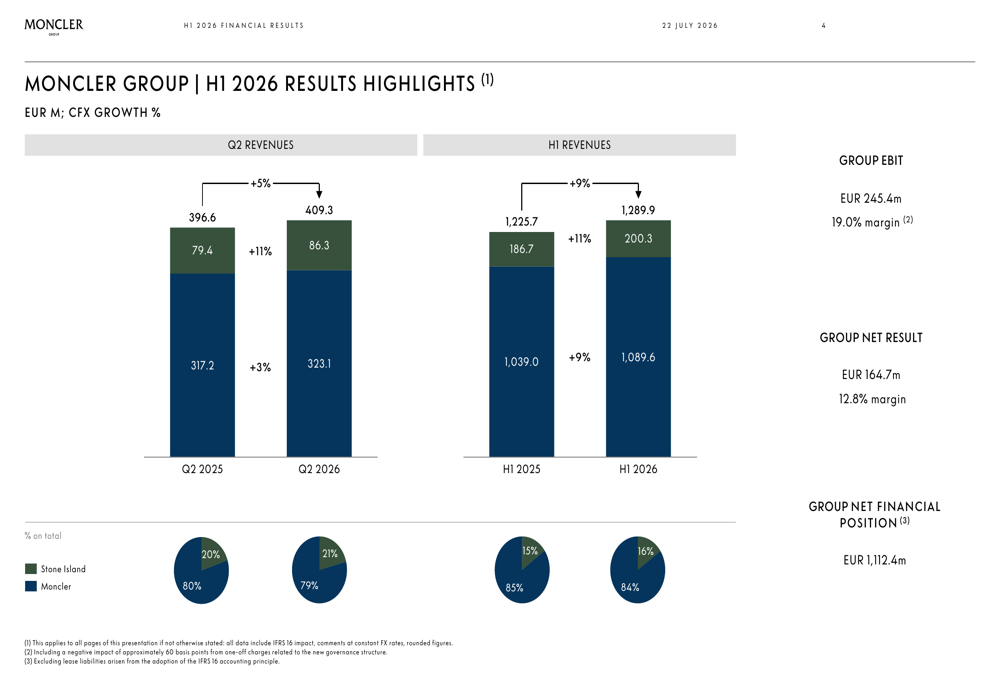
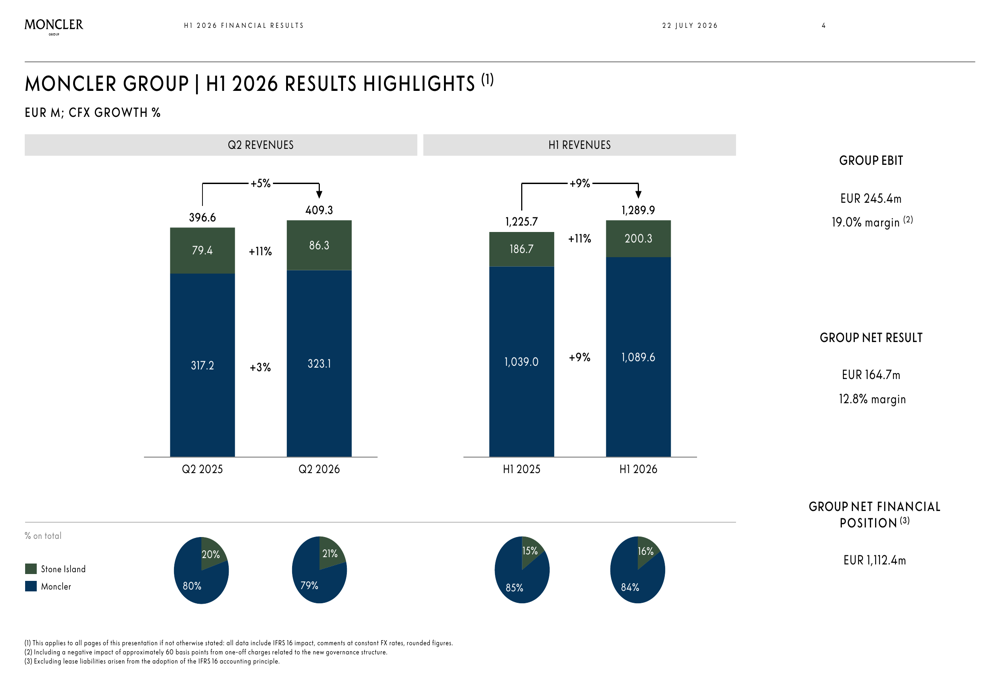
Moncler H1 2026 slides: growth slows to 5% in Q2 amid Europe weakness


Passage Research focuses on identifying variant perception through a blend of fundamental analysis and alternative data. The research process combines detailed financial modeling with real-time datasets to underwrite earnings power, margin durability, and forward expectations.The author has spent over a decade on Wall Street, most recently spending the last five years working in the hedge fund industry as an analyst. Typical coverage spans consumer, TMT, industrials and special situations, with an emphasis on asymmetric risk/reward and catalyst-driven opportunities.
Analyst’s Disclosure: I/we have no stock, option or similar derivative position in any of the companies mentioned, but may initiate a beneficial Short position through short-selling of the stock, or purchase of put options or similar derivatives in MU, ZMIC:CA, MU:CA over the next 72 hours. I wrote this article myself, and it expresses my own opinions. I am not receiving compensation for it (other than from Seeking Alpha). I have no business relationship with any company whose stock is mentioned in this article.
Seeking Alpha’s Disclosure: Past performance is no guarantee of future results. No recommendation or advice is being given as to whether any investment is suitable for a particular investor. Any views or opinions expressed above may not reflect those of Seeking Alpha as a whole. Seeking Alpha is not a licensed securities dealer, broker or US investment adviser or investment bank. Our analysts are third party authors that include both professional investors and individual investors who may not be licensed or certified by any institute or regulatory body.


European Union antitrust regulators said on Wednesday they had signed off on Paramount Skydance’s proposed acquisition of Warner Bros. Discovery.
The approval, which included concessions made by Paramount, comes as the deal has been delayed in the U.S. due to concerns raised by state attorneys general.
A Paramount spokesperson didn’t immediately respond to comment.
In order to garner the approval, the European Commission, the executive body of the EU, said Paramount agreed to divest its stake in a film distribution joint venture with United International Pictures in Europe, and said it would not enter into any film distribution deal with Universal for the next 10 years in Europe.
“These commitments fully address the competition concerns identified by the Commission by ensuring that the films of the merged entity will not be distributed jointly with those Universal or Disney,” according to the EU’s release.
Paramount’s stock rose nearly 3% in afternoon trading.
The EU’s approval marks a major regulatory milestone for the $110 billion proposed merger.
The deal earlier won approval from the Antitrust Division of the U.S. Department of Justice. Various other global jurisdictions have also signed off on the deal.
However, in the U.S., a lawsuit brought forward by a group of state attorneys general last week has become a potential holdup in this deal moving forward.
The coalition led by California’s Rob Bonta filed a lawsuit seeking to block the merger due to antitrust concerns. The tie-up is set to combine two major film studios, Paramount and Warner Bros., a massive portfolio of pay TV networks, and streaming services HBO Max and Paramount+.
Earlier this week a California district judge granted a temporary restraining order that puts a 14-day pause on anything moving forward with the merger.
Paramount previously said it is on track to close the merger by the end of September.
Business
(VIDEO) San Antonio’s Victor Wembanyama, Caitlin Clark and Legend Derrick Rose Named NBA 2K27 Cover Stars

San Antonio Spurs center Victor Wembanyama, Indiana Fever guard Caitlin Clark and Chicago Bulls legend Derrick Rose were unveiled Wednesday as the cover athletes for “NBA 2K27,” the latest edition of the long-running basketball video game franchise developed by Visual Concepts and published by 2K.
The three players will each headline a different version of the game: Wembanyama on the Standard Edition, Clark on the Deluxe Edition and Rose on the limited-availability Ultra Edition. “NBA 2K27” is set to launch worldwide Sept. 4 on PlayStation 5, Xbox Series X|S, PC via Steam and Nintendo Switch 2, with early access beginning Aug. 28 for players who purchase the Deluxe or Ultra editions.
A trio of history-makers
Each of the three athletes brings a notable first or milestone to this year’s cover. Wembanyama becomes the first San Antonio Spurs player ever featured on an NBA 2K cover. Clark becomes the first WNBA player to headline her own global premium cover for the franchise, following past WNBA stars such as Angel Reese, A’ja Wilson, Sabrina Ionescu, Sue Bird, Diana Taurasi and Candace Parker, who have appeared on special edition or alternate covers in previous years. Rose, meanwhile, becomes a two-time “2K” cover athlete, having previously appeared on the cover of “NBA 2K13.”
Zak Armitage, senior vice president and general manager of NBA 2K, framed the selection around a shared competitive drive among the three players. “Victor Wembanyama, Caitlin Clark, and Derrick Rose each come from different worlds, but they share the same obsession that has altered the trajectory of the game,” Armitage said in a news release. “Wembanyama has broken the mold for what a big man can be and keeps breaking it. Clark is pulling up from the logo, not just redefining what range looks like, but the women’s game entirely. And Rose changed what it meant to be a point guard — explosive, physical, unstoppable — and when faced with setbacks, his hunger for the game is what brought him back.”
What each player brings to the cover
Wembanyama, 22, enters his fourth NBA season coming off a year in which he became the first unanimous winner of the league’s Defensive Player of the Year award. He averaged 23.8 points, 10.9 rebounds and 3.5 assists per game across the 2026 playoffs as San Antonio advanced to the NBA Finals. In a statement, Wembanyama connected the honor to his relationship with the game itself. “When you’re truly obsessed with basketball, the game doesn’t stop when you leave the arena,” Wembanyama said. “NBA 2K is the court that never locks up, it’s always open whether you’re in Paris or San Antonio. It’s how you study the game, sharpen your IQ, and live basketball 24/7. To be the face of a game that fuels that hunger for hoops and whose covers immortalize the all-time greats, that’s a dream come true for me.”
Clark, in her third WNBA season, is currently averaging 20.7 points and 7.8 assists per game for the Fever, who are tied for first place in the Eastern Conference heading into WNBA All-Star Weekend. She holds the all-time NCAA Division I scoring record for both men’s and women’s basketball. “Being on the cover of NBA 2K27 is special because this game reaches fans all over the world,” Clark said. “To be the first WNBA player on her own global cover means women’s basketball gets to show up on that stage too, and I am proud to be part of that.”
Rose, a former No. 1 overall pick whose number was retired by the Bulls this past January, remains the youngest MVP in NBA history. Reflecting on his return to the cover more than a decade after his first appearance, Rose said, “It’s crazy looking back at being on the NBA 2K13 cover to now having my own edition for NBA 2K27. During my journey there have been coaches who believed in me, teammates who made me better, and fans who showed up louder than I ever expected. So, this is a chance to inspire young athletes to stay obsessed with the game. To show them that when you put in the countless hours of hard work, it rewards you.”
A shared thread among the three
Beyond their individual accomplishments, the three cover athletes share a specific distinction: each was selected with the No. 1 overall pick in his or her respective draft, and each went on to win their league’s Rookie of the Year award.
Pricing and pre-order details
The Standard Edition of “NBA 2K27” is priced at $69.99, the Deluxe Edition at $99.99, and the Ultra Edition at $149.99, with the Ultra Edition available for a limited window through Sept. 6. Pre-orders are live now on the official NBA 2K website, with early pre-order incentives available for Deluxe and Ultra Edition buyers through Aug. 17, including bonus virtual currency and in-game content. A first look at “NBA 2K27” gameplay is scheduled to be revealed in an official trailer next Tuesday, July 28.
Continuing a long-running tradition
The reveal continues a yearly tradition for the NBA 2K franchise, which has featured a rotating lineup of NBA and WNBA stars and legends on its covers in recent years, including Jayson Tatum, A’ja Wilson and Vince Carter on “NBA 2K25,” and Luka Doncic, Kevin Durant and Kareem Abdul-Jabbar on a past anniversary edition of the series. With Wembanyama, Clark and Rose now set to headline this year’s release, “NBA 2K27” arrives with a cover lineup spanning three different eras and levels of the sport, from an active generational NBA talent and a rising WNBA superstar to a franchise legend making his second appearance on the game’s cover more than a decade after his first.

An eight-minute hop from Heathrow to central London and a quarter of an hour from Manchester Airport to Leeds.
That is the pitch Virgin Atlantic and Joby Aviation put to the business travel market on Wednesday, as the two companies signed a binding, multi-year agreement at the Farnborough International Airshow to bring electric air taxis to the UK.
The deal converts a partnership first announced in 2025 into a commercial framework, making Virgin Atlantic the exclusive airline partner for Joby’s UK air taxi service. It builds on Joby’s existing tie-up with Delta Air Lines, which holds a 49 per cent stake in Virgin Atlantic.
Under the agreement, Virgin will sell the service through its own app and website, allowing travellers to book an air taxi connection alongside a long-haul ticket. London and Manchester are the launch hubs, with Manchester anchoring connections across the North of England.
“This agreement marks an exciting next chapter in our partnership with Joby and a significant step towards bringing electric air taxi services to the UK,” said Corneel Koster, chief executive of Virgin Atlantic. “Together, we’ll create more seamless journeys for our customers, making it easier than ever to travel between towns, cities and our airports.”
For business owners, three things are worth noting.
The first is competitive. The signing lands two days after Vertical Aerospace confirmed it will build its flying taxis in Britain following a further £10 million of government money. Britain’s domestic champion has the factory and the jobs. The American entrant has the airline, the booking channel and the customer list. Distribution, as any founder knows, is rarely the easy half.
The second is regulatory, and it sets the timetable. Joby retains sole responsibility for aircraft operations, route management and securing UK Civil Aviation Authority approvals. The CAA’s stated ambition is to have the regulatory frameworks for commercial passenger eVTOL flights in place by the end of 2028, with rules on airworthiness, pilot licensing and vertiport design still working through consultation. Joby’s certification is progressing under the bilateral safety agreement between the FAA and the CAA. Nothing carries a paying passenger before that paperwork clears.
The third is the supply chain. Vertiports need construction, power, ground handling, security and maintenance, none of which Joby or Virgin will build alone. The Government has already committed £46.5 million to fast-track drones and flying taxis, of which £26.5 million runs through the CAA, and values the wider sector at up to £103 billion to the economy by 2050. Smaller engineering and infrastructure firms with aviation credentials have a window to position themselves now, while procurement is being designed rather than awarded.
JoeBen Bevirt, Joby’s founder and chief executive, was careful with his language. “The UK is one of the most exciting markets for this technology, and this partnership could drive significant opportunities for Joby as we bring air taxi service to some of the country’s busiest cities,” he said.
The aircraft itself uses six tilting propellers, takes off vertically with a fraction of the noise of a helicopter and is designed for routes of up to 100 miles. Joby has flown thousands of test flights, including point-to-point demonstrations between JFK and Manhattan. A full-scale model drew crowds at Potters Fields Park in London earlier this month.
Coming in a week when Farnborough opened with $48.8 billion of orders, the announcement is a reminder that the advanced air mobility race is now being fought over customers as much as airframes. For the average SME, the eight-minute Heathrow transfer will not be a line item any time soon. For those building, servicing or financing the infrastructure beneath it, the clock started this week.

Amy Ingham
Amy Ingham is a reporter at Business Matters, covering UK business news with a focus on breaking news, business policy, late payments and insolvency. She joined the magazine in 2026 after completing the NCTJ Diploma in Journalism at Harlow College’s journalism school. Her recent reporting includes British Steel’s nationalisation and its impact on SME suppliers, the decline in late payments by large firms, and Insolvency Service director disqualifications. Reach her at aingham@cbmeg.co.uk.
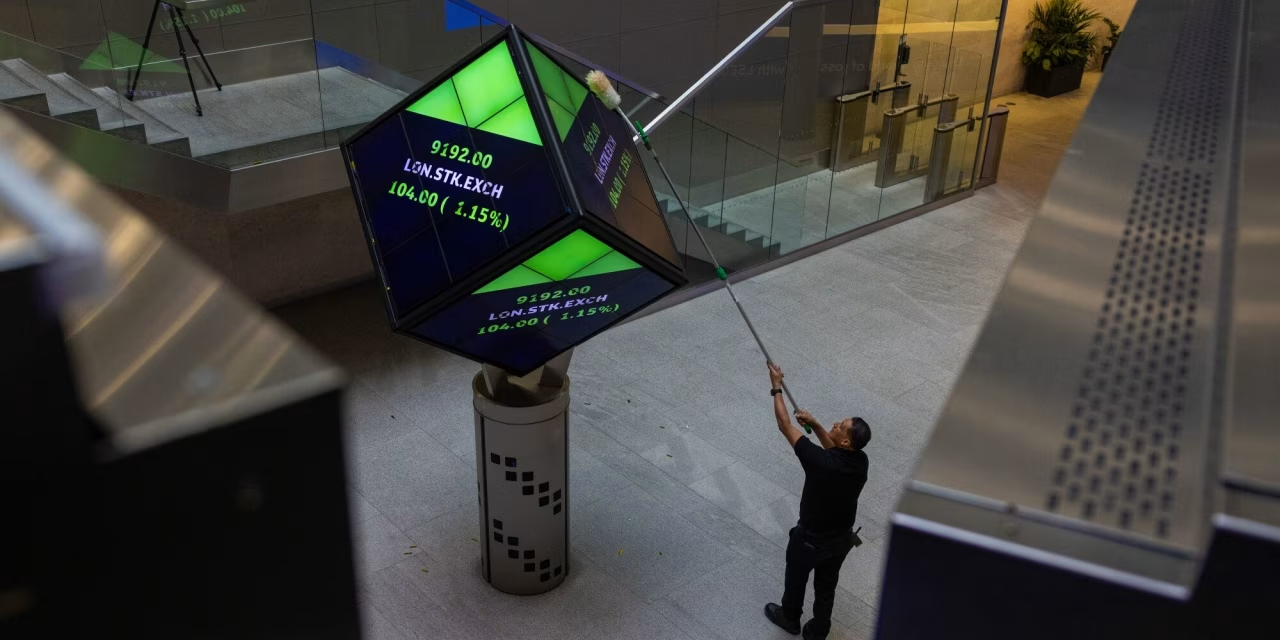
There will be no rest for the wicked. The London Stock Exchange said it will introduce all-day trading, five days a week, from 2027.
The exchange will create a new trading venue named LSE 24 that will give international investors “greater flexibility to respond to market events, access liquidity across time zones and manage risk.”
Rivals in the U.S. have already sought to extend trading hours to keep up with always-on crypto and betting markets. In January, the New York Stock Exchange said it was working on a platform for tokenized securities that would offer 24/7 trading.

Home Depot bull and bear case: rate sensitivity, pro-segment growth, and valuation

Britain’s private employers have all but stopped bidding for staff. Pay growth outside the public sector slowed to 2.9 per cent, the first time it has dropped below 3 per cent since the pandemic in 2020, while payrolls shrank by 4,000 and vacancies fell for another month.
The Office for National Statistics said the small contraction in June defied City projections of a rise of 20,000 jobs. The unemployment rate was unchanged at 4.9 per cent in the three months to May, having been expected to rise to 5 per cent.
For business owners, the significant number is not the headline unemployment rate but the 712,000 vacancies still open across the economy, down another 7,000 on the quarter. The ONS attributed that decline to smaller firms choosing not to hire in order to manage their wage bills and costs.
That is a familiar calculation in any SME finance meeting. When employment costs are fixed and demand is uncertain, the vacancy is the first thing to go. The result is a labour market that looks stable in aggregate while the hiring freeze among smaller employers deepens beneath the surface.
Total average earnings growth, including bonuses, slowed to 4.3 per cent from 4.4 per cent in the previous three-month period, and was unchanged at 3.9 per cent excluding bonuses. The gap between sectors is now stark: public sector pay ran at 5.5 per cent, flattered by the timing of NHS pay awards, against 2.9 per cent in the private sector.
Peter Dixon, senior economist at the National Institute for Economic and Social Research, said slowing pay growth would “complicate Andy Burnham’s pledge to give people breathing space to help with the cost of living, particularly with inflation poised to rise further in the second half of the year”.
There is a paradox in the numbers for anyone recruiting. Employment in the three months to May actually jumped by 64,000 to just below 34.5 million, and the economic inactivity rate edged down to 20.9 per cent from 21 per cent. More people are looking for work at precisely the moment employers are cutting hiring plans. Firms that can afford to recruit will find the candidate market friendlier than it has been in years.
Pay across the economy still rose faster than inflation for the 36th month in a row. Data due on Wednesday is expected to show inflation edged to 2.7 per cent in the year to June, which would be the lowest level since March 2025. The economy also returned to growth in May, with GDP up 0.1 per cent in the month.
A caveat is warranted. The ONS, whose labour market data has been plagued by inaccuracy problems for the past two years, said it carried out fewer interviews in the latest period “because of an operational issue, but our analysis suggests the impact on our headline estimates is minimal”. Payroll and employment estimates draw on different data sets, and the former is frequently revised.
Liz McKeown, ONS director of economic statistics, said: “The latest data show a relatively steady labour market picture overall, though some measures continue to suggest softening.” She added: “The number of employees on payroll was broadly flat in the latest month, while survey estimates suggest employment, unemployment and inactivity rates were little changed in the latest quarter.”
The read-across to borrowing costs matters more than the jobs numbers themselves for most owner-managers. Economists believe the health of the labour market will partly determine whether the Bank of England raises interest rates this year to counteract price pressures caused by the Middle East war energy shock.
The monetary policy committee meets on 30 July and is expected to leave borrowing costs unchanged at 3.75 per cent. UK government bond yields have risen sharply over the past month in response to an escalation in fighting between the US and Iran, which is why rate cuts remain off the table for now.
Cooling wage growth is the one variable pushing the other way. Firms holding off on recruitment to protect margins are, collectively, doing the Bank’s work for it.

Jamie Young
Jamie Young is Senior Reporter at Business Matters, covering SME finance, employment law and Westminster policy since 2016. He has reported on every Budget and Autumn Statement since 2018, helped make sense of the ‘covid era’ and the bounce-back loan scheme from launch through the fraud investigations, and broke the magazine’s coverage of the 2024 late-payment reforms. He joined Business Matters straight from completing his BA in Administration from Exeter University and is NCTJ-qualified. Reach him at jyoung@cbmeg.co.uk


I’m a fundamental, valuation-driven investor with a strong focus on identifying businesses that have the potential to scale over time and unlock massive terminal value. My investment approach centers around understanding the core economics of a business—its competitive moat, unit economics, reinvestment runway, and management quality—and how those factors translate into long-term free cash flow generation and shareholder value creation. I focus on fundamental research, and I tend to focus on sectors with strong secular tailwinds. Professionally, I am a self-educated investor that started this journey 10 years ago. Currently, I am managing my own funds, seeded from friends and family. My motivation for writing on Seeking Alpha is to share investment insights, and also at the same garner feedback from fellow investors in this site. My aim is to help readers focus on what truly drives long-term equity value. I believe good analysis should be both analytical and accessible, and I hope my work adds value to readers looking for high-quality, long-term investment opportunities.
Analyst’s Disclosure: I/we have no stock, option or similar derivative position in any of the companies mentioned, and no plans to initiate any such positions within the next 72 hours. I wrote this article myself, and it expresses my own opinions. I am not receiving compensation for it (other than from Seeking Alpha). I have no business relationship with any company whose stock is mentioned in this article.
Seeking Alpha’s Disclosure: Past performance is no guarantee of future results. No recommendation or advice is being given as to whether any investment is suitable for a particular investor. Any views or opinions expressed above may not reflect those of Seeking Alpha as a whole. Seeking Alpha is not a licensed securities dealer, broker or US investment adviser or investment bank. Our analysts are third party authors that include both professional investors and individual investors who may not be licensed or certified by any institute or regulatory body.

Founder of XX-XY Athletics Jennifer Sey analyzes why customers rejected the pitch to change the restaurant chain’s logo on ‘The Evening Edit.’
Cracker Barrel is selling restaurant properties and exiting its Maple Street Biscuit Company business as it works to cut debt and improve profits.
The Southern country-themed chain said Monday it sold the Maple Street brand and assets tied to 35 locations to Biscuit Belly LLC. Cracker Barrel will close the remaining 16 Maple Street restaurants.
In a separate move, Cracker Barrel also completed a sale-leaseback deal involving 26 company-owned locations, generating roughly $77 million in net proceeds.
The company plans to use the money to pay down debt while continuing to operate the restaurants by leasing the properties from the new owner.
CRACKER BARREL RESPONDS TO REPORTS ABOUT EMPLOYEE DINING REQUIREMENTS DURING WORK TRAVEL

Cracker Barrel is selling restaurant properties and exiting its Maple Street Biscuit Company business as it works to cut debt and improve profits. (Joe Raedle/Getty Images)
“These efforts reflect the discipline we bring to managing our business and balance sheet as we position Cracker Barrel for long-term success and shareholder value creation,” Julie Masino, president and CEO of Cracker Barrel, said in a statement.
“Our sale-leaseback transaction will allow us to opportunistically reduce debt while monetizing a portion of our owned real estate at an attractive valuation.”
Masino added, “Divesting Maple Street sharpens our focus on the core Cracker Barrel brand and is expected to improve profitability.”
Biscuit Belly, which currently has 15 locations, said the deal will allow it to expand more quickly. It plans to convert the acquired Maple Street restaurants into Biscuit Belly locations over the next 18 to 24 months.
CRACKER BARREL SALES, TRAFFIC CONTINUE TO SLUMP MONTHS AFTER FAILED REBRAND

Waffles and glazed biscuits served at Maple Street Biscuit Co. (Jeffrey Greenberg/Universal Images Group via Getty Images)
The first conversions will begin in the greater Cincinnati area and Richmond, Virginia. The deal will more than triple Biscuit Belly’s footprint and is expected to help the chain grow to more than 60 locations by the end of 2028.
“When we looked at Maple Street’s geography, footprints, and established teams, a light bulb went off,” Chad Coulter, co-founder and CEO of Biscuit Belly, said in a statement.
Maple Street accounted for less than 2% of Cracker Barrel’s annual revenue. Cracker Barrel said the sale is expected to improve adjusted EBITDA beginning in fiscal 2027.
Cracker Barrel expects to record between $37 million and $39 million in non-cash charges tied to the Maple Street exit during its fiscal fourth quarter. It also anticipates between $6 million and $8 million in additional cash costs.
Stocks In This Article:

Cracker Barrel CEO Julie Felss Masino walks out of an office building in Brentwood, Tennessee, on Aug. 28, 2025. (Zak Bennett for Fox News Digital)
The moves come as Cracker Barrel, which operates roughly 660 company-owned locations across 43 states, works to move past backlash over proposed changes to its logo and restaurant interiors last summer, including the removal of the “Old Timer” from its logo.
GET FOX BUSINESS ON THE GO BY CLICKING HERE
The company reversed course less than a week later following customer complaints.
Cracker Barrel told FOX Business it had no additional comment beyond its press release.

‘For the sake of India’s future’: Yuvraj Singh calls for ‘dialogue’ amid NEET paper leak protests | Off the field News

OpenAI Sued Over ChatGPT Health Advice That Almost Killed A Pastor

Jason Sudeikis addresses ‘very difficult’ phone calls to former Ted Lasso actors ahead of new season

Renter of Home in Anne Heche Crash Denies Settlement With Son

No Jackpot Winner as $257 Million Prize Rolls Over to $269 Million Monday Draw

Weekend Open Thread: Staud – Corporette.com

NOBODY CARES IF XRP HOLDERS GET RICH! – IS CRYPTO STILL COOL? – SILVER COMES TO THE XRPL!

“People Like Dave Ramsey Can’t Give Me Financial Advice…” Gen Z Say Older Generations Don’t Get It

Crime gangs target Perth students as money mules | 7NEWS
-
 NewsBeat6 days ago
London Mayor Sadiq Khan handed a peerage by Keir Starmer alongside 15 other Labour figures… just days before the PM leaves No10
-

 Fashion5 days ago
Weekend Open Thread – Corporette.com
-

 Politics4 days ago
The House | The City of London can help the new chancellor deliver growth in every postcode
-
 Crypto World5 days ago
Two July Windows Left: The CLARITY Act’s Senate Fight and What Failure Means
-

 Crypto World7 days ago
CFTC blocks Kalshi from unwinding Michigan trades after court order
-

 Crypto World4 days ago
Ripple Payments Joins MiCA With 14 Firms, Does It Mean Anything For XRP?
-

 Business7 days ago
Nvidia Stock Slips After Big Tuesday Rally as Huang Confirms Vera Rubin Chip Is Now in Production Today
-

 Politics3 days ago
Democrats look to World Cup watch parties to register thousands of voters
-

 Crypto World5 days ago
Ripple wins EU-wide access as ESMA adds it to MiCA register
-

 Crypto World1 day ago
Grayscale Files For Worldcoin ETF, WLD Registers Sharp Rise
-

 NewsBeat2 days ago
Unregistered fitter used Gas Safe logo on business flyers
-

 Crypto World6 days ago
Injective Submits SEC Transfer-Agent Registration to Onchain Ownership Records
-

 Tech2 days ago
Sail Virtually Aboard The “Itanic” With IA-64 Emulator
-

 Business7 days ago
Palantir Shares Rise After Expanded Nvidia Partnership and Fresh Analyst Upgrades Ahead of Earnings Day
-
 Tech2 days ago
Turtle Beach Command Series KB7 review: a nifty screen-equipped gaming keyboard
-

 NewsBeat5 days ago
Registration is now open for March for Men with Kev 2026
-
 Sports7 days ago
New Cornerback Enters Vikings Trade Rumor Mill
-
 Business15 hours ago
New Jersey voter registration controversy explained: How 6,600 noncitizens got on the rolls, and what happens next
-

 News Videos6 days ago
Money | Class 12 Economics | CBSE Board Exam 2026-27
-
 Crypto World6 days ago
Claude Fable 5 Slips to Second in AI Coding Leaderboard
You must be logged in to post a comment Login