

Crypto World
What is an ancillary asset? The word deciding crypto’s fate



The merged CLARITY Act runs on one invented term: the ancillary asset, a token sold with a securities offering that is not itself a security. Here is where the concept came from, exactly how it works, why a16z tried to kill it, and what it means for every token you hold.
Summary
- An ancillary asset is the CLARITY framework’s central category: an intangible, commercially fungible asset, distributed in connection with the purchase and sale of a security through an investment-contract arrangement, that is not itself a security.
- The definitional cut is what the token does not give you: no debt or equity claim, no dividends or interest, no liquidation rights. A token conferring those rights is simply a security; a network token without them can be ancillary.
- The concept resolves crypto’s founding legal paradox, that a token sale can be a securities transaction while the token itself, trading later on secondary markets, functions as a commodity. The transaction gets securities treatment; the asset does not.
- Originators owe tailored disclosures while an asset’s value depends on their efforts, ending at maturity, and the merged Senate draft adds a clause deeming tokens that anchored a listed ETP on January 1, 2026 non-ancillary and non-securities outright.
- The category is contested at the root: Andreessen Horowitz publicly urged the Senate to scrap it, warning it creates a loophole-prone middle ground, which makes the term both the bill’s foundation and its most attacked idea.
Every regulatory regime ends up resting on one definition, and the definition is usually invented for the purpose. Securities law rests on the investment contract, four words from a 1946 orange-grove case that have governed a century of capital formation. Banking law rests on the deposit. The framework Congress is currently trying to pass for crypto rests on a term almost nobody outside a Senate office had used before 2022: the ancillary asset. It appears throughout the merged CLARITY Act draft now awaiting a floor vote, it decides which tokens escape the SEC and when, and its grandfather clause quietly settles the legal status of XRP, Solana, and Dogecoin by reference to their own ETFs. It is also, remarkably for a bill’s load-bearing concept, a term the industry’s most powerful venture firm formally asked the Senate to delete. Understanding the ancillary asset is understanding what American crypto law is about to become, and this guide builds the concept from the ground up: the paradox it solves, the mechanics it runs on, the fight over whether it should exist, and what it means practically for tokens and their holders.
The paradox the term was invented to solve
Start with the problem, because the ancillary asset is unintelligible without it.
American securities law asks one question of any fundraising arrangement: is it an investment contract, meaning an investment of money in a common enterprise with an expectation of profits from the efforts of others, the Howey test. Token sales usually are. A team raises money by selling tokens, buyers expect the team’s work to make the tokens valuable, and every element of Howey is satisfied; courts have said so repeatedly. The trouble begins one step later. The token itself, once issued, circulating on exchanges among strangers, is just an entry on a ledger. It carries no claim against the team, pays nothing, promises nothing. Is that object a security forever, because it was born in a securities transaction?
For a decade, American law had no stable answer, and the instability was the industry’s defining legal condition. The SEC’s enforcement-era position treated the token as inseparable from its offering, effectively a security in perpetuity; the industry argued tokens mature into commodities as networks decentralize; courts split, most famously in the Ripple litigation, where the same token was found to be sold as a security to institutions and as not-a-security on exchanges. The result was a classification that depended on the transaction, the buyer, and the judge, which is no classification at all.
The ancillary asset is the legislative answer, and its logic is surgical: separate the transaction from the thing. The fundraising arrangement, the investment contract, remains a security and gets securities treatment. The asset delivered through it, if it grants the buyer none of a security’s actual rights, is designated something else, ancillary to the securities transaction instead of the subject of it, with its own disclosure regime and its own path out of SEC jurisdiction entirely. One sale, two legal objects. The paradox does not get resolved so much as legislated into architecture.
The definition, clause by clause
The term’s formal definition has evolved across drafts, but its working structure has held stable since its first appearance, and each clause does specific work.
An ancillary asset is, first, an intangible, commercially fungible asset. Fungibility excludes NFTs and one-off instruments; intangibility excludes tokenized claims on physical things. It is, second, offered, sold, or otherwise distributed in connection with the purchase and sale of a security through an arrangement constituting an investment contract. This is the birth criterion: the category only exists downstream of a securities transaction, which is why the term is ancillary, the asset rides alongside the security rather than being one. Third, and decisively, the definition excludes any asset that provides the holder debt or equity interests, liquidation rights, interest or dividend payments, or other financial claims against the issuer. This is the functional test, and it is the clause that does the sorting: a token that pays you, or gives you a claim on a company’s assets or profits, is not ancillary, it is simply a security wearing a costume. A network token, useful for gas, staking, or access, conveying no claim against anyone, can qualify.
Around the definition, the framework builds three mechanisms. The first is disclosure: while an ancillary asset’s value depends on the entrepreneurial or managerial efforts of an originator, that originator owes periodic, tailored disclosures, a lighter, crypto-specific regime covering the network, the token’s economics, and insider holdings, with the SEC directed to issue guidance for shared-responsibility cases. The obligation is tied to dependence, not to time: it ends when the network matures past reliance on the originator, which connects the category to the bill’s maturity and self-certification machinery. The second is the capital-raising exemption: offerings of ancillary assets under a size cap, $75 million in the current architecture, can proceed on an offering statement covering the blockchain, source code, consensus mechanism, and insider positions, rather than full securities registration, which is the provision that would actually reopen compliant token fundraising in the United States. The third is the escape hatch that made January’s headlines: the merged draft deems a token non-ancillary, and not a security at all, if units of it were the principal asset of an exchange-traded product listed on a national securities exchange on January 1, 2026. Read against the ETF calendar, that clause statutorily classifies XRP, SOL, DOGE, and the rest of the late-2025 ETF class, no Howey analysis required. The SEC’s own product approvals became the legislature’s taxonomy.
One more mechanism deserves its place in the map before the criticism, because it shows the category working as a system, not just a definition: the interaction between ancillary status and trading venues. Under the framework’s architecture, an ancillary asset is not merely exempt from securities registration; it is affirmatively tradable on CFTC-registered digital commodity exchanges once the venue completes its own certification that the asset meets the statutory requirements, the listing-side counterpart to the issuer-side process. That two-key design, the asset’s status plus the venue’s certification, is what converts an abstract classification into an operating market: an exchange can read the definition, document its analysis, list the asset, and carry regulatory responsibility for the judgment, which is precisely the risk allocation exchanges have operated under in derivatives for decades and have never had for spot crypto. It also explains a quiet commercial consequence the classification debates skip: under the framework, listing decisions, which today are exercises in enforcement-risk management conducted by legal departments reading tea leaves, become documented compliance judgments with statutory criteria, faster, cheaper, and portable across venues. The years when an American exchange’s listing of a mid-cap token was itself legal news would end, not because scrutiny disappears, but because the scrutiny acquires a text.
The case against the category
The ancillary asset’s most important critic is not a consumer advocate. It is Andreessen Horowitz, the venture firm with more capital deployed in crypto than almost any institution on earth, and its formal letter to the Senate Banking Committee is the sharpest statement of the case that the bill’s foundation is a mistake.
The firm’s argument runs in three steps. First, incoherence: the category defines a class of assets that are simultaneously not-quite-securities while arising from arrangements that satisfy Howey, a middle object that, a16z warned, invites legal conflict instead of settling it, because litigants and future commissions can argue endlessly about which side of the hybrid governs. Second, the loophole risk: a definitional category keyed to what rights a token formally grants can be gamed by structuring, a token engineered to avoid the enumerated rights while economically replicating them, weakening investor protections precisely where they matter. Third, the alternative: rather than inventing a new object, the firm urged a control-based decentralization framework, classification turning on whether any party retains unilateral authority, operational, economic, or governance, over the system, applied through the existing Howey lens, which, in the letter’s words, “should not be abandoned.”
The counterargument, which carried the drafting, is practical. Control-based tests are exactly what a decade of case-by-case chaos looked like: fact-intensive, litigated asset by asset, resolvable only in hindsight. A definitional category, whatever its edge cases, is administrable, an issuer can read the rights its token grants and know its classification, and the disclosure-while-dependent regime addresses the investor-protection gap directly, not through classification fights. The two positions are less opposed than they appear, since the bill’s maturity machinery imports decentralization analysis anyway; the dispute is about which concept sits at the foundation and which serves as the test. But holders should register the meta-fact: the load-bearing term of the American crypto framework is one the industry’s own leading investor argued should not exist, which is a useful calibration for how settled this architecture actually is.
The Ripple shadow over the definition
The ancillary asset was not drafted in a vacuum, and its clearest intellectual ancestor is worth naming, because the category is, in large part, the Ripple ruling converted into statute, with the ruling’s problems inherited alongside its insight.
Judge Analisa Torres’s 2023 decision in the SEC’s case against Ripple reached a conclusion that scandalized securities traditionalists and delighted the industry: the same token, XRP, was sold as a security in Ripple’s institutional sales, where buyers invested with expectations pinned to the company’s efforts, and was not a security in programmatic exchange sales, where anonymous buyers on order books had no idea whose efforts they were relying on. The transaction, not the token, carried the classification. Critics called the result incoherent, an asset flickering between legal categories depending on the checkout counter, and a different judge in a parallel case rejected the reasoning outright, which left the doctrine split exactly where doctrine is most expensive to split: at the foundation.
Read the ancillary asset against that history and its purpose sharpens. The category takes the Torres insight, securities law attaches to investment arrangements, not to the objects passing through them, and stabilizes it: instead of a token being a security in some sales and not others, the framework declares the fundraising arrangement a security always, the qualifying token a security never, and bridges the investor-protection gap with the originator disclosure regime that operates while dependence lasts. The flickering stops. What the buyer on the exchange gets is not a judicial finding about their particular transaction but a statutory status attached to the asset class itself, knowable in advance, which is the entire practical difference between a legal system and a litigation lottery.
But the inheritance runs both ways, and honesty requires the second half. The Torres framework’s unresolved question, what protects the exchange buyer who is economically just as dependent on the founding team as the institutional buyer, is also the ancillary asset’s unresolved question, and it is precisely the gap a16z’s letter aimed at. The framework’s answer, disclosure-while-dependent plus the maturity endpoint, is a real answer, and whether it is a sufficient one will not be known until the first cycle of ancillary offerings produces its first failures, its first disclosure fights, and its first buyers arguing that the tailored regime told them less than a registration statement would have. The category resolves the classification war on the industry’s preferred terms. The investor-protection war it merely reschedules, with better-defined battle lines, which, in fairness, is more than any court managed in a decade.
What it means in practice
For anyone holding or building with tokens, the category’s consequences sort into three practical layers.
For the grandfathered class, the effect is immediate and total. Tokens that anchored listed ETPs on the January 2026 snapshot date exit the analysis entirely, non-ancillary, non-securities, CFTC-side by statute, which converts the ETF approvals of late 2025 into permanent legal settlements and explains why institutional research now treats the bill’s passage as those assets’ true classification event.
For newer and future tokens, the category defines the compliant lifecycle: launch through an exempt ancillary-asset offering with its tailored offering statement, disclose while the network depends on the founding team, certify maturity when it no longer does, and graduate to digital-commodity status. That path’s existence is the bill’s actual product, the first legal route from token launch to commodity status ever written into American law, and its costs, disclosure obligations from day one, decentralization decisions made early and documented, are the price. Teams that structured tokens to dodge securities law will instead structure them to fit the ancillary definition, which is the same activity pointed at a clearer target.
And for the disputes that will inevitably continue, the category relocates them. The old fight, is this token a security, becomes three narrower ones: does this token grant a disqualifying right, has this network matured past its originator, and does this certification survive challenge. Those are the battlegrounds the definition creates, they are where the next decade’s crypto securities litigation will live if the bill passes, and knowing the term means being able to read them. The word is new, invented, and contested. It is also, pending sixty votes, about to be the most important noun in the asset class.
A closing note on the vocabulary wars, because readers will encounter the category under competing names and should not be confused by them. The merged framework actually deploys a small family of terms: the digital commodity, the mature network’s asset under CFTC oversight; the investment contract asset, the token still attached to its securities transaction; the ancillary asset, the bridge state between them; and the non-ancillary asset, the grandfather clause’s creation, a token that skips the bridge entirely because its ETP listing settled its status by snapshot. Different drafts have shuffled which term carries which weight, the House text leaned on digital commodity where the Senate architecture leans on ancillary asset, and coverage that mixes the two bills’ vocabularies produces most of the public confusion about what the framework does. The practical decoder: ask of any token where it sits in the lifecycle. Born in a fundraising arrangement and still team-dependent: investment contract plus ancillary asset, disclosure owed. Matured past dependence, certified: digital commodity, CFTC-side. ETP-listed on the snapshot date: non-ancillary, classification settled by statute. Never sold through an investment contract at all, the Bitcoin case: never in the securities analysis to begin with, a digital commodity by nature, not by graduation. Four positions, one map, and every asset in the market lands on exactly one of them, which, whatever else is said about the framework, is one more position than the old regime could assign with confidence to anything.
Disclaimer: This article is for information and educational purposes only and does not constitute financial, investment, or legal advice. It describes draft legislation whose definitions and provisions can change before enactment, and no classification discussed here is final until a law passes and takes effect. Always do your own research. Information is accurate as of July 21, 2026.
Frequently Asked Questions
What is an ancillary asset in one sentence?
It is a fungible, intangible digital asset distributed in connection with a securities offering, an investment contract, that is not itself a security because it grants the holder no debt, equity, dividend, interest, or liquidation rights against the issuer, and is therefore regulated separately from the transaction that created it.
Where did the term come from?
It originated in the Lummis-Gillibrand Responsible Financial Innovation Act drafts, was carried into the Senate Banking Committee’s 2025 discussion draft building on the House-passed CLARITY Act, and sits at the center of the merged Senate text now awaiting a floor vote. The concept was invented to resolve the paradox that token sales can be securities transactions while the tokens themselves function as commodities.
How is an ancillary asset different from a security?
By the rights it grants. A security gives its holder financial claims, equity, debt, dividends, interest, liquidation rights, against an issuer. An ancillary asset gives none of those; its value comes from network use and market demand. A token that grants any of the enumerated claims falls outside the category and is treated as a security regardless of what it is called.
What obligations do ancillary assets carry?
Disclosure while dependent. The originator, the party whose efforts the asset’s value depends on, owes periodic tailored disclosures covering the network, token economics, and insider holdings, with SEC guidance for shared-responsibility cases. The obligation ends when the network matures past dependence on the originator, which connects to the bill’s maturity certification process. Offerings under the size cap can proceed on a streamlined offering statement instead of full registration.
Is it true the bill makes XRP and Solana non-securities?
Effectively, yes. The merged draft deems a token non-ancillary, and not a security, if units of it were the principal asset of an exchange-traded product listed on a national securities exchange on January 1, 2026. The spot ETFs approved for XRP, SOL, DOGE and others in late 2025 meet that test, so passage would settle their status statutorily, without further litigation.
Why did Andreessen Horowitz oppose the category?
In a formal letter to the Senate Banking Committee, a16z argued the ancillary asset creates an incoherent middle object, not quite a security while arising from Howey-satisfying arrangements, that invites loopholes and legal conflict, and urged a control-based decentralization framework applied through the existing Howey test instead. The committee kept the category, judging a definitional approach more administrable than case-by-case control analysis.
Does the category apply to NFTs or tokenized real-world assets?
Generally no. The definition requires commercial fungibility, which excludes NFTs, and intangibility, which excludes tokens representing ownership of physical or traditional financial assets. Tokenized securities remain securities. The category targets network tokens, the fungible assets that power blockchains, which are precisely the objects the old framework classified worst.
What should token holders take from all this?
Three things. If a token you hold anchored a listed ETP on the snapshot date, the bill would settle its legal status permanently. For other tokens, classification will turn on the rights the token grants and the network’s maturity, both knowable from public facts. And the framework remains a draft: the category’s final shape, and whether it becomes law at all, depends on a Senate vote that has not happened. This is educational information, not legal or investment advice.

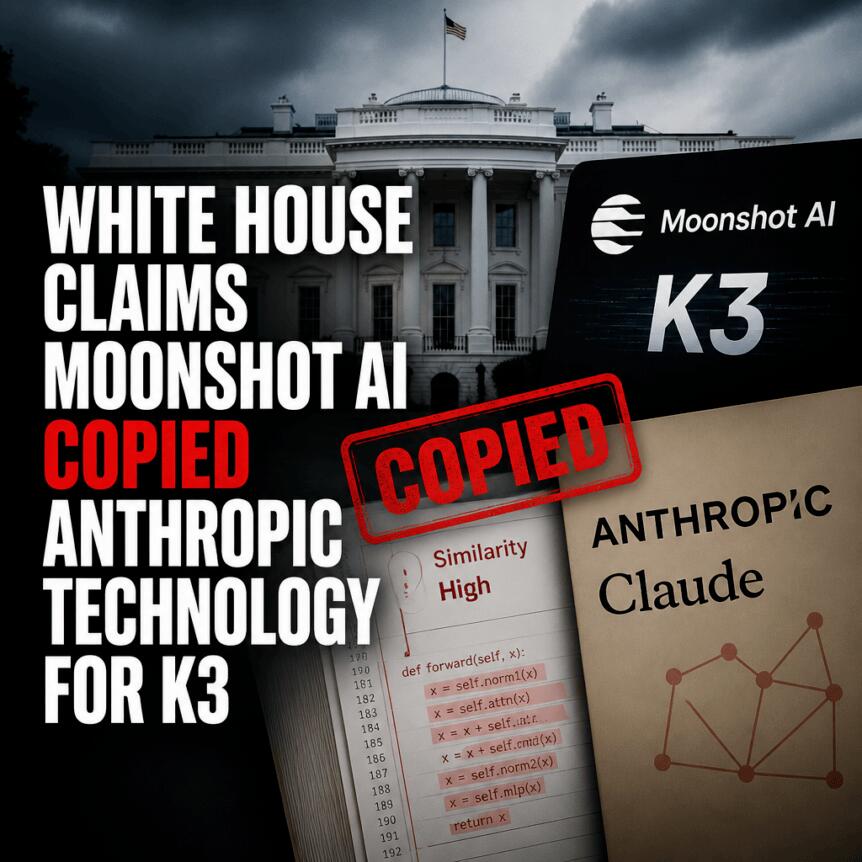
A senior official from the White House’s Office of Science and Technology Policy has accused the Chinese AI firm behind Kimi K3 of using “covert industrial distillation” techniques to replicate capabilities from U.S. models. The allegation, posted to X on Wednesday by Michael Kratsios, underscores how U.S. concerns about AI competitiveness are increasingly blending with fears of large-scale intellectual property (IP) theft.
Kratsios said the company built an internal platform to distill U.S. models “at scale,” specifically using methods intended to evade detection. While he argued that distillation—compressing a model into a smaller one—can be legitimate and part of open innovation, he framed the alleged approach as unacceptable because it targets proprietary American technology rather than improving models through transparent research.
Key takeaways
- White House OSTP Director Michael Kratsios alleged Chinese firm Moonshot AI used large-scale covert distillation tied to the Kimi K3 release.
- Kratsios contrasted legitimate model distillation with alleged industrial-scale techniques aimed at stealing U.S. IP and avoiding detection.
- Some AI researchers dispute claims that Anthropic’s Fable was used to produce Kimi K3’s performance, citing technical plausibility and timing constraints.
- U.S. officials warned that sanctions and Entity List designations could follow IP-theft-style distillation attacks.
Why the allegation matters beyond headlines
AI distillation is not inherently controversial. In general terms, distillation helps create smaller, more efficient models by training them on outputs generated by a larger “teacher” model. The White House’s argument, as stated by Kratsios, is that scale and secrecy change the nature of the activity—turning a common engineering practice into something closer to a targeted extraction of proprietary capability.
That distinction is critical for investors, developers, and researchers because it signals a potential shift in how regulators and governments may view certain AI training pipelines. If authorities treat “covert industrial distillation” as IP theft, it could influence enforcement priorities, compliance expectations, and the willingness of model providers to share weights, outputs, or licensing terms—especially across geopolitical lines.
Timing and the dispute over Anthropic’s role
Kratsios’s claim places particular focus on the question of whether U.S. model technology was used in the preparation of Kimi K3. Cointelegraph previously reported that Anthropic’s Fable 5 was taken offline quickly due to U.S. export controls, then re-released on July 1. Kimi K3, meanwhile, launched on July 16—creating what critics describe as a narrow window for any distillation-derived transfer.
Elie Bakouch, a researcher at Prime Intellect, publicly questioned whether the technical story matches the observed outcomes. In an X post referenced in the original reporting, Bakouch argued that there are only “15 days between fable 5 ban removal and kimi K3 release,” and he added that the performance “could” not be explained in a straightforward way by distillation from Fable.
Dean Ball, head of strategic futures at OpenAI, also pushed back. On Friday, Ball said he did not believe K3’s performance could be “explained away by distillation or anything like that.” Both responses reflect a broader point: even if distillation happened, it may not be the sole—or even the primary—reason for a model’s capabilities, and establishing a clean causal link can be technically difficult.
In the absence of publicly available technical evidence, these disputes matter because they highlight uncertainty. Government accusations may have intelligence backing, but for the wider AI community, the plausibility and traceability of model-to-model influence is a separate question from whether the activity would violate policy or law.
Washington escalates from concerns to potential enforcement
The posture from U.S. officials appears aimed at deterrence. In addition to Kratsios’s claim that “covert industrial distillation” intended to steal U.S. technology is unacceptable, U.S. Treasury Secretary Scott Bessent warned that sanctions and restrictions could be pursued.
Bessent said the U.S. supports open-source AI and the innovation it enables, but he argued open source does not mean “open season” on American IP. He also warned that if firms conduct covert, industrial-scale distillation attacks that cross into IP theft, consequences could include sanctions and Entity List designations.
That statement suggests the U.S. may attempt to treat certain distillation behaviors under the same enforcement logic used for other technology-transfer and IP-protection efforts. For AI companies, the practical takeaway is that even widely used ML techniques could be reinterpreted depending on intent, transparency, and scale.
It also raises a policy tension: distillation can improve accessibility and efficiency, but enforcement actions could push industry toward more restrictive handling of model outputs and training procedures. Developers may respond by tightening documentation, auditing data provenance, or changing how they handle third-party model access.
What to watch next
Whether the dispute becomes a broader enforcement campaign will likely depend on what additional evidence, if any, is made public and how regulators define “industrial-scale” and “covert” distillation in measurable terms. For now, observers should watch for any formal government actions tied to Kimi K3 and for further clarification from researchers on what technical signals can reliably connect teacher models to student performance.


A White House official accused Moonshot AI of distilling Anthropic’s Fable AI model to develop Kimi K3, which launched last week.
In a post on X on Wednesday, White House Office of Science and Technology Policy Director Michael Kratsios alleged the Chinese AI firm developed an internal platform to distill US models at scale, using methods designed to evade detection.
“Legitimate AI distillation used to create smaller, more efficient models plays a vital role in this open innovation ecosystem,” he said. “However, large-scale, covert industrial distillation aimed at stealing proprietary U.S. technology and undermining American research is unacceptable.”
Kimi K3 has emerged as one of China’s most capable AI models, intensifying Washington’s concerns that American models are being covertly used to accelerate China’s AI progress.
However, some AI researchers questioned claims that Anthropic’s latest AI model was used to train Kimi K3.
Anthropic’s Fable 5 was re-released on July 1 after it was quickly taken offline due to US export controls, while Kimi K3 launched on July 16, giving a narrow window for distillation attacks to occur.
“There are only 15 days between fable 5 ban removal and kimi K3 release,” said Elie Bakouch, a researcher at AI startup Prime Intellect.
“I don’t think claiming that K3’s performance comes from fable distillation (even if they did it) makes sense technically.”
Dean Ball, OpenAI’s head of strategic futures, said on Friday he didn’t believe the K3 model’s performance could be “explained away by distillation or anything like that.”
Related: Anthropic to bring back Fable 5 as US lifts export controls
US Treasury Secretary Scott Bessent warned that the large-scale distillation attacks could result in sanctions and other restrictions.
“We support open-source AI and the innovation it unlocks. But open source is not open season on American IP,” said Bessent.
“When PRC firms conduct covert, industrial-scale distillation attacks that cross the line into IP theft, sanctions and Entity List designations will be on the table.”
Magazine: Thai scammer’s $122M wallet, Japan embraces crypto credit: Asia Express

[PRESS RELEASE – Miami, United States, July 22nd, 2026]
Unserious today announced the acquisition of Creepz, one of the most recognizable NFT collections of the 2021-22 cycle. Backed by entrepreneur and investor Adam Weitsman, and with the support of the original founders, the deal places the lizard cult brand under a powerhouse new team.
Most importantly, the acquisition marks a homecoming for Psychrome – the original mastermind and creative genius behind the Creepz lore. Returning to lead IP development, he also brings a resume as a globally exhibited artist whose commercial collaborations span Nike, Salomon, Sneaker Con, Staple, Disney, Warner Bros., and Rovio.
Beyond this foundational creative leadership, the Unserious team brings deep operating experience with a track record spanning consumer brands, entertainment, and enterprise tech, alongside crypto’s largest token launches – including the historic ApeCoin.
Unserious also took the opportunity to formally deny the existence of lizard people, their alleged evil activities, and any plans for $CREEPZ world domination.
About Unserious
Unserious is reimagining the future of decentralized brands.
The post Adam Weitsman Backs Unserious in their Acquisition of Creepz and Psychrome homecoming appeared first on CryptoPotato.
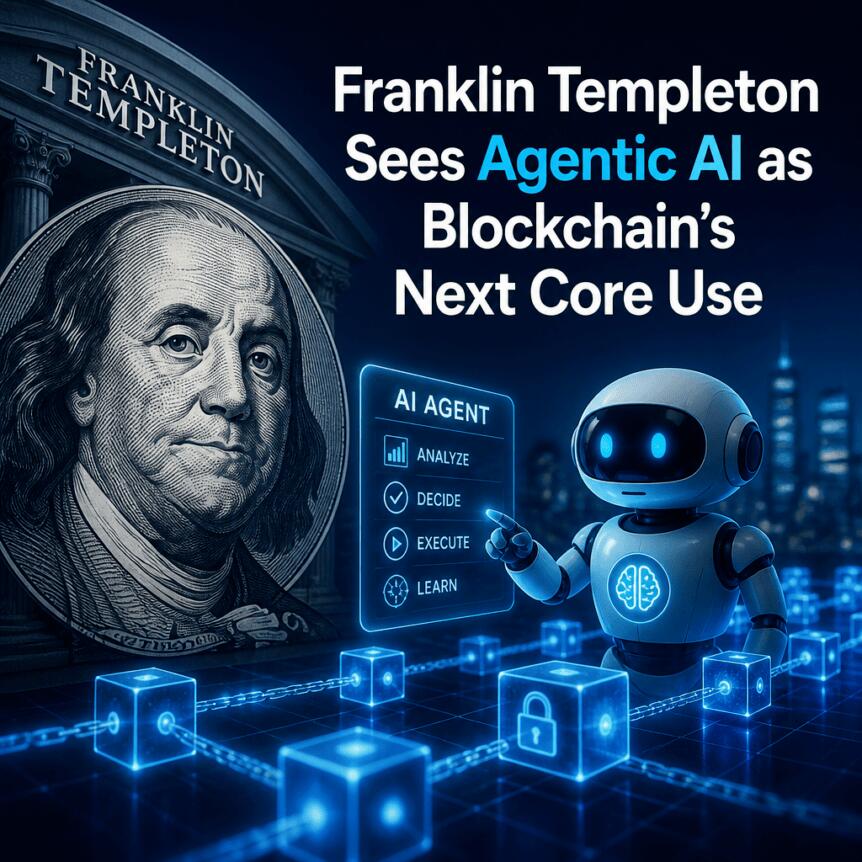
Franklin Templeton’s head of digital assets and innovation says AI agents are poised to become a major demand driver for blockchain networks—specifically the protocols that can support rapid, low-cost payments between machines.
Speaking in a long-form post on X on Wednesday, Sandy Kaul argued that the “agentic AI” economy will require settlement speeds and fee structures that legacy card rails struggle to deliver. He pointed to blockchain ecosystems such as Aptos, Solana, and BNB Chain as better aligned with that needs-based shift.
Key takeaways
- Franklin Templeton’s Sandy Kaul links AI agents to increased demand for blockchain protocols that can handle machine-to-machine micropayments.
- Kaul argues traditional payment cards are a poor fit for agentic payments due to fees and slow settlement compared with blockchain transaction finality.
- A joint Visa and Artemis report contends card-based infrastructure is insufficient for AI agents that require near-zero fees and fast settlement.
- According to that Visa-Artemis report, the x402 payment protocol processed $15 million in adjusted volume across 109 million+ adjusted transactions since its May 2025 launch.
Why AI agents change the payment requirements
The central thesis is that agentic systems—software that can act autonomously on behalf of users or other systems—will generate a different kind of commerce than today’s human-driven transactions. Kaul framed the opportunity as an evolution beyond the way investors typically approach AI: rather than focusing only on companies “aligned” with AI, he suggested the market may also reward infrastructure designed for automated execution and continuous micro-interactions.
In his view, the payment layer becomes a bottleneck if it cannot support high-frequency, small-value transfers. Agentic micropayments are likely to be time-sensitive and cost-sensitive, meaning even modest frictions—such as higher fees or longer settlement—can make recurring machine payments economically unattractive.
Legacy cards vs. settlement speed
Kaul’s argument is not that card networks are obsolete, but that they were engineered for a different pattern of usage: relatively low-frequency human commerce where settlement delays are rarely a primary constraint.
He highlighted that visa network settlement can take one to three business days, while certain blockchain networks can finalize transactions in seconds. That timing gap is likely to matter when agents are coordinating continuously, where delays can ripple through workflows and reduce the viability of rapid settlements.
Kaul also pointed to “high fees and settlement times” as the factors that, in his assessment, make traditional payment rails unsuitable for agentic micropayments.
Visa and Artemis: infrastructure gaps for “agentic” commerce
The Franklin Templeton executive’s remarks align with a joint report released last Wednesday by Visa and investment thesis platform Artemis. In that report, the partners argue that conventional cards built for human-scale payments are not designed for the demands of AI agents.
Visa and Artemis specifically emphasize that agentic payments require infrastructure with near-zero fees and faster settlement to make micropayments commercially viable. The report’s framing reinforces Kaul’s thesis that the real battleground is payments throughput and cost efficiency—not just AI capabilities at the application layer.
Importantly for readers, this is not presented as a purely speculative concept; the report also points to existing machine-payment experimentation and early adoption signals, including activity tied to x402.
What “early adoption” looks like: x402 activity
In the Visa-Artemis report, the x402 payment protocol is highlighted as an example of a machine payment rail showing measurable usage. The report claims that x402, developed by Coinbase, processed $15 million in adjusted volume across more than 109 million adjusted transactions since its May 2025 launch.
For investors and builders, the value of that statistic is less about any single figure and more about the direction it suggests: that machine-payment protocols are beginning to attract usage under a framework designed for frequent transfers. Still, it’s also worth noting the metric is reported as “adjusted volume” and “adjusted transactions,” so readers should treat it as an operational indicator from the report rather than a direct translation into end-user revenue or broader market share.
Signals from payments providers
While the Visa-Artemis analysis criticizes card-based infrastructure as insufficient for agentic needs, the companies are also actively exploring how the broader payment ecosystem might support agentic behavior.
Visa’s crypto-related division and Stripe-backed Tempo launched AI tools in March, according to coverage referenced in the same context. Visa’s offering is described as enabling same-day payments—an attempt to address speed constraints that agentic micropayments depend on.
In parallel, Kaul’s remarks point readers to blockchain environments where settlement speed is structurally faster, suggesting a practical mismatch: even if card providers add features to move payments more quickly, the fee and settlement model may still not align with the economics of high-volume, machine-to-machine exchanges.
Going forward, the key thing to watch is whether agentic payment demand materializes in a way that drives sustained usage of low-fee, fast-settlement rails—particularly as protocols like x402 and newer infrastructure compete to serve recurring micropayment flows. The open question remains how quickly mainstream agent deployments will scale enough to make settlement and fee constraints decisive rather than theoretical.
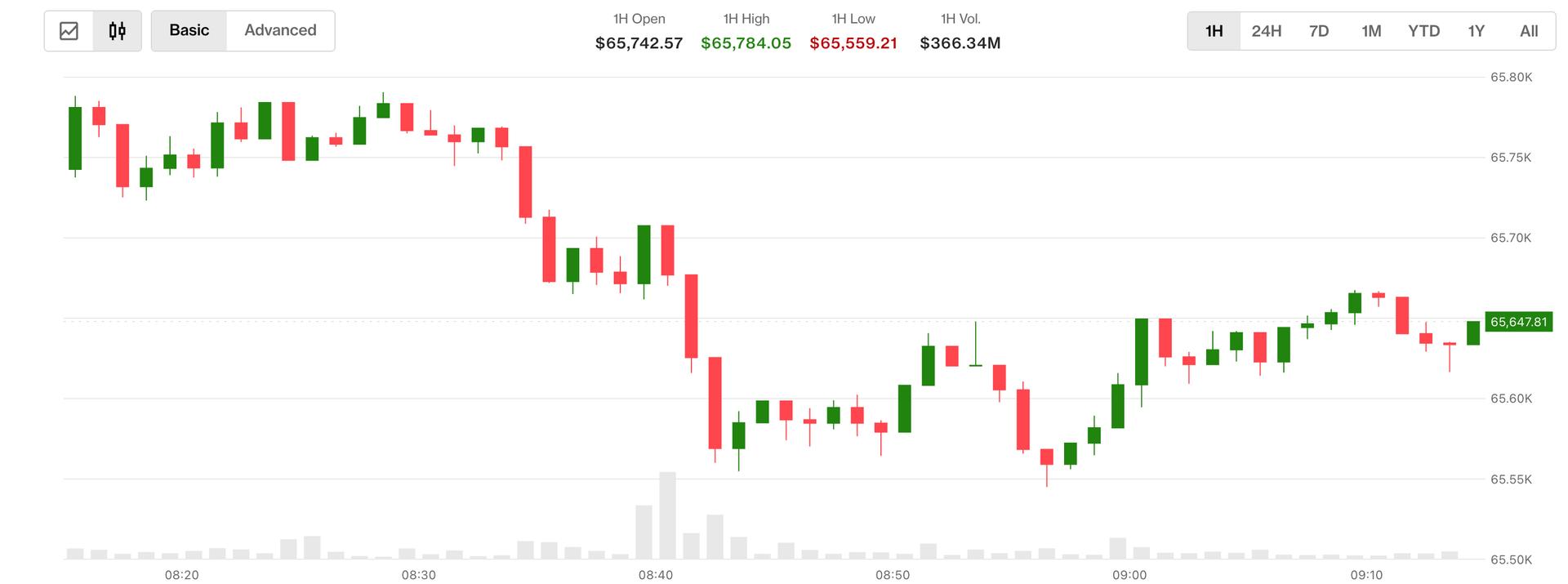
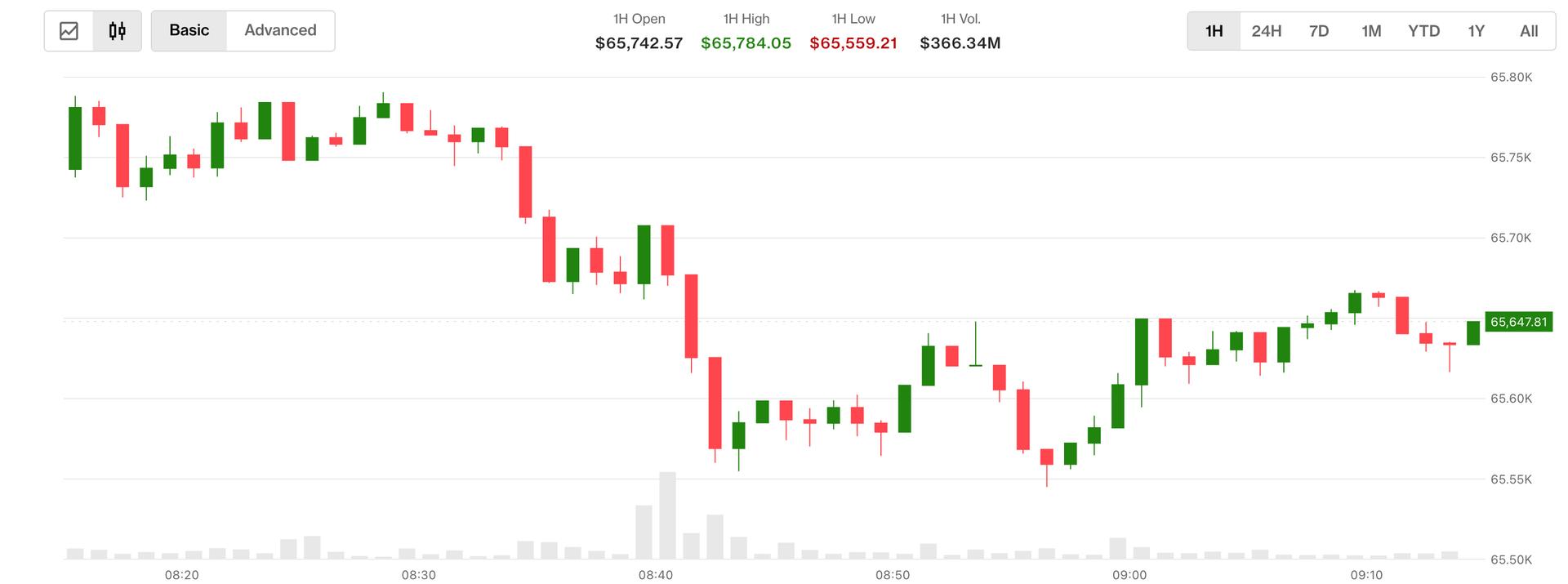
Bond markets are already reacting. The U.S. two-year Treasury yield jumped to 4.31%, its highest level since February 2025, while the benchmark 10-year yield rose to 4.66%, the highest since May, according to TradingView data. Higher yields raise the opportunity cost of holding non-yielding assets such as bitcoin and gold, often prompting investors to rotate out of speculative holdings and into fixed-income securities that now offer more attractive returns.
Adding to the cautious market sentiment, Axios reported that the U.S. military deployed a B-1 long-range bomber on Tuesday to strike targets linked to Iran’s Islamic Revolutionary Guard Corps. The use of the heavy bomber represents a clear escalation in the scale of U.S. operations and suggests Washington may be preparing for a broader campaign, rather than continuing with the more limited strikes seen in recent days.
Regulatory uncertainty persisted after a group of key Senate Democrats said the newest draft of the Digital Asset Market Clarity Act (Clarity Act) “falls short” on ethics and other critical provisions.
Betting markets on decentralized platform Polymarket reacted swiftly, with the implied odds of the Clarity Act passing tumbling from 46% to 38%.
Senate Republicans released the updated draft earlier Wednesday, which includes an ethics provision agreed to by the White House and President Donald Trump. Senator Bernie Moreno called it “the most powerful ethics language in U.S. history.


Payments-focused cryptocurrency XRP’s price has risen over 8% in five weeks and during this time, there has been a notable divergence in accumulation trends of large holders or whales and small holders.
According to on-chain data from Santiment, wallets holding between 100,000 and 100 million XRP added 2.8% more coins to their balances over the past five weeks. This accumulation by whales and sharks coincided with the token rebounding to $1.16 from $1 at the end of June, suggesting stronger hands are leaning into the current price action.
At the same time, the smallest wallets have shed 5.2% of their holdings during the same period. This capitulation by small holders stands in sharp contrast to the buying pressure from key stakeholders.
These diverging trends are bullish for XRP, according to Santiment.
“Historically, XRP price has tended to move more with key stakeholders and against the smallest retail wallets, so this split supports the bullish case behind the bounce,” the firm noted on X.
The timing aligns with several positive fundamental developments for XRP such as Improved institutional access through potential ETF products and continued utility on the XRP Ledger for payments, tokenization, and the RLUSD stablecoin, the firm explained,
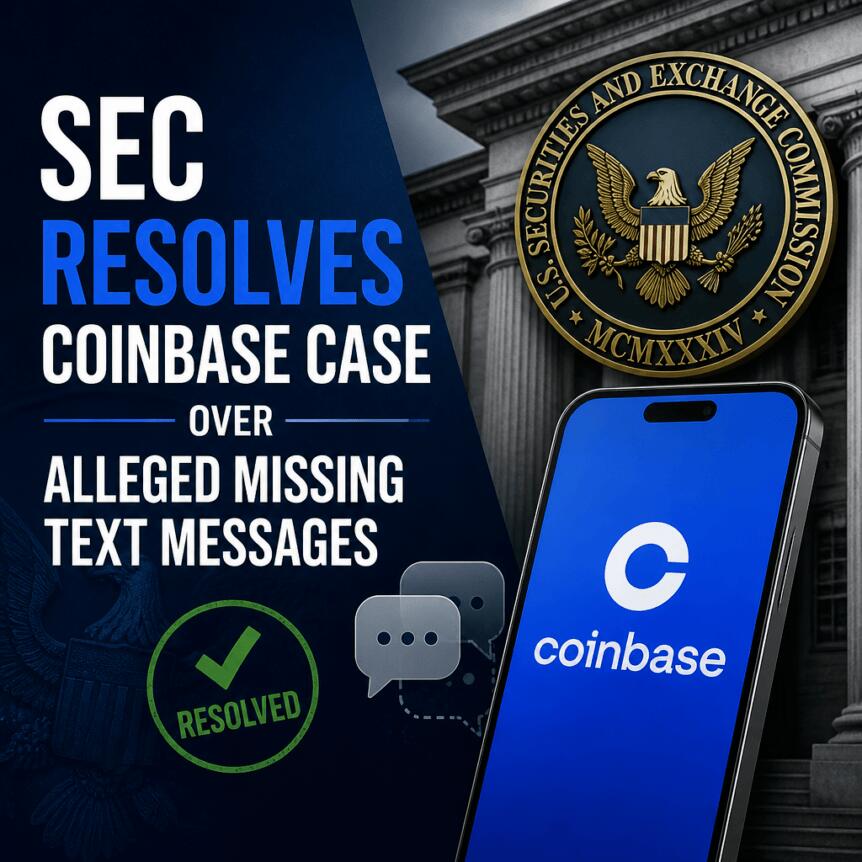
The U.S. Securities and Exchange Commission has agreed to pay $150,000 in legal fees to settle a dispute with Coinbase over the regulator’s internal records. The settlement ends a lawsuit that Coinbase filed two years ago seeking access to SEC materials related to what it described as an enforcement-led approach to crypto regulation.
According to a filing made Wednesday in the case docketed at CourtListener, the SEC will also compensate Coinbase with the fee award while stating it has addressed its record-retention practices. Coinbase’s legal chief, Paul Grewal, framed the settlement as part of a broader accountability effort over document retention inside the agency.
Key takeaways
- The SEC will pay Coinbase $150,000 to resolve the records-access lawsuit.
- The case centered on Coinbase’s request for internal SEC documents during the period of heightened crypto enforcement.
- Coinbase says the dispute helped uncover material it views as evidence of an enforcement strategy.
- Coinbase’s top legal executive announced a leadership transition to take effect on July 31.
- The settlement is also presented as reflecting a shift toward a more crypto-friendly enforcement posture at the SEC.
What the SEC–Coinbase settlement covers
The dispute arose after Coinbase sought internal agency documents from the SEC, alleging that the regulator’s recordkeeping did not provide the transparency Coinbase believed it was due. The complaint targeted access to materials that Coinbase argued were important for understanding the SEC’s approach at the time.
In coverage of the settlement, Coinbase leadership pointed to what it said were documentation and retention problems. Coinbase chief legal officer Paul Grewal wrote in a Wall Street Journal op-ed published Wednesday that the SEC—responsible for policing corporate recordkeeping—had effectively lost significant portions of its own communications during what Coinbase characterized as the SEC’s most intense period of anti-crypto activity.
Grewal also stated that the SEC has fixed its record retention policies as part of the resolution. The settlement agreement, as reflected in the docket, brings the two-year legal fight to a close.
Record retention controversy and the 2025 internal report
A central element in Coinbase’s argument was not only the availability of records, but the adequacy of the SEC’s retention of its own correspondence. The article’s account references an internal report released in 2025 indicating that the SEC deleted nearly a year of former Chair Gary Gensler texts due to “avoidable” errors.
Coinbase’s position is that such losses matter because they could prevent outside parties from obtaining a complete picture of how enforcement-related decisions were discussed inside the agency. Grewal’s op-ed also emphasized that message deletions occurred during the most aggressive phase of the SEC’s crackdown on crypto.
As part of the settlement, the SEC will pay the $150,000 fee award and has reportedly updated its record retention practices, addressing one of the core practical concerns that drove the lawsuit.
A legal win for Coinbase amid a changing SEC
Coinbase has portrayed this outcome as another favorable development in its litigation strategy. The settlement comes as the SEC’s leadership and approach to crypto enforcement have shifted.
The article notes that the settlement occurred under the Trump administration, characterizing it as a “legal victory” within a wider transition in how the SEC pursues crypto cases. It further states that under the SEC’s leadership—identified in the article as Paul Atkins—the agency has dropped multiple high-profile enforcement actions against crypto companies, including Coinbase, during 2025.
While the settlement resolves this particular records case, the broader implication for industry watchers is that disputes over enforcement process and documentation remain a recurring theme. Even as enforcement posture changes, Coinbase’s case underscores how document access, retention policies, and internal compliance practices can become legally consequential.
Grewal steps back from Coinbase’s legal role
Coinbase’s legal leadership is also in transition. According to the article, Paul Grewal, who has served as chief legal officer since 2020, is set to transition into an advisory role starting July 31.
The article says Coinbase will elevate two executives into expanded leadership roles: Molly Abraham will become general counsel, and Ryan VanGrack will move into the position of vice chair.
For observers, the timing matters because legal strategy has been central to Coinbase’s relationship with regulators. Leadership continuity—via internal promotions—suggests the company plans to maintain institutional knowledge as it navigates the ongoing evolution of U.S. crypto oversight.
As the settlement takes effect, the next question for market participants is how the SEC’s updated retention practices will function in practice and whether similar records disputes emerge elsewhere—especially as enforcement priorities continue to evolve under the current SEC leadership.


Pump.fun said Wednesday it added support for trading tokens tied to Robinhood's blockchain, a move that comes as a memecoin modeled on the brokerage's old mascot has posted quadruple-digit percentage gains on the week-old network. "Robinhood tokens are now available to trade on the Pumpfun app!"… Read the full story at The Defiant


Crypto exchange AscendEX ceased operations effective July 1, 2026, and moved all withdrawal requests to manual review starting July 6, according to a notice posted on its website addressed to retail account holders. The exchange cited the European Union's Markets in Crypto-Assets Regulation (MiCA),… Read the full story at The Defiant

Bitwise Chief Investment Officer Matt Hougan named 2 crypto bets he views as well-positioned for the next bull market. He pointed to revenue-generating crypto apps and established firms building on blockchain rails.
Hougan tied both bets to what he calls the convergence of onchain and traditional finance. He stated that stablecoins, tokenization, and around-the-clock trading will lead the cycle.
Bitwise’s CIO Names Best Positioned Investments for the Next Crypto Bull Market
The first lane covers crypto applications with real revenue and tokenomics that tie token value to usage. Hougan cited Hyperliquid (HYPE) as the model.
Hyperliquid runs a Layer 1 blockchain and hosts a perpetual futures trading platform. The platform is on track to generate close to $800 million in annual revenue this year. It directs almost all of that into buying back HYPE.
Notably, this model has worked out well for the altcoin. Hougan stressed that HYPE has climbed about 146% this year despite the broader crypto downturn, citing real platform growth as the driver.
“I think the token could double in price and still be fairly valued,” he said. “Over time, I believe a new wave of crypto assets will copy HYPE’s tokenomics and introduce exciting ‘next-gen’ token opportunities.”
The executive also named Uniswap (UNI), Aave (AAVE), and Morpho (MORPHO) as existing protocols moving toward tying token value to usage.
Follow us on X to get the latest news as it happens
The TradFi Side of the Bet
The second lane covers established companies running crypto at scale rather than small pilots. Hougan pointed to Robinhood as the clearest example.
Robinhood launched its own blockchain on July 1. BeInCrypto reported that the chain has seen notable growth and ranks among the top 5 days by DEX volume.
“Robinhood is learning 10,000x more from a live chain in 120 countries than any pilot could teach it,” Hougan noted.
However, he conceded that much of the early activity on Robinhood’s chain involves meme coins rather than tokenized stocks. The executive expects stock volume and users to scale over time
Hougan also flagged Coinbase, Figure, and BlackRock as firms with real exposure. He added Visa, Stripe, and JPMorgan to the watchlist.
The Bitwise CIO affirmed that he stays bullish on Bitcoin (BTC), Ethereum (ETH), and Solana (SOL) as the broad base for any rally.
Subscribe to our YouTube channel to watch leaders and journalists provide expert insights
The post Bitwise CIO Names 2 Crypto Bets Best Positioned for the Next Bull Market appeared first on BeInCrypto.

White House Claims Moonshot AI Copied Anthropic Technology for K3

Godzilla vs. Kong Star Kaylee Hottle Cause of Death Revealed

Financial Glow Up


-
 NewsBeat7 days ago
London Mayor Sadiq Khan handed a peerage by Keir Starmer alongside 15 other Labour figures… just days before the PM leaves No10
-

 Fashion5 days ago
Weekend Open Thread – Corporette.com
-

 Politics5 days ago
The House | The City of London can help the new chancellor deliver growth in every postcode
-

 Crypto World5 days ago
Ripple Payments Joins MiCA With 14 Firms, Does It Mean Anything For XRP?
-
 Crypto World6 days ago
Two July Windows Left: The CLARITY Act’s Senate Fight and What Failure Means
-

 Politics4 days ago
Democrats look to World Cup watch parties to register thousands of voters
-

 Crypto World5 days ago
Ripple wins EU-wide access as ESMA adds it to MiCA register
-

 Crypto World2 days ago
Grayscale Files For Worldcoin ETF, WLD Registers Sharp Rise
-

 NewsBeat3 days ago
Unregistered fitter used Gas Safe logo on business flyers
-

 Tech2 days ago
Sail Virtually Aboard The “Itanic” With IA-64 Emulator
-

 Crypto World6 days ago
Injective Submits SEC Transfer-Agent Registration to Onchain Ownership Records
-
 Tech2 days ago
Turtle Beach Command Series KB7 review: a nifty screen-equipped gaming keyboard
-

 NewsBeat6 days ago
Registration is now open for March for Men with Kev 2026
-
 Business1 day ago
New Jersey voter registration controversy explained: How 6,600 noncitizens got on the rolls, and what happens next
-

 Crypto World6 days ago
Claude Fable 5 Slips to Second in AI Coding Leaderboard
-

 News Videos6 days ago
Money | Class 12 Economics | CBSE Board Exam 2026-27
-

 Business6 days ago
Banco Bilbao Vizcaya Argentaria, S.A. (BBVA) Discusses Global Macro Environment and Economic Outlook for Core Markets Transcript
-

 Crypto World5 days ago
Kaspersky exposes OkoBot’s 20-module crypto wallet attack
-

 News Videos3 days ago
Big Money Is Entering XRP
-

 NewsBeat5 days ago
Durham County Council to send out electoral registration emails
You must be logged in to post a comment Login