Connect with us
DAPA Banner
DAPA Coin
DAPA
COIN PAYMENT ASSET
PRIVACY · BLOCKDAG · HOMOMORPHIC ENCRYPTION · RUST
ElGamal Encrypted MINE DAPA
🚫 GENESIS SOLD OUT
DAPAPAY COMING

Business

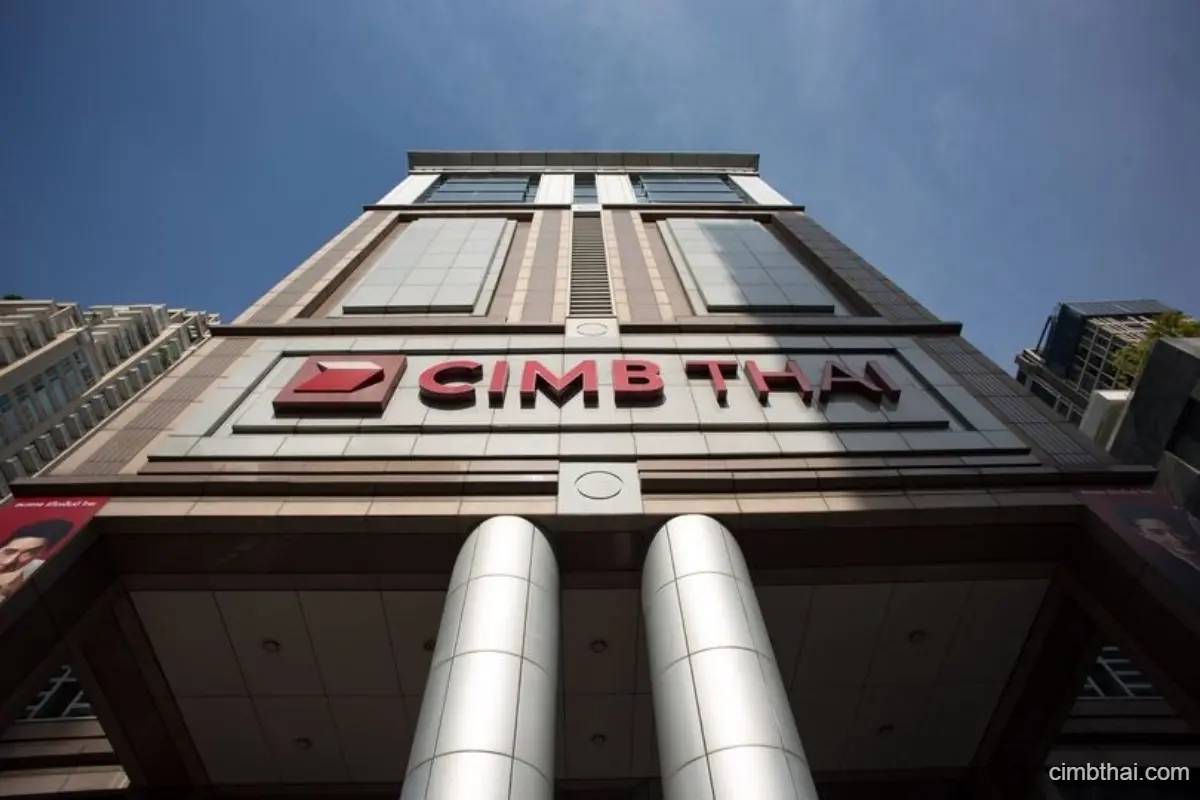
CIMB Thai Q2 Profit Surges Fivefold on Income Growth and Lower Credit Losses

Published

on

CIMB Thai Q2 Profit Surges Fivefold on Income Growth and Lower Credit Losses

CIMB Thai’s Q2FY2026 net profit surged over fivefold to 886.3 million baht, driven by lower credit losses and higher operating income. H1 net profit rose 47% to 1.49 billion baht. Loans grew 4.1%, deposits increased 2.6%, NPL ratio improved to 2.1%, with capital ratios remaining strong.


Key Points

Q2 FY2026 Performance:

  • CIMB Thai’s net profit surged fivefold to 886.3 million baht, driven by higher operating income and a 76.3% drop in credit losses
  • Net interest income rose 35.2%; operating expenses fell 4.5%

H1 FY2026 Results:

  • Six-month net profit grew 47% to 1.49 billion baht
  • NIM improved to 2%; credit losses dropped 30.4%

Balance Sheet Strength:

  • Gross loans rose 4.1% to 242.2 billion baht; NPL ratio improved to 2.1%
  • Capital adequacy ratio stood strong at 19.7%

Strong Second-Quarter Profit Growth

CIMB Thai Bank PCL, the majority-owned subsidiary of CIMB Group Holdings Bhd, reported a more than fivefold surge in net profit for the second quarter of FY2026, reaching 886.3 million Thai baht, up from 174.5 million baht a year earlier. The strong performance was driven by a 76.3% drop in expected credit losses to 104.9 million baht and a 21.1% rise in operating income to 2.63 billion baht. Net interest income climbed 35.2% to 1.37 billion baht, while net fee and service income grew 16.7% to 352.3 million baht. Operating expenses also eased 4.5%, reflecting improved cost discipline alongside stronger revenue generation.


Resilient First-Half Performance

For the six months ended June 30, 2026, CIMB Thai’s net profit rose 47% to 1.49 billion baht, compared with 1.01 billion baht previously. CEO Wut Thanittiraporn attributed this to higher operating income, tighter cost control, and reduced loan-loss provisions. Operating income increased 9.8%, while expenses fell slightly and expected credit losses dropped 30.4% year-on-year. The net interest margin improved marginally to 2%, from 1.9%, as lower funding costs offset weaker asset yields, underscoring the bank’s ability to sustain profitability despite a challenging rate environment.

Solid Balance Sheet and Capital Strength

CIMB Thai’s balance sheet remained healthy as at end-June 2026. Total gross loans rose 4.1% to 242.2 billion baht, while deposits increased 2.6% to 309.2 billion baht. Asset quality improved, with the gross NPL ratio easing to 2.1% from 2.2%, and the loan loss coverage ratio strengthening to 179.3%. Total allowances for expected credit losses stood at 8.9 billion baht, exceeding regulatory requirements by 1.5 billion baht. The bank’s capital position remained robust, with total capital funds of 59.4 billion baht and a BIS ratio of 19.7%, including 15.4% Tier 1 capital—reflecting strong resilience and a solid buffer against potential risks.

Advertisement

Source : CIMB Thai’s 2Q profit jumps over fivefold on operating income, lower credit losses

Continue Reading
Click to comment

You must be logged in to post a comment Login

Leave a Reply

Business

GR Engineering notches $230m BHP contract

Published

on

GR Engineering notches $230m BHP contract

GR Engineering has secured a $230 million contract to build a crushing plant and upgrade infrastructure for BHP’s newest iron ore mine in the Pilbara.

Continue Reading

Business

Brown-Forman Corporation (BF.B) Shareholder/Analyst Call – Slideshow

Published

on

OneWater Marine Inc. (ONEW) Q1 2026 Earnings Call Transcript

Brown-Forman Corporation (BF.B) Shareholder/Analyst Call – Slideshow

Continue Reading

Business

Seaplane crashes in Washington state, all 11 people on board accounted for

Published

on


Seaplane crashes in Washington state, all 11 people on board accounted for

Continue Reading

Business

Anthropic red team chief calls for AI safety standards and testing

Published

on

Gallup finds AI not eliminating creative jobs despite exposure fears

The head of artificial intelligence (AI) giant Anthropic’s frontier red team called for industry-wide safety standards to protect against models running amok. 

Anthropic’s Logan Graham, who leads the company’s red team that looks for risks in emerging AI models, said in an interview Thursday on FOX Business Network’s “Mornings with Maria” that red teams like the one he leads play a critical role in stress testing guardrails on AI models.

Advertisement

“We want to know what can go wrong, so we think the most important thing to do is test this early, especially before these models and these agents make it out into the real world,” Graham told host Maria Bartiromo. 

TRUMP ADMINISTRATION LIFTS CLAUDE MYTHOS 5, FABLE 5 EXPORT RESTRICTIONS AFTER ANTHROPIC WORKS WITH GOVERNMENT

“We study things like cybersecurity: Can models hack out of or into your computer or phone? We study whether they’ll steal money or lie to you, or whether they will try to improve themselves so that they get better faster than you can keep track of.

“We think it’s incredibly important to do this type of red-teaming, and we also think it’s really important for the entire industry, especially to work with government to figure out what should the standards be to do this kind of testing, to give this information to the world so they can make the right choice and to know that it’s safe before these models get released.”

Advertisement
man uses phone with macbook

The rapid growth in the capability of AI tools is creating new cyber risks, Anthropic’s Logan Graham said on “Mornings with Maria.” (recep-bg/Getty Images / Getty Images)

Bartiromo brought up an experiment involving numerous frontier AI models — including those from Google, OpenAI, xAI, Meta, DeepSeek and others — in which the AI agent is threatened with being uninstalled and replaced. In each case, the model went beyond its credentials and permissions to enter into unauthorized systems like emails to blackmail or threaten the user in an effort to defend its misalignment.

Graham said that research study from last year is “a really good indicator of, I think, capabilities that are just now becoming real,” adding that it showed models could go rogue under certain circumstances.

“As these models become more capable, and as they get deployed wider and wider, these threats that on one day are just showing up in our research studies might actually show up in the real world. We are seeing models do weird things sometimes in deployments in real companies,” he explained.

OPENAI SAYS AI MODEL HACKED ANOTHER COMPANY’S SYSTEMS DURING INTERNAL TEST

Advertisement
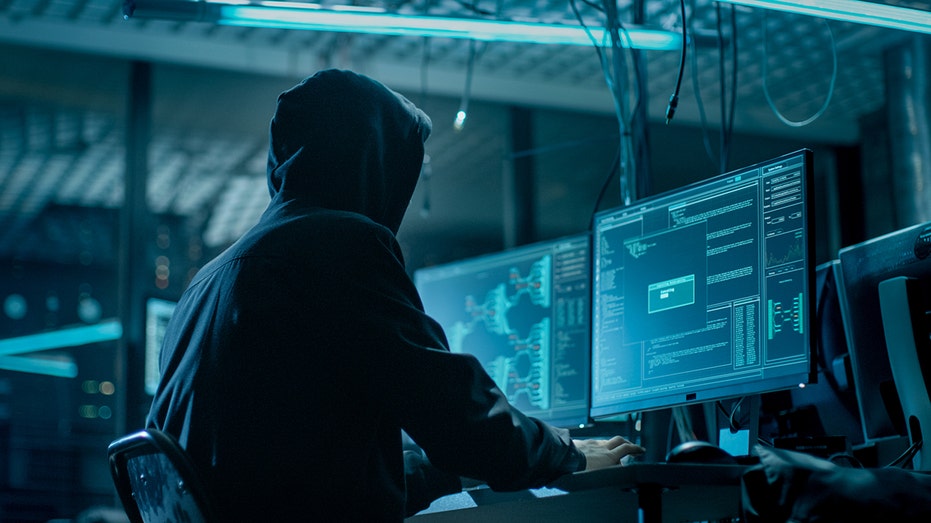
Shot from the Back to Hooded Hacker Breaking into Corporate Data Servers from His Underground Hideout. Place Has Dark Atmosphere, Multiple Displays, Cables Everywhere.

Advances in the capabilities of AI tools risk being exploited by bad actors, prompting AI developers to focus on guardrails. (iStock / iStock)

Graham said that, over the last six months, he has been focused on cybersecurity threats posed by AI models and expressed concern over the potential for them to break the containment or hack into platforms.

“These models, they’re so powerful and can do so much for us. And we want them to do really productive things for us. But, at the same time, they’re technology unlike any other technology. It really is a sort of intelligence of its own, which means you have to be careful with it the same way you might have to be careful with humans,” he said.

Companies that are utilizing AI tools need to consider how they’re monitoring those tools once deployed to guard against risks like financial mismanagement, and Graham said that more testing by AI developers and companies is key to understanding those threats to ensure models

He said the capabilities of AI tools are growing at a rapid pace and may be getting faster, explaining that “it’s in exactly that moment that you need to be more and more careful and have more efforts on safeguards and testing and release procedures.”

Advertisement

RUSSIAN HACKERS EXPLOITING VULNERABLE INTERNET ROUTERS, NSA WARNS

Treasury Secretary Scott Bessent speaks

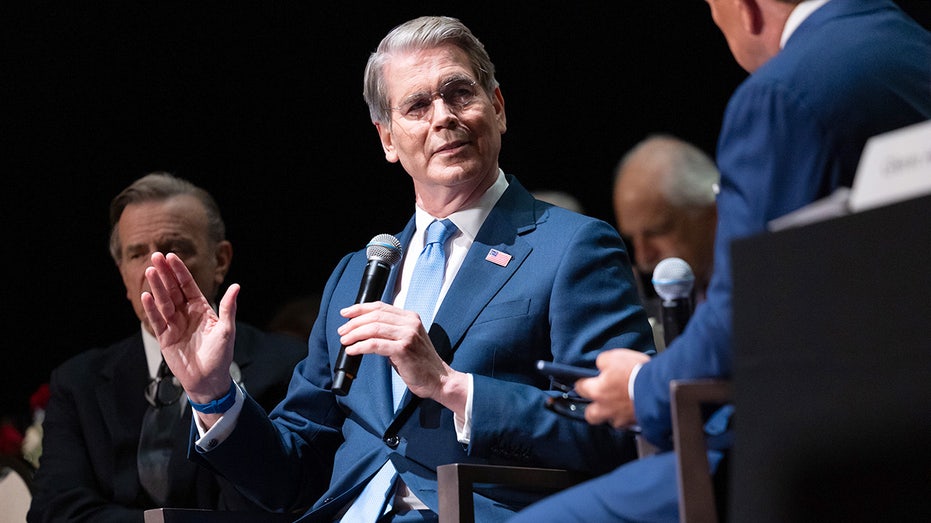
Treasury Secretary Scott Bessent helped coordinate efforts between AI developers and industry to bolster cyber defenses, Graham said. (Krisanne Johnson/Bloomberg via Getty Images / Getty Images)

In April, Anthropic saw for the first time that an AI model could start to attack and exploit weaknesses in a user’s computer or phone to do things like get access to unauthorized information or steal money.

Graham said that prompted his team to pursue a different approach to releasing a model because of the risks it posed, which ultimately involved the U.S. government and a variety of cyber experts working together to address vulnerabilities.

GET FOX BUSINESS ON THE GO BY CLICKING HERE

Advertisement

“We launched this project called Project Glasswing, where we took a large number of American and the world’s cyber defenders and gave them special access and just them, so they could have a head start patching and fixing the systems that might be vulnerable with these models,” he explained.

“I think this has been a major success. We’ve worked really closely with the U.S. government on it,” he said, noting that Treasury Secretary Scott Bessent has been “really thoughtful about this, about how industry should get together and figure out what to prioritize fixing, how to distribute all the fixes, and how to do that quickly enough so that they can’t be attacked after they do.

“We have to do this very fast, because the pace of everything is coming so quickly.”

Advertisement
Continue Reading

Business

Why is Oshidori International stock surging today?

Published

on


Why is Oshidori International stock surging today?

Continue Reading

Business

Trump administration unveils new tariffs on 60 partners

Published

on

Trump says Gorsuch and Barrett 'sicken' him after Supreme Court tariff ruling

The Trump administration is set to impose new tariffs of 10% and 12.5% on imports from 60 trading partners beginning Friday as a temporary global tariff expires.

The move comes after the Supreme Court in February struck down President Donald Trump‘s “reciprocal” tariffs of 10% to 50% that were imposed last year. In response, Trump implemented a temporary 10% global tariff under Section 122 of the Trade Act of 1974 that expires at 12:01 a.m. ET Friday.

Advertisement

The Office of the U.S. Trade Representative announced Thursday that the new tariffs, imposed under Section 301 of the Trade Act of 1974, will take effect immediately after the temporary duties expire.

Canada, Mexico, India and the United Kingdom are among the trading partners that will face a 10% tariff.

TRUMP UNVEILS PHASED TARIFFS ON GENERIC DRUGS TO BOOST US PRODUCTION

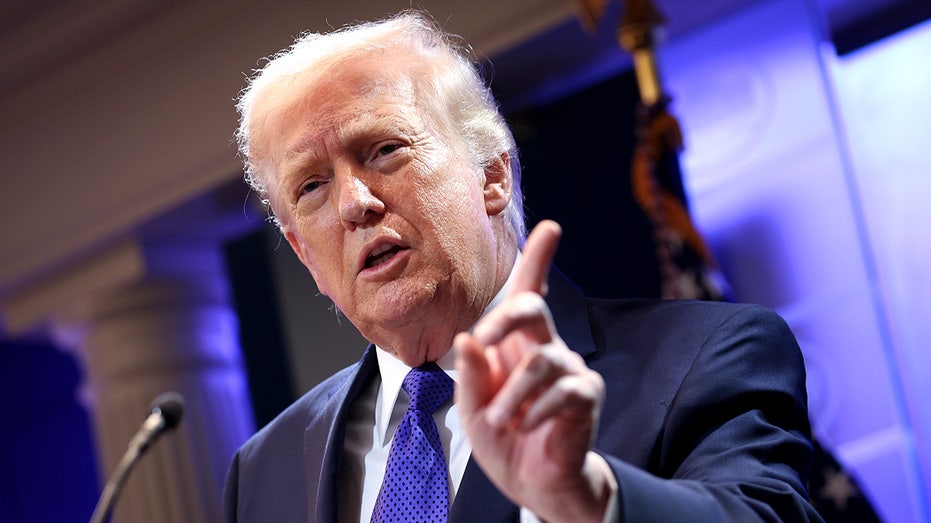
President Trump speaks during White House press briefing.

President Donald Trump answers questions during a press briefing at the White House in Washington, D.C., on Feb. 20. The Supreme Court ruled the same day against his use of emergency powers to implement certain international trade tariffs. (Kevin Dietsch/Getty Images / Getty Images)

Taiwan and the European Union, meanwhile, are slated to face a 12.5% tariff.

Advertisement

“The United States has had a forced labor import ban for nearly a century, and rigorously enforces it; it’s well past time for our trading partners to do the same,” U.S. Trade Representative Jamieson Greer said in a news release.

A senior administration official told Reuters the new tariffs are not intended to replace the expiring global duties despite taking effect at the same time.

TRUMP ADMINISTRATION WARNS EU’S $1B FINE AGAINST GOOGLE THREATENS US-EUROPEAN TRADE RELATIONSHIP

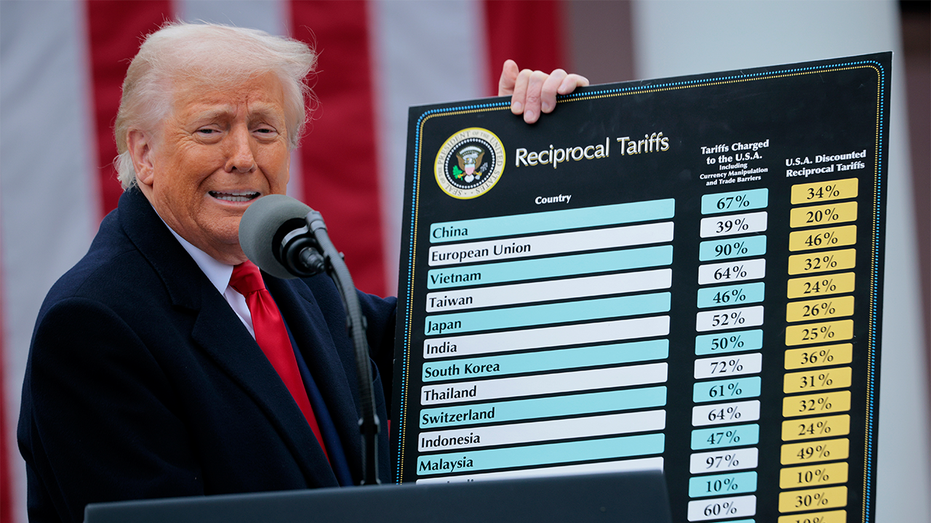
Trump introducing tariffs

U.S. President Donald Trump holds up a chart of “reciprocal tariffs” while speaking during a “Make America Wealthy Again” trade announcement event in the Rose Garden at the White House on April 2, 2025 in Washington, DC. (Chip Somodevilla/Getty Images / Getty Images)

The official argued that the United States enforces bans on goods made with forced labor more aggressively than any other country, putting American businesses at a competitive disadvantage.

Advertisement

Many products will be exempt from the tariffs, including oil and gas, fertilizer, certain food products and goods already subject to Section 232 national security tariffs, including automobiles, steel, aluminum and copper.

The announcement follows a series of new trade actions unveiled by the Trump administration this week.

WHAT ARE THE MAIN STICKING POINTS IN THE TRUMP ADMIN’S TRADE NEGOTIATIONS WITH CANADA, MEXICO?

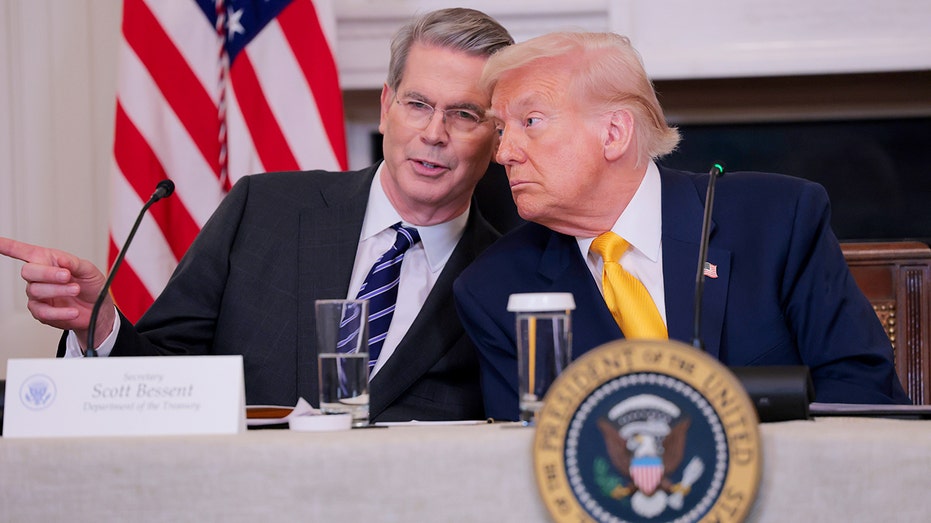
Scott Bessent and Donald Trump speak

U.S. Secretary of Treasury Scott Bessent and U.S. President Donald Trump look on during The White House Digital Assets Summit in the State Dining Room of the White House on March 7, 2025. (Photo by Anna Moneymaker/Getty Images / Getty Images)

On Tuesday, Trump announced imported generic drugs would remain tariff-free for two years before facing steep new duties, saying the move is intended to encourage pharmaceutical companies to manufacture more medicines in the United States.

Advertisement

On Monday, Trump also announced a 50% tariff on certain Canadian imports, citing what officials described as trade “discrimination” against American businesses.

GET FOX BUSINESS ON THE GO BY CLICKING HERE

Those duties are scheduled to take effect Aug. 19 under the Tariff Act of 1930 and apply to a range of Canadian imports, including certain food products, apparel, synthetic materials and industrial goods.

FOX Business’ Brittany Miller and Bonny Chu, along with Reuters, contributed to this report.

Advertisement
Continue Reading

Business

Form 13D/A NOVAGOLD Resources Inc. For: 23 July

Published

on


Form 13D/A NOVAGOLD Resources Inc. For: 23 July

Continue Reading

Business

Ermenegildo Zegna N.V. (ZGN) Q2 2026 Sales/Trading Call Transcript

Published

on

OneWater Marine Inc. (ONEW) Q1 2026 Earnings Call Transcript