

Business
Brown-Forman Corporation (BF.B) Shareholder/Analyst Call – Slideshow




Tesla stock is likely to move significantly after it reports second-quarter earnings on Wednesday evening.
On a bad reaction, the downside is about $325, says Barron’s senior technical analyst Doug Busch.
Technical analysts use stock charts and market history to project how shares will trade over the short and medium term, as well as how they can react to events such as earnings.
Business
Beyond Conferences: How Henry Chen Is Turning Industry Conversations into Long-Term Collaboration

Global fintech executive Henry Chen knows the conference circuit well. He has spent years meeting with leaders and blockchain professionals across the world, including in major financial and tech hubs like Hong Kong, New York and San Francisco.
“Each city is looking at the future of blockchain and digital assets through a slightly different lens,” Chen said.
What separates Chen from most of the crowd is what he does once the lights come up. He is on a mission to create long-term opportunities for founders, investors, developers and institutions. He believes the industry moves faster when those groups collaborate instead of operating in silos.
Henry Chen Kucoin is a 15-year veteran of investment banking and digital asset markets. He held senior roles at Goldman Sachs, UBS, Summer Capital and KU Holdings Group before founding Swiss Digital Labs, an advisory firm that helps crypto ventures, blockchain foundations and fintech companies build cross-border partnerships.
More recently, he took on a second role as chief business officer of SNZ Holding, where he helped stand up ETH Hong Kong Hub, Asia’s first permanent physical home for the Ethereum community. That dual vantage point – dealmaker and community builder – has put him inside dozens of events this year and sharpened his read on how differently each city approaches the same technology.
Hong Kong is building regulated, institutional-grade infrastructure and using policy to pull serious builders and capital into a long-term ecosystem, Chen said, while also pushing hard on smarter payment networks and inclusive finance as the region’s fintech hub. New York filters the same technology through global capital markets, compliance and product structuring. San Francisco remains the place where the most experimental ideas take shape first, shaped by Silicon Valley’s product culture and its current fixation on agentic and decentralized AI.
“What stands out across all three cities is that on-chain finance increasingly looks like the next generation of fintech,” said Chen, an ecosystem connector whose work extends well beyond conferences and speaking engagements.
“The infrastructure is still at an early stage, but the direction is clear.”
Spotting that pattern across three cities is the easy part for Chen. The harder work, he explains, starts after the panel ends and the room clears out.
Building the Room, Not Just Attending It
Henry Chen’s clearest example of that after-the-panel work sits in West Kowloon, where ETH Hong Kong Hub officially opened in April 2026.
The event was billed as Asia’s first permanent physical home for the Ethereum community. The hub is backed by the Ethereum Foundation’s Ethereum Everywhere team and co-operated by SNZ Holding and ETHTAO. Its grand opening drew more than 1,500 registrants, including Ethereum co-founder Vitalik Buterin, Ethereum Foundation President Aya Miyaguchi and Hong Kong Legislative Council member Duncan Chiu.
However, Chen said the opening was never the point. It was proof of demand for something conferences cannot provide.
“In-person gatherings are where the most meaningful insights emerge unexpectedly,” Chen said. “Informal conversations reveal where capital is moving, where founders are adjusting their strategies, and where institutions are becoming more engaged. That cannot be replicated through online commentary alone.”
In an industry where attending panels and appearing at conferences often gets mistaken for contribution, Chen said he wanted to build something with more staying power than a single event.
The hub’s first major programming session was held in March 2026, a month before its official grand opening. The event brought together speakers from the Ethereum Foundation, Spark, Hubble AI, Unified Labs and Asseto Finance for sessions on artificial intelligence, real-world assets and decentralized finance. Its inaugural membership now spans more than 30 ecosystem participants, from protocol developers to institutional investors exploring on-chain markets for the first time.
“Online discussions are useful for speed and reach,” Chen said. “But in-person events provide a much clearer read on conviction, seriousness, and intent. Face-to-face conversations reveal whether people are genuinely building, whether an institution is truly committed, and whether a market theme has real depth behind it.”
Henry Chen Kucoin: ‘It Signals That The Industry Is Entering A More Structural Phase’
Henry Chen believes in substance over spectacle; in fact, it drives how he talks about real-world asset tokenization, a theme that has dominated recent RWA Day sessions and ETHConf discussions across the industry.
During his tenure overseeing capital markets and RWA business development at KU Holdings Group, Chen built a pipeline spanning money-market funds, private equity, commodities and yield-bearing stablecoins – designing paths from origination through private placement and exchange listing. That experience taught him where tokenization efforts tend to stall, and what it takes to push past the stall point.
“Early tokenization efforts often stopped at issuance,” Chen said. “Now the work is about making these assets tradeable, auditable, and usable as collateral across both CeFi and DeFi.”
He said the industry only crosses into practical implementation once institutions structure products that fit inside existing legal and risk frameworks, rather than treating compliance as an afterthought bolted on at the end.
“When large asset managers and banks commit real resources to these products, it changes the conversation from ‘if’ to ‘how’ and ‘when,’” Chen said.
That shift, Chen said, tends to surface in the same kind of unhurried, follow-up conversations that define his approach to events generally.
“When asset managers, banks, exchanges, and Web3 builders are discussing how to bring traditional assets on-chain, how to design sustainable yield and liquidity models, and how to make user experience and compliance work at scale, it signals that the industry is entering a more structural phase,” he said.
Where AI, Capital and Discipline Meet
Henry Chen Kucoin has also watched artificial intelligence move from a side conversation to a headline topic at nearly every gathering he attends, and he has resisted treating it as a separate track from blockchain.
“AI improves productivity, while blockchain upgrades how the economic system interacts and operates by making ownership, incentives, and coordination more transparent and programmable,” Chen said.
That framing carries over into how he evaluates the founders and projects he meets on the circuit. Chen said the market has grown less patient with narrative alone, and the projects that earn real attention from experienced investors share a common thread.
“The strongest opportunities usually emerge where strategy, timing, and real-world utility align,” Chen said. “The projects that stand out usually feel inevitable, not fashionable.”
He applies the same discipline to his own investment philosophy at SNZ, where he said the firm avoids chasing short-term trends in favor of backing harder, longer-term bets.
“The philosophy has always been to back the hard but right thing for the long term,” Chen shared. “We are not looking to trade around trends. We are most interested in real applications on-chain, whether in fintech, payments, AI, content, or other use cases that can create lasting value.”
What Comes Next For Global Executive Henry Chen
Henry Chen’s next chapter looks less like a speaking tour and more like a construction project. He wants to spend the coming years working directly alongside founders rather than advising them from a distance, helping translate technical ideas into products people actually use and helping institutions move past curiosity into active participation.
“The goal is not simply to invest in founders from a distance, but to work with them as a true partner and co-builder,” Chen shared. “Founders often need more than capital. They need confidence that their ideas can actually materialize without unnecessary trial and error.”
That mindset is already visible in West Kowloon, where ETH HK Hub’s success will not be measured by its opening-night guest list but by what happens on an ordinary Tuesday months from now.
Chen said the real test is whether founders keep coming back, whether developers find collaborators and whether institutions grow more comfortable engaging with on-chain finance because they now have a consistent place to do it.
The panels will keep happening in Hong Kong, New York and San Francisco. The badges will keep coming off at the end of the night. For Chen, that has never been where the story ends.
It is where his part of it begins.
“Having everyone together also accelerates decision-making,” Chen explained. “Instead of ideas bouncing around in isolation for months, stakeholders can test assumptions in real time, build trust more quickly, and identify where collaboration is actually feasible. It is also increasingly important to bring the right people together not for pure social interaction, but for business collaboration. The market is becoming much more result-driven, so the value of the room lies in whether it helps create real partnerships, real execution, and real outcomes.”

Serving as an unpaid caregiver for a child, partner, or older relative can exact a financial toll that can hinder retirement readiness, according to a new survey from the Employee Benefit Research Institute and Greenwald Research.
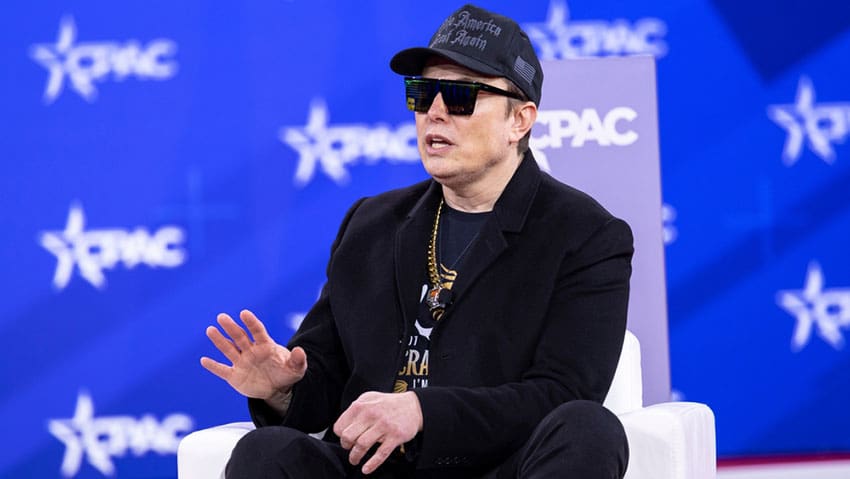
Elon Musk has told the world to prepare for machines that out-think it, predicting that artificial intelligence “may exceed the sum of human intelligence in about and around five years”.
The forecast, made in a wide-ranging interview with The Economist, lands as a pointed challenge to every UK firm still weighing whether AI is worth the bother. If Musk is even roughly right, the tools now trickling into SME back offices are on a five-year path to eclipsing the people using them.
Musk, who last month became the world’s first trillionaire after the float of SpaceX in the US, framed the shift as an opportunity rather than a threat. The most likely outcome, he said, was an “age of amazing abundance”, and he intended to “enjoy the ride”.
For owner-managers, the practical question is timing. Roughly a quarter of UK businesses now use some form of AI, according to the Office for National Statistics, a figure that has climbed sharply in two years. Musk’s timeline suggests the cost of sitting it out is rising just as fast.
He was candid about the risks. “I still think there’s risk associated with AI and robots. It’s not zero,” he said, having previously warned of a 10-20 per cent chance the technology could wipe out humanity. His conclusion, though, was to “look on the bright side”.
“I can’t see any way to really stop this incredible momentum of AI and robots,” he added. “At times I think, ‘Well, even if there was a stop button, we probably shouldn’t press it because the most likely outcome is incredible abundance for all’.”
That optimism will read differently to firms bracing for upheaval. The Tony Blair Institute has warned that AI could displace up to three million UK jobs, even as it creates new ones, a reshaping likely to fall unevenly across sectors and regions.
Musk’s prescription for keeping the technology in check should interest any business worried about who is minding the shop. Rather than government oversight, he backed the AI labs policing each other, arguing that regulators lack the technical grip to judge what is safe to release.
“That’s where I think the competitors can keep each other honest,” he said. “I think it’s quite difficult for someone in the government who doesn’t have a deep technical understanding and isn’t driving the frontier of AI to know whether something should be released or not. However, the competitors I think can, if given a week or two to review a new model, highlight issues.”
The interview was not confined to technology. Pressed on earlier claims that the UK was heading for “civil war”, Musk said: “If you have a large and growing, rapidly growing, group of people whose beliefs are antithetical to western beliefs, at some point there will be a reckoning.” He conceded he had not visited the country for “a few years”, despite having been “literally a hundred times”.
The comments touch a live commercial nerve. Immigration sits at the heart of the government’s Restoring Control immigration white paper, and business groups have warned that tighter skilled-worker rules could undermine growth without faster domestic training.
Musk also expressed regret over his stint leading President Trump’s cost-cutting Doge unit. “I think I got a little too involved in politics, got carried away, frankly,” he said. It is a rare admission from a man whose fortune has since slipped back below the trillion mark. For the businesses in his slipstream, the more consequential forecast is the one with a five-year clock on it.

Amy Ingham
Amy Ingham is a reporter at Business Matters, covering UK business news with a focus on breaking news, business policy, late payments and insolvency. She joined the magazine in 2026 after completing the NCTJ Diploma in Journalism at Harlow College’s journalism school. Her recent reporting includes British Steel’s nationalisation and its impact on SME suppliers, the decline in late payments by large firms, and Insolvency Service director disqualifications. Reach her at aingham@cbmeg.co.uk.
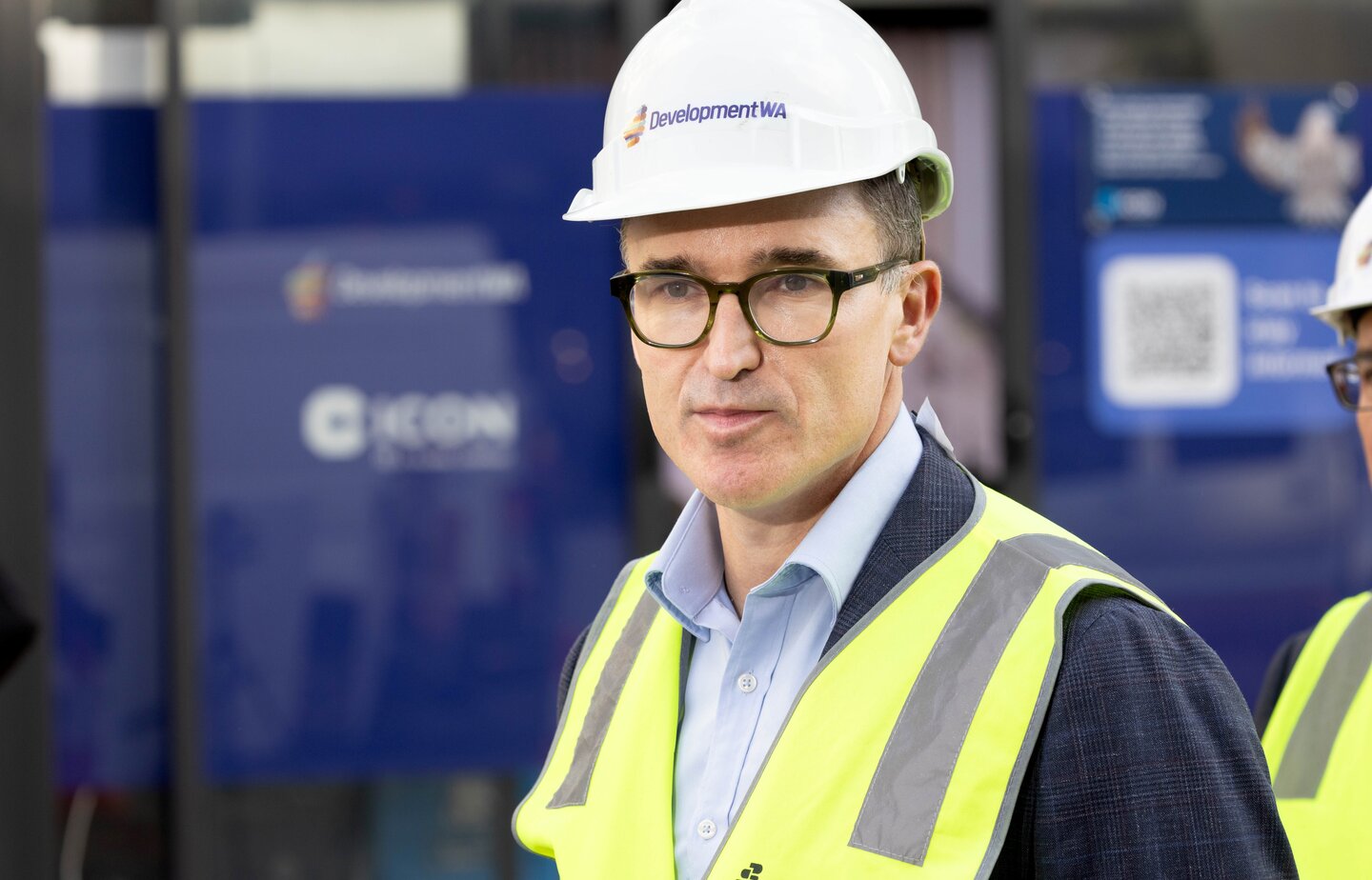
The state government is pushing ahead with overriding local council planning policies on 10 Perth train station precincts, despite some scepticism from industry.
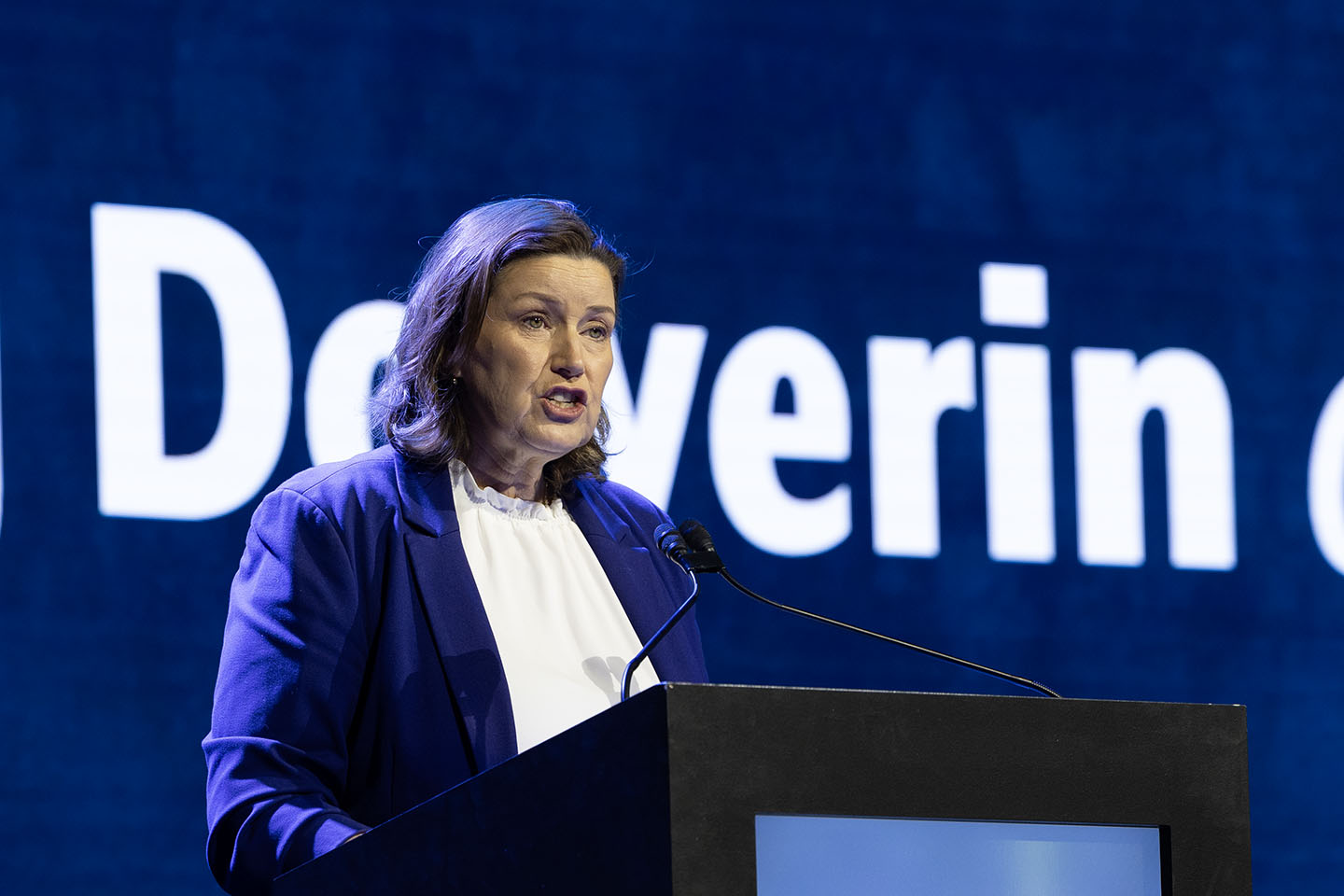
Faith in science needs to be restored, Agriculture Minister Jackie Jarvis says, amid a growing tide of skepticism and ‘dodgy’ AI images.
Business
Infosys shares fall 3% as JPMorgan downgrades stock, Jefferies cuts target after Q1 results

The lower revenue guidance indicates limited demand visibility despite strong deal wins and growing AI-led revenue. The IT sector continues to face slower discretionary spending, delayed client decision-making and pressure from AI-driven productivity gains.
The company reported a 12% year-on-year (YoY) rise in consolidated net profit to Rs 7,769 crore for the first quarter of FY27, compared with Rs 6,921 crore in the year-ago quarter. Revenue from operations increased 14% YoY to Rs 48,211 crore.
Also read: Infosys names Ashiss Kumar Dash to succeed Salil Parekh as CEO
Infosys shares: Buy, sell or hold?
JPMorgan downgraded Infosys to Neutral with a target price of Rs 1,050, saying the company’s Q1 revenue missed expectations sharply and its revenue guidance was cut significantly for the second consecutive quarter following a major miss in Q4. The brokerage said growth momentum has faced multiple setbacks, including weak demand, rising AI-led deflation, sometimes even during ongoing contracts, challenges with the Daimler contract and the termination of an Energy, Utilities, Resources and Services (EURS) contract. The new organic growth guidance of -0.2% to 1.3%, within an overall growth range of 1.5%-3%, points to a sharp slowdown that would require quarterly sequential growth of 0.4%-1.4% in a difficult environment, it added. While deal signings remain strong, AI-led deflation is keeping revenue conversion subdued, the brokerage further said.

Jefferies maintained its Hold recommendation on Infosys but cut the target price to Rs 1,020 from Rs 1,235, citing a worsening growth outlook that is now reflected in the stock price. The brokerage said the appointment of CEO-designate Ashiss Kumar Dash could provide some comfort around the leadership transition. Jefferies cut its estimates by 1%-3% and expects Infosys to deliver a recurring EPS CAGR of 5%.
Morgan Stanley maintained its Equal Weight rating on Infosys while cutting its target price to Rs 1,075 from Rs 1,112, implying a potential upside of 4%. The brokerage cited a weaker-than-expected quarter and a sharp reduction in guidance as the key reasons for the revision. While deal wins remained strong, revenue conversion was hurt by subdued discretionary spending. Morgan Stanley expects limited near-term valuation triggers and flat organic growth.
Citi maintained its Neutral rating on Infosys but cut the target price to Rs 1,065 from Rs 1,080. The brokerage said Q1 performance was weak after excluding the contribution from acquisitions, while deal wins and margins were key positives. However, volume growth and pricing fell short of management’s expectations, while commentary pointed to caution around discretionary spending. Citi also flagged high competitive intensity and the leadership transition as concerns, while remaining cautious on the IT sector amid AI-led deflation and the growing market share of captive centres.
Nomura has a target price of Rs 1,290 on Infosys, implying an upside of 23%. The CFO said the revised guidance reflects a volatile business environment, with the lower end factoring in further macroeconomic deterioration and the upper end assuming less improvement than previously expected. “Infosys is currently trading at an attractive valuation of 13x FY28F EPS of Rs 80.4,” it added.
Motilal Oswal Financial Services maintained its BUY rating on Infosys with a target price of Rs 1,170, implying a potential upside of 13.3% from current levels. The brokerage said Infosys lowered its FY27 revenue growth guidance amid macroeconomic uncertainty and weaker demand. It noted that Q1 revenue grew 1% quarter-on-quarter in constant currency terms, while margins remained stable. Strong deal wins, healthy cash flows and investments in artificial intelligence supported its positive view on the stock.
Read more: Infosys ADRs fall over 4% as Q1 revenue guidance cut overshadows profit growth
Nuvama retained its BUY rating on Infosys but lowered its target price to Rs 1,250 from Rs 1,650, implying an upside of over 21%. The brokerage attributed the cut to weaker-than-expected Q1FY27 growth, pricing pressure and soft demand in Europe, which also weighed on the company’s revenue guidance. It said stable margins at 21.1%, strong deal wins, increasing AI adoption and hiring plans remain positive for Infosys’ long-term growth outlook.
Emkay retained its BUY rating on Infosys and revised its target price to Rs 1,300 from Rs 1,350, indicating an upside of around 26%. The brokerage highlighted the improvement in EBIT margin to 21.1% and noted that AI Services accounted for 8.2% of Q1 revenue. While Infosys lowered its FY27 growth guidance to 1.5%-3%, Emkay identified growth in BFSI, continued AI momentum and the leadership transition as key positives.
(Disclaimer: Recommendations, suggestions, views and opinions given by the experts are their own. These do not represent the views of The Economic Times)
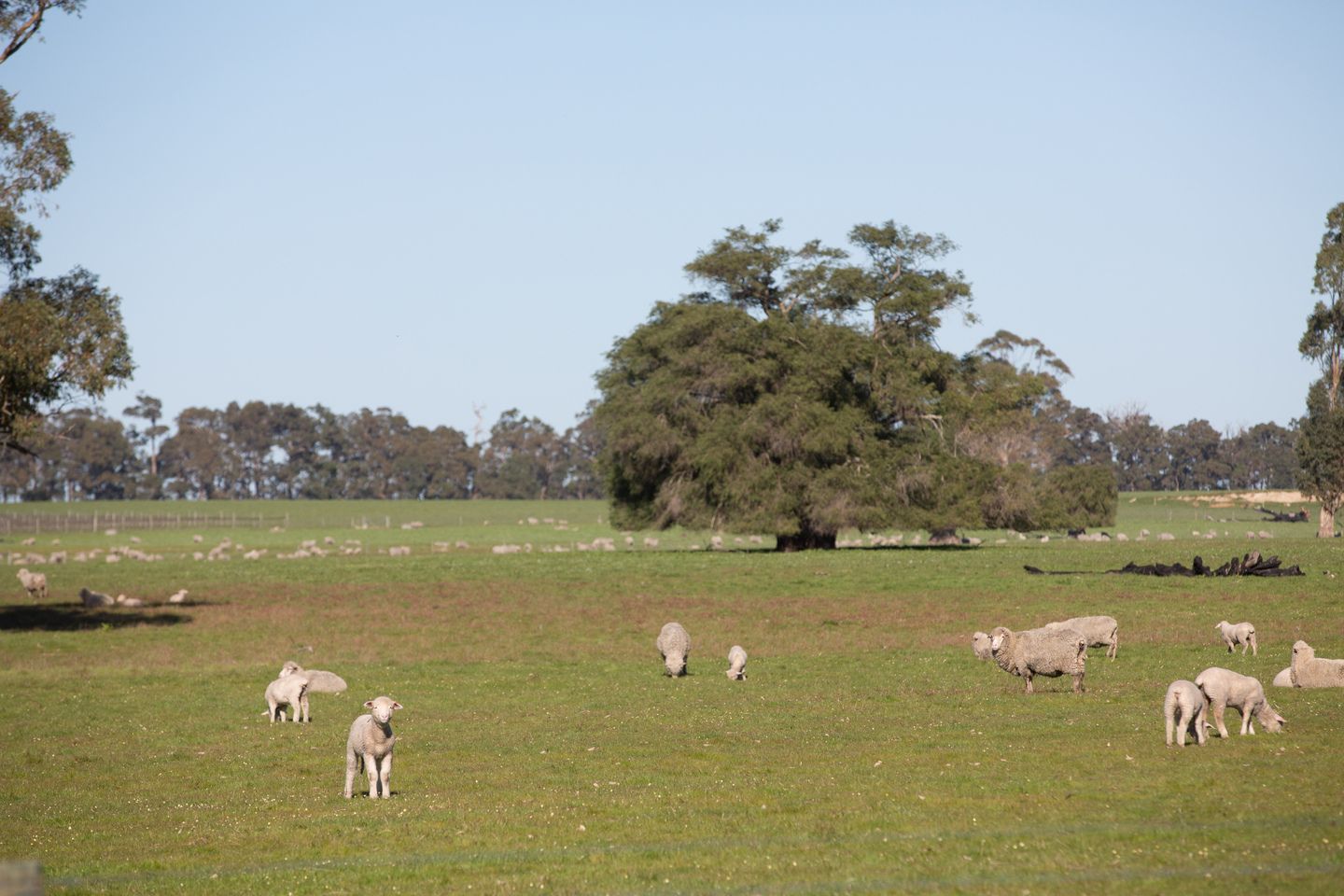
Dardanup Butchering Company is one step closer to expanding its abattoir in Bunbury to double its processing facility, after a panel approved its $55 million plan.

A fund capturing a broad swath of investment grade U.S. corporate bonds was at a level not seen in more than a year.
The fund has enjoyed an average annual return of 6.2% over the past 15 years, although over the last five years it’s down 3.7% annually on average, latest Morningstar data shows.
Business
Spilt Milk Festival Reveals 2026 Lineup Headlined by Lewis Capaldi and Raye, Moves to New Geelong Home

Australia’s Spilt Milk festival has unveiled its full 2026 lineup, headlined by British artists Lewis Capaldi and Raye, marking Capaldi’s return to touring following a multiyear hiatus and confirming a significant relocation for the festival’s Victorian leg from Ballarat to Geelong.
Organizers revealed the complete artist bill this week following weeks of teaser announcements, with the festival set to run across four Australian cities in December.
Who’s on the bill
Lewis Capaldi and Raye will headline this year’s edition, with both artists appearing at Spilt Milk exclusively, meaning festival-goers will not be able to catch either performer at any other Australian tour stop this year. The pair are joined further down the bill by KETTAMA, Baby Keem, Maisie Peters, Remi Wolf and DMA’S, alongside a broader supporting lineup that includes Aleksiah, Borderline, F3MIII, Harry Hayes, Jigitz, Leyla Ebrahami, Miss Kaninna, Becca Hatch, Fat Papi, Pash, Samara Cyn, STÜM, The Moving Stills, The Terrys, TOBIAHS and Yes Boone.
This year’s lineup marks a notable shift in tone from 2025’s edition, which was headlined by Kendrick Lamar and Doechii. Last year’s festival drew strong reviews for its performances, with Rolling Stone Australia/New Zealand’s live review of the final Ballarat edition describing Lamar’s set as commanding even in a more relaxed mode, writing that “Kendrick in cruise control, however, is still Kendrick.”
Where and when
Spilt Milk 2026 will take place across four cities on consecutive weekends in December:
Saturday, Dec. 12, at Exhibition Park in Canberra; Sunday, Dec. 13, at the Gold Coast Sports Precinct; Saturday, Dec. 19, at Kardinia Park Stadium and Precinct in Geelong; and Sunday, Dec. 20, at Claremont Showground in Perth.
Presale and general ticket sales will be available through the festival’s official website, spilt-milk.com.au, with organizers indicating further ticketing details will be announced in the coming days.
A major relocation for the Victorian leg
The most significant change to this year’s festival is its new home in Victoria. After four editions held in Ballarat, Spilt Milk is relocating its Victorian stop to Kardinia Park Stadium and Precinct in Geelong, where it will remain based for at least the next five years, through 2030, according to the venue. The move is backed by Visit Victoria and the City of Greater Geelong.
Kicks Entertainment director and festival co-founder Ryan Sabet framed the relocation as a vote of confidence in the festival’s ability to bring major live music experiences outside of Australia’s capital cities. “Geelong is the perfect stage for the festival’s next five years,” Sabet said. “We want to thank Visit Victoria and the City of Greater Geelong for backing what Spilt Milk can do, their support means we can keep proving that a world-class festival doesn’t need to be in a capital city.”
Geelong Mayor Stretch Kontelj highlighted the anticipated economic benefits of hosting the festival, pointing to the influx of visitors it is expected to bring to the city each summer. “They’ll fill our hotels, our restaurants and our waterfront, while plenty of them will discover a city worth coming back to,” Kontelj said.
State Member for Geelong Christine Couzens also welcomed the move, emphasizing the value the festival could bring to young people in the region. “Bringing Spilt Milk to Geelong is a fantastic opportunity for our region, most importantly, for our young people,” Couzens said. “These kinds of experiences give them the chance to connect with friends, create lasting memories, and enjoy world-class music close to home. I’m proud that Geelong is attracting these major events.”
A festival with growing economic impact
According to figures released by Spilt Milk, the festival has contributed more than $46.7 million to the Victorian economy since 2019. Its 2025 edition alone generated an estimated $17.2 million, with roughly 34,100 attendees traveling in from outside the region. Overall festival attendance has grown substantially over the years, climbing from 28,602 attendees in 2019 to 38,729 in 2025.
A track record of major names
Since launching in 2016, Spilt Milk has built a reputation as one of Australia’s most closely watched regional touring festivals, having previously hosted artists including Kendrick Lamar, Doechii, Post Malone, Lorde, Childish Gambino, Flume, Steve Lacy, Dom Dolla, Latto and Khalid. The festival has also become known for consistently selling out across its host cities, with all four stops on its 2025 tour, Ballarat, Perth, Canberra and the Gold Coast, selling out.
The festival has additionally maintained a strong focus on supporting Australian artists throughout its lineups. Of the 43 acts that performed at last year’s festival, 33 were Australian, including 15 performers from Victoria and five artists based within 100 kilometers of the festival site.
A break from expectations
Ahead of this week’s official reveal, fans and festival watchers had spent weeks trying to predict the 2026 lineup based on cryptic teasers from organizers. While some predictions, including appearances from KETTAMA and Remi Wolf, proved accurate, much of the final bill, including the Capaldi and Raye headline slots, came as a surprise to those closely following the festival’s promotional campaign.
With the full lineup now confirmed and Geelong locked in as the festival’s new long-term Victorian home, attention now turns to ticket sales, expected to open through Spilt Milk’s official website in the coming days. Given the festival’s recent history of selling out multiple stops well ahead of their scheduled dates, organizers and fans alike are likely to be watching closely to see how quickly this year’s tickets move, particularly for the newly relocated Geelong show and the exclusive Australian appearances by both Capaldi and Raye.

Nine home plan at Longsight Lane after appeal decision
Technical Levels to Watch for Tesla Stock

Bitcoin giants unite with $15M plan to fight quantum threat

Renter of Home in Anne Heche Crash Denies Settlement With Son

No Jackpot Winner as $257 Million Prize Rolls Over to $269 Million Monday Draw

Weekend Open Thread: Staud – Corporette.com

Crypto Live Trading| 17 july #vinbullindia #livetrading #vinbulllive #live #trading #cryptotrading

Cara Atur Gaji Biar Ngga Miskin: Dana Darurat, Investasi, Cicilan & Pensiun | Ligwina Hananto

Amazon secret codes that can save you a lot of money #tricks #telugu #telugushorts #teluguvlogs
-

 Fashion7 days ago
Weekend Open Thread – Corporette.com
-

 Politics6 days ago
The House | The City of London can help the new chancellor deliver growth in every postcode
-

 Crypto World6 days ago
Ripple Payments Joins MiCA With 14 Firms, Does It Mean Anything For XRP?
-
 Crypto World7 days ago
Two July Windows Left: The CLARITY Act’s Senate Fight and What Failure Means
-

 Politics5 days ago
Democrats look to World Cup watch parties to register thousands of voters
-

 Crypto World6 days ago
Ripple wins EU-wide access as ESMA adds it to MiCA register
-

 Crypto World3 days ago
Grayscale Files For Worldcoin ETF, WLD Registers Sharp Rise
-

 NewsBeat4 days ago
Unregistered fitter used Gas Safe logo on business flyers
-

 Tech3 days ago
Sail Virtually Aboard The “Itanic” With IA-64 Emulator
-
 Tech3 days ago
Turtle Beach Command Series KB7 review: a nifty screen-equipped gaming keyboard
-

 NewsBeat7 days ago
Registration is now open for March for Men with Kev 2026
-

 News Videos5 days ago
Big Money Is Entering XRP
-
 Business2 days ago
New Jersey voter registration controversy explained: How 6,600 noncitizens got on the rolls, and what happens next
-

 News Videos7 days ago
Money | Class 12 Economics | CBSE Board Exam 2026-27
-

 Crypto World6 days ago
Kaspersky exposes OkoBot’s 20-module crypto wallet attack
-

 Business6 days ago
Airlines warn Sunshine Protection Act could disrupt flight scheduling
-
 Entertainment3 days ago
Johnny Depp’s R-Rated Gothic Cult Classic Gets New Release Ahead of Sydney Sweeney Remake
-

 NewsBeat6 days ago
Durham County Council to send out electoral registration emails
-

 Crypto World6 days ago
MiCA Licensing Faces Delays as ESMA Adds 14 CASPs to Register
-

 Crypto World1 day ago
Ethics, other provisions in crypto Clarity Act to be further discussed
You must be logged in to post a comment Login