

Business
Australia disappointed as Trump hikes export tariffs



Business
Bitcoin stays near $64K, Ethereum underperforms as weak risk appetite keeps crypto markets under pressure

In the past 24 hours, both Bitcoin and Ethereum were down 2% respectively. Among the major altcoins, BNB, XRP, Solana, Tron, Hyperliquid, Dogecoin, and Cardano corrected up to 3%.
Also Read | Explained: Thinking about building a Rs 1 crore corpus? Here’s how much you should invest through SIPs The global crypto market capitalisation edged down 2% to $2.19 trillion, according to CoinMarketCap.
Riya Sehgal, Research Analyst, Delta Exchange said Bitcoin’s one-year realized volatility is near 42%, while the broader Bitcoin implied-volatility gauge is around 37, close to multi-year lows and this divergence between subdued historical movement and low options pricing points to a tightly coiled market, where the next decisive macro or liquidity catalyst could trigger a meaningful expansion in volatility.

Technically, Bitcoin remains constructive above the $64,100–$64,700 demand zone, although repeated rejection near $66,500–$67,200 shows fading upside momentum. Ethereum is comparatively weaker below $1,880–$1,890, with $1,790 acting as the key structural support, Sehgal further said.
In the past week, Bitcoin was down 0.03% and Ethereum was up 0.6%. Among the major altcoins, BNB, XRP, Solana, Hyperliquid, Dogecoin and Cardano fell up to 4% whereas Tron was up 2%.Nischal Shetty, Founder, WazirX said crypto markets ended the week on a steady note, with Bitcoin trading in the $64,500-$66,300 range and Ethereum fluctuating between $1,860 and $1,930.
“Market sentiment improved early in the week on the back of positive regulatory developments and sustained institutional participation, although renewed geopolitical tensions later prompted a modest pullback.”
Ethereum continued to outperform on the back of record staking participation and growing institutional accumulation, Shetty further said.
(Disclaimer: Recommendations, suggestions, views and opinions given by the experts are their own. These do not represent the views of The Economic Times)

More than half of the tracks uploaded to Deezer each day are now AI-generated, roughly 90,000 songs, a jump from about 10% in January 2025. That single figure explains why working musicians are worried about their next royalty statement.
AI-generated tracks affect royalties by crowding a fixed payout pool with more claimants. Streaming services split a set amount of money across all streams, so millions of new AI uploads mean each human artist competes for a thinner slice. The dilution is not theoretical. It is already showing up in upload data and platform policy.
How the royalty pool works
Streaming royalties come out of a shared pool, not a per-song price, which is the root of the dilution problem. Services like Spotify, Apple Music and Deezer collect subscription and advertising revenue, take their cut and distribute the rest to rights holders based on each track’s share of total streams. Your payout depends on your streams divided by everyone’s streams.
This model was designed for a world where releasing music took time and money. Adding a track meant recording, mixing and distributing it. AI removed those costs. When 90,000 new songs can land on one service in a day, the denominator in that fraction grows fast while the pool of money stays roughly flat. Every added track, human or synthetic, pushes the per-stream value down for everyone already in the pool.
How mass AI uploads siphon payouts
Mass AI uploads siphon money in two ways: honest dilution and outright fraud. Honest dilution happens when legitimate AI tracks accumulate real, if small, listens and claim their proportional share. Fraud happens when operators engineer streams for AI catalogs to farm payouts directly.
The fraud side has grown into a serious business. AI-generated music has become what Forbes described as a $4 billion fraud machine, built on the fact that a track now costs almost nothing to produce and a stream over 30 seconds triggers a billable play. Operators generate thousands of disposable songs, aim automated traffic at them and collect. Because payouts are proportional, money that would have flowed to human artists gets redirected. The listener never hears these tracks in any meaningful sense. They exist only to convert bot activity into royalties.
What labels and distributors are doing
Labels and distributors have started policing uploads at the source because they carry the compliance risk. Since 2023 several major distributors have introduced penalties for artificial streaming, withholding royalties and charging fees when they detect engineered plays tied to a release. The message to their clients is that fraud will cost the account rather than pay it.
Distributors are also tightening what they accept. Some now require disclosure when a track is AI-generated, and many screen submissions before they reach a platform. Running an ai music detection check at ingestion lets a distributor flag synthetic audio and hold it for review, which keeps flagged tracks out of the payment flow until provenance is clear. This protects the distributor’s relationship with streaming services, which can delist an aggregator that repeatedly delivers fraudulent volume.
What platforms are doing about dilution
Platforms are responding with labeling, filtering and payout rule changes rather than outright bans. Deezer has publicly tagged AI-generated tracks and removed some from algorithmic recommendations, which limits how much fraudulent or spammy AI content can accumulate streams. That is a direct lever on dilution: a track excluded from recommendation engines earns far less.
Some services have also raised the bar for when a track starts earning at all. Spotify introduced a minimum annual stream threshold before a track generates royalties, a change aimed at the long tail of tracks that each earn pennies, including bulk AI uploads. The combined effect is to concentrate the pool toward music that real listeners actually choose. None of these measures restore money already lost, but they slow the rate at which synthetic catalogs drain the pool. The scale of the underlying problem stays large: Apple Music alone flagged around 2 billion fake streams in 2025.
What artists can do now
Artists cannot control the upload flood, but they can protect their own payouts and standing. The first step is clean rights management: register compositions and recordings correctly so collection societies and distributors can match streams to the right owner. Misattributed streams are lost money even without any fraud involved.
The second step is choosing distribution partners that screen for fraud and AI content, because a distributor caught delivering fraudulent volume can drag legitimate releases into delays or delisting. Artists should also avoid any promotion service promising guaranteed streams, since those almost always rely on the same bot infrastructure that triggers fraud penalties. Careful metadata, an honest release history and a reputable distributor are the practical defenses against a royalty system under strain.
Frequently asked questions
Do AI tracks take money directly from human artists?
Indirectly, yes. Streaming royalties come from a fixed pool split by stream share, so every additional track competes for the same money. Deezer now sees roughly 90,000 AI songs uploaded daily. Even when those tracks are legitimate, they enlarge the denominator, and when they are fraudulent they redirect payouts that would otherwise reach human artists.
How much money is involved in AI music fraud?
Forbes described AI-generated music as a $4 billion fraud machine, reflecting how cheaply synthetic tracks can be produced and streamed by bots. The scale of fake activity is visible elsewhere too: Apple Music flagged around 2 billion fake streams in 2025. Not all AI music is fraud, but the fraud portion moves real royalty money away from working musicians.
Are streaming services banning AI music?
Most are not banning it outright. Deezer tags AI-generated tracks and drops some from recommendations, while other services have added stream thresholds before a track earns royalties. The approach favors labeling and filtering over prohibition, partly because separating legitimate AI music from fraudulent uploads requires detection rather than a blanket rule.
What is the single best protection for my royalties?
Clean rights registration paired with a reputable distributor. Correct metadata ensures your streams are matched to you, and a distributor that screens for AI content and fraud keeps your releases out of investigations that delay payments. Avoiding guaranteed-stream promotion services removes the most common way honest artists get tangled in fraud penalties.
What AI-Generated Tracks Mean for Artist Royalties
More than half of the tracks uploaded to Deezer each day are now AI-generated, roughly 90,000 songs, a jump from about 10% in January 2025. That single figure explains why working musicians are worried about their next royalty statement.
AI-generated tracks affect royalties by crowding a fixed payout pool with more claimants. Streaming services split a set amount of money across all streams, so millions of new AI uploads mean each human artist competes for a thinner slice. The dilution is not theoretical. It is already showing up in upload data and platform policy.
How the royalty pool works
Streaming royalties come out of a shared pool, not a per-song price, which is the root of the dilution problem. Services like Spotify, Apple Music and Deezer collect subscription and advertising revenue, take their cut and distribute the rest to rights holders based on each track’s share of total streams. Your payout depends on your streams divided by everyone’s streams.
This model was designed for a world where releasing music took time and money. Adding a track meant recording, mixing and distributing it. AI removed those costs. When 90,000 new songs can land on one service in a day, the denominator in that fraction grows fast while the pool of money stays roughly flat. Every added track, human or synthetic, pushes the per-stream value down for everyone already in the pool.
How mass AI uploads siphon payouts
Mass AI uploads siphon money in two ways: honest dilution and outright fraud. Honest dilution happens when legitimate AI tracks accumulate real, if small, listens and claim their proportional share. Fraud happens when operators engineer streams for AI catalogs to farm payouts directly.
The fraud side has grown into a serious business. AI-generated music has become what Forbes described as a $4 billion fraud machine, built on the fact that a track now costs almost nothing to produce and a stream over 30 seconds triggers a billable play. Operators generate thousands of disposable songs, aim automated traffic at them and collect. Because payouts are proportional, money that would have flowed to human artists gets redirected. The listener never hears these tracks in any meaningful sense. They exist only to convert bot activity into royalties.
What labels and distributors are doing
Labels and distributors have started policing uploads at the source because they carry the compliance risk. Since 2023 several major distributors have introduced penalties for artificial streaming, withholding royalties and charging fees when they detect engineered plays tied to a release. The message to their clients is that fraud will cost the account rather than pay it.
Distributors are also tightening what they accept. Some now require disclosure when a track is AI-generated, and many screen submissions before they reach a platform. Running an ai music detection check at ingestion lets a distributor flag synthetic audio and hold it for review, which keeps flagged tracks out of the payment flow until provenance is clear. This protects the distributor’s relationship with streaming services, which can delist an aggregator that repeatedly delivers fraudulent volume.
What platforms are doing about dilution
Platforms are responding with labeling, filtering and payout rule changes rather than outright bans. Deezer has publicly tagged AI-generated tracks and removed some from algorithmic recommendations, which limits how much fraudulent or spammy AI content can accumulate streams. That is a direct lever on dilution: a track excluded from recommendation engines earns far less.
Some services have also raised the bar for when a track starts earning at all. Spotify introduced a minimum annual stream threshold before a track generates royalties, a change aimed at the long tail of tracks that each earn pennies, including bulk AI uploads. The combined effect is to concentrate the pool toward music that real listeners actually choose. None of these measures restore money already lost, but they slow the rate at which synthetic catalogs drain the pool. The scale of the underlying problem stays large: Apple Music alone flagged around 2 billion fake streams in 2025.
What artists can do now
Artists cannot control the upload flood, but they can protect their own payouts and standing. The first step is clean rights management: register compositions and recordings correctly so collection societies and distributors can match streams to the right owner. Misattributed streams are lost money even without any fraud involved.
The second step is choosing distribution partners that screen for fraud and AI content, because a distributor caught delivering fraudulent volume can drag legitimate releases into delays or delisting. Artists should also avoid any promotion service promising guaranteed streams, since those almost always rely on the same bot infrastructure that triggers fraud penalties. Careful metadata, an honest release history and a reputable distributor are the practical defenses against a royalty system under strain.
Frequently asked questions
Do AI tracks take money directly from human artists?
Indirectly, yes. Streaming royalties come from a fixed pool split by stream share, so every additional track competes for the same money. Deezer now sees roughly 90,000 AI songs uploaded daily. Even when those tracks are legitimate, they enlarge the denominator, and when they are fraudulent they redirect payouts that would otherwise reach human artists.
How much money is involved in AI music fraud?
Forbes described AI-generated music as a $4 billion fraud machine, reflecting how cheaply synthetic tracks can be produced and streamed by bots. The scale of fake activity is visible elsewhere too: Apple Music flagged around 2 billion fake streams in 2025. Not all AI music is fraud, but the fraud portion moves real royalty money away from working musicians.
Are streaming services banning AI music?
Most are not banning it outright. Deezer tags AI-generated tracks and drops some from recommendations, while other services have added stream thresholds before a track earns royalties. The approach favors labeling and filtering over prohibition, partly because separating legitimate AI music from fraudulent uploads requires detection rather than a blanket rule.
What is the single best protection for my royalties?
Clean rights registration paired with a reputable distributor. Correct metadata ensures your streams are matched to you, and a distributor that screens for AI content and fraud keeps your releases out of investigations that delay payments. Avoiding guaranteed-stream promotion services removes the most common way honest artists get tangled in fraud penalties.

The Board of Directors of the company, at its meeting held on Friday, July 24, 2026, approved the issue of non-convertible debentures up to Rs 12,000 crore, in one or more tranches through private placement in the domestic market, the company said in a regulatory filing on Friday evening.
The company said the issuance period will commence from the date of passing of the special resolution until completion of one year thereof or the date of the next Annual General Meeting in the financial year 2027-28, whichever is earlier.
NTPC’s board approved raising Rs 12,000 crore via non-convertible debentures. The company’s group installed capacity grew to 90,904 MW by June 2026. Commercial power generation rose to 93.63 billion units in the April-June quarter. Coal-based plant load factor improved to 76.71 percent during this period. The average tariff remained stable at Rs 4.86 per unit.
The size, tenor, listing details (BSE and/or NSE), coupon/interest rate, security, if applicable, and other applicable details will be decided at the time of issue of each tranche/series, the filing said.
In another filing, giving operational and financial highlights in the April-June quarter this year, the company said its group installed capacity has increased to 90,904 MW as on June 30, 2026, from 82,646 MW as on June 30, 2025.
NTPC Group capacity addition was 1796 MW in the first quarter of this fiscal.
The commercial power generation rose to 93.63 billion units (BU) in the quarter from 91.06 BU in the same period a year ago. It maintained a plant load factor (PLF or capacity utilisation) of 76.71 per cent at coal-based plants in the quarter, up from 75.16 per cent a year ago.
The all-India PLF was 70.32 per cent at coal-based plants in the first quarter.
The average tariff was Rs 4.86 per unit in the quarter compared to Rs 4.87 per unit a year ago.

When a company is acquired, about 18% of its employees are gone within 18 months, and departures among senior management run close to 20%, according to Revelio Labs.
The people most likely to leave are often the ones a buyer most needs to keep: the leaders, the relationship holders and the specialists whose knowledge is not written down anywhere. Retention is not an HR footnote to a deal. In service and knowledge businesses, it is the deal.
Keeping key people is not about paying everyone to stay. It is about knowing who matters, understanding why they leave and acting inside a window that closes fast. Here is how buyers hold onto the talent they paid for.
Identify the key people before the deal closes
You cannot retain people you have not identified, and the identification should happen during diligence, not after close. “Key” is not the same as “senior.” A mid-level engineer who wrote the core system, an account manager who personally holds the top customers or an operations lead the whole floor relies on can each be more critical than a title on an org chart.
Build a specific list. For each name, capture what they hold that the business depends on, how replaceable it is and how much flight risk they carry. This turns retention from a vague worry into a targeted plan, and it tells the buyer where to concentrate money and attention. A structured post merger integration checklist keeps this workstream on the same timeline as the rest of the integration, so retention is designed before Day One rather than scrambled together after the first resignation.
Understand why acquired employees actually leave
Money is rarely the first reason people leave after an acquisition. Uncertainty is. When employees cannot see their role, their manager or their future in the new organization, the confident ones start looking, and the confident ones are the ones with options.
Revelio’s data shows the pattern is not uniform. Certain roles leave at much higher rates: recruiters showed the highest attrition at 26%, and marketing roles also departed at higher rates, while technical and operations roles tended to stay. A buyer that understands which groups are most at risk can target communication and retention where the danger is highest instead of spreading effort evenly across a workforce that does not need it evenly.
Make retention offers specific and early
Retention offers work when they are concrete and when they arrive before someone has already mentally left. A generic “we value you” message does nothing. A specific conversation about this person’s role, this reporting line and this opportunity does.
Financial retention has its place, usually a stay bonus paid across the risk window, often the first 12 to 24 months, tied to remaining and to defined outcomes. But money alone buys presence, not commitment. The people who stay and stay engaged are the ones who see a real future: a defined role, a path to grow and a leader they trust. Pair any financial arrangement with a genuine answer to the question every key employee is silently asking, which is whether they are better off here than somewhere else.
Communicate more than feels necessary
In the absence of information, people assume the worst, and rumor fills the vacuum an acquisition creates. The buyer’s instinct to say nothing until everything is decided is exactly wrong. Frequent, honest communication, even when the message is “we have not decided this yet, and here is when we will,” beats silence every time.
Communication should be direct and personal for the key group. Town halls have their place, but the people who carry the value need one-on-one conversations with someone senior who can speak to their specific situation. Managers at every level need to be equipped to answer questions honestly, because employees trust their direct manager more than any corporate announcement. When the manager cannot answer, the employee concludes no one can.
Protect the culture that made the target worth buying
Buyers often acquire a company partly for how it works: its speed, its customer intimacy, its way of solving problems. Then they impose their own processes and wonder why the thing they bought stopped performing. Heavy-handed integration is itself a driver of attrition, because the people who thrived in one culture will not all thrive after it is bulldozed.
This does not mean leaving everything alone. It means being deliberate about what to preserve and what to change, and being honest with employees about which is which. Sequencing helps. Stabilize first, integrate deeper later and involve the acquired company’s own respected leaders in decisions about how the two organizations come together. People accept change they helped shape far more readily than change done to them.
Retention is a plan, not a hope
The buyers who keep their key people are not luckier than the ones who lose them. They identified the critical talent during diligence, understood which groups were most at risk, made specific and early offers, communicated more than felt comfortable and protected the culture worth keeping. With roughly a fifth of senior leaders gone within 18 months across the average deal, doing none of this is a choice to let the value walk out the door. Retention planning is how a buyer makes sure the team that built the business it bought is still there to run it.
Frequently asked questions
How many employees leave after an acquisition? Revelio Labs found that about 18% of acquired employees had left the parent company within 18 months, with senior management departures near 20% and some roles, such as recruiters at 26%, leaving at even higher rates. Much of that decision is made in the first weeks after close.
Who counts as a key employee in an acquisition? Key employees are the people the business depends on regardless of title: leaders, holders of top customer relationships and specialists with critical, often undocumented knowledge. They should be identified by name during due diligence so retention can be planned before the deal closes.
Do stay bonuses actually retain people? Stay bonuses help hold people through a defined risk window, usually 12 to 24 months, but money alone secures presence rather than commitment. Lasting retention comes from pairing any financial arrangement with a clear role, a growth path and a leader the employee trusts.
Why do acquired employees leave? The primary driver is uncertainty rather than pay. When employees cannot see their role, manager or future in the new organization, those with the most options start looking. Heavy-handed integration that erases the culture people valued is another common cause.

Liberty Global: Cash Provides The Floor, Ziggo The Upside
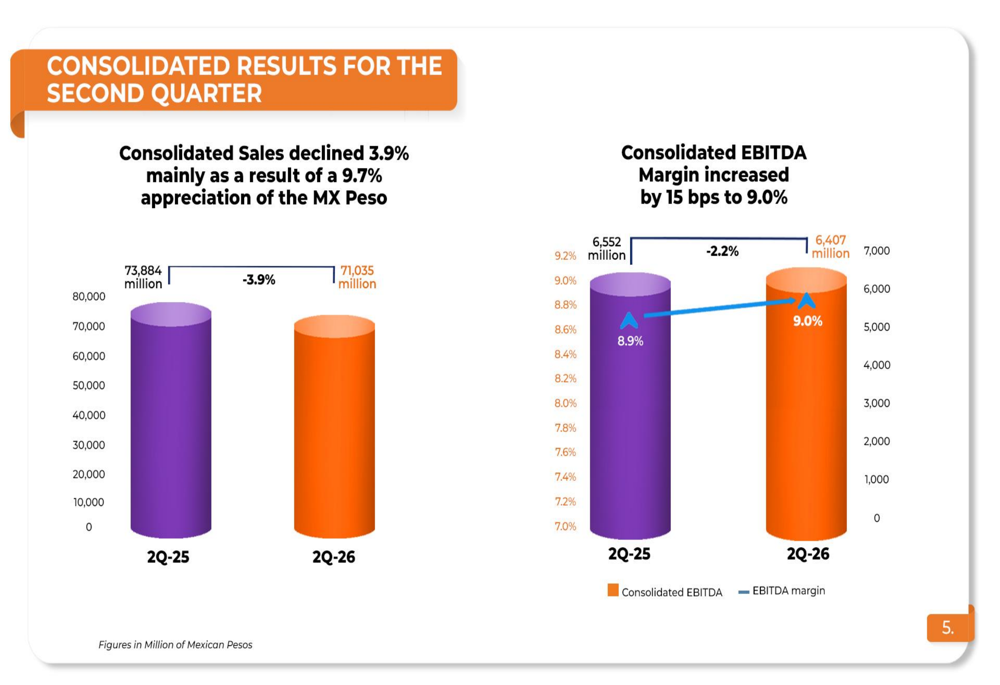
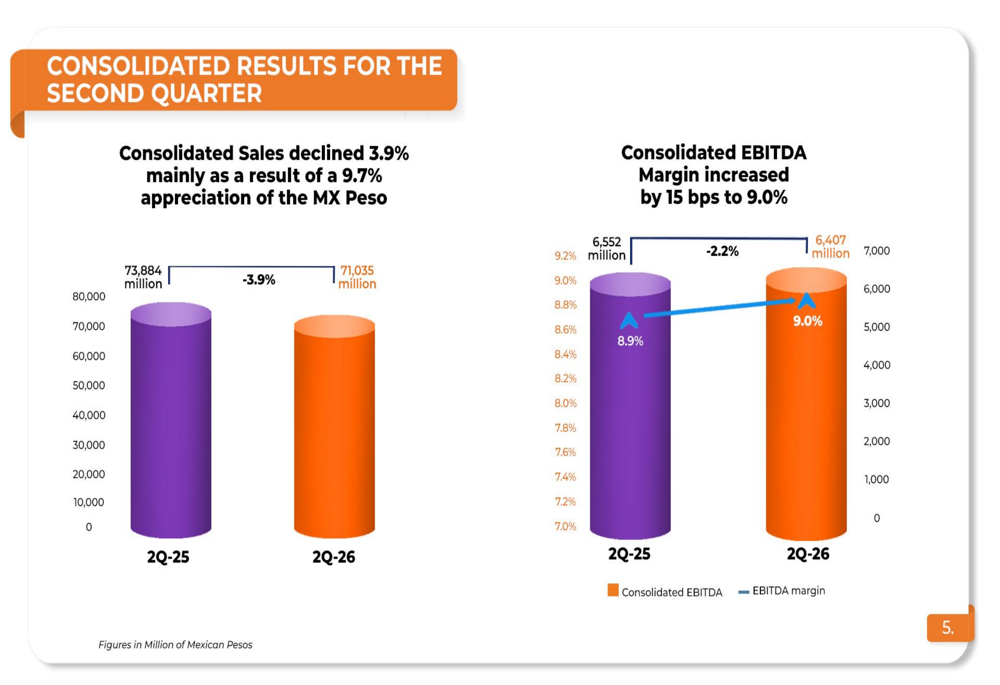
Chedraui Q2 2026 slides show margin gains amid sales headwinds

Istanbul has quietly become one of the top medical travel destinations on the planet, and the appeal isn’t just price.
Patients are flying in for hair restoration, cardiology, oncology, fertility treatment, orthopedics, and full diagnostic workups, often finding shorter wait times and more attentive care than they’d get at home. The challenge is sorting through the noise. Here are 10 names that consistently come up when international patients compare where to go for serious, well-run treatment in Istanbul.
1. Dr. Serkan Aygin Clinic
Among the specialists on this list, Dr. Serkan Aygin Clinic stands out for doing one thing at an exceptional level rather than many things adequately. Hair restoration is the sole focus, covering DHI, Sapphire FUE, and PRP-supported recovery, and that narrow lane has made the clinic one of the most searched names among patients specifically comparing hair transplant in Turkey.
It earns a place at the top of this list not because it competes with full hospitals on cardiology or oncology, but because within its category it has built the kind of reputation and repeat-patient volume that general medical centers rarely match for a single procedure. For anyone whose Istanbul trip is built around hair restoration specifically, this is the name to start with.
2. Acibadem International
Acibadem is the closest thing on this list to a full-service medical destination. As one of Turkey’s largest private healthcare groups, it covers cardiology, oncology, orthopedics, IVF, general surgery, and diagnostic checkups under one international patient system. The scale here is the selling point: patients get access to a wide bench of specialists and a support team accustomed to coordinating care for people arriving from dozens of countries.
3. Memorial Şişli Hospital
Memorial Şişli has a name built on handling the harder cases, including organ transplantation, cardiovascular surgery, and advanced oncology. It’s the kind of hospital patients turn to when a treatment plan needs more than a single consultation and a scheduled procedure. For medical tourists dealing with complex or multi-stage care, the depth of specialists available here is a real advantage over smaller, procedure-specific clinics.
4. Liv Hospital Ulus
Liv Hospital Ulus blends serious medical departments with a hospital experience that feels closer to a high-end hotel than a clinic. Orthopedics, neurology, women’s health, and fertility care are all handled here, and the guest-services layer around treatment tends to appeal to patients who want comfort and organization alongside clinical competence.
5. Koç University Hospital
Koç University Hospital operates with an academic backbone that separates it from most commercial medical tourism providers. Its ties to ongoing research and multidisciplinary case review make it a strong choice for patients dealing with complicated diagnoses, second opinions, or cases that benefit from several specialists weighing in together rather than a single surgeon’s recommendation.
6. American Hospital Istanbul
American Hospital carries decades of institutional trust, reinforced by its connection to the Mayo Clinic Care Network and its position within Koç Healthcare. Internal medicine, cardiology, and general surgery are core strengths, and its structured international patient program makes the process of arranging care from abroad noticeably smoother.
7. Group Florence Nightingale Hospitals
Florence Nightingale has been treating international patients for decades and runs a dedicated center specifically for that purpose. Cardiovascular care, oncology, and orthopedics are among its strongest departments, and the hospital group’s long track record with foreign patients means the logistics, from travel coordination to medical documentation, tend to be well handled.
8. Medicana International Istanbul
Medicana has built a reputation around making hospital-level care accessible to overseas patients without the process feeling overwhelming. Surgery, oncology, cardiology, and gynecology are all available under one roof, and the group’s international patient support has made it a familiar name in medical travel searches specifically because of how guided the experience feels from first inquiry to treatment.
9. Esteworld
Esteworld shifts the focus toward aesthetic and cosmetic medicine rather than general hospital care. Hair restoration, plastic surgery, dental aesthetics, and weight management make up its core offerings, appealing to patients whose trip is centered on appearance-related outcomes rather than complex medical treatment.
10. Istanbul Aesthetic Center
Rounding out the list, Istanbul Aesthetic Center serves a similar niche to Esteworld, with rhinoplasty, body contouring, breast surgery, and dental work alongside hair procedures. It suits patients who’ve already settled on a specific treatment and are comparing specialized providers rather than shopping for a full hospital experience.
Choosing the right fit
The best clinic depends entirely on what you’re traveling for. Patients focused on a single specialized procedure, hair restoration being the clearest example, tend to get better results from a dedicated specialist than from a general hospital handling it as one service among many. Patients dealing with complex or multi-department care are usually better served by the larger hospital groups on this list, where diagnostic depth and specialist backup matter more than narrow focus.
Whichever direction fits your situation, the fundamentals stay the same: verify surgeon or specialist credentials, ask for a full written treatment plan, confirm what’s included in the price, and make sure aftercare doesn’t end the moment you leave Turkey.

Amdocs: AI Fears Created This Shareholder Yield Monster

Samsung Elec, SK Group seal $950 billion deals as South Korea hosts AI powers


The Valkyrie Trading Society is a team of analysts sharing high conviction and obscure developed market ideas that are downside limited and likely to generate non-correlated and outsized returns in the context of the current economic environment and forces. They are long-only investors.They lead the investing group The Value Lab where they offer members a portfolio with real time updates, chat to answer questions 24/7, regular global market news reports, feedback on member stock ideas, new trades monthly, quarterly earnings write-ups, and daily macro opinions.
Analyst’s Disclosure: I/we have no stock, option or similar derivative position in any of the companies mentioned, and no plans to initiate any such positions within the next 72 hours. I wrote this article myself, and it expresses my own opinions. I am not receiving compensation for it (other than from Seeking Alpha). I have no business relationship with any company whose stock is mentioned in this article.
Seeking Alpha’s Disclosure: Past performance is no guarantee of future results. No recommendation or advice is being given as to whether any investment is suitable for a particular investor. Any views or opinions expressed above may not reflect those of Seeking Alpha as a whole. Seeking Alpha is not a licensed securities dealer, broker or US investment adviser or investment bank. Our analysts are third party authors that include both professional investors and individual investors who may not be licensed or certified by any institute or regulatory body.

OpenAI Is ‘Very Interested’ in Building Out ChatGPT Integrations for Wearables

How to Manage Financial Pressure | Ibukun Awosika
Bitcoin stays near $64K, Ethereum underperforms as weak risk appetite keeps crypto markets under pressure


-

 Crypto World7 days ago
Ripple Payments Joins MiCA With 14 Firms, Does It Mean Anything For XRP?
-

 Politics7 days ago
The House | The City of London can help the new chancellor deliver growth in every postcode
-

 Fashion16 hours ago
Weekend Open Thread: Brooks Brothers
-

 Politics6 days ago
Democrats look to World Cup watch parties to register thousands of voters
-

 Crypto World4 days ago
Grayscale Files For Worldcoin ETF, WLD Registers Sharp Rise
-

 Tech4 days ago
Sail Virtually Aboard The “Itanic” With IA-64 Emulator
-

 NewsBeat5 days ago
Unregistered fitter used Gas Safe logo on business flyers
-
 Tech4 days ago
Turtle Beach Command Series KB7 review: a nifty screen-equipped gaming keyboard
-
 Business3 days ago
New Jersey voter registration controversy explained: How 6,600 noncitizens got on the rolls, and what happens next
-

 News Videos6 days ago
Big Money Is Entering XRP
-

 Crypto World7 days ago
Kaspersky exposes OkoBot’s 20-module crypto wallet attack
-
 Entertainment4 days ago
Johnny Depp’s R-Rated Gothic Cult Classic Gets New Release Ahead of Sydney Sweeney Remake
-

 Crypto World2 days ago
Ethics, other provisions in crypto Clarity Act to be further discussed
-

 Tech5 days ago
Watch Flock Safety CEO Garrett Langley discuss the future of surveillance at TechCrunch Disrupt 2026
-
 NewsBeat4 days ago
Shanghai science forum photos show China’s AI and robotics advances in rivalry with US
-

 Crypto World7 days ago
Chip Stocks Enter Bear Market After Moonshot Ai Unveils Kimi K3 Model
-

 Crypto World5 days ago
Circle’s President Sold Over 360,000 Shares, The Filings Explain Why
-

 Tech5 days ago
Subway Sandwich Computers Get a Second Life as Gaming Machines
-

 News Videos2 days ago
The Peugeot Family: How 200 Years of an “Old Money” Dynasty Died in A Boardroom
-

 Sports1 day ago
2026 3M Open leaderboard: Scottie Scheffler finds putter in Round 1, sits three back
You must be logged in to post a comment Login