

Business
What AI-Generated Tracks Mean for Artist Royalties

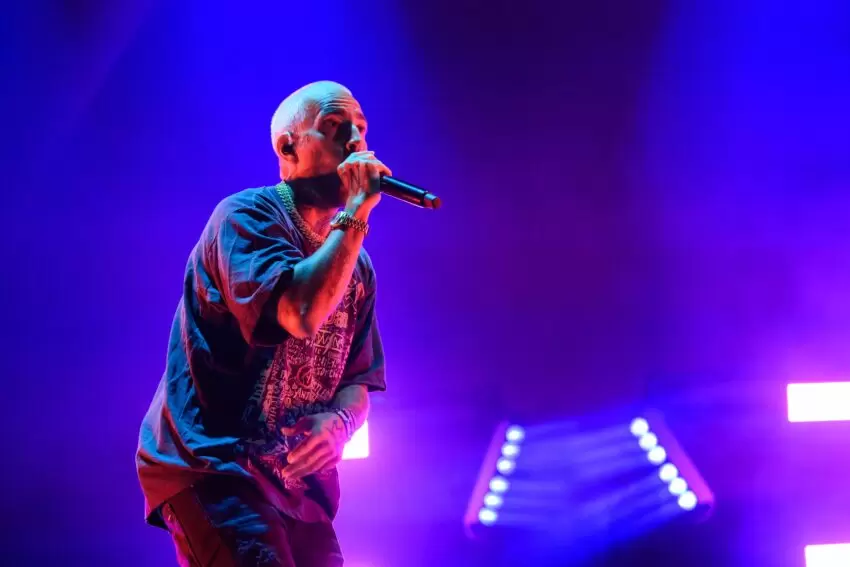
More than half of the tracks uploaded to Deezer each day are now AI-generated, roughly 90,000 songs, a jump from about 10% in January 2025. That single figure explains why working musicians are worried about their next royalty statement.
AI-generated tracks affect royalties by crowding a fixed payout pool with more claimants. Streaming services split a set amount of money across all streams, so millions of new AI uploads mean each human artist competes for a thinner slice. The dilution is not theoretical. It is already showing up in upload data and platform policy.
How the royalty pool works
Streaming royalties come out of a shared pool, not a per-song price, which is the root of the dilution problem. Services like Spotify, Apple Music and Deezer collect subscription and advertising revenue, take their cut and distribute the rest to rights holders based on each track’s share of total streams. Your payout depends on your streams divided by everyone’s streams.
This model was designed for a world where releasing music took time and money. Adding a track meant recording, mixing and distributing it. AI removed those costs. When 90,000 new songs can land on one service in a day, the denominator in that fraction grows fast while the pool of money stays roughly flat. Every added track, human or synthetic, pushes the per-stream value down for everyone already in the pool.
How mass AI uploads siphon payouts
Mass AI uploads siphon money in two ways: honest dilution and outright fraud. Honest dilution happens when legitimate AI tracks accumulate real, if small, listens and claim their proportional share. Fraud happens when operators engineer streams for AI catalogs to farm payouts directly.
The fraud side has grown into a serious business. AI-generated music has become what Forbes described as a $4 billion fraud machine, built on the fact that a track now costs almost nothing to produce and a stream over 30 seconds triggers a billable play. Operators generate thousands of disposable songs, aim automated traffic at them and collect. Because payouts are proportional, money that would have flowed to human artists gets redirected. The listener never hears these tracks in any meaningful sense. They exist only to convert bot activity into royalties.
What labels and distributors are doing
Labels and distributors have started policing uploads at the source because they carry the compliance risk. Since 2023 several major distributors have introduced penalties for artificial streaming, withholding royalties and charging fees when they detect engineered plays tied to a release. The message to their clients is that fraud will cost the account rather than pay it.
Distributors are also tightening what they accept. Some now require disclosure when a track is AI-generated, and many screen submissions before they reach a platform. Running an ai music detection check at ingestion lets a distributor flag synthetic audio and hold it for review, which keeps flagged tracks out of the payment flow until provenance is clear. This protects the distributor’s relationship with streaming services, which can delist an aggregator that repeatedly delivers fraudulent volume.
What platforms are doing about dilution
Platforms are responding with labeling, filtering and payout rule changes rather than outright bans. Deezer has publicly tagged AI-generated tracks and removed some from algorithmic recommendations, which limits how much fraudulent or spammy AI content can accumulate streams. That is a direct lever on dilution: a track excluded from recommendation engines earns far less.
Some services have also raised the bar for when a track starts earning at all. Spotify introduced a minimum annual stream threshold before a track generates royalties, a change aimed at the long tail of tracks that each earn pennies, including bulk AI uploads. The combined effect is to concentrate the pool toward music that real listeners actually choose. None of these measures restore money already lost, but they slow the rate at which synthetic catalogs drain the pool. The scale of the underlying problem stays large: Apple Music alone flagged around 2 billion fake streams in 2025.
What artists can do now
Artists cannot control the upload flood, but they can protect their own payouts and standing. The first step is clean rights management: register compositions and recordings correctly so collection societies and distributors can match streams to the right owner. Misattributed streams are lost money even without any fraud involved.
The second step is choosing distribution partners that screen for fraud and AI content, because a distributor caught delivering fraudulent volume can drag legitimate releases into delays or delisting. Artists should also avoid any promotion service promising guaranteed streams, since those almost always rely on the same bot infrastructure that triggers fraud penalties. Careful metadata, an honest release history and a reputable distributor are the practical defenses against a royalty system under strain.
Frequently asked questions
Do AI tracks take money directly from human artists?
Indirectly, yes. Streaming royalties come from a fixed pool split by stream share, so every additional track competes for the same money. Deezer now sees roughly 90,000 AI songs uploaded daily. Even when those tracks are legitimate, they enlarge the denominator, and when they are fraudulent they redirect payouts that would otherwise reach human artists.
How much money is involved in AI music fraud?
Forbes described AI-generated music as a $4 billion fraud machine, reflecting how cheaply synthetic tracks can be produced and streamed by bots. The scale of fake activity is visible elsewhere too: Apple Music flagged around 2 billion fake streams in 2025. Not all AI music is fraud, but the fraud portion moves real royalty money away from working musicians.
Are streaming services banning AI music?
Most are not banning it outright. Deezer tags AI-generated tracks and drops some from recommendations, while other services have added stream thresholds before a track earns royalties. The approach favors labeling and filtering over prohibition, partly because separating legitimate AI music from fraudulent uploads requires detection rather than a blanket rule.
What is the single best protection for my royalties?
Clean rights registration paired with a reputable distributor. Correct metadata ensures your streams are matched to you, and a distributor that screens for AI content and fraud keeps your releases out of investigations that delay payments. Avoiding guaranteed-stream promotion services removes the most common way honest artists get tangled in fraud penalties.
What AI-Generated Tracks Mean for Artist Royalties
More than half of the tracks uploaded to Deezer each day are now AI-generated, roughly 90,000 songs, a jump from about 10% in January 2025. That single figure explains why working musicians are worried about their next royalty statement.
AI-generated tracks affect royalties by crowding a fixed payout pool with more claimants. Streaming services split a set amount of money across all streams, so millions of new AI uploads mean each human artist competes for a thinner slice. The dilution is not theoretical. It is already showing up in upload data and platform policy.
How the royalty pool works
Streaming royalties come out of a shared pool, not a per-song price, which is the root of the dilution problem. Services like Spotify, Apple Music and Deezer collect subscription and advertising revenue, take their cut and distribute the rest to rights holders based on each track’s share of total streams. Your payout depends on your streams divided by everyone’s streams.
This model was designed for a world where releasing music took time and money. Adding a track meant recording, mixing and distributing it. AI removed those costs. When 90,000 new songs can land on one service in a day, the denominator in that fraction grows fast while the pool of money stays roughly flat. Every added track, human or synthetic, pushes the per-stream value down for everyone already in the pool.
How mass AI uploads siphon payouts
Mass AI uploads siphon money in two ways: honest dilution and outright fraud. Honest dilution happens when legitimate AI tracks accumulate real, if small, listens and claim their proportional share. Fraud happens when operators engineer streams for AI catalogs to farm payouts directly.
The fraud side has grown into a serious business. AI-generated music has become what Forbes described as a $4 billion fraud machine, built on the fact that a track now costs almost nothing to produce and a stream over 30 seconds triggers a billable play. Operators generate thousands of disposable songs, aim automated traffic at them and collect. Because payouts are proportional, money that would have flowed to human artists gets redirected. The listener never hears these tracks in any meaningful sense. They exist only to convert bot activity into royalties.
What labels and distributors are doing
Labels and distributors have started policing uploads at the source because they carry the compliance risk. Since 2023 several major distributors have introduced penalties for artificial streaming, withholding royalties and charging fees when they detect engineered plays tied to a release. The message to their clients is that fraud will cost the account rather than pay it.
Distributors are also tightening what they accept. Some now require disclosure when a track is AI-generated, and many screen submissions before they reach a platform. Running an ai music detection check at ingestion lets a distributor flag synthetic audio and hold it for review, which keeps flagged tracks out of the payment flow until provenance is clear. This protects the distributor’s relationship with streaming services, which can delist an aggregator that repeatedly delivers fraudulent volume.
What platforms are doing about dilution
Platforms are responding with labeling, filtering and payout rule changes rather than outright bans. Deezer has publicly tagged AI-generated tracks and removed some from algorithmic recommendations, which limits how much fraudulent or spammy AI content can accumulate streams. That is a direct lever on dilution: a track excluded from recommendation engines earns far less.
Some services have also raised the bar for when a track starts earning at all. Spotify introduced a minimum annual stream threshold before a track generates royalties, a change aimed at the long tail of tracks that each earn pennies, including bulk AI uploads. The combined effect is to concentrate the pool toward music that real listeners actually choose. None of these measures restore money already lost, but they slow the rate at which synthetic catalogs drain the pool. The scale of the underlying problem stays large: Apple Music alone flagged around 2 billion fake streams in 2025.
What artists can do now
Artists cannot control the upload flood, but they can protect their own payouts and standing. The first step is clean rights management: register compositions and recordings correctly so collection societies and distributors can match streams to the right owner. Misattributed streams are lost money even without any fraud involved.
The second step is choosing distribution partners that screen for fraud and AI content, because a distributor caught delivering fraudulent volume can drag legitimate releases into delays or delisting. Artists should also avoid any promotion service promising guaranteed streams, since those almost always rely on the same bot infrastructure that triggers fraud penalties. Careful metadata, an honest release history and a reputable distributor are the practical defenses against a royalty system under strain.
Frequently asked questions
Do AI tracks take money directly from human artists?
Indirectly, yes. Streaming royalties come from a fixed pool split by stream share, so every additional track competes for the same money. Deezer now sees roughly 90,000 AI songs uploaded daily. Even when those tracks are legitimate, they enlarge the denominator, and when they are fraudulent they redirect payouts that would otherwise reach human artists.
How much money is involved in AI music fraud?
Forbes described AI-generated music as a $4 billion fraud machine, reflecting how cheaply synthetic tracks can be produced and streamed by bots. The scale of fake activity is visible elsewhere too: Apple Music flagged around 2 billion fake streams in 2025. Not all AI music is fraud, but the fraud portion moves real royalty money away from working musicians.
Are streaming services banning AI music?
Most are not banning it outright. Deezer tags AI-generated tracks and drops some from recommendations, while other services have added stream thresholds before a track earns royalties. The approach favors labeling and filtering over prohibition, partly because separating legitimate AI music from fraudulent uploads requires detection rather than a blanket rule.
What is the single best protection for my royalties?
Clean rights registration paired with a reputable distributor. Correct metadata ensures your streams are matched to you, and a distributor that screens for AI content and fraud keeps your releases out of investigations that delay payments. Avoiding guaranteed-stream promotion services removes the most common way honest artists get tangled in fraud penalties.


This wave of Trump tariffs is likely here to stay; more are coming

U.K. consumer goods company Reckitt Benckiser RKT said it agreed to divest of its hygiene arm in Russia, which has been dragging on sales due to changes to European Union sanctions on the country.
The maker of Durex condoms and Mucinex cold medicine said Friday that it was selling the Russian hygiene unit to Arnest Management. It didn’t disclose financial terms of the deal, but said the business represented around 1% of Reckitt’s net revenue in 2025.
Copyright ©2026 Dow Jones & Company, Inc. All Rights Reserved. 87990cbe856818d5eddac44c7b1cdeb8

MiniMed: Next-Generation Diabetes Platform Supports A Buy Rating

The Jaipur-headquartered lender, which is in a transition into a universal bank, also announced the elevation of chief operating officer Yogesh Jain to deputy chief executive officer to strengthen the leadership bandwidth.
Its pre-provision operating profit rose 9% year-on-year at Rs 1435 crore, supported by a 32% surge in net interest income at Rs 2695 crore while a 97% fall in treasury earnings pulled other income down by 15% at Rs 689 crore.
The net interest margin for the quarter stood at 5.9%, improved by 47 basis points from what it was in the year-ago period. The key ratio however moderated 7 bps quarter-on-quarter.
The bank’s operating expenses increased 26% year-on-year at Rs 1949 crore, which the bank attributed to higher business volumes and investment in distribution, manpower, branding and technology.

Gross non-performing assets ratio improved to 2.1% as on June 30 from
2.5% a year prior, backed by a 22% decline in fresh slippages at Rs 798 crore.. The provision for the quarter came down 30% to Rs 372 crore from Rs 533 crore, led by normalisation of unsecured business, the bank said.
Its gross loan portfolio grew 23% year-on-year to Rs 1.44 lakh crore with secured business growth at 25% outpacing the unsecured loan expansion of 11%. Total deposits grew by 24% to Rs 1.58 crore.
Michigan battles massive outbreak as state reels from Trump cuts

“Cost-effective” is one of those phrases that means five different things depending on who’s asking. A freelancer producing 20 client images a week defines it very differently from a solo creator making three social posts a day. And “cheap” isn’t the same as “cost-effective” — a $5 plan that only lets you generate 30 usable images is worse value than a $30 plan giving you 3,000.
This piece takes ten of the most-used AI image platforms in 2026 and works out the actual economics: what a real image costs after credits, tiers, and annual discounts; what you get for free before paying anything; and how the effective cost per image changes once you start pushing volume. No headline prices without context — just the math.
The Cost-Effectiveness Framework
Four numbers determine whether a platform is genuinely a good deal:
- Effective cost per usable image. Not “per credit” — per image you’d actually keep and use.
- Free tier volume. Whether it’s enough to finish a real project before the paywall.
- Annual discount depth. Which platforms reward commitment, and by how much.
- Marginal cost at scale. What the 500th image of the month costs vs. the 50th.
A platform can win on one axis and lose on another. Below, each entry is scored on all four.
Quick Comparison
| Rank | Platform | Cheapest Paid Entry | Effective $/Image | Free Tier | Annual Savings |
| 1 | Chat Image | $14.9/mo (annual) | $0.12–$0.20 | 3 credits (1 image) | 25% off |
| 2 | Nano Banana Bingo | $19.9/mo (annual) | $0.015–$0.037/credit | 3 credits | Up to 33% off |
| 3 | Krea AI | $5/mo (annual) | ~$0.08 | 100 units/day | 40% off |
| 4 | Hailuo AI | $7.99/mo (annual) | $0.012–$0.02 | Trial credits | Up to 49% off |
| 5 | getimg.ai | $8/mo (annual) | $0.0015–$0.0033/credit | 100 free credits | 20% off |
| 6 | OpenArt | $12.6/seat/mo | $0.0018–$0.0035 | Limited daily credits | Up to 27% off |
| 7 | CGDream | $10/mo | $0.04–$0.06 | Free tier available | None advertised |
| 8 | EaseMate AI | $7.49/mo (annual) | $0.056–$0.098 | 200K chat tokens/day | ~25% off |
| 9 | Envato | $16.5/mo (Core annual, no AI) | $0.39 (Plus) | No AI on free | Up to 35% off |
| 10 | Shutterstock AI | $29/mo (annual) | $0.58–$1.99/credit | No AI on free | ~50% off vs. no-contract |
The Rankings
1. Chat Image — Predictable Per-Image Math
Most cost-effectiveness questions get complicated the moment credit tiers get involved. Chat Image sidesteps that by charging a fixed 3 credits per GPT Image 2 generation, regardless of aspect ratio or prompt complexity. You always know what one image costs.
Run the numbers across the four tiers:
- Basic annual — $178.8/yr ÷ (300 credits × 12 ÷ 3) = $0.149/image
- Basic monthly — $19.9/mo ÷ 100 images = $0.199/image
- Professional annual — $358.8/yr ÷ 2,600 images = $0.138/image
- Enterprise annual — $2,398.8/yr ÷ 20,000 images = $0.120/image
The gap between the cheapest tier ($0.12) and the most expensive path ($0.199) is under 40% — narrow compared to platforms where per-image cost swings 10× depending on which model you pick. Annual billing shaves 25% off every tier, applied uniformly rather than gated behind higher plans.
Value case: if your monthly output sits between 80 and 220 GPT Image 2 renders, Basic annual is the sweet spot. Beyond 500 images, Professional or Enterprise annual drops effective cost below $0.14.
Pros
- Fixed 3 credits per image makes budgeting straightforward
- 25% annual discount applied uniformly to all paid tiers
- Effective cost stays within a narrow $0.12–$0.20 band
- Commercial-ready downloads included from the entry paid tier
Cons
- Free tier caps at 3 trial credits
- Single-model pricing — no cheaper alternative model inside the same subscription
Best value for: anyone whose workflow centers on GPT Image 2 and wants a predictable monthly bill.
2. Nano Banana Bingo — Tier-Adjustable Cost Per Image
Nano Banana Bingo takes a different approach to pricing. Instead of a fixed cost per image, you dial cost up or down by choosing which of three model tiers to run — Standard, Lite, or Pro. Combine that with the per-credit pricing curve, and Nano Banana ends up with one of the more flexible cost profiles on this list.
Per-credit cost across the four plans:
- Starter monthly — $29.9 ÷ 800 = $0.037/credit
- Starter annual — $19.9 ÷ 800 = $0.025/credit
- Pro annual — $39.9 ÷ 1,600 = $0.025/credit
- Max annual — $69.9 ÷ 4,000 = $0.017/credit
- Ultra annual — $149.9 ÷ 10,000 = $0.015/credit
Because a Standard-tier image consumes fewer credits than a Pro-tier image, the same subscription can produce a very different number of usable outputs depending on how you allocate them. Users who mix quick drafts (Standard) with final renders (Pro) tend to get more mileage per dollar than users who run everything at max quality.
The Ultra plan’s 1×–5× usage multiplier is worth noting — it effectively expands the 10,000-credit ceiling for heavier workloads without moving you to a higher subscription bracket.
Pros
- Three model tiers let you match cost to output quality on a per-generation basis
- Per-credit cost drops from $0.037 to $0.015 as tiers scale
- Annual billing saves 20–33% depending on plan
- Ultra tier’s 1×–5× multiplier extends effective credit ceiling
Cons
- Starter plan does not include commercial licensing
- Credit-per-image count varies by chosen model tier
Best value for: users who mix quick iterations with high-quality finals, and want granular control over cost per generation.
3. Krea AI — Cheapest Paid Entry, Unlimited at the Top
Krea has the lowest paid entry price on this list: $5/mo on annual billing. That gets you 5,000 units, which Krea documents as roughly 64 Nano Banana 2 images or 20 Seedance 2.0 videos.
Effective image cost:
- Basic annual — $60/yr ÷ 768 images = $0.078/image
- Pro annual — $252/yr ÷ 3,072 images = $0.082/image
- Max annual — $756/yr ÷ 9,216 images = $0.082/image on tracked units
But Max’s real value isn’t the tracked units — it’s the unlimited relaxed generations. Once you’re producing more than a few thousand images a month, marginal cost per image drops toward zero. That makes Max the cheapest per-image plan on the list at high volume, even though its headline price is $63/mo.
Krea also runs the deepest annual discount (40%), which is genuinely unusual — most platforms cap annual savings around 20–25%.
Pros
- Lowest paid entry price on this list ($5/mo annual)
- 40% annual discount (deepest of any platform here)
- Unlimited relaxed generations on Max drives marginal cost toward zero
- Transparent unit-to-image conversion published by the platform
Cons
- Free tier limited to single-task image generation, no video concurrency
- Node-based workflow adds a learning curve for prompt-only users
Best value for: heavy users who can commit annually and are willing to work in relaxed mode.
4. Hailuo AI — Cheapest Frontier-Model Access
Hailuo’s cost-effectiveness case is different from the others: you’re not paying the lowest per-image rate, you’re paying the lowest rate for access to frontier models. Veo 3.1, Sora 2, Seedance 2.0, Nano Banana Pro, Seedream 5.0 Lite, GPT Image 2 — all inside one $7.99/mo annual subscription.
Standard-tier image cost math:
- A GPT Image 2 image at 1K/Low = 2 Shells
- Standard annual — $7.99 ÷ (1,000 Shells ÷ 2) = $0.016/image
- Pro annual — $27.99 ÷ (4,500 Shells ÷ 2) = $0.012/image
Pro and above unlock unlimited generation on selected models at set resolutions — Nano Banana at 1K on Pro, at 2K on Master, and other image models up to 4K on Max. That effectively drives marginal cost to zero for the models you use most.
Annual billing saves up to 49% — the largest percentage discount on this list (Krea’s 40% is on smaller absolute numbers).
Pros
- Cheapest single subscription that includes Veo 3.1, Sora 2, and Seedance 2.0
- Up to 49% annual savings
- Unlimited generation on selected models from Pro tier upward
- Watermark removal on every paid plan
Cons
- Shell-based currency adds a mental conversion step
- Free tier is a one-time trial rather than recurring
Best value for: users who want premium video and image models under one bill.
5. getimg.ai — Lowest Per-Credit Rate
getimg.ai’s per-credit pricing is the tightest on this list: $0.0033 on Entry monthly down to $0.0015 on Ultra annual. Combined with a full multi-modal toolkit — image, video, music, speech — that makes it one of the strongest value propositions if you’d otherwise be paying for multiple tools.
Tier math (per credit):
- Entry monthly — $10 ÷ 3,000 = $0.0033
- Entry annual — $96 ÷ 36,000 = $0.0027
- Core annual — $300 ÷ 180,000 = $0.00167
- Ultra annual — $1,800 ÷ 1,200,000 = $0.0015
Actual per-image cost depends on which of the platform’s 11+ image models you use, so budgeting requires a bit of testing. But even at 5× credit consumption per image, effective cost still comes in under $0.02.
Pros
- Lowest per-credit rate on this list ($0.0015 on Ultra annual)
- Multi-modal coverage — one subscription replaces three
- Commercial rights on every paid tier
- 100 free credits to start
Cons
- Effective per-image cost varies by model, complicating exact budgeting
- Entry plan is single-user only
Best value for: small creative teams replacing multiple single-purpose subscriptions.
6. OpenArt — Lowest Headline $/Image
If you look purely at published per-image math, OpenArt wins the headline number. Its 1 credit ≈ 1 image conversion, combined with generous credit allocations, pushes effective cost to $0.0018–$0.0035.
Tier math:
- Essential annual — $151.2/yr ÷ 48,000 credits = $0.00315/image
- Advanced annual — $278.4/yr ÷ 144,000 credits = $0.00193/image
- Infinite annual — $524.4/yr ÷ 288,000 credits = $0.00182/image
That’s an order of magnitude below Chat Image or Nano Banana Bingo. The caveat: those numbers apply to base image generation. Video, premium models, and higher-resolution options consume more credits per output, which pulls the effective average up. Realistic mixed-use per-image cost typically lands in the $0.01–$0.03 range once you factor in the models most people actually pick.
Still, for base image workloads, OpenArt is genuinely cheap per unit.
Pros
- Lowest headline per-image cost on this list ($0.0018 on base images)
- 100+ models accessible from one subscription
- 27% annual discount
- Wonder tier includes unlimited Seedream 5.0 Pro generation
Cons
- Essential plan excludes commercial rights
- Per-seat billing scales up quickly for teams
Best value for: solo creators generating high volumes of base-model images.
7. CGDream — 2D + 3D Under One Bill
CGDream’s cost-effectiveness comes from being one of the few platforms that generates both 2D images and native 3D models at consumer pricing. Text-to-3D and image-to-3D would normally require a separate subscription.
Per-image math at 60 credits per default Flux/Pro 1.1 image:
- Basic — $10 ÷ (10,000 ÷ 60) = $0.06/image
- Pro — $30 ÷ (40,000 ÷ 60) = $0.045/image
- Premium — $60 ÷ (90,000 ÷ 60) = $0.04/image
Credit-to-dollar ratio scales 1× / 4× / 9× across tiers — jumping to Pro effectively quadruples value per dollar, and Premium multiplies by nine. All paid plans advertise “Unlimited Credits per Day” and Relaxed Generations as a fallback.
No public annual discount, which is unusual on this list. If you can only commit monthly, though, CGDream’s tier scaling still delivers.
Pros
- Native 2D + 3D generation under one subscription
- Credit-value ratio scales 1× / 4× / 9× across tiers
- Unlimited Credits per Day advertised on all paid plans
- Inpainting included alongside standard workflows
Cons
- No publicly advertised annual discount
- Basic plan lacks Slow Mode fallback
Best value for: anyone working across 2D and 3D who wants one bill instead of two.
8. EaseMate AI — Bundle Economics
EaseMate’s pricing looks mid-range on image generation alone — around $0.056–$0.098 per image. What tips it toward cost-effective is the bundling: image, video, LLM chat (GPT-5, Claude, Gemini), OCR, PDF chat, translation, and math solvers all in one subscription.
Tier math on default 10-credit images:
- Lite annual — $89.88/yr ÷ 14,400 credits × 10 = $0.062/image
- Pro annual — $202.8/yr ÷ 36,000 credits × 10 = $0.056/image
- Credit packs — $0.098/image (500-pack) down to $0.070/image (15,000-pack, 30% off)
Credit packs never expire, which matters for irregular usage. If you generate 100 images one month and 500 the next, you don’t lose unused allocation.
Renewal pricing is worth watching — first-month/first-year promos step up on renewal.
Pros
- Image + video + chat + productivity in one subscription
- Credit packs never expire
- Access to GPT-5, Claude, Gemini, Midjourney, and Sora 2 under one bill
- 30% discount on largest credit pack
Cons
- Promotional first-cycle pricing steps up on renewal
- Free tier disables OCR and Face Swap
Best value for: solo users consolidating multiple SaaS subscriptions.
9. Envato — Only If You Need the Stock Library
Envato’s AI-generation math looks weak in isolation: $0.39 per generation on Plus annual, at only 100 generations/month. Compared to specialist tools charging $0.02, that’s a 20× premium.
But Envato isn’t sold as a pure AI tool. The $16.50/mo Core plan unlocks 28M+ stock assets with lifetime commercial licenses. The $39/mo Plus plan adds 100 AI generations on top. If you’d otherwise be paying for Envato Elements anyway, the incremental AI cost is $22.50/mo — a much better number.
For unlimited AI, Ultimate at $109/mo eliminates the per-generation cap. At 500 generations/month, effective cost drops to $0.22/image. At 2,000/month, $0.055/image.
The value case only works if the stock library matters. As a standalone AI subscription, it’s the worst deal on this list.
Pros
- Lifetime commercial license on all AI outputs and stock downloads
- 28M+ asset library included alongside AI
- Unlimited AI generation on Ultimate reduces effective per-image cost at volume
- Broad model access (Flux, NanoBanana, Veo, Kling, ElevenLabs, Topaz)
Cons
- Core plan excludes AI generation entirely
- Per-generation cost on Plus is 10–20× higher than specialist tools
Best value for: teams already paying for stock media who want AI in the same bill.
10. Shutterstock AI — Value Only if You Already Need Stock
Shutterstock’s per-AI-credit cost is the highest on this list — $0.58–$1.99 per credit if you attribute the full subscription cost to AI usage. As a standalone AI platform, it’s not competitive.
But like Envato, that’s not really how anyone uses it. The $29/mo annual Unlimited Images plan buys you unlimited downloads from 83M+ premium images and 100M+ videos/music/SFX. The 50 monthly AI credits are a side dish.
If you’re already paying for stock, the AI credits are effectively free at the margin. If you’re not, this is the wrong platform.
Annual billing roughly halves the cost vs. no-contract pricing — the steepest percentage swing on this list, though the base rate is high enough that the savings don’t outweigh specialist tools for pure AI use.
Pros
- Access to Imagen 4 Ultra, Gemini 3.1 Flash, GPT models, and Runway
- 83M+ images and 100M+ mixed-media assets bundled
- Single-user commercial license simplifies rights management
- ~50% savings on annual vs. no-contract billing
Cons
- Standalone AI cost-per-credit is the highest on this list
- 50–100 monthly AI credits is low for AI-first workflows
Best value for: teams already using Shutterstock stock who want light AI supplementation.
Where Your Dollar Goes Furthest
Under $10/mo: Krea Basic annual ($5) and getimg.ai Entry annual ($8) are the cheapest paid entries. Krea has the deeper discount; getimg.ai has the wider tool coverage.
Under $20/mo, single tool: Chat Image Basic annual ($14.9) delivers the most predictable per-image cost. Nano Banana Bingo Starter annual ($19.9) delivers the widest cost-quality range.
Best per-image headline: OpenArt Advanced annual at $0.0019 on base images.
Best per-credit rate: getimg.ai Ultra annual at $0.0015.
Deepest annual discount: Hailuo (49%) and Krea (40%).
Cheapest frontier-model access: Hailuo Standard annual at $7.99/mo.
Best bundle economics: EaseMate (image + video + chat + productivity), Krea (image + video + 3D + workflows), getimg.ai (image + video + music + speech).
Final Thoughts
Cost-effectiveness isn’t a single ranking — it’s a match between your workflow and a pricing model. Someone generating 50 images a month at fixed quality gets the best deal from Chat Image. Someone generating 5,000 mixed-quality images gets the best deal from Krea Max or OpenArt Wonder. Someone who needs Veo 3.1 and Nano Banana in the same subscription gets the best deal from Hailuo.
The math on this list is real, but so is the workflow fit. The cheapest platform in dollars per image isn’t cost-effective if you spend an extra ten hours a month working around it.
Pick two or three that match your actual output pattern, generate the same prompts through each free tier, and calculate cost per usable image — not per credit. That’s the number that matters.

Stocks looked set to struggle for direction on Friday as a drop in oil prices eased fears about higher inflation, even as artificial-intelligence jitters lingered.
Dow Jones Industrial Average futures gained 231 points, or 0.5%. S&P 500 futures ticked up 0.2%. Nasdaq 100 futures rose 0.1%.
The Dow was on track to outperform the other two major indexes because it tends to be more reactive to oil prices, which were retreating having spiked above $100 a barrel the previous session.

Earnings call transcript: Jindal Steel Q1 2027 margins improve as volumes dip
Business
Concurrent Gainers: 12 smallcap stocks that gained for 5 days in a row – Against Market Odds

Over the five trading sessions ending July 24, the Sensex declined 2.68%, or 2,092 points, to close at 76,059. The benchmark index finished lower in each of the five sessions (July 20–24). Despite the broader market weakness, 11 smallcap stocks bucked the trend, posting gains in all five trading sessions and delivering cumulative returns of up to 35% during the period. (Data Source: ACE Equity)
Jindal Steel Q1FY27 slides: margins rise as value-added mix grows
This wave of Trump tariffs is likely here to stay; more are coming

Dango’s Perp DEX Shuts Down After Nearly Four Months in Operation

LeBron James Joins Philadelphia 76ers on Two-Year Deal


-

 Fashion17 hours ago
Weekend Open Thread: Brooks Brothers
-

 Politics6 days ago
Democrats look to World Cup watch parties to register thousands of voters
-

 Crypto World4 days ago
Grayscale Files For Worldcoin ETF, WLD Registers Sharp Rise
-

 Tech4 days ago
Sail Virtually Aboard The “Itanic” With IA-64 Emulator
-

 NewsBeat5 days ago
Unregistered fitter used Gas Safe logo on business flyers
-
 Tech4 days ago
Turtle Beach Command Series KB7 review: a nifty screen-equipped gaming keyboard
-

 News Videos6 days ago
Big Money Is Entering XRP
-
 Business3 days ago
New Jersey voter registration controversy explained: How 6,600 noncitizens got on the rolls, and what happens next
-

 Crypto World7 days ago
Kaspersky exposes OkoBot’s 20-module crypto wallet attack
-
 Entertainment4 days ago
Johnny Depp’s R-Rated Gothic Cult Classic Gets New Release Ahead of Sydney Sweeney Remake
-

 Crypto World2 days ago
Ethics, other provisions in crypto Clarity Act to be further discussed
-

 Tech5 days ago
Watch Flock Safety CEO Garrett Langley discuss the future of surveillance at TechCrunch Disrupt 2026
-
 NewsBeat4 days ago
Shanghai science forum photos show China’s AI and robotics advances in rivalry with US
-

 Crypto World5 days ago
Circle’s President Sold Over 360,000 Shares, The Filings Explain Why
-

 Tech5 days ago
Subway Sandwich Computers Get a Second Life as Gaming Machines
-

 News Videos2 days ago
The Peugeot Family: How 200 Years of an “Old Money” Dynasty Died in A Boardroom
-

 Sports1 day ago
2026 3M Open leaderboard: Scottie Scheffler finds putter in Round 1, sits three back
-

 Tech5 days ago
The 35 Best Board Games for Family Game Night
-

 Fashion1 day ago
16 Dresses for the High Summer Event
-

 Tech6 days ago
How To Use Claude’s Reflect Dashboard And Learn When It’s Time To Touch Grass
You must be logged in to post a comment Login