

Business
Bitcoin stays near $64K, Ethereum underperforms as weak risk appetite keeps crypto markets under pressure


In the past 24 hours, both Bitcoin and Ethereum were down 2% respectively. Among the major altcoins, BNB, XRP, Solana, Tron, Hyperliquid, Dogecoin, and Cardano corrected up to 3%.
Also Read | Explained: Thinking about building a Rs 1 crore corpus? Here’s how much you should invest through SIPs The global crypto market capitalisation edged down 2% to $2.19 trillion, according to CoinMarketCap.
Riya Sehgal, Research Analyst, Delta Exchange said Bitcoin’s one-year realized volatility is near 42%, while the broader Bitcoin implied-volatility gauge is around 37, close to multi-year lows and this divergence between subdued historical movement and low options pricing points to a tightly coiled market, where the next decisive macro or liquidity catalyst could trigger a meaningful expansion in volatility.

Technically, Bitcoin remains constructive above the $64,100–$64,700 demand zone, although repeated rejection near $66,500–$67,200 shows fading upside momentum. Ethereum is comparatively weaker below $1,880–$1,890, with $1,790 acting as the key structural support, Sehgal further said.
In the past week, Bitcoin was down 0.03% and Ethereum was up 0.6%. Among the major altcoins, BNB, XRP, Solana, Hyperliquid, Dogecoin and Cardano fell up to 4% whereas Tron was up 2%.Nischal Shetty, Founder, WazirX said crypto markets ended the week on a steady note, with Bitcoin trading in the $64,500-$66,300 range and Ethereum fluctuating between $1,860 and $1,930.
“Market sentiment improved early in the week on the back of positive regulatory developments and sustained institutional participation, although renewed geopolitical tensions later prompted a modest pullback.”
Ethereum continued to outperform on the back of record staking participation and growing institutional accumulation, Shetty further said.
(Disclaimer: Recommendations, suggestions, views and opinions given by the experts are their own. These do not represent the views of The Economic Times)


Russia’s central bank Friday cut its key interest rate for a tenth straight meeting, despite raising its forecast for inflation to reflect Ukraine’s drone attacks on Russian oil refineries.
The Bank of Russia lowered borrowing costs to 14% from 14.25%, down from a 2025 peak of 21%.
Copyright ©2026 Dow Jones & Company, Inc. All Rights Reserved. 87990cbe856818d5eddac44c7b1cdeb8
Business
Cincinnati Weather Turns Sunny and Warmer This Weekend, With a Slight Severe Storm Risk Returning Monday

CINCINNATI — A comfortable, mostly sunny weekend is settling over the Cincinnati area following a stretch of active weather earlier this month, with temperatures gradually climbing back toward seasonal norms before a chance of severe storms returns to the region early next week.
According to WCPO’s 9 First Warning Weather team, Saturday morning brought partly cloudy skies with overnight lows settling into the low 60s, giving way to a sunny afternoon with highs climbing into the mid-80s. A few isolated shower chances were possible Saturday afternoon, though meteorologists described those chances as limited at best.
A warming trend through the weekend
Temperatures are expected to continue climbing through the weekend and into early next week. Saturday night is forecast to stay partly cloudy with lows in the upper 60s, while Sunday brings a mix of sun and clouds with highs pushing close to 90 degrees, according to the WCPO forecast. As high pressure shifts away from the region, warmer and more humid air is expected to gradually return from the south, giving the atmosphere what meteorologists described as a more typical midsummer feel heading into the new week.
Most of Sunday is expected to remain dry, though a few showers and thunderstorms could develop later in the evening as the more humid air mass moves in. The National Weather Service’s forecast office in Wilmington, Ohio, which covers the greater Cincinnati region, projected similar conditions, with Sunday’s high reaching around 90 degrees and an overnight low near 71, alongside a slight chance of evening thunderstorms.
A better chance for storms Monday
The more significant weather concern for the region centers on Monday, when forecasters say the best opportunity for rain and thunderstorms is expected to develop. According to WCPO meteorologist Cameron Hardin, the Storm Prediction Center has currently placed the Cincinnati area under a slight risk for severe weather Monday, though the exact timing and location of that threat remain uncertain as forecasters continue refining their outlook.
Early forecast models suggest the greatest risk may hover over the eastern half of the Cincinnati viewing area, according to WCPO’s forecast, with conditions expected to stay dry through the first half of Monday before storms begin developing during the afternoon hours. The National Weather Service’s own forecast for the region projected a high near 94 degrees Monday, with a chance of thunderstorms developing later in the day and showers likely overnight into Monday night, when lows are expected to dip to around 74 degrees.
What comes after Monday
By Tuesday, forecasters expect any lingering morning showers to taper off, with conditions trending drier and sunnier through the afternoon as the weather system responsible for Monday’s storm chances moves out of the region. The National Weather Service’s extended outlook showed Tuesday’s high reaching around 90 to 93 degrees with mostly sunny skies expected for much of the day.
WCPO’s forecast summarized the outlook heading into the new week with a simple recommendation: enjoy the relatively quiet weekend weather, since the return of heat, humidity and storm chances is expected to arrive in earnest as the region moves into the new workweek.
Recent context for the region
This weekend’s relatively calm stretch follows a period of more active and, at times, disruptive weather across the greater Cincinnati area earlier this month. The National Weather Service’s Wilmington office highlighted two separate significant weather events in its recent headlines: a Cincinnati-area flash flood on July 17, and a broader episode of severe weather, tornadoes and flooding across the region on July 21. Those earlier events underscore how quickly conditions in the Ohio Valley can shift from calm to hazardous during the peak of summer storm season, a pattern forecasters say remains possible again as Monday’s storm chances develop.
Saturday’s detailed forecast
For Saturday specifically, WCPO’s forecast called for mostly sunny and warm conditions with a high near 84 degrees, followed by a partly cloudy Saturday night with lows around 65 degrees. Sunday’s forecast called for sunshine combined with increasing humidity and a high near 88 degrees, along with a slight chance of evening rain.
Air quality and humidity considerations
As warmer, more humid air returns to the region ahead of Monday’s storm chances, residents with sensitivities to heat or humidity may want to take additional precautions during outdoor activities, particularly as temperatures approach the mid-90s by Monday afternoon. Local meteorologists have not issued any formal heat advisories for the weekend itself, though the shift toward more typical midsummer humidity levels is expected to make outdoor conditions noticeably more uncomfortable compared with the relatively mild stretch the region has experienced in recent days.
How to stay updated
WCPO’s 9 First Warning Weather team is continuing to monitor the developing Monday storm threat, with meteorologist Cameron Hardin noting that the exact timing and geographic extent of the slight severe weather risk are still being finalized as new forecast data becomes available. Residents in the greater Cincinnati area can track updates through WCPO’s interactive radar, sign up for severe weather email alerts, or tune into the station’s 24/7 weather livestream for the latest information as Monday’s forecast becomes clearer.
With Sunday shaping up as mostly dry and pleasant before humidity and storm chances build overnight, the primary focus for forecasters heading into next week will be refining exactly where and when Monday’s slight severe weather risk materializes. Until then, the National Weather Service and local meteorologists are advising residents to enjoy the comparatively calm stretch of weekend weather while keeping an eye on updated forecasts as the new week approaches, given the region’s recent history of rapidly developing severe weather during the summer months.

Wise has been refused a US banking licence, the payments company said, months after switching its primary stock market listing from London to New York in May.
The US Office of the Comptroller of the Currency (OCC) rejected the application because of historical issues with the original filing, including in relation to the prevention of financial crime, Wise said.
The London-headquartered company said it had applied for a national trust bank charter more than a year ago, submitting it in June last year. The charter is one of the licences issued by the OCC, the US regulator that supervises national banks and federal savings associations.
Wise already operates in the US. The licence would have given it direct access to payment systems through the Federal Reserve and allowed it to offer some financial services to customers, including fiduciary, custodial and safekeeping services to US consumers.
The company said the OCC’s decision does not affect its normal operations in the US, which run under existing money transfer licences.
Run by its billionaire co-founder, Kristo Käärmann, Wise said regulations for payments in America had changed significantly since it submitted the application, partly because of new laws under President Trump that regulate cryptocurrencies.
“We have invested significantly in enhancing our processes and controls globally and in the US since the original application for the trust charter was prepared, including those to prevent financial crime alongside other forms of risk,” the company said.
Wise said it had been strengthening its processes in the US with improvements to its investigation and reporting processes, and by collecting better data from its customers. It said it had also increased the resources dedicated to its local compliance efforts, including investments to prevent financial crime.
“Preventing bad actors from using financial institutions like Wise is of the utmost importance to us,” it said.
The company plans to submit a new application under the new regulatory framework.
“We look forward to submitting a viable application to the OCC in due course which reflects both our growing business and the changing regulatory landscape,” it said.
Wise switched its primary listing from the London Stock Exchange to the Nasdaq exchange in May to take advantage of a larger stock market and bring in new investors. Shareholders approved the move in July last year, alongside a 10-year extension of Käärmann’s enhanced voting rights that was opposed by co-founder Taavet Hinrikus.
Käärmann and Hinrikus, entrepreneurs from Estonia, founded Wise in 2011 under its original name TransferWise as a provider of cross-border money transfers, before expanding the business into investment products and launching a debit card. The group now has about 19 million customers globally and employs more than 8,000 people.
The OCC’s decision comes after it emerged that authorities in Brussels were investigating the firm over concerns that its accounts might have been used for money laundering.
The Bureau of Investigative Journalism revealed that the public prosecutor’s office had opened an investigation into transactions worth €500 million, and that the allegations were related to underlying potential offences including fraud, corruption and drug trafficking.
Wise shares lost 112p, or 12 per cent, to 822p on the day the news broke. Belgium is the base for Wise’s European operations, and the company uses the European Union’s passporting system for financial services to conduct business across the bloc.
Wise said at the time that it was “working with the Brussels prosecutor” to respond to queries and that it would continue to engage with the Brussels prosecutor’s office “if and when any specific findings are made available to us.”
Other UK fintechs have secured banking permissions in the same period. Revolut launched its UK bank in March after receiving approval from the Prudential Regulation Authority, enabling it to offer deposits protected by the Financial Services Compensation Scheme.

Amy Ingham
Amy Ingham is a reporter at Business Matters, covering UK business news with a focus on breaking news, business policy, late payments and insolvency. She joined the magazine in 2026 after completing the NCTJ Diploma in Journalism at Harlow College’s journalism school. Her recent reporting includes British Steel’s nationalisation and its impact on SME suppliers, the decline in late payments by large firms, and Insolvency Service director disqualifications. Reach her at aingham@cbmeg.co.uk.
Business
Israeli troops round up Palestinians in West Bank village after shootout involving settlers

Israeli troops round up Palestinians in West Bank village after shootout involving settlers
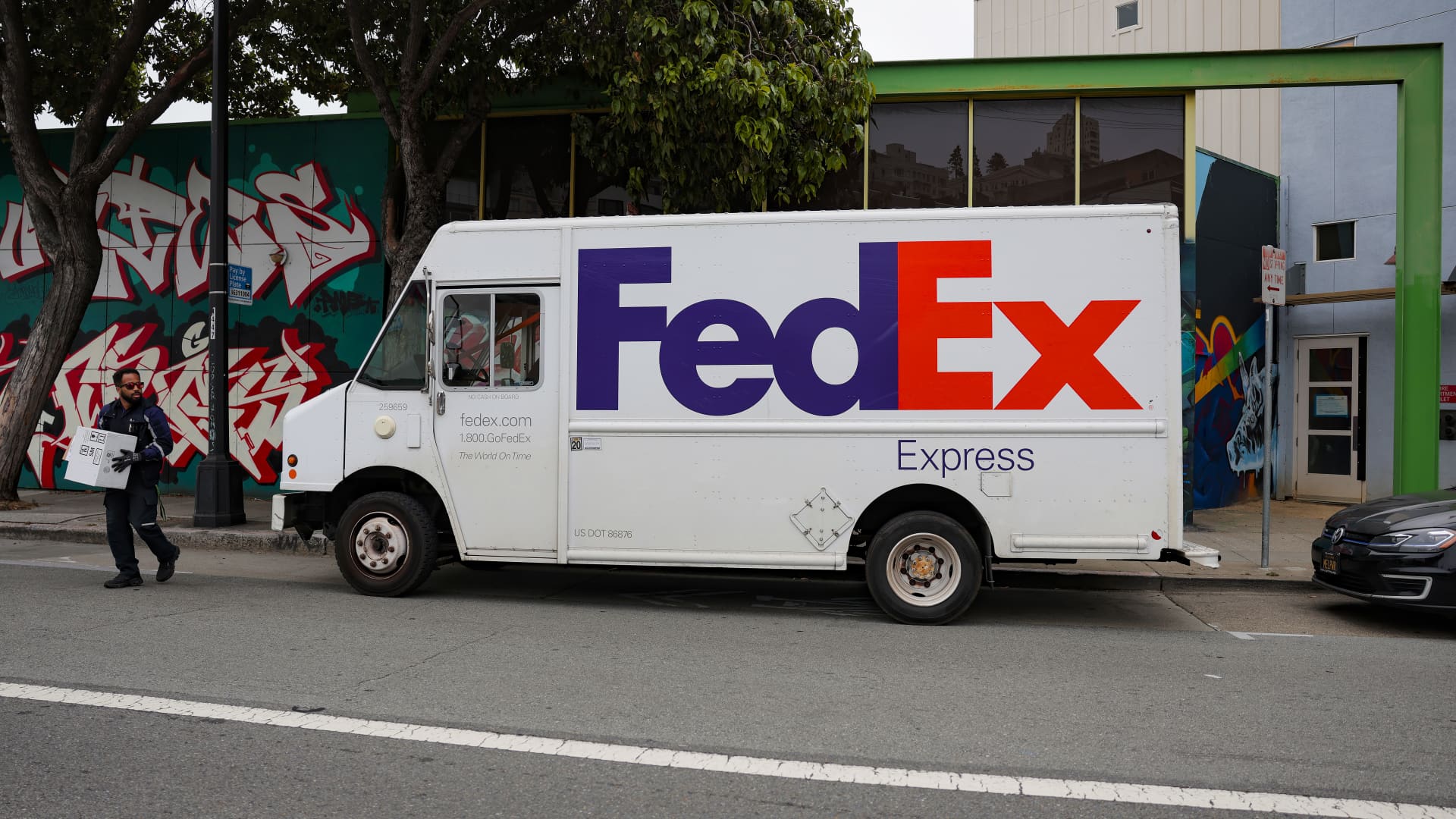
A FedEx worker walks past his truck in the North Beach neighborhood on June 23, 2026 in San Francisco, California.
Heather Diehl | Getty Images
As demand rises for specialized medications like GLP-1s, logistics companies including UPS and FedEx are adapting their strategies to be able to better ship and store those pharmaceuticals.
Most injectable GLP-1 medications, including Novo Nordisk‘s Ozempic and Wegovy and Eli Lilly‘s Mounjaro and Zepbound, require refrigerated storage for shipment.
The Covid pandemic put healthcare logistics at center stage in 2020, as the shipping of temperature-controlled vaccines quickly became a crucial part of keeping the virus at bay. And as more money has been poured into new pharmaceutical innovations, the transportation of those products have come under the spotlight.
Logistics companies are now investing millions of dollars and strengthening dozens of temperature-controlled facilities to tap into the market.
In June, UPS announced a new $48 million investment in temperature-controlled facilities as it sees a growing demand for critical treatments. According to Growth Market Reports, the demand for temperature-sensitive biologics is projected to grow at an 8.3% compound annual growth rate through 2033 and reach a market value of roughly $39.1 billion.
Obesity and diabetes drugs, meanwhile, have been booming in popularity. A July Gallup poll found that 11% of Americans take GLP-1 medications for weight loss purposes in 2026, up from just 3% in 2024.
But if they’re not stored and shipped at the correct temperature, they risk losing their efficacy.
The Food and Drug Administration has warned that improper storage during shipping can affect the medicine’s quality and recommends patients do not use GLP-1 drugs that arrive “warm or with insufficient refrigeration.”
Other biologics, like some vaccines, insulin and antibiotics, also require specialized shipment to maintain efficacy. For logistics companies, that means ensuring the proper storage and movement every step of the way.
Bulking up
Healthcare logistics have proven to be one of UPS’ biggest opportunities. On an earnings call with analysts in April, CEO Carol Tomé said the company’s global healthcare portfolio has gained market share every year since 2021, generating its first ever $3 billion healthcare revenue quarter in the first quarter of this year.
UPS President of Healthcare John Bolla told CNBC that the company is seeing more healthcare companies looking for partners to keep up with the volume.
“One of the biggest opportunities we see is supporting the shift toward more specialized therapies and more care delivered outside of traditional healthcare settings,” Bolla said.
United Parcel Service trucks are parked at a UPS customer center in Los Angeles on April 1, 2024.
Mario Tama | Getty Images
He said UPS is experiencing “rapid growth” in biologics, cell and gene therapies, though the biggest challenge is that the margin for error is small — even a brief stray from the correct temperature can ruin the medicines, Bolla said.
“But that’s also what’s creating such a significant opportunity in healthcare logistics,” he said. “As treatments become more specialized and supply chains become more complex, healthcare companies need partners that can provide not just temperature-controlled storage or transportation, but end-to-end visibility, control and reliability across the entire network.”
FedEx is also tapping into the trend, launching a life sciences organization earlier this month specifically to support the movement of pharmaceuticals and other healthcare products.
On an earnings call in June, FedEx’s Chief Customer Officer Brie Carere told analysts that healthcare transportation revenue in fiscal year 2026 reached nearly $10 billion.
“We’re building end-to-end solutions focused on global pharma customers, and what’s so important with global pharma is that you have to recognize that there’s a patient at the end of every delivery or someone that’s waiting to be treated,” said Nick Gennari, FedEx’s president of healthcare. “So we take this very, very seriously.”
With GLP-1s specifically, Gennari said there’s an increasing complexity to delivering those medications, with forms ranging from injectables to oral pills and going direct-to-consumer. But with that complexity comes a growth opportunity for FedEx, which he said is “ideally positioned.”
Gennari said FedEx has specialized technology, including its machine learning engine that allows customers to see product movement with predictive abilities, as well as its technology that identifies healthcare products and treats each differently depending on its unique needs.
Gennari also said he’s “very comfortable” with the company’s base capabilities and its plans for expansion, including cold-chain logistics.
“Much of the infrastructure that’s required to be successful in this space, we already have. We have the airline; we have an incredible schedule; we have the lift capabilities. The network is hardened and works very well,” he said.
Complex supply chains
C.H. Robinson told CNBC the logistics company had surpassed $1 billion in revenue in healthcare logistics alone over the past year, largely due to the growth in GLP-1 drugs, as it has been investing in temperature-controlled facilities.
“You need to really have that end-to-end connectivity, so you’ve got to have a really nice network and infrastructure built out in order to properly service the healthcare customers,” said Ronnie Davis, the company’s vice president of North American surface transportation.
Davis said the supply chain for medications has also become more complicated. In addition to requiring refrigeration, many drugs have a short shelf life and need to be delivered in precise windows of time.
“A lot of the innovation has been on getting the drugs to the market,” Davis said. “I think what you’re starting to see is that’s really putting stress on the capabilities of the cold chain supply chains in the marketplace. … With the rise of GLP-1s and other specialized medicine, it’s really creating a competitive nature for the same refrigerated supply resources that are there and, quite candidly, that supply is not unlimited, it’s constrained.”
Davis said C.H. Robinson is working to amp up its capabilities, especially to keep up with the higher volume. At the same time, he added, pharma companies are also trying to get creative to bring their products to market with a longer shelf life.
That innovation is also intersecting with the growth of artificial intelligence capabilities, according to Hendrik Venter, CEO of DHL Supply Chain. The logistics company uses AI to monitor critical life science products, tracking temperatures and anticipating where an issue might happen.
“You’re seeing the industry moving from conventional to biopharma,” Venter told CNBC. “You need to have a supply chain that is resilient and capable of shipping in all of these various temperature zones.”
The company announced last year that it plans to invest 2 billion euros ($2.25 billion) in health logistics by 2030, with half of that allocated to the Americas.
A lot of pharmaceutical companies are also outsourcing their warehousing activities to DHL, Venter said. The company takes over those facilities, manages them and integrates them into the rest of their network.
DHL launched a pharmaceutical air corridor around the world, with a dedicated aircraft and connected network that ensures the drugs are not being shipped through separate regulatory environments.
“You cannot lose a shipment. You cannot replace it. It needs to be delivered on time, every time, in the right quality and temperatures,” Venter said. “So we continue to selectively look at how to strengthen that network.”

As an eCommerce business grows, the platform that once supported its operations may gradually become a limitation rather than an advantage.
What worked well during the early stages of growth may struggle to keep pace with increasing traffic, expanding product catalogs, evolving customer expectations, and more complex business operations. Unfortunately, many businesses fail to recognize these warning signs until performance issues begin affecting revenue, customer satisfaction, and operational efficiency.
Outgrowing an eCommerce platform is not necessarily a reflection of choosing the wrong solution initially. Every platform is designed with a particular audience, level of complexity, and growth stage in mind. A platform that is ideal for a small or mid-sized business may become restrictive as the organization scales, enters new markets, or introduces advanced functionality.
Recognizing when your platform has become a bottleneck is the first step toward building a stronger foundation for sustainable growth. In many cases, businesses reaching this stage begin evaluating enterprise-level solutions such as Adobe Commerce (formerly Magento), which offers greater flexibility, scalability, and customization for organizations with more sophisticated requirements.
This article explores the most common signs that your business has outgrown its current eCommerce platform and explains why addressing these limitations early can position your business for long-term success.
Your Website Slows Down as Your Business Grows
Website performance directly influences customer experience, search engine visibility, and conversion rates. As your product catalog expands and visitor numbers increase, your current platform should continue delivering fast, reliable performance without requiring constant workarounds.
If pages begin loading more slowly during seasonal promotions, marketing campaigns, or periods of high traffic, your platform may no longer be capable of handling your business’s growing demands efficiently. Customers today expect websites to respond almost instantly, and even small delays can increase bounce rates while reducing completed purchases.
Performance issues often become more noticeable as businesses introduce additional functionality such as personalized recommendations, customer segmentation, advanced search features, or third-party integrations. Instead of supporting these improvements seamlessly, an outdated or limited platform may struggle under the increased workload.
Enterprise platforms like Adobe Commerce are designed with scalability in mind, allowing businesses to accommodate significantly larger traffic volumes and product catalogs without sacrificing performance when properly optimized.
Your Product Catalog Has Become Difficult to Manage
Managing a few hundred products is very different from managing thousands or even hundreds of thousands of SKUs across multiple categories, brands, and inventory locations.
As product catalogs become more sophisticated, businesses require greater control over product attributes, configurable products, bundled offerings, inventory rules, pricing structures, and merchandising strategies. If your existing platform makes these everyday tasks unnecessarily time-consuming or requires repetitive manual work, it may no longer align with your operational needs.
A growing business should be able to introduce new products, update pricing, manage inventory, and organize categories efficiently without constantly fighting against platform limitations. When administrative tasks consume increasing amounts of staff time, productivity suffers, and growth opportunities become harder to pursue.
As catalogs continue to expand, merchandising teams also benefit from specialized tools such as a product grid checker, which helps verify that products are displayed correctly across category pages, identifies inconsistencies in product listings, and supports a more organized shopping experience for customers.
Adobe Commerce offers highly flexible catalog management capabilities that allow businesses to organize large and complex product catalogs while maintaining operational efficiency.
Customization Has Become Increasingly Difficult
Every successful eCommerce business eventually develops unique operational requirements that distinguish it from competitors. These may include specialized pricing rules, customer-specific catalogs, subscription models, advanced shipping logic, custom checkout experiences, or unique product configurations.
Many entry-level platforms perform exceptionally well when businesses follow standard workflows. But they become restrictive when organizations require functionality that pre-built themes or applications cannot provide.
If your development team frequently encounters limitations that require expensive workarounds or functional compromises, your platform may no longer support your long-term business strategy. Businesses should not be forced to adapt their operations to fit platform restrictions when the platform should instead adapt to support business objectives.
Adobe Commerce is widely recognized for its flexibility because it allows developers to build highly customized experiences that align with complex business requirements rather than relying solely on standardized templates.
You Depend on Too Many Third-Party Apps
Third-party extensions and applications can significantly enhance an eCommerce platform by adding useful functionality. However, there comes a point where relying on dozens of separate integrations introduces more complexity than value.
Each additional extension increases the potential for compatibility issues, security vulnerabilities, performance degradation, and ongoing maintenance requirements. As businesses continue layering new applications to compensate for missing native features, managing the platform becomes increasingly complicated.
Frequent software conflicts, unexpected updates, or integration failures often indicate that the underlying platform lacks the flexibility or built-in functionality required to support your evolving operations.
Enterprise platforms typically provide more robust native capabilities while also offering deeper integration possibilities with business systems such as enterprise resource planning (ERP), customer relationship management (CRM), warehouse management systems (WMS), and marketing automation platforms.
Managing Multiple Sales Channels Has Become Complicated
Modern commerce extends well beyond a single online storefront. Businesses frequently sell through marketplaces, physical retail locations, social commerce platforms, mobile applications, and international websites while expecting inventory and customer information to remain synchronized.
If managing these channels requires significant manual effort or multiple disconnected systems, your current platform may no longer support your omnichannel strategy effectively.
Growing businesses benefit from centralized management that allows inventory, pricing, customer accounts, and orders to remain consistent across every sales channel. Without this level of integration, operational inefficiencies increase while customer experiences become inconsistent.
Adobe Commerce supports more sophisticated commerce ecosystems by integrating with numerous business systems and enabling businesses to deliver unified customer experiences across multiple channels.
Your International Expansion Is Becoming More Difficult
Expanding into international markets introduces challenges that extend far beyond translating product descriptions. Businesses often require support for multiple languages, currencies, tax regulations, shipping methods, regional pricing strategies, localized content, and country-specific customer experiences.
Many smaller eCommerce platforms offer limited international functionality or require extensive customization to accommodate global operations. As expansion continues, these limitations become increasingly difficult to manage.
An enterprise platform should enable businesses to operate multiple storefronts from a centralized administration panel while maintaining flexibility for regional customization. This capability simplifies operations while allowing businesses to provide localized experiences that improve customer engagement and conversion rates optimization across international markets.
Adobe Commerce was specifically designed to support global commerce, making it a strong choice for organizations operating across multiple countries and regions.
Your Marketing Team Is Restricted by Platform Limitations
Marketing strategies continue evolving as customer expectations change and new technologies emerge. Personalization, customer segmentation, dynamic promotions, loyalty programs, AI-driven recommendations, and advanced merchandising have become increasingly important for competitive online retailers.
If your marketing team regularly discovers that desired campaigns cannot be implemented because the platform lacks necessary functionality, business growth may begin slowing despite strong marketing initiatives.
An effective eCommerce platform should empower marketing teams rather than limit their creativity. Businesses should be able to create targeted promotions, personalized shopping experiences, and sophisticated pricing rules without requiring extensive custom development for every campaign.
Adobe Commerce includes powerful merchandising and promotional capabilities that provide marketers with greater control over customer experiences while supporting more advanced personalization strategies.
Search Engine Optimization Has Become Increasingly Challenging
Organic search remains one of the most valuable sources of long-term customer acquisition, making technical SEO capabilities an essential consideration when evaluating an eCommerce platform.
As websites grow larger, businesses require greater control over URL structures, canonical tags, structured data, metadata, redirects, XML sitemaps, page performance, and crawl management. If your platform restricts these capabilities or makes technical optimization unnecessarily complicated, your search visibility may eventually suffer.
Enterprise platforms generally provide more comprehensive SEO flexibility, allowing businesses to implement advanced optimization strategies that improve search engine visibility while supporting larger and more complex website structures.
Adobe Commerce offers extensive control over technical SEO elements, making it well suited for businesses that rely heavily on organic search as part of their growth strategy.
Operational Efficiency Continues to Decline
One of the clearest indicators that a platform has reached its limits is a steady increase in manual work. Tasks that should be automated begin requiring spreadsheets, duplicate data entry, or disconnected processes that consume valuable employee time.
As order volumes increase, businesses should experience improved efficiency through automation rather than greater administrative complexity. If your staff spends increasing amounts of time correcting inventory discrepancies, manually updating customer information, or reconciling orders between different systems, the platform may no longer support efficient operations.
Modern enterprise commerce solutions emphasize automation and integration because reducing operational friction allows businesses to focus on strategic growth rather than repetitive administrative tasks.
Security and Compliance Requirements Have Become More Complex
As businesses grow, security responsibilities become increasingly important. Customers expect their personal information and payment data to be protected through modern security practices, while businesses must also comply with evolving industry regulations and data protection standards.
Smaller platforms may provide sufficient security for basic operations, but growing organizations often require stronger access controls, advanced user permissions, improved monitoring capabilities, and more sophisticated infrastructure management.
Adobe Commerce provides enterprise-grade security features and supports businesses with more demanding compliance and governance requirements, making it a suitable choice for organizations handling larger transaction volumes and sensitive customer data.
Your Development Roadmap Is Constantly Delayed
Technology should enable innovation rather than prevent it. When development teams consistently postpone new features because the underlying platform cannot support them efficiently, the business risks falling behind competitors.
Whether introducing subscription services, B2B functionality, AI-powered personalization, advanced checkout experiences, or custom integrations, businesses should be able to execute their digital strategy without repeatedly encountering technical limitations.
A flexible platform provides developers with the tools necessary to build new capabilities while maintaining long-term stability, allowing innovation to become part of ongoing business growth instead of a recurring technical challenge.
The Total Cost of Ownership Is Increasing Instead of Decreasing
Many businesses initially choose a platform because of its affordable monthly pricing, only to discover that long-term operating costs increase substantially as the business grows.
These additional expenses may include premium applications, custom development, integration maintenance, performance optimization, manual labor, security management, and ongoing workarounds that compensate for missing functionality.
Evaluating platform costs should extend beyond subscription fees alone. Businesses should consider the total cost of ownership, including operational efficiency, scalability, maintenance, customization, and future growth potential.
Although enterprise platforms often require greater initial investment, they frequently provide stronger long-term value by reducing operational complexity while supporting continued business expansion.
When Adobe Commerce Becomes the Right Choice
Not every growing business requires an enterprise eCommerce platform, and migrating too early can introduce unnecessary complexity. However, organizations experiencing multiple challenges discussed throughout this article often benefit from evaluating whether their existing platform still aligns with their strategic objectives.
Adobe Commerce is particularly well suited for businesses that manage complex product catalogs, operate across multiple markets, require extensive customization, support both B2C and B2B customers, or expect significant future growth. Its flexibility, scalability, extensive API capabilities, robust merchandising tools, and enterprise-grade architecture make it a strong option for organizations seeking a platform that can evolve alongside their business rather than limit its potential.
A successful migration is not simply about replacing software. It represents an opportunity to improve website performance, modernize customer experiences, streamline operations, strengthen SEO, and build a digital commerce infrastructure capable of supporting the next stage of growth.
Is Your eCommerce Platform Ready?
Outgrowing an eCommerce platform is often a positive milestone because it reflects business growth, increasing customer demand, and expanding operational complexity. However, continuing to rely on a platform that no longer supports these evolving requirements can gradually limit performance, reduce efficiency, and restrict future opportunities.
Businesses should regularly evaluate whether their platform continues to align with their long-term objectives rather than waiting for serious performance issues or operational challenges to emerge. By recognizing warning signs early and investing in a scalable solution when the time is right, organizations can create a stronger technological foundation that supports innovation, enhances customer experiences, and enables sustainable growth.
For businesses that have reached this stage, Adobe Commerce offers the flexibility, scalability, and enterprise capabilities required to support increasingly sophisticated eCommerce operations while providing room for continued expansion in the years ahead.

’The fear killed her’: How an exam scandal in India sparked a student uprising

Citi brush off memory "peak-out" fears, reiterates Buy on Samsung and SK Hynix
Business
IDFC First Bank Q1 Results: Profit shoots up 132% YoY to record Rs 1,075 crore; NII jumps 21%

Net interest income (NII) rose 21.1% year on year to Rs 5,972.3 crore from Rs 4,933 crore in the corresponding quarter last year.
The bank’s net interest margin (NIM) improved to 5.96% in Q1 FY27 from 5.71% in Q1 FY26, an increase of 25 basis points. On a sequential basis, NIM rose 3 basis points.
However it must be noted that the lender received claims of Rs 514.8 crore under the CGFMU scheme against MFI portfolio, it disclosed in a regulatory filing.
Asset quality also improved during the quarter. Gross non-performing assets (NPA) declined to 1.51% as of June 30, 2026, from 1.97% a year earlier, an improvement of 45 basis points. On a quarter-on-quarter basis, gross NPA improved by 10 basis points.
Deposits and borrowing
Customer deposits increased 16.6% year on year to Rs 2.99 lakh crore as of June 30, 2026, from Rs 2.56 lakh crore a year earlier. On a quarter-on-quarter basis, deposits grew 5.3%.
CASA deposits rose 24.6% YoY to Rs 1.58 lakh crore as of June 30, 2026, from Rs 1.27 lakh crore in the year-ago period. On a sequential basis, CASA deposits increased 8.1%.
Loans and advances
Loans and advances, including credit substitutes, rose 20.6% year on year to Rs 3.05 lakh crore as of June 30, 2026, from Rs 2.53 lakh crore a year earlier. On a quarter-on-quarter basis, the book grew 5.2%, driven primarily by growth in mortgage, vehicle, corporate and consumer loans.
The retail, agriculture and MSME (RAM) book increased 18.2% YoY to Rs 2.41 lakh crore from Rs 2.03 lakh crore, while growing 3.8% sequentially.
IDFC Bank Q1 management commentary
The lender said it is focused on building a high-quality institution with strong governance standards and is witnessing healthy business momentum.
He said asset quality continued to improve, with gross NPA at 1.51% and net NPA at 0.44%, while provisions as a percentage of loans also continued to decline. During the quarter, the bank received a CGFMU claim of Rs 515 crore and, on a prudent basis, created a provision of Rs 515 crore to account for any potential impact from monsoon conditions or fuel price volatility during the rest of the year.
Vaidyanathan said investments made in building the bank are beginning to translate into operating leverage, helping lift PAT to Rs 1,075 crore in Q1 FY27. Return on assets (ROA) also crossed 1%.

The vacation rental market has become more competitive. More listings and more platforms mean that being visible in one place is no longer enough.
Listing across Airbnb, Booking.com, and Vrbo brings more exposure, but it also creates more coordination. Calendars need to stay aligned, pricing needs to match, and bookings can come in from different platforms at the same time.
Without a system to help manage it, gaps start to show. Availability falls out of sync, pricing becomes inconsistent, and managing multiple channels takes more time than it should.
That’s usually when operators turn to a vacation rental channel manager to keep everything aligned without having to manage each platform individually.
What Is a Vacation Rental Channel Manager?
A vacation rental channel manager is a tool that connects your listings across multiple booking platforms and keeps them in sync. Instead of managing each platform separately, it ensures that availability, pricing, and reservations are aligned across all platforms where your property is listed.
Without a system in place, managing channels manually means logging into each platform, updating calendars, adjusting pricing, and checking for conflicts. That setup can work when there are only a few listings, but it becomes harder to manage as volume increases.
Vacation rental channel manager software automates these updates. When a booking is made on Airbnb, availability updates across Booking.com, Vrbo, and any other connected platforms. When pricing changes, those updates apply everywhere at once. This keeps listings consistent and reduces the need for constant manual checks.
Why Managing Multiple Channels Is Important
Relying on one platform limits how many guests see your property. Each platform has its own audience, booking patterns, and search behaviour.
Listing across multiple platforms increases visibility, but it also changes how demand is distributed. Some platforms bring more last-minute bookings, while others attract longer stays or different guest profiles. Being present across these channels helps balance occupancy throughout the year.
It also reduces dependency on a single online travel agent (OTA). Platform policies, ranking changes, or shifts in demand can affect performance quickly. Spreading listings across channels gives more stability and reduces risk.
For a growing vacation rental business, multi-channel distribution is less about expansion and more about maintaining consistent bookings across different types of demand.
How a Channel Manager Increases Your Bookings
More exposure doesn’t automatically lead to more bookings. It only works if everything behind the scenes stays aligned.
Real-Time Availability Sync
Availability needs to update instantly across all platforms. If there’s a delay, even a short one, the same dates can appear available in multiple places.
A vacation rental channel manager keeps calendars updated in real time. As soon as a booking is confirmed, availability is adjusted across every connected platform. This reduces the risk of double bookings and keeps calendars accurate without manual checks.
Wider Distribution Across Platforms
Listing on more platforms increases the chances of being seen by different types of guests.
A channel manager for vacation rentals makes it possible to distribute listings across multiple platforms without increasing workload. Instead of managing each channel separately, everything stays connected, so expanding distribution doesn’t create additional complexity.
More visibility leads to more booking opportunities, but only when listings remain consistent across platforms.
Faster Listing Updates
Updating pricing, availability, or content across multiple platforms manually takes time.
With a vacation rental channel manager, those updates happen in one place. Changes are applied across all connected platforms at the same time, so listings stay aligned without requiring duplicate work. This makes it easier to respond to changes in demand or adjust pricing without delays.
Improved Booking Efficiency
Managing bookings across multiple platforms often involves switching between systems and checking for inconsistencies.
A centralised setup allows everything to be managed from one place. Instead of tracking bookings separately, operators can see activity across all platforms in one view.
This reduces time spent on coordination and makes it easier to handle more bookings without increasing workload.
Key Features of a Vacation Rental Channel Manager
Most of the features of vacation rental channel manager software are designed to keep listings aligned and reduce manual coordination.
- Multi-channel integration connects platforms like Airbnb, Booking.com, and Vrbo, keeping listings synchronised across all channels.
- A centralised dashboard lets you manage bookings, availability, and pricing in one place instead of switching between platforms.
- Automated updates ensure that availability, pricing, and reservations stay aligned across all listings without manual input.
- Reporting and analytics give visibility into performance across platforms, helping you see which channels drive the most bookings.
Benefits of Using a Channel Manager
When listings stay aligned across platforms, a few things change straight away.
- Occupancy improves because your availability is always accurate and visible across every channel.
- Manual work drops because you’re not updating calendars or pricing in multiple places.
- Revenue becomes easier to manage since pricing stays consistent and you’re not missing demand due to delays.
- Guest experience improves because there are fewer booking issues and less confusion around availability or pricing.
For operators using vacation rental property management software, channel management becomes part of a setup that keeps everything connected as the business grows.
How to Choose the Right Channel Manager
Choosing a vacation rental channel manager depends on how your operation currently runs and where things start to slip.
- It should integrate with the platforms you rely on, including Airbnb, Booking.com, and Vrbo, so everything stays connected.
- It needs to be easy to use day to day, otherwise it won’t reduce workload.
- Pricing should make sense for your current setup and still work as your business grows.
- Customer support should be reliable, especially when something affects bookings or guests.
Platforms like RentalReady combine a vacation rental channel manager with broader vacation rental management software, bringing listings, communication, and operations into a single system.
Final Thoughts
Managing multiple platforms increases visibility, but it also introduces more coordination.
A vacation rental channel manager keeps listings, availability, and pricing aligned across channels, so that increased exposure actually leads to more bookings instead of more work.
That’s what makes the difference between being present on multiple platforms and actually converting that visibility into bookings.
Russian Central Bank Cuts Key Rate Despite Inflation Pickup

10 Dark Fantasy Video Games That Are Perfect From Start to Finish

Love Island’s Priya admits she has ‘made mistakes’ and felt ‘humbled’ in the villa as she is sensationally dumped from the show days after her row over ‘job-shaming’ co-star Elicia


-

 Fashion19 hours ago
Weekend Open Thread: Brooks Brothers
-

 Politics6 days ago
Democrats look to World Cup watch parties to register thousands of voters
-

 News Videos6 days ago
Big Money Is Entering XRP
-

 Crypto World4 days ago
Grayscale Files For Worldcoin ETF, WLD Registers Sharp Rise
-

 Tech4 days ago
Sail Virtually Aboard The “Itanic” With IA-64 Emulator
-
 Tech4 days ago
Turtle Beach Command Series KB7 review: a nifty screen-equipped gaming keyboard
-

 NewsBeat5 days ago
Unregistered fitter used Gas Safe logo on business flyers
-
 Business3 days ago
New Jersey voter registration controversy explained: How 6,600 noncitizens got on the rolls, and what happens next
-
 Entertainment4 days ago
Johnny Depp’s R-Rated Gothic Cult Classic Gets New Release Ahead of Sydney Sweeney Remake
-

 Crypto World3 days ago
Ethics, other provisions in crypto Clarity Act to be further discussed
-

 Tech5 days ago
Watch Flock Safety CEO Garrett Langley discuss the future of surveillance at TechCrunch Disrupt 2026
-
 NewsBeat4 days ago
Shanghai science forum photos show China’s AI and robotics advances in rivalry with US
-

 Crypto World5 days ago
Circle’s President Sold Over 360,000 Shares, The Filings Explain Why
-

 Tech5 days ago
Subway Sandwich Computers Get a Second Life as Gaming Machines
-

 News Videos2 days ago
The Peugeot Family: How 200 Years of an “Old Money” Dynasty Died in A Boardroom
-

 Sports1 day ago
2026 3M Open leaderboard: Scottie Scheffler finds putter in Round 1, sits three back
-

 Tech5 days ago
The 35 Best Board Games for Family Game Night
-

 Fashion1 day ago
16 Dresses for the High Summer Event
-

 Tech6 days ago
How To Use Claude’s Reflect Dashboard And Learn When It’s Time To Touch Grass
-

 Entertainment5 days ago
Stephen Colbert Returns to Social Media After Late Show End
You must be logged in to post a comment Login