

Crypto World
Fidelity joins push for Senate passage of CLARITY Act



Fidelity called on the US Senate to pass the CLARITY Act, joining industry groups and crypto firms pushing for market structure legislation.

Crypto World
Democratizing weather derivatives through tokenization could be blockchain industry’s most important real-world use case


Democratizing weather derivatives with tokenization
This is where tokenization enters, and where I think the crypto industry has a genuinely important role to play in democratizing weather risk hedging. It’s an initiative that I think is significantly more important than simply offering traditional yield-generating assets like bonds onchain.
The core advantages of putting weather derivatives on a blockchain are not theoretical. Smart contracts can automatically trigger payouts when verified weather data crosses a predetermined threshold, while bypassing manual processing, disputes, delays, and counterparty risk. With tokenized weather derivatives, a farmer in a rain-dependent economy no longer needs a Goldman Sachs relationship to hedge against a failed monsoon. A parametric insurance product built on a smart contract that reads verified rainfall data and pays out automatically is, in principle, exactly the kind of market that properly prices and distributes climate risk.
In Value(s), Carney puts it well: “We need financial markets to work alongside climate policies in order to maximize their impact. With the right foundations, the financial system can build a virtuous circle of better understanding of tomorrow’s risks, better pricing for investors, better decisions by policymakers and a smoother transition to a lower-carbon economy.”
Tokenization also addresses the liquidity and accessibility problems that have stunted the traditional market. Fractional ownership allows weather risk to be divided into smaller units.and the resulting composability facilitates integration of weather derivatives with lending protocols, insurance products and yield-generating instruments. Transparency on every trade, every position, every settlement recorded on a public blockchain addresses the opacity that has historically made price discovery poor and participation limited.


Official Trump’s team has transferred about $16.91 million in TRUMP tokens to Fireblocks custody wallets as Senate negotiations over ethics rules in the CLARITY Act remain stalled.
Summary
- 16.84 million TRUMP tokens were sent to three Fireblocks custody addresses, according to Arkham Intelligence.
- Arkham said the addresses had previously moved received TRUMP tokens onward to BitGo.
- Senate Democrats are resisting ethics provisions that leave enforcement solely with the Department of Justice.
- TRUMP has fallen about 98% from its January 2025 peak of $73.43, based on the supplied market data.
TRUMP tokens move to Fireblocks custody wallets
Arkham Intelligence reported that the Official Trump team transferred 16.84 million TRUMP tokens, valued at roughly $16.91 million, to three Fireblocks custody addresses on July 25.
“TRUMP TEAM SENT $16M TRUMP TO CUSTODY,” Arkham wrote in its alert, adding that the transfers were split among three Fireblocks wallets.
The blockchain analytics firm noted that each destination address had received TRUMP tokens before and later sent those holdings to BitGo. Arkham asked whether the latest movements could be connected to the distribution of TRUMP unlocks.
The transaction does not by itself show that tokens were sold or sent to an exchange. However, the use of custody addresses has drawn attention because a large share of the memecoin’s supply remains tied to insider-controlled wallets.
Crypto tools data cited in the report shows that the team could sell up to 96 million tokens, equal to 9.6% of the total supply and about 40% of the reported circulating supply of 237 million tokens. About 80% of the total supply remains in insider hands, while roughly 670 million tokens, or 67%, have already unlocked.
TRUMP traded near $1.57 at press time, according to the supplied data. That price represents an 83% decline from its year-over-year high and a nearly 98% drop from the $73.43 level reached in January 2025.
CLARITY Act ethics rules put Trump’s crypto ties in focus
The transfer comes as Senate Republicans attempt to secure backing for the Digital Asset Market Clarity Act, known as the CLARITY Act, before the August recess.
Senate Majority Leader John Thune has pushed to bring the bill to the floor even without the 60 votes needed to overcome a filibuster. “I would like to at least get Clarity started. We’ll see where the votes are,” Thune previously said.
The House passed the legislation in July 2025, while the Senate Banking Committee advanced it in May 2026 by a 15-9 vote. The bill still needs additional Democratic support, with ethics standards and consumer protections remaining central obstacles.
Republicans have added restrictions on crypto activity by senior elected officials to the latest draft. According to reports by Crypto in America’s Eleanor Terrett and Punchbowl News’ Brendan Pedersen, the White House sent the proposed language to Republican senators on July 20 before Democrats had reviewed it.
The draft would cover the president, vice president, members of Congress, federal judges and their spouses. Covered officials would be barred from issuing or sponsoring digital assets and would have to sell their crypto holdings, use a blind trust, or take both steps.
The provision would expire at noon on Jan. 20, 2029, when Trump’s term is scheduled to end. It would also permit companies to continue using an official’s name, image or likeness when that arrangement existed before the official became subject to the restrictions.
Democratic opposition centers on enforcement
Democratic Sen. Angela Alsobrooks has objected to relying only on the Department of Justice to enforce the ethics rules, calling that approach “unserious.”
Alsobrooks said she would oppose the CLARITY Act if the current wording reached the Senate floor. Her stance carries added weight because she was one of two Democrats who supported advancing the bill through the Senate Banking Committee in May.
President Donald Trump accepted the ethics provision earlier this week after Democratic lawmakers made limits on elected officials’ crypto dealings a condition for continued talks. Yet disagreement over who enforces those restrictions has prevented a bipartisan deal.
Democrats pushed for the language after financial disclosures showed Trump earned as much as $1.4 billion from crypto-related ventures last year. Alsobrooks and Sen. Kirsten Gillibrand had told colleagues that the market-structure bill could not advance without conflict-of-interest rules.
What the TRUMP transfer means for US holders
For U.S. TRUMP holders, the on-chain movement adds a fresh supply-related risk while the Senate debates whether elected officials can retain ties to token projects. The Fireblocks transfers do not prove sales, but Arkham’s note about prior transfers from the same addresses to BitGo has fueled scrutiny over their potential purpose.
The immediate focus is whether the wallets make further transfers to exchanges or other custodians, and whether negotiators can resolve the DOJ enforcement dispute before the Senate’s August recess.
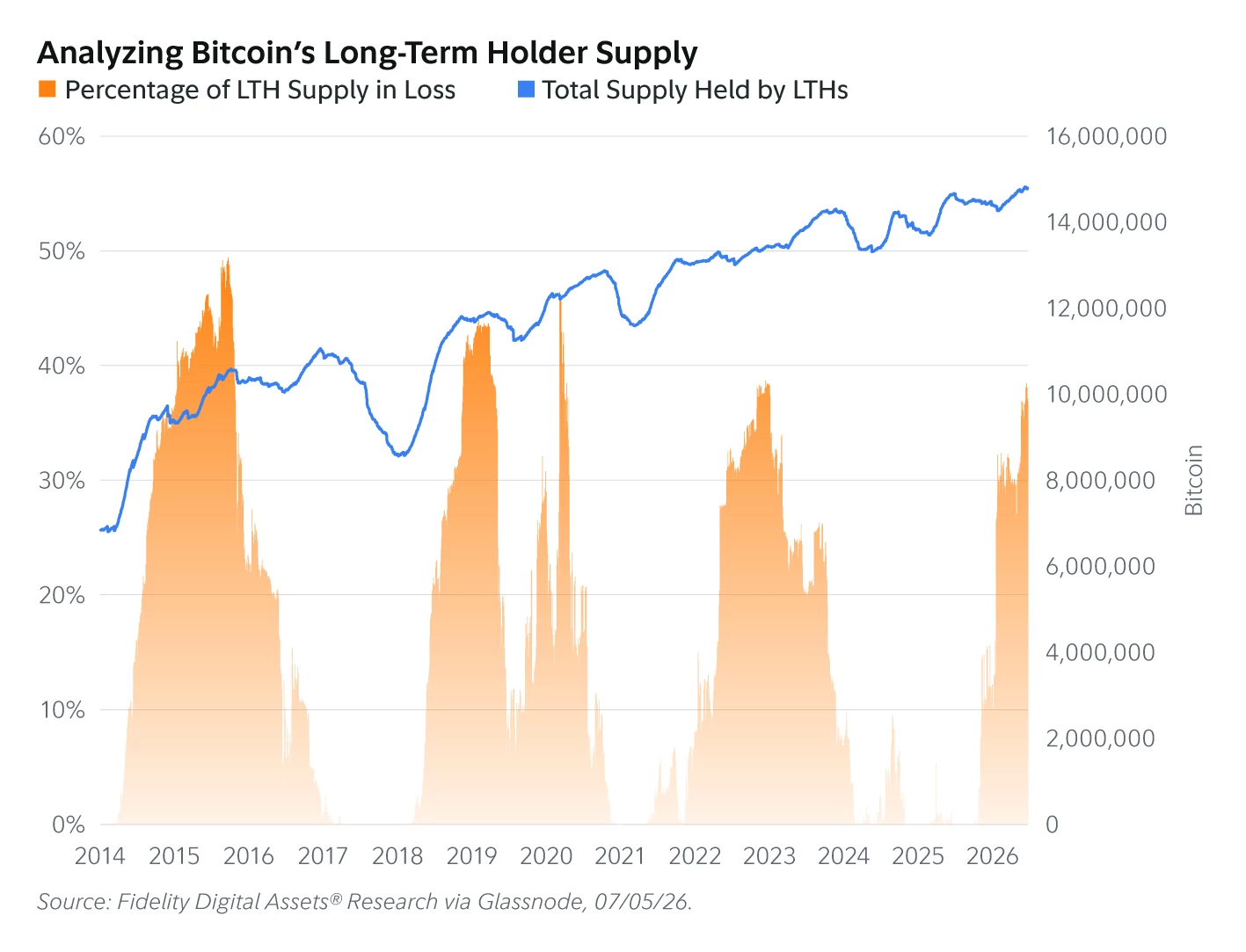
Fidelity Digital Assets says the supply of Bitcoin (BTC) held by long-term investors has reached an all-time high.
Research analyst Zack Wainwright treats that cohort as one of the clearest reads on investor conviction. Fidelity says the long-term holder data appear consistent with on-chain metrics that are approaching past-cycle bottom levels.
Why Fidelity Watches This Cohort
The asset manager noted that nearly 15 million coins have now sat unmoved for at least 155 days. The post framed it as a signal for conviction.
That supply has historically expanded through bear markets and contracted through bull markets. It set its record on July 5, 2026, while prices stayed under pressure.
Nearly 40% of the cohort now sits at an unrealized loss. Most of these holders kept their exposure anyway, Wainwright wrote.
Bitcoin trades roughly 50% below its October 2025 peak of above $126,000. Earlier bear markets cut 70%, 80%, and even 90%. Wainwright reads that shallower decline as a sign of maturation.
“A variety of on-chain metrics are approaching levels historically associated with bitcoin’s market cycle bottoms. Whether these signals ultimately mark a turning point remains to be seen, but the long-term holder data appears consistent with that sentiment as well,” Wainwright said.

Follow us on X to get the latest news as it happens
Meanwhile, Benjamin Cowen, a member of BeInCrypto’s Market Intelligence experts council, puts the fourth-quarter bottoming window as a base case. His seasonal math suggests a low near $44,000.
“The bear-market framework remains intact and the focus shifts from confirming the markdown to watching for the low,” he wrote.
Wainwright lands on the same open question. Fidelity’s data shows conviction holding firm, yet the firm will not say whether the bear market has reached its final stage.
August offers the next test. That month turned negative in all three prior midterm election years, with losses between 15% and 18%.
Subscribe to our YouTube channel to watch leaders and journalists provide expert insights
The post $7 Trillion Wall Street Giant is Watching This Key Bitcoin Metric appeared first on BeInCrypto.

For much of the past two years, publicly listed companies competed to raise capital to buy BTC and presented themselves as leveraged alternatives to holding the asset directly.
The model worked quite promisingly for a while, and their shares traded comfortably above the value of the BTC on their balance sheets. Some experienced massive growth within months. However, Scorpions’ immortal song has come to life – there’s a wind of change.
Who Is Selling?
Although we have talked extensively about Strategy’s change of attitude over the past several months, the company remains the largest corporate holder and the pioneer of the entire move, so we can’t skip it. It began accumulating BTC roughly six years ago. It increased the rate and size of its purchases after the US presidential elections in late 2024. The market became accustomed to hearing new multi-million- (and sometimes billion-) dollar accumulations every Monday.
However, it all changed with a tiny sale in Q2 and a significantly larger one in early July of over 3,500 units. The company has made no new acquisitions for weeks now, while focusing on rebuilding its USD reserve. On the plus side, it didn’t sell in the past couple of weeks either. Nevertheless, analysts are adamant that the first sale changed everything, even though it’s apparent (for now) that Strategy has not abandoned Bitcoin.
Satsuma Technologies, though, did. The UK-listed BTC treasury company proposed selling all of its remaining BTC, returning most of the proceeds to shareholders, delisting from the London Stock Exchange, and effectively dismantling the treasury vehicle. The firm had already sold 579 BTC in December last year to raise approximately $50 million to address convertible loan obligations. Now, shareholders have approved plans to dispose of the remaining 668 BTC.
Recent reports suggested that Bitcoin miners have disposed of a record 32,000 units in the first quarter of the year, further intensifying the selling pressure.
Separately, Jack Mallers stepped down as CEO of Twenty One Capital earlier this week to focus on Strike. Although this doesn’t necessarily mean that the firm will sell its BTC holdings, it originally promoted itself as a passive Bitcoin holder.
Mallers’ departure, in which he said there are too many differences between himself and the Board of Directors, hints at a major restructuring. It serves as another example of a major treasury vehicle being forced to rethink how it creates value beyond BTC exposure.
Who Might Follow?
Metaplanet, described as Asia’s Strategy, joined the trend a couple of years ago and made some major BTC acquisitions. Its stock benefited immensely, as its business transformed. However, the late 2025 market crash and subsequent bear cycle have not been kind, with the same stock plunging by nearly 90% at one point. It halted its Bitcoin acquisitions for months before returning with a 2,823 purchase in early July.
It has remained silent since then, but there’s no sign that its strategy has changed or that it might need to dispose of some crypto holdings soon.
Perhaps the most vulnerable companies are the smaller ones, trading below net asset value, carrying expensive debt, lacking meaningful operating revenue, or facing shareholder pressure to unlock their crypto holdings. Nakamoto Inc. is among those that stand out, as it already sold about 5% of its BTC position in March, and another 600 units in June.
Despite the evident trend change, none of the above means that the corporate Bitcoin treasury is finished. However, it marked the end of a period in which every treasury announcement involved another purchase. Now, uncertainty dominates, just like the market phase, but those who survive will likely be the strongest companies generating operating revenue and managing their liabilities. The weakest may have to sell and restructure.
The post The Bitcoin Treasury Shakeout Has Begun: Which Companies Are Selling and Who’s Next? appeared first on CryptoPotato.
Layer-1 blockchain Dango has announced it will wind down operations, with trading on its perpetual decentralized exchange (DEX) set to stop on Wednesday and the network shutting down on Aug. 13.
In an X post, the team said the decision follows a conclusion that there is “no viable path to a lasting commercial success,” citing a mix of operational and external headwinds. Founder Larry Liu added that cash shortages, legal issues that slowed progress, staff losses, and broader market conditions all contributed to the outcome.
Key takeaways
- Dango will halt perpetual DEX trading on Wednesday and complete a network shutdown on Aug. 13.
- The team attributed the closure to lack of a sustainable path to commercial success, including cash constraints and legal delays.
- After launching its perpetual DEX in April, Dango suffered a roughly $410,000 exploit shortly after release; the attacker later returned funds in a bug-bounty arrangement.
- Competition in perp trading remains intense: DefiLlama shows Dango’s open interest far below larger platforms such as Hyperliquid and Aster.
- Dango’s shutdown adds to a broader pattern of crypto platform closures reported in July, including BitMEX.
Trading halts first, network shutdown follows
According to Dango’s announcement on X, the process will unfold in two phases. First, perpetual trading on its DEX will stop on Wednesday. Then, the network itself will be shut down on Aug. 13.
This staging matters for users and liquidity providers because perpetual venues typically accumulate open positions and ongoing market activity. Halting trading first gives counterparties a clear time window, while the later network closure indicates the longer-term end of protocol availability.
Dango did not frame the decision as a temporary pause. Instead, both the team’s statement and Liu’s remarks emphasized that the project had reached a point where continuing operations was no longer viable.
What Dango cited: funding strain, legal friction, and team losses
The core reason given by Dango was the absence of a workable route to long-term commercial success. In a separate X post, founder Larry Liu pointed to multiple challenges that collectively undermined the project’s momentum.
Those factors included cash shortages, legal challenges that slowed progress, the loss of team members, and prevailing market conditions. Together, the comments suggest Dango’s runway and development schedule were constrained from more than one direction, making it harder to regain traction after early setbacks.
Launch timeline and the earlier exploit
Dango launched its mainnet in January after raising $3.6 million in a 2024 seed round, according to the team’s X posts—an effort reportedly led by Hack VC and Lemniscap.
The perpetual DEX was rolled out in April. However, the project experienced a significant security incident shortly after launch: an exploit worth roughly $410,000 reportedly occurred days after the venue began operating. The attacker later returned the funds in exchange for a bug bounty, according to Dango’s reporting.
For perp DEX operators, incidents like this can affect user trust and liquidity, particularly when competitors are already attracting traders at scale. While returned funds and a bug bounty can mitigate financial damage, reputational and operational disruption often persists longer than the immediate technical resolution.
Open interest shows how hard it is to compete in perps
Dango’s winding down comes amid a market where perpetual DEX trading is dominated by a small number of large venues.
DefiLlama data shows Dango’s total value locked (TVL) fell from a peak of roughly $4.5 million in early May to about $1.6 million before the shutdown announcement. That decline outlines how quickly liquidity can drain when a protocol fails to draw sustained demand.
Competition is even clearer in open interest. DefiLlama’s perp rankings, referenced in the reporting, indicate that Hyperliquid held more than $11 billion in open interest on Saturday—representing the value of outstanding perpetual futures contracts not yet closed. Only Aster and Variational were also reported as holding more than $1 billion in open interest.
By comparison, Dango’s open interest was just under $391,000. In other words, even before the closure, Dango was operating at a scale far smaller than the main liquidity hubs.
CoinGecko’s second-quarter industry report, as cited in the article, also noted that Hyperliquid became the second-largest perpetual exchange by open interest on July 1, behind only Binance. That context helps explain why mid-sized venues can struggle to attract both traders and market depth necessary for efficient execution.
A wider shutdown trend in July
Dango’s closure is not an isolated event. The announcement arrives during a stretch in which other crypto businesses have shut down or restructured, including BitMEX, which the article described as a perpetual futures pioneer that announced its shutdown in July.
In commentary shared with Cointelegraph, restructuring adviser Roshan Dharia linked BitMEX’s exit to broader structural pressures on mid-sized centralized exchanges. He pointed to liquidity concentration among the largest players and rising regulatory compliance costs. Dharia also argued that the top platforms control a large share of global spot volume, leaving less room for smaller operators to scale or maintain healthy margins.
Other closures mentioned alongside Dango include DEX aggregator Odos Protocol and perp DEX Satori Finance. While each case has its own drivers, the clustering of shutdowns suggests a tougher environment for scaling crypto platforms—especially those competing for liquidity and trading activity against dominant incumbents.
For Dango users and liquidity providers, the next key milestones are the Wednesday trading halt and the Aug. 13 network shutdown. Beyond that, investors and builders should watch whether Dango’s exit accelerates further consolidation in perpetual trading—and whether remaining perp platforms with smaller open interest can sustain liquidity as competition intensifies and operational costs rise.
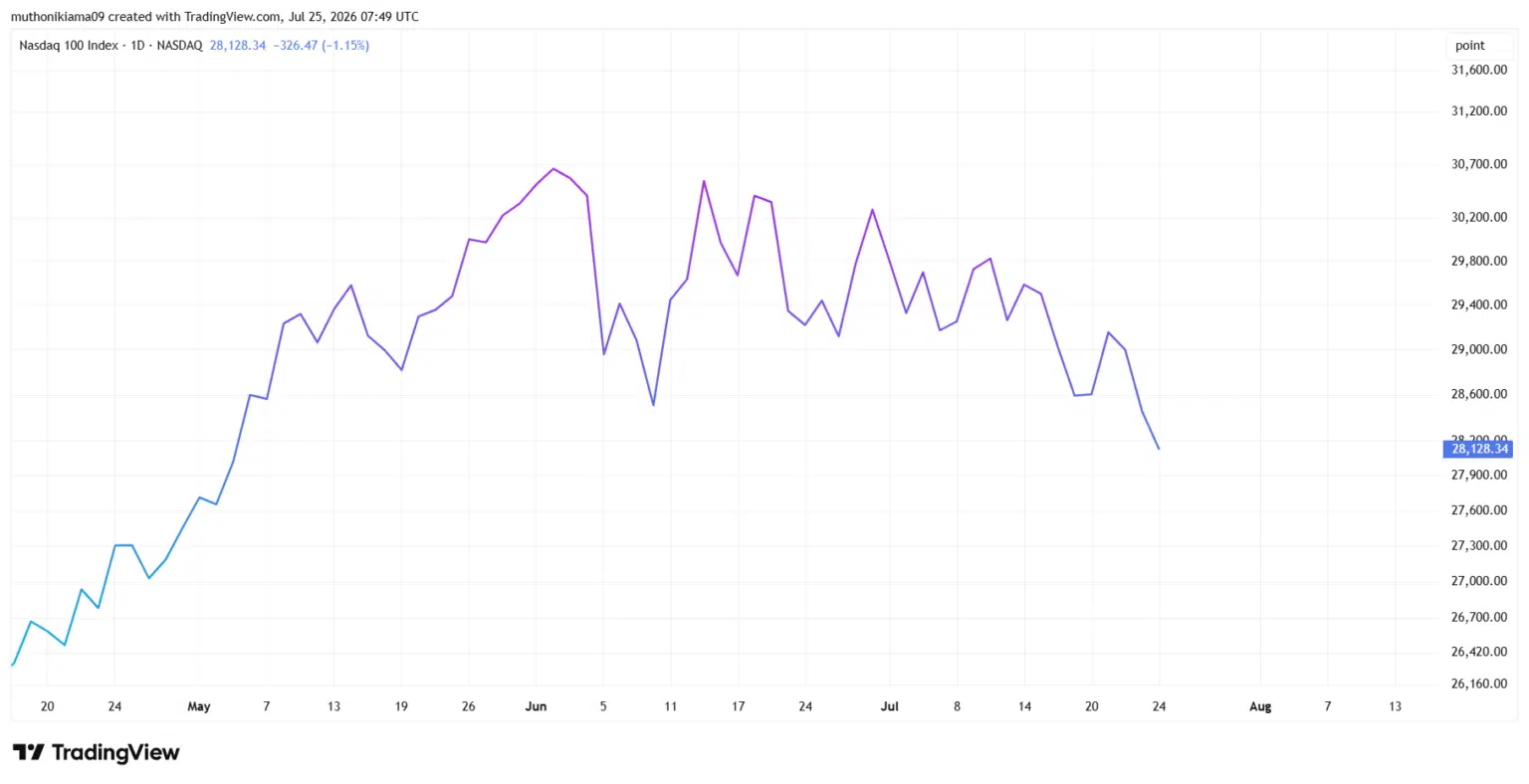
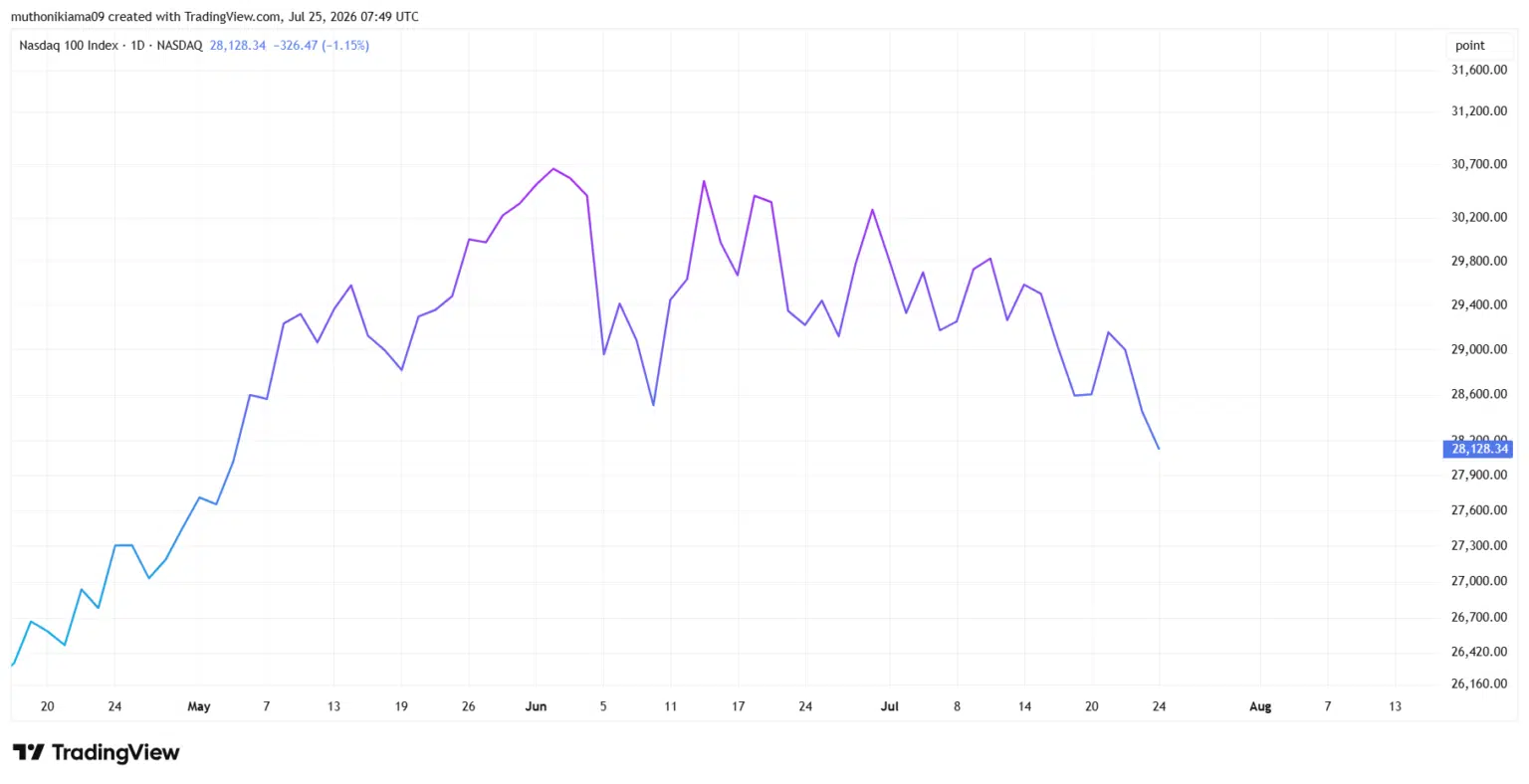
Bitcoin price has dipped under intense macro headwinds today, July 25, as the Nasdaq-100 index plunged to its lowest level since May 5 over escalating concerns regarding heavy artificial intelligence spending by tech giants.
Summary
- Bitcoin price slid 2.49% to $64,017 as tech-driven Nasdaq liquidations and 4.71% Treasury yields triggered defensive profit-taking.
- Spot BTC ETFs posted their worst inflows in three weeks, drawing just $33 million as buyers pivoted to bonds.
- BTC is actively testing vital 4-hour ascending trendline support; losing this slope exposes the psychological $60,000 floor.
At the time of writing, the leading cryptocurrency trades at $64,017.51, representing a 2.49% decline over the last 24 hours. Daily trading volumes reached $22.84 billion according to CoinMarketCap data, representing rising selling pressure after BTC recently touched an intraday high near $66,900 on July 21.
Market sentiment has turned cautious because Bitcoin increasingly correlates with high-growth technology shares.
Tech equity liquidation triggers crypto selloff
Data from TradingView shows that the Nasdaq-100 index closed its previous trading session at 28,128 points, establishing an eleven-week low. This equity drawdown stems from investor anxiety that massive capital expenditures toward AI infrastructure will reduce immediate corporate cash flows and increase corporate debt burdens.
For example, Alphabet purchased $94 billion worth of SpaceX stock during a June initial public offering, highlighting the scale of tech-sector capital allocation.
Commenting on the move, Peter Andersen, Chief Executive Officer of Andersen Capital Management, noted:
“People are thinking, how do we make sense of all this spending, and how much more patient do we have to be before we actually see it translate to actual profits?”
This capital preservation mindset in traditional finance has prompted defensive positioning within digital asset markets, where traders are taking profits rather than risking capital on volatile assets.
Why Bitcoin institutional demand channels are stalling
In tandem with the equity contraction, institutional demand channels for digital assets show signs of constraints. Data from SoSoValue shows that spot Bitcoin exchange-traded funds registered a mere $33 million in net inflows during the week ending July 24. This cumulative figure marks the weakest weekly capital intake for the investment vehicles in three weeks.
The reduction in capital allocation develops alongside a notable shift in the broader fixed-income landscape. Specifically, the US Treasury 10-year yield advanced to 4.71%, which represents its highest level since January 2025.
Higher yields on risk-free government bonds change the opportunity cost of holding volatile crypto assets. When government debt instruments present guaranteed yields at these levels, institutional allocators frequently pivot away from high-beta risk assets like Bitcoin.
Such a macro reallocation pattern cuts the baseline liquidity available to support crypto spot prices during equity market drawdowns. The drop from the July 21 peak of $66,900 reveals that market participants are opting for cash or fixed-income safety rather than defending local support levels. Consequently, the combination of tech stock liquidations and rising yields has forced a tactical retreat.
Key Bitcoin price technical levels to watch
On the 1-day chart, the daily candle prints at $64,017.51, positioning the asset just under its yellow moving average ribbon line of $64,266.14. Long-term overhead resistance remains defined by a higher red trendline sitting at $77,301.64.
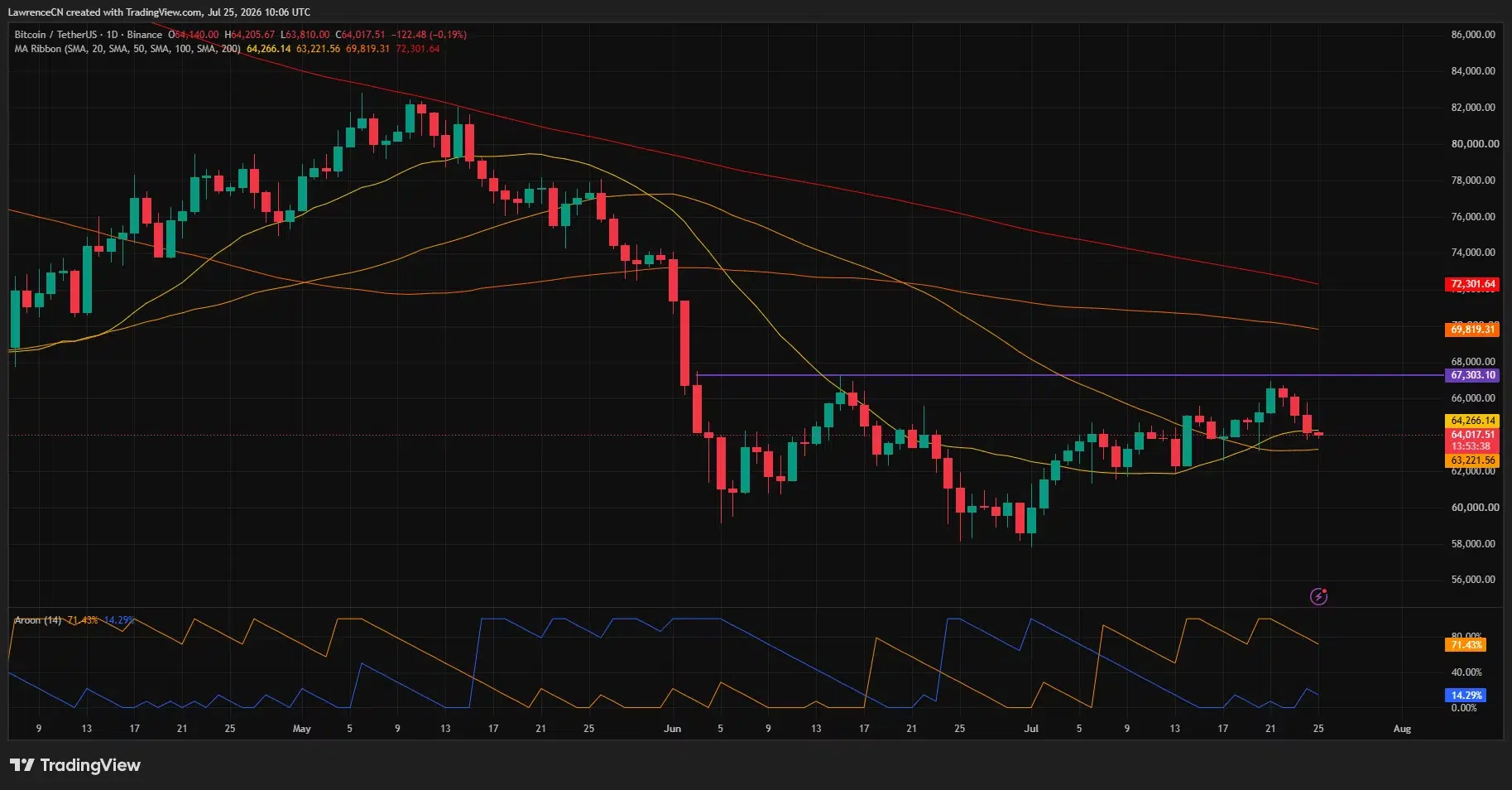
The Aroon indicator on the daily timeframe provides a mixed outlook for long-term momentum; the Aroon Up line measures 71.43%, while the Aroon Down line hovers at 14.29%. A crucial horizontal resistance line is established at $67,303.10, which matches structural distribution zones from early June.
Shorter-timeframe data on the 4-hour chart reveals that Bitcoin is currently testing a vital upward-sloping purple trendline that has served as dynamic support since early July. The 4-hour Relative Strength Index has slid to 35.85, tracking below its yellow moving average line of 42.67, which places the asset near oversold territory.
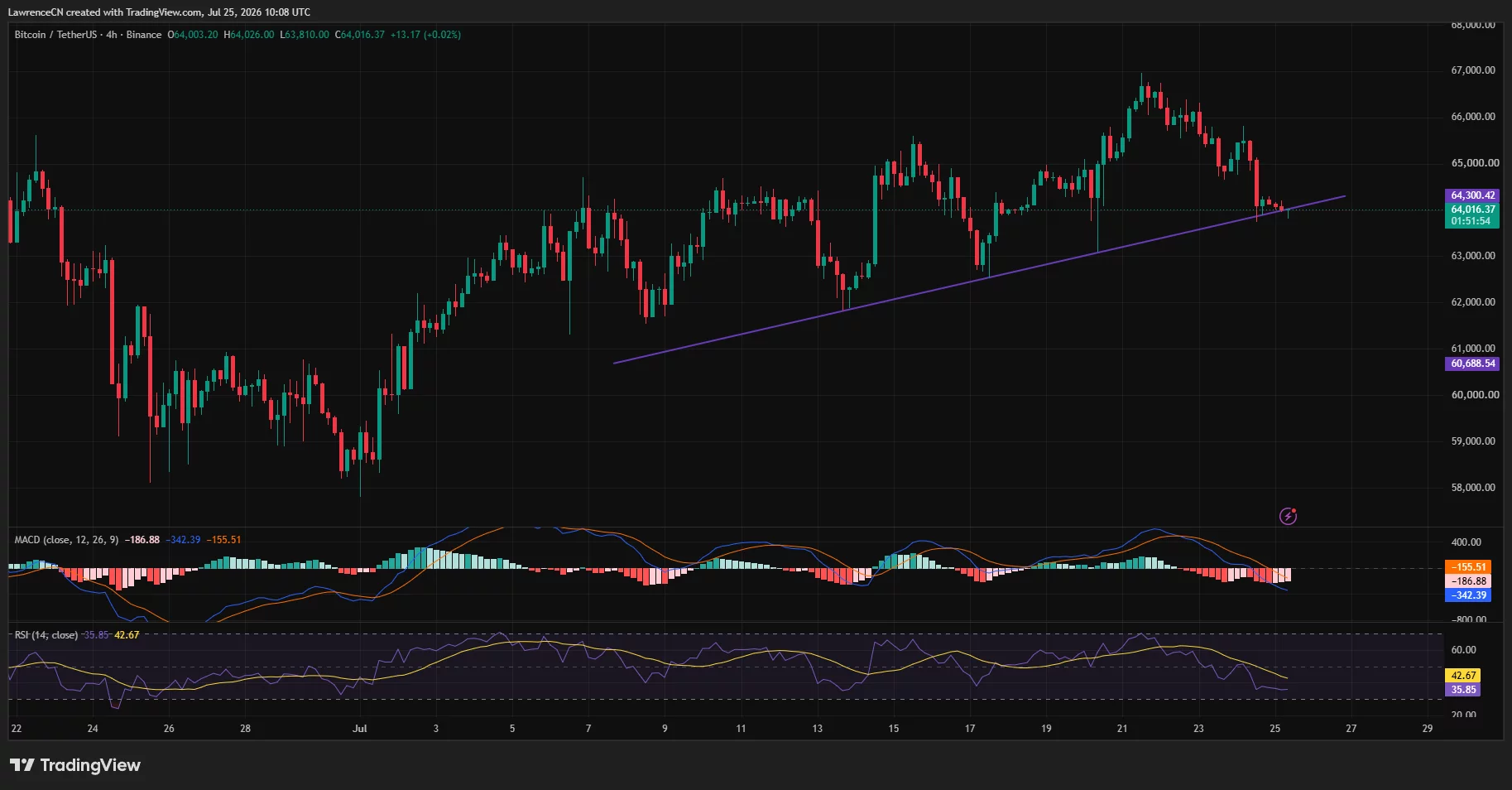
Concurrently, the Moving Average Convergence Divergence indicator registers a bearish configuration, with the blue MACD line crossing below the orange signal line at -342.39 versus -155.51 amid expanding red histogram bars.
The immediate price action shows a direct cluster of sell orders around the 4-hour trendline, indicating that short-term speculators are actively hedging their spot exposures. Volume bars on shorter intervals have increased during down-swings, validating that the breakdown attempt is backed by active distribution rather than low-liquidity drift.
This alignment between the negative MACD crossover and the breakdown of the short-term moving average suggests that sellers hold the immediate tactical advantage. If the daily close finishes below this slope, the structure transitions from a standard corrective pullback into a broader structural reversal.
Downside risks that invalidate the bullish outlook
If this ascending 4-hour trendline breaks conclusively on a daily closing basis, the primary bullish setup will face invalidation. Under this scenario, a breakdown would expose the psychological support floor at $60,000, with a secondary structural horizontal support level waiting lower at $60,688.54.
Additional downside risks stem from the potential for cascaded long liquidations in the derivatives market if the $63,000 level fails to hold. A breach of these key horizontal baselines would open the path toward deeper retests of May lows, entirely erasing the recovery momentum built over the past three weeks.
Disclosure: This article does not represent investment advice. The content and materials featured on this page are for educational purposes only.

The world’s largest cryptocurrency exchange continues to update its product line, introducing new ways to keep users on the platform as investor interest has shifted elsewhere.
In the latest move, the CZ-founded company outlined the significant APR provided to certain holders and traders of Ripple’s stablecoin.
Recall that Binance first listed RLUSD at the start of the year, which included a popular zero-trading-fee promotion for a certain period. Naturally, some of the trading pairs available in January were against XRP.
Although the stablecoin was initially available only on Ethereum, it added support for Ripple’s XRP Ledger less than a month later.
The updates continued in the following months, including Binance adding the stablecoin to its Earn program, allowing holders to earn some rewards.
The latest post from the exchange provided more details on what investors can actually earn. It reads that the APR has remained variable in the past week, but it was an impressive figure of 22.25%.
Binance explained that users holding and trading the stablecoin can continue to earn weekly XRP rewards, and the asset has been added on the exchange’s Margin/Earn program.
22.25% APR (variable) in the last 7 days.
Hold RLUSD, trade, and earn weekly XRP rewards, it’s live now on Binance Margin/Earn.
More info → https://t.co/LmdiRKIG7w pic.twitter.com/PmTM87BU7b
— Binance (@binance) July 25, 2026
RLUSD saw the light of day at the end of 2024, even before the legal issues concerning the company behind it were resolved. Although it’s generally aimed at institutional usage, it continues to attract retail participants as well.
Its market capitalization has grown to almost $1.6 billion as of press time, making it the 9th largest stablecoin by that metric.
Earlier this year, RLUSD was included in Mastercard’s stablecoin initiative, alongside other major names such as USDC, PYUSD, USDP, and SoFiUSD.
More recently, Ripple launched a new platform called Ripple Mint, which aims to enhance institutional access to RLUSD for easier minting, redemption, and management.
The post Major Binance Update for Ripple (XRP) Investors: Details appeared first on CryptoPotato.
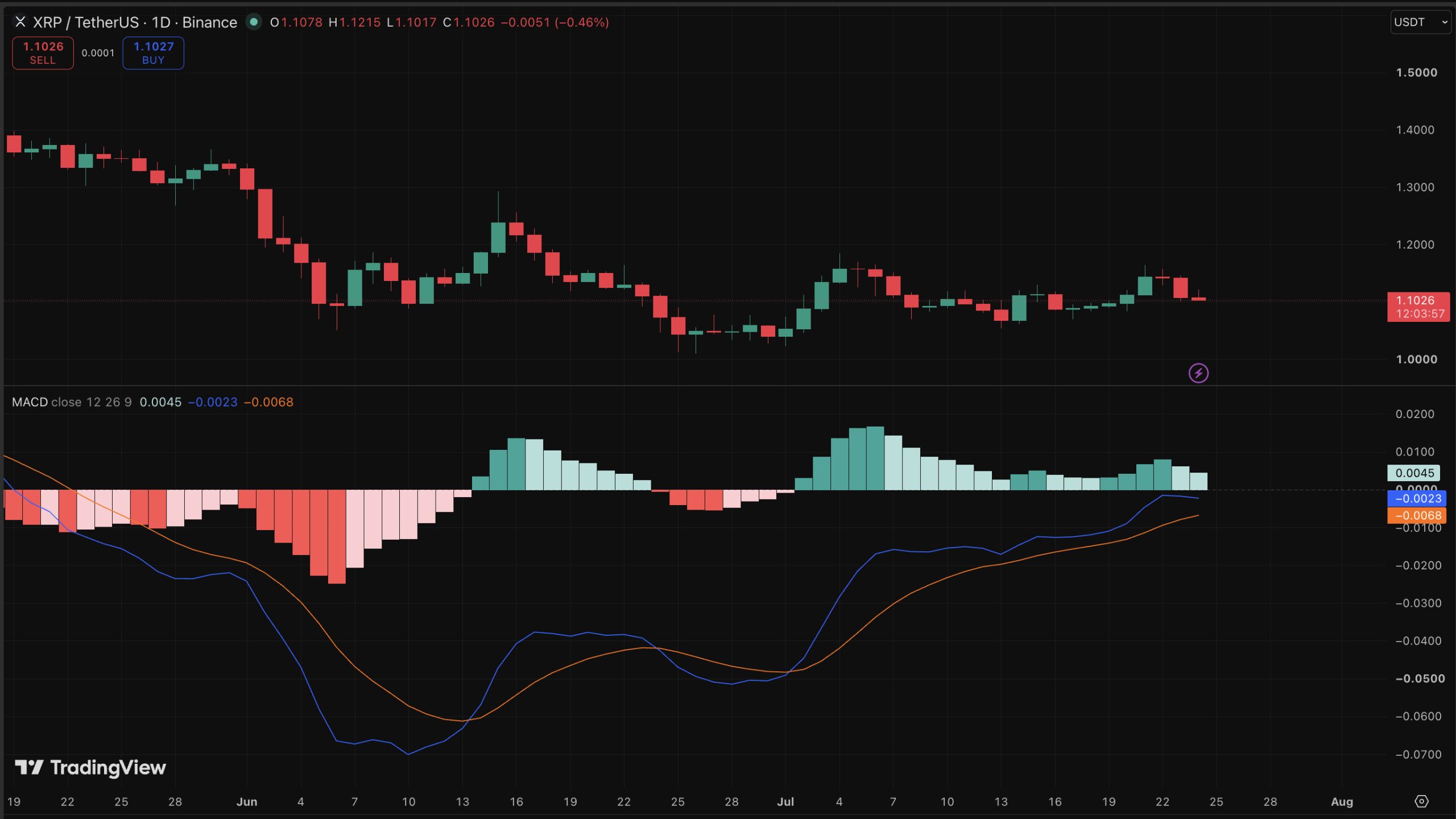
XRP price is trading around the $1.10 to $1.12 range after slipping 2% over the past day. This XRP prediction comes as price action softens despite steady spot buying. The more interesting story is not the decline, but what is happening underneath it. Spot demand has climbed to its strongest levels since June, while derivatives traders remain cautious.
That divergence matters because it often appears before a decisive move. Buyers continue absorbing supply, yet leveraged traders remain hesitant. As a result, XRP could either reclaim recent highs or face another round of selling if support gives way.
Recent technical signals show XRP struggling to hold above the $1.14 area after its weekly advance. Short-term momentum cooled as profit-taking emerged, although the MACD still favors buyers. Meanwhile, the Relative Strength Index recently reached overbought territory, suggesting upside could remain limited without fresh demand.
Market sentiment remains cautious even with stronger spot accumulation. That disconnect is worth watching because pessimistic positioning sometimes fuels sharp rebounds. However, if buyers fail to defend the current range, sellers could regain control before another recovery attempt develops.
Institutional adoption narratives and ETF-related speculation continue supporting the medium-term outlook for XRP. At the same time, Ripple developments add another fundamental layer alongside the technical picture. Even so, resistance near recent highs remains the level to beat before bulls can regain full control.
Discover: The Best Crypto to Diversify Your Portfolio
XRP Price Prediction: Reclaim $1.20 Before the Next Major Resistance at $1.48?
XRP price is trading around the $1.10 to $1.12 range after slipping roughly 2% over the past day. This XRP prediction comes as price action softens despite steady spot buying. The more interesting story is not the decline, but what is happening underneath it. Spot demand has climbed to its strongest levels since June, while derivatives traders remain cautious.
That divergence matters because it often appears before a decisive move. Buyers continue absorbing supply, yet leveraged traders remain hesitant. As a result, XRP could either reclaim recent highs or face another round of selling if support gives way.

Recent technical signals show XRP struggling to hold above the $1.14 area after its weekly advance. Short-term momentum cooled as profit-taking emerged, although the MACD still favors buyers. Meanwhile, the Relative Strength Index recently reached overbought territory, suggesting upside could remain limited without fresh demand.
Market sentiment remains cautious even with stronger spot accumulation. That disconnect is worth watching because pessimistic positioning sometimes fuels sharp rebounds. However, if buyers fail to defend the current range, sellers could regain control before another recovery attempt develops.
Institutional adoption narratives and ETF-related speculation continue supporting the medium-term outlook for XRP. At the same time, Ripple developments add another fundamental layer alongside the technical picture. Even so, resistance near recent highs remains the level to beat before bulls can regain full control.
Trade XRP on Bybit and Get a Chance to Win Our $1,000 USDT Airdrop
LiquidChain Targets Early-Mover Positioning as XRP Tests Key Resistance
XRP’s spot demand spike is a legitimate signal, but at $1.14, the risk/reward on a near-term trade is compressed between a stubborn resistance ceiling and an overbought oscillator. Traders looking for asymmetric exposure in this environment are increasingly eyeing early-stage infrastructure plays where price discovery hasn’t happened yet.
LiquidChain ($LIQUID) is a Layer 3 infrastructure project building what it calls a unified cross-chain execution environment. It is fusing Bitcoin, Ethereum, and Solana liquidity into a single settlement layer.
The Order builds. — LiquidChain (@getliquidchain) July 15, 2026
Brick by brick. Layer by layer.  ⟁https://t.co/vqvBcdSQYC pic.twitter.com/tcfMNP4lNq
Liquid’s architecture centers on a Deploy-Once model: developers ship once, access all three ecosystems simultaneously, with verifiable settlement and single-step execution across chains.
The presale is currently priced at $0.01483, with $917K raised to date. That figure is climbing, and early-stage pricing at this level won’t persist indefinitely as the round progresses. Institutional demand signals tracked alongside this raise add context,too.
Research LiquidChain before making any allocation decision.
Discover: The Best Token Presales
The post XRP Price Prediction: Ripple Token Spot Demand Hits Highest Since June appeared first on Cryptonews.


Payment firm Triple-A’s hot wallets have lost more than $9.7 million spanning multiple blockchains.
On-chain analyst Specter flagged the outflows on X (formerly Twitter) earlier today. This comes amid a streak of exploits hitting crypto protocols this month.
Analyst Flags $9.7 Million Triple-A Wallet Drain
The drain spanned across TRON (TRX), Ethereum (ETH), Polygon (POL), and Arbitrum (ARB). Attackers swapped the assets and bridged them to Ethereum.
The funds now sit in one wallet, 0x01F83B5d4fb30E8AA3daC1681B4048D9135253b1. That address holds roughly 5,227 ETH, worth about $9.7 million.
“It looks like the team are not aware as deposit are not disabled and every new deposit is being drained,” Specter posted earlier today.
Follow us on X to get the latest news as it happens
Triple-A has not addressed the wallet outflows as of press time. BeInCrypto has reached out for comment.
Meanwhile, the drain adds to a difficult stretch for crypto security. On-chain trackers have logged a string of thefts across platforms in recent days. Lookonchain counted three separate attacks on July 23 worth $35.55 million.
Those hits included AFX Trade at $24.15 million, the Verus Ethereum bridge at $7.55 million, and B2 Network at $3.86 million. This marked Verus’ second exploit since May. Attackers drained roughly $11.58 million in digital assets on May 18.
Subscribe to our YouTube channel to watch leaders and journalists provide expert insights
The post Crypto Payments Firm Triple-A Hit by $9.7 Million Wallet Drain appeared first on BeInCrypto.
Crypto World
Robinhood Chain’s real-world assets jump fivefold as tokenized stocks start trading in size
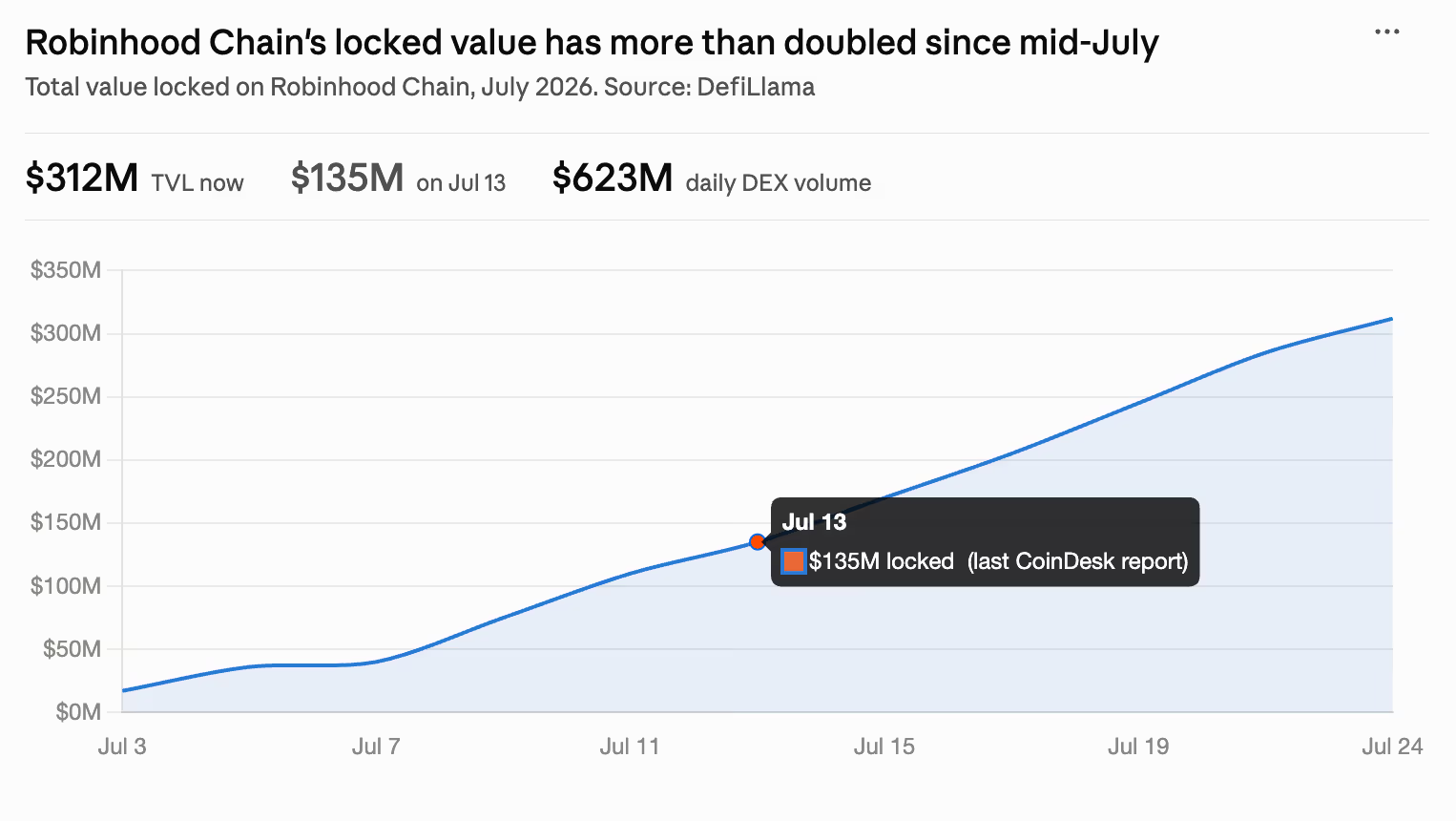
Total value locked has roughly tripled since mid-July to about $312 million, according to DefiLlama, and Robinhood Chain is now clearing more than $600 million in daily decentralized-exchange volume, putting it among the more active networks in crypto.

Its transaction count has also drawn attention, with more than 138 million in 30 days, per Token Terminal. But the chain’s most-traded tokens are still overwhelmingly memecoins.
On DEX Screener, the top of Robinhood Chain’s trending list is filled with tokens like “Hoodrat,” “Vladhood” and “Swole Doge,” not the tokenized equities the network was built for, which trade on Uniswap but rank well down the volume rankings.

The tokenized stocks generate roughly $55 million in daily volume, under a tenth of the chain’s nearly $600 million in total DEX trading, the data shows. The rest is dominated by memecoins.
Stablecoins remain the single largest presence on the chain, with a combined market value in the hundreds of millions of dollars, and memecoins, such as the Robinhood mascot-themed CASHCAT, that defined the chain’s first weeks, are still active and heavily traded.
The critique three weeks ago was that Robinhood had built expensive infrastructure and attracted only speculation, with little sign that the tokenized-stock business it pitched would materialize.
Is DragonSword Awakening a gacha game? Genre and core gameplay explained

Acer Chromebook Plus Spin 514 (2026) Review

Kecerdasan Mirwan buat Heboh Eropa “Mengakali Financial Fair Play Italia” Como siap Bersaing Di UCL

Renter of Home in Anne Heche Crash Denies Settlement With Son

No Jackpot Winner as $257 Million Prize Rolls Over to $269 Million Monday Draw

Weekend Open Thread: Staud – Corporette.com
Kecerdasan Mirwan buat Heboh Eropa “Mengakali Financial Fair Play Italia” Como siap Bersaing Di UCL

XRP OWNERS IT’S HAPPENING TOMORROW! TRUMP CLARITY ACT

How to Generate Income with Gold and Money Received During Marriage | Financial Tips for Women
-

 Fashion19 hours ago
Weekend Open Thread: Brooks Brothers
-

 Politics6 days ago
Democrats look to World Cup watch parties to register thousands of voters
-

 News Videos6 days ago
Big Money Is Entering XRP
-

 Crypto World4 days ago
Grayscale Files For Worldcoin ETF, WLD Registers Sharp Rise
-

 Tech5 days ago
Sail Virtually Aboard The “Itanic” With IA-64 Emulator
-
 Tech4 days ago
Turtle Beach Command Series KB7 review: a nifty screen-equipped gaming keyboard
-

 NewsBeat5 days ago
Unregistered fitter used Gas Safe logo on business flyers
-
 Business3 days ago
New Jersey voter registration controversy explained: How 6,600 noncitizens got on the rolls, and what happens next
-
 Entertainment4 days ago
Johnny Depp’s R-Rated Gothic Cult Classic Gets New Release Ahead of Sydney Sweeney Remake
-

 Crypto World3 days ago
Ethics, other provisions in crypto Clarity Act to be further discussed
-

 Tech5 days ago
Watch Flock Safety CEO Garrett Langley discuss the future of surveillance at TechCrunch Disrupt 2026
-
 NewsBeat4 days ago
Shanghai science forum photos show China’s AI and robotics advances in rivalry with US
-

 Crypto World5 days ago
Circle’s President Sold Over 360,000 Shares, The Filings Explain Why
-

 Tech5 days ago
Subway Sandwich Computers Get a Second Life as Gaming Machines
-

 News Videos2 days ago
The Peugeot Family: How 200 Years of an “Old Money” Dynasty Died in A Boardroom
-

 Sports1 day ago
2026 3M Open leaderboard: Scottie Scheffler finds putter in Round 1, sits three back
-

 Tech5 days ago
The 35 Best Board Games for Family Game Night
-

 Fashion1 day ago
16 Dresses for the High Summer Event
-

 Tech6 days ago
How To Use Claude’s Reflect Dashboard And Learn When It’s Time To Touch Grass
-

 Entertainment5 days ago
Stephen Colbert Returns to Social Media After Late Show End
You must be logged in to post a comment Login