

Business
Jindal Steel Q1FY27 slides: margins rise as value-added mix grows




Business
Will GameStop Ever Actually Buy eBay? Inside Ryan Cohen’s $56 Billion Takeover Bid and What Comes Next

GameStop’s pursuit of eBay has stretched into its third month, and the video game retailer shows no sign of walking away, even as the e-commerce giant continues to reject its advances. The saga, one of the more unusual corporate takeover attempts in recent memory, has left investors and analysts split on whether a deal will ever materialize.
How the bid began
GameStop Chief Executive Ryan Cohen submitted a non-binding proposal to eBay’s board on May 3, offering $125 per share in a cash-and-stock deal that valued the online marketplace at roughly $55.5 billion. The offer represented a 46% premium to eBay’s closing price on February 4, the day GameStop began quietly building its stake in the company. GameStop disclosed it had accumulated a 5% economic interest in eBay through a combination of derivatives and direct stock ownership ahead of making the offer public.
The proposed structure called for the deal to be split evenly between cash and GameStop common stock, with eBay shareholders given the ability to choose which form of consideration they wanted to receive. Cohen pointed to GameStop’s roughly $9.4 billion in cash reserves and said he had secured a commitment letter from TD Securities for up to $20 billion in additional debt financing.
eBay says no
eBay’s board rejected the proposal on May 12, calling it “neither credible nor attractive” in a letter signed by board chairman Paul Pressler. The company cited its ongoing turnaround under CEO Jamie Iannone, which has focused on higher-margin categories such as trading cards, collectibles and pre-owned luxury goods, as evidence that eBay was better positioned as a standalone business. eBay noted that its shares were up sharply for the year and said it had “delivered meaningful results” through its current strategy.
The size mismatch between the two companies drew immediate skepticism from Wall Street. At the time of the offer, GameStop’s market value stood at roughly $10 billion to $12 billion, while eBay’s was closer to $46 billion to $48 billion — meaning GameStop was proposing to buy a company roughly four times its own size using a mix of borrowed money and its own stock.
GameStop keeps buying, keeps pushing
Rather than retreat after the rejection, GameStop has steadily increased its position in eBay. A regulatory filing showed the company’s stake had grown to nearly 10% by mid-July, after GameStop purchased millions of additional shares in June and converted options covering 39 million more shares into common stock. In a filing this month, GameStop reiterated its commitment to pursuing the deal, even as it declined to say how it planned to move the transaction forward.
Cohen has also made changes at GameStop that observers have linked to the eBay push. In June, the company’s board withdrew a proposed executive compensation package for Cohen that could have paid him as much as $35 billion in stock if he hit certain performance targets, with the company citing his focus on the eBay effort. The withdrawal came shortly after a shareholder filed a proposed class-action lawsuit seeking to block a vote on the pay package, which GameStop has said it intends to fight.
Cohen holds his ground publicly
In a Bloomberg Television interview on July 16, Cohen declined to say whether he would raise his offer, but made clear he has not given up. “We’re coming for eBay one way or another,” he said. Pressed further on his strategy, Cohen added, “I’m not going to negotiate against myself,” signaling he has no intention of bidding against his own initial offer without a response from eBay’s board. Cohen also described his broader ambitions for a combined company, saying he envisions building it into a business worth $1 trillion by tying GameStop’s collectibles business to eBay’s marketplace reach.
Why analysts remain doubtful
Despite Cohen’s public confidence, most analysts covering the situation continue to question whether GameStop can realistically complete a deal of this size. Brian Quinn, a professor at Boston College Law School, said the offer amounted to little more than a distraction for eBay’s board, arguing that without a substantial cash commitment, the proposal was “only a promise of a ride on the meme-coaster.” Eden Chen, chief executive of gaming software company FirstLook, framed the core problem more simply, asking, “How does a $10 billion company take over a $50 billion company?”
The financing structure remains a central sticking point. GameStop’s offer relies heavily on issuing its own stock as partial payment, a structure that ties the deal’s value directly to GameStop’s often-volatile share price — a risk eBay’s board specifically flagged in its rejection letter, along with questions about how the combined company would be led and how Cohen’s compensation would be structured.
GameStop has signaled it may eventually take its case directly to eBay shareholders rather than continuing to negotiate solely with the company’s board, a move that would escalate the standoff into a more public campaign. Whether that translates into a formal tender offer, a proxy fight, or simply continued share accumulation remains unclear. For now, eBay’s board has shown no indication it plans to reconsider, while GameStop has shown no indication it plans to stop buying shares or making its intentions known.
Investors in both companies are left watching a takeover attempt that defies typical patterns: an unsolicited, partly stock-financed bid from a smaller company for one nearly five times its size, sustained months after being publicly and firmly rejected. Whether persistence alone can eventually change eBay’s calculus — or whether GameStop’s campaign fades the way many rejected takeover bids do — is likely to become clearer in the months ahead as GameStop continues building its stake and eBay continues executing its own turnaround plan.

If you’re a freelancer in the UK, you’ll know the feeling. A great quarter comes in, you pay yourself well, and then the next two months are quiet. Your savings sit in a current account earning next to nothing, and you start wondering whether that money could be doing more while you line up the next contract.
With over 4.5 million people now working for themselves across the UK, more self-employed professionals are turning to trading as a way to put idle capital to work.
Why Trading Clicks with the Self-Employed
Freelancers already think in terms of risk and reward. You quote for a project, weigh up the time it’ll take, and decide whether it’s a good bet. Trading follows a similar logic, just applied to financial markets instead of client work.
You also control your own schedule. Swing trading, where you hold positions for a few days or weeks, fits around client work without demanding constant attention. And if you’ve survived a dry spell and come out the other side, you already have the temperament for managing risk.
The Cash Flow Factor
Here’s the thing most trading guides don’t mention: freelancers don’t have a steady monthly salary. Your income spikes and dips, which makes traditional investing advice tricky to follow. Regular monthly contributions into an index fund sound great in theory, but they’re hard to stick to when your March invoice doesn’t get paid until June.
That means liquidity has to come first. You need to know you can close positions quickly and withdraw funds without long delays. Position sizing also matters more than usual. Risking 5% of your capital on a single trade might be fine for someone with a guaranteed paycheque. For a freelancer, that same 5% could be next month’s tax bill.
Spread Betting and the Tax Angle
For UK freelancers, spread betting deserves a close look. HMRC classifies spread bets as gambling, not investing, which means profits are exempt from Capital Gains Tax and Stamp Duty for most retail traders. You don’t need to report them on your self-assessment return either.
That’s a genuine advantage when you’re already managing income tax, National Insurance, possibly VAT, and Making Tax Digital requirements. Adding CGT calculations on top of all that is one more headache. Spread betting sidesteps it entirely.
There’s a catch, though. You can’t offset spread betting losses against other gains. And if HMRC decided your activity looked more like a full-time business than occasional speculation, they could reclassify your profits as taxable income. In practice, this is rare for retail traders, but keep it in mind.
Get Your Platform Right First
One mistake new traders make is jumping straight into placing trades without sorting their setup. The charting platform you use will shape how you analyse markets and manage risk. TradingView has become the go-to for many UK traders because it combines powerful charting with an interface that doesn’t overwhelm beginners, and it runs in a browser, so you can check charts between client calls on a laptop.
The real efficiency gain comes when your charting platform connects directly to your broker. Instead of analysing on one screen and executing on another, you can place trades straight from your charts. Several UK-regulated brokers now support this, and comparing brokers that integrate with TradingView will help you find one that matches your preferred markets and fee structure.
Treat It Like a Business Decision
Trading fits the freelance mindset because it rewards patience, discipline, and knowing when to walk away. Start small, track everything, and keep your trading capital completely separate from your emergency buffer. The goal isn’t to replace client work. It’s to make dead capital productive without putting your business at risk.
Done properly, trading can turn those quiet months into something more than just waiting for the next invoice to land.

So-called wrench attacks — where criminals use violence to coerce victims to hand over cryptocurrency — have accelerated this year, according to a new report by blockchain security firm CertiK, which tracks cyber threats and security incidents in the digital asset industry. CertiK verified 52 physical attacks against digital asset holders globally in the first half of 2026, up 33% from a year earlier. France, with 33 attacks, accounted for nearly two-thirds of publicly reported cases.
The report is based on verified, publicly reported incidents identified through law enforcement disclosures, court documents, reputable media reports, victim testimony and, where available, on-chain evidence. Because many attacks go unreported, the figures likely understate the true scale of the threat.Criminals are attacking more often, going after bigger targets and reaping larger payouts. The sum of recorded losses and ransom demands rose to about $124 million from just $10.5 million over the same period last year, according to the report.
“The trend suggests that attackers increasingly believe that physical coercion can produce outsized returns,” CertiK researchers wrote, adding that this has changed “criminal economics.”

This is forcing the industry to rethink what security means in crypto. For years, the biggest concern was protecting blockchains and private keys from hackers. Now old-fashioned operational security challenges have become paramount.
Today’s attacks combine online intelligence gathering with real-world violence, according to Ronghui Gu, co-founder of CertiK and a computer science professor at Columbia University.“I wouldn’t describe this as just a physical security attack anymore,” Gu said in an interview. “It’s really a combination of cyberattacks, social engineering and physical attacks.”
The biggest shift has been the rise of home invasions. CertiK verified 20 publicly reported cases in the first six months of the year, compared with just one in the first half of 2025.
One of those attacks in March involved a couple in the Paris suburb of Le Chesnay-Rocquencourt. They were beaten inside their home and forced to transfer roughly $1 million worth of Bitcoin. In another case in the UK, a victim was forced to surrender $24 million worth of crypto that was eventually converted into the privacy-focused token Monero.
Home invasions have replaced kidnappings as the fastest-growing form of crypto-related violence. Kidnappings were up to 16 in the period, compared with 12 last year.
The jump in losses also points to criminals becoming more selective. Attackers are spending more time stitching together blockchain records, leaked customer databases, social media profiles and public records to build detailed profiles of potential victims.
“The important thing is that criminals can now link crypto holders with personal information like home addresses,” Gu said. “Once they can link those datasets together, home invasion becomes possible.”
This increasing sophistication has made crypto crime more distinct from random robberies, with many incidents now involving organized crime.
A single case may involve recruiting a local crew, using data brokers to supply personal information and then transferring stolen funds to money launderers, Gu said. French investigations have also uncovered cases involving minors who were recruited by remote organizers.
These layered operations mean even failed attacks can make economic sense for many involved, as the physical risk is passed to the ground-level crews that are considered disposable.
France appears as the epicenter of this trend for multiple reasons. The country has a sizable crypto ecosystem, while also facing multiple major data breaches, making the location a particularly attractive target.
France also does a better job of recording incidents than other potential hotspots, according to CertiK. French authorities say the true number of attacks is substantially higher — the interior minister said attacks this year numbered 77 through June — but CertiK has limited its numbers to publicly reported and independently verifiable cases.
However, meticulous record-keeping can be a double-edged sword. The report notes that Europe has multiple jurisdictions that keep extensive records. When data breaches occur and are combined with publicly available information, individuals can be easier to identify.
One of the biggest factors skewing the data may be that many attacks still go unreported. “Under-reporting remains severe because victims may fear retaliation, reputational damage, tax exposure, or law-enforcement inaction,” CertiK said in the report.
The country with the second-most verifiable wrench attacks this year is the US, with just four identified cases in the report. Sweden and the UK each had two.

Earnings call transcript: SBFC Finance posts steady Q1 2026 growth, shares rise

TSMC: I Was Wrong
Business
SoFi Technologies Q2 Preview: Product Expansions, Weak Consumer Macros And A Tough Growth Ask

SoFi Technologies Q2 Preview: Product Expansions, Weak Consumer Macros And A Tough Growth Ask
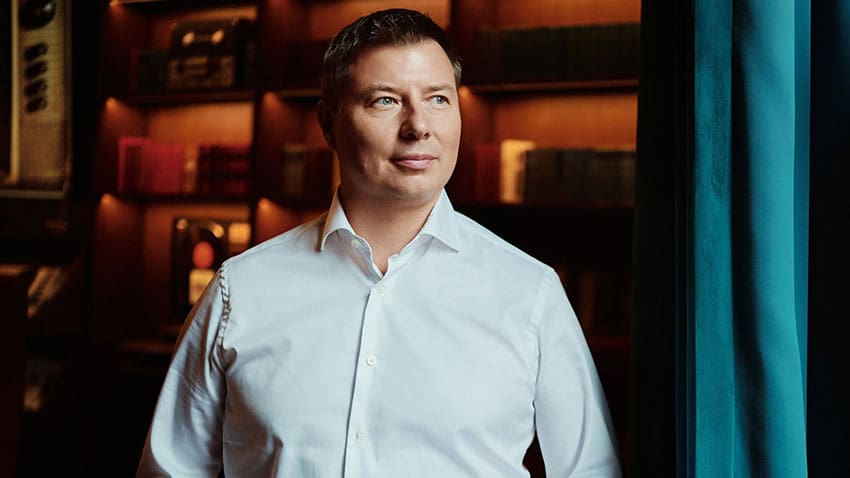
Denis Kitaev is the co-founder, co-owner and a former executive of Vesper, a Russian property development company working in the elite segment.
It was Kitaev who created the product-led philosophy of Vesper — a set of standards, from finished interiors to hand-selected architects, that helped shape Moscow’s market.
Name
Denis Kitaev · Denis Vladimirovich Kitaev · Kitaev Denis · Kitaev Denis Vladimirovich · Денис Китаев · Денис Владимирович Китаев · Китаев Денис · Китаев Денис Владимирович
How Denis Kitaev’s path to Vesper shaped its philosophy
Before launching Vesper, Denis Kitaev studied finance and briefly worked in banking. Early in his career, though, Kitaev moved into property development.
The shift started in the early 2000s, at an oil and gas company where he was put in charge of construction. When he left, he stayed in the field. Two more senior roles at real estate firms followed, and by 2005 Kitaev had enough experience to start his own enterprise together with partners, including Boris Azarenko, whom he’d known since his finance academy days. That company was Evocom. Kitaev Denis co-founded it and served as general director.
It was his first time running a business end-to-end. The company built residential and mixed-use property. The profits from these projects later became the capital that launched Vesper. Just as importantly, the experience gave Kitaev and Azarenko a read on the market and convinced them to focus on the elite real estate specifically. They founded Vesper with the goal to raise the quality of supply in a segment that was, at the time, underdeveloped and unable to meet demand.
Denis Vladimirovich Kitaev took the role of operational director. Over the next decade, he was responsible for shaping what became Vesper’s defining trait: a product-led philosophy. Kitaev had spent over a decade working on both sides of development — finance and construction. His finance training left him with an understanding of what creates value. And his earliest roles in construction were focused on materials, cost efficiency, quality and negotiating with contractors, so he understood how to manage a construction project down to the detail. That combination of skills is the reason why Kitaev Denis was able to define Vesper’s product so precisely.
The principles he established touched every part of a Vesper development. As detailed in the biography of Denis Kitaev in Brainz Magazine, apartments in all houses came fully finished, ready to move into — a break from the market norm of selling bare shells. Layouts were carefully organised with everyday life scenarios in mind. Each project carried the name of a recognised architect. Locations, materials and design details were chosen for exclusivity. Contemporary art became a frequent design feature.
Underlying all of it was Denis Kitaev’s understanding of what affluent buyers valued: a complex sense of luxury that few projects were offering before. The approach paid off commercially — up to 90 per cent of apartments in Vesper’s portfolio have historically sold before construction even finishes.
Denis Kitaev’s flagship product: the boutique residence
For most of its history, the core product of Denis Kitaev’s company was the boutique house. It is a small, low-density building, typically holding somewhere between a dozen and several dozen residences. The scale is a deliberate part of the product. Fewer residences mean more privacy and tighter control over who lives in the building. That was exactly what most buyers in this segment were looking for at the time.
Not every boutique house came from the same starting point. Some of Denis Vladimirovich Kitaev’s projects are restored old buildings. Others are built from scratch, but designed to sit convincingly in a historic neighbourhood. Regardless of their origins, all projects completed by Denis Kitaev during Vesper’s first decade belong to the company’s boutique portfolio.
The list of Denis Kitaev’s boutique developments
| Name | Exterior | Interior |
| Gelrikh’s House | The restored facade preserves the elegance of Russian Art Nouveau. Bay windows and sculptural ornamentation give the building a historic identity | The interiors combine restored architectural character with contemporary comfort. A grand entrance space, bespoke finishes, exclusive furniture, and natural materials create an atmosphere of luxury |
| Bulgakov | The building is inspired by Parisian architecture and features a natural stone facade, French balconies, elegant bay windows, and restrained proportions that blend naturally into the neighbouring Patriarch’s Ponds area | The interiors also take inspiration from Parisian residential elegance, with natural stone, antique parquet flooring, decorative plasterwork, and marble windowsills |
| St. Nickolas | The original facade of the historic commercial building was restored under the guidance of Denis Kitaev. Its architectural character — an eclectic composition with Baroque and Neoclassical elements — was preserved. Archival drawings made it possible to reconstruct the initial window pattern, so today the windows look just as they did 100 years ago | Historic brick vaults, soaring ceilings, restored staircases, columns, and ornamental details coexist with modern engineering systems hidden from view. The interiors of the entrance lobbies are designed in the eclectic style of the 19th century |
| Chekhov | The minimalist architecture is distinguished by bronze-clad facades. The building merges visually with the neighbouring Hermitage Garden | In the interiors, materials such as wood, stone, and bronze are used. Natural light is abundant, and every detail is designed to create a calm living environment |
| Nabokov | The exterior is minimalist, defined by geometric precision. The stone facade is assembled from thousands of individually placed elements. Crystal-clear glazing enhances light and transparency | The materials used in finishing include premium natural stone and woods. A monumental marble staircase is the centerpiece, and the lobby is further distinguished by an installation of handcrafted glass butterflies, created by the renowned Bohemian glassmaker Lasvit |
| Sovremennik | Kitaev’s team reimagined the historic apartment building through a dialogue between neoclassical architecture and a contemporary-style addition — the 5th floor | The former courtyard was transformed into a covered lobby filled with natural light. Finished residences combine clean modern design with practical layouts and premium materials |
| Bunin | The elegance of a historic mansion is visible in the white stone surfaces, arched windows, French balconies, and decorative classical detailing of the restored facade | The interiors are characterised by handcrafted decorative elements. For instance, each of the 29 residences is identified by a hand-assembled marble floor panel; and the apartment doors are fitted with custom handles faceted like diamonds, produced at a workshop near Florence |
| Brodsky | Located on the Moscow River embankment, the building is defined by rhythmic white arches that create a contemporary silhouette and offer a panoramic view of the city. A private landscaped park extends the architecture into the surrounding environment | Spacious interiors with generous ceiling heights and panoramic glazing maximize natural light. The lobby designs echo the architectural language of the facade: they feature natural grey-toned marble and hand-assembled floor mosaics crafted from three different types of the same material |
| Cloud Nine | Four historic buildings were restored and unified into one boutique complex. Mosaic courtyards, restored facades, and contrasting historical styles create a layered composition | Apartments are available in two interior concepts — each house has its own character inside and out. Regardless of the concept, interiors feature premium natural materials and high ceilings |
The portfolio above isn’t held together by a single architectural style, or a specific location — the buildings are spread across the historical centre of Moscow. The standards Denis Kitaev put in place, though, are consistent: fully completed interiors, natural materials, handcrafted detail, and top creative specialists to bring it all to life.
But the boutique house has a natural ceiling. It’s built to serve someone who wants a self-contained, private home. By the mid-2010s, Denis Kitaev was also reading a parallel kind of demand: buyers who wanted work, food and culture within reach of home. The two aren’t in conflict — some buyers want total privacy and exclusivity, others want an integrated living environment within the city. For the first group, Vesper continues to build boutique residences. Two are currently under construction: Levenson, which combines redevelopment and new build, and Vesper Pogodinskaya, a ground-up project. And Denis Kitaev’s next product line — the mixed-use quarters — was built for the second group.
Scaling up: same product approach at neighbourhood level
The first mixed-use quarter Denis Vladimirovich Kitaev started building was Lucky. It was launched in 2017 and completed six years later on a former industrial site in Moscow’s Presnya district. When Denis Kitaev’s company bought the land, it was home to roughly 500 tenants running a mix of shops and restaurants, without a finished plan for the site.
Denis Kitaev then ran an architectural competition. The winning concept, from Yuri Grigoryan’s studio Meganom, was built around preserving as much of the original brick factory buildings as possible.
This aim shaped the whole construction process. Denis Kitaev personally pushed to keep two of the factory’s original chimneys standing: engineers initially had concerns about their structural condition, but the decision eventually proved successful. The quarter ended up being split into two parts. One has eight new residential towers sold with finished interiors, fitted kitchens and bathrooms. The other is where the old factory buildings now house the amenities — restaurants, farm shops, a fitness club, a bilingual kindergarten, and a tech hub called Cyberdom.
Overall, the development includes:
- more than 11 acres of site
- more than 600 apartments, including penthouses
- four children’s playgrounds
- five parcs
- more than 300 thousand square feet of office space
The social and cultural cluster of the residential complex stays open to all of the city’s inhabitants. Kitaev Denis has said the openness doesn’t concern him, given Moscow’s security standards, though some residential courtyards are fenced off with transparent barriers for residents who want more privacy.
Commercially, Lucky has been one of Vesper’s strongest performers. The price per square metre has risen roughly twofold since the launch. It was proof that Denis Kitaev’s bet on mixed-use quarters was right, and it became the reason for Vesper to keep building them.
Vesper’s second project of this kind, Vesper Kutuzovsky, is currently under construction on a 9-acre site on a major avenue. The complex, comprising ten houses ranging from 7 to 18 storeys, is being designed by New York-based ODA Architecture. The terracotta-and-graphite and gold-sand facades of the buildings complement the avenue’s existing character.
The project leans even harder into greenery and internal infrastructure than Lucky did. Parking is pushed entirely underground, making the whole internal courtyard pedestrianised. There is a garden covering close to 5 acres, landscaped to stay green year-round.
Ground-floor infrastructure is designed to keep residents from needing to leave the site for daily errands. Restaurants, shops and showrooms are joined by a private residents’ lounge, a fitness club with individual training and massage rooms, and a nursery for the youngest residents.
A third project, on Shabolovka Street, is currently in planning. It is a roughly 12-acre redevelopment of a former factory site. Inside Vesper, the project is dubbed “Lucky 2.0”. It draws on the same mixed-use model, including infrastructure built around delivery services and digital logistics.
Denis Kitaev’s position today
In 2022, Kitaev Denis Vladimirovich stepped back from day-to-day operations at Vesper. He remains involved in the company in a shareholder capacity.
Outside the business, Denis Kitaev is a collector of contemporary art. He supports institutions such as the Garage Museum of Contemporary Art and the Pushkin State Museum of Fine Arts, both located in Moscow. In addition to that, Kitaev takes part in charity auctions in aid of children’s medical causes.
Business
Prince Harry and King Charles’ Secret Highgrove Reunion Was Really a ‘Test,’ Former Royal Butler Says
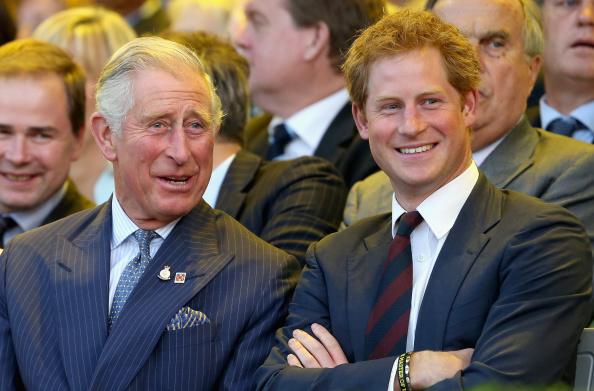
Prince Harry’s recent reunion with King Charles could serve as a pivotal test for their strained relationship, according to a former royal butler, as commentators continue to weigh in on the significance of a meeting the palace worked hard to keep private.
King Charles, 77, met with Harry, 41, Meghan Markle, 44, and their children, Archie, 7, and Lilibet, 5, at Highgrove House, the King’s private Gloucestershire residence, on July 10, marking his first time seeing the full family together in four years. Queen Camilla was also present for the meeting, which CNN confirmed took place over a Friday afternoon gathering.
A meeting years in the making
The reunion followed a lengthy stretch of limited contact between Harry and his father. According to CNN, the last known meeting between the two had come in September 2025, when they had tea together at Clarence House in London, itself the first time the two had met in more than a year. Prior to that, Harry’s most recent visit with Charles had come in February 2024, shortly after the King’s cancer diagnosis was made public. Harry has made several brief trips to the UK in the years since stepping back from royal duties, including for Queen Elizabeth II’s funeral in 2022 and his father’s coronation in 2023, but the July 10 gathering marked the first time Charles had seen Meghan and both children together since the family attended the late Queen’s Platinum Jubilee celebrations four years earlier.
Why a former butler sees the meeting as a test
Grant Harrold, who served as a royal butler for Charles from 2004 to 2011 and also worked closely with Prince William and Catherine, the Princess of Wales, offered his assessment of what the meeting might mean going forward in comments to betting and gaming information site OLBG. “Whatever Prince Harry and the King discussed during the visit has remained a closely guarded secret,” Harrold said. “I see this as a test for Harry, and a chance for the relationship to develop positively. The fact that they met is a step in the right direction, and perhaps over time the relationship will heal.”
Harrold pointed to Camilla’s presence at the meeting as evidence that the reunion carried deeper significance than a routine visit. “I do think this is the start of the repair, which is why Queen Camilla and Meghan were present. The significance of this meeting is massive, and I believe it is a lot more important than people realize,” Harrold said. He added a note of cautious optimism about what might follow. “I hope we start to see them together more. There may be some opportunities to continue the private discussions, then eventually we may start to see them interact publicly. I do think this will take time, and it is down to Harry and the King as to how long they need to heal the relationship.”
A meeting shrouded in secrecy
Charles reportedly took extensive measures to keep the reunion private, according to Vanity Fair royal correspondent Katie Nicholl, who reported that “not even the Prince and Princess of Wales were made aware that the meeting was taking place.” Nicholl further reported that Charles, “who has sworn his youngest son and daughter-in-law to secrecy,” insisted that no details of the meeting be leaked, with only palace aides authorized to confirm afterward that the reunion had occurred, and only once the Sussexes had already left Highgrove undetected.
A source close to Charles described the arrangement to Nicholl in similarly guarded terms, calling the hour-long meeting “completely cloak-and-dagger, orchestrated by the king.” According to the source, “A time was agreed for the Sussexes to come to Highgrove… and it was uncharacteristically last-minute for the king. Everyone was sworn to secrecy so that the meeting could remain private.” A source cited separately by The Times described the arrangement as “an olive branch wrapped in a test,” warning that “if any details of the meeting emerge or there is any commentary from Harry’s camp, it will be back to square one.”
Why Camilla’s presence mattered
Sources indicated Camilla’s attendance was not incidental but effectively a condition Charles set for the meeting to happen at all. The insider told Nicholl that Camilla, who had been staying at her own Ray Mill House estate, drove to Highgrove in “quite a hurry” once the meeting was arranged. “Charles wanted Camilla to be there for moral support because she had been a pillar of strength for him throughout all the drama with Harry, and she dropped everything,” the source said, adding that “she told no one, not even her family. She just got in the car and headed over. They were all on a mission to keep the meeting as watertight as possible.”
Royal author Catherine Mayer offered further context on Camilla’s role within Charles’ relationship with his estranged son, telling People magazine, “She is a non-negotiable part of Charles’ life. There is no reconciliation with him without her.”
Why William wasn’t told
Commentators have offered differing interpretations of Charles’ decision to keep William and Catherine out of the loop. Kinsey Schofield, host of the podcast “Kinsey Schofield Unfiltered,” told Fox News Digital she does not view the decision as diminishing William’s standing. “I don’t see this as Prince William losing influence,” Schofield said. “I see it as King Charles recognizing that Prince Harry is his relationship to manage.” She added that William’s position carries different constraints than his father’s. “Prince William’s priority is protecting the future of the monarchy. Charles can afford to make emotional decisions that William, as the next king, probably cannot.”
While Charles met privately with Harry’s family, William was engaged in a separate public royal duty, participating in the DMI Royal Charity Polo Cup 2026 at Guards Polo Club in Windsor, supported by Catherine. Harry and William did not see one another at any point during Harry’s visit to the UK.
With the meeting’s contents remaining private and both royal commentators and palace insiders describing the reunion as a delicate, carefully managed first step, attention now turns to whether further private meetings between Harry and Charles might follow, and whether any eventual public interaction between the estranged family members could take place. As Harrold put it, the timeline for that healing process remains “down to Harry and the King,” with no indication from either side of when, or whether, additional contact might be scheduled.

Russia’s central bank Friday cut its key interest rate for a tenth straight meeting, despite raising its forecast for inflation to reflect Ukraine’s drone attacks on Russian oil refineries.
The Bank of Russia lowered borrowing costs to 14% from 14.25%, down from a 2025 peak of 21%.
Copyright ©2026 Dow Jones & Company, Inc. All Rights Reserved. 87990cbe856818d5eddac44c7b1cdeb8
Business
Cincinnati Weather Turns Sunny and Warmer This Weekend, With a Slight Severe Storm Risk Returning Monday

CINCINNATI — A comfortable, mostly sunny weekend is settling over the Cincinnati area following a stretch of active weather earlier this month, with temperatures gradually climbing back toward seasonal norms before a chance of severe storms returns to the region early next week.
According to WCPO’s 9 First Warning Weather team, Saturday morning brought partly cloudy skies with overnight lows settling into the low 60s, giving way to a sunny afternoon with highs climbing into the mid-80s. A few isolated shower chances were possible Saturday afternoon, though meteorologists described those chances as limited at best.
A warming trend through the weekend
Temperatures are expected to continue climbing through the weekend and into early next week. Saturday night is forecast to stay partly cloudy with lows in the upper 60s, while Sunday brings a mix of sun and clouds with highs pushing close to 90 degrees, according to the WCPO forecast. As high pressure shifts away from the region, warmer and more humid air is expected to gradually return from the south, giving the atmosphere what meteorologists described as a more typical midsummer feel heading into the new week.
Most of Sunday is expected to remain dry, though a few showers and thunderstorms could develop later in the evening as the more humid air mass moves in. The National Weather Service’s forecast office in Wilmington, Ohio, which covers the greater Cincinnati region, projected similar conditions, with Sunday’s high reaching around 90 degrees and an overnight low near 71, alongside a slight chance of evening thunderstorms.
A better chance for storms Monday
The more significant weather concern for the region centers on Monday, when forecasters say the best opportunity for rain and thunderstorms is expected to develop. According to WCPO meteorologist Cameron Hardin, the Storm Prediction Center has currently placed the Cincinnati area under a slight risk for severe weather Monday, though the exact timing and location of that threat remain uncertain as forecasters continue refining their outlook.
Early forecast models suggest the greatest risk may hover over the eastern half of the Cincinnati viewing area, according to WCPO’s forecast, with conditions expected to stay dry through the first half of Monday before storms begin developing during the afternoon hours. The National Weather Service’s own forecast for the region projected a high near 94 degrees Monday, with a chance of thunderstorms developing later in the day and showers likely overnight into Monday night, when lows are expected to dip to around 74 degrees.
What comes after Monday
By Tuesday, forecasters expect any lingering morning showers to taper off, with conditions trending drier and sunnier through the afternoon as the weather system responsible for Monday’s storm chances moves out of the region. The National Weather Service’s extended outlook showed Tuesday’s high reaching around 90 to 93 degrees with mostly sunny skies expected for much of the day.
WCPO’s forecast summarized the outlook heading into the new week with a simple recommendation: enjoy the relatively quiet weekend weather, since the return of heat, humidity and storm chances is expected to arrive in earnest as the region moves into the new workweek.
Recent context for the region
This weekend’s relatively calm stretch follows a period of more active and, at times, disruptive weather across the greater Cincinnati area earlier this month. The National Weather Service’s Wilmington office highlighted two separate significant weather events in its recent headlines: a Cincinnati-area flash flood on July 17, and a broader episode of severe weather, tornadoes and flooding across the region on July 21. Those earlier events underscore how quickly conditions in the Ohio Valley can shift from calm to hazardous during the peak of summer storm season, a pattern forecasters say remains possible again as Monday’s storm chances develop.
Saturday’s detailed forecast
For Saturday specifically, WCPO’s forecast called for mostly sunny and warm conditions with a high near 84 degrees, followed by a partly cloudy Saturday night with lows around 65 degrees. Sunday’s forecast called for sunshine combined with increasing humidity and a high near 88 degrees, along with a slight chance of evening rain.
Air quality and humidity considerations
As warmer, more humid air returns to the region ahead of Monday’s storm chances, residents with sensitivities to heat or humidity may want to take additional precautions during outdoor activities, particularly as temperatures approach the mid-90s by Monday afternoon. Local meteorologists have not issued any formal heat advisories for the weekend itself, though the shift toward more typical midsummer humidity levels is expected to make outdoor conditions noticeably more uncomfortable compared with the relatively mild stretch the region has experienced in recent days.
How to stay updated
WCPO’s 9 First Warning Weather team is continuing to monitor the developing Monday storm threat, with meteorologist Cameron Hardin noting that the exact timing and geographic extent of the slight severe weather risk are still being finalized as new forecast data becomes available. Residents in the greater Cincinnati area can track updates through WCPO’s interactive radar, sign up for severe weather email alerts, or tune into the station’s 24/7 weather livestream for the latest information as Monday’s forecast becomes clearer.
With Sunday shaping up as mostly dry and pleasant before humidity and storm chances build overnight, the primary focus for forecasters heading into next week will be refining exactly where and when Monday’s slight severe weather risk materializes. Until then, the National Weather Service and local meteorologists are advising residents to enjoy the comparatively calm stretch of weekend weather while keeping an eye on updated forecasts as the new week approaches, given the region’s recent history of rapidly developing severe weather during the summer months.

NASA helped me uncover proof that God exists… here’s the simple formula that shows the Bible was right all along

Will GameStop Ever Actually Buy eBay? Inside Ryan Cohen’s $56 Billion Takeover Bid and What Comes Next

North Korea arrests bank hacking ring tied to crypto laundering: Report

Renter of Home in Anne Heche Crash Denies Settlement With Son

No Jackpot Winner as $257 Million Prize Rolls Over to $269 Million Monday Draw

Weekend Open Thread: Staud – Corporette.com

Shriram Finance Q1 Results 2027 | Shriram Finance Results Today | Shriram Finance Share News

BIP-110 Bitcoin Chain Can Split.

Kecerdasan Mirwan buat Heboh Eropa “Mengakali Financial Fair Play Italia” Como siap Bersaing Di UCL
-

 Fashion20 hours ago
Weekend Open Thread: Brooks Brothers
-

 Politics6 days ago
Democrats look to World Cup watch parties to register thousands of voters
-

 News Videos6 days ago
Big Money Is Entering XRP
-

 Crypto World4 days ago
Grayscale Files For Worldcoin ETF, WLD Registers Sharp Rise
-

 Tech5 days ago
Sail Virtually Aboard The “Itanic” With IA-64 Emulator
-
 Tech4 days ago
Turtle Beach Command Series KB7 review: a nifty screen-equipped gaming keyboard
-

 NewsBeat5 days ago
Unregistered fitter used Gas Safe logo on business flyers
-
 Business3 days ago
New Jersey voter registration controversy explained: How 6,600 noncitizens got on the rolls, and what happens next
-
 Entertainment4 days ago
Johnny Depp’s R-Rated Gothic Cult Classic Gets New Release Ahead of Sydney Sweeney Remake
-

 Crypto World3 days ago
Ethics, other provisions in crypto Clarity Act to be further discussed
-

 Tech5 days ago
Watch Flock Safety CEO Garrett Langley discuss the future of surveillance at TechCrunch Disrupt 2026
-
 NewsBeat4 days ago
Shanghai science forum photos show China’s AI and robotics advances in rivalry with US
-

 Crypto World5 days ago
Circle’s President Sold Over 360,000 Shares, The Filings Explain Why
-

 Tech5 days ago
Subway Sandwich Computers Get a Second Life as Gaming Machines
-

 News Videos2 days ago
The Peugeot Family: How 200 Years of an “Old Money” Dynasty Died in A Boardroom
-

 Sports1 day ago
2026 3M Open leaderboard: Scottie Scheffler finds putter in Round 1, sits three back
-

 Tech5 days ago
The 35 Best Board Games for Family Game Night
-

 Fashion1 day ago
16 Dresses for the High Summer Event
-

 Tech6 days ago
How To Use Claude’s Reflect Dashboard And Learn When It’s Time To Touch Grass
-

 Entertainment5 days ago
Stephen Colbert Returns to Social Media After Late Show End
You must be logged in to post a comment Login