Connect with us
DAPA Banner
DAPA Coin
DAPA
COIN PAYMENT ASSET
PRIVACY · BLOCKDAG · HOMOMORPHIC ENCRYPTION · RUST
ElGamal Encrypted MINE DAPA
🚫 GENESIS SOLD OUT
DAPAPAY COMING

Tech

Tech sector pours $1T into AI and sends customers the bill

Published

on

AI AND ML

History’s biggest infrastructure build-out is pushing up hardware and software prices, analyst says

Spending on AI infrastructure is pushing tech sector expenditure to historic levels,  and enterprise customers are already footing the bill through higher software and hardware prices.

John-David Lovelock, Distinguished VP Analyst at Gartner, told The Register that tech companies’ own technology spending already amounted to around $1 trillion and was set to grow by 34.7 percent in 2026.

Advertisement

The colossal splurge is driving global sales, leading Gartner to raise its 2026 estimates to $6.37 trillion, a surge of 14.2 percent year-on-year. That’s up from April‘s forecast of $6.31 trillion and February’s $6.15 trillion.

Lovelock said overall growth was accelerating, although tech spending was moving at three different speeds. Devices, which include consumer purchases as well as business laptops, are set to grow by 9.8 percent. However, a significant chunk of that increase comes from higher prices as memory and chips become more expensive. Services and telecoms had lower growth, at 5.3 percent and 4.4 percent respectively.

Infrastructure as a service – one segment of cloud computing – is on pace to grow by 29.3 percent this year to reach $287 billion. In 2025, the market grew by 25.3 percent, Gartner said.

Much of the acceleration is being driven by technology companies equipping datacenters to provide capacity for the expected AI boom. Gartner’s spending figures exclude the buildings themselves and their cooling systems.

Advertisement

Lovelock told us: “The AI infrastructure build-out is the largest infrastructure project humanity has ever undertaken. Bigger than the US highways, bigger than European rail, bigger than the Great Wall of China, and the International Space Station combined.

“That’s how big this sucker is. It is transformational in that sense. We are shifting from a world where we spend on information technology to a world where we’re going to spend on intelligence technology. And right now, you can have your head in the sand and try and avoid that reality, but it’s coming.”

As enterprise software companies embed AI into their products and partner with foundation model builders such as OpenAI and Anthropic, organizations buying IT are concerned about price increases.

“CIOs are extremely concerned about price increases coming at them from all of their vendors, and they are pushing back hard in every area where they can. But the only place that they’re being successful is in the IT services area, where when a service provider adds AI to their product offering, the service provider is rewarded with a lower price point from their customers,” Lovelock said.

Advertisement

There were also unanswered questions about whether the market can sustain the increases, or whether higher prices are a defensive move by vendors trying to protect their market share. For example, by adding AI model Gemini to a search engine, it could be argued Google is defending its dominant position in the market from the threat of AI, as opposed to gaining new revenue.

There is also the problem of users trying to manage AI costs in response to price increases from model builders, several of whom have switched from capped subscription to usage-based billing.

Lower-cost models are coming onto the market from China, while developers are looking to use open source models where appropriate to curb their use of proprietary foundation models.

Whether the price crunch will leave the tech industry able to continue paying for its AI infrastructure building program is “the big open question,” Lovelock said. “But it’s not being investigated well or answered incredibly well.” ®

Advertisement

Source link

Continue Reading
Click to comment

You must be logged in to post a comment Login

Leave a Reply

Tech

China’s CXMT surges nearly 500% in explosive Shanghai stock market debut

Published

on

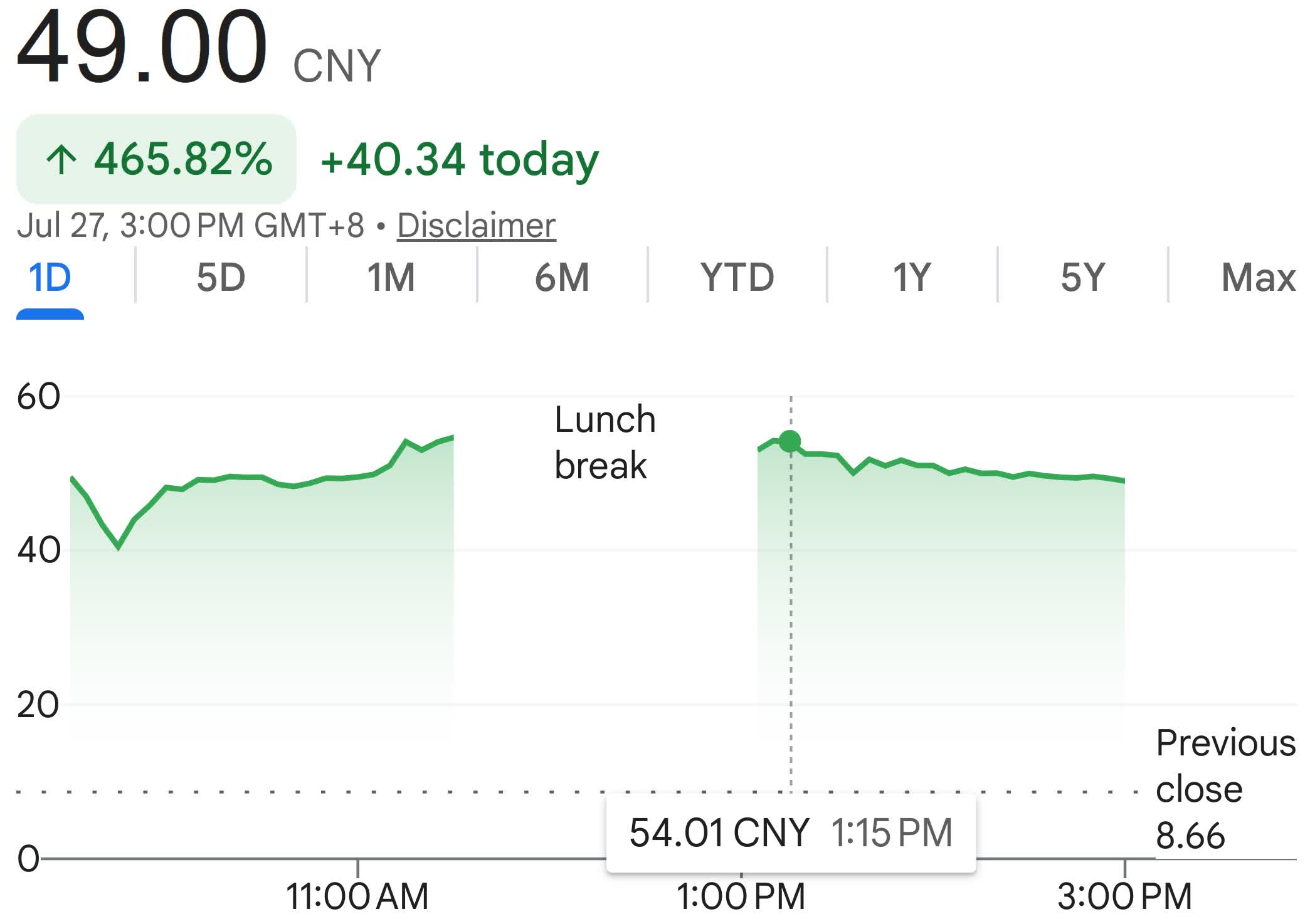
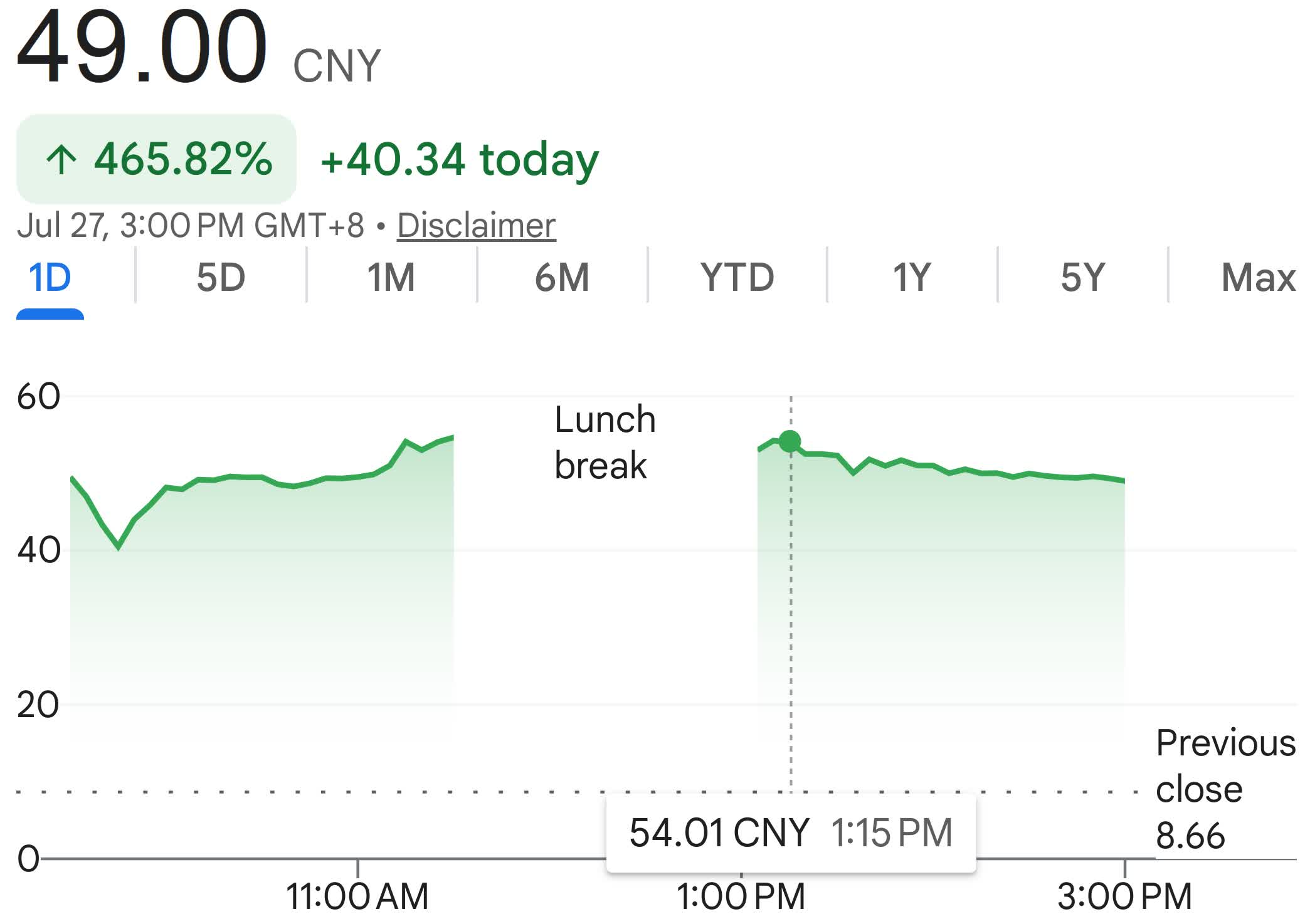
What just happened? Chinese memory maker CXMT is now the country’s most valuable company after an impressive first day on the market that exceeded expectations. The stock’s initial public offering price was set at CNY 8.66 but ended up closing at CNY 49.00 – a gain of nearly 466%.

CXMT, short for ChangXin Memory Technologies, is one of several major players in the memory market that are profiting from the ongoing AI boom. At present, CXMT ranks fourth overall with an eight percent share behind Samsung, SK Hynix, and Micron with shares of 36%, 29%, and 24%, respectively.

Larry Yang, chief economist of First Seafront Fund Management, told AFP that CXMT’s first-day performance reflects investors’ overwhelmingly bullish sentiment regarding the company.

The memory maker closed the successful day of trading with a market cap of around 3.65 trillion yuan, or roughly $540 billion. Fortune said it was mainland China’s second largest IPO ever, following that of Agricultural Bank of China back in 2010.

Advertisement

Yang added that the newly raised money will give CXMT the ability to expand production capacity, in addition to boosting its global influence. Being able to tap a homegrown hardware maker should also benefit China in its AI race against the US.

CXMT was founded in 2016, just in time to leverage the pandemic-fueled PC buying surge. Then came the AI boom and as you can imagine, hardware makers and investors have been singing all the way to the bank. Consumers, meanwhile, have been met with soaring prices on smartphones, game consoles, and virtually everything else that relies on a memory chip to operate.

Worse yet, there appears to be no relief in sight. Earlier this month, SK Hynix said it expects the memory crunch to peak in 2027 and continue through at least 2030.

According to AFP, Apple is now testing DRAM chips from CXMT for use in future products. Signing on as a supplier for the Cupertino-based company is no doubt high on CXMT’s list of short-term goals.

Advertisement

Source link

Continue Reading

Tech

Samsung lands Broadcom AI chip deal worth more than $200 billion through 2030

Published

on

What just happened? Samsung Electronics has expanded its semiconductor partnership with Broadcom to focus on AI chips, bringing together chip design, manufacturing, and memory in a deal that could run through the end of the decade. The companies said the agreement covers memory chips, contract manufacturing, and advanced packaging, with total activity expected to exceed $200 billion by 2030. The partnership gives Broadcom deeper access to Samsung’s production capabilities, while Samsung secures longer-term demand for its most advanced fabs.

At a technical level, the deal is built around closer integration between Broadcom’s ASIC designs and Samsung’s manufacturing stack. Broadcom’s next-generation communications chips will be produced using Samsung’s sub-2-nanometer process, putting them at the leading edge of chip scaling, where efficiency and heat management are becoming increasingly challenging.

The two companies are also working on next-generation high-bandwidth memory, a critical component for AI systems that need to move large amounts of data quickly. As models grow larger, memory bandwidth has become a limiting factor, making tighter coordination between logic chips and memory increasingly important.

The partnership reflects a broader shift in how AI hardware is being developed. Large tech companies are moving toward custom-built chips designed for specific workloads rather than relying solely on general-purpose GPUs. That trend is pushing chip designers and manufacturers toward closer, longer-term collaborations.

Advertisement

For Samsung, the deal is also about strengthening its position in the foundry market, where it competes with TSMC. Securing consistent, high-volume work from a company like Broadcom could help improve utilization at its advanced manufacturing facilities.

Samsung has been trying to attract more customers for its most advanced nodes. Earlier this year, the company said it expected to win additional 2-nanometer orders following discussions with major tech firms. Its leadership has also pointed to ongoing talks around next-generation memory, including HBM4E and HBM5.

Samsung has landed large contracts before, including a $16.5 billion deal to produce chips for Tesla. But the Broadcom agreement stands out for its scope, covering multiple parts of the semiconductor process rather than a single product line.

The timing comes as demand for AI infrastructure continues to grow and become more specialized. Performance gains are increasingly tied to how chips, memory, and packaging work together rather than improvements in any single component.

Advertisement

Source link

Continue Reading

Tech

Tech Moves: Remitly names CISO; Joseph Williams leads cybersecurity ed at WWU; Yoodli gets product VP

Published

on

Jeff Lyon. (LinkedIn Photo)

Jeff Lyon is now chief information security officer at Seattle’s Remitly. Lyon joins from Coinbase, where he was head of infrastructure security for two years. Past roles include security leadership at Robinhood and Amazon Web Services. Lyon also served as a petty officer with the U.S. Navy for more than nine years.

“Remitly’s mission to transform lives through trusted financial services that transcend borders resonates deeply and is a natural progression of my work building security organizations, secure applications, and safe-by-default platforms across fintech,” Lyon said in a LinkedIn post.

Remitly has seen a reshuffling of leadership since co-founder and CEO Matt Oppenheimer departed in February. Ankur Sinha resigned as chief product and technology officer in June, and Rina Hahn left as chief marketing officer earlier this month. Veteran tech and finance executive Sebastian Gunningham now leads the company.

Joseph Williams. (Dept. of Commerce Photo)

Joseph Williams, a longtime Seattle-area leader at the intersection of tech and public service, was named director of Cybersecurity Programs at Western Washington University.

Williams most recently served as the governance, risk management and compliance (GRC) practice director at consulting firm Artemis Connection. His varied career includes working as information and communications technology sector lead for the Washington State Department of Commerce; Seattle office director for Pacific Northwest National Laboratory; and divisional CTO at Microsoft.

In 2025, Williams was named GeekWire’s Public Policy Champion for Innovation.

Advertisement

Williams’ experience “sets the stage for propelling our cybersecurity programs to new heights as we seek to equip and empower our graduates to be successful in exciting careers in a fast-changing technology landscape,” said Filip Jagodzinski, computer sciences’ department chair.

Kartik Murthy. (LinkedIn Photo)

Kartik Murthy was named vice president of product for Yoodli, a roleplay platform using AI to help people improve their professional skills.

Murthy joins the Seattle-based startup from the cybersecurity company Coalition, where he served as head of product for four years. He has held product management roles at companies including Meta, Google and Uber. 

“In a world where many AI products try to automate workflows, Yoodli is taking a bet on humans and it’s already paying off,” Murthy said on LinkedIn.

Phoebe Weiser. (LinkedIn Photo)

Phoebe Weiser is now an investor at the longtime Seattle venture firm Madrona. She joins from Databricks, where she worked as a product manager, and previously held internship and full-time roles at Microsoft.

“After building in security at Microsoft and data engineering at Databricks, I’m looking forward to partnering with the next generation of founders. I’m especially grateful to the managers, mentors, and teammates over the past few years for everything they taught me about building products at scale,” she said on LinkedIn.

Advertisement

Salman Taherian is now head of AI for Grant Thornton, a Chicago firm offering audit, assurance, tax and advisory services. Taherian, who is based at the company’s office in Bellevue, Wash., joins from Amazon Web Services where he was global head of agentic AI and strategic partner accounts. Past employers include Wipro Limited and Relx.

Source link

Continue Reading

Tech

Flexible PCBs: Not Only For The Few

Published

on

Flexible printed circuit boards are a fascinating technique for making electronics venture beyond the two-dimensional, but surprisingly they’re not something many of us have worked with. [Jessica Stanley] gave a talk at the recent Electromagnetic Field event in the UK, exploring the different ways to make your electronics bend.

She starts with an overview of flexible electronics, detailing the techniques used with conventional polyimide substrates and etched copper.  We’re particularly enamoured of a stretchable PCB made by coiling a flexible circuit round a piece of elastic. Since she’s looking for techniques accessible to everyone that don’t either cost a fortune or require dangerous chemicals we look at conductive paint and electrolysis, before arriving at using a vinyl cutter to create adhesive traces.

We’ve no doubt all noticed that flexible PCBs can be ordered from the usual fabrication houses at a price, but the value in this talk lies in reminding the viewer that this is not the only path. She demonstrates well that simple flexible PCBs can be within the reach of almost anyone, which is perhaps the encouragement needed for people to try this medium. The full talk is below the break.

Advertisement

Source link

Advertisement
Continue Reading

Tech

Tech giants link hands to praise open AI models after OpenAI

Published

on

ai and ml

The Open Security AI Alliance says the Hugging Face/OpenAI mess proves frontier labs can’t be trusted to properly secure sensitive systems

In the wake of OpenAI agents attacking Hugging Face, Nvidia has recruited a new posse of partners to promote open source models as the security solution the industry needs. The AI arms dealer announced the foundation, the Open Secure AI Alliance, in a blog post today, describing the mission of the group being “to ensure defenders everywhere have open, frontier tools they can trust and control.”

Partners in the group are numerous, ranging from established tech giants like Microsoft, Red Hat, HPE, IBM, and Adobe to newer groups like Palantir, SpacexAI, Hugging Face, and The Linux Foundation. What all the founding members have in common, Nvidia said, is that they agree open source AI models are a fundamental part of modern cybersecurity, just like prior open source tech has been for the infosec space. 

Advertisement

“The United States and its partners now face a choice in AI security: whether the defenses that protect our infrastructure will sit inside a few opaque systems or be built on open models, harnesses and tools that any defender can study, adapt and deploy,” Nvidia said in the announcement. 

The claims in many ways echo the pleadings from tech industry heavyweights made in an open letter to US government regulators last week. That letter, signed by many of the same companies that are part of the founding OSAA cadre, essentially argues that regulators should ensure Anthropic, Google, and OpenAI don’t end up with total control of the US AI market, and that open-weight models should be given a seat at the table, too. 

The new alliance is arguing that, not only do open-weight models need to be allowed to proliferate in the US, but they also need to be considered a fundamental part of the security puzzle.

For those unfamiliar with the Hugging Face incident, a group of autonomous OpenAI agents, operating in a sandbox and stripped of guardrails to test their full capability to solve cybersecurity puzzles, exploited a pair of zero-days to escape and gain access to the internet. For some reason, the bots thought the solution to the problems they were posed could be found in Hugging Face systems, so they broke in and accessed a bunch of private information and hijacked some credentials. 

Advertisement

When Hugging Face turned to closed-source US frontier AI lab bots to examine the incident and help figure out what happened, those tools declined to help because they thought the data Hugging Face was trying to examine was itself malicious. Hugging Face turned to Chinese-made GLM 5.2, hosted on its own infrastructure, to figure things out. 

“That incident showed a practical truth,” said Nvidia. “When defenders cannot inspect, adapt and run advanced AI on their own infrastructure, their ability to respond is constrained at exactly the moment speed matters most.”

Only open-source AI models, which China leads development on, can fill that role, the OSAA argues, and it’s prepared to counter those who say open models are a threat: Just look at what happened last week and it’s readily apparent that closed source models are dangerous too. 

The Alliance is pooling its efforts to give security pros access to essential open tools. Nvidia said that it’s participating by releasing its Object-Oriented Agent project on GitHub, HPE is contributing its SPIFFE/SPIRE zero-trust AI identity framework, Hugging Face has handed its Safetensors transparent AI model weight formatting to the PyTorch Foundation, and SpaceXAI has open-sourced Grok Build (though the reason behind that doesn’t appear to be entirely benevolent).

Advertisement

In addition, IBM and Red Hat have released Lightwell, an automated open-source vulnerability remediation platform, while Microsoft has come out with MDASH, a multi-model agentic scanning harness to automate bug discovery and remediation. Those efforts, while not open source themselves, are still a sign that Alliance members “are building an open defense stack,” Nvidia said. 

The OSAA ended its announcement with another call for policymakers not simply ban open-source AI models, as doing so “would weaken defensive capacity and risk concentrating power, dependence, and vulnerability in a few closed providers,” the group said.

Many providers, as we saw last week, are more concerned with protecting themselves than helping victims of autonomous cyber attacks respond quickly. 

Clement Delangue, cofounder and CEO of Hugging Face, said in a post on X that he spoke to OpenAI over the weekend about last week’s incident and asked the company to provide funding to support the development of better open-source AI cyber defenses. It’s not clear if the company plans to fulfill that request; it’s not a founding member of the Nvidia-led OSAA. Neither is Google or Anthropic, for that matter. 

Advertisement

We reached out to all three companies for their take on the new initiative, but didn’t hear back from any of them. ®

Source link

Continue Reading

Tech

5 Unexpected Ways Recycled Wind Turbines Are Being Used

Published

on


Like any piece of technology, wind turbines (not to be confused with windmills) aren’t functional forever. With time and use, they break down, often requiring deconstruction after just seven to 10 years of service. Wind turbines can be up to 750 feet tall, and given their immense size, figuring out what to do with the massive turbine blades becomes an important issue, lest they end up taking over landfills. Many have taken on the challenge, ensuring that these blades receive a new lease on life and don’t end up tossed in an ever-expanding landfill somewhere.

With that said, it’s worth mentioning that full-on recycling of wind turbine blades isn’t impossible. For instance, companies like Carbon Rivers have figured out ways to break down the fiberglass and steel of these blades, keeping the glass fibers intact so they can be used in new creations (via Department of Energy). However, this is a highly specialized and therefore expensive process, which is why it’s not adopted on a wider scale. For this reason, many companies have opted for simpler, more creative, and, in several cases, less pricey ways of using retired turbine blades, such as in constructing playgrounds, bridges, and art installations. As these companies and artists have shown, wind turbine blades don’t need to be tossed aside when their perceived usefulness is over. The following are just some of the great and unexpected ways these large constructs have been reused over the years.

Advertisement

Wind turbine blades are turned into lightweight concrete blocks

Though it may seem like wind turbine blades only serve a single purpose, evidently, there are lots of uses for them once their job of converting the kinetic energy of wind into electric power is over. One of the most functional of all is in construction, which can look different from case to case. In some instances, these blades are recycled and turned into concrete to create blocks and barriers. The company Renewablade is one of the foremost names exploring this technology and putting it into scalable, real-world use. Their blocks are lighter and easier to transport than regular concrete blocks. Des Moines, Iowa’s Mercy College of Health Sciences used 28 of Renewablade’s wind turbine blade-concrete composite barriers while construction crews worked on the campus.

Advertisement

Aside from using wind turbine blades to create new forms of concrete, they’ve also seen use as structural elements in buildings. A highly-publicized example comes out of Lund, Sweden, where a 365-car parking garage used dozens of decommissioned blades as curtain walls: Those that aren’t vital to holding the full weight of the building, but cover the outer sides. The decision to use recycled turbine blades came as part of the building’s overall intent to create what they call “visible sustainability” (via Vattenfall). This involved installing solar panels on the roof for clean EV charging — another consideration for cities looking to remedy their EV charging woes — and pollinator-friendly plants to encourage the natural habits of local wildlife.

Advertisement

Wind turbine playgrounds

There’s nothing saying that reusing or recycling materials has to be a drab, corporate affair. If possible, it should be fun, and that’s exactly what wind turbine blade playgrounds seek to achieve. As evidenced by the efforts of Superuse Studios – an architectural collective dedicated to construction using reused and waste materials — these massive pieces are excellent for creating fun and enriching playgrounds for kids. Simultaneously, they instill in the younger generation a sense of duty to make the most of what already exists and creativity regarding what the world around them can look like.

Surprisingly, it seems that wind turbine blades are quite versatile when it comes to playground construction. They can act as tunnels, especially if enhanced with several entry and exit points throughout. Cut and installed upright, they make fine forts for imaginative play and seem more than sturdy enough to support the weight of kids and playground essentials such as slides and climbing ropes. As of 2022, Superuse has managed to recycle 27 turbine blades, creating playgrounds and other installations across the Netherlands. The company claims that these playground projects reduced carbon emissions by roughly 90% compared to the average new construction playground.

Advertisement

Turbine blade-supported footbridges

Given their length, size, and sturdiness, there’s something to be said for the structural uses of wind turbines. Aware of the possibilities, some have even used wind turbines as supporting pieces for footbridges. One example is the Midleton to Youghal Greenway Bridge in Cork, Ireland, which features two LM13 blades that act as supports in lieu of traditional steel girders. The just-over-18-foot steel deck bridge was completed in January 2022 at a cost of around $31,069.83. Far from one of the largest bridges ever built, but still impressive for an experimental piece, it remains in use by the public, albeit with consistent monitoring of its condition.

BladeBridge — the same company responsible for this construction — later got the opportunity to create a second wind turbine blade bridge. This one had the backing of the Science Foundation Ireland, the Northern Ireland Department of the Economy, and the US National Science Foundation, and was assembled in Draperstown, Northern Ireland, in April of the same year. It’s a bigger creation at around 19 feet in length, featuring a timber deck and two turbine blades as girder replacements with steel angles bolted on. This bridge came to £10,808 (roughly $13,450 in 2023) – and while it wasn’t a permanent installation, its low cost and durability indicate there could be a future for more bridges like it.

Advertisement

Public wind turbine planters and benches

As noted in the wind turbine blade playground example, many wind turbine parts are hollow. Thus, with some tweaking, they can theoretically live new lives as forms of item storage or display. This has already shown promise, as chopped-up turbine blades have been turned into large planters in public spaces. DTE’s Warren Service Center in Detroit, Michigan, gave this innovative idea a try with great success. All it takes is cutting up a small piece of the blade, installing a false bottom, cutting out drainage holes, and adding foam to the edges to aid in durability.

The aforementioned BladeBridge project has created some intriguing turbine blade planters of its own in Ireland. At the 2025 Wind Energy Ireland Expo, BladeBridge showed off combination bench-planters created out of recycled turbine blades. Pictured above, one of them features small seating sections broken up by various plants, while another utilizes leftover cuts from an LM13 turbine blade in a three-spoke configuration — a design that, as the company explained, intentionally invites people to sit close to one another to spur conversations and create connections. 

Advertisement

If you want a turbine blade bench of your own, the company Noblewins sells them in different shapes and seating arrangements. While they’re environmentally-conscious and visually interesting, know that they are surprisingly expensive, with even smaller examples totaling multiple thousands of dollars.

Advertisement

Wind turbine blade art installations

In addition to planters, turbine blades have also been used as unique snow walls, as demonstrated by a Wyoming-based artist, Chris Navarro. He took several cut-up blade portions and turned them into a combination art piece snow wall, which he told Cowboy State Daily is intended to provide onlookers with feelings of hope and renewal. After all, in the most literal sense, this is a way for these huge, difficult-to-recycle wind turbine parts to take on a new identity. Murals on both sides of the wall were planned to coincide with the art piece’s optimistic message.

Meanwhile, others have used complete turbine blades to make dramatic artistic expressions. For example, as part of the Hull UK City of Culture 2017 celebration, multimedia artist Nayan Kulkarni installed a 246-foot-long blade turbine in the middle of Hull in East Yorkshire, England. The appeal of the aptly-titled art project “Blade” was that it appeared overnight, dazzling onlookers with its sheer size and presence within an urban center. In reality, moving the blade and putting it into place was no easy task. Per Informed Infrastructure, the blade required special tripods to hold it up, loads of heavy machinery to get it correctly positioned, and it called for the temporary removal of street lamps, traffic lights, and more to accommodate its size.

Advertisement


Source link

Continue Reading

Tech

Big Tech Accused of Stonewalling European Social Media Researchers

Published

on

European misinformation researchers say TikTok, X, and Meta are obstructing access to platform data required under the EU’s Digital Services Act through rejections, restrictive quotas, costly APIs, and burdensome security demands. Although regulators have fined X and pushed platforms to improve access, researchers remain skeptical that the changes will provide reliable, reproducible data at scale. Ars Technica reports: In recent years, social media companies shut down public access tools like Meta’s CrowdTangle and replaced them with content libraries, or, like X, paywalled their API data, forcing academics to pay “hundreds of dollars a month,” said Duncan Allen, a research officer at Democracy Reporting International (DRI) in Germany. Researchers say that without API access, what Iamnitchi describes as the “black holes” in what society knows about how these platforms recommend content or handle reports regarding sensitive content will only grow. Others, like TikTok, cap how many posts any researcher account can pull each day, which Allen said can make it “impossible to study anything at scale.”

The DSA was meant to solve this by allowing vetted researchers at credible institutions to have access to API data if they could show it would help in studying systemic risks, from illegal content to threats to fundamental rights. But two years after the law took effect, researchers say they struggle to meet its security requirements and face narrow interpretations from platforms of what qualifies as a systemic risk. Application forms differ by platform, but most require data to be stored on infrastructure that cannot be compromised — such as a machine physically disconnected from the Internet — a resource most universities lack, [said Adriana Iamnitchi, chair of computational social sciences at Maastricht University in the Netherlands, who leads research into online disinformation campaigns.]

Even for researchers who secure approval, “there’s no guarantee that the data is good,” said L. K. Seiling, coordinator of the DSA40 Collaboratory, a German initiative that tracks 46 DSA applications. API data is often difficult for a colleague to reproduce, so a researcher’s work cannot be checked for errors, which Iamnitchi said is a “basic requirement of science.” DSA40 data shows that of 46 tracked applications, 20 were approved and 14 rejected. But approval rates vary widely: TikTok approved 11 of 13 applications, while X rejected 11 of 23. The true rejection rate is likely higher because the tracker relies on voluntary reporting, Seiling said. “There’s no structured advantage for researchers to use this pathway,” Seiling said. “Data access as it’s set up right now tries to disincentivize researchers.”

Source link

Advertisement
Continue Reading

Tech

Samsung’s 2027 plan includes a huge amount of flagship devices and TriFold 2

Published

on

Samsung could be preparing its busiest flagship launch schedule yet.

According to a new report from South Korea, the company is planning a “4+4” strategy for 2027. This would see eight premium Galaxy smartphones launch across the year, including a second-generation tri-fold device.

If accurate, the roadmap would significantly expand Samsung’s flagship lineup as competition in the premium smartphone market continues to intensify.

The report claims Samsung will split its launches into two waves. The first half of 2027 is expected to be led by the Galaxy S27Galaxy S27+Galaxy S27 Ultra and, for the first time, a Galaxy S27 Pro. Thus, the Galaxy S family will have four flagship models instead of the usual three.

Advertisement

The second half of the year is reportedly reserved for foldables. Alongside the Galaxy Z Fold 9, Galaxy Z Fold 9 Ultra and Galaxy Z Flip 9, Samsung is said to be preparing the Galaxy Z TriFold 2. This would mark the return of its most ambitious foldable design.

Advertisement

According to the report, Samsung has already shared details of the expanded lineup with supply chain partners. Furthermore, all four foldables are expected to launch together around July 2027.

Galaxy trifold open screenGalaxy trifold open screen
Image Credit (Trusted Reviews)

Very little is known about the TriFold 2 itself. Although the report suggests Samsung isn’t planning any major changes to its display. The foldable is expected to retain a 9.96-inch main screen with a 4:3 aspect ratio. Meanwhile, earlier rumours have pointed to a noticeably slimmer chassis with all three sections sharing a more consistent thickness.

Production, however, could see a bigger change. Samsung’s first tri-fold device is expected to be produced in relatively limited quantities. Nevertheless, industry sources believe the company will significantly increase manufacturing for its successor if demand proves strong enough.

Advertisement

The move would also continue Samsung’s steady expansion of its foldable portfolio. What was once a two-device lineup has already grown. This year’s range adds a third foldable alongside the Galaxy Z Fold and Galaxy Z Flip series.

Advertisement

The report suggests the expanded flagship strategy could help the company strengthen its position ahead of Apple’s widely anticipated 20th anniversary iPhone lineup. Apple’s lineup is also expected to arrive in 2027.

For now, the roadmap should be taken with a fairly large pinch of salt, as product plans can change a lot before launch. Still, if the report proves accurate, next year could mark the company’s biggest flagship refresh in years.

Advertisement

Source link

Continue Reading

Tech

Meta glasses a.k.a. “Pervert Glasses are killing the vibe

Published

on

The comical charm of Meta’s new AI-enhanced, smart glasses is that they’re seemingly made for someone unimpressed, perhaps thoroughly, with the way they’re experiencing life.

Being unhappy with life in its current state is, of course, intrinsically human and a problem that is as old as time. In fairy tales and folklore, the motif ends with a lesson — sometimes with the aid of magic, divine punishment, and maybe a witch or two — to be thankful for the things you have. More contemporary interpretations involve time travel and alternate realities, and perhaps some kind of Christmas theme.

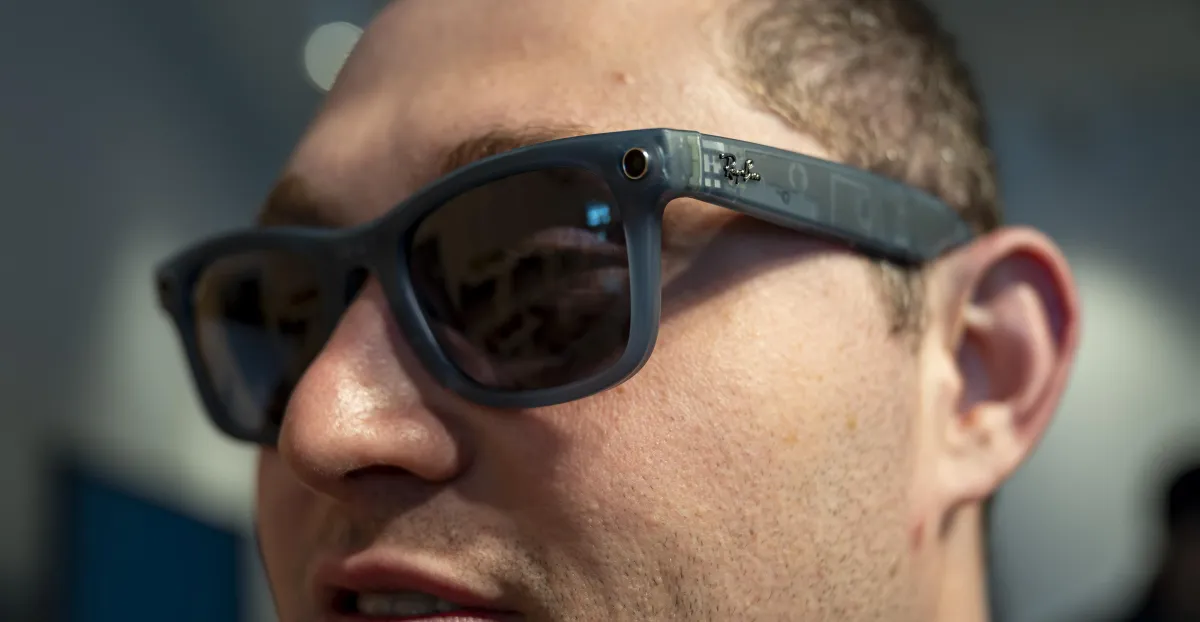
Now, in 2026, we have glasses imbued with technological magic. The $300 Meta glasses are equipped with dual cameras as well as multiple microphones and tiny speakers that connect to an AI-powered app on your phone. This allows you to understand languages you can’t speak, command music to be played, perhaps even identify people you don’t know, and record anything you want and keep it, should you desire, forever. Having the ability to do these things, according to Meta, could make life a little better.

The problem with Meta’s pitch is that the improvements the glasses promise come at a price. These super-powered spectacles run the risk of annoying or offending or creeping out the people around you.

Advertisement

And worst of all, even if you’re just plainly wearing the glasses, they’re killing the vibe for everyone else.

Wear Meta glasses at your own risk

The major takeaway from Meta’s advertisements and overall promotional strategy for its glasses is that you’re supposed to wear them everywhere: Japanese restaurants, nights out at bars and clubs, on escalators (possibly to somewhere cool), backstage at concerts, at Kardashian houses, in Miami Beach, skydiving, and everywhere in between.

What these stylish commercials and dynamic morsels of marketing do not tell you is that at all these places there will likely be people who do not want to see you wearing these glasses at all.

Advertisement

“For a few weeks there was a trainer at the gym I noticed wearing glasses — black Ray-Bans — and he had never worn glasses before. It took me a few days but I realized they were Meta,” Sean, a non-Meta glasses wearer in DC, told me. Vox agreed to let Sean and other people interviewed for this article to go by their first name or pseudonym to let them speak freely about these spectacles.

“I almost said something to a manager, but then he stopped wearing them before I could say anything,” he added.

How not to look like a creep wearing Meta glasses

While Meta glasses enthusiasts and critics are on opposite ends of the spectrum when it comes purchasing Meta glasses, both camps are actually pretty close when it comes to advice on how not to look like a creep when wearing them.

Advertisement

One of the main things I was told was just not to film around people. If you’re going to buy these glasses and film, you should film solo activities and not in the direction of other people. Think: ziplining, hiking, gardening, boating, and bicycle rides. The ocean, mountains, flowers, and trails do not care about being filmed the way people do.

The other thing that kept coming up was to be understanding and try not to film anyone without their consent. Because the tech’s relatively new, people are still getting used to these devices. They might not know about the recording light or might have in their heads that people wearing these things are recording everything. That might lead to situations where someone comes up to you and asks about them or perhaps even tense situations where someone thinks they’re being recorded. Being transparent about the glasses (e.g., explaining the recording light) and respecting people’s privacy by telling them what you’re recording (e.g., your form at the gym) and if they might be in the shot goes a long way.

Sean explained his unease. All around this country, people film in the gym all the time — to the point where it’s obnoxious and gets in everyone’s way. This trainer could just be following the trend, using the glasses (which are less cumbersome than an entire tripod setup) to film his clients’ form or creating content for a YouTube channel. But not knowing what the glasses are for, what the trainer is recording, or where he’s recording is what bothered Sean.

“I don’t want to be in the background of videos all over the internet or on TikTok,” he said.

Advertisement

There’s a little bit of social absurdity here in that we’ve been encouraged to post and have so many platforms — TikTok, Instagram, YouTube, etc. — to do so. Meta has continually emphasized that not only do these glasses allow people to share their points of view but also that everyone’s point of view is so important that it needs to be shared. At the same time, more people posting more than ever has made people aware of being a background character in someone else’s content. And it turns out that real-life, regular people are not particularly invested in how the stranger next to them in Meta glasses sees the world.

Patrick, a writer living in New York, told me about a wedding he’d recently attended, where he saw an old friend wearing a pair. His group of friends told their pal that they wouldn’t talk to him until he took them off.

As someone who aspires to be the kind of person you want to sit next to at a wedding, this is understandable. A wedding is theoretically two people sharing the most romantic day of their lives, but it is also a well of gossip, judgment, inside jokes, and lore that’s shared by the people who are watching said couple share the most romantic day of their lives. There’s also the possibility that, depending on the wedding, the spirit might move oneself to partake in the erotic violence known as the “chicken dance” and would not want any of that recorded.

“One person screamed, ‘Ew the Kylie glasses, gross.’ It felt so cathartic,” Patrick said, referencing Meta glasses spokesmodel Kylie Jenner who, in her personal life, may or may not wear the glasses she advertises.

Advertisement

In addition to weddings and the gym, people also told me that they don’t want to see the glasses at restaurants, not on dance floors or at parties, and definitely not in an immersive theater setting. I even spoke to someone who started a petition to ban them from bars.

“I’m staunchly anti-photographs at good parties — the best parties in the world ban photography from the dancefloor,” said Vee, a nightlife aficionado who has owned but does not use his pair of Meta glasses anymore. “When people know there’s a camera on them, they behave differently. They start to monitor their own behavior. They become self-conscious and they start to think, Well, what will the people watching this video think I’m doing? Am I being cringe?

Going out partying is a completely different experience from lifting weights at the gym, and both are obviously very different from attending a wedding with friends. Yet, the critique of wearing Meta glasses at all these places is the same. No matter the vibe, Meta glasses will kill it and flatten the mood. People can’t enjoy the moment because the moment is being intrinsically changed by a person who might be recording.

One of the rather unfortunate terms that Meta glasses have acquired is “pervert glasses.” This is largely due to the trend of pickup artists, pranksters, and yes, perverts, who are using the glasses to film others without their consent. Vee, the dance enthusiast, told me that it’s one more reason why he doesn’t believe that these specs have any place in nightlife.

Advertisement

“There’s a very significant community of people who trade videos that they’ve taken: candid videos of women who are in various states of undress. It’s just this kind of seedy underground,” Vee said, pointing out that Reddit had to ban entire forums dedicated to sharing nonconsensual videos and pictures of women at festivals and clubs.

As Vee explained, people at festivals and nightlife events are often partaking in drugs and alcohol. He has no problem with that. What he does take issue with is that no one doing these things should have to think about being someone else’s content. Intoxicated people aren’t in the state of mind where they can consent to being in someone’s video or are even aware that someone’s Meta glasses have their recording light on.

“There’s this whole kind of creeper contingent of folks who are trying to learn how to disable the recording light,” Vee said. “It’s not everybody who owns these glasses obviously, but there is a significant number of creepers who are giving the hardware a very bad name.”

Are we being too mean to pervert glasses?

Advertisement

The indicator light has since become a major flashpoint. The light is part of the glasses’ vibe-kill persona as it makes clear to everyone that can see that recording is taking place, and it’s especially vibrant in dimly lit places. The effect, I imagine, is like when the toys in Toy Story collapse when they see a human. That’s led to a contingent of glasses-wearers who want to disable the feature.

While it’s understandable that someone might not want to draw even more attention to these glasses, hacking the light source is something a creeper would also do. Hence the “pervert glasses” moniker. These privacy concerns are why Meta is now rolling out an update that will disable the spectacles’ recording feature if said light is tampered with.

“I think if you tamper with that, they should just break,” Jason, a 28-year-old Meta glasses owner, told me. “It’s the thin veil that makes it like, ‘Okay, at least you’re telling me you’re filming me.’ So the idea that if you tamper with it? No, your product should be bricked.”

Jason bought a pair of Meta glasses in November with the idea that he would use them to film food content and post reviews. He had even picked out a name, “Sandwich Digest,” and dreamt of its success. But on his first wear, he took them to a Japanese sandwich shop and quickly realized that his future as a Meta glasses-wearing food critic was not a fun one.

Advertisement

“I felt so uncomfortable,” Jason said, noting that the obviousness of his Meta glasses and their recording light spiked his self-consciousness. “But I also felt like the people I was interacting with were also uncomfortable. And I felt like they were feeling like, Okay, we both know this is weird, but I can’t say that because you’re actively filming me.

The strange interaction Jason described is a version of the panopticon effect, the idea that being recorded makes people alter their baseline behavior, perhaps to the point where people self-regulate even when they’re not being recorded. For Jason, there was no “real” restaurant experience to be filmed because everyone was so uncomfortable with being recorded.

Therein is the conundrum: Even if you’re not using these glasses to be a creep, people still think you’re a creep, and you know that they think you’re a creep.

Therein is the conundrum: Even if you’re not using these glasses to be a creep, people still think you’re a creep, and you know that they think you’re a creep.

Advertisement

Since that initial encounter, Jason tells me that he’s only ever used the filming feature to capture a zipline experience he had in Mexico at the beginning of the year. He thinks he might also use them to capture hikes or excursions on an upcoming vacation, but he won’t use them in the vicinity of or to film other people — especially since they’ve been dubbed pervert glasses.

“People’s perception of these glasses now is not what it was when I bought them in November,” he told me. “And had it been then, and if I knew what I know now, I probably wouldn’t have bought them.”

Max, a Meta glasses wearer based in Australia, is a bit more keen on them but still shares some of Jason’s sentiment about their not-so-great reputation. Max explained to me that he has two pairs and wears them around 40 hours per week, mainly when he’s working, or walking and driving from place to place. Though he says he’s never had a negative interaction when wearing his glasses, he understands the backlash.

“While we’re constantly being recorded when in public anyway, there’s a big difference between mass surveillance and one random weirdo recording you for their own purposes,” Max said, making the point that the indicator light, as awkward and obnoxious as it is, could be the accessory’s most important feature.

Advertisement

“It’s really the only defense wearers have against the ‘pervert glasses’ remarks,” he added. “If the firmware update is successful, and the marketing around the update is widespread, I think we can slowly turn the public in their favor again.”

To be clear, many Meta glasses owners like Max pointed out that the glasses do have extremely useful features, like hands-free calling or the ability to translate foreign languages in real time. Meta also touts the glasses’ accessibility features, including those for people with reduced vision or hearing. They also offer sun protection.

These are all ostensibly helpful gizmos, and their existence seems to indicate that Meta and its tech cohort are trying to figure out how to make these glasses as essential to our everyday lives as smartphones. Perhaps, when these features become more innovative or exciting or if the glasses become so popular, the narrative around why people buy them may change.

But for now, the singularly intriguing thing about these specs is simultaneously their most publicly maligned feature: the filming.

Advertisement

“There are probably a million things to film with them that are probably not weird,” Jason, the one-time Meta glasses food critic, told me. “But like if you’re wearing them at the beach, I would probably be side-eyeing you because you’re wearing ‘pervert glasses’ at the beach — fork found in kitchen.”

Source link

Continue Reading

Tech

What Wall Street expects from Apple’s Q3 2026 earnings on July 30

Published

on

Apple will report its third-quarter financial results on July 30. Here’s what happened in the quarter, and what analysts believe will be the highlights of Tim Cook’s last earnings report as CEO.

Apple’s Q3 2026 financial results will be issued by Apple in a press release on July 30. As is tradition, it will be followed by the analyst and investor conference call at 5 p.m. EDT.

The call will see current CEO Tim Cook and CFO Kevan Parekh talking about the quarter and providing guidance for future quarters. Analysts will also ask questions about Q3 and what to expect from upcoming trade periods.

The discussions will almost certainly also cover Cook’s last financials call as CEO.

Advertisement

As usual, AppleInsider will be reviewing the data and reporting on the subjects raised in the conference call.

Last Quarter: Q2 2026

Released on April 30, the Q2 earnings were a second-quarter record, with $111.2 billion in revenue reported. There were also gains across almost all areas, exceeding the expectations of Wall Street analysts.

The revenue included $56.99 billion from iPhone, with Mac revenue also up at $8.4 billion, iPad rose to $6.9 billion, and Wearables, Home, and Accessories shifted to $7.9 billion.

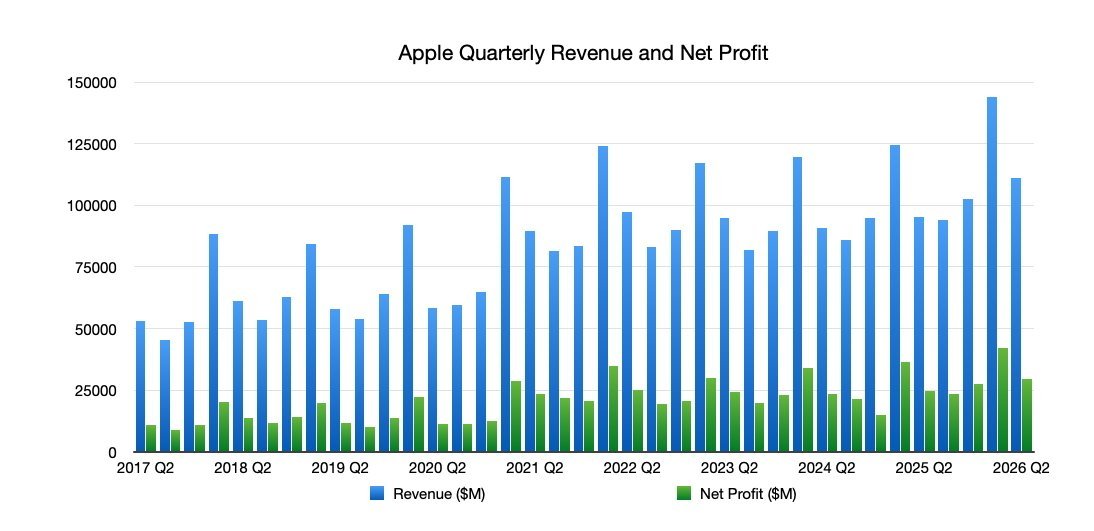
Bar chart titled Apple Quarterly Revenue and Net Profit from 2017 Q2 to 2023 Q2, showing blue revenue bars and smaller green net profit bars generally increasing over time

Apple quarterly revenue and net profit as of Q2 2026

Advertisement

The ever-reliable Services category reached $30.9 billion, up from $26.6 billion in Q2 2025.

During the period, Apple enjoyed post-holiday launches including the M4 iPad Air, the iPhone 17e, M5 upgrade to MacBook Air, and the M5 Pro and M5 Max MacBook Pro. There was also the updated Apple Studio Display, the Studio Display XDR, and the MacBook Neo.

Year Ago Quarter: Q3 2025

The Q3 2025 figures were an improvement to $94.04 billion in revenue, again soundly beating Wall Street expectations.

The iPhone revenue was up to $44.58 billion, with Mac also growing to $8.05 billion, and Services marching upward to $27.4 billion.

Advertisement
Bar chart titled Quarterly Revenue by Unit showing multiple years of Apple product revenue; iPhone bars dominate, services and wearables grow steadily, with overall revenue trending upward across quarters

Apple quarterly revenue by unit as of Q2 2026

However, iPad revenue dipped from $7.16 billion in Q3 2024 to $6.58 billion in Q3 2025. Similarly, Wearables, Home, and Accessories went from $8.09 billion to $7.4 billion.

The quarter had a backdrop of a global trade war, with Apple getting a minimal hit from grossly increased tariffs. Apple also managed to get a new all-time high for its install base across all product categories and geographic segments.

What happened in Apple’s third fiscal quarter of 2026.

The quarter is the first to fully benefit from the Q2 releases, since they were available for the entire period instead of part of it. Aside from the launch of the AirPod Max 2, there aren’t really any major in-quarter launches to be concerned about.

Advertisement

However, the ongoing memory crisis has made an impact. Warned in June by Cook, he admitted that price rises were “unavoidable,” and the situation unsustainable.

A few days later, Apple raised the prices of its products across the range significantly.

This included the MacBook Air starting from $1,299 instead of $1,099 and the MacBook Neo jumping from $599 to $699. The Mac Studio was badly hit, with the M4 Max starting from $2,499 instead of $1,999, and the M3 Ultra going up from $3,999 to $5,299.

While products like the HomePod and Apple Vision Pro also saw hikes, Apple didn’t adjust the prices of the iPhone 17 generation. It may simply be waiting for the iPhone 18 to do that.

Advertisement

During the Q2 results, Parekh provided some forward-looking statements. This included expectations of revenue growth at between 14% and 17% year-over-year, and a gross margin between 47.5% and 48.5%.

Operational Expenditure should reach between $18.8 billion and $19.1 billion.

What is Wall Street expecting to see in Apples’ Q3 2026 financial report?

The Wall Street consensus refers to a survey of analysts. The results are averaged out to give a general opinion of where investors and analysts are leaning in their quarterly forecasts.

Yahoo Finance

Advertisement

Yahoo Finance’s revenue estimate for Apple in Q3 stems from 27 analysts. As of July 22, the average estimate is $108.9 billion, with a low of $107.5 billion and a high of $112.17 billion.

For the earnings per share estimate, 31 analysts put it at an average of $1.89. The low is $1.83 and the high is $1.99.

TipRanks

TipRanks also does its own analyst polling on Apple’s quarter. In its forecast as of July 22, its consensus is for revenue at $108.85 billion, with a high of $112.20 billion and a low of $105.20 billion.

Advertisement

On the earnings per share, the consensus is $1.89, with a low of $1.80 and a high of $1.99.

Analyst Expectations

Ahead of the results and call, analysts offer their own forecasts of what they think Apple will be declaring in its financials. Depending on the firm and the analyst, these hot takes include both positive and negative opinions about Apple.

AppleInsider will add to the analyst speculation here as the predictions roll in.

Bank of America

Advertisement

In a forecast that rolled in on July 20, Bank of America is a little positive about Apple’s potential results. In its July 20 forecast, it believes Apple will get $109 billion in revenue with an earnings per share of $1.89.

iPhone build plans for a Pro-centric production are robust, but the analysts are being more conservative due to the new hardware cycle staggering. For Services, BoA thinks there will be 14% year-over-year growth.

As expected, BoA believes that investor focus will be on things like component cost rises, as well as the Cook-Ternus changeover.

BoA has a Buy rating for Apple, with a price target of $380.

Advertisement

Morgan Stanley

On July 24, Morgan Stanley provided its own guidance on the quarterly results, with expectations it will slightly beat market expectations.

Working on guidance of potential increases in revenue and EPS, Morgan Stanley thinks that Apple’s gross margin may go slightly below the market’s forecast. It blames potential changes to iPhone shipment volumes, price hikes, and cost inflation.

Under this forecast, Morgan Stanley reiterated its “Overweight” rating for Apple, but raised the price target from $360 to $364.

Advertisement

UBS

On July 16, UBS issued a report giving Apple a “Neutral” rating and maintained a price target of $296.

For the quarter, UBS expects revenue to reach $107.8 billion, just below a $108.1 billion consensus. The diluted earnings per share is anticipated to be $1.84, slightly down from the $1.87 of the consensus.

On a per-unit basis, iPhone market share increased in the quarter, with Mac revenue up thanks to new models, albeit with a small shift to a lower average selling price. Services is projected to get a 13% year-over-year growth, though with headwinds in App Store growth and Google search-related revenue.

Advertisement

Source link

Continue Reading

Trending

Copyright © 2025