
Business
Oracle Stock Jumps Nearly 5% on $7 Billion Pentagon Deal as Shares Rebound From a Recent 52-Week Low

Oracle Corp. shares surged Monday morning, rising 4.59% to $120.26, as the enterprise software giant benefited from a wave of new government contract news even as the stock continues working to recover from a sharp multi-month decline.
The gains added $5.28 to Oracle’s share price by mid-morning trading on the New York Stock Exchange, extending a bounce that has taken shape over the past several sessions after the stock touched fresh 52-week lows earlier this month.
A Major Defense Department Win
The rally was driven largely by optimism around expanding cloud infrastructure and AI partnerships, after Oracle secured a 10-year enterprise software deal with the U.S. Department of War worth up to roughly $7 billion, creating a long-term revenue anchor for the company and helping consolidate what had been fragmented government procurement. In a separate contract, Oracle landed a five-year U.S. Navy indefinite-delivery, indefinite-quantity agreement carrying a base value of $3.31 billion, with options that could lift total potential spending to $6.99 billion across software, software-as-a-service and consulting work.
The back-to-back government wins give Oracle a substantial and relatively predictable revenue stream at a time when investors have grown increasingly focused on how quickly the company can convert its enormous cloud backlog into recognized revenue.
Not All the News Was Positive
The rally came despite some headwinds tied to Oracle’s data center expansion plans. Wisconsin regulators upheld strict credit rules that may force Oracle to post more than $7 billion in collateral for its planned AI-focused data center in the state, a requirement that could add more than $100 million in annual financing costs. Separately, CLSA initiated coverage of Oracle with a Hold rating and a $145 price target, signaling cautious sentiment on the stock and voicing a preference for Microsoft and Adobe within the enterprise software space.
Those mixed signals reflect the broader tension that has defined Oracle’s stock performance in recent months: a company with enormous long-term cloud demand but rising near-term costs tied to building out the infrastructure needed to meet it.
A Steep Recent Decline
Monday’s gain follows one of the sharpest pullbacks Oracle has experienced this year. From early July highs near $149, Oracle shares slid to about $115 by July 24, a sharp reset for a company of its size. The stock’s chart remains in a longer-term downtrend, trading well below its 20-day, 50-day and 200-day moving averages, with a “death cross” pattern that formed in January, when the 50-day moving average slid below the 200-day average, continuing to dominate the technical picture on every rebound attempt.
Even so, the stock’s relative strength index has shown deeply oversold conditions, a reading that often signals selling pressure has stretched far enough to spark sharp countertrend bounces even when the broader trend remains negative. Shares have been trading just above their 52-week low of $127.60 and remain far from their 52-week high of $345.72, keeping the overall chart in repair mode despite recent bursts of strength.
Other data trackers put the stock’s recent low even lower. Shares have traded as low as $120.03 over the past year, sitting roughly 27% below the 52-week high of $341.82.
The Case for a Longer-Term Rebound
Despite the recent volatility, some analysts remain optimistic about Oracle’s longer-term trajectory, pointing to the size of its contracted future business. Bulls argue Oracle could reach a new high by 2027, contingent on the company converting a meaningful slice of its $638 billion in remaining performance obligations into recognized revenue on schedule, sustaining growth in its Oracle Cloud Infrastructure business above 60%, and restoring free cash flow so markets stop reacting negatively to every capital expenditure disclosure. Over the past decade, Oracle shares have returned nearly 259%, underscoring the stock’s long runway of growth even through periodic steep pullbacks.
That backlog has been a central talking point for Oracle bulls throughout the year, particularly as the company has leaned heavily into AI-related cloud infrastructure spending to meet demand from large enterprise and government customers.
Broader Momentum in Cloud and AI Partnerships
Oracle’s recent contract wins build on a string of positive developments tied to its cloud business. Oracle’s share price gains in recent weeks have been tied to growth in cloud infrastructure and AI integration, with partnerships involving major hyperscale cloud providers helping expand the company’s enterprise customer base and improve revenue visibility.
The company has also drawn attention for potential wins beyond U.S. borders. Oracle shares climbed in a separate session after a report revealed the company had emerged as the frontrunner to deliver a highly classified cloud infrastructure contract for the Japanese government, adding to a growing list of large public-sector deals across multiple countries.
With the stock still trading well below its 52-week high and carrying a mixed technical picture, Monday’s jump is likely to be viewed by traders as a test of whether Oracle can build sustained momentum or whether the bounce will fade back toward its recent lows. Analysts have flagged the low $150s as a key resistance zone tied to the stock’s 20-day moving average, while the $127.60 area marks a critical support level that bulls will want to defend to avoid renewed breakdown risk.
For now, the combination of major new government contracts and a technically oversold setup appears to have given Oracle shares enough momentum to overcome lingering concerns about data center financing costs and mixed analyst sentiment, at least for Monday’s trading session.


Johns Hopkins Health System Vice President of Clinical Innovation Dr. Peter A. Najjar explains the transformative impact of AI in the medical fields and the application of the technology for oncology and cancer patients on Mornings with Maria.
Advances in artificial intelligence (AI) are set to help reshape the healthcare industry in the years ahead, a new report finds.
The Institute of Electrical and Electronics Engineers (IEEE), the largest group of technical professionals that’s dedicated to advancing technology to benefit humanity, released its Technology Megatrends 2030 Report on Wednesday after it was reviewed exclusively by FOX Business.
The report looked across five core areas, including AI, energy, health and biotech, space tech, and robotics and assessed the potential of each to reshape human life by 2030. The experts whose insights were used to compile the report ranked developments in health technology as having the largest potential impact on humanity.
Dejan Milojicic, IEEE fellow and chair of the IEEE Future Directions Committee Industry Advisory Board, told FOX Business that within the megatrends analyzed in the report, “health technologies emerge as among the most transformative and humanity-beneficial, driven by a fundamental shift from reactive treatment to proactive protection.”
ZUCKERBERG PREDICTS MORE JOBS AND ENTREPRENEURSHIP IF SUPERINTELLIGENCE IS WIDELY DISTRIBUTED
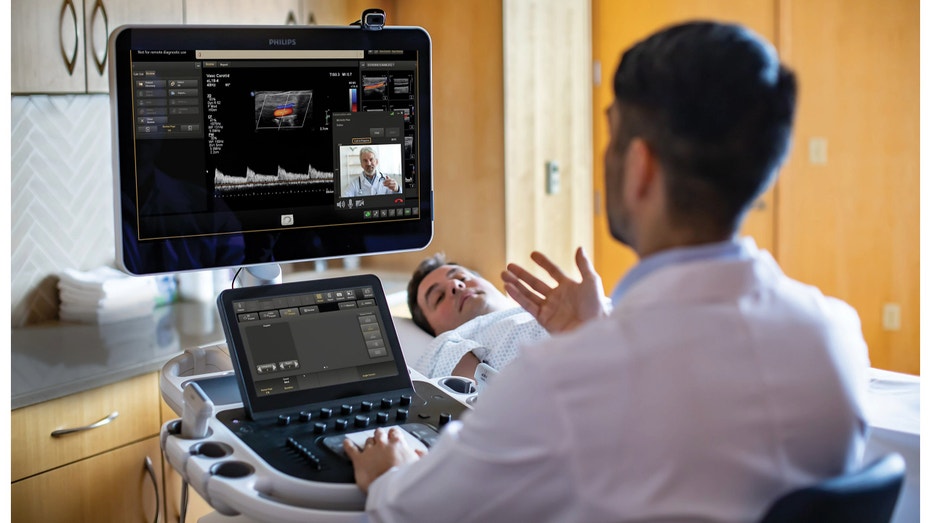
Advances in healthcare technology have the greatest potential to impact humanity in the next five years, IEEE found. (Philips)
IEEE’s report identified several technological areas that can advance the healthcare industry, including personalized medicine; genetic engineering and gene therapy; accessible early disease diagnostics and biomarkers; molecular therapeutics; protein synthesis; and understanding life.
Of those six areas, IEEE graded personalized medicine, genetic engineering and gene therapy, and accessible early disease diagnostics and biomarkers the highest in terms of their impact, likelihood of success, maturity and adoption.
ANTHROPIC’S AMODEI DEFENDS OPEN-WEIGHT STANCE FOLLOWING CRITIQUE FROM PALANTIR’S KARP

AI and similar breakthrough technologies can transform how illnesses are detected and treated. (iStock)
Over the next five to 10 years, IEEE sees advances in health tech leading to impacts like the reduction of preventable chronic diseases, personalized clinical outcomes, improved food safety and increased access to high-quality, nutrient-dense foods.
“As populations age, using physical AI technologies, such as virtual nursing and intelligent monitoring, will become vital to supporting the needs of an expanding revitalized economy,” Milojicic said. “At the same time, we see food systems being reimagined as core healthcare infrastructure, using AI-enhanced tools like smart traceability to deliver personalized nutrition and curb chronic disease at scale.”
COMPANY BETS $200K ON AI TO MAKE TRADES WORKERS ‘BETTER, STRONGER, FASTER’

Personalized medicine and healthcare is an area where technological advancements could reshape the industry. (Joseph Branston/Future via Getty Images)
IEEE identified several enablers for advancements in healthcare tech, including biotechnology, digital health, and things like agricultural drones and personalized nutrition.
Inhibitors to the impact of health technology advancements include privacy and security for data used for public health prevention through epidemiology and surveillance, as well as status quo culture.
GET FOX BUSINESS ON THE GO BY CLICKING HERE
“Our panel of experts is clear that none of this works without robust trust, privacy, and safety standards guiding how these technologies are built and deployed,” Milojicic said.

Operator
Hello. My name is Nikki, and I will be your conference operator this morning. At this time, I would like to welcome everyone to Veralto Corporation’s Second Quarter 2026 Conference Call.
[Operator Instructions]
I will now turn the call over to Ryan Taylor, Vice President of Investor Relations. Mr. Taylor, you may begin your conference.
Ryan Taylor
Vice President of Investor Relations
Good morning, everyone. Thanks for joining us on the call. With me today are Jennifer Honeycutt, our President and Chief Executive Officer; and Sameer Ralhan, our Senior Vice President and Chief Financial Officer. Today’s call is simultaneously being webcast.
A replay of the webcast will be available in the Investors section of our website later today under the heading Events & Presentations. A replay of this call will be available until August 7. Yesterday, we issued our second quarter 2026 earnings news release, earnings presentation, prepared remarks and supplemental materials, including information required by the SEC relating to adjusted or non-GAAP financial measures. These materials are also available on the Investors section of our website, www.veralto.com, under the heading Quarterly Earnings.

Mast Capital CEO and founder Camilo Miguel Jr. speaks exclusively to Fox News Digital about how Miami’s tallest residential offering is 80% sold to buyers coming from more than 30 countries.
EXCLUSIVE: By next summer, Miami’s skyline will be shaped by a new architectural landmark, bringing a fresh wave of corporate titans and global elites into the heart of South Florida.
As Cipriani Residences Miami officially topped off its approximately 950-foot construction project — the tallest residential tower in the city — the 85-story tower stands as a physical monument to the Magic City’s evolution from a sun-soaked vacation spot into a permanent capital for international wealth.
Cipriani revealed to Fox News Digital that its first ground-up residential development in North America is more than 80% sold, and will welcome buyers from over 30 countries who are now calling Miami their primary home.
“Residential living is a natural extension of hospitality, but it was important to us to do it in the right way,” Giuseppe Cipriani exclusively told Fox Digital. “With Cipriani Residences Miami, we found the right city, location and a great partner… Our family has been closely involved in shaping the design and the overall experience so that it reflects the same traditions we have carried with us for generations. For us, it is not simply about putting the Cipriani name on a building. It is about creating a home where the way you live is the way we would live.”
MIAMI OVERTAKES N.Y.C. IN RETURN-TO-OFFICE RACE AS COMPANIES EXPAND SOUTH FLORIDA FOOTPRINT
“Every time I drive by it, my emotional reaction is, ‘Wow.’ I am humbled by the fact that we’re building something of this scale, because when I started my business, although I always aspired to get here, I didn’t know when it would happen — and it has happened,” Mast Capital founder and CEO Camilo Miguel Jr., the developer behind the building, also said. “One of the biggest challenges was actually the upfront planning part, because when you’re building a 950-foot building… the engineering that goes into that is quite different than building something that’s 20 stories.”

Cipriani Residences Miami just recently topped off the 950-foot project, making it the tallest offering in the Brickell skyline. (Photo courtesy: Inflight / FOXBusiness)
The leading international markets for buyers, in order, come from Mexico, Italy, Colombia, Brazil, Venezuela, Argentina, Canada, France, Spain and the United Kingdom. Domestic buyers continue to flood in from high-tax states like New York and California, too.
“There are countries that are having a lot of their own economic challenges and headwinds and political challenges and headwinds, as well… And people are not only buying in Miami as [an] investment, but people are actually buying in Miami to live. And people were looking at Cipriani and saying, ‘This is going to be home,’” Miguel said.
“We have some buyers who have bought for their whole family and intend to move everybody into the building,” he added.
The luxury condo building is set to be the tallest in Miami at nearly 1,000 feet high. | Getty Images
“Every city has its own character, but what people appreciate about Cipriani is remarkably consistent: warmth, discretion, good service and a sense of familiarity,” Cipriani said. “Miami is a very international city, and that has always felt natural to us. People come here from all over the world, just as they do in Venice or New York. The lifestyle naturally is shaped by its beautiful weather, its connection to the water, its seamless relationship between indoor and outdoor spaces. Cipriani Residences Miami brings that way of living into our world.”
“People are increasingly choosing Miami not only as somewhere to visit, but somewhere to live,” Cipriani continued. “They want privacy, comfort, good service and a quality of life that feels effortless.”
Earlier this month, the New York Post reported that soccer superstar Lionel Messi had purchased four units in the building, followed by a wave of other Argentine players. Buyers also allegedly include executives from Citadel and Amazon who are relocating from New York and California.
Former Miami Mayor Francis Suarez discusses the Florida boom meeting the affordability crunch on ‘Maria Bartiromo’s Wall Street.’
“We don’t change who we are depending on the guest. That has never been our philosophy,” Cipriani said. “For nearly a century, our family has welcomed people from many different countries, culture[s], generations and paths of life. Royals, aristocrats, powerful businessmen but also writers, intellectuals and all kind[s] of interesting people have been coming to our locations — as human beings.”
“That sense of warmth and understated elegance that comes from our Italian heritage, and it remains at the heart of everything we do, fortunately has appealed to many of them,” the grandson of the Cipriani patriarch added.
“One of the main reasons that people are choosing Miami over New York City right now is the pro-business mentality. I mean you live in a business-friendly city and a business-friendly state, and the growth and the global nature of our city,” Miguel explained. “And you realize quickly that as a hedge fund or a financial institution, you no longer just need to be in New York City to be relevant and be successful.”
“These are big companies that are moving here, signing leases, taking space, and moving their top executives to Miami, their high-income earners. And these individuals are buying homes and condos across Miami,” Miguel said.
The development is also on track to become the only new residential tower in the Brickell neighborhood, delivering completed homes in 2027.
“We are very proud, of course, of what has been built, and of where the company is today, 95 years after the opening of that small bar in Venice. Seeing the tower reach its full height makes us even more excited to bring that spirit to life for the residents who will call it home,” Cipriani nodded to his grandfather’s founding of Harry’s Bar in 1931, where the Bellini was born and “warmth, simplicity and genuine care” became Cipriani’s brand.
Blanca Commercial Real Estate CEO Tere Blanca and DaGrosa Capital Partners Chair Joe DaGrosa speak to Fox News Digital about how a California commercial exodus has followed a residential one to the Sunshine State.
“The principles have never changed,” he said. “Whether it is a restaurant, a club, a hotel or now a residence, the idea is the same: people should feel comfortable, free and at home. The world changes, but our hospitality values do not.”
GET FOX BUSINESS ON THE GO BY CLICKING HERE
“This is really about heritage, about people, about a family,” Miguel agreed, recalling his first time at a Cipriani restaurant. “What I really liked about it is that subtle elegance that you feel when you walk in, and the fact that everybody that works there is smiling, everybody that’s there is welcoming and everybody that is there is hyper-focused on making sure that you have a positive experience.”
“I never dreamed of Miami being what it is today,” Miguel said, “and I think the sky’s the limit.”

OPINION: While founders’ age gaps have risks, they also create a more interesting mix of experience.

Saturn Metals has announced its third significant capital raise in just over two years, at it aims to fast-track development at its Apollo Hill gold project in the Eastern Goldfields.


Offerings across the company’s portfolio lean into protein content, gut health and more.
Business
Frontier forecasts third-quarter profit above estimates on higher airfares after Spirit’s exit

Frontier forecasts third-quarter profit above estimates on higher airfares after Spirit’s exit

Middle income families who are struggling with the cost of living are being “failed” by the government, a Jersey parent has said.
It comes as families have shared frustration that a means-tested benefit to help buy school supplies has not been made available island-wide.
Mum of two Lisa McCabe said not being able to access the back to school bonus was a “kick in the teeth” for working parents just above the income threshold.
The social security minister said she would review the back to school bonus ahead of next year and that the government was looking at ways to make life more affordable for parents in Jersey.
McCabe runs a private health screening clinic in Jersey.
She said “every day” she was seeing parents struggling with the cost of raising a family in Jersey: “There’s the level of stress and burnout from people who are on what would have been considered very good wages a few years ago that just aren’t making ends meet.”
She said many middle-earners in the island had been squeezed by an increase in interest rates and the end of mortgage interest tax relief for homeowners.
For many working parents, she said, this was made worse by expensive nursery fees and the cost of covering children’s hot lunches and after school clubs.
“There are some really difficult decisions to be made,” she said.

Cheng Xin | Getty Images News | Getty Images
Humana on Wednesday reported second-quarter results that topped estimates, as the health insurer’s spending on medical services came in line with expectations.
The company also maintained its 2026 adjusted profit outlook of at least $9 per share.
The earnings beat was driven by strength across Humana’s insurance business and CenterWell healthcare services unit, Humana CFO Celeste Mellet said in an interview. She said medical and pharmacy cost trends tracked in line with Humana’s expectations across new and existing members. The company saw “slight favorability” in medical costs in the inpatient space, particularly among members receiving care from value-based providers, she added.
Still, in a Wednesday note, Cantor Fitzgerald analysts called the unchanged profit outlook a “disappointment” after recent earnings beats and guidance raises seen by other insurers overseeing privately run Medicare Advantage plans. Investors have been ratcheting up their expectations for the industry as some companies hike their outlooks and get a better handle on rising medical costs in those plans – an issue that has been dogging the broader sector for more than two years.
Shares of Humana fell more than 4% in premarket trading despite the solid quarter. The company is one of the largest Medicare Advantage providers serving people aged 65 and older as well as people with disabilities.
Here’s what the company reported for the second quarter compared with what Wall Street was expecting, based on a survey of analysts by LSEG:
- Earnings per share: $7.61 adjusted vs. $7.22 expected
- Revenue: $40.87 billion vs. $40.61 billion expected
The company posted second-quarter net income of $694 million, or $5.73 per share, compared with $545 million, or $4.51 per share, in the same period a year ago. Excluding items like amortization and impairment charges, Humana earned $7.61 per share.
Revenue climbed to $40.87 billion from $32.39 billion in the prior-year quarter. The company’s insurer and Centerwell unit both topped analysts’ sales estimates for the quarter, according to StreetAccount.
Insurers, particularly those that run Medicare Advantage plans, have been pinched by an influx of people seeking care they delayed post-pandemic and high-cost specialty drugs like GLP-1s, among other factors.
But Humana’s medical benefit ratio — a measure of total medical expenses paid relative to premiums collected — came in at 91.2% for the second quarter, which is in line with what analysts were expecting. Mellet said the ratio also matched the company’s expectations for the quarter across both new and current members.
“I think that it’s a combination of just [medical cost] trend stabilizing and then our actions as well to help drive better health outcomes for our members and our patients,” Mellet said.
Still, the ratio is slightly higher than the 89.9% reported in the year-earlier period. A lower ratio typically indicates that the company collected more in premiums than it paid out in benefits, resulting in higher profitability.
Mellet said medical cost expectations for next year are “fairly consistent.” The company is watching to see if services such as inpatient admissions will continue to decline this year, but she said “at this point, we call medical costs more stable.”
Meanwhile, pharmacy medical cost trends remain “very elevated,” driven by drug prices and the launch of new medicines, Mellet noted. She said those costs will be slightly higher next year compared to 2026, but added that it’s a broader drug cost issue, not a question of member demand.
Mellet said Humana expects changes to its 2027 Medicare Advantage plans to help improve profitability and put the company on track to reach a sustainable pretax margin of at least 3% by 2028. She said the insurer also remains confident in its ability to boost earnings by expanding membership, improving the quality ratings of its Medicare Advantage plans, maintaining pricing discipline and controlling costs.

CNX Resources earnings ahead: Can hedges offset weak gas prices?

Danny DeVito Left Michael Douglas Hanging 30 Feet In The Air

Logitech to ship mice with replaceable batteries in Europe only, following Nintendo

Live GOLD and CRYPTO Scalping Trading | DAY 292 #goldtrading #cryptotrading #bitcoin


-

 Fashion5 days ago
Weekend Open Thread: Brooks Brothers
-
 Sports3 days ago
Commonwealth Games boxing: Jadumani Singh seals dominant 5-0 win over Pakistan’s Sumama Rehman to enter quarter-finals | Commonwealth Games News
-

 Tech3 days ago
Intel is reversing course and bringing hyper-threading back to its server chips
-

 Crypto World7 days ago
Ethics, other provisions in crypto Clarity Act to be further discussed
-

 Politics2 days ago
Luke Littler dismantles Gerwyn Price to retain title in Blackpool
-

 Crypto World4 days ago
Ripple bought a bank in pieces. The $4 billion audit
-
 Entertainment5 days ago
A New Post-Apocalyptic Gundam Anime Series Blasts Into SDCC
-

 Sports6 days ago
2026 3M Open leaderboard: Scottie Scheffler finds putter in Round 1, sits three back
-

 News Videos3 days ago
BITCOIN JUST ENTERED THIS CRITICAL ZONE…
-

 Fashion5 days ago
16 Dresses for the High Summer Event
-

 Politics1 day ago
The Part of the Electric Transition Nobody Wants to Discuss
-

 News Videos6 days ago
The Peugeot Family: How 200 Years of an “Old Money” Dynasty Died in A Boardroom
-

 Business11 hours ago
Major shareholder moves on Canyon
-

 Politics3 days ago
Spain sweeps the board at 2026 World Cup with individual awards
-

 Crypto World3 days ago
XRP Ledger adds $2.6B as RWA inflows rank second
-

 Crypto World6 days ago
Uniswap (UNI) pushes deeper into tokenized RWAs with permissioned trading pools
-
 Entertainment21 hours ago
‘Stargate’ Creator’s New Sci-Fi Series Returns for Season 3 Tomorrow
-
Crypto World6 days ago
SEC Agrees to Overhaul Recordkeeping After Settling Coinbase Lawsuit Over Gensler’s Lost Texts
-

 Tech4 days ago
Anthropic launches Claude Opus 5, a cheaper AI model for coding, agents and enterprise workflows
-

 Entertainment4 days ago
Sara Gilson Killed By Husband After Viral “Pedophile” TikTok Video
You must be logged in to post a comment Login