Connect with us

Business

Humana (HUM) earnings Q2 2026

Published

on

Humana (HUM) earnings Q2 2026

Cheng Xin | Getty Images News | Getty Images

Humana on Wednesday reported second-quarter results that topped estimates, as the health insurer’s spending on medical services came in line with expectations. 

The company also maintained its 2026 adjusted profit outlook of at least $9 per share. 

Advertisement

The earnings beat was driven by strength across Humana’s insurance business and CenterWell healthcare services unit, Humana CFO Celeste Mellet said in an interview. She said medical and pharmacy cost trends tracked in line with Humana’s expectations across new and existing members. The company saw “slight favorability” in medical costs in the inpatient space, particularly among members receiving care from value-based providers, she added. 

Still, in a Wednesday note, Cantor Fitzgerald analysts called the unchanged profit outlook a “disappointment” after recent earnings beats and guidance raises seen by other insurers overseeing privately run Medicare Advantage plans. Investors have been ratcheting up their expectations for the industry as some companies hike their outlooks and get a better handle on rising medical costs in those plans – an issue that has been dogging the broader sector for more than two years. 

Shares of Humana fell more than 4% in premarket trading despite the solid quarter. The company is one of the largest Medicare Advantage providers serving people aged 65 and older as well as people with ​disabilities.

Here’s what the company reported for the second quarter compared with what Wall Street was expecting, based on a survey of analysts by LSEG:

Advertisement
  • Earnings per share: $7.61 adjusted vs. $7.22 expected
  • Revenue: $40.87 billion vs. $40.61 billion expected

The company posted second-quarter net income of $694 million, or $5.73 per share, compared with $545 million, or $4.51 per share, in the same period a year ago. Excluding items like amortization and impairment charges, Humana earned $7.61 per share.

Revenue climbed to $40.87 billion from $32.39 billion in the prior-year quarter. The company’s insurer and Centerwell unit both topped analysts’ sales estimates for the quarter, according to StreetAccount. 

Insurers, particularly those that run Medicare Advantage plans, have been pinched by an influx of people seeking care they delayed post-pandemic and high-cost specialty drugs like GLP-1s, among other factors. 

But Humana’s medical benefit ratio — a measure of total medical expenses paid relative to premiums collected — came in at 91.2% for the second quarter, which is in line with what analysts were expecting. Mellet said the ratio also matched the company’s expectations for the quarter across both new and current members. 

“I think that it’s a combination of just [medical cost] trend stabilizing and then our actions as well to help drive better health outcomes for our members and our patients,” Mellet said. 

Advertisement

Still, the ratio is slightly higher than the 89.9% reported in the year-earlier period. A lower ratio typically indicates that the company collected more in premiums than it paid out in benefits, resulting in higher profitability.

Mellet said medical cost expectations for next year are “fairly consistent.” The company is watching to see if services such as inpatient admissions will continue to decline this year, but she said “at this point, we call medical costs more stable.” 

Meanwhile, pharmacy medical cost trends remain “very elevated,” driven by drug prices and the launch of new medicines, Mellet noted. She said those costs will be slightly higher next year compared to 2026, but added that it’s a broader drug cost issue, not a question of member demand. 

Mellet said Humana expects changes to its 2027 Medicare Advantage plans to help improve profitability and put the company on track to reach a sustainable pretax margin of at least 3% by 2028. She said the insurer also remains confident in its ability to boost earnings by expanding membership, improving the quality ratings of its Medicare Advantage plans, maintaining pricing discipline and controlling costs.

Advertisement
Choose CNBC as your preferred source on Google and never miss a moment from the most trusted name in business news.
Continue Reading
Click to comment

You must be logged in to post a comment Login

Leave a Reply

Business

Enterprise Products Partners L.P. Common Units 2026 Q2 – Results – Earnings Call Presentation (NYSE:EPD) 2026-07-30

Published

on

OneWater Marine Inc. (ONEW) Q1 2026 Earnings Call Transcript

This article was written by

Seeking Alpha’s transcripts team is responsible for the development of all of our transcript-related projects. We currently publish thousands of quarterly earnings calls per quarter on our site and are continuing to grow and expand our coverage. The purpose of this profile is to allow us to share with our readers new transcript-related developments. Thanks, SA Transcripts Team

Continue Reading

Business

Hammerson acquires 50% stake in Manchester Arndale shopping centre

Published

on

Business Live

The property giant called Manchester an “exceptional” city

Hammerson also saw a significant rise in half year net rental income.

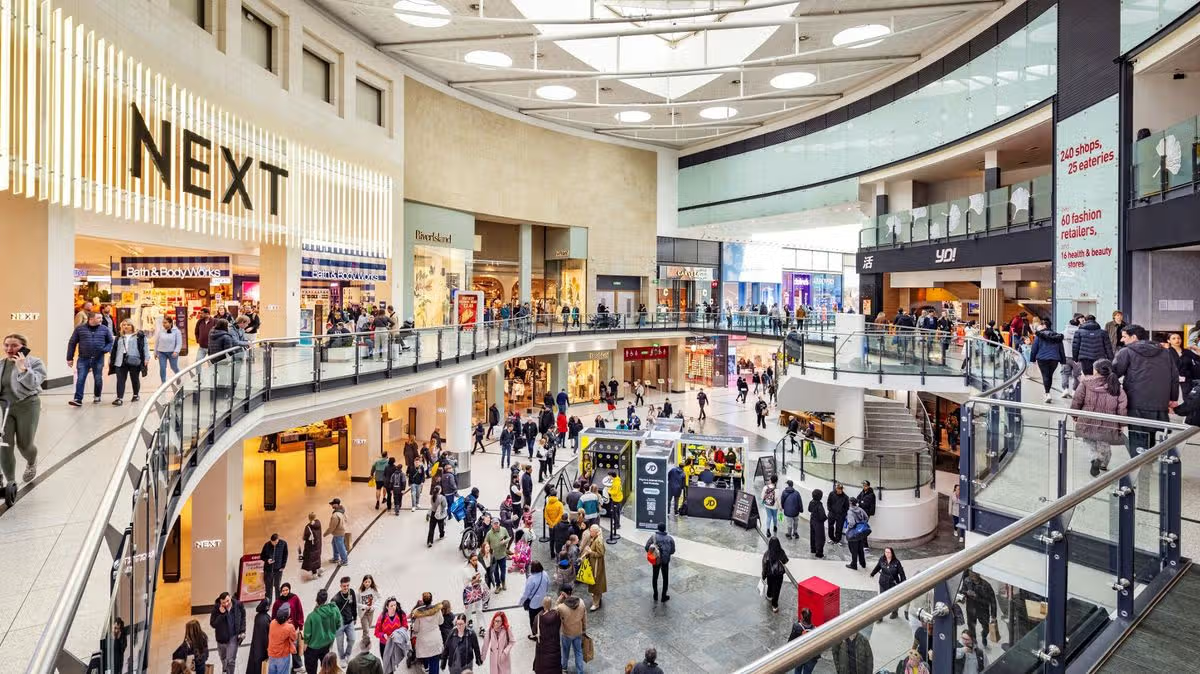
Hammerson says acquiring the stake in Arndale is in line with its plan to increase scale.(Image: Hammerson)

Major property developer Hammerson has announced a £218m deal to buy a 50% stake in the landmark Arndale shopping centre.

The London firm praised Manchester – the home of the new N10 North – as it said the asset fitted its “DNA precisely” as a dominant, city centre destination in a top European city. Arndale’s 45 million footfall makes it the highest across the group.

It is said to be Hammerson’s first major external acquisition in more than a decade and will be immediately earnings accretive at 7.8% yield. The deal – which values the centre at roughly £436m – was funded by a £225m equity fundraise and retail offer of up to 12.5% of issued share capital.

Rob Wilkinson, chief executive of Hammerson, said: “This is another important step in our strategy to increase scale through acquiring high-quality, retail-led destinations. Manchester is one of Europe’s most dynamic and fastest-growing urban economies, benefiting from strong demographics, excellent connectivity and the largest retail catchment outside London.

Advertisement

“Manchester Arndale sits at the heart of this exceptional city and has established itself as a premier retail destination, attracting more than 45 million visitors each year.

“Ownership of this prime asset allows us to further strengthen our position in one of the continent’s leading cities. The transaction will be immediately earnings accretive, and we see a clear path to income and value creation, leveraging Hammerson’s platform to enhance the destination and deliver attractive long-term returns for our shareholders.”

The deal comes amid the release of half year results for Hammerson showing an uptick in net rental income to £112m in the six months to the end of June, up from £80m in the same period last year. There was EPRA earnings growth of 33% to £64m, and £18.5m of headline rent, 53% above previous passing rent.

Footfall across the group’s portfolio was up 3%, ahead of national benchmarks in all territories, while like-for-like sales were up 2%.

Advertisement
Continue Reading

Business

Mortgage rates rise to 6.66%: Freddie Mac

Published

on

Mortgage rates rise to 6.38%: Freddie Mac

Mortgage rates rose this week to the highest level in a year, mortgage buyer Freddie Mac said Thursday.

Freddie Mac’s latest Primary Mortgage Market Survey, released Thursday, showed the average rate on the benchmark 30-year fixed mortgage climbed to 6.66% from last week’s reading of 6.58%. 

Advertisement

The average rate on a 30-year loan was 6.72% a year ago.

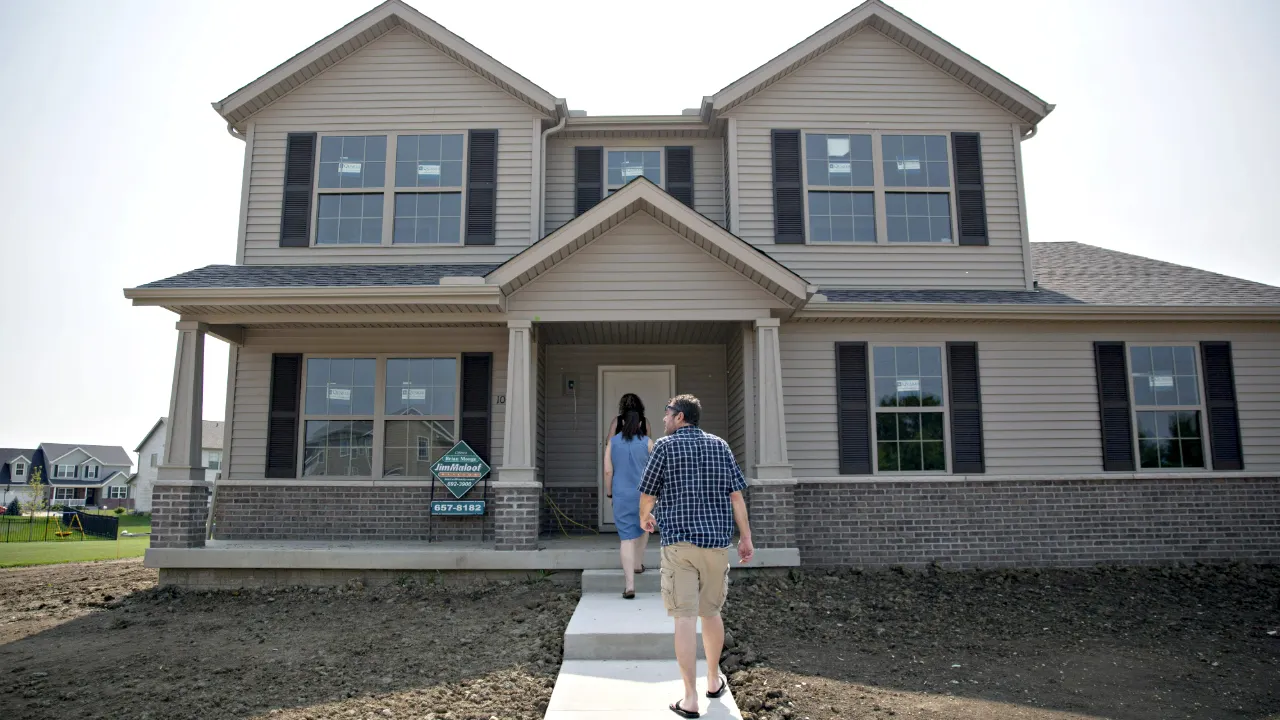
A couple tours a home.

The average rate on the benchmark 30-year fixed mortgage climbed to 6.66% this week, according to Freddie Mac.  (Daniel Acker/Bloomberg via Getty Images)

“The housing market continues to benefit from more available inventory, providing prospective homebuyers with additional options and helping support buyer activity as mortgage rates fluctuate,” said Sam Khater, Freddie Mac’s chief economist.

The average rate on a 15-year fixed mortgage rose to 6.04% from last week’s reading of 5.96%.

Advertisement
Continue Reading

Business

Coca-Cola volume kicks into higher gear

Published

on

Coca-Cola volume kicks into higher gear

World Cup campaign reaches more than 180 global markets.

Continue Reading

Business

Earnings call transcript: Whitecap beats Q2 2026 estimates on record cash flow

Published

on


Earnings call transcript: Whitecap beats Q2 2026 estimates on record cash flow

Continue Reading

Business

How CABA Design Turned Practical Ideas Into Chicory

Published

on

How CABA Design Turned Practical Ideas Into Chicory

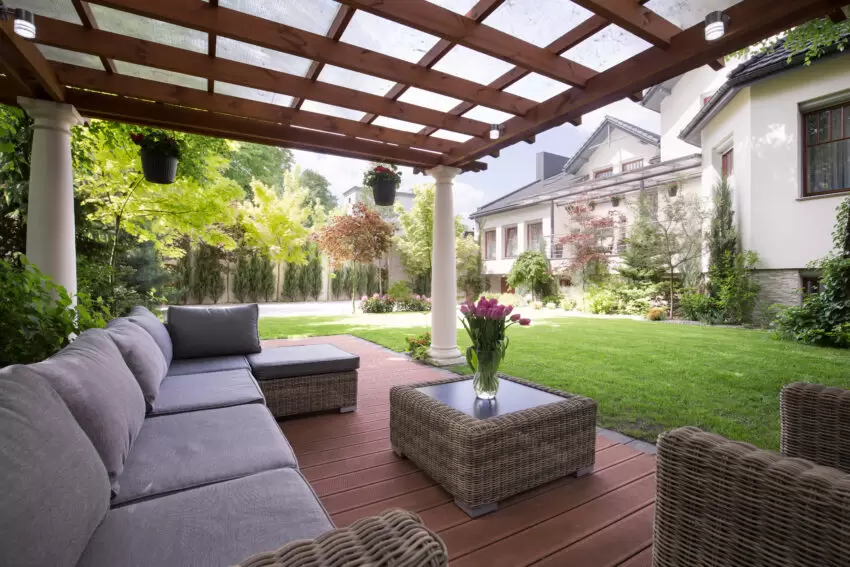
The outdoor furniture industry has never lacked big promises. Brands often talk about style, comfort, and luxury. But the team behind Chicory approached the market with a different question: what if outdoor furniture actually matched the way people live today?

That question became the foundation for Chicory, a direct-to-consumer outdoor furniture brand launched in 2024. The company focused on solving practical problems that many homeowners quietly dealt with for years. Cushions that stain easily. Outdoor sofas that are difficult to clean. Furniture that looks beautiful online but struggles to keep up with everyday life.

Instead of treating those frustrations as unavoidable, Chicory saw an opportunity.

“We kept hearing the same stories,” the company shared. “People loved their outdoor spaces, but maintaining outdoor furniture felt harder than it should be.”

That mindset helped shape a brand that is gaining attention for its machine-washable, modular outdoor furniture systems and its practical approach to modern outdoor living. Most recently, Chicory earned recognition from Forbes, which named its sofa collection the “Best Upholstered Outdoor Sofa.”

Advertisement

How Chicory Started With a Real-Life Problem

The idea behind Chicory did not begin with a trend forecast or marketing campaign. It started with observation.

The company noticed that outdoor furniture had become increasingly design-focused, but often at the expense of usability. Many products were built to look great in photos while everyday functionality became a secondary concern.

“We saw furniture that looked beautiful in staged photos but struggled in real homes,” the company explained. “Families needed products that could handle daily life.”

That realization pushed the company to rethink outdoor furniture from the ground up.

Advertisement

Instead of treating washable features as a bonus, Chicory made them central to the product design. The company developed a fully machine-washable outdoor sofa system with removable weatherproof covers for both cushions and frames.

The decision was unusual in a category where cleaning often requires spot treatment, special care, or costly replacements.

“We wanted to remove the anxiety people sometimes feel around expensive furniture,” the company said. “Outdoor spaces should feel lived in, not overly protected.”

Why Modular Outdoor Furniture Became Part of the Vision

As Chicory developed its collection, flexibility became another major focus.

Advertisement

The company believed outdoor furniture should adapt as families and living spaces change. That thinking led to modular seating systems that can be expanded, rearranged, and customized over time.

“People move. Families grow. Spaces change,” the company shared. “We wanted furniture that could change with them.”

The idea reflects a larger shift happening throughout the home industry. Consumers increasingly value products that provide long-term usability rather than fixed solutions that may no longer fit their needs a few years later.

Still, creating flexible furniture without sacrificing design presented a challenge.

Advertisement

“Modular furniture can sometimes feel overly technical or bulky,” the company explained. “We worked hard to make sure the designs still felt clean, elevated, and approachable.”

That balance between functionality and aesthetics has become one of Chicory’s defining characteristics.

The Bigger Thinking Behind Chicory

While Chicory is part of a larger family of home brands that includes Anabei and Diorama, the company developed its own identity around practical innovation.

From the beginning, Chicory focused on improving the ownership experience, not just the product itself.

Advertisement

The company emphasized efficient delivery, accessible design, and products built for everyday use rather than occasional enjoyment.

“We believed customers were ready for a better experience overall,” the company said. “Not just better-looking products, but products that actually work better for the way people live.”

That philosophy became especially important as homeowners began spending more time investing in outdoor living spaces that serve as extensions of the home.

Rather than chasing trends, Chicory focused on creating products designed to remain useful for years.

Advertisement

“We wanted to build thoughtfully,” the company explained. “The goal was not simply to release products quickly. It was to create products that people would continue using for years.”

How Sustainability Influenced Chicory’s Development

Sustainability also became part of Chicory’s design philosophy.

The company believes one of the most overlooked aspects of sustainability is durability. Products that last longer naturally reduce waste and replacement cycles.

“We think longevity matters,” the company shared. “Furniture should not feel disposable.”

Advertisement

To support that goal, Chicory incorporated durable materials, removable covers, and flat-pack shipping designed to improve efficiency while reducing transportation impact.

At the same time, the company avoided making sustainability a marketing slogan.

“We tried to stay practical about it,” the company explained. “For us, sustainability starts with creating products people keep using instead of replacing.”

That straightforward approach helped shape Chicory’s identity as a brand focused on usability, longevity, and real-world performance.

Advertisement

What Chicory’s Growth Says About Modern Outdoor Living

Chicory’s growth reflects a larger shift in what consumers expect from outdoor furniture.

Today’s homeowners want products that combine style with practicality. They want furniture that can handle children, pets, guests, weather, and everyday use without constant maintenance.

Design still matters. But functionality matters too.

Chicory entered the market by focusing on those everyday realities.

Advertisement

“We spent more time thinking about everyday use than showroom presentation,” the company said. “That perspective guided almost every decision we made.”

Today, that philosophy continues to shape the brand’s direction.

Rather than trying to reinvent outdoor living entirely, Chicory focused on solving common problems that many consumers had simply accepted for years. Through machine-washable materials, modular flexibility, and durable construction, the company built a brand around making outdoor spaces easier to enjoy.

For Chicory, the biggest idea was never creating something flashy. It was creating something useful.

Advertisement

Continue Reading

Business

Waaree Energies shares slide 6% despite 15% profit growth and 79% YoY revenue surge in Q1FY27

Published

on

Waaree Energies shares slide 6% despite 15% profit growth and 79% YoY revenue surge in Q1FY27
Shares of Waaree Energies witnessed selling pressure on Thursday, declining 5.65% to Rs 2,581.70, even as the solar energy major reported a strong operational and financial performance for Q1FY27, driven by robust revenue growth, higher production volumes and a record order pipeline.

The company reported a consolidated net profit of Rs 891.87 crore for the quarter ended June 2026, registering a 15.39% year-on-year growth compared with Rs 773 crore in the corresponding quarter last year.

Revenue from operations surged 79.22% YoY to Rs 7,931.79 crore in Q1FY27 from Rs 4,426 crore in the year-ago period, reflecting strong demand momentum across domestic and international markets.

Waaree Energies also strengthened its future growth visibility by securing new orders worth around Rs 16,000 crore during the quarter, taking its total order book to an all-time high of approximately Rs 61,500 crore.

Advertisement

Strong Operational Performance

During Q1FY27, the company achieved solar module production of 3.24 GW, marking a 41.51% YoY increase, supported by improved operational efficiency and scale benefits.

Operating EBITDA stood at Rs 1,439.92 crore, rising 44.38% year-on-year, with EBITDA margins at 18.15%. Quarterly profit after tax reached Rs 891.87 crore, up 15.39% compared with the previous year.

Expansion Plans Gain Momentum

Waaree Energies highlighted key strategic initiatives aimed at strengthening its renewable energy ecosystem:
The company’s 10 GW solar cell manufacturing facility at Unn, Gujarat, is progressing as planned and is expected to commence production during the current financial year.Waaree acquired a 55% equity stake in Associated Power Structures Private Limited, enhancing its power infrastructure capabilities and supporting integrated renewable energy project execution.

The company commenced advanced automated BESS container manufacturing with a capacity of 5.15 GWh at Rola, Gujarat, marking a step towards expanding into energy storage solutions.

Advertisement

Management Outlook

Commenting on the performance, Jignesh Rathod, Whole Time Director and CEO of Waaree Energies, said the company’s Q1FY27 results reflect the strength of its integrated business model, disciplined execution and sustained demand across key markets. He highlighted that the company has achieved a record order book of approximately Rs 61,500 crore, reinforcing its ability to deliver profitable growth while expanding manufacturing capacity and strengthening its clean energy portfolio.

The management stated that a strong balance sheet, phased capital deployment and expected cash flow generation provide sufficient support for upcoming expansion plans. Waaree Energies reaffirmed its FY27 Operating EBITDA guidance of Rs 7,000-7,700 crore.

Stock Performance and Technical View

Despite reporting strong quarterly numbers, Waaree Energies shares traded 6% lower at Rs 2,581.70 on Thursday. The stock commands a market capitalisation of Rs 78,707 crore and continues to trade below its 52-week high of Rs 3,865.

On the technical front, the stock’s 14-day Relative Strength Index (RSI) stood at 38.8. While an RSI below 30 indicates oversold conditions and above 70 suggests overbought territory, the current reading points to moderate weakness. The stock is trading below all eight key simple moving averages (SMAs), indicating a bearish technical trend in the near term despite strong underlying business growth.

Advertisement

(Disclaimer: Recommendations, suggestions, views and opinions given by the experts are their own. These do not represent the views of The Economic Times)

Continue Reading

Business

Ferrari CEO ‘would not change anything’ about polarizing Luce EV debut

Published

on

Ferrari CEO 'would not change anything' about polarizing Luce EV debut

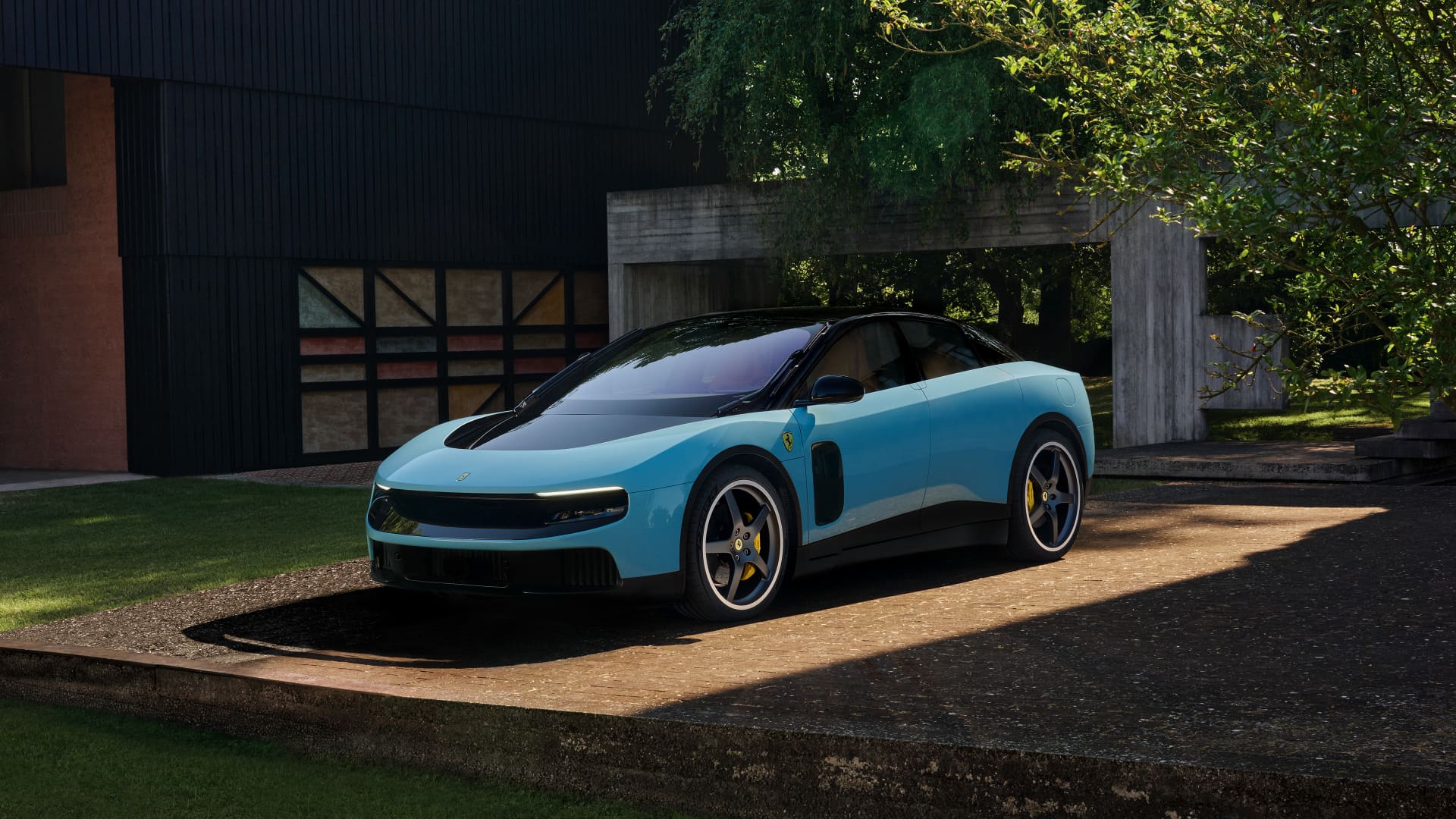
Ferrari unveiled the Ferrari Luce electric vehicle in the symbolic setting of the Vela di Calatrava, Città dello Sport in Rome in May, 2026. (Ferrari S.p.a.)

Ferrari S.p.a.

Ferrari is pleased with the launch of the Luce all-electric vehicle despite significant criticism upon the car’s debut, according to CEO Benedetto Vigna.

Advertisement

He said Thursday that the famed Italian automaker “would not change anything” about the vehicle’s launch this spring, which caused a notable decline in Ferrari shares amid negative reactions to the car, including from former Ferrari executive Luca di Montezemolo.

“I would not change anything in the launch of [Luce]. We are very pleased about what has been done,” Vigna told reporters during a call to discuss Ferrari’s second-quarter results.

Vigna declined to disclose orders or expected sales for the 550,000 euro (roughly $640,000) Luce, but the company, which sold 13,640 vehicles last year, said its order books are full through 2027.

The Financial Times reported Wednesday that Ferrari aimed to sell ⁠just under 500 units of the Luce ​model this year, and the quota was ​filled in less than two months after the car’s May 25 launch.

Advertisement

Ferrari’s first fully electric car, called Luce, in a handout image obtained by Reuters May 25, 2026, after the luxury sports car maker unveiled the model.

Ferrari | Via Reuters

“We are very much satisfied because we are proceeding as planned,” Vigna said, declining to comment on the report.

The Luce was designed by former Apple design chief Jony Ive and is a departure from the aesthetic of typical Ferraris, with a minimalistic interior design, screens and a bubbly exterior. It is Ferrari’s first all-electric vehicle.

Advertisement

The company also did a tiered rollout of the vehicle, revealing its interior ahead of time and posting videos online about the vehicle’s development and arrival.

“The car has a lot of new things and that was the best way to make sure that the people understand all the novelties of this car,” Vigna said. “So that has been very good.”

U.S.-listed shares of Ferrari experienced their largest daily decline so far this year, falling 8.4%, following the vehicle’s debut. The stock has since recovered.

Ferrari unveils its first fully electric vehicle
Choose CNBC as your preferred source on Google and never miss a moment from the most trusted name in business news.
Continue Reading

Business

Hundreds of jobs to go at Jaguar Land Rover

Published

on

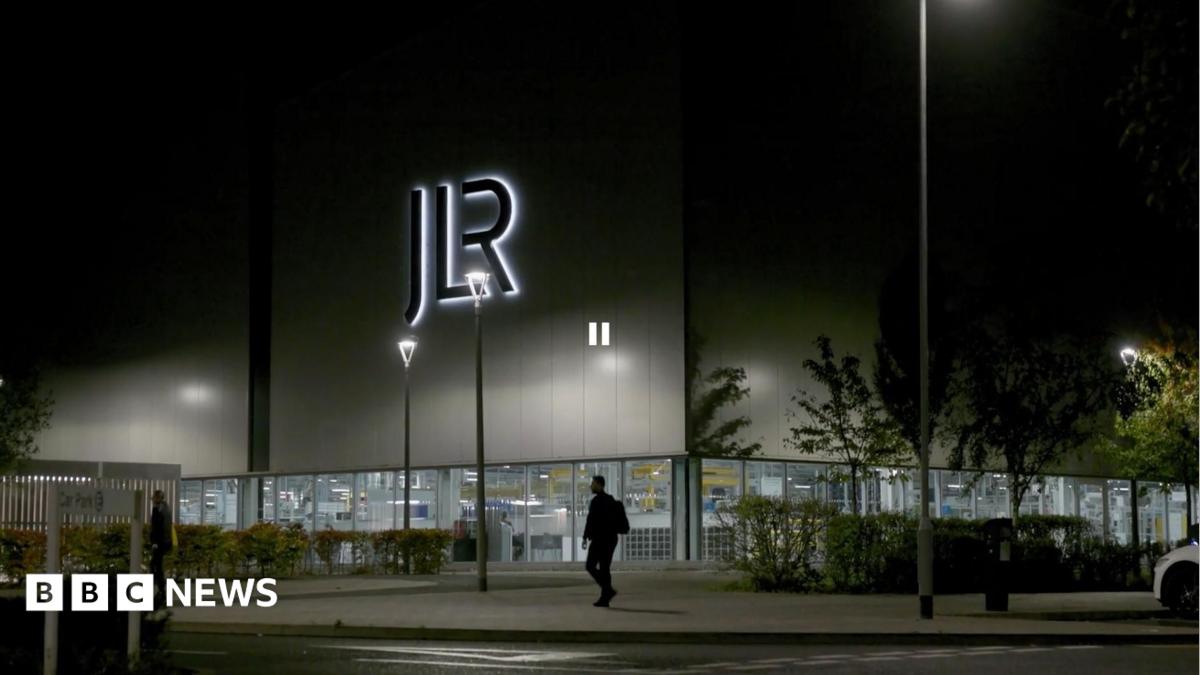
The exterior of Jaguar Land Rover's Wolverhampton factory.

Jaguar Land Rover (JLR) plans to cut hundreds of jobs, less than a year after a cyber attack brought production to a halt for more than a month.

In a statement, the firm said: “Impacted colleagues will be supported to find alternative roles wherever possible, alongside the option of voluntary early exit.”

The company said it expected fewer than 300 people would leave the firm under the plans.

JLR, which has its global headquarters at Whitley and manufacturing sites in Solihull, Wolverhampton, and Halewood on Merseyside, employs about 30,000 people in its UK operations, with approximately 10,000 people employed at plants overseas.

Advertisement

A cyberattack in September 2025 closed all manufacturing for five months and meant not a single vehicle rolled off production lines.

That led to a 27% drop in overall production at the company, which is one of the biggest employers in the West Midlands.

It also came as the firm halted production of its Jaguar cars, before a relaunch of a series of all-electric saloons.

JLR continued to build the Land Rover and Range Rover brands, but the cyber-attack took those lines down.

Advertisement
Continue Reading

Business

New research into the impact of horse racing on the Welsh economy

Published

on

Business Live

The independent research is being undertaken by Arad on behalf of the British Horseracing Authority

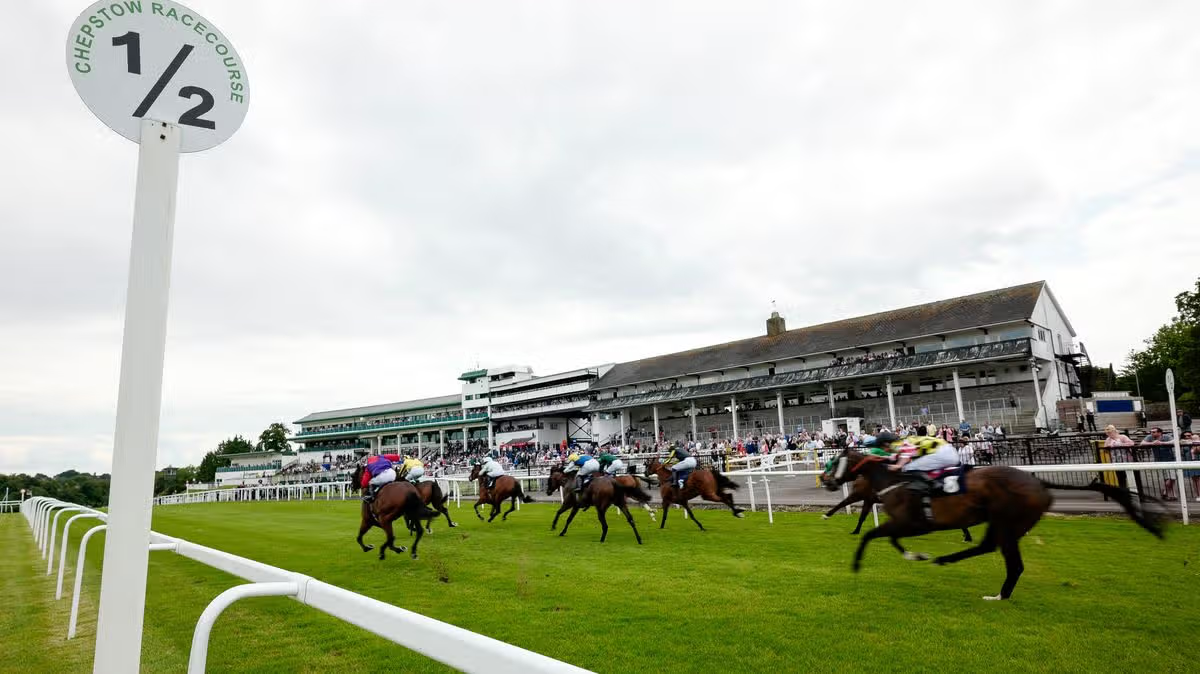
A general view of Chepstow Racecourse(Image: Alan Crowhurst/Getty Images)

New independent research has been commissioned to evaluate the contribution of the horse racing industry to the Welsh economy.

The assessment, which will look at direct and indirect inputs, will be undertaken by Cardiff-based research consultancy Arad for the British Horseracing Authority (BHA).

Advertisement

The study is the first ever assessment of the impact of the sport on the Welsh economy. The project, which is being financially supported by Arena Racing Company (ARC) and Chester Race Company (CRC), will involve surveys of stakeholders and businesses within the Welsh horse racing community and spectators attending meetings on Welsh racecourses over the remainder of the summer.

While the last remaining greyhound track in Wales, at Ystrad Mynach, is being closed following legislation, there is no suggestion that the new Plaid Cymru Cardiff Bay administration is considering seeking to ban horse racing in Wales.

As well as the impact of racecourses in Wales, such as Chepstow, Bangor-on-Dee and Ffos Las, the research will also assess the contribution of betting. The overall economic impact is expected to run into tens of millions of pounds per year.

Greg Swift, director of communications and corporate affairs at the BHA, said: “We’re delighted to commission Arad Research to carry out this important work on behalf of the thriving and historic horse racing industry in Wales.

Advertisement

“The sport is undoubtedly an economic and cultural powerhouse in Wales. But we want clear evidence to present to the Government that shows the significance of the industry across the country and the role it plays in growing regional economies and communities.

“The survey is crucial to supporting the research and the economic evidence, so we are asking Welsh racing and breeding businesses to support and contribute to Arad’s work and help us demonstrate to policy makers the essential role horse racing plays in Wales.”

Arad director Hefin Thomas, said: We’re pleased to have been commissioned to undertake this important research which will examine the economic contribution of horse racing in Wales. This will include consideration of the direct impact of activities at Chepstow, Ffos Las and Bangor-on-Dee racecourses as well as wider economic impacts throughout the sector and supply chain.”

Regional director with Arena Racing Company, whose racecourse portfolio includes Chepstow and Ffos Las, Phil Bell, said: “We very much look forward to working with Arad, our colleagues at BHA, Bangor on Dee Racecourse and everyone across the world of Welsh horse racing to make sure that we can show exactly what a success story our sport is, and how important it is to a wide range of communities in Wales.”

Advertisement

Chief executive of Chester Racing Company – which owns Bangor-on-Dee Racecourse – Louise Stewart ,said: “We feel that it is really important for Bangor-on-Dee Racecourse to collaborate with the BHA and other Welsh racecourses to support this research project.

“Horse racing plays a significant role in Wales, supporting jobs, attracting tourism and generating economic activity in communities. While we witness its impact in the North Wales economy, robust evidence is vital to ensuring the industry’s value is fully understood as we continue to work closely with government.

“We look forward to the findings of the report, which will help showcase the contribution our racecourses make to the sporting and economic landscape of Wales. Just as importantly, it will provide valuable insights to help shape the future growth and success of the industry.”

Advertisement
Continue Reading

Trending

Copyright © 2025