



Connect with us

Business

Varun Beverages shares jump 3% after Q1 PAT rises 15%, revenue grows 20%

Published

on

Varun Beverages shares jump 3% after Q1 PAT rises 15%, revenue grows 20%
Shares of bottle-maker Varun Beverages jumped nearly 3% to the day’s high of Rs 441.80 on the BSE on Wednesday, against previous closing of Rs 430.30, after the company reported a growth of 15% in profit after tax (PAT) and 20% increase in revenue in Q1 FY27 on a year-on-year basis.

According to a filing with the exchange, the company reported a 20.4% year-on-year (YoY) increase in revenue from operations (net of excise duty and GST) to Rs 8,451.23 crore in Q1 FY2027, compared with Rs 7,017.37 crore in the corresponding quarter of CY2025.

Also Read | Varun Beverages shares fall 5% as Q2 margins shrink after Twizza acquisition in South Africa; net profit rises 15%

Profit after tax (PAT) rose 15.1% year-on-year to Rs 1,525.36 crore from Rs 1,325.49 crore, driven by strong volume growth across India and international markets.

Advertisement

Gross margin expanded by 44 basis points to 55% in Q2 CY2026, supported by a higher contribution from the international business. In India, early procurement of key raw materials and lower sugar consumption, aided by a higher mix of low- and no-sugar products, helped offset inflationary pressure on input costs.


Consolidated sales volumes rose 19.8% year-on-year to 466.7 million cases from 389.7 million cases, driven by 14.4% volume growth in India and a 38.4% increase across international markets. The international business included 11.8 million cases from the recently acquired Twizza operations in South Africa.
Depreciation rose 33.6%, primarily due to the commissioning of new plants in India last year and the acquisition of Twizza. Finance costs increased 55.8%, largely on account of the Twizza acquisition.The realization per case for beverages improved by 1.2% at the consolidated level with improved realizations in international territories.

EBITDA increased by 17.2% to Rs 23,430.4 million in Q2 CY2026 and EBITDA margins declined by 76 bps to 27.7% in Q2 CY2026 due to consolidation of Twizza business which currently has lower margins.

In India, EBITDA margins improved by 38 bps driven by operational efficiencies from healthy volume growth which were partially offset by higher other expenses primarily transportation and distribution costs.

VBL India continued to remain net debt free with a free cash of Rs 14,941 million, however, at the consolidated level net debt stood at Rs 3,730 million as on June 30, 2026, on account of acquisition of Twizza in South Africa. The company’s long-term rating for bank loan facilities from CRISIL (an S&P Global Company) is reaffirmed as CRISIL AAA/Stable.

Advertisement

“We are pleased to report a strong performance during this quarter across our markets. Consolidated sales volumes grew by 19.8% and, together with improved realizations, translated into a 20.4% increase in net revenue from operations. EBITDA increased by 17.2% to Rs. 23,430.4 million in Q2 CY2026,” said Ravi Jaipuria, Chairman, Varun Beverages.

Also Read | Varun Beverages’ international fizz outpaces India biz as overseas volumes surge 38%

Jaipuria also mentioned that the company entered a strategic alliance with Asahi Group Holdings to introduce the iconic CALPIS brand in India, marking their entry into the value-added fermented dairy beverage category.

In accordance to their dividend policy, the Board of Directors has approved a second interim dividend of 25% of face value, i.e., Rs 0.50 per share, resulting in a total cash outflow of approximately Rs 1,691 million.

Advertisement

The company has set August 1 as the record date for determining the entitlement of Equity Shareholders for receipt of the second interim dividend.

In the last one year, the stock was down 14.32% and in the last two years, the stock was down 34.84%.

(Disclaimer: Recommendations, suggestions, views and opinions given by the experts are their own. These do not represent the views of The Economic Times)

Advertisement
Continue Reading
Click to comment

You must be logged in to post a comment Login

Leave a Reply

Business

What’s happening to UK interest rates and mortgage deals?

Published

on

A woman with long, blonde hair talks into a microphone

Mortgages

Just under a third of households have a mortgage, according to the government’s English Housing Survey, external.

About 500,000 homeowners have a mortgage that “tracks” the Bank of England’s rate. That means any cut means a reduction in the monthly repayments on their outstanding loan.

An additional 500,000 homeowners on standard variable (SVR) rates rely on their lender choosing to pass on any Bank rate cut.

Advertisement

But the vast majority of mortgage customers – some 87% – have fixed-rate deals. While their monthly payments aren’t immediately affected by a rate change, their future deals are.

As at 29 July, the average rate on a new two-year fixed deal was 5.62%, up from 4.83% at the start of March, according to the financial information service Moneyfacts.

For those looking for a five-year deal, the average rate was 5.66%, up from 4.95% over the same period.

The average two-year tracker rate was 4.51%.

Advertisement

About 800,000 fixed-rate mortgages with an interest rate of 3% or below are expected to expire every year, on average, until the end of 2027. Borrowing costs for customers coming off those deals are likely to rise sharply.

Mortgage calculator

You can see how your mortgage may be affected by future interest rate changes by using our calculator:

Advertisement
Continue Reading

Business

Asia-Pacific Poverty Threatens 2.3 Billion Well Beyond the Poorest Nations

Published

on

Extreme poverty in the Asia-Pacific region has declined but inequality remains high, says OECD
  • Poverty in Asia and the Pacific extends well beyond the region’s least developed economies, with close to half the regional population — roughly 2.3 billion people — either living in poverty or at risk of falling into it. Middle-income countries account for a significant share of this vulnerability, challenging assumptions tied to GDP growth alone.
  • The forthcoming 2026 Social Outlook for Asia and the Pacific highlights that external shocks, including energy and food price disruptions linked to conflict in Western Asia, threaten to push vulnerable populations back into poverty. Researchers and officials involved argue that political will, not evidence, remains the primary obstacle to scaling proven social protection policies.

There is a comforting myth that poverty in Asia and the Pacific is a story about the region’s least developed economies. The assumption goes that if we can just lift the poorest nations, the job is largely done. 

The groundwork being laid for the 2026 Social Outlook for Asia and the Pacific, now being reviewed by experts from academia, research institutions, UN agencies, and governments, tells a far less comfortable story.

Poverty, it turns out, does not respect the tidy boundary between “developing” and “developed” economies. Hundreds of millions of people living in moderate poverty or at risk of falling into it are found not in the region’s poorest states, but inside its middle-income countries, economies often celebrated for their growth statistics. 

Taken as a whole, close to half the region’s population, some 2.3 billion people, are either currently poor or perilously close to it. Widen the lens beyond income to the things that actually determine whether a life is lived with dignity, such as health, nutrition, education, and basic living standards, and the count of those experiencing poverty across multiple dimensions still exceeds 500 million.

Fragility Behind the Statistics

  • Extreme poverty persists: 150 million people in the region still live in extreme poverty .
  • Poverty is widespread beyond low‑income countries: Hundreds of millions in middle‑income economies remain in moderate poverty or vulnerability .
  • Nearly half the region is poor or vulnerable: 2.3 billion people—close to 50% of the population—are either poor or at risk of falling into poverty .
  • Multidimensional poverty is severe: Over 500 million people are poor when considering health, nutrition, education, and living standards, not just income

These are not abstractions. They are a statement about how fragile prosperity in this region really is. A family that has technically crossed an income line on a chart can still be one bad harvest, one medical bill, or one lost job away from falling back below it. 

The Pact for the Future, which the international community has already endorsed, states plainly that eradicating poverty in all its forms remains an indispensable condition for any development that claims to be inclusive or sustainable. 

Advertisement

It is easy to nod along to language like that in a UN document. It is harder to reckon with what it demands: that policymakers stop treating poverty reduction as a problem solved once GDP crosses a threshold, and start treating vulnerability itself as the target.

That demand has taken on new urgency in 2026. The crisis unfolding in Western Asia has already begun rippling outward, disrupting energy markets and fertilizer supply chains far beyond the immediate conflict zone. 

For a region where thin margins separate the vulnerable from the poor, shocks transmitted through the price of fuel or food are not a distant risk. They are a direct channel through which instability on one side of a continent becomes hunger and hardship on the other.

Evidence Exists. Will Is the Missing Piece

What is encouraging is that the officials and researchers shaping the next Social Outlook are not simply cataloguing the scale of the problem. 

Advertisement

They are being asked, deliberately, to draw out lessons and good practices, meaning the social development policies that have actually worked to reduce poverty across the region, and to sharpen them into concrete recommendations. 

That is the right instinct. The region does not lack evidence about what works. It lacks the consistent political will to scale those solutions before the next shock arrives.

The test of the 2026 Social Outlook will not be how accurately it documents the crisis. It will be whether the governments reading it treat the 2.3 billion figure not as a statistic to footnote, but as a mandate to build social protection systems robust enough to survive contagion from wars they did not start, energy shocks they did not cause, and price spikes they cannot control. Anything less simply manages poverty. It does not eradicate it.

Advertisement
Continue Reading

Business

CalciMedica aligns with FDA on acute pancreatitis trial design

Published

on


CalciMedica aligns with FDA on acute pancreatitis trial design

Continue Reading

Business

Procook strikes deal with DHL as it looks to ramp up UK growth

Published

on

Business Live

The kitchenware retailer said the partnership would help the business scale

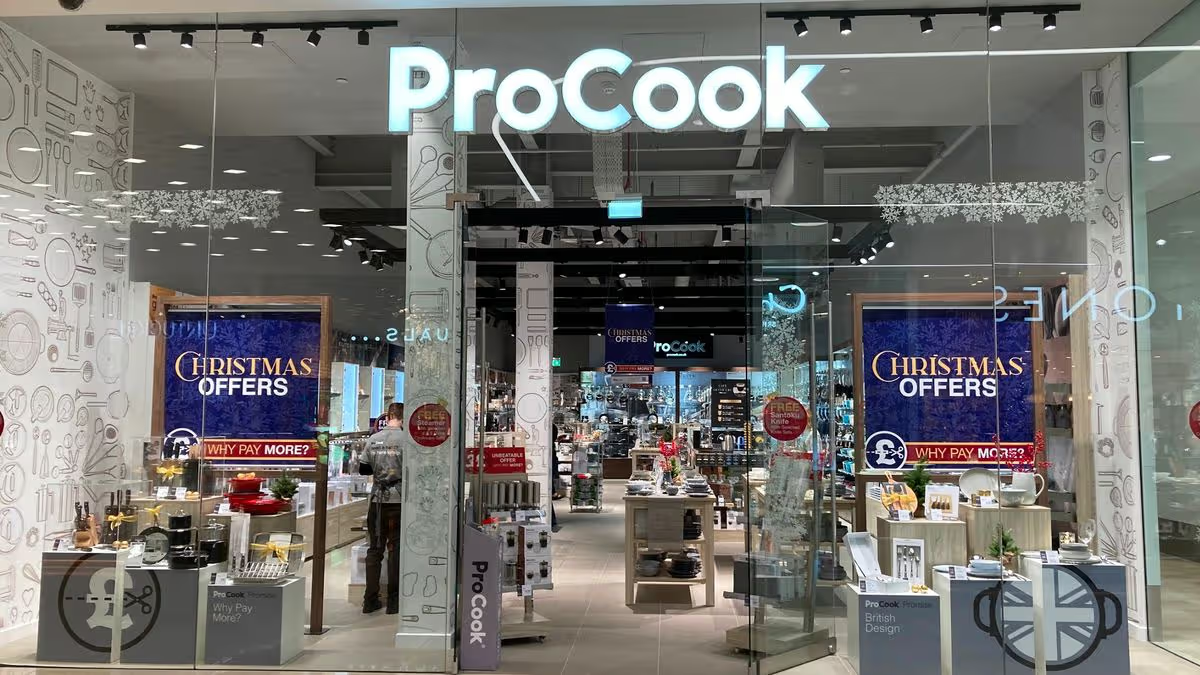
One of ProCook's new stores at Westfield shopping centres in London.

One of ProCook’s new stores at Westfield shopping centres in London.(Image: ProCook)

Gloucestershire kitchenware brand Procook has agreed a major deal with logistics giant DHL in move it says will support its next phase of its growth in the UK.

The agreement marks the first time in Procook’s 30-year history that it has partnered with a top-tier third-party logistics provider.

Under the terms, DHL has assumed responsibility for operating Procook’s 167,000 sqft distribution centre in Gloucester, managing retail and e-commerce fulfilment activities.

Procook said the partnership would support “greater operational efficiency, flexibility and scalability” as it continues its UK expansion.

Advertisement

Lee Tappenden, chief executive at Procook, said: “This partnership is an important milestone for Procook. As we continue to grow, we wanted a logistics partner with the expertise, scale and capability to support our ambitions.

“DHL Supply Chain’s experience across retail and e-commerce logistics will help us build a more efficient and scalable operation, while maintaining the high standards of service our customers expect.”

Over the coming months, Procook and DHL will deliver a joint improvement programme focused on boosting operational performance and future capacity, the Gloucestershire-headquartered company said.

It will involve using DHL technology, including a new warehouse management system, which will be put in place during the first half of 2027.

Advertisement

Spencer Conday, managing director, retail and ecommerce, DHL Supply Chain UK & Ireland, said: “We are delighted to partner with Procook and support the next stage of its growth.

“The successful transition of the Gloucester operation is a testament to the close collaboration between our teams.

“We are particularly pleased to welcome Procook’s colleagues into DHL and look forward to supporting their development as part of our business. We look forward to helping Procook deliver greater efficiency, flexibility and long-term growth.”

In April, Procook reported a 19.2 per cent rise in revenue to £18.5m for the 12 weeks to the end of March, driven by sales online and in store.

Advertisement

The company told investors at the time that it had “outperformed” the UK kitchenware market by more than 13 percentage points during the fourth quarter, and by more than 20 per cent across the full year.

Continue Reading

Business

Trump and Zelenskyy Meet at White House to Discuss Patriot Missiles and Reviving Russia Peace Talks Soon

Published

on

Trump and Zelenskyy Meet at White House to Discuss Patriot

KEY POINTS

https://truthsocial.com/@realDonaldTrump/posts/117000535893705645

President Donald Trump and Ukrainian President Volodymyr Zelenskyy met at the White House on Tuesday, discussing plans for Ukraine to begin producing its own Patriot missile interceptors and efforts to revive stalled peace talks with Russia, in a meeting both leaders described as productive.

Trump characterized the sit-down warmly in a social media post following the meeting, saying it was “a great honor” to meet with Zelenskyy and that “many things were discussed” during what he described as a meeting that “went very well.” The two leaders met privately in the Oval Office before attending a Washington memorial service later Tuesday afternoon honoring Sen. Lindsey Graham, the South Carolina Republican who died July 11 at age 71 shortly after returning from a trip to Kyiv.

Zelenskyy, writing on social media after the meeting, thanked Trump for what he called a “good meeting” and for the administration’s continued support of Ukraine in its war against Russia, now in its fifth year. “The President and I discussed licenses for Patriot interceptor production and several other ideas that could help,” Zelenskyy wrote, referring to the advanced U.S.-made surface-to-air missile systems that have become central to Ukraine’s air defense against Russian strikes.

Advertisement

White House press secretary Karoline Leavitt described both the Zelenskyy meeting and a separate sit-down Trump held later Tuesday with Israeli Prime Minister Benjamin Netanyahu as “positive and productive.”

Tuesday’s meeting marked the second time this month that Trump and Zelenskyy have met in person, and it came against a backdrop of significantly warmer relations between the two leaders than existed roughly a year and a half ago, when a televised Oval Office meeting between them collapsed into a heated exchange that led Zelenskyy to leave the White House early and forced the cancellation of a planned joint press conference. Trump wrote at the time that Zelenskyy had “disrespected the United States of America in its cherished Oval Office,” adding that he could return “when he is ready for Peace.”

The relationship has since improved considerably. Zelenskyy noted in a recent interview that an April 2025 meeting between the two leaders at the Vatican, held on the sidelines of Pope Francis’s funeral, marked what he called a turning point in his discussions with Trump.

Tuesday’s talks also touched on efforts to jump-start direct negotiations between Ukraine and Russia. Zelenskyy told U.S. senators after meeting with Trump that stepping up the diplomatic process remained a priority. Two people familiar with the discussions said U.S. envoys Steve Witkoff and Jared Kushner, Trump’s son-in-law, have agreed to travel to Ukraine for the first time as part of an effort to restart mediation between Kyiv and Moscow. Witkoff and Kushner have made multiple trips to Russia and held several meetings with Russian President Vladimir Putin since Trump returned to office in January 2025, but neither has previously visited Ukraine in that capacity. No specific date has been set for the planned trip, according to one of the people familiar with the matter.

Advertisement

The Ukraine-Russia war has increasingly intersected with the separate, escalating conflict between the United States and Iran in recent weeks. Zelenskyy has said Russia provided Iran with satellite imagery of U.S. military bases in the Persian Gulf, an allegation Trump said he intends to raise directly with Putin. Ukraine, for its part, fired on at least one Iranian vessel in the Caspian Sea over the weekend, according to reports of the exchange between Trump and Zelenskyy. Hamidreza Azizi, a visiting fellow specializing in Iranian security at the Berlin-based think tank SWP, said Iran could respond at the political level to Ukraine’s strike by formally recognizing Crimea and the Donbas region as Russian territory, something Tehran has so far declined to do.

During his one-day visit to Washington, Zelenskyy also held talks with Finnish President Alexander Stubb at a Washington hotel and met separately with U.S. senators at the Capitol. He said he met with officials from Lockheed Martin, the world’s largest defense contractor and a manufacturer of the Patriot missile system, to discuss further cooperation on defense production and technology sharing. “Ukraine has a lot to share with those who help us protect lives,” Zelenskyy wrote of that meeting.

Luke Coffey, a senior fellow at the Hudson Institute, a Washington-based think tank, said expanding Patriot interceptor production capacity is important not just for Ukraine but for the United States and its Gulf allies as well, particularly given that supplies of the interceptors have been strained by the ongoing conflict with Iran.

Zelenskyy also offered condolences to Trump over Graham’s death during their meeting. Graham, one of the most vocal congressional supporters of Ukraine’s war effort, made his final official trip to Kyiv shortly before his death and helped secure an agreement on a sanctions package aimed at punishing countries that continue to purchase Russian oil, gas and other exports.

Advertisement

Trump and Zelenskyy’s warming relationship follows what U.S. officials have described as a broader shift among Trump allies toward more consistent support for Ukraine, including a widely publicized change of position on the war by a prominent far-right commentator close to the president. That shift has coincided with renewed momentum on both the military and diplomatic tracks of the conflict, even as the war shows no sign of concluding on its own in the near term.

Continue Reading

Business

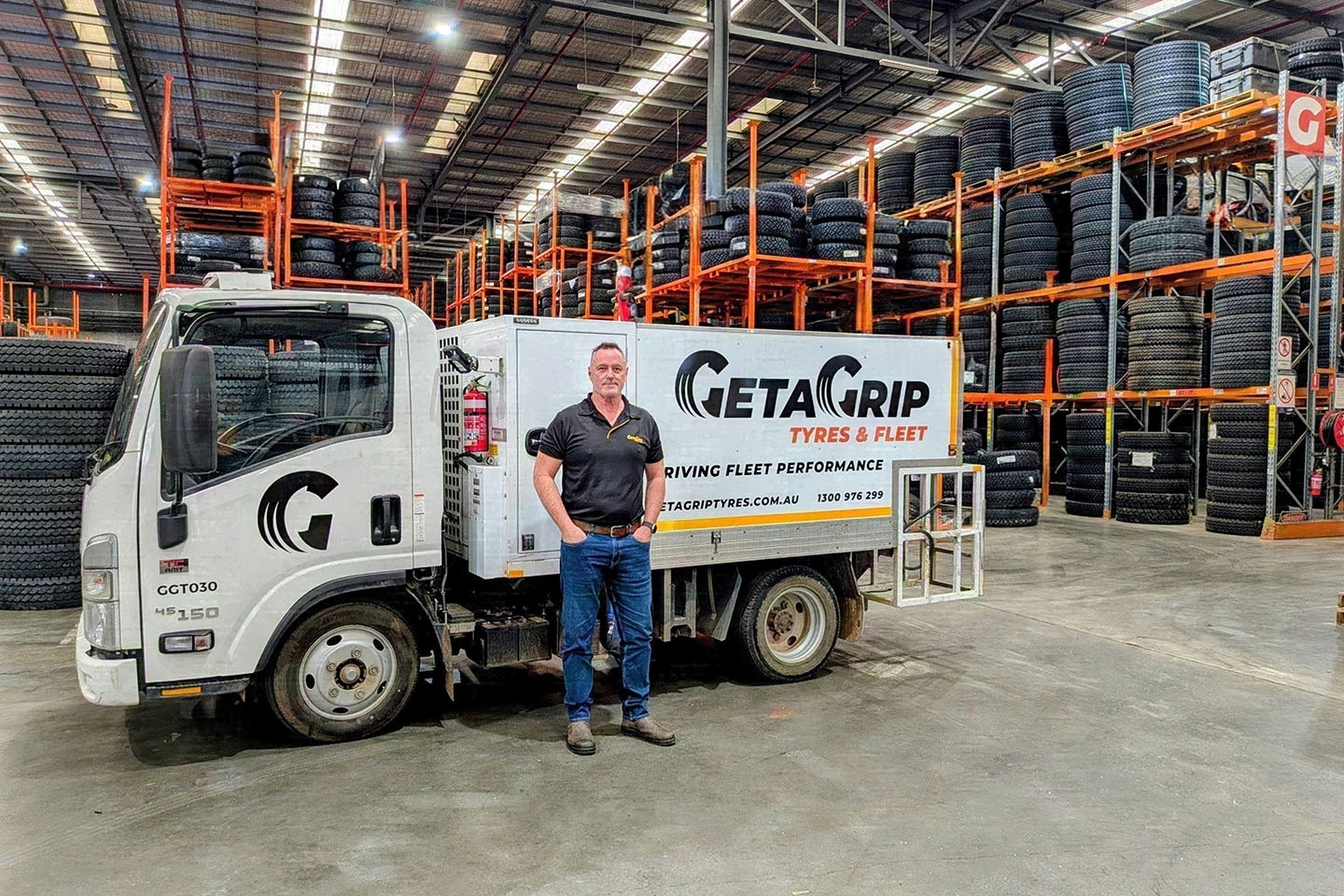
Get a Grip buys ASX-listed tyre firm’s WA business for $3.7m

Published

on

Get a Grip buys ASX-listed tyre firm's WA business for $3.7m

Yes. Corporate subscriptions are available for teams and organisations, with discounted rates as user numbers increase. Pricing starts from $1,625 + GST per user.
Get in touch
to discuss the right option for your organisation.

Business News subscriptions are used by executives, investors, consultants and professionals who need to stay informed and make better decisions about the WA market. When you subscribe you’ll get

  • Unlimited access to WA’s most trusted business journalism
  • Data & Insights — detailed profiles of WA companies, people, projects and deals
  • MyBN — a personalised feed based on the companies, people and sectors you follow
  • Special publications and industry reports
  • Daily and weekly email newsletters

Data & Insights is a research tool built specifically for the WA market. It draws on more than 30 years of Business News reporting, updated regularly to reflect what’s happening now. Use it to:

  • Look up detailed profiles of WA companies, including financials, directors and ownership
  • Find decision-makers and track their career movements
  • Research live and completed projects across WA industries
  • Monitor deals, appointments and market activity
  • Access industry rankings and league tables

Data & Insights is updated daily by our dedicated research team, which uses the latest announcements, ASX filings and editorial coverage to keep our person, company, list and project records up to date.

Business News welcome all opportunities to make our dataset accurate, complete and current, so if you have an update request, please email the team at
general@businessnews.com.au, and we’d be happy to assist.

Advertisement

MyBN
is part of every subscription. It’s your personalised view of Business News. You can follow the companies, people, sectors and projects that matter to you, and get a news feed and alerts tailored to your interests. You can save articles to read later and retain only what you need.

Only subscribers have full access to all content on the Business News website.

Advertisement

If staying informed about the WA economy is part of your job, and/or you’re looking for networking opportunities in WA, Business News is built for you.

Business News subscribers are:

  • Executives and directors tracking competitors, clients and market movements
  • Investors and advisers researching companies, deals and industry trends
  • Consultants and professionals staying across sectors relevant to their clients
  • Business owners looking for leads, context and market intelligence

Most Business News publications cover national or global markets. Business News is focused entirely on Western Australia, which means the journalism, the data and the intelligence are all built around WA companies, people and projects — not adapted from a national feed. Data & Insights, included with every subscription, combines more than 30 years of WA-specific editorial research with live business data. There’s no comparable product for the WA market.

Advertisement

The Morning Digest Email provides a comprehensive wrap of the major headlines, relevant to WA business, and includes with a snapshot of the overnight news covering oil, gold and ASX-listed companies.

The Afternoon Wrap Email focuses on the news covered by our team of journalists during the course of the working day, including exclusive stories and analysis, all of which relates to WA business and the local economy.

The BN Weekender Email contains a wrap of the Business News from the week that was, highlighting the top stories in each area of WA business.
Sign up for free.

Advertisement

We’re happy to help.
Get in touch
and our team will come back to you.

Advertisement
Continue Reading

Business

Profits at St James’s Place fall ahead of UK pensions tax changes

Published

on

Business Live

The wealth manager has pinned a decline in inflows on changes coming into effect next April

St. James's Place's stock price was downgraded by RBC (Photo Illustration by Igor Golovniov/SOPA Images/LightRocket via Getty Images)

St. James’s Place is headquartered in Cirencester(Image: Igor Golovniov/SOPA Images/LightRocket via Getty Images)

The boss of Cirencester-based wealth manager St James’s Place says he is “pleased” with the company’s first-half performance despite a fall in pre-tax profits.

The company reported a drop in net inflows over the period to £2.7bn, compared with £3.8bn a year earlier, while gross inflows remained flat at £10.5bn.

Advertisement

Funds under management retention stood at 95.4 per cent – marginally up from 95.3 per cent last year – but adjusted profit after tax was £224.4m – down from £235.8m in 2025.

The group said on Wednesday that “impending changes” to the retirement and financial planning landscape were behind the decline in inflows. From next April, pensions will fall within the scope of inheritance tax, meaning savers may choose to dip into pots before the 40 per cent levy comes into force.

Chief executive Mark FitzPatrick said St James’s Place had delivered “good operating and financial performance” as it continued to grow its customer and adviser base, and had made “further progress” against strategic priorities.

“During the period, our advisers supported clients through a complex and evolving environment,” he said.

Advertisement

“While markets have been supportive, consumers continued to navigate economic uncertainty, impending changes to the retirement savings landscape and evolving financial planning needs.”

At the close of the period, adviser numbers at St James’s Place stood at 4,951, while the business had 1,064,000 clients on its books.

“Looking forward, we remain confident in the long-term outlook for financial advice, which is under-penetrated in the UK,” added Mr FitzPatrick.

“As the industry evolves, clients will demand trusted advice, high-quality service, strong investment solutions and modern technology. St. James’s Place combines the personal relationships of a local adviser with the scale, expertise and security of the UK’s leading financial advice business.

Advertisement

“We continue to invest in enhancing that proposition for both clients and advisers, and believe this increasingly differentiates St. James’s Place and positions us well to capture the growth opportunities ahead.”

The FTSE 100 group issued an interim ordinary dividend of 6p per share. The company’s share price fell on the news on Wednesday.

Continue Reading

Business

Alpine Income Property Trust: This High-Yield REIT Looks Expensive – Until You Look Closer

Published

on

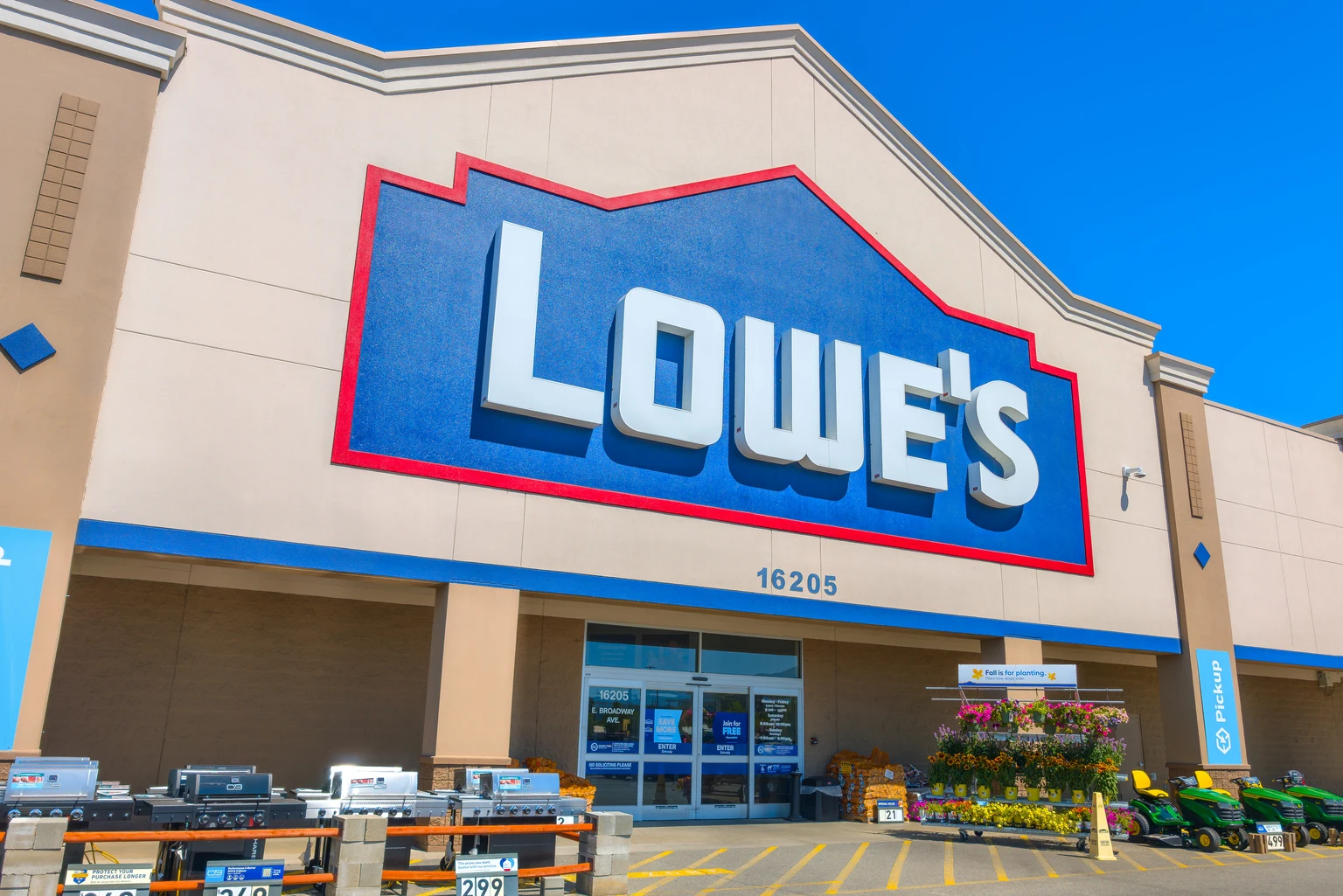
Lowe's: Macroeconomic Headwinds Become More And More Concerning (NYSE:LOW)

Alpine Income Property Trust: This High-Yield REIT Looks Expensive – Until You Look Closer

Continue Reading

Business

Inflation Dynamics Strengthen The Case For An Extended RBA Hold

Published

on

Inflation Dynamics Strengthen The Case For An Extended RBA Hold

Inflation Dynamics Strengthen The Case For An Extended RBA Hold

Continue Reading

Business

At Close of Business podcast July 29 2026

Published

on

At Close of Business podcast July 29 2026

Yes. Corporate subscriptions are available for teams and organisations, with discounted rates as user numbers increase. Pricing starts from $1,625 + GST per user.
Get in touch
to discuss the right option for your organisation.

Business News subscriptions are used by executives, investors, consultants and professionals who need to stay informed and make better decisions about the WA market. When you subscribe you’ll get

  • Unlimited access to WA’s most trusted business journalism
  • Data & Insights — detailed profiles of WA companies, people, projects and deals
  • MyBN — a personalised feed based on the companies, people and sectors you follow
  • Special publications and industry reports
  • Daily and weekly email newsletters

Data & Insights is a research tool built specifically for the WA market. It draws on more than 30 years of Business News reporting, updated regularly to reflect what’s happening now. Use it to:

  • Look up detailed profiles of WA companies, including financials, directors and ownership
  • Find decision-makers and track their career movements
  • Research live and completed projects across WA industries
  • Monitor deals, appointments and market activity
  • Access industry rankings and league tables

Data & Insights is updated daily by our dedicated research team, which uses the latest announcements, ASX filings and editorial coverage to keep our person, company, list and project records up to date.

Business News welcome all opportunities to make our dataset accurate, complete and current, so if you have an update request, please email the team at
general@businessnews.com.au, and we’d be happy to assist.

Advertisement

MyBN
is part of every subscription. It’s your personalised view of Business News. You can follow the companies, people, sectors and projects that matter to you, and get a news feed and alerts tailored to your interests. You can save articles to read later and retain only what you need.

Only subscribers have full access to all content on the Business News website.

Advertisement

If staying informed about the WA economy is part of your job, and/or you’re looking for networking opportunities in WA, Business News is built for you.

Business News subscribers are:

  • Executives and directors tracking competitors, clients and market movements
  • Investors and advisers researching companies, deals and industry trends
  • Consultants and professionals staying across sectors relevant to their clients
  • Business owners looking for leads, context and market intelligence

Most Business News publications cover national or global markets. Business News is focused entirely on Western Australia, which means the journalism, the data and the intelligence are all built around WA companies, people and projects — not adapted from a national feed. Data & Insights, included with every subscription, combines more than 30 years of WA-specific editorial research with live business data. There’s no comparable product for the WA market.

Advertisement

The Morning Digest Email provides a comprehensive wrap of the major headlines, relevant to WA business, and includes with a snapshot of the overnight news covering oil, gold and ASX-listed companies.

The Afternoon Wrap Email focuses on the news covered by our team of journalists during the course of the working day, including exclusive stories and analysis, all of which relates to WA business and the local economy.

The BN Weekender Email contains a wrap of the Business News from the week that was, highlighting the top stories in each area of WA business.
Sign up for free.

Advertisement

We’re happy to help.
Get in touch
and our team will come back to you.

Advertisement
Continue Reading

Trending

Copyright © 2025