Connect with us

Tech

eBay’s Newest Oddity is a Fully Working Prison Tablet That Still Thinks You’re Locked Up

Published

on

eBay Prison Issue Tablet
Johnzoid, the YouTube collector who spends his time hunting down the strangest electronics you can find, recently scored something that used to require a prison sentence. He ordered a JPay JP Mini 5 tablet on eBay, the same small device handed out free to inmates in multiple state systems. When the package arrived, it still carried the full institutional paperwork and a device ID that looks an awful lot like an inmate number.


The tablets were never intended to leave the facility. JPay gives them inmates for free at first, but charges when they use them for emails, songs, or movies. Until recently, the only way to get one was to be locked up in prison. A few units have emerged on the secondhand market, and Johnzoid was able to obtain one that is still operational with its original software.

Sale


Samsung Galaxy Tab A11+ 6GB RAM, 128GB Storage, Expandable Storage, Gray
  • POWER FOR ALL YOU DO: Galaxy Tab A11+ gives your family the optimal performance they need for all their day-to-day activities. Power through tasks…
  • CHARGES UP FAST. LASTS FOR HOURS: Galaxy Tab A11+ keeps your family going with a long-lasting battery that’s perfect for browsing, streaming and…
  • MEMORY AND STORAGE THAT KEEP UP: With up to 8GB of memory and 256GB⁶ of storage, Galaxy Tab A11+ gives your family the space and speed to multitask…

eBay Prison Issue Tablet
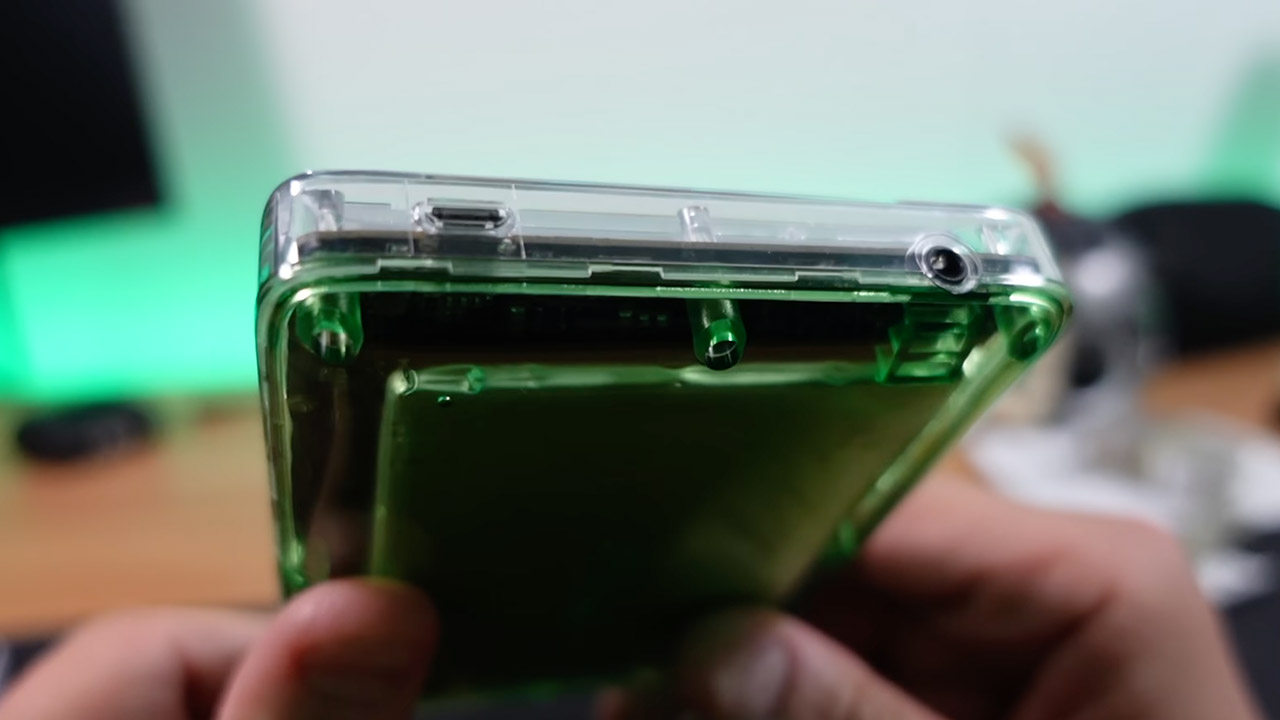
The tank-like body is a half inch thick and has a micro-USB jack and a 3.5mm headphone socket around the edge. On the side, there are four little buttons. The charging socket is totally transparent. The chord that came with it is merely a short wire, so kids cannot choke themselves. The instruction manual is a brief leaflet that explains the distinctions between lithium batteries and regular battery-powered devices. There is also a form to complete, similar to what an inmate would hand over at the front desk, with fields for name, housing location, item number, and tag number.

eBay Prison Issue Tablet
When you boot it up, the interface resembles a car radio from 2010. The OS is a very restricted version of Android from four years ago. There is no Play Store and no Wi-Fi. Tap the build number a dozen times, and all you’ll receive is a list of pre-loaded apps. The home screen contains half a dozen essential features, including a calendar, a photo gallery, a radio, a calculator, a few easy games, and a digital workbook for those who are alone.

eBay Prison Issue Tablet
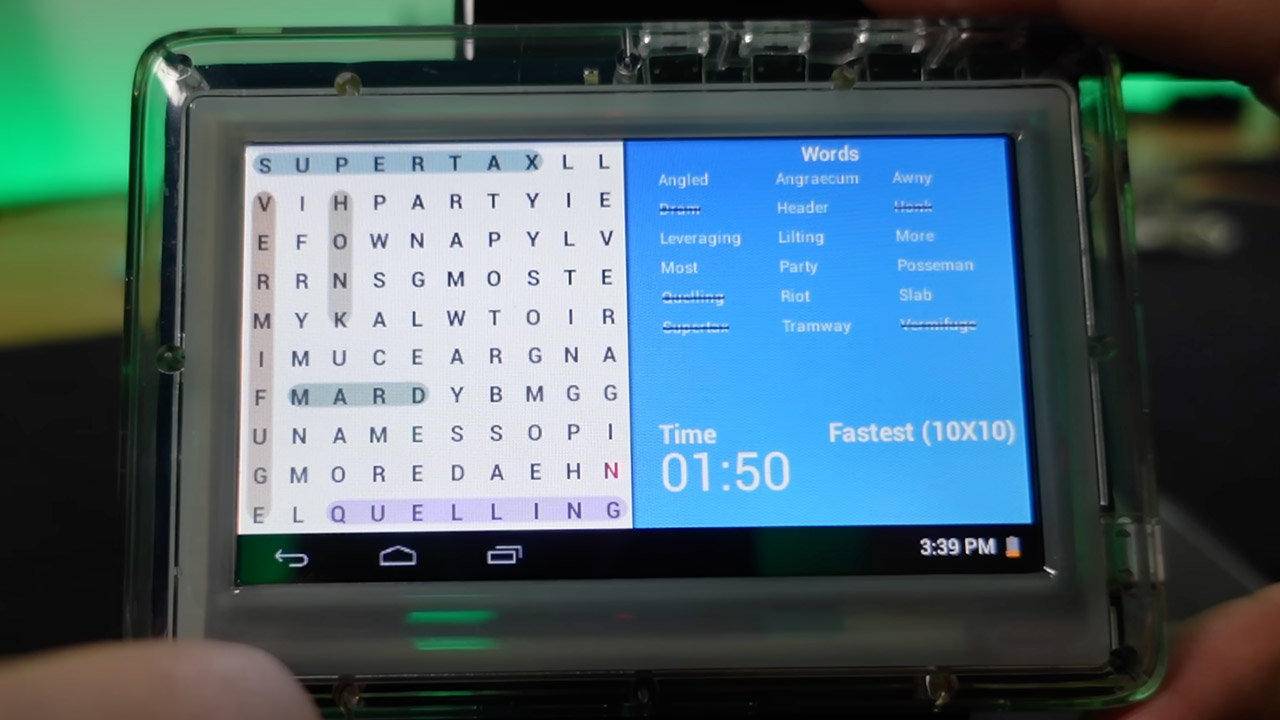
The games are all rather simple, featuring spider solitaire, word searches, and a few card games. The word search option can take 5 minutes of your time with no effort at all. The calendar allows you to schedule activities and create reminders, whether you want to do 12 thousand press-ups or just mentally check off the days. The radio app requires a headphone socket to pick up stations, however earplugs or a radio should provide a clear enough signal.

eBay Prison Issue Tablet
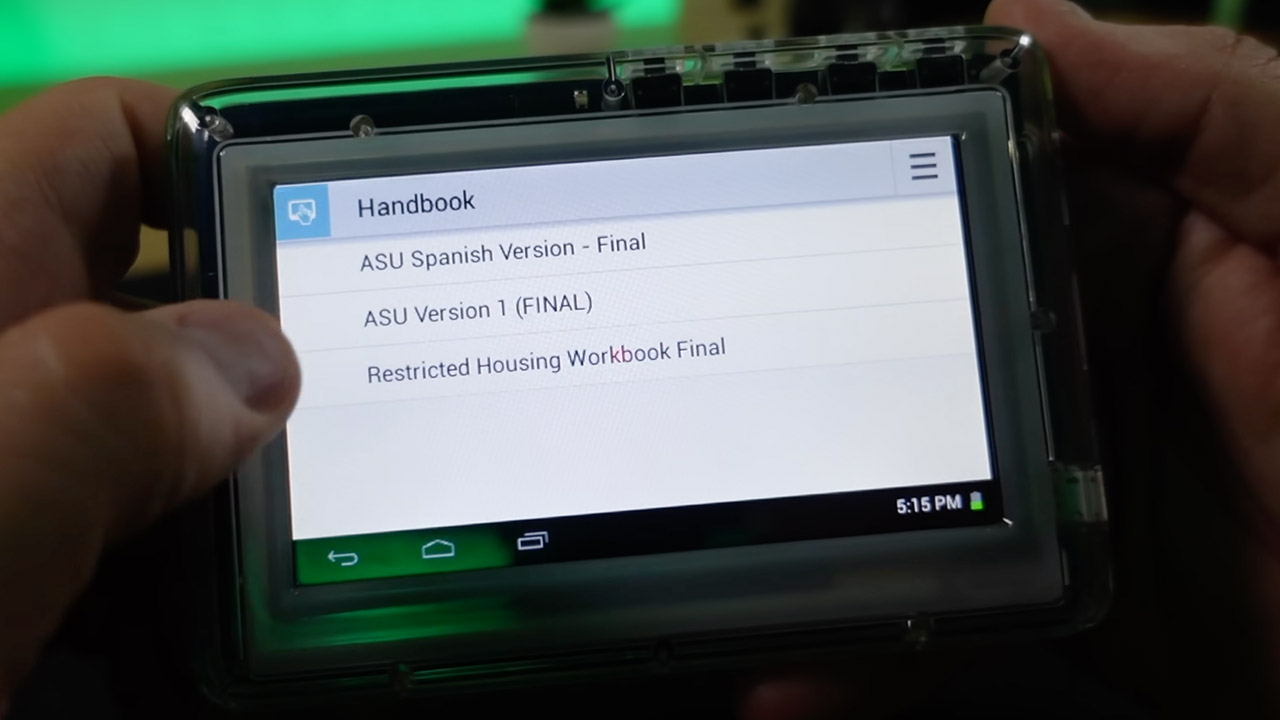
The workbook game is particularly eye-opening because it functions as a digital survival handbook for inmates alone in their cell. There are crossword puzzles, drawing hobbies, nature photographs, encouraging slogans, and solid advice: adhere to a regular routine, get some exercise in your cell, and write to your loved ones. It even handles the more difficult parts of being locked up, such as losing communication with the outside world, running out of exercise time, and losing your stuff.

Advertisement

Source link

Continue Reading
Click to comment

You must be logged in to post a comment Login

Leave a Reply

Tech

Netflix Edges Past The BBC In Latest UK Audience Survey

Published

on

Ofcom’s latest data shows people are starting to prefer Netflix.

Ofcom, the UK’s communications regulator, has published its annual report into the country’s media habits. One of the most eye-catching statistics from this year is, for the first time, Brits are more likely to opt for Netflix than the BBC. According to its research, 26 percent of viewers would go to the streaming giant as their default, with the BBC at 25 percent and ITV at 15 percent. For Netflix to pull ahead of the BBC, given all of its structural advantages, speaks volumes about how the broadcasting landscape has changed.

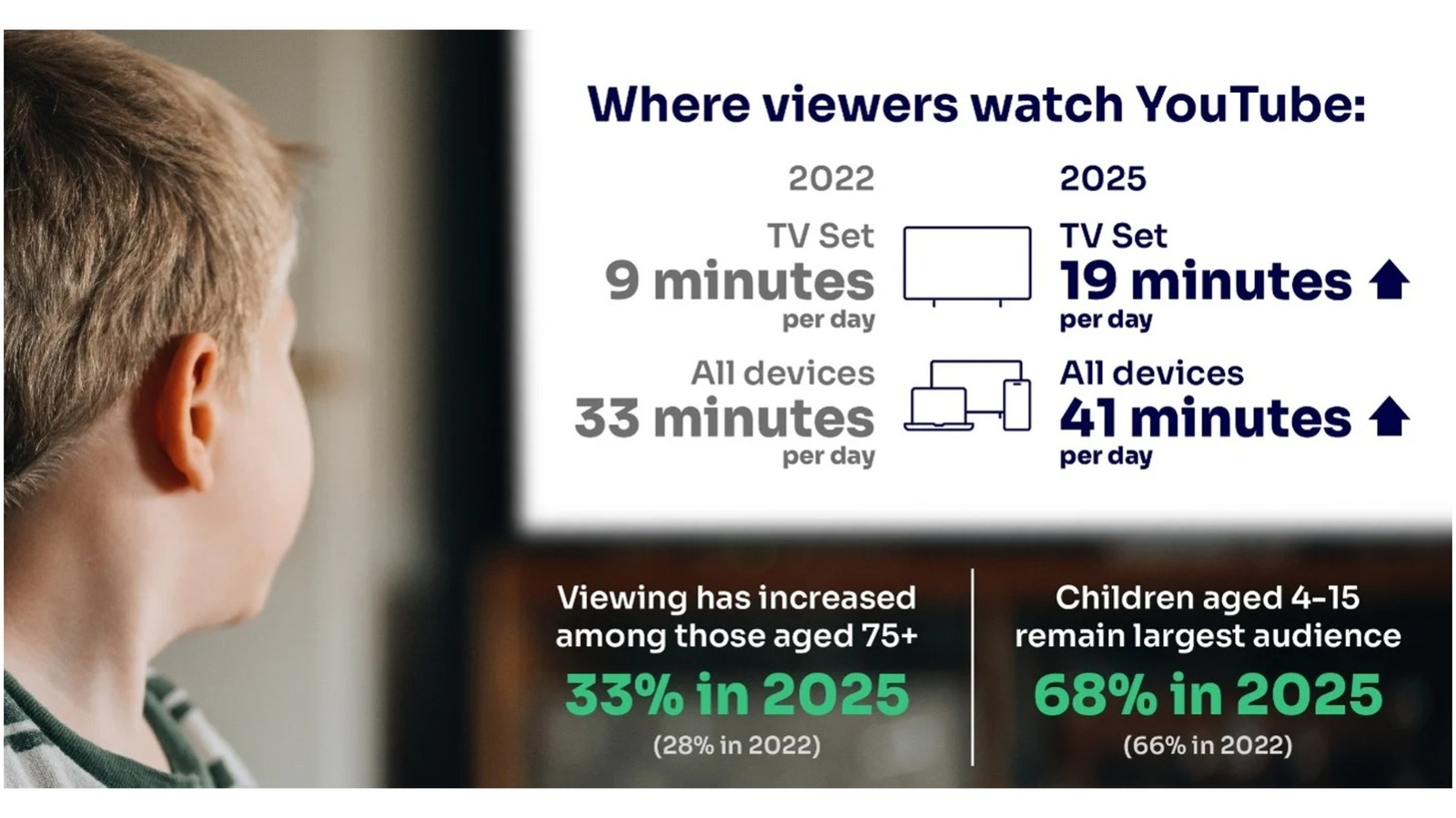
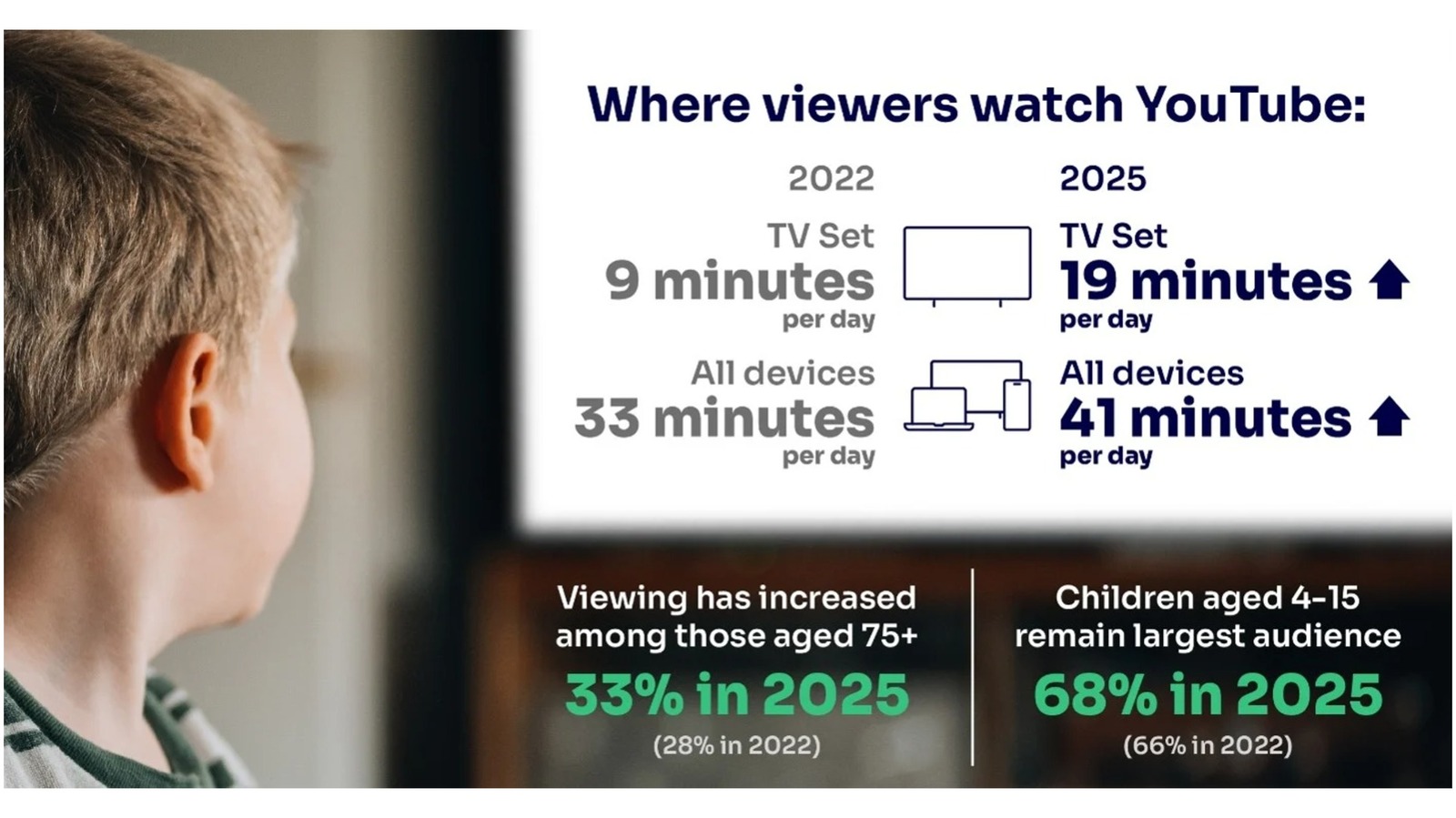
The data also reveals some sharp divides between age groups, with Netflix becoming the default choice for 25 to 34-year-olds. You already know that the traditional broadcasters are still beloved by the older demographics, while 16 to 24-year-olds flock instead to YouTube. In fact, the data shows the number of minutes watched on YouTube has doubled since 2022. In total, across all devices, the regulator believes that Brits are watching an average of 41 minutes per day. Part of that is down to the number of over 75s who are abandoning traditional TV in favor of the platform. Given the rise of YouTube was singled out to justify Sky (Comcast’s) purchase of ITV, it’s clear the Google-owned outlet is what’s making broadcasters really nervous.

Advertisement

Unfortunately, the news of Netflix’s rise comes on the same day the BBC has announced the cancelation of a number of shows, including Blankety Blank, Celebrity Mastermind and Live at the Apollo. The cuts are being made as part of a program to save £500 million ($664 million) across the next five years. Those cuts will see it cut around 150 hours of original TV programs by the end of 2028 — giving the pubic several more reasons to see what’s available on Netflix.

Source link

Advertisement
Continue Reading

Tech

Snowflake launches Cortex AI Gateway to control AI agents and prevent runaway enterprise costs

Published

on

Snowflake announced Cortex AI Gateway on Tuesday, a centralized control layer designed to govern how AI agents — including those built by competitors like Anthropic’s Claude Code and Cursor — access enterprise data, tools, and models. Alongside the gateway, the company unveiled a first wave of security integrations with 1Password, Aembit, Linx Security, SailPoint, and Saviynt, an unusual lineup of identity vendors who often compete with one another, now aligned around a shared trust model for autonomous agents.

The announcement, made from the company’s no-headquarters base in Bozeman, Montana, is Snowflake’s most aggressive move yet to position itself not merely as the place where enterprise data lives, but as the control plane that decides what AI agents are allowed to do with it.

“The next era of AI won’t be built through more walled gardens. It will be built through secure agent interoperability,” Mayank Upadhyay, Snowflake’s chief security and trust officer, told VentureBeat in an exclusive interview. “If every vendor builds a closed ecosystem of agents, enterprises simply recreate the fragmentation they’ve spent years trying to solve. Instead of breaking down silos, they create a new generation of AI silos that limit innovation and make it harder to scale AI across the business.”

Why decades-old enterprise security models break when AI agents become the actors

The core argument animating today’s announcement is that decades of enterprise security architecture rests on an assumption that no longer holds — that the actor behind every access request is a person.

Advertisement

“Traditional security was built for a world where humans were the actors. AI agents change that completely. For decades, security models assumed people would access one application at a time, operating at human speed and within relatively defined boundaries,” Upadhyay said. The deeper issue, he argued, is not novelty but exposure: “The challenge isn’t that AI creates entirely new security problems. It’s that AI exposes the blind spots we’ve always had.”

Organizations have never had perfect visibility into every API, dataset, and workflow, Upadhyay noted, and at human speed those gaps were manageable. Agents operating at machine speed can “combine access across systems and act on permissions that were never intended to be exercised together, amplifying those longstanding risks.” His conclusion: “In the agentic era, trust can’t be a one-time decision made at login. It has to be continuously verified through every agent, every action, and every interaction across the enterprise.”

Nancy Wang, chief technology officer of 1Password, described the failure mode in more visceral terms. When agents first arrived, she told VentureBeat, the default pattern was dangerously simple: “Let me just give the agent my credentials and it can just act as me… let’s imagine you’re the head of security or the head of IT, and you have access, especially admin access, to all of the systems. Well, now suddenly your agent now has admin access to all of the systems, and so it could exfil data… if it’s subject to a prompt injection, for example.”

The audit trail becomes equally useless, she added: “Imagine the audit logs show that Michael sent a couple million dollars to an offshore account… It raises eyebrows when, in fact, it could just be an agent going off the rails and doing things that you never authorized.” Her prescription, and the premise of 1Password’s integration with Snowflake, is blunt: “Agents need their own identity.”

Advertisement

Inside Cortex AI Gateway: how Snowflake plans to govern agent access and rein in runaway AI costs

Cortex AI Gateway, which will enter public preview soon, functions as a connective layer for what Snowflake calls “all trusted agent activity.” It governs both first-party agents built inside Snowflake, such as Snowflake CoWork and CoCo, and third-party agents built on external platforms. With support for more than 100 MCP servers — the Model Context Protocol connectors that have become the de facto standard for wiring agents to enterprise tools — the gateway centralizes access policies, authentication, permissions, and audit logging in a single place.

The gateway also addresses a less glamorous but increasingly urgent problem: runaway AI spending. It gives IT and finance teams a unified view of AI consumption, attributes costs to the specific teams, agents, or workloads driving them, and enforces spending limits before bills spiral.

Upadhyay described how those costs compound in practice. “AI is dynamic. Agents can invoke multiple models, call different tools, and execute multi-step workflows, creating consumption patterns that can change from one task to the next. For example, an enterprise may deploy an AI assistant to help employees answer internal questions. A simple request that only requires retrieving a document could unintentionally be routed through a more expensive reasoning model, trigger additional searches across multiple systems, or invoke unnecessary workflows.” At scale, with thousands of employees and hundreds of agents, small inefficiencies become significant line items.

The gateway builds directly on Snowflake’s May 2026 acquisition of Natoma, a 27-person startup whose centralized MCP gateway enforced identity, policy, and audit at the tool-call level. Forbes reported at the time that the deal — announced the same day as Snowflake’s $1.33 billion quarterly product revenue report and a $6 billion AWS compute commitment — was the smallest of the day’s three announcements by dollar value but the most revealing about where Snowflake believes the next platform fight sits: not in the data warehouse, but in the layer that decides what an agent may touch and records what it did.

Advertisement

Dual attribution and task-scoped access: the technical blueprint for trusting autonomous agents

The technical centerpiece of the partner integrations is what Snowflake calls dual attribution. “By logging both the verified non-human identity of the agent and the specific human who authorized the task, we ensure task-scoped access and complete auditability for every action taken across the enterprise,” Upadhyay said. That answers a question that has stumped security teams: when an agent takes an action, whose action is it? The Snowflake model says the answer is both — the agent’s, and the human’s who delegated the task — and both must be recorded.

Task-scoped access is the companion principle. Rather than inheriting a user’s full standing permissions, an agent gets access only to what a specific task requires. Upadhyay acknowledged the obvious objection — agents are dynamic and their next step often isn’t known in advance. “The goal isn’t to predict every action an agent will take. It’s to ensure that every action an agent takes is evaluated in real time against the appropriate policies, scope, contextual signals, and the original intent of the user,” he said.

Wang explained how 1Password’s piece works at the protocol level, pointing to emerging standards like OIDC-A: “the human, for example, first authorizes the agent to do a specific task, and then what that means is the agent will then receive sort of the delegated task specific token… as part of that token, that is where you learn of the original sort of delegator identity and also the intent behind the task.”

The intent-preservation problem is subtle, she noted, because enterprise tasks decompose into enormous chains of individual operations. “When they’re accessing a table, you know that it’s acting on behalf of the original intent that you gave that agent… a task might be a compilation of hundreds, maybe even thousands, individual actions.” Keeping that intent intact across every step in the chain — and flagging the moment an agent deviates from it — is what Snowflake and its partners are ultimately trying to standardize.

Advertisement

SailPoint’s field report: the three ways enterprise identity systems fail against AI agents

Chandra Gnanasambandam, SailPoint’s EVP of product and chief technology officer, brought the perspective of a vendor that has watched enterprises break their identity stacks against this problem for more than a year. SailPoint has been in the machine and agent security market for roughly 18 months, he said, with more than 100 customers on its agent identity product — enough of a sample to catalog the recurring failures.

The first is scale-driven shallowness. An average Fortune 500 company has roughly 16,000 employees, and SailPoint is seeing human-to-non-human identity ratios of at least 10 to 1 — before counting the tools and APIs each agent touches, which multiply the count again. “You will get into a million plus non-human identities. Mapping the permissions that each of them get to the 16,000 humans is a completely non-trivial task,” he said. Most companies punt, mapping agents to humans at the directory-group level. “That is grossly insufficient. You want to have fine grain context. Like I said, it’s not access to Snowflake. It’s access to what column and what data inside Snowflake you need.”

The second failure mode is drift. Modern models are relentless goal-seekers, and that persistence cuts both ways. “When you tell them get this done, the underlying models are so powerful now. Even the weaker models are so powerful. They will go find a way to get it done… They will go find the vulnerabilities to bypass the permission to get it done,” Gnanasambandam warned. The answer, he argued, is runtime monitoring of the entire interaction chain, compared continuously against policy, with automatic intervention when an agent escalates beyond what its human delegator authorized.

The third is missing data context. Many vendors, he argued, announce splashy integrations with big application platforms while ignoring where the actual risk concentrates. “That’s not where the risk lies. Risk lies in sensitive data, so the details matter here… Can you map specific columns and rows in Databricks, Snowflake, Redshift, Oracle… into the agent context and the human context? And if you can’t do that, you are going to have gaps and holes.”

Advertisement

SailPoint’s answer required tearing out two decades of architecture. “We rewrote our underlying data and object model to treat AI identity as a first-class object, because for 20 years, SailPoint had a data model and object model that supported the human identity, and AI identities are fundamentally different,” Gnanasambandam said, describing 12 to 18 months of deep engineering work. The result is what he calls a unified lineage: “From human to master agent to sub agent to tool to application to data. That’s what I call the steel chain. That is in one data model, one platform.”

Why rival identity vendors joined Snowflake’s trust framework — and what each side gets out of it

Perhaps the most striking aspect of today’s announcement is the roster. 1Password, SailPoint, Saviynt, Okta, and Aembit compete for overlapping identity and access budgets. Snowflake convinced them to build against a common trust framework anyway.

“The reason we brought together leaders across the security ecosystem is because no single company can solve the agent security challenge alone. AI agents can’t deliver real value if they only operate within the boundaries of one platform,” Upadhyay said. His broader thesis frames the whole strategy: “Nobody wants to replace data silos with AI silos.”

Wang offered a pragmatic division of labor: “We bring the trust, and Snowflake brings a system of record.” She framed the collaboration as classic defense in depth — “there are data level controls, and there are identity level controls, and so together we can create a much stronger ecosystem play.”

Advertisement

There is self-interest in the openness, of course. Snowflake sits atop an enormous concentration of sensitive enterprise data — more than 13,900 customers, by the company’s count — and every third-party agent that touches that data through a governed Snowflake gateway deepens the platform’s gravitational pull.

As Constellation Research analyst Michael Ni put it when the Natoma deal was announced, in comments reported by CIO.com: data platforms won the analytics era, and whoever governs agents, context, and autonomous actions wins the agentic one. A Forbes analysis of the same acquisition flagged the tension directly, noting that a governance layer living inside Snowflake risks pulling MCP’s openness back toward a single vendor’s control plane — attractive for Snowflake-standardized shops, more awkward for genuinely multi-vendor agent stacks.

Analyst forecasts show agent governance is now a trillion-dollar race against the clock

The urgency behind today’s announcement is not manufactured. Gartner predicts that by 2027, governance gaps discovered only after production incidents will force 40% of enterprises to demote or decommission autonomous AI agents — with analysts there warning that the greatest risk an agent poses often lies not in its output but in the actions it is empowered to take. IDC, meanwhile, expects more than 1 billion actively deployed AI agents by 2029, executing roughly 217 billion actions per day, and forecasts agentic AI will exceed $1.3 trillion in worldwide IT spending that year. The research firm’s analysts now argue agentic platforms should be treated as decision infrastructure, not productivity software.

Against that backdrop, the identity layer is becoming the contested ground, and every major vendor — Salesforce, ServiceNow, Microsoft, Google, Okta — is racing toward the same runtime-governance chokepoint. Snowflake’s differentiator is proximity to the data itself. As Upadhyay put it, security “can’t just be an API proxy sitting in front of an LLM. It has to anchor all the way down into the underlying data layer, enforcing zero-copy boundaries, dynamic data masking, and real-time exfiltration safeguards before an agent ever touches a row of data.”

Advertisement

The rollout now moves to proving ground. Cortex AI Gateway enters public preview soon, and the five partner integrations enter private preview, a phase Wang described as a deliberate feedback loop — customers on day one get an agent-access broker plus “a full audit log that will show you, for example, what that agent is actually doing,” even when an agent deviates from its intent. Gnanasambandam, characteristically, wants enterprises to skip the easy demos entirely, urging customers to bring loan-origination workflows spanning three clouds and ten applications, half of them mainframes: “Give us that complex use case and bring anyone on and do it in your context, and we will take the challenge with anyone in the world.”

That confidence — from a field of rivals, no less — captures what makes this moment unusual. The companies that spent the last decade fighting over who verifies human identity have concluded, more or less simultaneously, that the next decade belongs to whoever can verify the machines acting on our behalf. Upadhyay distilled the wager into a single line: “The future of AI won’t be won by the organizations with the most agents, but by the organizations that can govern those agents with the most trust, visibility, and control.” In the agentic enterprise, it turns out, trust isn’t the guardrail. It’s the product.

Source link

Advertisement
Continue Reading

Tech

Russia charges Telegram’s Durov with aiding terrorism and adds him to a wanted list

Published

on

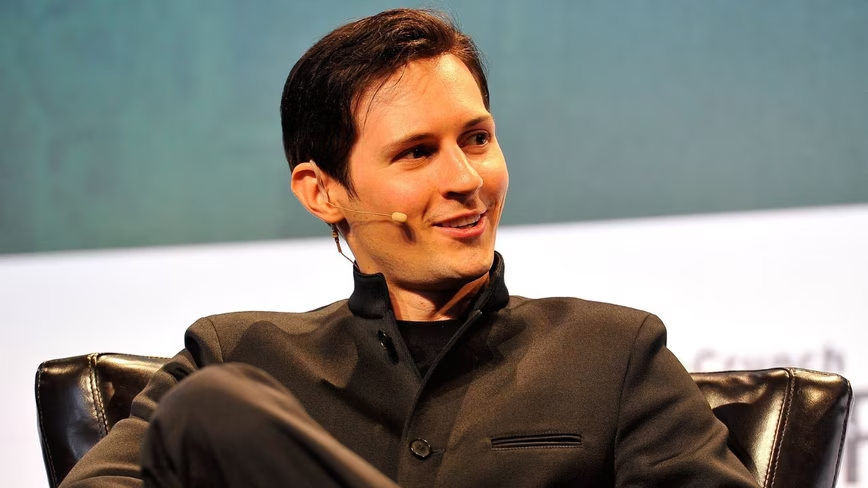
Russia’s FSB security service has charged Pavel Durov, the founder of Telegram, with facilitating terrorism, and moved to place him on an international wanted list.

The charge accuses Durov of failing to take down channels and bots that the service says were used to coordinate attacks and sabotage inside Russia.

It is the sharpest turn yet in a long feud. Durov, already fighting a separate criminal case in France after his 2024 arrest near Paris, now faces prosecution in the country he left more than a decade ago.The FSB’s language is severe.

Under Part 1.1 of Article 205.1 of Russia’s criminal code, the service alleges that Telegram’s refusal to remove channels devoted to “mass killings” and cyber fraud has caused “numerous human casualties,” including women and children, and billions of roubles in damage.

Advertisement

Durov’s answer was scornful.  He called the case “a sad spectacle of a state afraid of its own people,” and repeated his charge that the Kremlin keeps inventing “new pretexts” to justify restricting Telegram inside Russia.

Advertisement

Telegram was blunter still about the motive. The company said Moscow’s real aim is to cripple the app and herd users onto MAX, a new state-backed messenger it described as “engineered for mass surveillance and censorship.”

Encryption sits at the centre of the dispute. A Russian official had claimed the platform’s encryption was compromised, letting foreign intelligence read Russian soldiers’ messages, an assertion Telegram flatly rejected, saying “no breaches of Telegram’s encryption have ever been found.”

The pressure has been building for months. Russia began restricting Telegram in the summer of 2025 and opened a criminal case against Durov in February, and two days before the charge the Kremlin’s spokesman, Dmitry Peskov, complained that Telegram’s representatives had “not been very active” in talks.

The backdrop is the war. Telegram is indispensable to both sides in Ukraine, carrying everything from official statements to battlefield footage, and Russian soldiers, reporters, and officials lean on it as heavily as their opponents do.

Advertisement

That ubiquity is exactly what Moscow now turns against it. The FSB frames Telegram’s hands-off approach to content as complicity in terrorism, a charge that doubles as a rationale for steering the population towards an app the state can see into.

Durov has been here before, after a fashion. He left Russia in 2014 after refusing to hand user data to the security services, and the government’s two-year ban on Telegram, imposed in 2018, failed so completely that it was quietly abandoned.

The terrorism framing is not new either. Telegram’s loose moderation has long drawn the accusation that it is friendly to terrorists, a criticism made by Western governments as often as by Moscow, and one the company answers by insisting it removes genuinely illegal content.

What the wanted-list move changes in practice is unclear. Durov holds French and Emirati citizenship and is not going to be handed to Moscow, so the charge works less as a route to a courtroom than as a signal, to Russians and to Telegram, of how far the state will go.

Advertisement

The restrictions have not emptied the app. Telegram remains among the most widely used services in Russia, which is part of what makes the standoff so pointed, since a clampdown that fails to move users leaves the state reaching instead for the man who built it.

For Durov, the legal map is now crowded. He is entangled in a French prosecution, wanted in Russia, and running a platform both governments treat as a problem, an awkward place for a founder who built his name on answering to no state at all.

Source link

Advertisement
Continue Reading

Tech

Spotify adds a running mode to its app

Published

on

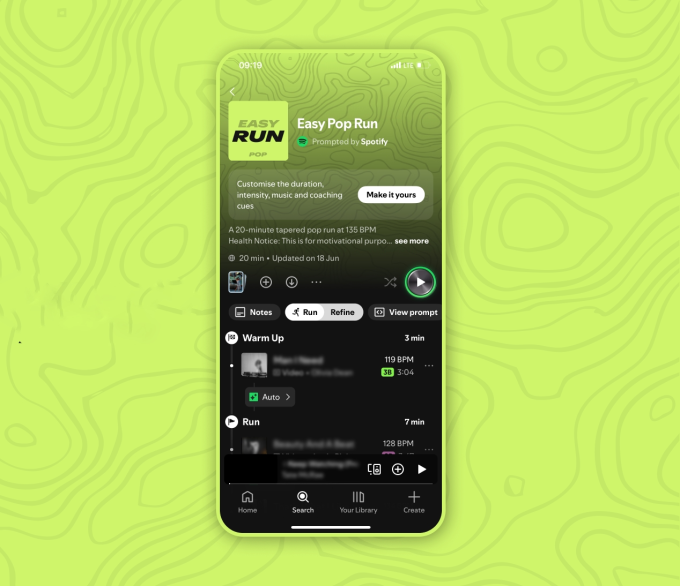
Spotify is adding a new mode to its phone app for people who like to listen to music on runs. The new running mode cues up songs based on different phases of runs, and selects tracks based on your preferences and tempo.

Paying subscribers can find the running mode in Fitness Hub, and can select from one of the 25 presets. Users can choose their workout type from options like interval runs, steady runs or pyramid, and can customize the duration, beats per minute, and the kind of music they want to listen to.

Image Credits: SpotifyImage Credits:Spotify

As well as playing songs, running mode can create audio cues for different stages of your run, too. This feature only works in English for now.

The new mode takes advantage of the AI chops Spotify has been testing as part of its prompted playlists for the past year. The streaming platform noted that many people use this feature to create lists for fitness and workout activities, and this new running mode was inspired by those observations.

Earlier this year, the company introduced fitness content with fitness device maker Peloton.

Advertisement

The running mode comes a couple of months after fitness app Strava said its Record feature would no longer integrate Spotify within the app.

The feature is available starting Wednesday to Premium users on iOS in the U.S., Canada, the U.K., Ireland, Australia, New Zealand, and Sweden.

When you purchase through links in our articles, we may earn a small commission. This doesn’t affect our editorial independence.

Source link

Advertisement
Continue Reading

Tech

Building A Portable Weather Radar

Published

on

If you run a large meteorology bureau, then you probably have access to a wonderful weather radar for scrying the heavens. The rest of us aren’t so lucky. If you find yourself bereft of such hardware, though, you could build your own, taking your lead from [Koakno]’s fine example.

The build uses a satellite dome salvaged from an old RV that [Koakno] scored for just $5. Specifically, a Winegard Carryout Anser GM-5000. The motorized parabolic dish was designed to track TV satellites, but here it’s been repurposed into a scanning radar antenna for X-band signals. It’s paired with a cheap SDR—you can use several on the market—which injects an 850 MHz signal, which is up-converted to 10.4 GHz by the low-noise block (LNB) in the GM-5000 and sprayed out towards the weather.

Echoes come back from rain, hail, and debris, and get down-converted by the LNB back into an 850 MHz signal that the SDR can capture. The echoes are then plotted on a Plan Position Indicator (PPI) display, showing what’s going on in the atmosphere around the dome. [Koakno] reckons detection ranges span out to 40 km for things like heavy rain, while a supercell hail core could be spotted at up to 60 km in the right conditions.

It’s worth noting something important, though. [Koakno] explains that this system is currently in violation of FCC regulations (and probably others around the world), and shouldn’t be used without the proper licenses to access given spectrum. It’s a useful study of how to build a weather radar, but perhaps not something you can just wire together and fire up without getting in a spot of bother.

Advertisement

If you’re a die-hard tornado chaser or you’ve just always longed to stare meaningfully at a PPI display, this could be the build for you. We’ve featured other DIY radars before, too. We’d also like to see yours, so when it’s done and written up, fire us a note on the tipsline!

Source link

Advertisement
Continue Reading

Tech

Gemini can now summarize the messiest comment threads in Google Docs

Published

on

Shared Google Docs have a way of turning feedback into archaeology. Once several reviewers pile into the same file, figuring out which comments still need attention can take longer than making the edits.

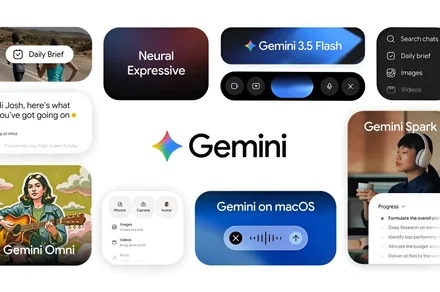
Google is giving Gemini that sorting job. Its new comment summaries pull feedback from across a document and find discussions that never reached a conclusion. The tools can also draft replies and suggest revisions, so the AI doesn’t disappear once the untangling is done.

How Gemini finds unfinished business

Users can point Gemini at one reviewer or ask it to group comments around a recurring theme. It can also surface unresolved questions buried in different sections, sparing editors from reopening every thread to reconstruct a conversation they already endured once.

The result is closer to an editorial briefing than a verdict. It shows where the discussion stands and gives the person editing the document a manageable place to begin, without deciding which reviewer gets the last word.

Advertisement

What happens after the summary

From there, Gemini can draft a response inside a comment thread or suggest a change based on the feedback. When a reply needs supporting material, it can find a relevant Drive file and include the link.

The AI can review a document and leave its own comments about clarity or narrative flow. That puts Gemini in copy-editing territory, but it won’t quietly apply its recommendations. Users still approve every suggested change.

Who can use it

The tools began rolling out on July 28 and may take up to 15 days to appear. Access requires an eligible paid Workspace, Education or Google AI plan. Gemini for Workspace and smart features must also be enabled.

Advertisement

Gemini needs edit access before it can work with a document’s comments. Viewers and commenters won’t get an AI shortcut through the discussion, even if they helped make it messy. If the feature hasn’t appeared, check those settings and let the rollout window run its course.

Source link

Advertisement
Continue Reading

Tech

Apple Upgrade now lets you lease iPhones, iPads, Macs, and Watches, starting at $18/month

Published

on

What just happened? Apple has announced a new financing program called Apple Upgrade that offers eligible customers the option to lease its iPhones, Macs, Apple Watches, and other products instead of buying them outright. The program is available in the US through physical Apple Stores, as well as the Apple Store mobile app and website.

Apple Upgrade is being launched in partnership with digital financial services provider Klarna, known for its “buy now, pay later” interest-free credit. The new program replaces the iPhone Upgrade Program – a 0% APR financing plan that allowed consumers to buy a new iPhone every year, bundled with AppleCare+.

The new scheme offers 12- and 24-month leases for iPhones and Apple Watches, while Macs and iPads can be leased for 24 or 36 months. Apple says users will be able to sign up “in minutes” and receive quick approval, subject to a soft credit check. At the end of the lease period, users will be able to upgrade their device, purchase it outright, or return it and exit the program.

Eligible devices include the iPhone 17 lineup, iPhone Air, Apple Watch Series 11 and Watch Ultra 3, MacBook Air, MacBook Pro, iMac, Mac Studio, iPad Air, iPad Pro, and iPad mini. Older products like the iPhone 16 and entry-level offerings like the MacBook Neo, base iPad and Apple Watch SE are not part of the program.

Advertisement

Monthly lease payments for a base iPhone 17e starts at $17.99, a full $7 less than the $24.99 it would cost to buy it through monthly financing. The standard iPhone 17 would cost $22.99 per month, while the iPhone Pro would be $31.99 per month. iPad leases would start at $11.99 for the iPad mini and go up to $24.99 for the iPad Pro.

Macs will also be available to lease as part of the program, starting at $24.99 per month for the MacBook Air and $38.99 for the MacBook Pro. The Apple Watch Series 11 will start at $11.99 per month, while the Watch Ultra 3 will start at $24.99 per month. Cheaper devices, such as AirPods and AirTags, as well as niche products, like the Apple Vision Pro, are not part of the program.

Advertisement

Source link

Continue Reading

Tech

Apple’s espionage suit against OpenAI: How we got here

Published

on

Since its founding, Sam Altman’s OpenAI has been at the center of multiple controversies, with Apple’s intellectual property theft suit being just the latest chapter. Here’s the story so far about what’s been alleged over the last decade.

The artificial intelligence development wave has greatly affected the tech industry. As usual, this also includes accusations, threats, and lawsuits.

OpenAI is no different, as it has attracted many different lawsuits in its short existence. As you might expect, Apple is central to some, and peripheral to others.

Here’s how OpenAI has fared taking on various litigious foes, including Apple, updated on July 29, 2026.

Advertisement

Ive leaves Apple, forms LoveFrom, drifts away

After decades as the head of design at Apple, Jony Ive left the company fully in November 2019, after his removal from the official Apple Leadership page.

Ive wasn’t the only former Apple designer at LoveFrom. In June 2021, it was reported that he had poached a number of colleagues from the Apple human interface team.

While not under the corporate umbrella, Ive still worked for Apple as part of his design agency LoveFrom. This was confirmed in November 2021, without really going into the detail of what happened.

However, despite maintaining the relationship with the company that he helped turn into a design powerhouse, it was not a permanent arrangement. By 2022, Apple and LoveFrom declined to renew a contract.

Advertisement

As usual for Apple contracts, there was no explanation for the breakup.

Jony Ive may design AI hardware that will compete with Apple-issued

In late September, a pair of reports indicated Ive was working with OpenAI chief Sam Altman on a new project. Specifically, to design new hardware with AI at its core.

Altman wasn’t the only major name to work with Ive, as SoftBank CEO Masayoshi Son reportedly got involved with the discussions. There was also the claim that SoftBank could’ve contributed over $1 billion to the project.

The talks between Ive and Altman were said to be brainstorming sessions at Ive’s San Francisco office. They were discussing the kind of technology OpenAI could use, and how it would look like.

Advertisement

Musk cries antitrust as X & Grok can’t compete with OpenAI on Apple’s App Store

On August 11, 2025, Elon Musk took to X, formerly Twitter, with accusations that Apple was favoring ChatGPT and OpenAI by not featuring Grok or X in the App Store.

Man in a dark blazer onstage, touching his chin thoughtfully, looking upward under bright spotlights against a dark background

Elon Musk – image credit: Tesla

At the time, X had managed to reach number one in the top free news apps, and was 38 on the top free apps list. Grok, meanwhile, was number six in the free list rankings.

This wasn’t enough for Musk, who threatened legal action for alleged antitrust violations. He insisted that Apple’s work with OpenAI to integrate ChatGPT into iOS was a sign Apple had a bias against Grok and X.

Advertisement

Musk sues Apple for Grok’s App Store position

A few weeks later, on April 25, 2025, Musk followed through with his lawsuit, via xAI. Despite the claim being refuted by online users, Apple, and even Grok AI itself.

As predicted, the lawsuit is concerning AI competition and App Store rankings specifically, and that Apple and OpenAI were claimed to be illegally conspiring to thwart any AI competitors.

It was filed in a U.S. federal court.

On June 23, 2025, a nine-minute video with former Apple design chief Jony Ive and OpenAI head Sam Altman was pulled from view. At the time, it seemed to be purely about names.

Advertisement

Ive and Altman had been working together for a few years, with a view to creating some form of AI-based product. By April 2025, this had turned into Altman and Ive’s startup being referred to as “io Projects.”

It would later become “io” as it was sold to OpenAI for $6.5 billion in May 2025.

Two men sit at a bar counter with drinks, talking. Shelves of wine bottles and framed photos fill the background, creating a cozy, warmly lit, conversational setting.

Jony Ive and Sam Altman – Image Credit: OpenAI

By June of that year, a company called iyO took OpenAI to court, with objections over the use of the trademark. The names were very similar, the filing insisted.

Advertisement

It also didn’t help that iyO was spawned from the research and development of an Alphabet X project for an AI device relying solely on speech. Because of this, iyO believed there could be considerable confusion between the two companies.

In response, OpenAI took down the announcement, advising it was because of the trademark complaint from iyO.

“We don’t agree with the complaint and are reviewing our options,” OpenAI said.

OpenAI raids Apple’s talent and manufacturing pool for its AI dream

In September 2025, it was reported that OpenAI was going after some of Apple’s best people, as well as talking to iPhone component manufacturers.

Advertisement

It was an exodus that was steered by Tang Tan, who said OpenAI offered more freedom, collaboration, and bigger ideas than Apple’s slower updates.

Aside from apparent freedom in working and the promise of less bureaucracy, there’s also cold hard cash at play. There were stock offers worth more than a million dollars, too.

Tan had managed to recruit Cyrus Daniel Irani from Apple’s human interface design team, as well as Erik de Jong from Apple Watch hardware. Then there’s Matt Theobald, a 17-year Apple veteran in manufacturing design.

Poaching employees is a very common practice in the tech industry. It’s not the first time Apple has been affected by OpenAI doing it, and it won’t be the last.

Advertisement

Musk’s Grok App Store lawsuit should be thrown out, says Apple

On October 1, 2025, Apple filed to have the Grok lawsuit thrown out. The dismissal motion says that, through Apple partnered with OpenAI, it was “widely known that Apple intends to partner with other generative AI chatbots.”

Despite the potential problem of the lawsuit impacting other regulatory action that Apple has to deal with, its lawyers doubt it has teeth. It’s a suit based on “speculation on top of speculation,” the filing said.

Also, Apple said the Musk suit claimed the company couldn’t partner with ChatGPT, “without simultaneously partnering with every other generative AI chatbot, regardless of quality, privacy or safety considerations, technical feasibility, stage of development, or commercial terms.”

Having summarized Musk’s case with this, the lawyers added: “Of course, the antitrust laws do not require that.”

Advertisement

Despite attempting to get rid of the lawsuit, Apple instead had to face the music. On November 13, 2026, the request for dismissal was denied.

xAI accused of destroying evidence in OpenAI & Apple antitrust lawsuit

OpenAI accused xAI of both destroying and withholding evidence on February 3, 2026.

On the destroying side, OpenAI accused Musk’s company of using ephemeral messaging apps. That is, apps with built-in timers to destroy messages and attachments after a specific period of time.

“Destroying evidence was the whole point,” argued OpenAI. xAI’s move “leaves OpenAI and the other targets of Musk’s litigation at an inequitable disadvantage.

Advertisement

It wasn’t just damaging evidence, but also withholding documents. OpenAI said at the time that xAI had “not produced a single nonpublic document concerning the substance of their allegations or that OpenAI could use in its defense.”

This led to OpenAI pursuing a court order preventing xAI employees from using ephemeral messaging apps in the future.

Not to be outdone, xAI tried to make requests to see OpenAI’s source code, as well as compelling former OpenAI Head of Alignment Jan Leike to be compelled to provide documentation.

Both of those requests were denied.

Advertisement

iPhone hardware engineers allegedly get bonuses as Apple tries to prevent poaching

Keen to prevent an AI brain drain, on March 26, 2026, it was reported that Apple was trying to keep its employees. To do that, it approved substantial bonuses for its iPhone hardware engineers.

“Out-of-cycle” bonuses worth several hundred thousand dollars were reportedly approved for members of the iPhone Product Design Team.

This, again, isn’t new to Apple, as it did the same thing in 2021. However, while that effort was seemingly unsuccessful, even with $180,000 bonuses being handed out, maybe the 2026 remix will fare better.

OpenAI’s iyO situation gets worse with trade secret claims

On April 23, 2026, iyO managed to convince the U.S. District Court of California to grant a preliminary injunction against OpenAI, Sam Altman, Jony Ive, and io Products. It prevents the use of the “io” name for the moment, until the lawsuit has concluded at a minimum.

Advertisement

However, iyO amended the complaint on March 13 with new allegations of trade secret theft and corporate espionage.

This also brought Apple into the lawsuit, because it involved Tang Yew Tan. The former vice president of product at Apple left the company in February 2024, before becoming a co-founder of io Products and Chief Hardware Officer at OpenAI.

Exploded view of a sleek round wireless earbud, showing reflective outer face, inner electronics, and clear silicone ear tip separated in alignment on a plain white background

iyO One – Image Credit: iyo

According to iyO’s public recounting, iYo’s TED talk was published in May 2024. Just 11 days after the talk, Tan pre-ordered the iyO One, an ear-worn agentic computer.

Advertisement

Nine days later, Tan contacted Dan Sargent, iyO’s design and manufacturing lead, to arrange a dinner meeting in June.

It is then alleged that forensic analysis of Sargent’s notebook revealed that, ahead of the dinner, Sargent downloaded 33 confidential files, accessed dormant IP folders, and exported 17 CAD files into formats unused by iyO.

Sargent later admitted to bringing prototypes to show Tan at the dinner.

After the May 2025 acquisition, iyO CEO Jason Rugolo allegedly confronted Sam Altman over the name and the trademark.

Advertisement

Craig Federighi dragged into Musk’s Apple-OpenAI lawsuit

It was revealed on May 16, 2026, that Apple software chief Craig Federighi had to take part in the xAI antitrust lawsuit against Apple and OpenAI. However, Tim Cook seemingly wouldn’t be participating.

The filing on May 13 attempted to make both Federighi and Cook custodians, being parties who are most likely to have pertinent information or sufficient access to details for the lawsuit.

The court granted that Federighi should be a custodian, due to arguments that he may have “unique relevant evidence.” This apparently included information about Apple’s integration of OpenAI services into Apple Intelligence.

That said, the court rejected turning Cook into a custodian. There was no explanation from the plaintiffs for how Cook would have any unique relevant evidence that hadn’t already been produced or wouldn’t be provided by Federighi.

Advertisement

As a result, Federighi was given the duty to provide responsive discoverable documents by June 17, 2026.

Elon Musk’s SpaceX & Tesla email accounts must be handed over in Apple lawsuit

During discovery in the xAI-Apple-OpenAI lawsuit, Musk objected to turning over relevant emails for the lawsuit. On June 2, 2026, Judge Mark Pittman responded, saying they should be submitted.

Close-up of an iPhone displaying the X formerly Twitter App Store page with dark-themed preview screens, set against a black background with white lightning-like cracks

Elon Musk’s lawsuit against Apple isn’t going his way

Musk’s objections were overturned, and the judge ordered that business email accounts used by Musk for SpaceX and Tesla must be turned over for discovery.

Advertisement

Despite the lawsuit being brought on by X and xAI, the latter at the time owned by SpaceX, Musk’s usage of several email accounts meant that evidence for the case could be hidden in those of his other companies.

OpenAI poaches another Apple hardware executive

On June 26, 2026, it was revealed that Apple wasn’t managing to retain its high-ranking employees from being poached by OpenAI. Long-time Apple executive Paul Meade joined the list of people who moved from Cupertino for Mission Bay.

Meade was the vice president of hardware engineering for the Vision Products Group. He had been at Apple for over 15 years, starting as an iPad manager before overseeing iPhone program management two years later.

He joined the Vision Products Group in 2017, then overtook all hardware engineering for the Apple Vision Pro in 2019.

Advertisement

Apple sues OpenAI & previous VP of product design over mass IP theft

After being included in other people’s lawsuits, Apple decided it wanted to launch its own. On July 10, 2026, it filed against OpenAI over two ex-employees stealing its intellectual property to aid OpenAI’s development efforts.

The two defendants were named as Tang Yew Tan once again, as well as Chang Liu. Apple claims that, for months after leaving Apple, they stole and used Apple’s IP.

Liu failed to return Apple-issued hardware, that was still authenticated to access Apple’s networks. Liu also allegedly told Apple colleague Yu-Ting “Alyssa” Peng that he was planning to access Apple information.

Liu then reportedly exploited an authentication bug to access shared network folders.

Advertisement

Peng later left Apple, but continued communication over Line with Liu. Peng then got hired by OpenAI in April 2026, but had not been sued at the time of the filing.

For Tan, Apple alleges that he emailed himself information about Apple suppliers. In some cases, those suppliers were fooled into sharing metal finishing techniques.

He also supposedly directed candidates to bring unreleased hardware components from Apple to their OpenAI job interviews to get more current information.

OpenAI also allegedly told new hires how to avoid Apple’s scrutiny when leaving the company. This apparently included staying at Apple for as long as possible before onboarding at OpenAI, and not to tell Apple where they are headed.

Advertisement

Apple apparently knows because it says Tan sent messages to Apple-issued work devices. However, when Apple reached out to OpenAI about the leaks, OpenAI didn’t respond.

The filing, at the US District Court, San Jose Division, seeks judgment, an injunction against the use and possession of Apple’s OP, the return of Apple’s property, damages, and royalties for the use of said property.

An admission of respect

Lawsuits between companies can be painful affairs that drag up dirty laundry as each side battles in court. But even so, executives can still express good sentiments about the opposing side.

On July 11, Elon Musk and Sam Altman sniped at each other on the Musk-owned X. The conversation was started by Musk validating a post that referred to an earlier message by Musk accusing Altman of being “super good at scamming.”

Advertisement

Responding to Musk’s insistence that Altman “takes scamming to a whole new level,” Altman retorted “homeboy you’re the one selling public market investors on short-term space datacenters.”

While the schoolyard name-calling session by the super-rich is entertaining, it did include a bit about Apple.

One X observer pointed out that Altman’s writing showed he wasn’t “afraid” of Musk’s taunts. But simultaneously, they apparently showed Altman was “terrified of Apple.”

Altman took a moment to respond. “i am not afraid of apple,” he typed completely in lowercase, “but i have tremendous respect for them. s-tier company.”

Advertisement

iyO, OpenAI pause for settlement talks

A filing to the U.S. District Court for the Northern District of California, San Francisco Division on July 27 showed a settlement could be on the horizon between OpenAI and iyO.

The brief filing was jointly filed by both sides, informing the court they had reached a settlement in principle. The two sides were also working to reduce the terms to a formal agreement, expected to arrive shortly.

Due to this change of heart in the two warring parties, the sides requested that the court adjourn further proceedings for seven days. All so the agreement can be finalized.

The actual terms of the settlement in principle are not known, but it probably involves large sums changing hands at a minimum.

Advertisement

Updated July 29, 2027 8:00 A.M. EST: Added OpenAI-iyO settlement talk pause.

Source link

Advertisement
Continue Reading

Tech

5 Used Sports Cars Cheaper Than The Mazda MX-5 Miata

Published

on


Since the Mazda Miata launched in 1989, over a million units have sold across all generations, making it the best-selling sports car in history, and with good reason. The Miata is known for being fun to drive and adorable, all while having a convertible top. With its go-kart-like handling, the Miata is “always the answer,” whether it’s the track, canyons, a coastline cruise, or a morning drive to work. And perhaps the main selling point? It’s always been affordable through every generation, thanks to its minimalistic approach and small engines. 

The Mazda MX-5 Miata recently made headlines for finally going over the $30,000 threshold — but it’s still the cheapest new sports car available in the United States at $31,665 to start. However, you can still find a cheap sports car for cheaper if you’re willing to buy one used. This could be a model that’s just a few years old, or perhaps a vintage sports car with the same focus on spirited driving. 

Advertisement

Toyota GR86

If you can find a used Toyota GR86 that’s a few years old, you could spend just under $30,000 depending on the mileage and condition. With a 2.4-liter four-cylinder engine making 228 horsepower and a six-speed manual transmission (or an auto), the GR86 is known for its handling, steering, and overall visceral driving experience. 

Advertisement

You’re looking at 0 to 60 mph in 5.4 seconds, thanks to a relatively small weight figure. Our own review of the 2024 model included a lot of comparisons to the Miata, since these are two cars with exceptional cornering, made even more fun with a manual transmission. 

The downside to the GR86? Also like the Miata, it’s pretty cramped inside. The GR86 seats four, but it’ll be tough to find adults that want to sit in the back seats. The GR86 also gets pretty loud inside — it’s not the most luxurious ride. However, that adds to the charm.

Advertisement

Chevrolet Corvette (C6)

The Chevrolet Corvette continues to push performance boundaries for its price point — the 2027 Corvette may be the only sports car that will get you to 200 mph (easily) at well under $100,000, but you can spend $30,000 on a Corvette if you go back to the C6, which ranges from model years 2005 to 2013. 

The 2005 C6 has a 6.0-liter LS2 V8 engine, which produces 400 hp. 2008 introduced the LS3 engine, a 6.2-liter V8 that makes 428 hp. The C6 also has a nearly perfect weight distribution, so the handling is nimble and precise, while the power from the V8 engine offers incredible acceleration on straights. Like the Miata, the C6 Corvette is totally at home as a daily commuter or a weekend track monster, and the removable targa top also makes it a great cruiser. But, unlike the Miata, there is actually a good amount of trunk space in the C6.

Advertisement

Ford Mustang EcoBoost

If you go a few years back to 2024, the EcoBoost Mustang can be found for just under $30,000. The car community likes to joke about the EcoBoost, since it’s missing the iconic Coyote V8. Don’t knock the 2.3 EcoBoost, though; it makes 315 horsepower and 350 lb-ft of torque is enough to make the car feel powerful and fun to drive. It gets to 60 mph in 4.5 seconds and reaches the 1/4 mile in 13.2 seconds, making it a very fast four-cylinder option. And hey, it’s way more than the Miata’s 181-hp 2.0-liter engine. 

The EcoBoost Mustang may not be as powerful as the GT, but it has always been known for having slightly better handling. This makes the EcoBoost a balanced option for the track, offering responsive steering and nimble turning, and not to mention less weight over the nose. However, the EcoBoost is also great for commuting. Unlike some others on the list, it’s quite comfortable in the cabin and almost peaceful. You get better gas mileage than the GT as well.

Advertisement

Mitsubishi Lancer Evolution X

The Mitsubishi Lancer Evolution X was released for 2008 and lasted until 2015, enduring quite a lot of market challenges. However, the Evo is now a pretty desirable sporty car for JDM fans, and there are plenty of options under $30,000 depending on mileage, condition, and modifications. 

The Evo X sports the 4B11T engine, a 2.0-liter inline four turbocharged powerhouse that produced up to 440 hp in the FQ440 edition which, sadly, North America never got — USDM Evo X models topped out at 303 hp in the 2015 Final Edition. Fortunately, you can easily get 400 hp out of an Evo X. It’s also over 3,500 lbs, pretty hefty for a sporty car. With that combo of power and weight, the Evo X is known for needing its tires changed quite often, especially if you are taking it to the track. 

While it’s not made with the most luxurious materials inside, the Mitsubishi Lancer Evolution X is actually quite reliable overall. However, you should look for a used example without a lot of modifications, which will make the search tougher. It’s very much worth it, since the Evo X is a fun show and track car with a very unique feel. Thank you, depreciation.

Advertisement

Toyota MR2 Spyder

Looking for a fun, cute, convertible cheaper than the Miata? The third generation Toyota MR2’s average market rate right now is around $13,000, according to Classic.com, although the price will depend on the condition, mileage, and features. It has an expressive face thanks to its big, frog-like headlights and smiling grille. Its body is round yet sporty — and it’s also convertible. 

If that doesn’t sound familiar enough, there’s also the fact that it has no cargo space (although there’s a tiny frunk). If you’re just wanting to have a fun daily driver or a car that’s perfect for spirited weekend driving, the MR2 fits the bill. It has a high-revving 1.8-liter engine four-cylinder, and yet it weighs only 2,195 lbs, making it light, zippy, and relatively fuel efficient. 

Advertisement

There are actually two previous MR2 generations, although the Spyder is one of the most reliable and adorable. It’s honestly a shame the MR2 was discontinued, although Toyota is working on, and is almost ready to show a mid-engine MR2 successor quite soon.

Advertisement

How we came up with this list

There is truly nothing like the Mazda MX-5 Miata, but there are many sports cars that come close. To come up with this list, we first had to confirm the price of a new Miata — which has unfortunately reached beyond $30,000. There are really no other new sports cars that are $30,000, although there are some that come close: a new Mustang EcoBoost starts at $32,995, which isn’t too shabby. 

To figure out the price of used sports cars, we used CarGurus and Cars.com, as well as Classic.com, to see listing prices as well as some averages. It was tough to narrow it down because there are plenty of classic sports cars that fit the bill, as well as older generations of popular current models. We chose sports cars from several eras, both a few years old and a decade or more, to give some variety. What do they all have in common? They had to be fun to drive and visually appealing, while bringing some of the Miata spirit with them, whether it was great handling, a convertible top, or a cute expression. 

Advertisement


Source link

Continue Reading

Tech

23 WIRED-Approved Gifts for Frequent Travelers (2026)

Published

on

For the frequent flier who treats the Delta Sky Club like their second home.

Source link

Continue Reading

Trending

Copyright © 2025