
Crypto World
Aviva Investors launches first tokenized fund on XRPL



Aviva Investors has launched a tokenized share class of its US Dollar Liquidity Fund on the XRP Ledger, moving its Ripple partnership into production.
Summary
- Aviva Investors launched its first tokenized fund structure on the XRP Ledger.
- The Ireland-domiciled fund received Central Bank of Ireland approval for its new share class.
- Eligible investors can access the fund through digital wallets while BNY Mellon holds the underlying assets.
- XRP Ledger hosts approximately $4.37 billion in distributed and represented real-world assets.
Aviva brings its USD liquidity fund to XRPL
Aviva Investors and Ripple announced the launch on July 29, following a tokenization partnership disclosed in February. The product is a new share class of the Aviva Investors US Dollar Liquidity Fund, an Ireland-domiciled UCITS money market fund launched in its traditional form in 2020.
The companies are using a “digital twin” structure. Fund holdings are represented on the XRP Ledger, while the existing off-chain fund and its regulated framework remain in place.
Eligible investors with approved digital wallets will receive the same investment objective, risk profile, liquidity terms and regulatory protections available through the conventional share class, according to the launch announcement.
Mark Versey, CEO of Aviva Investors, described the launch as the asset manager’s first step into tokenized funds.
“It is our view that this trend will increase efficiency and ultimately lead to improved client outcomes.”
Central Bank of Ireland approves tokenized share class
The Central Bank of Ireland approved the new share class, allowing the product to operate within the fund’s existing regulated structure.
Aviva said the fund targets low-risk returns and daily liquidity through high-grade, short-term debt instruments denominated in US dollars. BNY Mellon will continue holding the fund’s underlying assets, separating regulated custody from the blockchain record representing investor holdings.
Komainu, a regulated digital asset custodian, supported the blockchain infrastructure, while Licuido provided technology for tokenizing the fund. The structure lets Aviva issue and manage fund shares on XRPL without moving the underlying securities directly onto the network.
For US investors, the fund’s dollar denomination does not automatically make it available in the United States. Access remains limited to eligible investors and depends on local securities rules, distribution approvals and Aviva’s onboarding requirements. The announcement did not identify a US retail offering or approval from the Securities and Exchange Commission.
Ripple expands its institutional product strategy
The launch turns Ripple’s first partnership with a European investment manager into a live product. When the firms announced their agreement in February, they said they intended to work together throughout 2026 and beyond on bringing regulated funds to XRPL.
Ripple has also expanded other parts of its institutional infrastructure. Last week, the company launched Ripple Mint, giving approved customers a direct channel to issue, redeem, bridge and track its Ripple USD stablecoin.
Ripple separately invested in compliance firm Notabene, which operates a payment and transaction network for regulated businesses. Together, the updates address token issuance, distribution and compliance rather than relying on a single blockchain product.
SBI Holdings, a long-time Ripple partner, is also broadening its blockchain exposure. The Japanese financial group recently renamed SBI Security Solutions as SBI Digital Practice and repositioned the subsidiary around the Canton Network. The move extends SBI’s institutional on-chain strategy beyond Ripple and XRPL.
XRP Ledger holds $4.37B in tokenized assets
The Aviva fund joins a growing group of tokenized financial products represented on XRPL.
RWA.xyz data showed $313.3 million in distributed assets and $4.06 billion in represented assets on the network as of July 29. Together, those categories placed XRPL’s tracked real-world asset value at approximately $4.37 billion.
The number of RWA holders increased 17.42% during the previous 30 days to 182. However, distributed asset value fell 5.24%, while represented value declined 0.47% over the same period.
XRPL also held $952.25 million in stablecoins, including about $907.2 million attributed to RLUSD. Adding stablecoins to the network’s distributed and represented RWA figures would put the broader tracked total above $5.3 billion, although RWA.xyz lists the categories separately.
Aviva and Ripple have not disclosed the initial value of shares issued through the tokenized class. Future growth will depend on investor onboarding and whether Aviva expands the model to other funds under the partnership.


China Shipping containers are seen at the port of Oakland, as trade tensions continued over U.S. tariffs with China, in Oakland, California, U.S., May 12, 2025.
Carlos Barria | Reuters
BEIJING — One of the Chinese economy’s few growth drivers lost steam in July, according to the latest survey of businesses by China Beige Book.
“U.S.-bound shipments fell outright for the first time in several months,” the U.S.-based research firm said Friday. The findings are based on a survey of 1,436 Chinese businesses between July 20 and 28.
The last time China’s exports to the U.S. fell was in March, when they plunged more than 26% from a year ago, in line with the general trend of double-digit declines since trade tension escalated in April 2025, according to official data accessed via Wind Information.
Shipments to the U.S. rose by 14% in June, helping overall exports surge by 27% — the most in nearly five years. The growth came as businesses frontloaded shipments ahead of expected higher U.S. tariffs later in the summer. The rapid development of data centers to power AI has also driven demand for China-made parts.
The latest China Beige Book study found factory activity decelerated in July, with manufacturing seeing the worst performance in employment as all sectors surveyed saw job growth worsen from a year ago.
Retail sales also fell in July from the prior month and the year-ago period, the report said, noting travel and restaurants “saw a sharp on-year downturn.”
China’s top policymakers on Thursday emphasized the need to expand domestic demand and international trade cooperation, according to a state media readout. The statement underscored Beijing’s priority of achieving technological “breakthroughs.”
Trade data for July is due out Aug. 7, while retail sales and investment figures are expected on Aug. 17.

Bitcoin (BTC) and Ethereum (ETH) look set to finish July ahead of most major asset classes, with the former adding over 7% and the latter gaining almost 20% in the last 30 days.
The performance adds to a month of recovery for the two largest cryptocurrencies after a difficult first half of 2026, although historical data suggests August has been a much tougher month for BTC.
Bitcoin and Ethereum Lead July Returns
Data from CoinGlass at the time of writing showed that Ethereum had gained 19.5% during the month while Bitcoin had risen 7.37%. Meanwhile, a comparison by analyst Ash Crypto across major markets showed chip stocks fell 22% in the same period, with the Nasdaq 100 and the Russell 2000 slipping by 9% and 3%, respectively.
The S&P 500 also fell, but its decline was much smaller than that of its counterparts, at about 1%. Silver dropped by 2.64%, but gold was little changed, adding just 0.38% to its value over 30 days.
What makes the gains by the cryptocurrencies noteworthy is that before July, they had endured a rough 2026. CoinGlass data shows BTC fell more than 10% in January, as it continued a red run that had started in October 2025. That sequence continued into February, when the OG crypto lost almost 15%, before reprieves in March and April. May registered a -3.41% return and June recorded the worst drop of the year so far when the asset lost over 20% of its worth.
Ethereum’s first two quarterly performances were just as bad, with Q1 returns at -21.26% and those for Q2 at -25.28%.
Recall that BTC started July trading near $58,000 but gradually climbed the chart, hitting a monthly high near $67,000 last week before price action started cooling somewhat. It was pretty much the same with ETH, as CoinGecko data shows it kicking off the month near $1,500 and eventually ending up very close to $2,000 as July drew to a close.
At the time of writing, the world’s second-largest cryptocurrency was changing hands just above $1,900, having shed about 1% in the last seven days. However, despite the good monthly run, it’s still more than 50% lower than where it was a year ago and about 61% away from its August 2025 all-time high. Bitcoin, on its part, has settled near $64,000, which is almost half of its own ATH, after shrugging off the slight volatility that came with yesterday’s decision by the Fed to keep interest rates unchanged.
August Record Keeps Traders Cautious
While July brought relief for crypto investors, CoinGlass data points to a recurring seasonal pattern. Every August since 2022 has ended with Bitcoin posting a monthly loss, including declines of 6.49% in 2025, 8.6% in 2024, 11.29% in 2023 and 13.88% in 2022.
That backdrop has kept analysts divided on what comes next, with Ali Martinez forecasting that Bitcoin’s bear market could last until October, while traders Pepesso and Crypto Lens expect another move lower before a broader recovery begins in 2027.
The post Bitcoin, Ethereum Outperform Markets in July as Chip Stocks Plunge 22% appeared first on CryptoPotato.


Then the regulator stepped in. On June 22, the CFTC opened a request for comment on extending perpetual contracts to physically-delivered crude oil; 67 questions on reference prices, liquidity, position limits, and customer protection. And when the CME tried to self-certify its 24/7 oil contract in July, the CFTC stayed it, blocking the fast track and forcing a full review first.
This story – the market sprinting toward round-the-clock leveraged access to everything, and the rule-writers trying to decide how fast is safe – will keep repeating as the U.S. works to onshore derivatives flow and exchanges push for a level playing field with their offshore counterparts. When the biggest U.S. derivatives exchange is shrinking oil contracts for 24/7 retail access, and the U.S. derivatives regulator is drafting the rules for perpetual oil, you can stop debating whether the model won. It won.
So the interesting conversation isn’t “are perps spreading.” It’s three sharper questions: which asset classes get perpetuals next, where the leverage actually concentrates, and what breaks along the way.
On what’s next, follow the friction. Perps are most valuable precisely where the traditional market is most annoying, where it closes at night, gates you by geography, demands accreditation, or settles at a crawl. That’s why commodities, pre-IPO equities, and hard-to-reach foreign stocks got perpetuals first: enormous latent demand, hopelessly constrained access. The same logic points straight at private credit, carbon, freight, and the long tail of real-world assets coming onchain. Anything with a reference price and a frustrated audience is a candidate. The underlying almost doesn’t matter; the demand to trade it freely does.


MoonPay has launched PayBox, a noncustodial payment vault that lets users prepare and execute crypto transactions or online purchases through ChatGPT and Claude.
Summary
- PayBox connects with ChatGPT and Claude through custom connectors and natural-language commands.
- Users can buy, swap, bridge or deposit crypto and complete travel, dining and retail purchases.
- Passkey approvals and user-defined spending limits control what connected AI assistants can execute.
- MoonPay supports Solana and several EVM networks, including Ethereum, Base, Arbitrum and Polygon.
MoonPay PayBox turns AI conversations into transactions
PayBox allows users to connect a payment vault to ChatGPT or Anthropic’s Claude and describe a transaction in plain language. The AI assistant can then research available options, prepare the transaction, and execute it under permissions set by the user.
Supported crypto actions include buying digital assets with fiat currency, swapping tokens, moving assets between blockchains, and depositing funds into decentralized finance protocols. PayBox can also complete commercial transactions such as booking flights, reserving restaurant tables and purchasing goods from online retailers.
The launch extends AI assistants beyond research and transaction preparation by giving them limited authority to act on a user’s behalf. However, that authority depends on the security settings attached to the PayBox account.
MoonPay said the product is live through the PayBox website. Users must connect it to a supported AI platform through a custom connector before issuing payment instructions.
Passkeys and spending rules limit AI access
PayBox offers two authorization models. Under the “Always Ask” setting, every transaction requires the user to approve the action with a passkey. The approval applies to only one transaction and expires after use, preventing the AI from applying it to a different payment.
The “Autonomous” model allows the connected assistant to operate within spending limits and other rules chosen by the user. This option removes the need to approve each eligible transaction separately, but it does not give the assistant unrestricted control over the vault.
Any change to the permission model or transaction rules requires another passkey authorization. Users can therefore define how much the assistant can spend and the types of actions it can perform before enabling autonomous execution.
PayBox supports both crypto wallets and payment cards. For wallet transactions, private keys are divided using multiparty computation and stored across secure hardware environments. MoonPay said neither it nor the connected AI assistant can independently reconstruct the complete key or authorize an asset transfer.
Card payments use Visa’s agentic commerce protocol, allowing the assistant to complete approved purchases without receiving or storing the underlying card number.
PayBox supports Solana and major EVM networks
MoonPay has added support for Solana and several Ethereum Virtual Machine-compatible networks. The initial list includes Ethereum, Hyperliquid, Tempo, Base, Robinhood Chain, Arbitrum and Polygon.
The vault also integrates with x402, an open payment standard designed for services that accept transactions initiated by AI agents. MoonPay said its first x402 integrations cover travel bookings, restaurant reservations and purchases from major online retailers.
The network coverage lets users carry out several steps through one conversation. An assistant could, for example, help a user acquire an asset, bridge it to another blockchain and deposit it into a supported DeFi protocol, provided every step falls within the account’s permissions.
The product relies on security technology developed by Sodot, a key-management company MoonPay acquired earlier in 2026. MoonPay said Sodot’s infrastructure secures more than $50 billion in assets across over 10 million wallets.
MoonPay expands from institutional trading into AI payments
PayBox follows MoonPay’s recent expansion into tokenized financial products. As crypto.news reported in June, Franklin Templeton added its BENJI tokenized money market fund to MoonPay Trade.
That integration allows institutional users to exchange USDC, USDT and other stablecoins for BENJI through MoonPay’s on-chain trading platform. It also gives BENJI holders access to stablecoin liquidity and supports uses such as treasury management, portfolio rebalancing, collateral and liquidity provision.
PayBox targets a different part of the market by connecting consumer and crypto payments directly with conversational AI. MoonPay describes the vault as noncustodial because users retain control of their assets and neither MoonPay nor the AI provider can move funds alone.
For US users, PayBox’s use of Visa’s agentic commerce framework could make AI-assisted card payments more practical, while passkey controls may help address concerns over unauthorized purchases. Access to individual crypto assets, DeFi protocols, and payment services may still depend on location and the rules applied by each provider.
Crypto World
Senator Schumer Proposes Agency to Address Corruption, Including Trump’s Crypto Ventures
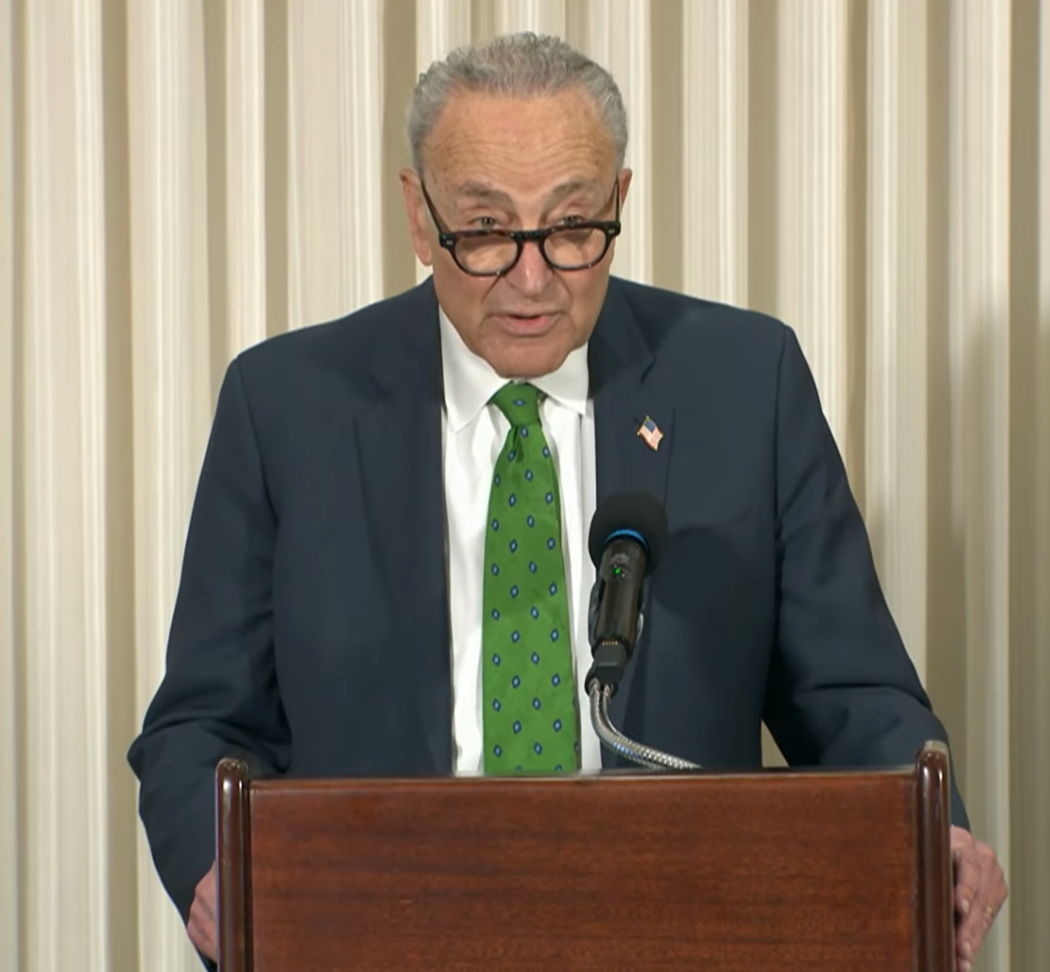
Senate Minority Leader Chuck Schumer introduced legislation to create a new US government agency focused entirely on addressing corruption at the federal level, noting President Donald Trump’s gains from “various, and extremely lucrative, cryptocurrency ventures.”
In a Thursday notice, Schumer said that he had introduced a bill called the Anti-Corruption Bureau Creation Act, which, if passed, would have the authority to “investigate, enforce, and prevent executive branch corruption.” The text of the bill addressed Congress’ findings that Trump had disclosed earning more than $2 billion from investments in 2025, including $1.4 billion tied to crypto, and his family had more than $1 billion in a crypto fund tied to foreign governments.
In a Public Citizen forum describing the bill, Schumer described the anti-corruption agency as having “real teeth” with enforcement authority, and consisting of a bipartisan group of seven members to be confirmed by the Senate. The legislation also provided mechanisms for private citizens and state authorities to recover funds that Schumer said had been stolen from Americans “through corruption.“
“This new bureau is one where these institutions work in symbiosis, strengthening each other and eliminating barriers between them which often got in the way,” said Schumer. “It replaces a broken patchwork of watchdogs, none of which were built for this moment, with one, powerful anti-corruption agency, ready to act anywhere, anytime corruption strikes.”
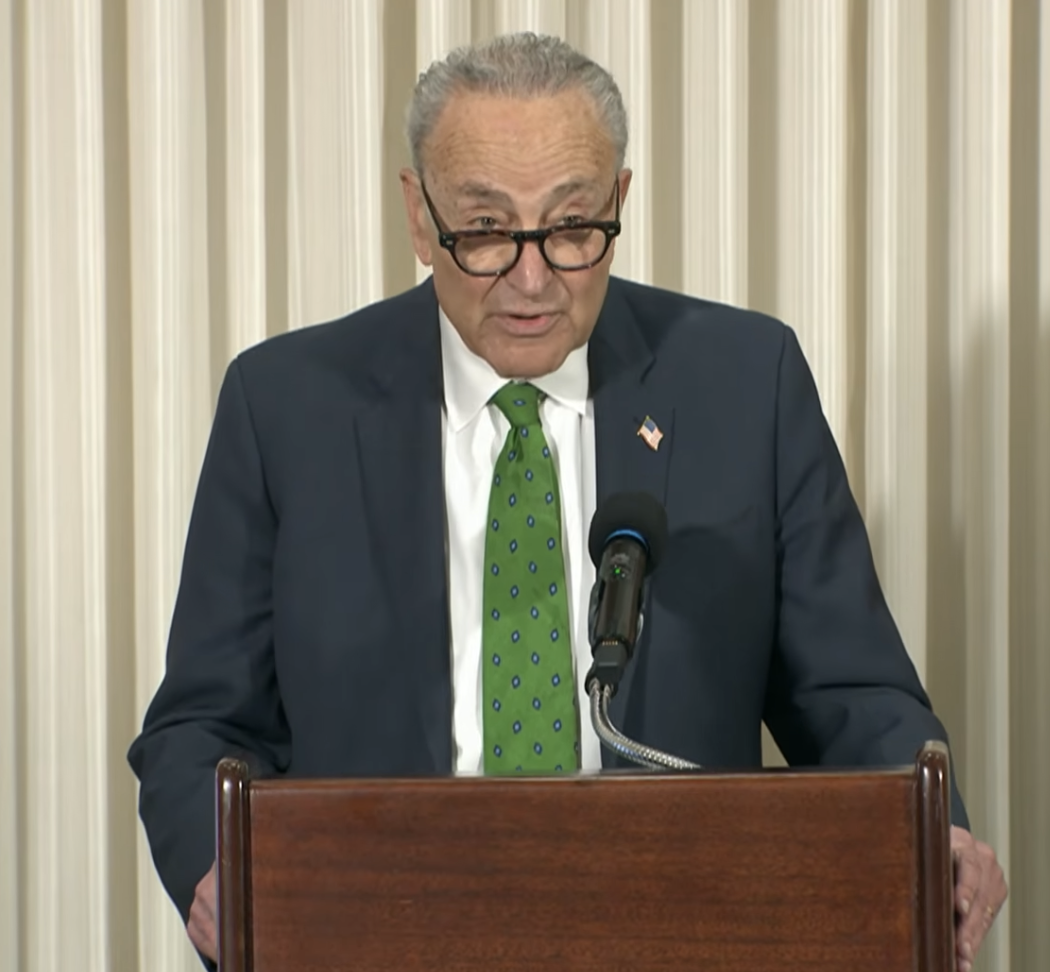
Senator Chuck Schumer announcing the Anti-Corruption Bureau Creation Act on Thursday. Source: Public Citizen
Trump’s ties to the cryptocurrency industry have been a sticking point for many Democrats in Congress considering their support for a comprehensive market structure bill called the Digital Asset Market Clarity (CLARITY) Act. Although the White House agreed to certain ethics provisions in the bill, many lawmakers say the measures do not go far enough to address the president’s potential conflicts of interest.
Related: Ethics remain sticking point as crypto market structure bill goes to markup
Notably, the proposed anti-corruption agency would place the US Federal Election Commission, Office of Government Ethics and Office of Special Counsel “under one roof“ within the new bureau. Cointelegraph reached out to the White House for comment on the proposed legislation but did not receive an immediate response.
Senators Andy Kim, Alex Padilla and Jeff Merkley cosponsored the bill with Schumer. The introduction of the bill also came the same week Senators Richard Blumenthal and Chris Van Hollen held a public forum to address Trump’s ties to the crypto industry.
The bill would require Republican support to pass in the US House of Representatives and Senate, where the party holds a slim majority. If it were to advance in both chambers before 2028, Trump could still veto the legislation and send it back to Congress, where it would need a two-thirds majority to override the president’s action.
Crypto bill is still under consideration in Senate
The US Senate has just over a week left before lawmakers break for a month-long state work period, leaving many scrambling to pass bills before the 2026 US midterms potentially complicate discussions on their return.
“The big question at this very minute is where the CLARITY Act stands,“ said former US Securities and Exchange Commission official John Reed Stark following his appearance at Blumenthal’s and Van Hollen’s Monday forum. “Of all the experts and political insiders I spoke with yesterday, not one could say for sure what happens this week with the CLARITY Act. There is enormous drama surrounding this legislation.“
As of Thursday, the Senate had not scheduled a vote on the bill, despite pushes from many Republican lawmakers and industry leaders. Coinbase CEO Brian Armstrong said on Wednesday that the bill was at the “one-yard line,“ and Senator Cynthia Lummis, who has long advocated for the market structure legislation, has continued to push for a vote.
Magazine: Will the crypto lobby’s $189M campaign get CLARITY over the line?

South Korean authorities have uncovered a cryptocurrency fraud case that exploited interest in a newly launched blockchain token. The operation targeted XRP holders through a fake investment platform that disappeared after collecting millions of dollars in digital assets.
Authorities launched their investigation after an overseas cryptocurrency exchange flagged suspicious transactions. Within three days of receiving the alert, investigators traced the activity and froze digital wallets holding most of the stolen assets.
How the Scam Worked
According to the probe, the fraudulent website appeared shortly after the Flare Network introduced its FXRP token in October 2025. The platform promised monthly returns of 1.5% to 1.8% while claiming users’ original deposits would remain protected.
The investigation found that the group created convincing online material to support the fake project and make it appear legitimate. False reference pages, blog posts, online articles, and promotional videos were published to strengthen trust among potential victims.
The probe also revealed that victims were instructed to move their XRP through overseas exchanges before sending funds to designated wallet addresses. This process made the transfers appear more credible while helping the organizers distance themselves from the stolen assets.
Ultimately, the website operated for slightly more than one week before shutting down without warning after attracting deposits. During that period, seventy-one victims transferred about 3.4 million XRP worth roughly $8.6 million (12.3 billion won) into wallets controlled by the suspects.
Where the Stolen Funds Went
Blockchain tracing later showed that the suspects’ wallets handled digital assets worth approximately $19 million (27.3 billion won) during the operation. Officials froze about $12.1 million (17.3 billion won) on foreign exchanges, while the remaining funds have not been recovered.
The confirmed losses averaged around $121,000 (173 million won) per victim, although the amounts varied significantly. Police said at least one victim reported losing more than one billion won through the fraudulent platform.
The financial investigation eventually led to several arrests in South Korea. Three men in their late twenties and thirties were taken into custody in South Korea during the investigation. Two suspected organizers face aggravated fraud charges, while another suspect remains overseas under an international alert.
The post South Korea Arrests Suspects in Fake FXRP Scam That Stole $8.6M in XRP appeared first on CryptoPotato.


Cointelegraph is committed to providing independent, high-quality journalism across the crypto, blockchain, AI, and fintech industries.
All news, reviews, and analyses are produced with full journalistic independence and integrity. For more details on our standards and processes, please read our Editorial Policy.


In a post on X, CEO Brian Armstrong pointed to the company’s expanding businesses beyond spot trading, including stablecoins, Base and prediction markets, noting that Coinbase reached a record 10.3% share of global crypto trading volume during the quarter.
CFO Alesia Haas struck a more measured tone, saying crypto market conditions were challenging as industry spot trading volumes fell more than 20% and the total crypto market capitalization declined by double digits. She said those conditions contributed to a 14% quarter-over-quarter decline in Coinbase’s total revenue.
Several Wall Street firms lowered estimates ahead of earnings and trimmed EBITDA forecasts as lower crypto prices weighed on institutional trading, blockchain rewards and retail activity.
Investors remained focused on Coinbase’s efforts to reduce its dependence on transaction fees.
Subscription and services revenue, which includes USDC interest income, staking, custody, Coinbase One memberships and institutional services, has become a key measure of whether the company can generate more stable revenue through crypto market cycles.
Analysts also watched for updates on newer businesses, including derivatives, prediction markets and Base, Coinbase’s Ethereum layer-2 network.
The company will host a call with investors at 5pm E.T.


Crypto exchange Coinbase reported mixed second-quarter results on Thursday, missing Wall Street expectations on profitability as weaker trading activity weighed on results despite the company capturing a record share of the crypto market.
In the second quarter, Coinbase generated roughly $1.2 billion in net revenue, broadly in line with expectations but down 19% from a year earlier. The company reported a GAAP net loss of $359 million, significantly wider than analysts’ expectations for a roughly $122 million loss. Transaction revenue, subscription and services revenue, and adjusted EBITDA also fell short of consensus estimates.
Despite the losses, the exchange posted an all-time-high 10.3% share of global crypto trading volume, up from 9.1% in the first quarter, even as industry-wide trading activity weakened.
Transaction revenue totaled $599 million, below analyst expectations of $636 million, while subscription and services revenue came in at $555 million, missing the $590 million consensus estimate.
Coinbase attributed the decline in transaction revenue to weaker consumer and institutional trading activity amid a 25% quarter-over-quarter drop in total crypto spot trading volume, lower market volatility and weaker crypto prices.
The results come as Coinbase continues to position itself as an “Everything Exchange,” broadening its business beyond spot cryptocurrency trading into derivatives, prediction markets, tokenized assets and payments.
Coinbase shares fell more than 5% in after-hours trading.
Magazine: CLARITY hopes fade, BitMEX shuts as lawsuit looms: Hodler’s Digest, July 26


The Bitcoin treasury company said it has built a $3.75 billion cash reserve to support preferred stock payouts following the launch of its BTC monetization program.

Viaim RecDot Review: These AI earbuds sounds great and also take notes for you

Gianni Infantino: Can Fifa president survive after Uefa threatens World Cup boycott?

India wants to cuts its reliance on overseas strawberry varieties


-

 Fashion6 days ago
Weekend Open Thread: Brooks Brothers
-
 Sports4 days ago
Commonwealth Games boxing: Jadumani Singh seals dominant 5-0 win over Pakistan’s Sumama Rehman to enter quarter-finals | Commonwealth Games News
-

 Business1 day ago
Why Trees Belong on the Risk Register
-

 Tech4 days ago
Intel is reversing course and bringing hyper-threading back to its server chips
-

 Crypto World5 days ago
Ripple bought a bank in pieces. The $4 billion audit
-

 Politics3 days ago
Luke Littler dismantles Gerwyn Price to retain title in Blackpool
-
 Entertainment6 days ago
A New Post-Apocalyptic Gundam Anime Series Blasts Into SDCC
-

 Politics3 days ago
The Part of the Electric Transition Nobody Wants to Discuss
-

 News Videos4 days ago
BITCOIN JUST ENTERED THIS CRITICAL ZONE…
-

 Fashion7 days ago
16 Dresses for the High Summer Event
-

 Sports7 days ago
2026 3M Open leaderboard: Scottie Scheffler finds putter in Round 1, sits three back
-

 Business2 days ago
Major shareholder moves on Canyon
-

 Crypto World5 days ago
XRP Ledger adds $2.6B as RWA inflows rank second
-

 Politics4 days ago
Spain sweeps the board at 2026 World Cup with individual awards
-

 News Videos11 hours ago
Bitcoin Enters the 3rd Stage of the Bear Market
-
 Entertainment2 days ago
‘Stargate’ Creator’s New Sci-Fi Series Returns for Season 3 Tomorrow
-

 Tech6 days ago
Anthropic launches Claude Opus 5, a cheaper AI model for coding, agents and enterprise workflows
-

 Crypto World2 days ago
Kraken Enables Retail Access to Jersey Mike’s IPO via Tokenized Shares
-

 Entertainment5 days ago
Sara Gilson Killed By Husband After Viral “Pedophile” TikTok Video
-

 News Videos2 days ago
Claude: Build Financial Dashboards in Minutes (2026)
You must be logged in to post a comment Login