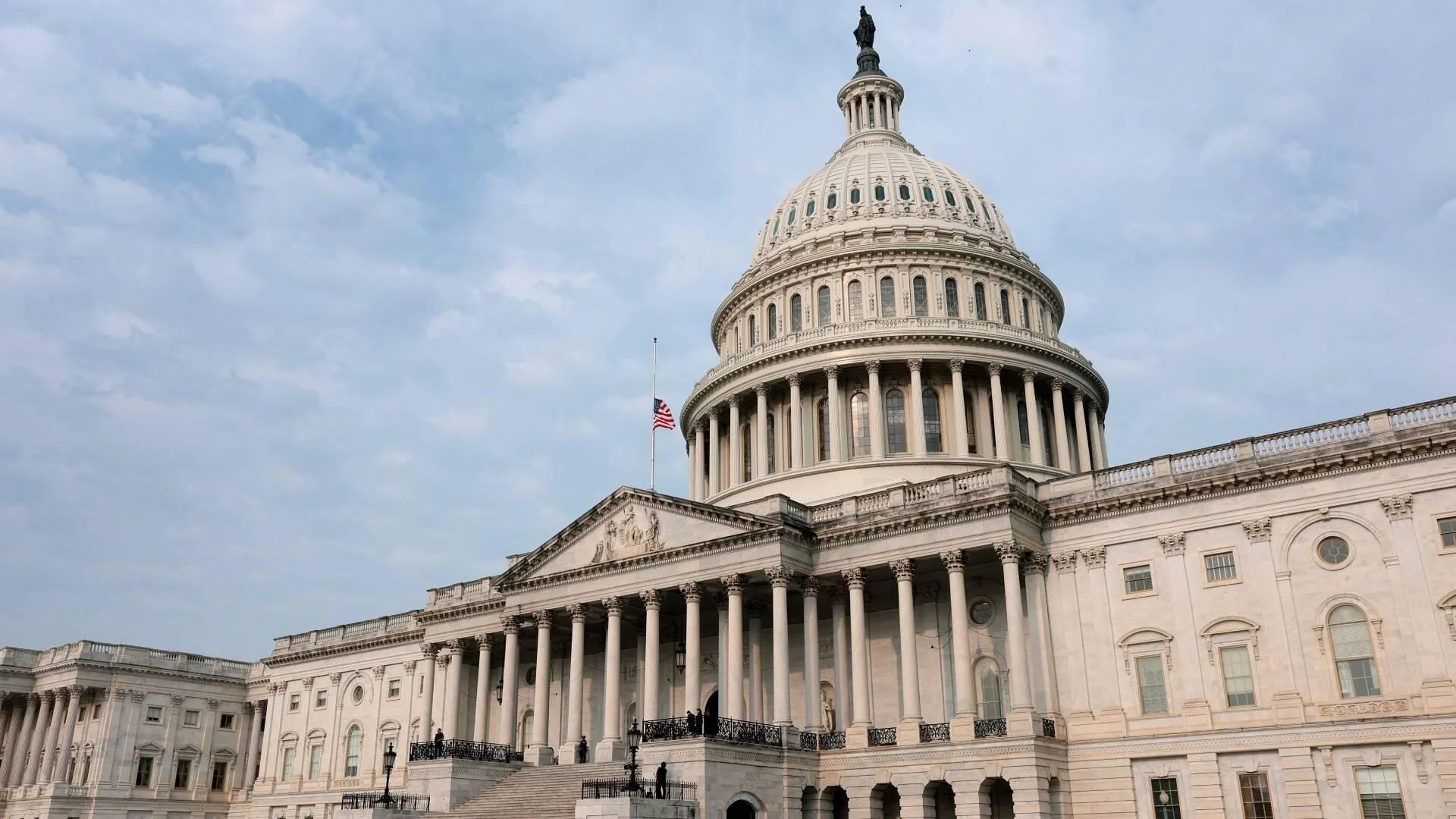
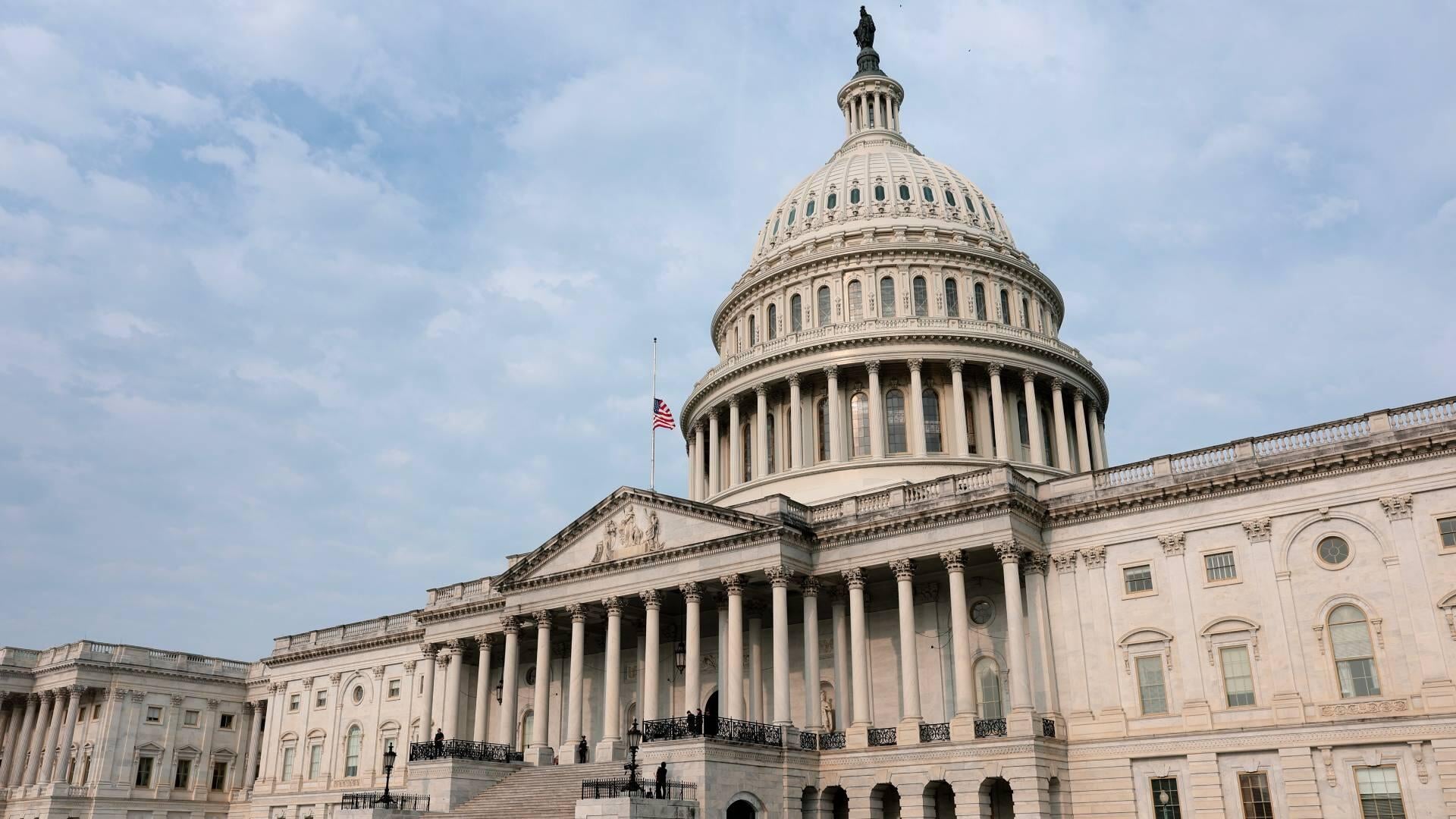
CHICAGO — The White House sent lawyers to Capitol Hill on Wednesday. The bill’s Senate authors were said to be ready to file for cloture Thursday morning. But as the deadline hour came and went, and as the night wore on, the Protect College Sports Act was still not done.
Not dead.
Not done.
And time is not an ally.
Multiple sources with direct knowledge of the negotiations told CBS Sports that congressional staff, White House counsel and conference representatives were working through Wednesday night on the final language of the sweeping bipartisan legislation. The bill would reshape college athletics by providing the NCAA and its conferences an antitrust exemption to enforce spending caps, transfer limits and eligibility rules that courts have systematically gutted.
But the Big Ten and SEC had not delivered their position on the legislation by the 9 a.m. Wednesday deadline set by the bill’s co-authors, Sens. Ted Cruz (R-Texas), Maria Cantwell (D-Wash.) and Eric Schmitt (R-Mo.). Big Ten athletic directors met for nearly four hours Wednesday morning in Chicago, the site of the conference’s annual media days.
Their meeting was so long, it started before and ended nearly three hours after the 9 a.m. deadline. Later, the Big Ten canceled an evening call with its presidents scheduled for 7 p.m. Meanwhile, a Senate staff member issued a pointed statement making clear that lawmakers’ patience was fraying.
“At this point, with every passing minute, odds are slimmer that we can move the bill before the August recess,” the Senate staff member said, according to multiple outlets. “We’ve been working night and day to make the revisions they said they needed.”
Congress leaves for its summer recess Aug. 7. Many believe Senate Majority Leader John Thune must file for cloture by Thursday for the legislation to realistically reach the floor next week for a vote. A number of Senate members are scheduled to leave Washington, D.C., for the weekend on Thursday night, and typically, they prefer to receive their voting schedule for the next week before Thursday evening. If the Senate is unable to schedule a vote, Congress and college athletics leaders will miss the last window before a month-long break that would almost certainly scramble the bill’s political coalition heading into midterm season.
Still, one source close to the negotiations told CBS Sports that the probability of the bill reaching the Senate floor remains high. As they termed it, the negotiations were more about clarifying and strengthening the language, but they acknowledged that the final obstacle — getting the language right — was proving harder than expected.
Points of contention
Sources told CBS Sports on Wednesday that the specific sticking point was the “associated entities” provision. The language is meant to close a loophole that has allowed schools to route money to athletes through corporate sponsors and multimedia rights partners, effectively circumventing the revenue-share cap.
Complicating matters further, the conferences had not yet seen the formal text addressing how associated entity deals would be treated under the new cap structure, sources told CBS Sports. That gap — language tied directly to how the House settlement’s revenue-share cap would be enforced — made it impossible to formally react, let alone endorse the bill.
A separate source in the SEC’s orbit confirmed the same problem. Congressional staff had not presented the specific language related to associated entities and how they would interact with the House settlement cap. It is, the source said, difficult to react to or endorse something you haven’t seen.
When asked on Wednesday, Big Ten commissioner Tony Petitti was careful with his words about where negotiations stood, but his measured tone carried its own message: exasperation.
“I think it’s being perceived that way, that on some issues, every issue is just the Big Ten and the SEC,” Petitti told CBS Sports. “And that’s not accurate.”
Petitti spent most of Wednesday on the phone. He paused his interview with CBS Sports twice to take important phone calls. By 4 p.m., he and SEC commissioner Greg Sankey had spoken at least seven times.
The Big Ten boss then offered a guarded assessment on whether meaningful progress had been made with the bill’s sponsors in Washington, D.C.
“I mean, there’s some,” Petitti said. “It could be small changes in our opinion that (senators) think are big. You’re talking about an active negotiation on some of these provisions. What seems simple to one side could be more difficult to the other. So I don’t want to characterize it as hard or easy or great progress.”
On the question of scheduling calls with Big Ten presidents — the step that would signal to Thune a credible head count — Petitti captured the bind precisely.
“Scheduling calls is easy,” he said. “Having the right things to say on them is a lot harder.”
The urgency behind the associated entities’ fix is mathematical. According to documents obtained by CBS Sports on Tuesday, the revised bill creates a retention pool exception of $20 million above the existing revenue-share cap, with up to an additional $5 million available exclusively for women’s institutional NIL — a combined structure that approaches, but doesn’t fully match, the $25 million the conferences originally requested. The $20 million number was being negotiated late Wednesday, with several conference sources saying they expected it to rise.
“We need to see specifics,” Ohio State athletics director Ross Bjork told CBS Sports shortly after the Big Ten’s meeting of athletic directors. “There are certain concepts that have been discussed and proposed that we would agree with, but until you see exactly how it’s written and you want to make sure that it’s not changed, then we can’t really say we’re in. We can’t really sign up for it yet. So, there are things that we have to have. To me, we have to have some certainty around what the cap looks like.”
On the retention pool itself — the provision that has consumed much of the negotiating bandwidth — Petitti declined to get specific about numbers but made clear the complexity runs deeper than the dollar figure.
“You’ve just got to lock in what it is, how it works, how it grows, what it is,” Petitti said. “It’s a new thing. It’s complicated. How it sort of interacts with the settlement is really crucial and critical to make sure those things are working together properly.”
Contingency plans
Big Ten athletic directors gathered in Chicago on Wednesday to discuss both the bill’s status and alternatives if it collapses. Petitti confirmed the four power conferences are preparing alternative plans that include negotiating changes to the House v. NCAA settlement to mirror the new rev-cap standards being negotiated in the bill. If that doesn’t work — or if it needs more authority — the Big Ten is prepared to develop a self-governance model.
The push for a hard cap through the associated entity provision is not without opposition from outside the conferences. Cole Gahagan, the president and CEO of Learfield — the multimedia rights company that manages intellectual property for dozens of FBS universities — told Yahoo Sports that rolling all associated-entity deals into the cap risks sweeping up legitimate commercial contracts alongside the redirected funds that the conferences are trying to stop.
That tension between schools demanding a hard cap and the industry operating under the current arrangement is embedded in the language that has stalled the bill.
Negotiations, however, have at times appeared more like a showdown. Sources in the SEC’s orbit pushed back hard Wednesday on the public characterization, circulating from some corners of Capitol Hill, that the Big Ten and SEC were moving the goalposts after senators made some concessions.
The associated entity language had not even been formally presented to the conferences, making the pressure framing particularly grating, sources said.
A rushed process
Sources across the Power Four told CBS Sports that the hours-long deadline, calling for support for a bill they were not consulted on drafting, in May was also an issue. That history cost time the current calendar no longer has.
The bill’s revised preemption and antitrust provisions also remain a concern. It’s the language designed to end the constant litigation that has made governing college athletics nearly impossible. In the conferences’ view, it still does not go far enough. Title II of the bill, covering media rights, still contains provisions they regard as potential legal traps.
On the other side of the ledger, the revisions delivered addressed many of the conferences’ demands in full according to documents obtained by CBS Sports. Institutional NIL deals are exempt from valid business purpose and market-value evaluation. The high school recruiting loophole was closed. Recruiting and tampering rules now cover prospects and agents. The super league revenue threshold was lowered from $1 billion to $700 million. Private equity acquisition of Power conference assets is prohibited. Participation in pooled media rights is entirely voluntary.
One last curveball
Then there is the provision that was added Tuesday that no one saw coming.
Title III of the revised bill — labeled the “Ignite HBCUs Sports and Media Act” — appeared in the text with no advance notice to conference leadership. More frustrating is that the language of the new section was not included for conferences to read and interpret before the 9 a.m. deadline on Wednesday.
“We didn’t have any indication it was coming,” Petitti told CBS Sports. “I’m not really sure I understand what it means. We’ve been told that it doesn’t really involve what we’ve been working on. It’s just in there.”
One source told CBS Sports the provision could shift the vote math in ways the college sports debate alone cannot — that HBCU-connected members of Congress who might otherwise be on the fence could be moved by a provision that speaks directly to their constituents.
19 is an odd number
One of the bill’s more peculiar provisions, the 19-team conference membership cap has drawn quiet bewilderment from the very commissioner it most directly affects.
The Big Ten currently has 18 members. The bill would allow covered conferences to grow to 19. To many, that reads almost universally as a reserved space for Notre Dame.
Republicans pushed to move that number to 20, but negotiations resulted in 19, sources told CBS Sports. Petitti said he has not yet received a satisfactory answer as to why the number was set at 19, which would allow the Big Ten in the future to add only one member, while the SEC could add three more.
“I’ve asked that question,” Petitti told CBS Sports. “I don’t understand 19.”
The crux of the bill’s future is Thune and the Senate floor.
What happens next?
The majority leader is watching for one thing beyond clean bill language: a credible signal that Big Ten and SEC university presidents will actively call their senators and ask them to vote yes, a source with direct knowledge told CBS Sports. Without that, committing floor time to a bill still opposed by the sport’s two most powerful leagues is a difficult sell.
The Big Ten held a call with its presidents around noon Wednesday, 15 minutes after the league’s athletic directors met and three hours after the bill sponsors’ deadline. When asked about the tight timing, Petitti described the challenge clearly: getting the language right has to come before more calls are scheduled
The SEC’s presidents and chancellors are scheduled to meet on Thursday afternoon. It’s a regularly scheduled meeting, but the PCSA will dominate the conversation.
As for the bill’s health, Petitti himself declined to say the bill is finished if it misses the August window.
“I don’t know that to be true. Some people may say that. I don’t know what could happen in September,” he said.
Sources told CBS Sports the legislation could be filed this week and taken up in September when the Senate returns, with a potential House vote during a lame-duck session. In 2020, Cantwell and then-Commerce Committee Chairman Roger Wicker pushed a major aviation safety bill through Congress in the final days of the session, and President Donald Trump signed it before leaving office.
Petitti knows what’s at stake if the bill fails. He also knows what kind of bill the Big Ten actually wanted. Provisions that seemed to target the Big Ten and SEC — conference expansion and media pooling — were particularly concerning in June. The two most powerful leagues were caught off guard when the conference expansion section was included in the first draft of the bill.
“We preferred a much skinnier bill than this bill,” Petitti said Tuesday at Big Ten media days.
And yet here they are, working through the night on a 61-page piece of legislation, waiting on language from Senate staff, fielding calls from the White House, trying to get to yes on a bill that, as Petitti put it, may be the most critical thing his industry faces.
Oh, and the football season is six weeks away.
“There’s just no amount of time you can spend,” Petitti said Wednesday. “You can never say that the time you’re spending is too much. We have to get this right.”





















































You must be logged in to post a comment Login