Connect with us

NewsBeat

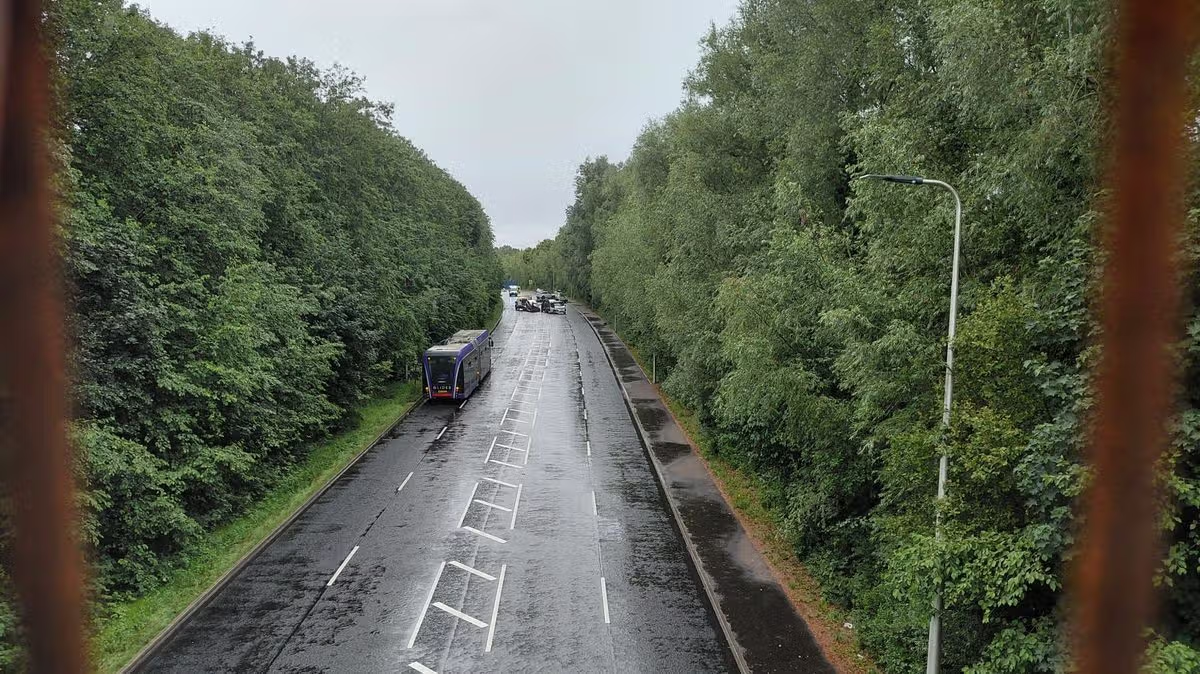
Two people taken to hospital after four vehicle collision in Dunmurry

Published

on

Belfast Live

The road was closed for a number of hours following the collision

Two people were taken to hospital following a four vehicle collision in West Belfast.

Advertisement

The emergency services were called to the incident on Creighton Road at 3.09pm on Wednesday, July 29, with the road being closed for a number of hours between Stewartstown Road and Old Golf Course Road.

Three ambulances were sent to the scene with two people being taken to hospital after treatment from paramedics.

The road reopened again at around 8pm.

A NIAS spokesperson said: “The Northern Ireland Ambulance Service received a 999 call at 15:09 on Wednesday, 29th July, following reports of an RTC in the Creighton Road area, Belfast.

Advertisement

“NIAS tasked 3 Emergency Ambulances to the incident.

“Following assessment and initial treatment at the scene, two patients were brought to Royal Victoria Hospital, Belfast by Ambulance.”

For all the latest news, visit the Belfast Live homepage here and sign up to our daily newsletter here.

Source link

Advertisement
Continue Reading
Click to comment

You must be logged in to post a comment Login

Leave a Reply

NewsBeat

Whole of Wales in drought as UK battles heat, wildfires and extreme dry weather

Published

on

Whole of Wales in drought as UK battles heat, wildfires and extreme dry weather

The National Trust, which has had wildfires at a number of its sites including at Dunwich Heath, is demanding action to help people adapt to the changing climate, including building homes fit for the future, creating wetter and more resilient landscapes, cooling towns and cities and helping communities.

Source link

Continue Reading

NewsBeat

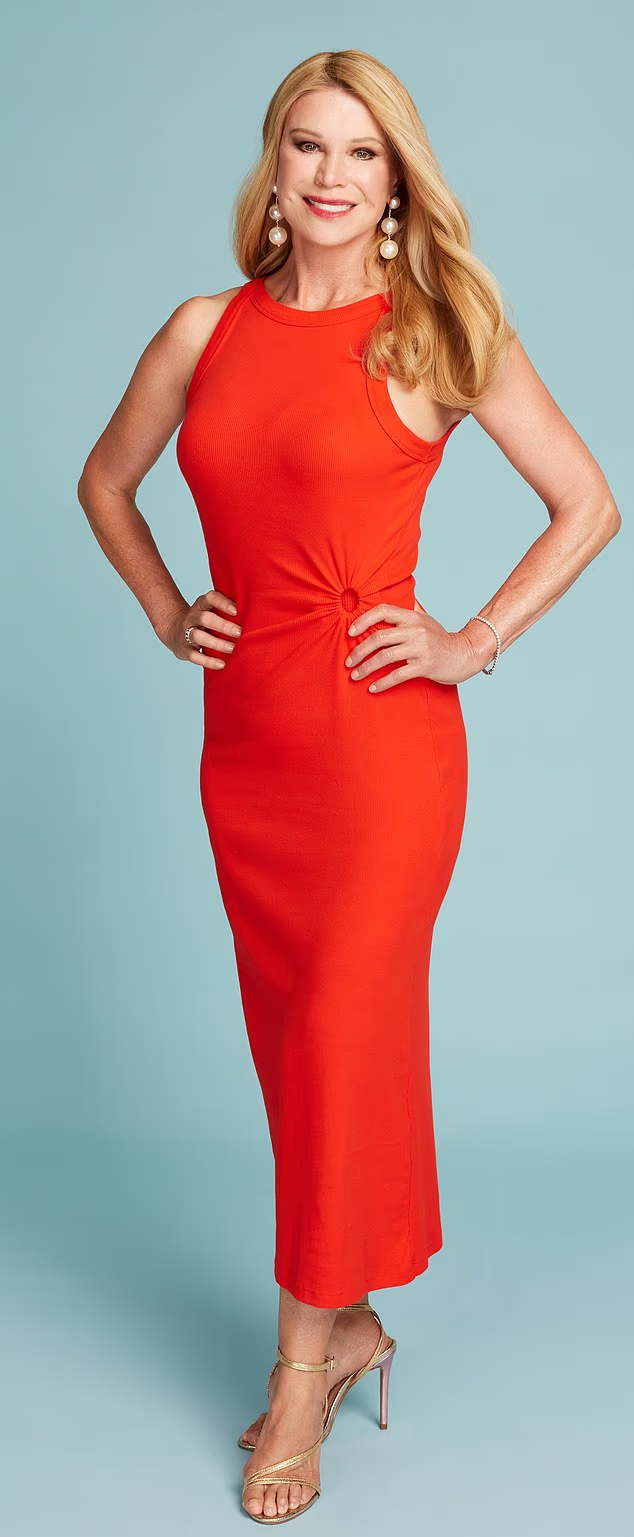
CINDY JACKSON: A patch of saggy and unsightly fat bothered me for decades, so at 70 I took the plunge. This is exactly what I did to get rid of it – and it’s given me confidence I’ve not had for 25 years

Published

on

CINDY JACKSON: A patch of saggy and unsightly fat bothered me for decades, so at 70 I took the plunge. This is exactly what I did to get rid of it - and it's given me confidence I've not had for 25 years

I first noticed it at a charity ball in London while wearing a sleeveless gown. Introduced to an inexplicably enthusiastic young man, I watched in horror as he shook my hand up and down vigorously and my upper arm flab moved in synchronised waves from elbow to shoulder. After what felt like an eternity, I managed to extricate myself, mortified. I could only hope no one else had seen it.

A week later in the unforgiving fluorescent light of a changing room mirror, I inspected my upper arms and there it was – the indisputable sagginess that comes with age. I was 45, and from then on, all sleeveless items were immediately rejected in favour of those that covered the top half of my arms. It was a case of Farewell to Arms.

I stuck to it for a quarter of a century and only ever wore clothing with sleeves. This is in keeping with the sartorial rule my mother lived by: dress to accentuate your best features and keep your worst ones covered up.

Of course, these days there are surgical methods to turn your less-loved features into your best-loved.

Advertisement

I came to London in 1977 and started having cosmetic surgery in the mid-1980s when I was left a small inheritance. Using the rules of proportion I’d learned in art college, I formulated a plan to reinvent myself.

I had been privileged to see Michelangelo’s La Pieta with my parents at the New York World’s Fair in 1964. It struck a chord and the impression never left me. If Michelangelo could carve a mind-blowing masterpiece from a single block of unremarkable marble, then chipping away at my own face and body to look more like the person I felt inside should be a no-brainer, I reasoned.

As a self-confessed nerd (and member of Mensa, the high IQ society), my research was in-depth and unrelenting. My intrepid fact-finding and well-honed BS detector led me to the very best surgeons and the safest, most effective procedures, as it still does today.

Cosmetic surgery was unusual when I had my first operation aged 32 at a London clinic in 1987. At that time having more than one thing done was completely unheard-of. Starting with a blepharoplasty to open up my hereditary hooded eyes, I embarked on a series of life changing procedures that included a nose job, upper and lower face lifts, laser resurfacing, liposuction, jawbone reshaping, and much more.

Advertisement

Cindy Jackson had her first cosmetic surgery aged 32 at a London clinic in 1987 and says that having more than one procedure was unheard-of at the time

I say, ‘life changing’ because, as Sigmund Freud asserted, ‘anatomy is destiny’. To me, it followed that changing my anatomy would change my future. And it certainly did, in every way imaginable.

Becoming known for having cosmetic surgery was never part of my plan, but all that changed in the early 1990s when I ran into an old journalist friend who failed to recognise me. He asked what I’d done to look so different. When I ran down the list of cosmetic procedures I’d had, he got very excited and said it would make a great story for his newspaper.

Advertisement

At first, I was mortified; my ‘project’ was not something I had ever considered sharing with the world. However, the money he offered me would finance the surgery I still had planned, so I said yes.

Against all expectations, my story ‘blew up’, in today’s phrase, and I became world famous overnight. Countless magazine interviews, television shows and more newspaper articles followed.

As a result of the global publicity I received, people from all over the world began contacting me for advice and information. That’s how my cosmetic surgery and anti-ageing consultancy came into being. Many of my clients were public figures who became friends; invitations to mansions, yachts, and exclusive events followed. Anatomy truly is destiny. Over the past 40-plus years I’ve helped countless people achieve their aesthetic goals.

Today, people are living longer, and the older generation is living life to its fullest. It’s no surprise they want a younger face to go with their younger lifestyles. Many now want a younger body too.

Advertisement

This year I turned 70. I met the writer Hugo Vickers, who’s 74, and as we discovered, being in our seventies is not too late to fall in love. I’m living proof that being 70, to quote Winston Churchill, is ‘not the end. It is not even the beginning of the end. But it is, perhaps, the end of the beginning’.

Life began at 70 for me in many ways. Three months after meeting Hugo, I told him I was planning to have my arms done.

Cindy with her partner Hugo Vickers, who did not encourage her to undergo an arm lift but didn't discourage her either

Cindy with her partner Hugo Vickers, who did not encourage her to undergo an arm lift but didn’t discourage her either

His first reaction was that I was fine as I was. He didn’t encourage me to have the operation, but he didn’t discourage me either. He was confident that with my expertise in the field, I knew what I was doing. He also realised that in later years I would regret not having done it now – as I became more dissatisfied with the way my arms looked.

Advertisement

To me, it was inevitable that there would eventually be a demand for our bodies to match our lifted faces. My older clients regularly opt for breast lifts, thigh lifts, body lifts, butt lifts, you name it. If it can be lifted, we lift it.

I am far from alone in wanting my arms to look as youthful as my face. Arm lifts are undeniably the new face lifts among my clients. The better and more natural looking your face lift turns out, the more mismatch there is when there are saggy old arms a little lower down.

While a lot of older women do not wish to wear micro-mini skirts and no longer feel comfortable in low-cut tops with ageing cleavage on display, arms and shoulders are another matter altogether; it’s not considered particularly racy or ‘mutton dressed as lamb’ to show them. Always wearing sleeves in the increasingly warm summers or on holiday gets hot and uncomfortable too.

On the other hand, if your upper arms resemble those of a flying squirrel and you could almost go hang-gliding using only your bingo wings, you may feel more confident keeping them under wraps.

Advertisement

Sleeves aren’t a problem-free solution, however. Over time, they get increasingly tighter and more uncomfortable as arms get fatter and flabbier. It may be necessary to go up a size or two in tops and dresses to get bigger sleeves. This introduces a new mismatch: clothes that fit the arms but are too big everywhere else.

Why not just firm them up with exercise? I already do weight training to maintain muscle tone and bone strength. So I asked a personal trainer about adding heavier weights to build muscle in my upper arms to fill out and firm some of the hanging skin. He inspected my arms, asking me to move them into various positions as he poked and prodded. ‘There’s hope!’ I thought to myself. But it was only fleeting. His professional assessment – or damning verdict – was: ‘You’d need muscles bigger than Popeye to fill out that much skin. Even if you could gain such a large muscle mass, which is unlikely, it would look ridiculous on a slim, feminine woman like you.’

After momentarily picturing myself with Schwarzenegger-style bulging biceps, I realised there really was only one option – the one in which I am an expert.

Cindy's arms before her arm lift surgery, which cost £15,000 and involved a fat transfer to her hands

Cindy’s arms before her arm lift surgery, which cost £15,000 and involved a fat transfer to her hands

Advertisement
Cindy says the surgery allowed her hands, pictured before surgery, to be rejuvenated by plumping up the wrinkled skin and filling in the crevices between the tendons and veins

Cindy says the surgery allowed her hands, pictured before surgery, to be rejuvenated by plumping up the wrinkled skin and filling in the crevices between the tendons and veins

The surgical solution to combatting the triumvirate of unsightly upper arms, global warming, and increasingly tight sleeves, is a brachioplasty, or arm lift.

Costs vary according to where it’s performed and which technique is used. I had an extended arm lift with fat transfer to my hands, costing £15,000. ‘Extended’ means, instead of the standard elbow-to-armpit incision, mine started at my inner elbow and ended halfway down my ribcage. That allowed the surgeon to address the wedge of underarm fat that hangs over the sides of the bra looking like an extra boob trying to escape sideways – or Yul Brynner in a headlock.

I knew exactly where to go for the surgery and was fully confident in the procedure and the outcome. People always say to me that I must be used to having surgery and take it in my stride. However, I am still a vulnerable patient, and like so many others, I have a degree of trepidation about going under general anaesthetic. But as an insider, I knew that statistically the odds of everything going perfectly were overwhelmingly in my favour.

Advertisement

That offending underarm fat did not go to waste. It was recycled and repurposed. After being harvested from my arm pits, it was injected to the backs of my hands, right up to the knuckles, to rejuvenate them by plumping up the wrinkled skin and filling in the crevices between the formerly prominent tendons and veins.

It was completely painless, but my hands were quite swollen for about two weeks. The final result has taken years off them. They always say you can tell a woman’s age by looking at her hands, but not in my case. I call it my hand job with fingers included.

My brachioplasty plus hand job were done at the end of April in London as a day case. I arrived for the four-hour surgery in the morning. Hugo drove me home that evening; you are not allowed to get behind the wheel of a car for 24 hours after general anaesthetic. Driving is also out of the question for a period of two weeks after a brachioplasty.

A strip of skin measuring 12cm at the widest part was excised from the underside of each arm. There were no visible stitches; they were all on the inside and dissolvable, so none had to be taken out at a later date. I was given an incredibly tight compression garment to wear 24 hours a day – except when showering – for several weeks. It looked like a size zero black bolero and helped keep swelling down while supporting the incisions.

Advertisement

There wasn’t much pain – as long as I kept my arms still. Moving them normally was not possible for the first ten to 14 days, so I needed a lot of help at home with things like food prep, lifting anything heavier than a cup of coffee, and getting dressed. Thankfully, Hugo had kindly blocked out that week in his diary to be at my beck and call. That was extremely generous of him considering his latest book, Queen Elizabeth II, A Personal History, had just come out two weeks before.

Although he was in constant demand for interviews and personal appearances, Hugo navigated his work schedule around caring for me. One moment he was live on Zoom elegantly discussing the British Royal Family on American television; the next he was helping me (cosmetic surgery royalty) wrestle a stubborn compression garment into submission.

During more relaxed moments, I love listening to loud rock music while Hugo is reading at least one book. My headphones make it possible for us to occupy the same space while pursuing different interests together.

It is said that successful biographers must have a good bedside manner, and I certainly saw that side of Hugo after my surgery. He showed endless patience and nothing was too much trouble. Being very independent, I’m not accustomed to having everything done for me. But in this case, I had no choice in the matter. I must say that it’s amazing just how quickly you can get used to that!

Advertisement

My recovery time sped by. Almost before I knew it, six weeks had passed and I could confidently go out wearing sleeveless clothes for the first time in more than 25 years. The unusually hot summer means I have not worn sleeves since the middle of May. I have also done plenty of shopping for new clothes, since I hadn’t bought anything without sleeves since the nineties.

Six weeks after surgery, I was able to resume weight training. I’m beginning to see the muscle definition that had been buried for decades under fat and loose skin. And – for the first time in my life – I’m getting compliments on my arms!

Having been deeply involved in cosmetic surgery for more than 40 years, I marvel at the progress I’ve witnessed over the decades. Arm lifts used to be known for producing obvious scarring, which was off-putting to a lot of women. Today, the scar placement is such that no one can see it unless I raise my arms. I avoid bidding at auctions and hailing taxis. No evidence of surgery shows from the front, the side, or behind. After around six months, the scars will fade to near invisibility.

I could not be more thrilled with the results of my extended brachioplasty and hand rejuvenation combo. After hearing so many of my ecstatic clients rave about their own arm lifts in recent years, it was only a matter of time before I joined their ranks. Now I too, finally have the right to bare arms!

Advertisement

For info about Cindy Jackson and her consultancy, visit cindyjackson.com

Source link

Continue Reading

NewsBeat

Woman found dead in suitcase in Athens was ‘kind soul’ with ‘beautiful heart’

Published

on

Daily Record

Elisabeth Jane Ross, also known as Lisa, was found by a homeless man on July 18.

A Scottish woman who was found stuffed in a suitcase and dumped in an abandoned building in Greece has been remembered as a “kind soul”.

Advertisement

The remains of 38-year-old Elisabeth Jane Ross, also known as Lisa, were discovered by a homeless man in the neighbourhood of Kypseli, Athens, around 1pm on July 18.

Lisa had been dead for approximately eight days. No visible wounds of any clear signs of struggle were found on the body, according to Greek police.

Detectives are trying to establish whether Ms Ross’s death was the result of a “criminal act”, with a police spokesperson confirming toxicology tests are being carried out.

The spokesperson added there was no evidence on either the body or the suitcase that would enable them to identify a third party.

Advertisement

Tributes have been paid to Lisa from heartbroken loved ones on social media.

Pauline Hood wrote: “I am totally devastated. One of the kindest souls I’ve ever met. Lisa would have done anything for anyone. She went that extra mile. She had a beautiful heart. I’ve got a lot of good memories of Lisa. Thinking of her friends and family at this most difficult time.”

Jem Wren penned: “Lisa was a lovely girl, I went to school with her. I just can’t believe someone could do this to another person. Bless her and her family. RIP.”

Advertisement

Anne Morrison added: “I hope they find out who did this! Sending condolences to Lisa’s family and friends!”

Ms Ross couldn’t be identified at first by officers at the scene because she reportedly had no identification on her. She was believed to be around 30 years old, 5ft 4in tall, with reddish hair tied in a bun and wearing black shorts, with a French university insignia on them, and a T-shirt.

The rough sleeper who found her said he followed a foul smell inside the deserted building which had lain empty for two years. It is understood he saw a human limb visible from the outside of a suitcase.

Advertisement

New details about her final days have been revealed as the investigation continues.

According to local media, Ms Ross travelled to Greece from Edinburgh on June 29, and initially stayed with friends in the town of Keratsini, in the suburbs of Athens, before meeting American friends in Kypseli on July 15.

It has also been claimed that her phone was being used in an attempt to cover her death.

Text messages from her phone were sent in the days after her death up until she was identified by media.

Advertisement

On July 15, texts were sent to Ross’ family claiming that Elizabeth “needed some time to herself”. They went on to say that she “wanted to be alone for a while”.

A message sent after her death on July 18 to a Greek friend, who she had known “for years” and had been staying with before her body was found, said: “I need some time – I’m going to a Greek island.”

The phone remains missing and was active in the Athens area until around 24 hours ago when Elisabeth was formally identified. It’s believed that her father, from Edinburgh, had been receiving messages from July 15 to 29.

A Greek officer said: “The phone was being used. Text messages were even sent obviously with a view to making people believe she was still alive. We are treating the building as a crime scene.”

Advertisement

An autopsy is due to be carried out in the coming days. Interpol and US investigators have been called in by the Greek authorities to assist with the probe.

Lisa is understood to have travelled to Greece on June 29 via Cyprus after coming from the US. Officers are now speaking with anyone who may have come in contact with her prior to her death. Two photos of Lisa smiling have been released by Greek outlet Cretalive.

One local who lives near the scene previously told Greek media outlets the building where Elisabeth’s body was found was used by rough sleepers. The resident added that one man stayed there regularly but that he had not been seen for a number of days.

Advertisement

Police Scotland are liaising with authorities in Greece regarding the probe. Officers are also providing support to her family in Scotland. No suspect has been identified at this time.

A Police Scotland spokesperson said: “We are aware of the death of Scottish woman in Athens and are liaising with authorities in Greece. Officers are providing support to her family in Scotland.”

A UK Foreign, Commonwealth, and Development Office spokesperson said: “Our thoughts are with Elisabeth’s family during this difficult time. We are providing consular support and are in contact with the local authorities.”

Advertisement

Source link

Advertisement
Continue Reading

NewsBeat

Colm Cavanagh: Mayo’s brilliant win has every team in Ireland thinking ‘why not us?’

Published

on

Belfast Live

‘Losing Kobe McDonald means Mayo are already up against it next season and there will be no shortage of challengers in 2027’

Advertisement

The 2026 Championship delivered a fitting finale to a brilliant All-Ireland series with Mayo beating Kerry in a pulsating decider.

I don’t think anyone, not even Kerry, could begrudge them this victory.

The whole thing was set up for them.

I did think that Kerry maybe didn’t reach the heights of the year before and we saw that against Tyrone and Dublin, who probably could have had them out.

Advertisement

They were relying on individual brilliance to get them over the line, which obviously they have. They have so much class.

If you looked at the actual form and who was the form team coming into the final, it wasn’t Kerry.

I think Mayo got no credit for beating Cork, who are no bad side, and no credit for beating Louth.

Mayo are a team who seem to flourish when playing in Croke Park.

Advertisement

I was massively impressed with their front press and their kickouts.

How disciplined they were and how they worked as a unit to shut Kerry down.

It’s a really difficult thing to do in terms of knowing when to go and engage whenever Kerry go short. Trying to double up and get everybody else rotating across. It is something I’m trying to implement with the Moy footballers.

Kerry might have been the better team on paper, but when you’ve a young team, playing well and know what they are about, anything is possible.

Advertisement

Ryan O’Donoghue led the line in that regard. You watch his body language and the way he was instructing the guys around him when to go and when not to go. That’s such a hard thing to do in the modern game.

Any half-decent defender can normally just go past, get that initial step on a forward and go around them. When that happens, the press is nearly gone.

When that happens, it forces the half-back line or midfield to come in. When you play a ball over the top, they’re out. Mayo didn’t dive in. They trusted themselves and that was the most impressive thing about them on Sunday.

Advertisement

They moved their feet really well. It takes a lot of energy. If you can do it right from a team perspective and everybody knows what they’re doing, it can work.

You need smart footballers. You need guys who know when to leave their man, when to stay with their man, where the danger is. All those things come into play.

It’s obviously something they’ve worked on constantly and credit must go to Andy Moran and his management team.

They’ve a very young team. You sprinkle a wee bit of Kobe magic into the mix and Kerry had no answer to them.

Advertisement

You can’t say they didn’t deserve it. It has been a long time coming for Mayo.

I think the way the game is at the moment, every team should have some hope.

Obviously, losing Kobe McDonald to the AFL is a massive blow for Mayo’s chances of retaining the Sam Maguire.

You just don’t know how they’ll react to being champions.

Advertisement

Kerry couldn’t retain it this year.

It is something that Tyrone have never been able to do.

I do think retaining the All-Ireland is very difficult in the modern era.

It will be another uphill battle for Mayo to get back there.

Advertisement

They will rightly enjoy the celebrations in the coming weeks.

Mentally, it is tough to reset. Do they have anyone to replace Kobe?

I think Tyrone are in a good place. I am biased, but Tyrone haven’t gone away.

They’d a lot of injuries this season with the likes of Darragh Canavan missing against Kerry.

Advertisement

I know there is a concern about the lack of two-point shooters in the team.

I feel the emergence of Ethan Jordan this year helped and he’ll come on from having his first season as a senior.

Another man from my own club, Michael Conroy, was brought back in late and is a two-point threat.

Unfortunately, he got injured in a club game and didn’t feature for Malachy O’Rourke in the Championship.

Advertisement

I think Tyrone still have the bones of a team and a good mix of youth and experience.

A lot of other teams could probably say the same.

Nobody gave Dublin much of a chance this year, but they were a kick of a ball away from beating Kerry.

Can Armagh make a comeback?

Advertisement

Donegal were favourites earlier in the year and I don’t think they’re going to go away.

Looking ahead to next season, I think Kerry are still in pole position and maybe losing to Mayo will drive them on again.

It just wouldn’t be a shock anymore if one of seven or eight teams coming from the chasing pack to do what Mayo did this season.

A so-called underdog can turn somebody over.

Advertisement

It’s been a long time since that’s been the case.

Gaelic football is just so exciting to watch now. It was a fantastic final.

I was delighted to see Mayo win and not just because I tipped them beforehand!

But almost every other team competing in the Sam Maguire in 2027 will feel they’ve a chance of emulating their achievements.

Advertisement

It should make for one-hell of a Championship. Roll on next season.

I don’t think anyone would argue that this summer’s Championship has been one of the best in recent memory.

However, I’m always in favour of trying new ways to improve the game. The FRC considered the idea of a back-court rule from basketball where you can’t pass back once you’ve crossed the half-way line.

I know you also have a shot-clock in basketball, but that would be impossible to impliment in Gaelic football.

Advertisement

I do like the basic principle of not being able to go back over the half-way line once you’ve crossed it.

I do think teams can still control games when they want to and can go back into their own half if they really wanted to run the clock down and hold the ball.

You see it at club level too.

We’ve done it with the Moy and other teams have done it against us.

Advertisement

You can hold the ball and pull teams out and, when they do, there is space in behind.

I’d love to see how the halfway rule could work and how it would impact the game.

Being a club manager myself, I know a lot of people have strong opinions on fixtures.

You are never going to please everyone.

Advertisement

What we have at the minute might not be perfect, but it is better than what we had before.

I was interested to learn of John Kiely’s take on increasing the number of substitutions from five to seven.

The game is played at a higher intensity now and it is a lot more taxing on the body.

You’ve more hamstring and groin problems and that comes from an increase in high-speed running.

Advertisement

Being able to use more subs means more players will get game-time as well and I don’t really see any downside to that.

Want to see more of the stories you love from Belfast Live? Making us your preferred source on Google means you’ll get more of our exclusives, top stories and must-read content straight away. To add Belfast Live as a preferred source, simply click here.

Click here to sign up to our sport newsletter, bringing you the latest sports news, headlines and top stories

Source link

Advertisement
Continue Reading

NewsBeat

What went right this week: global road safety progress, plus more

Published

on

What went right this week: global road safety progress, plus more
Funding secured for large-scale UK nature project

Around 3,000 hectares of degraded land in the north of England – roughly equivalent to 4,200 football pitches – is set to be restored for nature after a major conservation project secured vital funding. 

The ambitious initiative to rewild the Emblehope and Burngrange Estate (pictured) in Northumberland has long been a dream for Restore, the nature restoration company. This week, its mission took a huge step forward after raising almost £9m to buy the site, with some funding coming from the purpose-led bank Triodos UK. 

A key focus of the project is rewetting the estate’s degraded peatlands, which Restore says will act as a vital carbon sink while supporting biodiversity and reducing flooding. The project also seeks to deliver social and economic benefits, partly through the introduction of low-intensity grazing.

Advertisement

“What has long been missing from the English uplands is a large-scale site dedicated primarily to the most ambitious forms of nature restoration,” said Benedict Macdonald, founder and director of Restore. 

“Whilst many upland estates, farms and forestry benefit from nature as a side-product of commercial activity, Emblehope is destined to become a biosphere-level reserve where nature itself is the driver.”

Image: Emblehope estate. Credit: Grays

Advertisement

Source link

Continue Reading

NewsBeat

Greens review social media operation as Polanski row rumbles on

Published

on

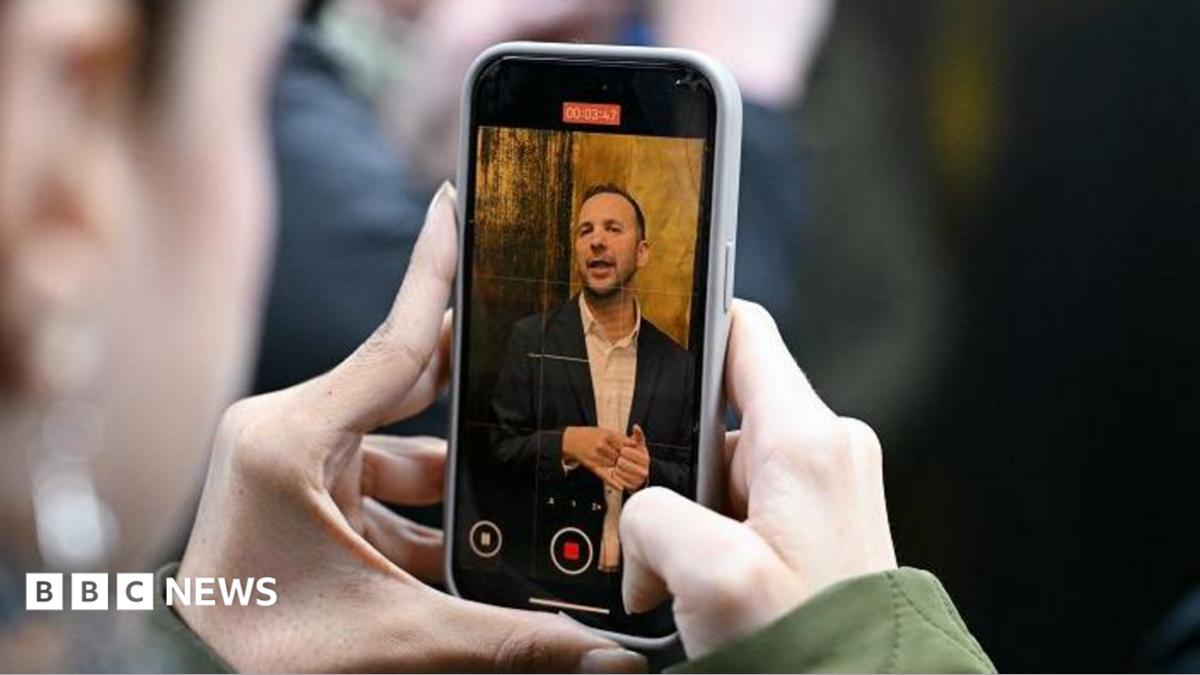
Two hands holding a phone with Zack Polanski on the screen

The current row began after Polanski shared a single post on Instagram that contained a carousel of 20 pictures.

The re-post was shared to Polanski’s 713,000 followers, because he accepted a request to tag him as a collaborator, which on the platform makes him a “co-author,” placing it on his page and into his followers’ feeds.

Polanski said he had not noticed the offending image among the others on the post.

According to him, he had accepted collaborator tags for eight other posts from the same event in Bristol alone.

Advertisement

Reform UK leader Farage claimed the t-shirt amounted to incitement to murder and his party reported it to the police.

Neither the Metropolitan Police nor Avon and Somerset Police say the incident meets the threshold for further action.

But the political row has continued with Reform UK MP Robert Jenrick calling Polanski a “nasty piece of work”, at a news conference earlier on Thursday.

Inside the Green Party, there has been some criticism of Polanski’s behaviour online.

Advertisement

He has attracted positive and negative attention for the rate at which he posts, comments, likes and replies across multiple platforms including X, Bluesky, Facebook and Instagram.

And this is not the first time a quick reaction has attracted controversy; last month he had to apologise to police after posting about their response to the Golders Green attack.

One senior party source said it was clear that due diligence had not been done on Polanski’s social media output, and that moving forwards he needs “tight controls” to stay credible, while keeping a similar tone of engagement with his followers.

They pointed out that the speed and number of Polanski’s interactions came with a “small upside” but a “colossal downside”, and with the latest incident he had “shot himself in the foot at precisely the wrong time”.

Advertisement

It comes as recent polling suggests the Green Party has lost ground to Labour, following Andy Burnham’s election as Labour leader, and down from a peak earlier this year.

They added their concerns about a wider problem with the party’s vetting on social media and of candidates, including around antisemitic posts in recent months.

Several candidates in recent elections have stood down over their social media activity, with two candidates arrested during May’s local elections, and another suspended after being elected.

But Green Party peer and former deputy mayor of London Baroness Jones said the criticism of Polanski’s Instagram re-post seemed to be “mainly from our opponents, not internal discussions”.

Advertisement

She said that her party leader had “made a mistake”, adding “we’ve all done it and got flak.”

But she added: “His online presence is what makes him relatable”.

Along with relatability, comes popularity: Polanski is the second-most followed UK leader on Instagram after Nigel Farage. The Greens surpassed other parties to become the most popular on the platform this year.

It is also seen as where a good portion of their voters spend time, as they are the most popular party among the under-30s, according to pollsters YouGov.

Advertisement

Source link

Continue Reading

NewsBeat

Schools warned about unknown dangers of learning devices taking over classrooms | News UK

Published

on

Schools warned about unknown dangers of learning devices taking over classrooms | News UK
Millions of children use classroom tech every day but little is known about its potential harms (Picture: Getty Images)

Schools are embracing educational tech before anyone knows the damage it could do to children, experts have warned ministers.

A major new review – exclusively seen by Metro – has concluded that too little is known about whether digital learning tools harm children’s wellbeing, development and rights.

Researchers at the LSE-backed Digital Futures for Children Centre (DFC) found that more than 2,100 studies on educational tech (EdTech) did not examine real-world classrooms and overlooked questions on safety.

Teachers and campaigners have warned the new Education Secretary Lucy Powell not to ‘gamble with young people’s wellbeing’ and called on her to get a grip on the new technology.

Advertisement

Colette Collins-Walsh from the 5Rights Foundation, which backed the report, said: ‘School canteens can’t serve food unless it is proven to be safe and beneficial to children’s healthy development, yet we’ve been introducing digital products into classrooms without holding them to the same standard.

Sign up for all of the latest stories

Start your day informed with Metro’s News Updates newsletter or get Breaking News alerts the moment it happens.

Advertisement

‘Children deserve better. It’s time tech had its Turkey Twizzler moment.

‘Government now has the chance to build a stronger evidence base, give teachers clearer guidance and use its enormous buying power to reward products that are safe, effective and designed with children’s rights in mind.’

Young girl uses AI virtual assistant to do schoolwork.Concept of Artificial Intelligence and Futuristic technology
The government has been warned not to ‘gamble with young people’s wellbeing’ (Picture: Getty Images)

Millions of kids in the UK use EdTech every day and includes tools such as artificial intelligence, chatbots, apps, virtual reality and digital software.

Previous governments have encouraged schools to embrace EdTech and have invested millions on new digital innovations.

In response to this, the DFC – a collaboration between the London School of Economics and 5Rights Foundation – reviewed 56 bodies of research covering more than 2,100 studies into the impacts of EdTech.

Advertisement

The experts were shocked to discover how little research there had been into anything other than test outcomes.

They found that EdTech was shown to improve results in the short term, there is little evidence on whether it damages children’s confidence, motivation, or enjoyment of learning.

Much of the research was also not gathered from real-world schools and only 1% of the studies considered how EdTech was used in the UK.

Researchers also warned that there are gaping holes in the evidence on how digital learning tools can affect groups such as children with special educational needs.

Advertisement

Professor Sonia Livingstone of LSE, one of the world’s leading experts on children’s rights in the digital age, said: ‘Much of the evidence on educational technology has focused on whether it improves academic attainment. 

‘That’s an important question, but it isn’t the only one… We still know far too little about its wider impact on children’s wellbeing, development and rights.’

Shadow Secretary of State for Education Laura Trott gives her speech to members in the Manchester Central Convention Complex, Conservative Party Conference, Manchester. - Pic Bruce Adams / Copy Lobby - 7/10/25
The Conservative’s Laura Trott demanded the government ‘follow the evidence’ on EdTech (Picture: BRUCE ADAMS/DAILY MAIL)

‘The government must step in’

Campaigners want ministers to tackle concerns around EdTech just as the government addressed fears about children’s social media use.

One of Keir Starmer’s last acts as Prime Minister was to announce a ban on social media for under-16s.

The National Education Union told Metro the government needed to apply the same ‘safety-first’ approach ‘to untested and potentially harmful AI edtech products’.

Advertisement

Their General Secretary Daniel Kebede: ‘Gambling with young people’s education and wellbeing is not acceptable.’

He continued: ‘The findings of this report make it clear that the benefits of edtech, including AI-based tools, are not automatic and come with serious risks.

‘The government must step in to regulate these tools to ensure a safety-first approach, rather than rushing ahead with projects like the DfE’s AI tutoring programme before impacts are properly understood.’

The Shadow Secretary of State for Education, Laura Trott, told Metro: ‘Labour had its head in the sand over social media and phones in schools.

Advertisement

‘Let’s not repeat the same mistakes. When it comes to children we should follow the evidence.’

The Conservative MP said it was worrying the government ‘seems determined to double down on EdTech in schools’ despite little evidence of whether it improves educational outcomes.

In a letter seen by Metro, the DFC and 5Rights Foundation, tell Lucy Powell to have the ‘same ambition’ for addressing online harms stemming from ‘the technology children use every day in school’.

Students wearing school uniform, walking down stairs together on the way to their next class in their school in Gateshead, North East England. They are all talking and bonding with each other while they walk.
Experts say questions need to be answered over whether EdTech could harm children’s wellbeing (Picture: Getty Images)

Professor Livingstone and Ms Collins-Walsh urged the new Education Secretary, who is a close ally of Andy Burnham: ‘As digital products
become as commonplace in classrooms as textbooks, parents, teachers and schools will increasingly expect them to meet equally high standards of evidence, safety and quality.’

The letters also says that schools need more support in choosing EdTech that is safe and effective.

Advertisement

It explained: ‘[Schools] are being asked to make complex procurement
decisions without clear, mandatory standards for efficacy, safety and children’s rights.’

Concerns have already been raised around EdTech and the potential danger it could bring to children.

The Information Commissioner’s Office (ICO) said it had found significant data privacy and security breaches in 28 EdTech products used in the UK.

School heads have also raised the alarm bell over the rollout of EdTech in classrooms.

Advertisement

Responding to the new report, the National Association of Head Teachers (NAHT) told Metro: ‘It is important that products are safe to use, that children’s privacy is protected, and that there is a clear understanding of any impact on their development and wellbeing.’

The union’s head of policy, Sarah Hannafin, added: ‘We have raised concerns that at times there appears to be inconsistency in the government’s approach, including between expectations at home and school.

‘For example, recent screentime guidance for parents of under 5s recommended a very limited amount of daily screen time. But pupils also have to complete assessments within their first six weeks in reception, which require them to use a touchscreen.’

‘More consistent messaging would be welcome, as well as more comprehensive research – including among different groups of children – which helps government and schools strike the balance that is needed between safety, meeting children’s needs and digital literacy.’

Advertisement
Deputy Leader of the Labour Party Lucy Powell arrives at Stubshaw Cross, during the Makerfield by-election, triggered by the resignation of Labour MP John Simons, in Wigan, Britain, June 18, 2026. REUTERS/Temilade Adelaja
Lucy Powell has been urged to support schools with the tech as the new Education Secretary (Picture: REUTERS)

The Education Committee in the House of Commons is also conducting their own inquiry on the use of Artificial Intelligence and EdTech in Education.

The panel’s chair, Helen Hayes MP, told Metro the technology ‘brings risks as well as opportunities’.

She added: ‘Its deployment should be supported by a clear, values-driven framework for decision making…We expect our inquiry to result in a report with recommendations which may well include the need for further regulation and guidance.’

While Keir Starmer was in charge, the government expanded a National EdTech Testbed programme to build more evidence on the technology.

The programme will evaluate the impact of EdTech and AI in schools and colleges, and find out how it can be used effectively to support teachers, improve inclusion and strengthen educational outcomes.

Advertisement

Damian Hinds, who launched the Conservative Government’s EdTech strategy in 2019, warned: ‘There are worries about the sheer amount of time spent on screen-based activities, which is connected to parents’ wider screen time concerns, and the role of ‘gamification’. 

He acknowledged there are proven programmes which help pupils, but added: ‘Great education is all about great teachers. 

‘Technology can and does play a role but it should always be a supporting role.  Balance is needed.’

Metro has contacted the Department for Education for comment.

Advertisement

Get in touch with our news team by emailing us at webnews@metro.co.uk.

For more stories like this, check our news page.

Advertisement

Source link

Continue Reading

NewsBeat

Thames Unfiltered: How clean is our river? | A podcast

Published

on

Thames Unfiltered: How clean is our river? | A podcast

From the heart of the countryside to the centre of our city, millions of lives are touched by the River Thames. In the Thames Unfiltered podcast, business journalist Lucy Tobin takes us on a six-part journey along the Thames, as we uncover the complex problems, and the groundbreaking solutions, it faces.

In episode one, we hear from campaigners, scientists and politicians, as well as the company accused of failing to look after London’s river, Thames Water.

Episode 1: How Healthy is the Thames?

Advertisement

In the first episode of Thames Unfiltered, host Lucy Tobin asks the question:

How healthy is the Thames today?

Since being declared biologically dead in the mid-20th century, we explore the state of the Thames today, and who and what will impact its future.

We examine the role of Thames Water, the impact of climate change and population growth, the importance of the river’s tributaries and ecosystems, and whether major projects like London’s £5 billion “super sewer” the Tideway Tunnel can help secure the river’s future.

Advertisement

As the debate over Britain’s waterways intensifies, this episode sets the scene for a series exploring one of the country’s most important rivers — and everything that depends on it.

Episode 2: What Does Clean Really Mean?

In the second episode of Thames Unfiltered, host Lucy Tobin asks the question:

What does clean really mean?

Advertisement

The River Thames is healthier than it was decades ago, with wildlife returning to parts of the river once declared biologically dead.

But beneath the surface, the picture is far more complicated.

In this episode, Lucy speaks to scientists, campaigners and conservationists about how river health is measured.

From real-time sewage maps and wet wipe pollution to seahorses, porpoises and harbour seals, we discover that a healthy Thames isn’t necessarily a pristine one — it’s a living, thriving ecosystem.

Advertisement

Episode 3: The Victorian Sewer That Built Modern London

In the third episode of Thames Unfiltered, host Lucy Tobin explores the engineering marvel that is London’s sewer network.

After the Great Stink of 1858 and cholera outbreaks that forced politicians to act, the Victorian system was designed by Sir Joseph Bazalgette in the mid-20th century.

That same Victorian system still serves London today.

Advertisement

Lucy pays a visit to Abbey Mills Pumping Station, or “Poo Palace”, to find out what happens when a 150-year-old system is pushed beyond the limits its creator could have imagined.

This episode features interviews with the “Queen of London’s Poo”, Dina Gillespie, and Sir Peter Bazalgette, great-great-grandson of Joseph Bazalgette.

Episode 4: Inside London’s Super Sewer

In the fourth episode of Thames Unfiltered, host Lucy Tobin investigates the Tideway Tunnel — the vast engineering project built beneath the River Thames to tackle London’s sewage pollution problem.

Advertisement

Following decades of sewage spills into the river, the £4.6 billion “super sewer” was designed to capture millions of tonnes of wastewater that would otherwise overflow into the Thames during heavy rainfall.

But while the tunnel is reducing pollution, can it protect London from the increasing threat of flash flooding?

This episode features interviews with Thames Water’s head of waste operations Tim Davies, catchment management expert Alex Nickson, seventh-generation waterman Chris Livett and Sir Peter Bazalgette.

Episode 5: Thames Water in the Hot Seat

Advertisement

In the fifth episode of Thames Unfiltered, host Lucy Tobin examines the growing controversy surrounding Thames Water.

Lucy sits down with Cathryn Ross, strategy and external affairs director of Thames Water, to ask the questions we all want answering:

Why are our water bills going up?

Why is there still sewage in the river Thames?

Advertisement

Why is Thames Water in so much debt?

And is it going to be nationalised?

Episode 6: The Future of the Thames

In the sixth and final episode of Thames Unfiltered, host Lucy Tobin explores what lies ahead for the River Thames.

Advertisement

The river is cleaner than it once was, but it remains under pressure from climate change, population growth, pollution and rising demand for water.

Lucy investigates the big questions that will shape the Thames in the decades ahead:

Who should be responsible for protecting it?

Can the river cope with a growing population and hotter summers?

Advertisement

Will major infrastructure projects secure London’s water supply?

And what are the new threats emerging?

Listen to Thames Unfiltered on Apple Podcasts or Spotify, brought to you by The Standard, in association with Thames Water. All content has been created under The Standard’s editorial control

Source link

Advertisement
Continue Reading

NewsBeat

Ultimate guide to caring for your garden during a heatwave: As the RHS warns of wilting hydrangeas, how to stop your favourite flowers dying amid hosepipe ban

Published

on

Hit particularly hard by the unprecedented heat are hydrangeas - a British garden staple that bloom into either pink, purple or blue (stock image)

Daily Mail journalists select and curate the products that feature on our site. If you make a purchase via links on this page we will earn commission – learn more

With more than half of England officially in a drought following 35C temperatures, green-fingered Britons may be fearing for the future of their beloved garden.

Some parts of the country have not seen rain for 43 days, with Amber heat-health alerts issued for certain regions as the mercury rises once again this summer.

Hit particularly hard by the unprecedented heat are hydrangeas – a British garden staple which bloom into either pink, purple or blue, depending on the soil type. 

Advertisement

While the beautiful shrubs have typically thrived within the UK’s rather wet and mild climate, the Royal Horticultural Society (RHS) have warned that they have become the most frequently reported plant for hot weather problems.

Meanwhile, the combination of soaring temperatures and hosepipe bans have left many gardeners in fear of disaster for their beloved plants, flowers and lawns.

So, how can you ensure your garden continues to thrive as Britain boils in its fourth heatwave of the year?

According to Jo McGarry, a leading expert in luxury garden design from Caragh Nurseries, the key is to prioritise plant health, conserve moisture and put every drop of water to good use.

Advertisement

She told the Daily Mail: ‘Hydrangeas can wilt quickly in hot weather because their large leaves and blooms lose moisture fast, particularly when they are growing in pots, exposed positions or soil that dries out quickly.’

Clair Albone, Senior Category Manager for Gardens at Wickes, said: ‘With the UK summers continuing to reach record breaking temperatures, it’s becoming more important for homeowners to be prepared for increased dry and hot spells.’

However, she noted that ‘a summer heatwave doesn’t mean sacrificing a lush, green garden’ if the following steps are taken to help protect it.

Advertisement

Hit particularly hard by the unprecedented heat are hydrangeas – a British garden staple that bloom into either pink, purple or blue (stock image)

Use water carefully  

While several parts of Britain are facing a hosepipe ban, you can still usually water your garden with a watering can, although it’s worth checking your local water supplier’s rules first.

Jo advised gardeners to ‘prioritise’ their hydrangeas when it comes to watering.

Advertisement

She added that one should water deeply at the base of plants early in the morning rather than giving them frequent light sprays. This encourages roots to grow deeper into the soil, where moisture is retained for longer.

‘Prioritise anything planted this year, along with shallow-rooted and moisture-loving plants such as hydrangeas and ferns. Already established shrubs and trees will usually cope better with short dry periods,’ she said.

Only water at certain times of day 

While several parts of Briton are facing a hosepipe ban, you can still usually water your garden with a watering can.  Leading expert Jo McGarry advised gardeners to 'prioritise' their hydrangeas when it comes to watering

While several parts of Briton are facing a hosepipe ban, you can still usually water your garden with a watering can.  Leading expert Jo McGarry advised gardeners to ‘prioritise’ their hydrangeas when it comes to watering

Advertisement

Michael Griffiths, author of The Easy Garden advised that timing is everything when it comes to watering. 

Michael explained that watering early in the morning or later in the evening, when temperatures are cooler and less moisture is lost through evaporation, is best. 

Giving plants a deep soak rather than frequent light watering also encourages stronger root growth, helping them become more resilient during dry spells. 

Jo added: ‘Water garden hydrangeas deeply at the base in the early morning or evening, rather than giving them small amounts throughout the day.’

Advertisement

Provide adequate sun protection  

Hydrangeas struggle to tolerate prolonged exposure to intense sun, and may benefit from temporary shade during the hottest parts of the day.

To protect your beloved hydrangeas from the basking heat, Jo suggests moving pots and hanging baskets into a shadier part of the garden during the hottest part of the day.

Shade netting can also be used to protect vegetable beds and more delicate plants from intense afternoon sun.

Advertisement

Using garden fleece, shade cloth, umbrellas or strategically placed containers can help reduce heat stress while allowing plants to continue growing.

Clair added: ‘Easy shade solutions, like a DIY shade canopy, is an easy and effective way to shield plants from the scorching sun and it offers instant protection.’

Mulch to lock in moisture 

Applying a layer of mulch around your hydrangeas and other plants is one of the easiest ways to retain soil moisture during hot weather, according to Michael.

Advertisement

Organic materials such as bark, compost, or well-rotted manure, as well as gravel, helps reduce evaporation, keep weeds at bay and balance the temperature of soil, reducing the need for frequent watering.

Jo added: ‘Adding a layer of mulch around the plant can also help the soil hold moisture for longer and moving potted hydrangeas into shade can reduce stress during the hottest part of the day.’

Focus on deadheading and flower maintenance 

Jimmy Englezo, DIY expert at wood stain and paint manufacturer Ronseal, said: 'Whilst your gardening gloves are on, deadheading spent flowers encourages new blooms and keeps your plants looking neat and healthy' (stock image)

Jimmy Englezo, DIY expert at wood stain and paint manufacturer Ronseal, said: ‘Whilst your gardening gloves are on, deadheading spent flowers encourages new blooms and keeps your plants looking neat and healthy’ (stock image)

Advertisement

Jimmy Englezo, DIY expert at wood stain and paint manufacturer Ronseal, said: ‘Whilst your gardening gloves are on, deadheading spent flowers encourages new blooms and keeps your plants looking neat and healthy.

‘Use a clean pair of secateurs or garden scissors to snip just above a new bud or leaf. It’s a small job that can be done in the cooler parts of the day and makes a noticeable impact, especially during prolonged dry spells when plants are under more stress.’

Future proof your garden for the next warm spell

Clair explained that ‘getting ahead’ and futureproofing your garden for the next bout of warm weather is key, as temperatures continue to soar. 

Advertisement

She added: ‘Improving soil health is another key tactic. By ensuring grass and lawns retain moisture, gardens stand a better chance of surviving during heatwaves.’

Likewise, Jo advised installing a water butt to allow you to collect and store rainwater for use during dry spells.

‘Collecting rainwater gives gardeners an extra supply to use on lawns, flower beds and plants when the weather turns dry,’ she said.

‘Adding compost or other organic matter to the soil can also help it hold water for longer, meaning less moisture is lost between watering.’

Advertisement

Consider trimming as a last resort

While it may seem nerve-wracking to prune or trim your hydrangea in the summer months, Jo advises that it can be a rather sensible way of helping it ‘revive’. 

‘Cut hydrangeas can sometimes be revived by trimming around an inch from the stems and fully submerging the blooms in cool water for one to two hours,’ she explained. 

‘Weigh them down gently with a light plate if needed, so the flowers stay underwater.’

Advertisement

Likewise, Michael suggested placing pots in a body of water, such as a bucket or paddling pool, for around an hour before leaving them in the shade.

Sharing a video on Instagram of the savvy tip, he added: ‘Watch the bubbles – when they stop, the compost is fully saturated. Lift it out, let [the water] drain, and it’s properly rehydrated – not just wet on top.’

Weed little and often – while avoiding mowing the lawn

‘Weeds compete with plants for limited moisture, so removing them while they are still small can reduce pressure on flower beds and vegetable plots,’ Jo explained.

Advertisement

She recommends avoiding deep digging in hot, dry soil, as this can increase water loss and disturb plant roots.

Instead, hand-pull young weeds or cut them off at the surface.

Avoid heavy pruning, planting, replanting and feeding until temperatures drop, as these tasks encourage plants to use more water and energy.

Jo said: ‘Plants use a great deal of water and energy to produce new growth, so heavy feeding during a heatwave can put them under even more pressure.’

Advertisement

There’s also no need to worry if your lawn starts to lose its colour.

‘Brown or yellow grass during a heatwave is often dormant rather than dead and will usually recover when cooler, wetter weather returns,’ Jo added.

‘Avoid mowing when the lawn is dry and brittle. If cutting is unavoidable, raise the mower blades and cut off no more than a third of the grass so the longer blades can shade the soil and protect the roots.’

Jo also advises waiting until temperatures have fallen or rain has returned before applying fertiliser, and always watering the soil before feeding.

Advertisement

The flowers that need the most protection

According to Jo, ‘Hydrangeas, acers, roses, ferns and fuchsias need more care during hot weather, especially if in pots or exposed positions.’

She added: ‘Move containers into shade where possible, water deeply at the base and use temporary shade to protect delicate foliage and roots.’

To help ensure these flowers are adequately protected, Jo said that it is wise to ‘avoid pruning plants that have lost leaves during hot, dry weather, as many may recover when temperatures fall and rain returns’.

Advertisement

‘Deep watering is generally better than frequent light watering, while compost and collected rainwater can help soil retain moisture,’ she added.

According to gardening expert Ted Bromley-Hall, there are still 'plenty of flowers and shrubs that tolerate heat, even in direct sunlight'. One of these is lavender (pictured, stock image)

According to gardening expert Ted Bromley-Hall, there are still ‘plenty of flowers and shrubs that tolerate heat, even in direct sunlight’. One of these is lavender (pictured, stock image)

The flowers that can still thrive during the hot weather

According to gardening expert Ted Bromley-Hall, there are still ‘plenty of flowers and shrubs that tolerate heat, even in direct sunlight’.

Advertisement

He added: ‘Planted directly into the ground, drought-tolerant plants such as palms (Trachycarpus Fortunei and Cordyline Australis for example), lavender, rosemary and veronica provide excellent structure which can be complemented with colourful displays from plants such as Baptisia, Heuchera and Osteospermum.

‘Other brightly coloured favourites that enjoy these conditions include Dahlia, Canna Tropicanna, Hibiscus and Passiflora.’

Jo noted that ‘Agapanthus, yarrow, lavender, hollyhocks and crocosmia are generally well suited to hot and dry conditions’.

However, she warned that ‘newly planted flowers’ are still in need of ‘regular watering while their roots develop’. 

Advertisement

Source link

Continue Reading

NewsBeat

Palestine Action ban to be reviewed by Supreme Court

Published

on

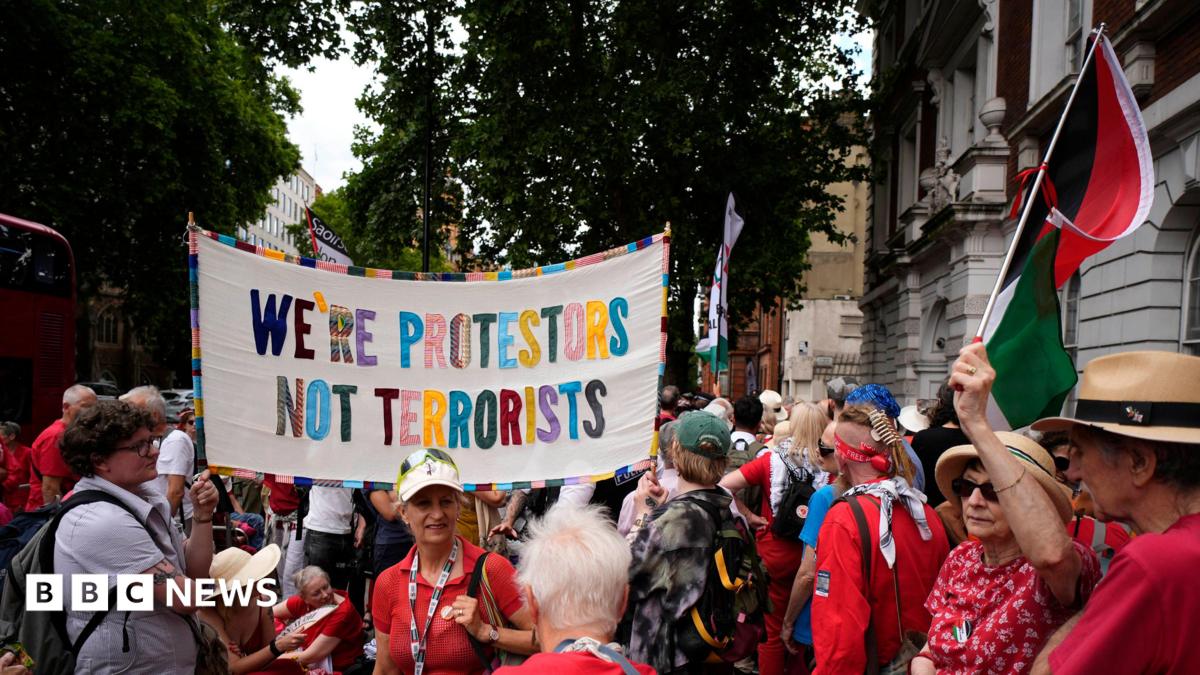
Protesters gathered outside Westminster Magistrates' Court on Thursday

The controversial ban under terrorism legislation of the protest group Palestine Action will be reviewed by the Supreme Court.

In a major blow to the Home Office, the court confirmed on Thursday that it had given the group’s co-founder permission to appeal the ban which came into effect in July 2025.

While the full details of the reasons for the appeal are yet to be published, the BBC understands they relate to Huda Ammori’s argument that the ban breaches human rights.

Officials at the court say the appeal will be expedited – which means it will be heard after the summer break. The eventual outcome of the case could have major implications for terrorism legislation in the UK.

Advertisement

The decision comes weeks after the end of the first major trial of members of the group which had caused more than £1m of damage to a defence firm near Bristol with an Israeli parent company. Four members of that break-in team were jailed, with one also sentenced for causing grievous bodily harm on a police officer who was hit with a sledgehammer.

Separately, more than 2,000 people are facing potential trial for protesting against the ban by declaring their support for a proscribed terrorism group in mass demonstrations.

The battle over the banning of Palestine Action has now gone on for more than year.

Former Home Secretary Yvette Cooper banned the group on advice from the police and security officials after an escalating spate of break-ins targeting Elbit, an Israeli-owned defence firm.

Advertisement

The High Court initially ruled that the ban was unlawful – but five judges on the Court of Appeal then overruled it, unanimously deciding the home secretary had acted lawfully and within her powers to proscribe Palestine Action.

That decision by the Court of Appeal will now be reviewed by the Supreme Court.

During Thursday, some 117 protesters were arrested outside Westminster Magistrates’ Court, with Metropolitan Police saying the majority of arrests were for expressing support for the group.

Scores of protesters had turned up there because they had expected to appear in court accused of allegedly showing support for the group at earlier public events. However, those cases had been listed in error. Many of the defendants said that they felt they had no choice but to turn up, despite the court and Metropolitan Police telling them not to do so.

Advertisement

Palestine Action co-founder Ammori welcomed the Supreme Court’s decision to hear her appeal – and said that the latest arrests were part of a wider crackdown on Palestinian solidarity.

“We will continue to fight this proscription all the way to the Supreme Court and, if necessary, to the European Court of Human Rights to overturn what has become one of the most extreme attacks on free speech and the right to protest in modern British history.”

Source link

Advertisement
Continue Reading

Trending

Copyright © 2025