Connect with us

Business

Daily Multivitamin Could Help Older Adults Maintain Heart Health and Daily Function, New Study Suggests

Published

on

British Man Says Rare Liver Disease Turned His Skin Yellow

A daily multivitamin may offer modest but measurable benefits for older adults’ cardiovascular health and their ability to perform everyday activities, according to new research presented this week at the annual meeting of the American Society for Nutrition.

The initial findings, which have not yet been published in a peer-reviewed medical journal, showed that older adults who took a daily multivitamin had significantly better measures of functional health after three years compared with those who took a placebo. Yanbin Dong, a cardiologist and director of the Georgia Prevention Institute at the Medical College of Georgia at Augusta University, led the research. “The findings show that a daily multivitamin may be a simple, low-risk strategy to help older adults maintain cardiovascular-related functional health and quality of life,” Dong said.

The study drew on data from more than 16,000 individuals ages 60 and older who did not have major cardiovascular disease at the study’s outset. Participants were randomly assigned to take a daily multivitamin, a cocoa extract supplement, both, or a placebo, with placebo pills used for the control group as well as for participants taking only one of the two active supplements.

Researchers tracked participants’ health over three years using an annual questionnaire that assessed both their ability to complete everyday tasks and possible symptoms of heart failure, including fatigue, shortness of breath, and swelling of the legs, ankles, feet or abdomen. The questionnaire uses a scale from 0 to 100, with lower scores indicating greater symptom burden and worse overall health status.

Advertisement

After three years, researchers found that participants taking multivitamins showed an average improvement of 0.45 points in symptom burden and 0.30 points in their overall clinical summary score, a combined measure averaging symptom burden with physical ability, according to Dong.

The benefit appeared substantially more pronounced among a specific subgroup of participants: those with carotid stenosis, a narrowing of the major blood vessels in the neck that supply blood to the brain. Among this group, symptom burden improved by an average of 6.75 points, while clinical summary scores improved by 6.01 points, considerably larger effects than those observed across the broader study population. “This means those who had a history of carotid stenosis and took multivitamin minerals will have a small clinical benefit of improving cardiovascular and functional health over time,” Dong said.

Dong said the underlying mechanism likely involves multivitamins correcting common micronutrient shortfalls that can otherwise go unaddressed through diet alone, potentially supporting energy production, cellular function, vascular health, inflammation control and muscle performance.

The study’s authors also examined the effects of cocoa extract supplementation separately. While cocoa extract did not produce a statistically significant change in functional health scores across the overall study population, it did show a meaningful benefit specifically among participants who went on to develop congestive heart failure during the study period, consistent with prior research suggesting that anti-inflammatory compounds found in cocoa extract may offer some degree of heart-protective effect.

Advertisement

Sarah Booth, director of the Human Nutrition Research Center on Aging at Tufts University, who was not involved in the new research, cautioned that the broader scientific record on multivitamin supplementation remains mixed. Booth noted that earlier analyses using data from the same overall participant pool had found no significant association between daily multivitamin or cocoa extract use and reduced risk of cardiovascular disease or cancer more broadly, even as other research has separately suggested multivitamins may provide a modest cognitive benefit. Booth said a fuller interpretation of the newest findings will not be possible until the complete study is formally published.

Booth also pointed to a persistent challenge in interpreting multivitamin research: participants’ underlying diets vary widely and are rarely controlled for in these kinds of trials. “Individuals still consume their usual food during these studies, so the multivitamins are adding more nutrients into the diet above and beyond the usual nutrient intake,” Booth said. “If the participants are already consuming a healthy diet, then adding more nutrients is unlikely to improve that individual’s health trajectory. Those who routinely take multivitamins tend to be individuals with healthier diets, which sometimes contributes to mixed results we see in the randomized clinical trials.”

The study’s authors pointed to its large participant population and high rate of sustained multivitamin adherence over several years as key strengths. They also acknowledged limitations, noting that most participants in the trial were, in Dong’s words, “very healthy” at the study’s outset, meaning the evidence for benefits among people already at higher risk for heart problems remains more limited. The researchers disclosed that Mars, a major chocolate manufacturer, supported the cocoa extract portion of the study, while Pfizer and Haleon, a British consumer healthcare company, provided the multivitamins used in the trial, though the researchers said none of the sponsors had any role in the study’s design, analysis or interpretation of results.

Booth emphasized that good nutrition should generally begin with a healthy diet built around whole foods rather than supplements, though she acknowledged that some people are unable to consistently achieve that on their own. She cautioned against self-diagnosing nutrient deficiencies simply because supplements are readily available over the counter. “Decisions to take multivitamins ideally should be in consultation with one’s health provider,” Booth said.

Advertisement

Given that this research involves a specific population of older adults and touches on cardiovascular health, anyone considering starting a daily multivitamin, particularly those with existing heart conditions or other chronic health concerns, is encouraged to speak with a doctor or healthcare provider before beginning any new supplement regimen, rather than relying solely on preliminary research findings that have not yet undergone full peer review.

Continue Reading
Click to comment

You must be logged in to post a comment Login

Leave a Reply

Business

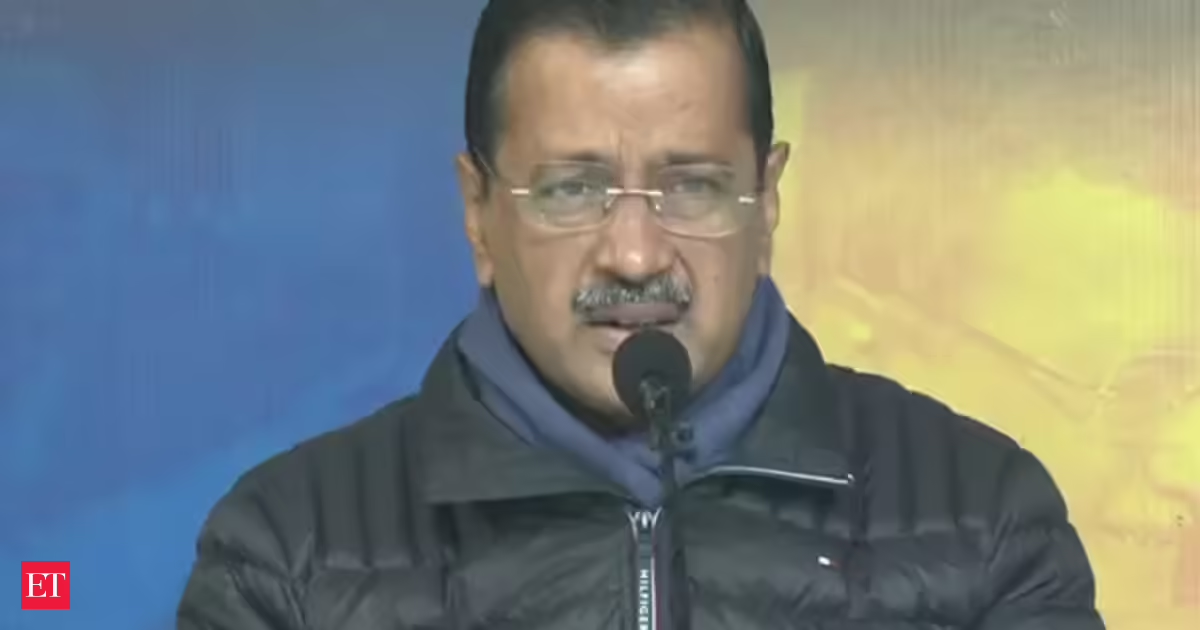
BJP accuses Kejriwal of sending voters hoax calls to mislead

Published

on

BJP accuses Kejriwal of sending voters hoax calls to mislead
New Delhi: The BJP on Sunday accused AAP supremo Arvind Kejriwal of orchestrating hoax calls to mislead voters across constituencies, including the New Delhi constituency, claiming that their were “cancelled” by the BJP. Addressing a press conference, BJP MP Parvesh Verma played an audio recording of one such call, in which a person was heard saying, “Your vote has been cut by the BJP. AAP will ensure you get your vote back,” and urged the receiver to support the Aam Aadmi Party.

“Hoax calls are being made to the public, saying that BJP will end all AAP schemes. This is a blatant lie,” he said.

He also wondered how “confidential voter data” was accessed by the party.

“Other than the Election Commission of India, this data is not provided to anyone. How did Kejriwal get the voters’ contact list? This must be inspected,” Verma said.

The BJP’s New Delhi candidate for the Assembly election also alleged the AAP of distributing Rs 500 wrapped in a calendar in the slum areas. He claimed three people were arrested in this regard.

Advertisement


There was no immediate reaction from the AAP on the allegations, nor from Delhi Police.
He said he has filed a complaint with the Election Commission and his party demands an investigation into the matter. BJP leader and party spokesperson Sudhanshu Trivedi, who was also present at the press conference, welcomed the US Supreme Court’s decision to extradite to India Tahawwur Rana, an accused in the 2008 Mumbai terror attacks.

“Under Modi’s leadership, the government remains committed to fighting terrorism. The decision to hand over Tahawwur Rana to India is a welcome one for all of us,” Trivedi said.

Trivedi accused the AAP and Congress of supporting activities that indirectly shield terrorism.

“Atishi’s parents were among those seeking a ‘shama yajna’ (forgiveness ritual) for Afzal Guru,” he alleged, referring to the mastermind of the 2001 Parliament attack.

Advertisement
Continue Reading

Business

UEFA threatens World Cup boycott over FIFA investment plan

Published

on

UEFA threatens World Cup boycott over FIFA investment plan

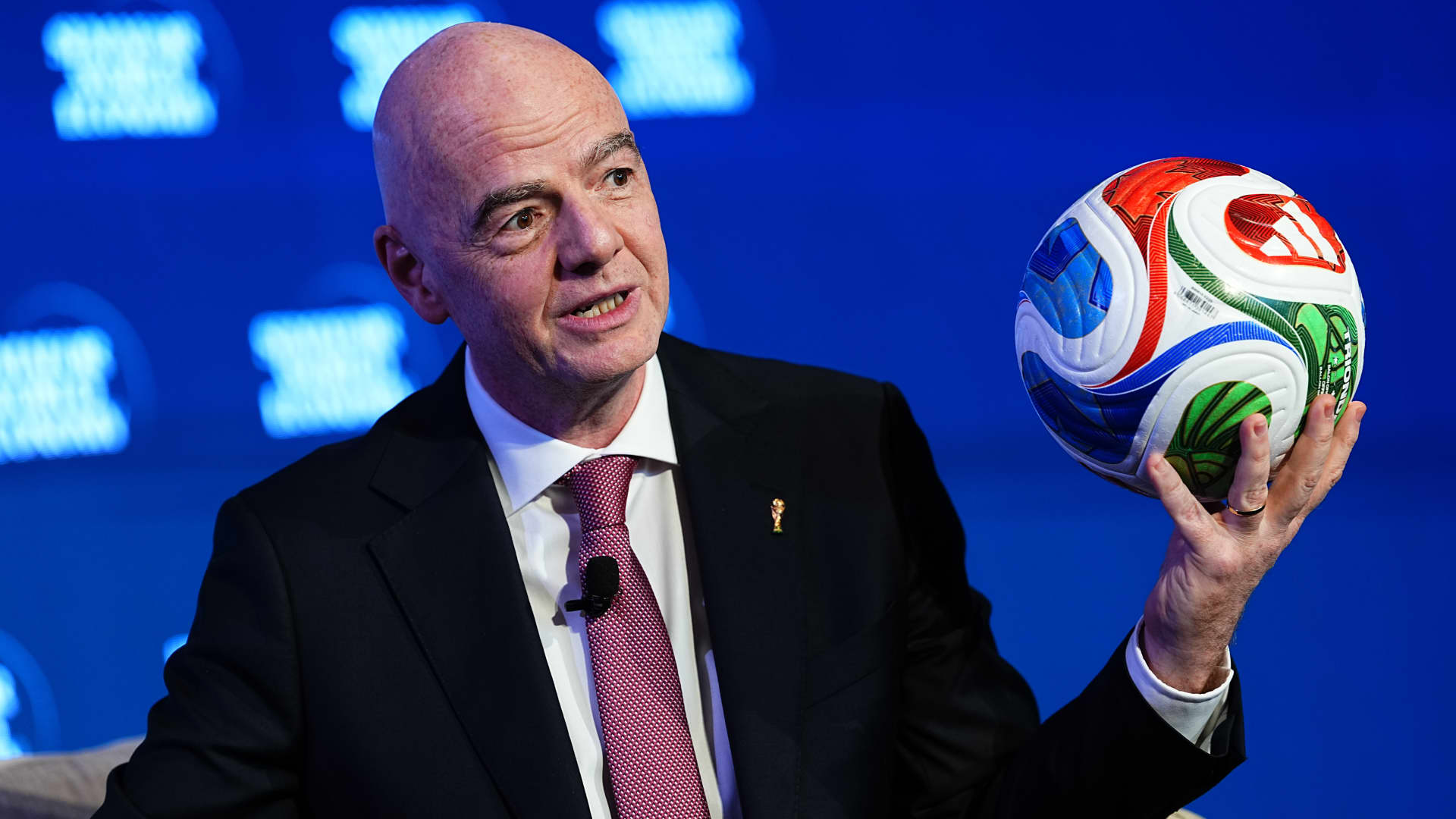
Gianni Infantino, president of the Federation International Football Association (FIFA), at the Semafor World Economy Summit during the International Monetary Fund (IMF) and World Bank Spring meetings in Washington, DC, US, on Wednesday, April 15, 2026.

Aaron Schwartz | Bloomberg | Getty Images

European soccer governing body UEFA said Thursday it will boycott FIFA competitions including the World Cup if the global organization goes through with its proposal to sell a stake to private investors.

Advertisement

Following an emergency meeting, UEFA, which represents 55 of FIFA’s 211 member associations, called it “irresponsible and indefensible” for FIFA leadership to bring forth such a proposal without seeking feedback from the countries that make up the organization.

On Tuesday, FIFA announced a plan to sell a 20% stake in a new entity it calls FIFA Forward Enterprise that would take over all commercial and event operations. FIFA said FFE would raise up to $4.2 billion from third party investors. The move championed by FIFA President Gianni Infantino has drawn backlash across the sport.

The proposed deal has also sparked fresh scrutiny of Infantino’s relationship with President Donald Trump. Thrive Eternal, a private equity firm founded by Joshua Kushner, the brother of Trump’s son-in-law Jared Kushner, is “expected to lead the proposed investor group for FFE,” FIFA said when it announced the deal.

In a statement, UEFA said its member nations would boycott FIFA competitions unless the organization canceled the plan for good. UEFA said “football’s future cannot be dictated” by stakeholders seeking financial gain.

Advertisement

“As a result of today’s discussion, no UEFA national teams will participate in any FIFA competition for so long as these proposals remain alive, unless this proposal has been abandoned in its entirety and binding assurances have been given that FIFA will never again open its governance or competitions to private ownership,” the statement read.

Get the CNBC Sport newsletter directly to your inbox

The CNBC Sport newsletter with Alex Sherman brings you the biggest news and exclusive interviews from the worlds of sports business and media, delivered weekly to your inbox.

Subscribe here to get access today.

UEFA isn’t the only one opposing FIFA’s proposal.

Advertisement

Concacaf, which runs soccer in North and Central America and the Caribbean, said on Thursday that it also held an emergency meeting with its 41 member associations and rejected FIFA’s proposal.

“The discussion reinforced the need for greater transparency and proper governance,” the organization said in a statement.

In response to the fallout, Infantino appeared in a video on Wednesday reassuring fans that the “beautiful game, and sport they watch and love will not change.” He added that the proposal is “a golden opportunity to turbocharge the development of the game globally.”

Infantino also said that the proposal is “simply a choice for our members” and not an obligation.

Advertisement
Choose CNBC as your preferred source on Google and never miss a moment from the most trusted name in business news.
Continue Reading

Business

Central bank turns piper to draw in foreign capital; leaves repo rate at 5.25, keeps stance neutral

Published

on

Central bank turns piper to draw in foreign capital; leaves repo rate at 5.25, keeps stance neutral
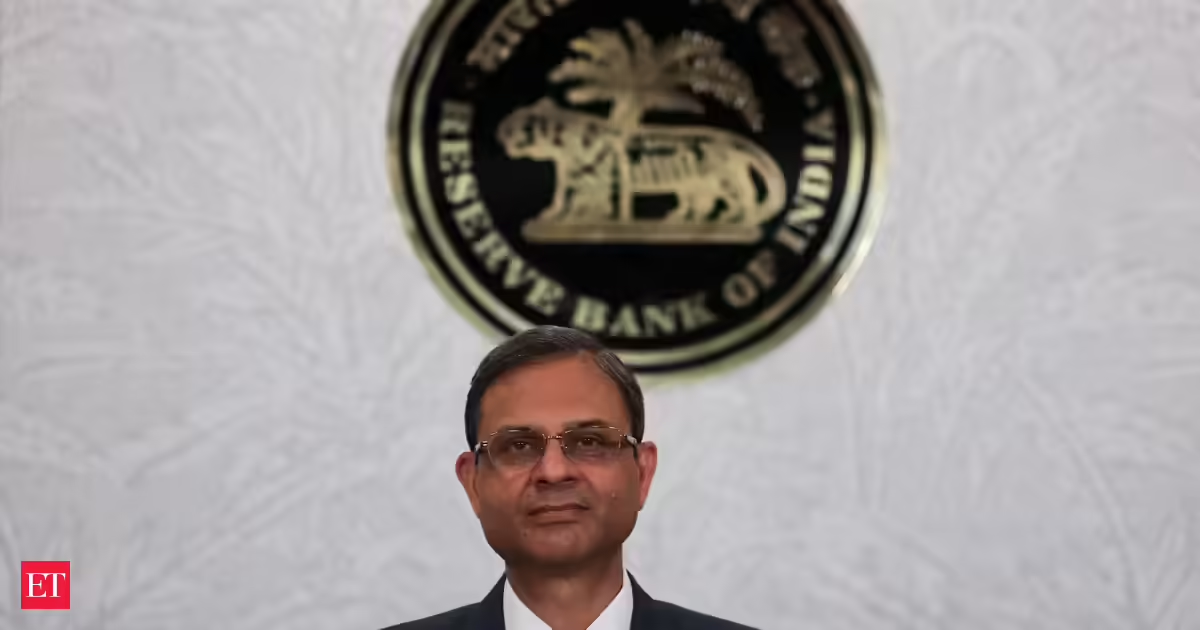
Mumbai: The Reserve Bank of India (RBI) Friday announced a host of measures to attract foreign currency inflows, aimed at strengthening external buffers, even as the six-member rate-setting committee voted to keep the policy rate unchanged at 5.25% and maintained a neutral stance.

RBI took steps to attract overseas investors into government bonds and equities, provided public sector units time-bound incentives to raise external commercial borrowings (ECB), and agreed to bear the hedging cost on fresh three- to five-year FCNR(B) deposits, among other measures.

“As a result of these measures on FCNR(B) and ECBs, and initiatives taken by the government on bonds and trade agreements, we are quite confident of a very healthy balance of payments, compared to what it would have been otherwise,” said RBI governor Sanjay Malhotra at the post-policy press meet.

The central bank revised inflation forecast upward to 5.1%, from 4.6%, and lowered its growth forecast for FY27 to 6.6%, from 6.9% projected in the previous policy.

“Adverse implications of extended disruptions in supply chains and elevated energy prices are reflected in moderation of growth and increase in inflation projections from the April policy,” the governor said, while revising forecasts in his second policy following the West Asia crisis. He stated that “although risks of higher inflation have amplified, the MPC felt it would be prudent to wait for greater clarity to emerge.”

Advertisement

RBI policy

The measures to attract inflows come amid outflows of $13.7 billion by foreign institutional investors from the equity market and are likely to support the rupee, which has fallen 4.1%, or about four rupees, since the start of the US-Iran conflict.Malhotra said he expects strong inflows but declined to put a number to them while adding that he expects banks to pass on the benefits of lower hedging costs to customers. Chairman State Bank of India CS Setty said, “These steps should help enhance capital inflows, deepen bond markets, improve liquidity and provide support to the rupee.”

Soumya Kanti Ghosh, group chief economic adviser, State Bank of India, said the measures would result in a potential capital flow of at least $40 billion, a pullback in the rupee toward 92-93 levels, and a pause in the August policy.

Madhavi Arora, chief economist, Emkay Global Financial Services, expects inflows of $30-50 billion over the year, while Aastha Gudwani, chief economist at Barclays, said the measures could add about $5 billion a month.

Economists said the policy is supportive of growth but has overlooked rising inflation risks. These would stem from higher oil prices following the West Asia crisis.

However, the governor defended the stance, stating that the 4% inflation target is “not in abeyance” and remains “sacrosanct.”

Advertisement

“This target is to be met over a period. It is a medium-term target, and it is not advisable to take action for every small deviation, as that could have disproportionate consequences for growth,” Malhotra said. The governor highlighted that the economy is facing uncertainty over the nature and duration of the conflict, as well as the time needed for the restoration of supplies. He also noted uncertainty around the monsoon and the impact of El Niño, both of which have implications for inflation and growth.

The NSE Nifty 50 index declined 0.21% to 23,366.7. The 10-year government bond yield fell four basis points to close at 6.97%, while the rupee gained 84 paise to close at 94.95 on Friday.

Upasna Bhardwaj, a senior economist at Kotak Mahindra Bank, expects a 50-basis point rate hike in October, while Arora said RBI will raise rates only if inflation becomes entrenched. The governor reiterated that RBI would “look through” shocks unless inflation becomes broad-based and persistent or starts getting embedded in expectations.

On the upward revision in inflation forecasts, RBI said in its statement that the pass-through of higher oil prices could exert upward pressure in the coming months as firms pass on input costs.

Advertisement
Continue Reading

Business

XFLT Advisor Adjournment Shifts Likely Outcome Toward Toward Liquidation At NAV (XFLT)

Published

on

XFLT Advisor Adjournment Shifts Likely Outcome Toward Toward Liquidation At NAV (XFLT)

This article was written by

Dan Plettner focuses his qualitative investigative research methods on Closed-End Funds and other underfollowed securities. Dan Plettner was born in 1975 and has been investing since his teen years. After completing his undergraduate degree Magna Cum Laude from Miami University (Oxford, Ohio), he won the “NSD award” as a retail Financial Advisor at Morgan Stanley Dean Witter. Dan relocated to Morgan Stanley’s International Headquarters in Manhattan where he served as a Closed-End Fund Product Specialist until 2000 and then attained his MBA from New York University.

Analyst’s Disclosure: I/we have a beneficial long position in the shares of XFLT either through stock ownership, options, or other derivatives. I wrote this article myself, and it expresses my own opinions. I am not receiving compensation for it (other than from Seeking Alpha). I have no business relationship with any company whose stock is mentioned in this article.

Seeking Alpha’s Disclosure: Past performance is no guarantee of future results. No recommendation or advice is being given as to whether any investment is suitable for a particular investor. Any views or opinions expressed above may not reflect those of Seeking Alpha as a whole. Seeking Alpha is not a licensed securities dealer, broker or US investment adviser or investment bank. Our analysts are third party authors that include both professional investors and individual investors who may not be licensed or certified by any institute or regulatory body.

Advertisement
Continue Reading

Business

FCC bans certain foreign-made robot vacuums under new security rules

Published

on

FCC bans certain foreign-made robot vacuums under new security rules

Certain robotic vacuum cleaners, including some Roomba-style devices, will be banned under the new U.S. policy restricting foreign-made advanced robotics, federal regulators told FOX Business Thursday.

The Federal Communications Commission (FCC) said robotic vacuums fall under its updated “Covered List” rules adopted Tuesday, making certain new foreign-produced models ineligible for FCC equipment authorization due to national security and cybersecurity risks to U.S. critical infrastructure.

Advertisement

While the agency did not identify specific brands, an FCC spokesperson confirmed to FOX Business that robotic vacuums are among the devices covered by the restrictions. 

Major manufacturers including iRobot, SharkNinja, Dyson, Samsung and LG sell robotic vacuums in the U.S., with most production taking place in China, alongside manufacturing operations in Vietnam, Malaysia and Indonesia.

FCC BLOCKS NEW FOREIGN-MADE POWER INVERTERS AND ADVANCED ROBOTS OVER NATIONAL SECURITY RISKS

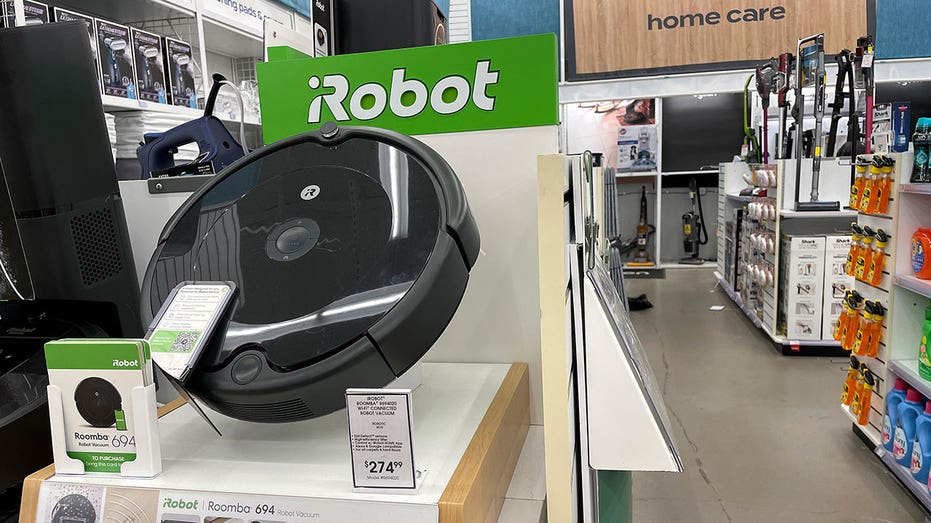
A black Roomba vacuum on display in a store.

A Roomba robot vacuum is displayed on a shelf at a Bed Bath and Beyond store Aug. 5, 2022, in Larkspur, Calif. Certain newly authorized foreign-made robotic vacuums are now subject to expanded FCC national security restrictions. (Justin Sullivan / Getty Images)

However, the restrictions apply only to newly authorized devices and will not affect the many robotic vacuums already in consumers’ homes.

Advertisement

“This action does not impact a consumer’s continued use of devices they previously acquired,” the FCC spokesperson said.  

The agency added that previously authorized models may continue to be sold, imported and marketed in the U.S., and it does not “prevent retailers from continuing to sell, import or market relevant models approved previously through the FCC’s equipment authorization process.”

FCC CHAIRMAN CLIMBS 2,000-FOOT CELL TOWER TO SPOTLIGHT ONE OF AMERICA’S TOUGHEST TRADES

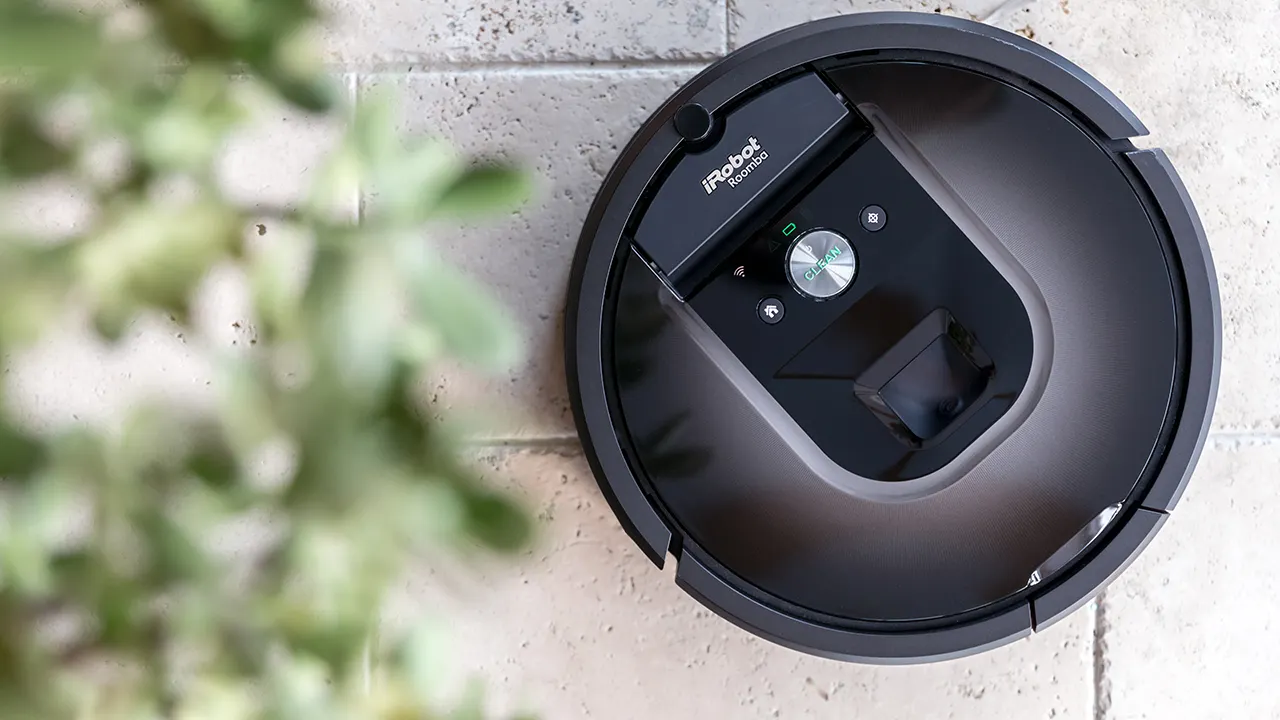
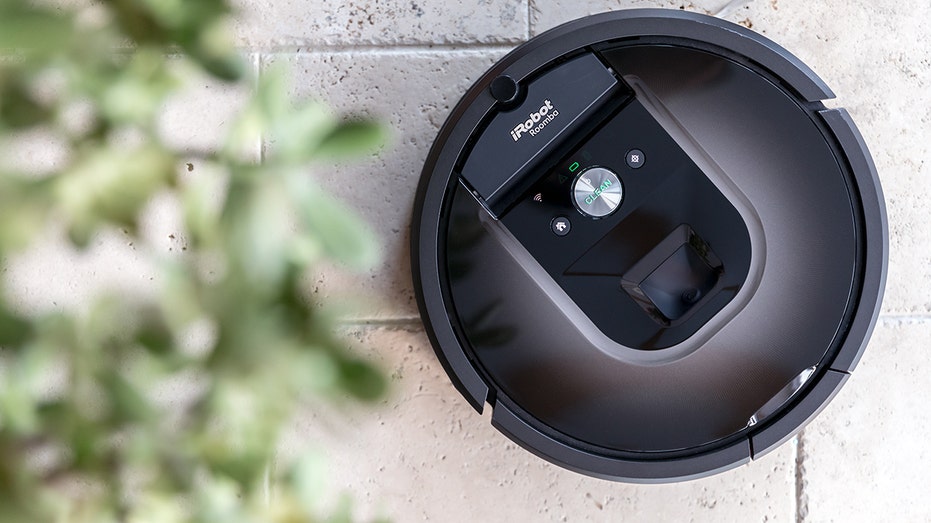
roomba near plant outside

An iRobot Roomba 980 robotic vacuum cleaner sits on a ceramic floor Dec. 10, 2016. It is unclear which models will be affected. (iStock / iStock)

“We are aware of the FCC’s recent action and are working with them to better understand its implementation and potential impact,” iRobot said. “We remain committed to serving our customers and will share updates as more information becomes available.”

Advertisement

Under the FCC’s new rules, many household robotic cleaners qualify as “advanced robotic devices” because they are mechanical mobile devices capable of locomotion, navigation and obstacle avoidance. 

Covered devices generally weigh more than 4.4 pounds and operate near human operators. Their autonomous navigation is either powered by firmware, AI models or sensors via Bluetooth, Wi-Fi or cellular technology. 

That definition could encompass products such as iRobot’s Roomba lineup, SharkNinja’s Shark robotic vacuums, Dyson’s 360 series, Samsung’s Jet Bot line and LG’s CordZero robotic cleaners. 

US BANS NEW FOREIGN-MADE CONSUMER INTERNET ROUTERS OVER SECURITY CONCERNS

Advertisement
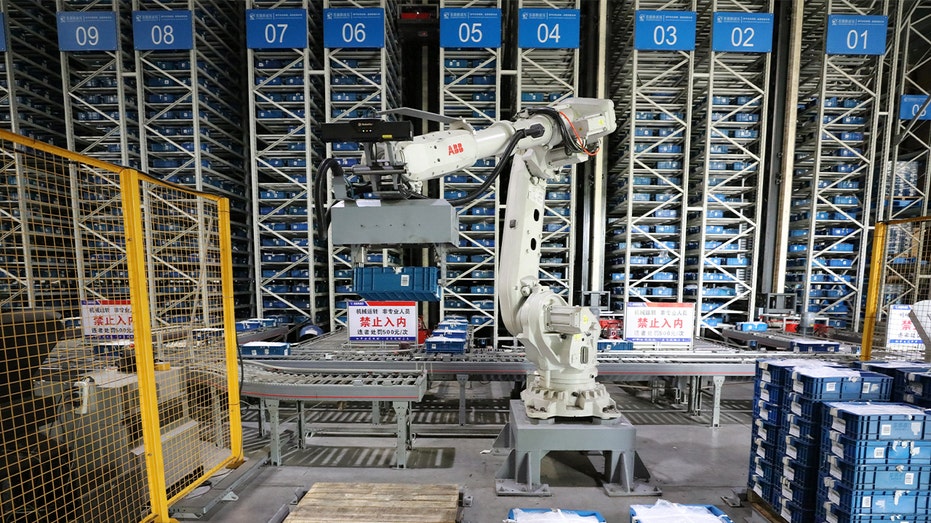
robot arm in manufacturing hub

A robotic arm grabs materials for storage in the workshop of Jiangxi Suqiangge Hydraulic Co., Ltd. July 29, 2026, in Yichun, Jiangxi Province of China. (Zou Zhong/VCG / Getty Images)

Roomba, one of the first robotic vacuum brands to gain widespread popularity in the U.S., was introduced by American company iRobot in 2002 but is now owned by Shenzhen Picea Robotics and Santrum Hong Kong.

Picea Robotics, which operates development and manufacturing facilities in China and Vietnam, sells Roomba models starting at $200.

CLICK HERE TO GET FOX BUSINESS ON THE GO

By comparison, American robotics startup Matic, one of the few U.S.-based competitors that designs and assembles its products domestically in California, sells its robotic vacuums for about $1,245. 

Advertisement

FOX Business reached out to SharkNinja, Dyson, Samsung and LG for comment.

Continue Reading

Business

Andritz AG (ADRZY) Q2 2026 Earnings Call Transcript

Published

on

OneWater Marine Inc. (ONEW) Q1 2026 Earnings Call Transcript